Middle School Proportion Worksheets
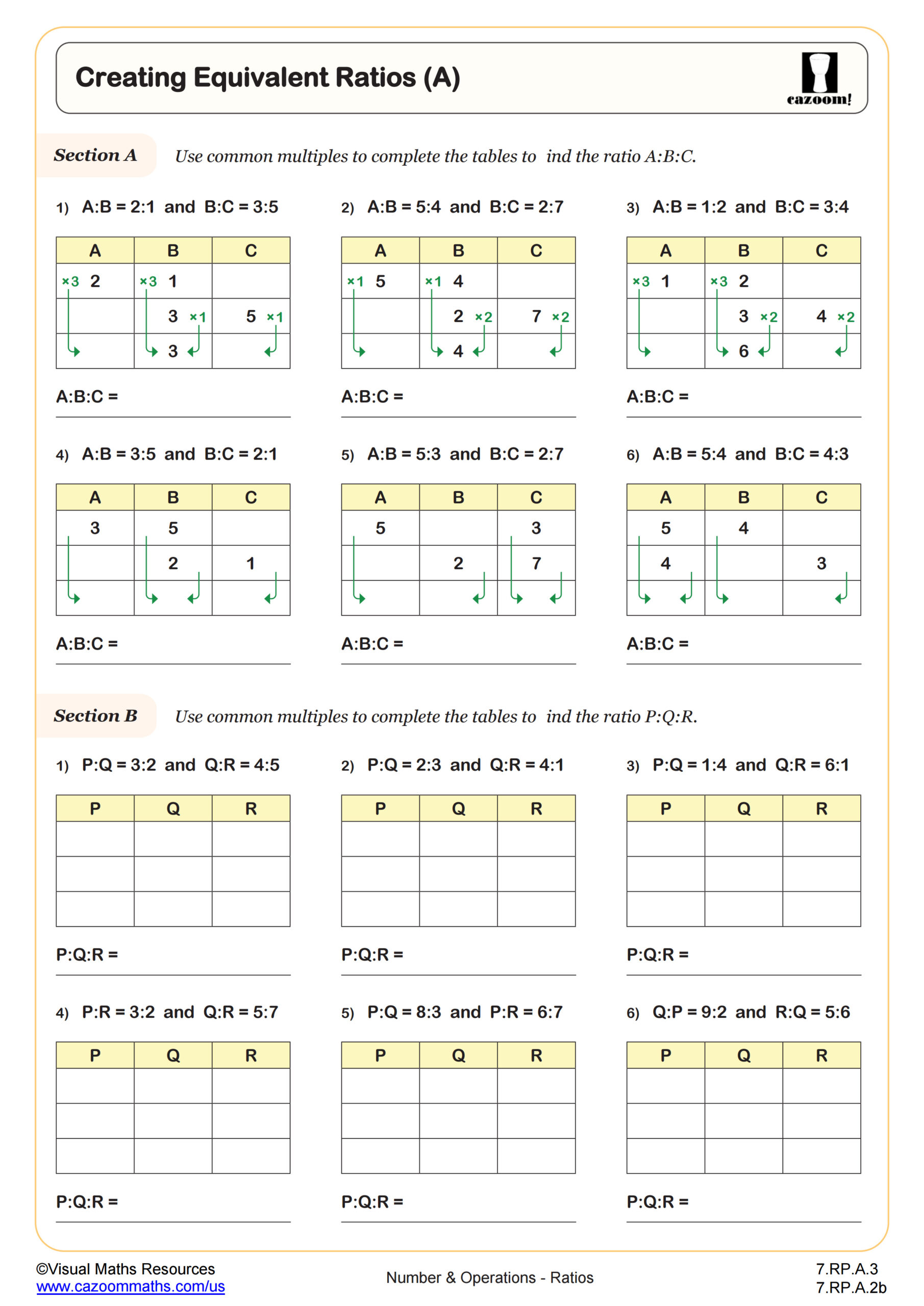
Creating Equivalent Ratios (A)
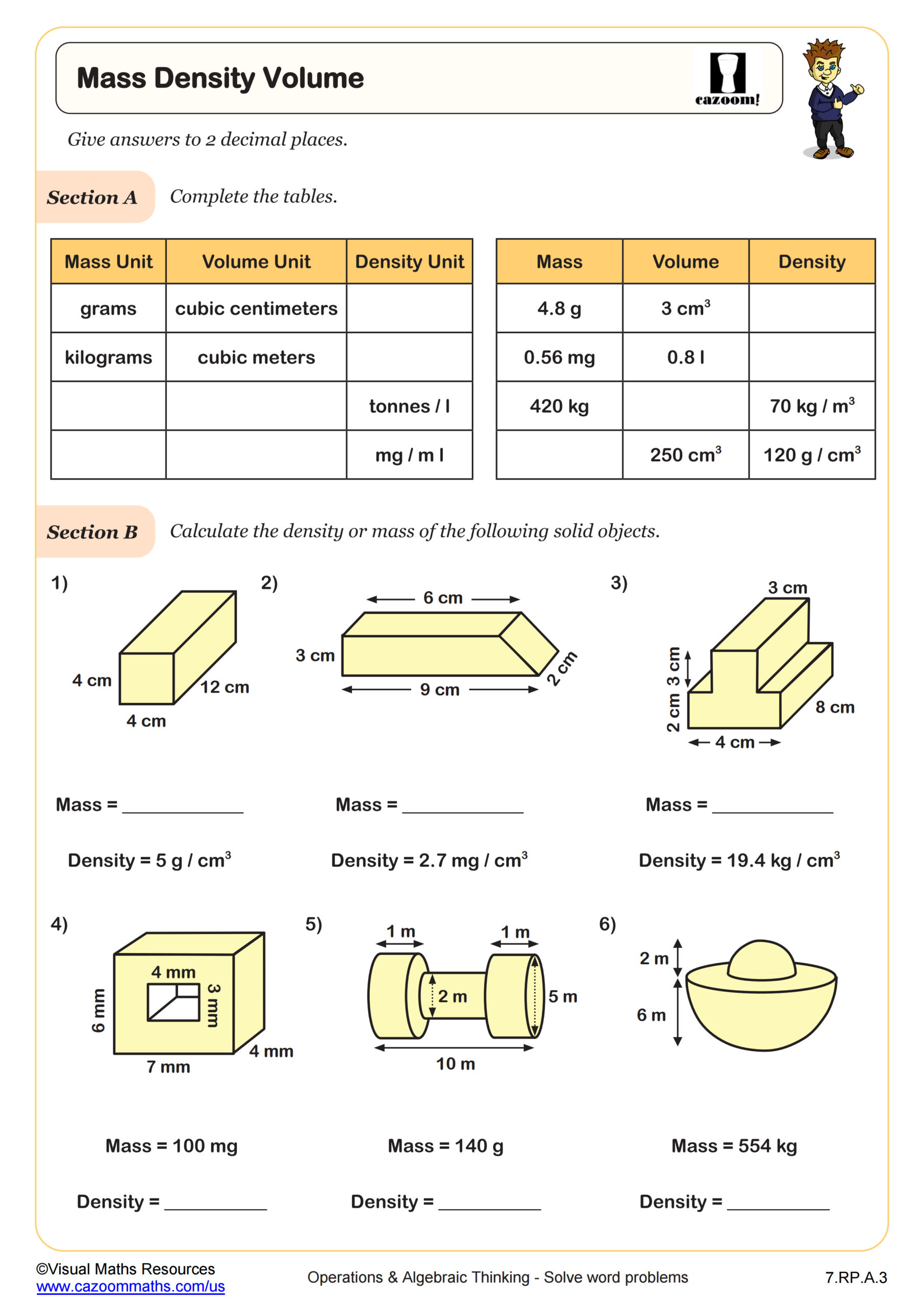
Density, Mass, and Volume
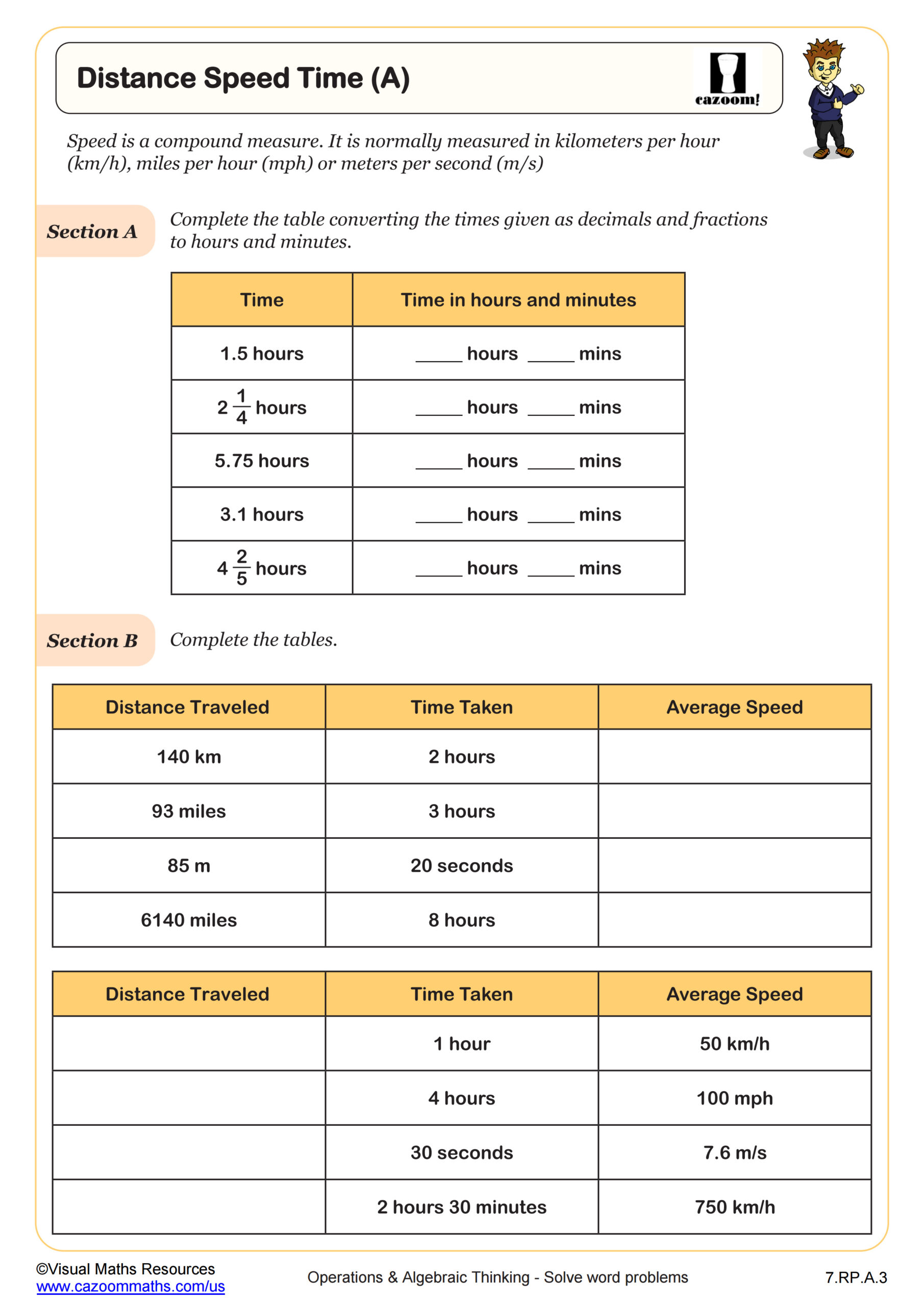
Distance, Speed, and Time (A)
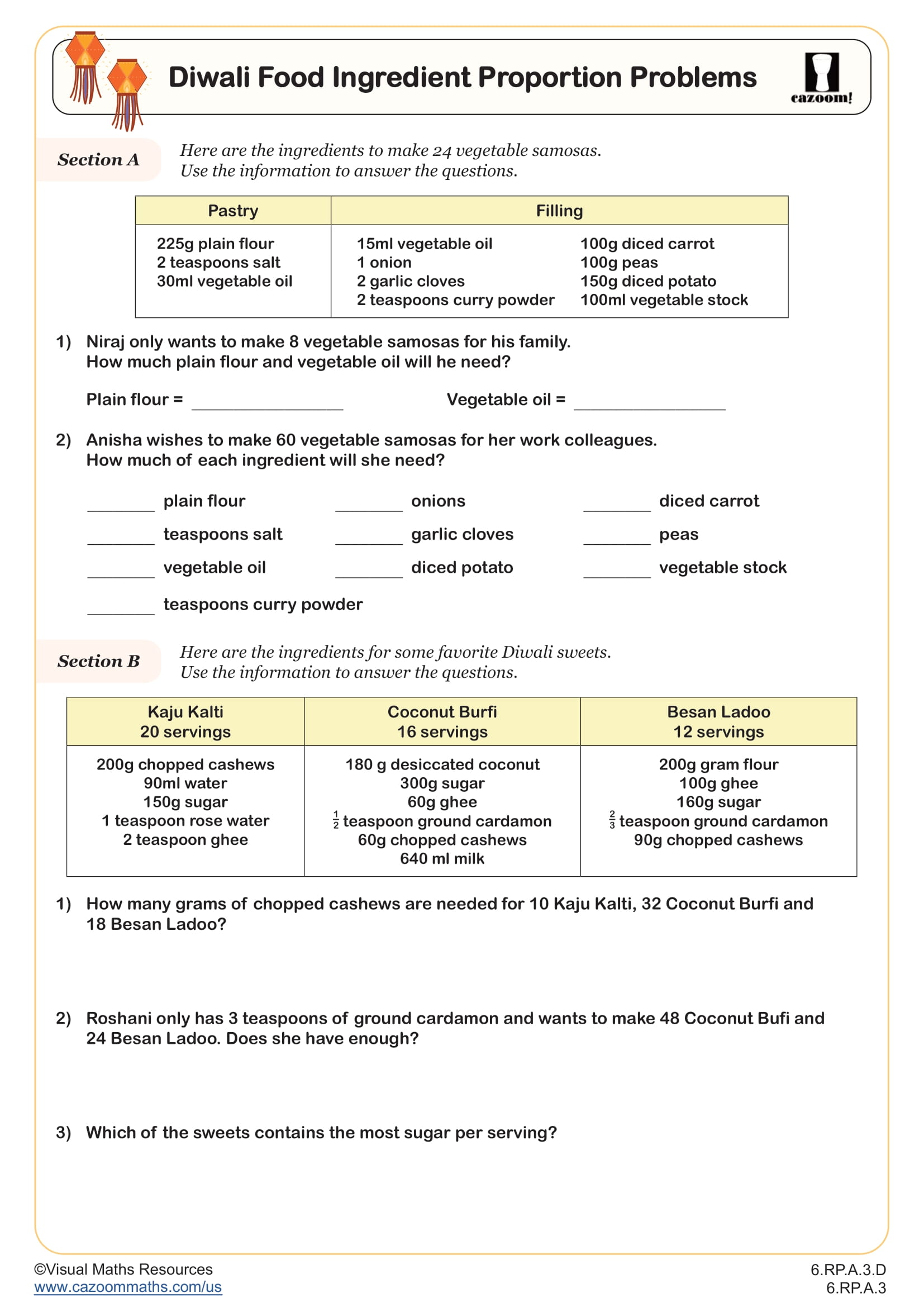
Diwali Food Ingredient Proportion Problems
Equations of Proportionality
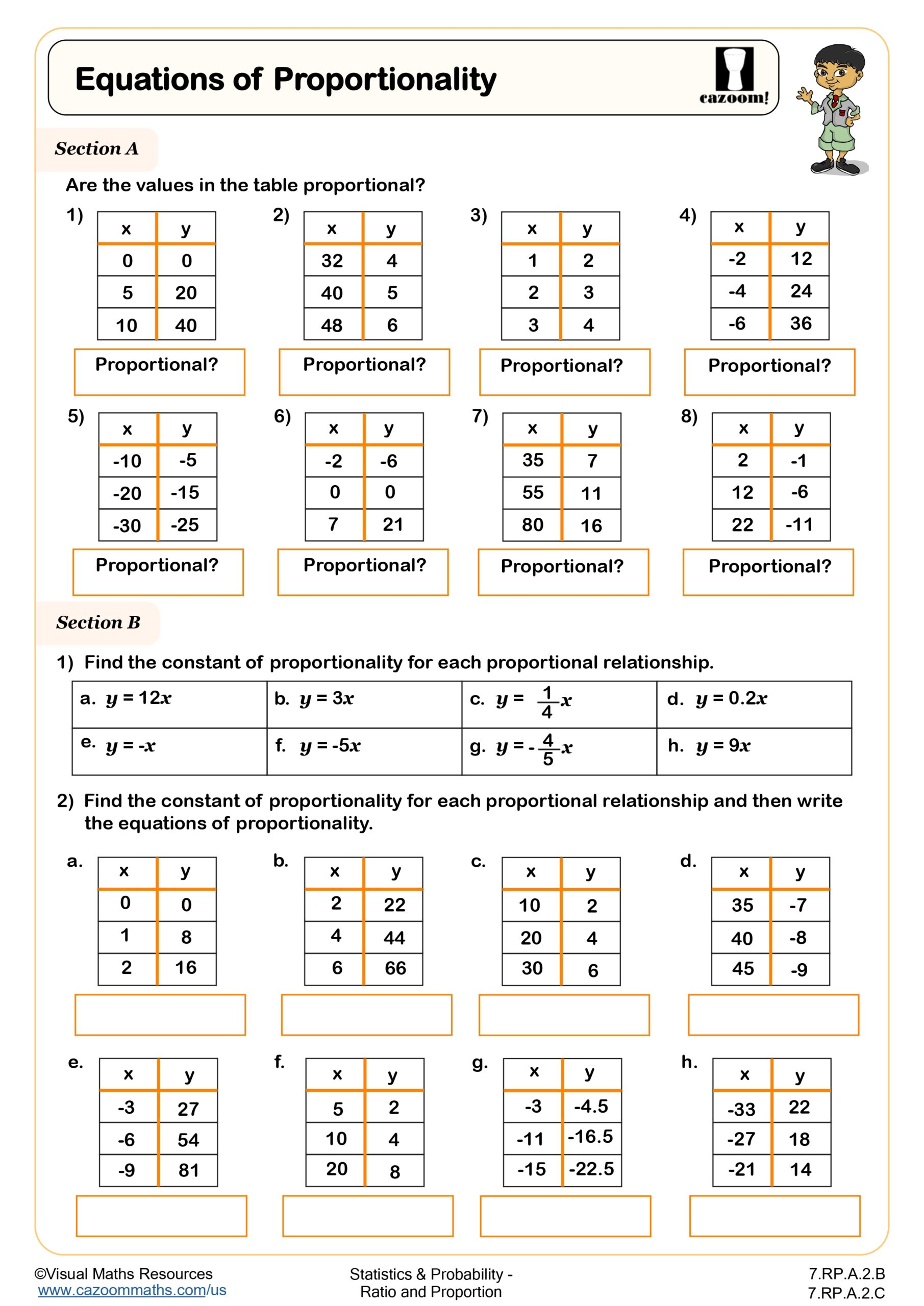
Equivalent Ratios
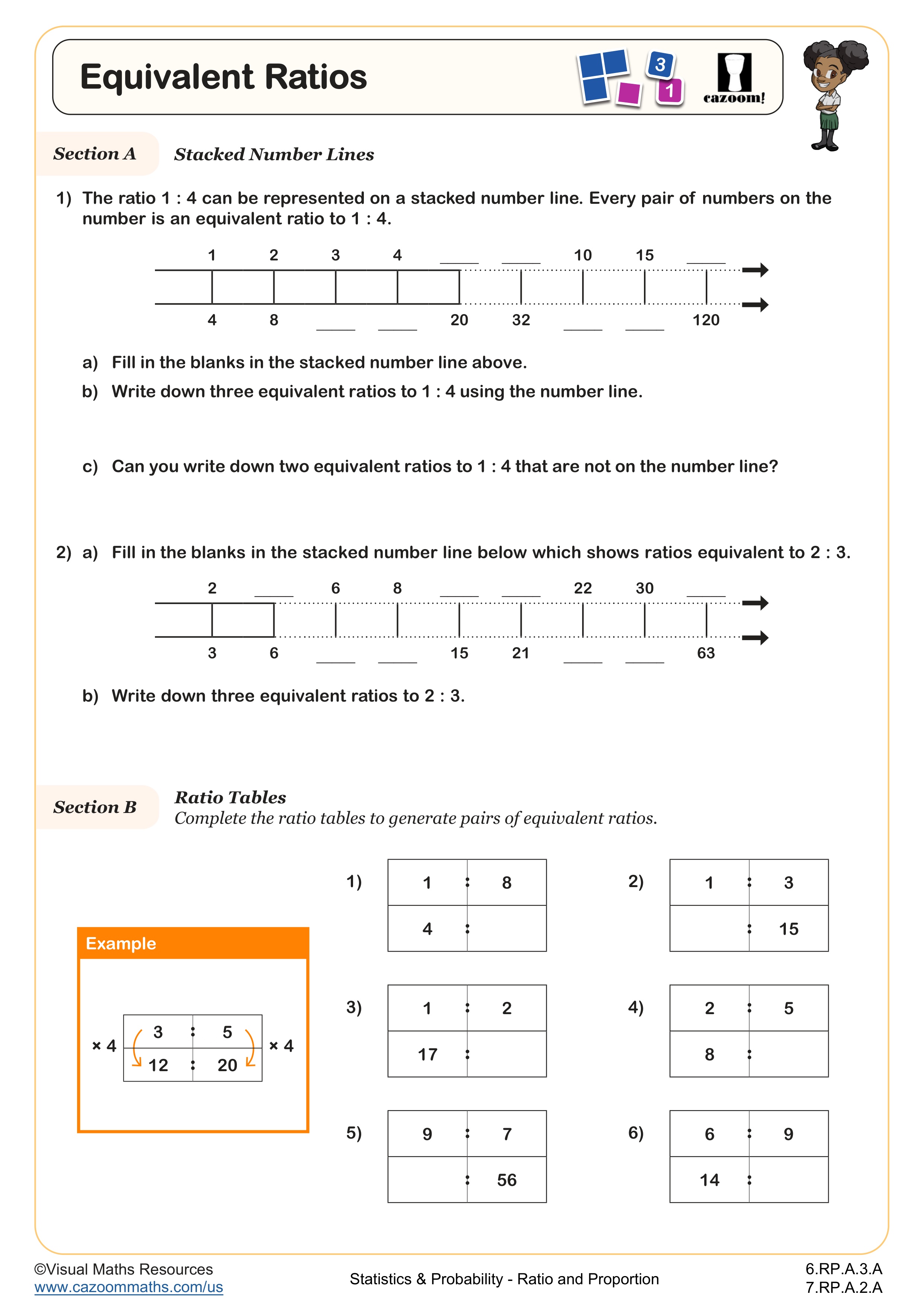
Exchange Rates
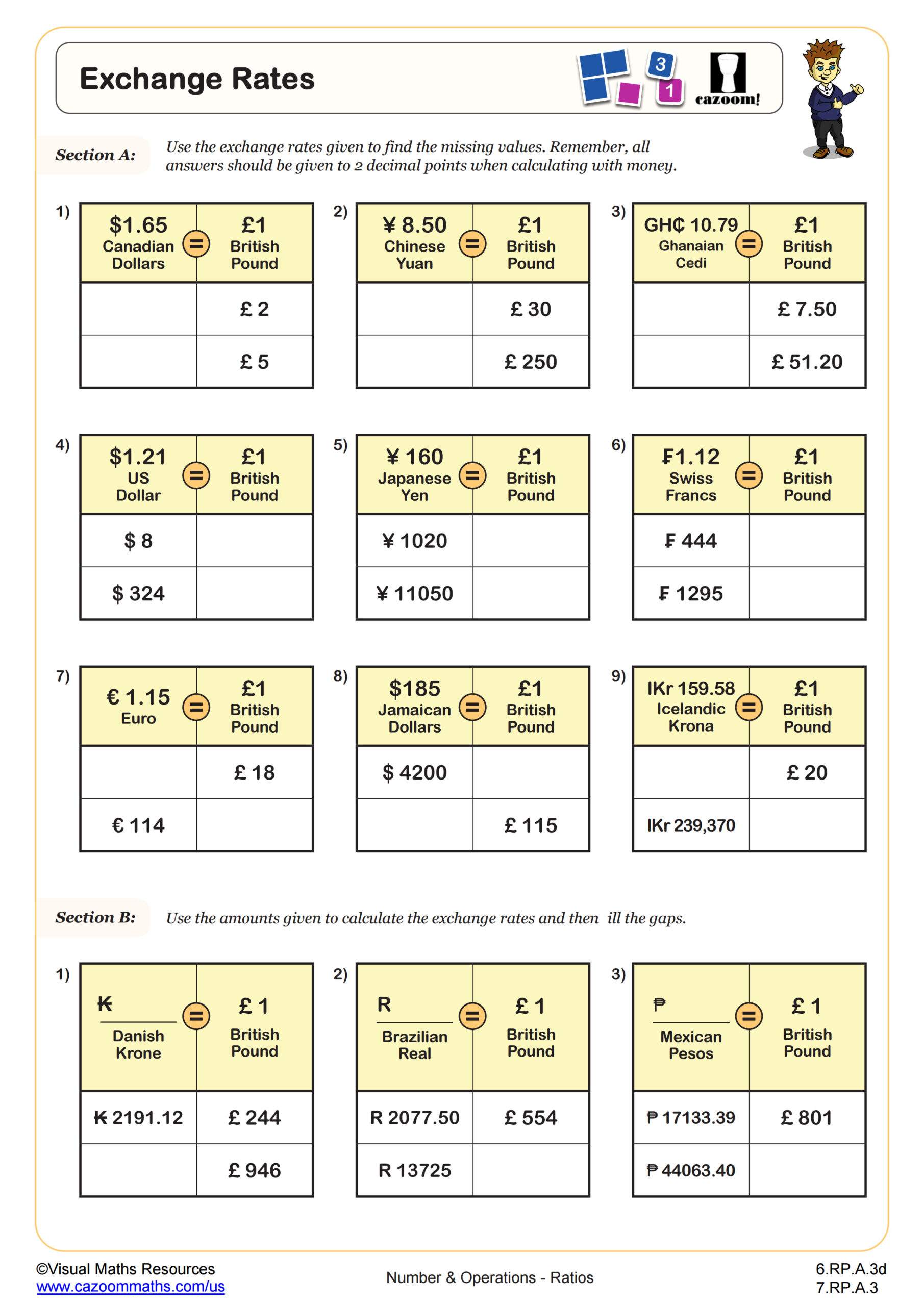
Exploring Direct Proportion Using Stacked Number Lines (B)
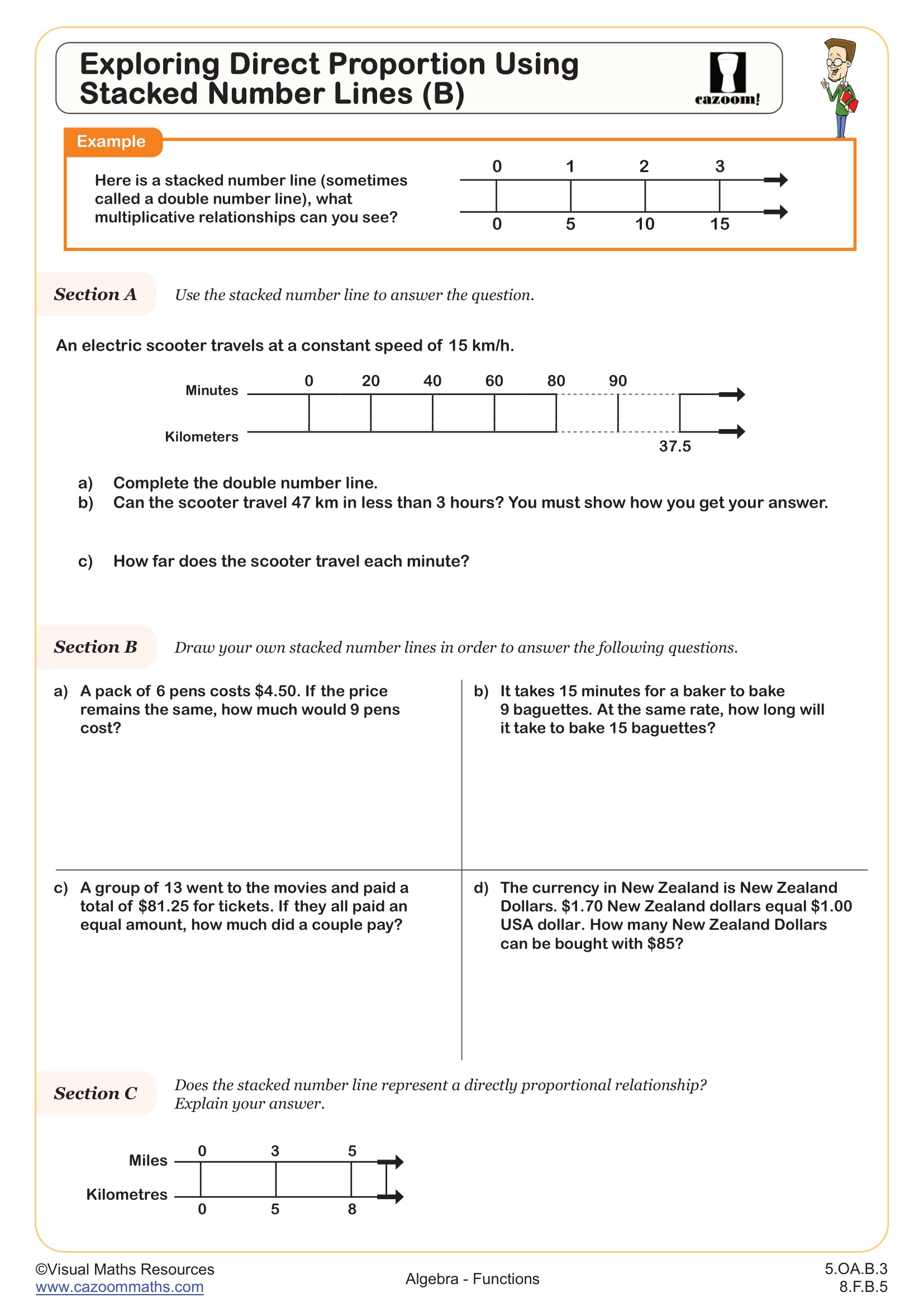
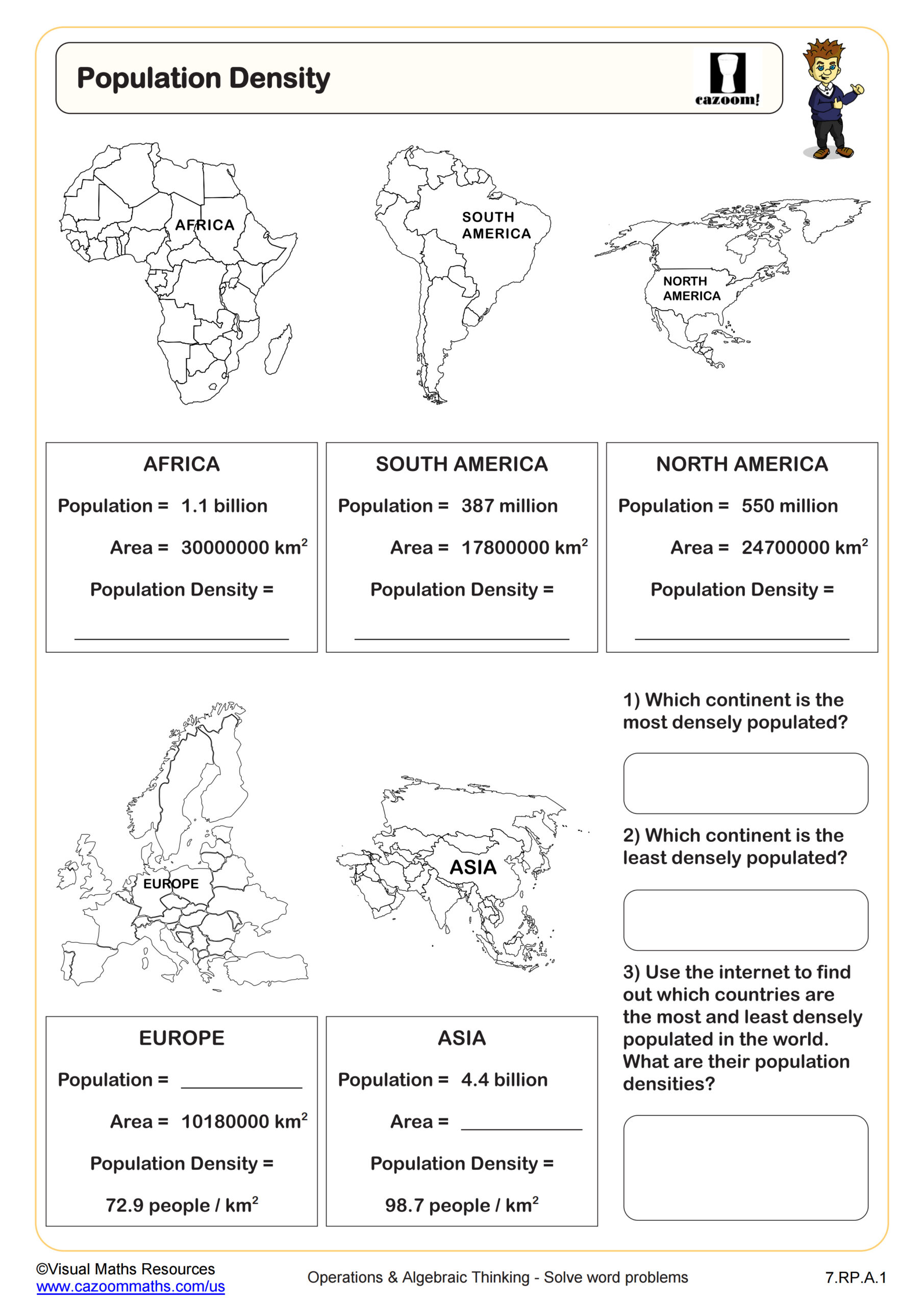
Population Density
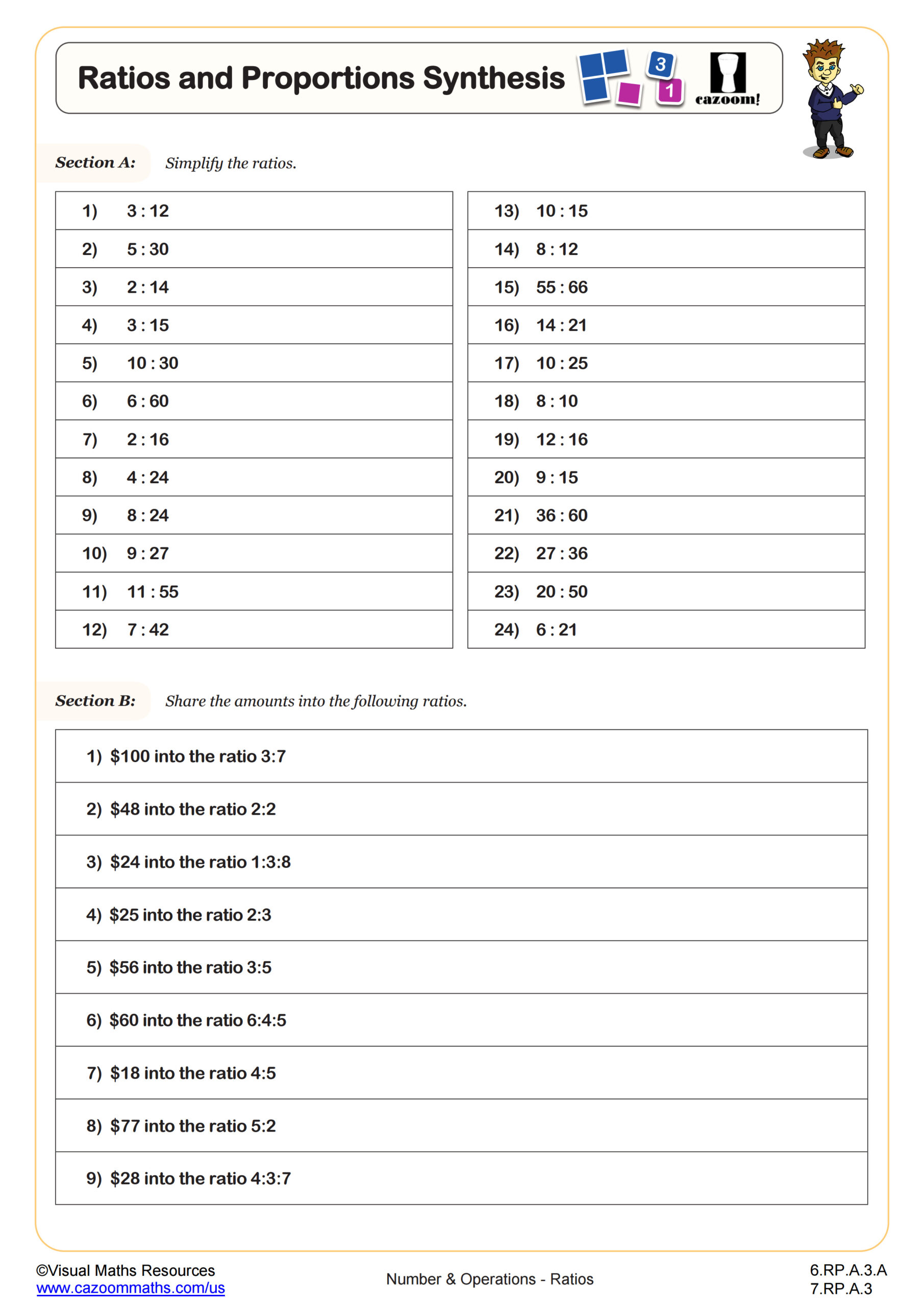
Ratios and Proportions Synthesis
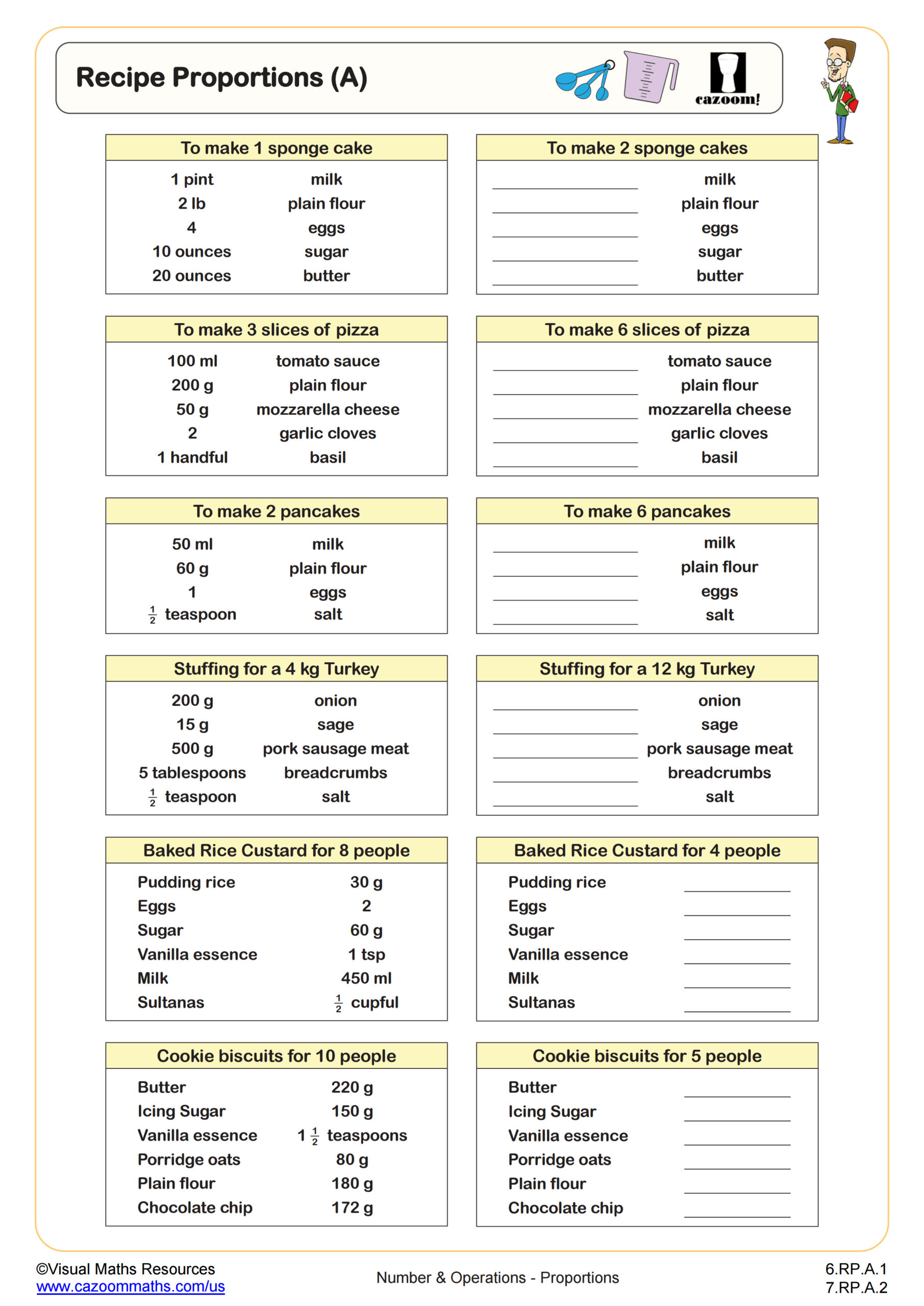
Recipe Proportions (A)
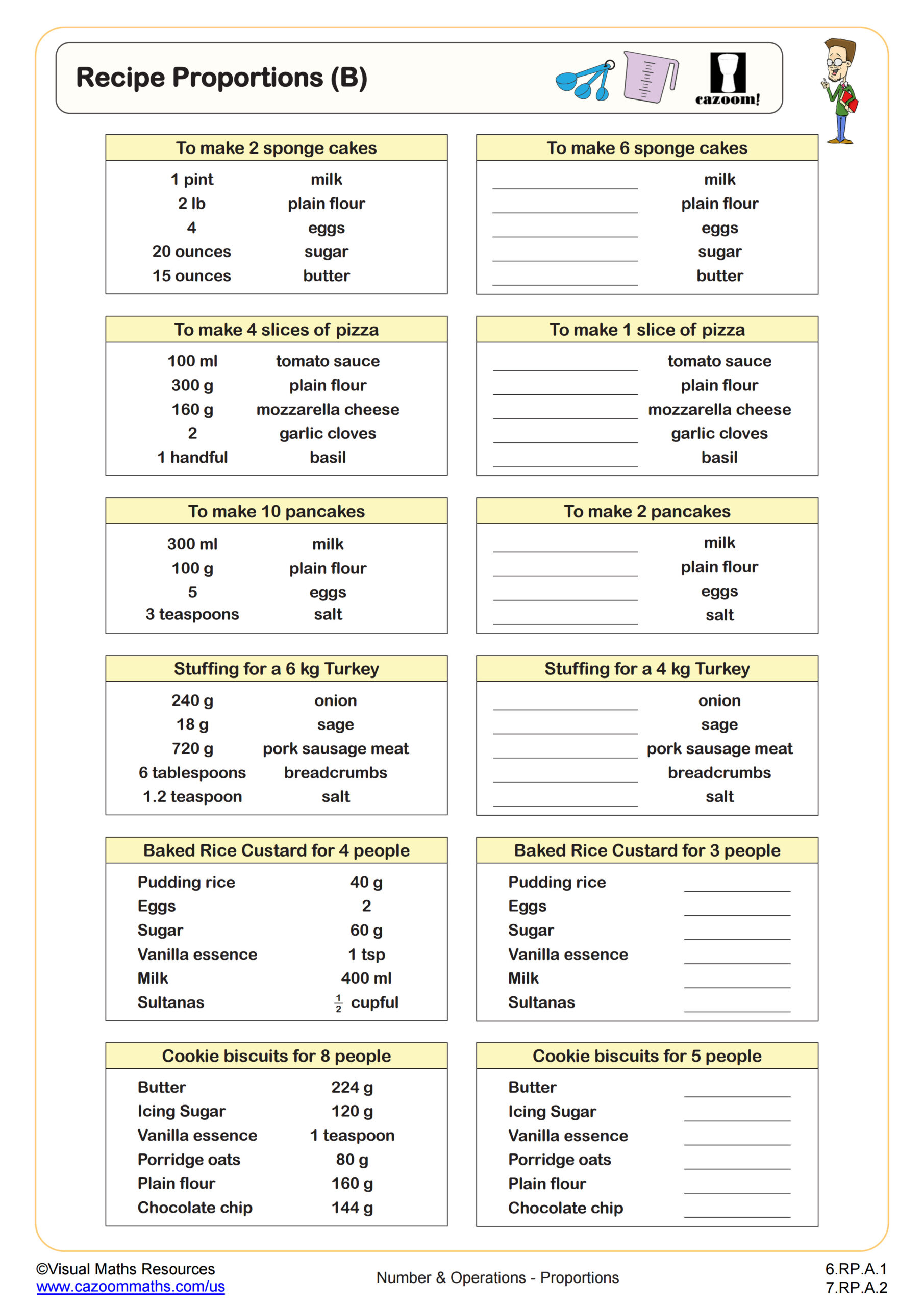
Recipe Proportions (B)
Recipe Proportions (C)
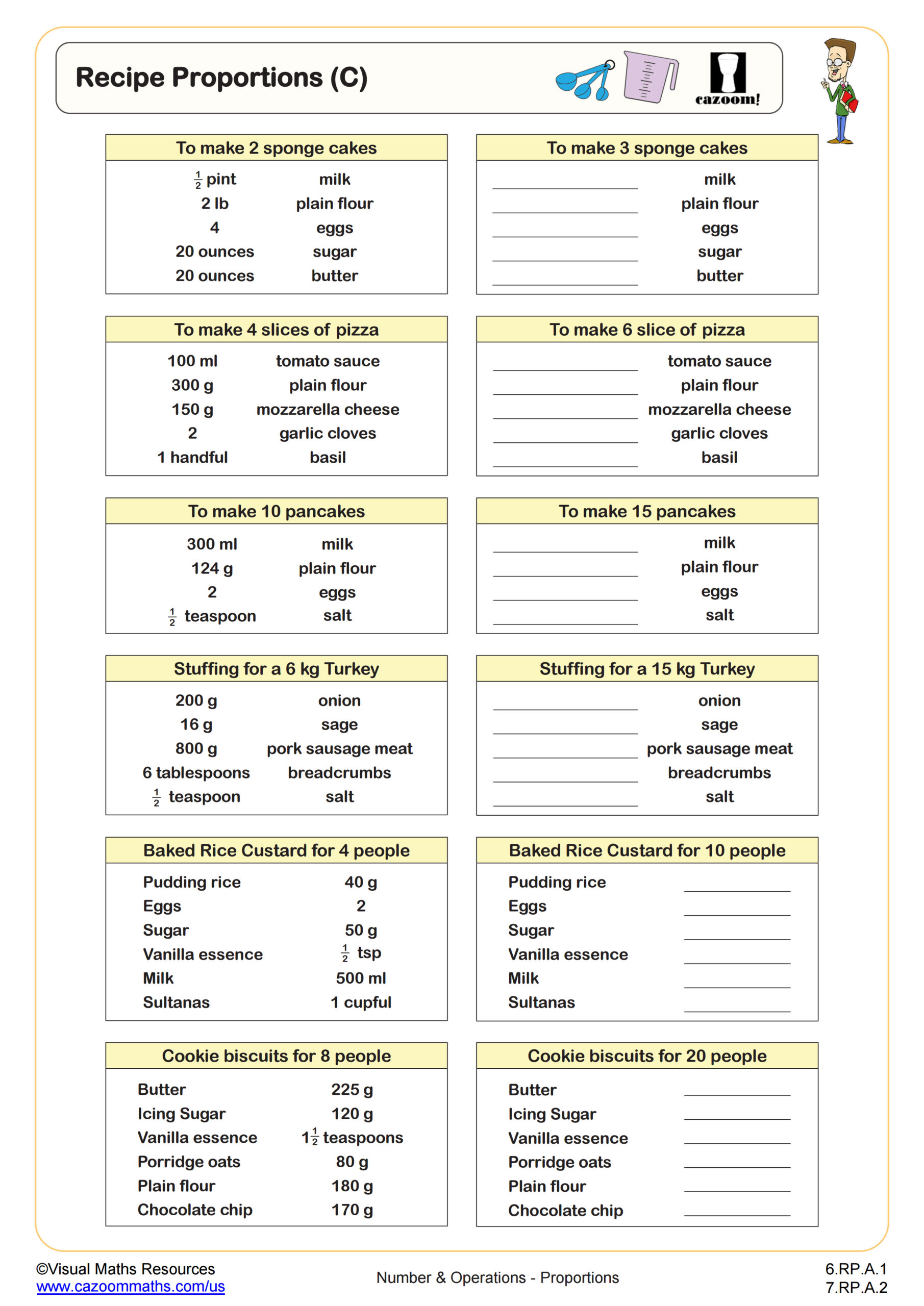
Recipes (A)
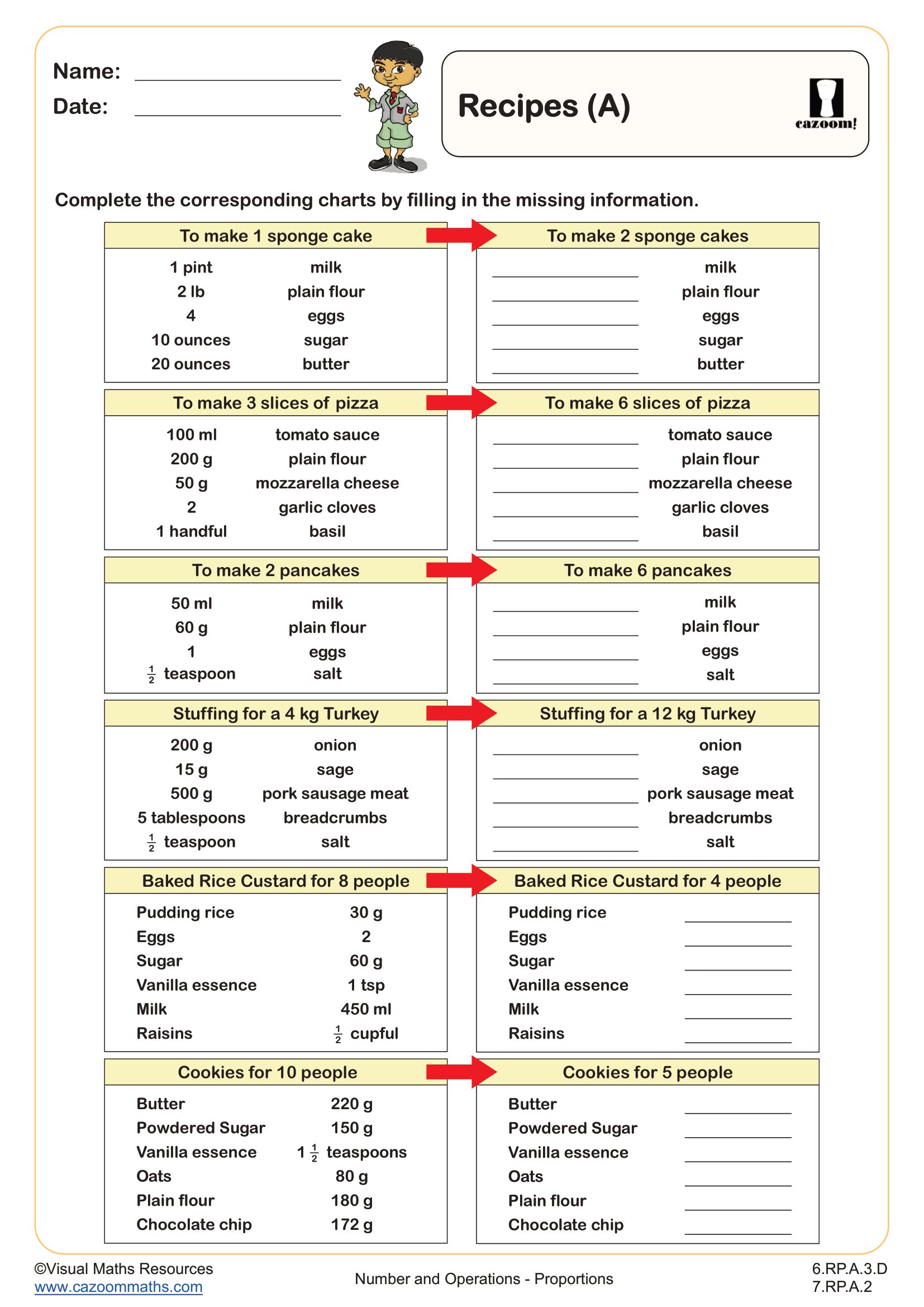
Recipes (B)
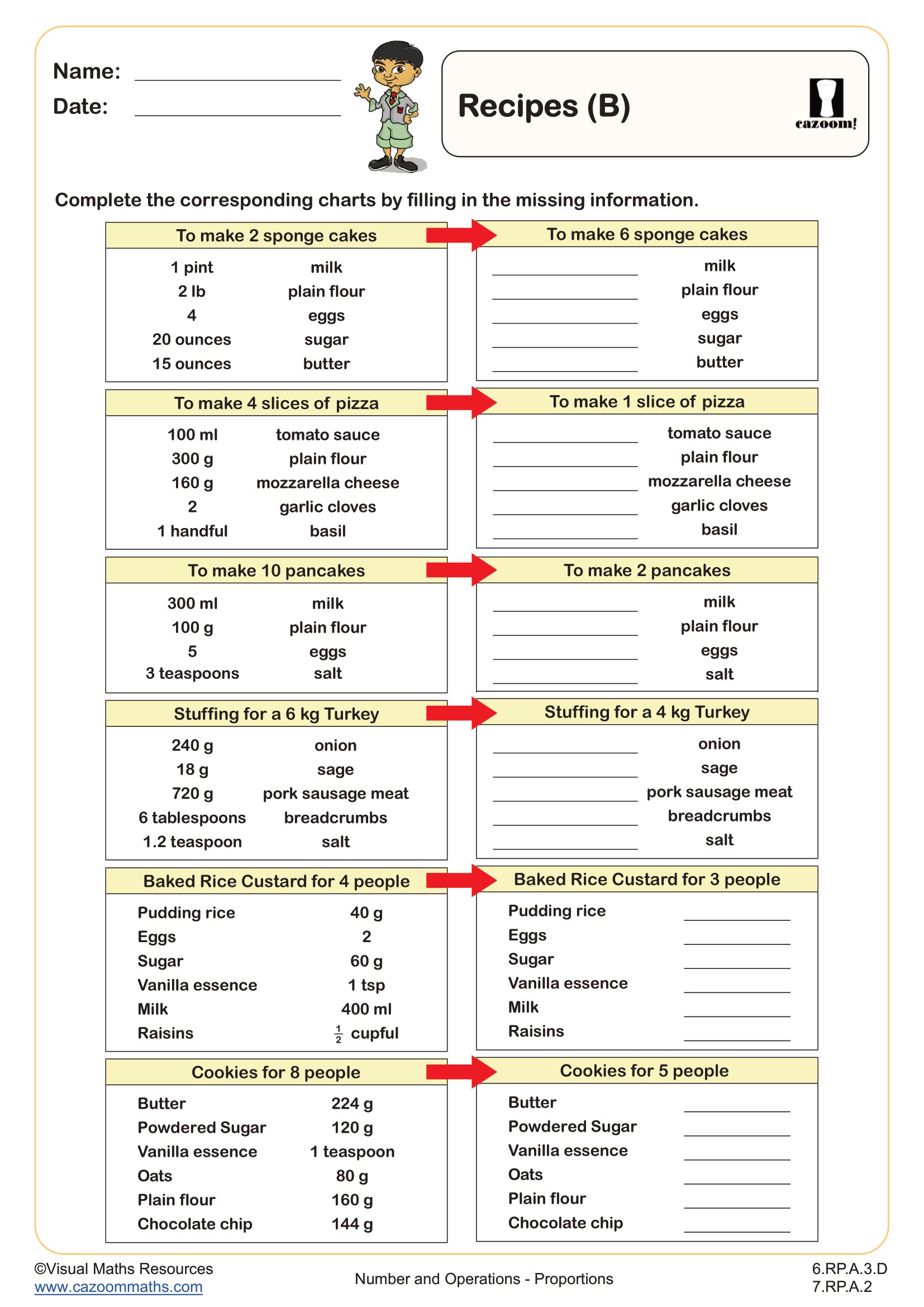
Representing Ratios with Tape Diagrams
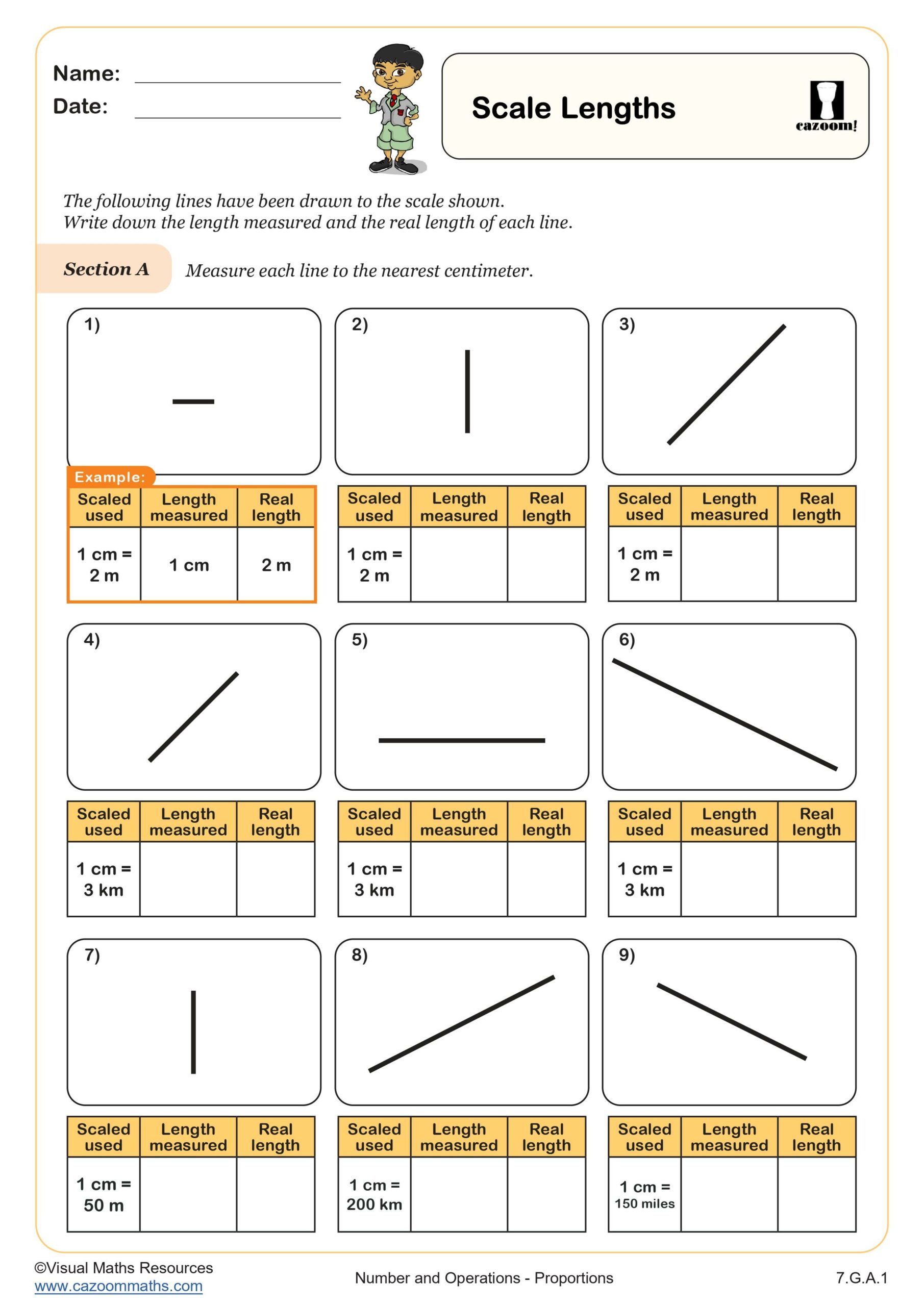
Scale Lengths
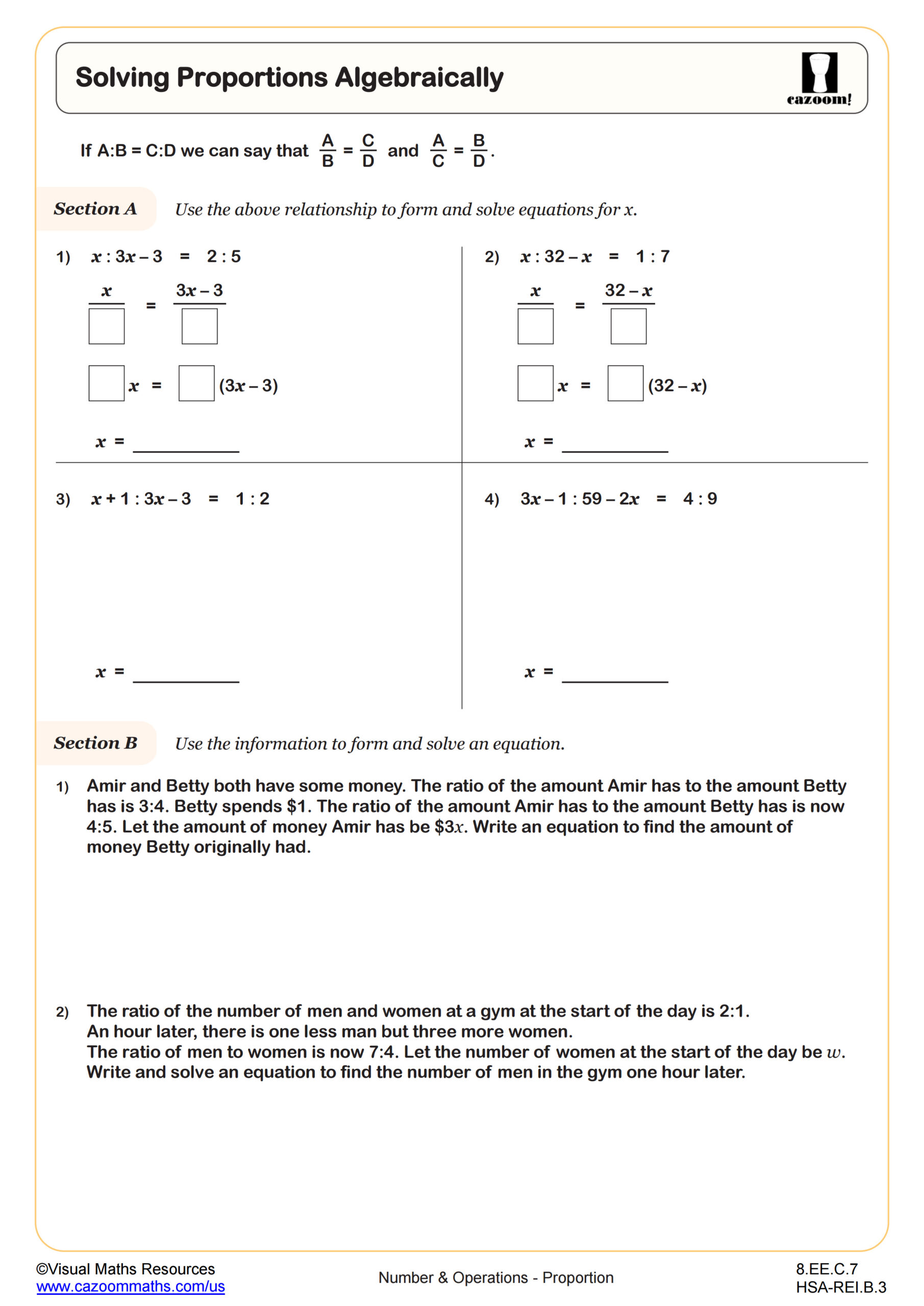
Solving Proportions Algebraically
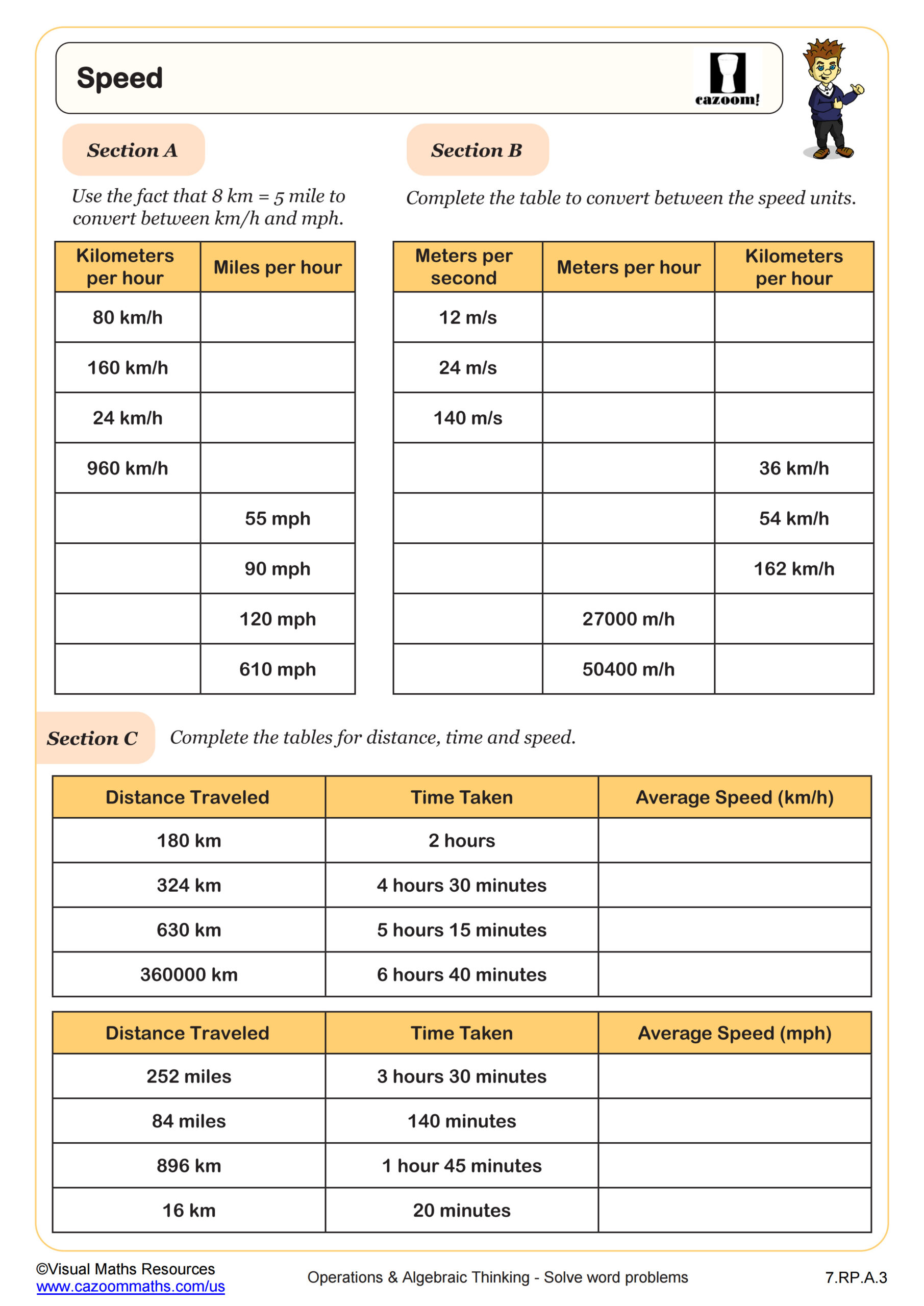
Speed
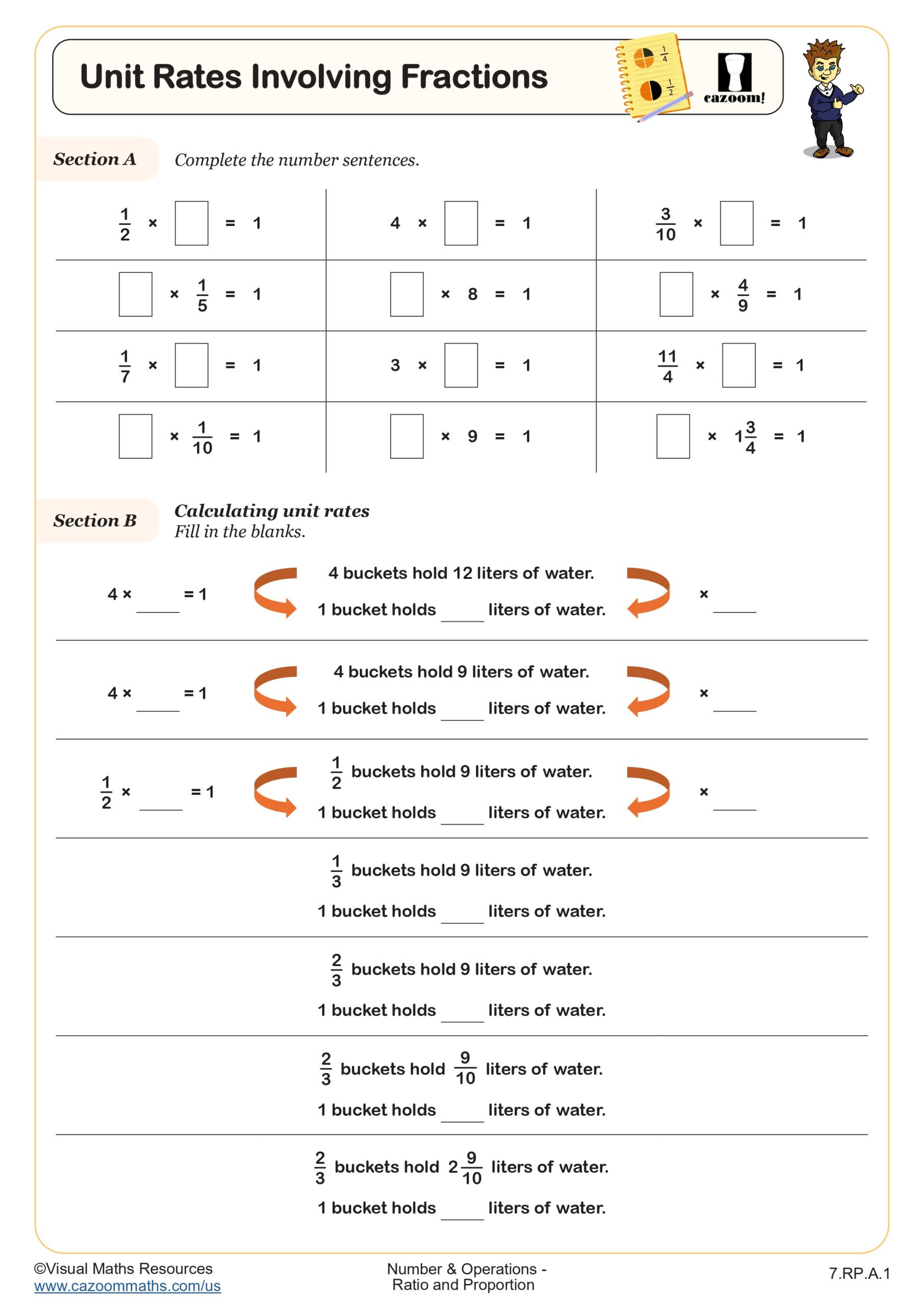
Unit Rates Involving Fractions
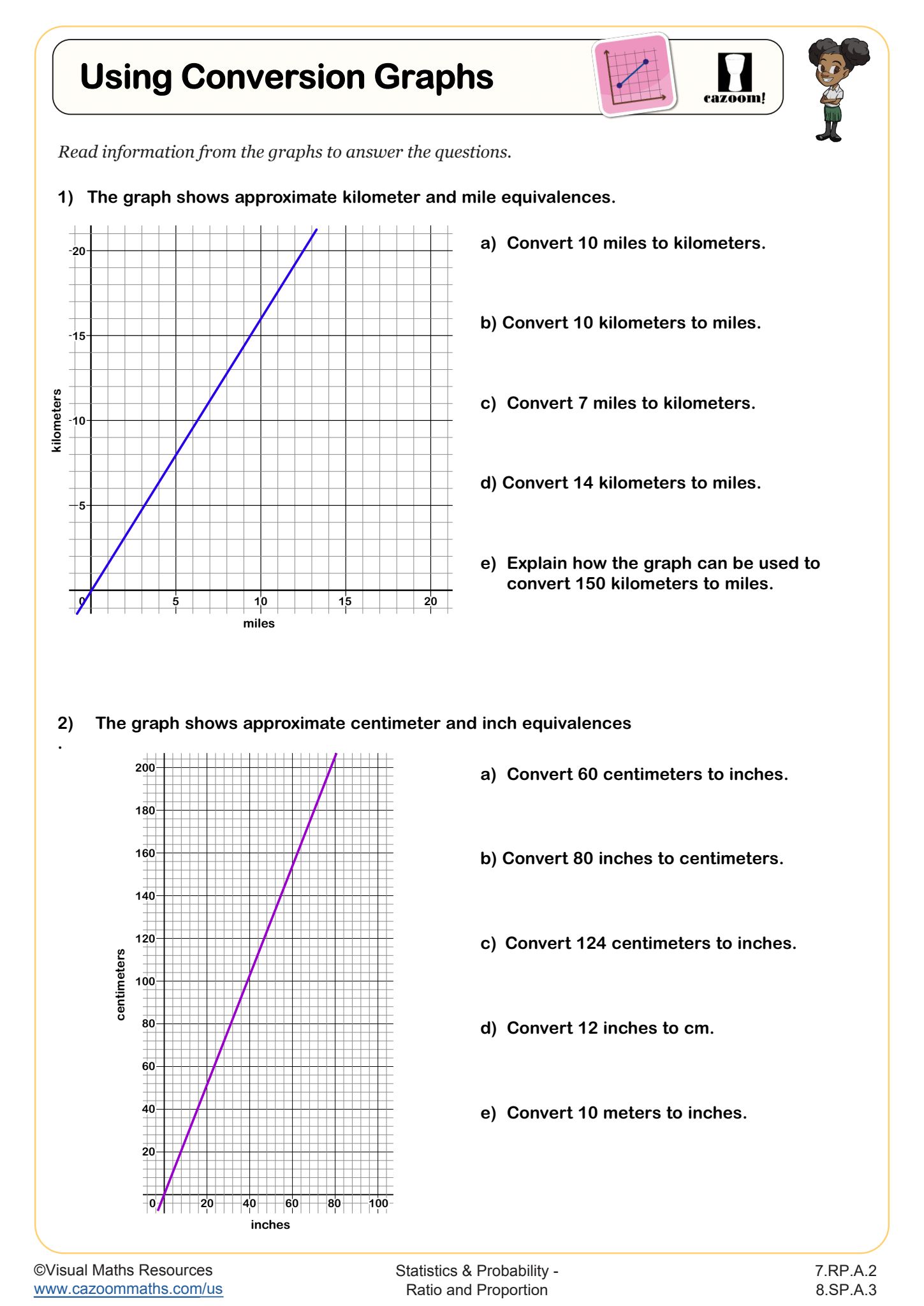
Using Conversion Graphs
All worksheets are created by the team of experienced teachers at Cazoom Math.
What Are Proportions and Why Do Middle School Students Need to Master Them?
Proportions are equations that show two ratios are equivalent, expressing how quantities relate to each other through multiplication. This concept appears throughout the middle school curriculum, particularly in 6th through 8th grade, where students transition from arithmetic thinking to algebraic reasoning. The Common Core State Standards emphasize proportional relationships as a unifying theme across middle grades mathematics.
Students lose points on standardized tests when they set up proportions incorrectly, often placing corresponding values in the wrong positions of the equation. Teachers notice that students who can identify what changes and what stays constant in a situation typically set up proportions correctly. Cross-multiplication becomes a reliable solving method once students understand that proportions represent balanced relationships, not just procedural steps to memorize.
Which Grade Levels Cover Proportion Worksheets?
These proportion worksheets span 6th grade, 7th grade, and 8th grade middle school mathematics. The topic first appears formally in 6th grade when students begin analyzing proportional relationships and using ratio reasoning to solve problems. By 7th grade, proportions become central to the curriculum as students work with percentages, scale drawings, and constant rates of change.
The progression across grade levels moves from concrete ratio problems in 6th grade to more abstract applications in 8th grade involving similar figures and linear relationships. Students confidently tackle proportion problems in algebra once they recognize that the constant of proportionality connects to slope and unit rate. The worksheets increase in complexity, introducing multi-step problems and contexts that require students to interpret situations before setting up equations.
How Do Recipe Proportions Help Students Understand Scaling?
Recipe proportion problems require students to scale ingredient quantities up or down while maintaining the same taste and texture, which reinforces the concept that all parts of a ratio must change by the same factor. Students work through scenarios like adjusting a recipe from 4 servings to 10 servings, requiring them to multiply each ingredient by 2.5 rather than applying inconsistent scaling. This subtopic helps students visualize proportional relationships through familiar contexts before tackling more abstract mathematical applications.
Chefs, nutritionists, and food scientists use these exact proportion skills when developing products for different batch sizes or adjusting formulas for commercial production. Students make the connection between classroom mathematics and STEM careers when they realize that pharmaceutical companies use proportional reasoning to scale medication formulas from laboratory samples to mass production. The precision required in recipe scaling mirrors the exactness needed in chemical engineering and materials science.
How Can Teachers Use These Proportion Worksheets in the Classroom?
The worksheets provide scaffolded practice that moves from straightforward ratio problems to complex proportion applications, allowing students to build confidence before tackling multi-step scenarios. Each worksheet focuses on specific contexts like exchange rates or recipe scaling, which helps students recognize proportion patterns across different situations. The included answer keys enable students to self-check their work, promoting metacognition about where errors occur in their problem-solving process.
Many teachers find these worksheets effective for differentiated instruction, assigning simpler recipe problems to students who need concrete contexts while challenging advanced learners with exchange rate calculations involving multiple currencies. The materials work well for targeted intervention with small groups who haven't yet grasped proportional reasoning, and they serve as efficient homework assignments that reinforce classroom learning. Teachers also use individual worksheets as formative assessments to identify which students need additional support before unit tests.