Middle School Samples and Surveys Worksheets
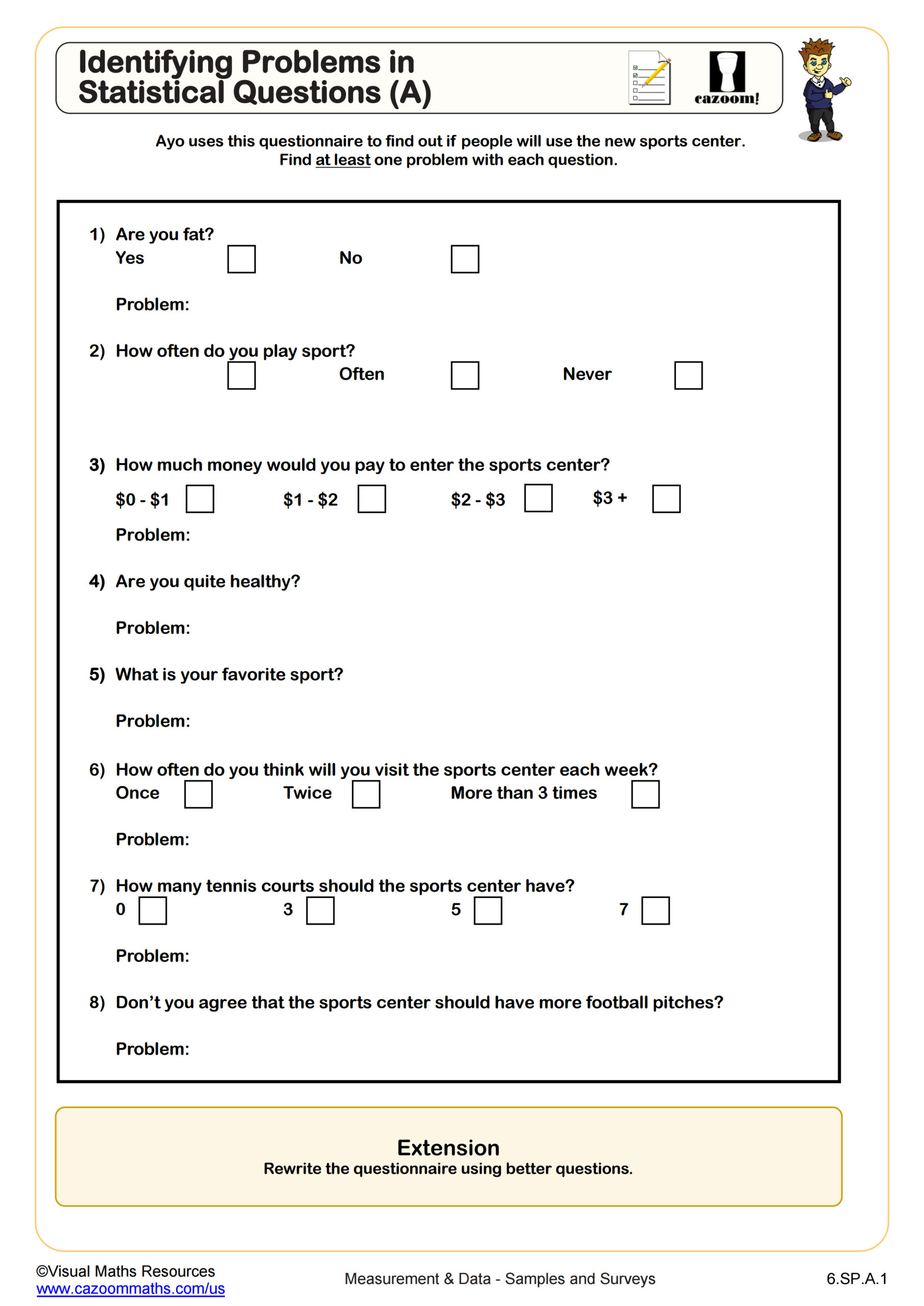
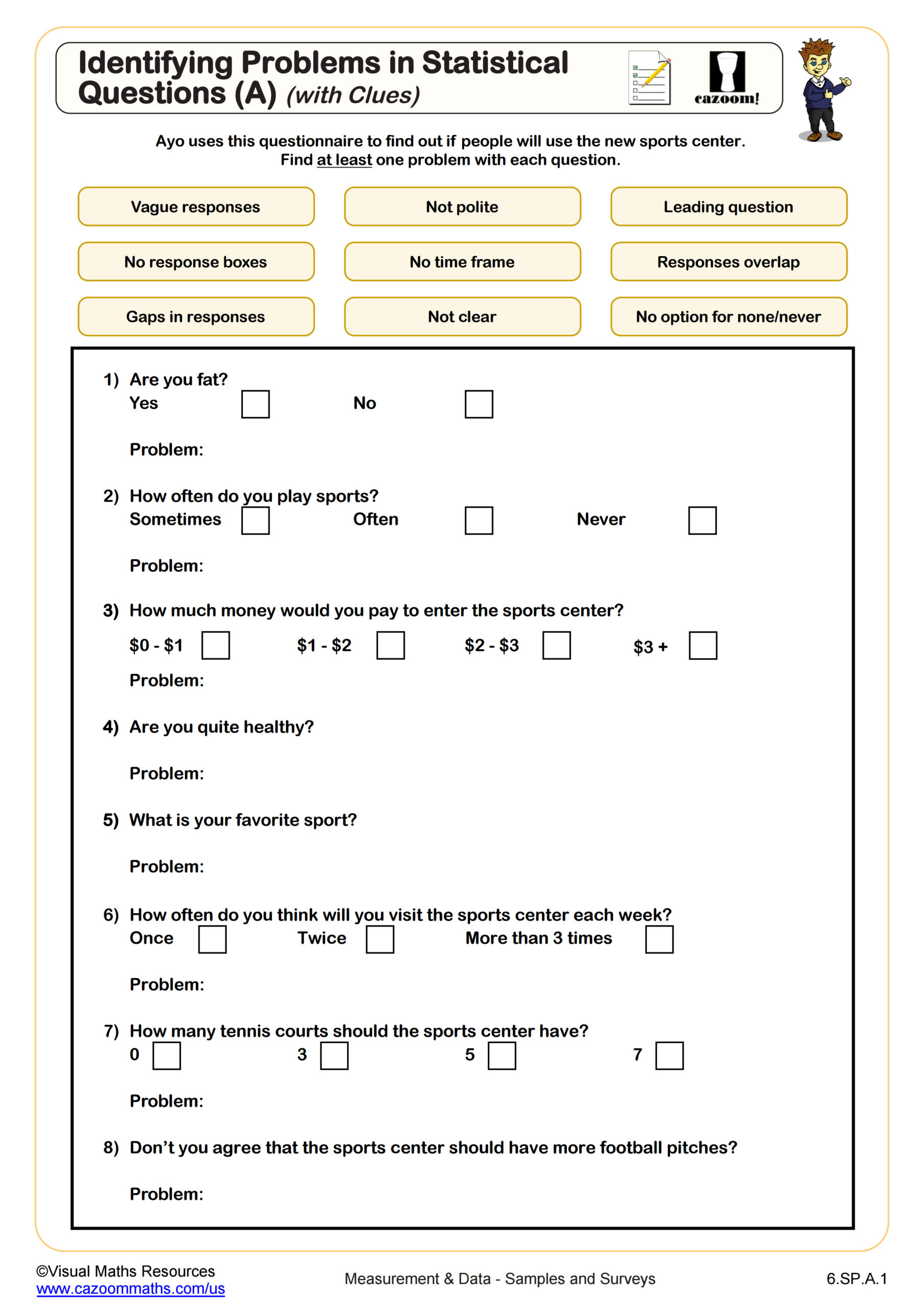
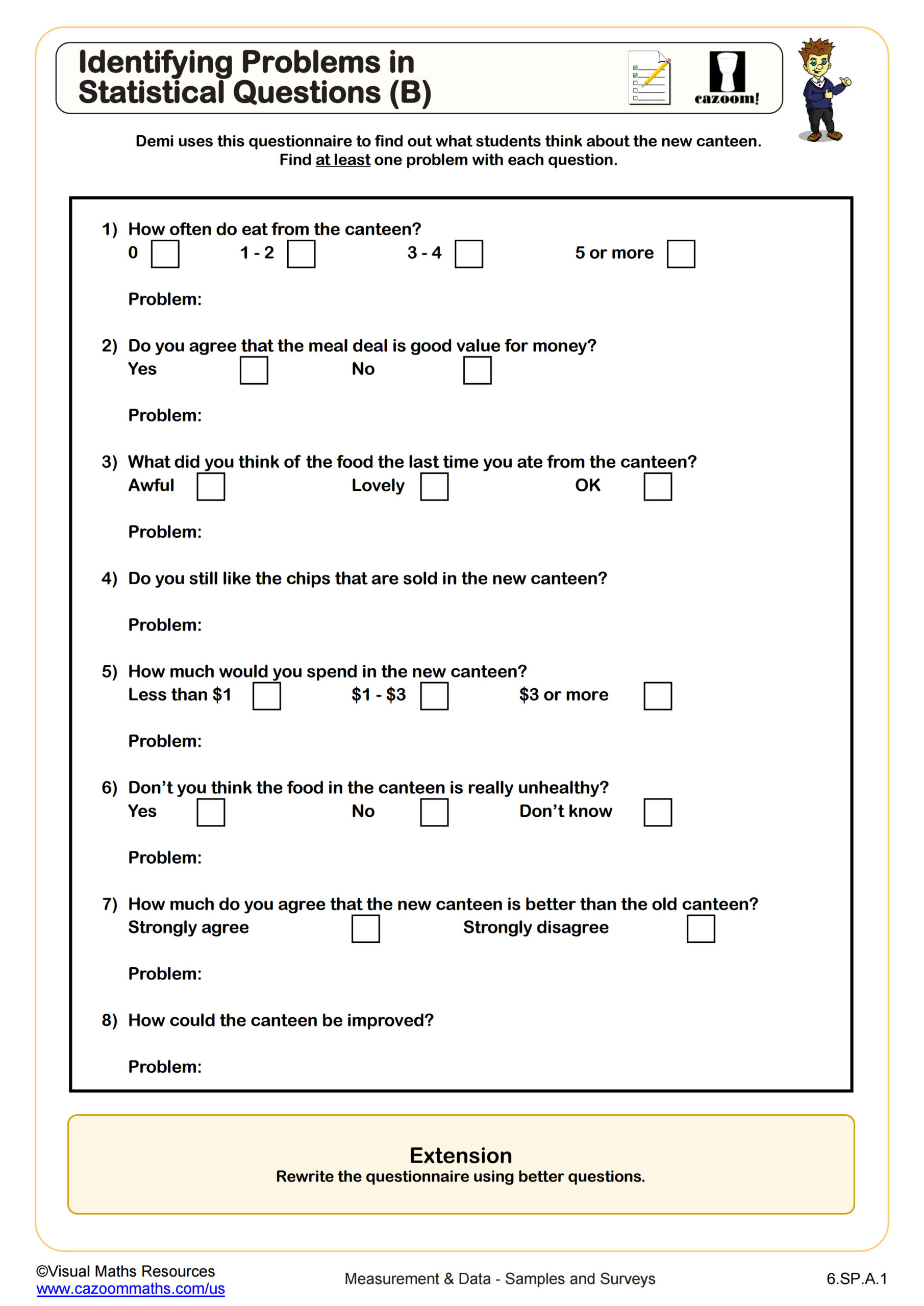
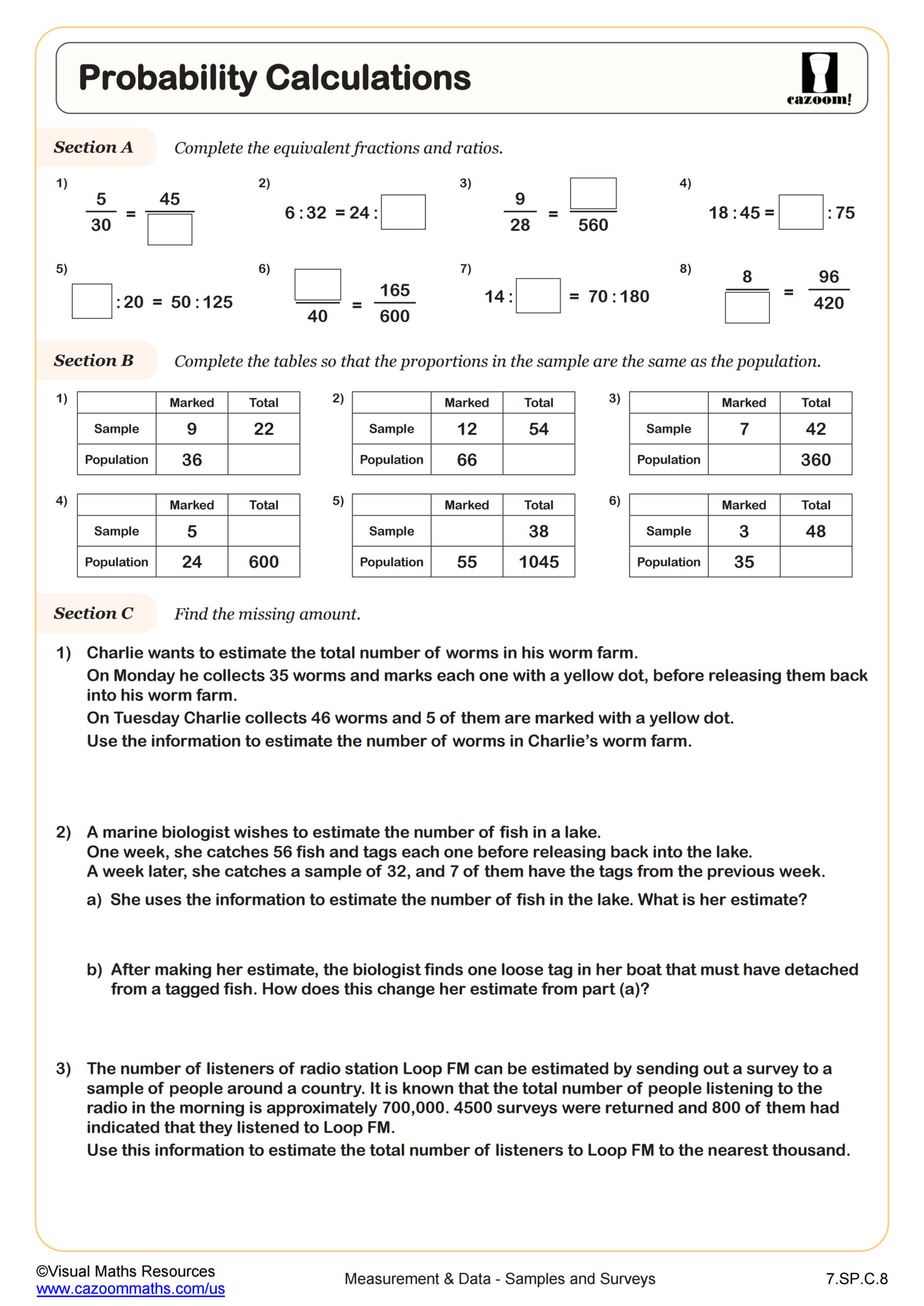
All worksheets are created by the team of experienced teachers at Cazoom Math.
What makes a good sample worksheet for teaching statistical concepts?
A quality sample worksheet presents realistic scenarios that middle schoolers can relate to, such as surveying classmates about favorite lunch options or sampling student preferences for school activities. The problems should progress from identifying populations and samples to evaluating sampling methods for bias, aligning with Common Core Statistics and Probability standards for grades 6-8.
Teachers notice that students often confuse sample size with sample quality, assuming bigger samples automatically produce better results. Effective worksheets address this misconception by including problems where small, well-chosen samples outperform large, biased ones, helping students understand that random selection matters more than sheer numbers.
Which grade levels benefit most from samples and surveys practice?
Samples and surveys concepts typically appear in 7th and 8th grade curricula, though some advanced 6th grade classes introduce basic population and sample identification. The Common Core introduces these statistical reasoning skills in 7th grade (7.SP.1) and expands them in 8th grade with more complex inference work.
Middle school represents the ideal developmental window for this content because students can grasp abstract statistical concepts while still engaging with concrete, relatable examples. Teachers find that younger students struggle with the logical reasoning required to identify bias, while high schoolers benefit more from advanced probability and inference topics that build on these foundational skills.
How can students identify biased sampling methods effectively?
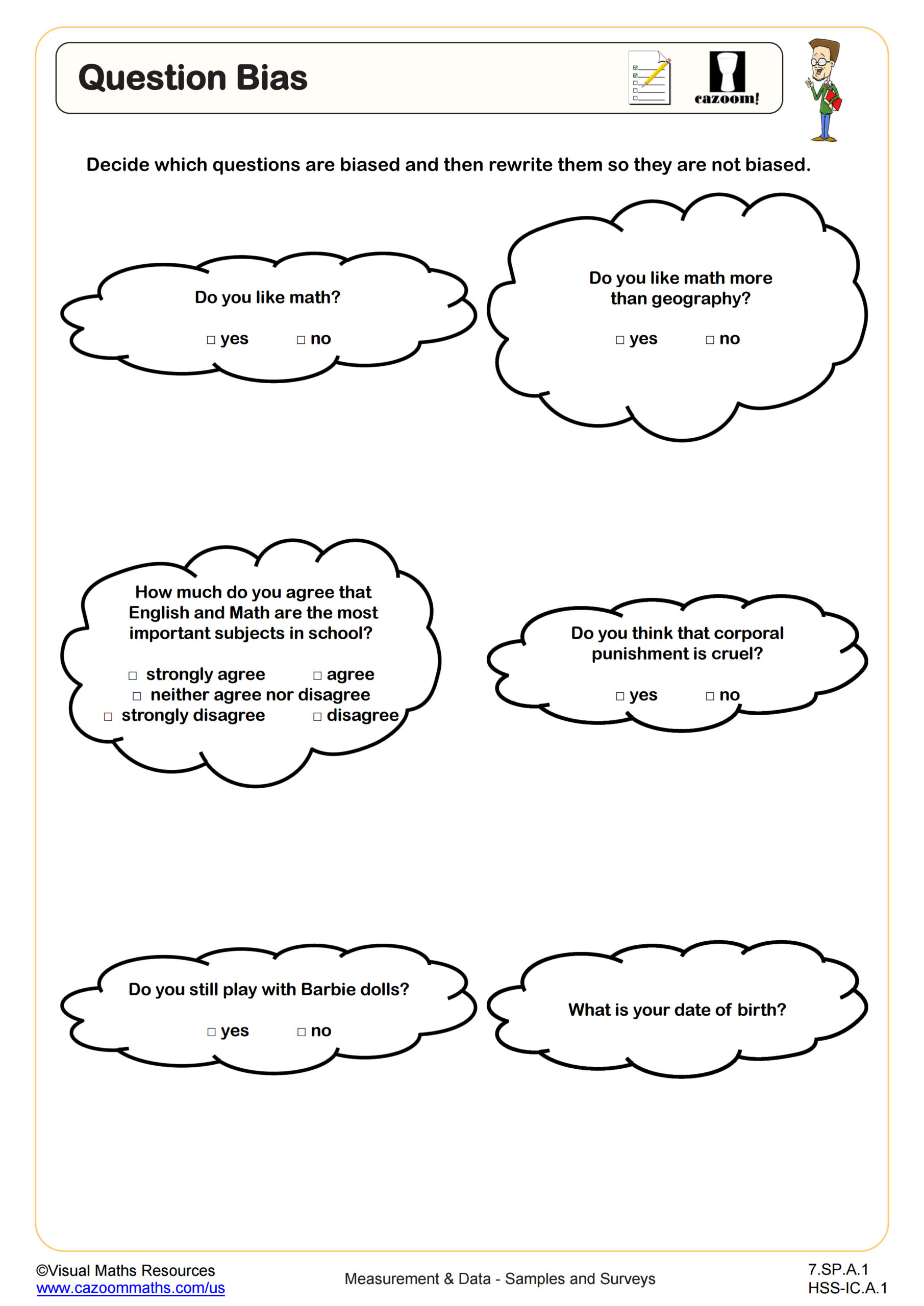
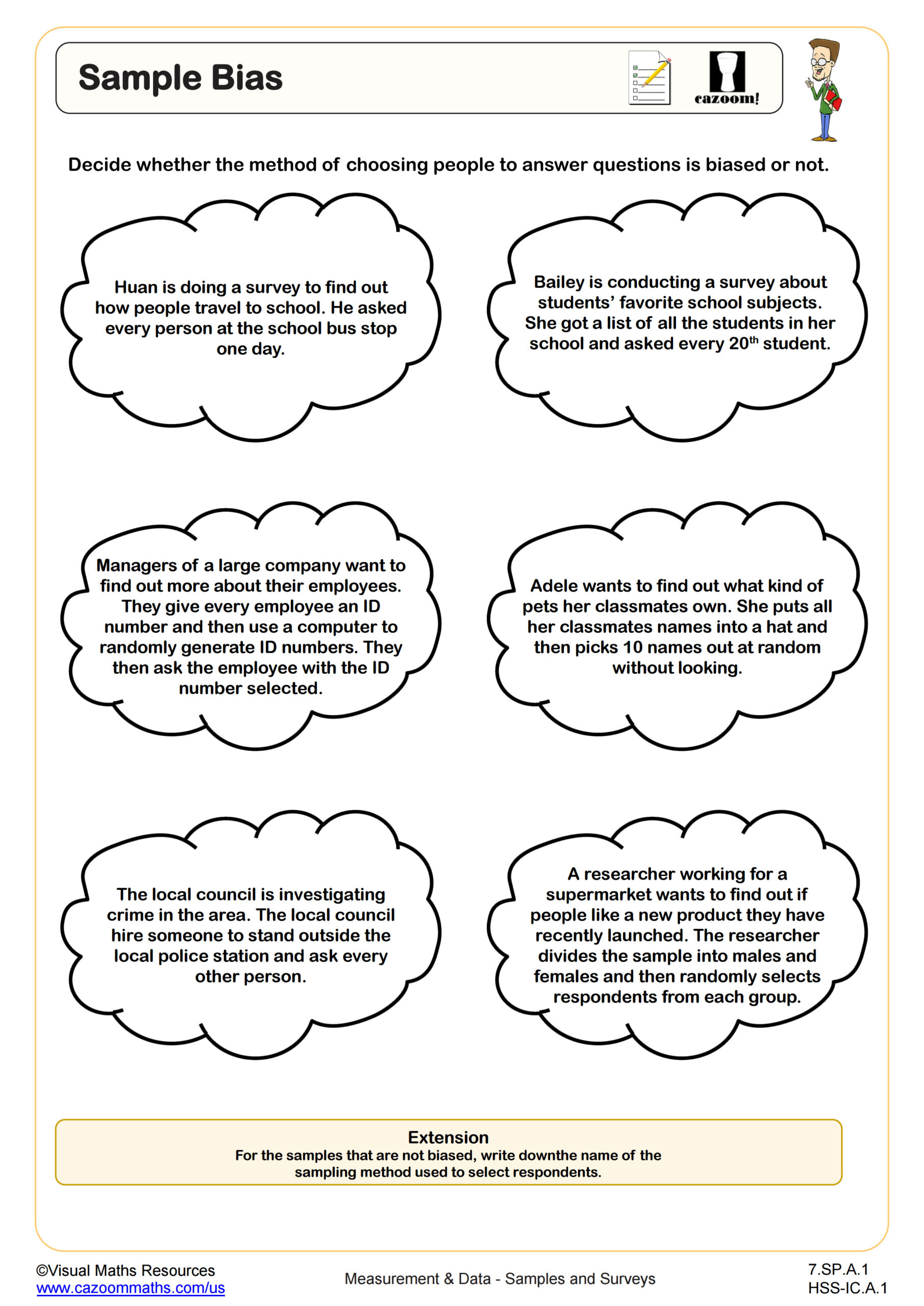
Students learn to recognize biased sampling by examining who gets included or excluded from surveys and whether the sampling method represents the intended population fairly. Common bias types include convenience sampling, voluntary response surveys, and samples that systematically exclude certain groups from the population being studied.
Many students initially believe that asking people nicely makes a survey unbiased, missing the structural issues with sampling methods. Teachers see breakthrough moments when students realize that surveying only students in the library about study habits creates bias, even though the survey question itself seems reasonable and the students volunteered honest answers.
What strategies help students apply sampling concepts to real situations?
Teachers find success connecting sampling concepts to current events, school decisions, and STEM applications where data collection affects real outcomes. Students engage more deeply when they design surveys for actual school issues or critique sampling methods they encounter in news articles and social media posts.
Role-playing exercises where students act as market researchers or pollsters help solidify understanding of sampling challenges. When students attempt to survey their peers about controversial topics, they naturally discover response bias and sampling difficulties, making abstract statistical concepts concrete and memorable through direct experience.