Middle School Similarity and Congruence Worksheets
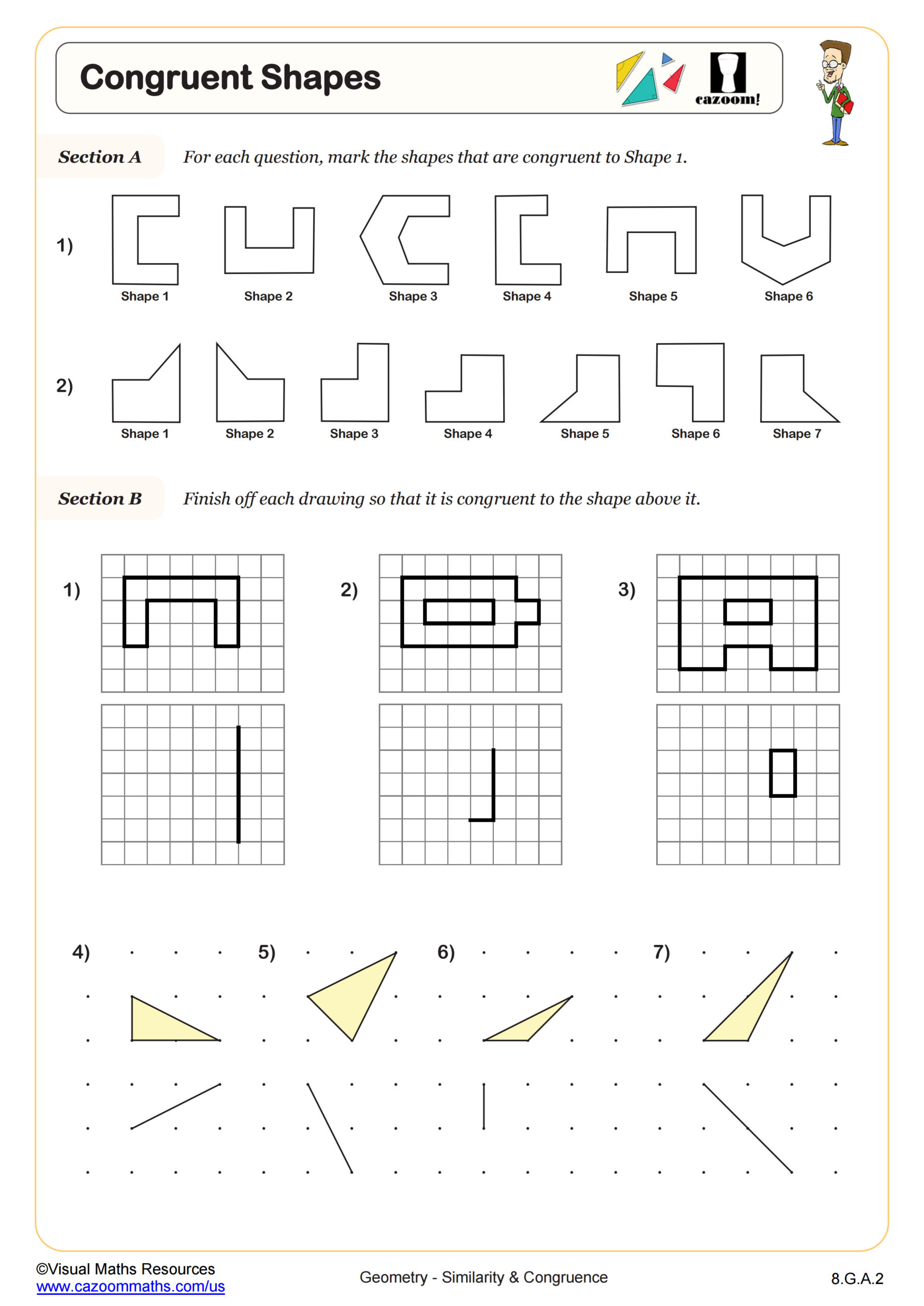
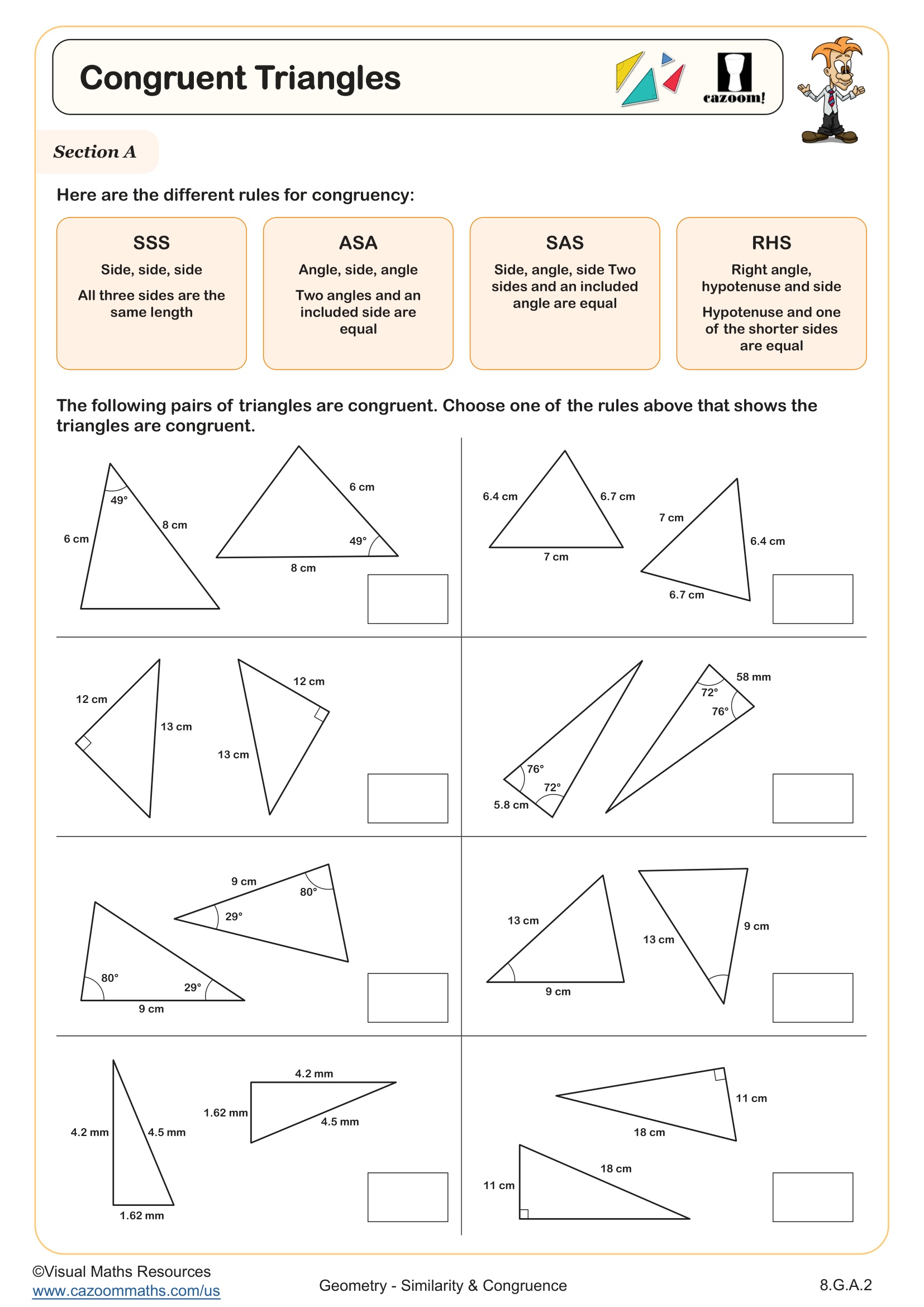
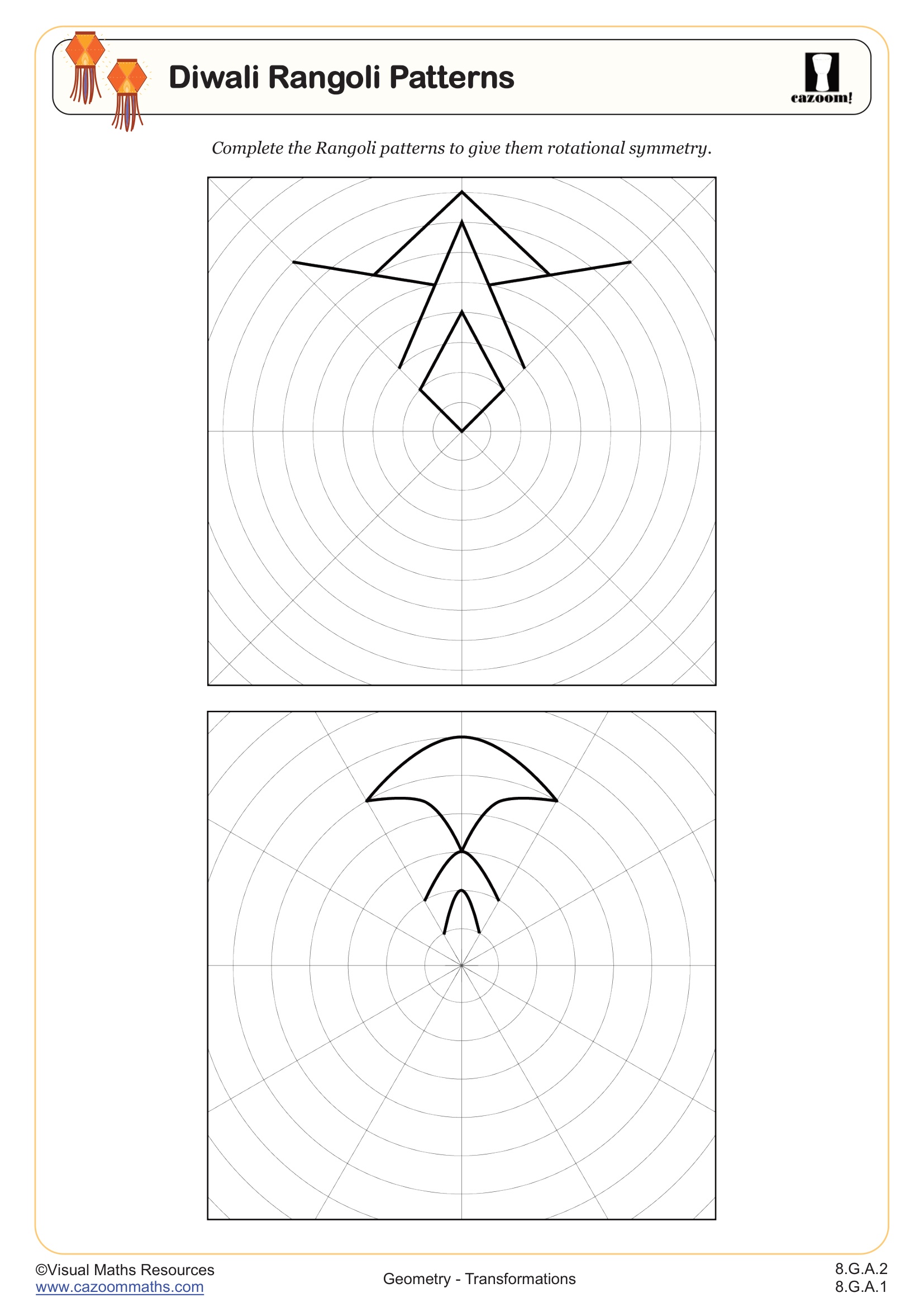
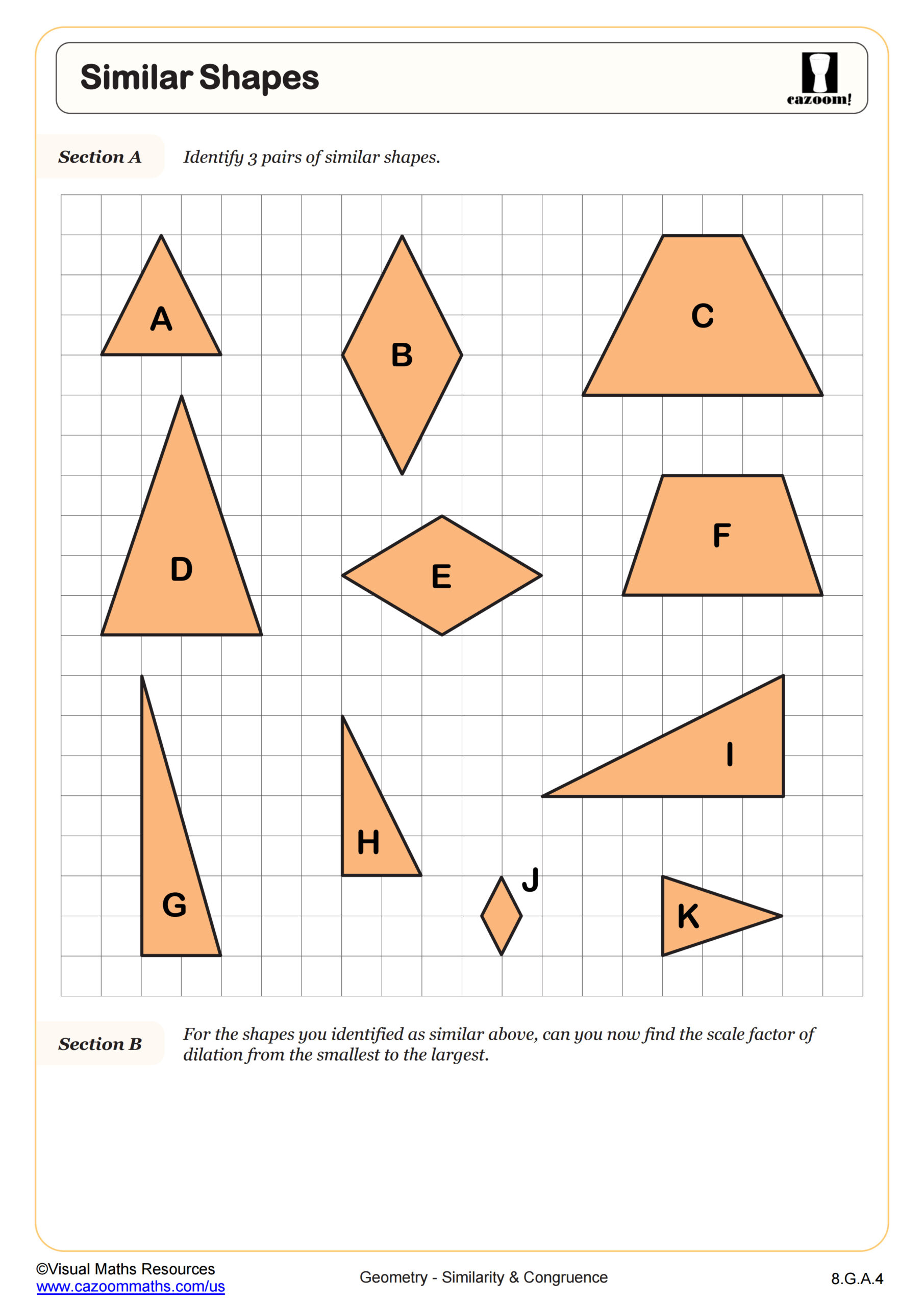
All worksheets are created by the team of experienced teachers at Cazoom Math.
What's the difference between congruent and similar shapes?
Congruent shapes are identical in both shape and size, with all corresponding angles and side lengths equal, while similar shapes have the same shape but different sizes, with corresponding angles equal and side lengths proportional by a scale factor. The Common Core introduces congruence in 8th grade (8.G.A.2) and similarity concepts starting in 7th grade (7.G.A.1), building toward formal transformation definitions.
Students often struggle when similar figures appear in different orientations or when scale factors are fractions rather than whole numbers. A breakthrough typically happens when students recognize that photocopying a document at 150% creates a similar but not congruent image, with every length multiplied by 1.5 while angles remain unchanged. Teachers notice students lose points on state assessments when they multiply all measurements by the scale factor without recognizing that area scales by the square of that factor.
Which grade levels cover similarity and congruence?
These worksheets span 6th, 7th, and 8th grade, covering the full middle school progression from informal geometric observations to formal definitions using transformations. Similarity and congruence concepts appear throughout middle school geometry standards, with increasing rigor as students advance through each grade level.
Sixth graders begin with visual identification of congruent shapes and basic symmetry, while 7th graders explore scale drawings and proportional reasoning that underlies similarity. By 8th grade, students use precise transformation language (translations, rotations, reflections, dilations) to prove congruence and establish similarity criteria for triangles. This progression builds the spatial reasoning and proportional thinking that students need for high school geometry proofs and coordinate geometry transformations.
How do similar triangles apply to real-world situations?
Similar triangles allow indirect measurement by setting up proportions between corresponding sides, making it possible to calculate distances or heights that can't be measured directly. Students learn that if two triangles have equal corresponding angles, their side lengths are proportional, which forms the basis for applications ranging from shadow measurements to architectural scale models.
Engineers and architects rely on similar triangles when creating scale drawings and models, ensuring that a building's miniature representation maintains accurate proportions. Surveyors use similar triangle principles to measure distances across rivers or canyons by creating smaller, measurable triangles on accessible ground. Students confidently tackle real-world problems once they recognize that a person's height compared to their shadow length creates the same ratio as a building's height to its shadow, transforming an abstract geometric concept into a practical measurement tool.
How can teachers use these similarity and congruence worksheets effectively?
The worksheets provide structured practice that builds from identifying congruent shapes through calculating area and volume changes in similar figures, with answer keys allowing students to self-check their understanding of scale factors and corresponding parts. Teachers find the progression particularly useful because each worksheet isolates specific skills before combining them, helping pinpoint exactly where students need intervention.
Many teachers assign these worksheets during small-group instruction when students need targeted practice with triangle congruence criteria (SSS, SAS, ASA) or when reviewing for geometry units. The rangoli pattern worksheet works well for paired activities, where students identify congruent components within complex designs and discuss symmetry properties. Teachers also use individual worksheets as exit tickets after lessons on dilations or as homework following instruction on proportion-based problems, since the answer keys make it easy for students to check their work and identify misconceptions before the next class.