Middle School Simplification Worksheets
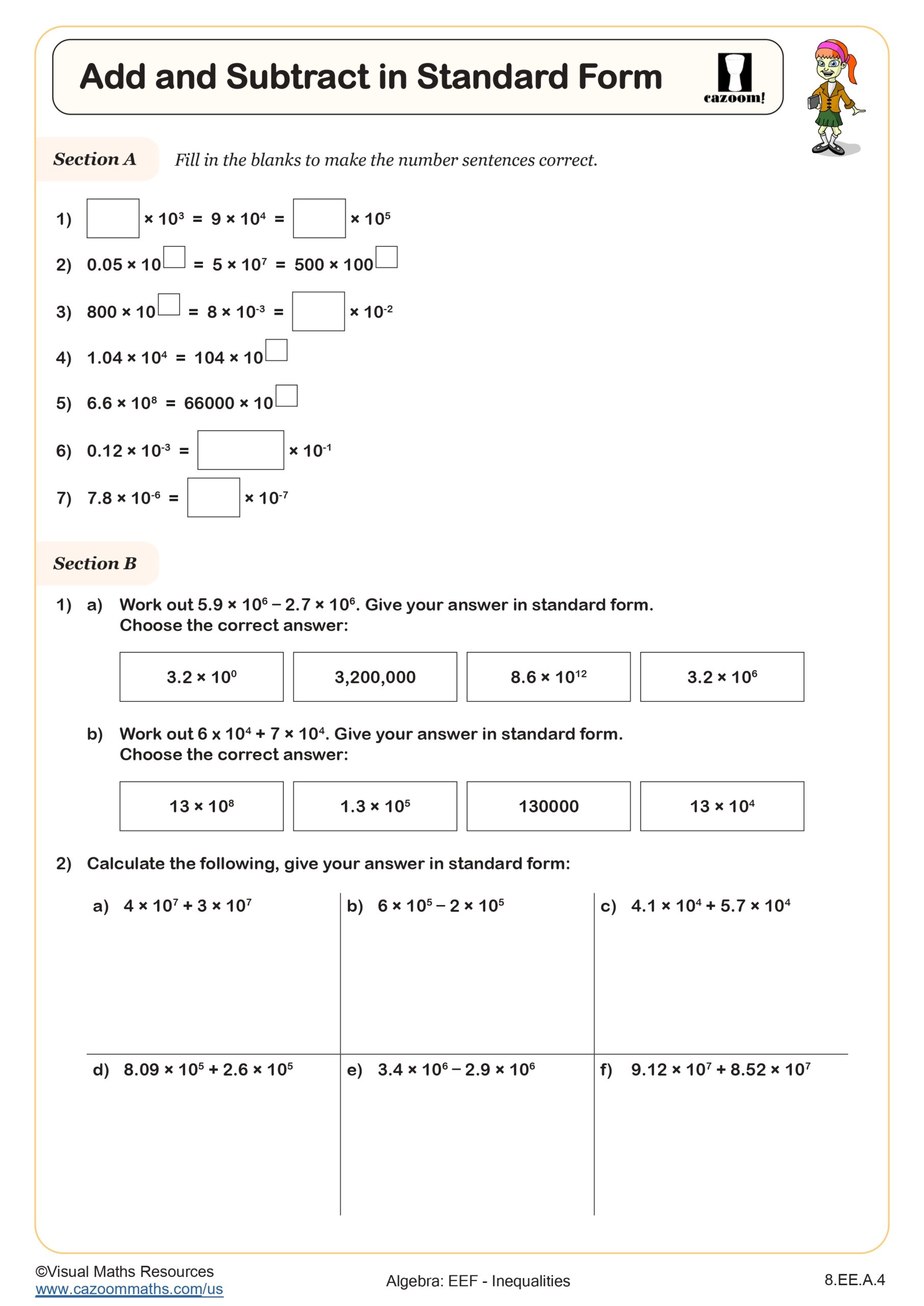
Add and Subtract in Standard Form
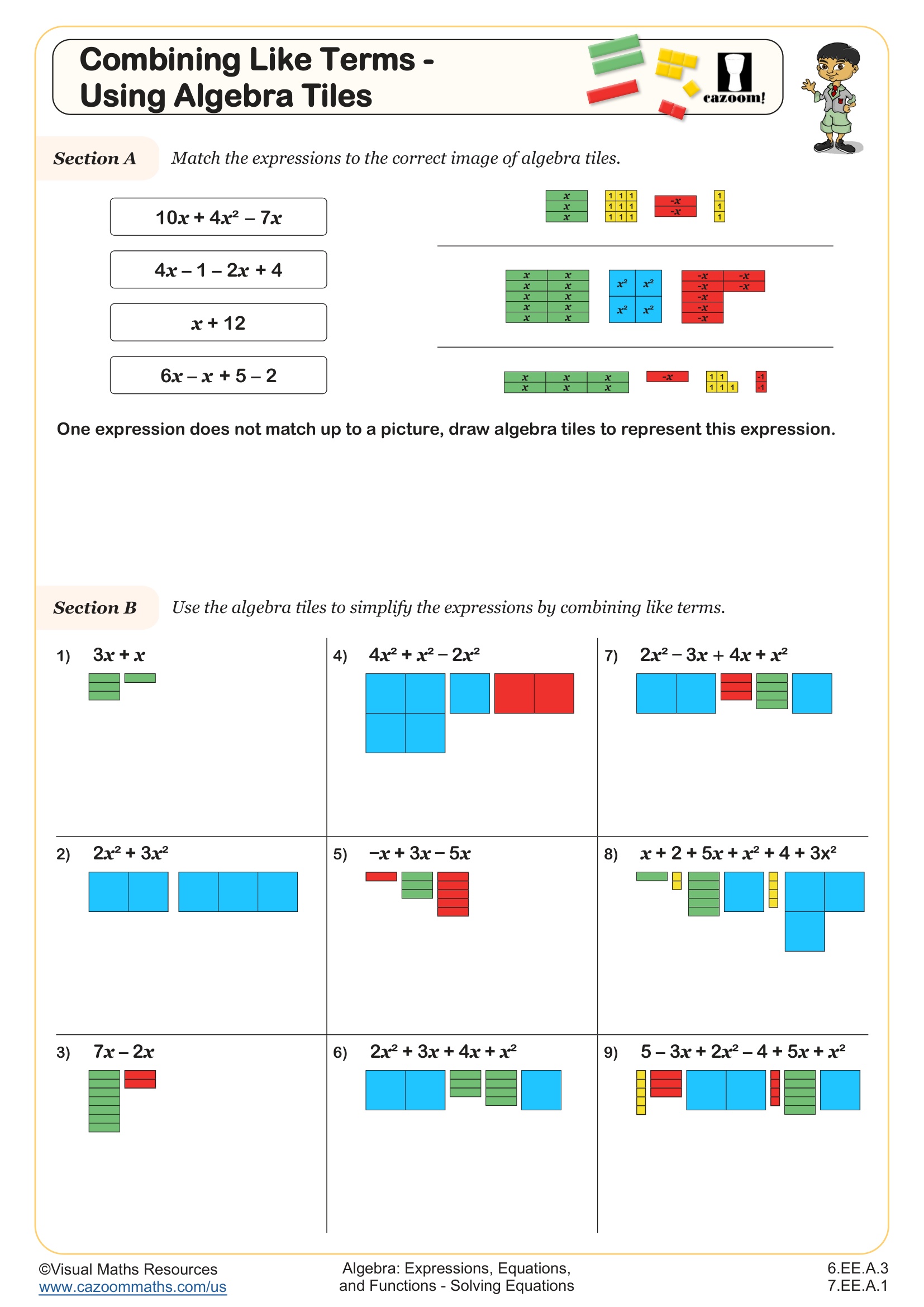
Combining Like Terms - Using Algebra Tiles
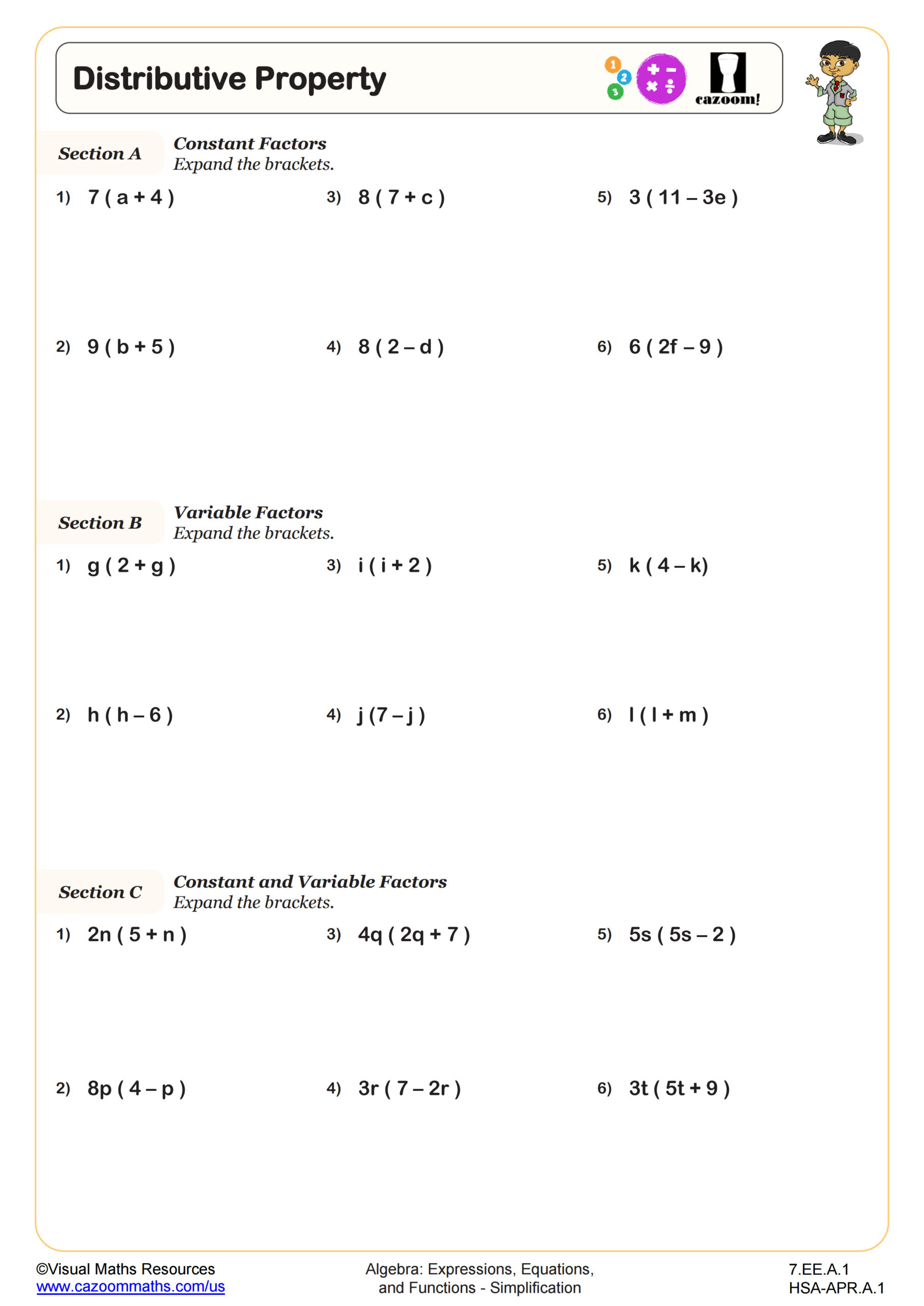
Distributive Property
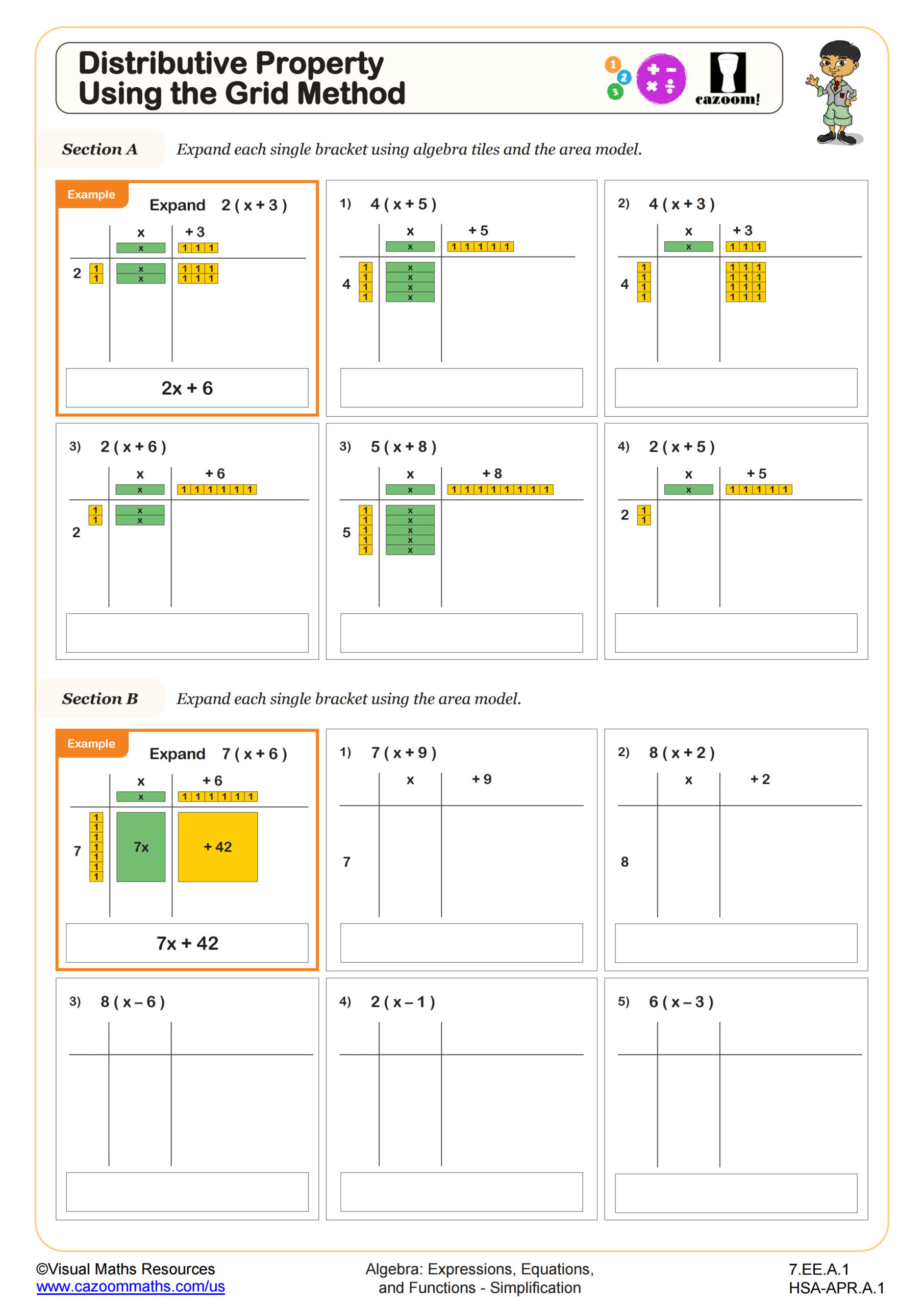
Distributive Property using the Grid Method
Evaluating Exponential Expressions
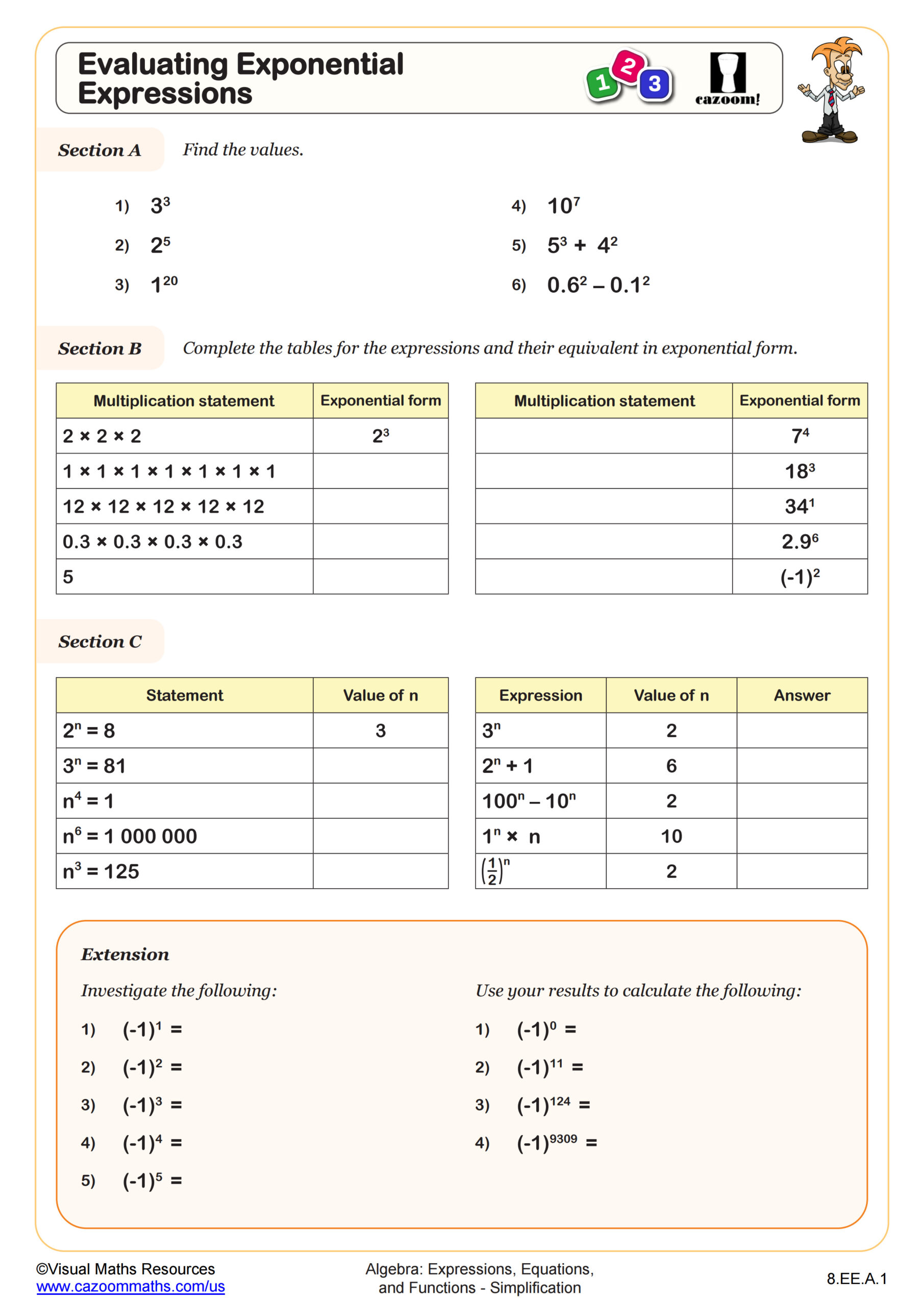
Exponential Expressions Synthesis
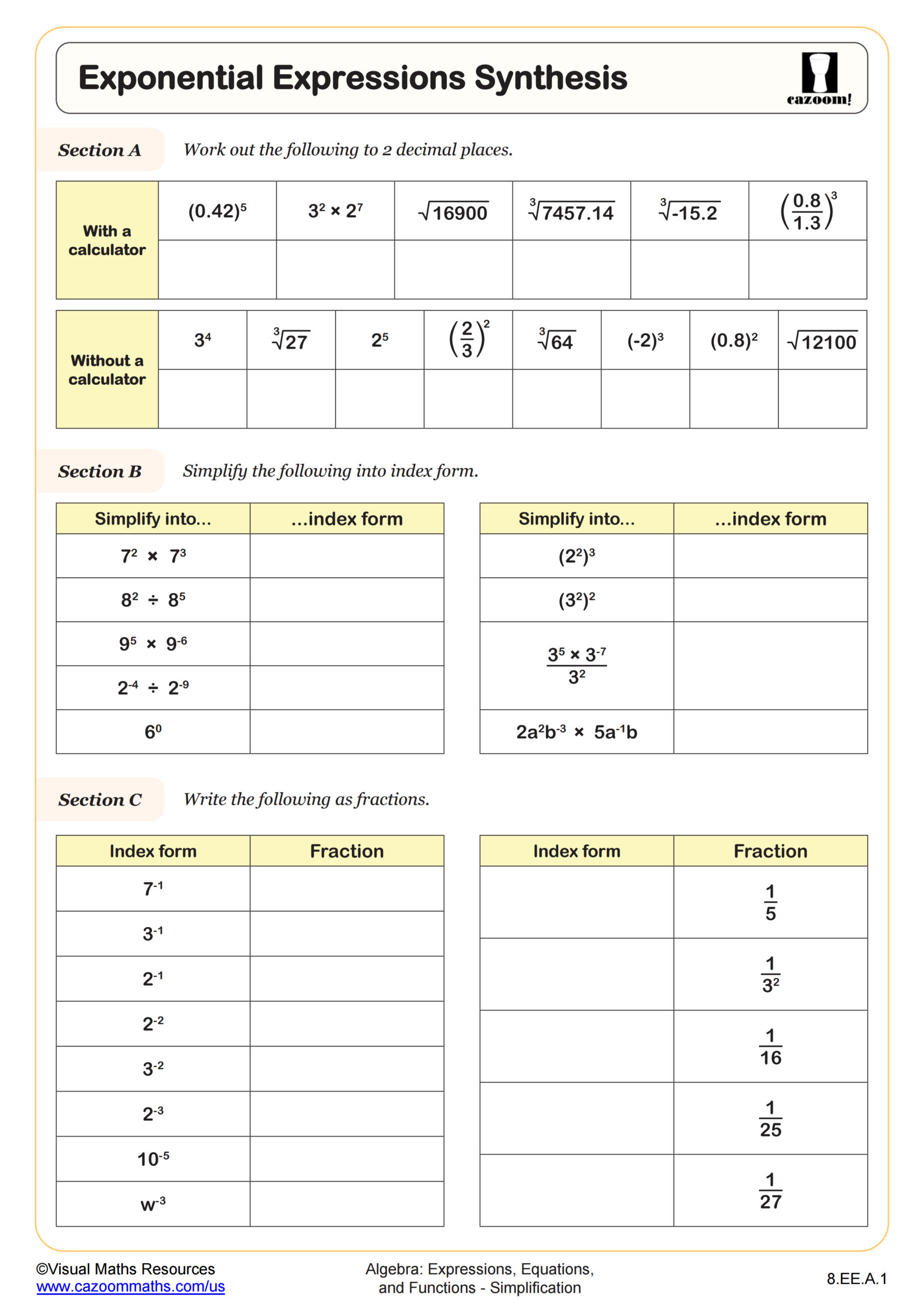
Exponential Expressions: Changing the Base
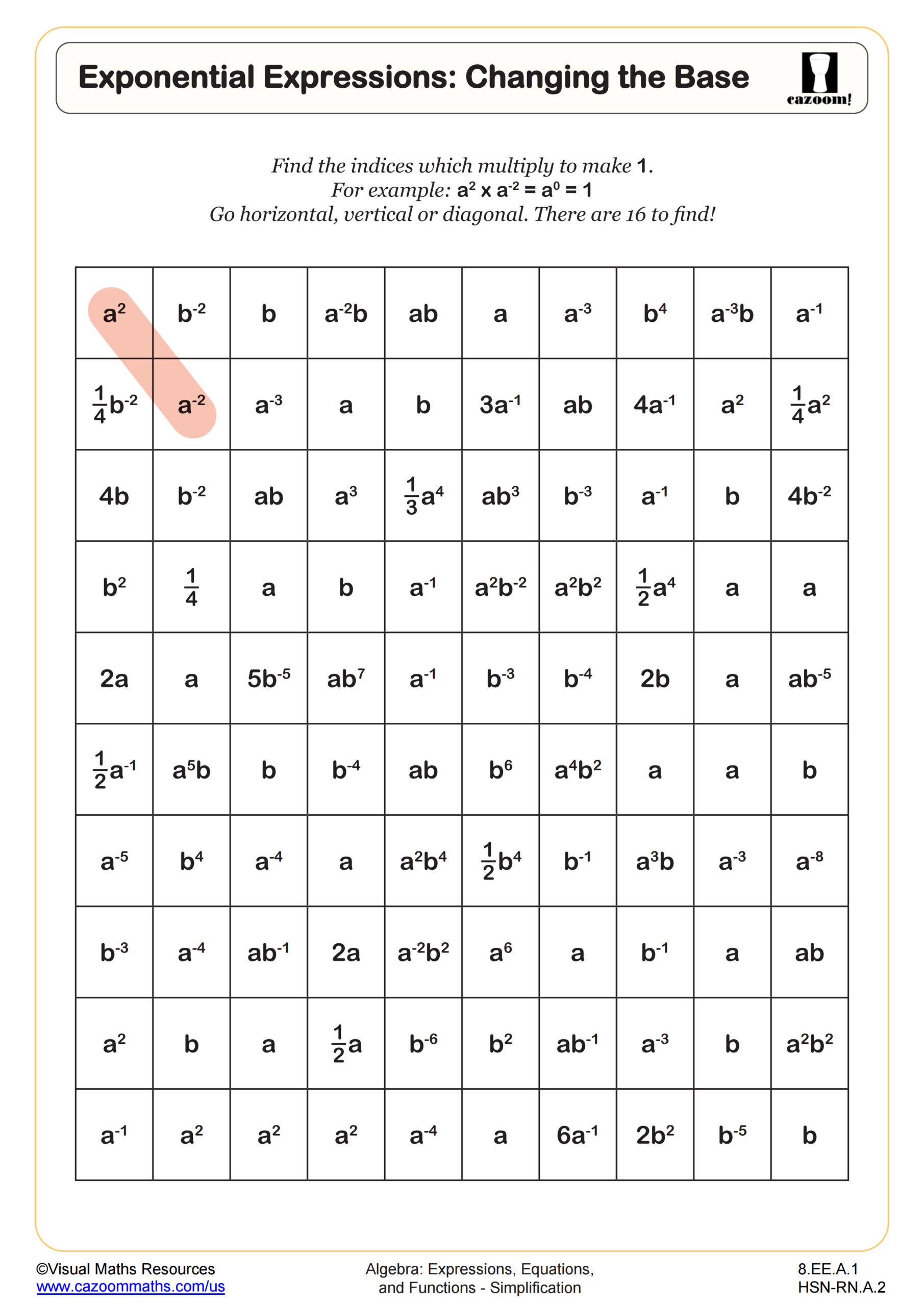
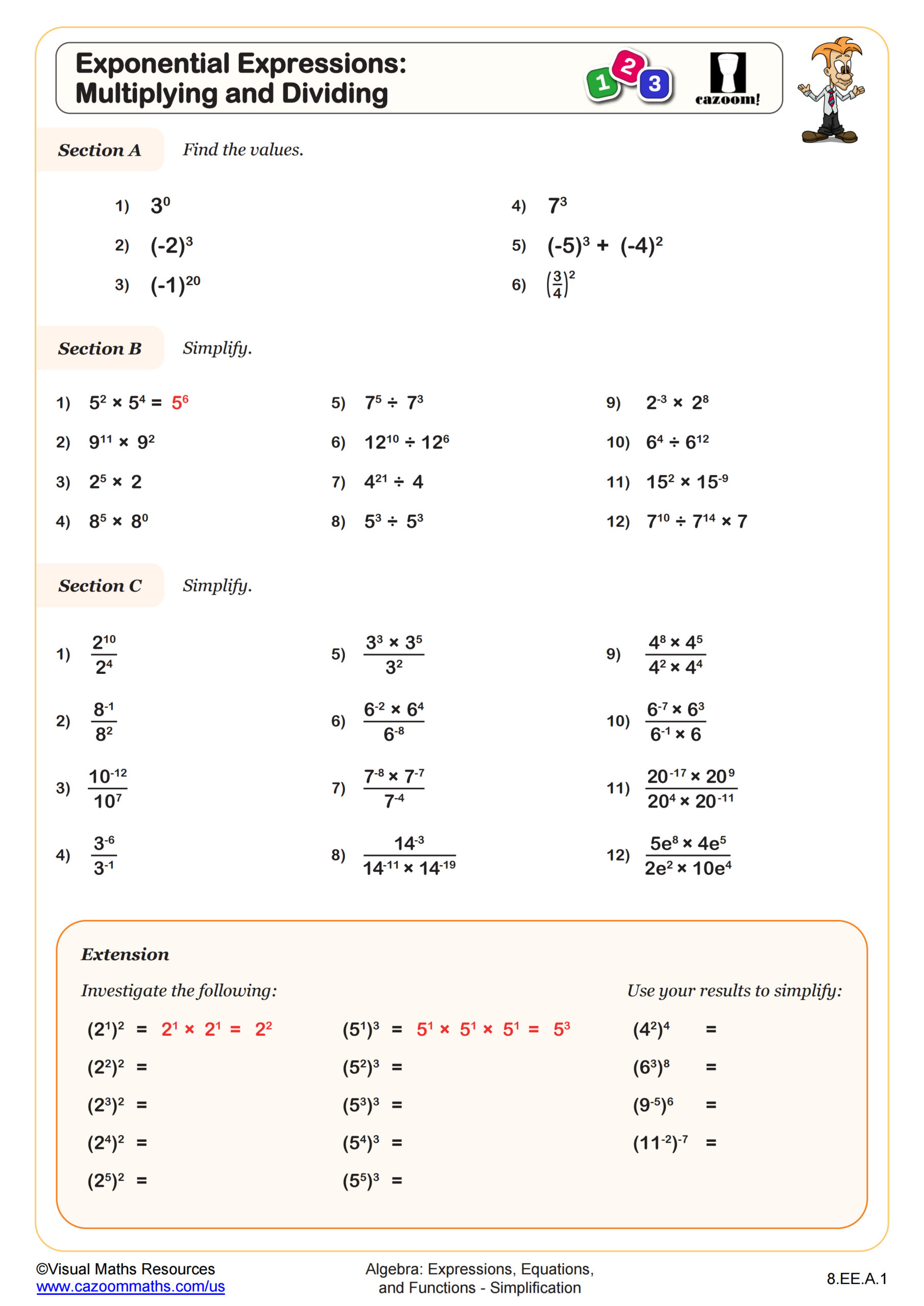
Exponential Expressions: Multiplying and Dividing
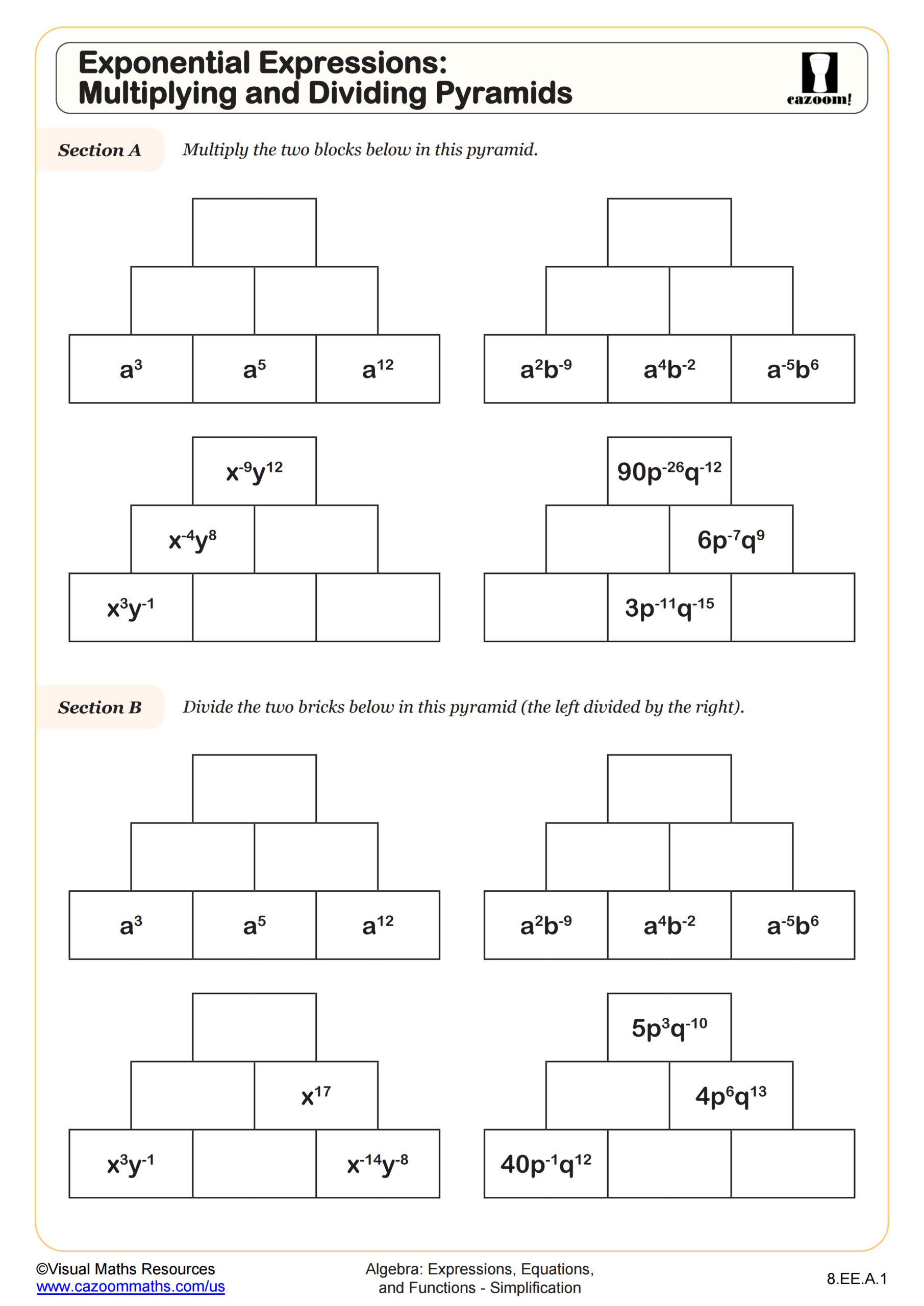
Exponential Expressions: Multiplying and Dividing Pyramids
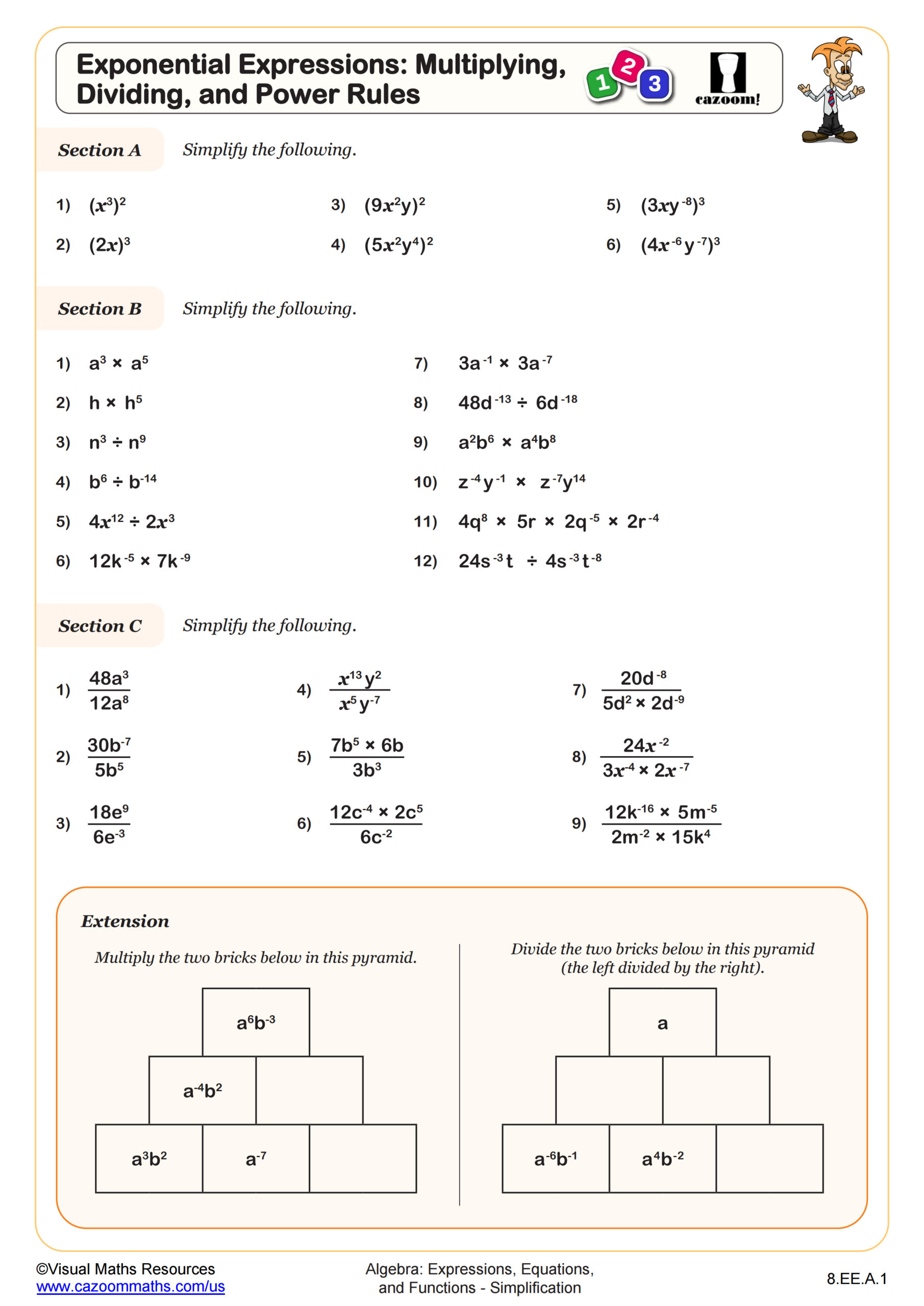
Exponential Expressions: Multiplying, Dividing, and Power Rules
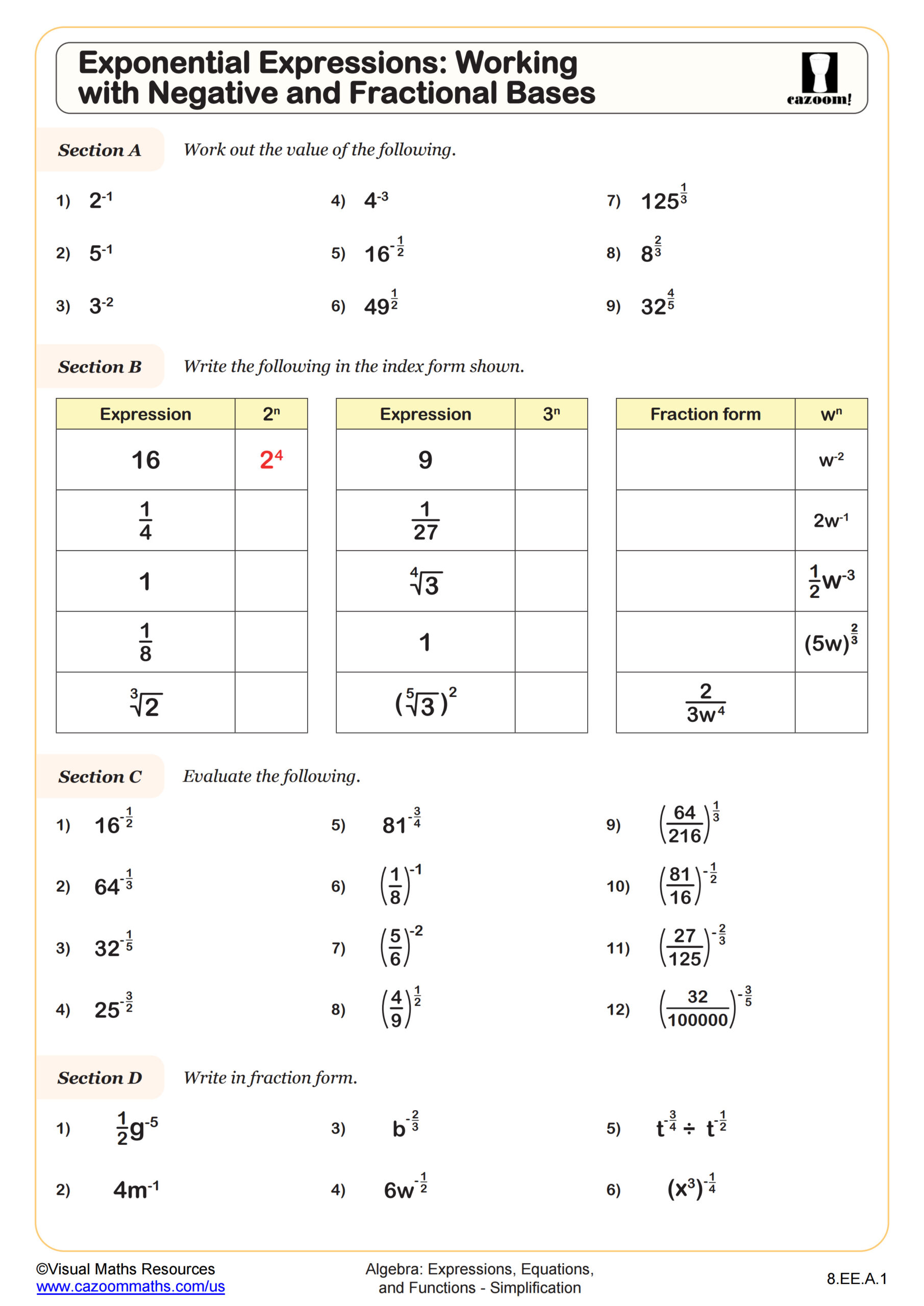
Exponential Expressions: Working with Negative and Fractional Bases
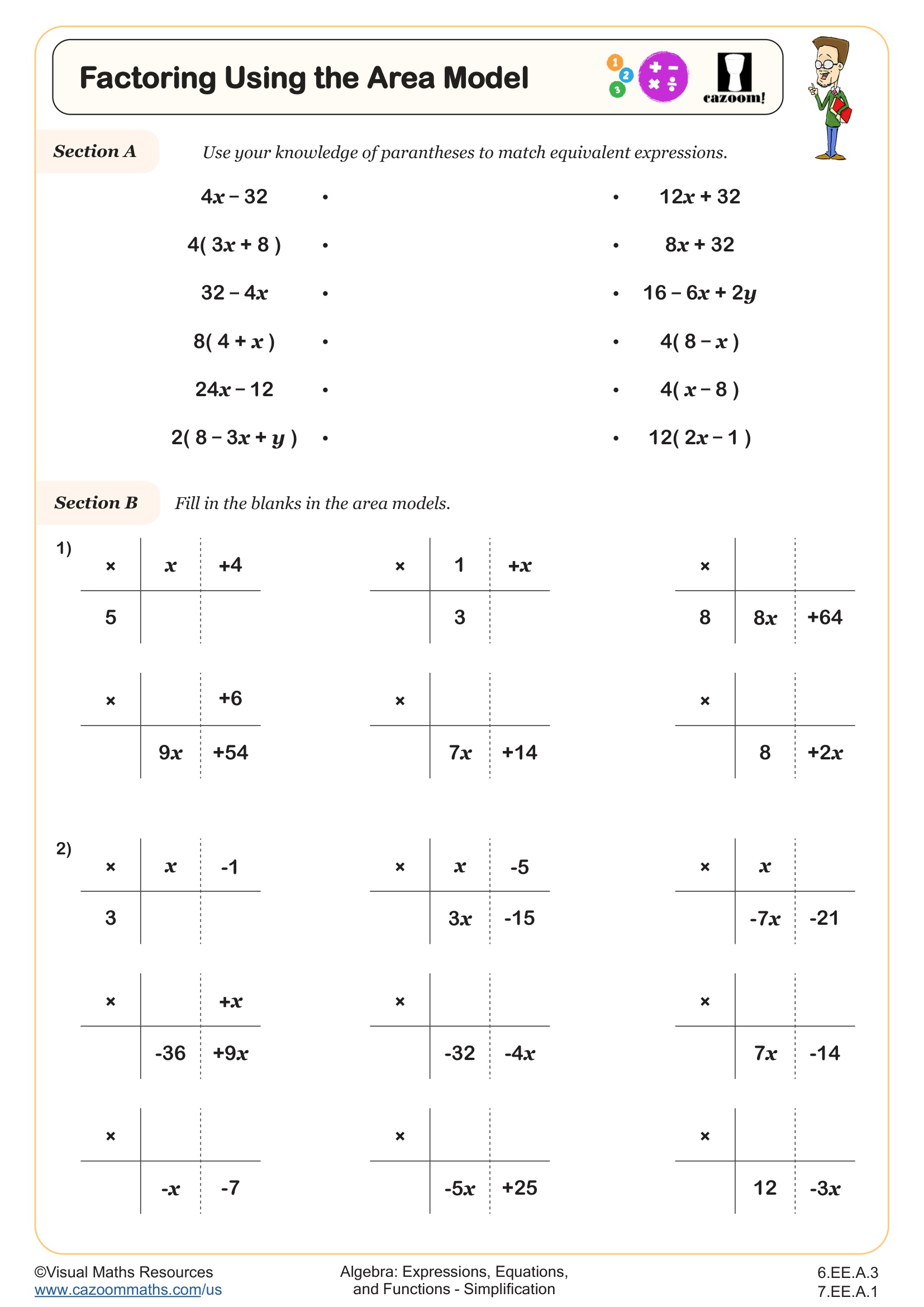
Factoring Using the Area Model
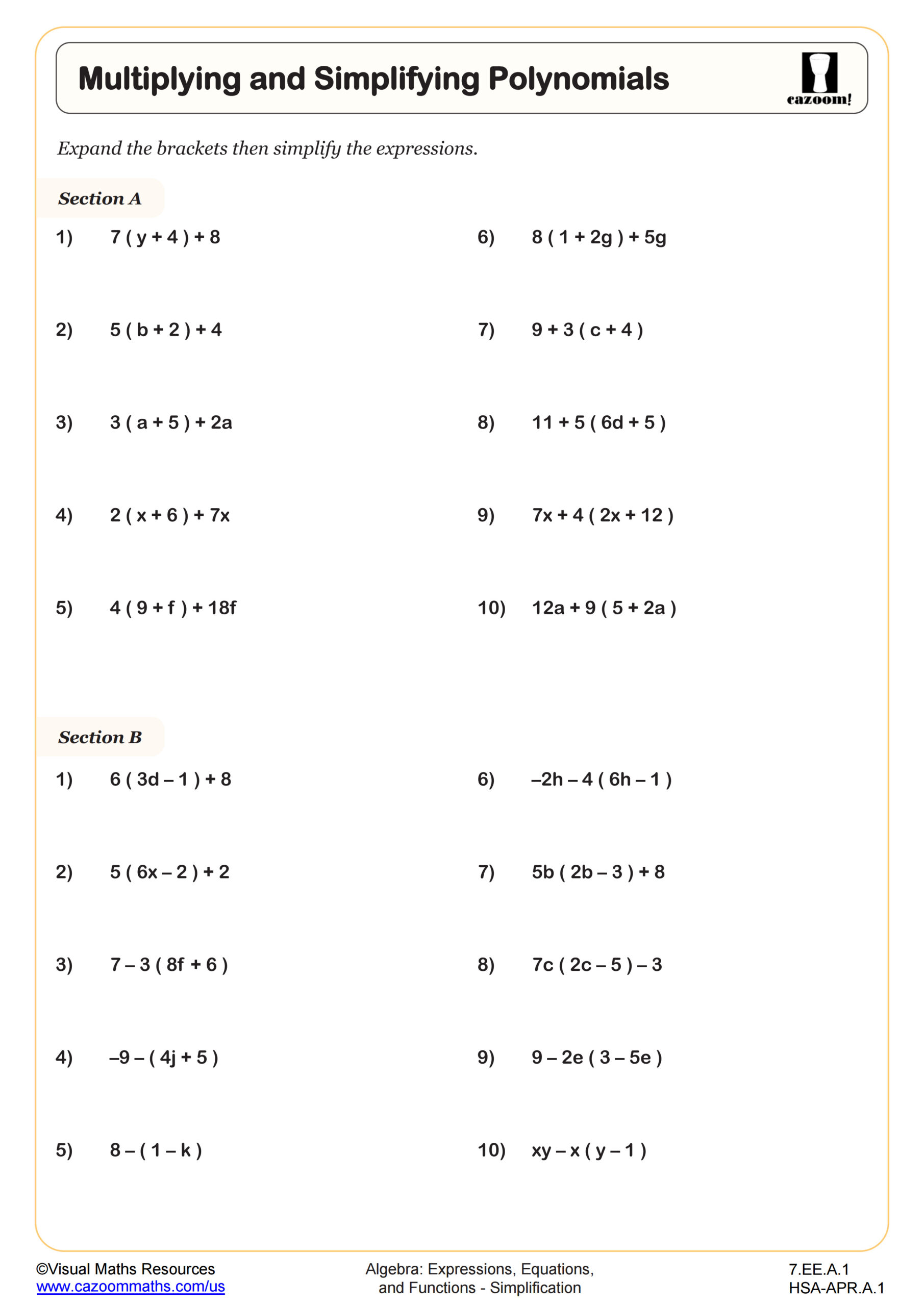
Multiplying and Simplifying Polynomials
All worksheets are created by the team of experienced teachers at Cazoom Math.
What topics do simplification worksheets cover for middle school students?
Simplification worksheets for middle school typically cover combining like terms, applying the distributive property, reducing fractions, and simplifying numerical expressions with order of operations. These align with Common Core standards 6.EE.A.3, 7.EE.A.1, and 8.EE.A.2, building toward algebraic thinking.
Teachers frequently observe that students make errors when working with negative signs during distribution, often writing -3(x + 2) = -3x + 6 instead of -3x - 6. Regular practice with varied expression types helps students recognize these patterns and avoid common pitfalls that appear on state assessments.
How do simplification skills progress across middle school grade levels?
Sixth graders typically start with numerical expressions and basic variable terms, while seventh graders tackle expressions with multiple variables and fractional coefficients. Eighth graders work with more complex expressions that prepare them for solving multi-step equations in algebra.
The progression moves from 3x + 5x = 8x in sixth grade to expressions like 2(3x - 4) + 5x = 11x - 8 in eighth grade. Teachers notice that students who master each level thoroughly show greater confidence when encountering the algebraic complexity that defines high school mathematics courses.
Why do students struggle with distributing negative signs in expressions?
Students often treat the negative sign as separate from the coefficient, leading to errors like -(2x + 3) = -2x + 3 instead of -2x - 3. This misconception stems from viewing subtraction as addition of a negative, rather than understanding distribution as multiplication by -1.
Classroom observations show that students benefit from rewriting expressions like 5 - (2x + 3) as 5 + (-1)(2x + 3) before distributing. This explicit approach helps students see why both terms inside the parentheses must become negative, preventing the most common simplification errors.
How can teachers use these worksheets to build student confidence?
Teachers find success by starting with simpler expressions and gradually increasing complexity, allowing students to build confidence through successful problem-solving experiences. Using the answer keys strategically for self-checking helps students identify their own errors before moving to more challenging problems.
Many educators use these worksheets for warm-up activities or exit tickets, providing quick formative assessment opportunities. The immediate feedback from answer keys allows students to correct misconceptions early, preventing the frustration that often accompanies algebraic learning when errors compound across multiple steps.