Middle School Solve Word Problems Worksheets
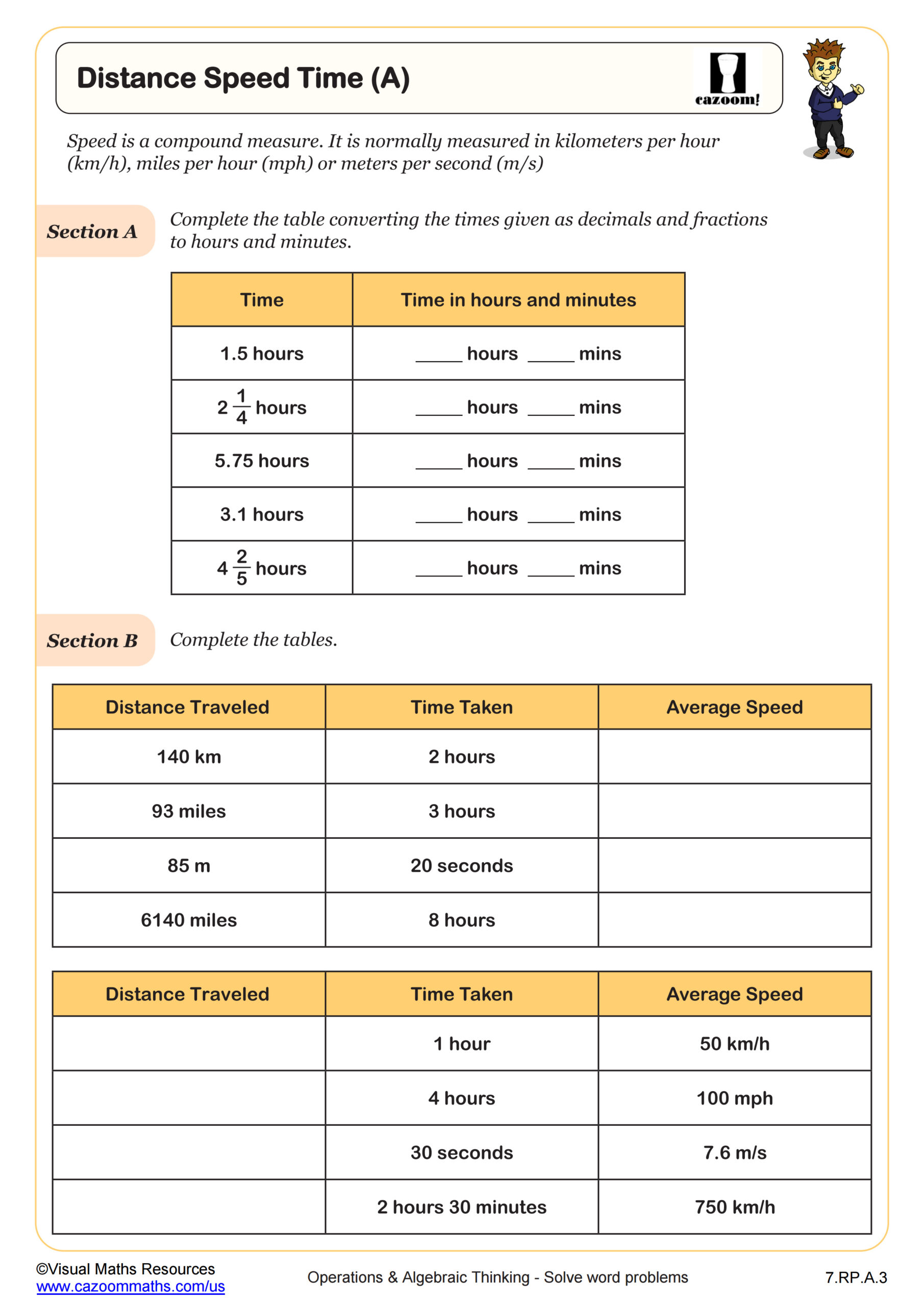
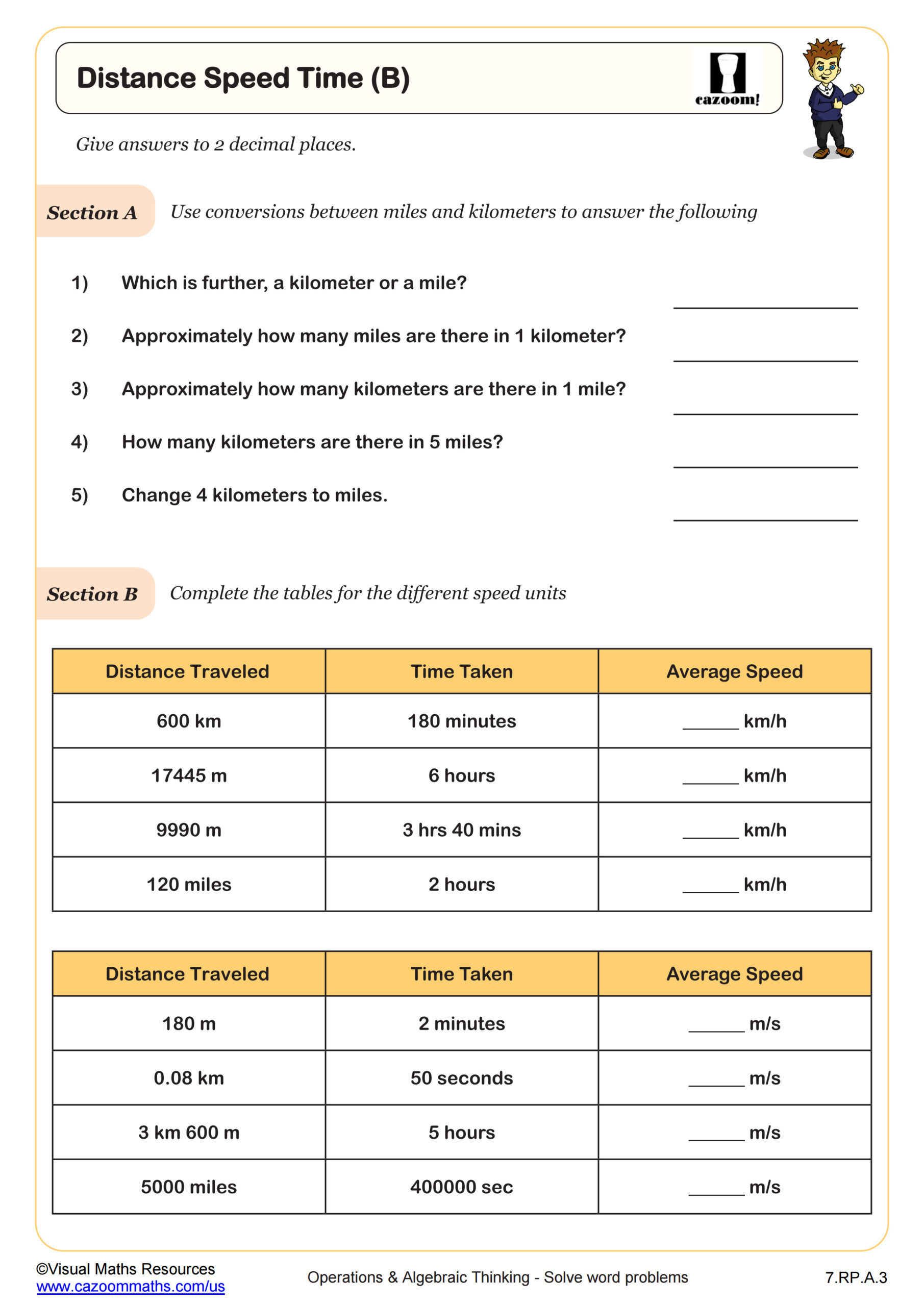
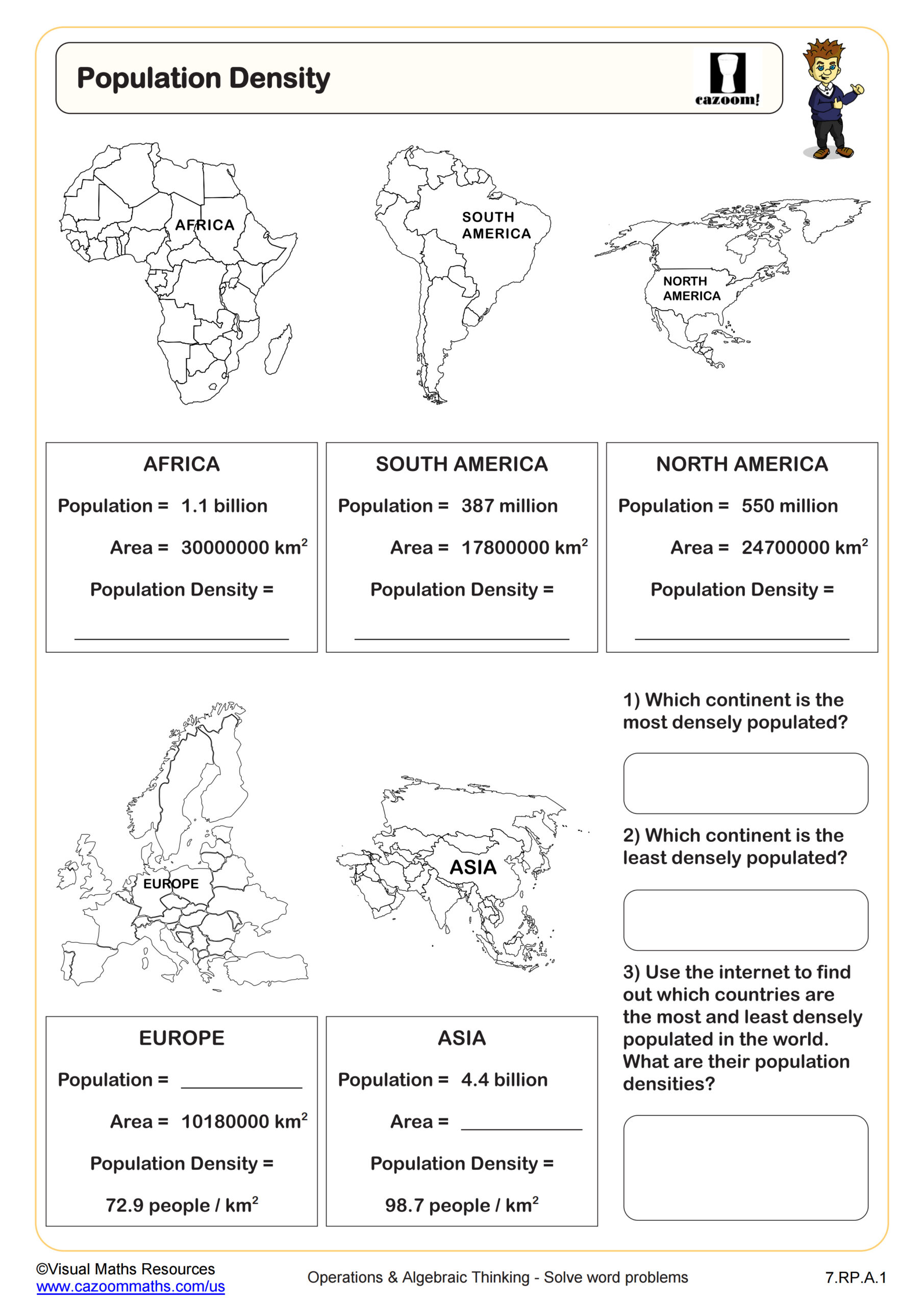
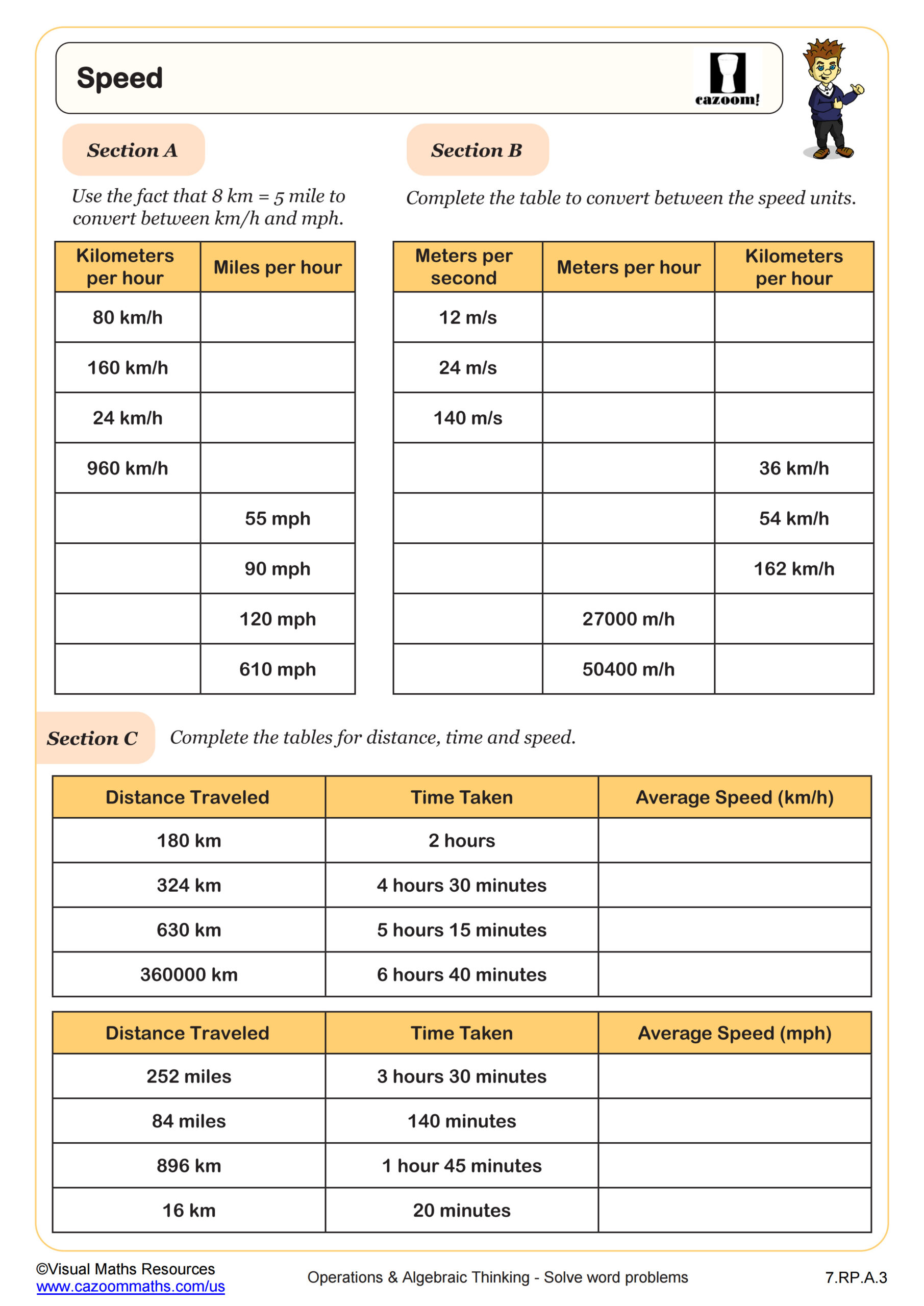
All worksheets are created by the team of experienced teachers at Cazoom Math.
Why are math word problems for 7th graders particularly challenging with speed calculations?
Seventh-grade students encounter speed word problems at a crucial developmental stage where abstract thinking skills are still maturing. The Common Core State Standards for grade 7 emphasize proportional relationships and multi-step problem solving, making speed problems ideal for connecting mathematical concepts to real-world scenarios involving cars, trains, and cyclists.
Teachers notice that students often misinterpret phrases like 'how much faster' or 'catches up to,' leading them to set up incorrect equations. The most persistent error involves students adding speeds instead of using them to calculate time differences when two objects travel toward each other. These misconceptions highlight why structured practice with varied problem types helps students recognize patterns and develop systematic approaches to motion problems.
What grade levels benefit most from speed word problems practice?
Speed word problems span multiple grade levels, with foundations beginning in elementary school through rate concepts and reaching full complexity in high school physics. Middle school students in grades 6-8 represent the sweet spot where students have sufficient arithmetic skills but haven't yet encountered the calculus-based motion problems of advanced courses.
Sixth graders typically work with simpler, single-step speed calculations, while eighth graders tackle multi-variable problems involving relative motion and average speed over different intervals. Seventh grade serves as the bridge year where students develop fluency with the distance-rate-time formula while building algebraic manipulation skills. Teachers find that students who master these concepts in middle school show significantly stronger performance in high school STEM courses.
How do students typically approach relative motion word problems?
Relative motion problems represent the most challenging subset of speed word problems, where two or more objects move simultaneously with different speeds or directions. Students must determine whether objects are approaching each other, moving in the same direction, or starting from different positions at different times.
The most effective student approach involves creating visual representations or tables to organize given information before writing equations. Teachers observe that students who draw simple diagrams or timelines demonstrate higher success rates than those who jump directly into calculations. Common errors include forgetting to account for head starts, mixing up which object travels longer, or incorrectly combining speeds when objects move in opposite directions rather than applying the correct relative speed formula.
How can teachers maximize student success with speed word problem worksheets?
Effective implementation of speed word problem worksheets requires scaffolded instruction that builds from concrete examples to abstract problem-solving strategies. Teachers achieve better results when they begin each lesson by reviewing the fundamental relationship between distance, rate, and time using familiar contexts like walking to school or driving to nearby cities.
The most successful classroom approach involves having students work through the first few problems collaboratively, discussing their reasoning aloud before attempting independent practice. Teachers should emphasize the importance of identifying what the problem asks for before selecting a solution method, as many students lose points by solving for the wrong variable. Regular use of the complete answer keys helps teachers identify common misconceptions quickly and adjust instruction accordingly.