Middle School Solve Word Problems Worksheets
All worksheets are created by the team of experienced teachers at Cazoom Math.
Why do students struggle with word problems in middle school math?
Word problems require students to process language, extract relevant information, determine which operations to use, and execute calculations correctly. Students lose points on standardized tests not because they can't do the math, but because they misinterpret what the problem asks or select the wrong operation based on keywords without understanding context.
A common mistake occurs when students see the word "total" and automatically add, even when the problem requires subtraction to find how much more is needed. Teachers notice breakthroughs when students start underlining the actual question being asked and checking whether their answer makes sense in the real-world context of the problem.
What grade levels are these word problem worksheets designed for?
These worksheets target middle school students in grades 6, 7, and 8, aligning with Common Core standards for mathematical reasoning and problem-solving. Middle school is when students transition from straightforward computation to multi-step problems that require planning and strategic thinking about which operations to apply in sequence.
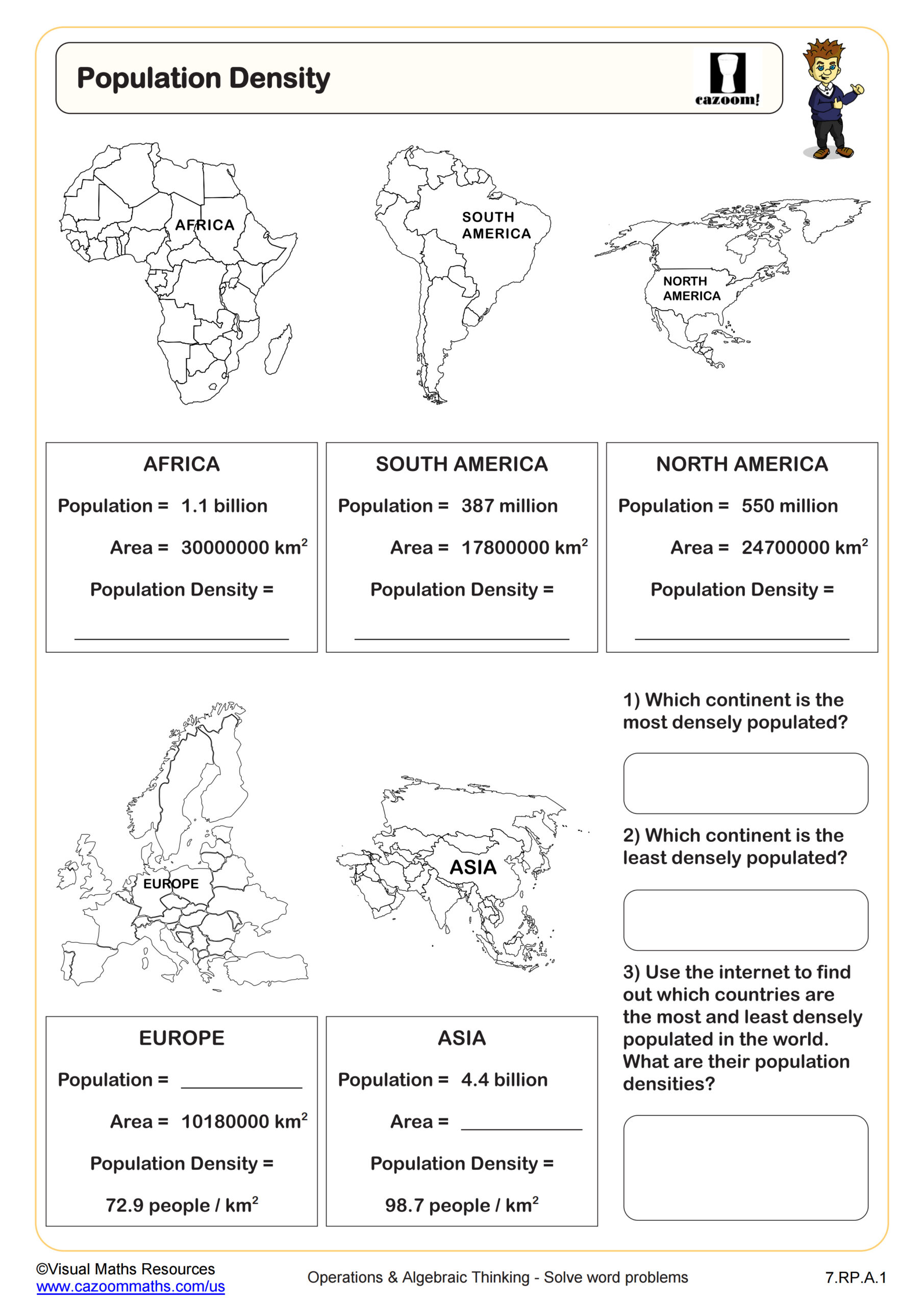
The difficulty progresses across grade levels, with 6th grade focusing on foundational four-operation problems, 7th grade introducing more complex scenarios with multiple steps, and 8th grade incorporating proportional relationships like distance-speed-time problems. Teachers see students build confidence as they recognize patterns in problem types and develop systematic approaches to breaking down complex word problems.
How do distance, speed, and time problems prepare students for algebra?
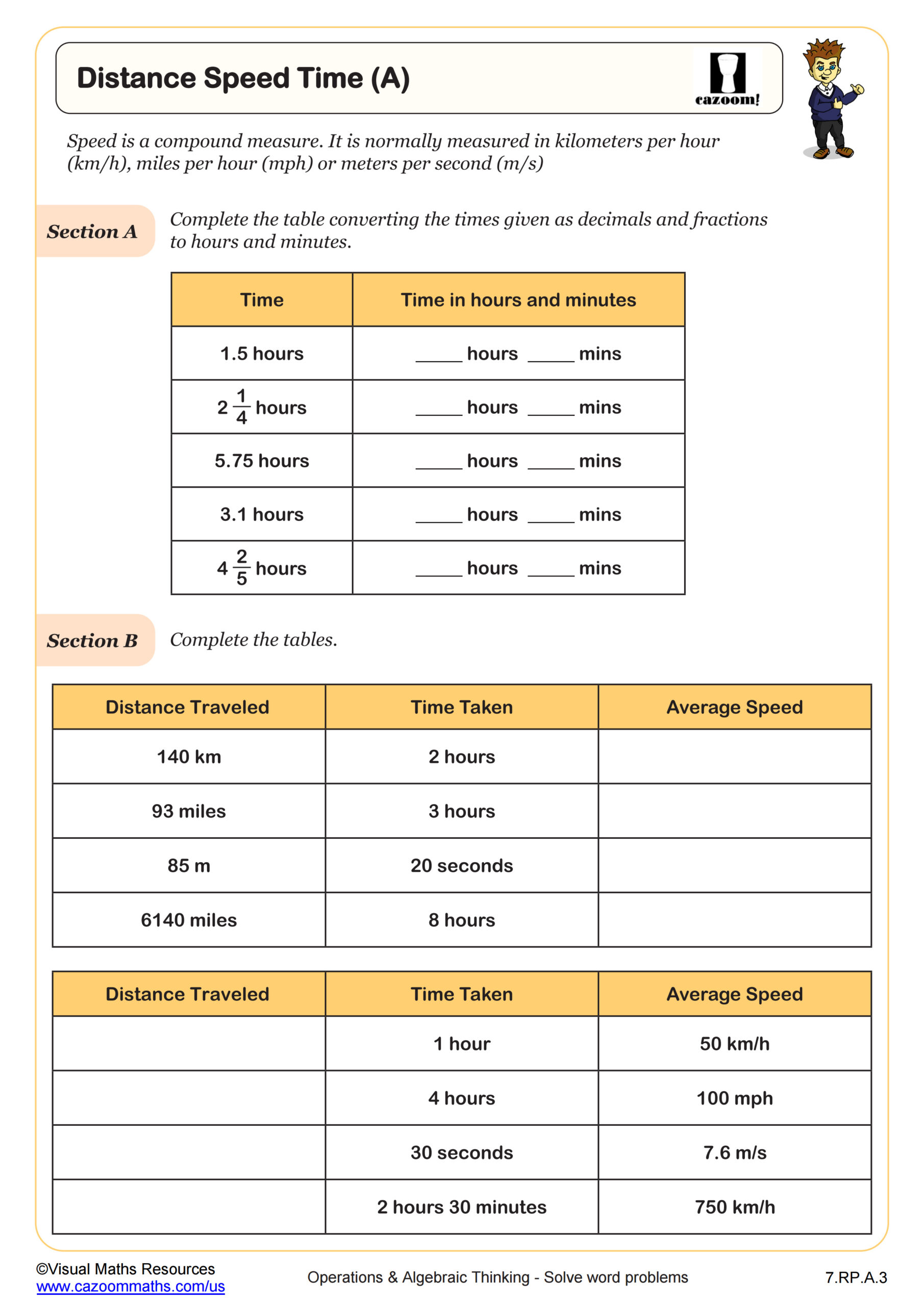
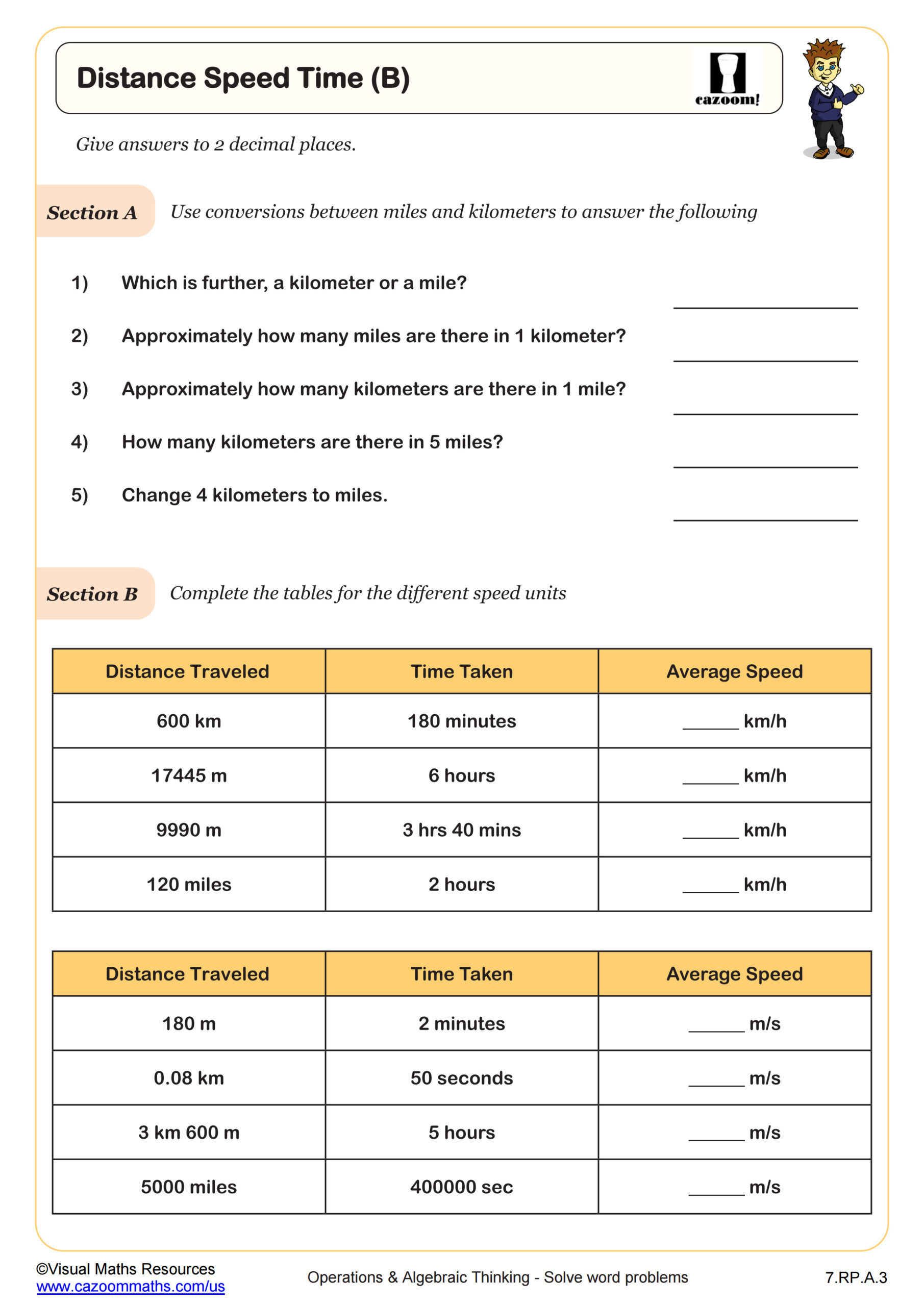
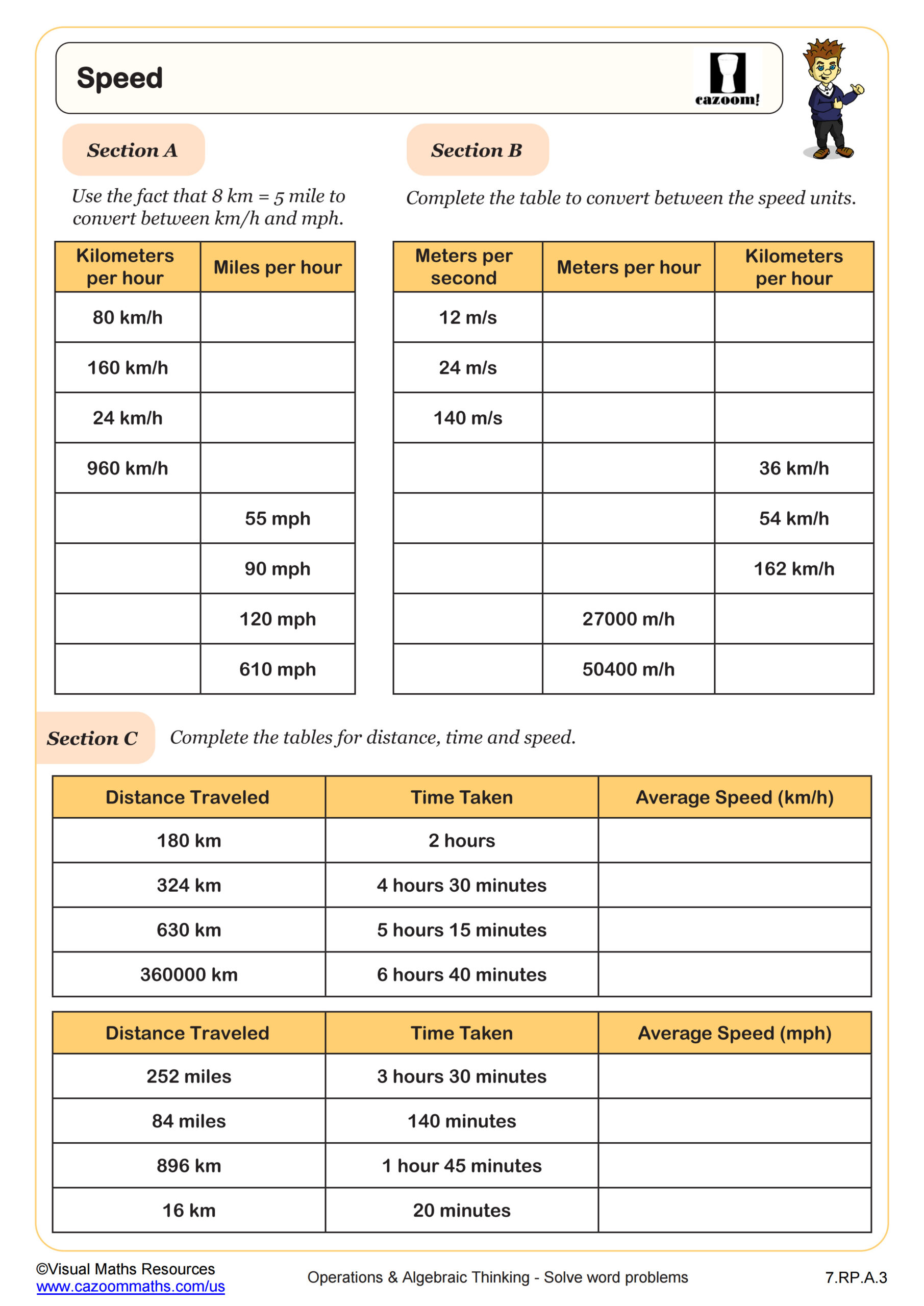
Distance, speed, and time problems introduce students to the formula d = rt (distance equals rate times time), which requires manipulating variables and understanding relationships between quantities. Students learn to identify which value they're solving for and rearrange the formula accordingly, building algebraic thinking before formal algebra courses. This work with formulas helps students see equations as tools for solving real problems rather than abstract symbols.
These problems connect directly to physics, engineering, and everyday situations like calculating travel times or fuel efficiency. STEM careers from aerospace engineering to urban planning rely on rate relationships, and students who master these concepts in middle school develop the quantitative reasoning needed for advanced coursework in high school science and math classes.
How can teachers use these word problem worksheets effectively?
The worksheets include versions with and without clues, allowing teachers to scaffold instruction based on student readiness. Problems with clues guide students toward identifying relevant information and selecting appropriate operations, while versions without clues challenge students to develop independent problem-solving strategies. The complete answer keys show worked solutions, helping teachers diagnose where reasoning breaks down in the solution process.
These worksheets work well for differentiated instruction during independent practice time, homework assignments that reinforce classroom learning, or intervention support for students who struggle to translate words into math. Teachers also use them for paired problem-solving activities where students explain their reasoning to each other, building both mathematical communication skills and deeper understanding of solution strategies.