Middle School Using a Calculator Worksheets
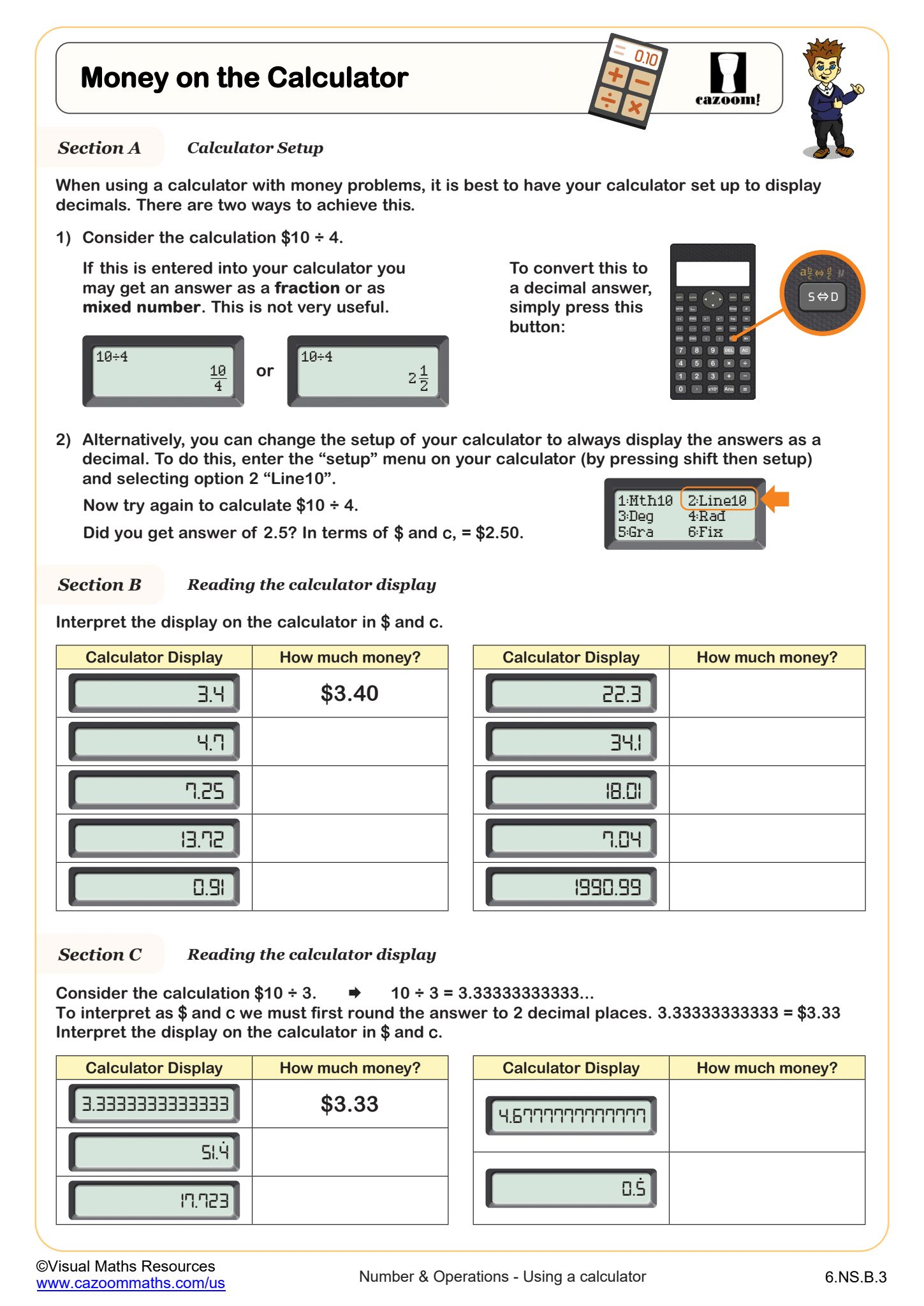
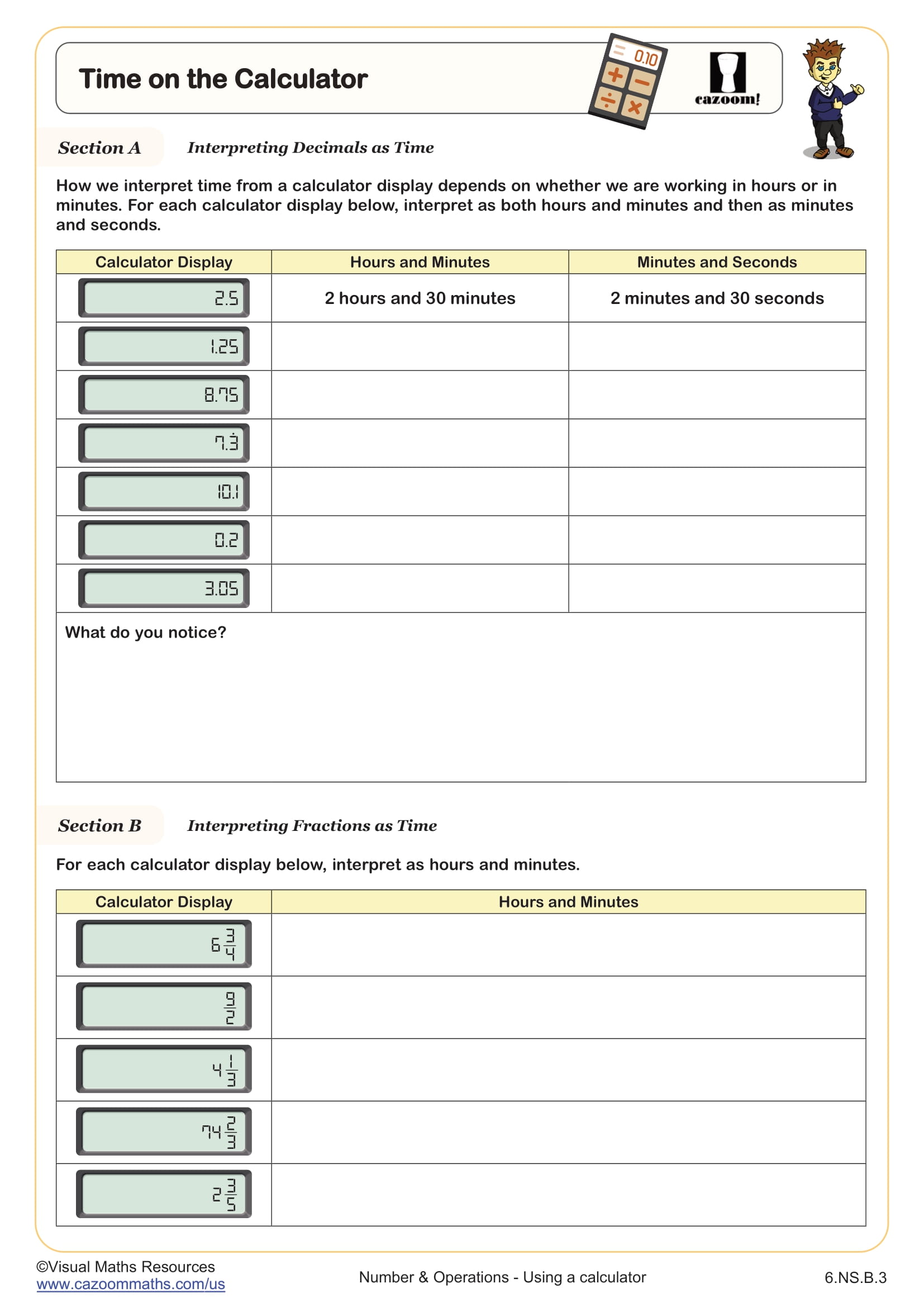
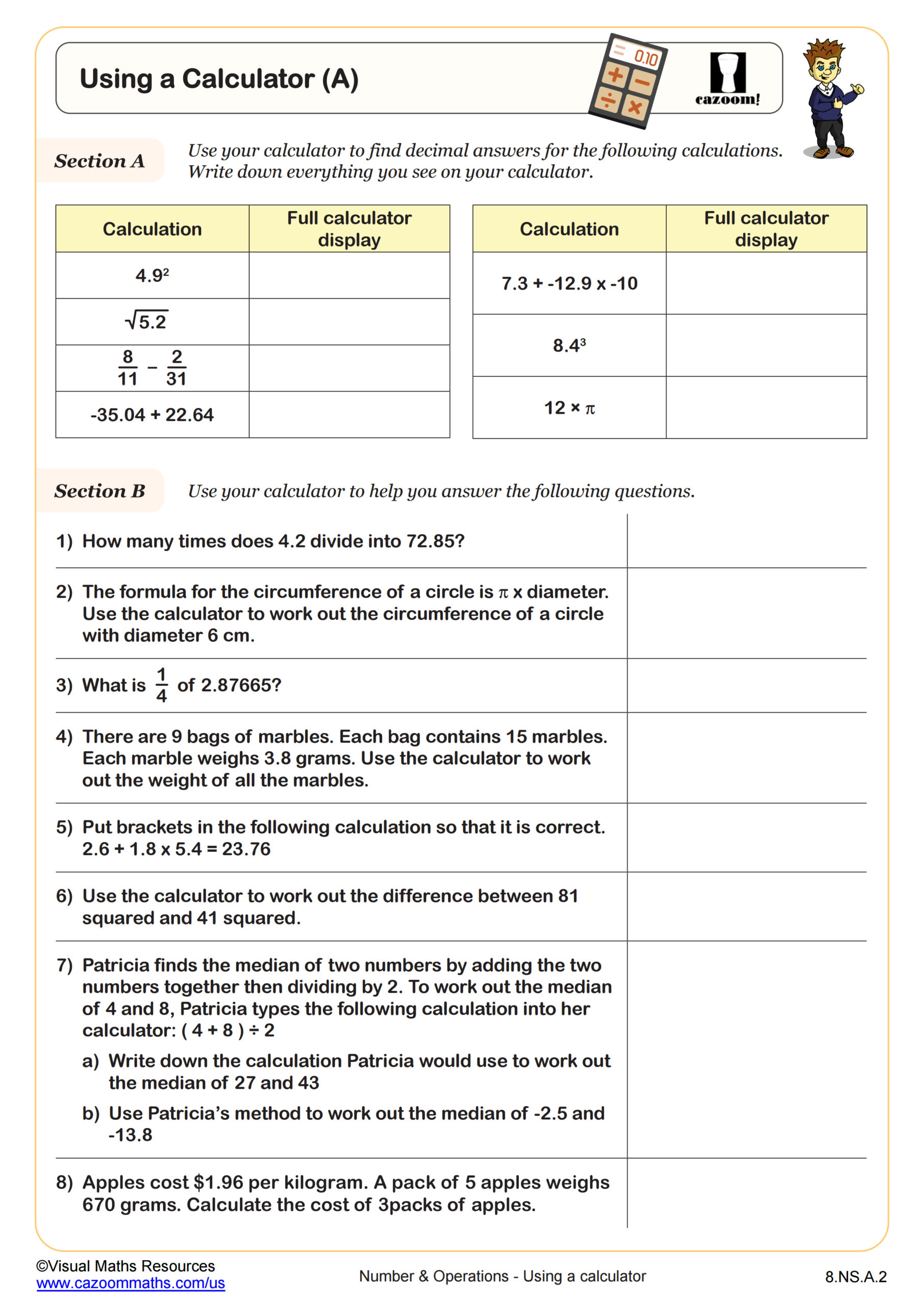
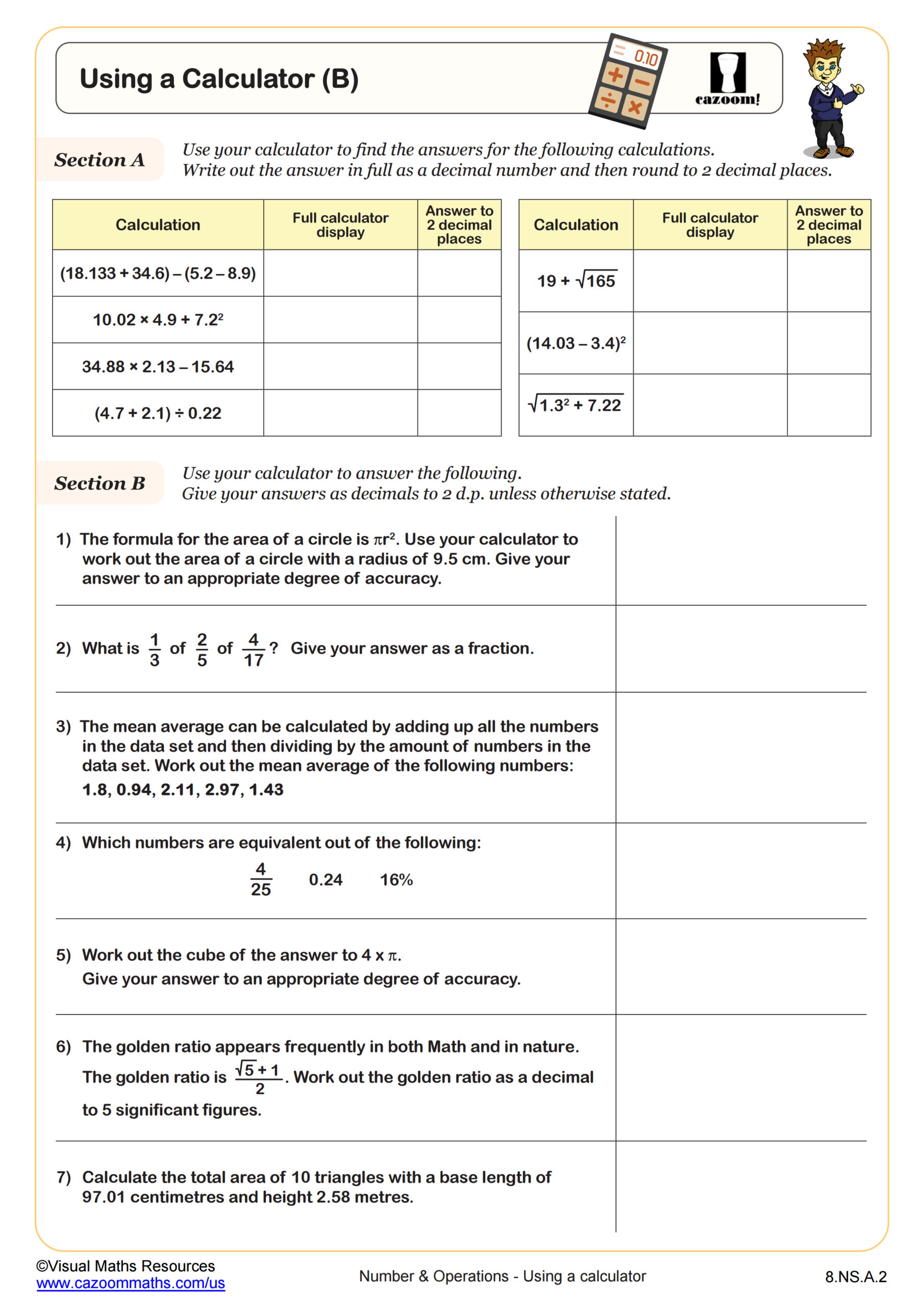
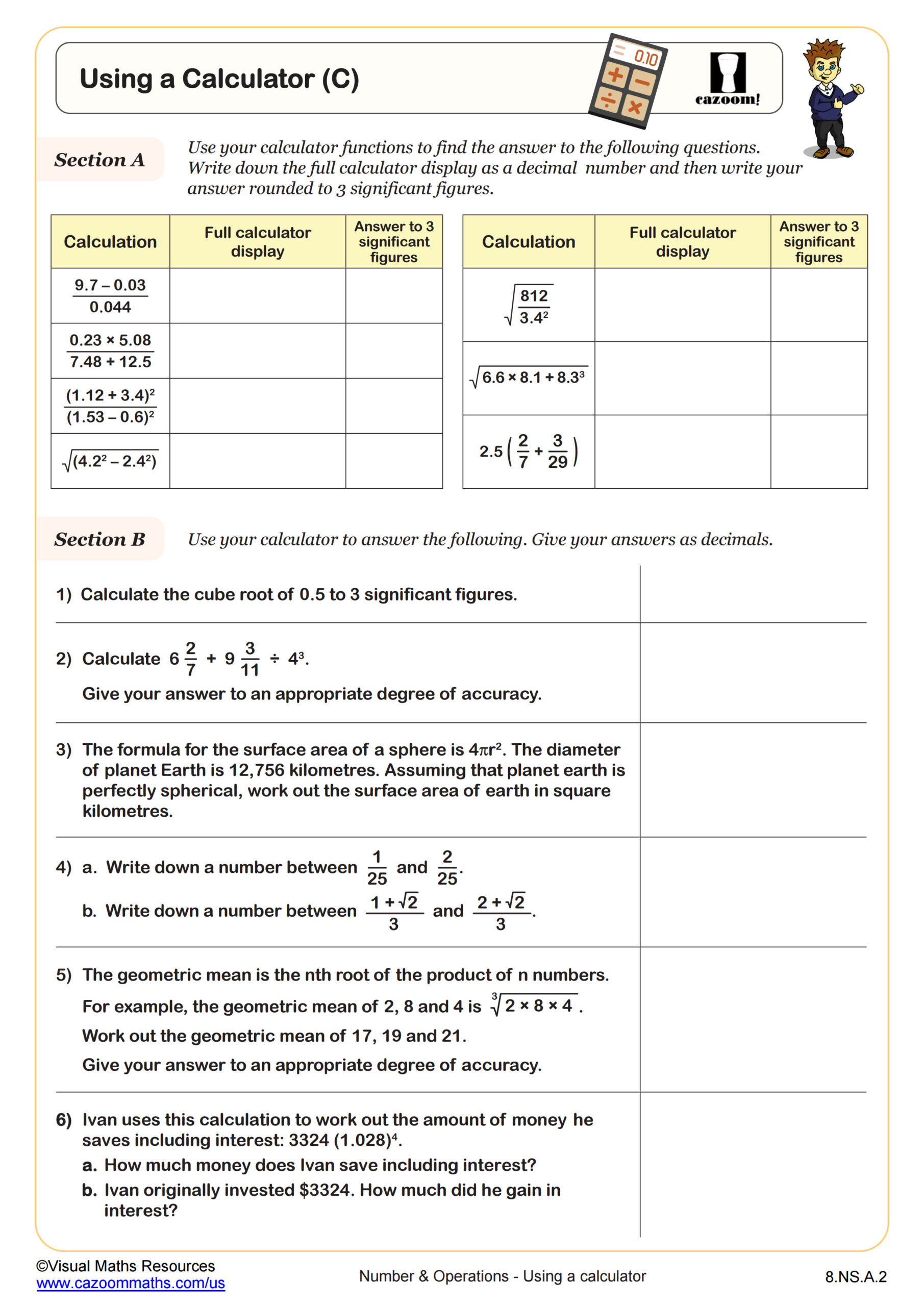
All worksheets are created by the team of experienced teachers at Cazoom Math.
What Skills Do Calculator Practice Worksheets Develop?
Calculator practice worksheets develop strategic computational thinking aligned with Common Core standards for middle grades. Students learn to identify when calculators enhance problem-solving versus when mental math is more efficient, practice scientific notation entry and interpretation, and master complex multi-step calculations involving fractions, decimals, and percentages.
Teachers frequently observe that students initially treat calculators as magic boxes, entering numbers without understanding the underlying mathematics. These worksheets address this misconception by requiring students to estimate answers first, then verify using calculator methods. This approach builds number sense while teaching proper calculator etiquette for standardized testing situations.
Which Grade Levels Benefit Most from Calculator Worksheets?
Middle school calculator worksheets serve grades 6-8 most effectively, aligning with the developmental shift from concrete to abstract mathematical thinking. Sixth graders focus on basic operations and decimal calculations, while seventh graders tackle proportions and beginning algebra concepts. Eighth graders use calculators for advanced problem-solving involving quadratic relationships and statistical analysis.
The progression mirrors how students encounter calculators on state assessments. Many teachers notice that introducing calculator skills too early can hinder number sense development, while waiting too long leaves students unprepared for high school mathematics where calculator fluency becomes important for complex problem-solving and real-world applications.
How Do These Worksheets Address Scientific Notation Challenges?
Scientific notation presents unique calculator challenges that specialized worksheets address systematically. Students practice entering large and small numbers correctly, interpreting calculator displays that show exponential form, and converting between standard and scientific notation formats. These skills directly connect to STEM applications in astronomy, chemistry, and physics.
Teachers consistently observe that students struggle with the EE or EXP button functionality, often confusing it with multiplication. The worksheets include step-by-step guidance for different calculator models and provide common error examples. This targeted practice prevents frustration when students encounter scientific notation in high school science courses and standardized testing scenarios.
What's the Most Effective Way to Use These Calculator Worksheets?
Effective implementation involves pairing calculator exercises with estimation activities to maintain number sense development. Teachers should introduce worksheets after students demonstrate mastery of related concepts through mental math and written algorithms. The answer keys enable immediate feedback, allowing students to identify and correct errors in their calculator techniques.
Successful classroom practice includes having students work in pairs to compare calculator methods and discuss different approaches to the same problem. Teachers often find that students learn calculator efficiency from peers, developing shortcuts and verification strategies organically. Regular practice with these worksheets builds the computational fluency students need for algebra and advanced mathematics courses.