Middle School Volume And Surface Area Worksheets
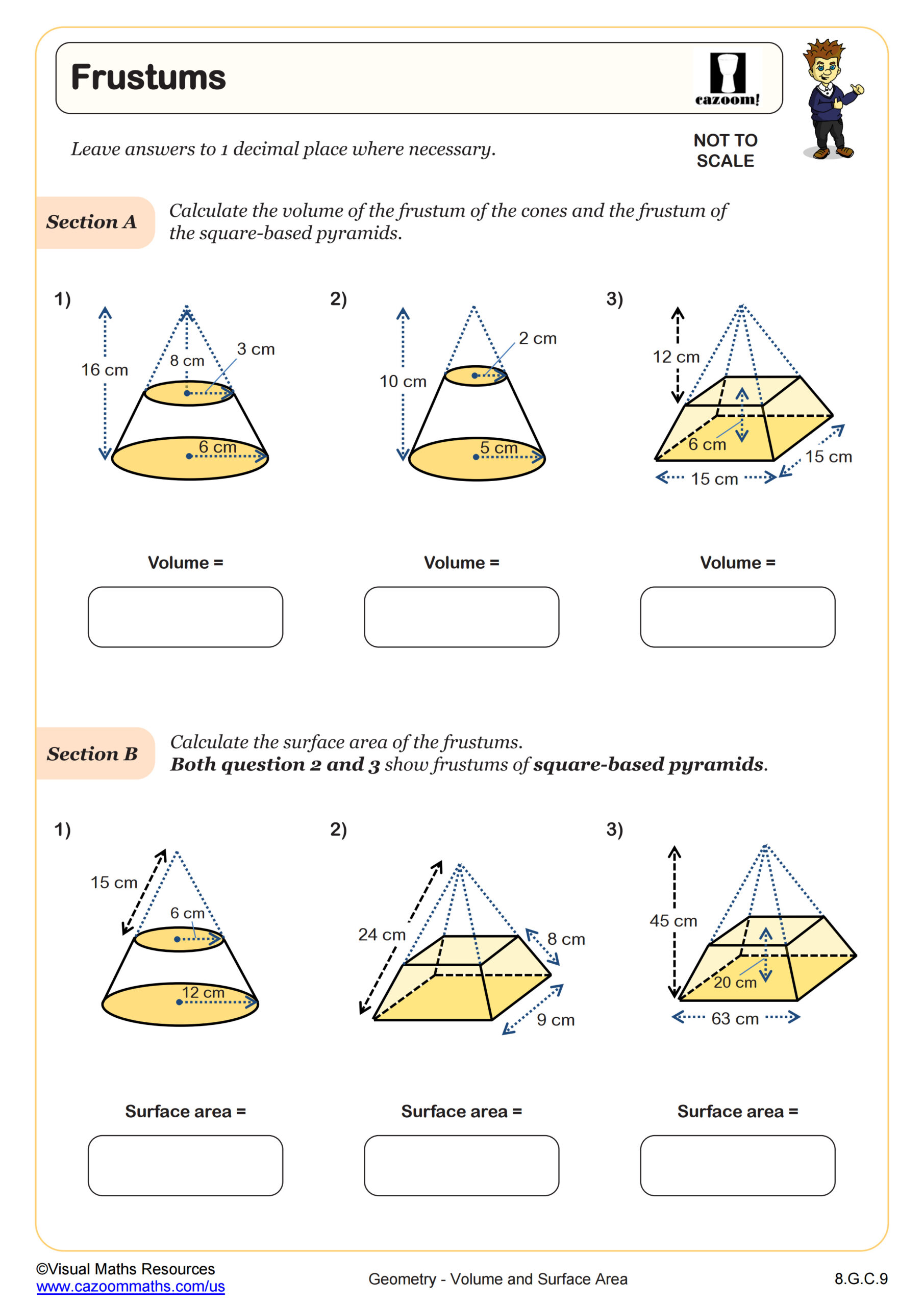
Frustums
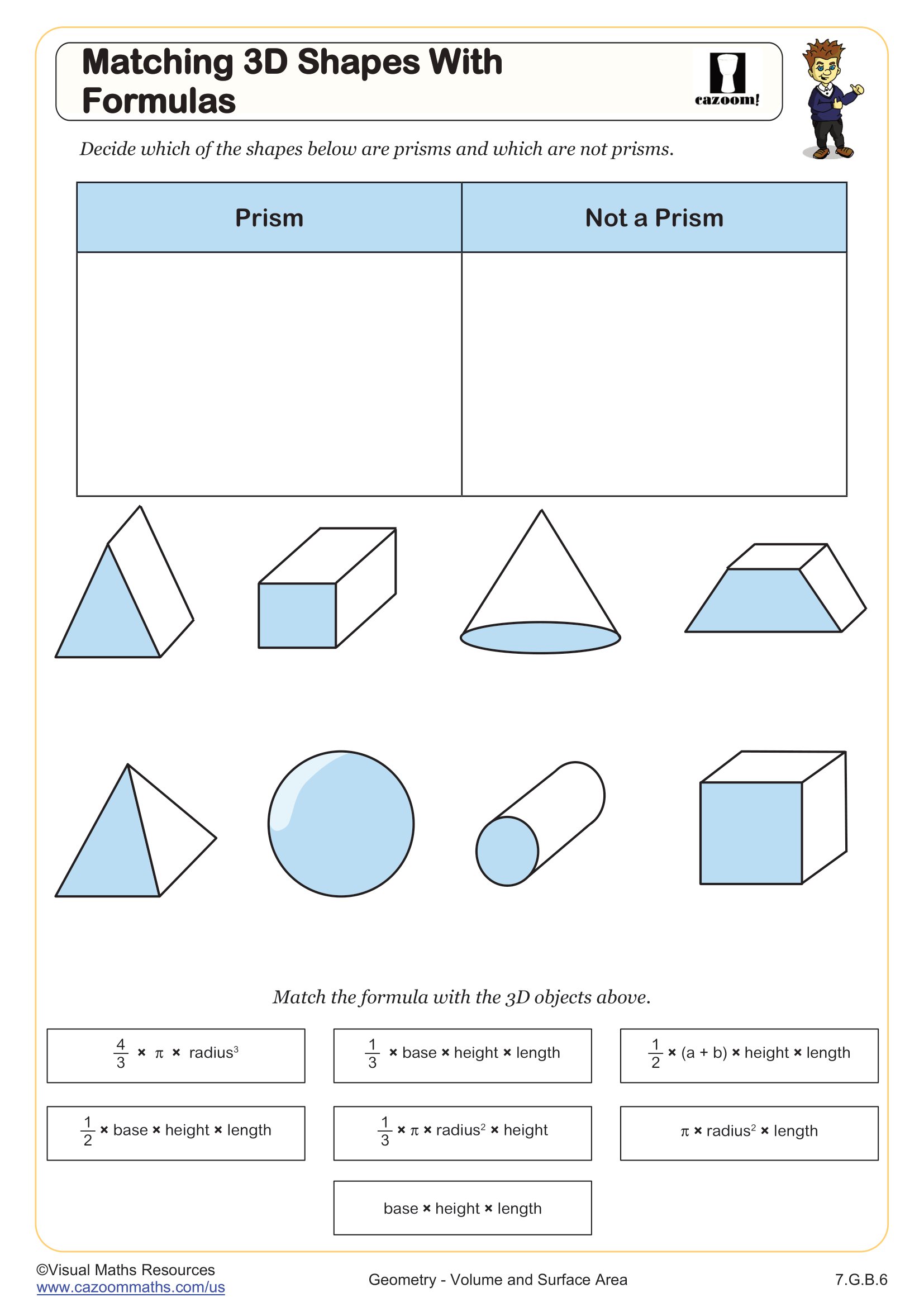
Matching 3D Shapes with Formulas
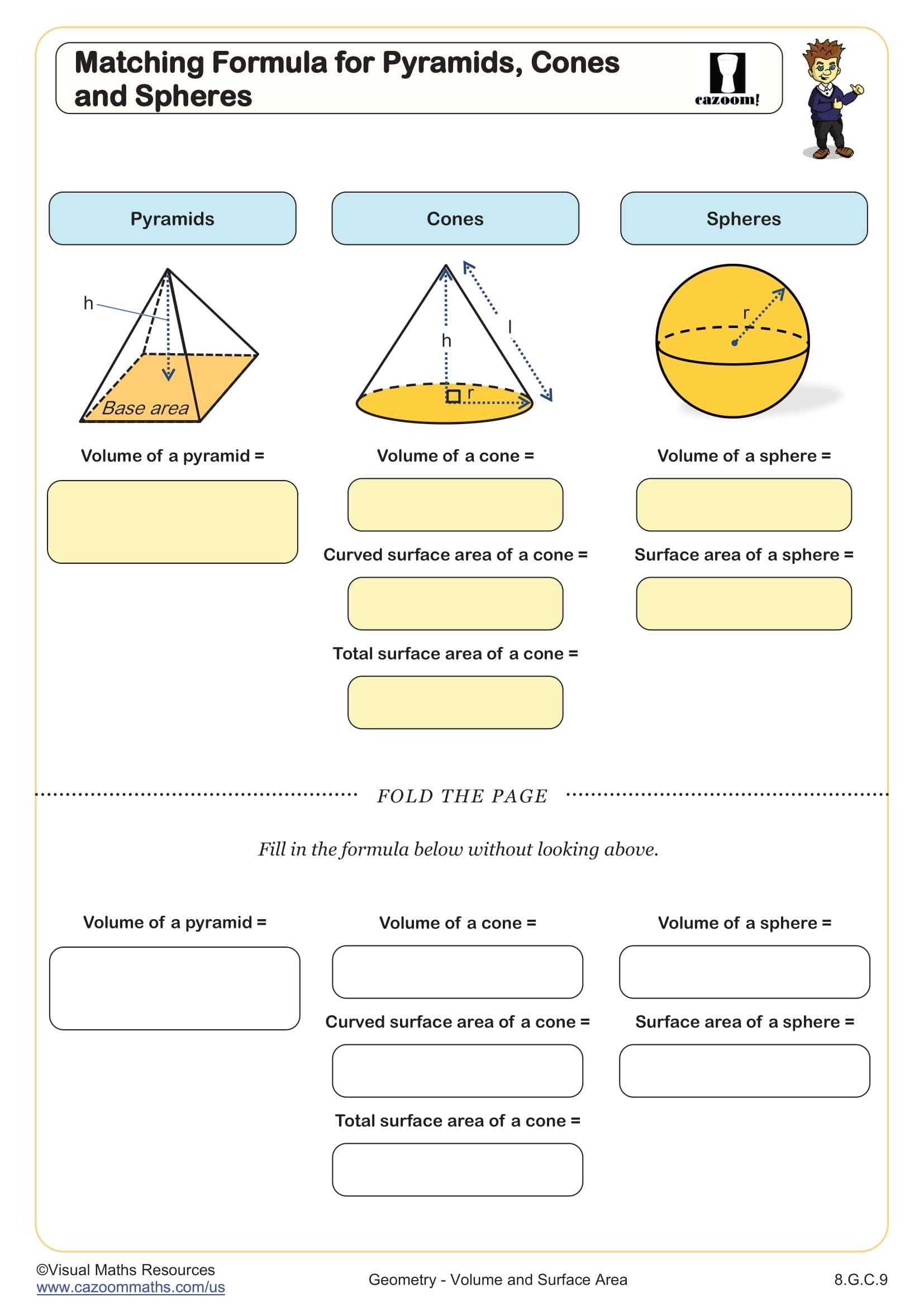
Matching Formulas for Pyramids, Cones, and Spheres
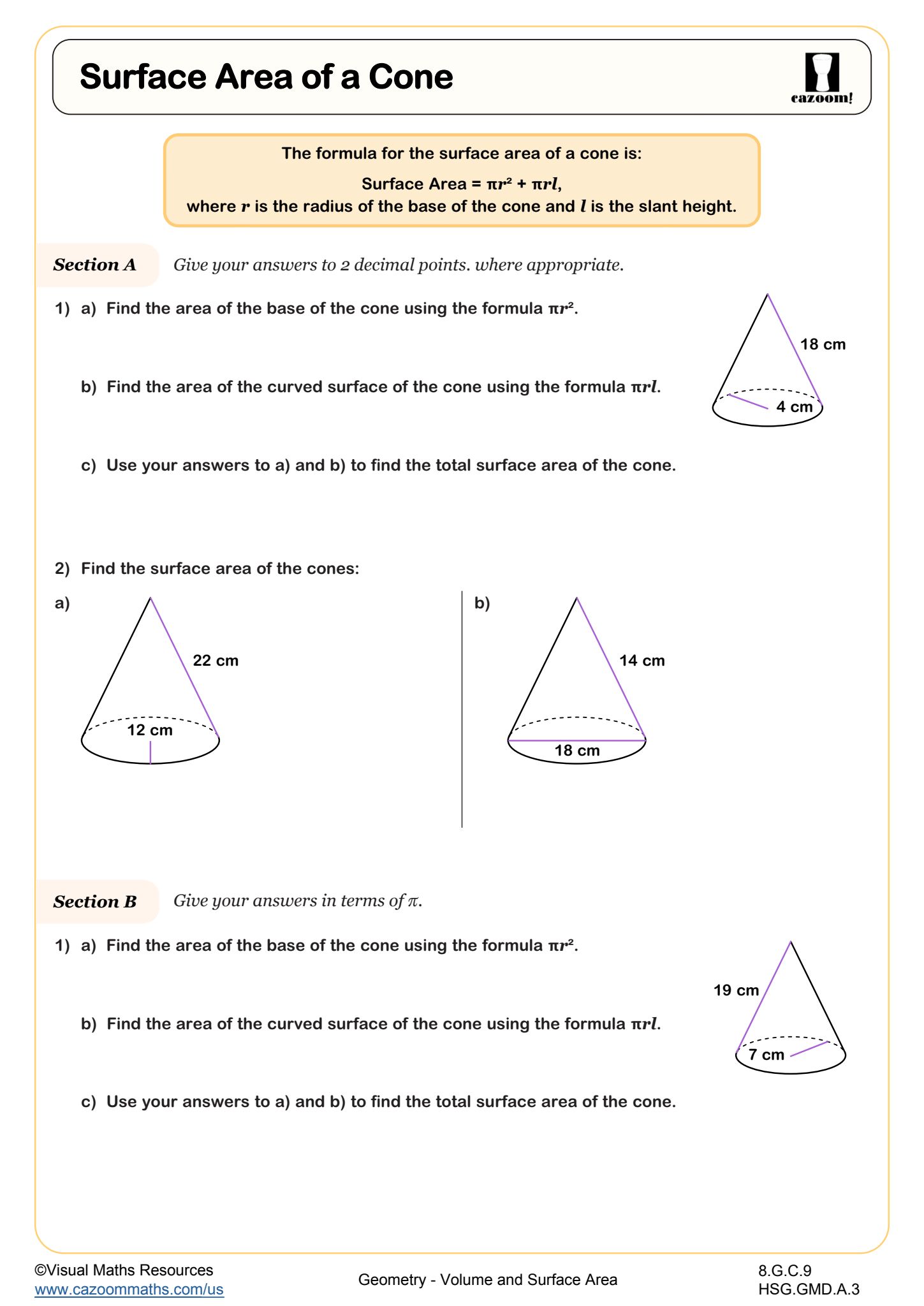
Surface Area of a Cone
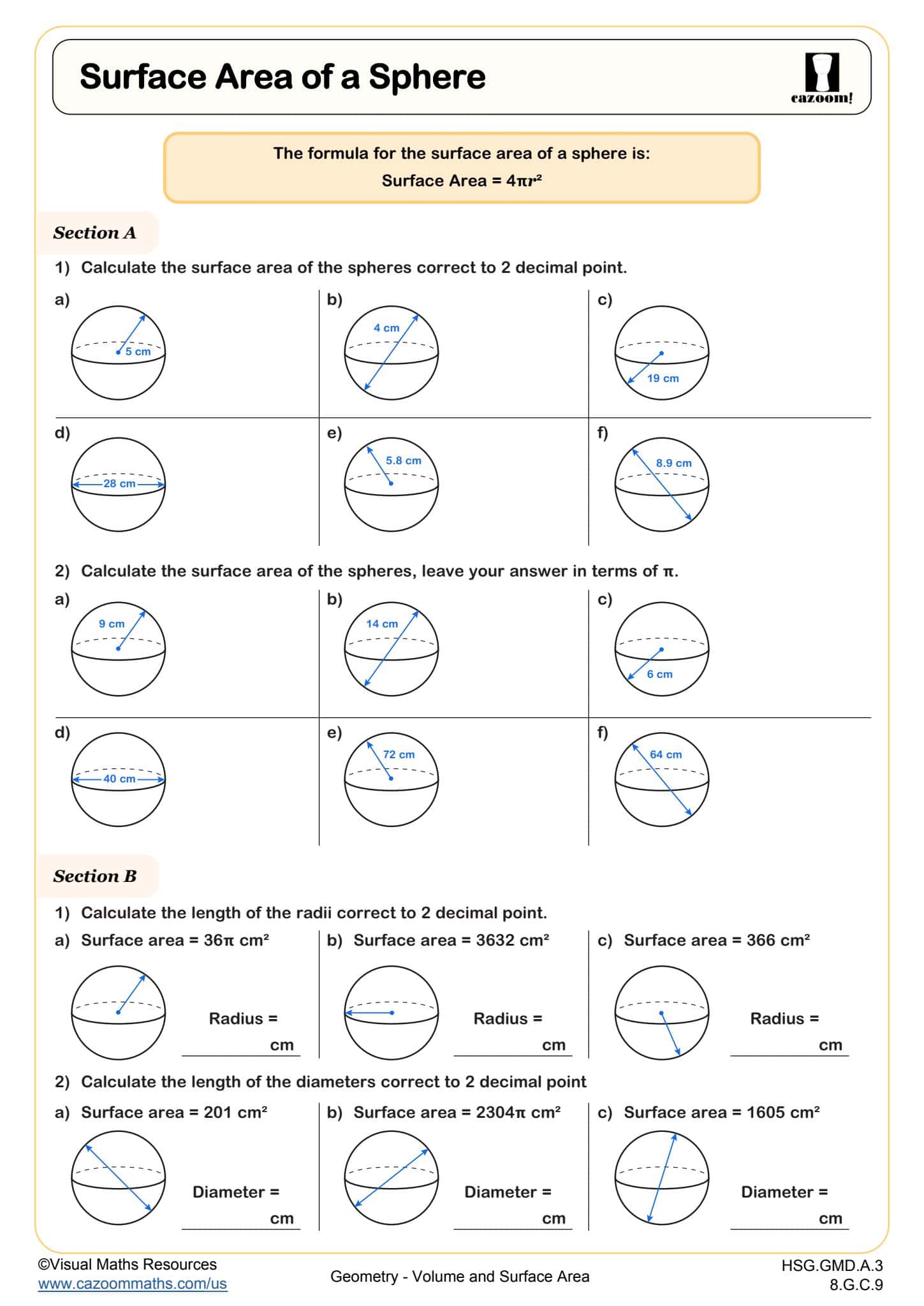
Surface Area of a Sphere
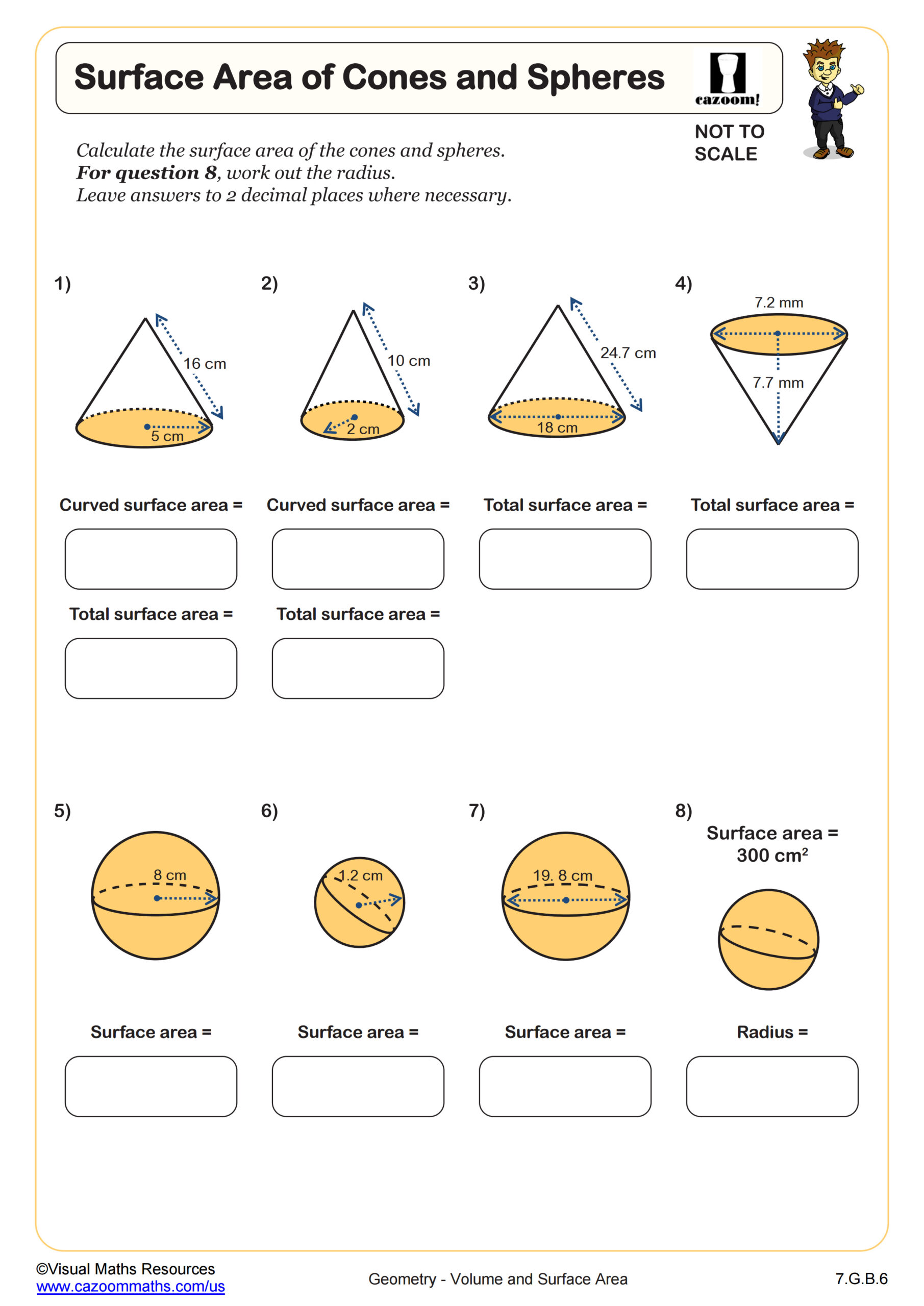
Surface Area of Cones and Spheres
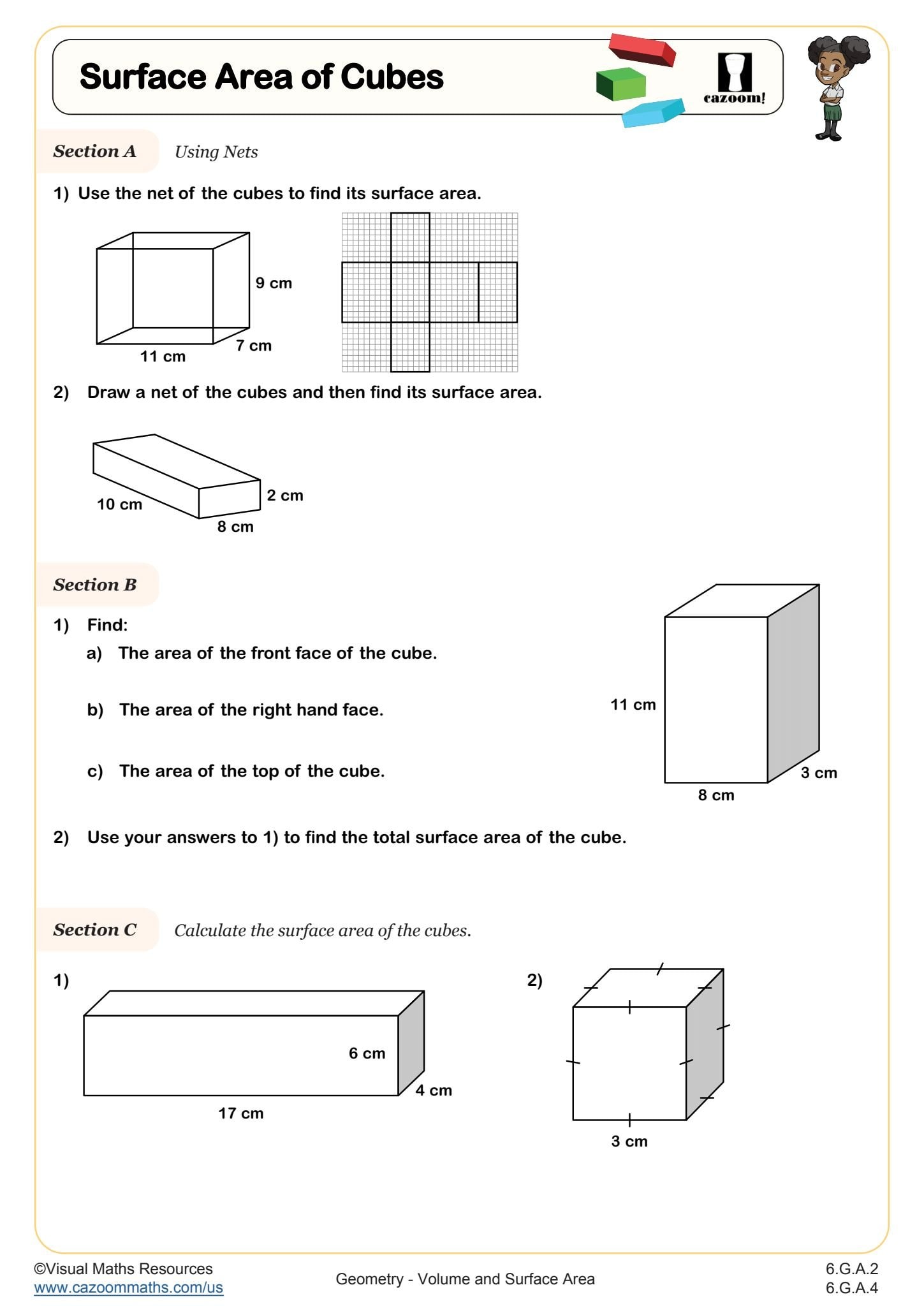
Surface Area of Cubes
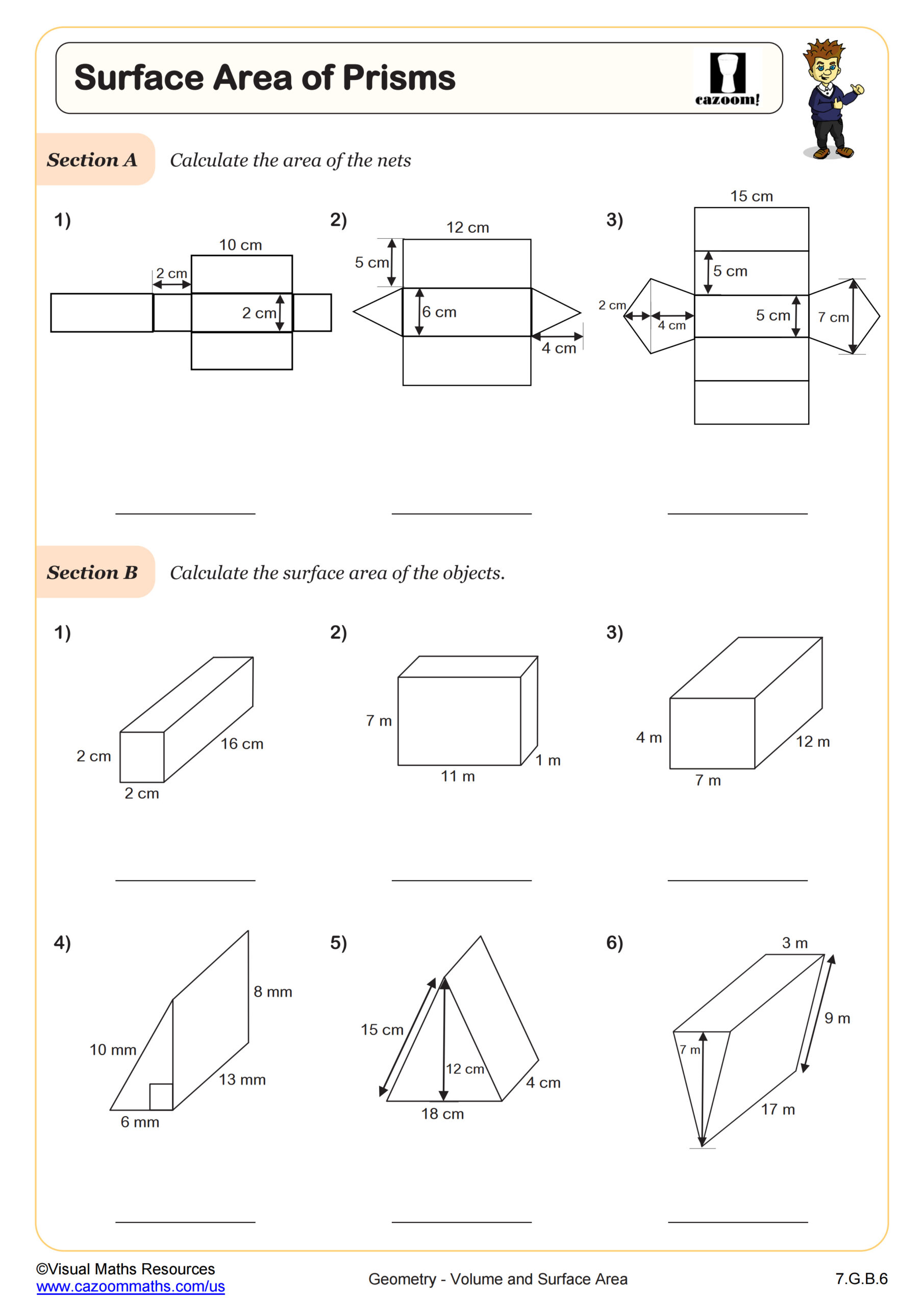
Surface Area of Prisms
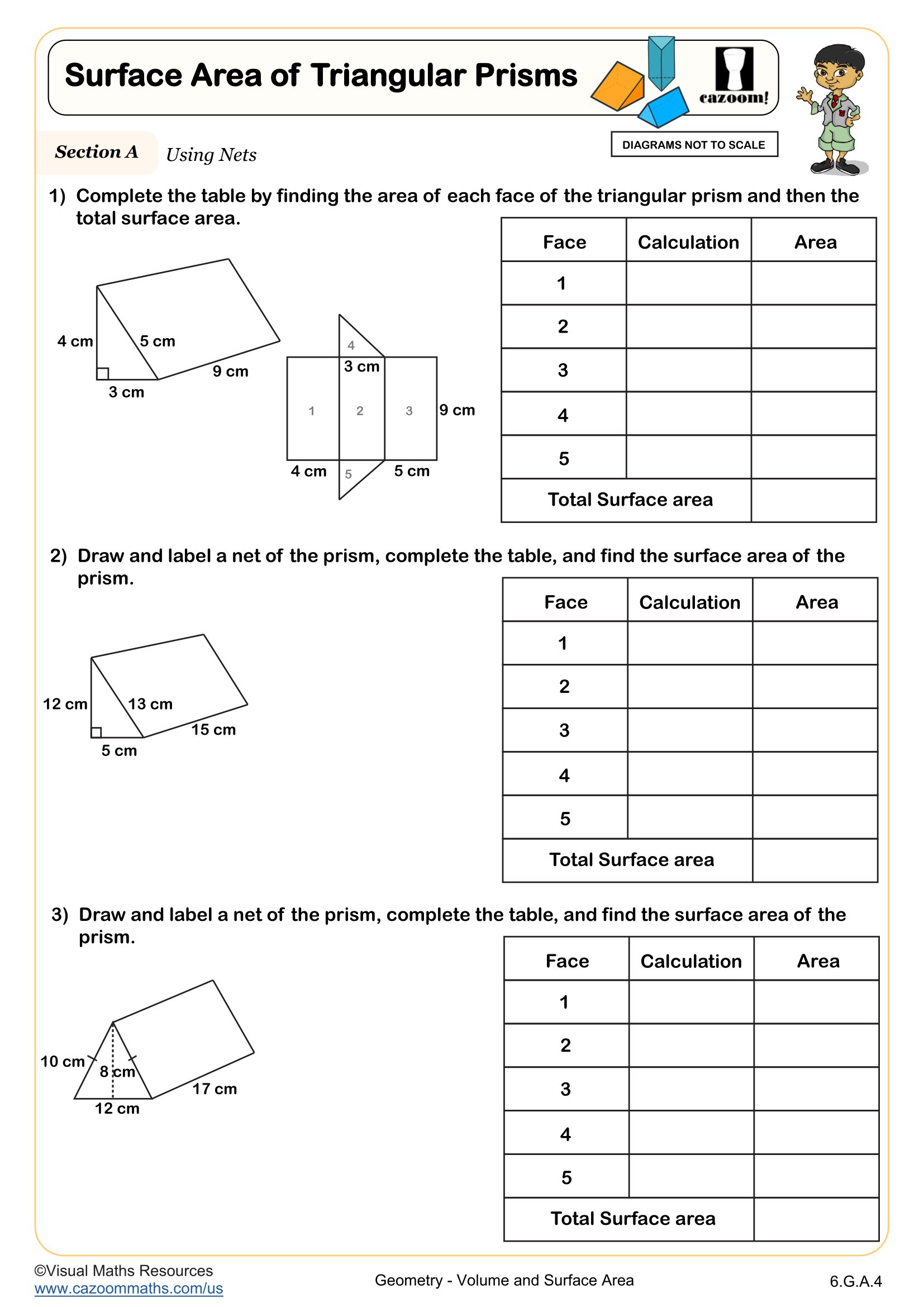
Surface Area of Triangular Prisms
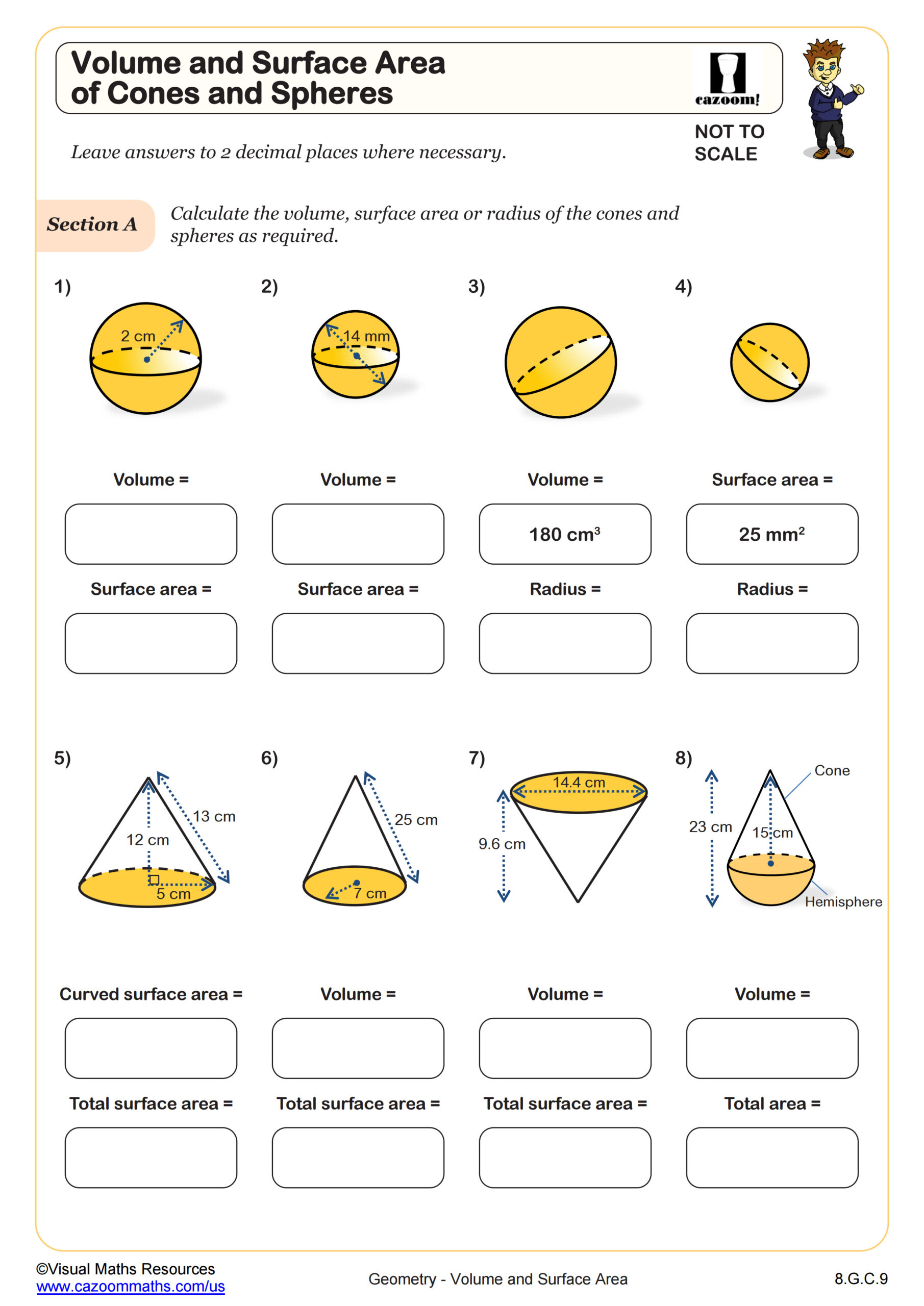
Volume and Surface Area of Cones and Spheres
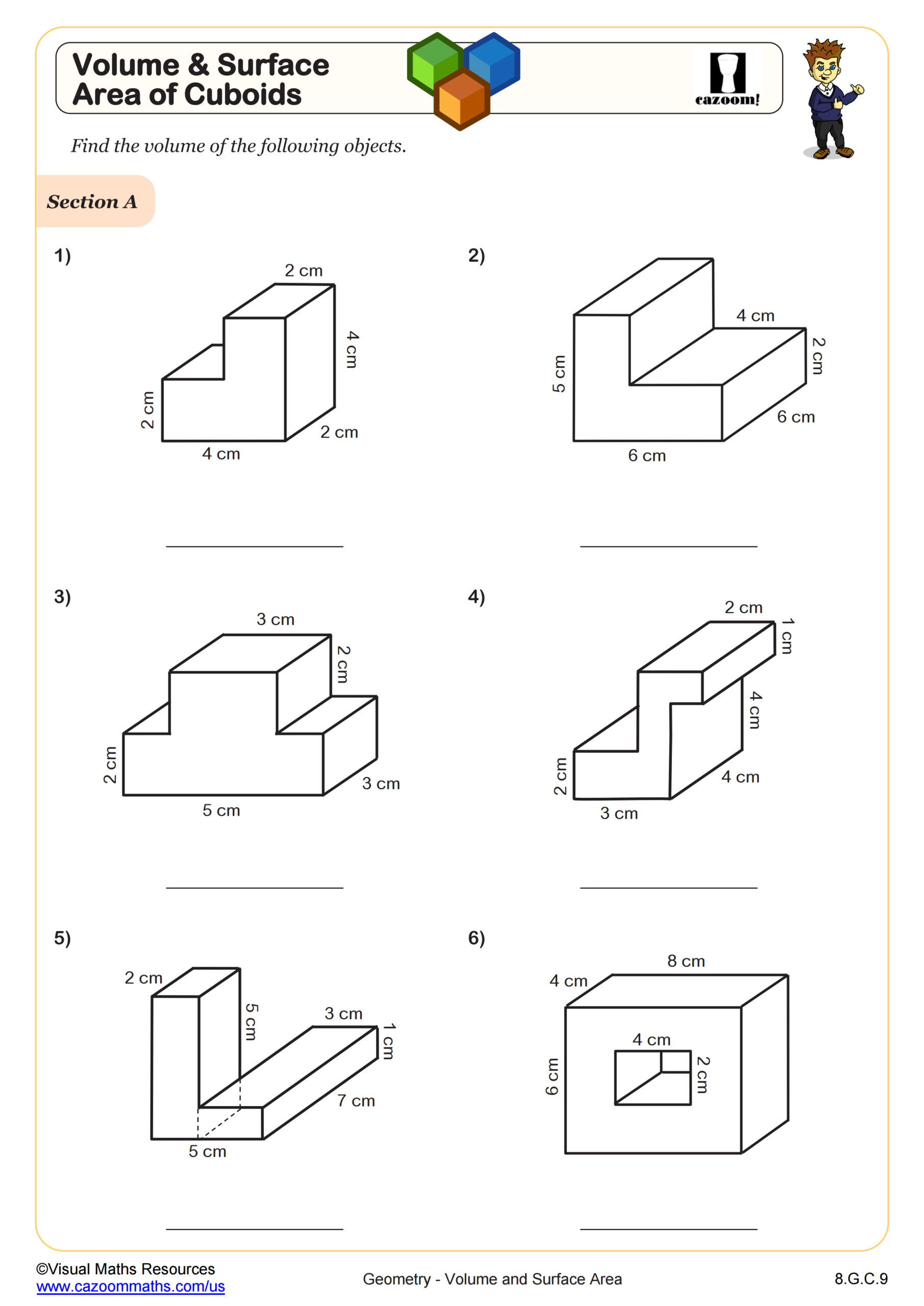
Volume and Surface Area of Cuboid
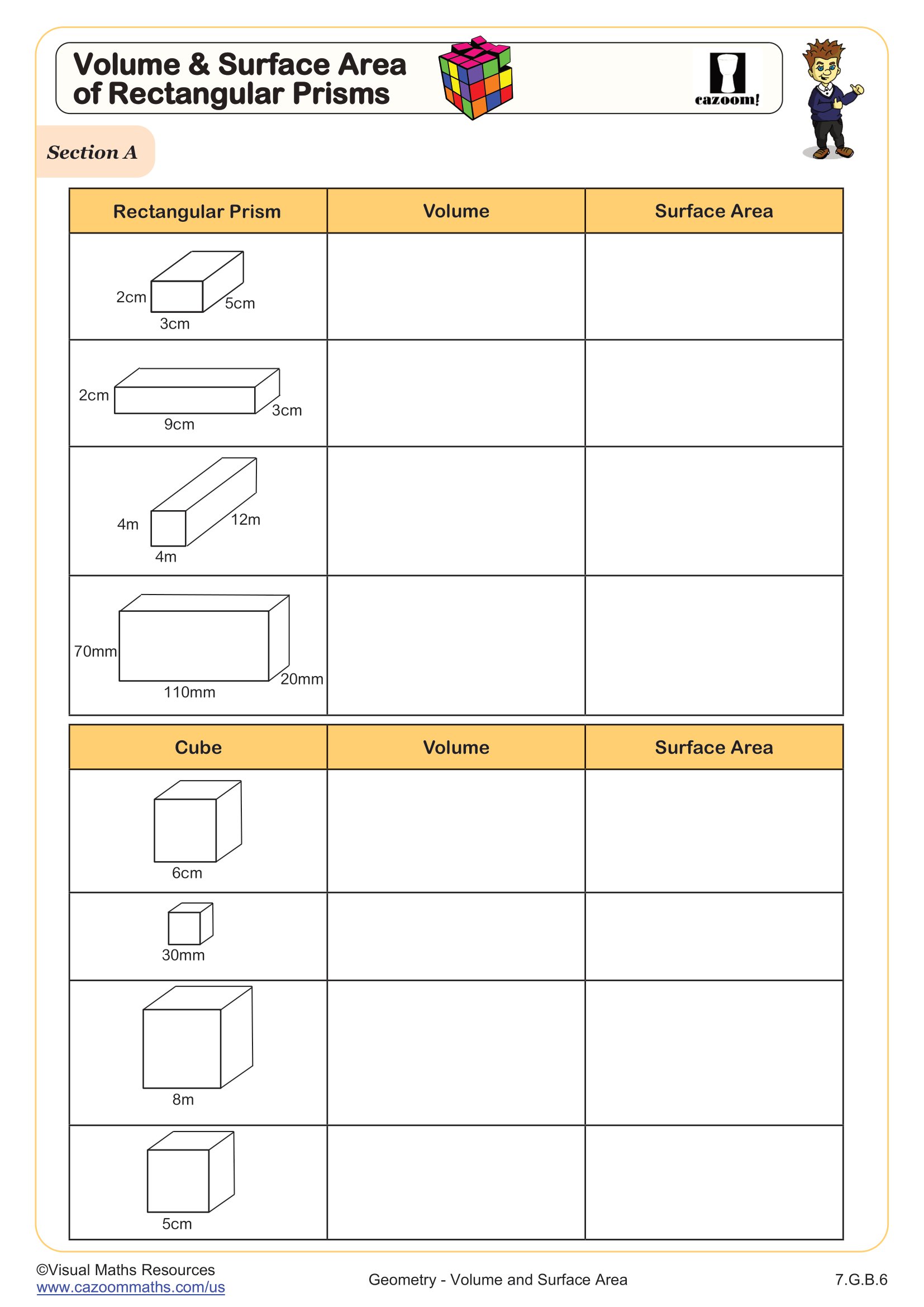
Volume and Surface Area of Rectangular Prisms
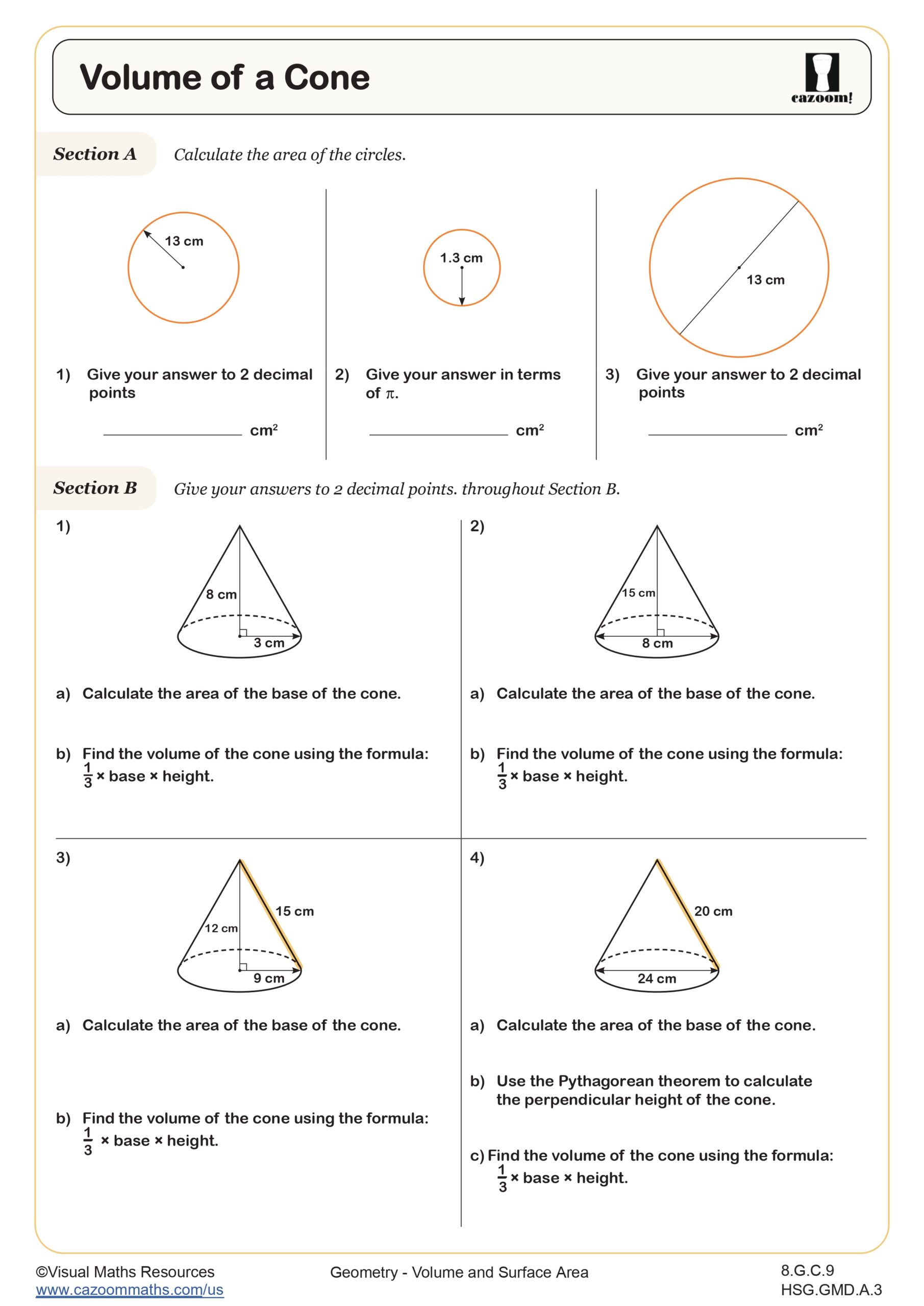
Volume of a Cone
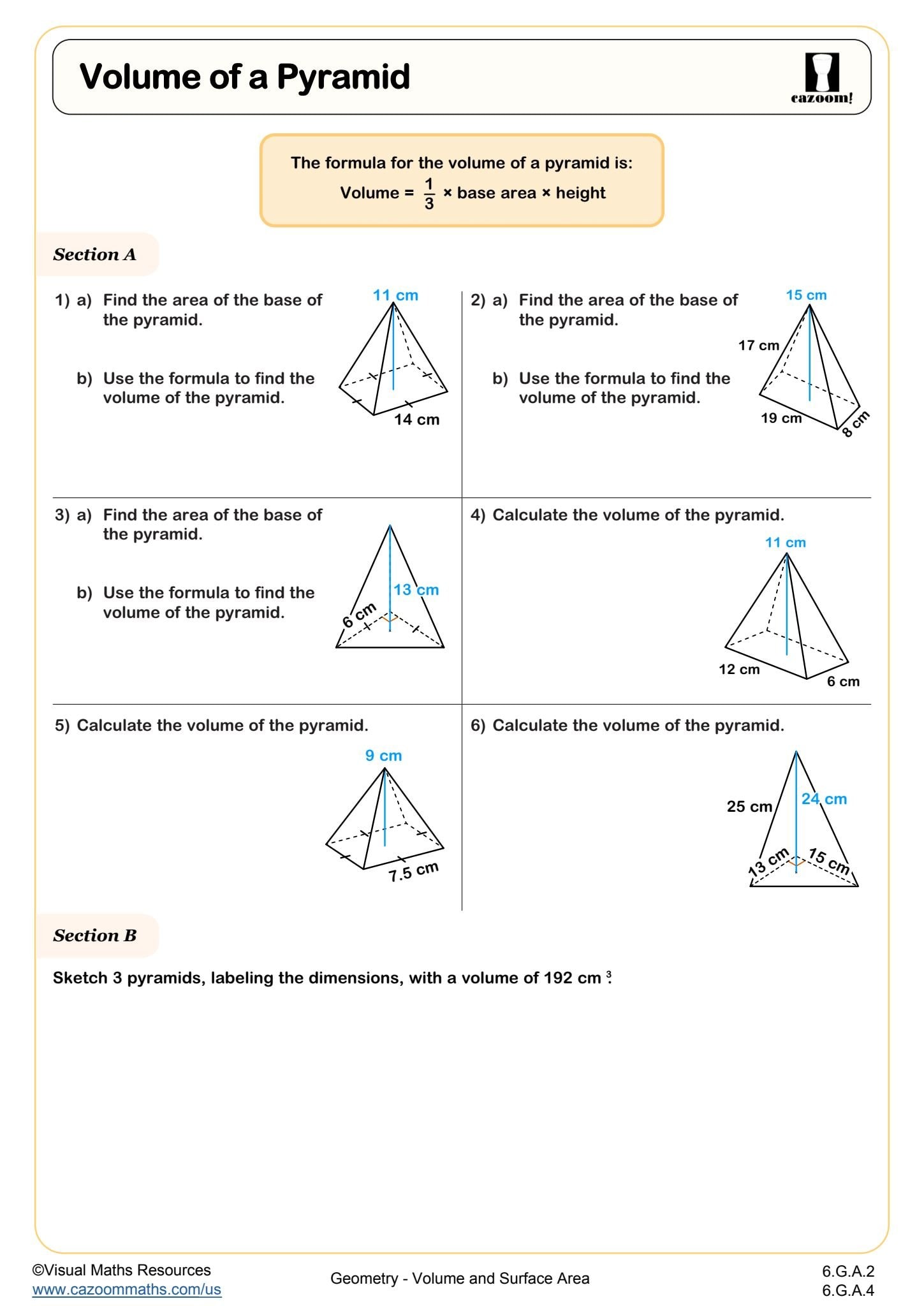
Volume of a Pyramid
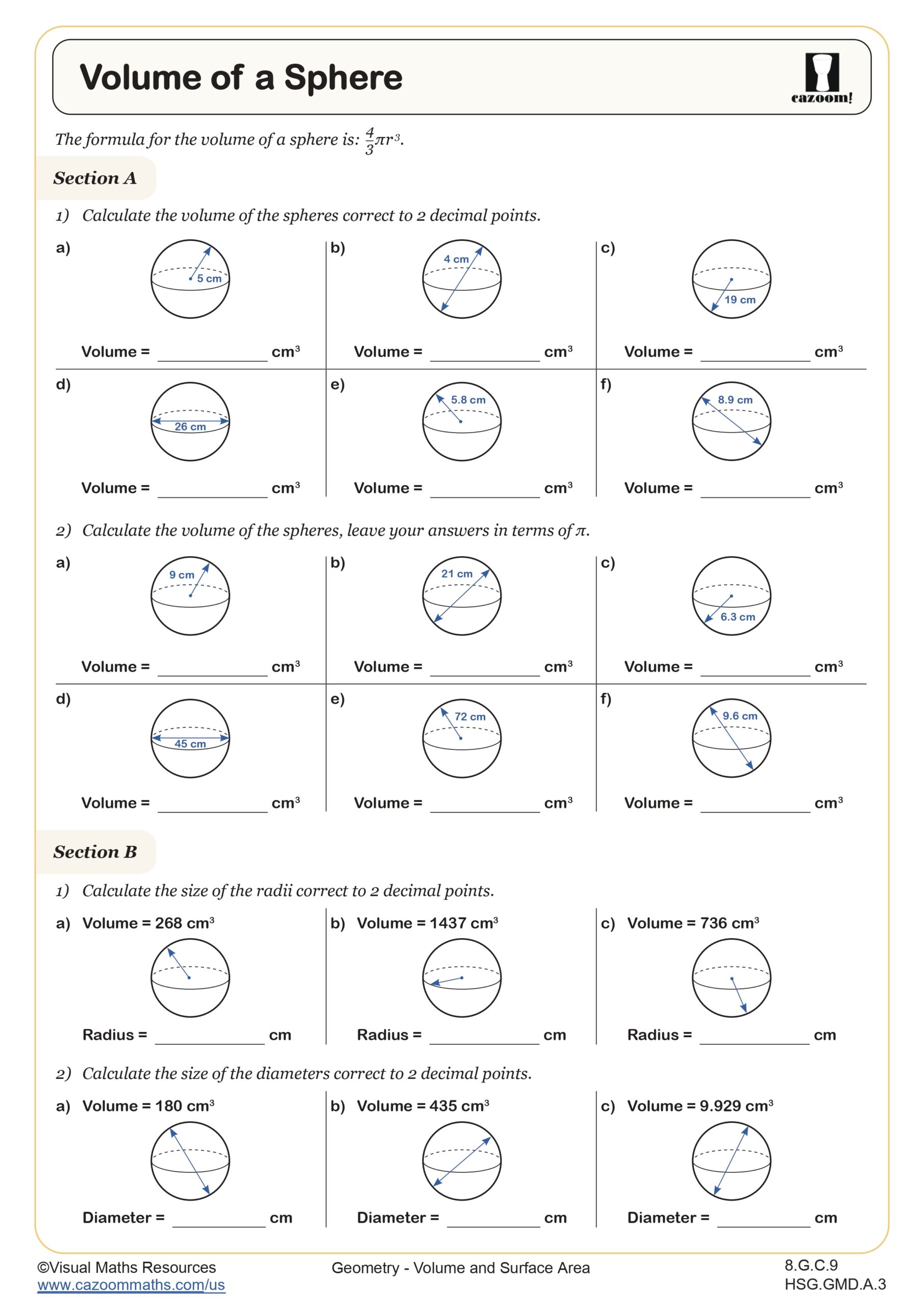
Volume of a Sphere
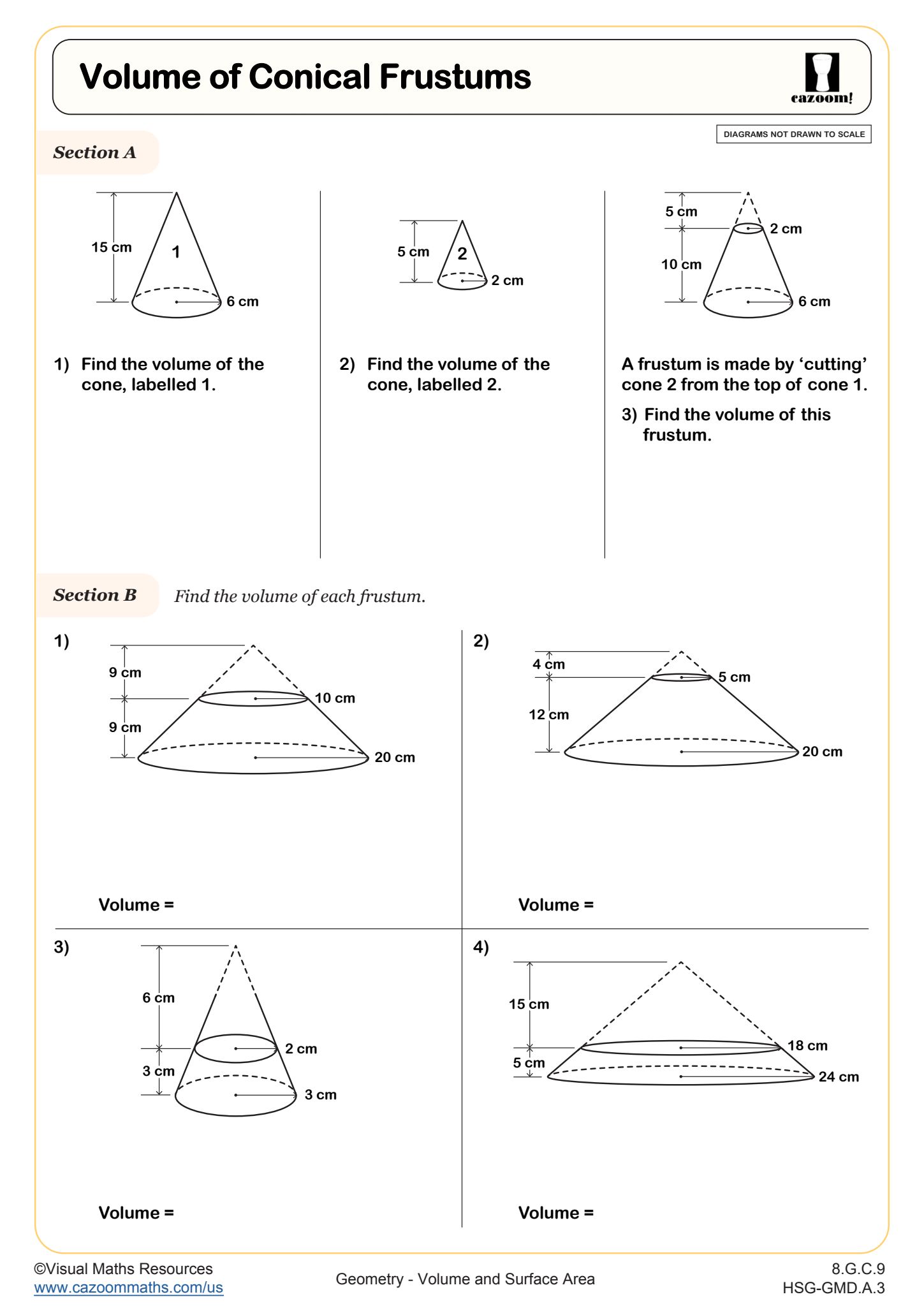
Volume of Conical Frustums
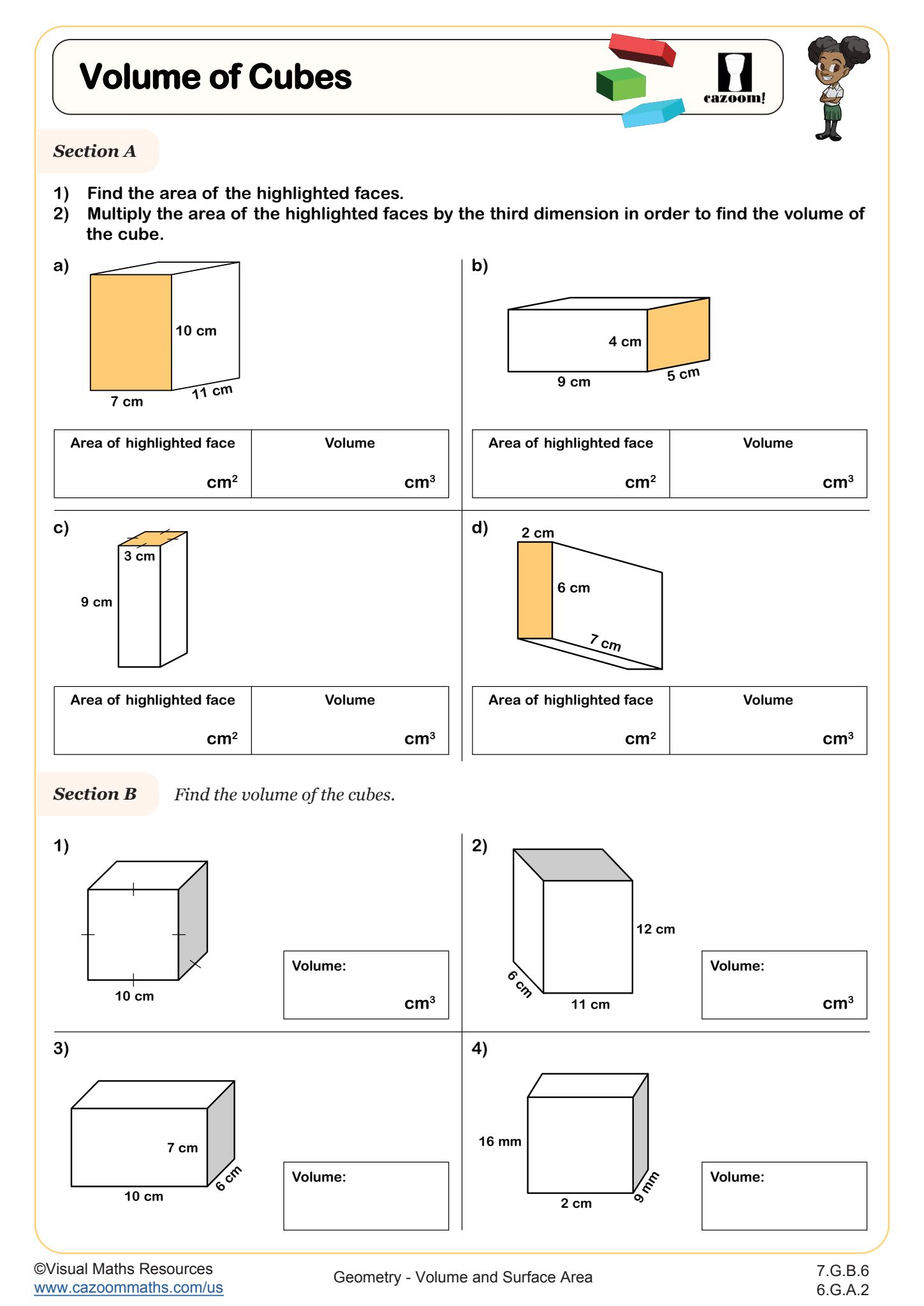
Volume of Cubes
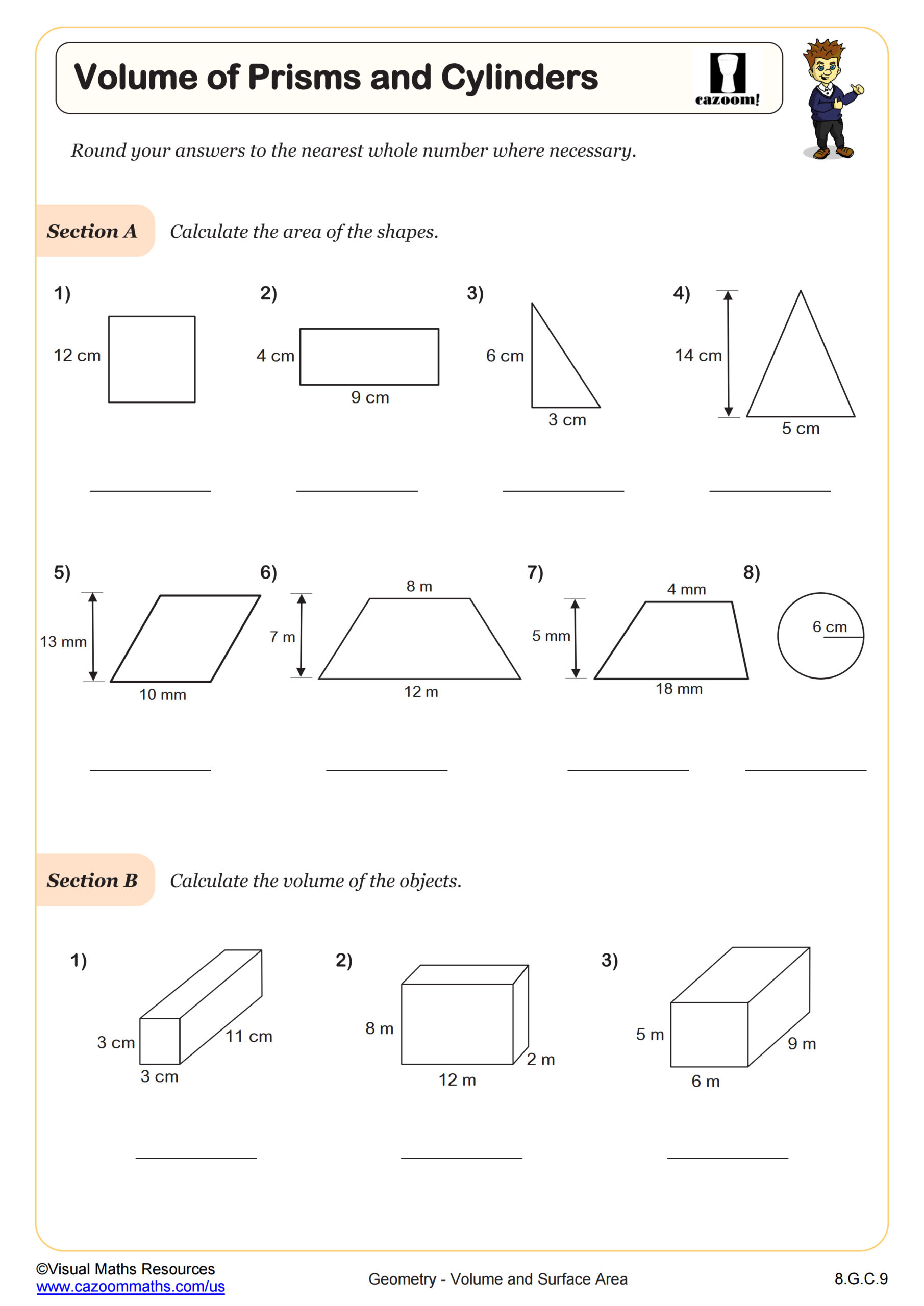
Volume of Prisms and Cylinders
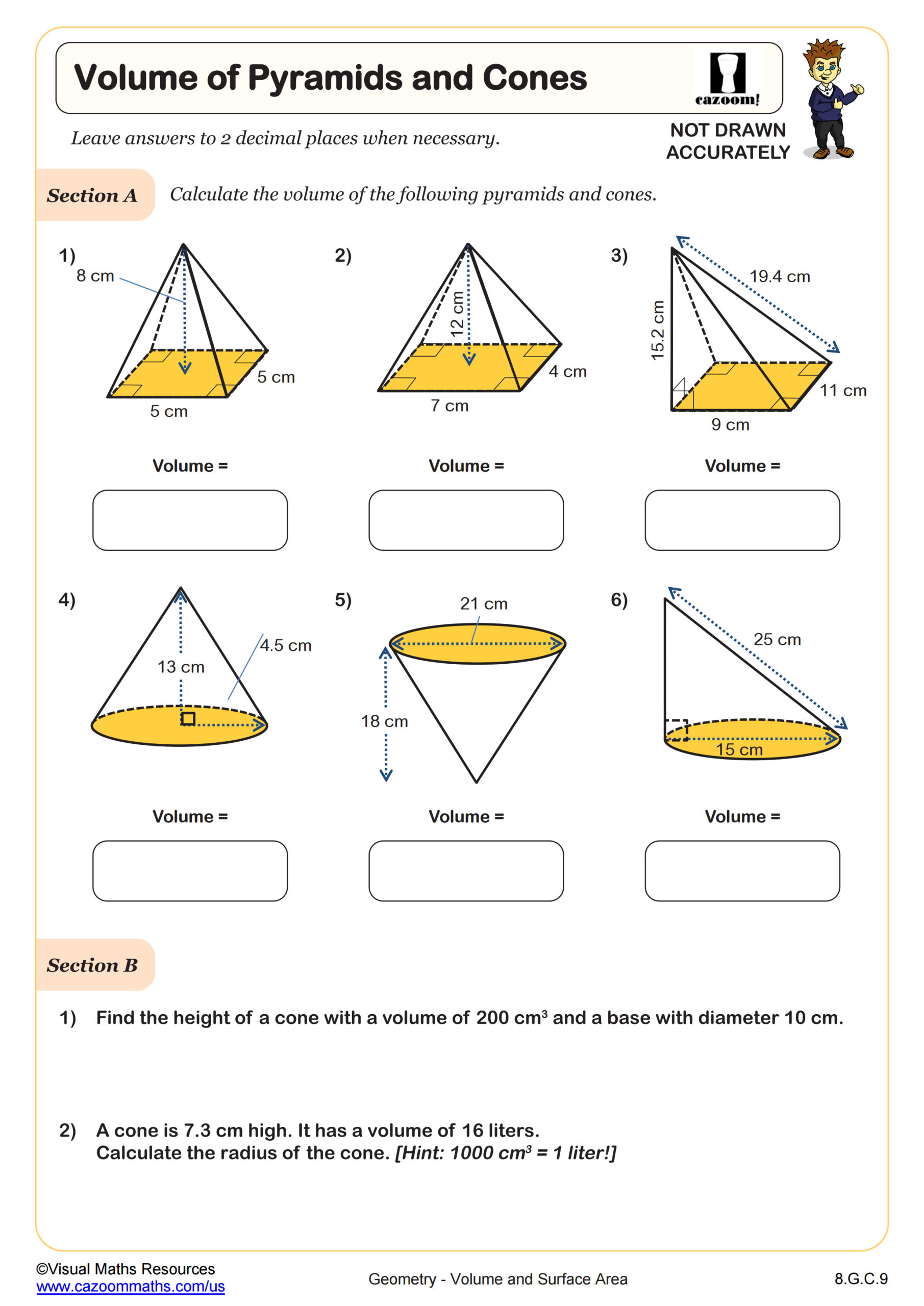
Volume of Pyramids and Cones
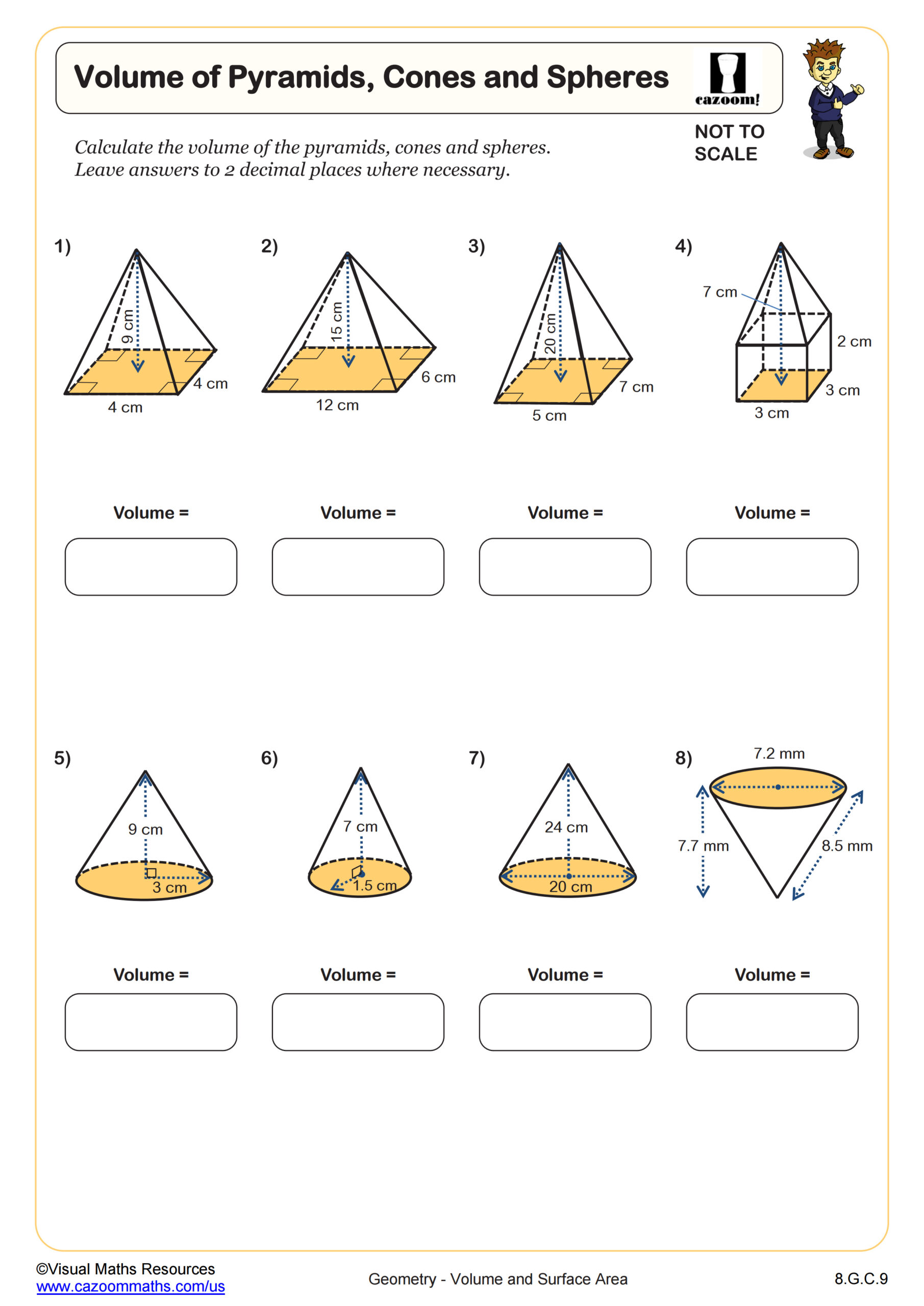
Volume of Pyramids Cones and Spheres
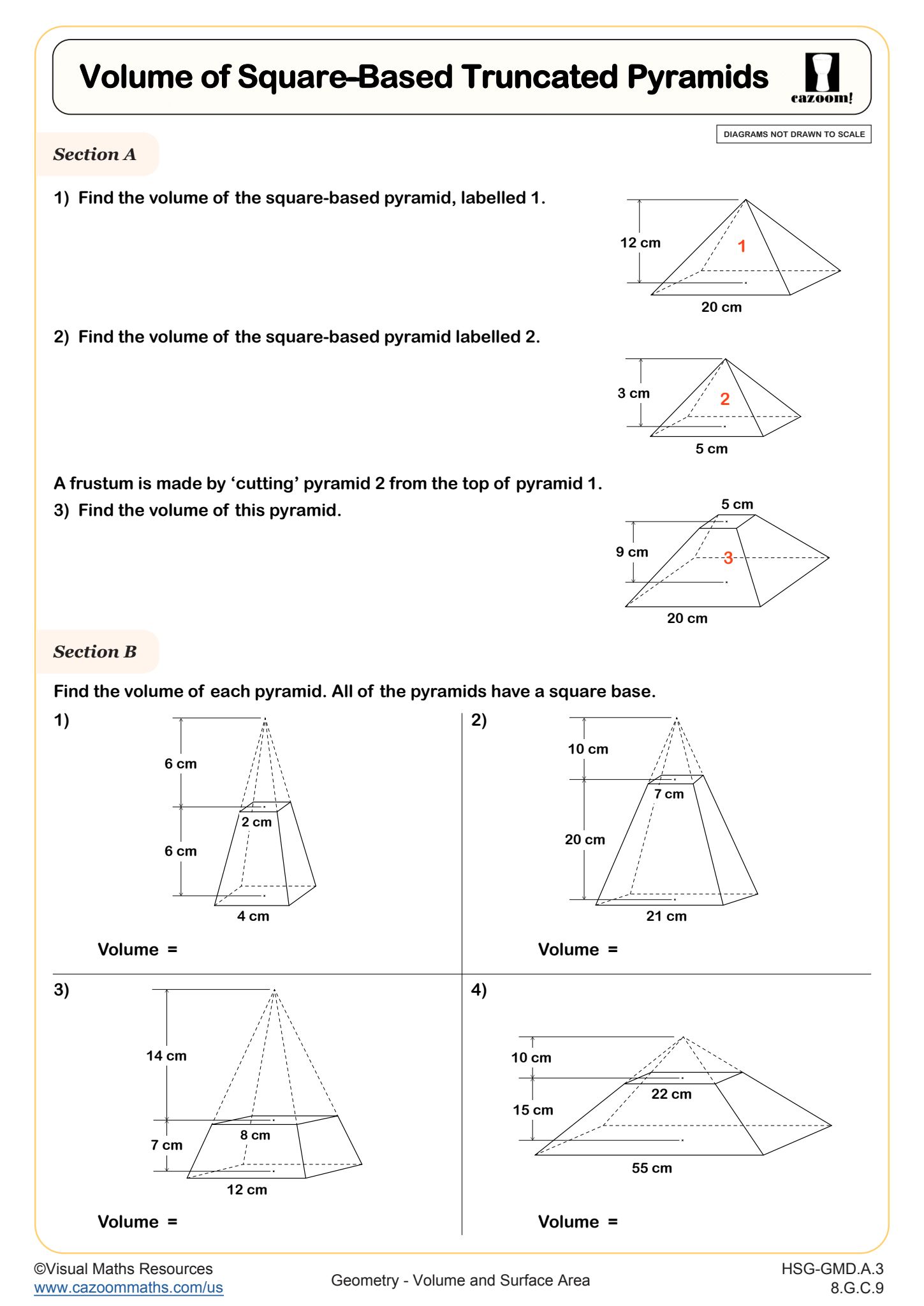
Volume of Square-based Truncated Pyramids
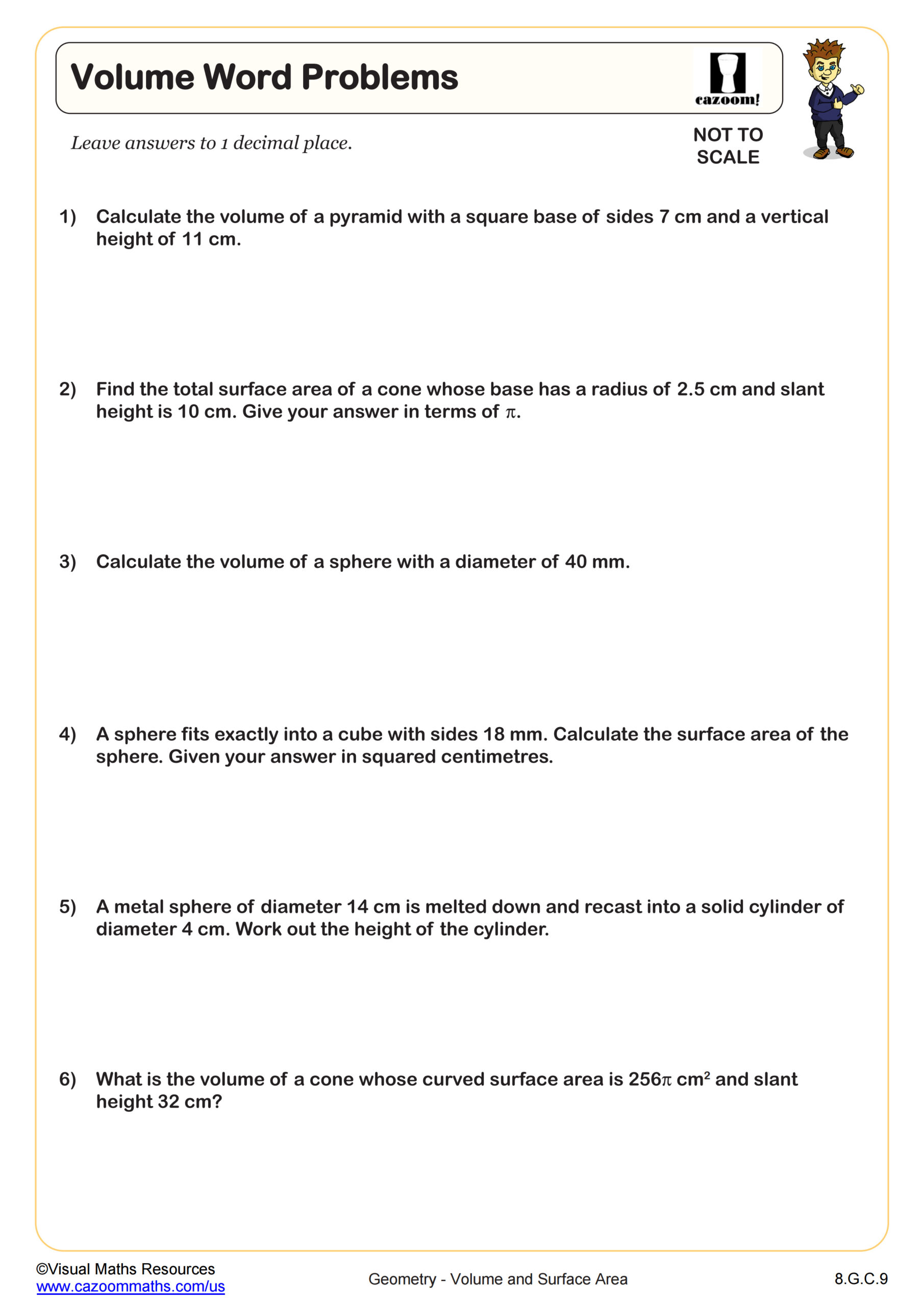
Volume Word Problems
All worksheets are created by the team of experienced teachers at Cazoom Math.
What makes surface area and volume worksheets effective for middle school students?
Effective surface area worksheets grade 6 and above break down complex 3D concepts into manageable steps, starting with simple rectangular prisms before advancing to cylinders and composite shapes. The Common Core Standards emphasize conceptual understanding alongside procedural fluency, requiring students to visualize shapes and apply appropriate formulas.
Teachers consistently observe that students benefit most when worksheets include diagrams showing net patterns for surface area calculations. Many students initially attempt to use volume formulas for surface area problems, so quality worksheets clearly distinguish between these concepts through varied problem types and visual cues.
How do volume and surface area concepts progress across middle school grade levels?
Grade 6 students typically begin with rectangular prisms and cubes, learning to find volume using length × width × height and surface area by calculating individual face areas. The curriculum builds systematically, with 7th grade introducing cylindrical volumes and surface areas using pi-based formulas.
By 8th grade, students tackle composite figures and real-world applications requiring multiple steps. Teachers notice that students who master rectangular prism concepts thoroughly in 6th grade show greater success with more complex shapes later. The progression requires consistent practice with increasingly challenging problem sets.
Why do students often confuse surface area and volume calculations?
The fundamental confusion stems from students not visualizing the physical difference between measuring a shape's outer covering versus its internal capacity. Surface area measures how much material covers the outside, while volume measures how much space exists inside the shape.
Teachers report that hands-on activities using physical models help clarify this distinction. Students who struggle often benefit from area and volume worksheets that explicitly state whether they're finding "paint needed to cover the box" (surface area) or "water needed to fill the container" (volume). Context clues in word problems become crucial learning tools.
How should teachers use these 3d objects worksheet resources in their classrooms?
Most teachers find success introducing each shape type separately before mixing problem types on review worksheets. Starting with guided practice using the answer keys allows teachers to model problem-solving strategies and address common misconceptions immediately during instruction.
Effective implementation includes having students explain their reasoning for formula selection, not just calculate answers. Teachers often assign different worksheet sections for homework versus classwork, using the answer keys to provide immediate feedback. This approach helps students build confidence while identifying areas needing additional support.