Scale Factors and Dilations of Polygons (B) WORKSHEET
Scale Factors and Dilations of Polygons (B) WORKSHEET DESCRIPTION
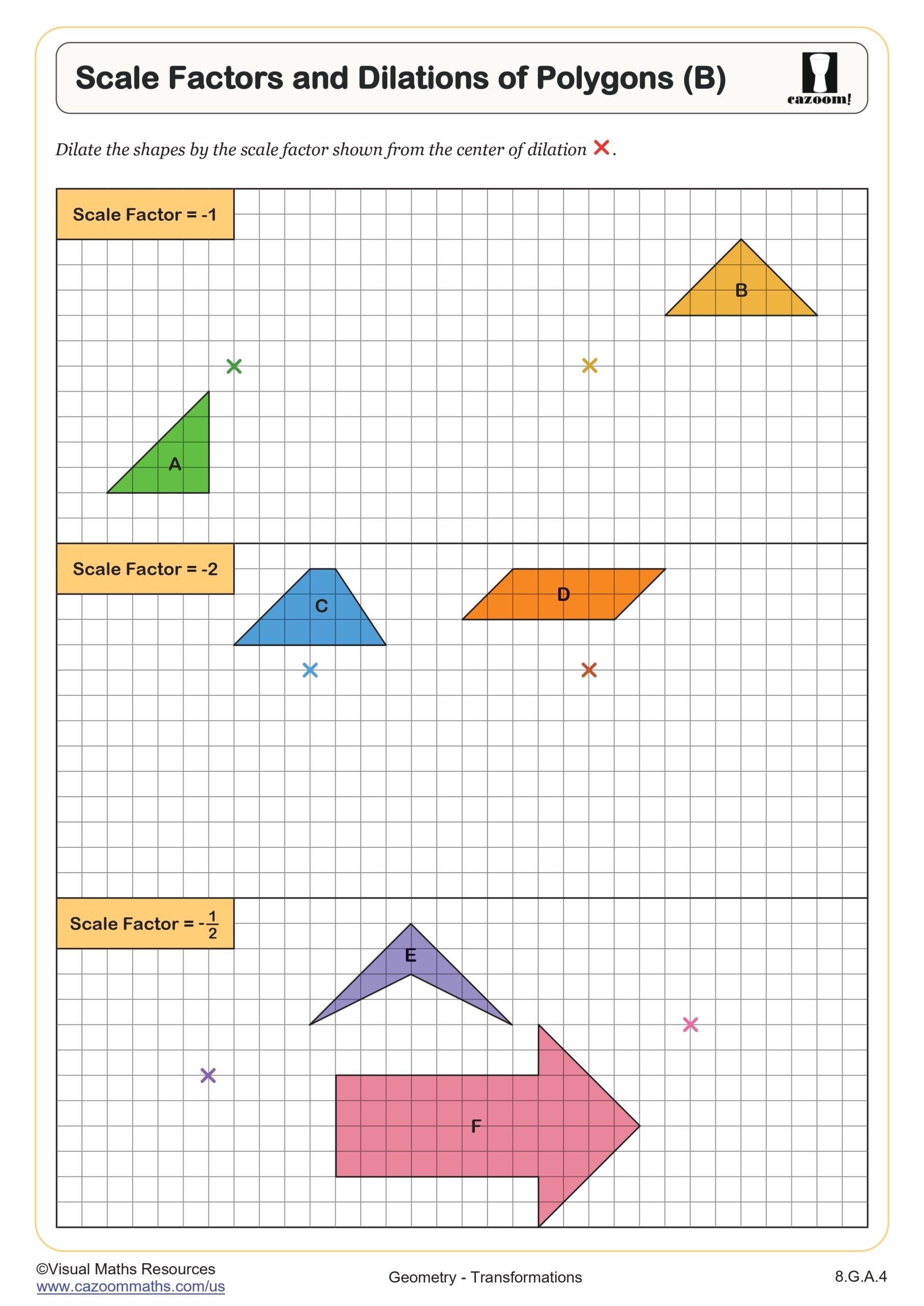
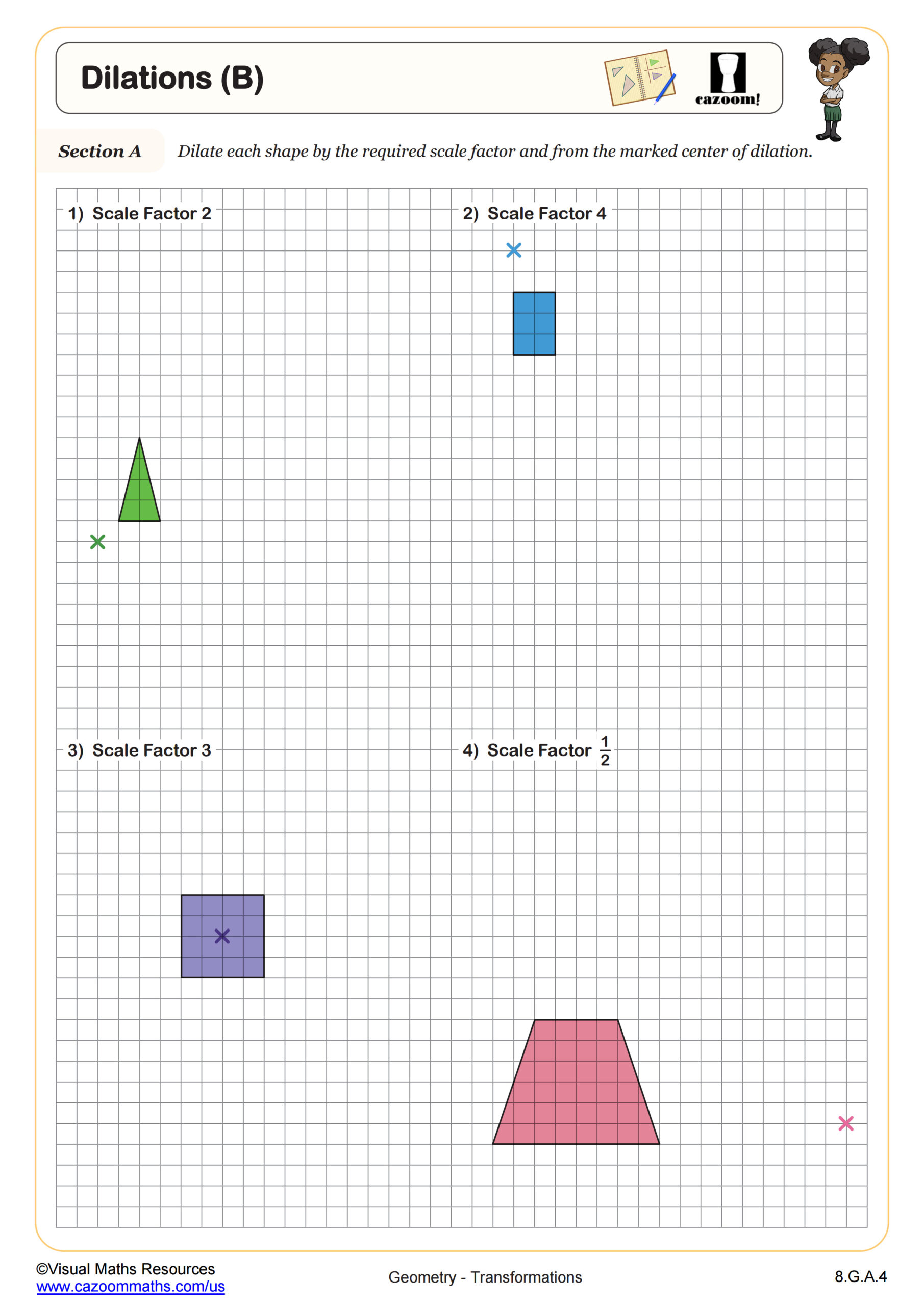
Introduce your learners to dilations by negative scale factors with this worksheet. Here there are six objects to enlarge by three different scale factors: -1, -2, and - 1/2 . The orientation of centers of dilation vary, as do the polygons themselves. Objects include right angled and isosceles triangles, a trapezoid, parallelograms, arrowheads, and arrow shapes; all are translucent to aid students' transformations.
Using column vectors or rays of dilation may help students when beginning to enlarge using negative scale factors. Ensure learners are equipped with a pencil and ruler to complete their transformations.
All worksheets are created by the team of experienced teachers at Cazoom Math.
RELATED TO Scale Factors and Dilations of Polygons (B) WORKSHEET
Frequently Asked Questions
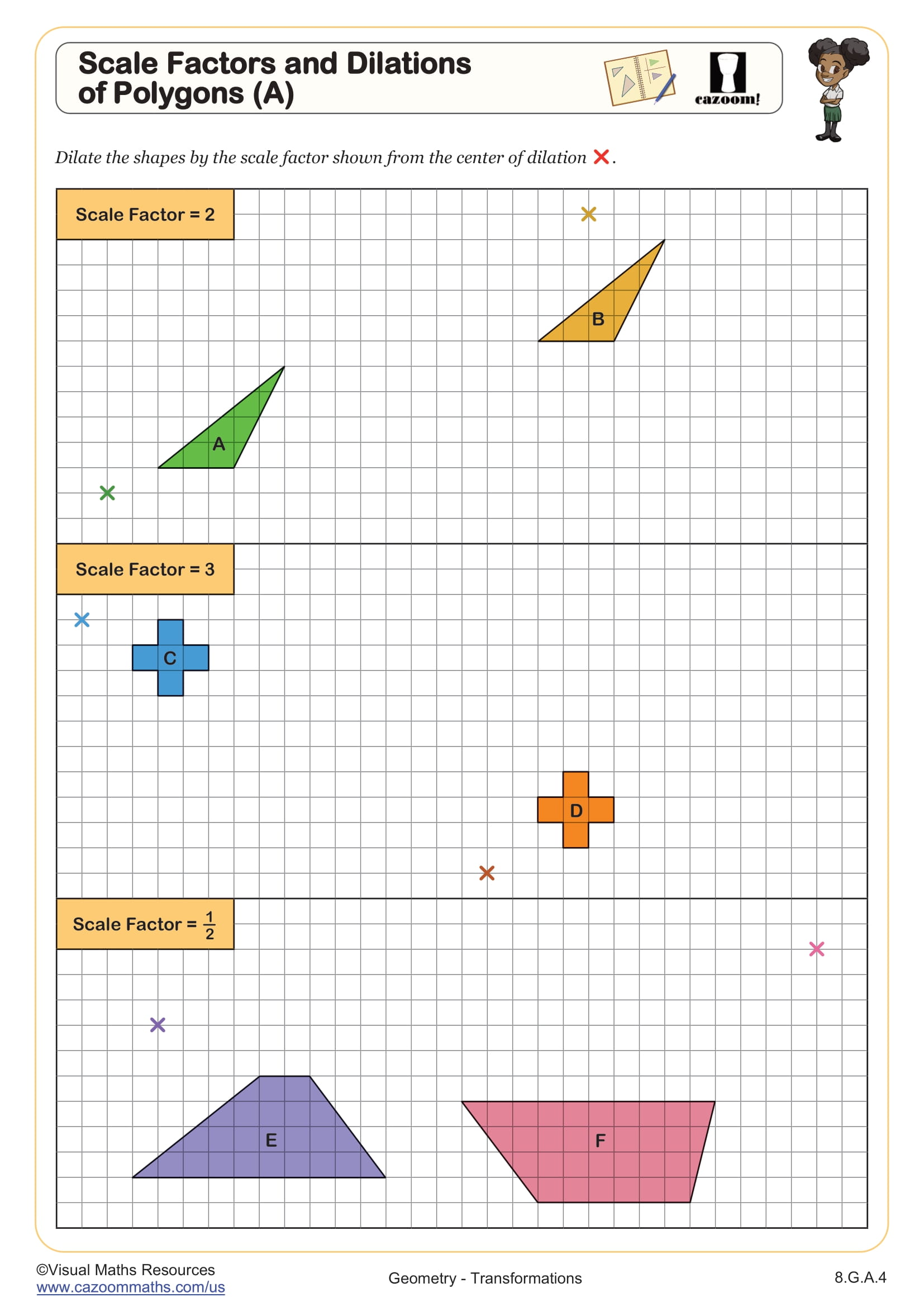
When you dilate by a negative scale factor like -1, -2, or -1/2, the image not only changes size but also rotates 180 degrees around the center of dilation. This means the transformed shape ends up on the opposite side of the center point compared to where it would be with a positive scale factor, creating both a size change and a flip.