4th Grade Measurement and Data Worksheets
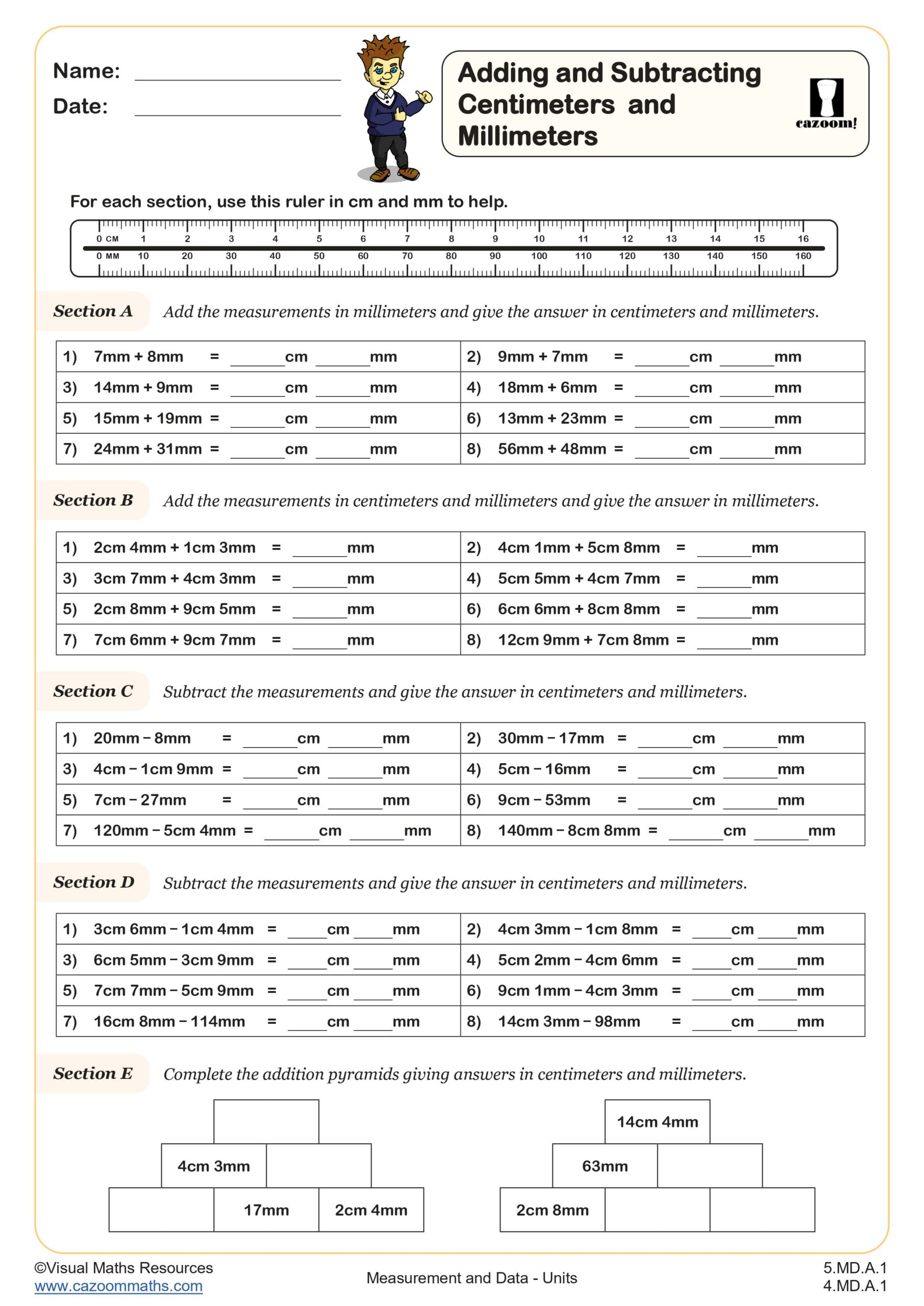
Adding and Subtracting Centimeters and Millimeters
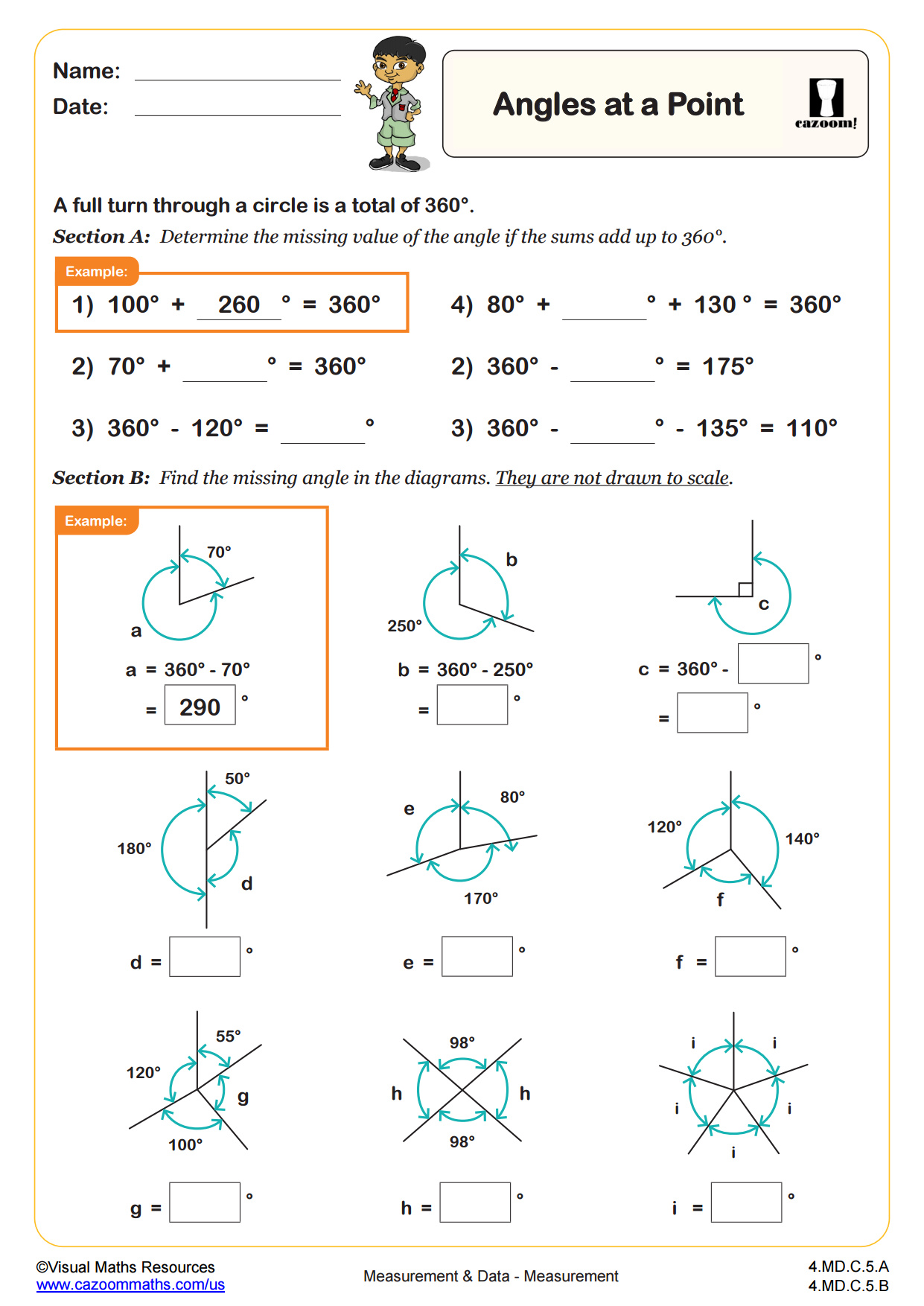
Angles at a Point
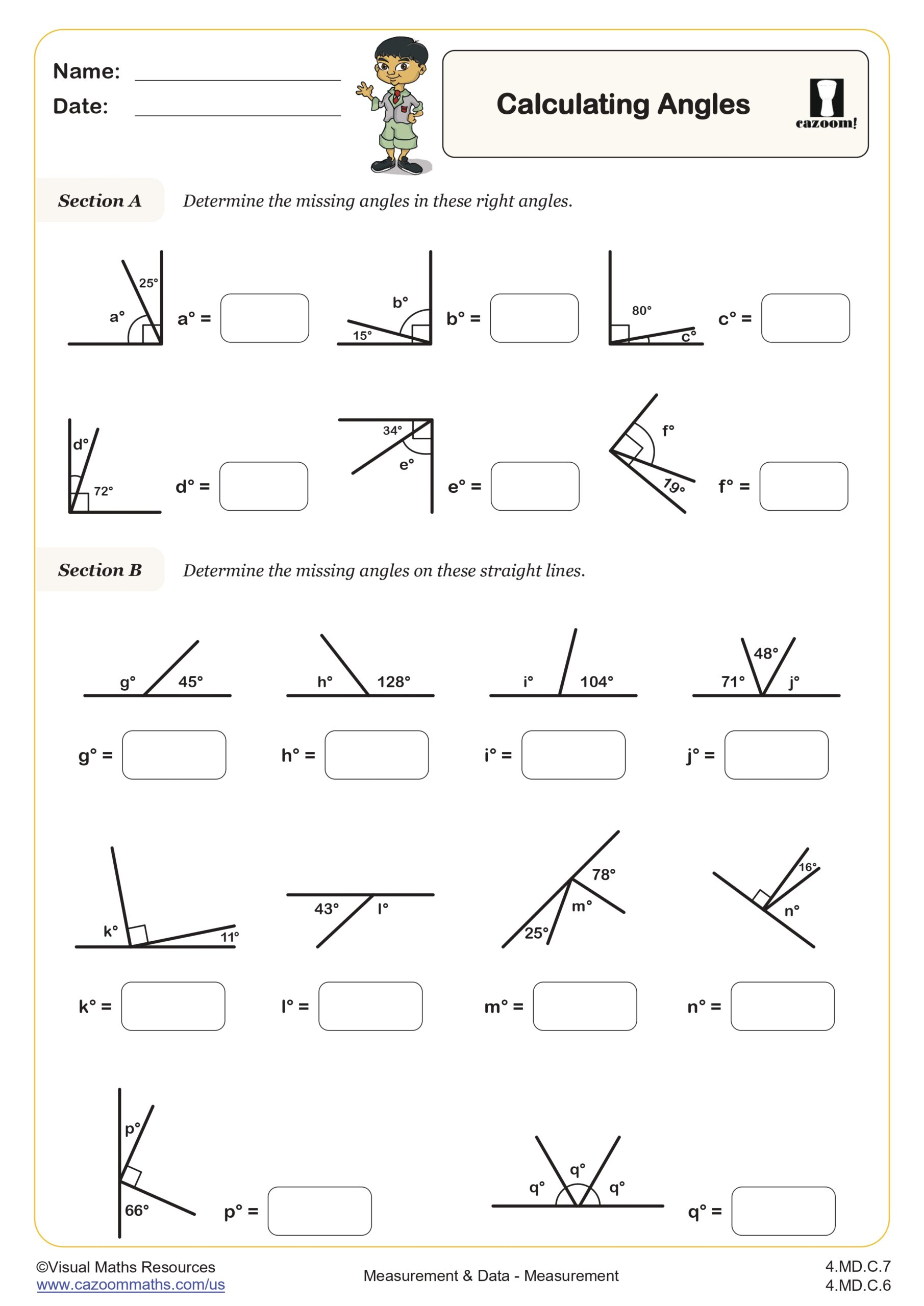
Calculating Angles
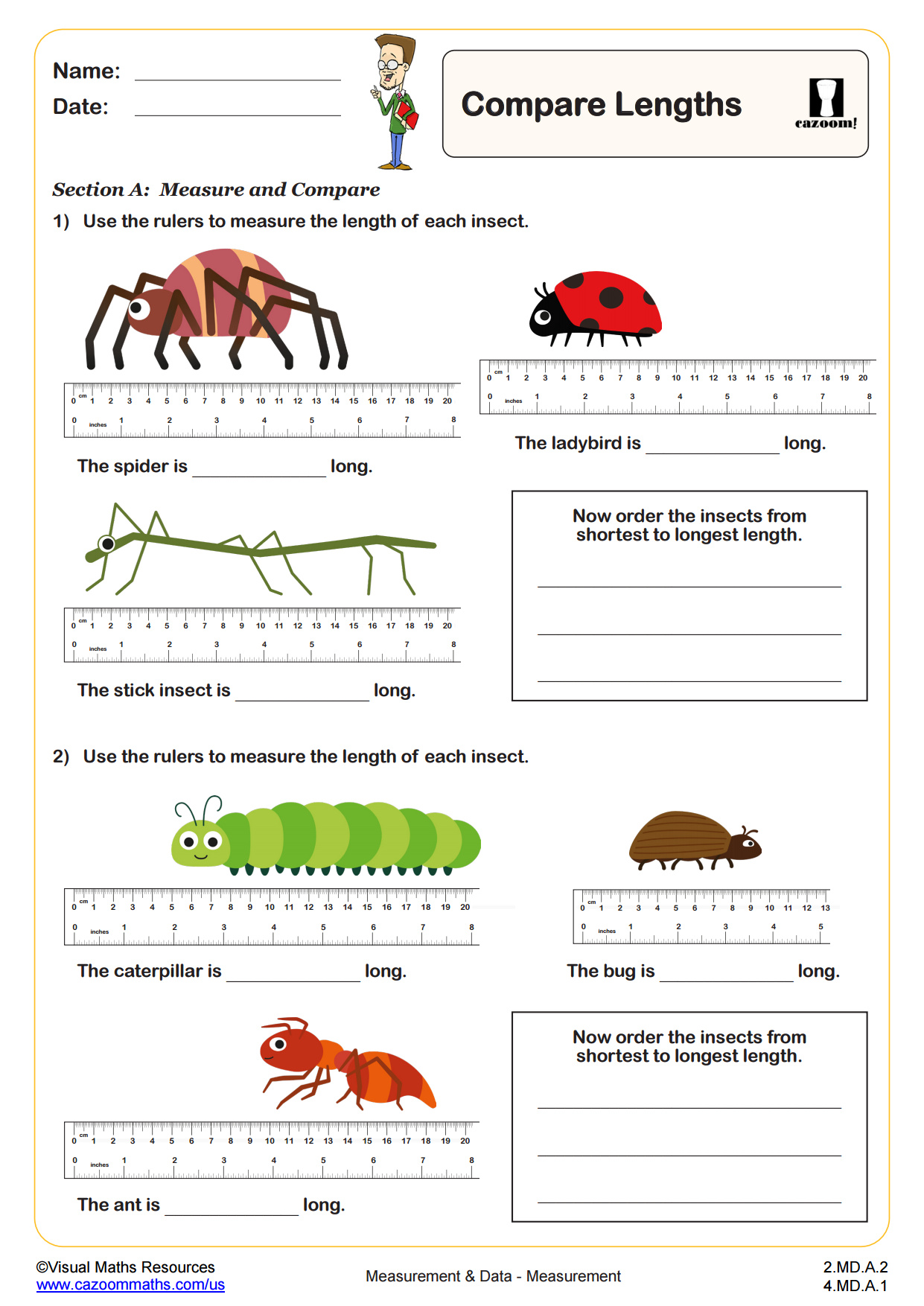
Compare Lengths
Converting Lengths - Centimeters and Millimeters
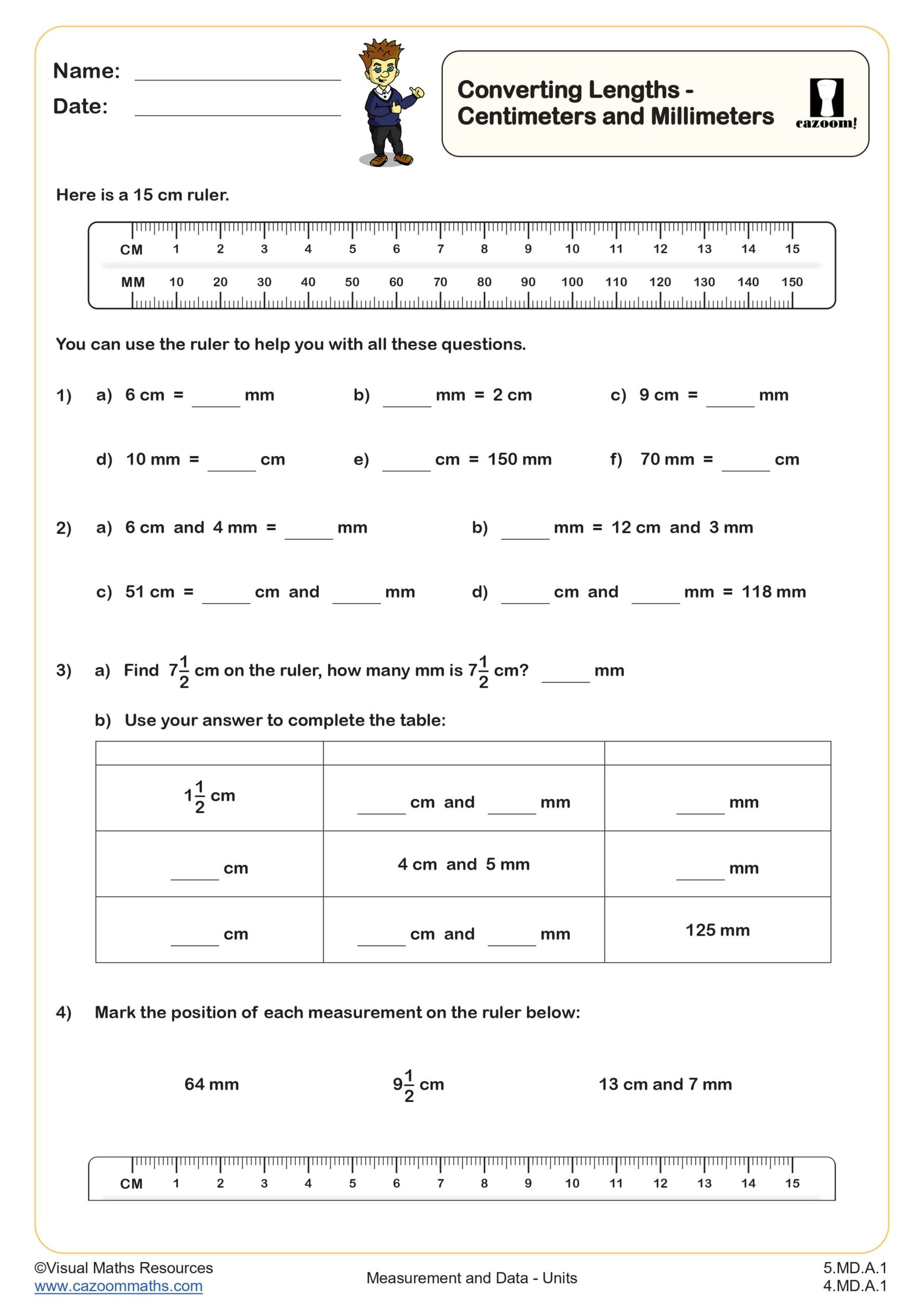
Converting Lengths - Meters and Centimeters
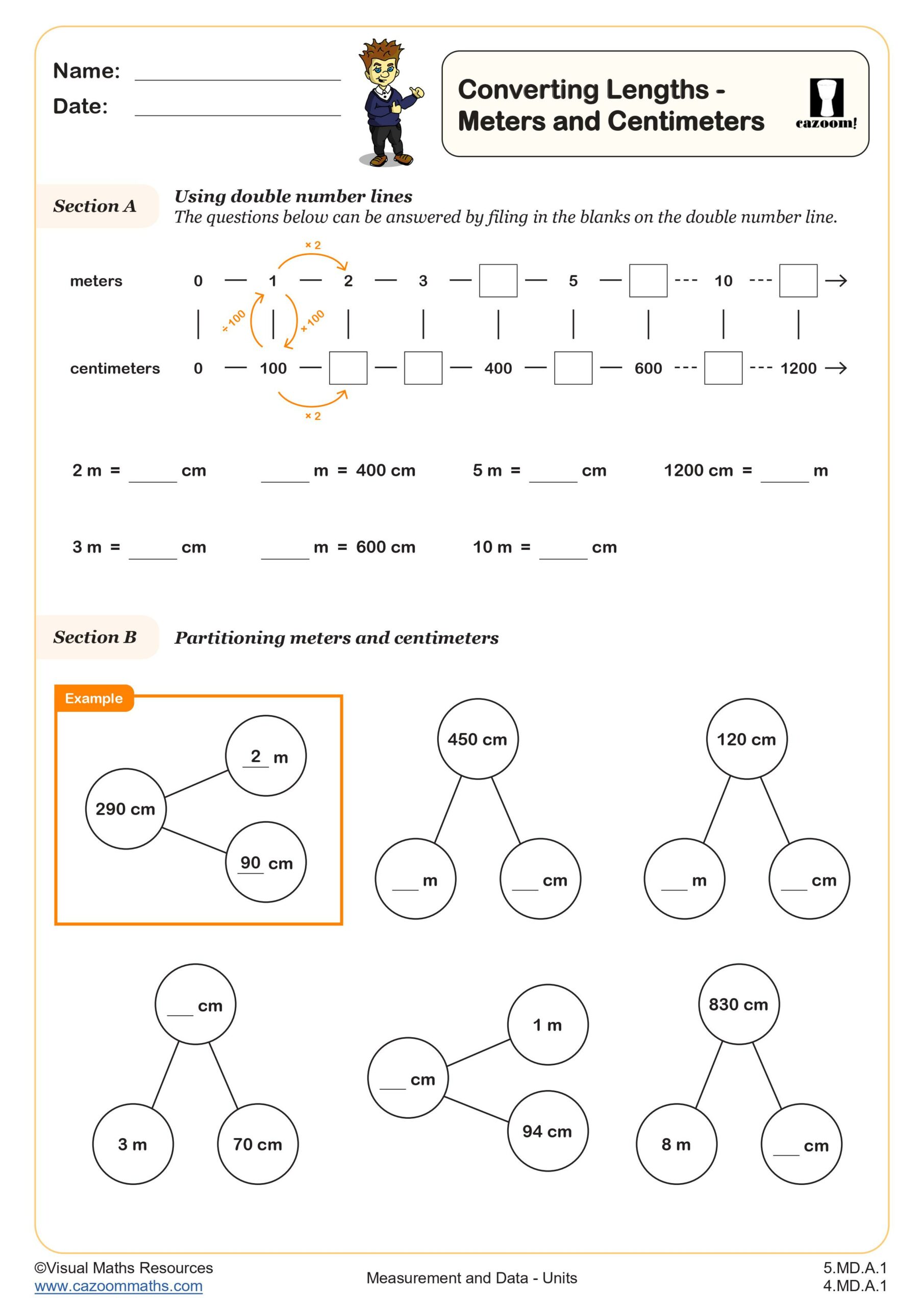
Drawing and Measuring Angles
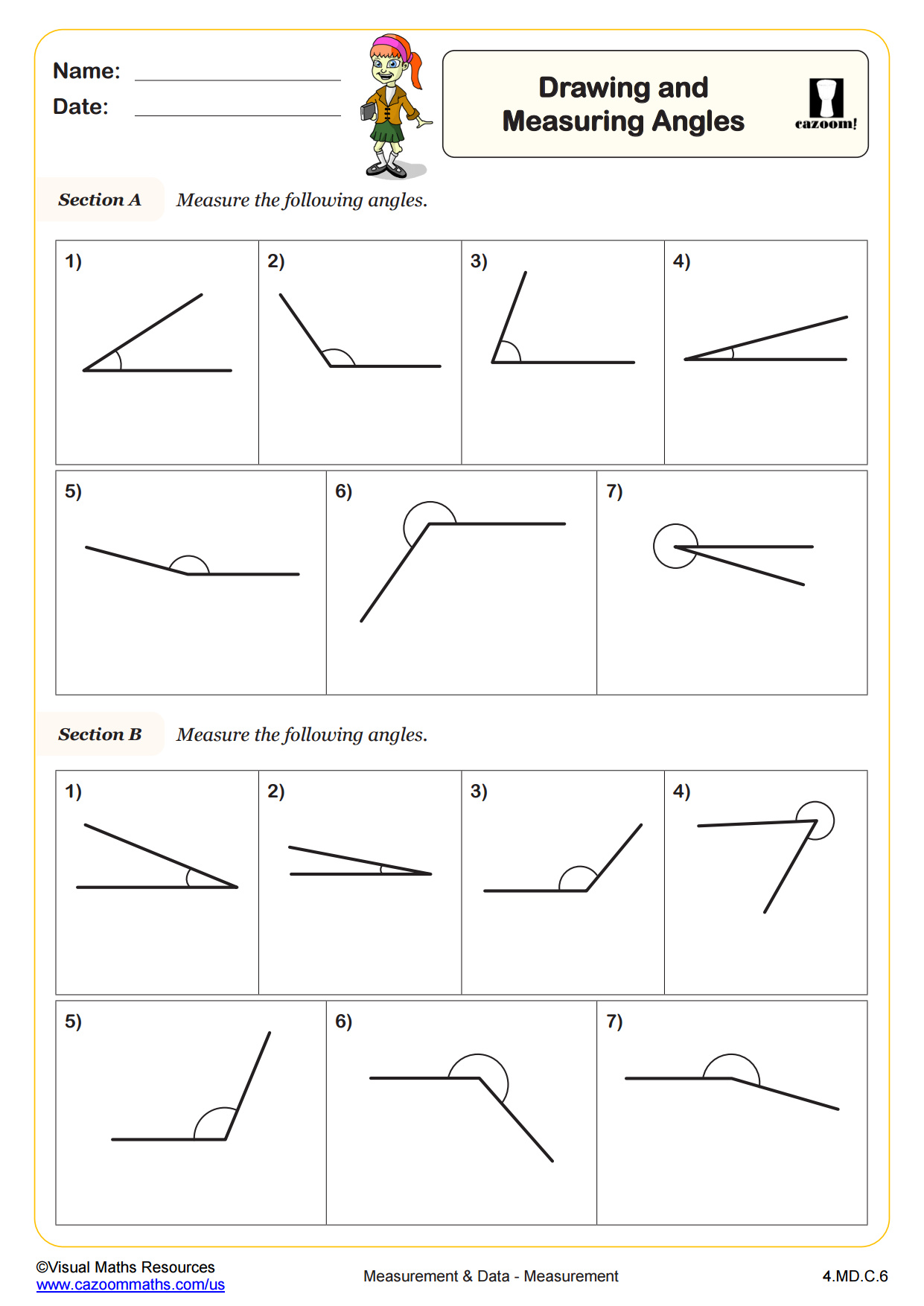
Estimating Angles
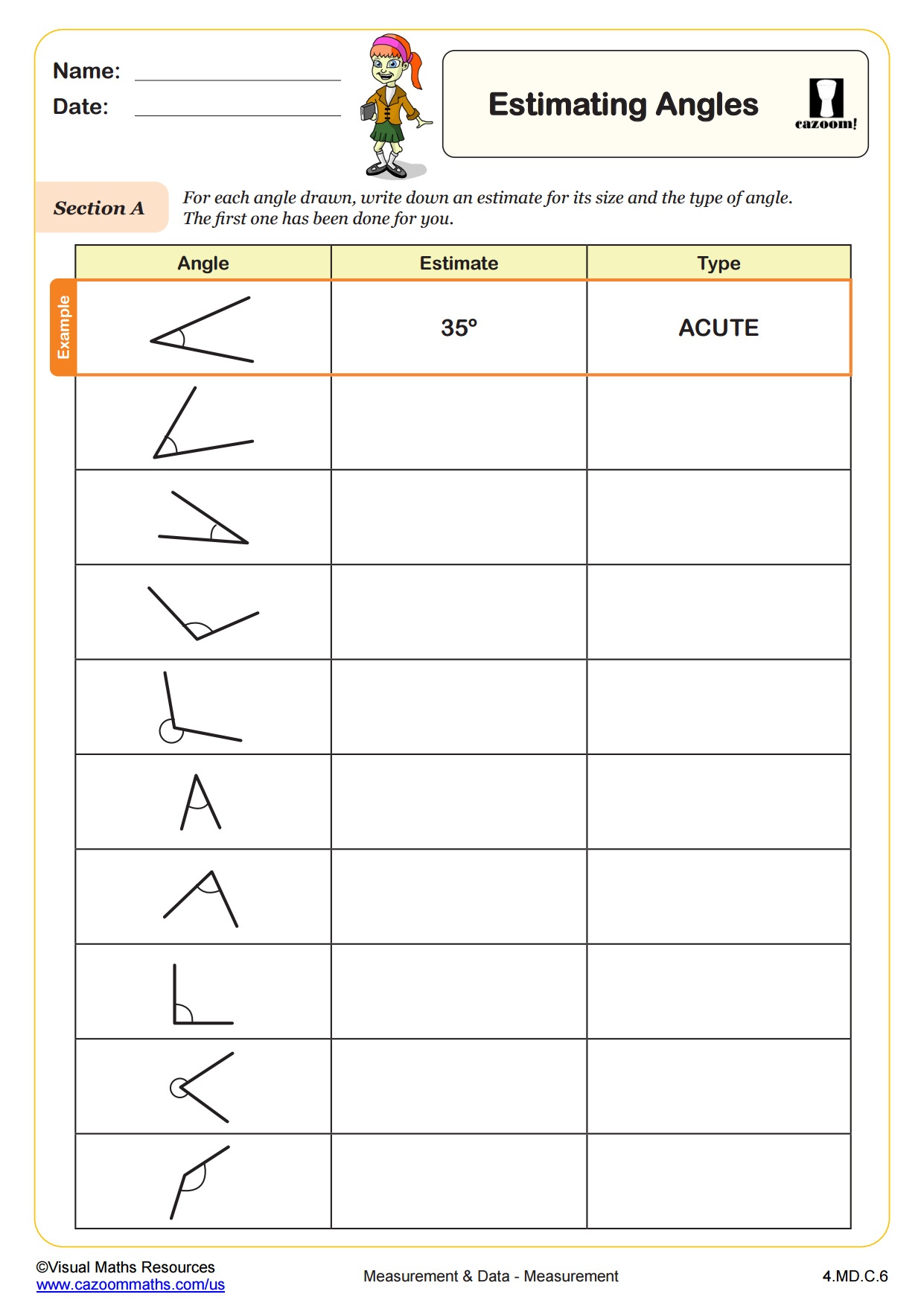
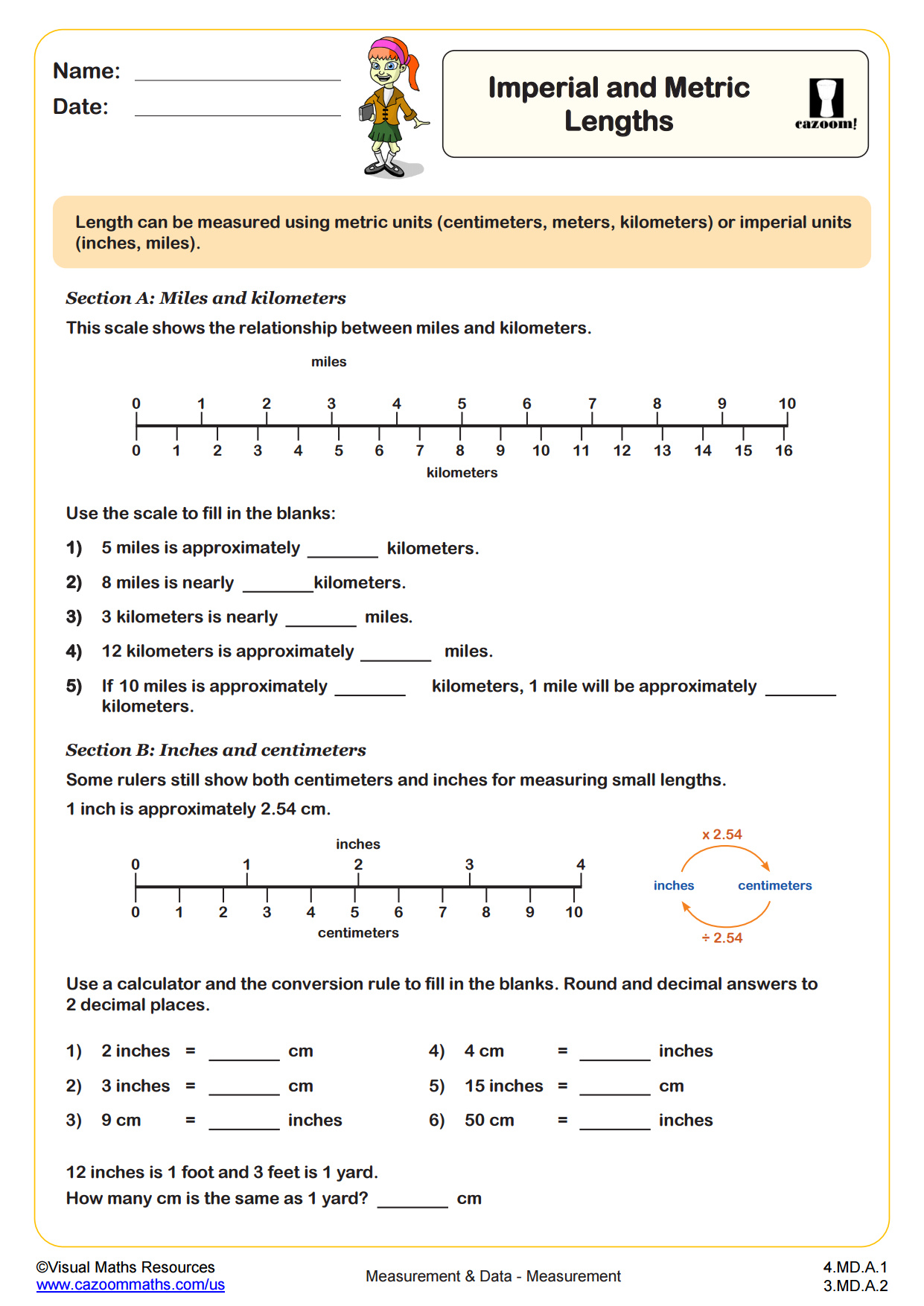
Imperial and Metric Lengths
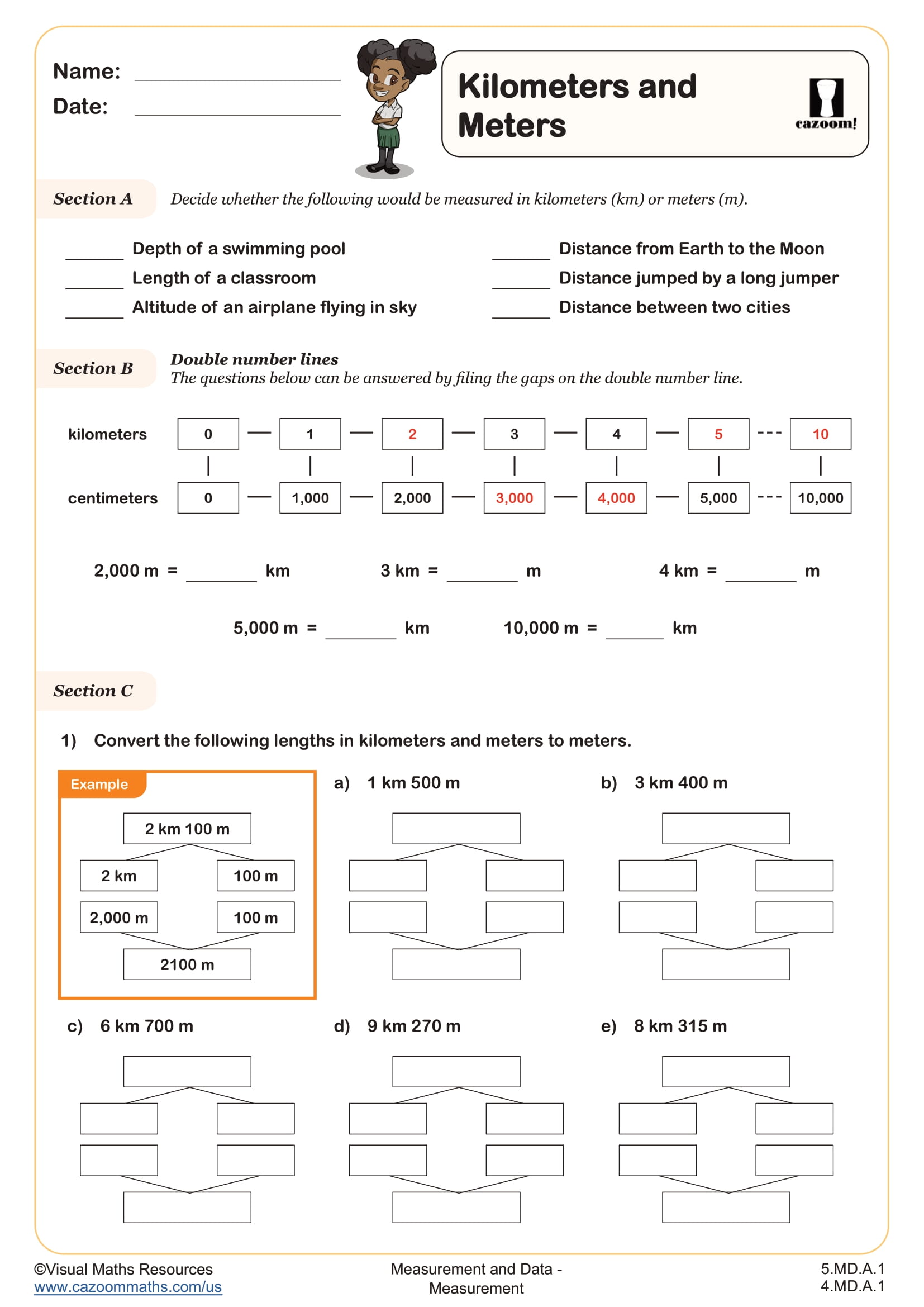
Kilometers and Meters
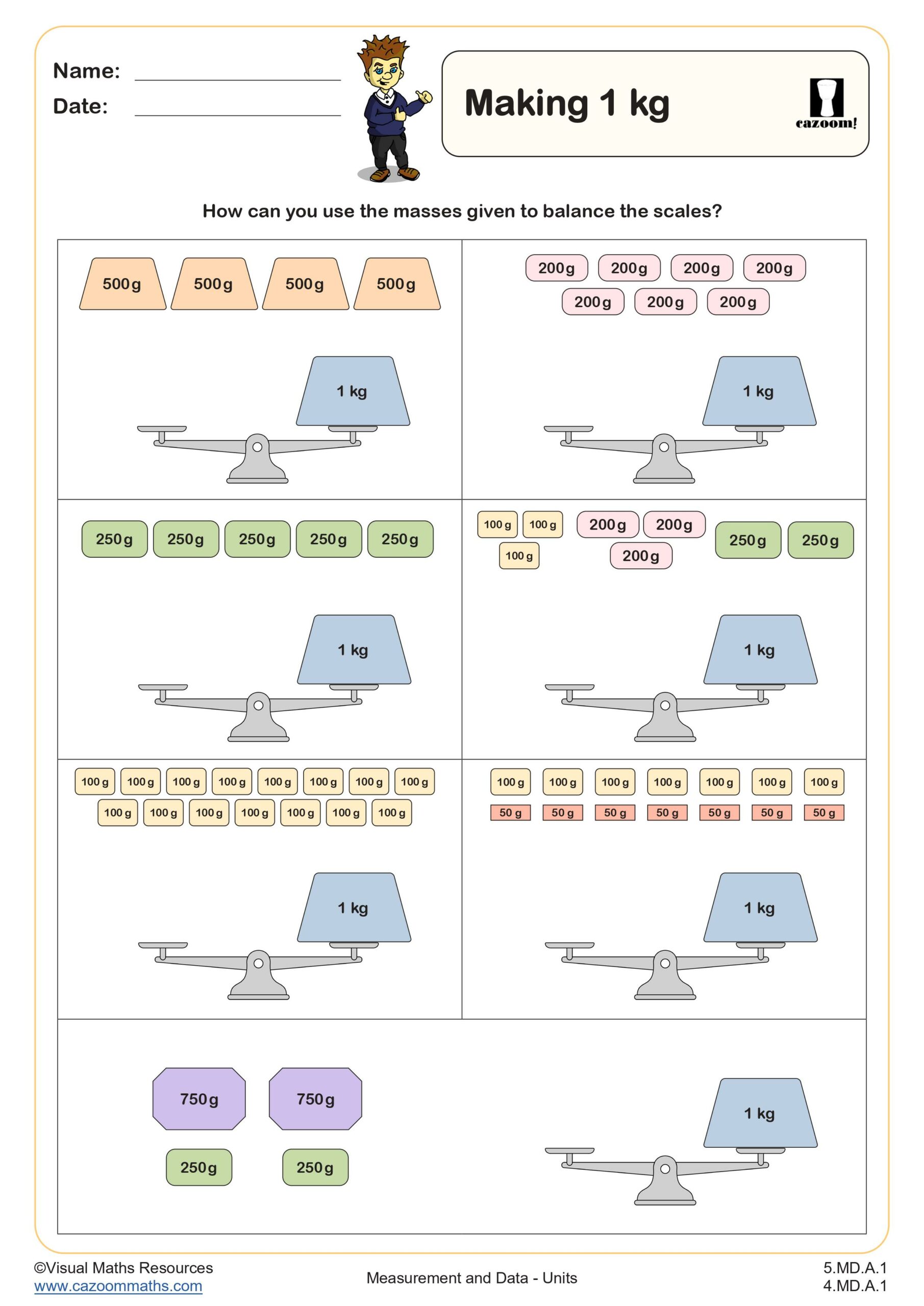
Making 1 kg
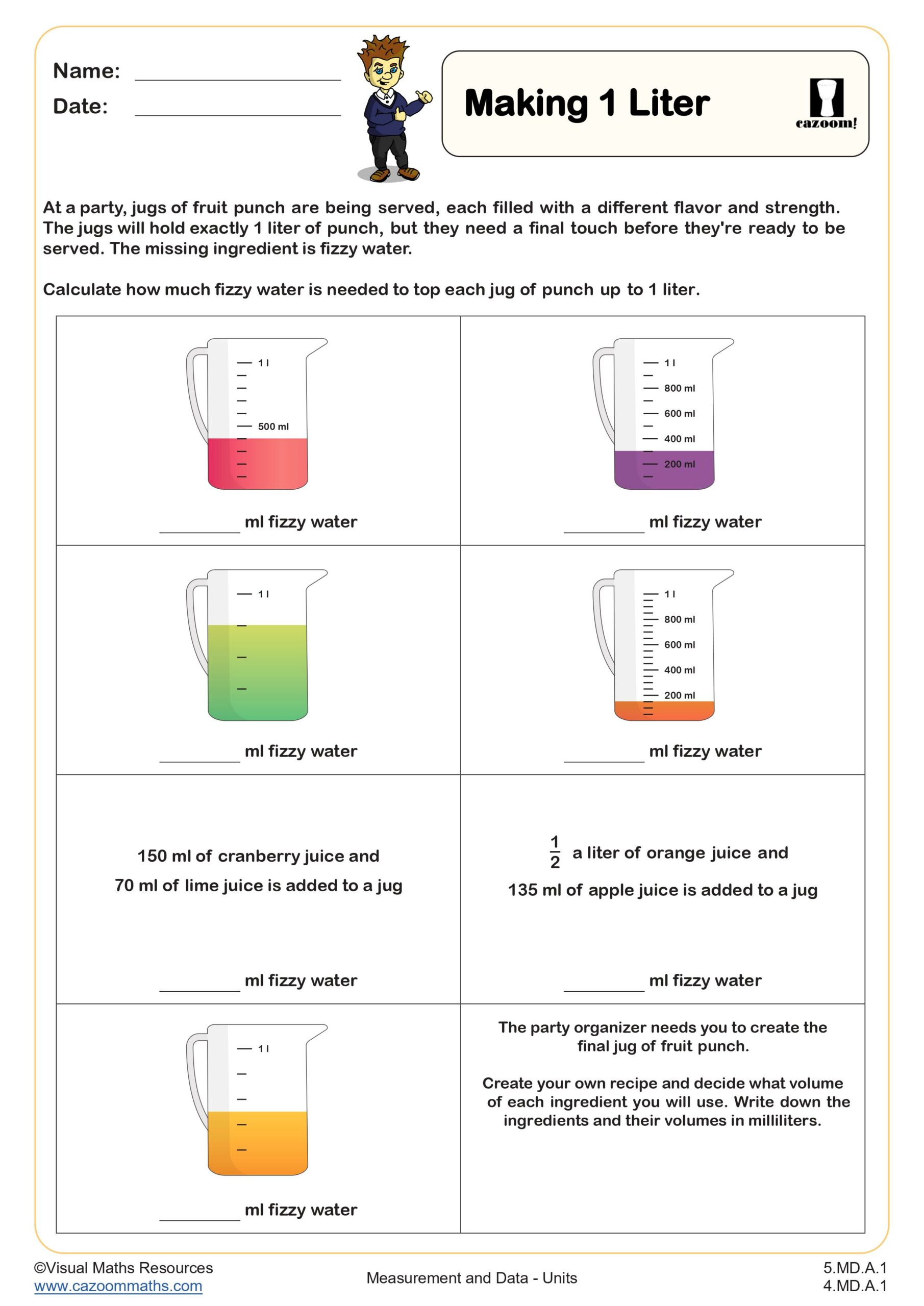
Making 1 l
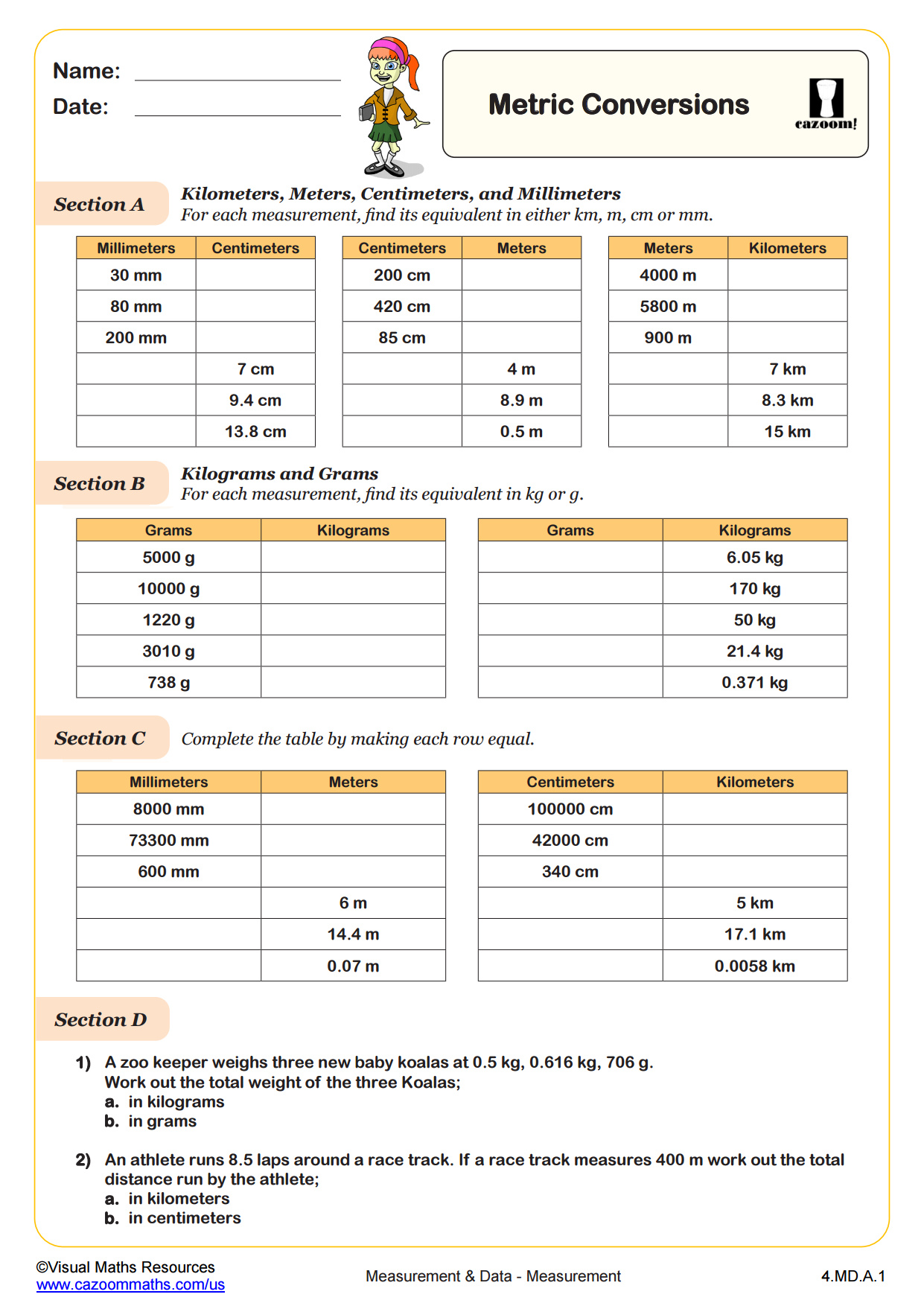
Metric Conversions
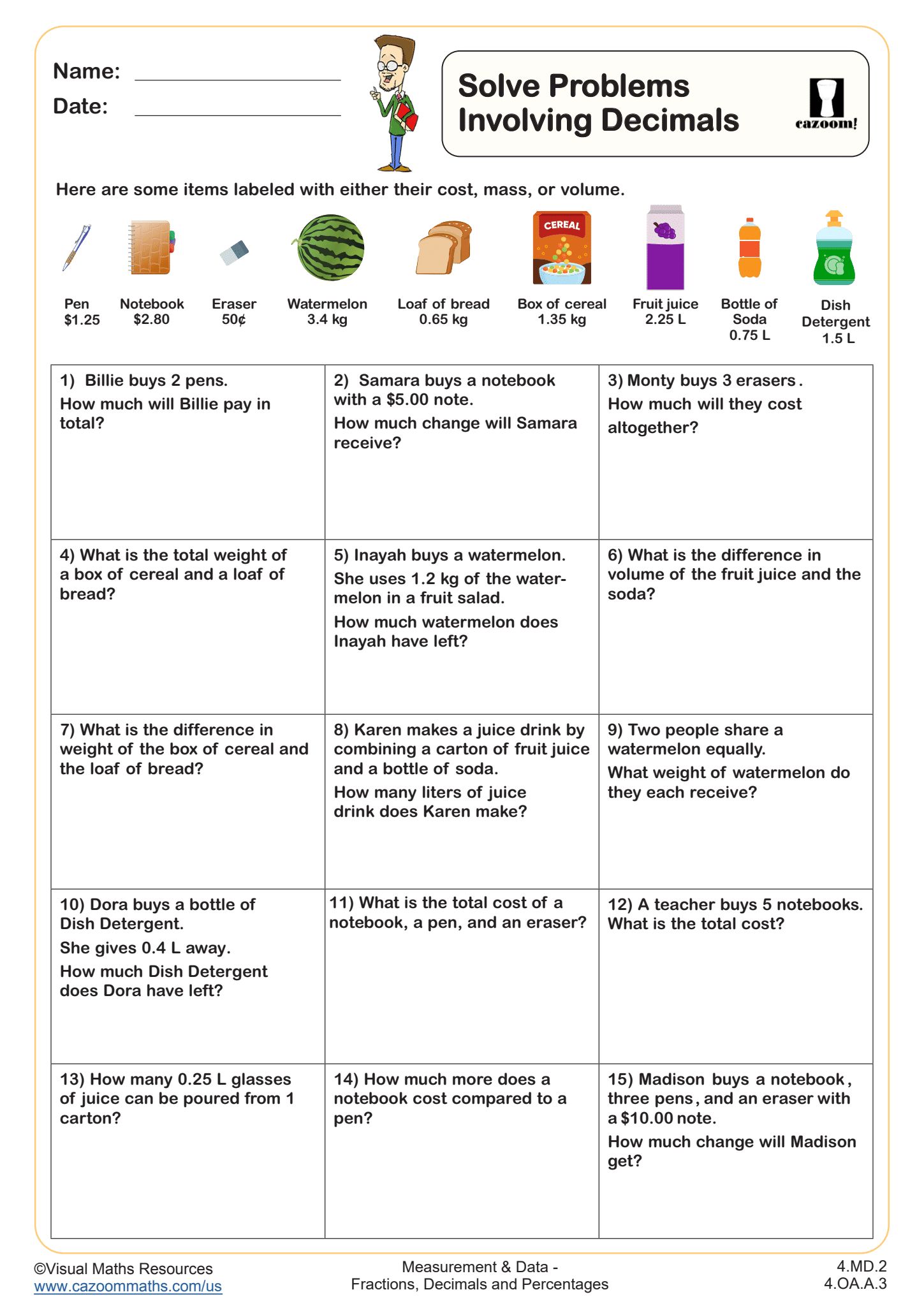
Solve Problems Involving Decimals
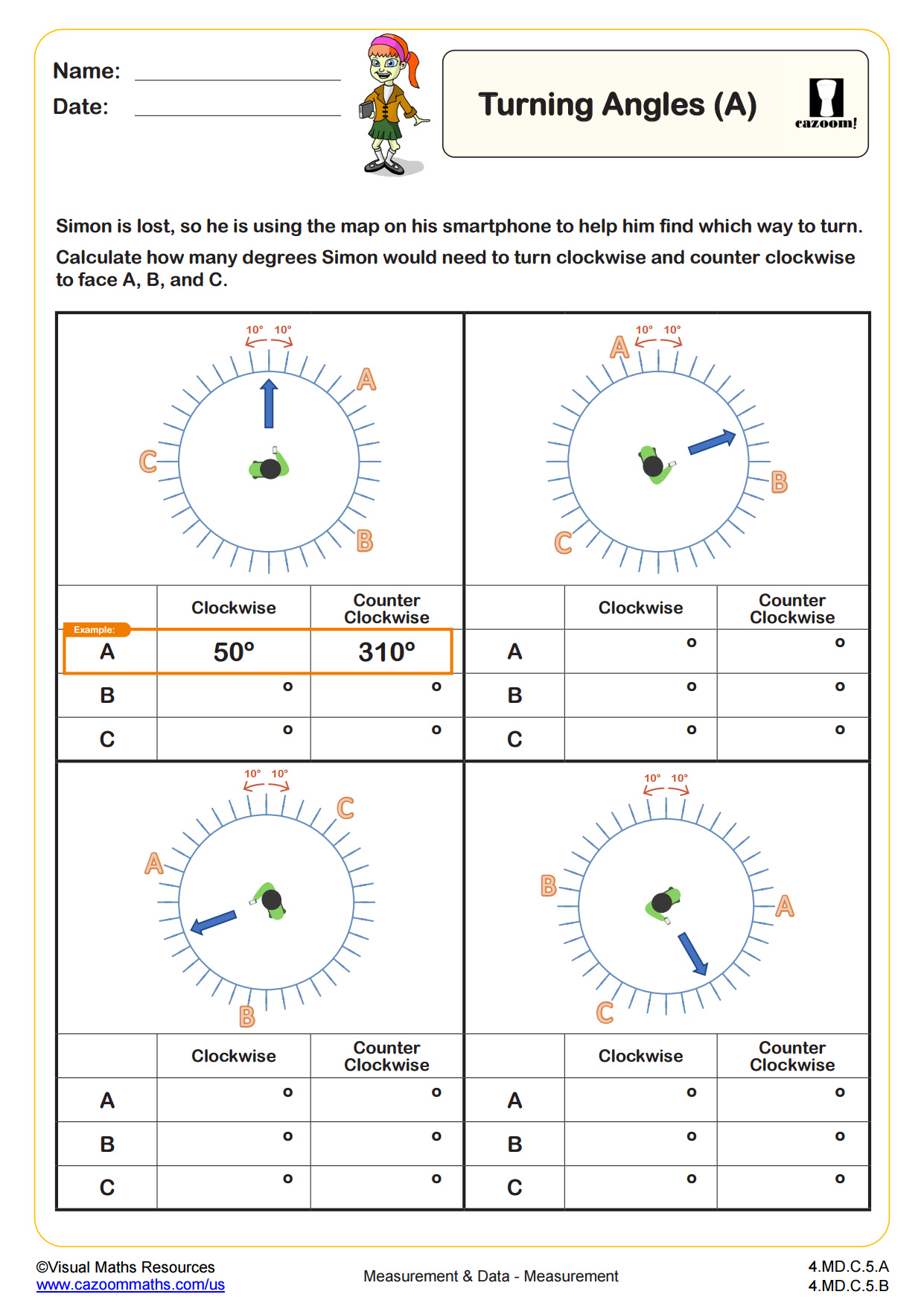
Turning Angles (A)
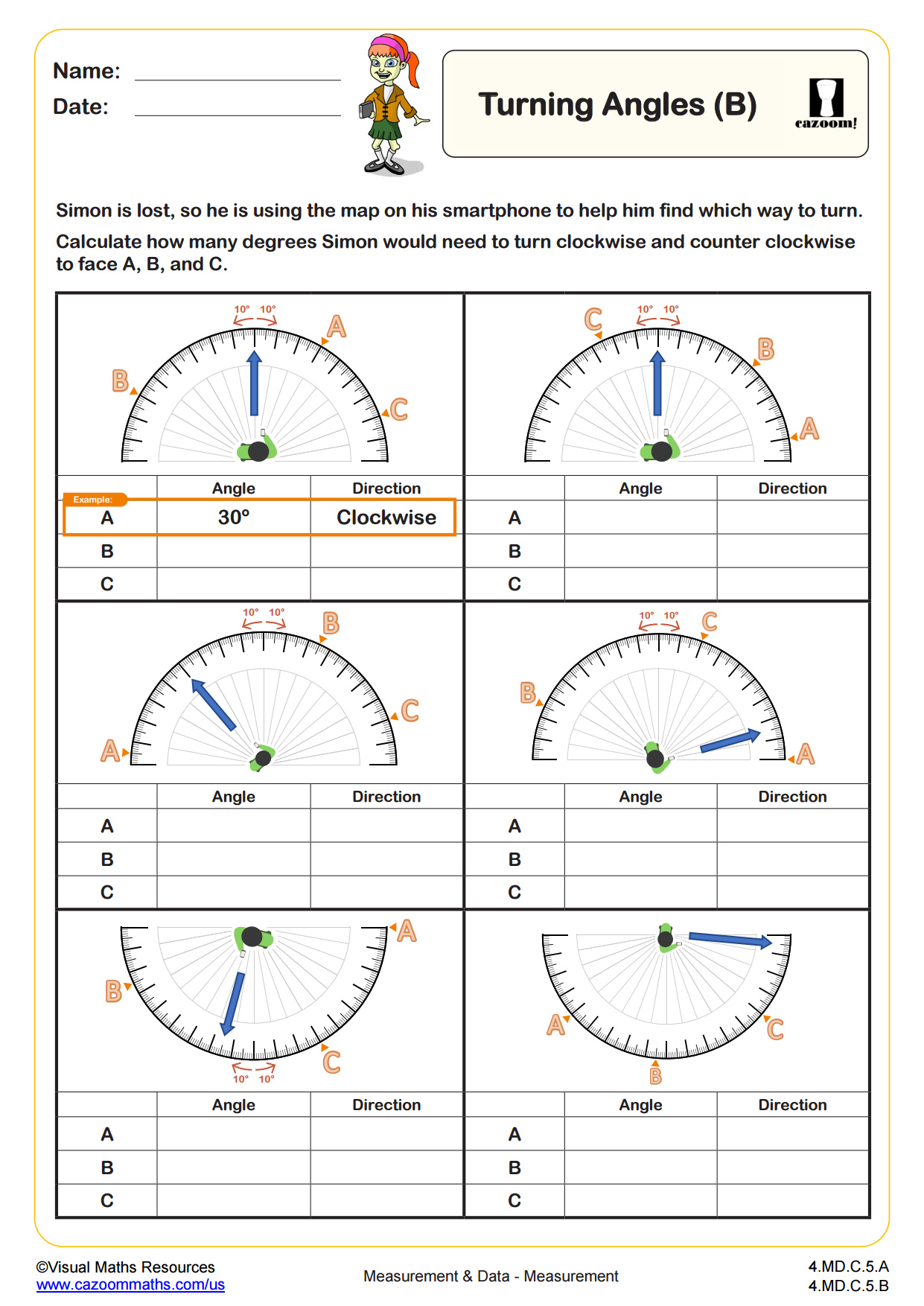
Turning Angles (B)
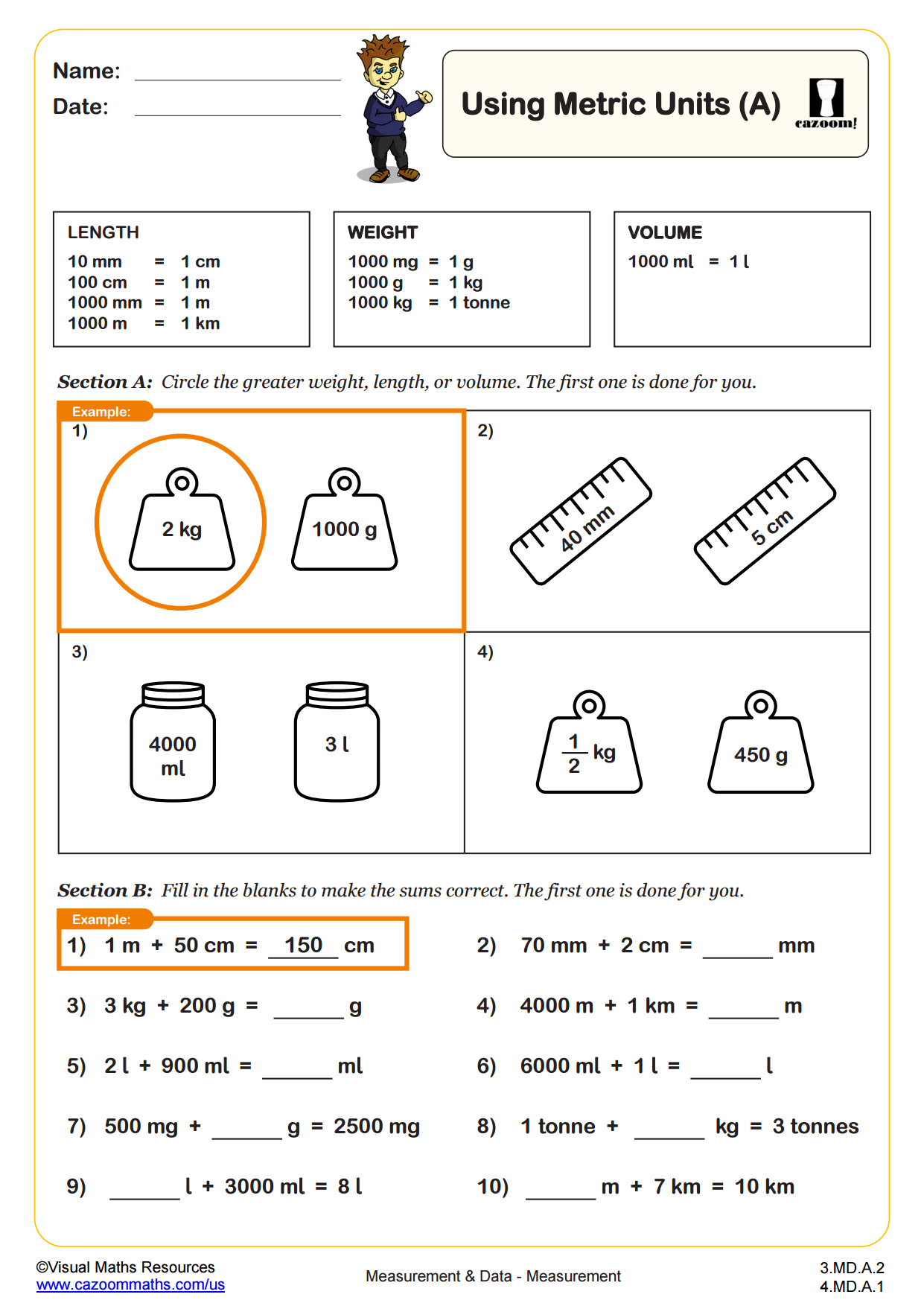
Using Metric Units (A)
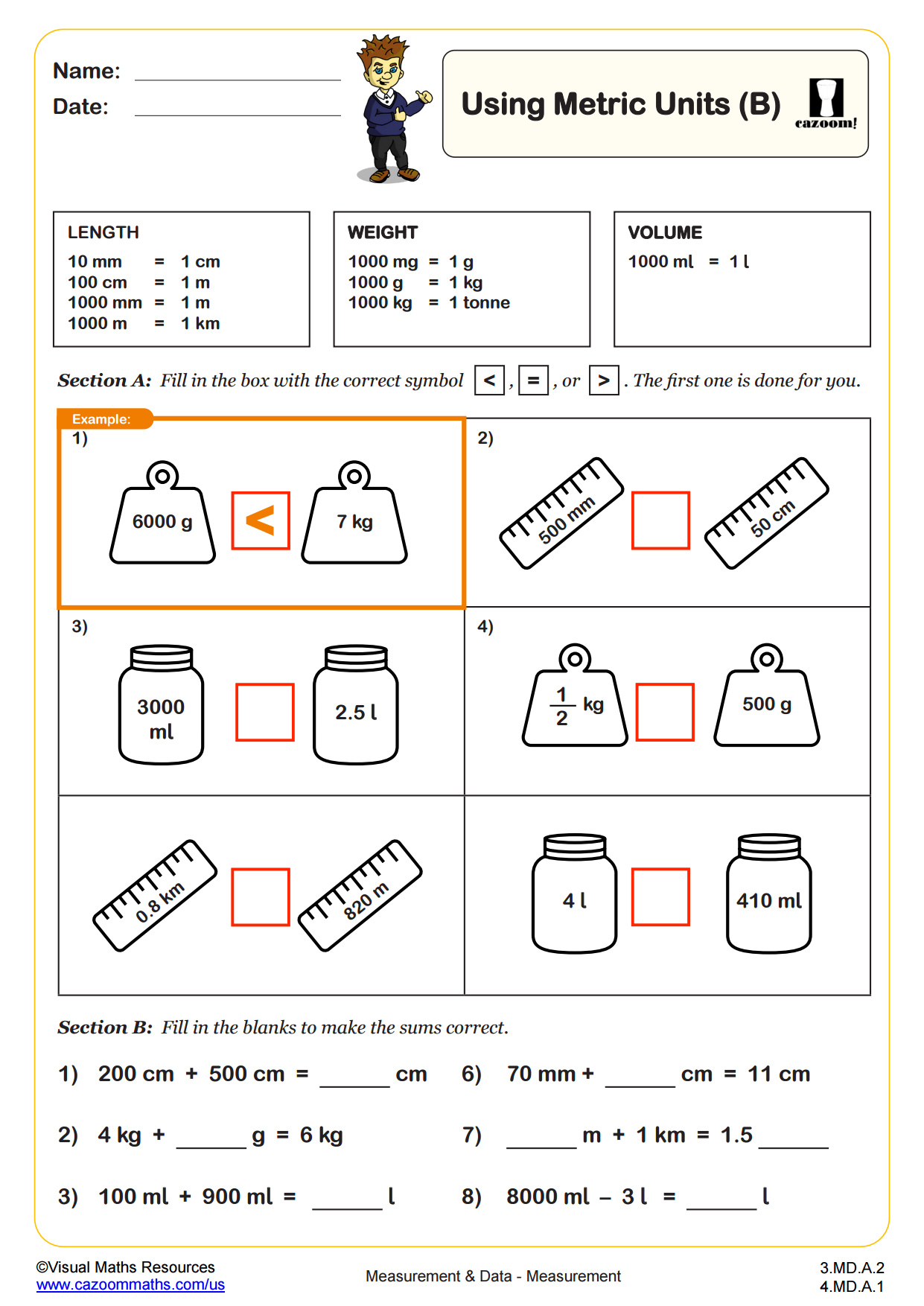
Using Metric Units (B)
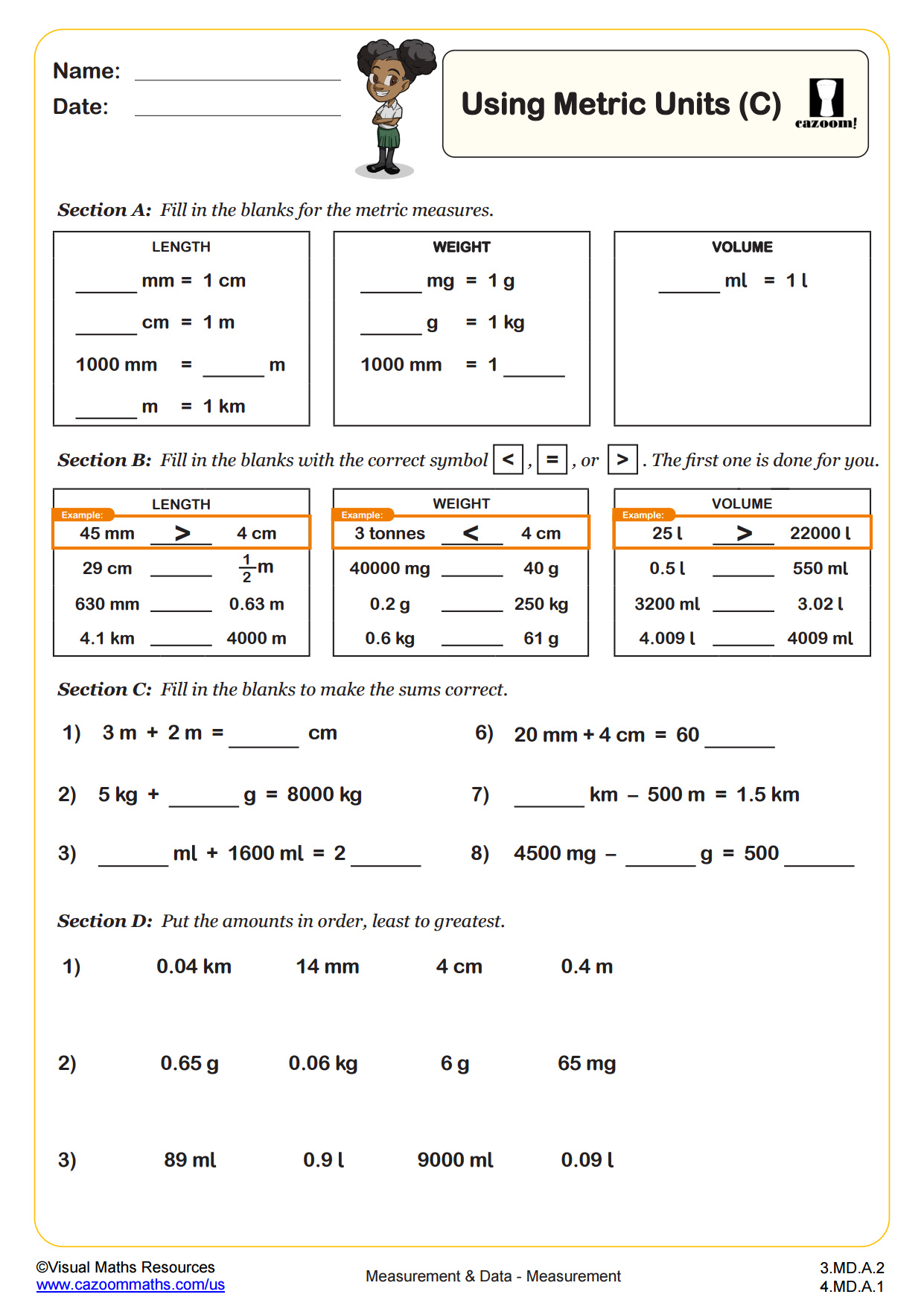
Using Metric Units (C)
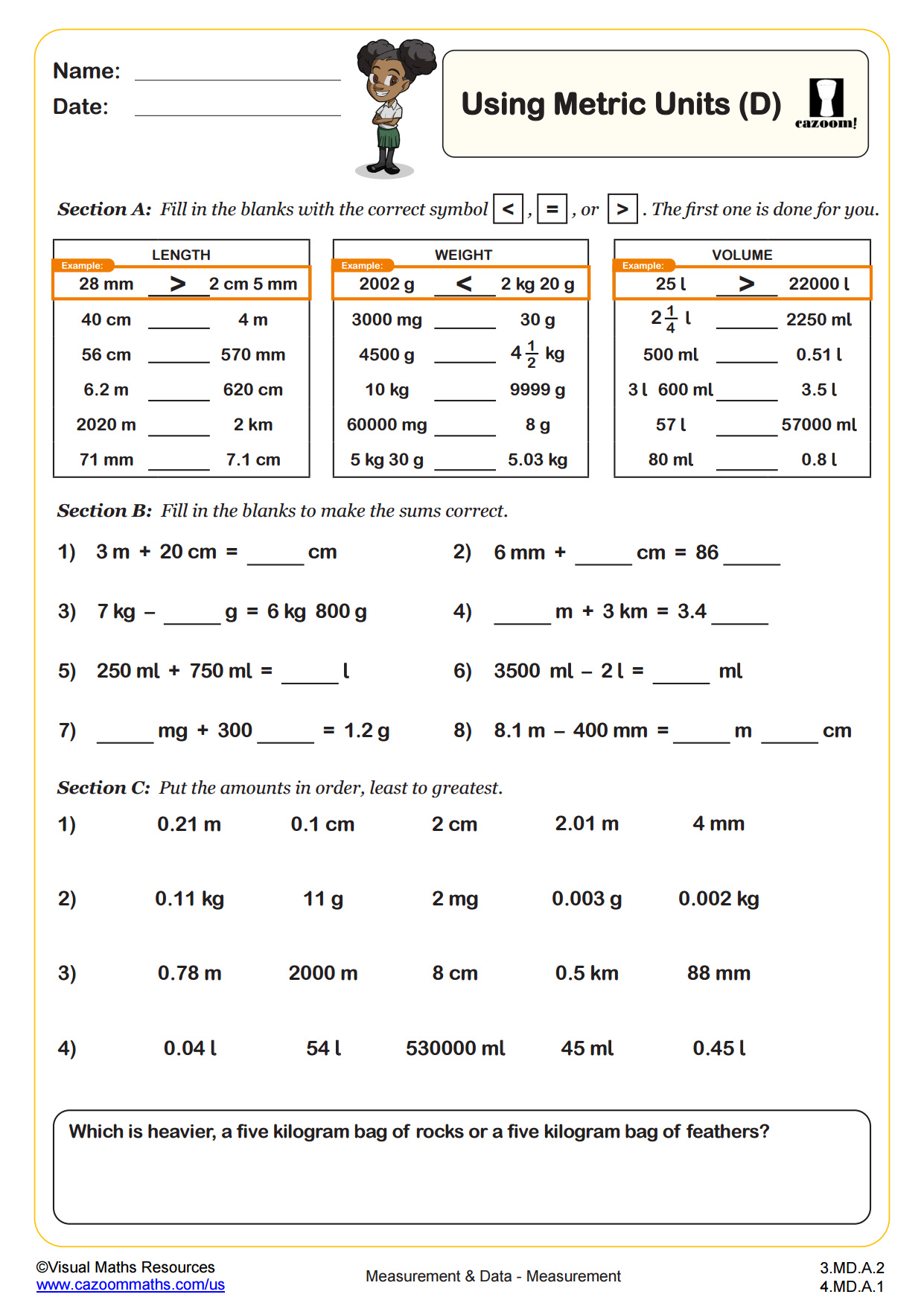
Using Metric Units (D)
All worksheets are created by the team of experienced teachers at Cazoom Math.
What topics are covered in measurement and data 4th grade worksheets?
Measurement and data 4th grade worksheets typically cover the key Common Core standards for fourth grade: converting measurements within customary and metric systems, comparing measurements, solving word problems with measurements, creating and interpreting line plots, and measuring angles. Students practice with units like inches to feet, ounces to pounds, millimeters to centimeters, and grams to kilograms.
Teachers often observe that students make systematic errors when converting between units, especially when moving from smaller to larger units. For example, when converting 36 inches to feet, students frequently write 36 × 12 instead of 36 ÷ 12. This happens because they think "bigger unit means multiply" rather than understanding that fewer larger units are needed to represent the same measurement.
Are these worksheets appropriate for struggling or advanced 4th grade students?
These 4th grade measurement worksheets are designed to meet students at different skill levels within the fourth grade curriculum. Struggling students benefit from worksheets that focus on single-step conversions with visual aids and reference charts, while advanced students can tackle multi-step word problems that combine measurement with other operations like multiplication and division.
Many teachers use these worksheets for differentiated instruction during math centers or independent work time. Students who master basic conversions quickly can move on to problems involving mixed units or real-world applications like cooking measurements, while others spend more time building fluency with fundamental conversion relationships using manipulatives alongside the worksheets.
How do these worksheets help students with metric measurement conversions?
The 4th grade metric measurement worksheets focus on the base-ten structure of the metric system, helping students understand that conversions follow patterns of multiplying or dividing by 10, 100, or 1,000. Students practice converting between millimeters, centimeters, meters, and kilometers for length, and grams and kilograms for mass, using the decimal place value system they already know.
Classroom experience shows that students often find metric conversions easier than customary conversions once they grasp the base-ten pattern. However, they sometimes struggle with decimal placement when converting to smaller units. For instance, when converting 2.5 meters to centimeters, students might write 25 cm instead of 250 cm, forgetting to account for the hundred-fold increase needed.
How should teachers use these measurement worksheets most effectively in class?
Teachers find these 4th grade measurement and data worksheets work best when used strategically rather than as isolated drill practice. Starting with hands-on measurement activities using rulers, scales, and measuring cups helps students build conceptual understanding before moving to worksheet practice. The answer keys allow for self-checking during math centers or partner work.
Many teachers use the worksheets as formative assessments to identify specific misconceptions, then provide targeted instruction based on student errors. For example, if students consistently struggle with 4th grade measurement conversion worksheets involving liquid measures, teachers might revisit the relationship between cups, pints, quarts, and gallons using actual containers before assigning additional practice problems.