4th Grade Money and Time Worksheets
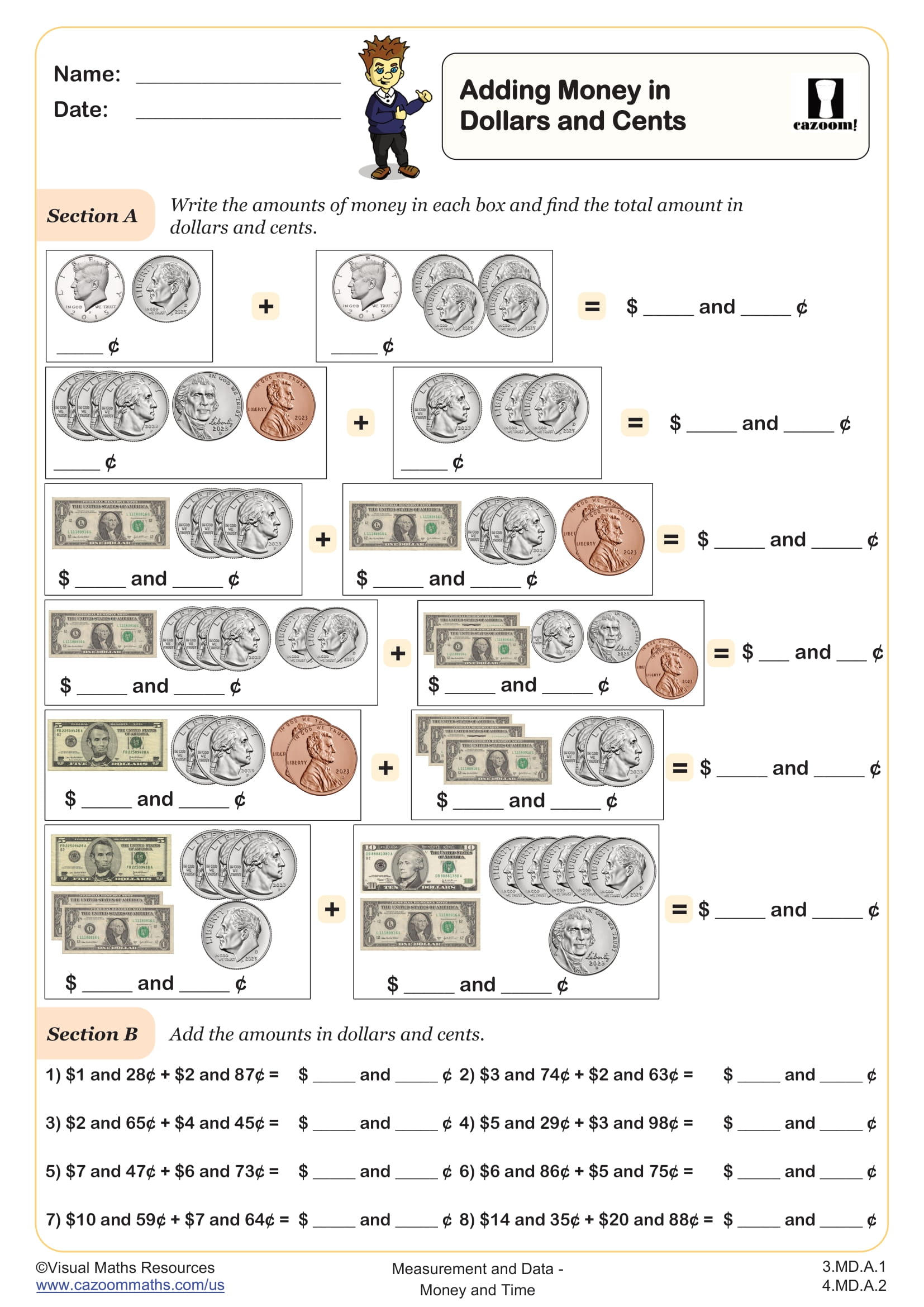
Adding Money In Dollars and Cents
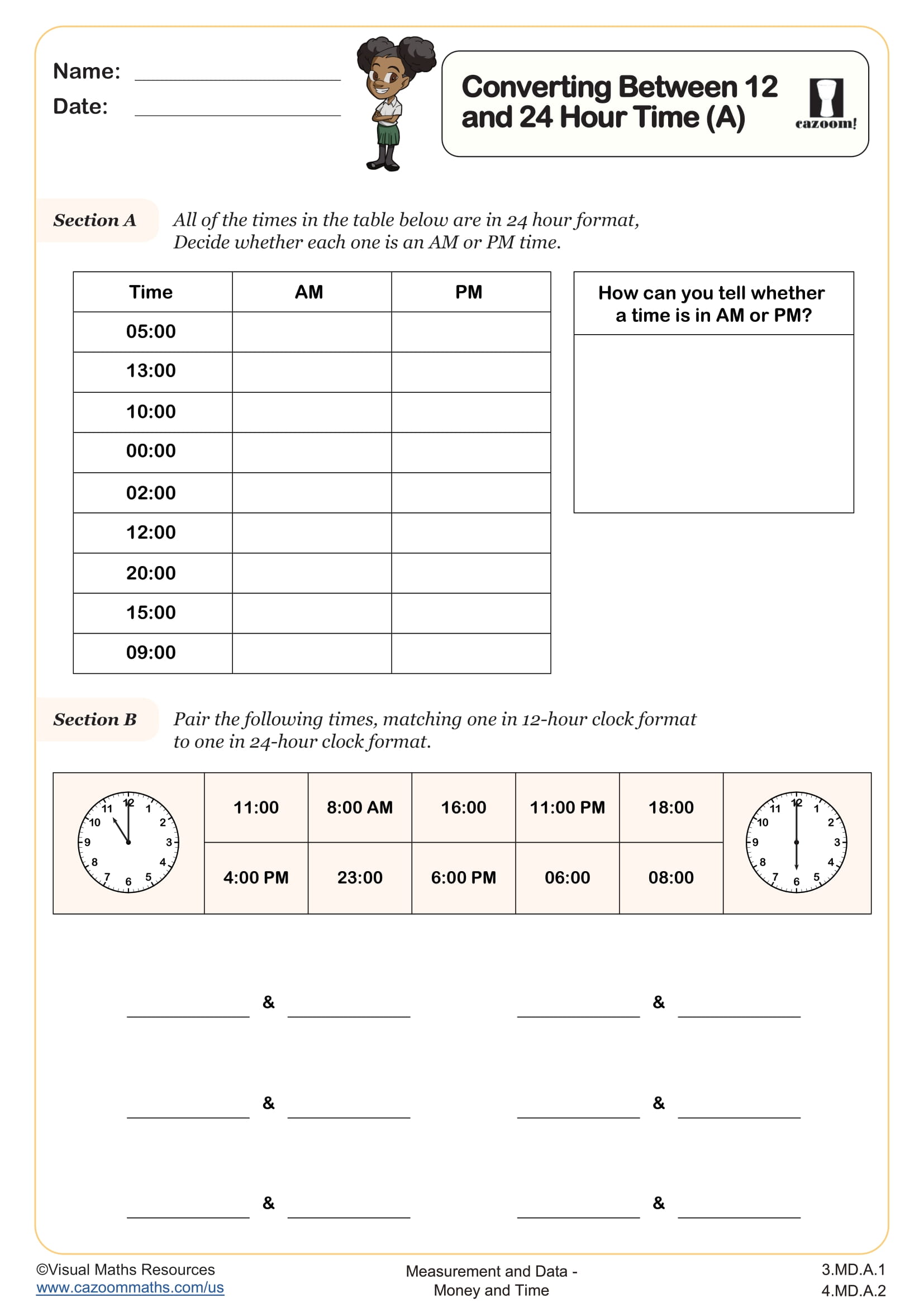
Converting Between 12 and 24 Hour Time (A)
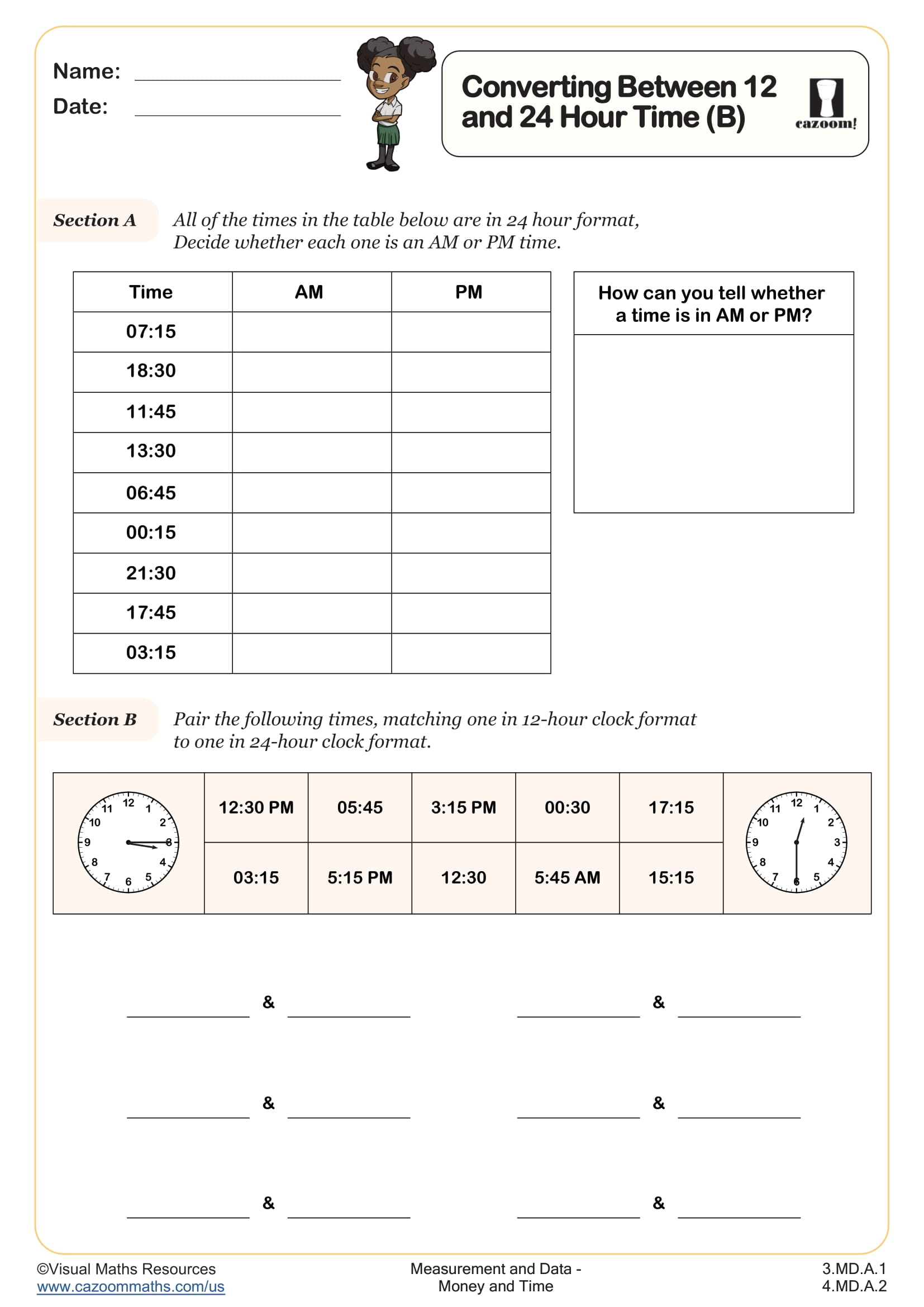
Converting Between 12 and 24 Hour Time (B)
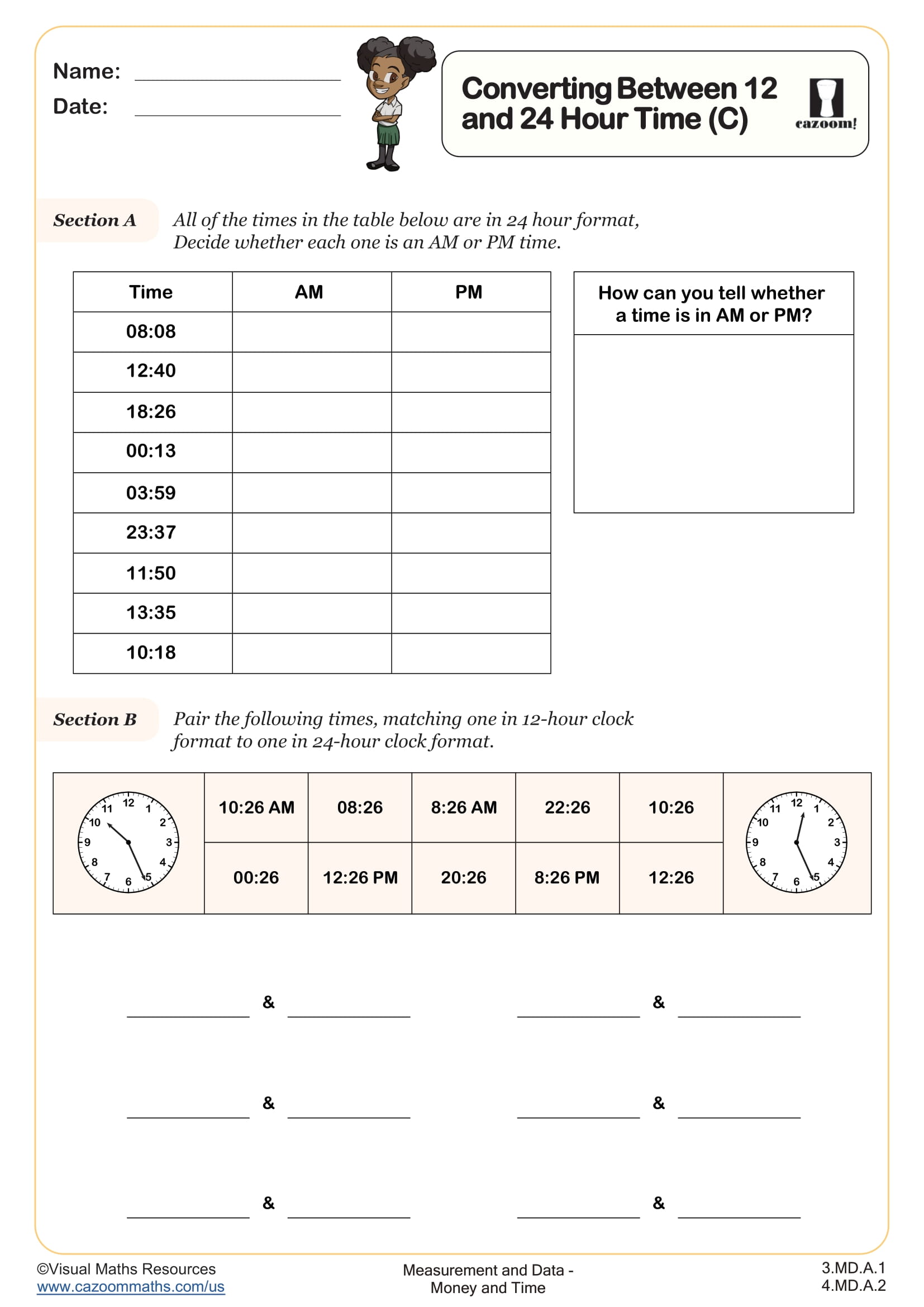
Converting Between 12 and 24 Hour Time (C)
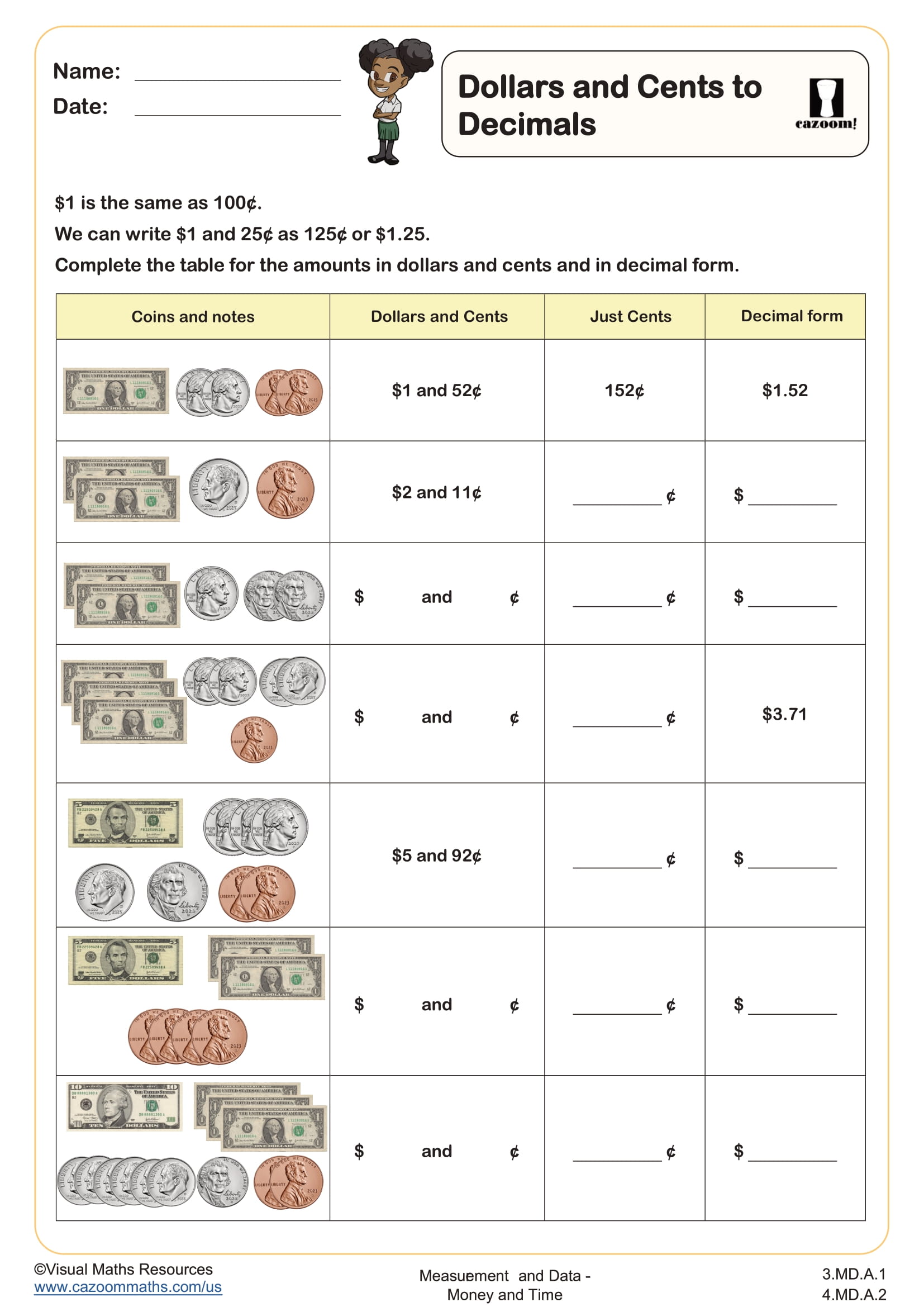
Dollars and Cents to Decimals
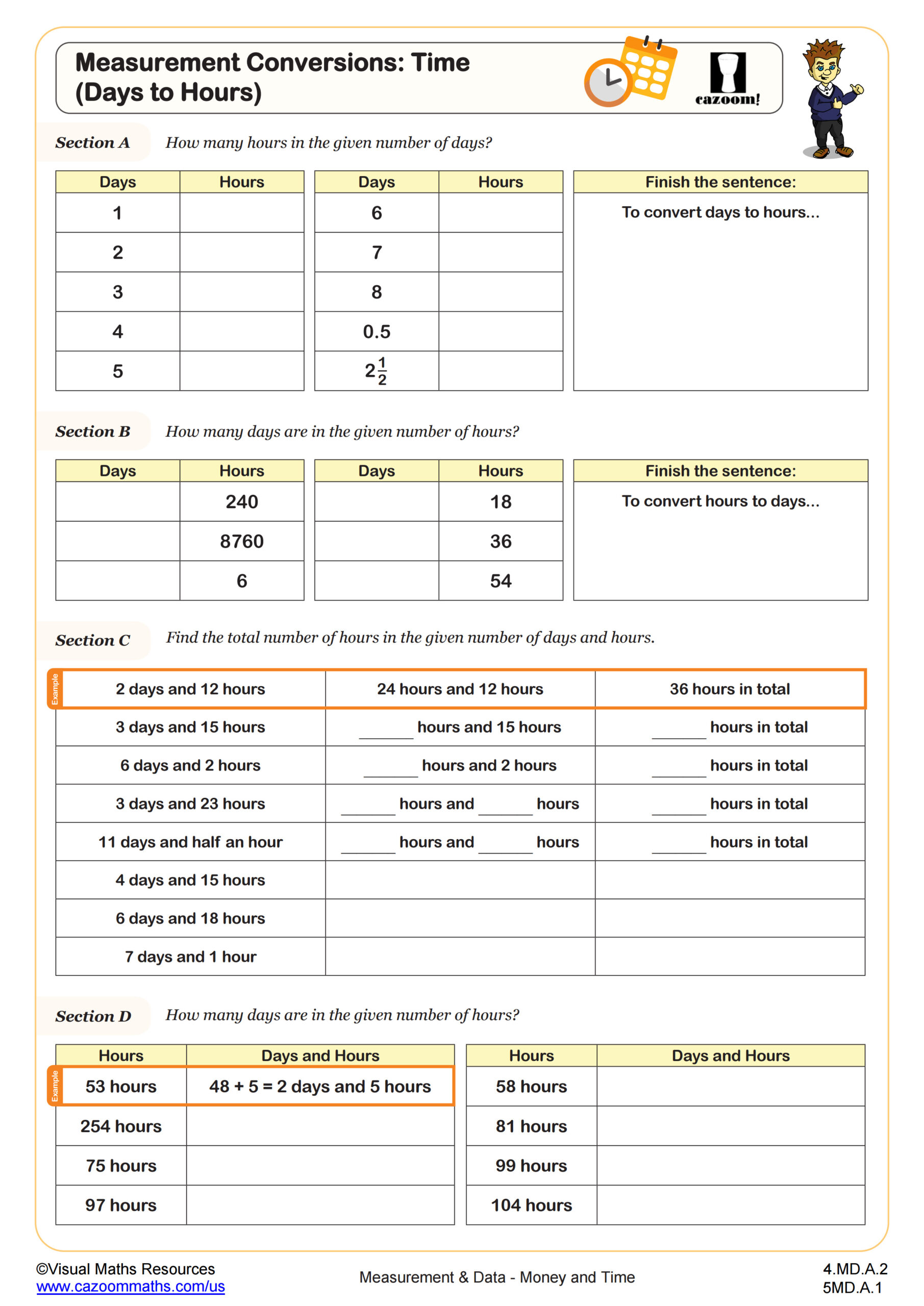
Measurement Conversions: Time (Days to Hours)
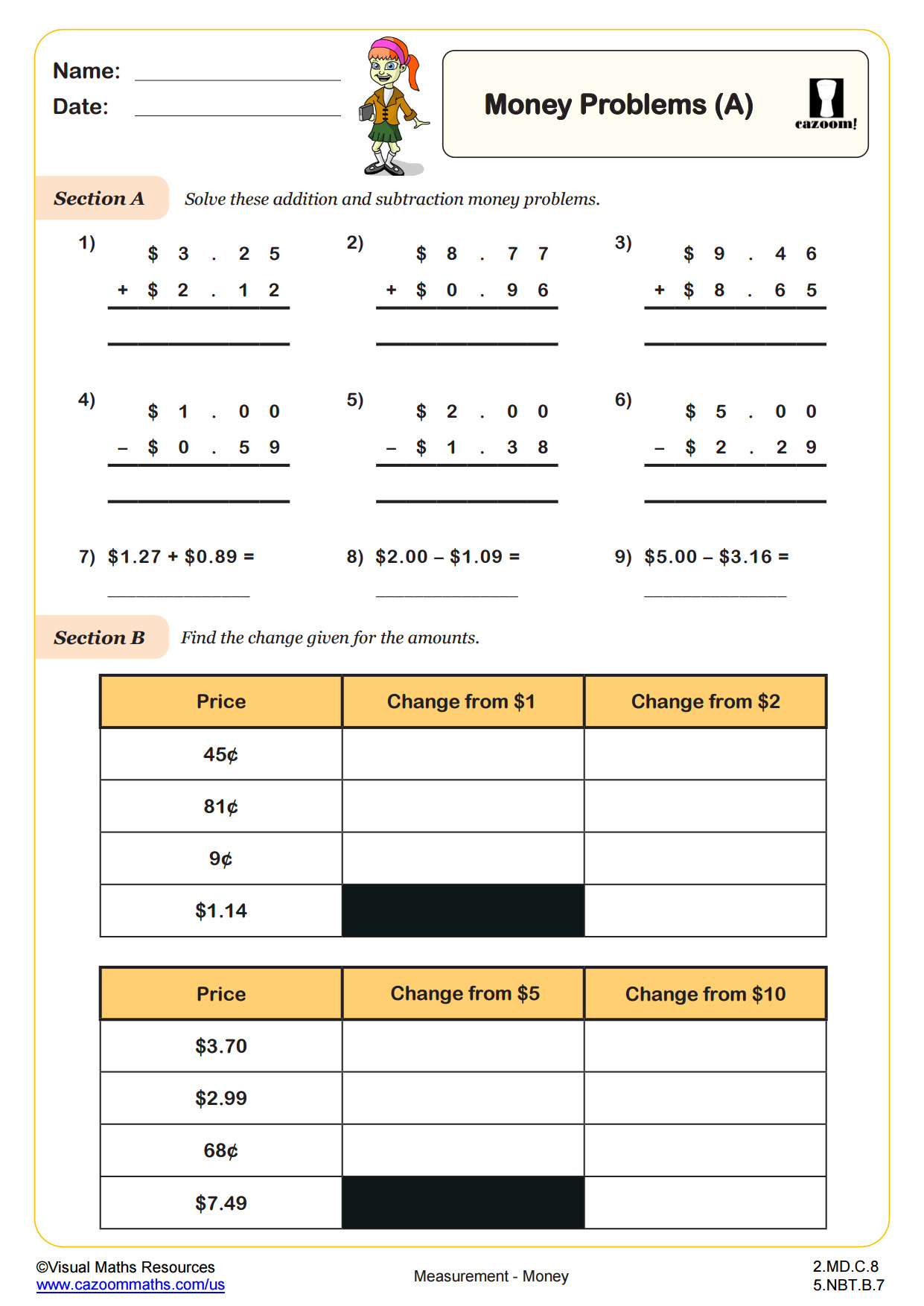
Money Problems (A)
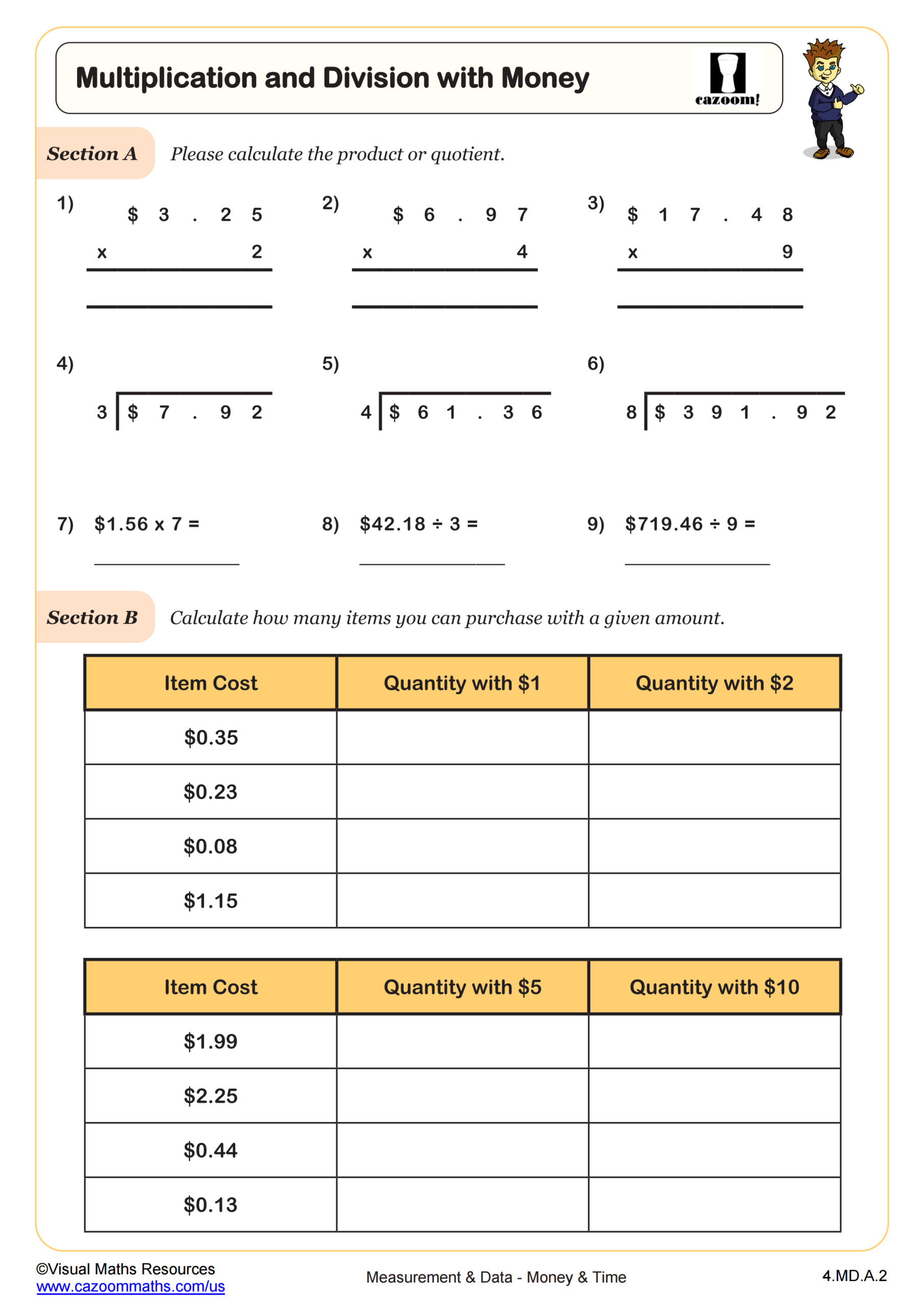
Multiplication & Division with Money
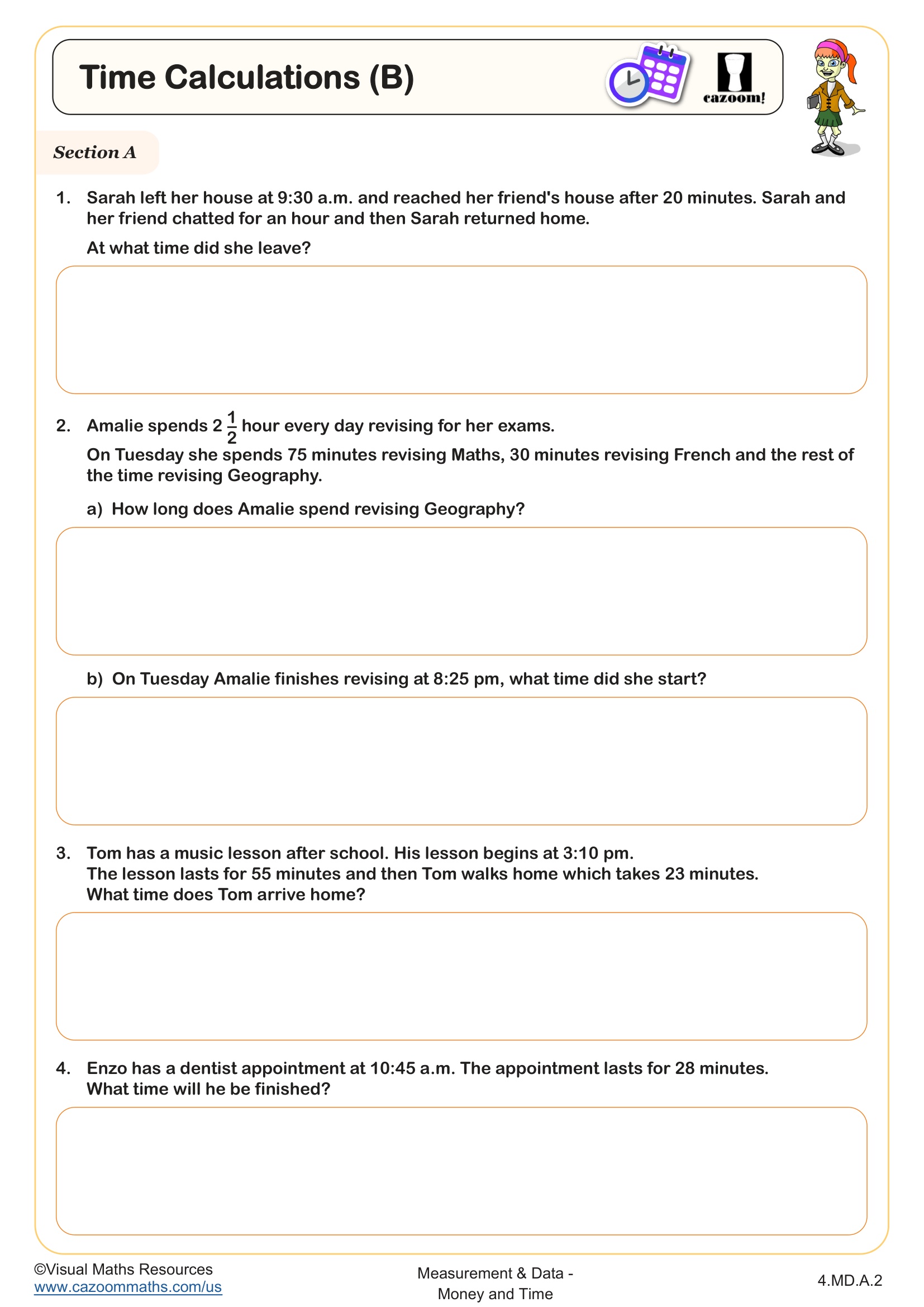
Time Calculations (B)
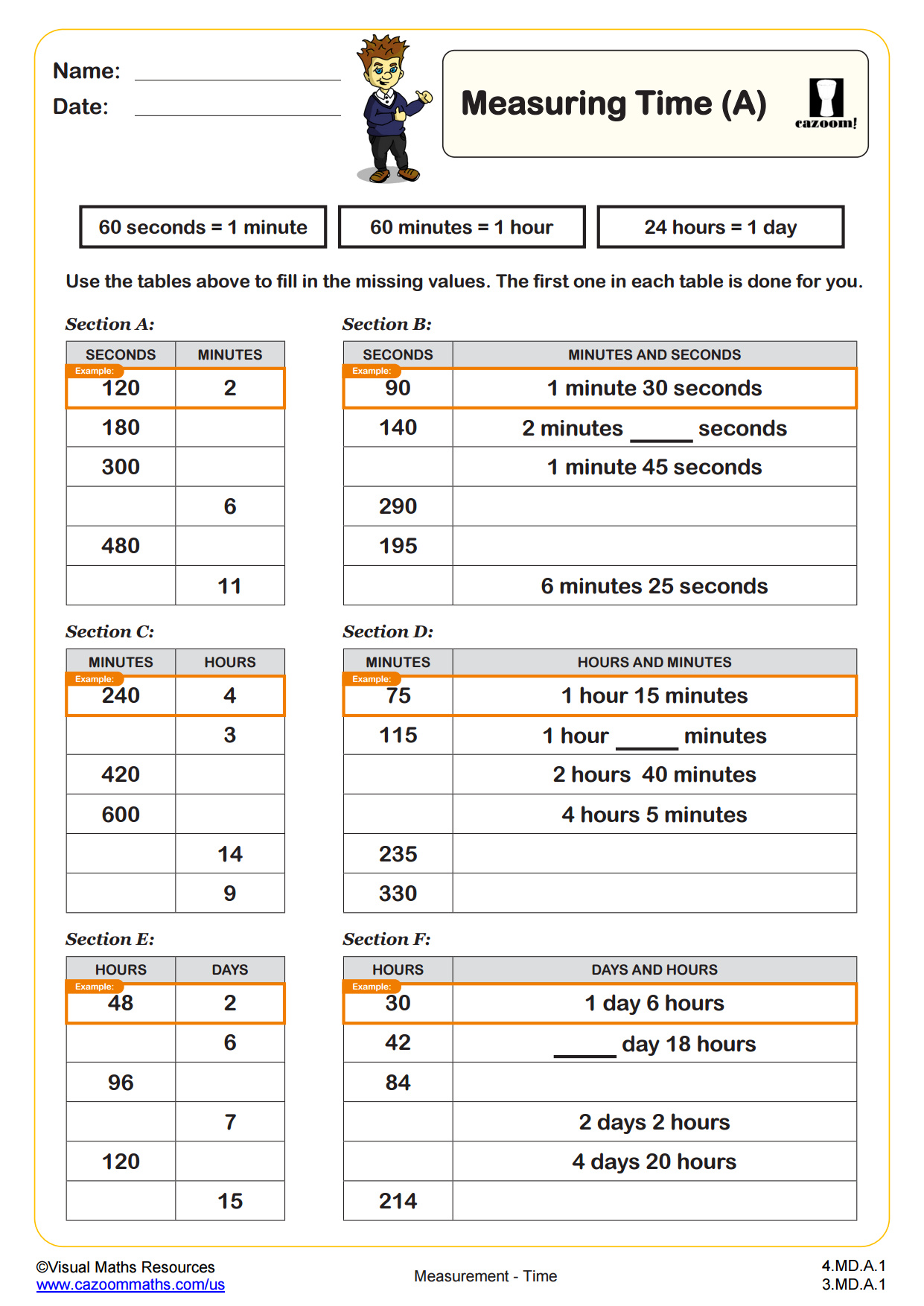
Units of Time (A)
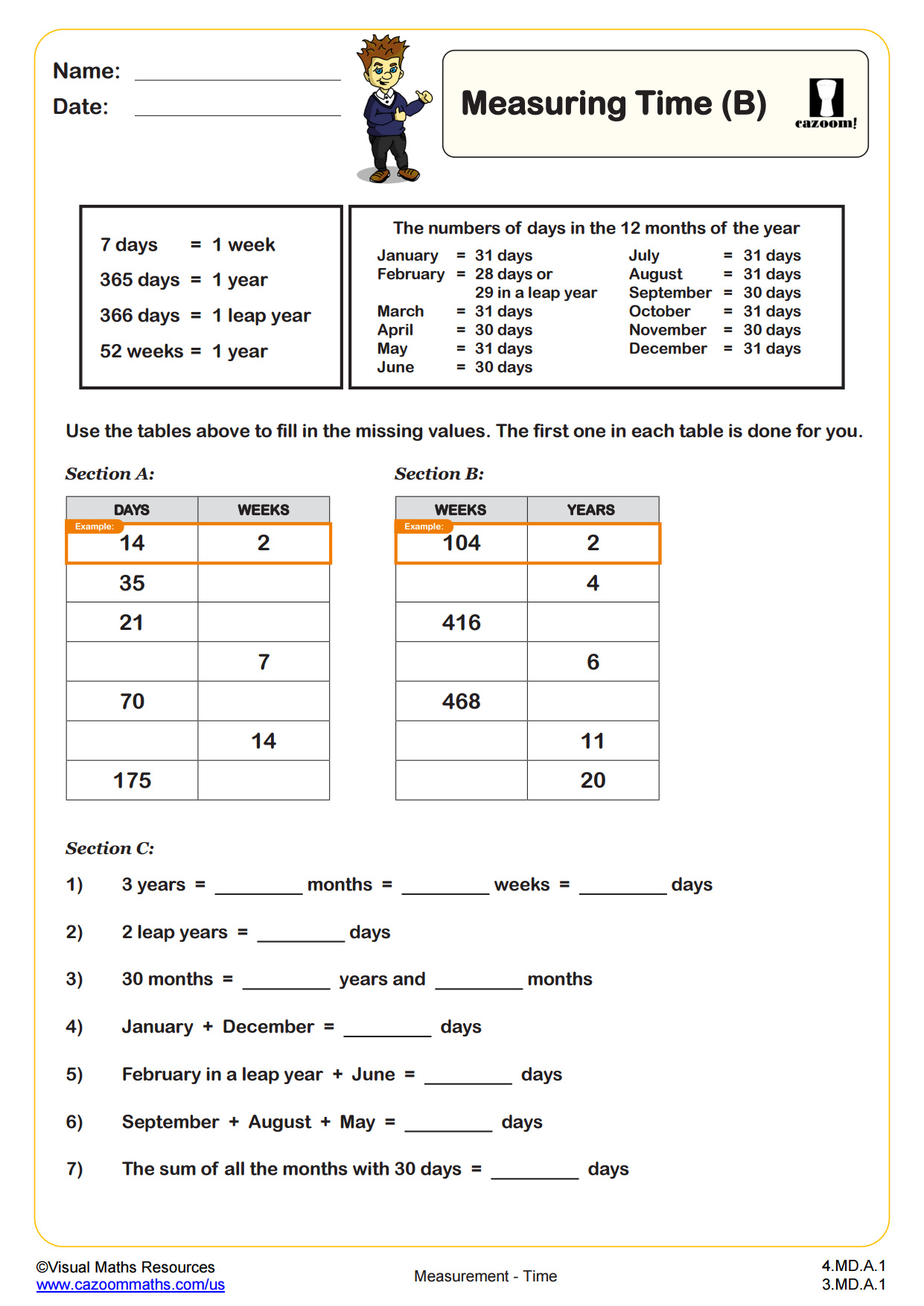
Units of Time (B)
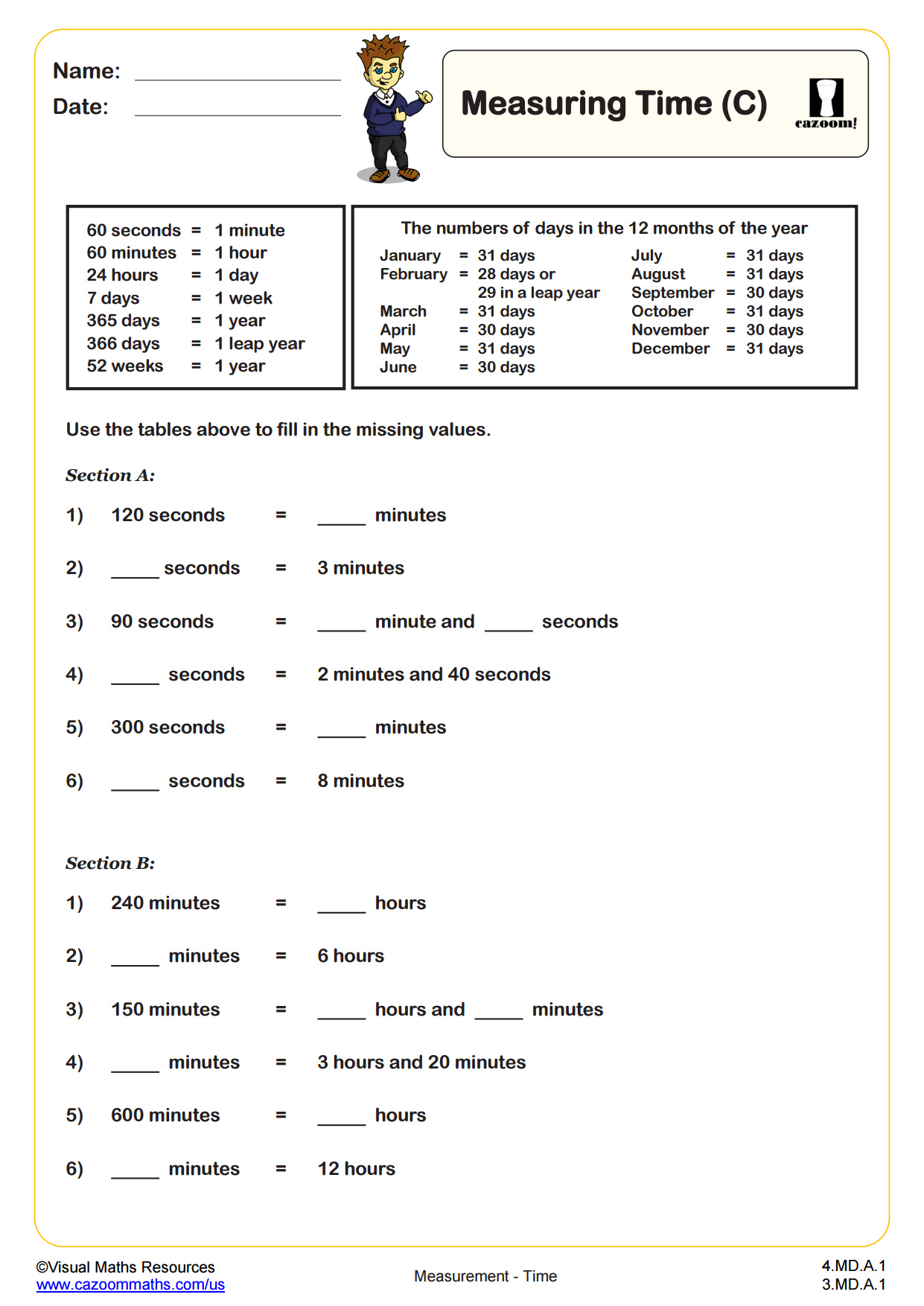
Units of Time (C)
All worksheets are created by the team of experienced teachers at Cazoom Math.
Why do students need to practice converting money to decimals?
Converting between dollars and cents notation and decimal form strengthens students' place value understanding while making the connection between money and the base-ten system explicit. This skill aligns with 4th grade standards that require students to express fractions with denominators of 10 and 100 as decimals, and money provides the most meaningful context for this work since $0.25 represents 25 hundredths just as clearly as it represents 25 cents.
Students lose points on assessments when they write amounts like three dollars and forty cents as 3.4 instead of 3.40, not recognizing that the cents position requires two decimal places. Teachers notice that practicing with money amounts helps students grasp why 0.5 and 0.50 are equivalent values but that context matters for proper notation, a distinction that transfers to other decimal work throughout the year.
What should 4th graders know about time by the end of the year?
By the end of 4th grade, students should fluently convert between different units of time including seconds, minutes, hours, days, and weeks, and solve word problems involving elapsed time across different contexts. They need to read and interpret both analog and digital clocks accurately, convert between 12-hour and 24-hour time formats, and calculate time intervals that may cross over noon or midnight, which requires careful attention to AM and PM designations.
This work builds directly on 3rd grade standards where students first learned to tell and write time to the nearest minute and solve problems involving time intervals in minutes. The 4th grade focus on unit conversions and more complex calculations prepares students for 5th grade measurement work with larger units and for the practical time management skills they'll need in middle school when tracking class schedules, assignment deadlines, and extracurricular activities becomes their responsibility.
How does converting between 12-hour and 24-hour time work?
The 24-hour clock system eliminates AM and PM by continuing to count hours from 1 through 24 instead of resetting at noon. Times from midnight to 11:59 AM remain the same (with 12:00 AM becoming 00:00), while times from 1:00 PM onward add 12 to the hour value, so 1:00 PM becomes 13:00, 2:00 PM becomes 14:00, and so on through 11:00 PM as 23:00. Students confidently tackle conversions once they recognize the pattern that subtracting 12 from any hour value above 12 gives them the PM hour.
This skill connects directly to real-world schedules students encounter in airports, train stations, hospitals, and international communications where the 24-hour format prevents confusion. Many STEM fields including aviation, military operations, computer systems, and scientific research use 24-hour time exclusively because it eliminates ambiguity in timestamps and ensures precision in time-sensitive operations where a single misread AM or PM designation could have serious consequences.
How can teachers use these worksheets most effectively?
The worksheets scaffold learning by presenting concepts in increasing complexity, starting with straightforward conversions before moving to multi-step problems that require students to apply several skills together. Teachers can use the answer keys to quickly identify which specific skills need reteaching, whether students are making calculation errors, misunderstanding unit relationships, or struggling with the problem-solving aspect of word problems involving money or time.
Many teachers find these worksheets valuable for differentiated math centers where students work at their own pace, as independent practice for students who finish classwork early, or as targeted intervention for small groups who need additional support with measurement concepts. The variety of problem types makes them useful for spiral review throughout the year, and teachers often assign specific worksheets as homework before state assessments to ensure students maintain fluency with practical applications of decimals and measurement conversions that frequently appear on standardized tests.