6th Grade Area and Perimeter Worksheets
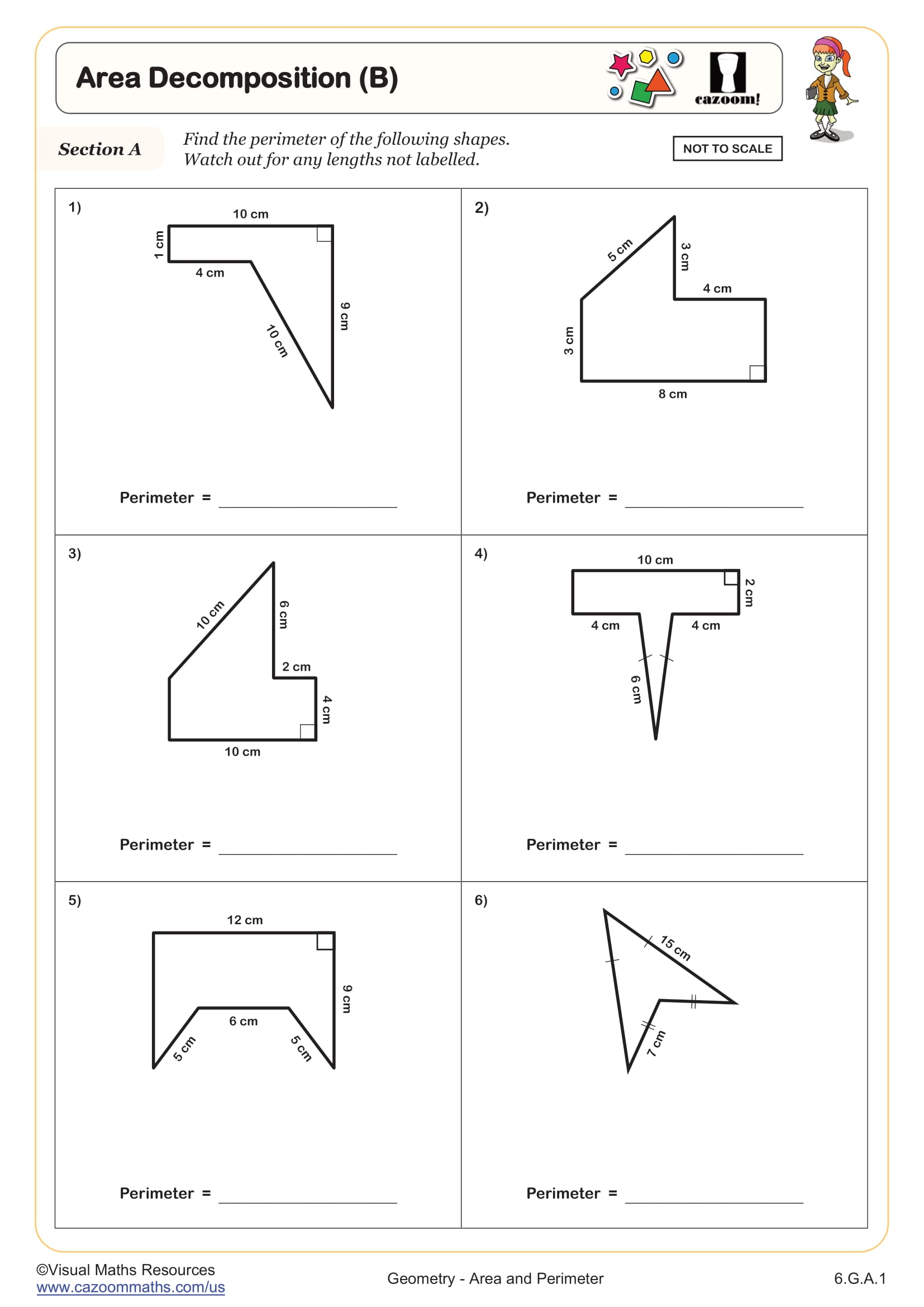
Area Decomposition (B)
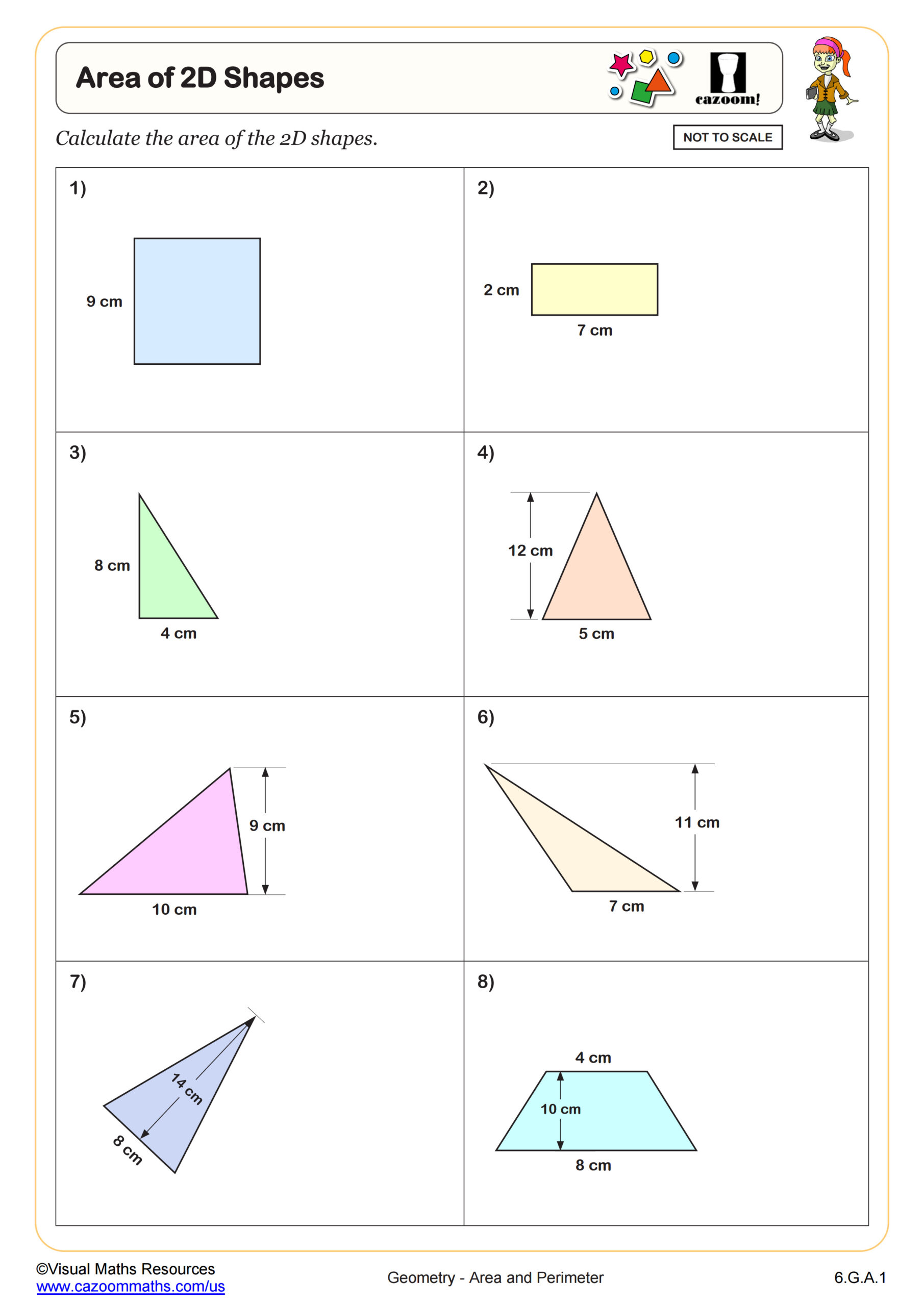
Area of 2D Shapes
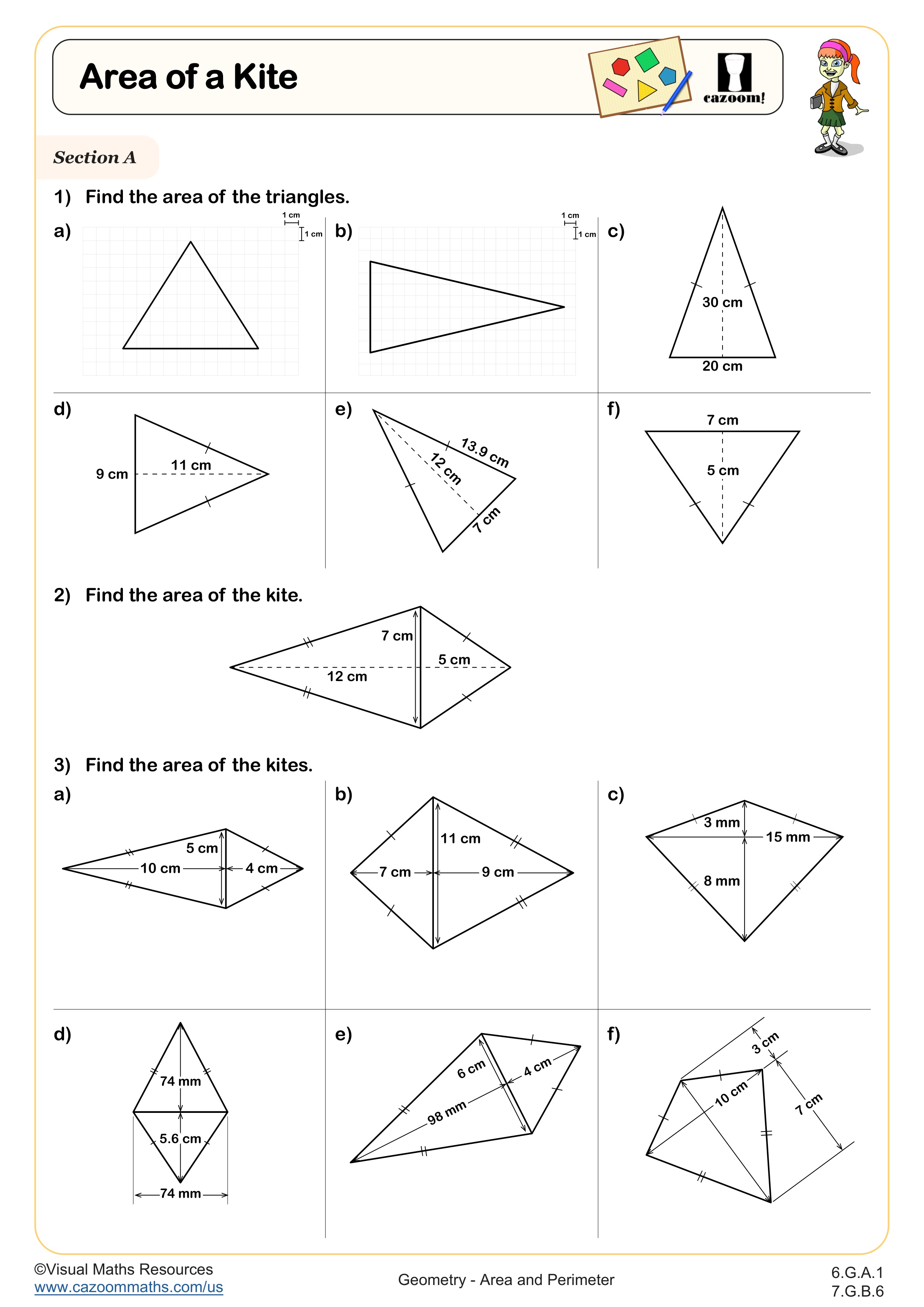
Area of a Kite
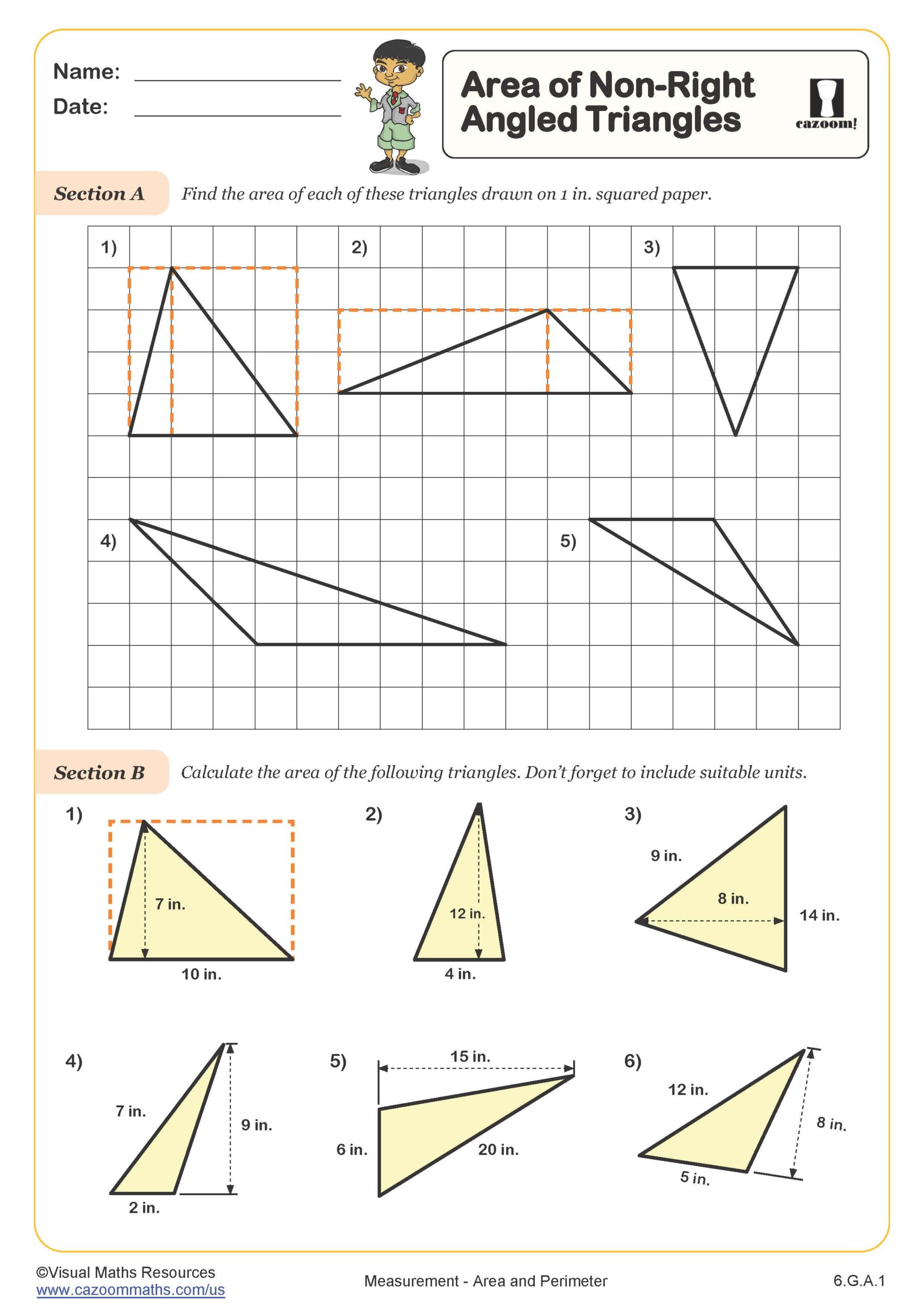
Area of Non-Right Angled Triangles
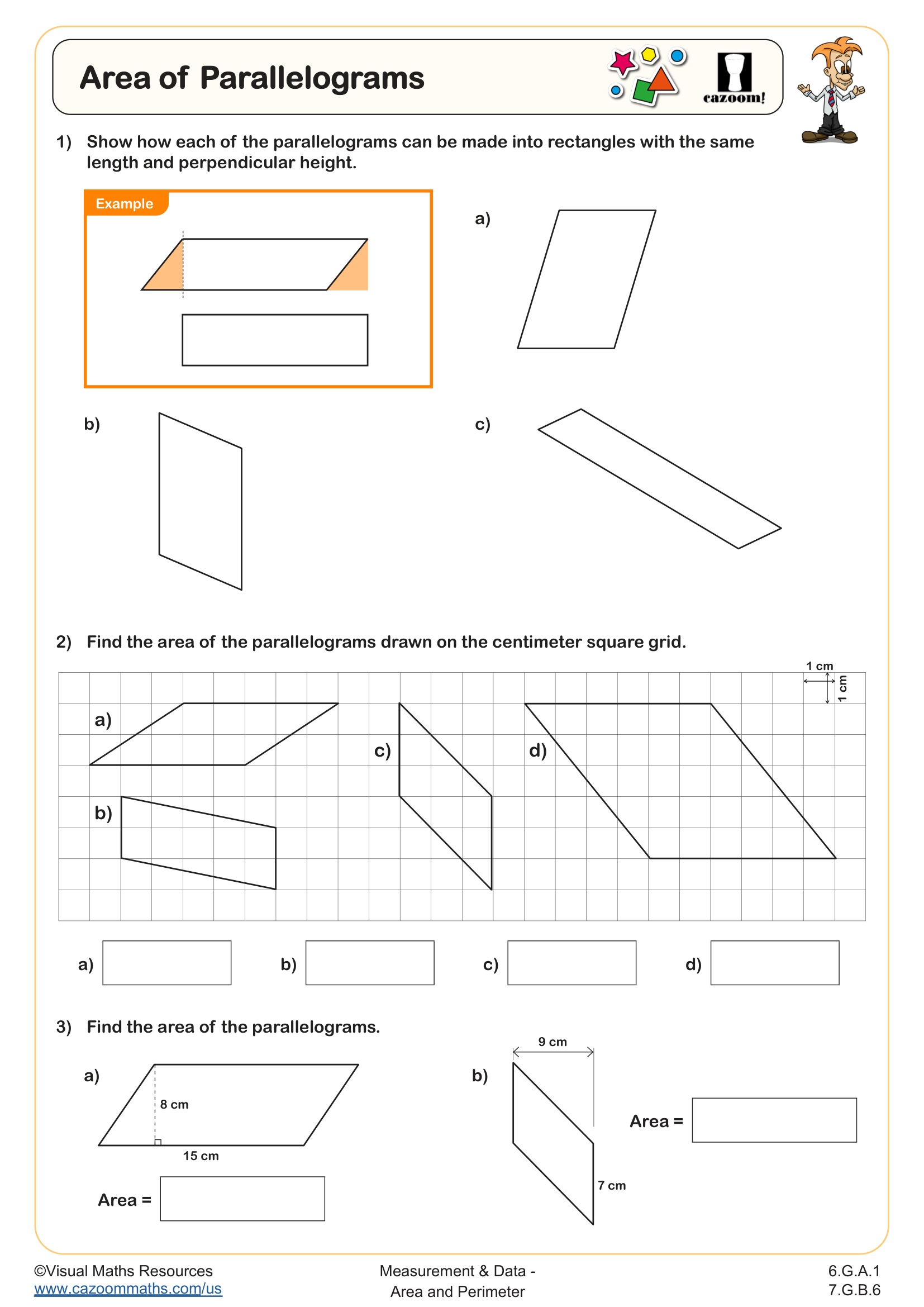
Area of Parallelograms
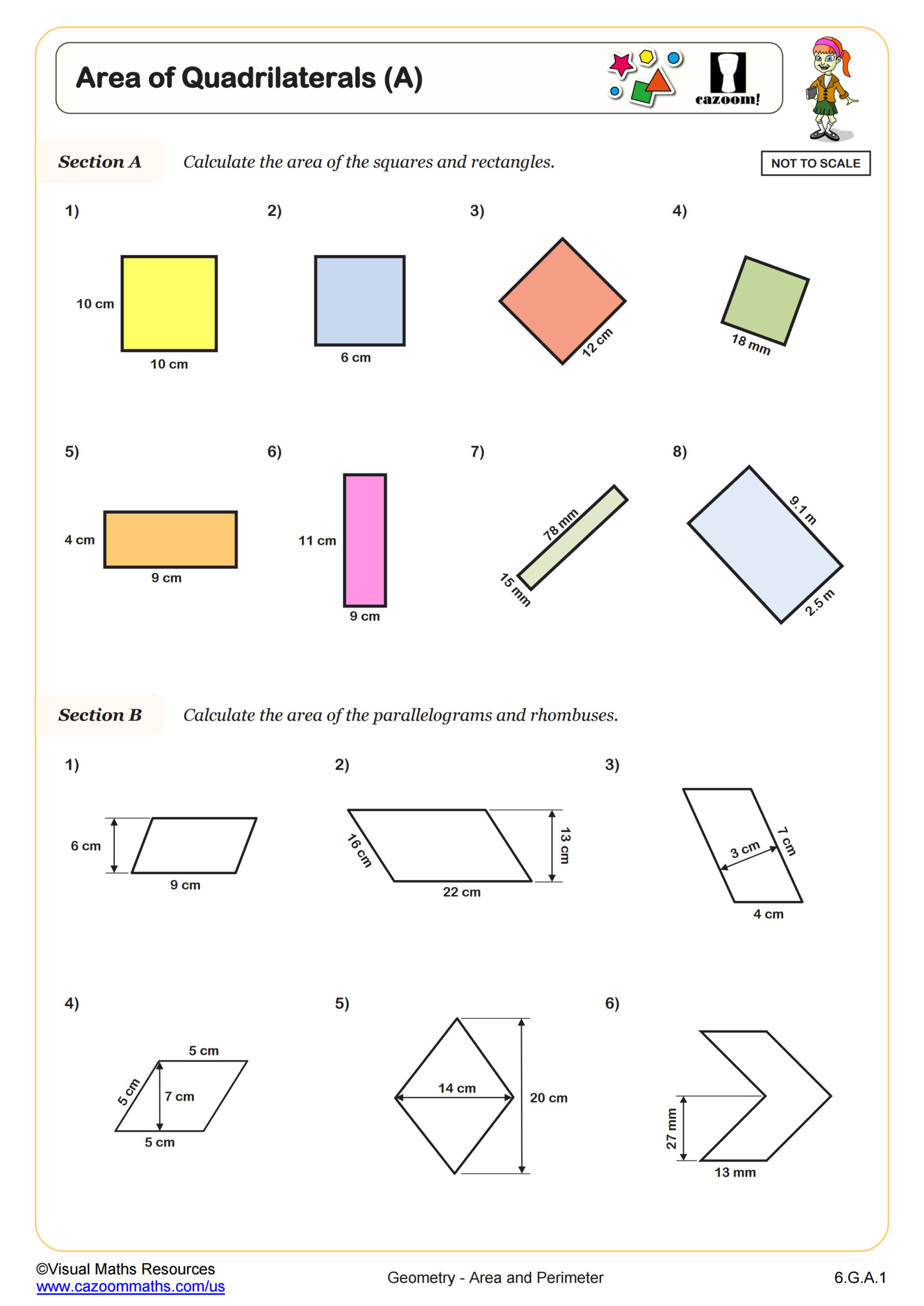
Area of Quadrilaterals (A)
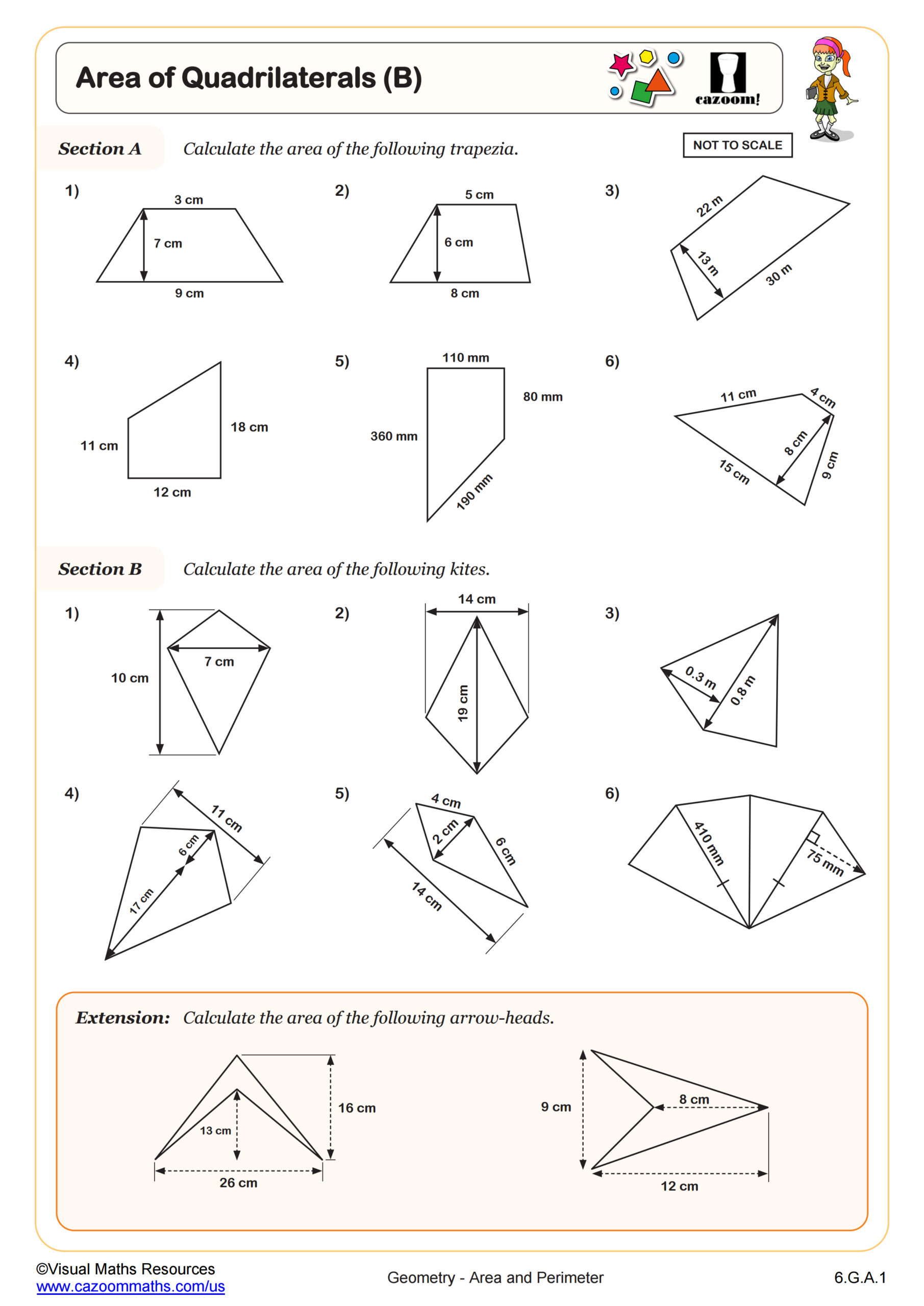
Area of Quadrilaterals (B)
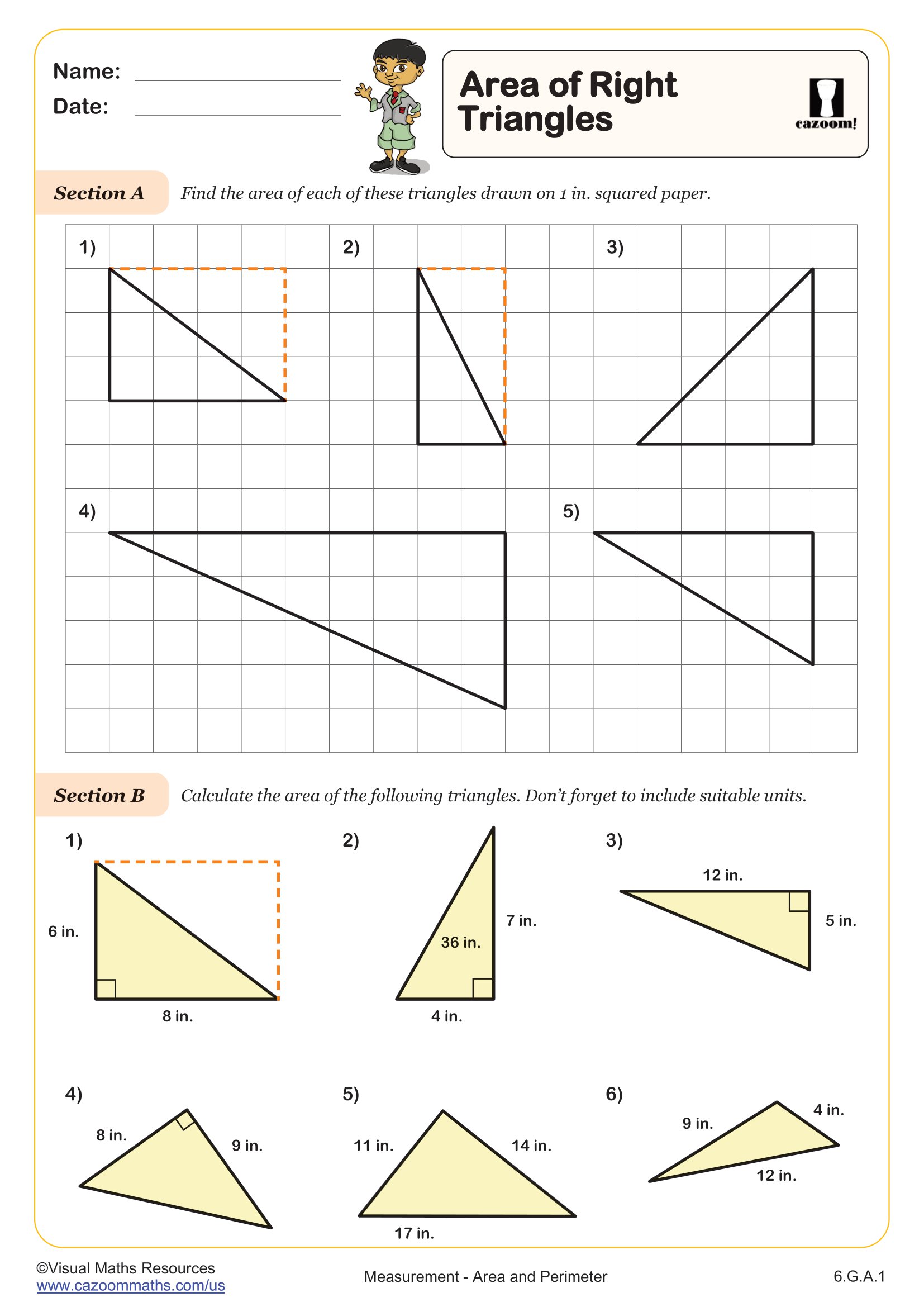
Area of Right Triangles
Area of Trapezoid (A)
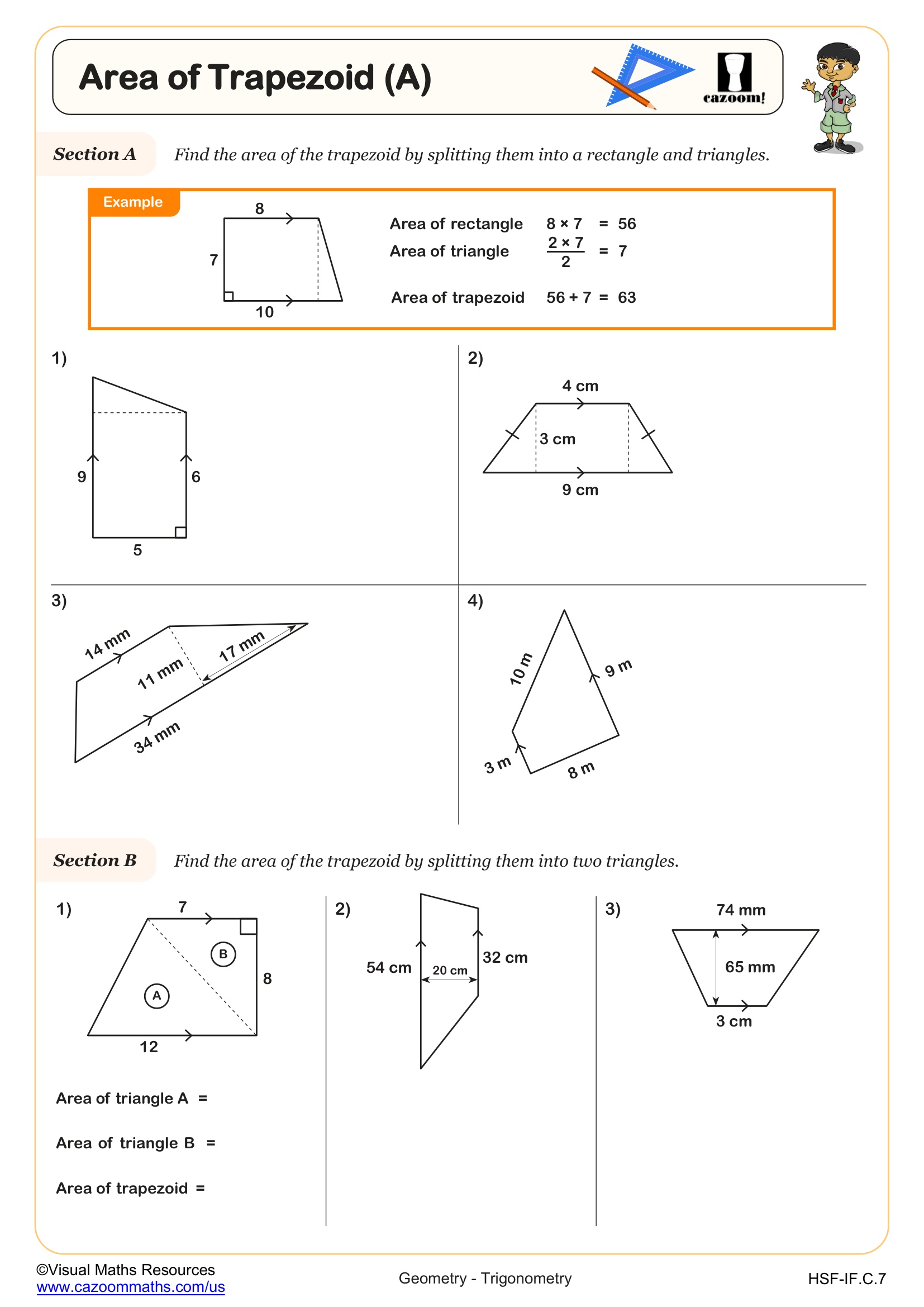
Area of Trapezoid (B)
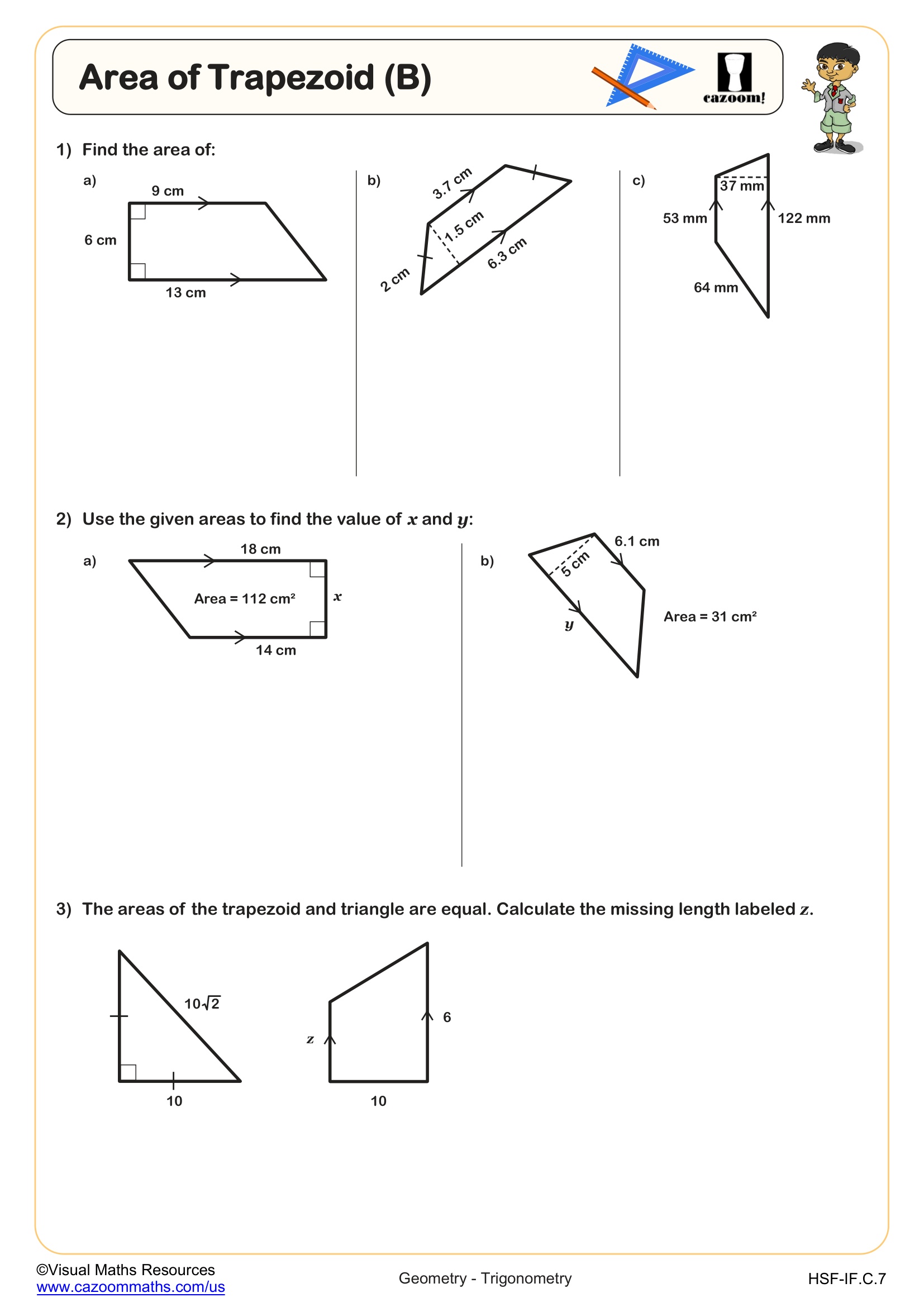
Areas of Kites
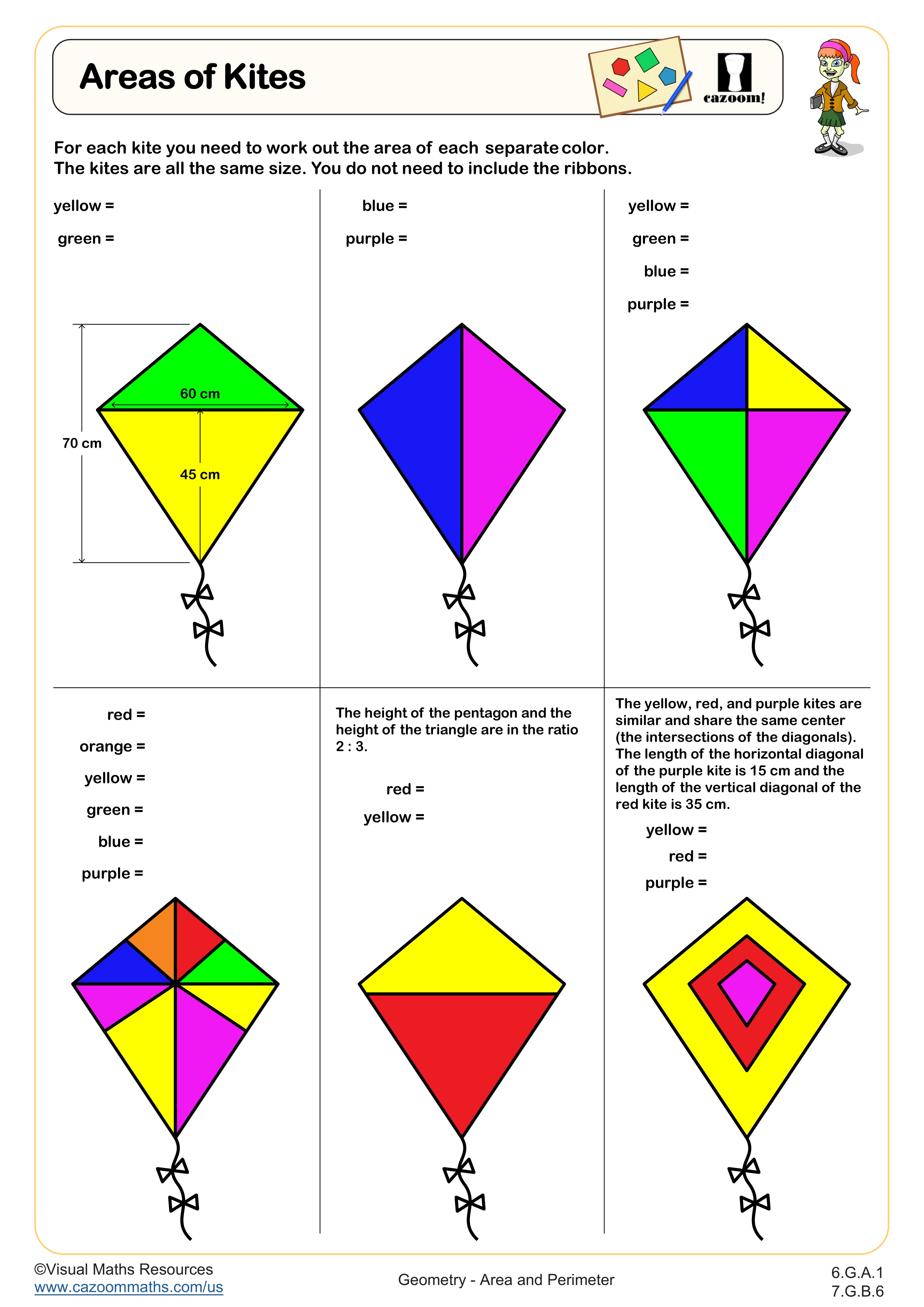
Comparing Areas and Perimeters (C)
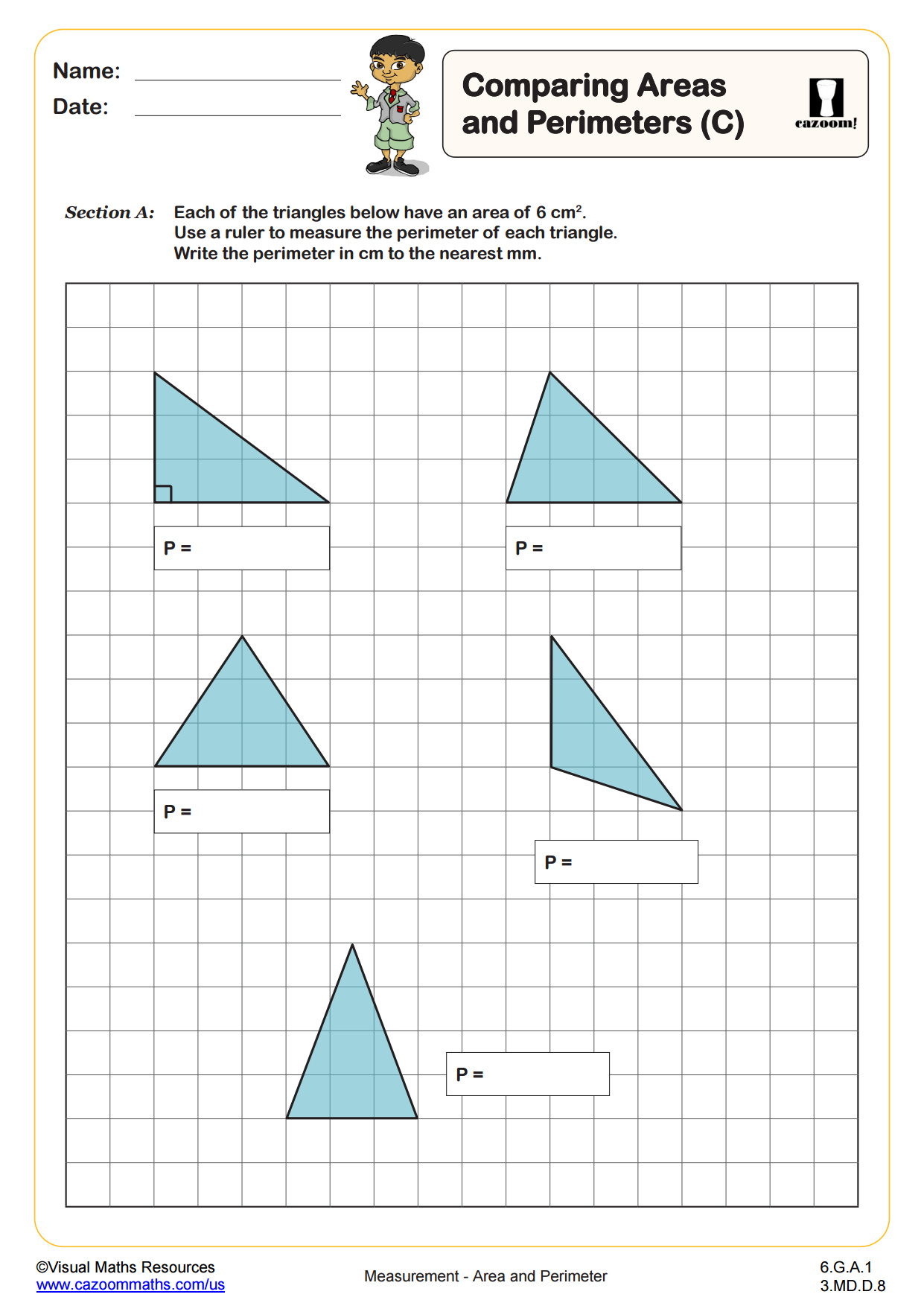
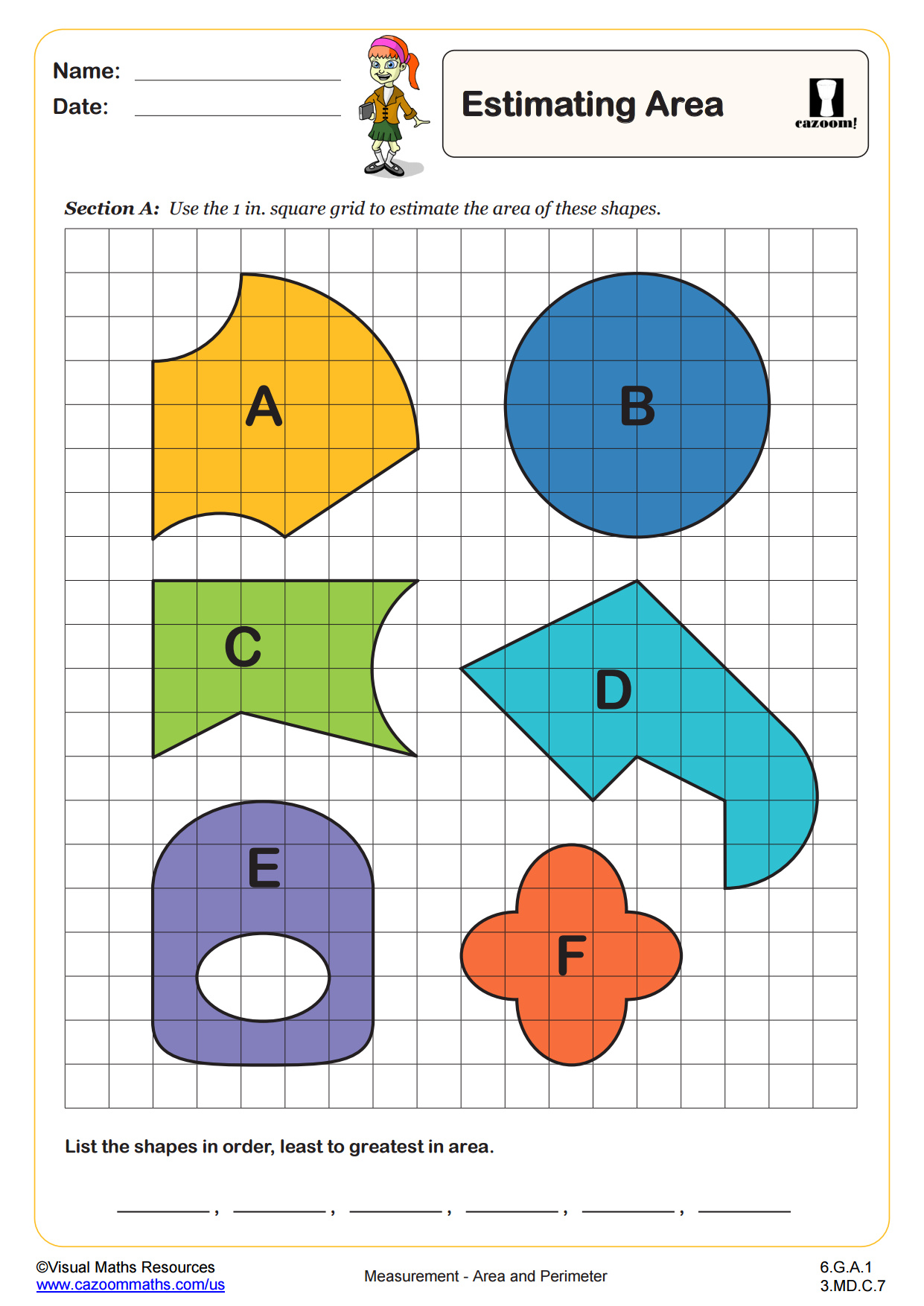
Estimating Area
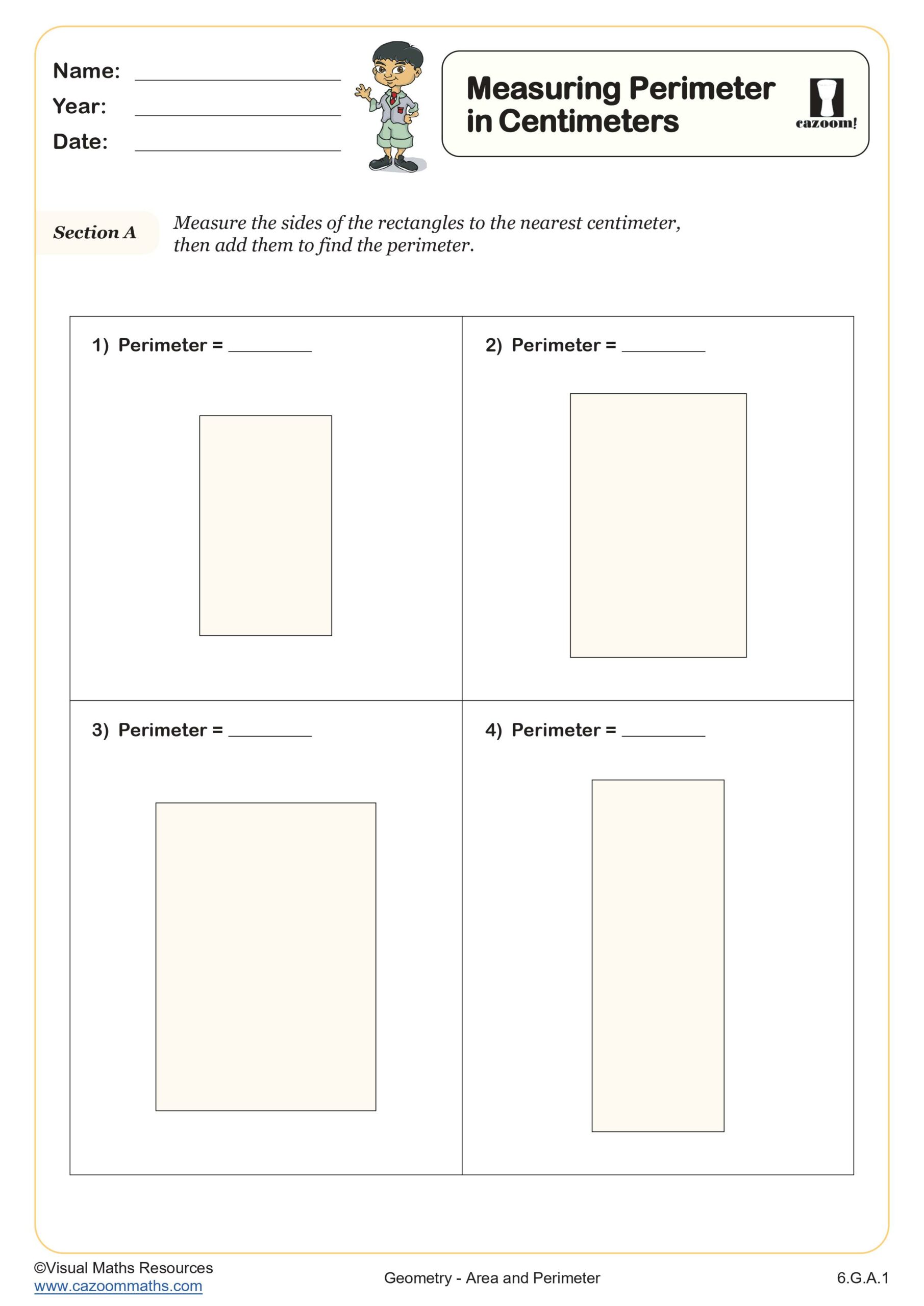
Measuring Perimeter in Centimeters
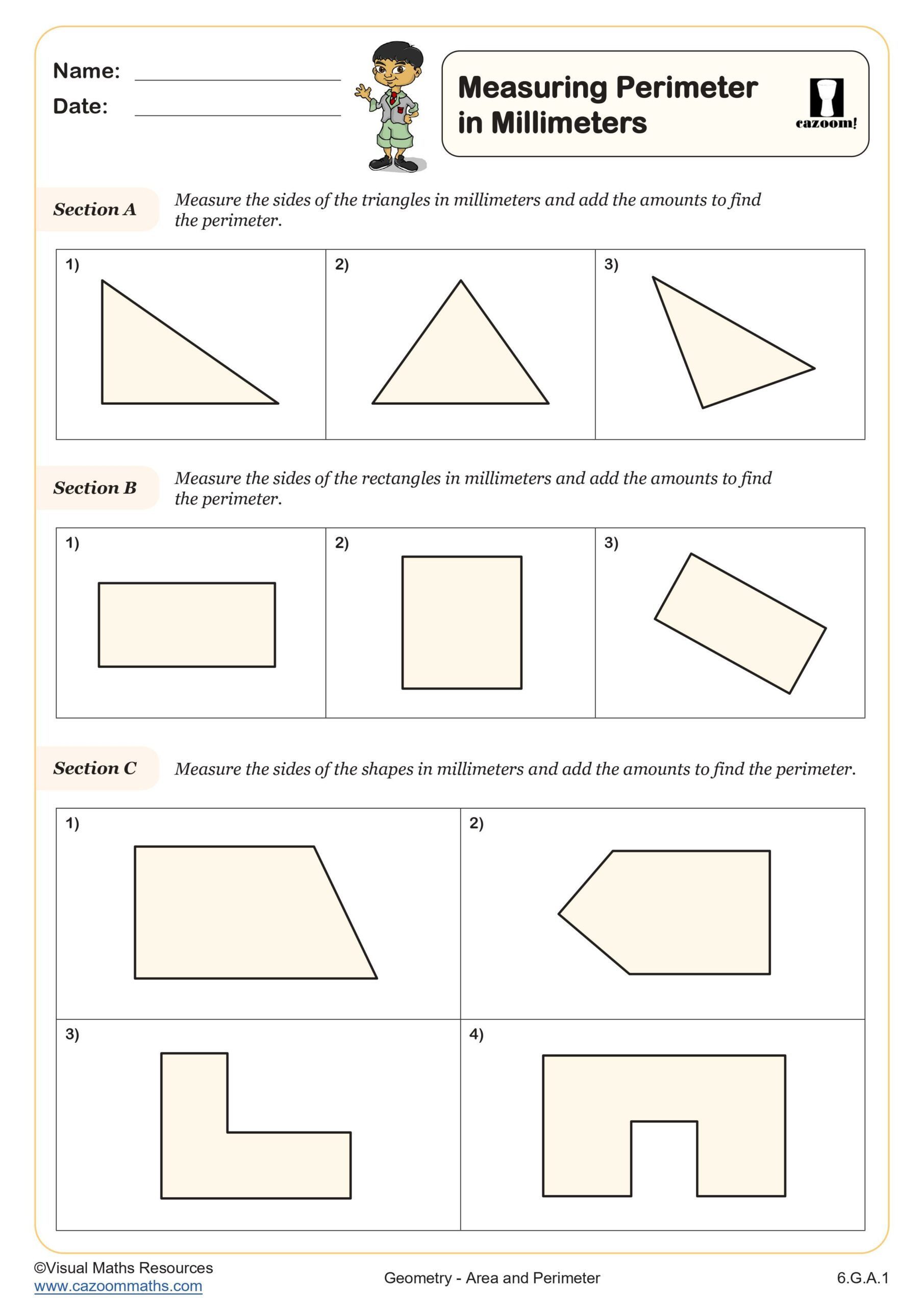
Measuring Perimeter in Millimeters
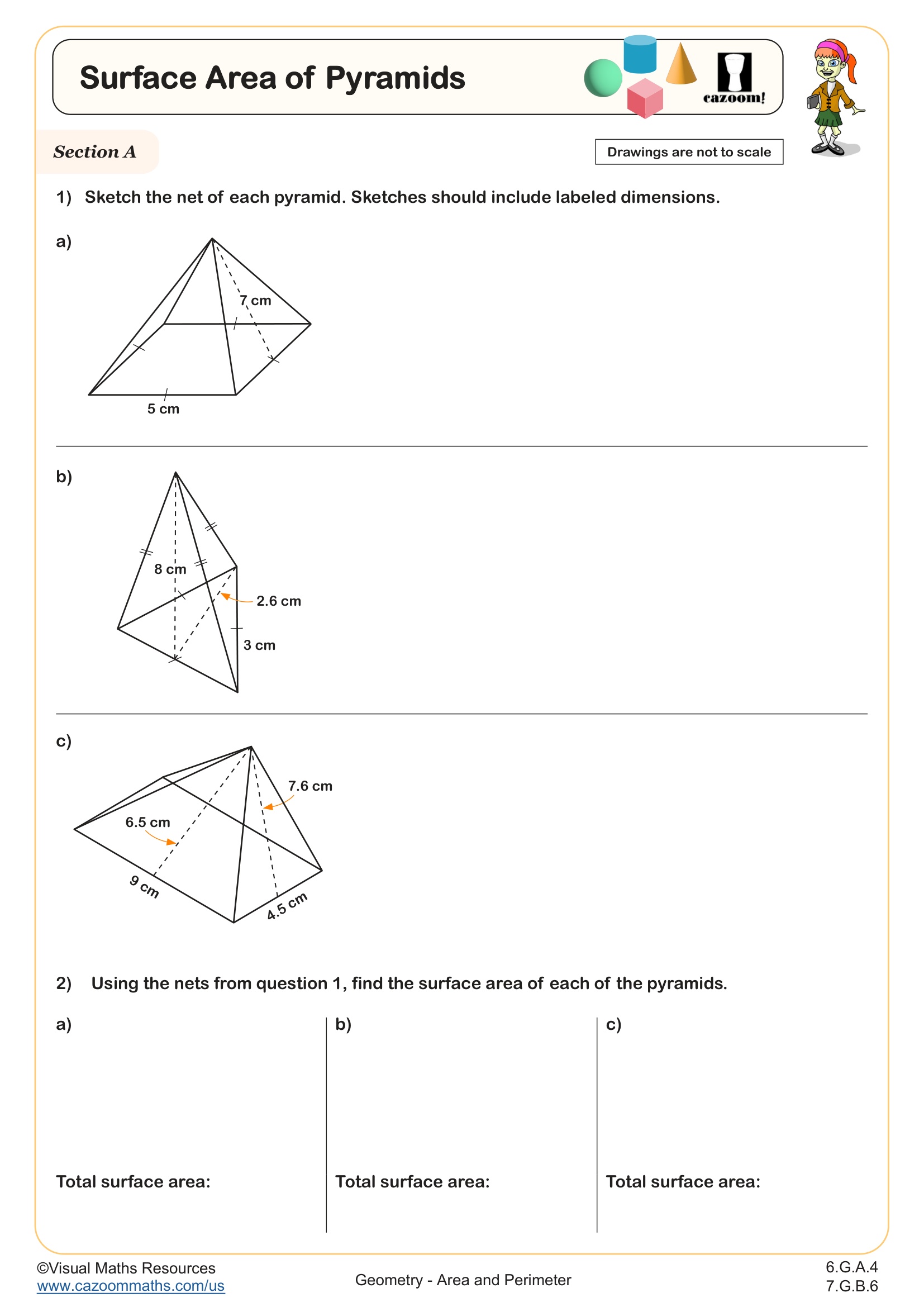
Surface Area of Pyramids
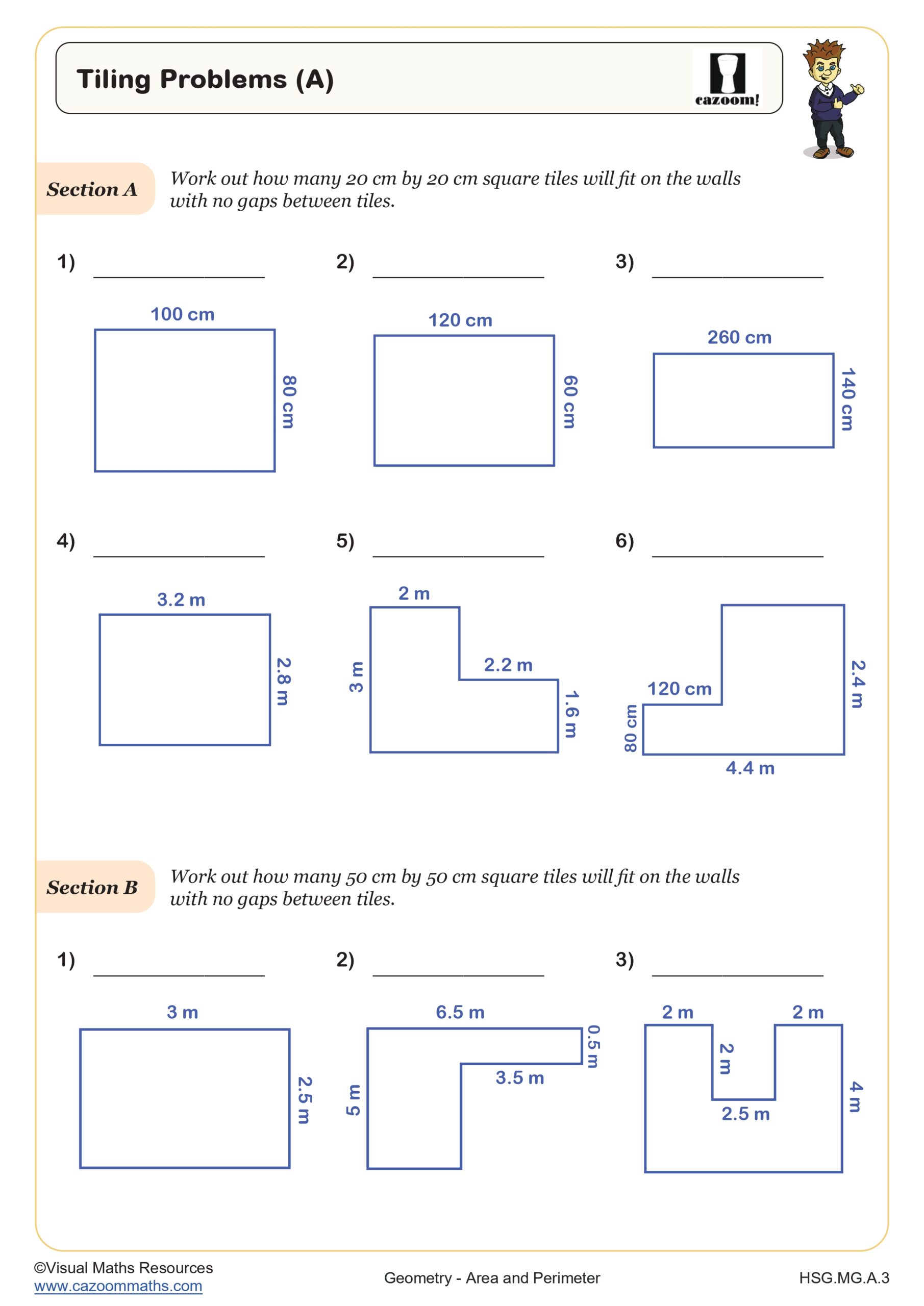
Tiling Problems (A)
All worksheets are created by the team of experienced teachers at Cazoom Math.
Do Your Students Struggle With Geometry? Our Printable PDF 6th Grade Math Resources Will Help
Students expand from calculating simple rectangles to working with triangles, parallelograms, and trapezoids. They discover how base-height relationships apply across different polygon types. This progression helps them recognize patterns in geometric formulas rather than memorizing isolated rules.
The worksheets develop precise measurement skills that transfer to coordinate geometry and graphing. Students practice converting between units and estimating reasonable answers before calculating. These foundational abilities support success in proportional reasoning and scale factor problems throughout middle school math.
Topics at a Glance: Estimating Area, Tiling Problems, Measuring Perimeter, and More
These worksheets help students develop a deep understanding of area and perimeter through a clear, concrete-pictorial-abstract approach. Learners begin with grid-based tasks to visualize space, then progress to using formulas for triangles and quadrilaterals. Each worksheet includes detailed, step-by-step answer keys that model precise working methods. By combining estimation, measurement, and problem-solving, students strengthen spatial reasoning and accuracy, gaining the confidence to apply area and perimeter concepts to both 2D and 3D mathematical challenges.
Transform Geometry Into a Strength With Cazoom Math 6th Grade Area and Perimeter Activities
Teachers save planning time with these ready-to-print resources. Each worksheet targets specific learning objectives with clear progression paths. The varied difficulty levels let teachers differentiate instruction for all learners. Quick assessment options help identify which students need extra support or enrichment activities.
The solutions show mathematical thinking processes through complete worked examples. Teachers use these during instruction to model problem-solving strategies effectively. Students verify their methods independently, which promotes self-directed learning. The consistent format helps establish classroom routines for practice sessions. Materials adapt easily to individual work, partner activities, or whole-class instruction. Teachers report improved student engagement when using these structured yet flexible resources.
Where These Area and Perimeter Skills Apply in Daily Life
Students use area calculations when planning room layouts or determining paint coverage. Perimeter helps them determine the fencing needs for gardens or borders in projects. These measurement skills connect directly to real-world problem-solving. Young people recognize these applications in their own experiences with sports, technology, and creative projects.
• Calculate carpet or flooring for rooms
• Plan garden beds and seed amounts
• Measure fabric for sewing projects
• Build models with accurate measurements