Elementary School Division Worksheets
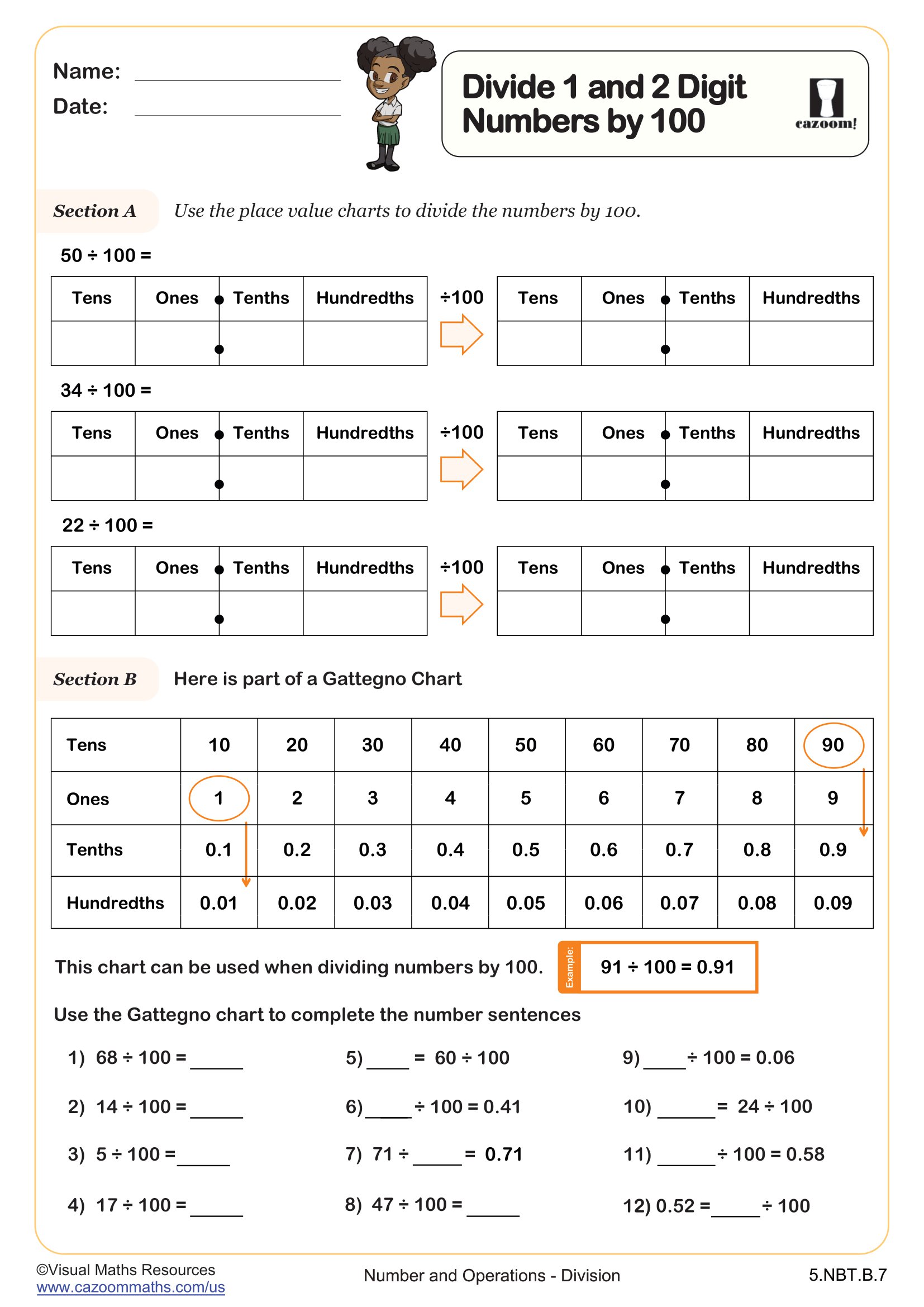
Divide 1 and 2 Digit Numbers by 100
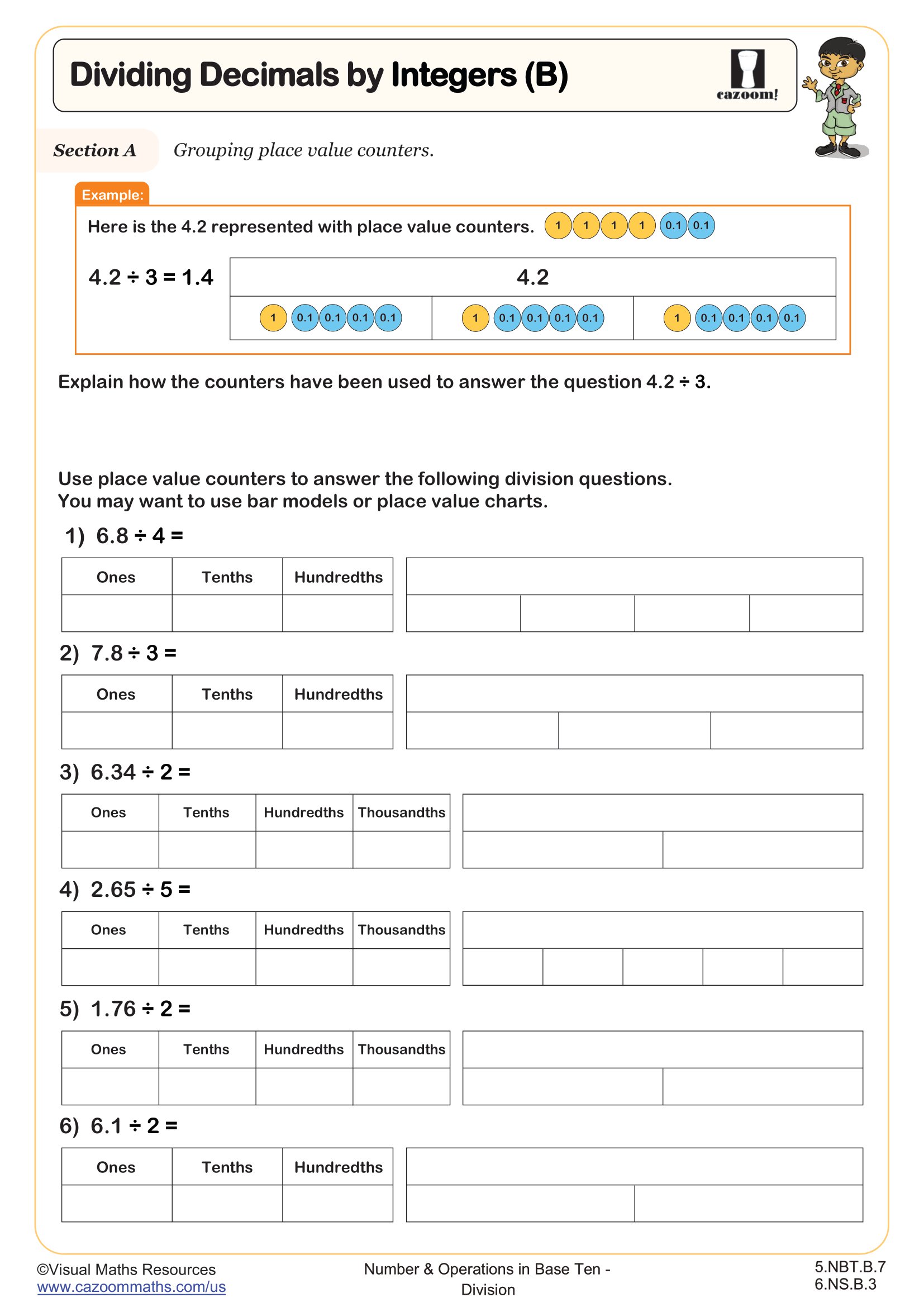
Divide Decimals by Integers (B)
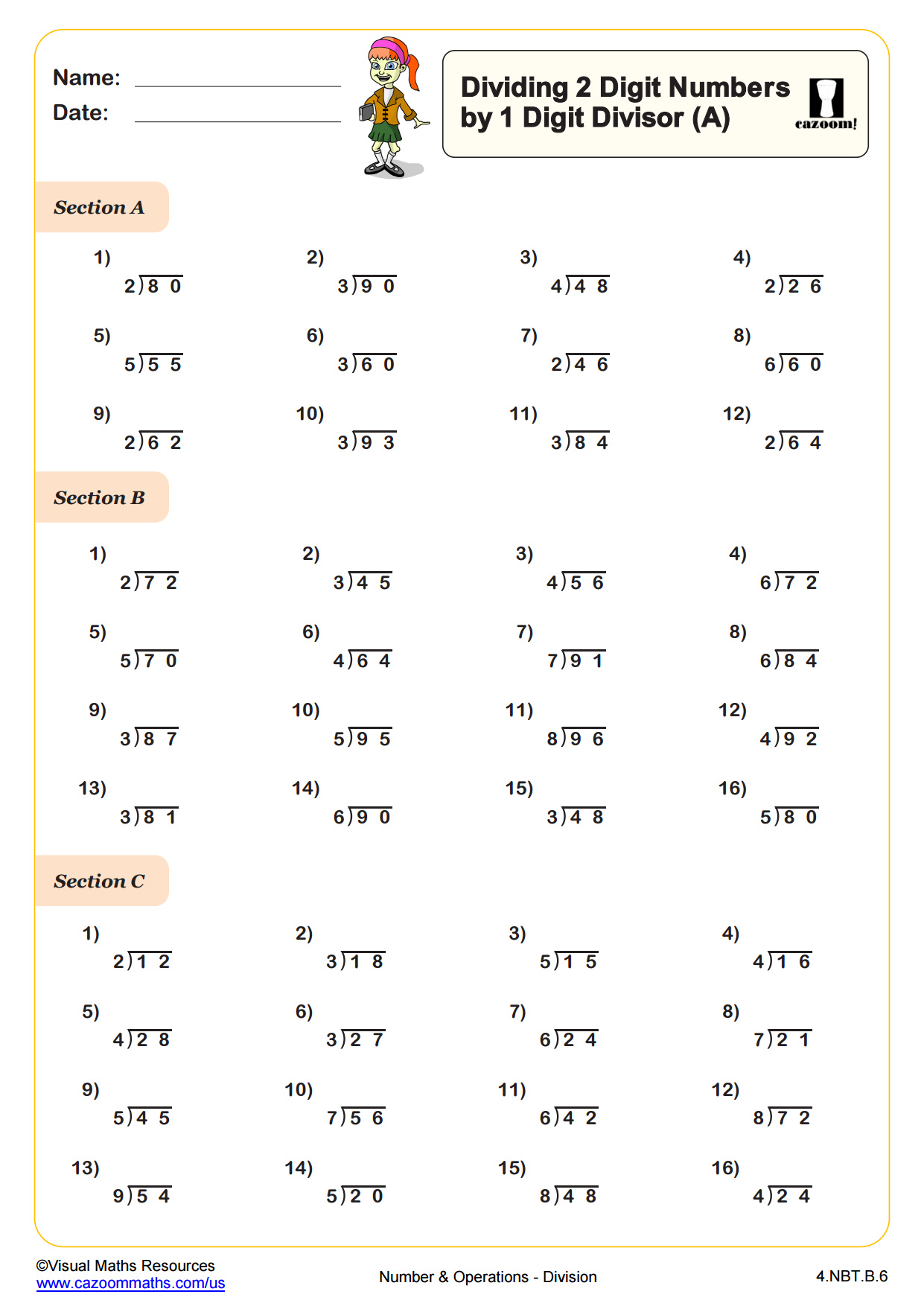
Dividing 2 Digit Numbers by 1 Digit Divisors (A)
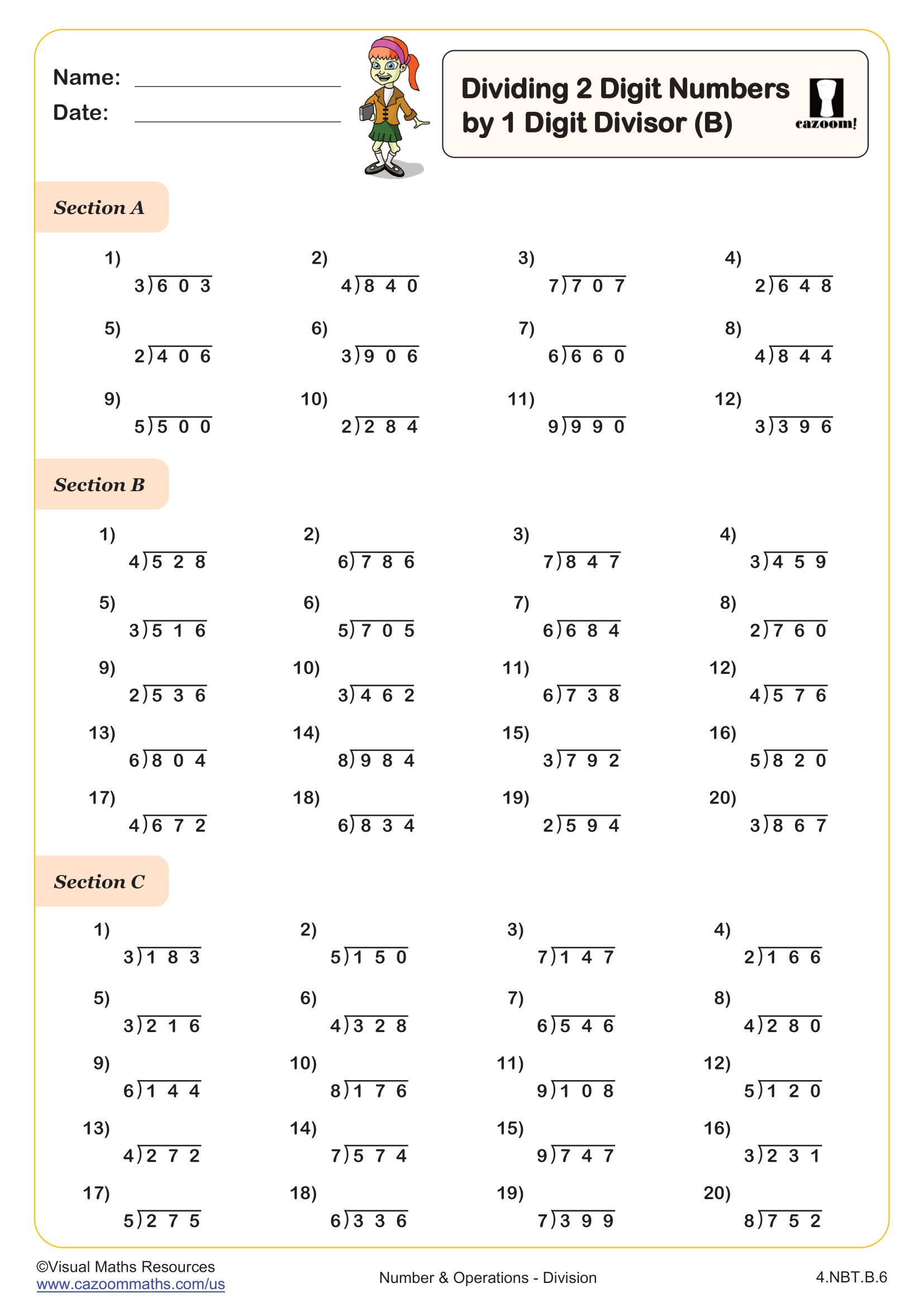
Dividing 2 Digit Numbers by 1 Digit Divisors (B)
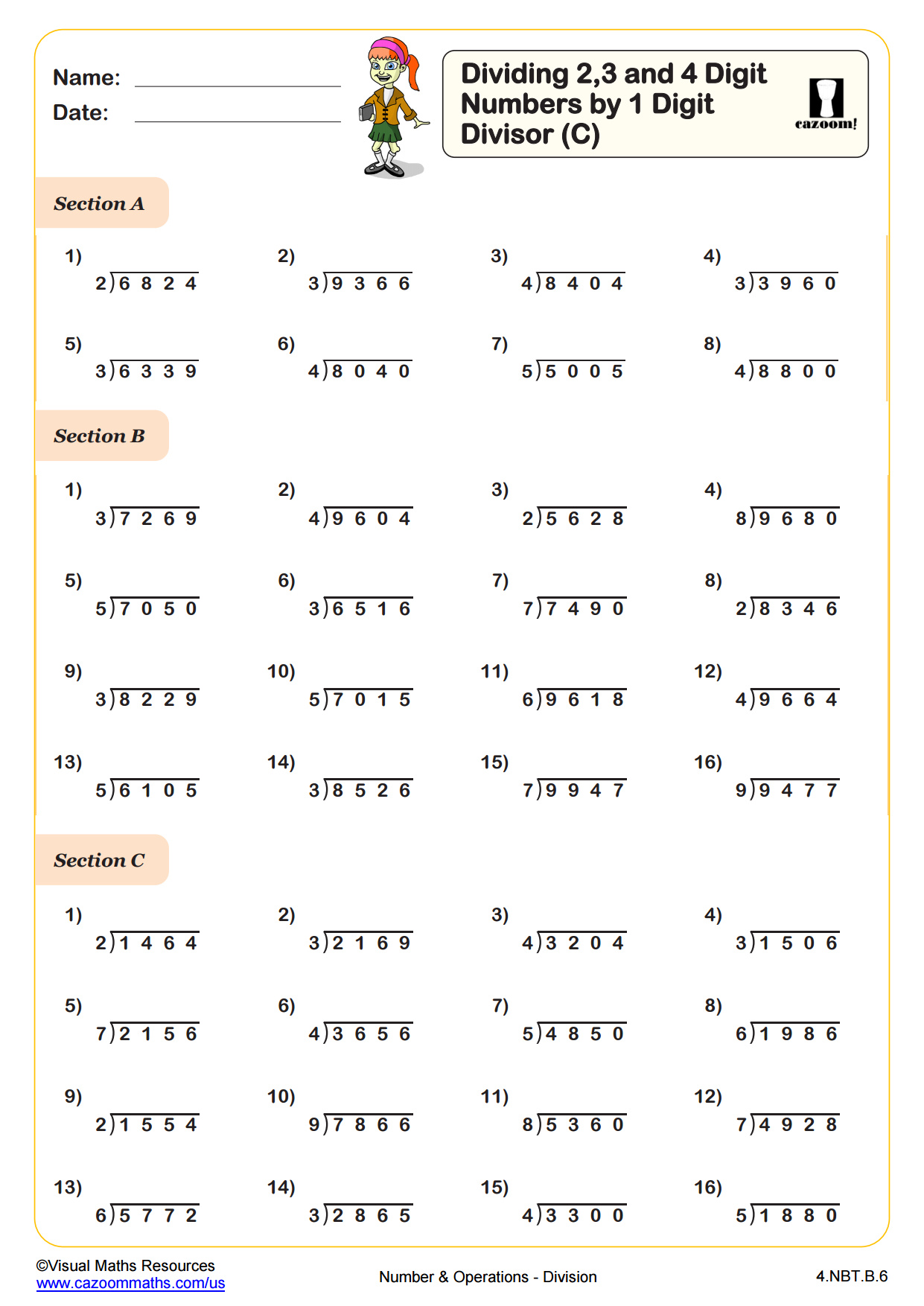
Dividing 2,3 and 4 Digit Numbers by 1 Digit Divisors (C)
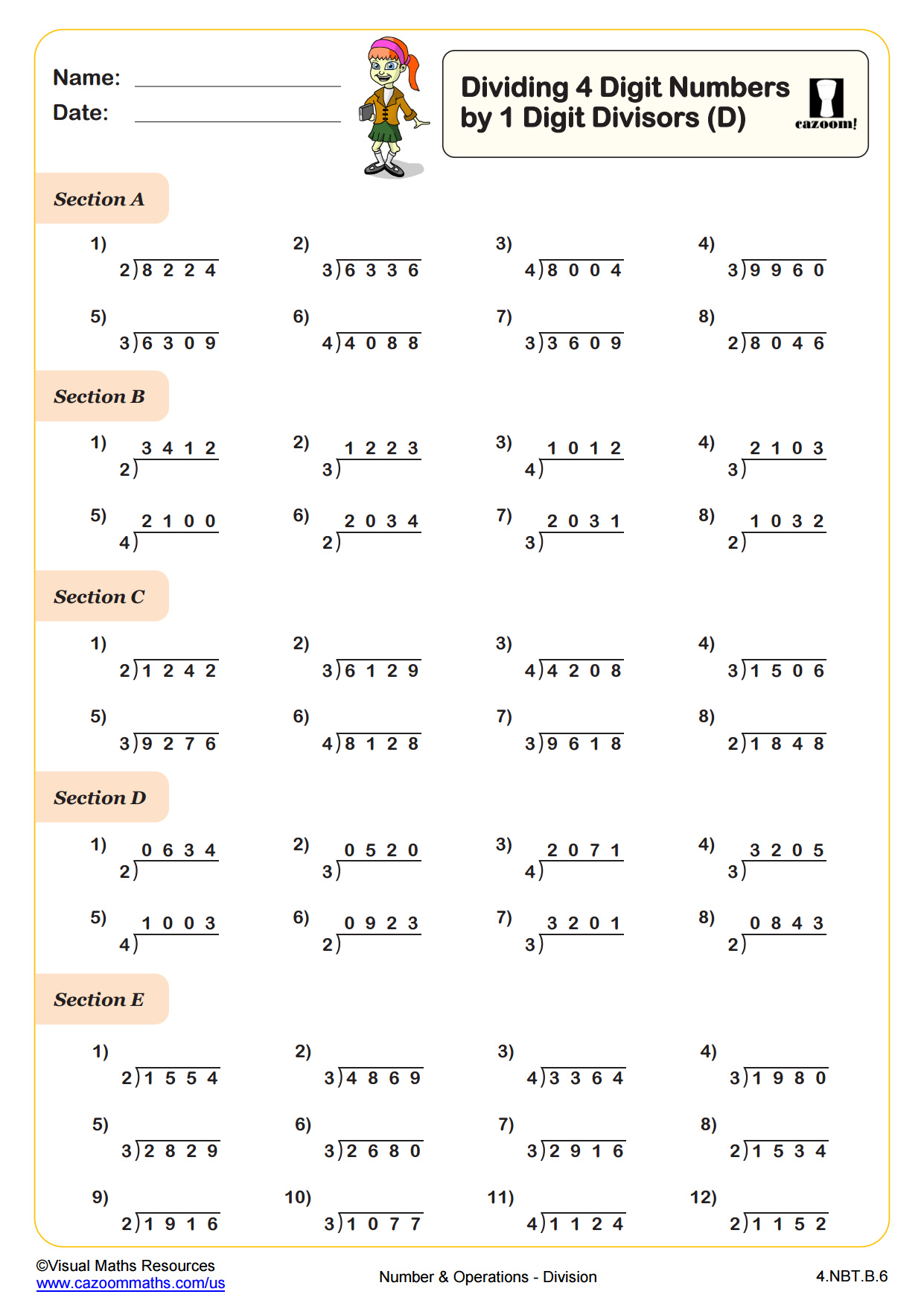
Dividing 4 Digit Numbers by 1 Digit Divisors (D)
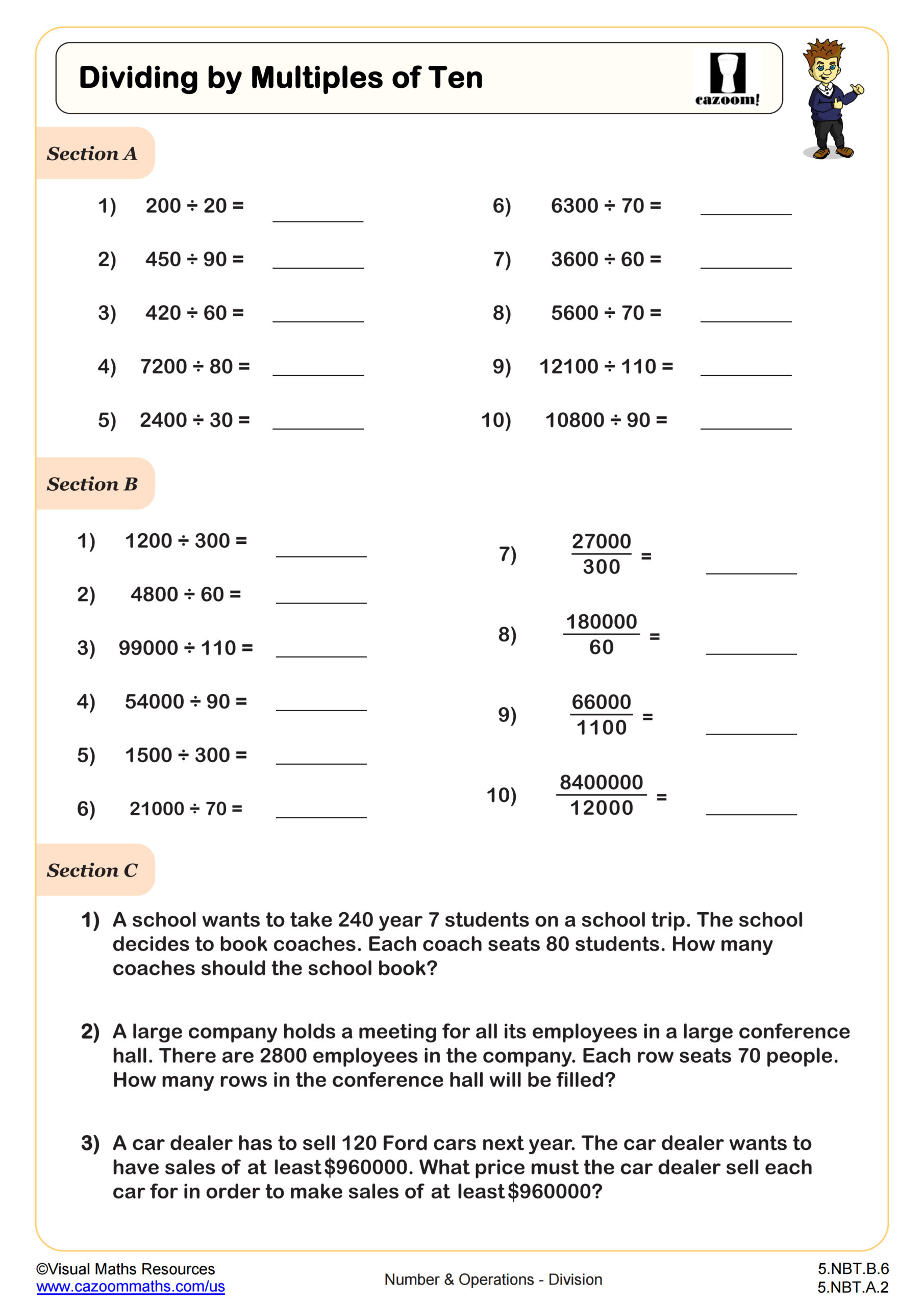
Dividing by Multiples of Ten
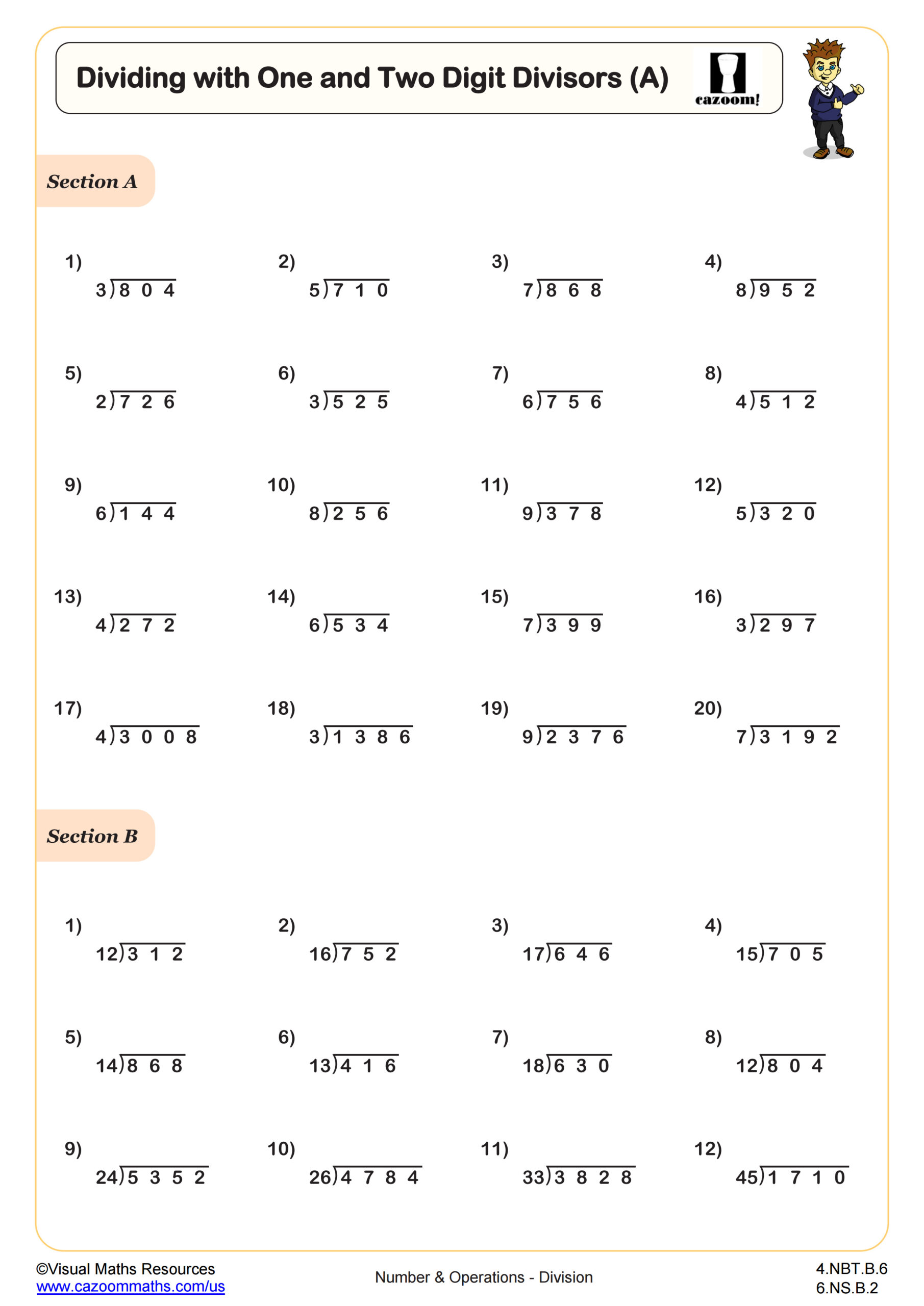
Dividing with One and Two Digit Divisors (A)
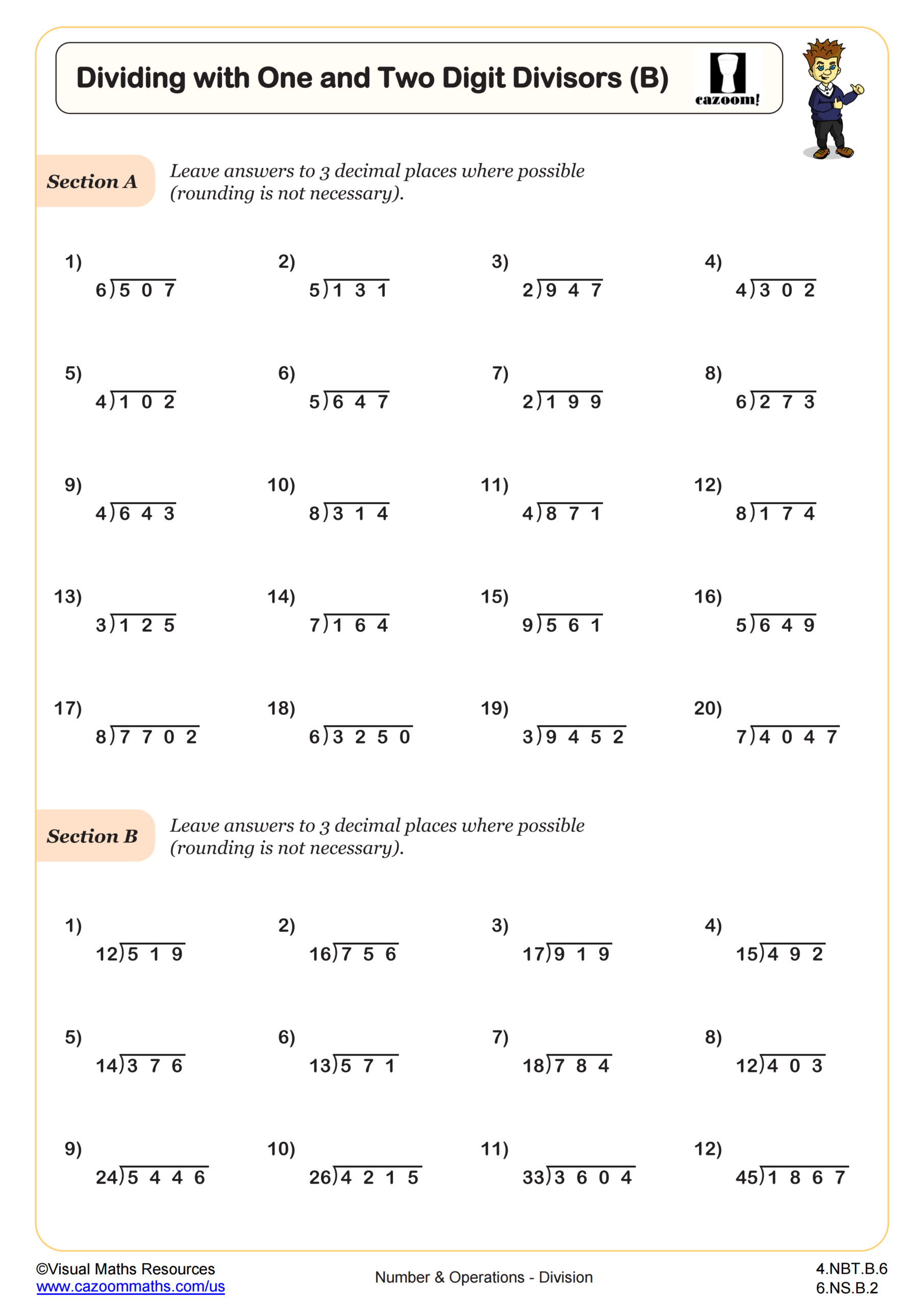
Dividing with One and Two Digit Divisors (B)
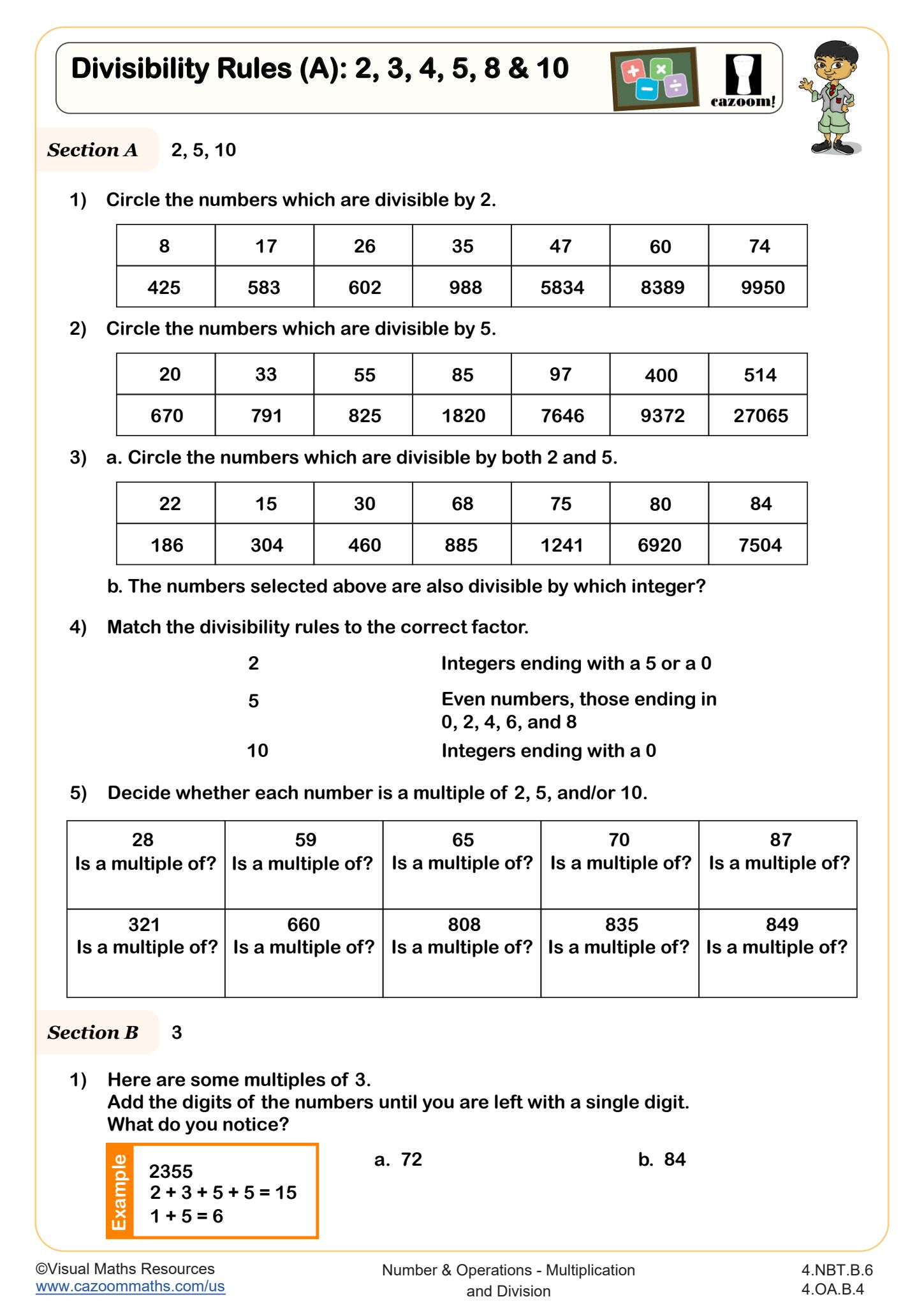
Divisibility Rules (A): 2, 3, 4, 5, 8 & 10
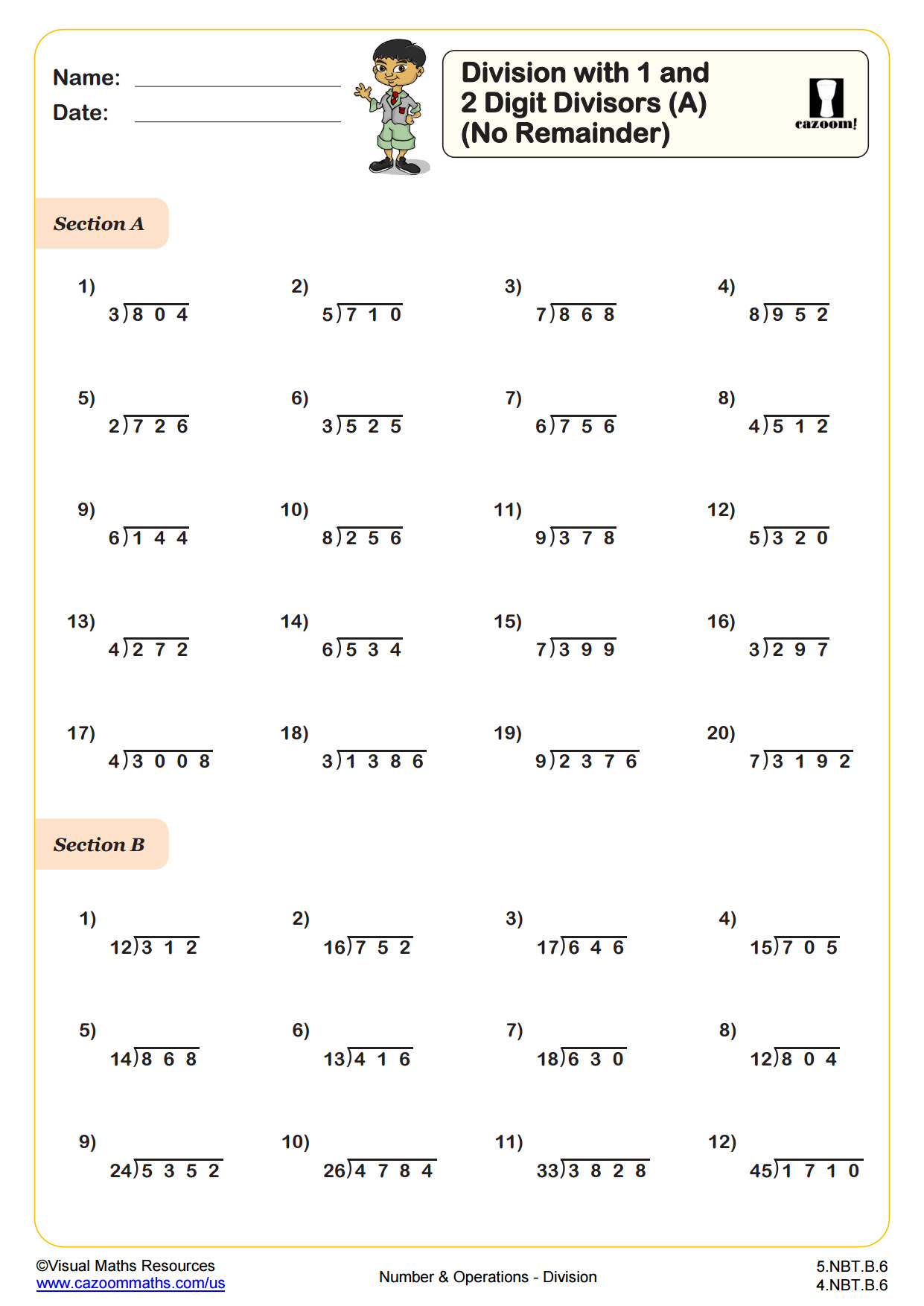
Division A (No Remainders)
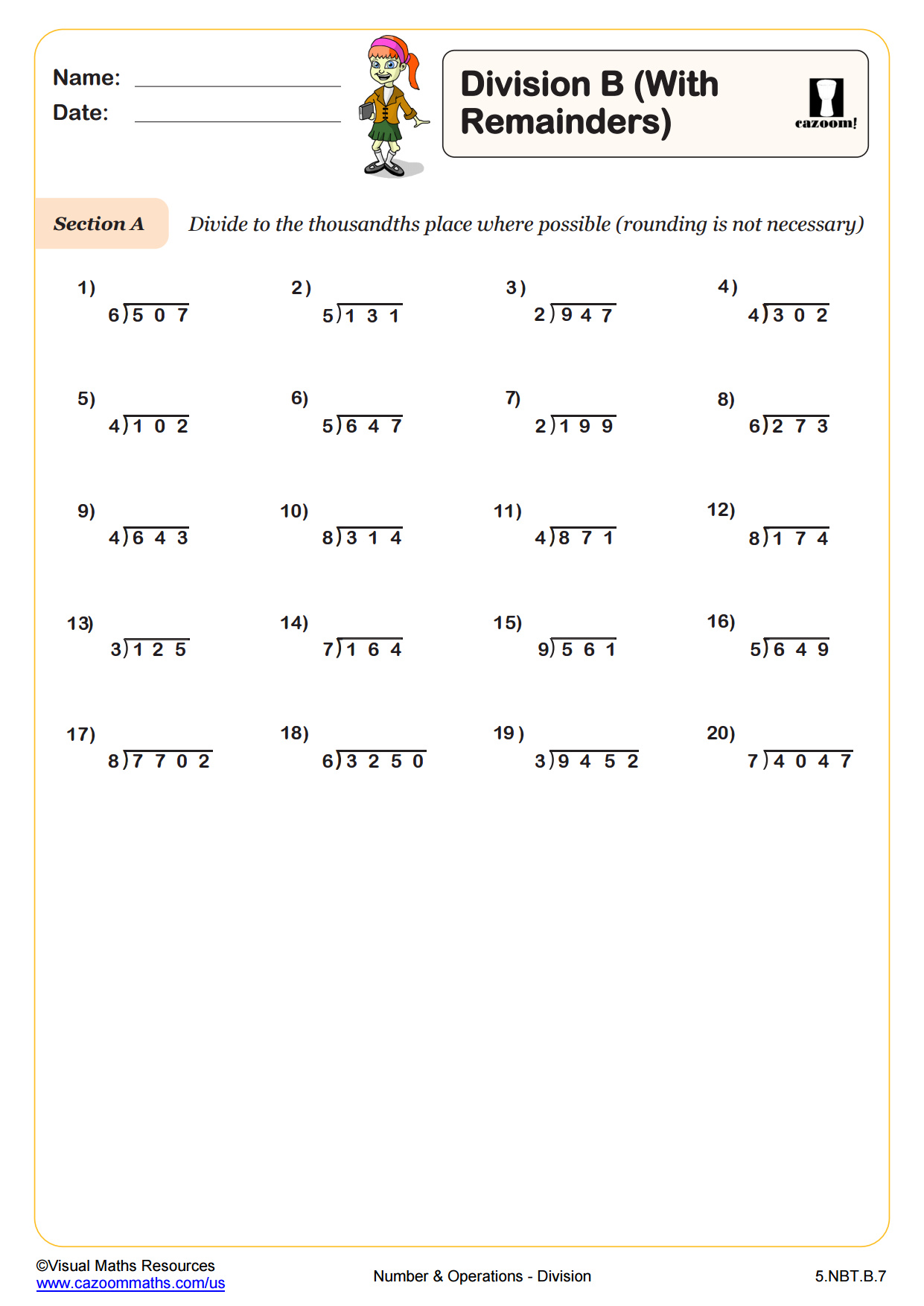
Division B (With Remainders)
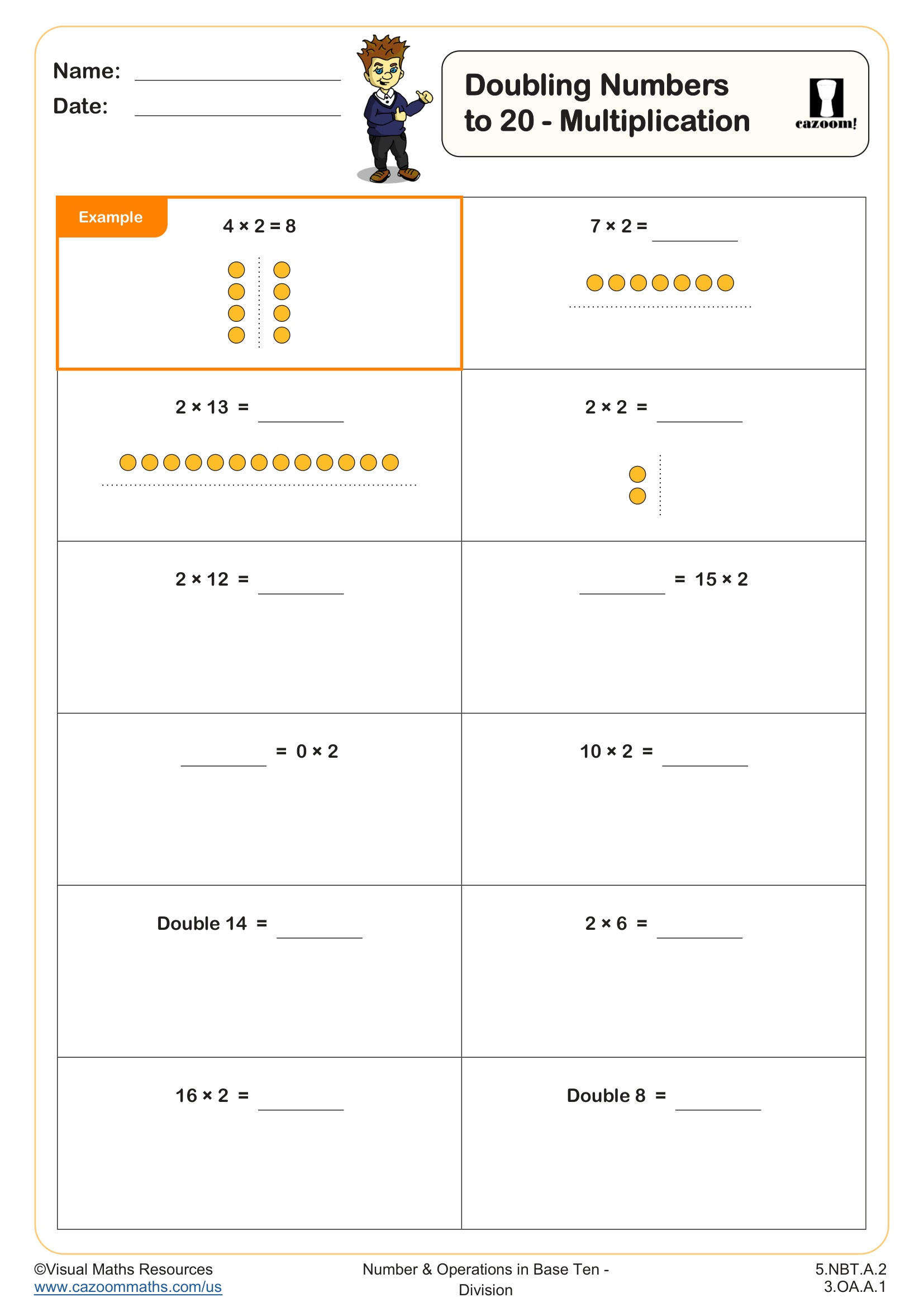
Doubling Numbers to 20 Multiplication
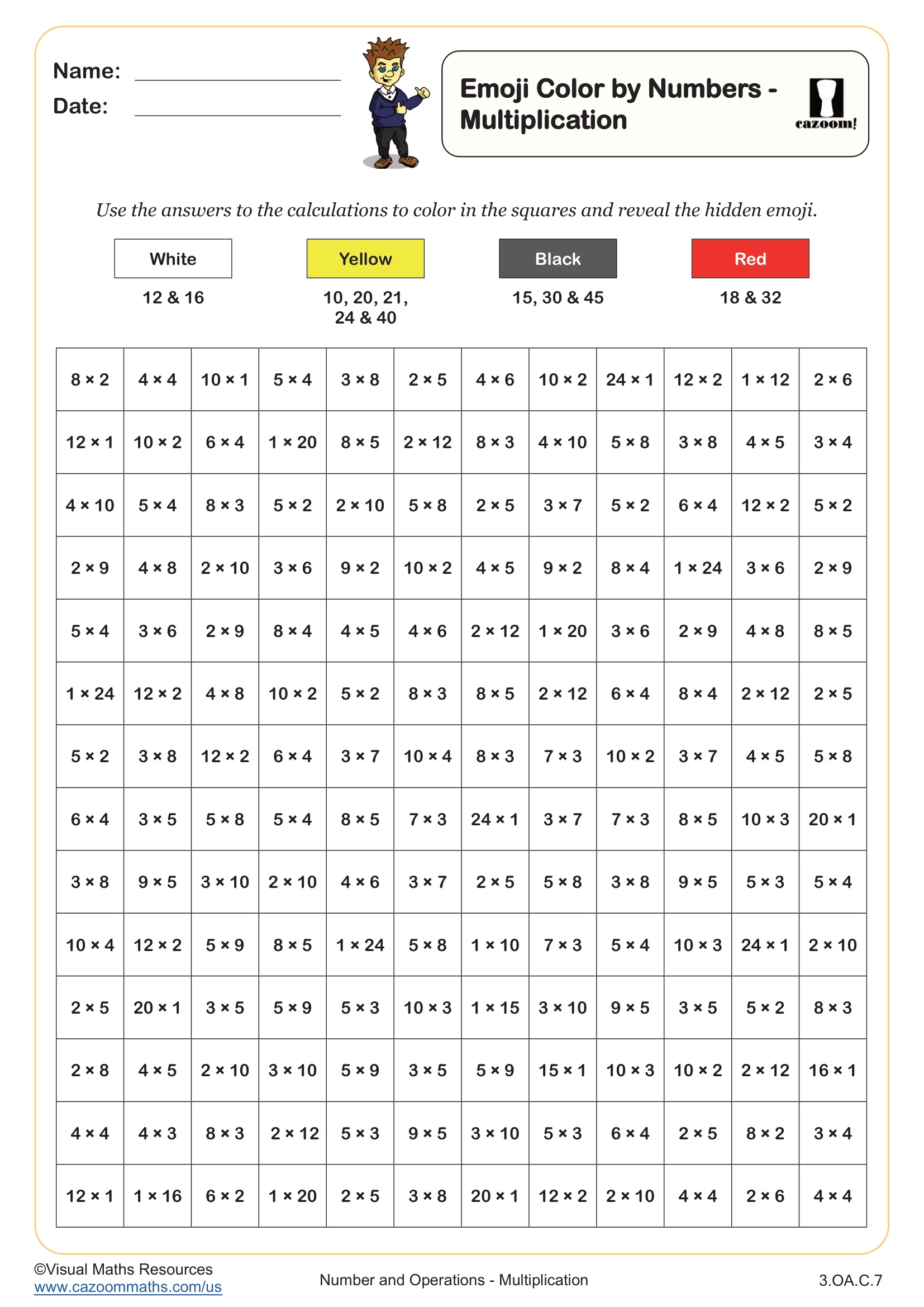
Emoji Colour by Numbers - Multiplication
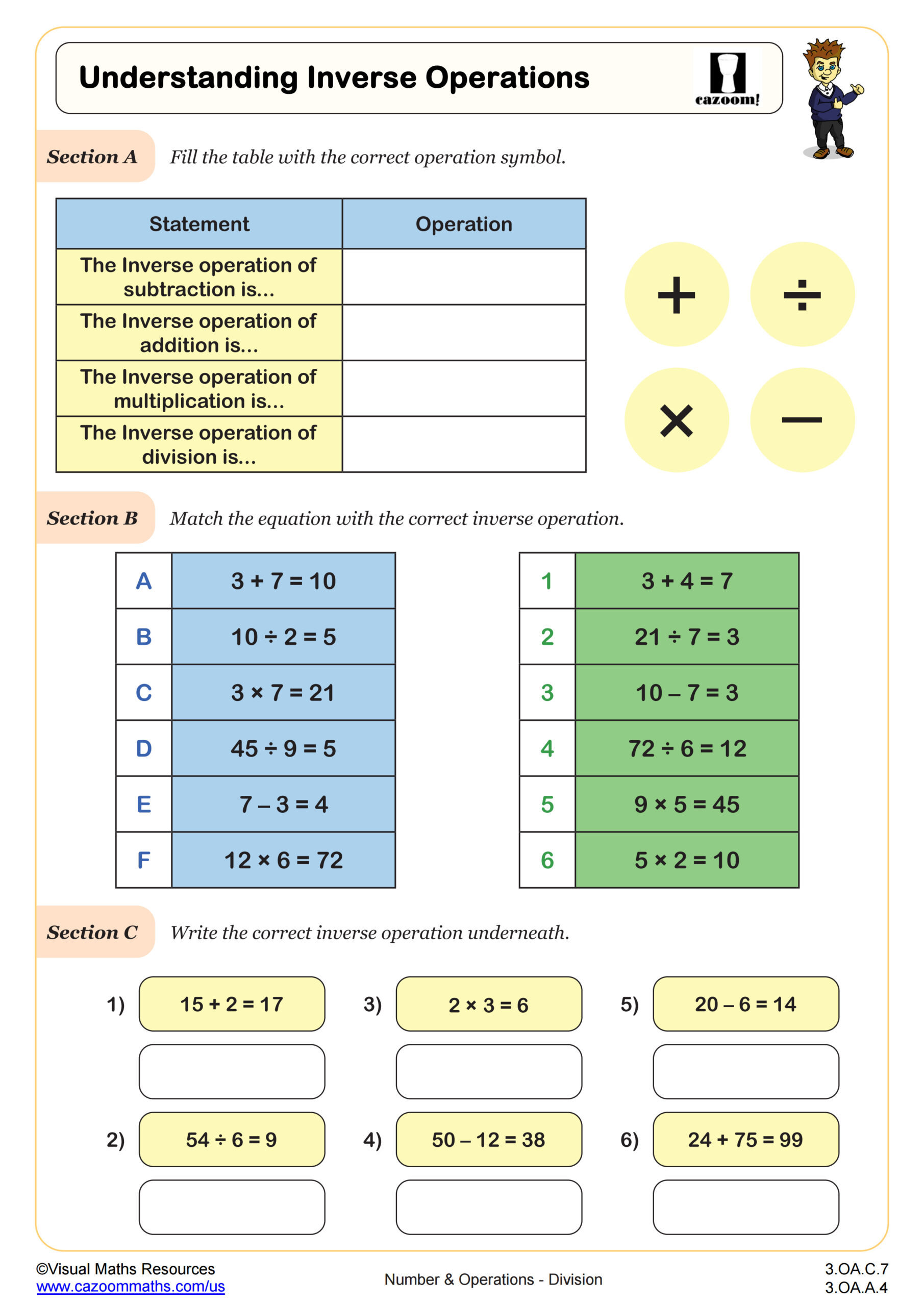
Understanding Inverse Operations
All worksheets are created by the team of experienced teachers at Cazoom Math.
What makes elementary division worksheets effective for student learning?
Effective elementary division worksheets scaffold learning by starting with concrete visual representations before moving to abstract number operations. They align with Common Core State Standards that emphasize understanding division as an unknown-factor problem, connecting it directly to multiplication concepts students have already mastered.
Teachers notice that worksheets featuring arrays, equal groups, and number lines help students visualize division concepts more clearly than those jumping straight into algorithmic procedures. The most successful worksheets also include word problems that require students to determine whether a situation calls for partitive division (sharing equally) or quotitive division (making equal groups).
Which grade levels benefit most from structured division worksheet practice?
Division concepts typically begin in third grade with basic facts and simple one-digit divisors, progressing through fourth and fifth grades to include multi-digit division and more complex problem-solving scenarios. Third graders focus on division within 100, while fourth graders tackle division with remainders and interpret quotients in word problems.
Fifth grade teachers report that students need continued reinforcement of division concepts as they encounter decimal division and division of larger numbers. Many teachers find that even sixth graders benefit from periodic review of fundamental division skills, especially when preparing for fraction operations where division understanding becomes critical.
How do worksheets address common division misconceptions effectively?
Quality division worksheets specifically target the most persistent student misconceptions, particularly the confusion between dividend and divisor roles in division problems. Many students incorrectly assume that division always makes numbers smaller, leading to errors when dividing by fractions or decimals in later grades.
Teachers observe that worksheets incorporating estimation strategies help students catch unreasonable answers before they become ingrained habits. Problems that ask students to explain their reasoning or choose between multiple solution methods prove especially valuable for addressing the misconception that there's only one way to solve division problems, preparing students for the flexibility required in algebraic thinking.
What's the most effective way to use division worksheets in classroom instruction?
Teachers find that division worksheets work best when integrated into a lesson sequence that begins with hands-on manipulatives and progresses through guided practice to independent work. Using worksheets as homework without proper classroom introduction often leads to students practicing incorrect methods, making remediation more difficult later.
The most effective approach involves using worksheet problems as discussion starters, where students explain their thinking and compare different solution strategies. Teachers report better results when they assign specific problems rather than entire worksheets, focusing on quality of understanding rather than quantity of practice, and always reviewing answers as a class to address misconceptions immediately.