Elementary School Fractions Worksheets
Add and Subtract Fractions (A)
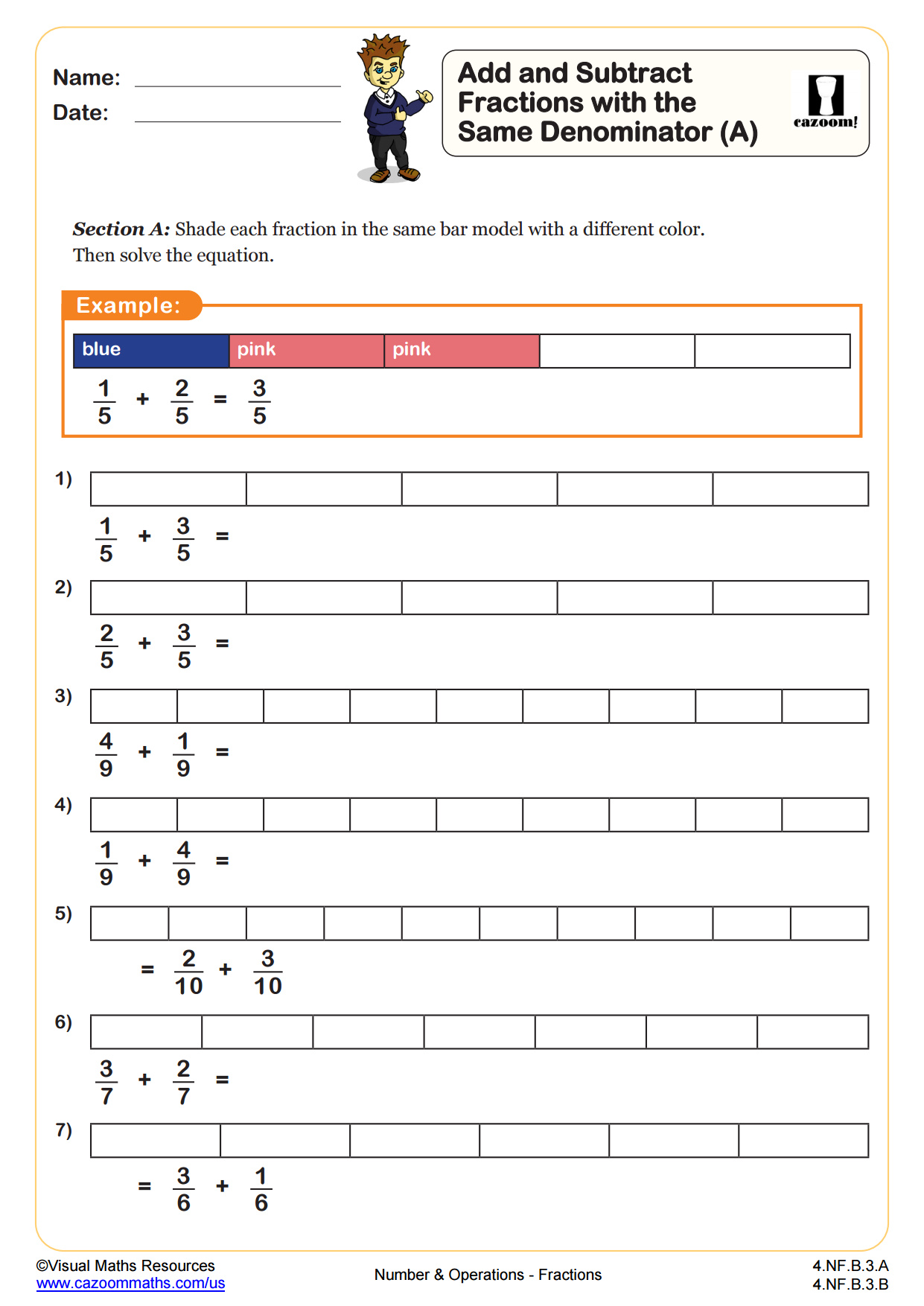
Add and Subtract Fractions (B)
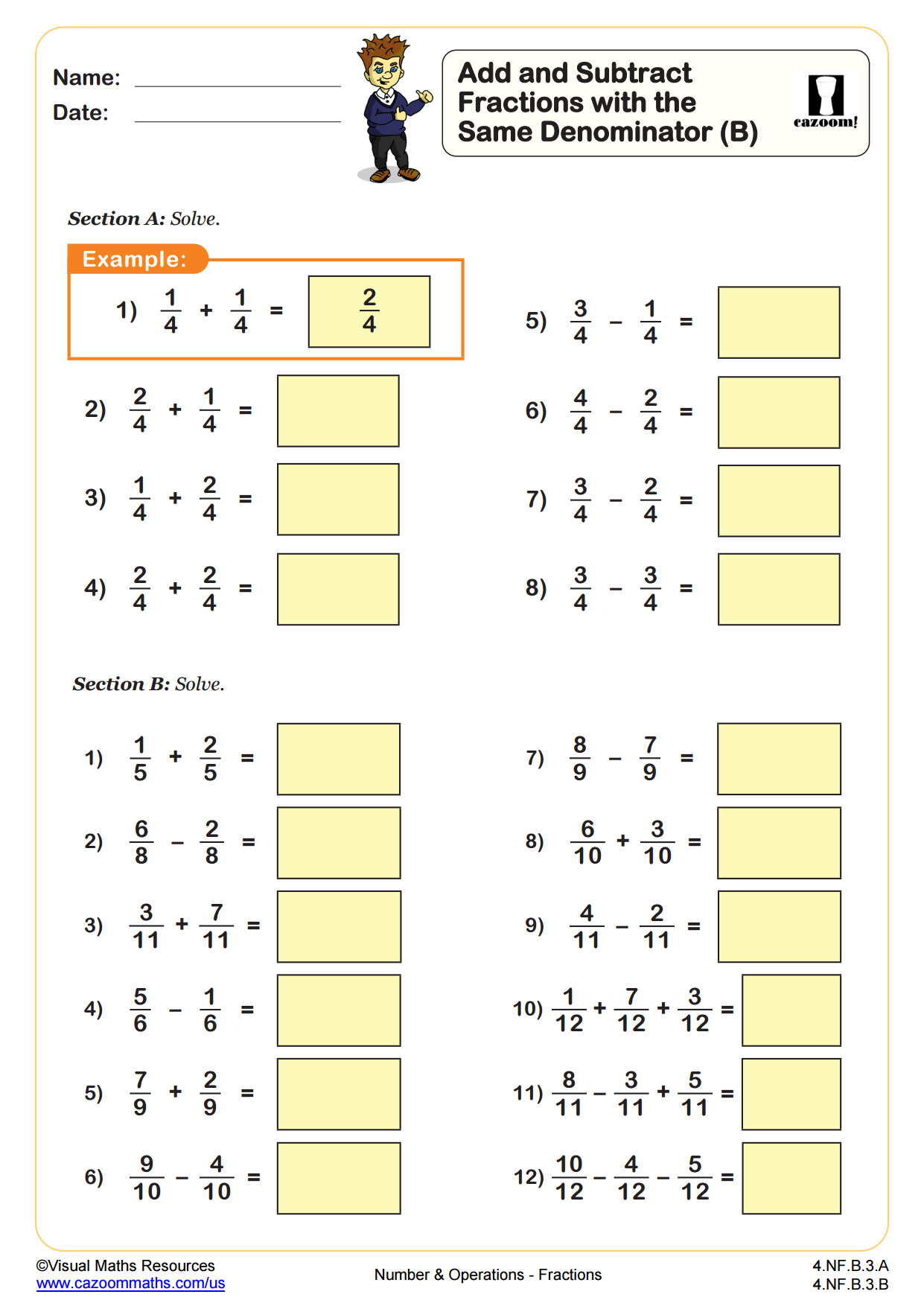
Add and Subtract Fractions (C)
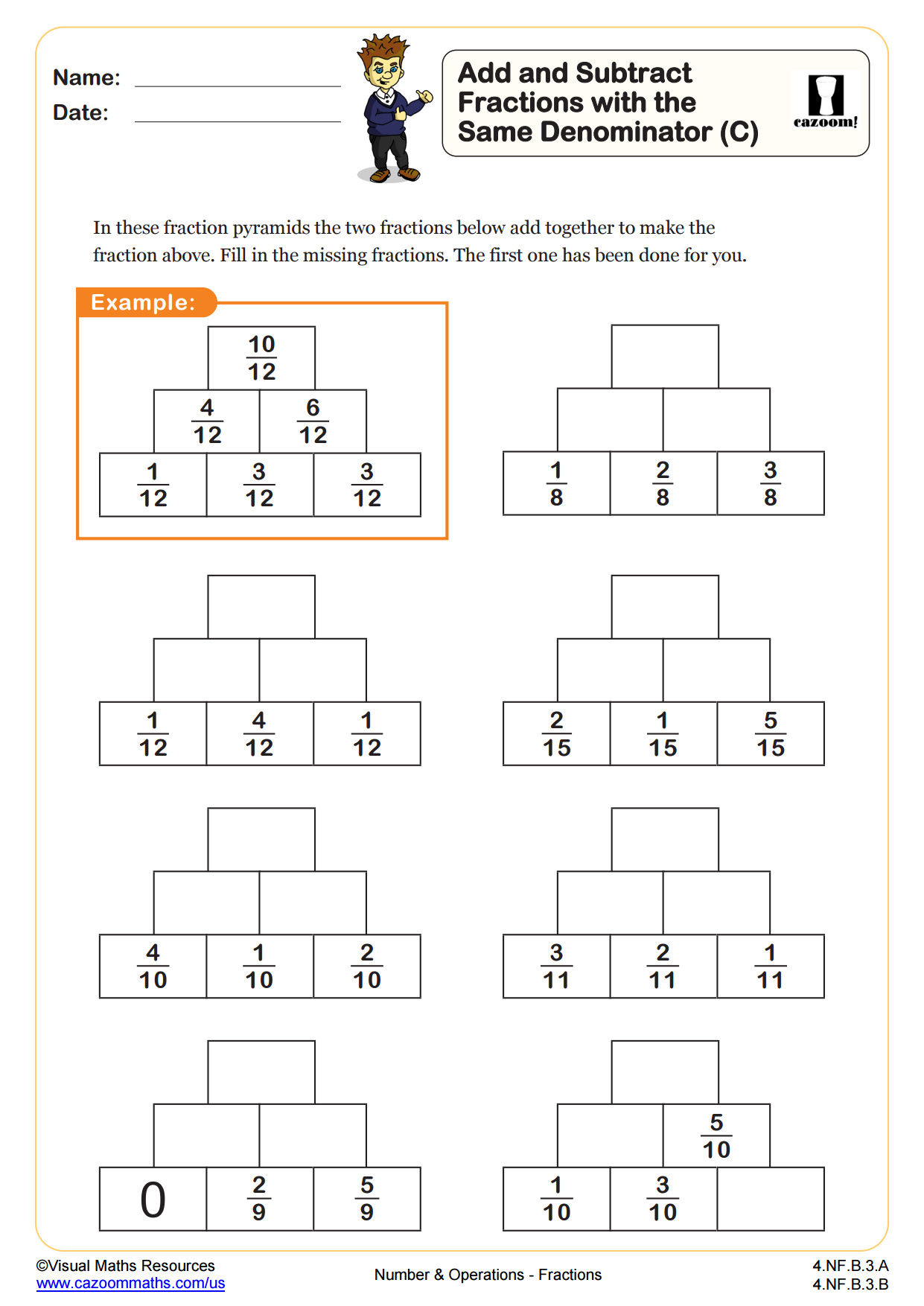
Add and Subtract Fractions with Different Denominators (B)
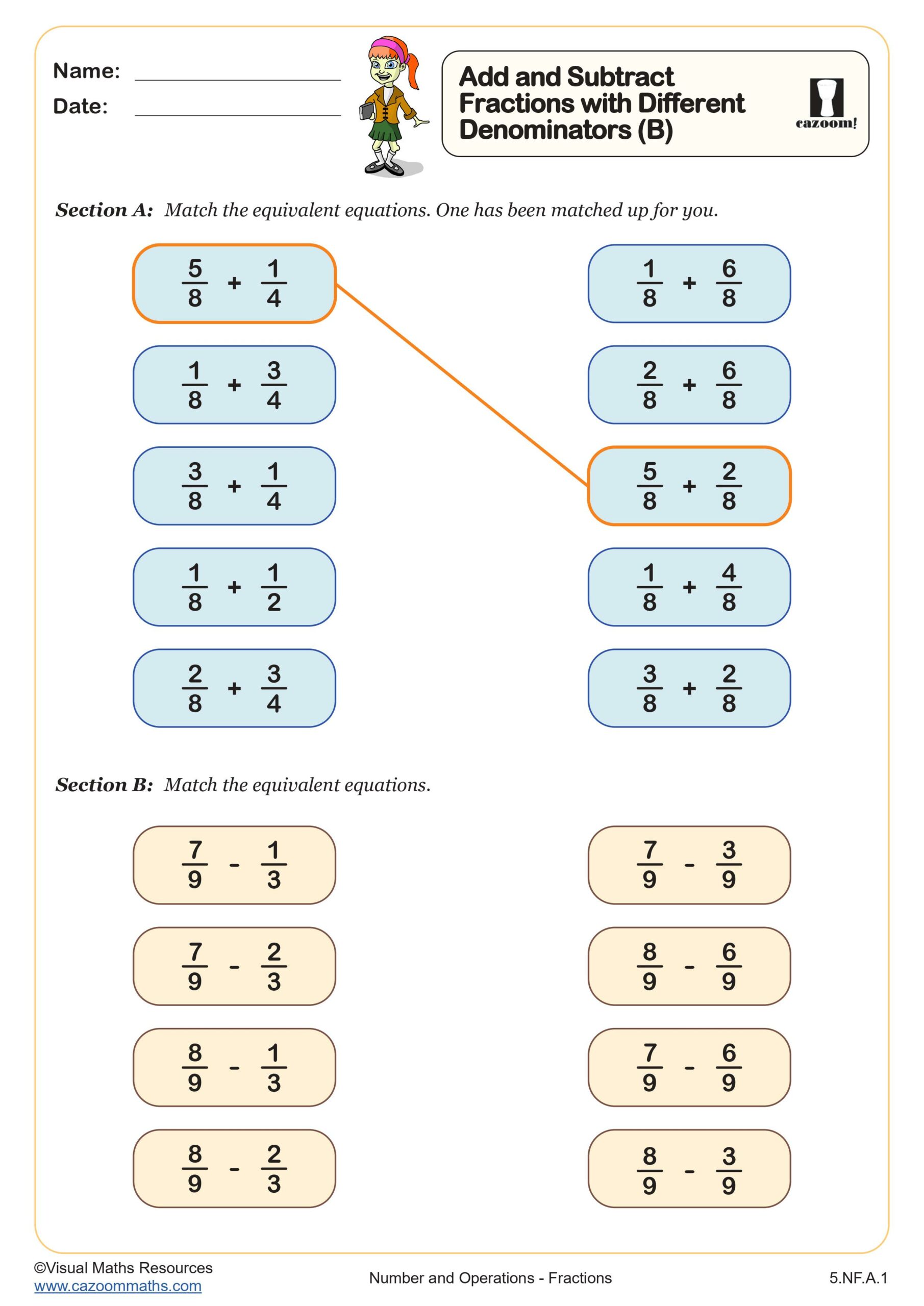
Add and Subtract Fractions with Unlike Denominators (A)
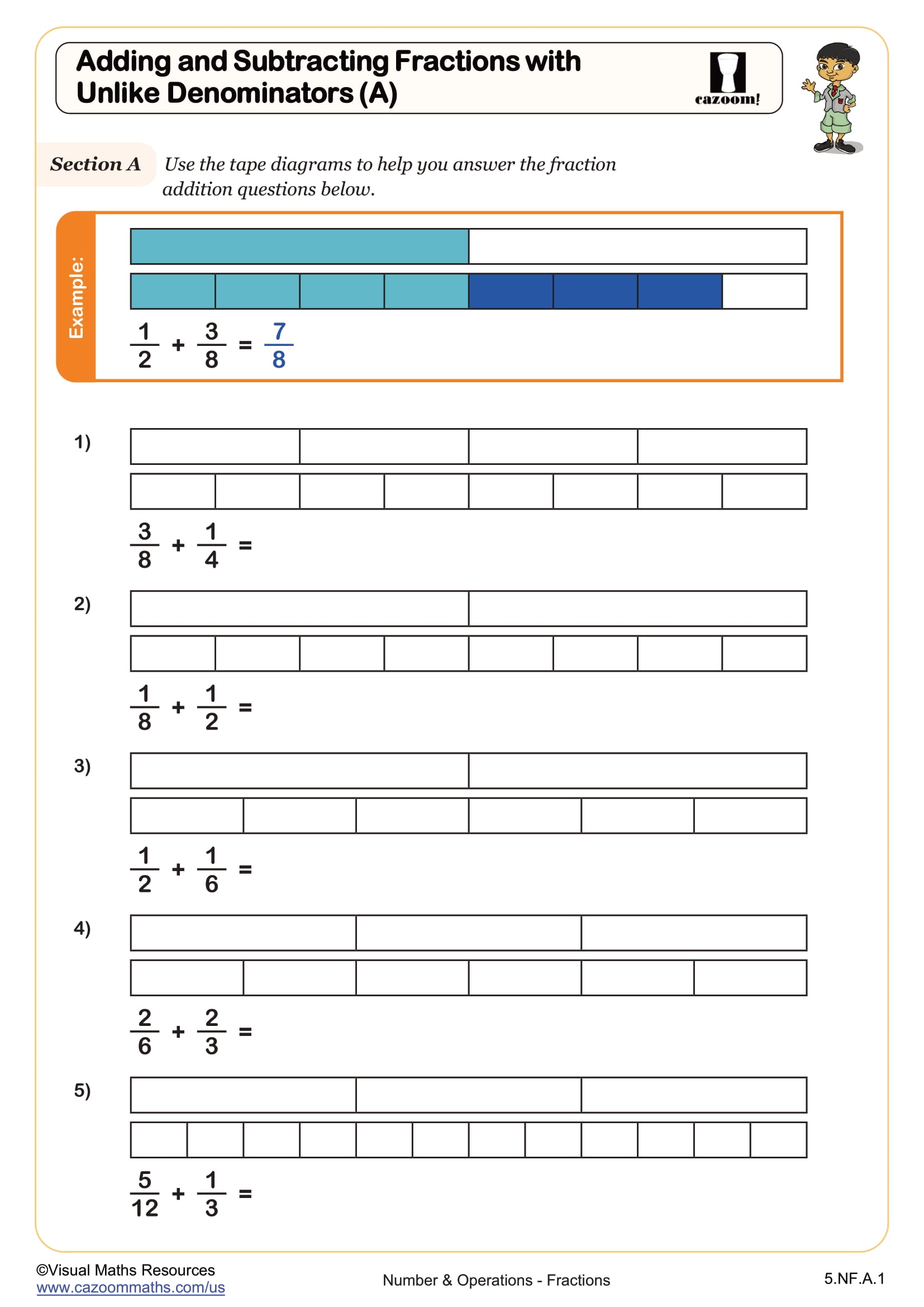
Add and Subtract Mixed Numbers
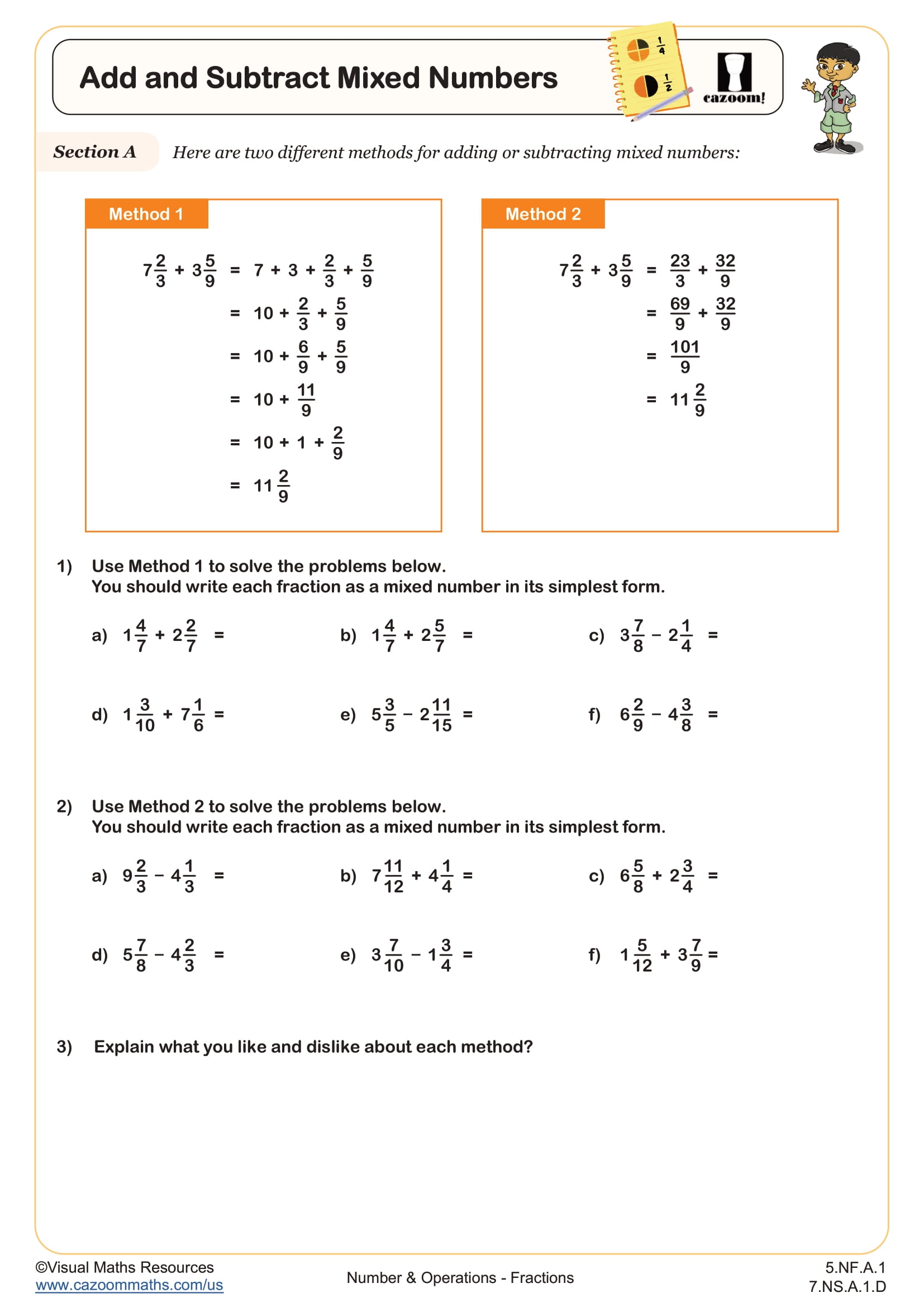
Adding and Subtracting Fractions
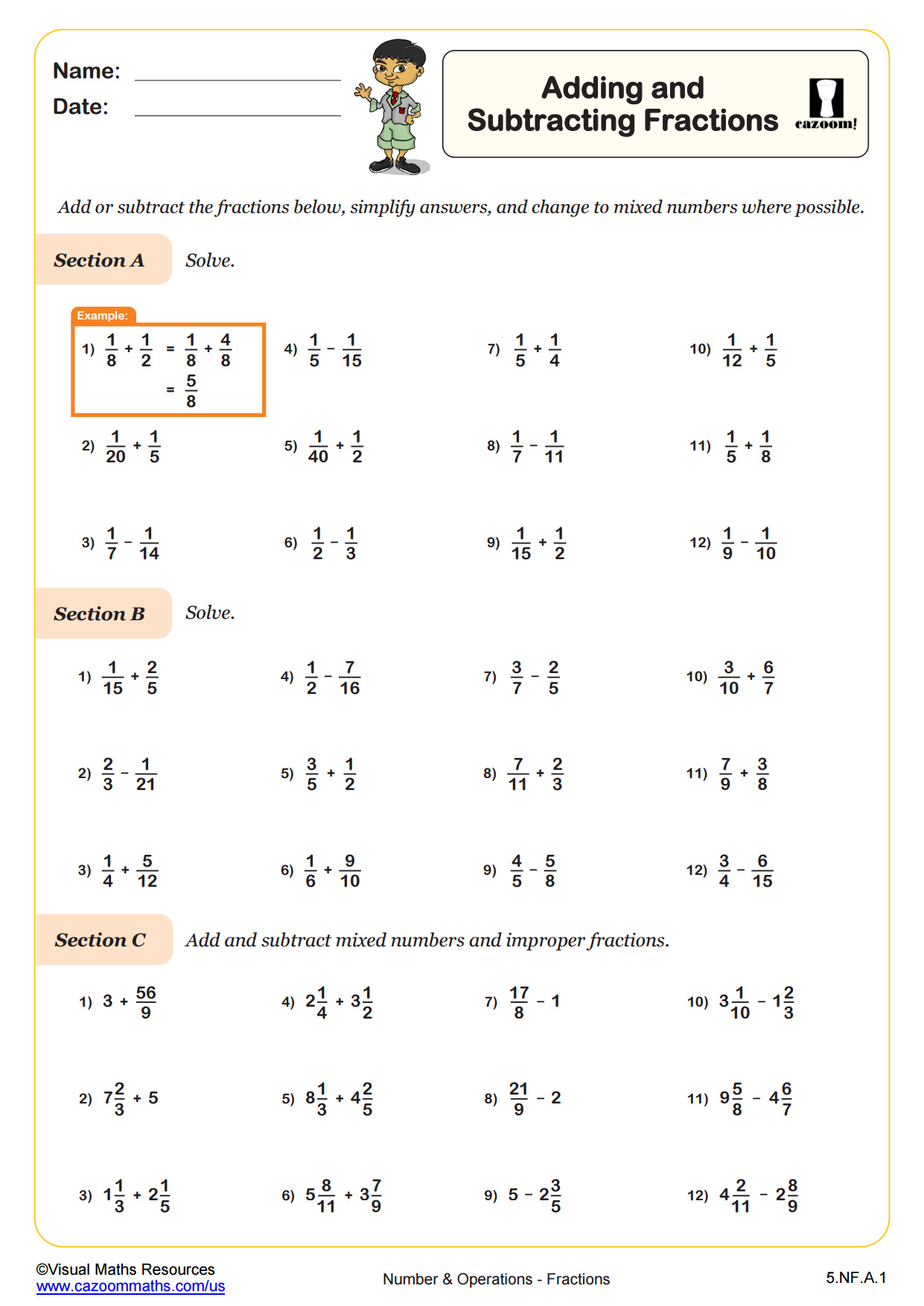
Adding and Subtracting Fractions with Unlike Denominators (B)
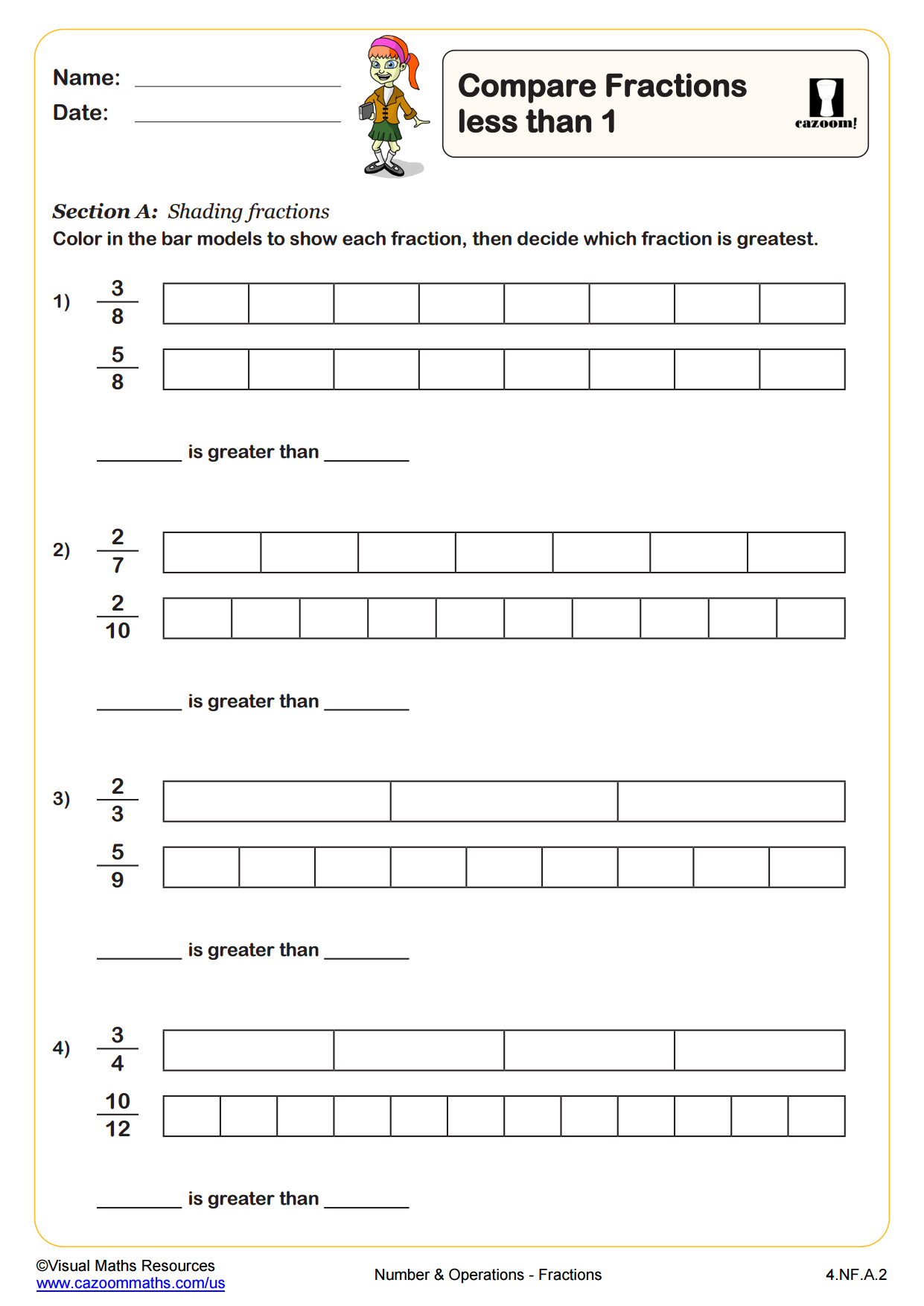
Adding Fractions and Mixed Numbers with the Same Denominator
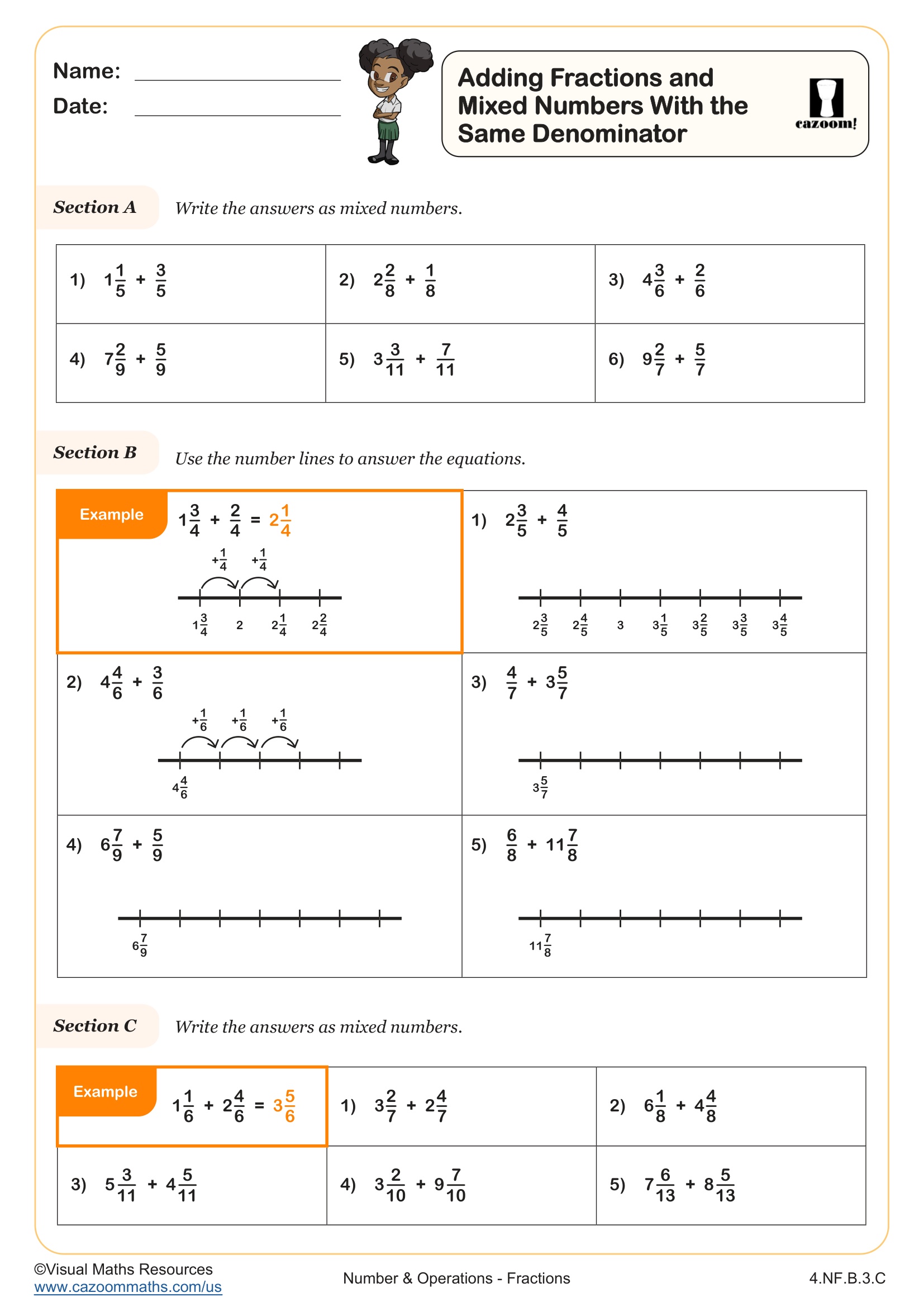
Compare and Order Fractions
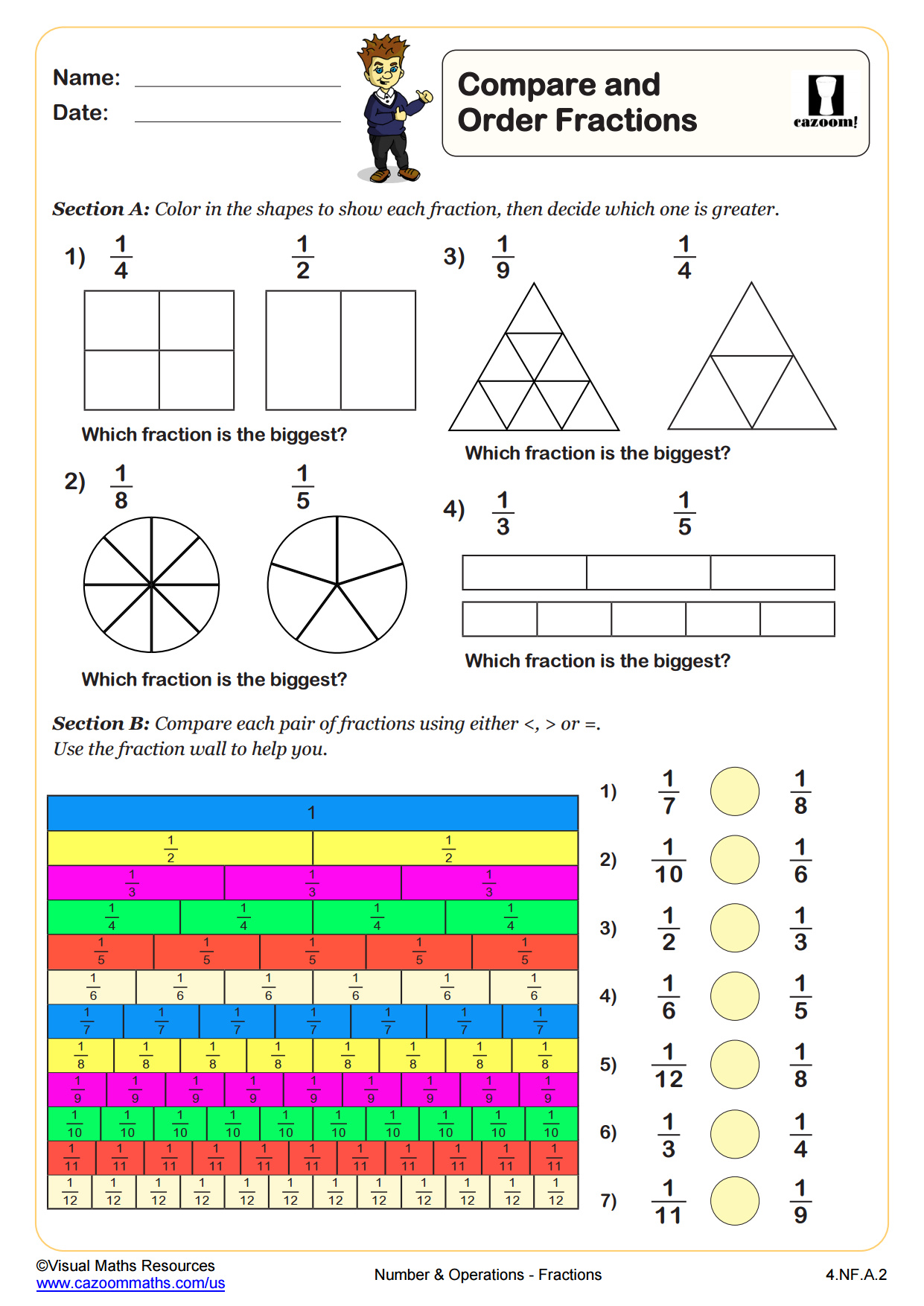
Compare and Order Fractions with the Same Denominator
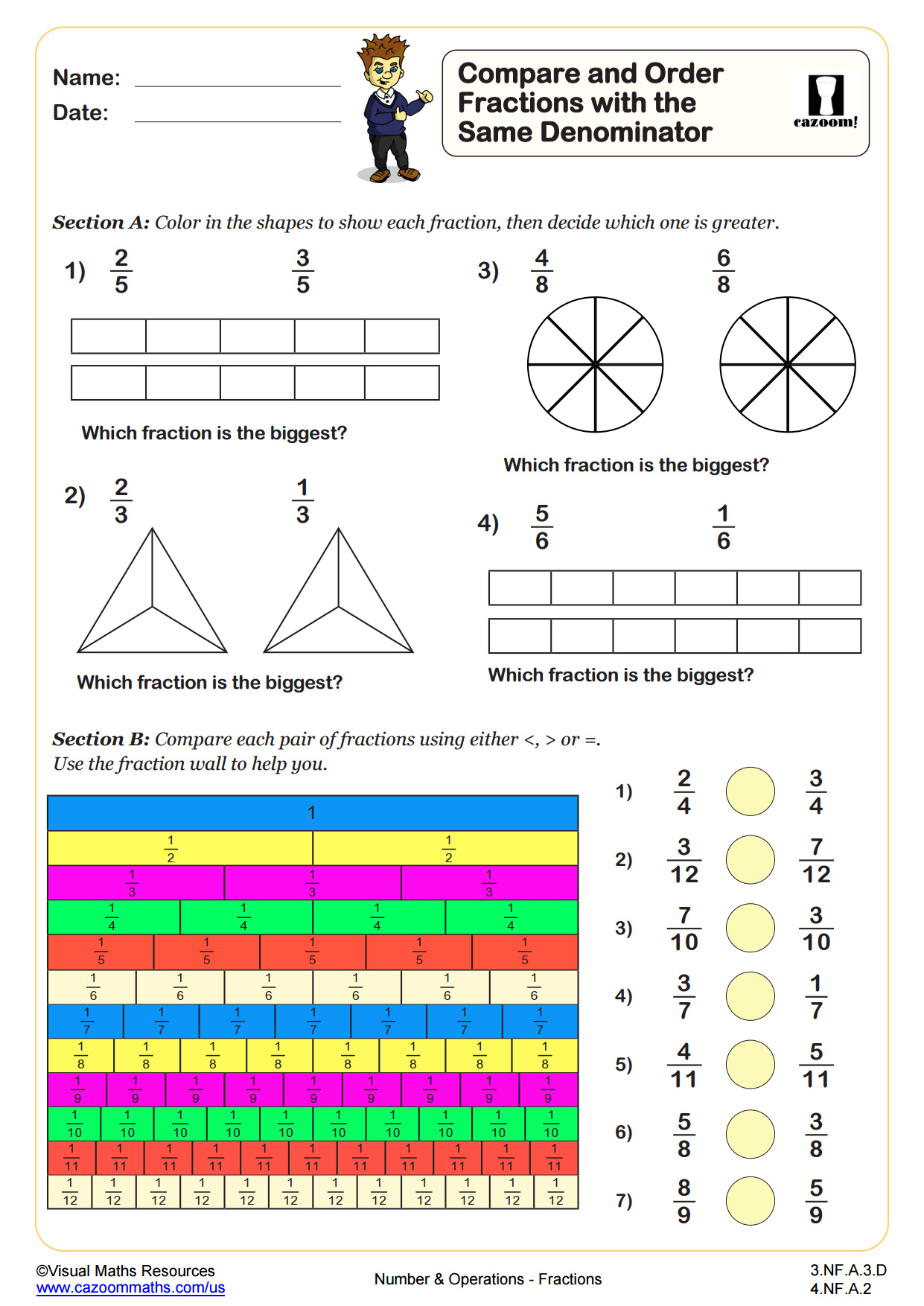
Compare Fractions Less Than 1
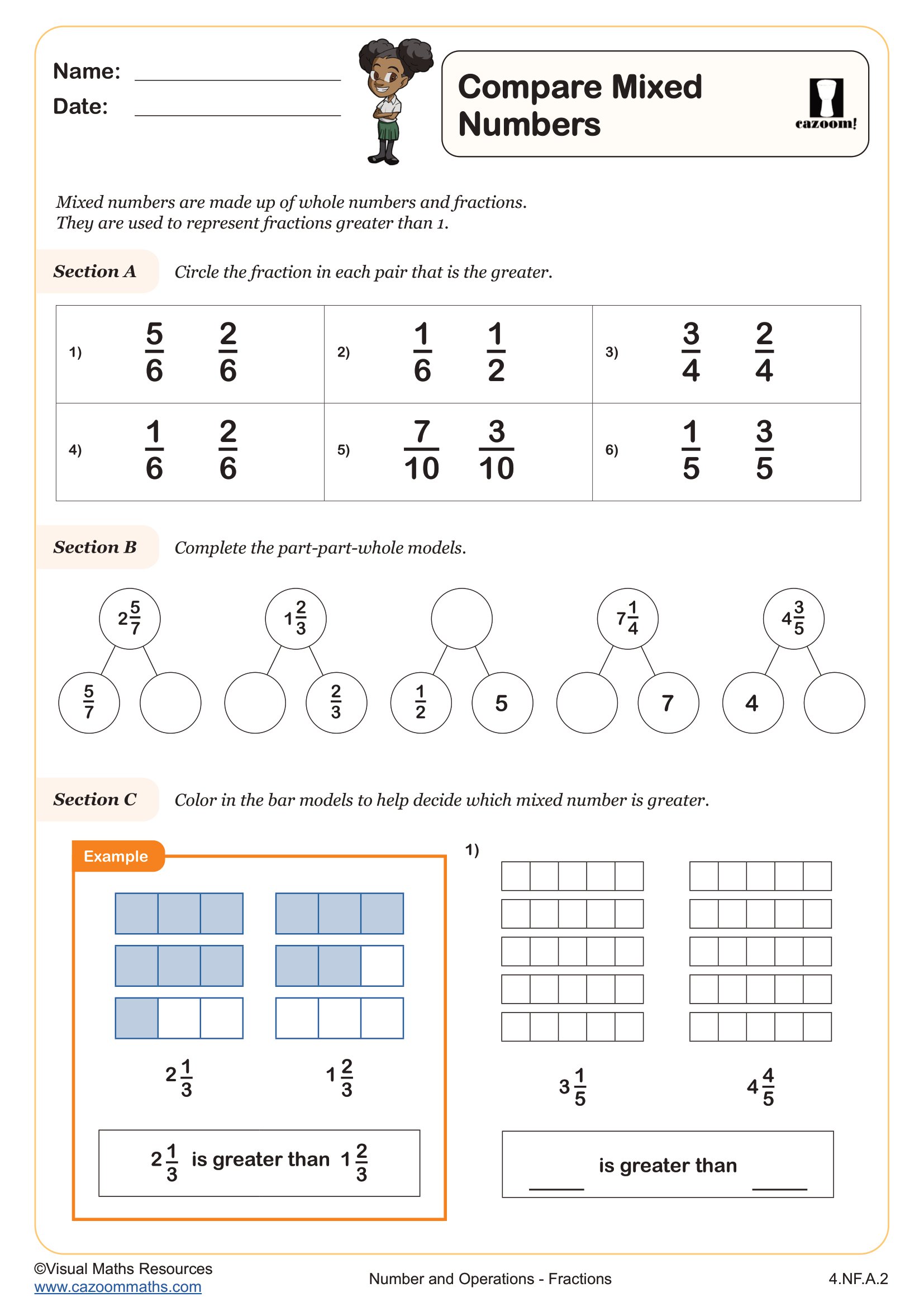
Compare Mixed numbers
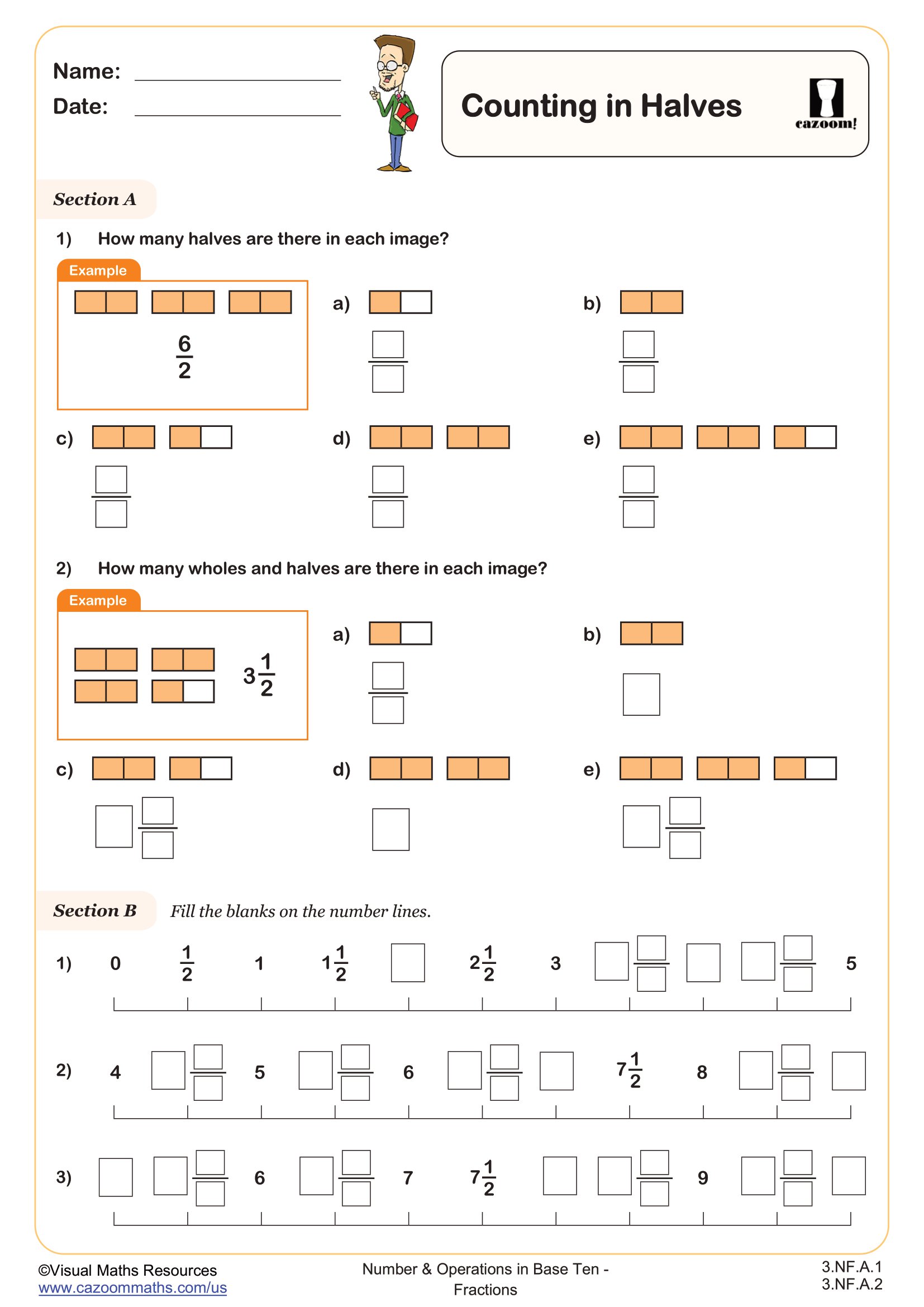
Counting in Halves
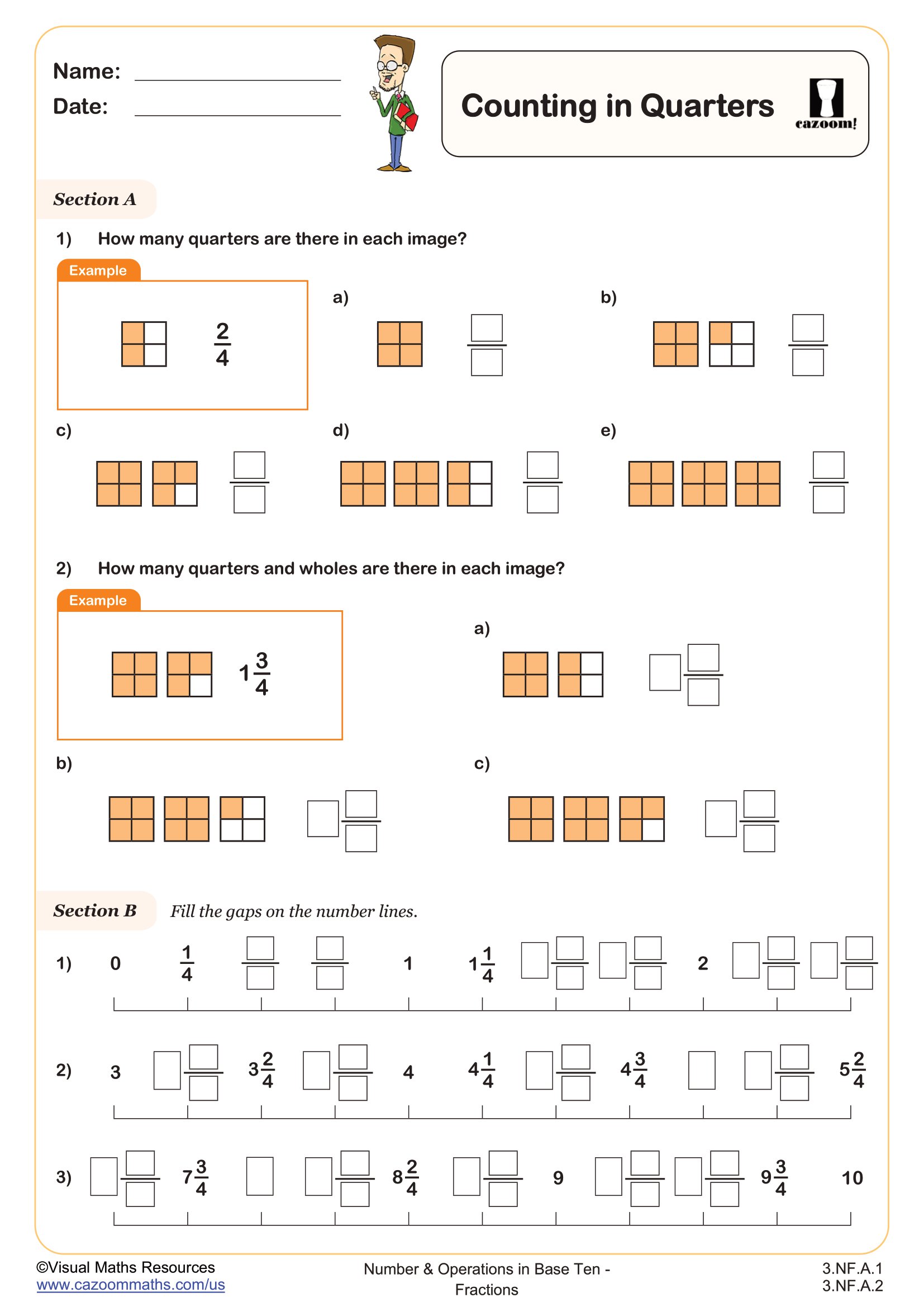
Counting in Quarters
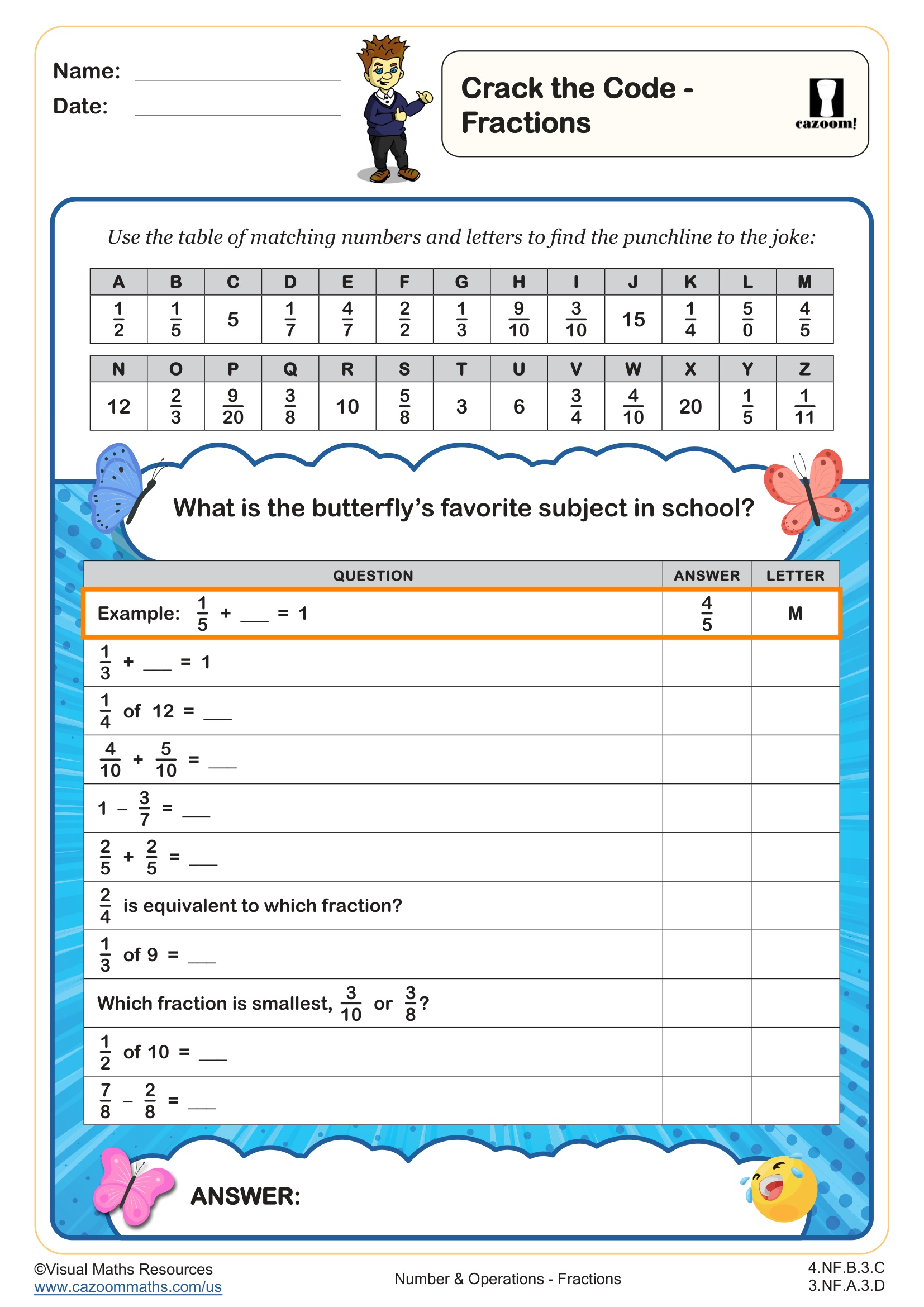
Crack the Code - Fractions
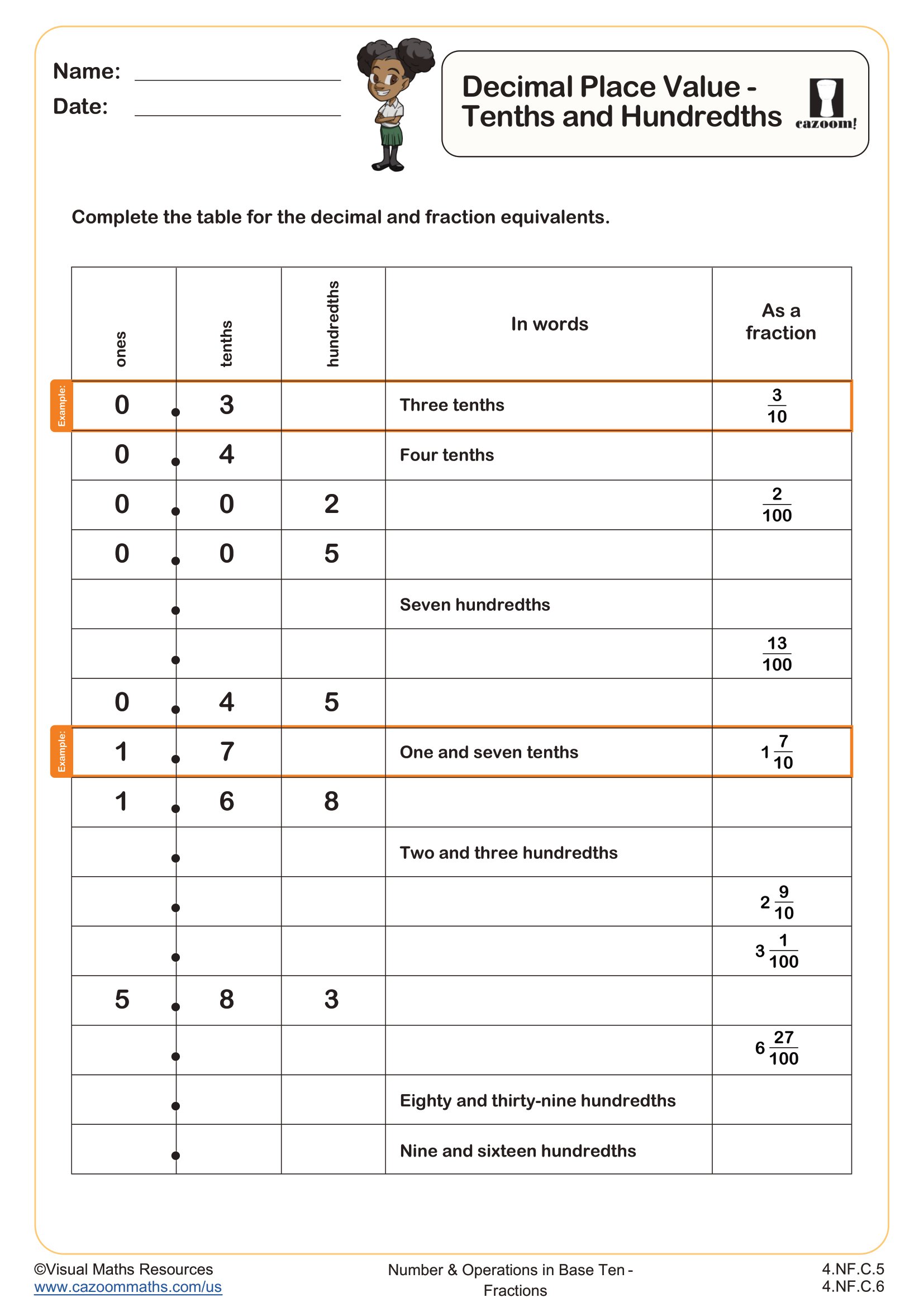
Decimal Place Value - Tenths and Hundredths
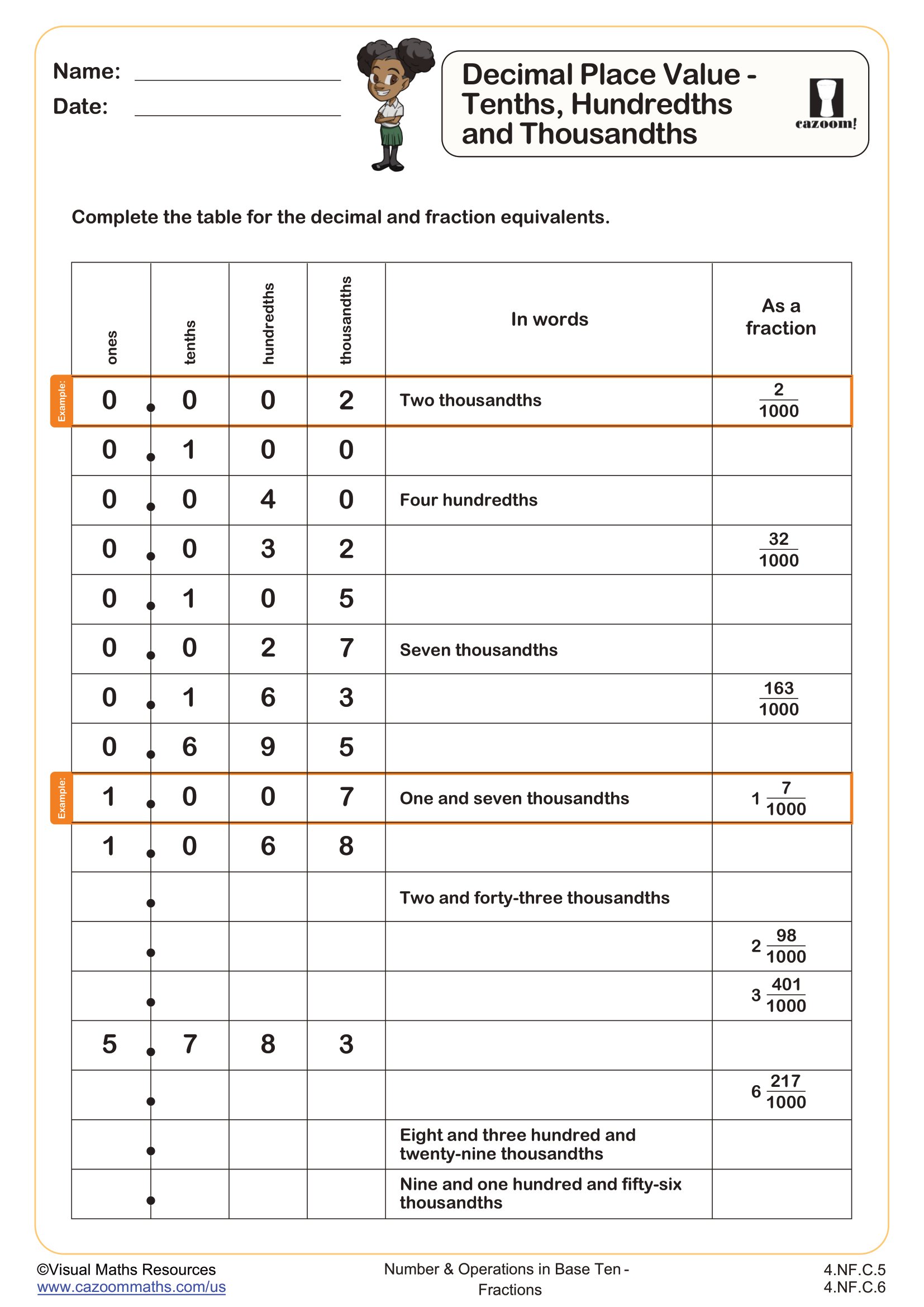
Decimal Place Value - Tenths, Hundredths and Thousandths
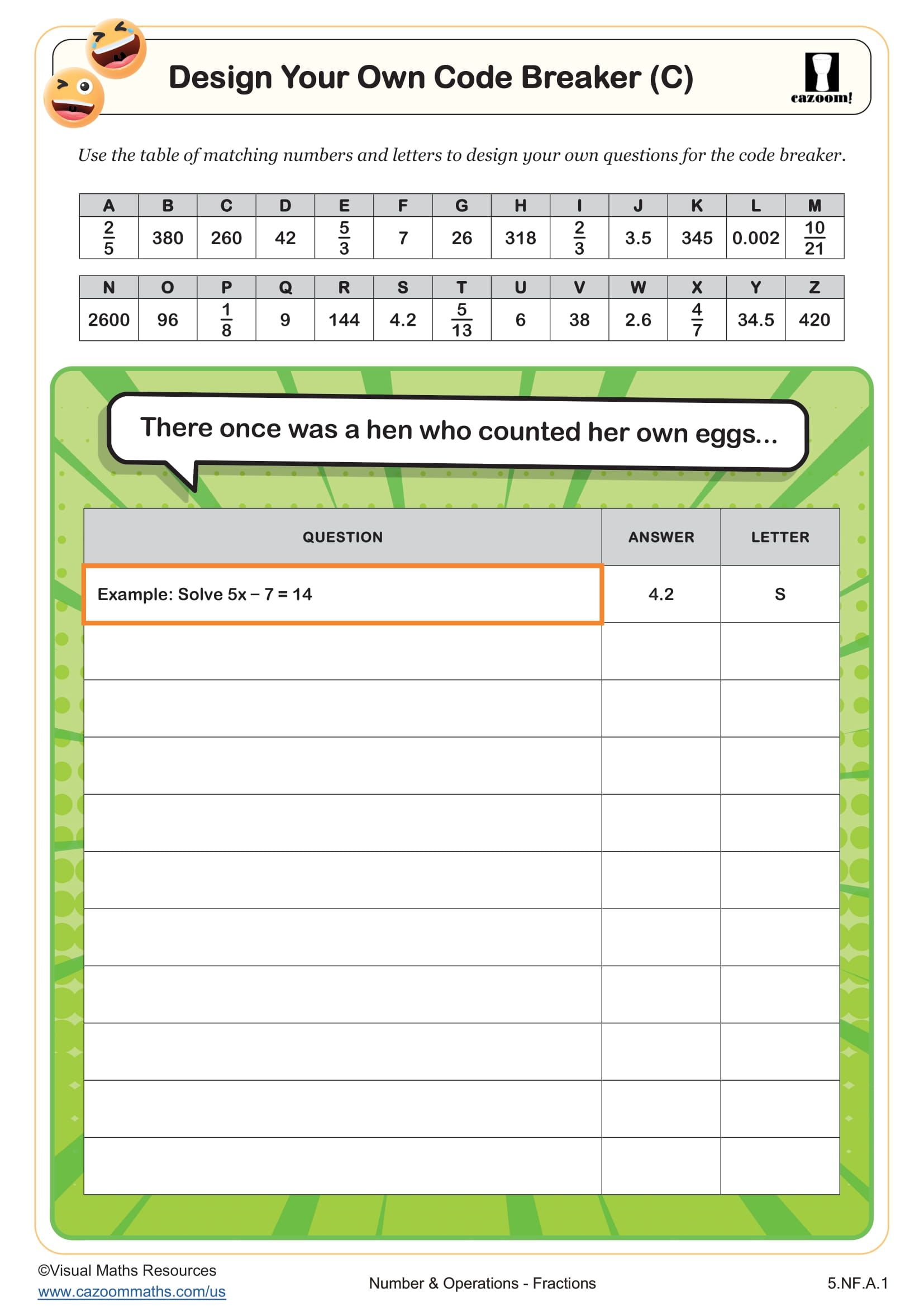
Design Your Own Code Breaker (C)
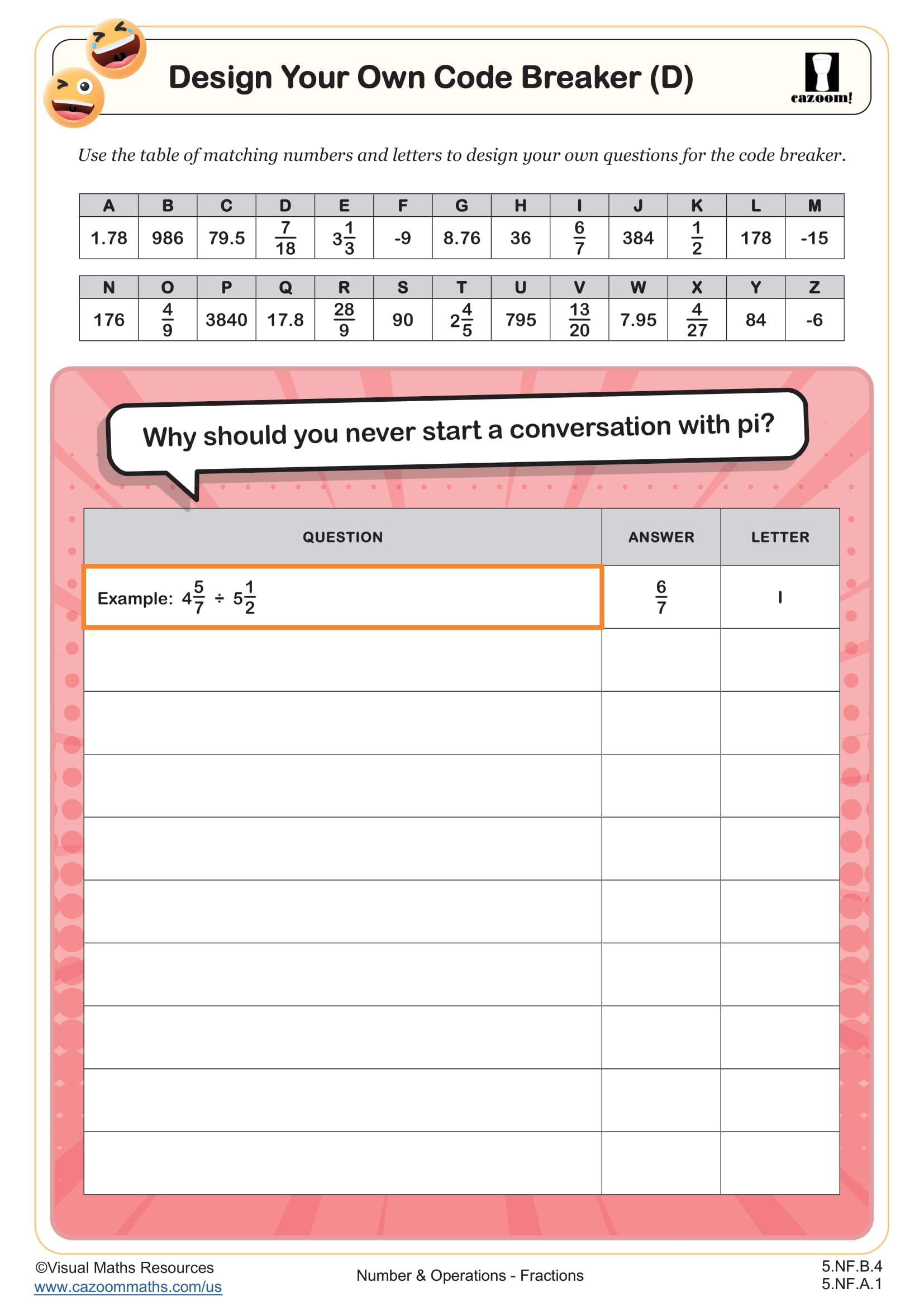
Design Your Own Code Breaker (D)
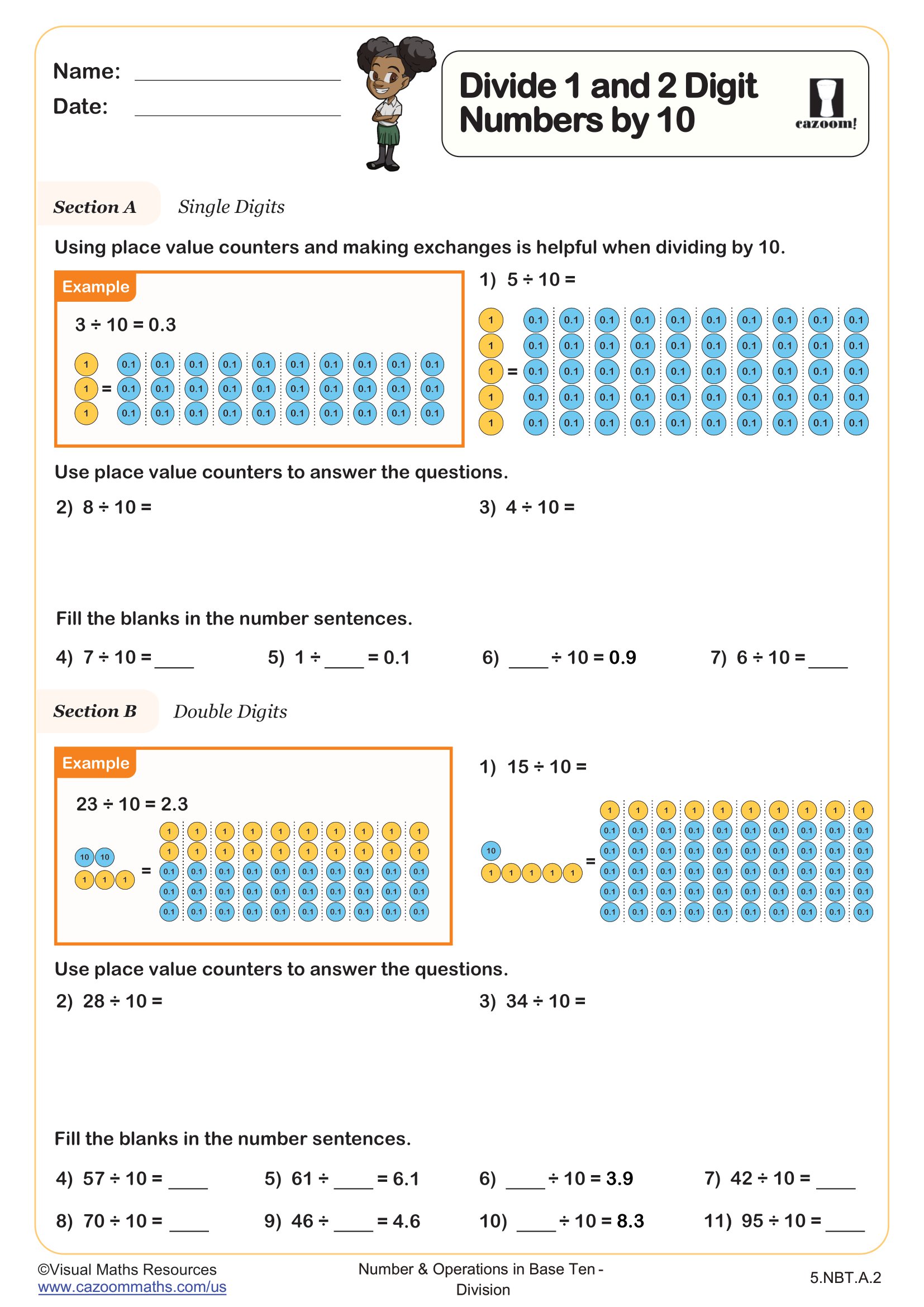
Divide 1 and 2 Digit Numbers by 10
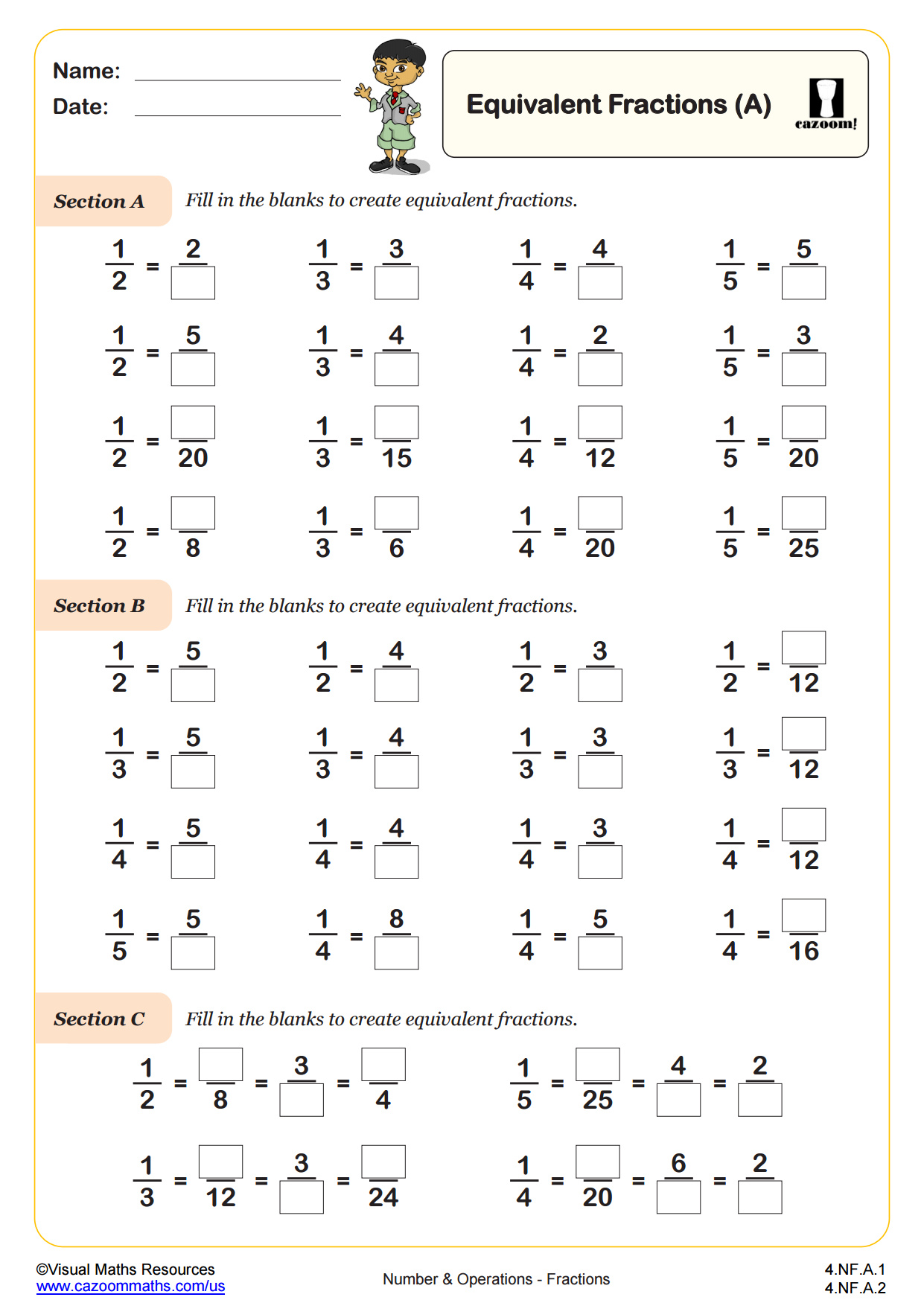
Equivalent Fractions (A)
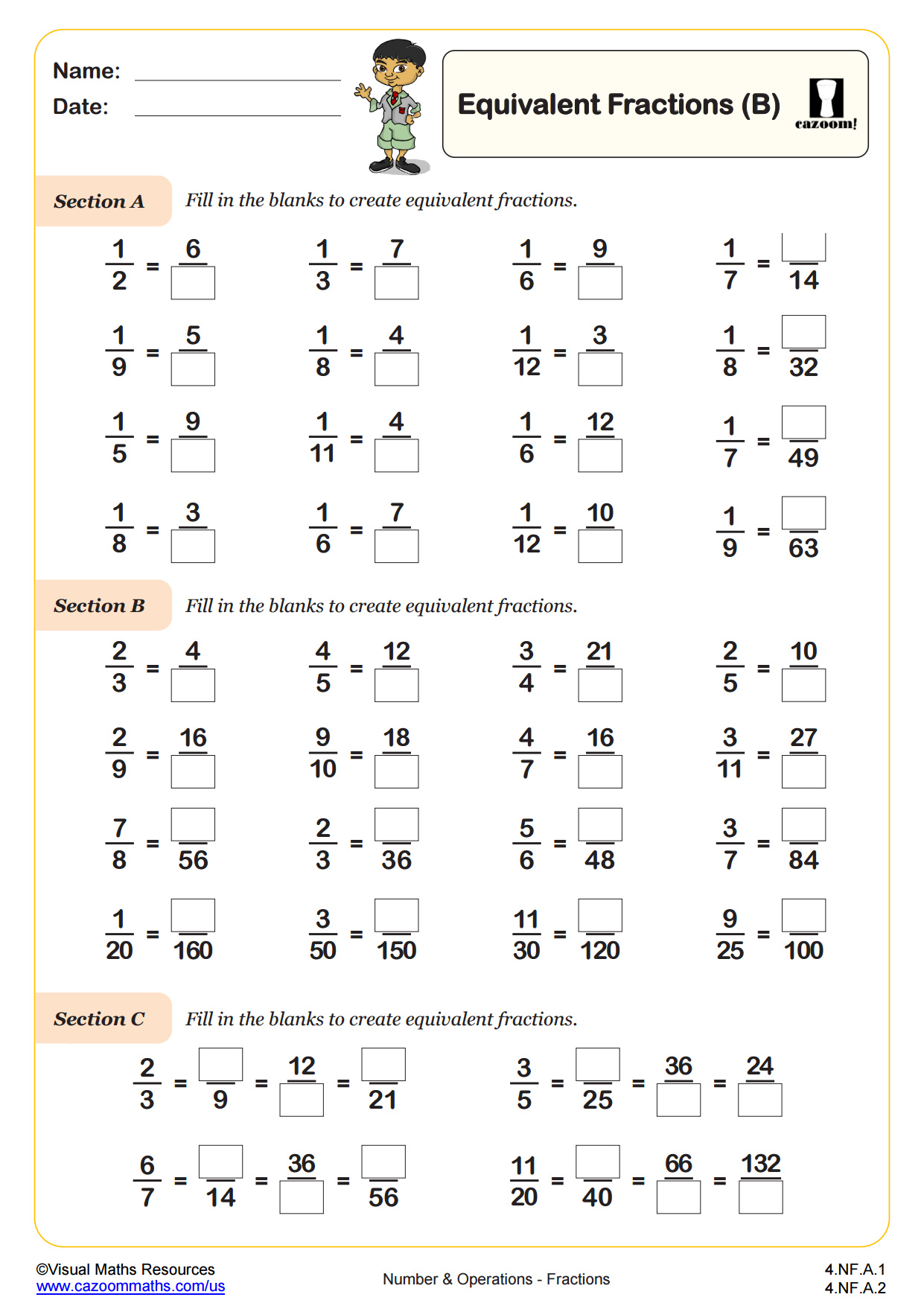
Equivalent Fractions (B)
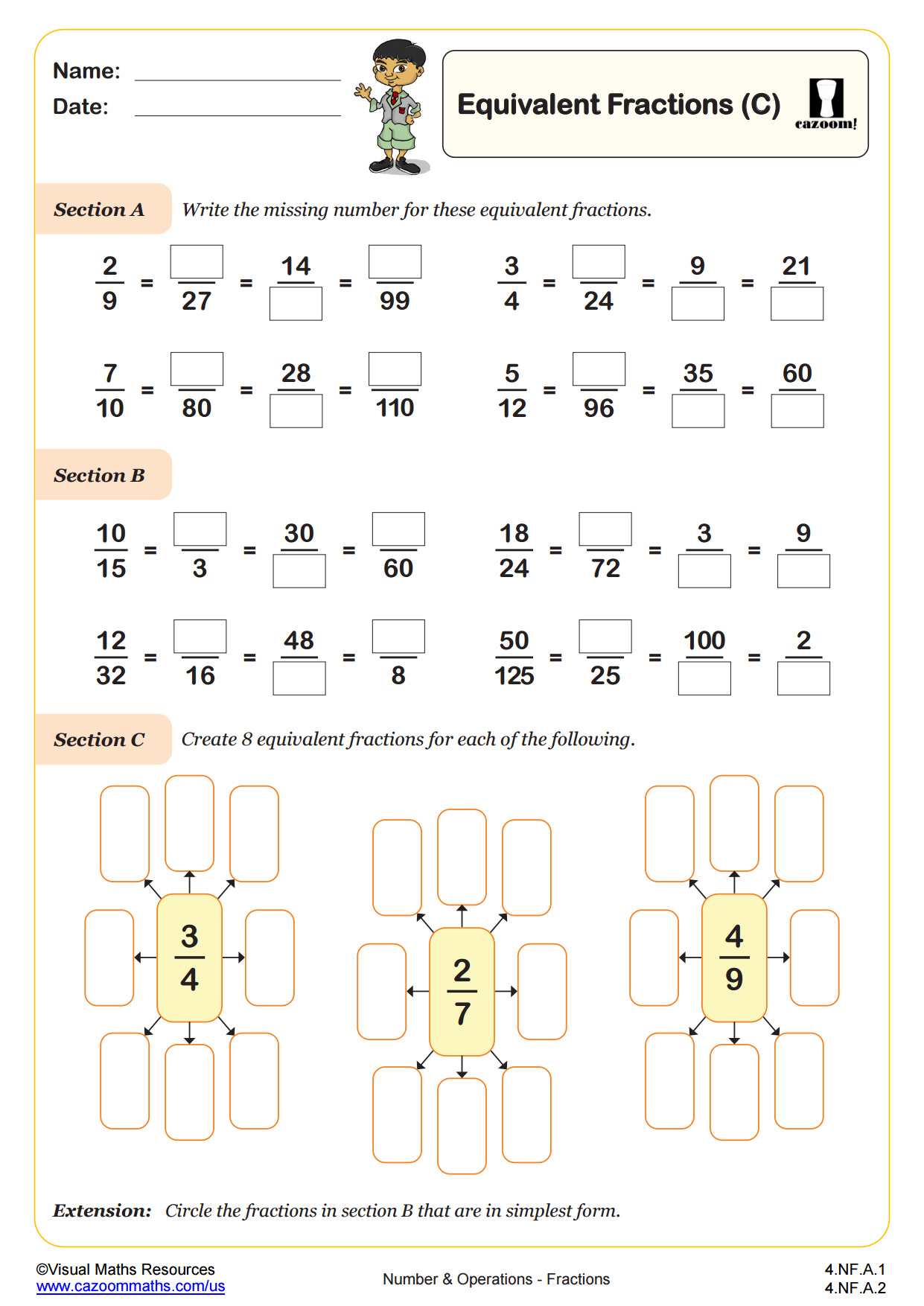
Equivalent Fractions (C)
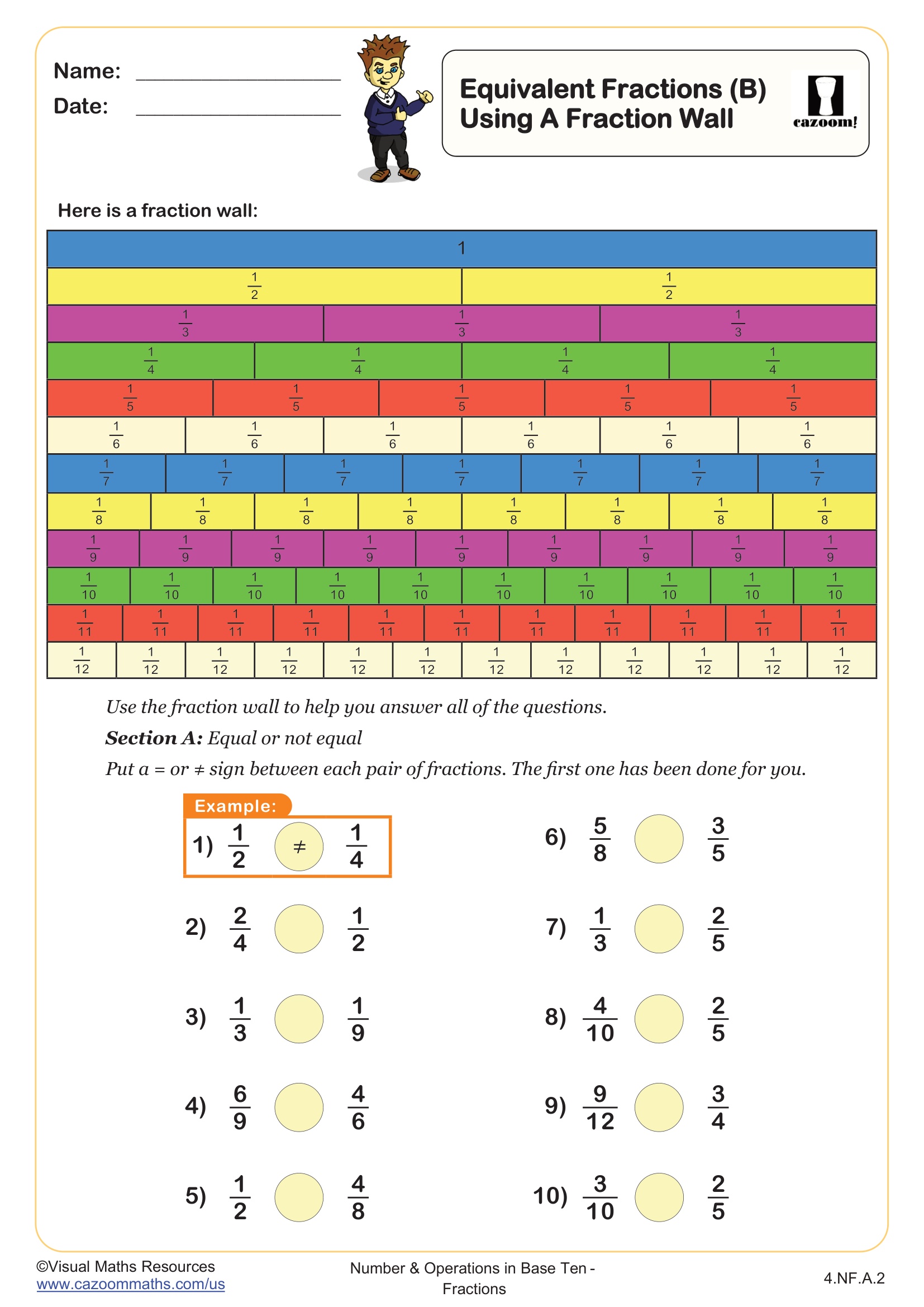
Equivalent Fractions Using a Fraction Wall (B)
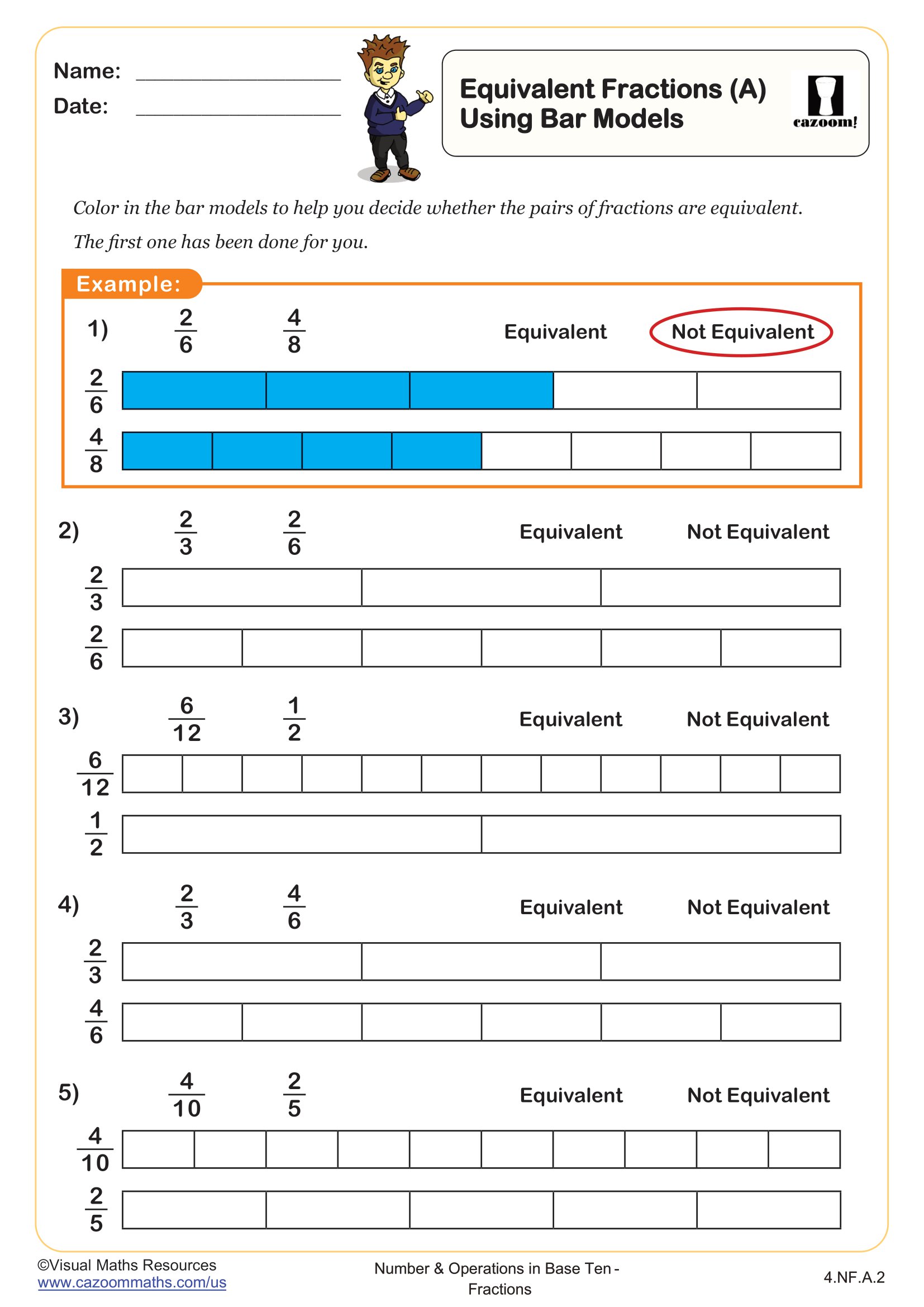
Equivalent Fractions Using Bar Models (A)
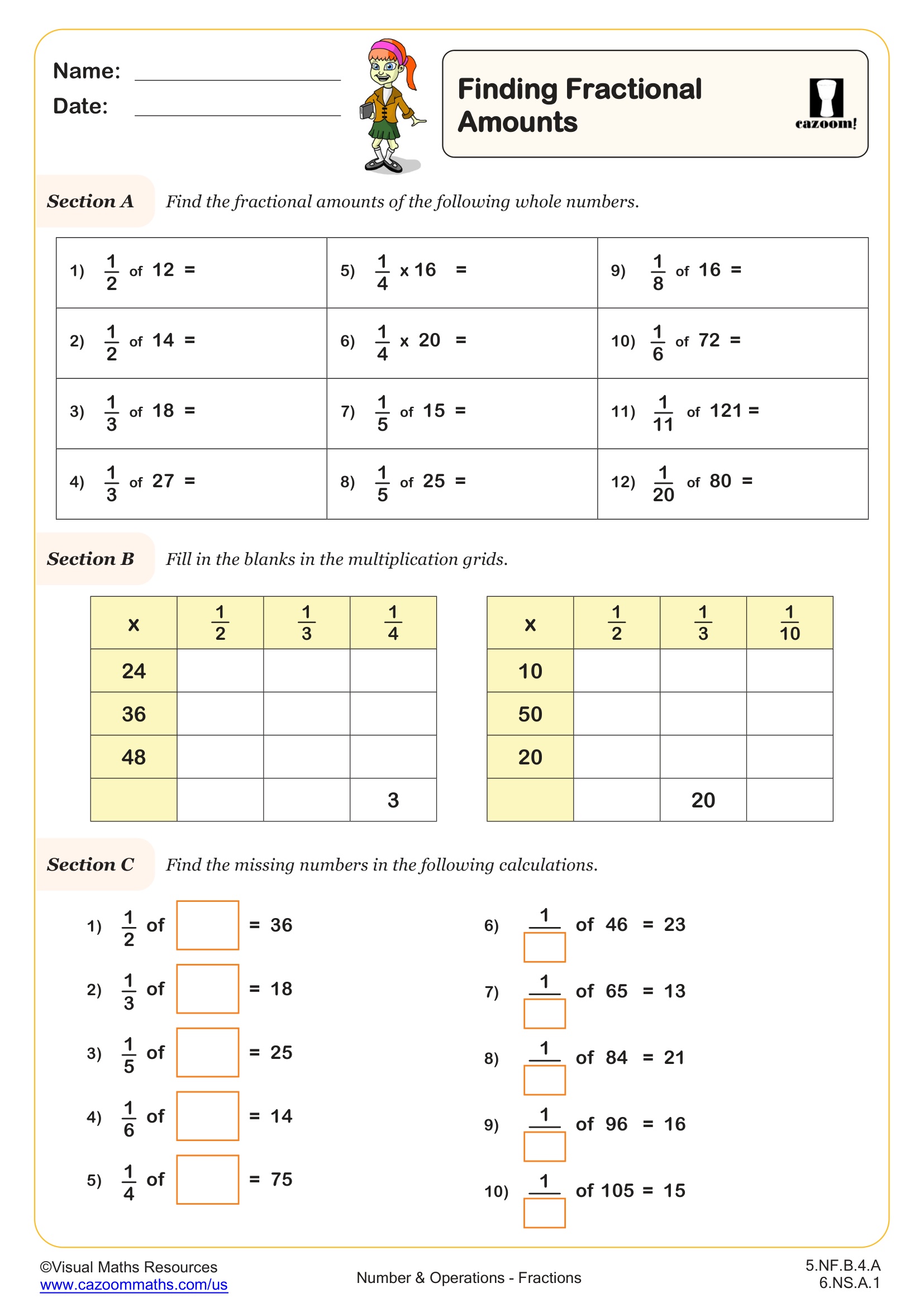
Finding Fractional Amounts
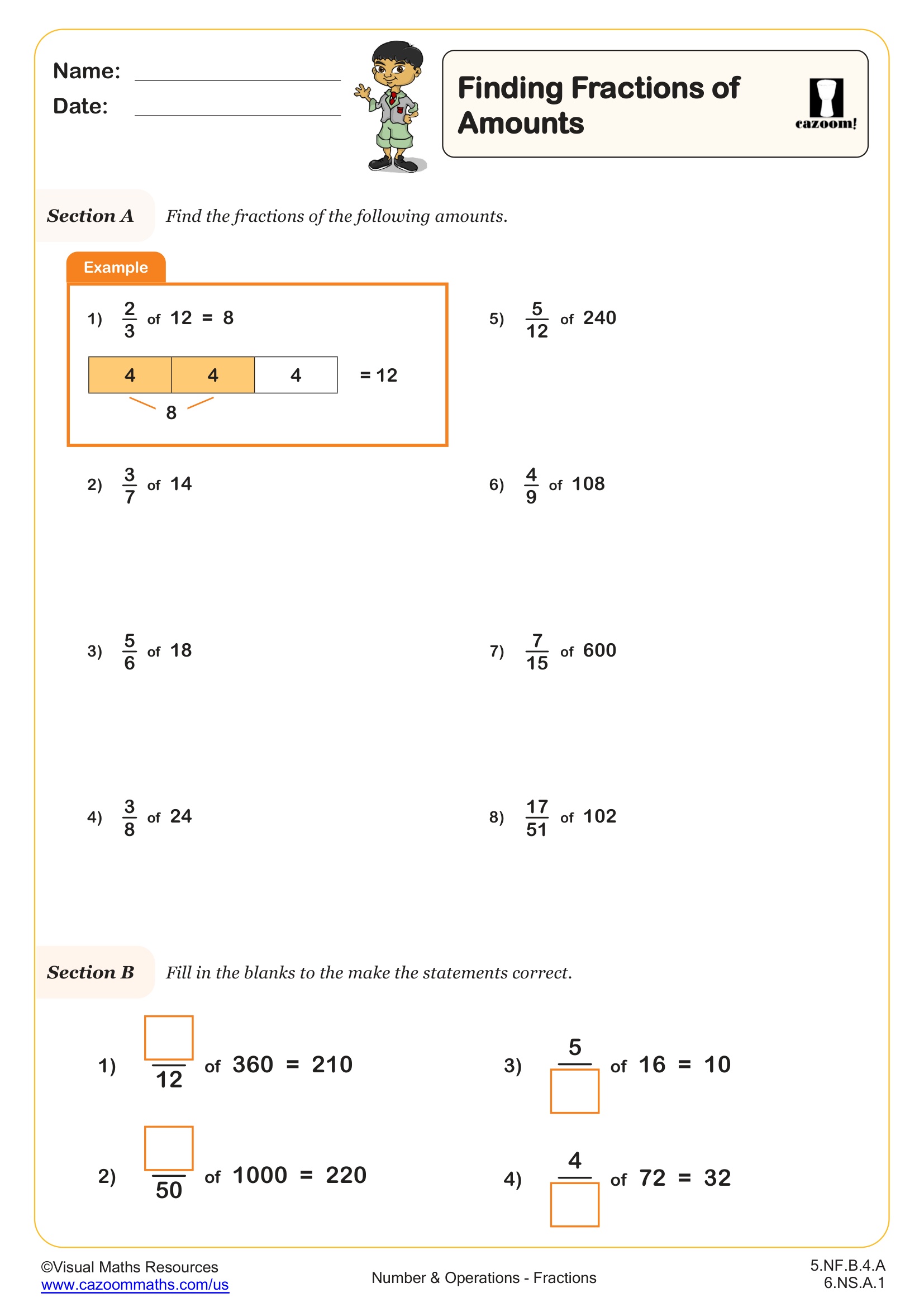
Finding Fractions of Amounts
Finding the Reciprocal
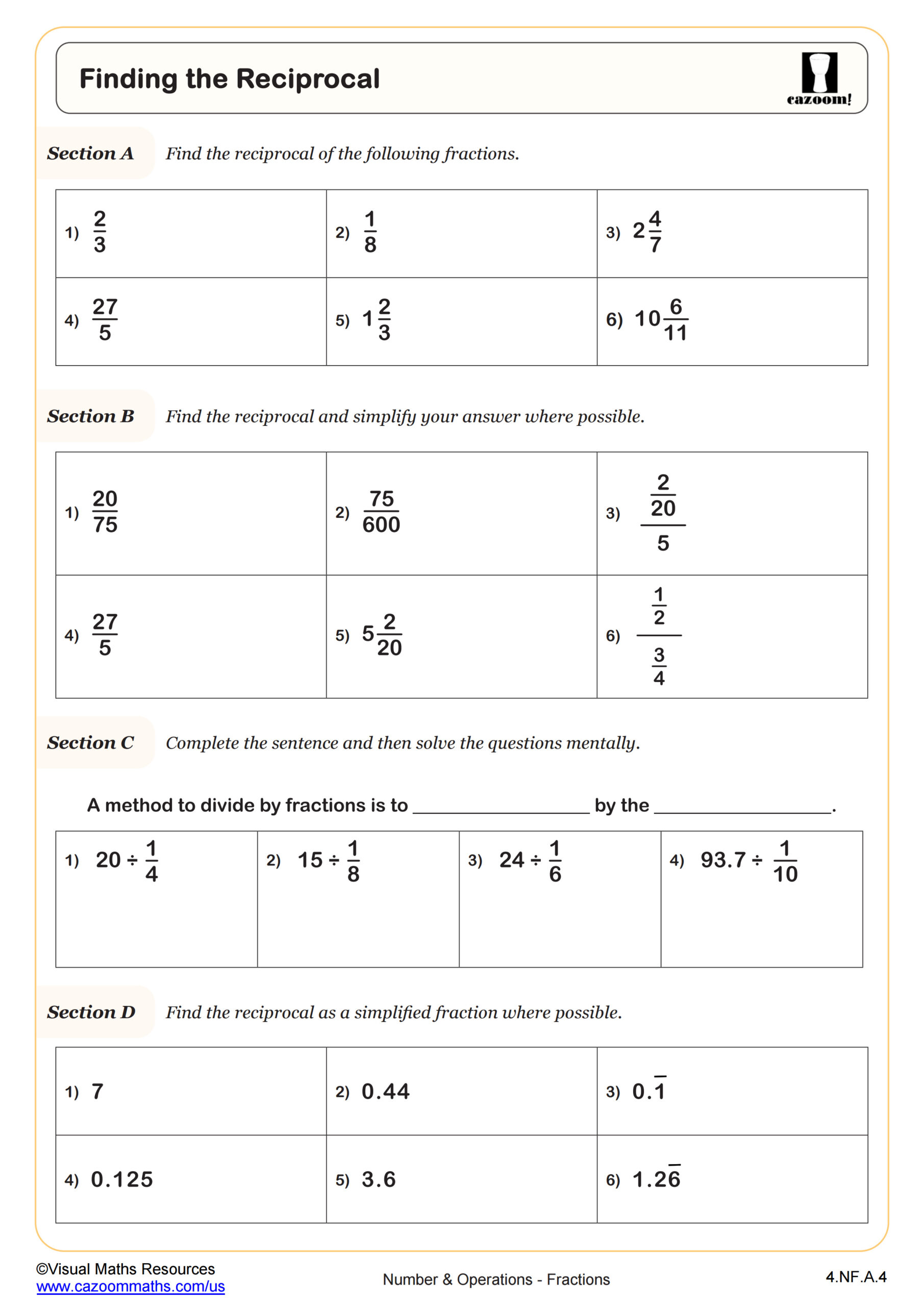
Finding the Whole (A)
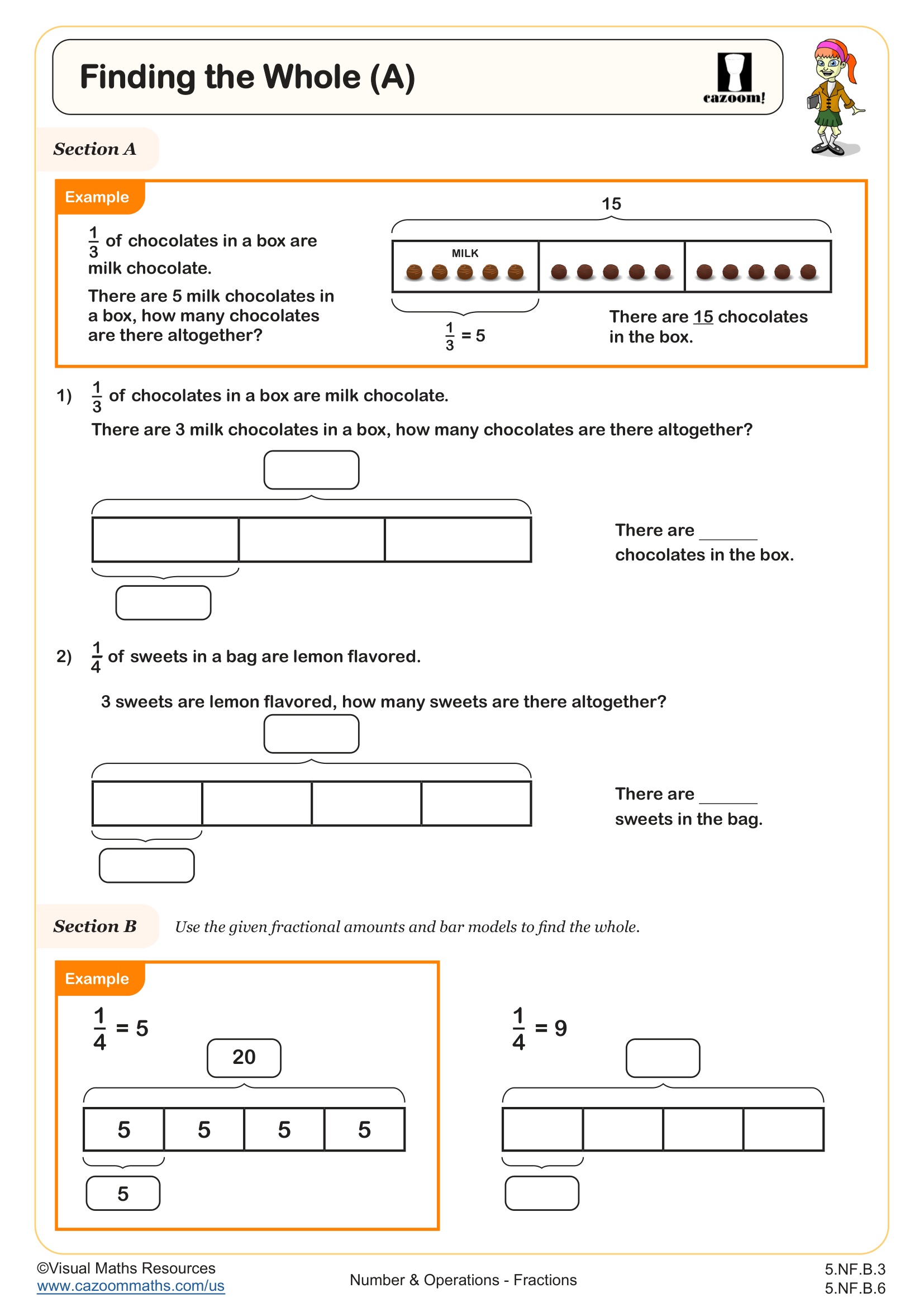
Finding the Whole (B)
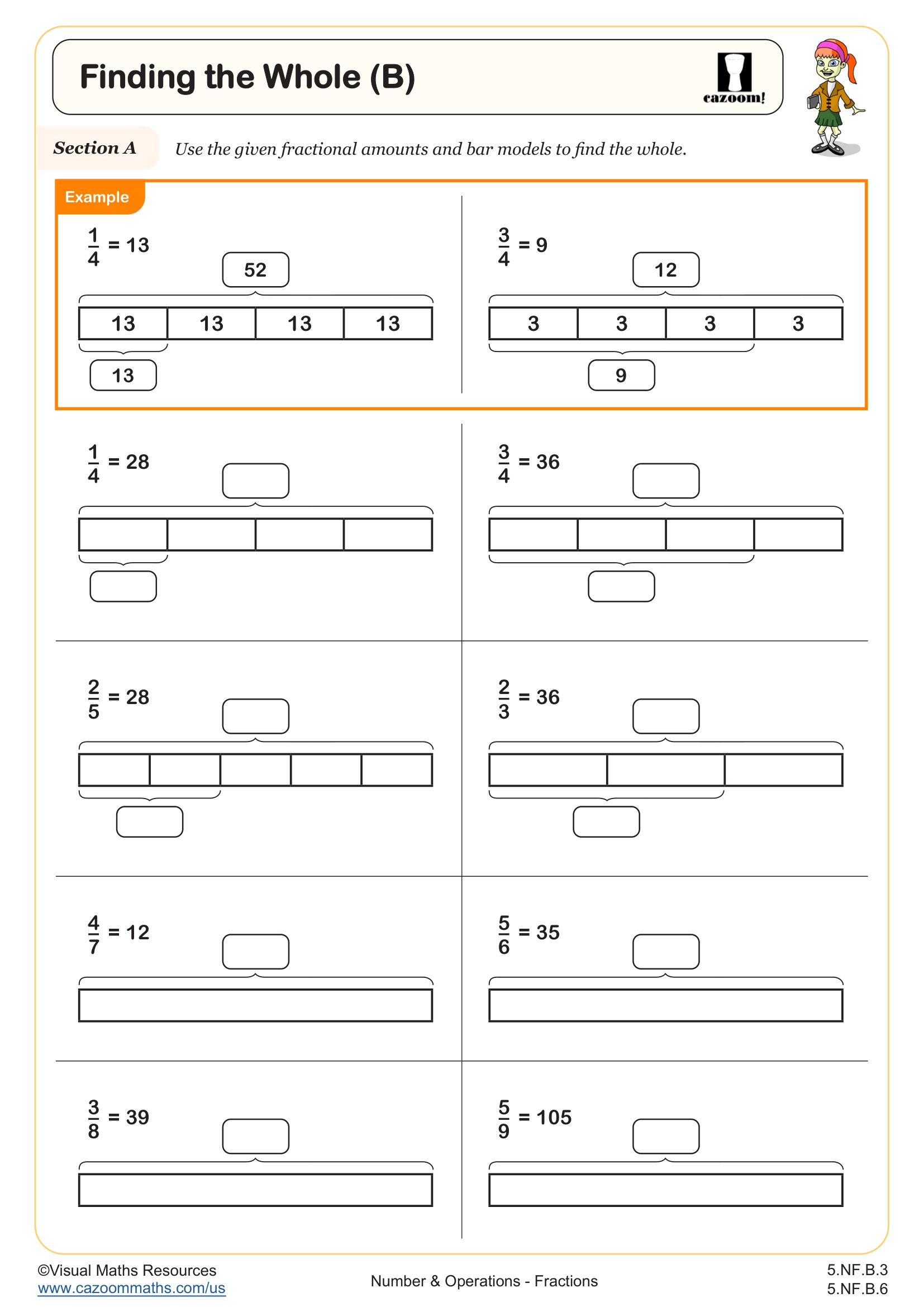
FInding Unit Fractions of Amounts
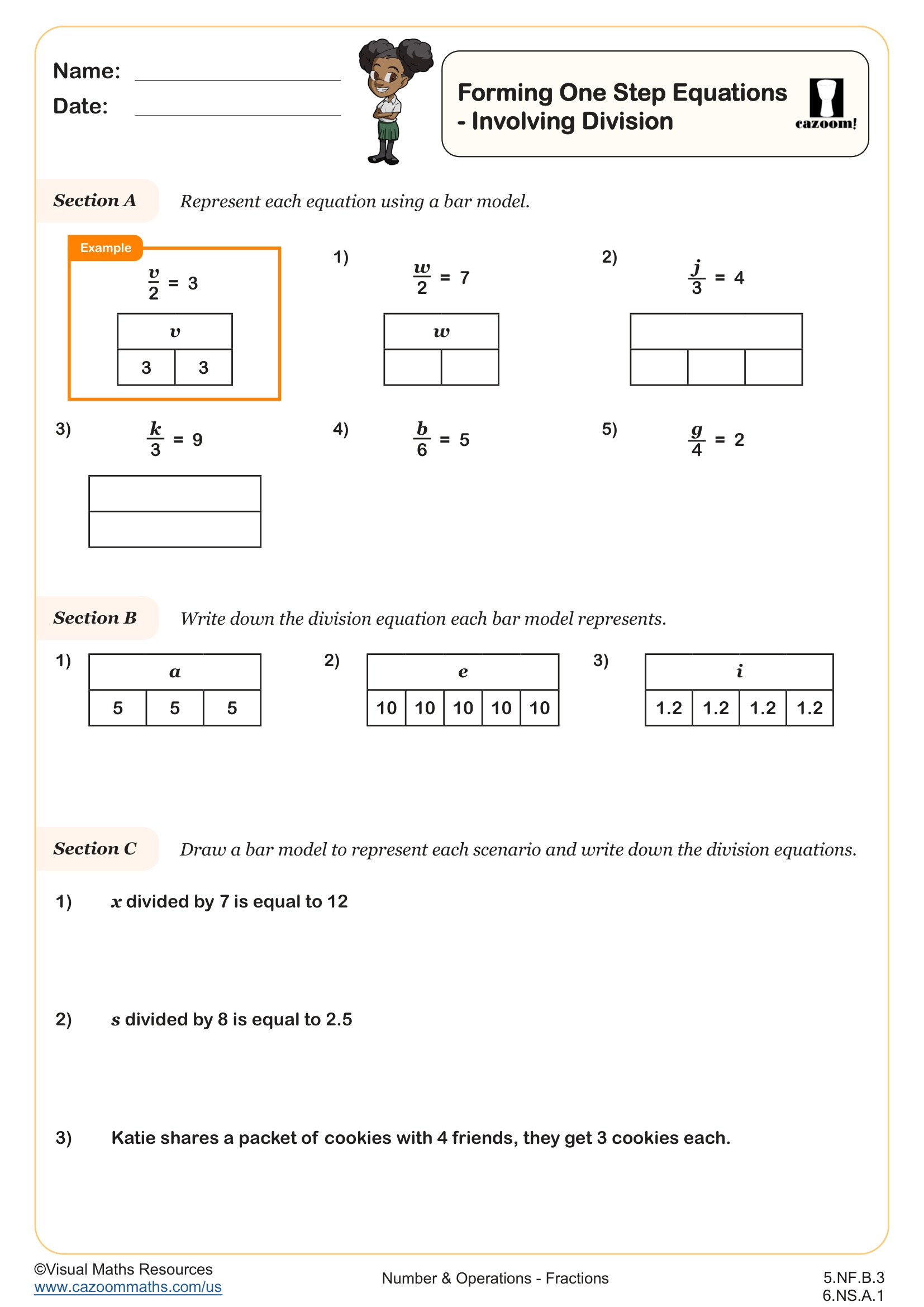
Forming One Step Equations Involving Division
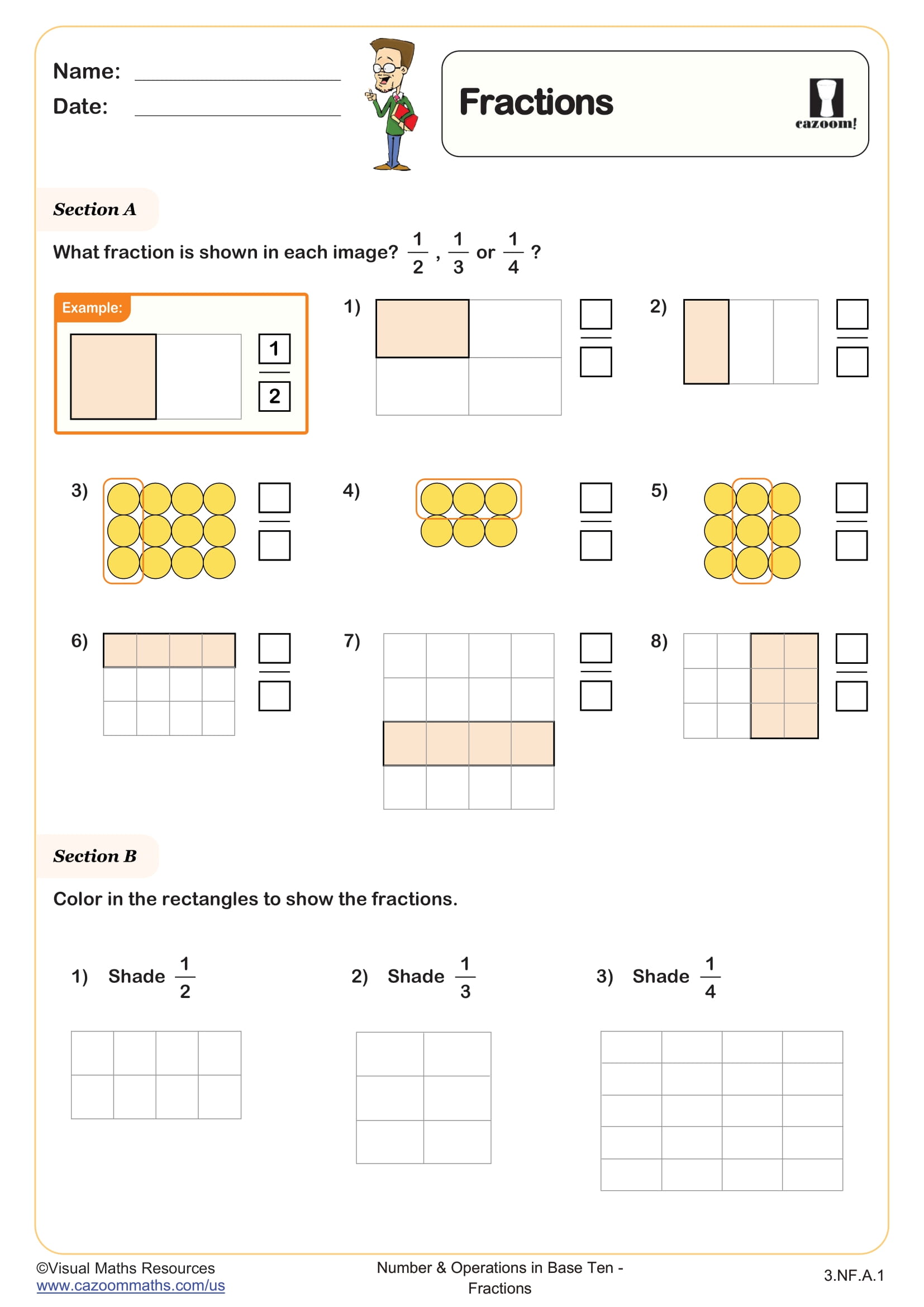
Fractions
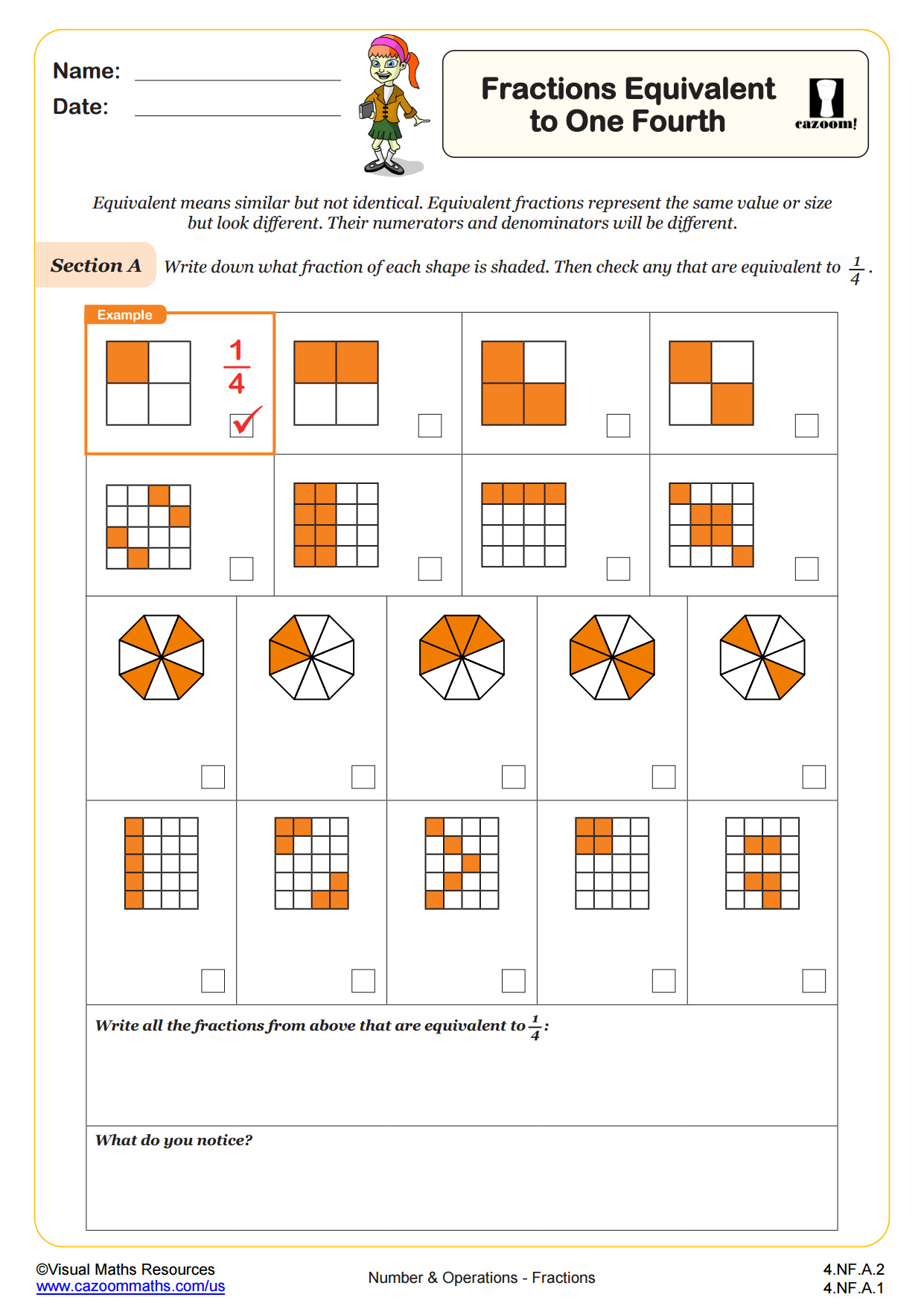
Fractions Equivalent to One Forth
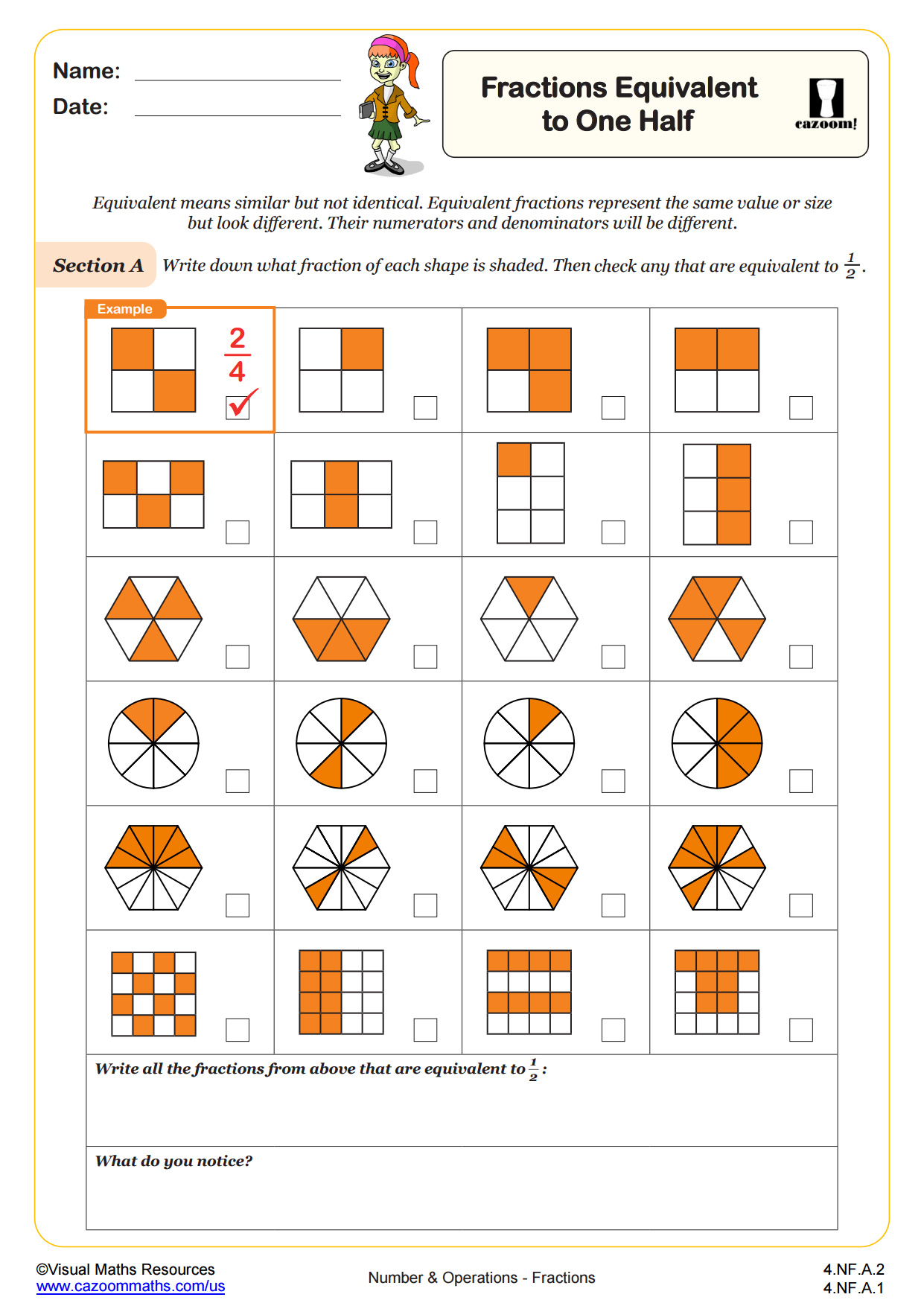
Fractions Equivalent to One Half
Fractions Equivalent to One Third
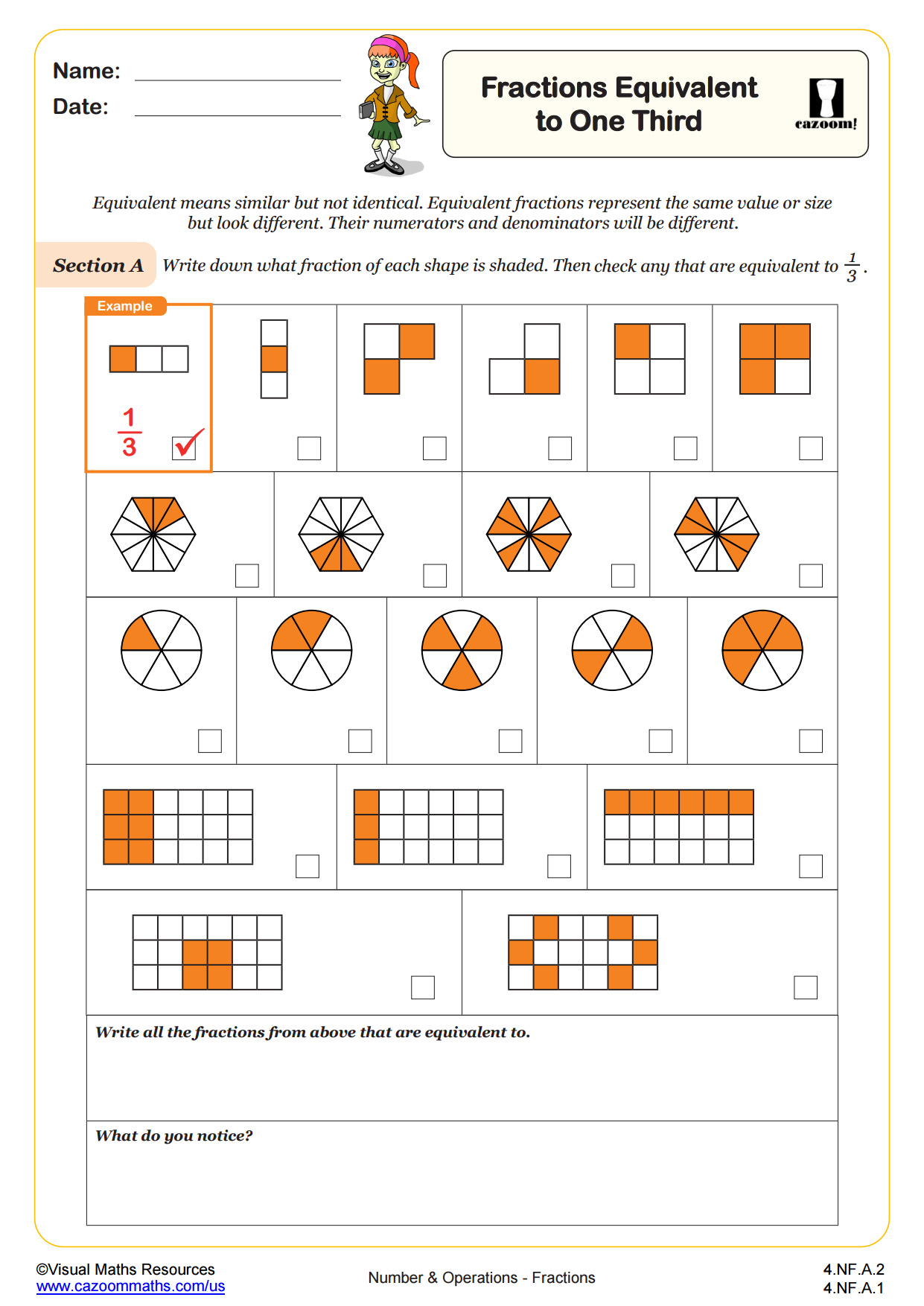
Fractions Greater Than One - Improper Fractions
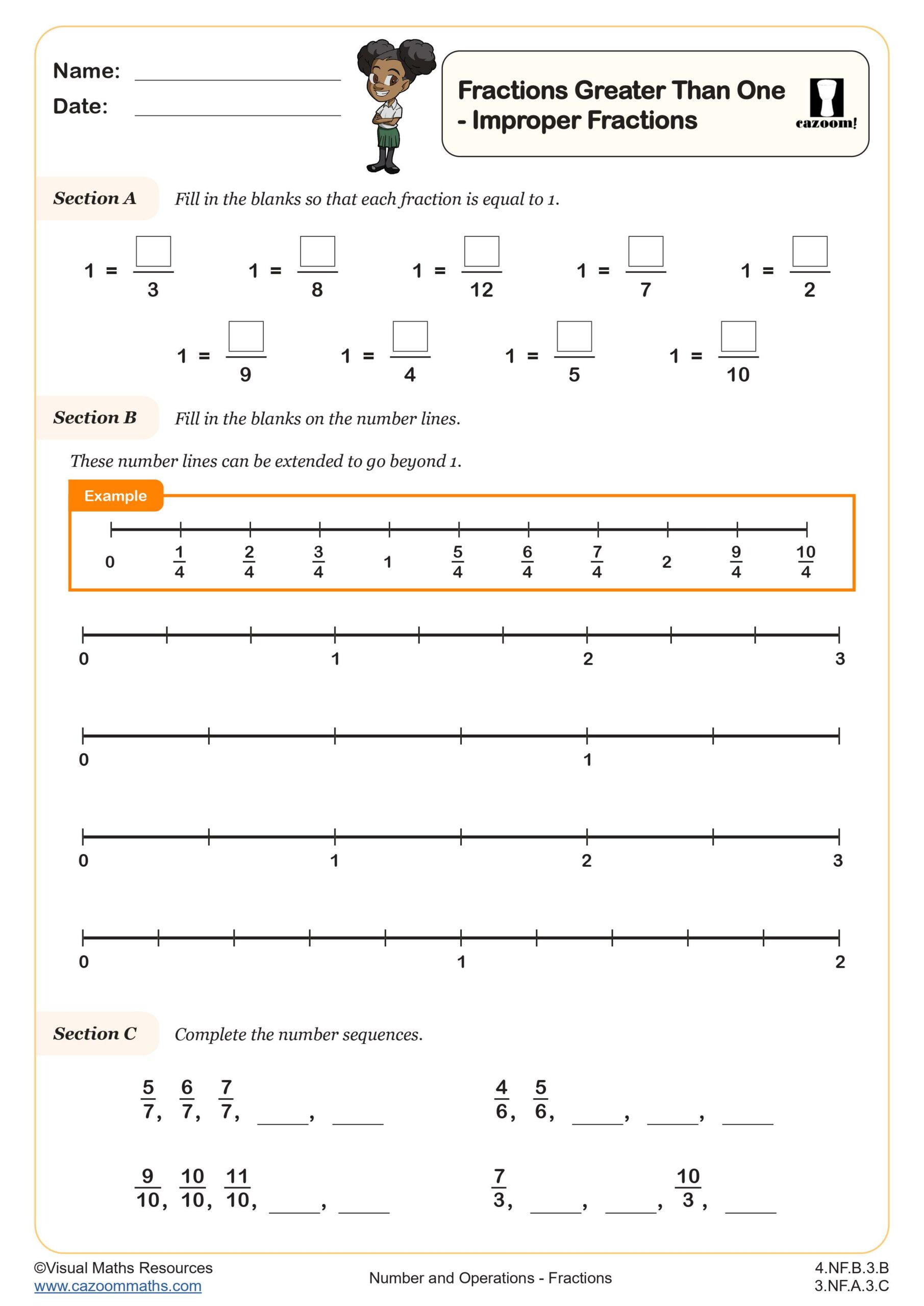
Fractions Greater Than One - Mixed Numbers
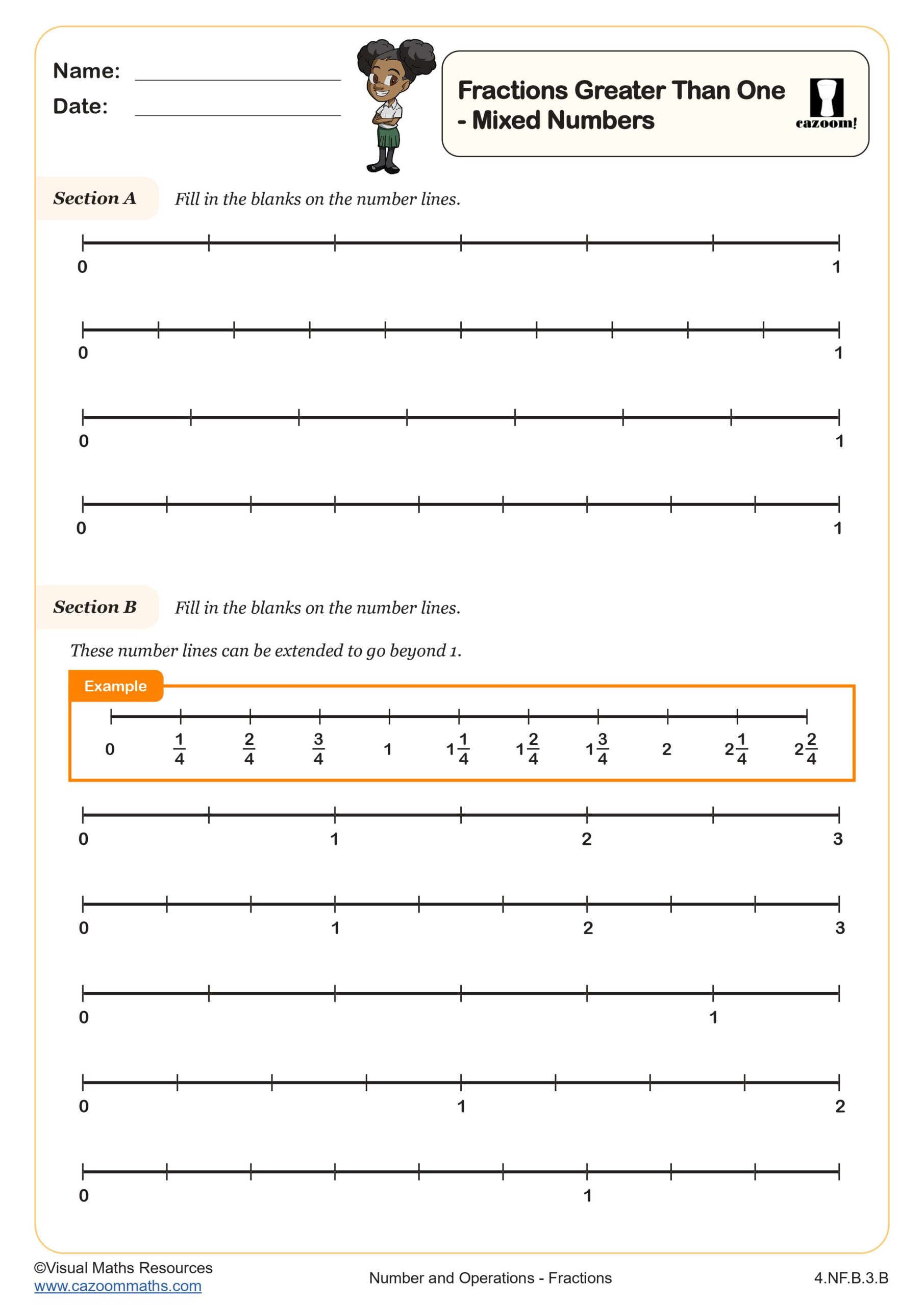
Fractions Greater Than One - Mixed Numbers and Improper Fractions
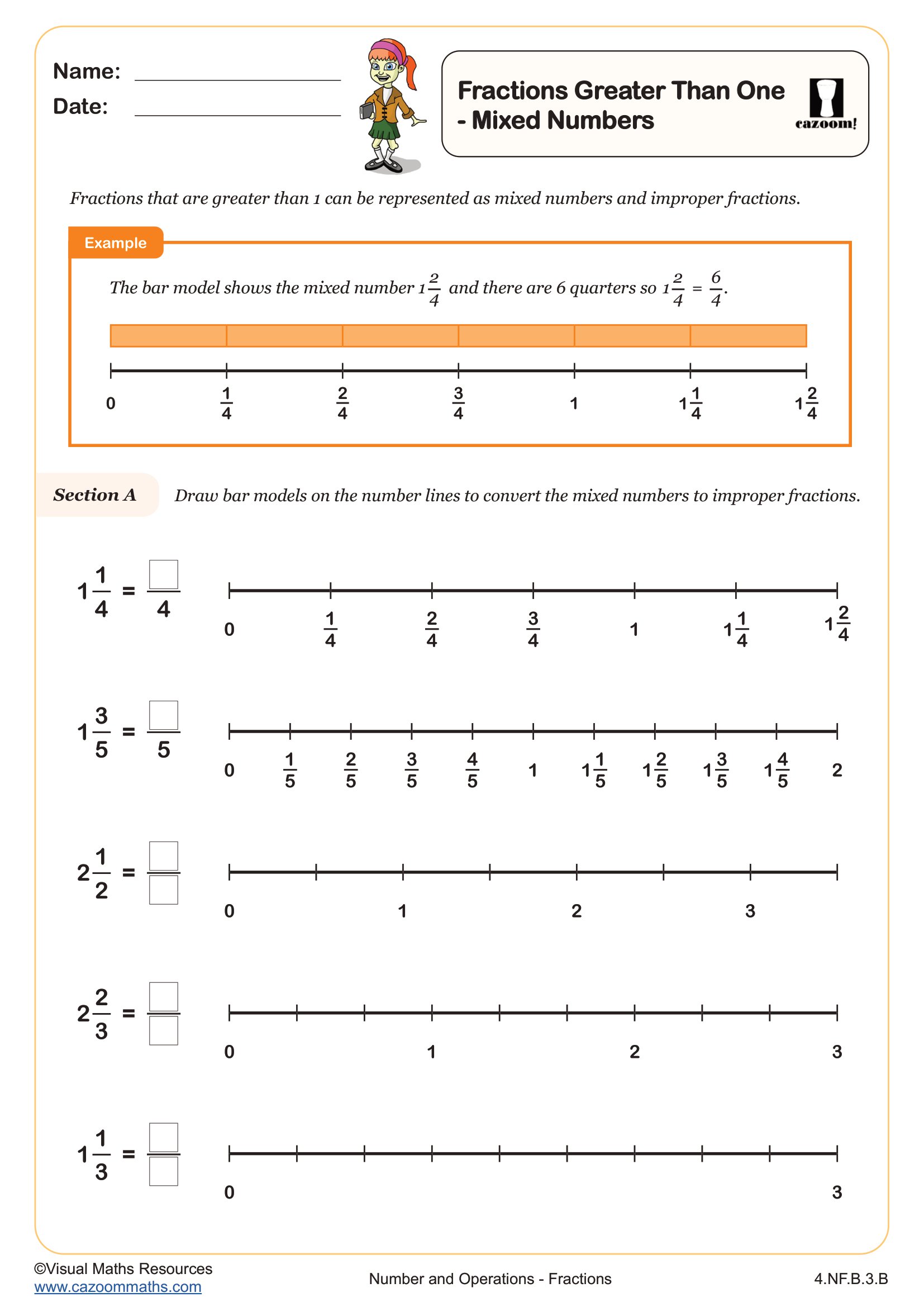
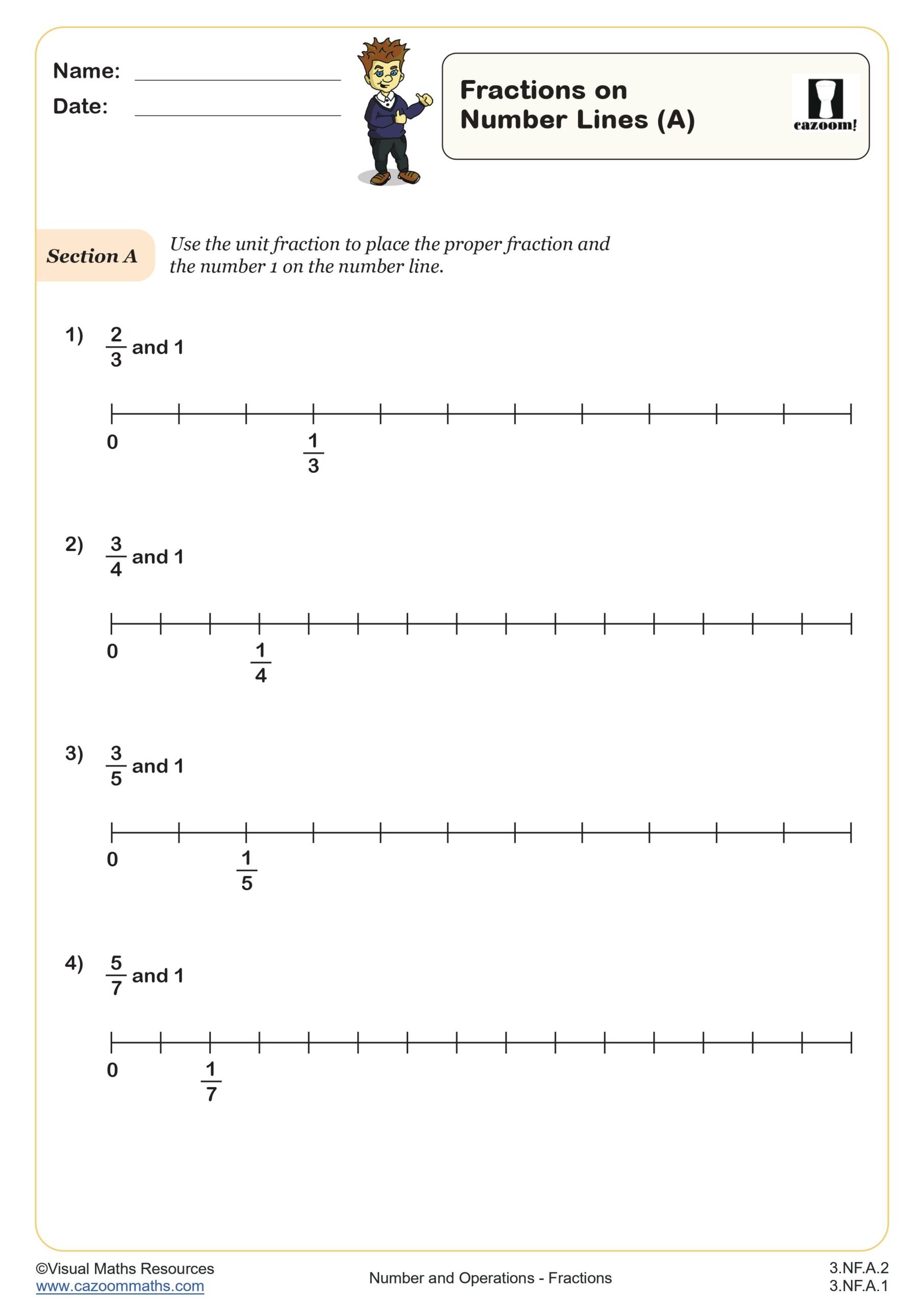
Fractions on Number Lines (A)
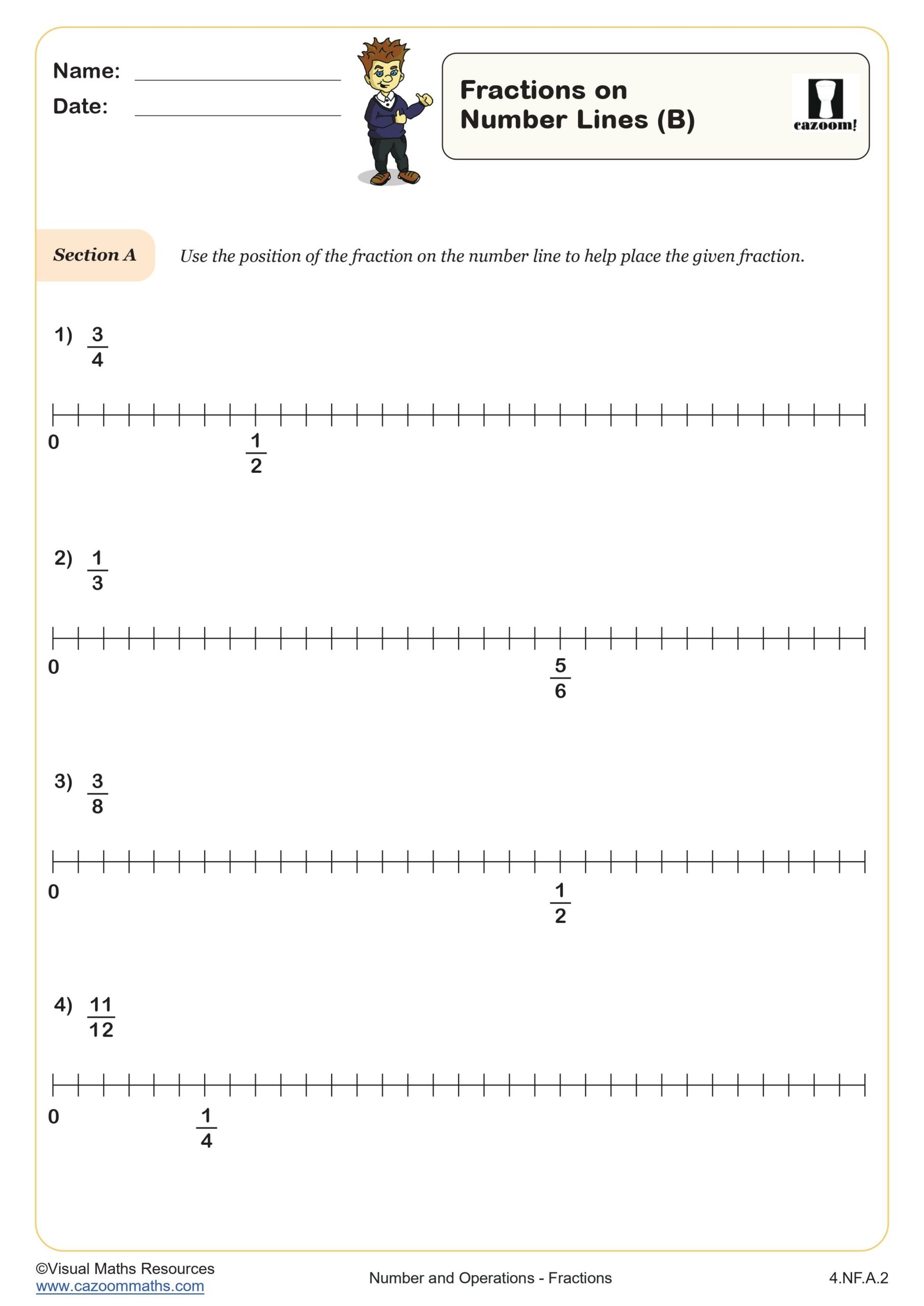
Fractions on Number Lines (B)
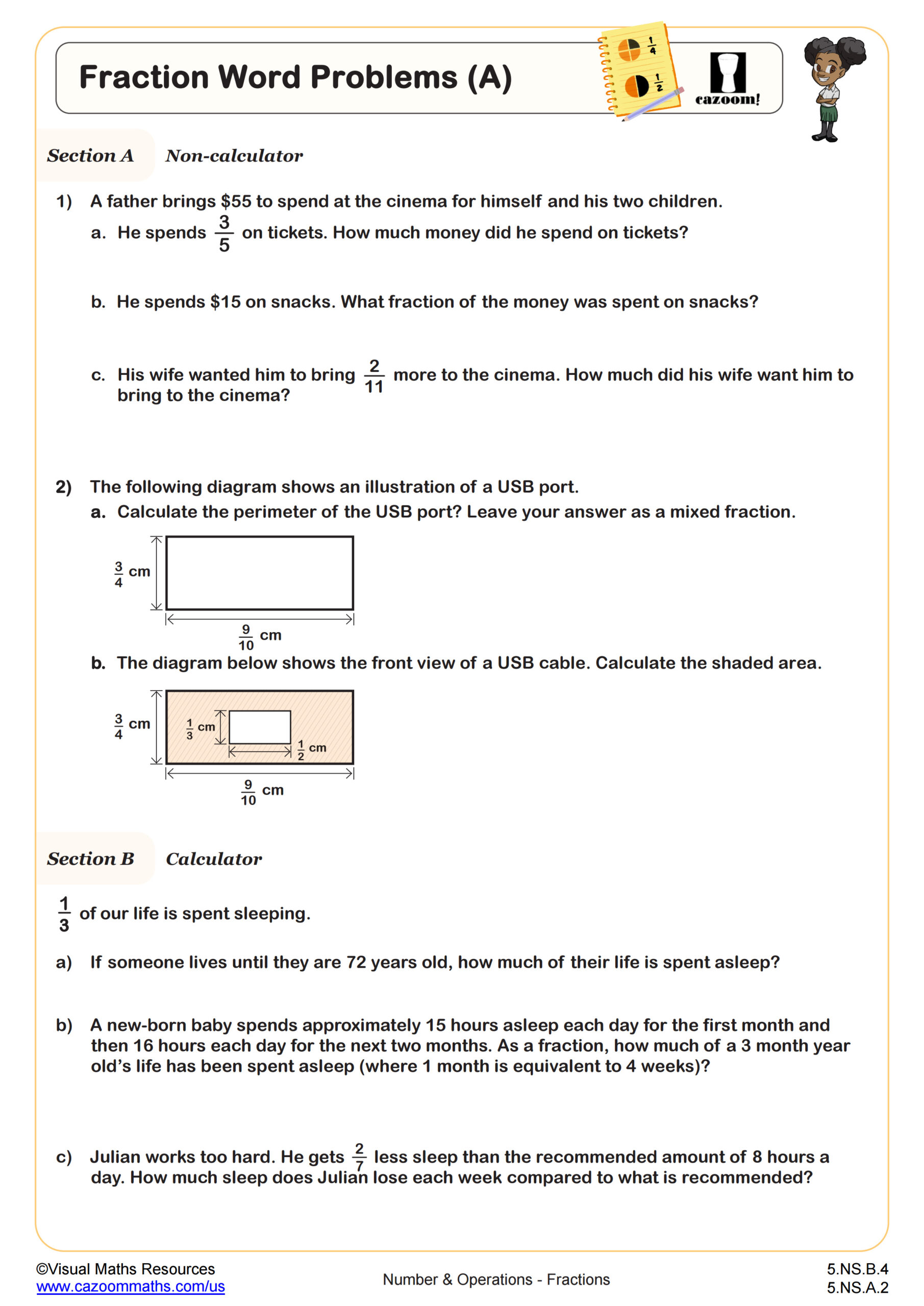
Fractions Word Problems (A)
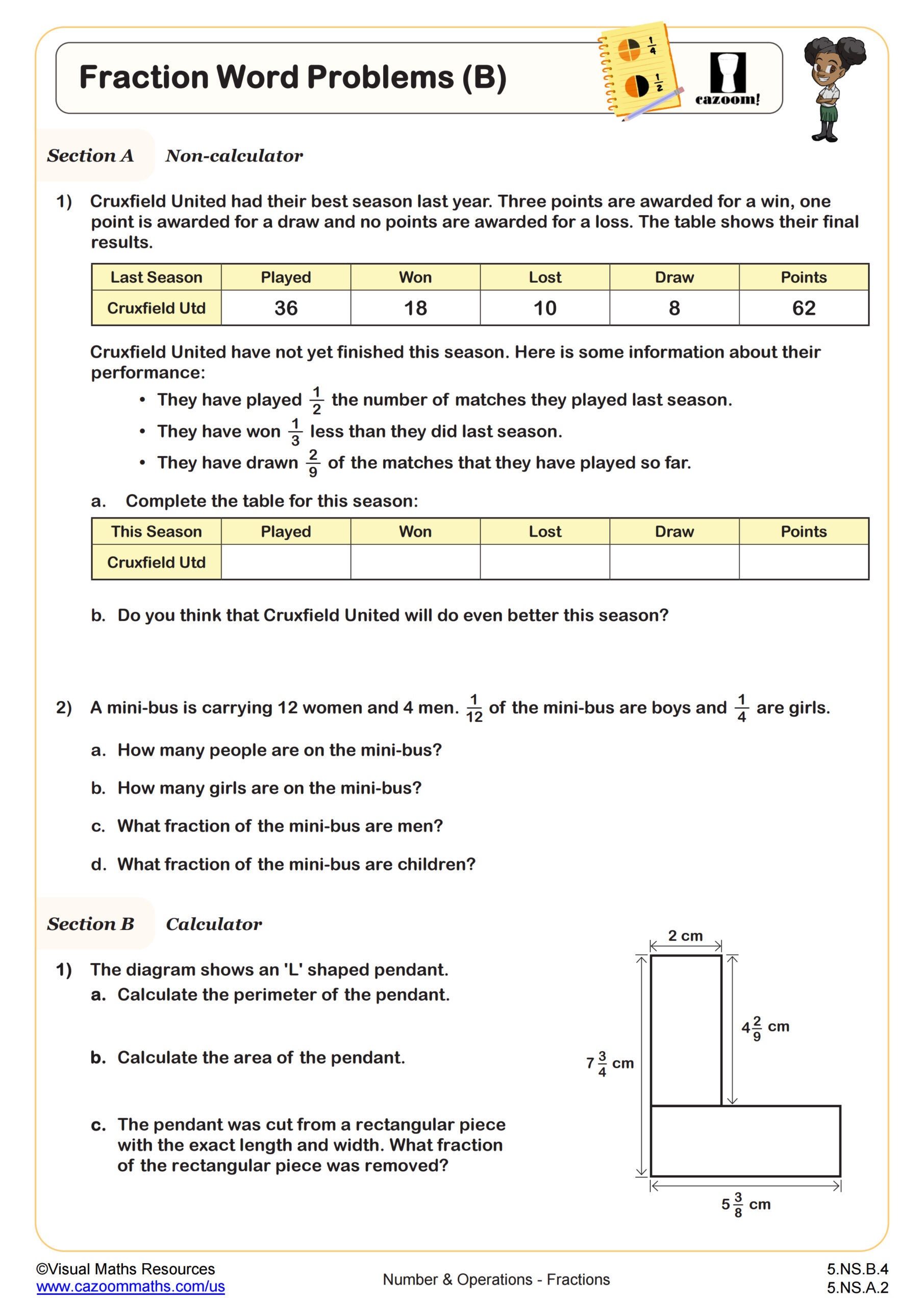
Fractions Word Problems (B)
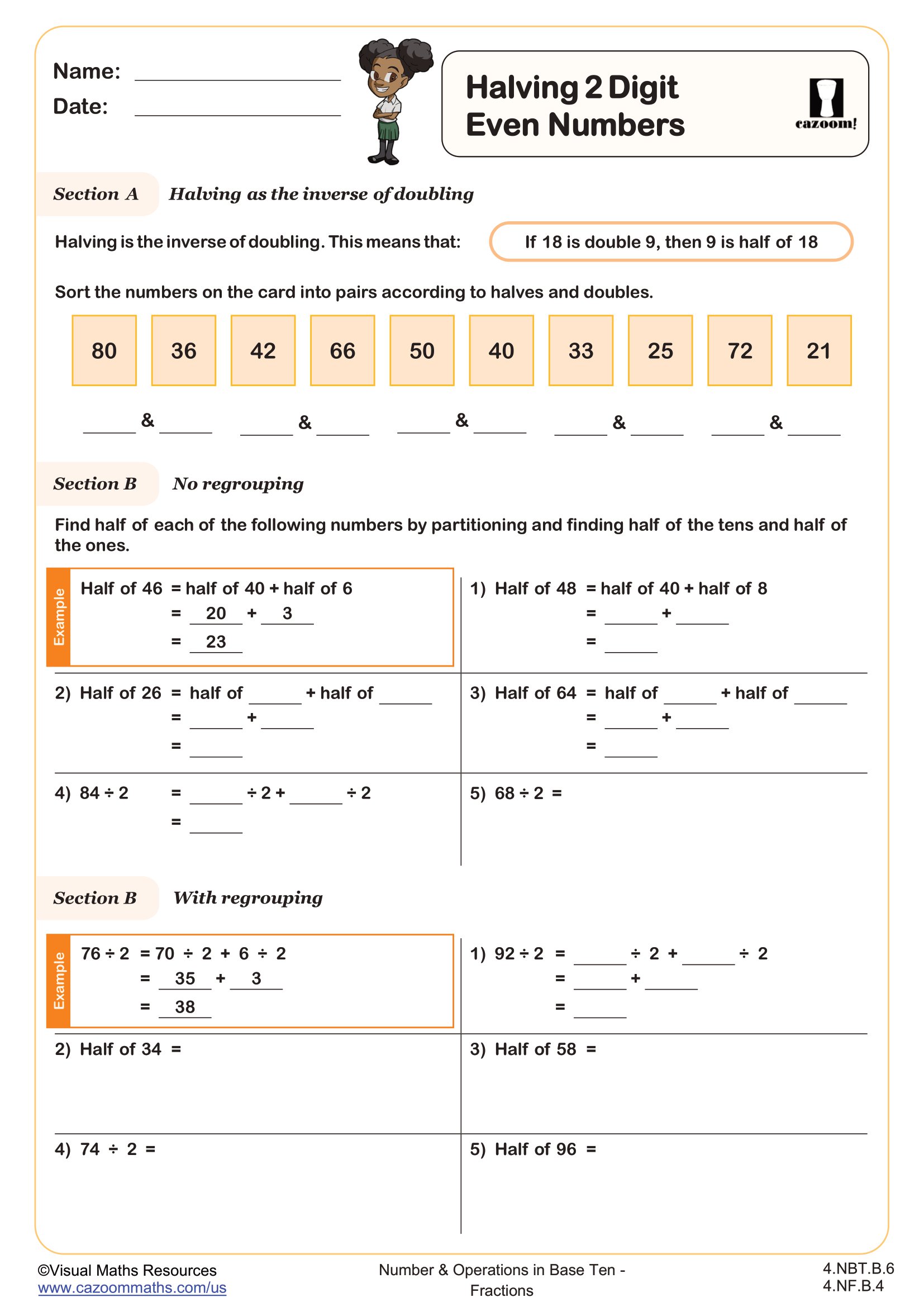
Halving 2 Digit Even Numbers
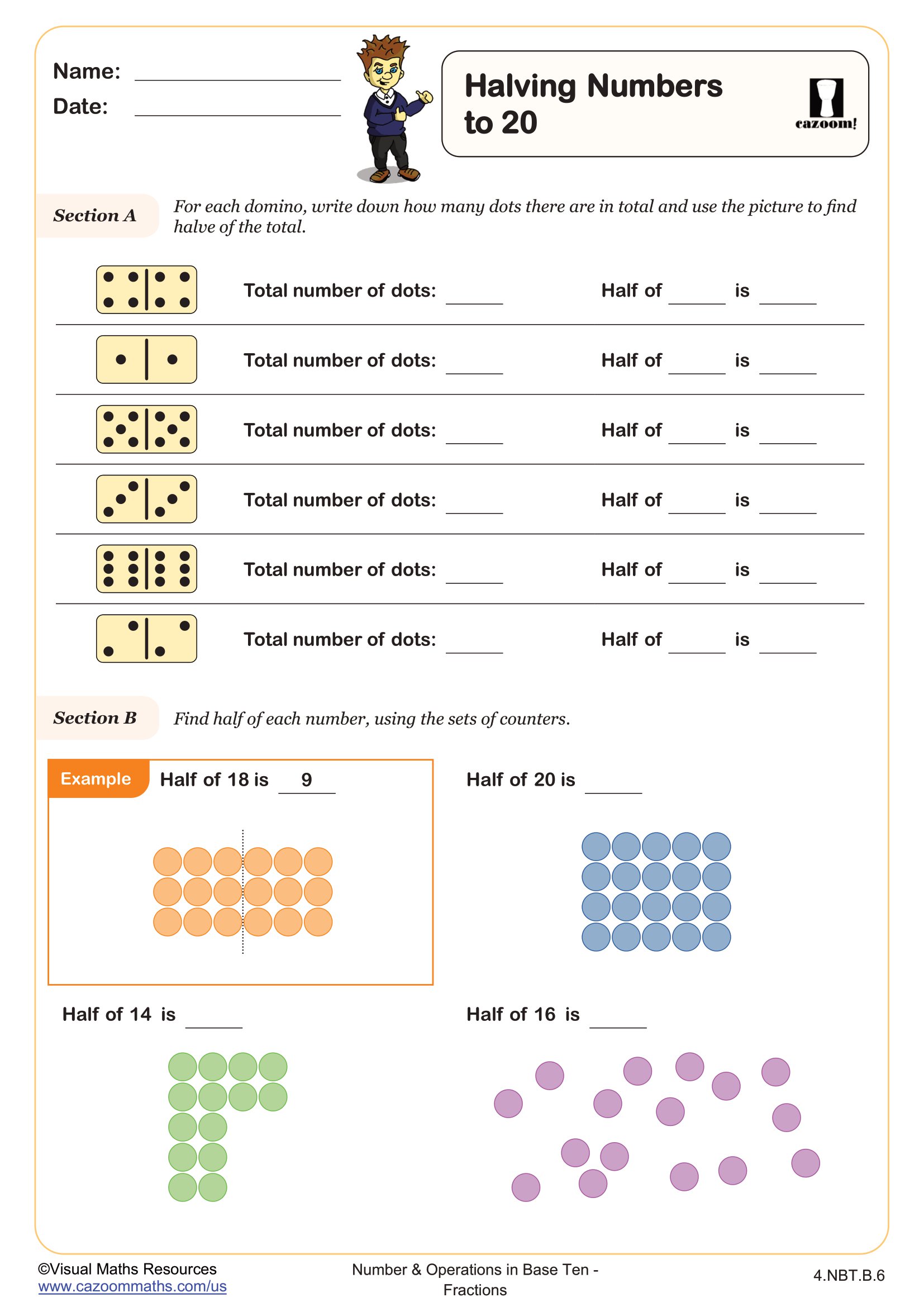
Halving Numbers to 20
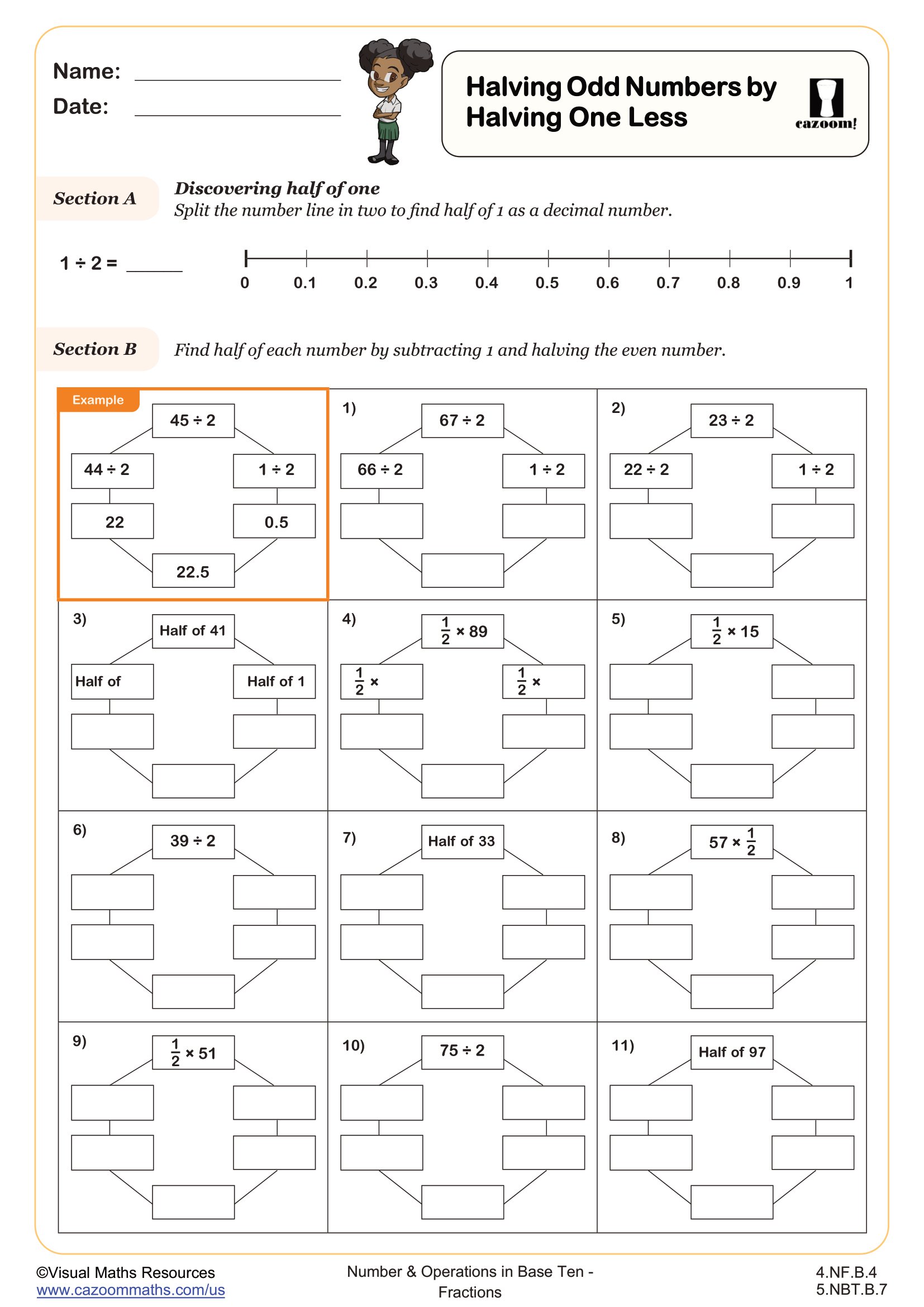
Halving Odd Numbers by Halving One Less
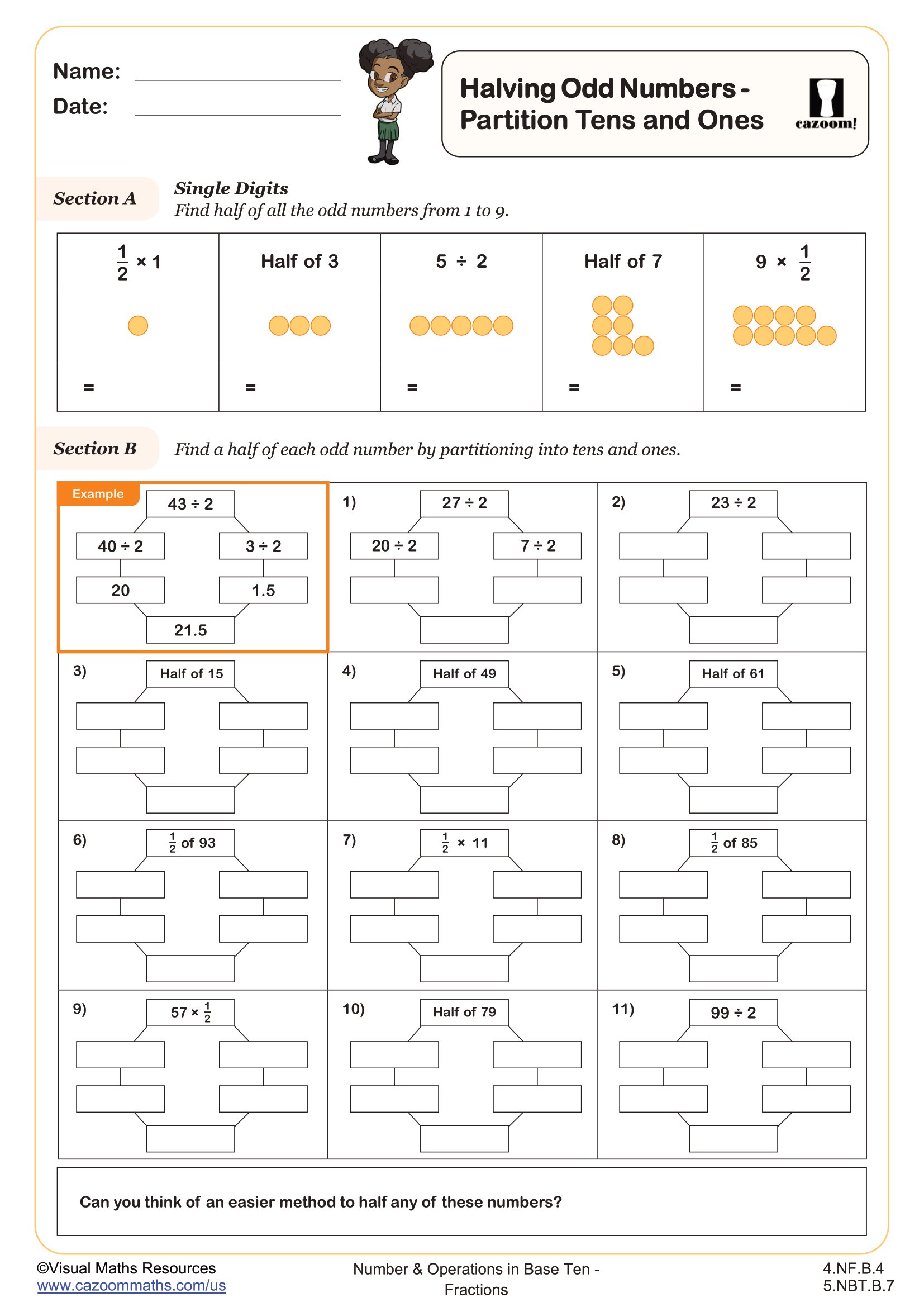
Halving Odd Numbers Partition Tens and Ones
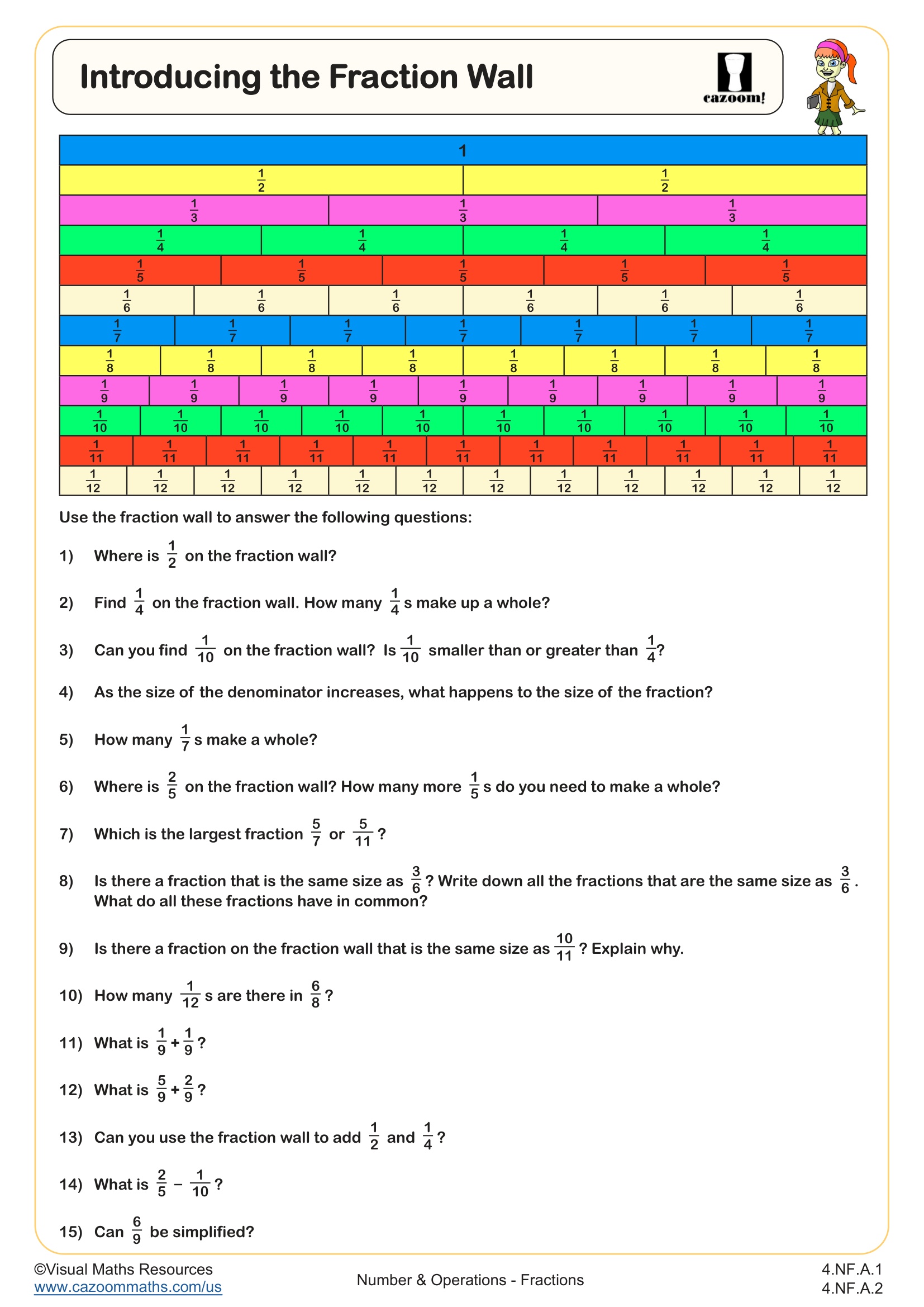
Introducing the Fraction Wall
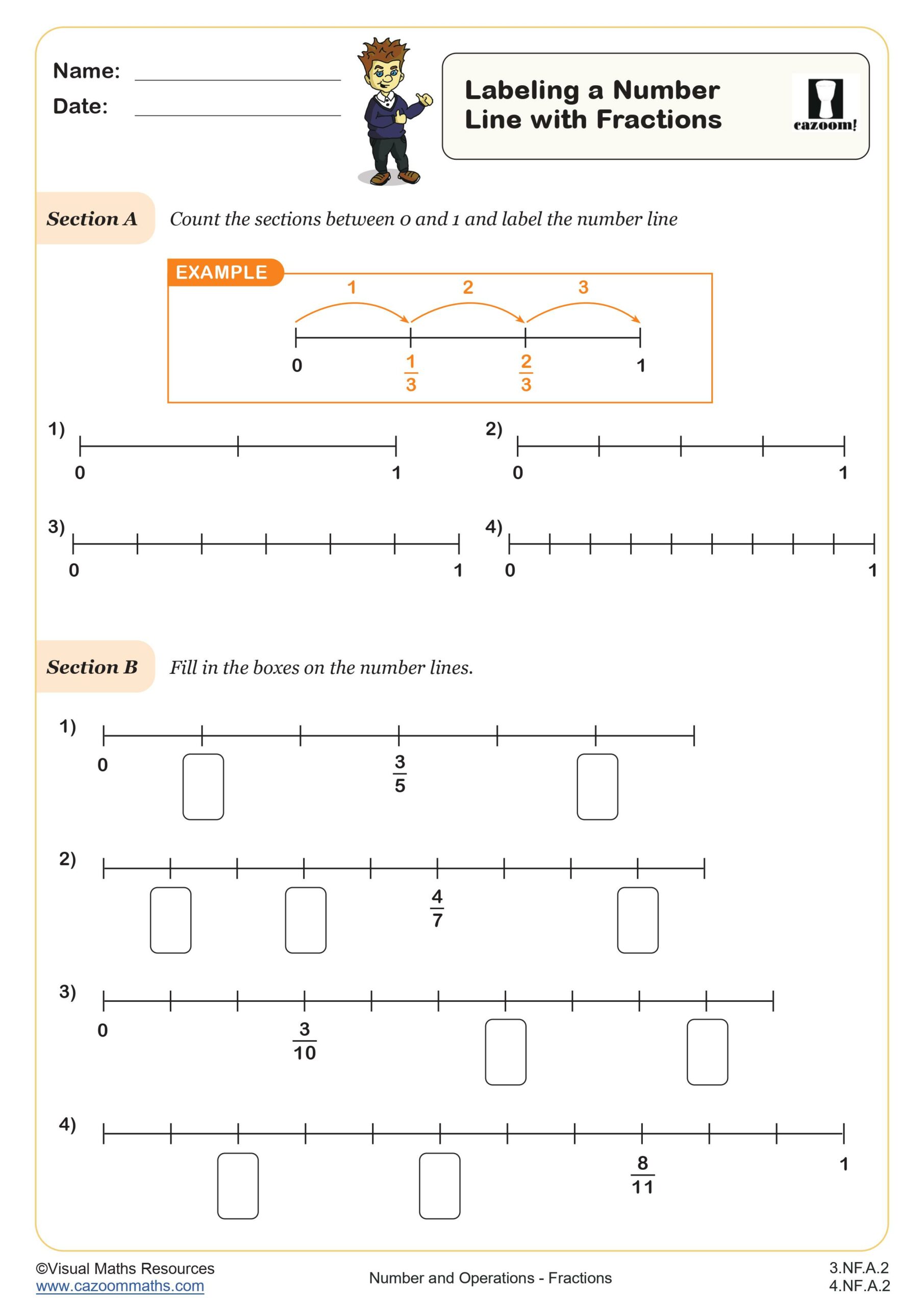
Labeling a Number Line with Fractions
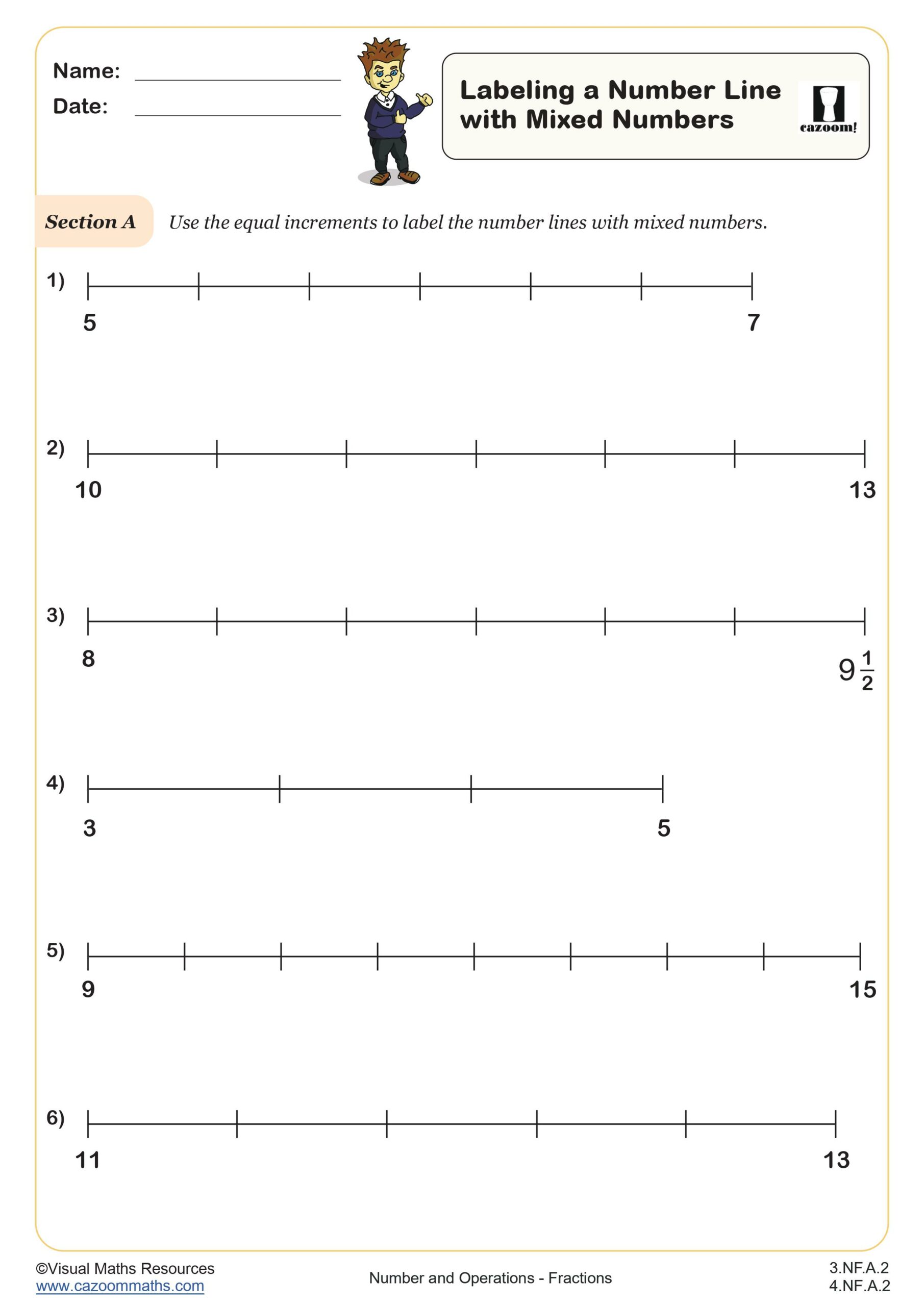
Labeling a Number Line with Mixed Numbers
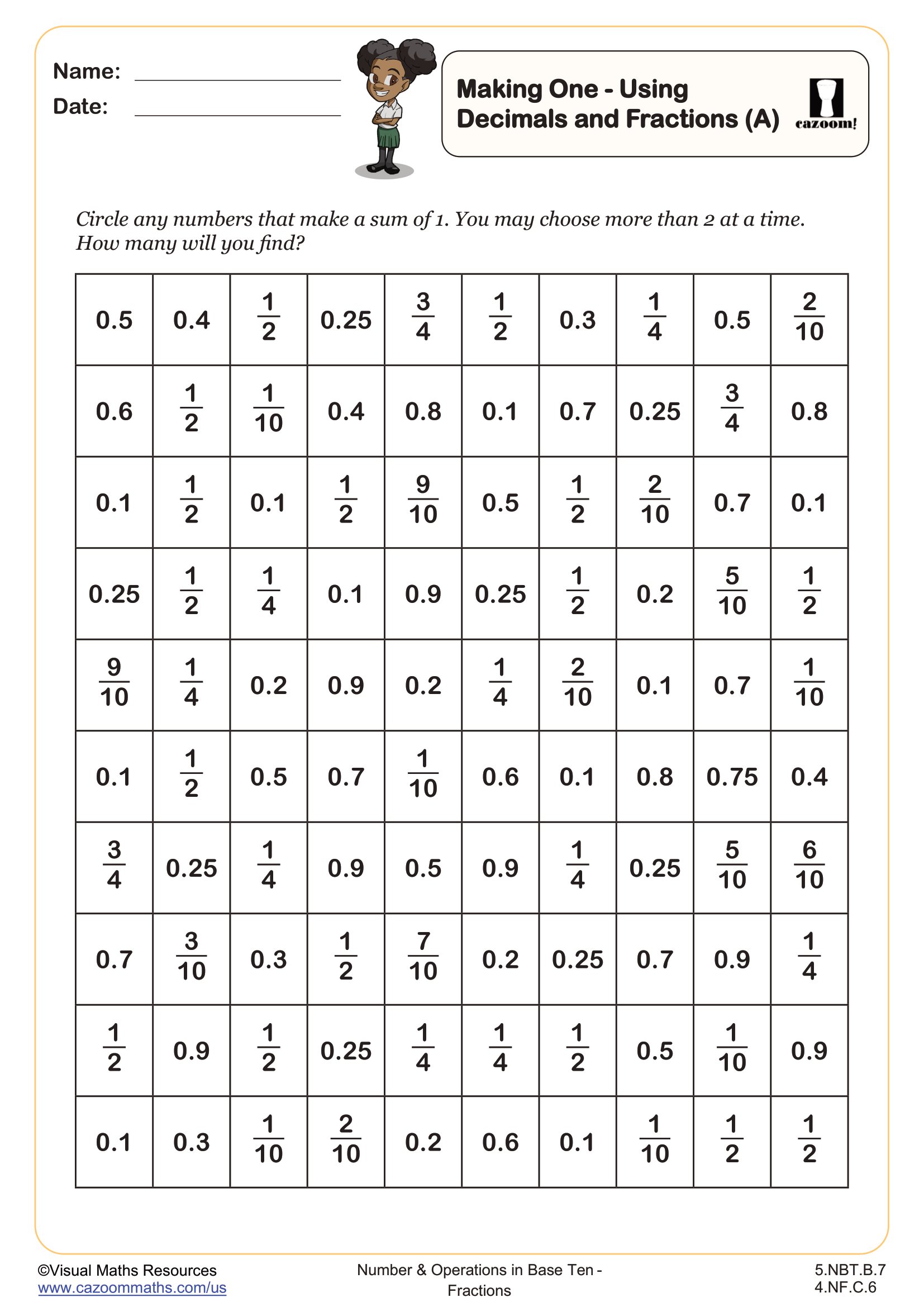
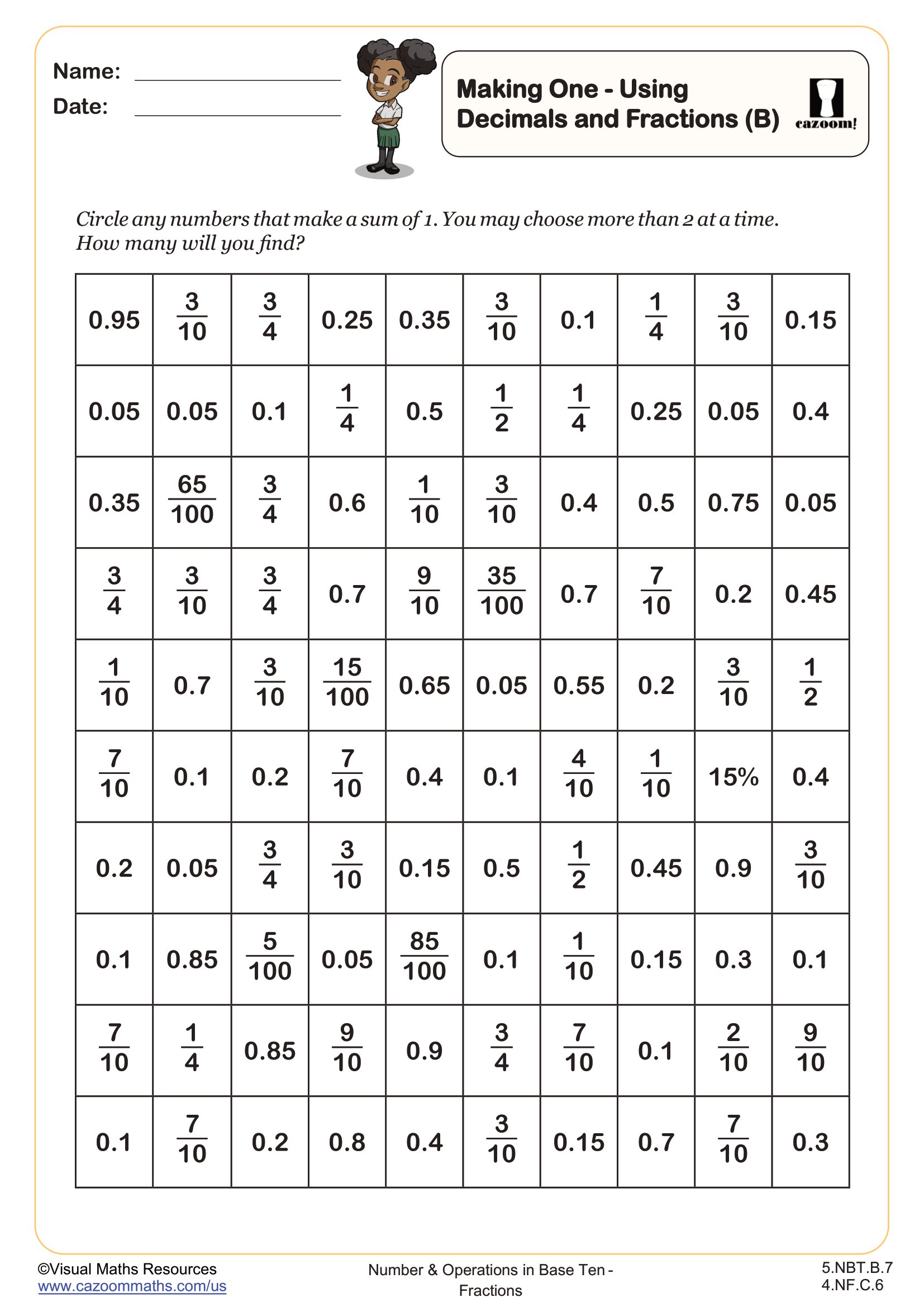
Making One Using Decimals and Fractions (A)
Making One Using Decimals and Fractions (B)
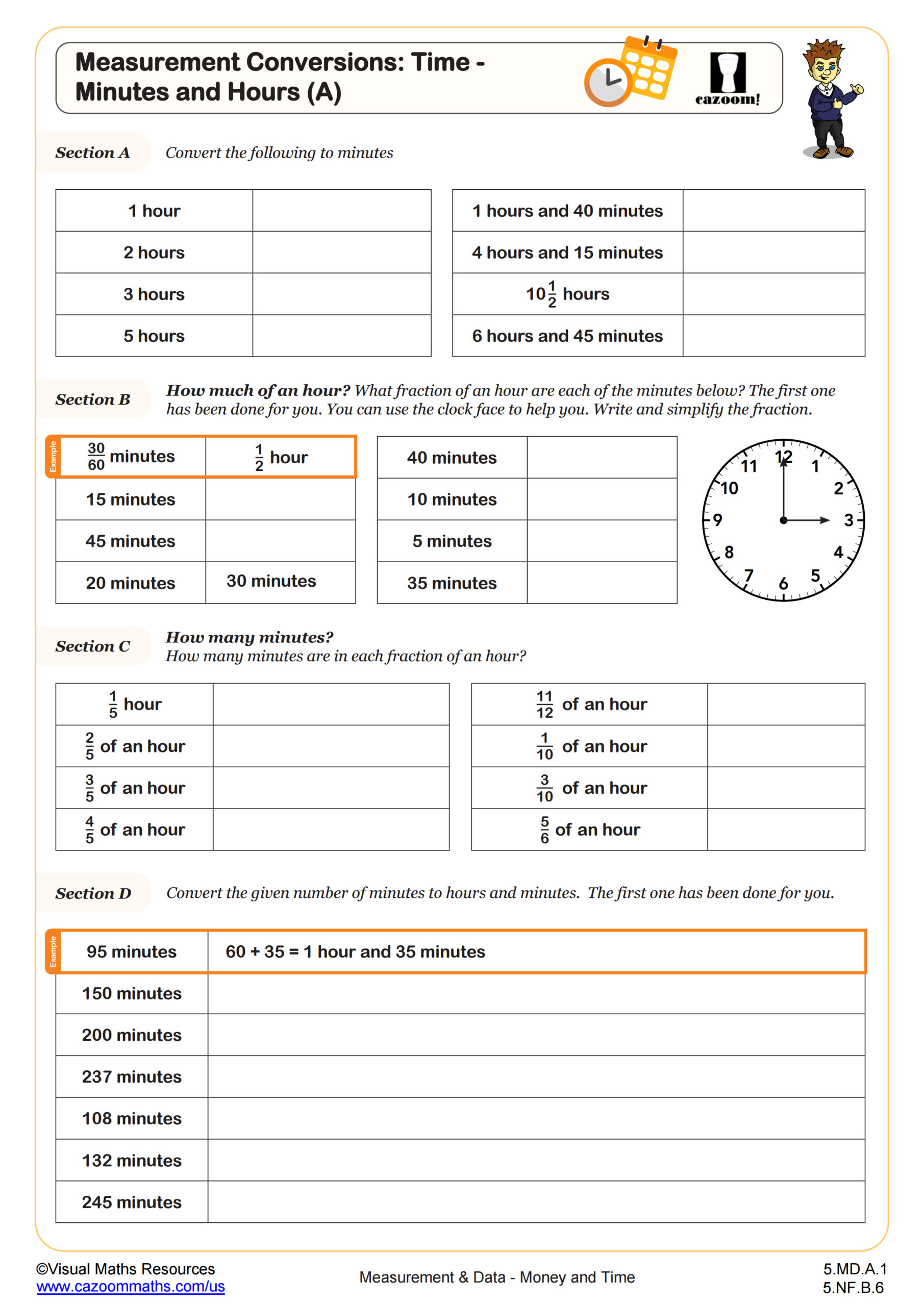
Measurement Conversions: Time - Minutes and Hours (A)
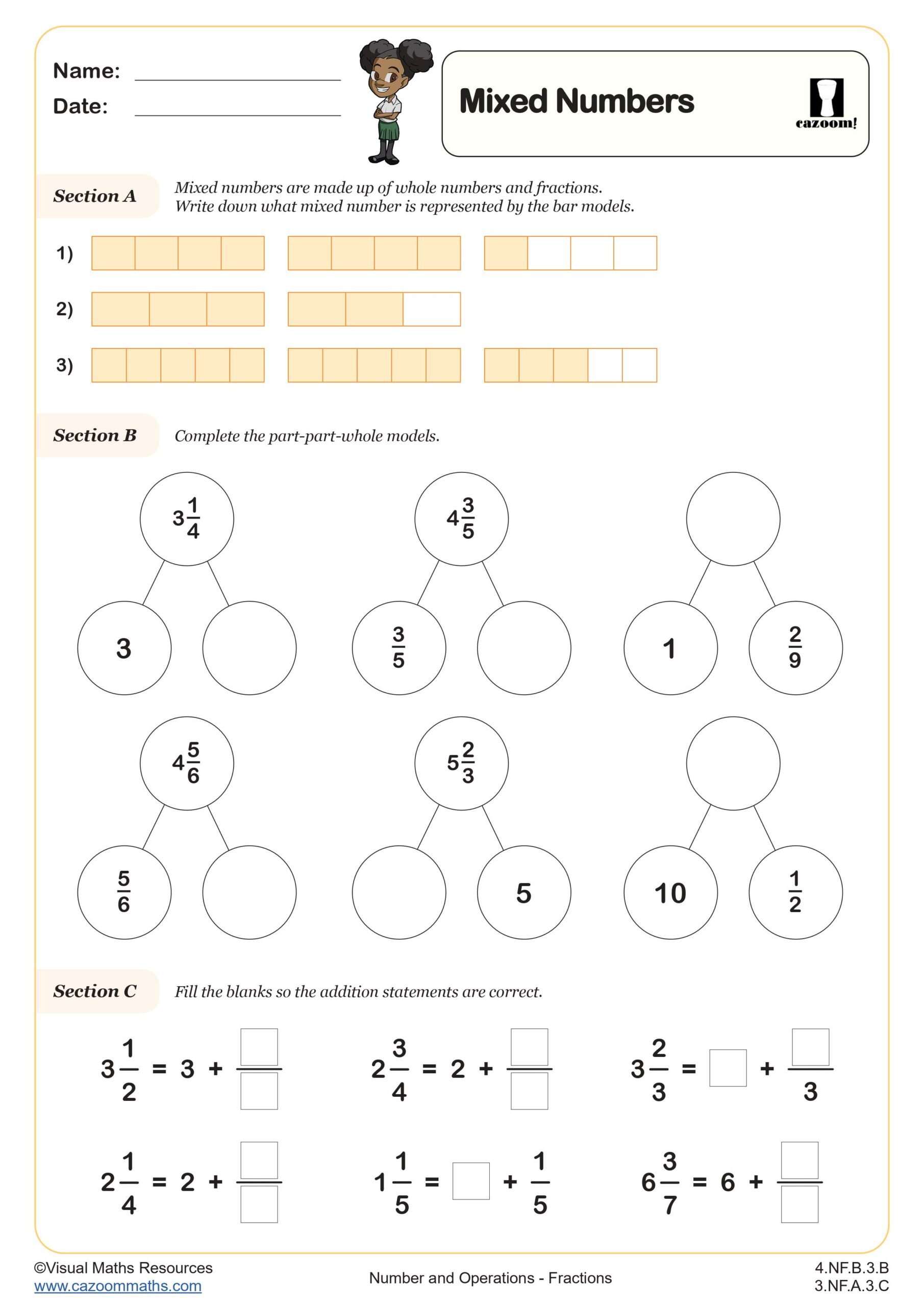
Mixed Numbers
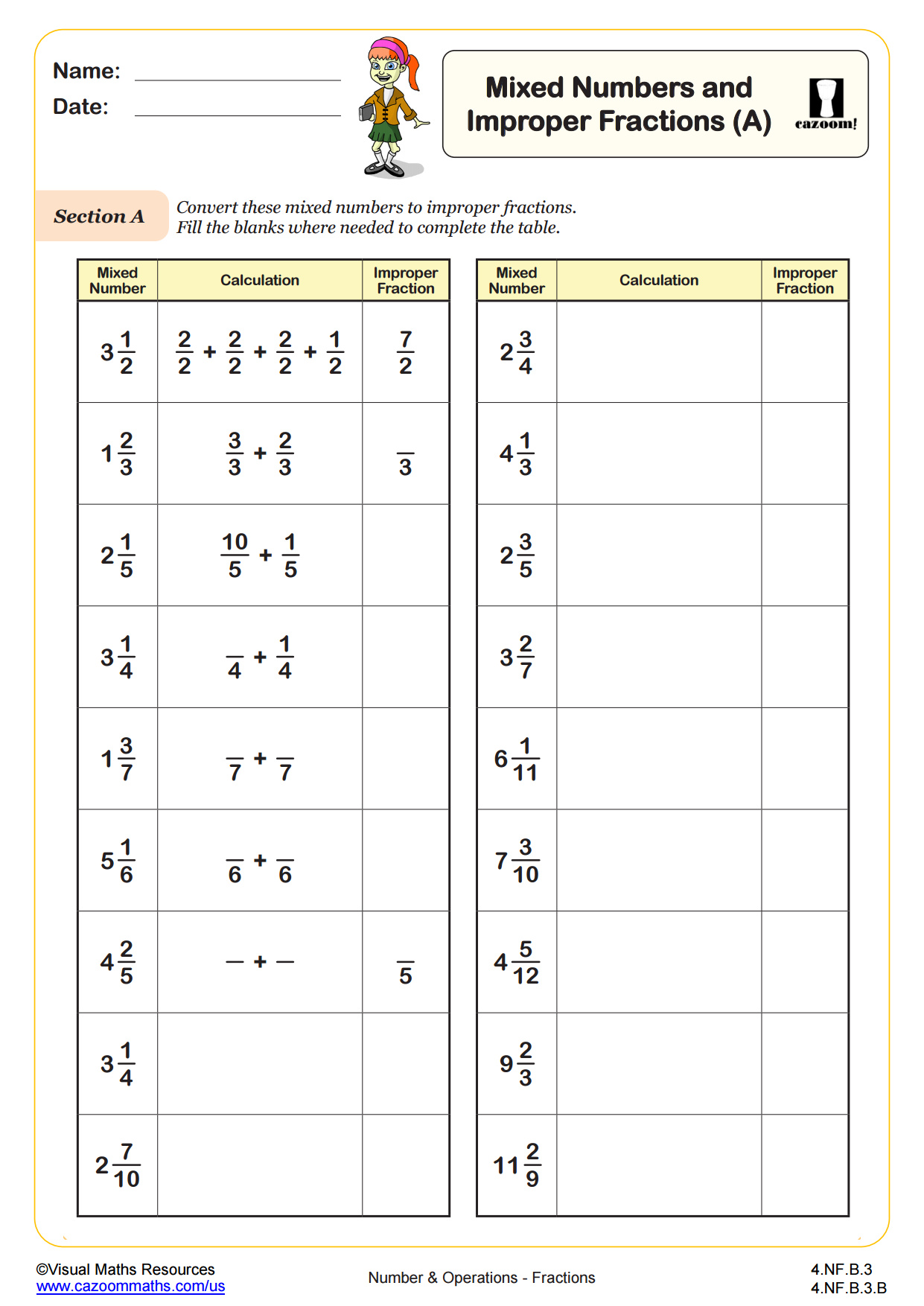
Mixed Numbers & Improper Fractions (A)
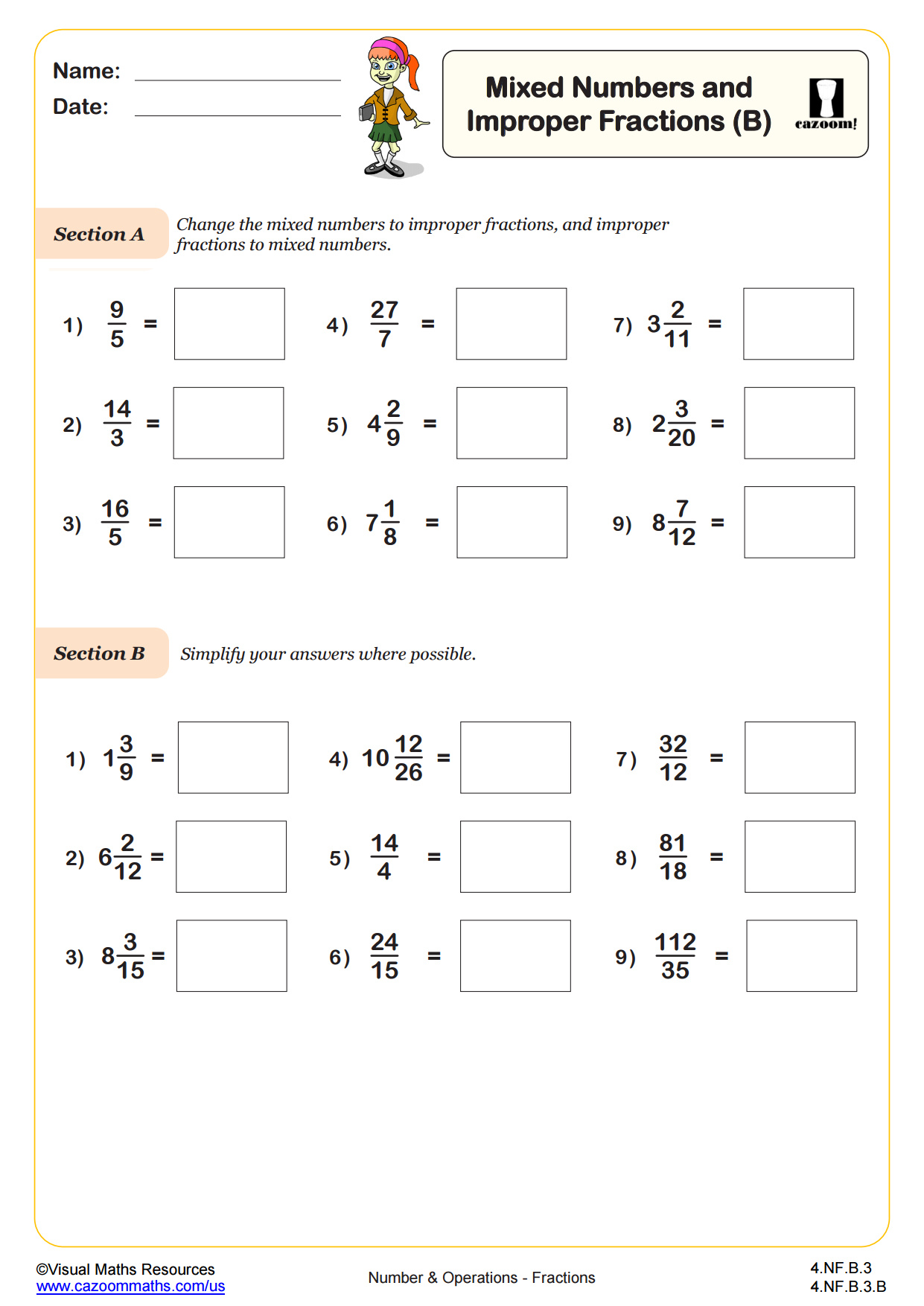
Mixed Numbers & Improper Fractions (B)
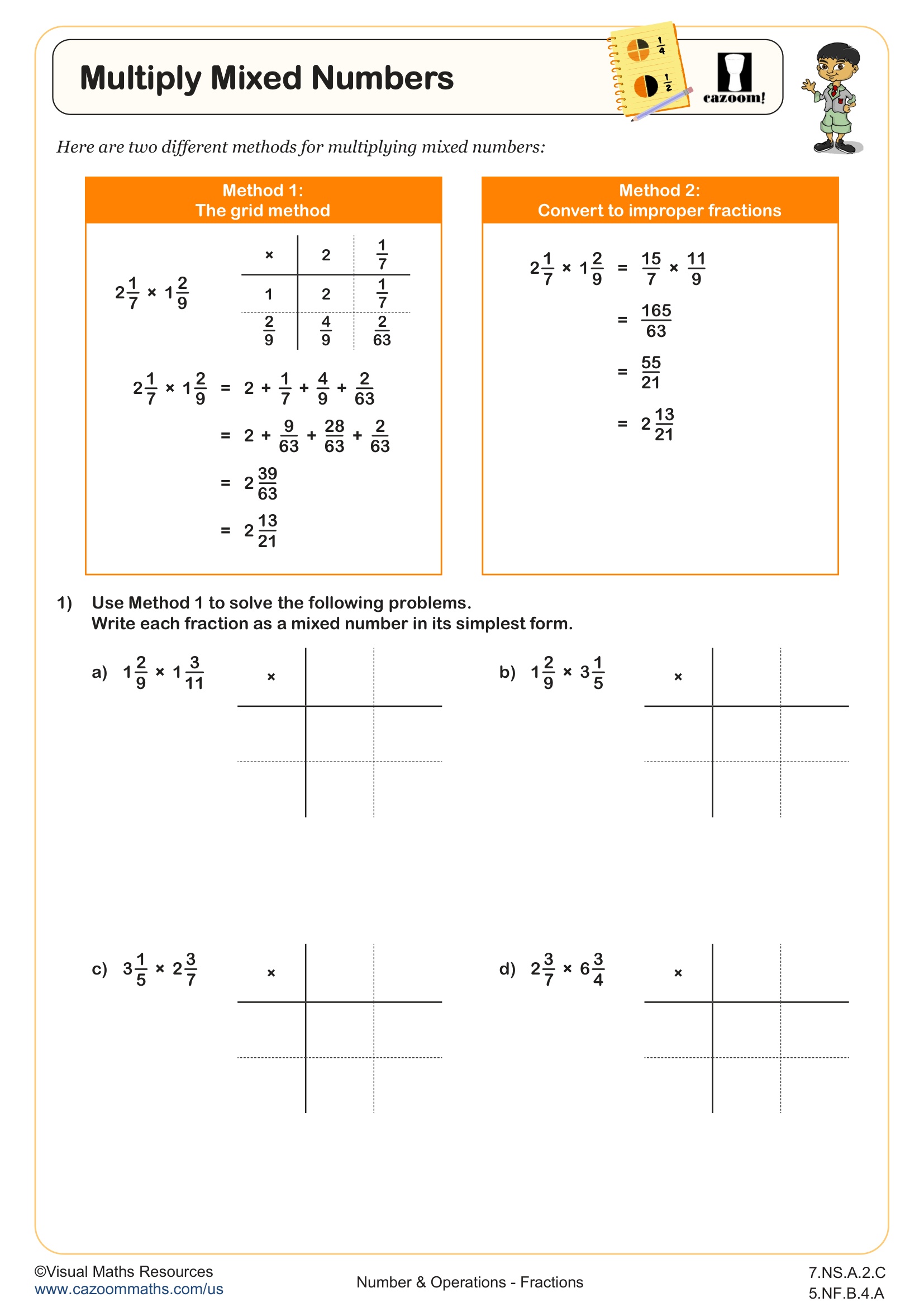
Multiply Mixed Numbers
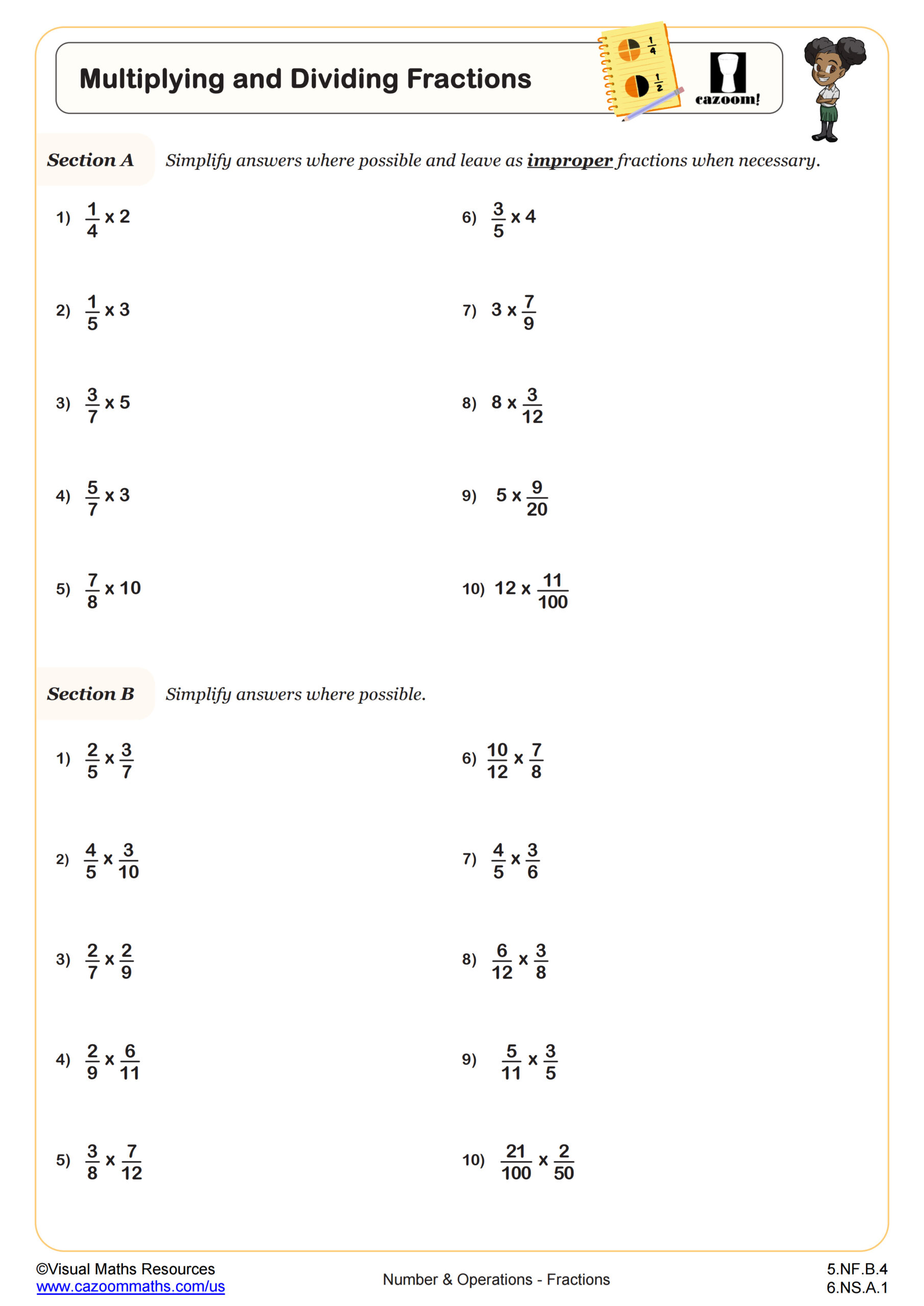
Multiplying and Dividing Fractions
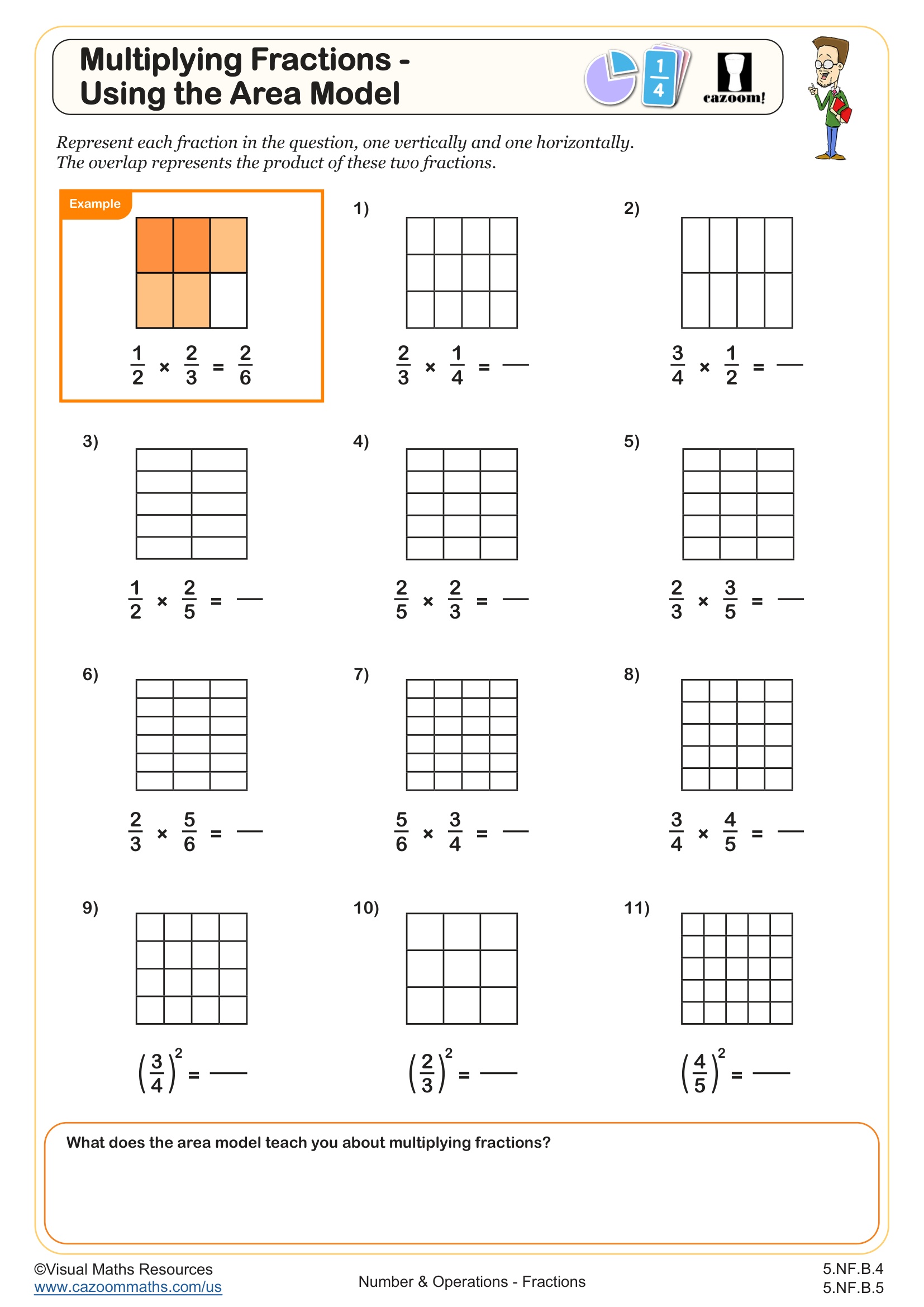
Multiplying Fractions - Using the Area Model
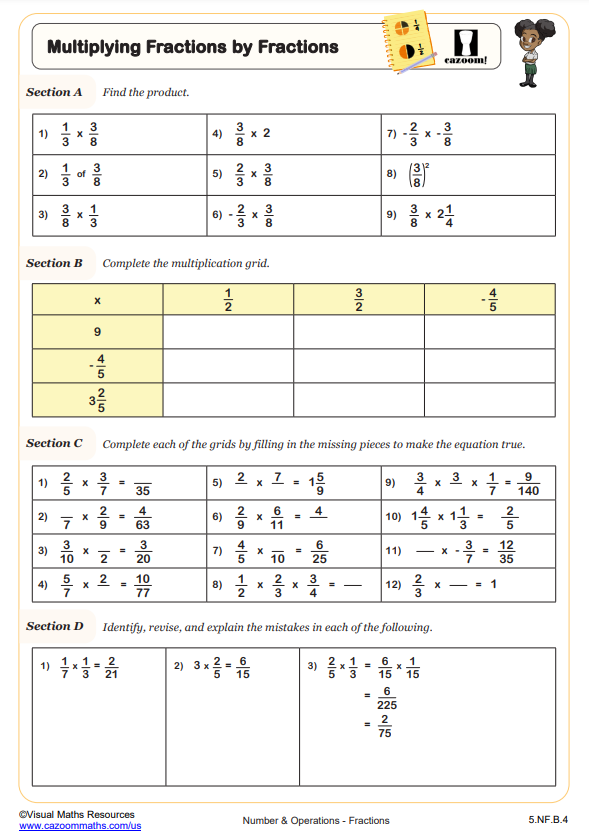
Multiplying Fractions by Fractions
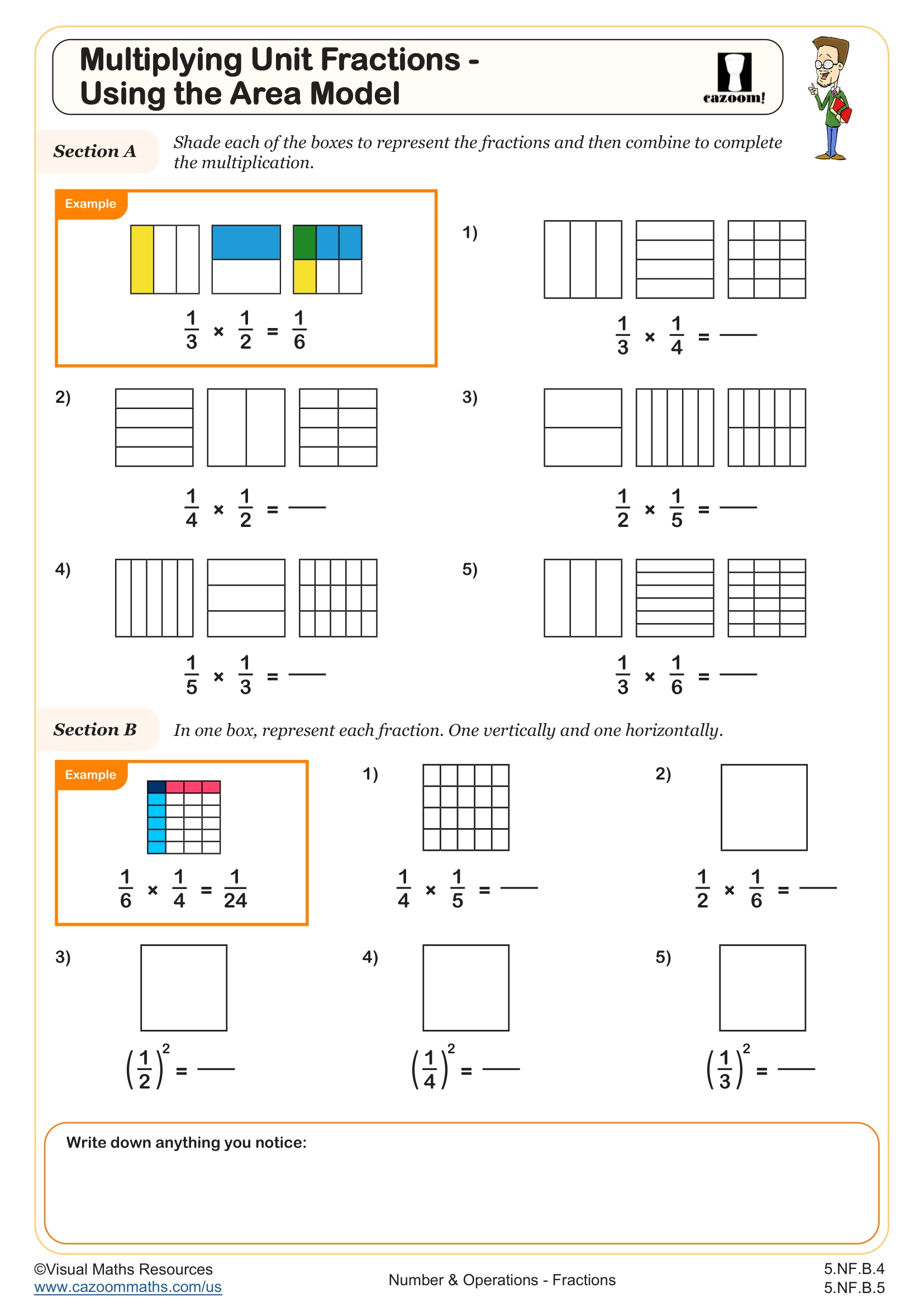
Multiplying Unit Fractions - Using the Area Model
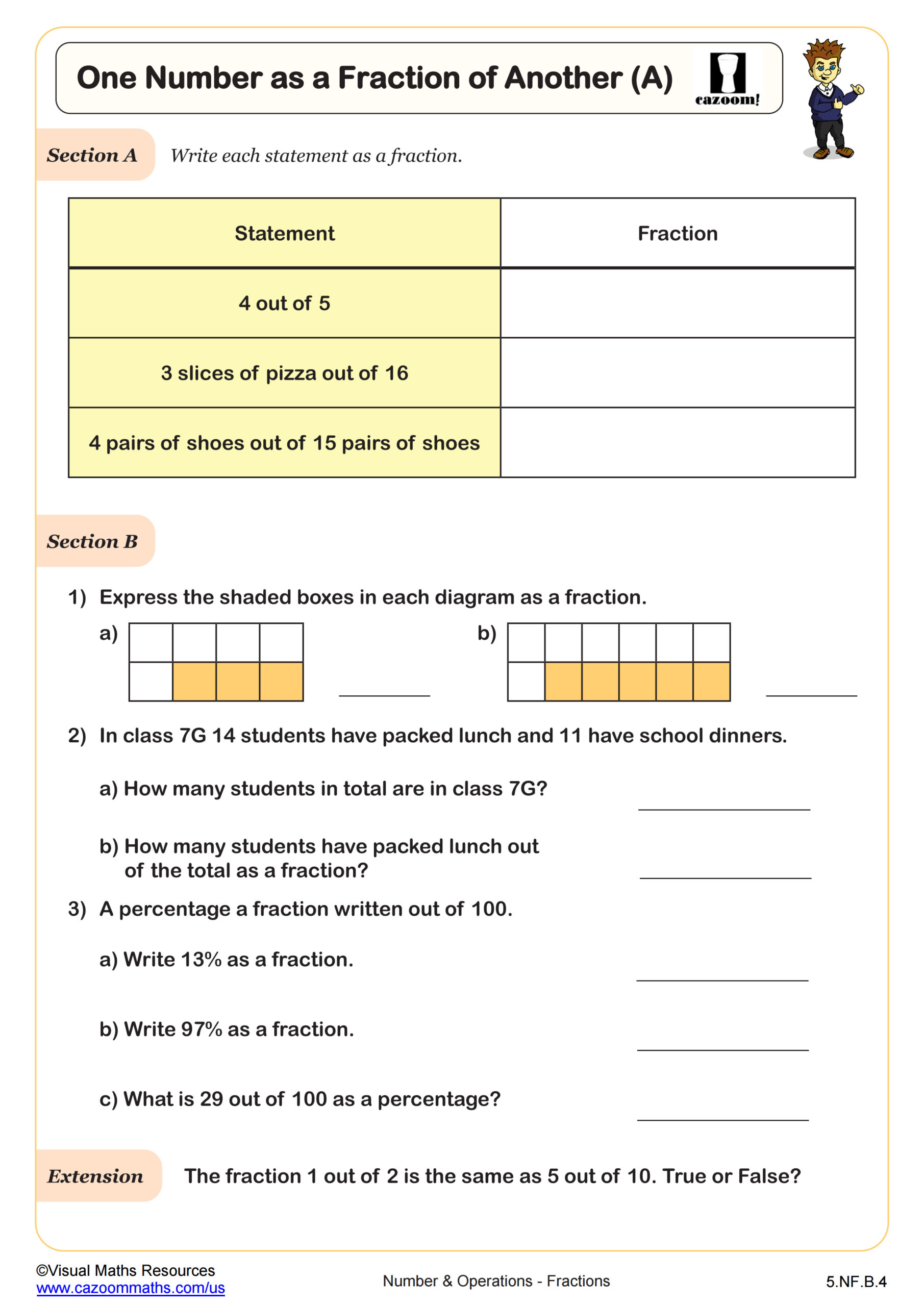
One Number as a Fraction of Another (A)
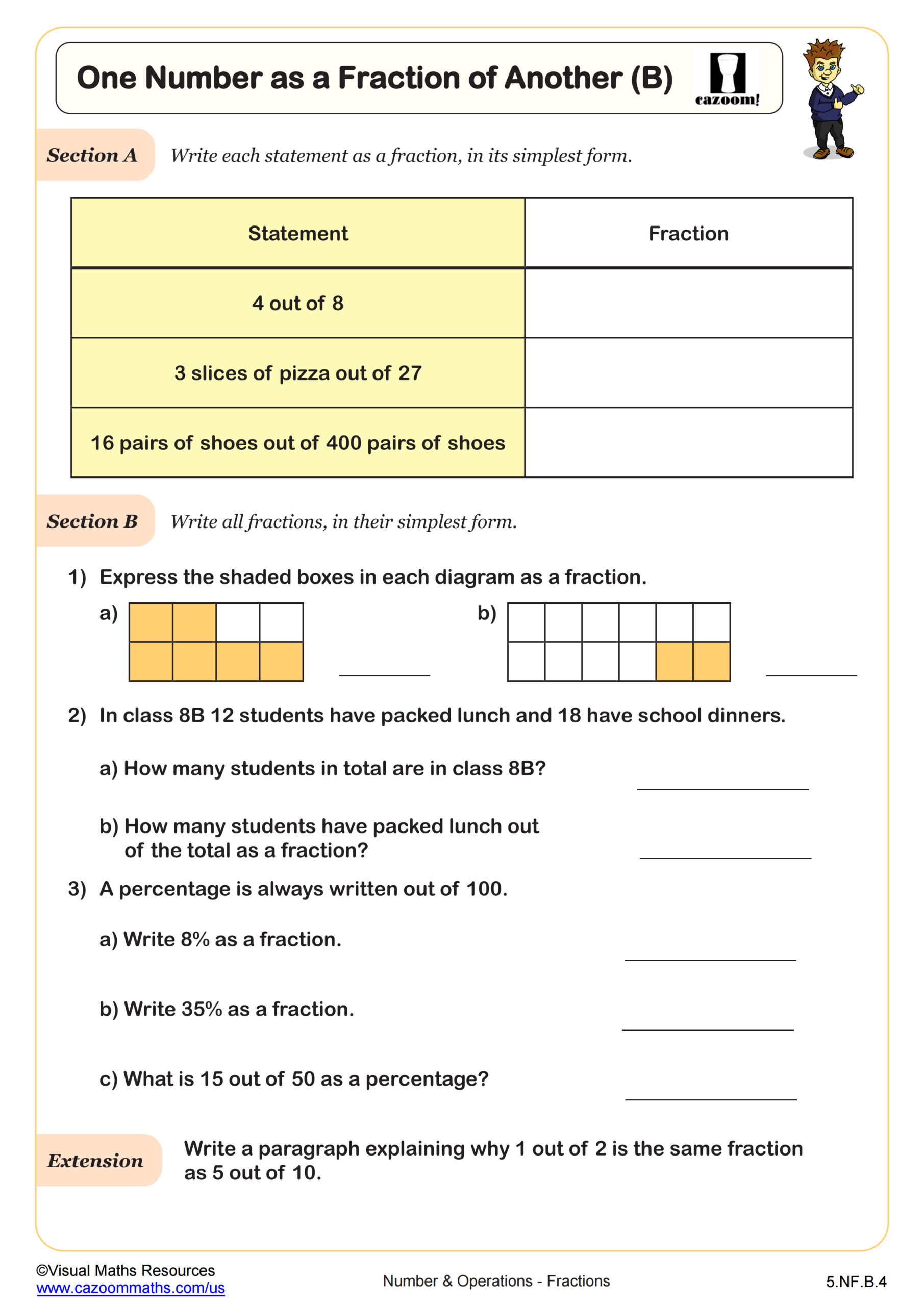
One Number as a Fraction of Another (B)
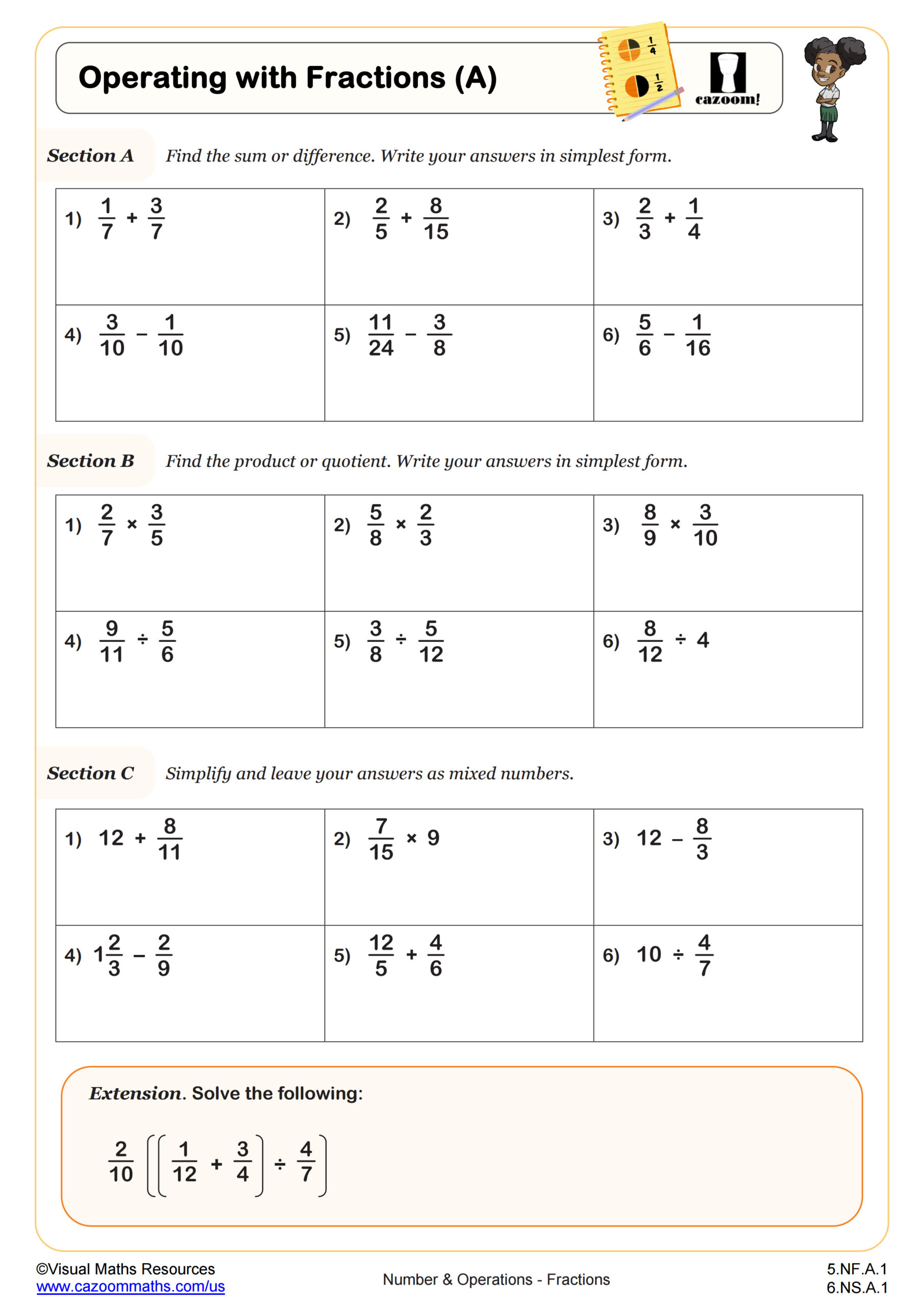
Operations with Fractions (A)
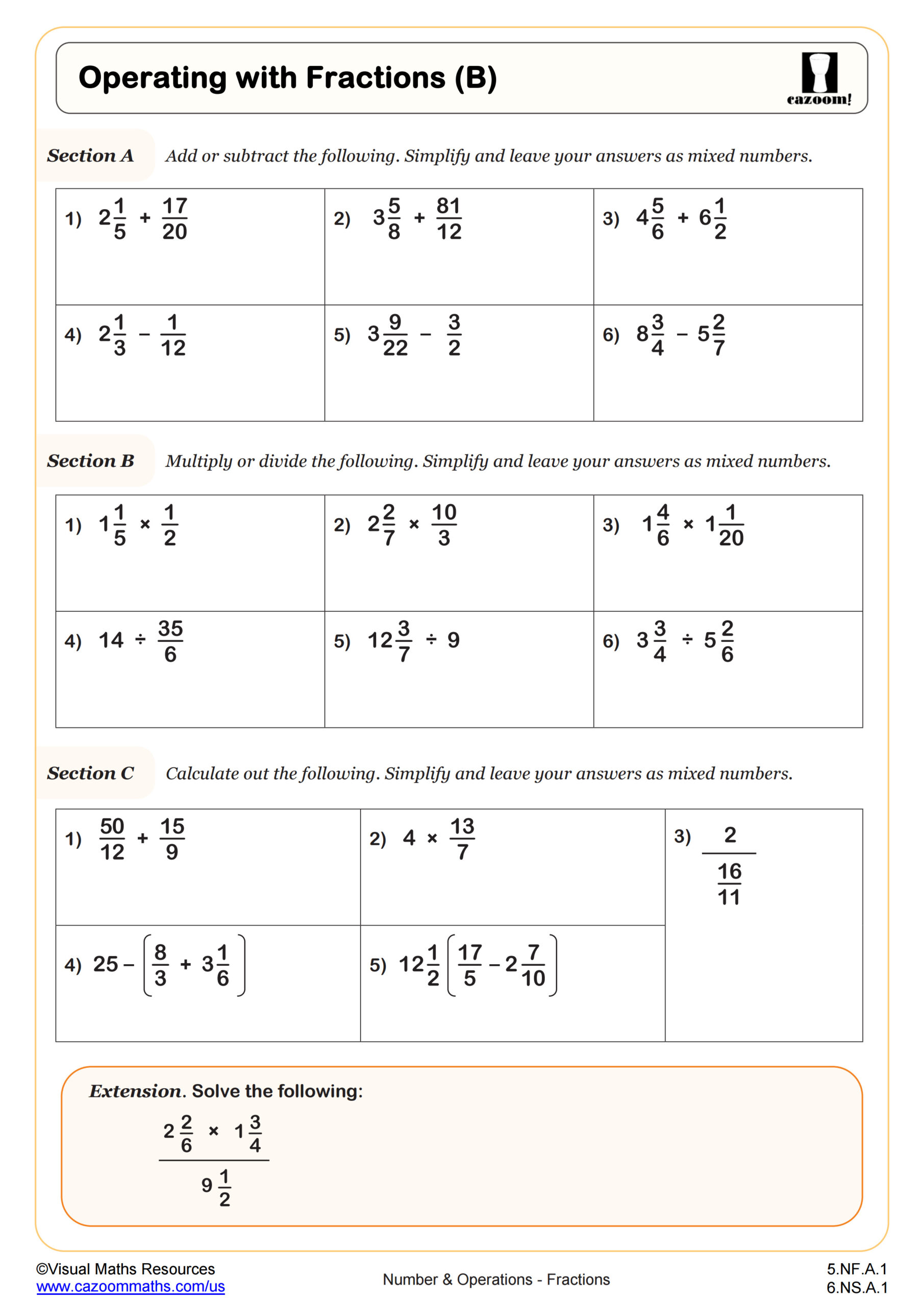
Operations with Fractions (B)
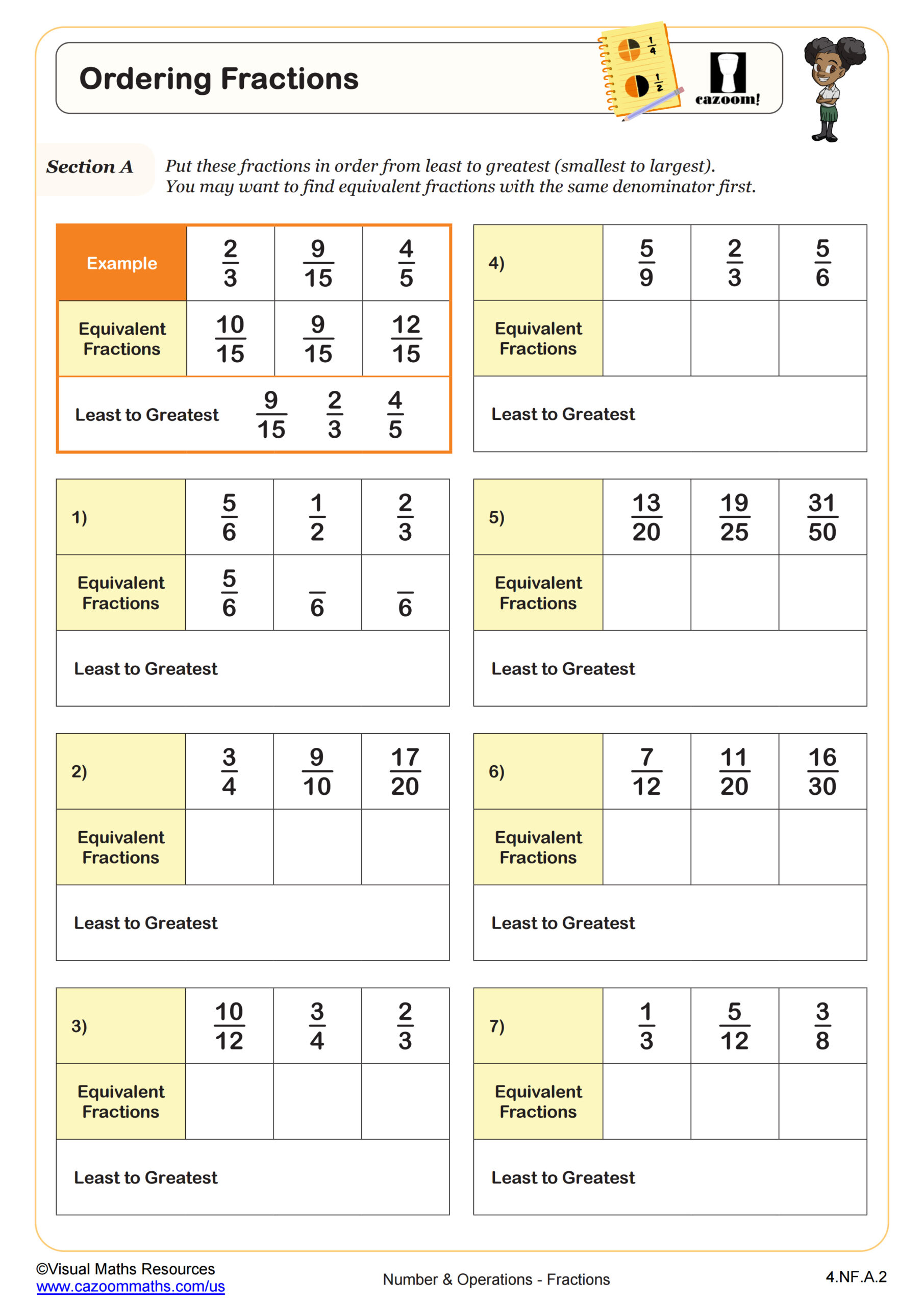
Ordering Fractions
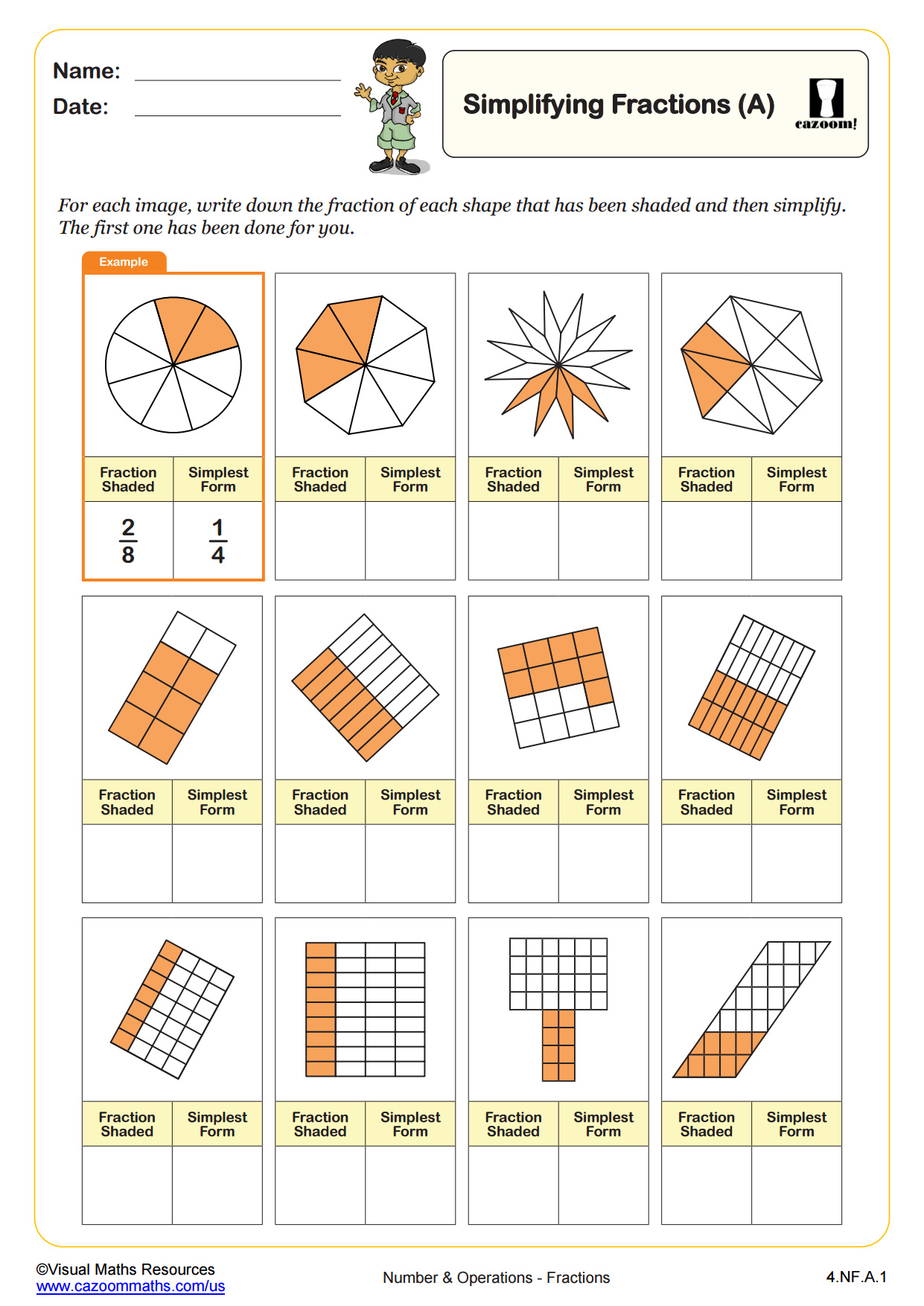
Simplifying Fractions (A)
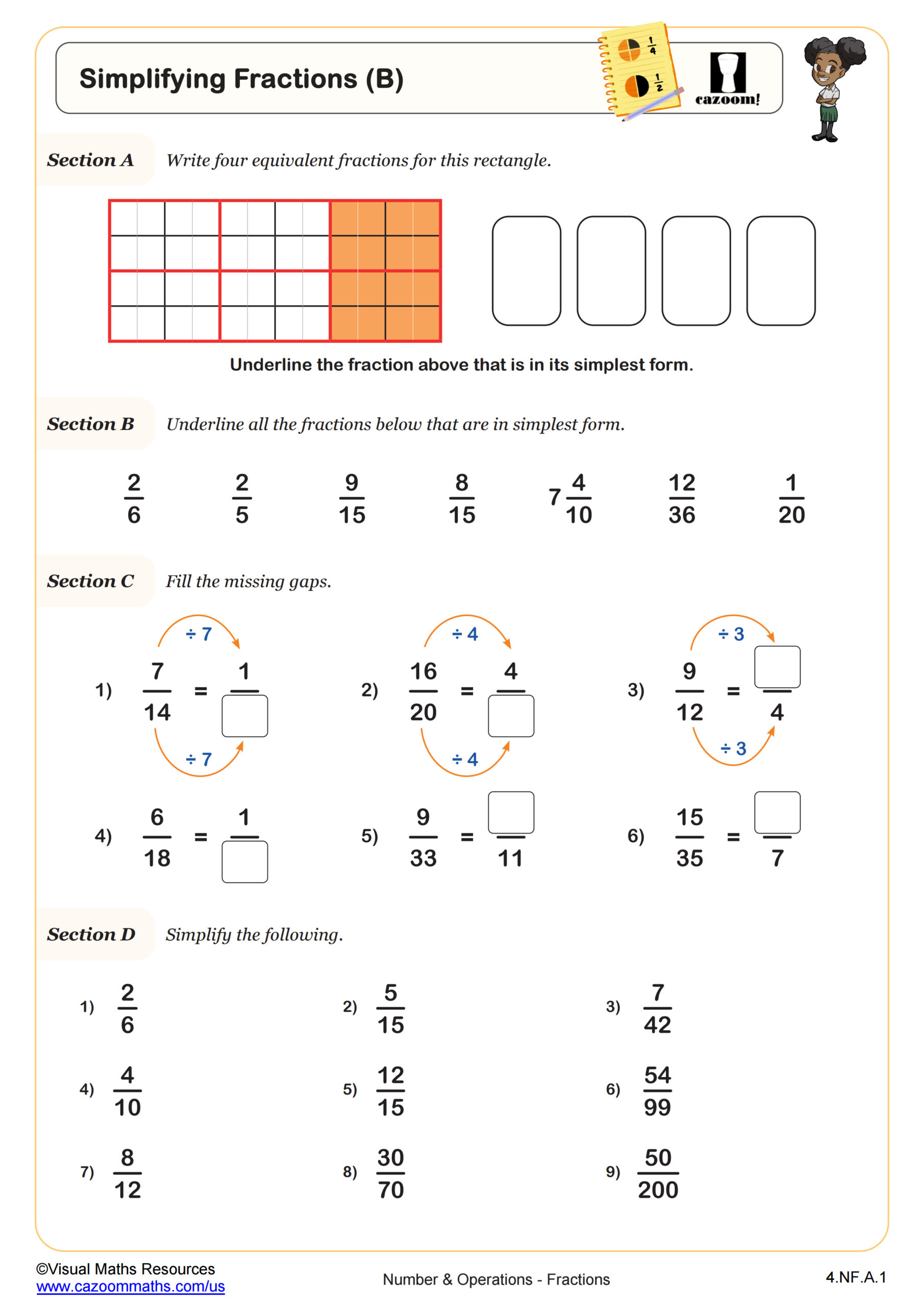
Simplifying Fractions (B)
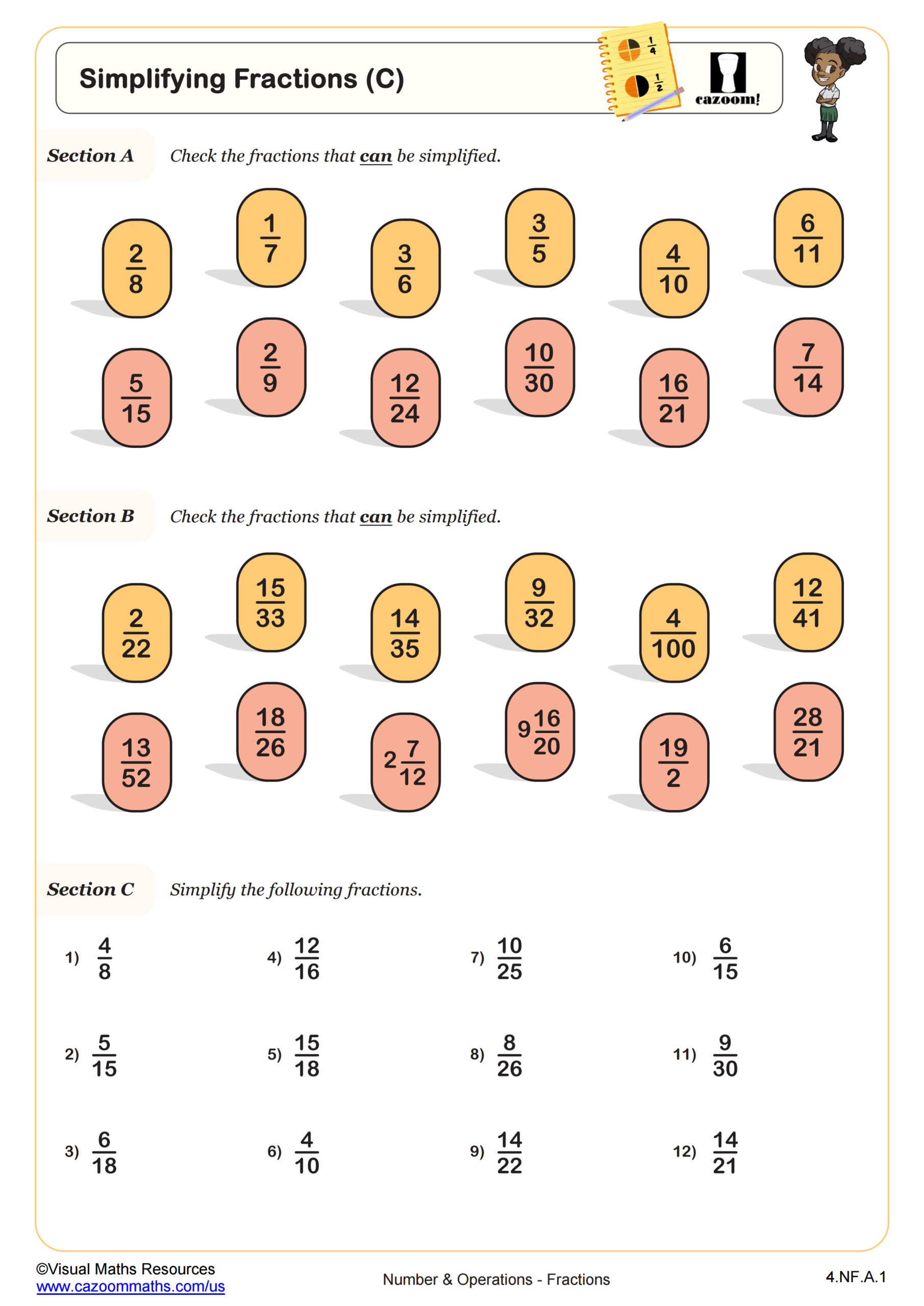
Simplifying Fractions (C)
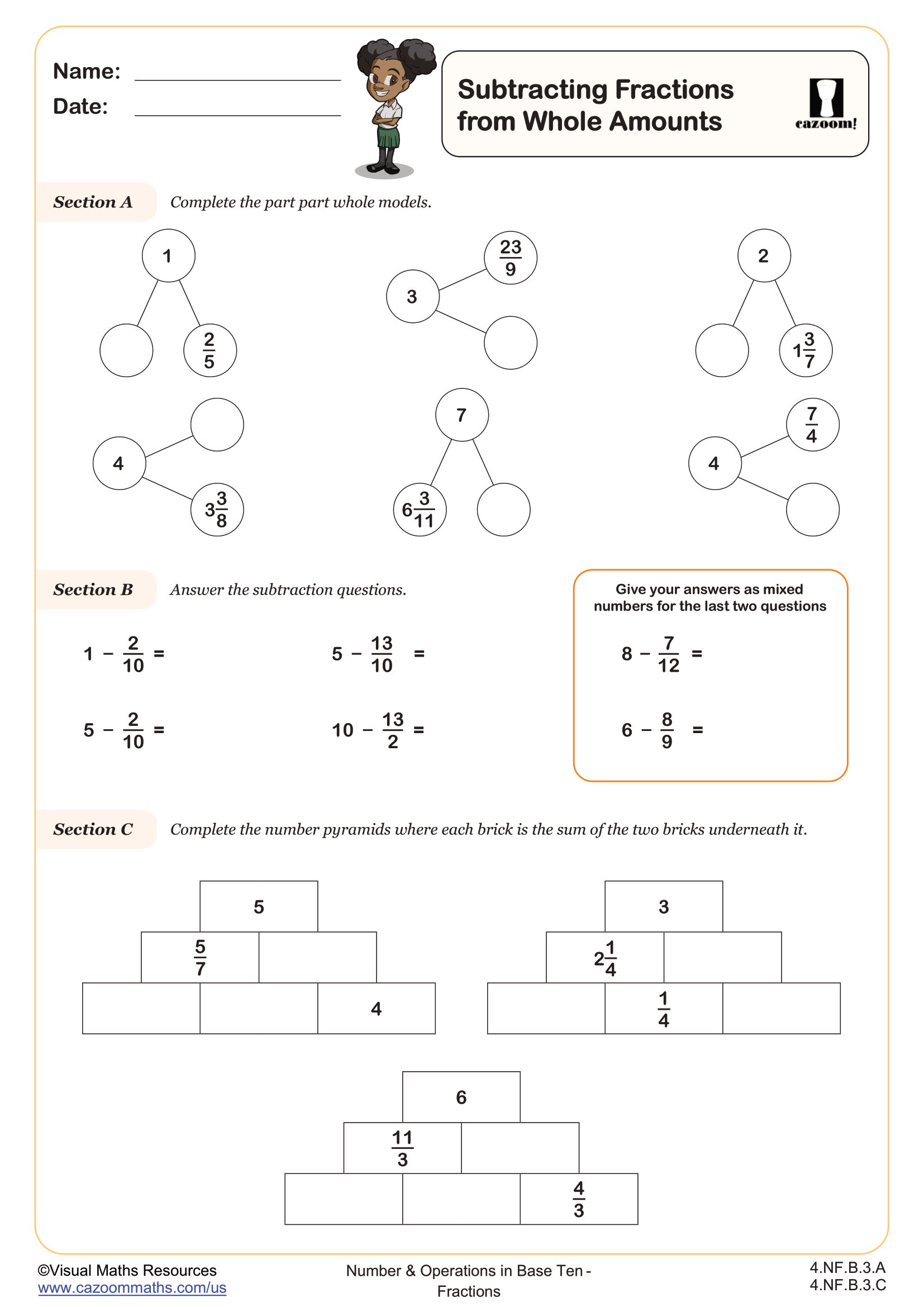
Subtracting Fractions from Whole Amounts
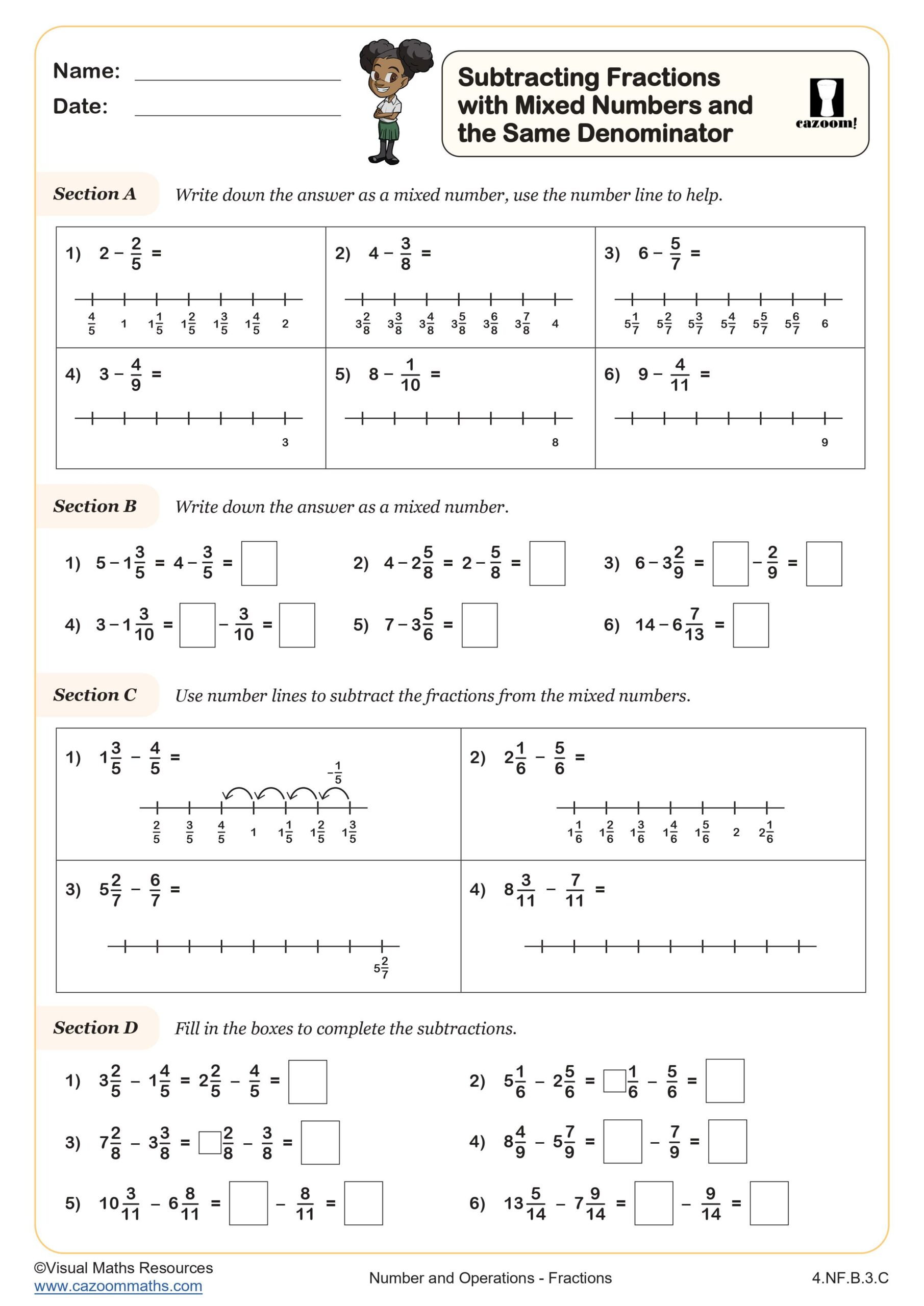
Subtracting Fractions with Mixed Numbers and the Same Denominator
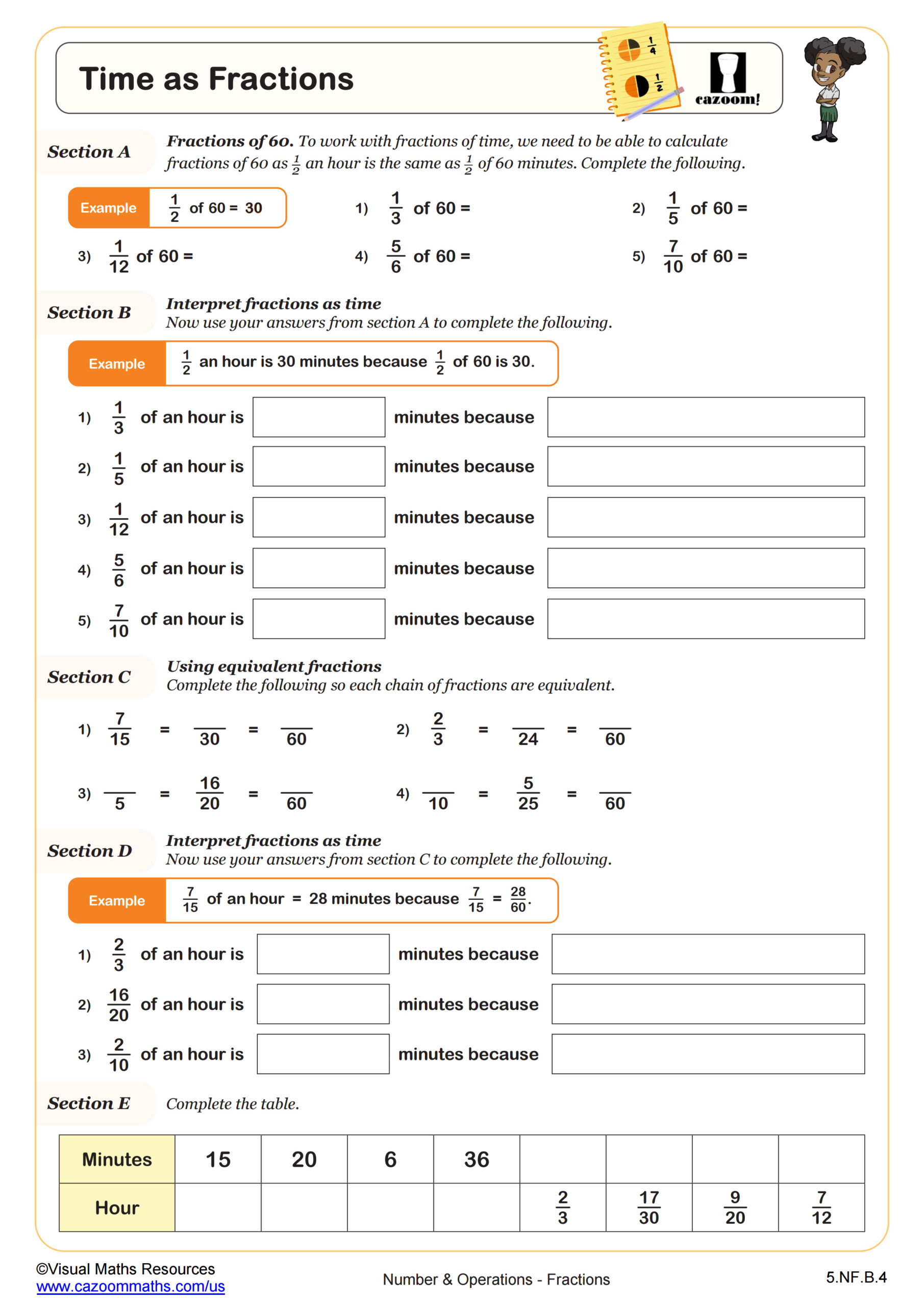
Time as Fractions (A)
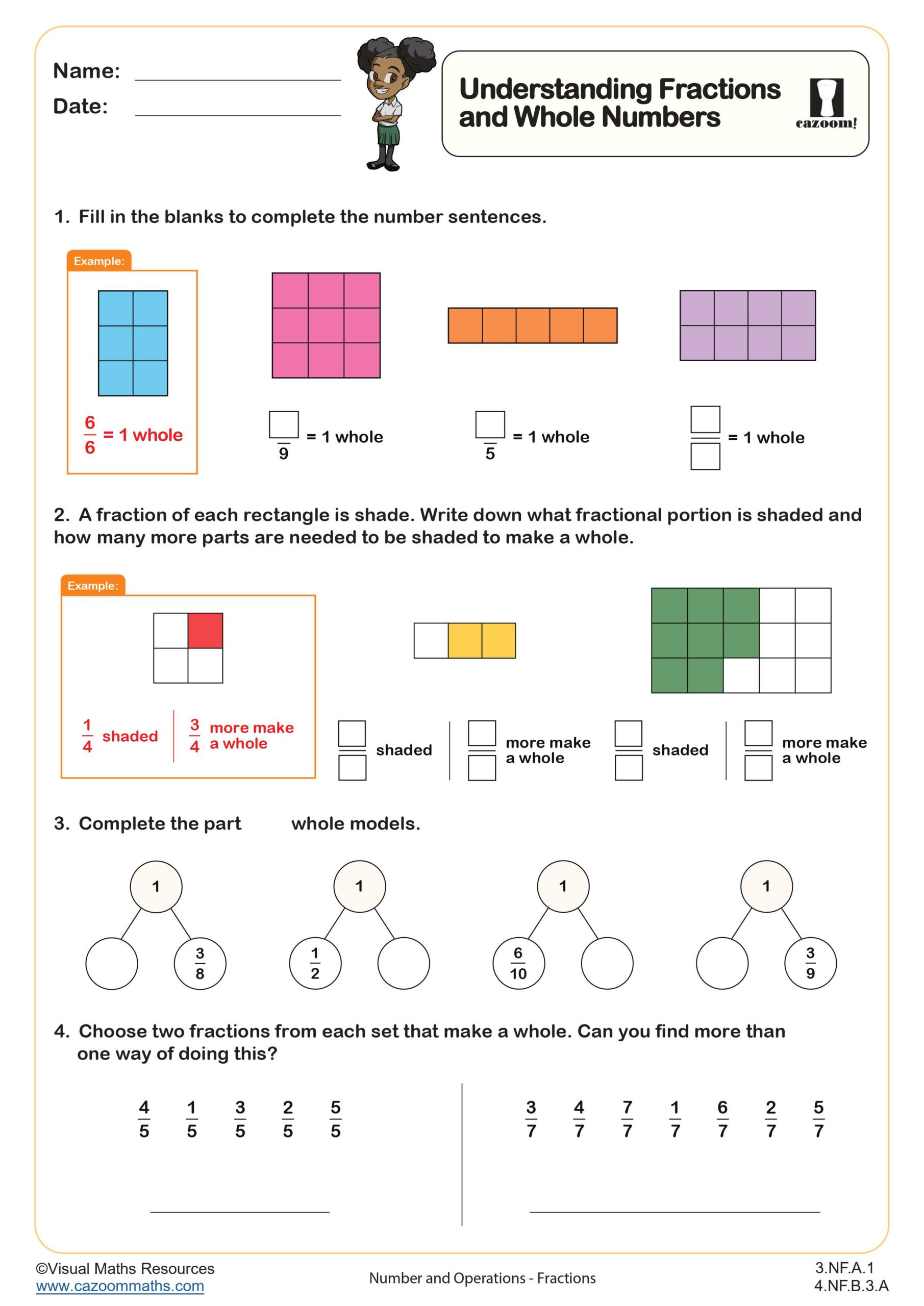
Understanding Fractions and Whole Numbers
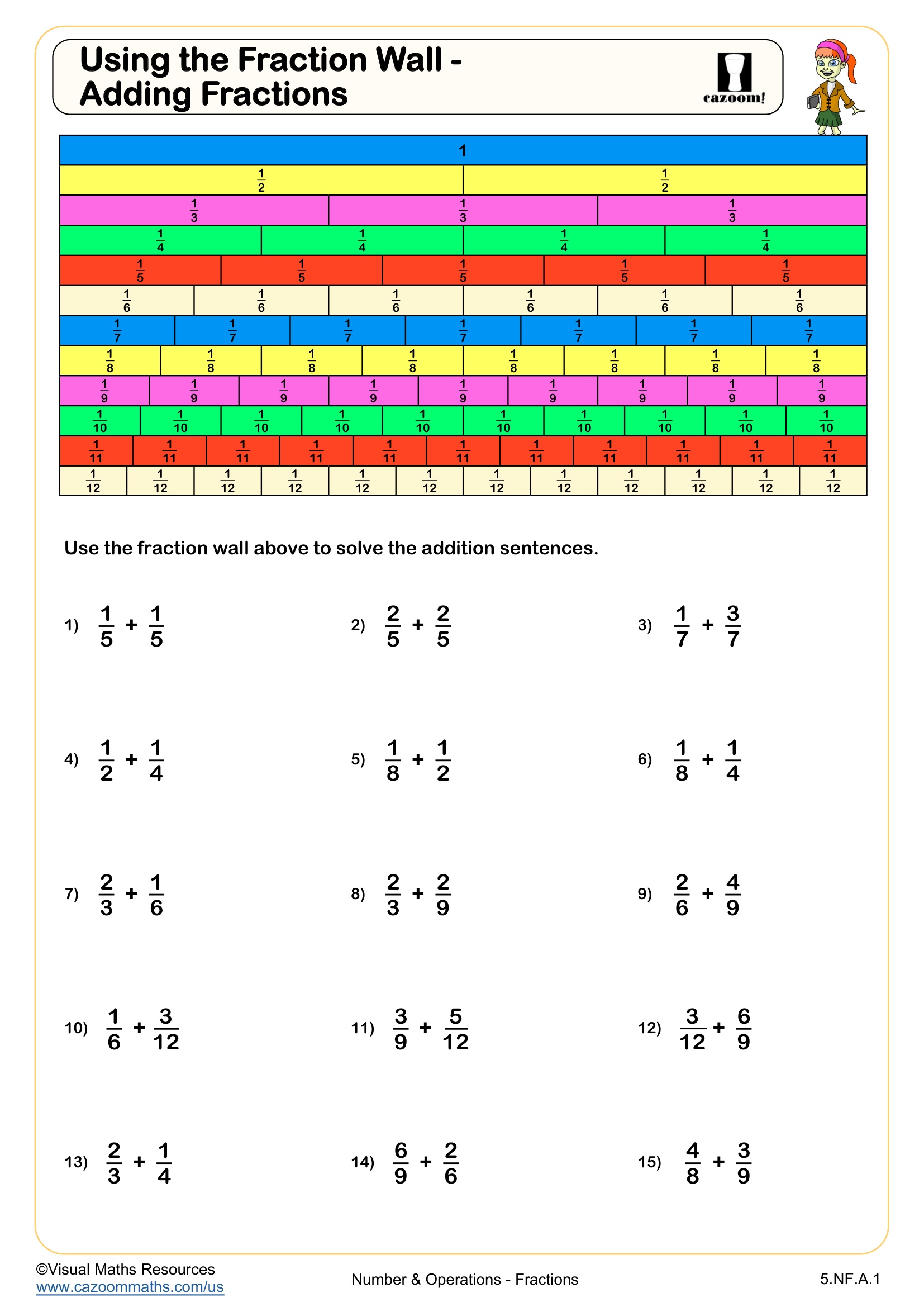
Using a Fraction Wall - Adding Fractions
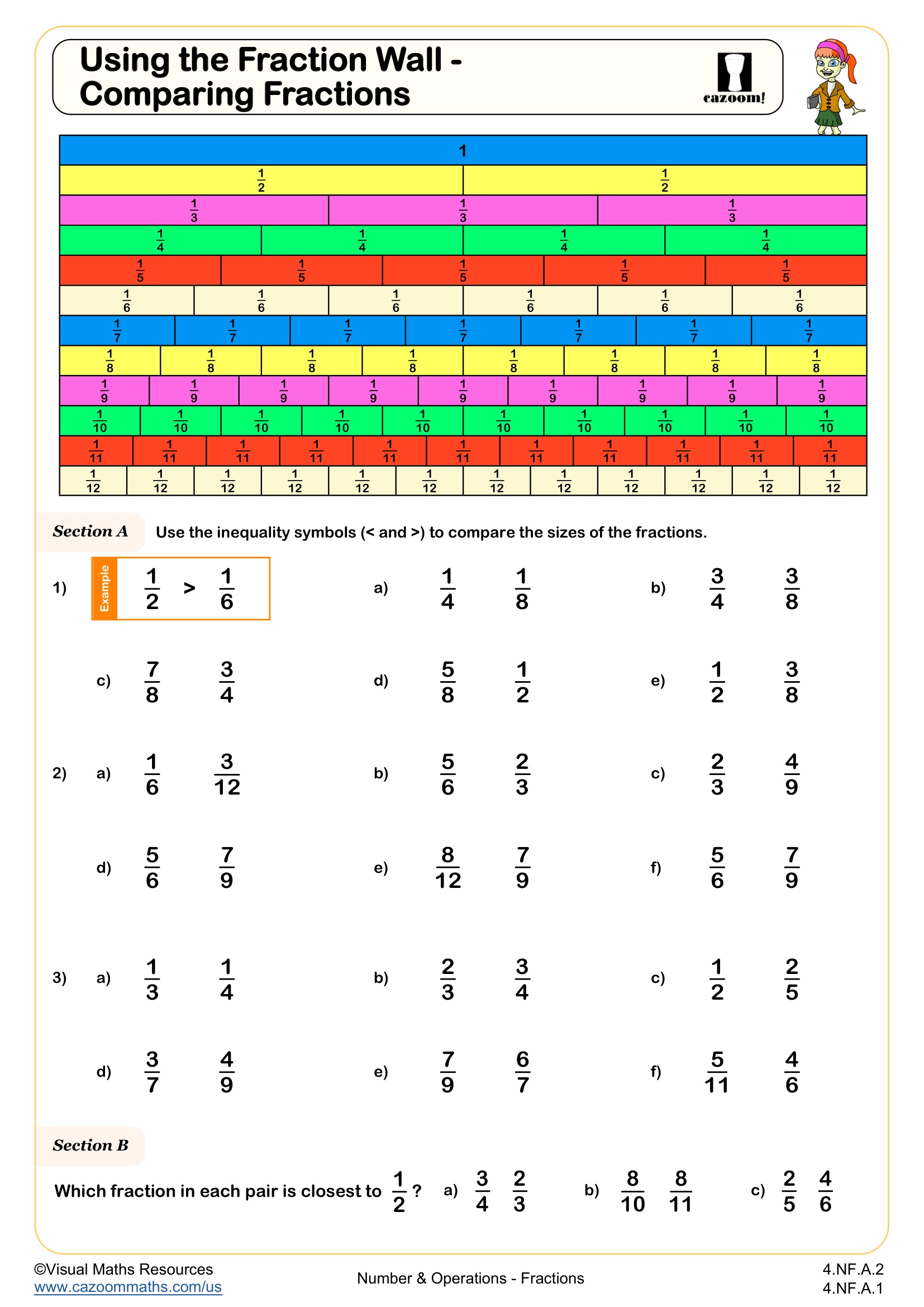
Using a Fraction Wall - Comparing Fractions
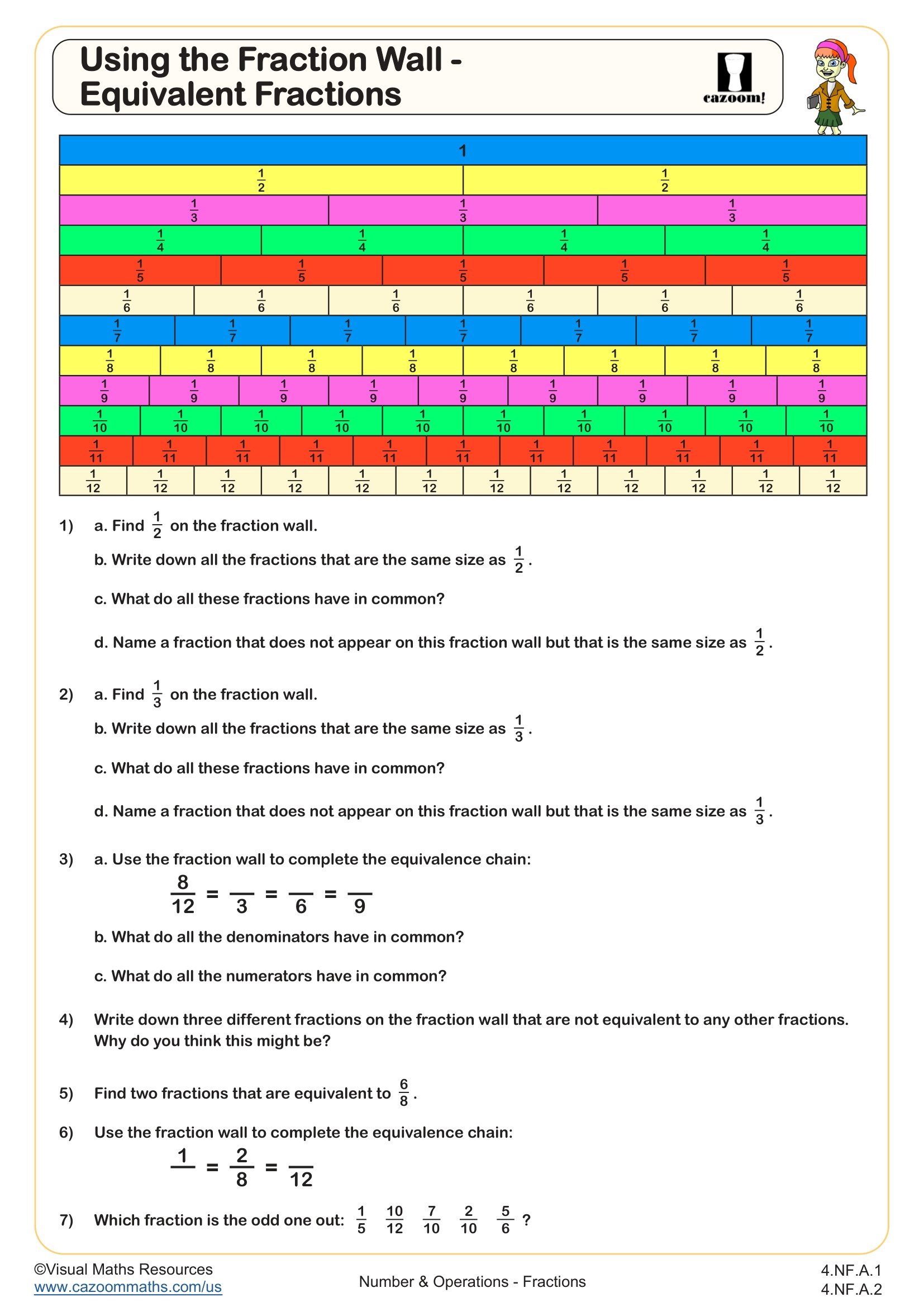
Using a Fraction Wall - Equivalent Fractions
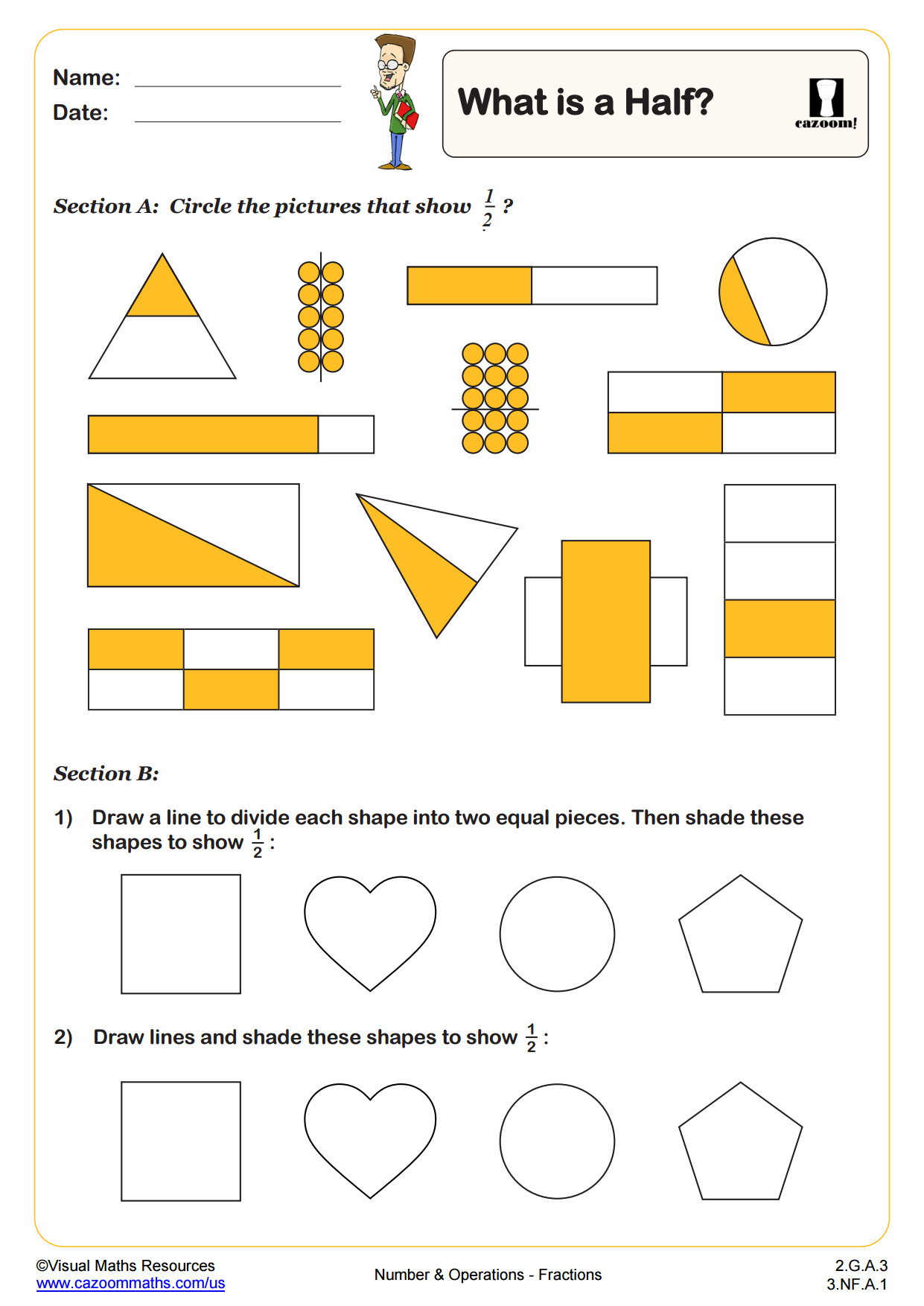
What is a Half
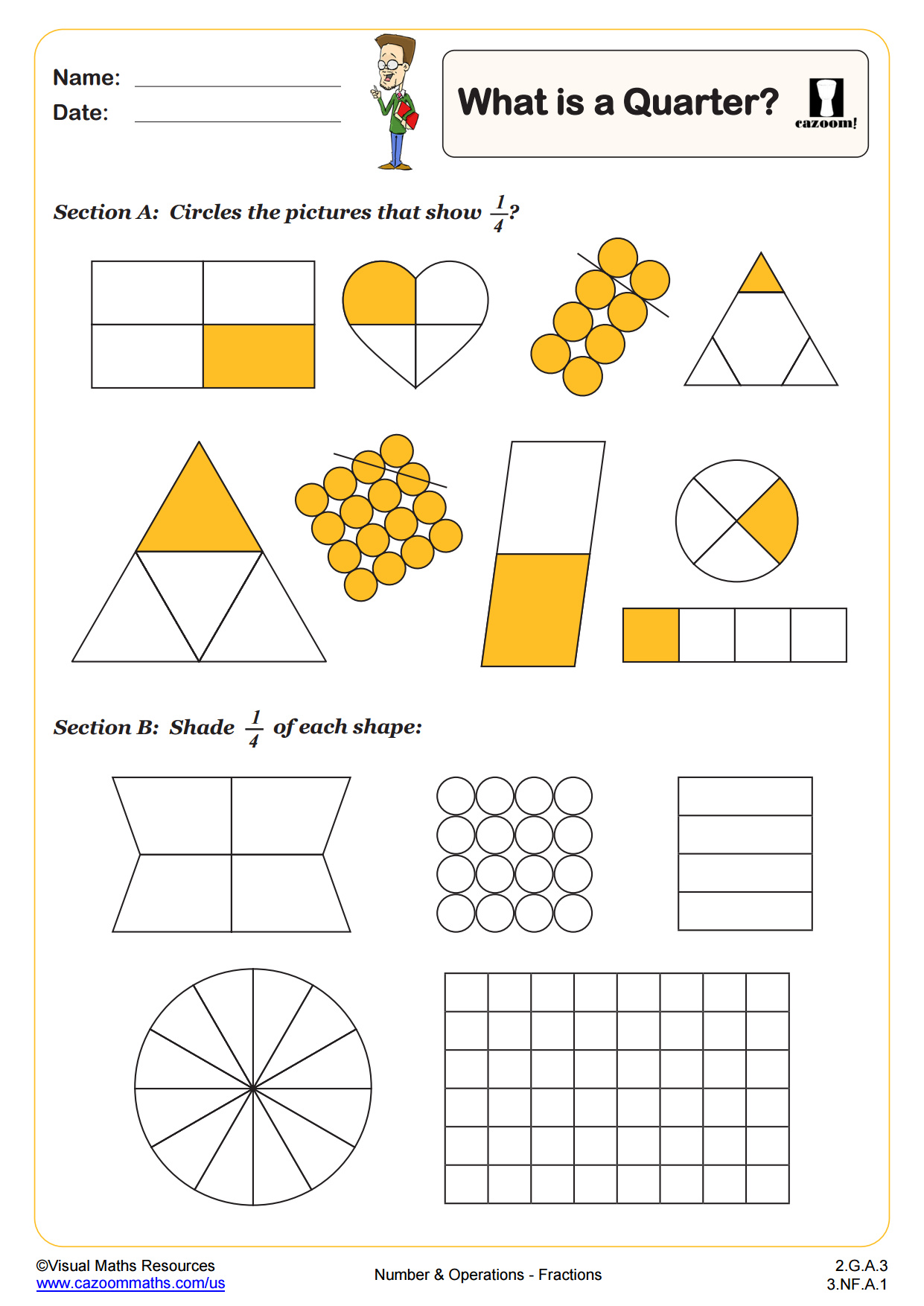
What is a Quarter
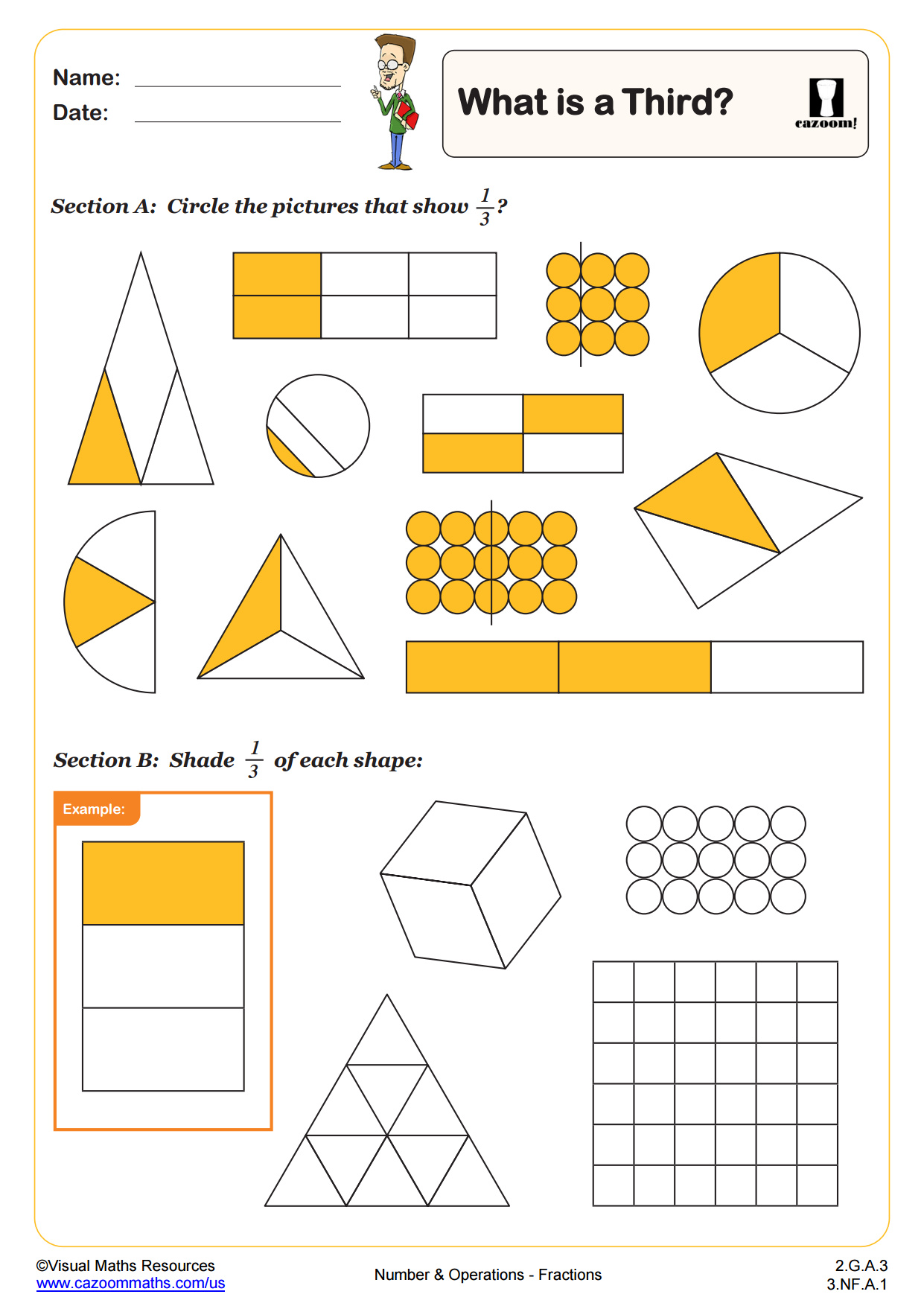
What is a Third
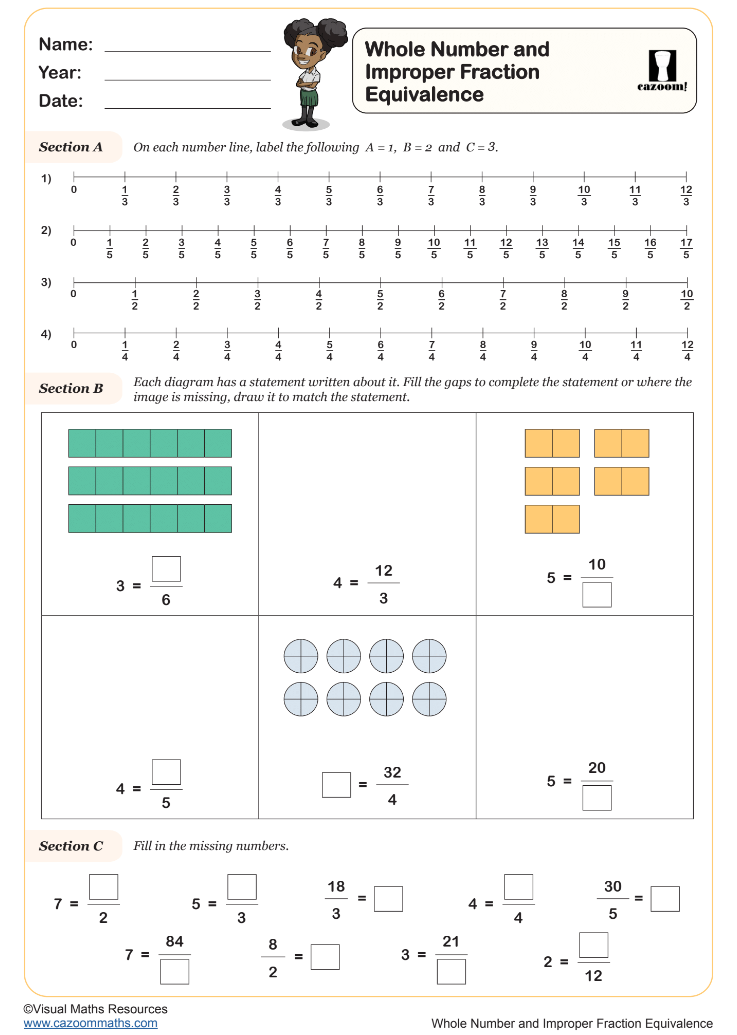
Whole Number and Improper Fraction Equivalence
All worksheets are created by the team of experienced teachers at Cazoom Math.
What topics are covered in elementary fractions worksheets?
Elementary fractions worksheets typically cover identifying fractions using visual models, comparing fractions with like and unlike denominators, equivalent fractions, and basic operations including adding and subtracting fractions 3rd grade worksheets focus on. The progression aligns with Common Core standards starting from understanding unit fractions in grade 3 through mixed number operations in grade 5.
Many teachers observe that students master the procedural aspects of fraction work before developing true number sense about fractional quantities. This disconnect often appears when students can correctly shade 3/4 of a circle but cannot identify which is larger between 3/4 and 2/3 without using visual supports or common denominators.
How do elementary fraction skills progress across grade levels?
Third grade introduces unit fractions and basic fraction concepts using visual models and number lines. Fourth grade expands to comparing fractions, finding equivalent fractions, and adding fractions with like denominators. Fifth grade adds mixed numbers, subtracting fractions, and multiplying fractions by whole numbers according to most state standards.
Teachers notice significant variation in readiness within grade levels, particularly when students transition from concrete manipulatives to abstract fraction notation. Some fourth graders still need fraction tiles or circles to compare simple fractions, while others can work with improper fractions mentally. This wide range makes differentiated worksheet practice valuable for meeting individual student needs.
Why do students struggle with equivalent fractions concepts?
Equivalent fractions challenge students because the concept contradicts their whole number understanding that different numbers cannot be equal. Students often memorize the rule about multiplying numerator and denominator by the same number without grasping why this creates equivalent values. Visual models become crucial for building this conceptual foundation.
Classroom observations reveal that students who learn equivalent fractions through pattern recognition alone often struggle later with simplifying fractions or finding common denominators. Teachers find success when students first explore equivalent fractions using fraction strips or area models before moving to numerical methods, helping them see that 2/4 and 1/2 represent the same amount of space or length.
How can teachers use these worksheets most effectively in elementary classrooms?
Effective use involves pairing worksheet practice with hands-on activities and visual models rather than assigning worksheets in isolation. Teachers report better results when students use manipulatives first, then complete corresponding worksheet problems to reinforce the concrete experience. The answer keys allow for immediate feedback during independent practice time.
Many teachers structure lessons by introducing concepts with manipulatives, providing guided practice through worksheet problems, then assigning similar problems as fractions homework sheet activities. This progression helps students bridge from concrete understanding to abstract problem solving while building confidence through successful independent practice.