Elementary School Measurement and Data Worksheets
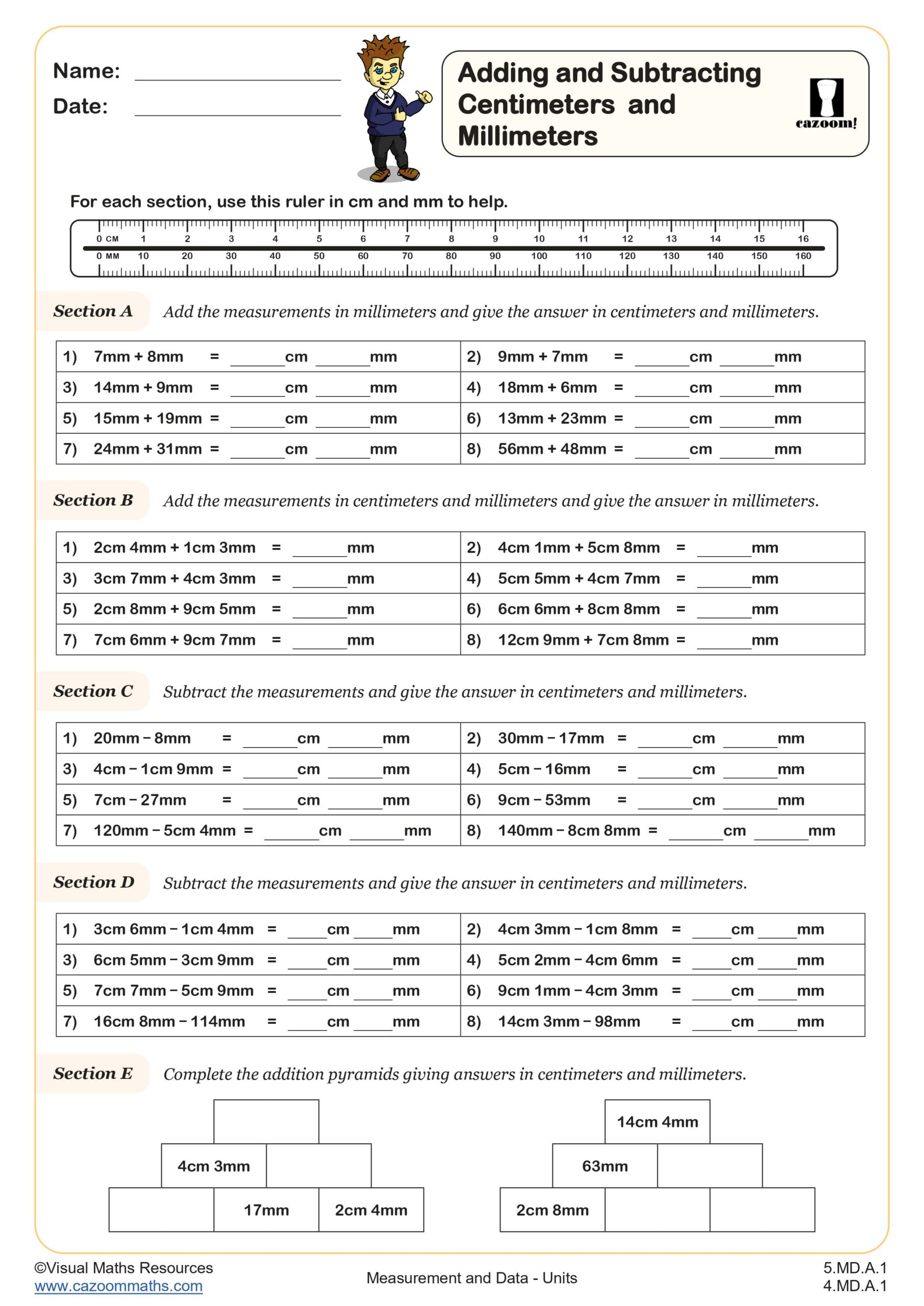
Adding and Subtracting Centimeters and Millimeters
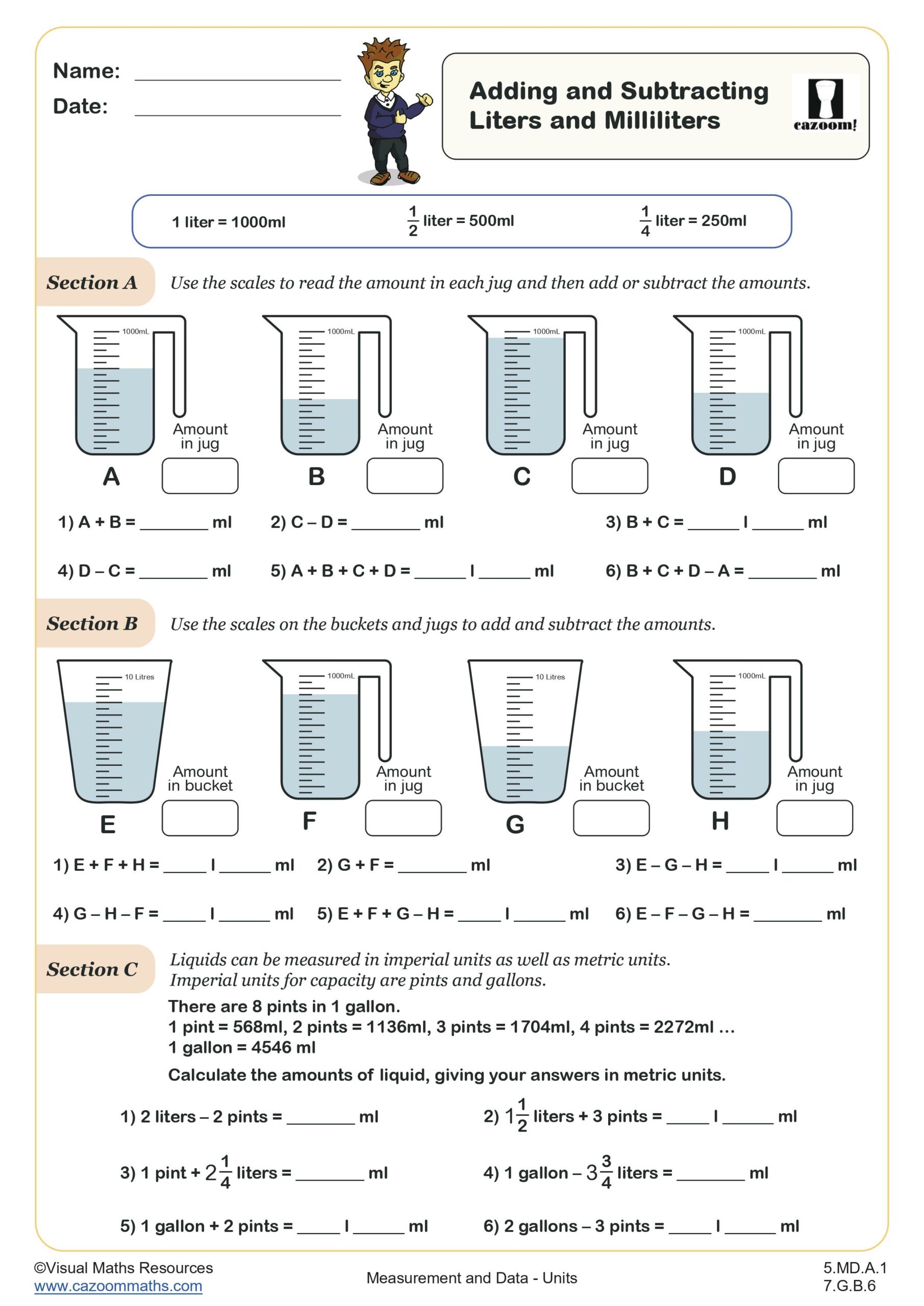
Adding and Subtracting Liters and Milliliters
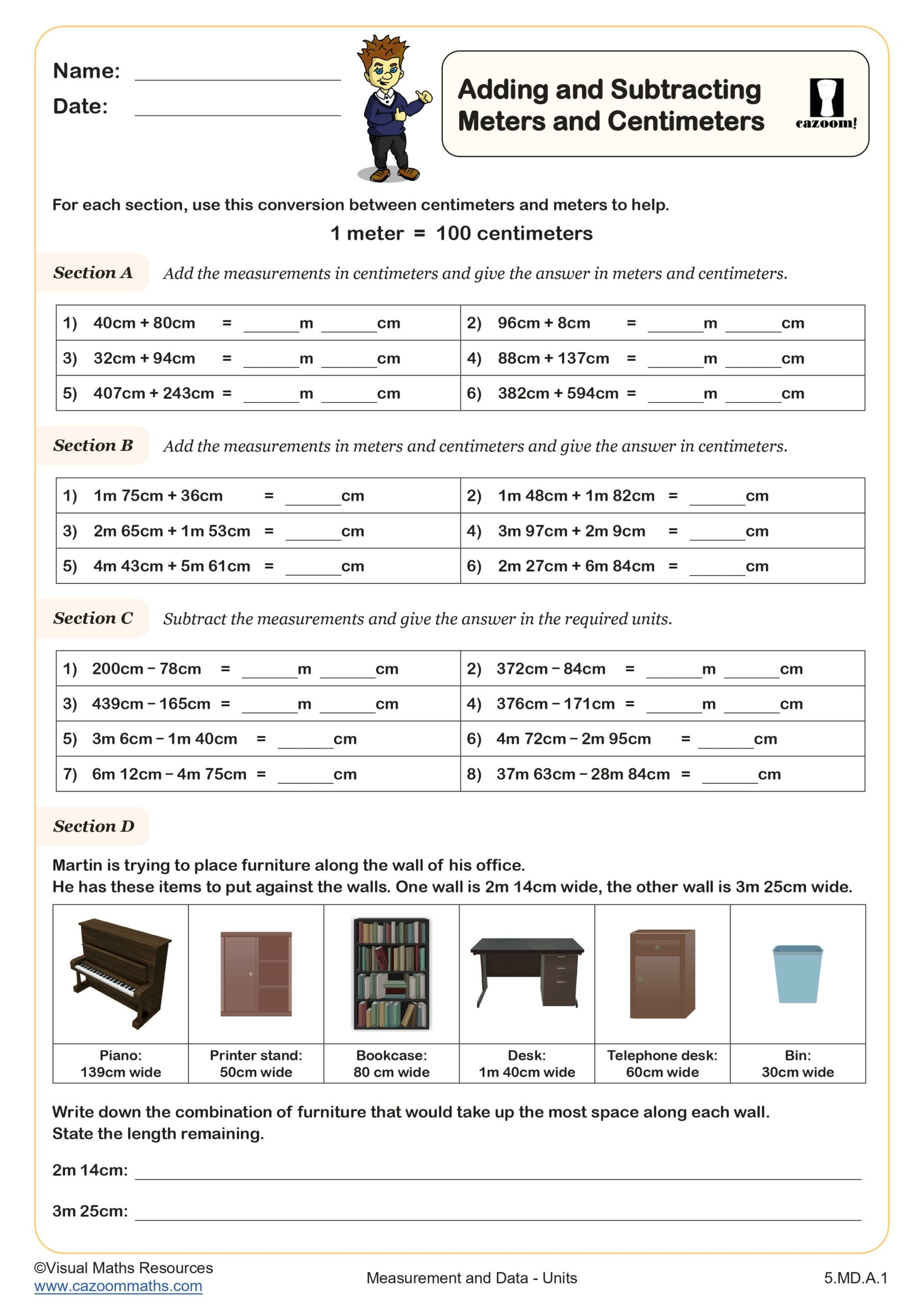
Adding and Subtracting Meters and Centimeters
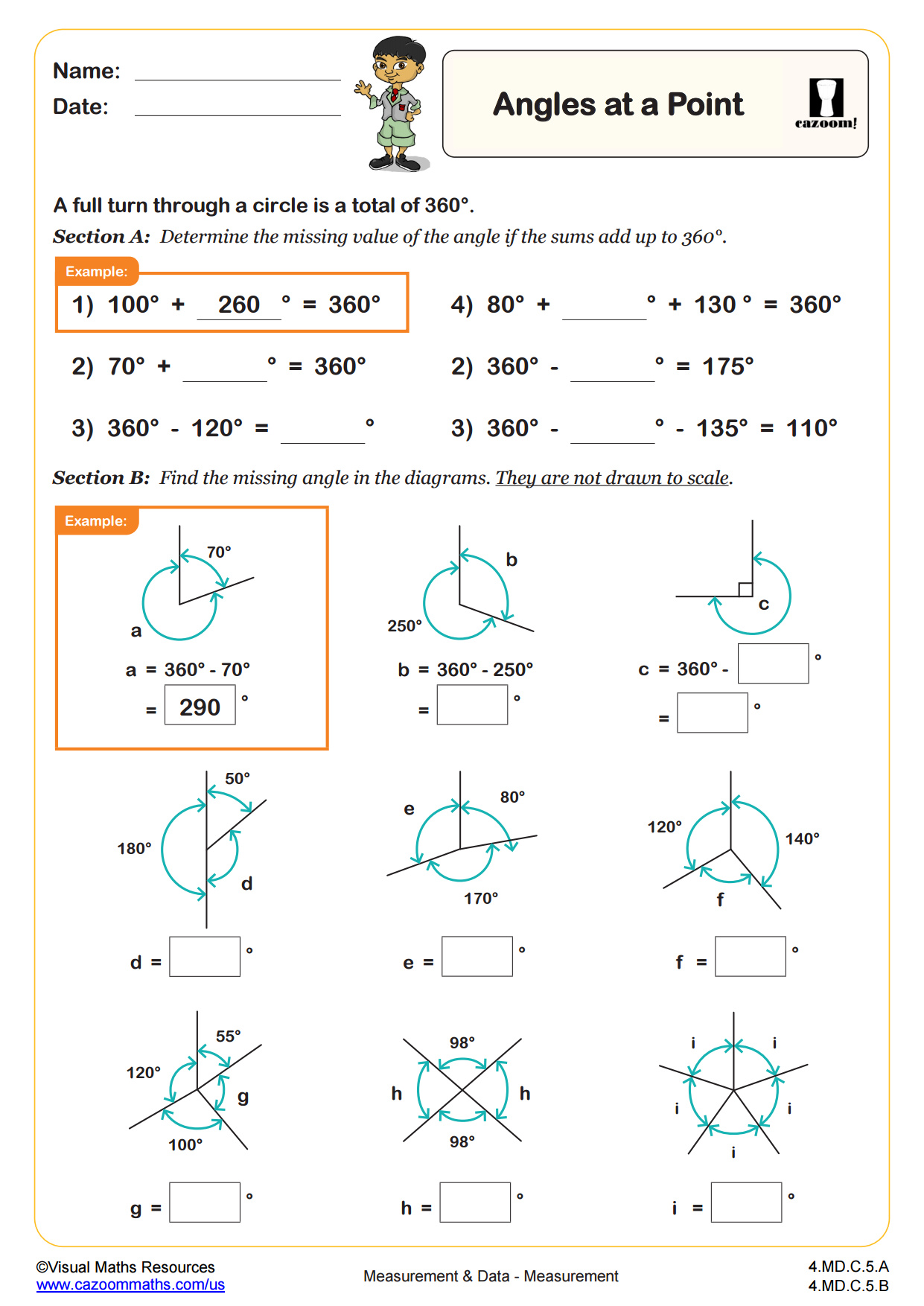
Angles at a Point
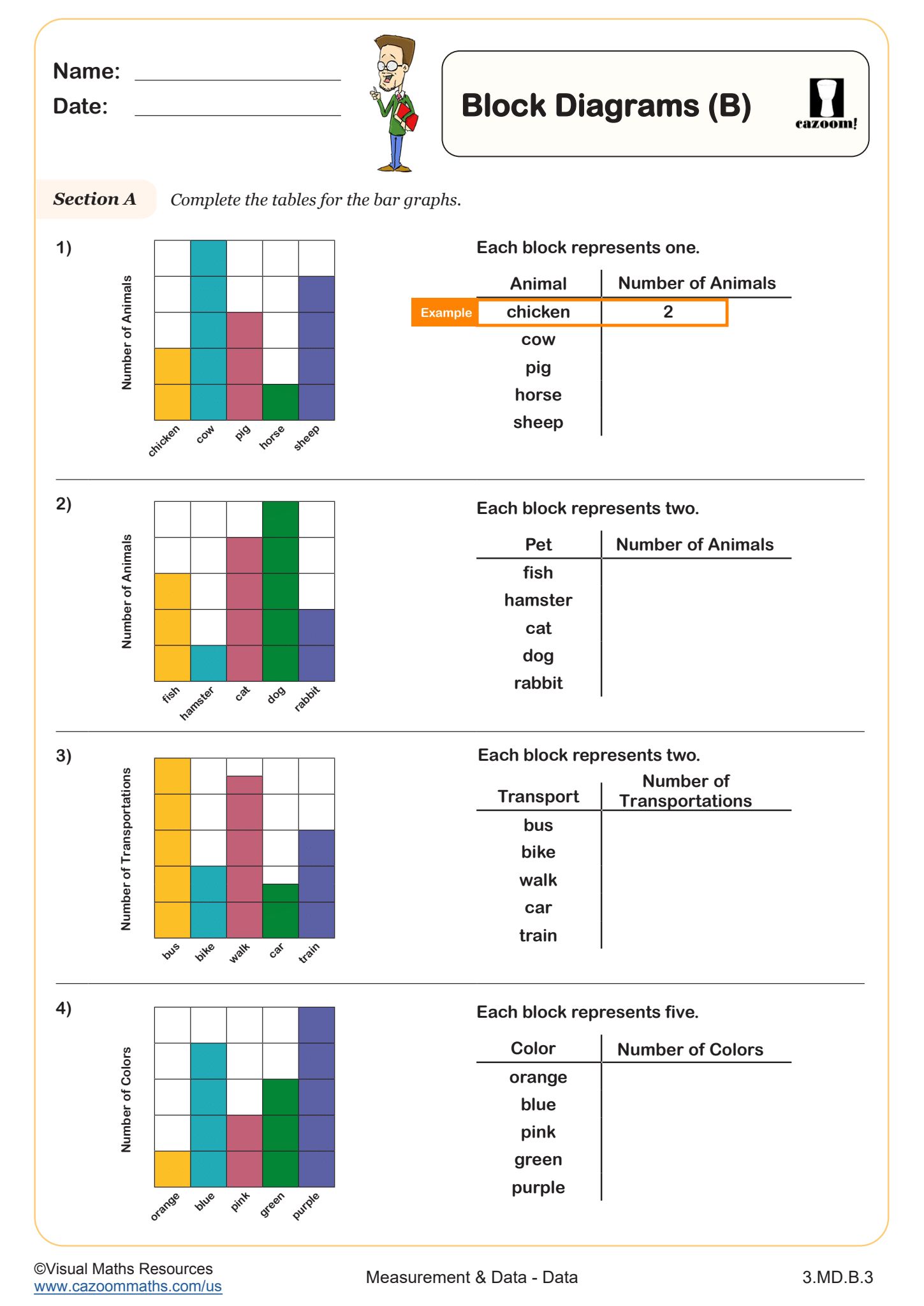
Block Diagrams (B)
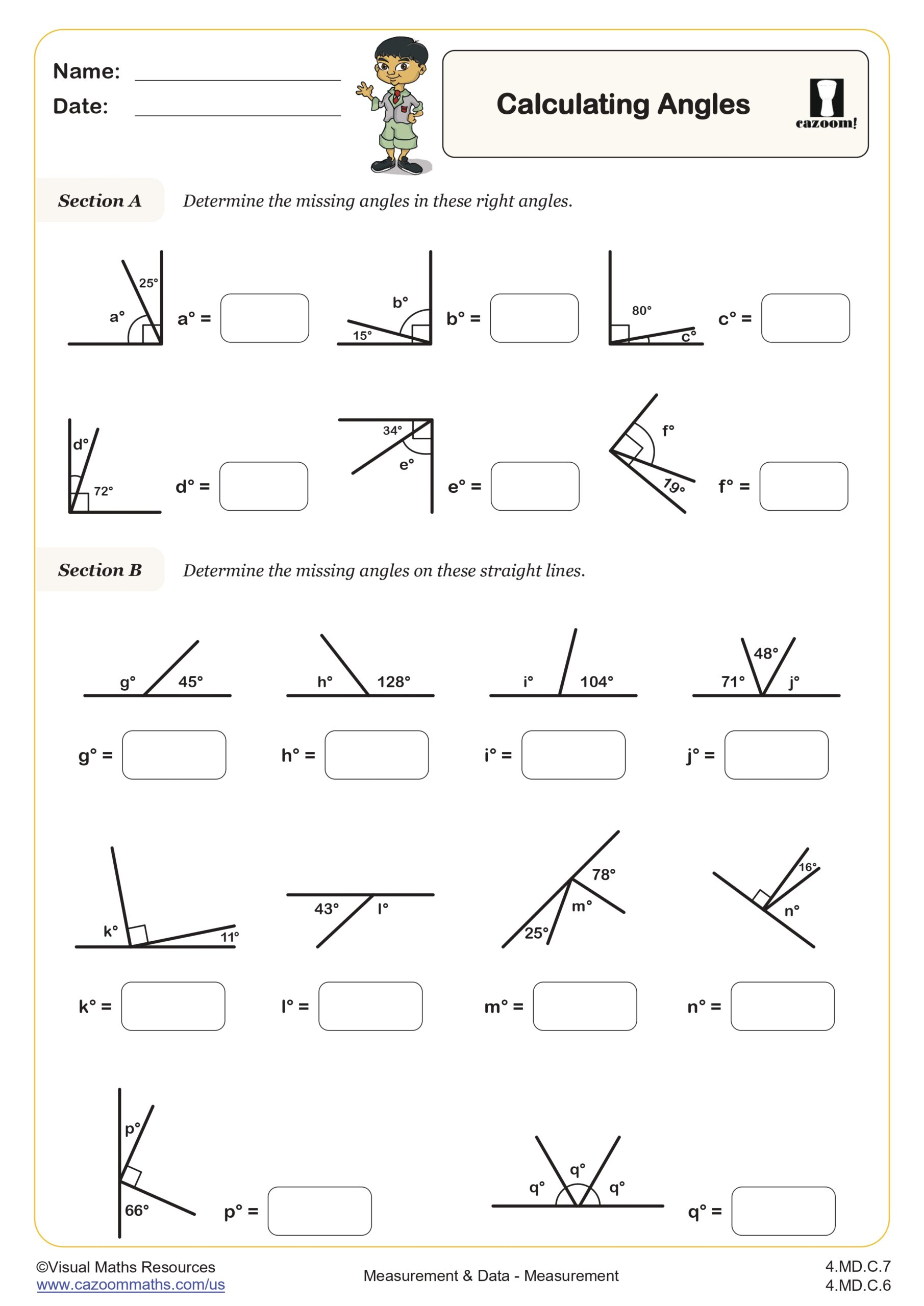
Calculating Angles
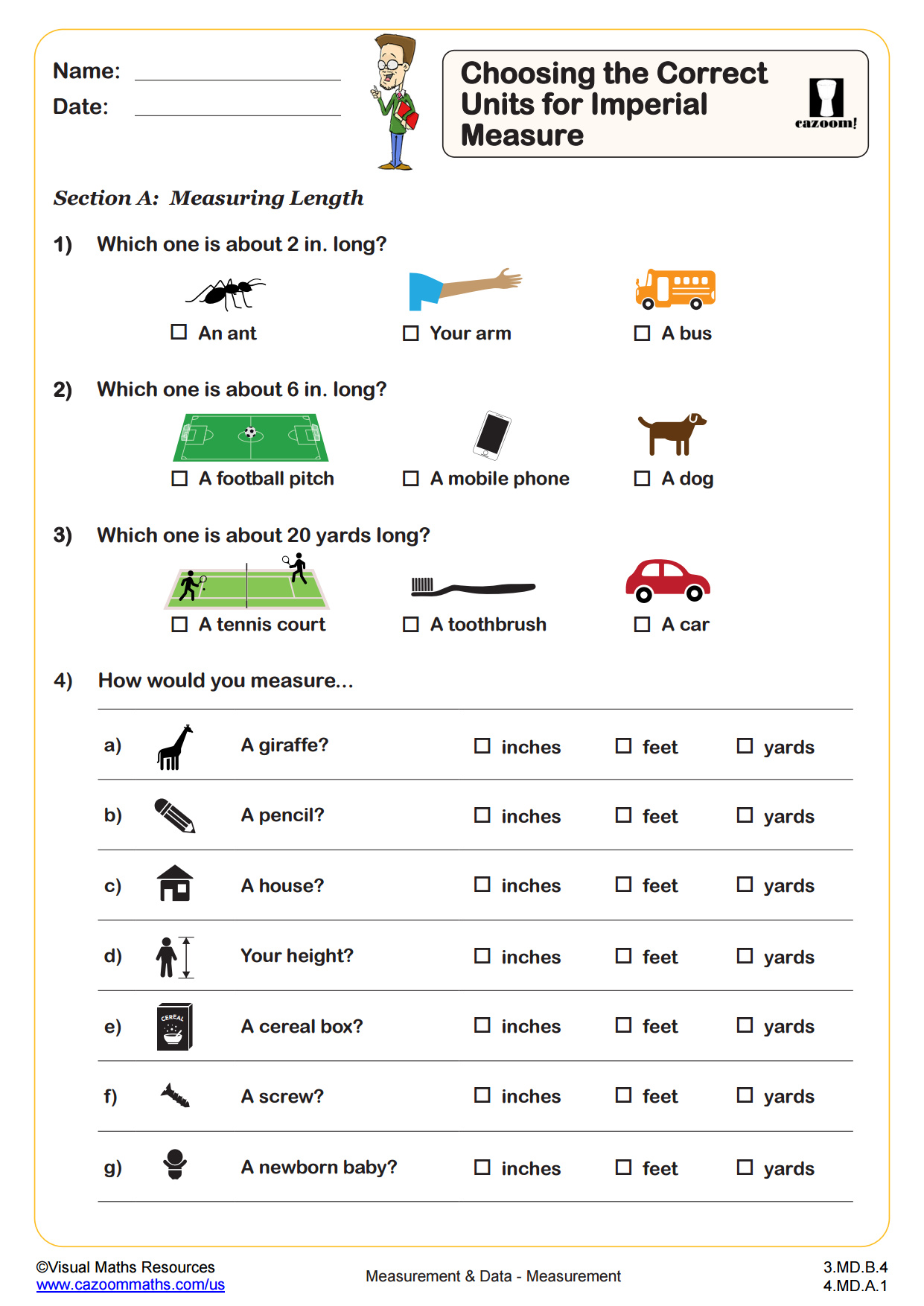
Choosing the Correct Units for Imperial Measure
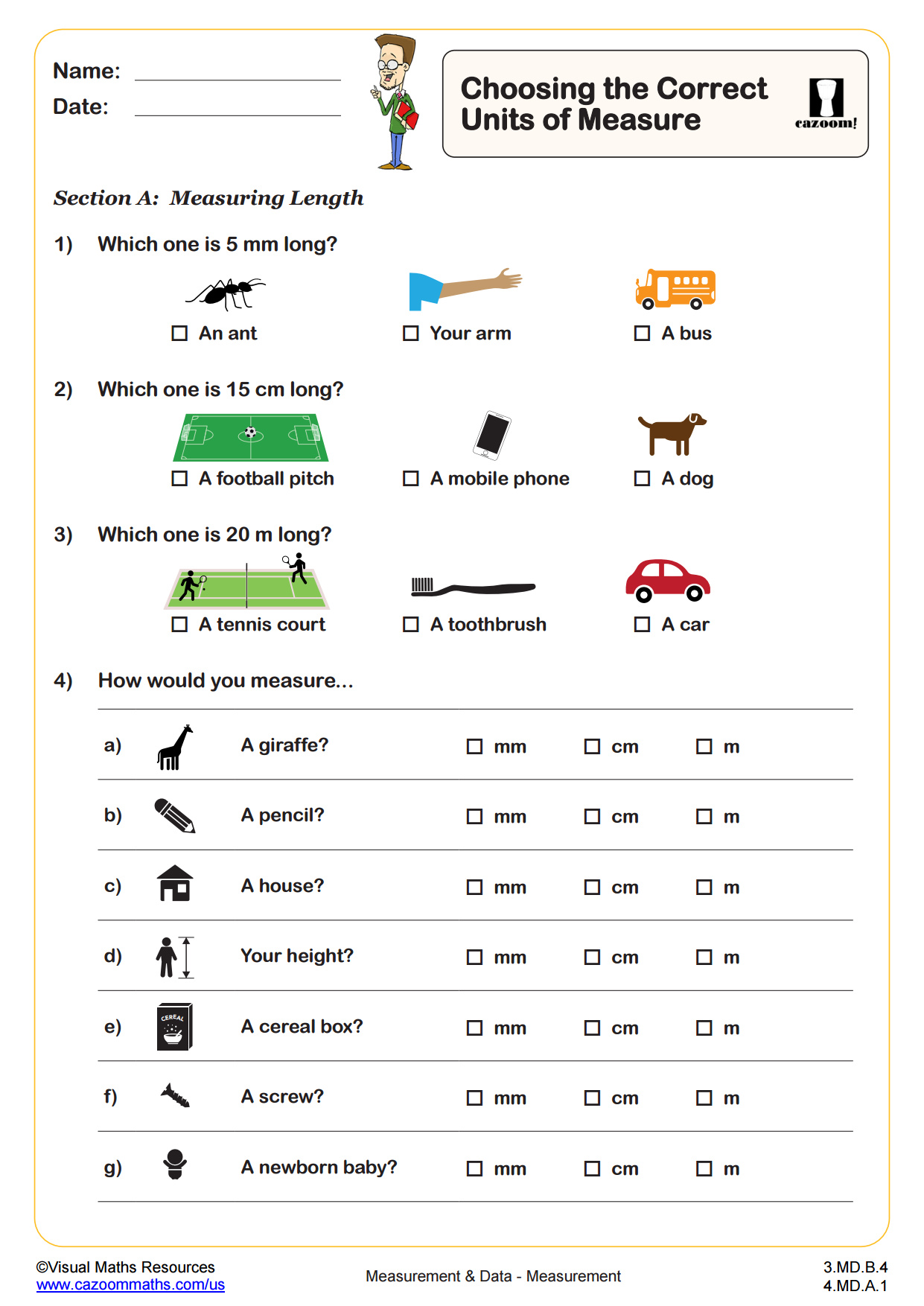
Choosing the Correct Units of Measure
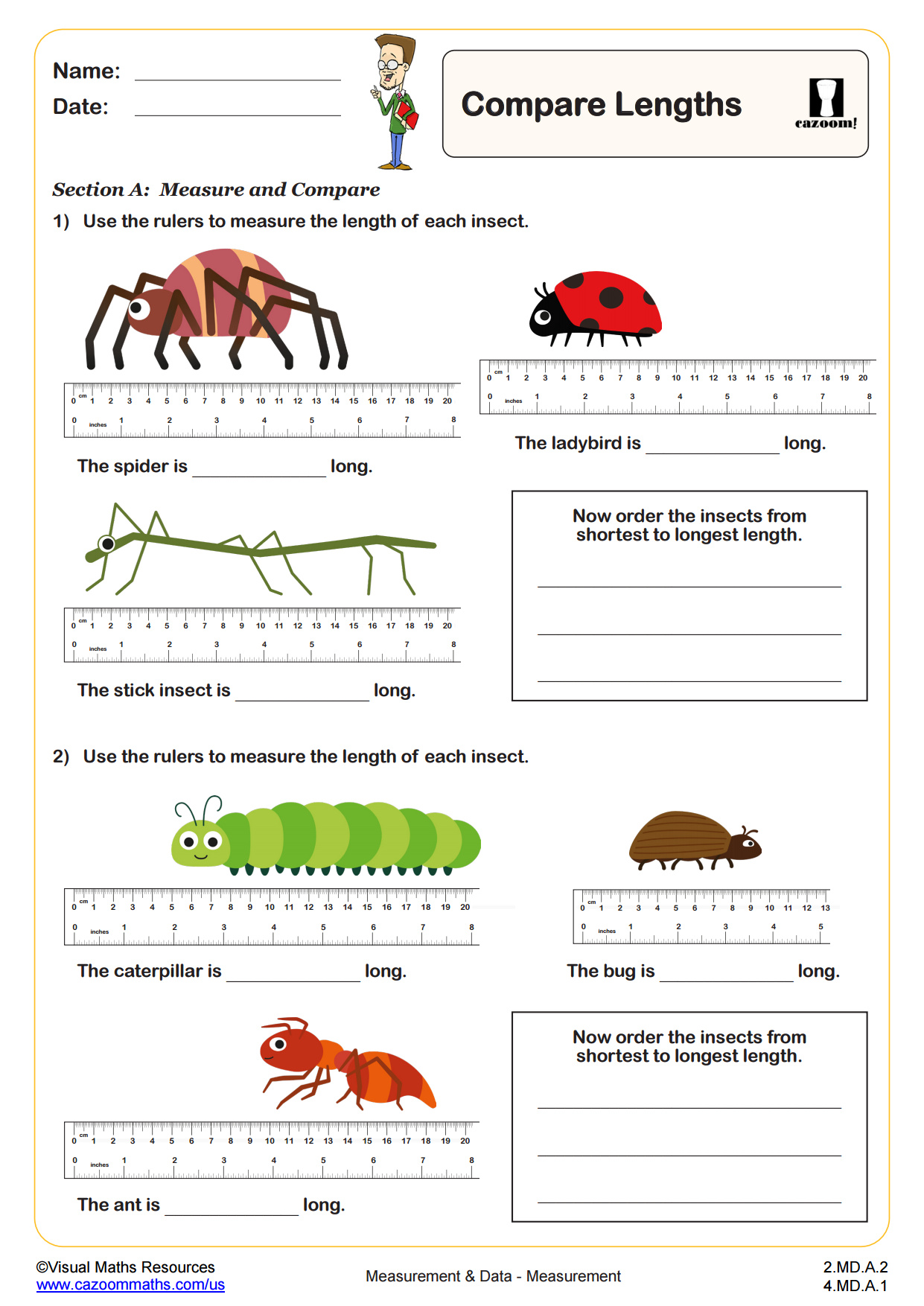
Compare Lengths
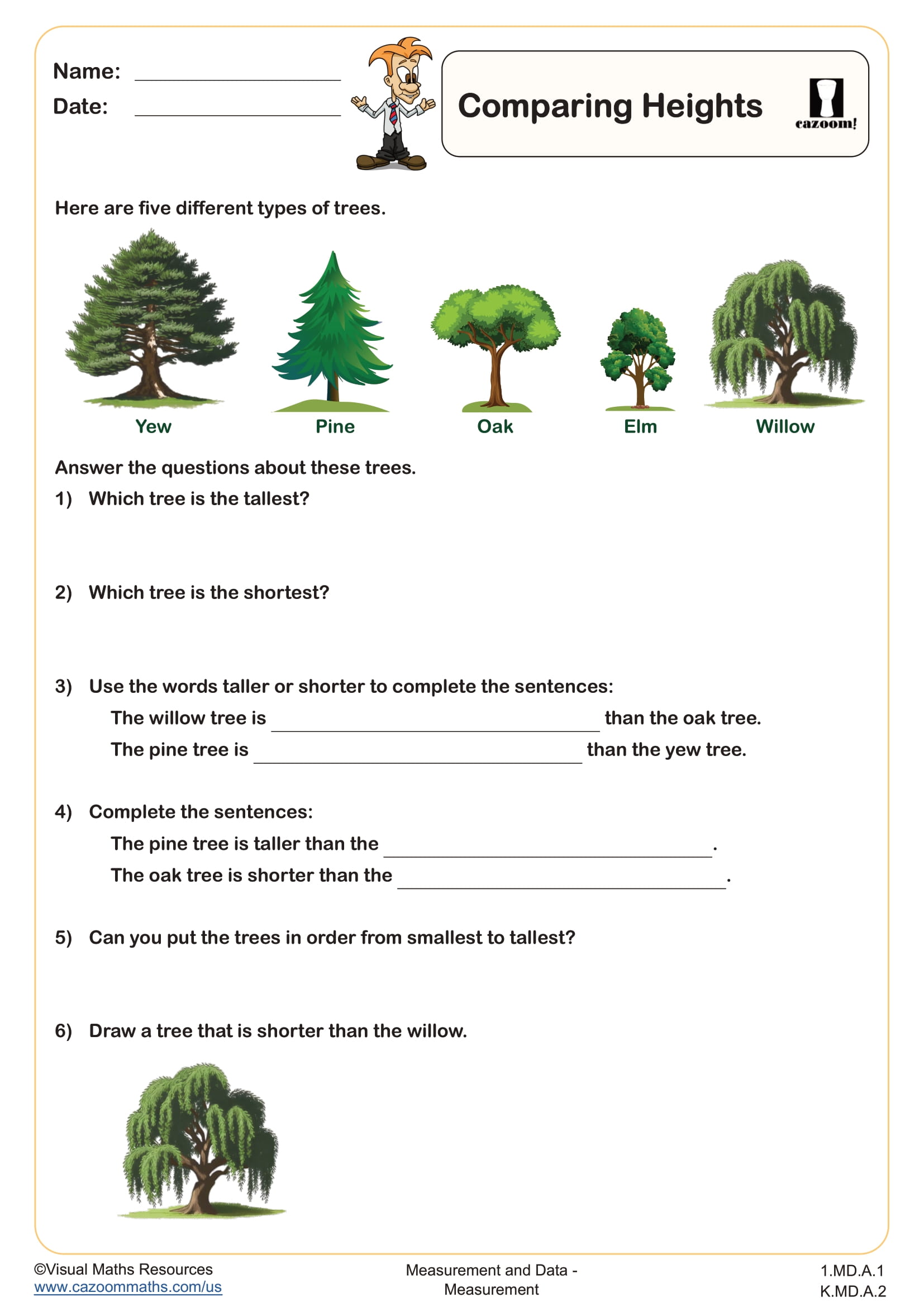
Comparing Heights
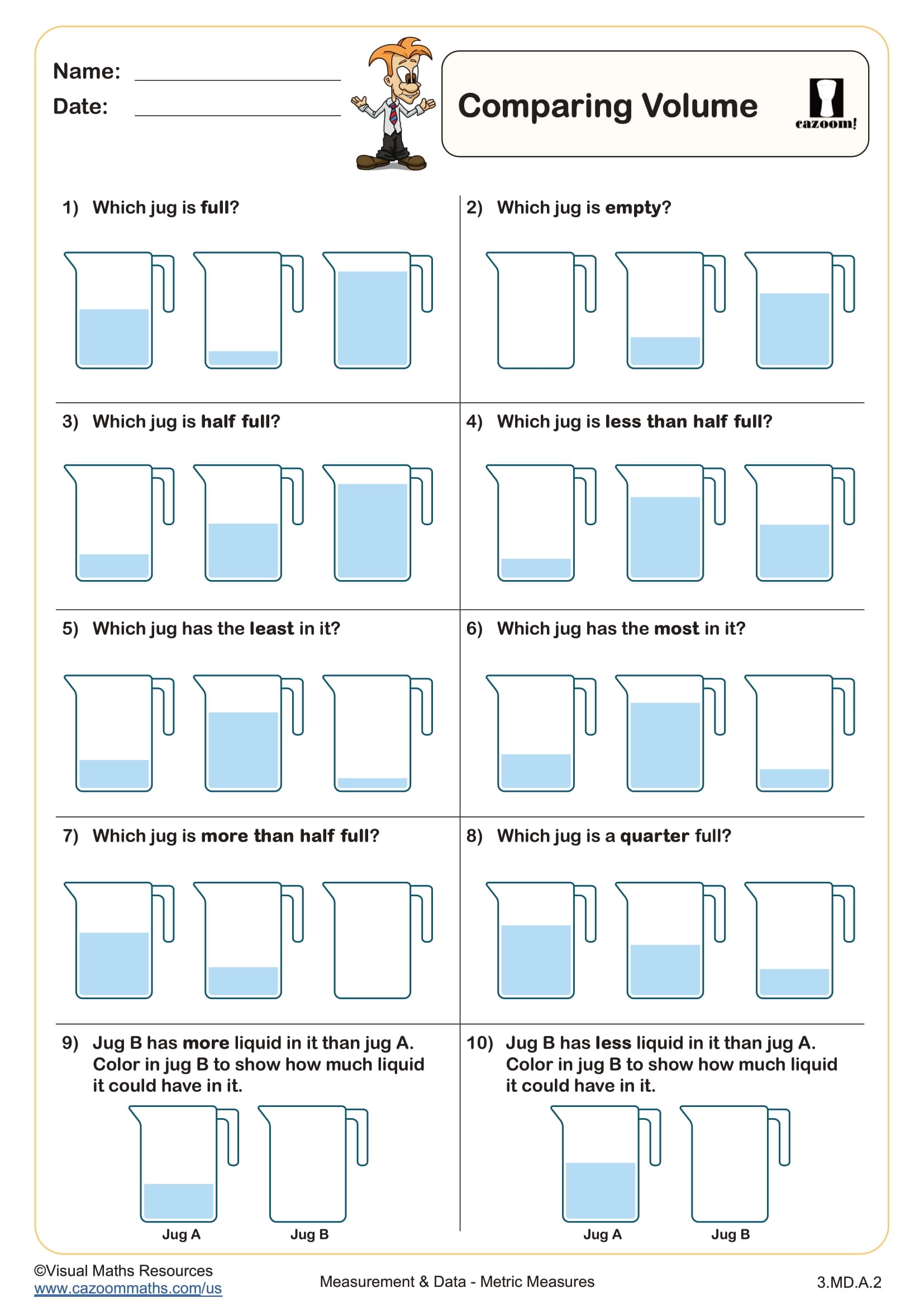
Comparing Volume
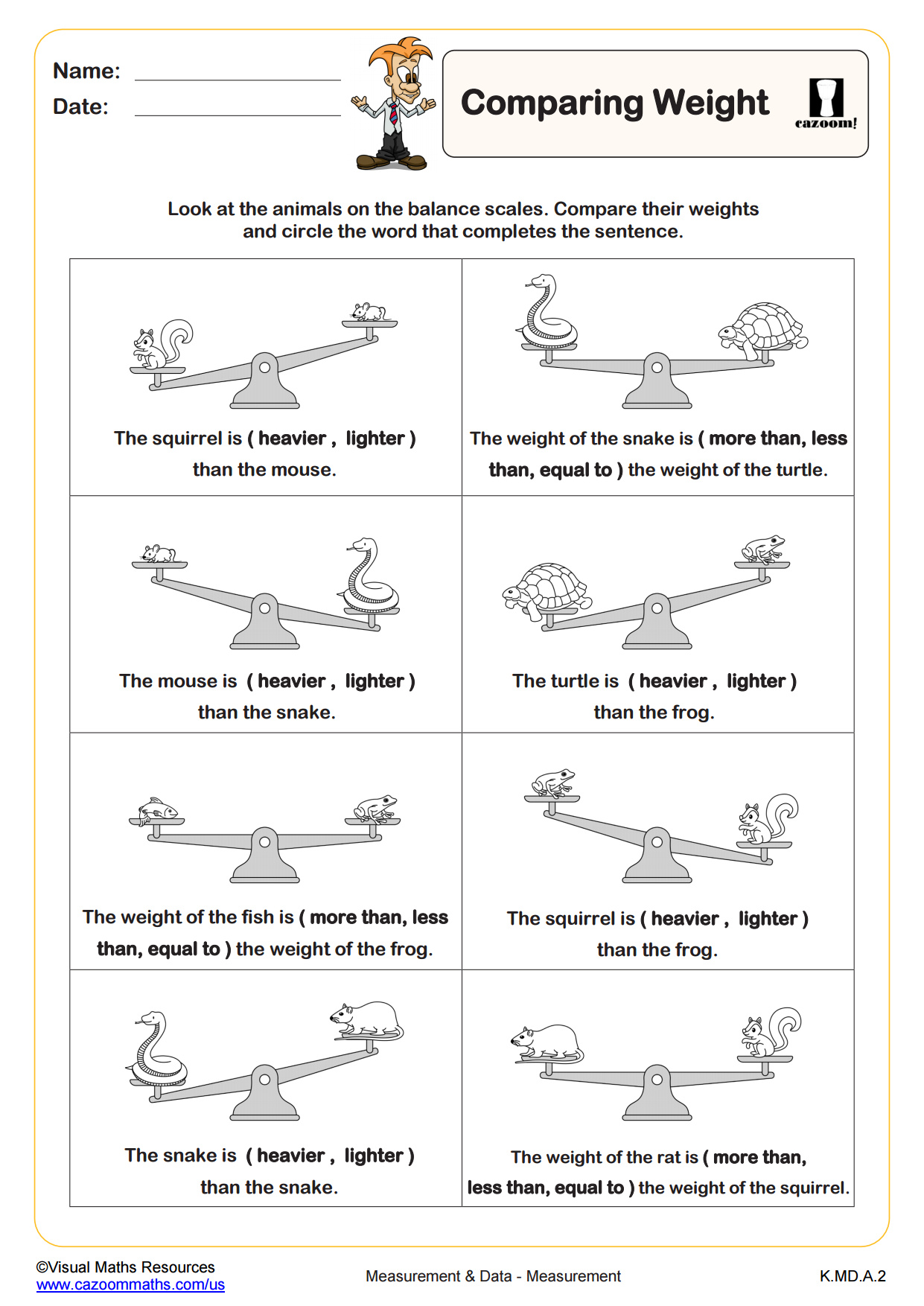
Comparing Weight
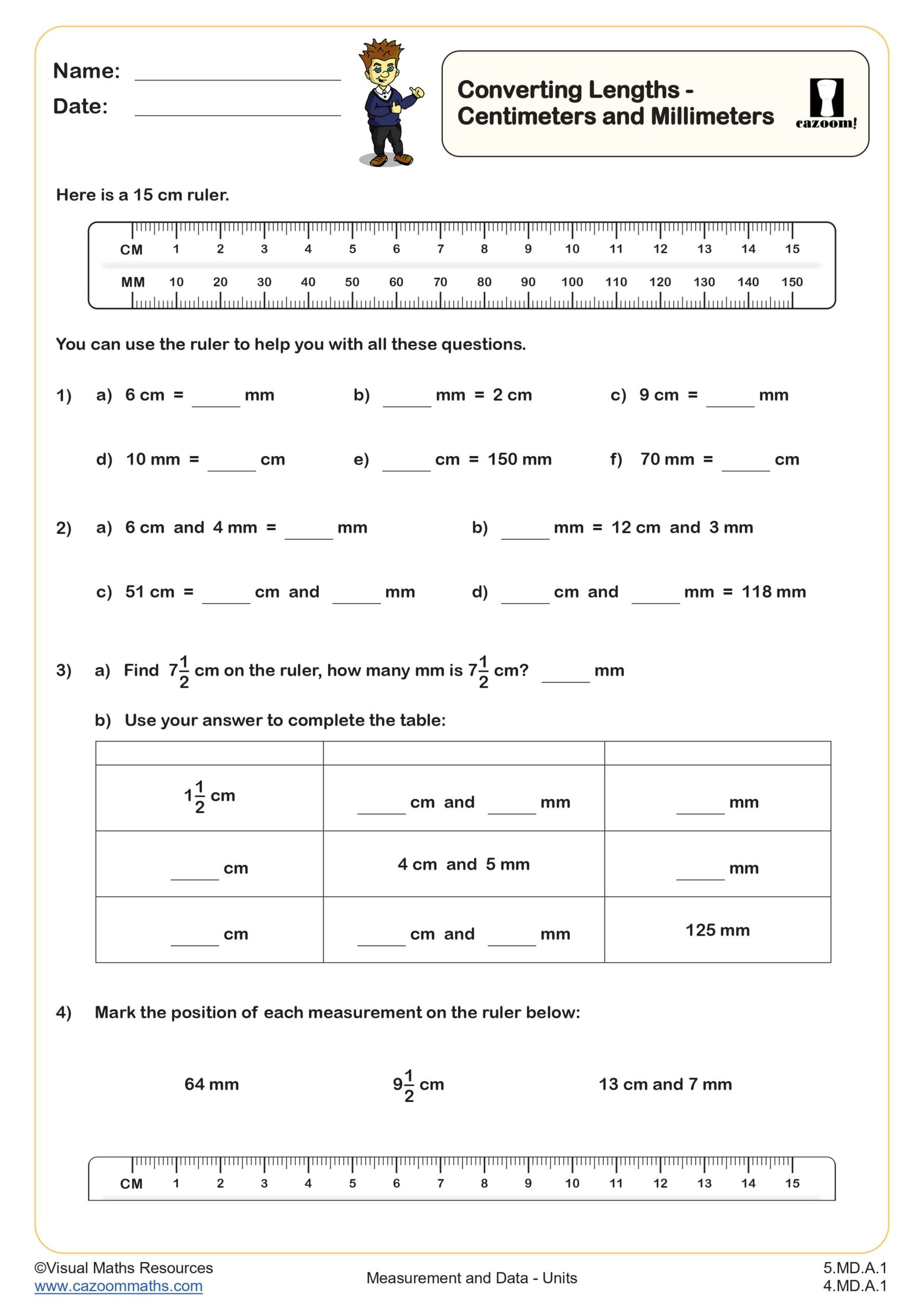
Converting Lengths - Centimeters and Millimeters
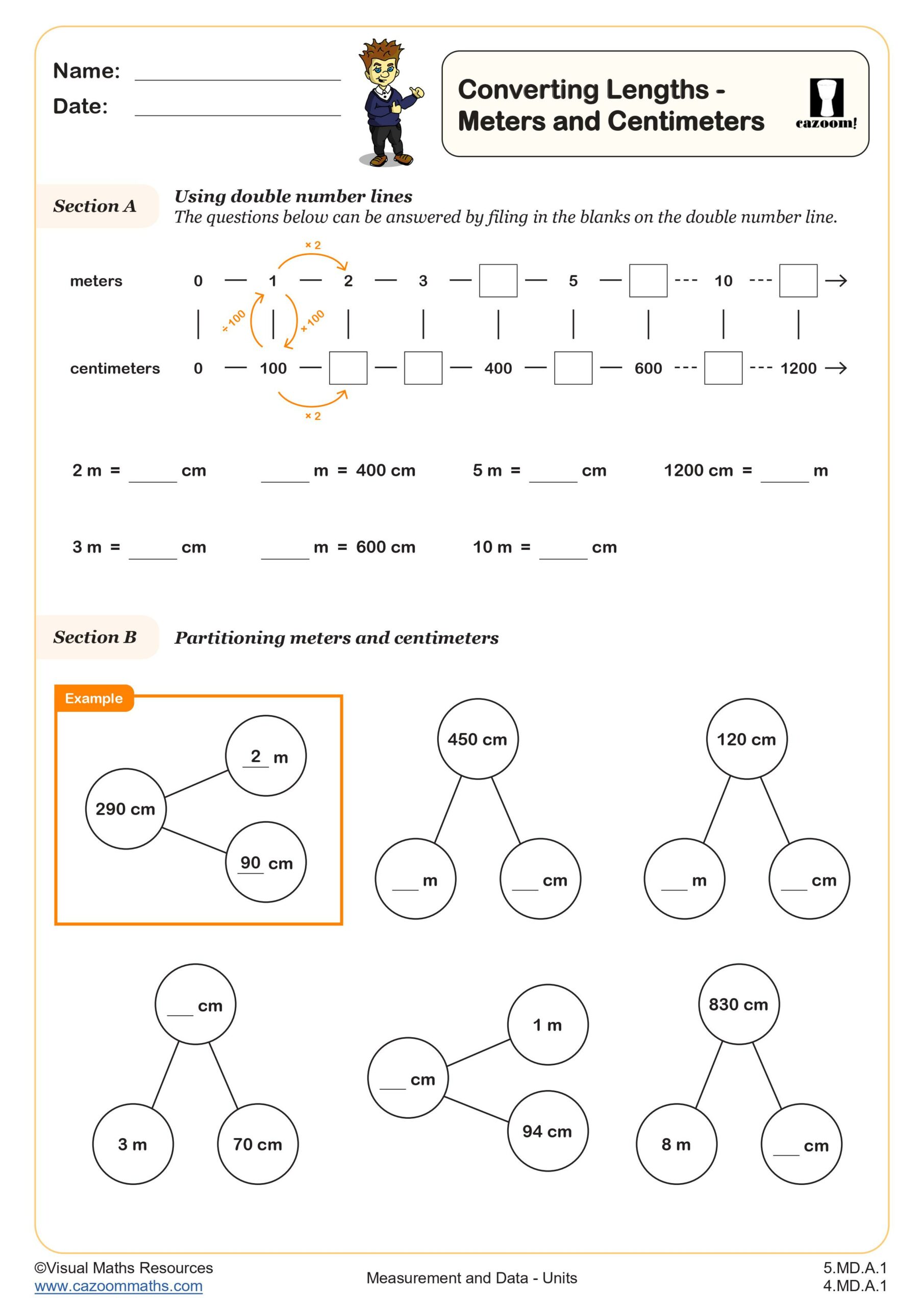
Converting Lengths - Meters and Centimeters
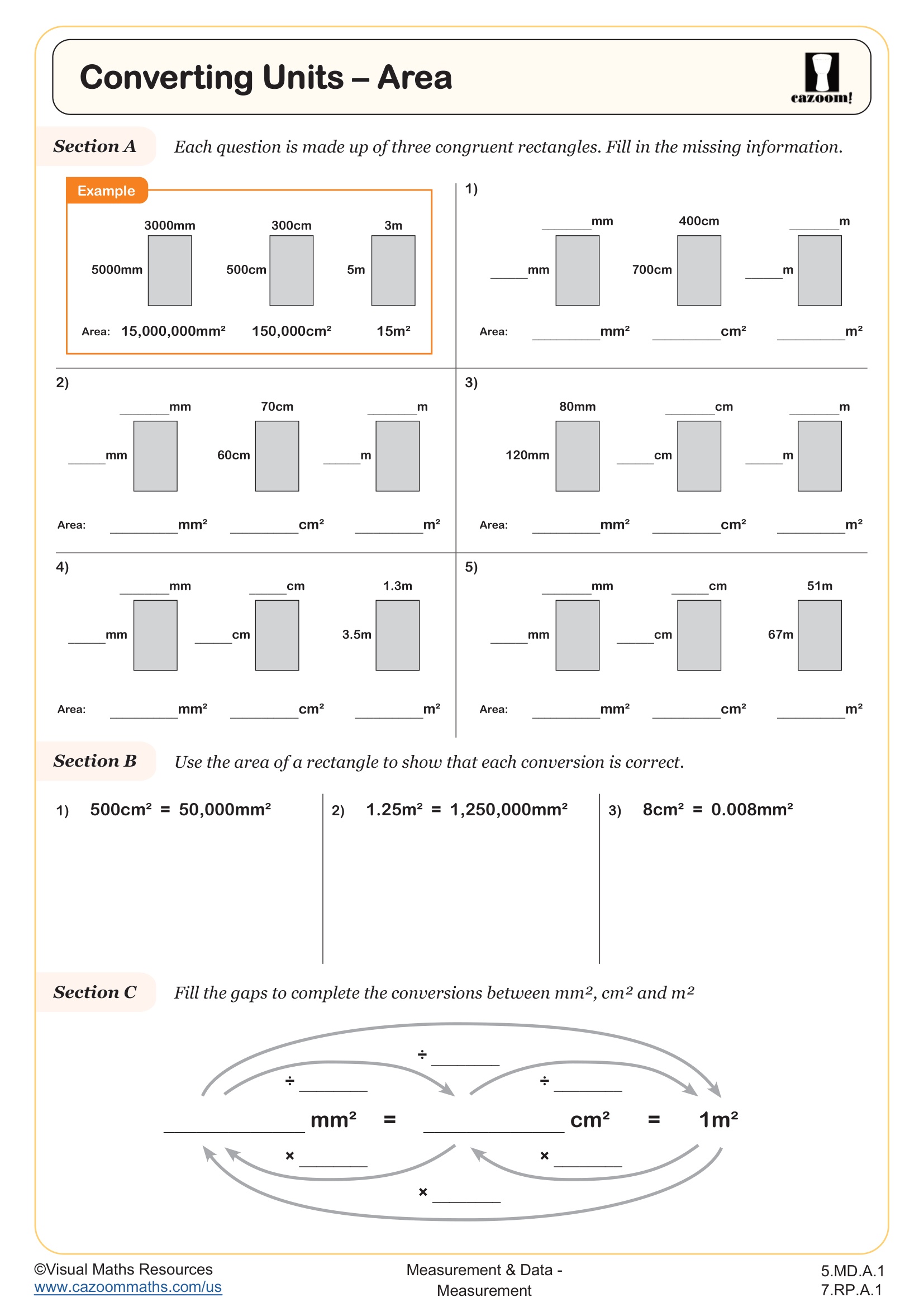
Converting Units - Area
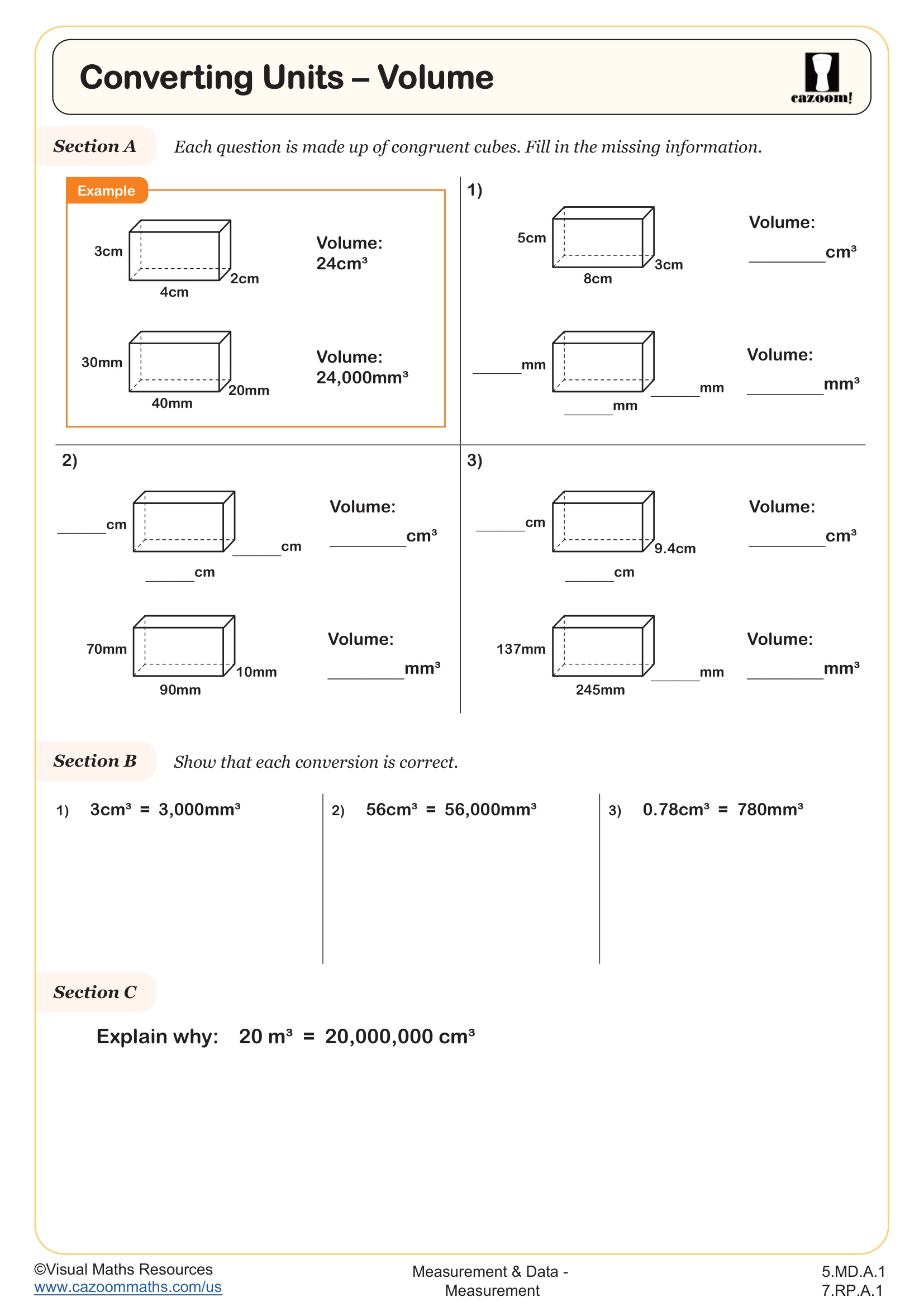
Converting Units - Volume
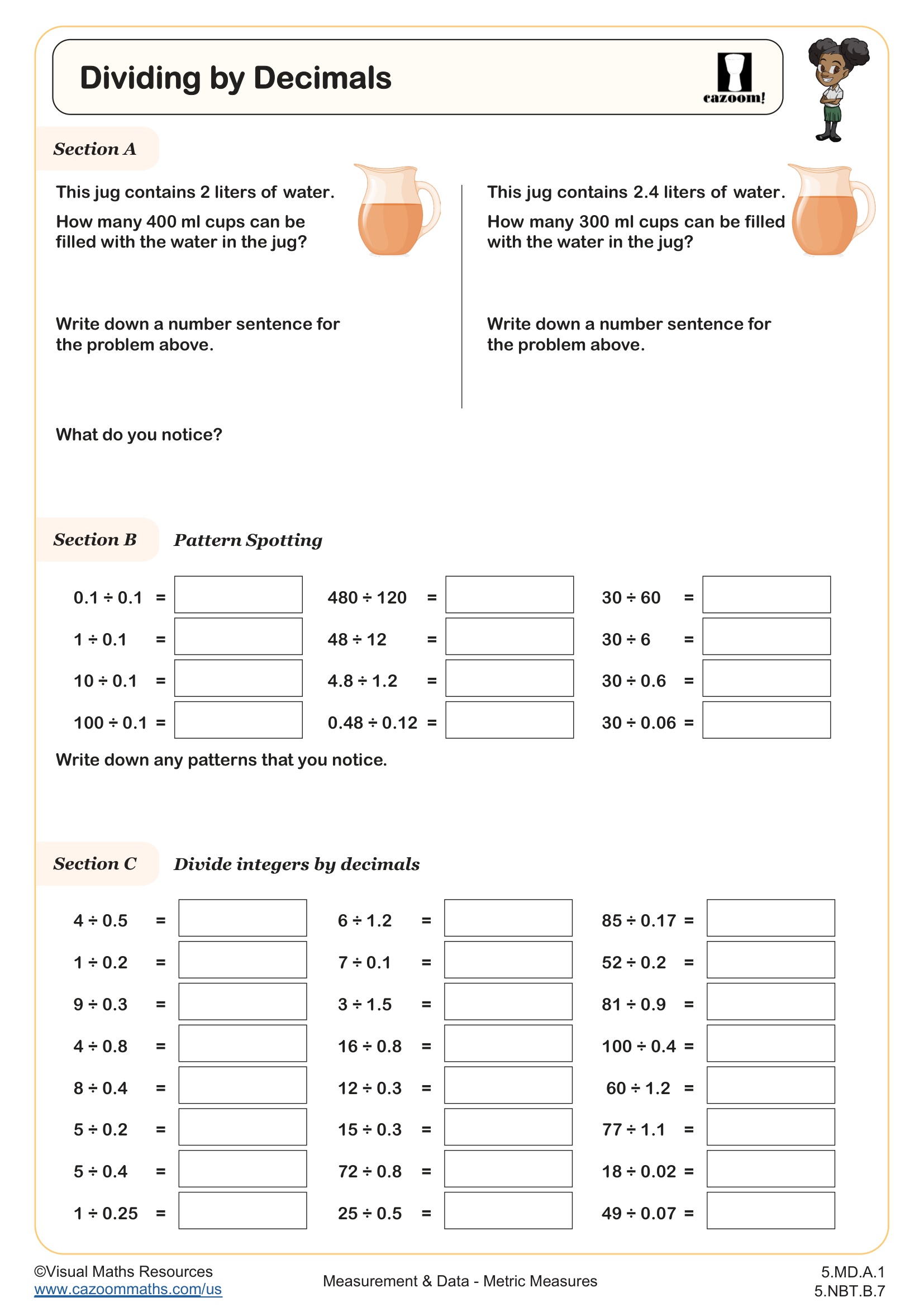
Dividing by Decimals
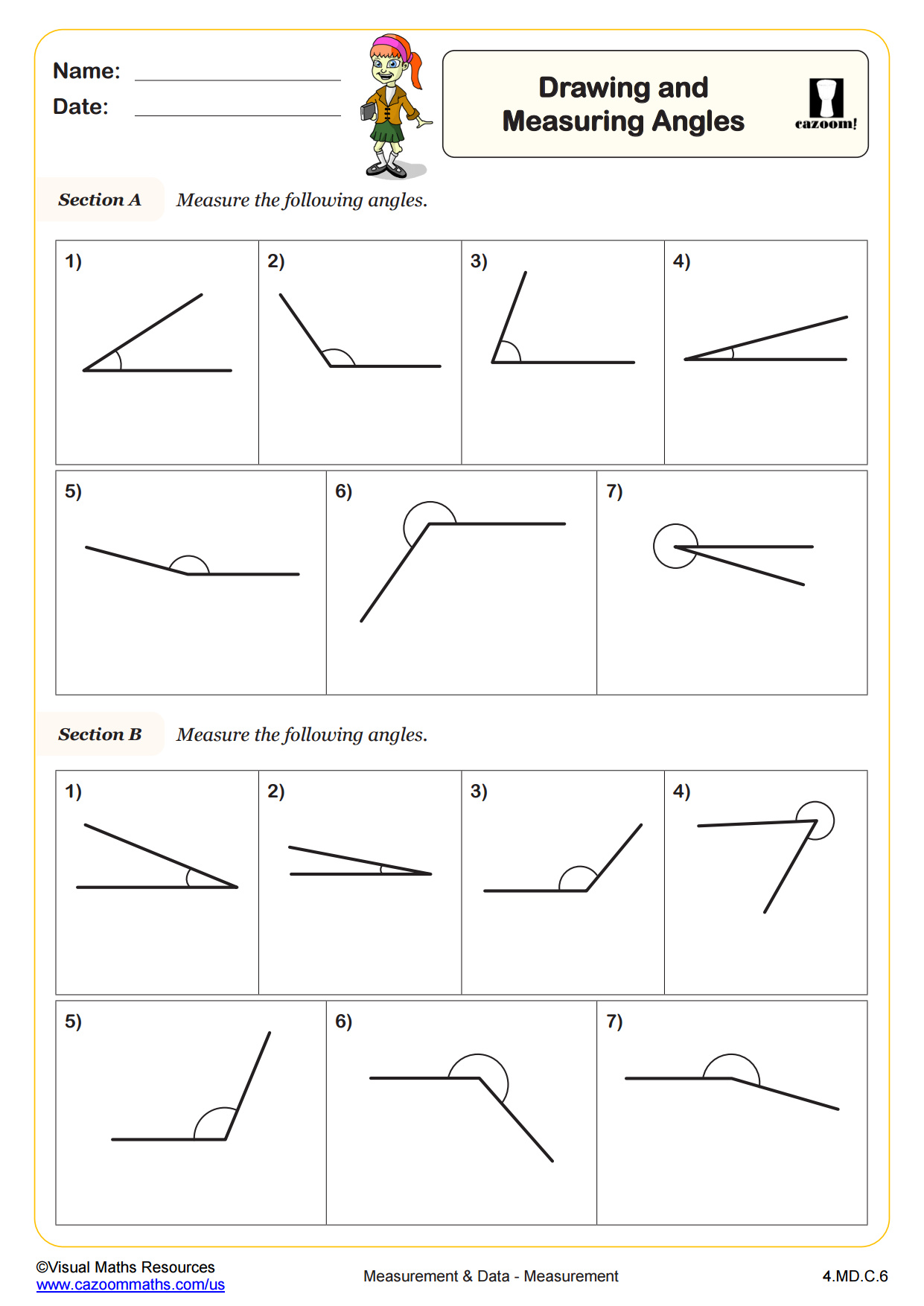
Drawing and Measuring Angles
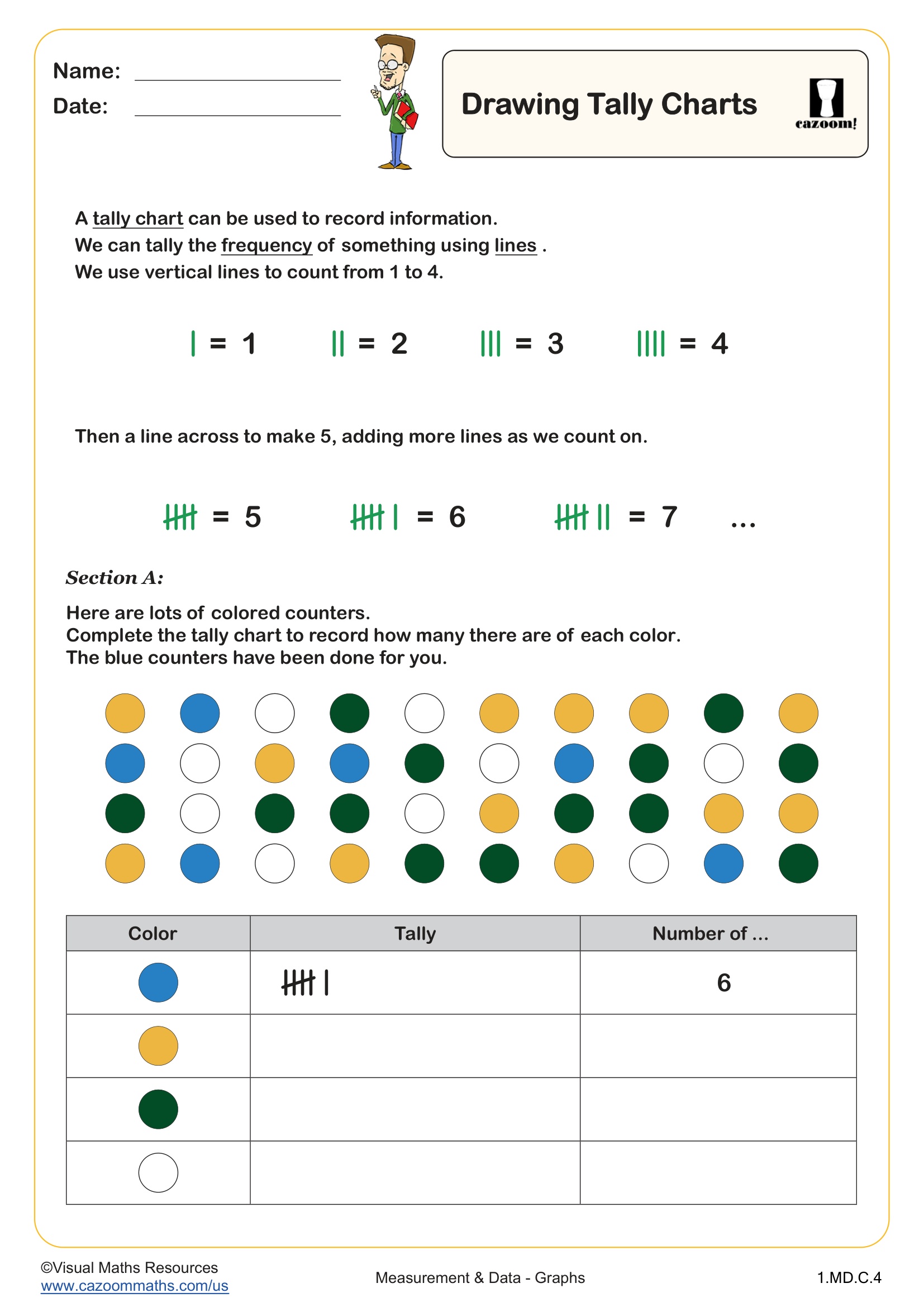
Drawing Tally Charts
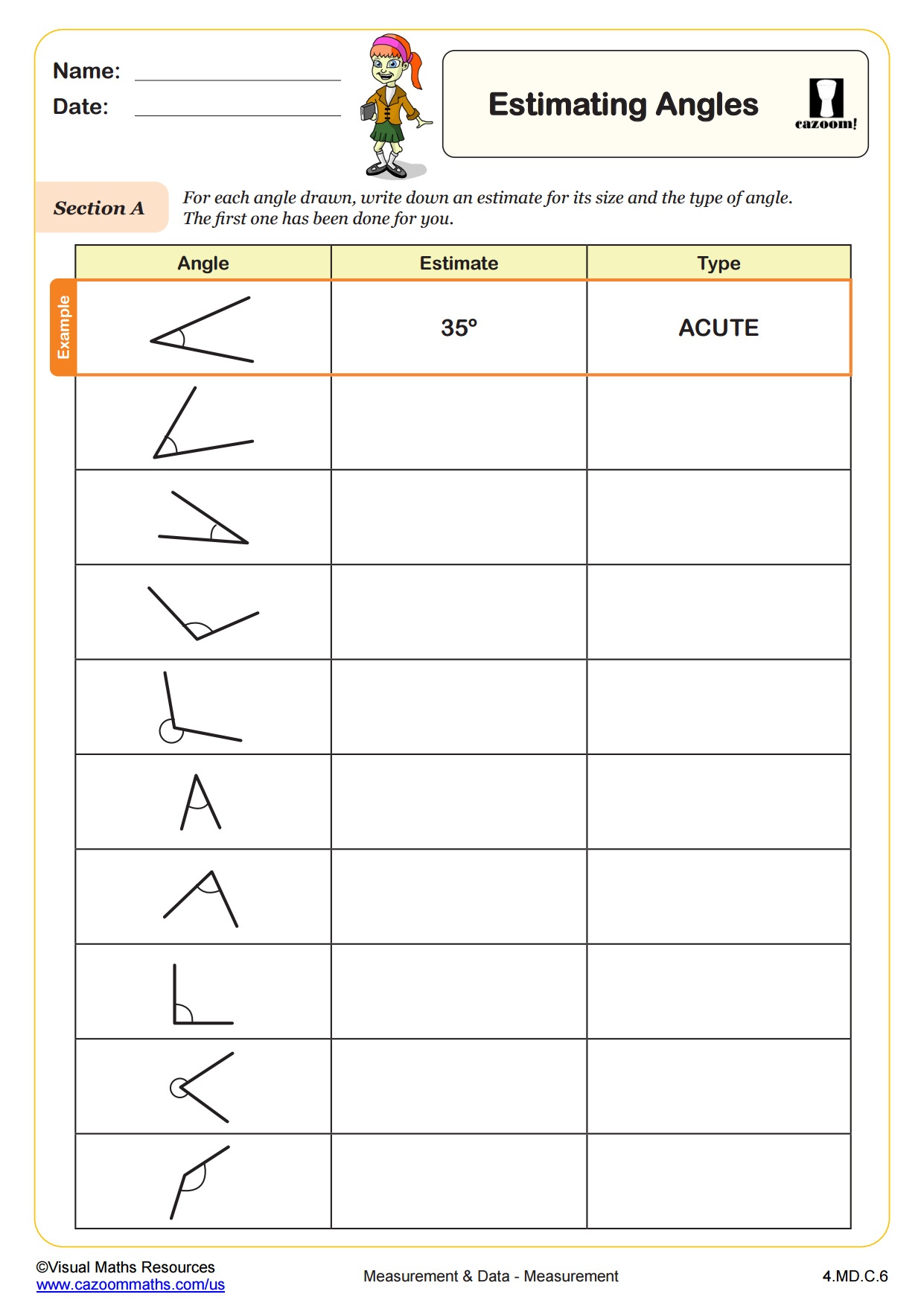
Estimating Angles
Estimating Metric Measures
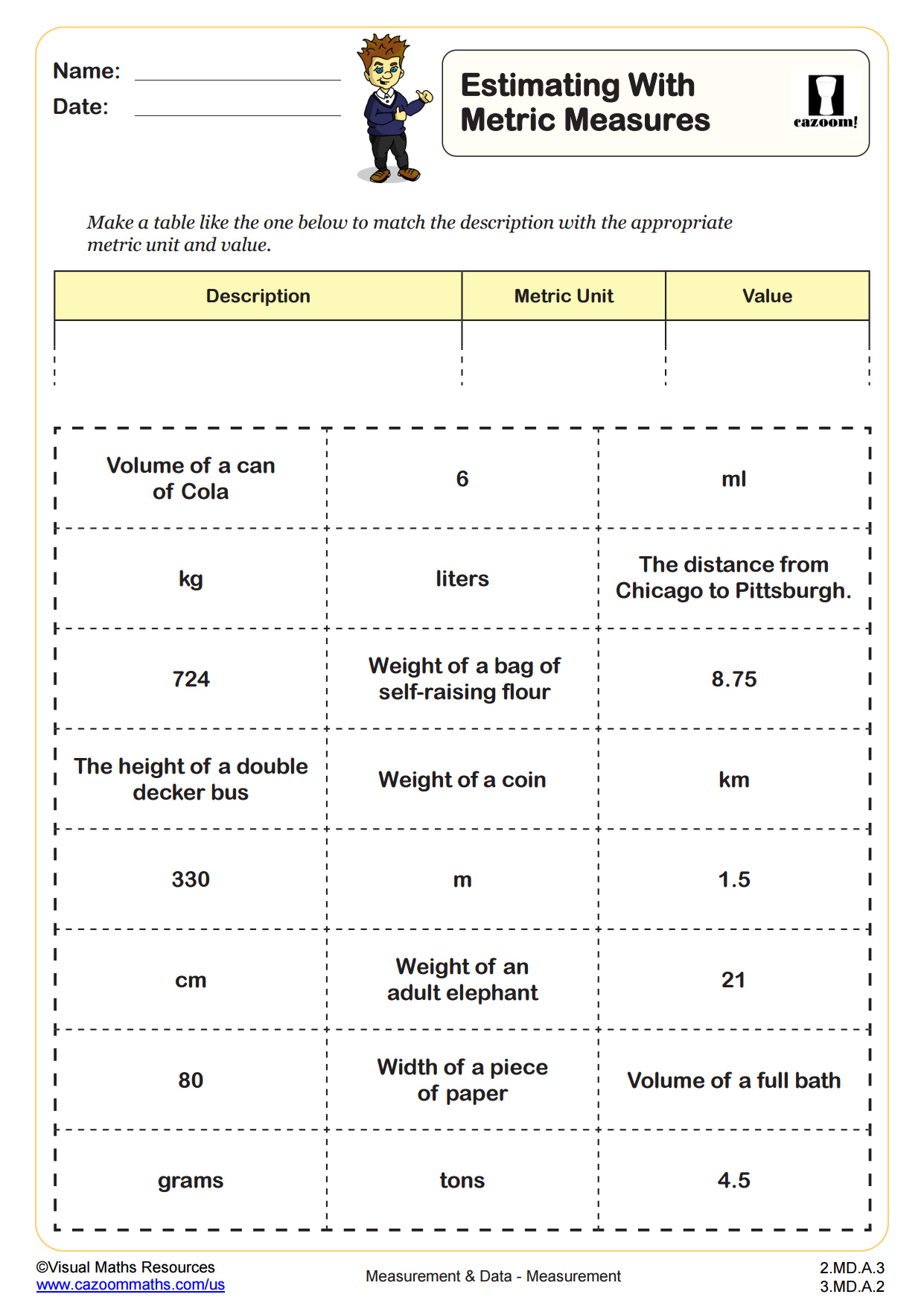
Imperial and Metric Lengths
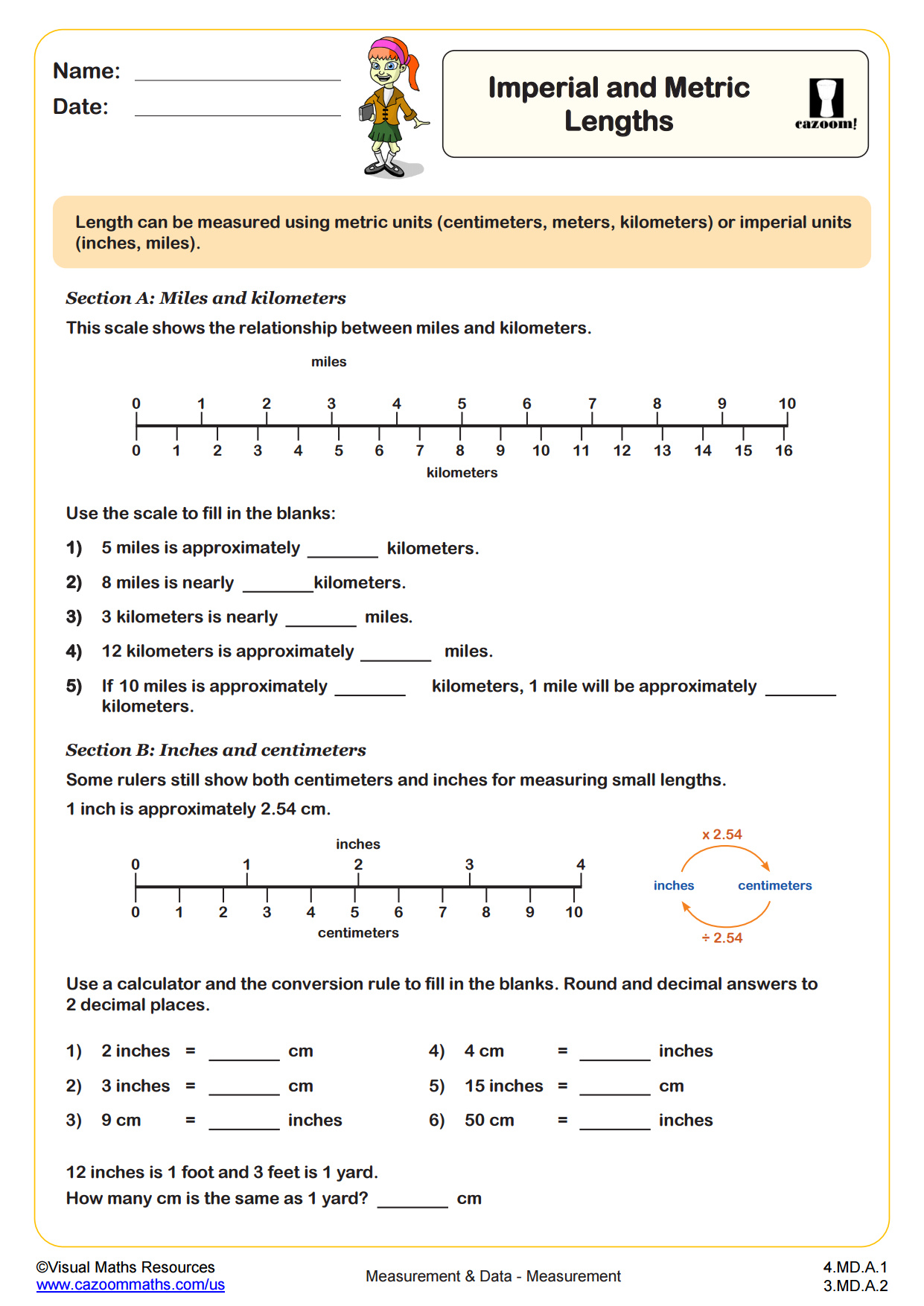
Kilometers and Meters
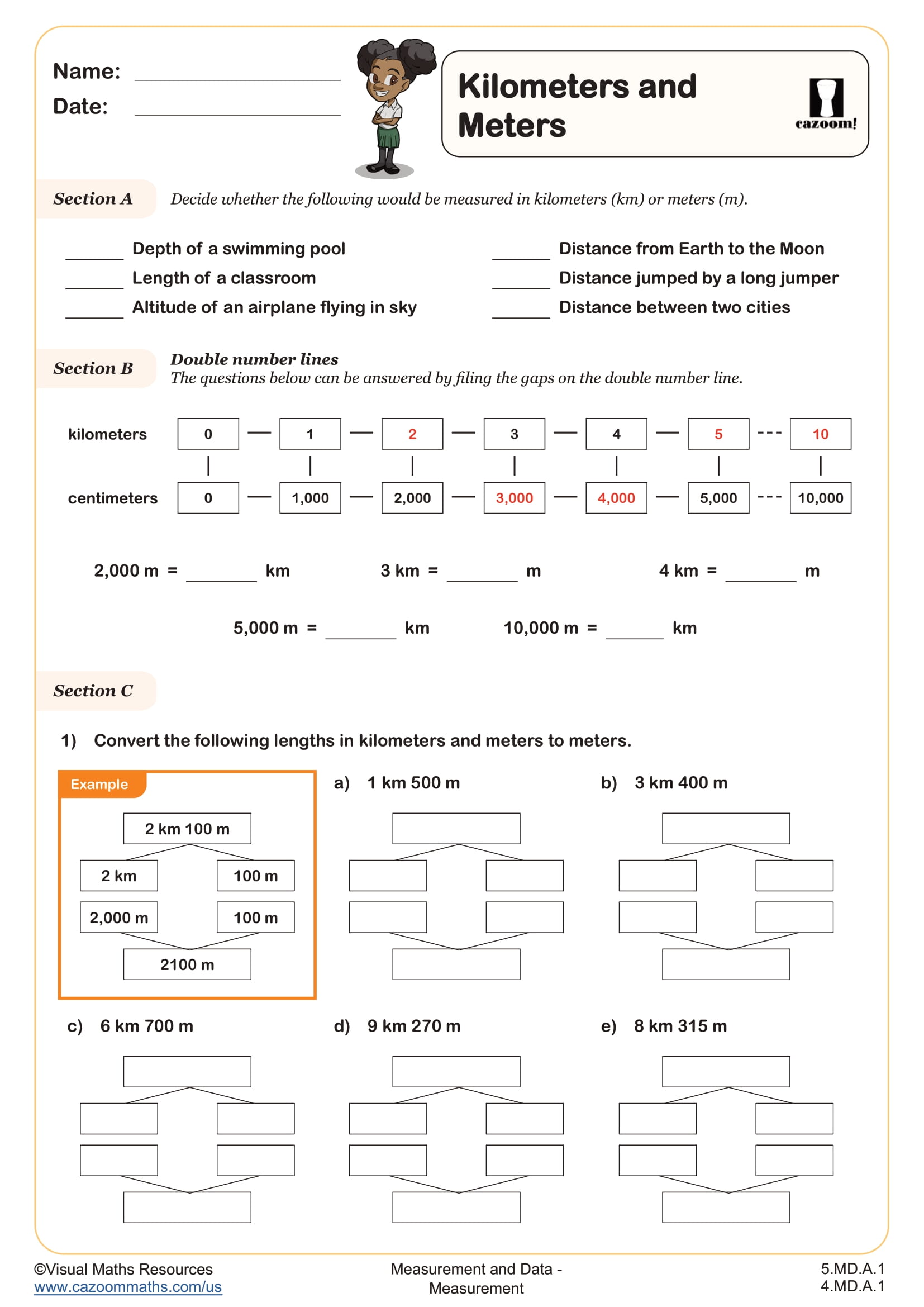
Making 1 kg
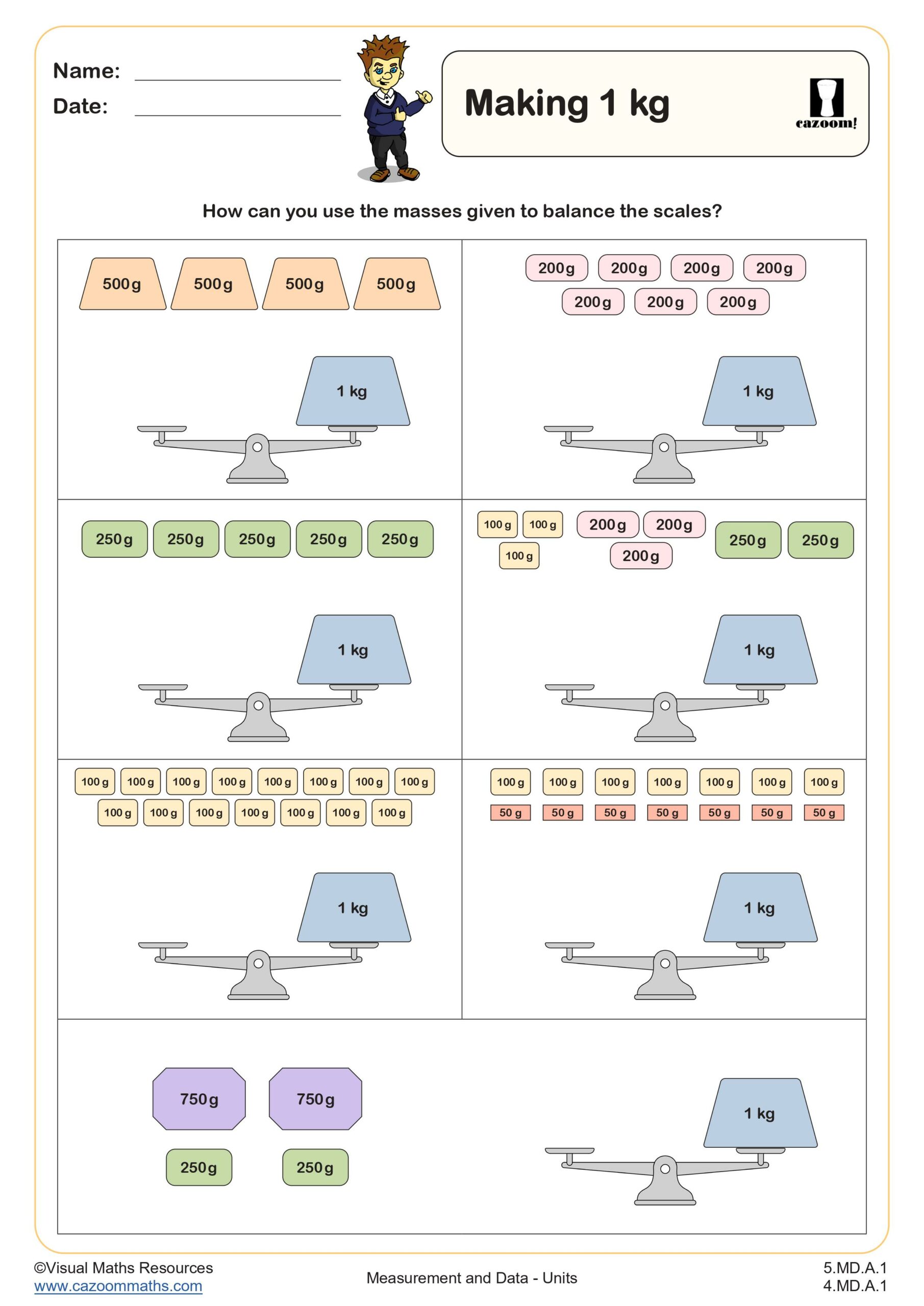
Making 1 l
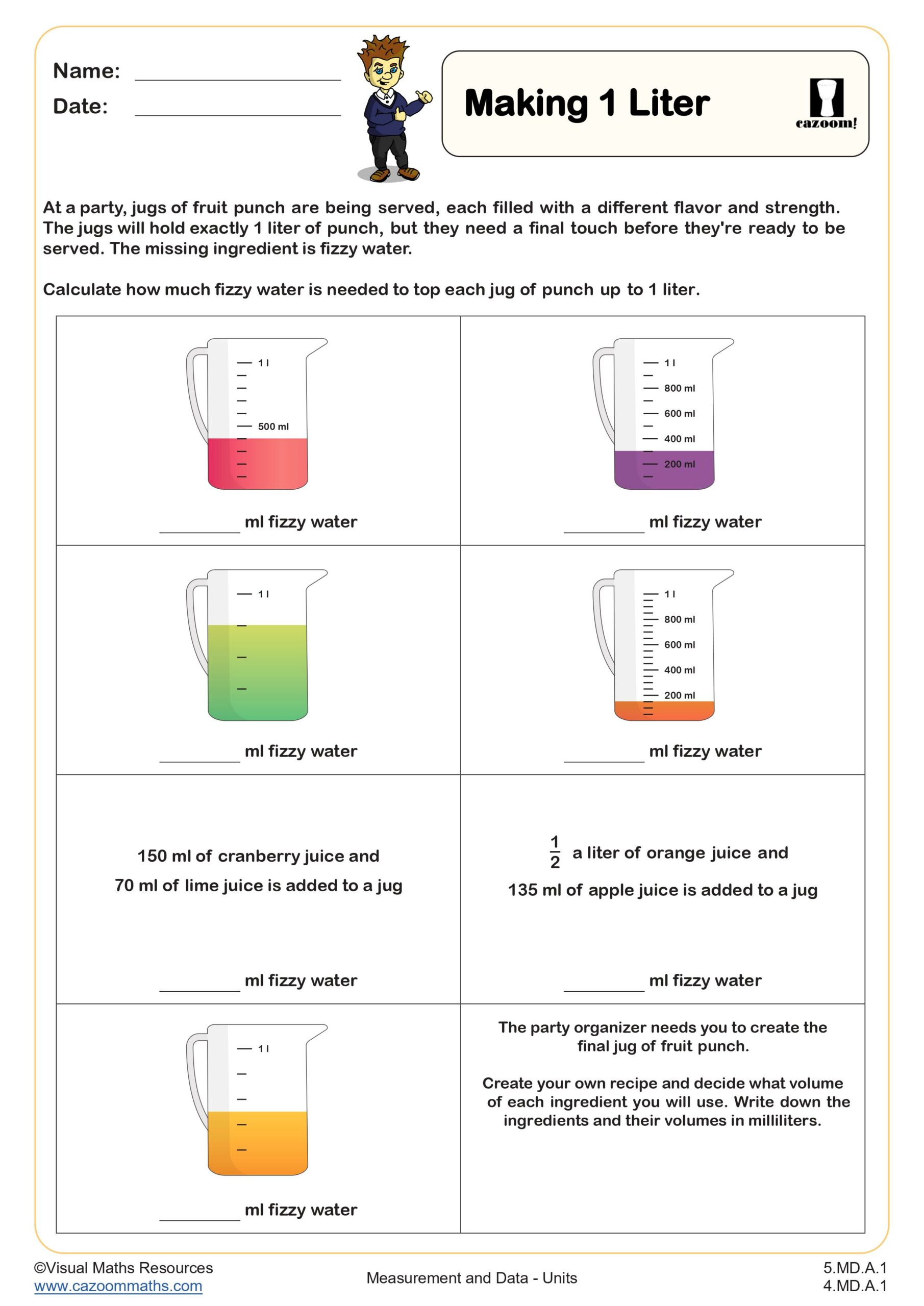
Measure Mass - in Grams
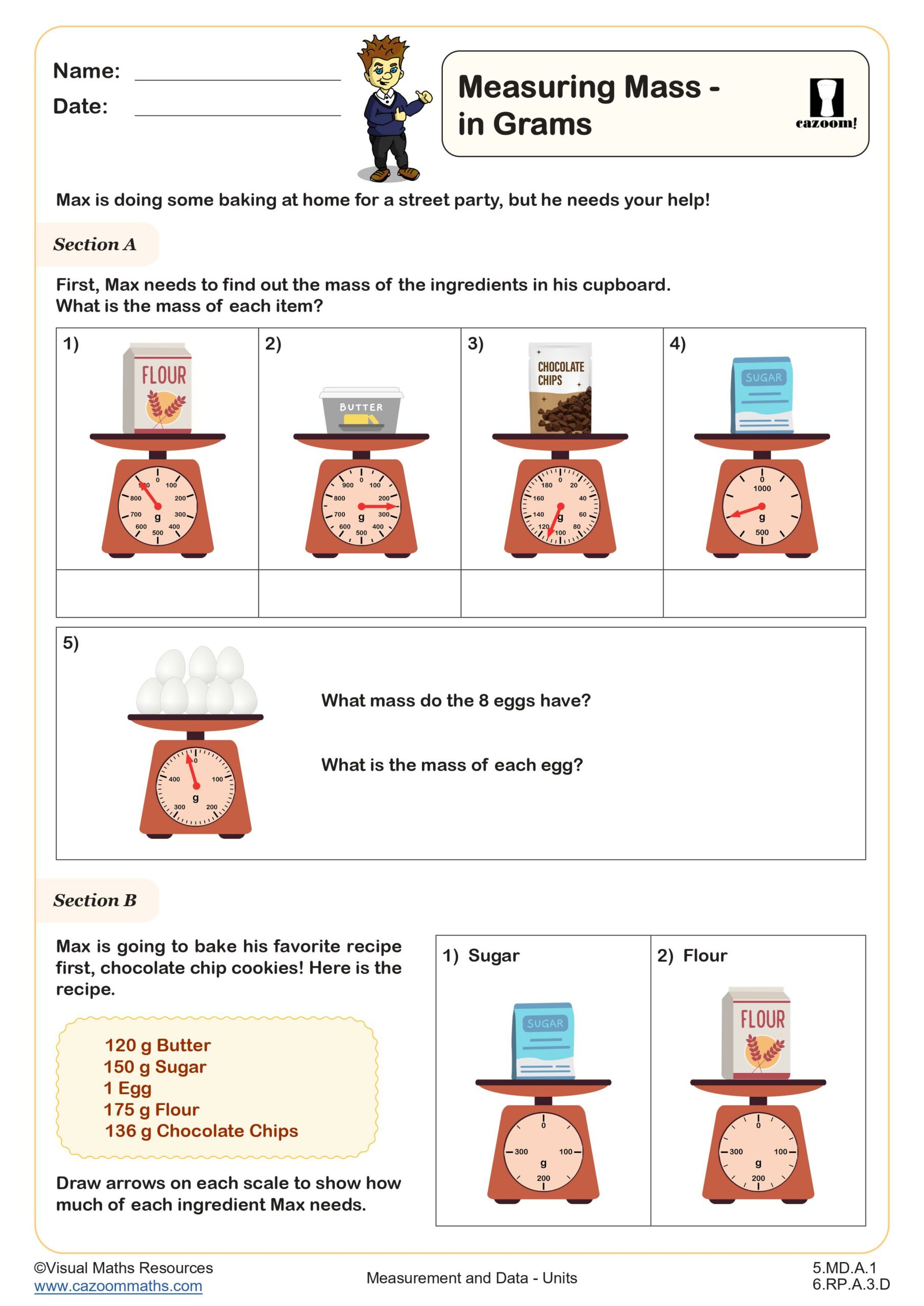
Measure Mass In Grams (A)
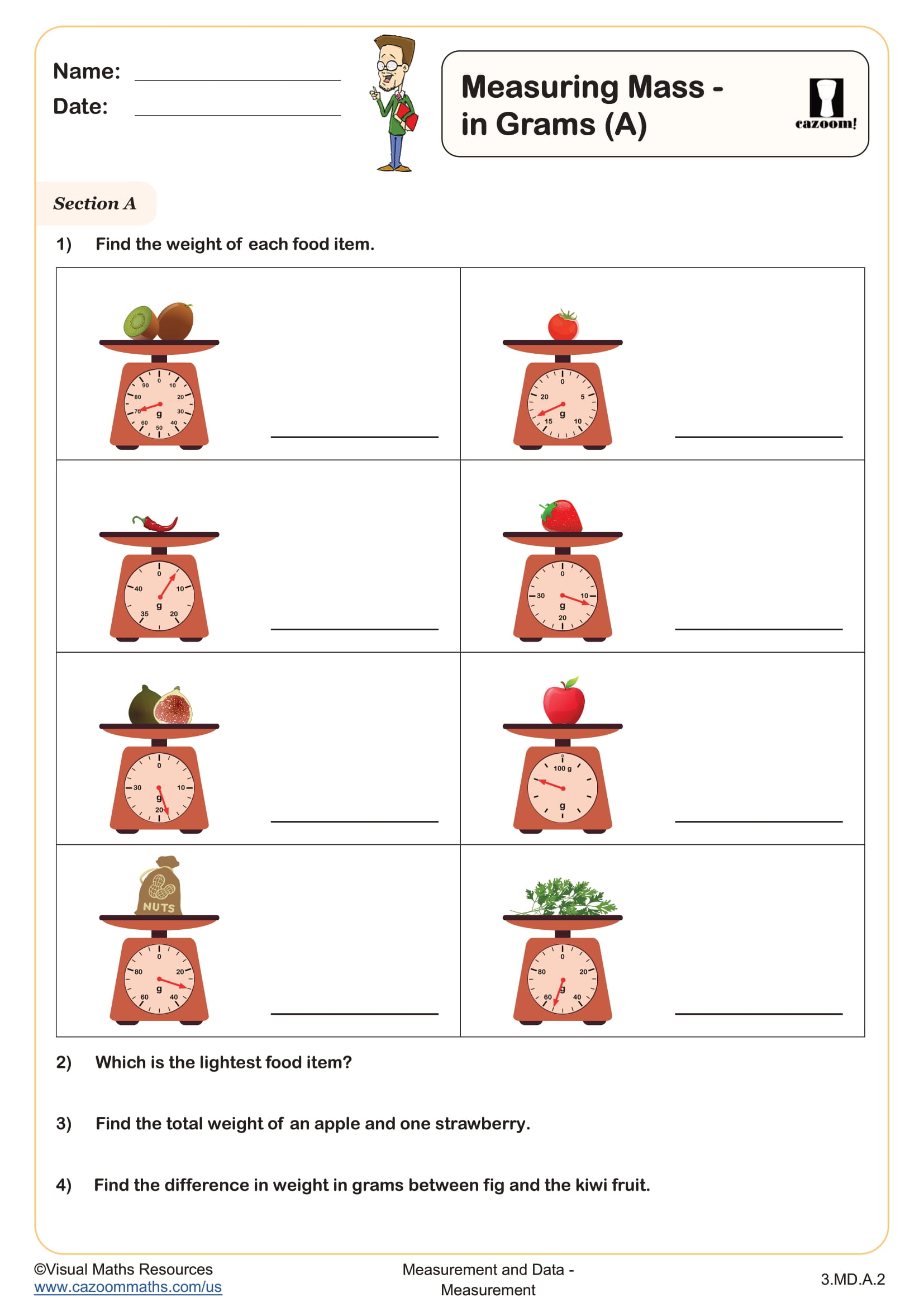
Measure Mass in Kilograms and Grams
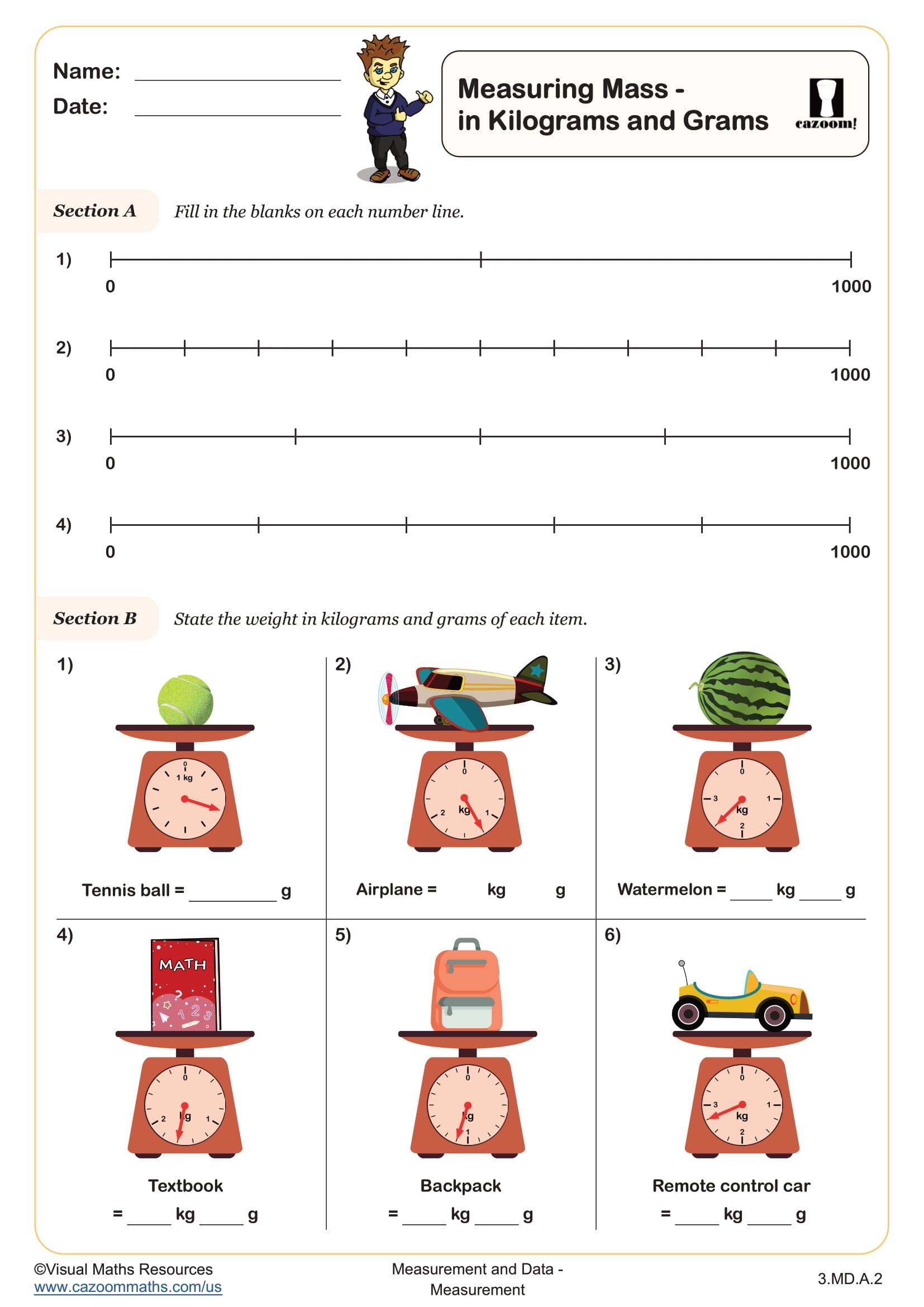
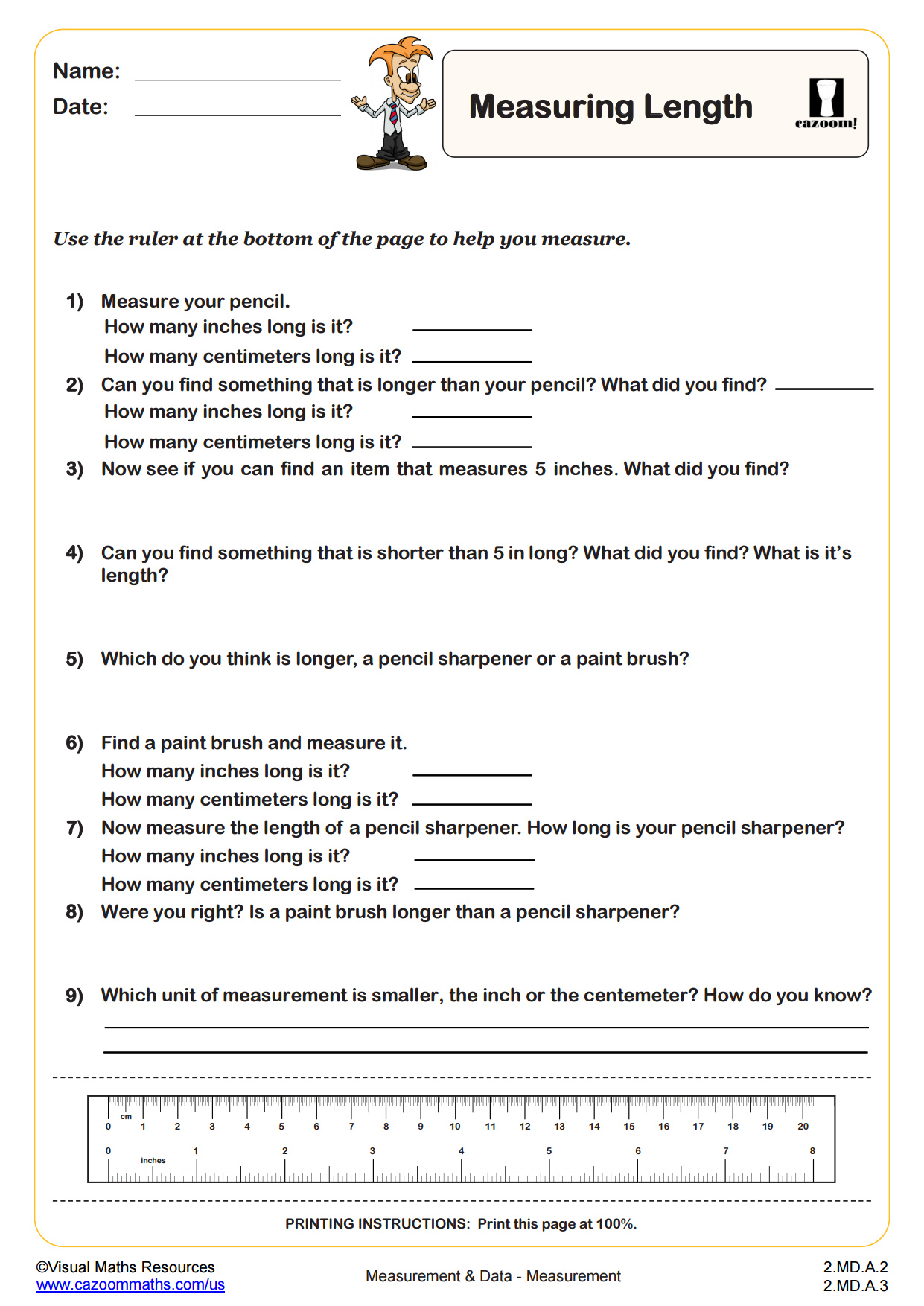
Measuring Length
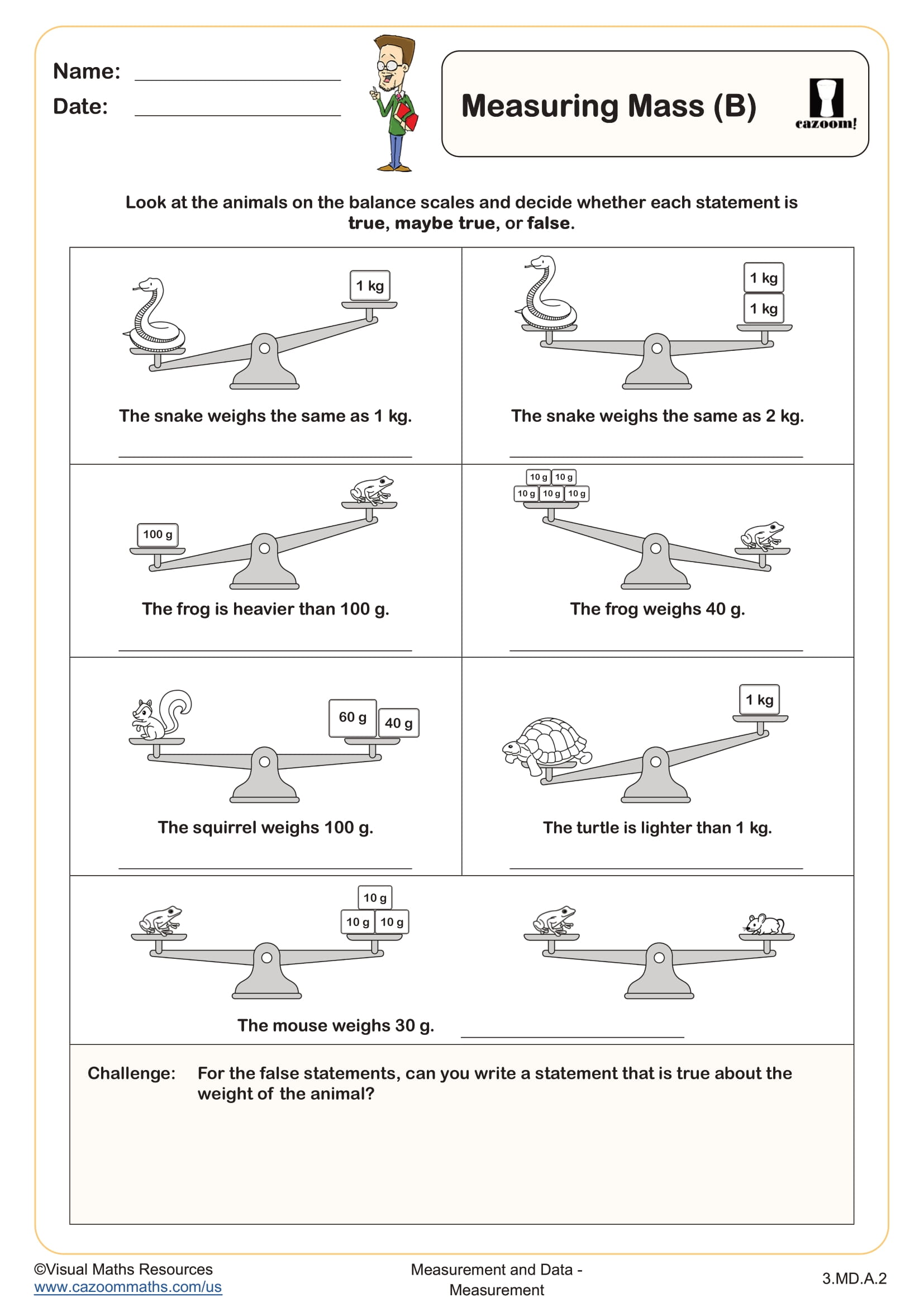
Measuring Mass (B)
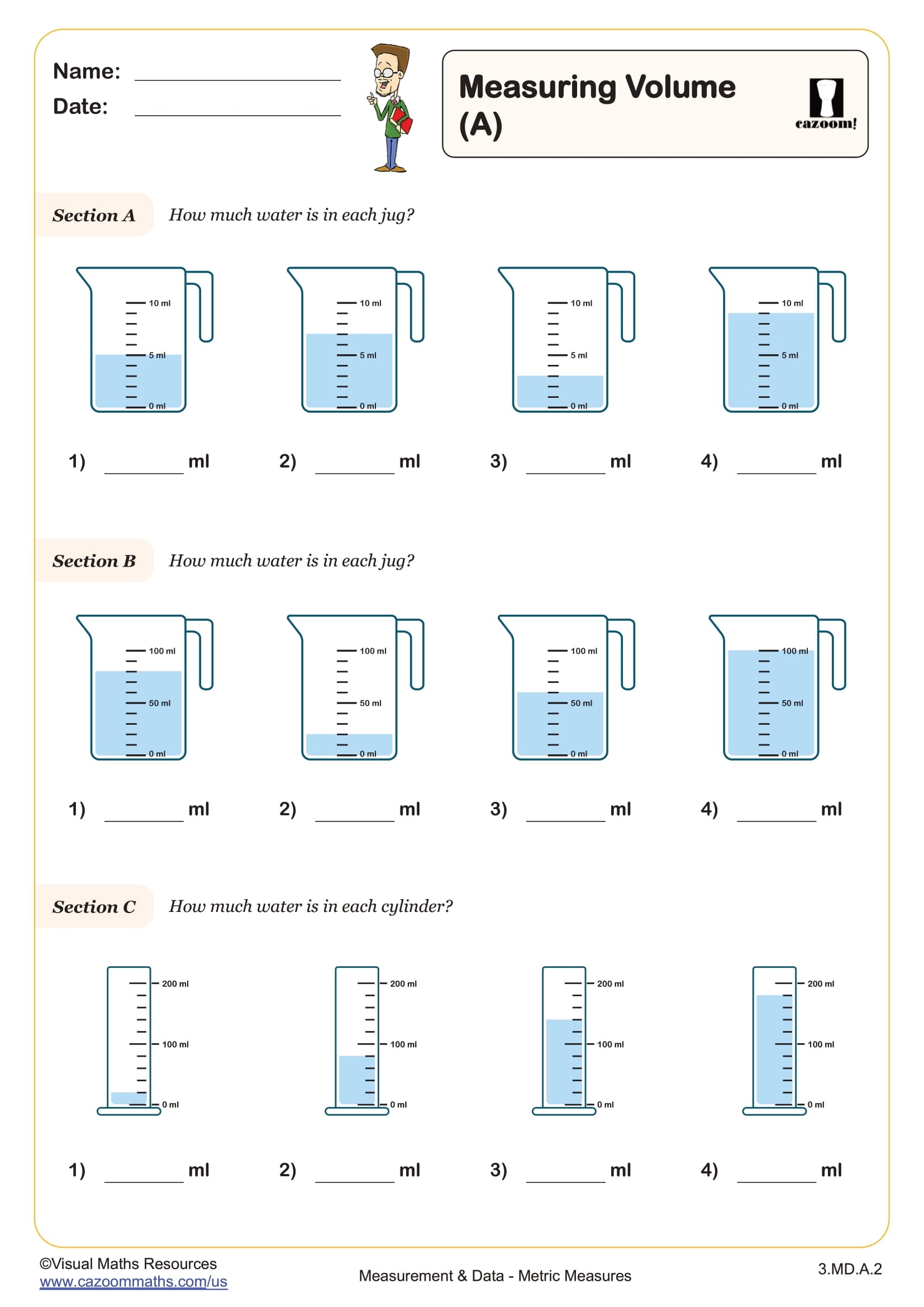
Measuring Volume (A)
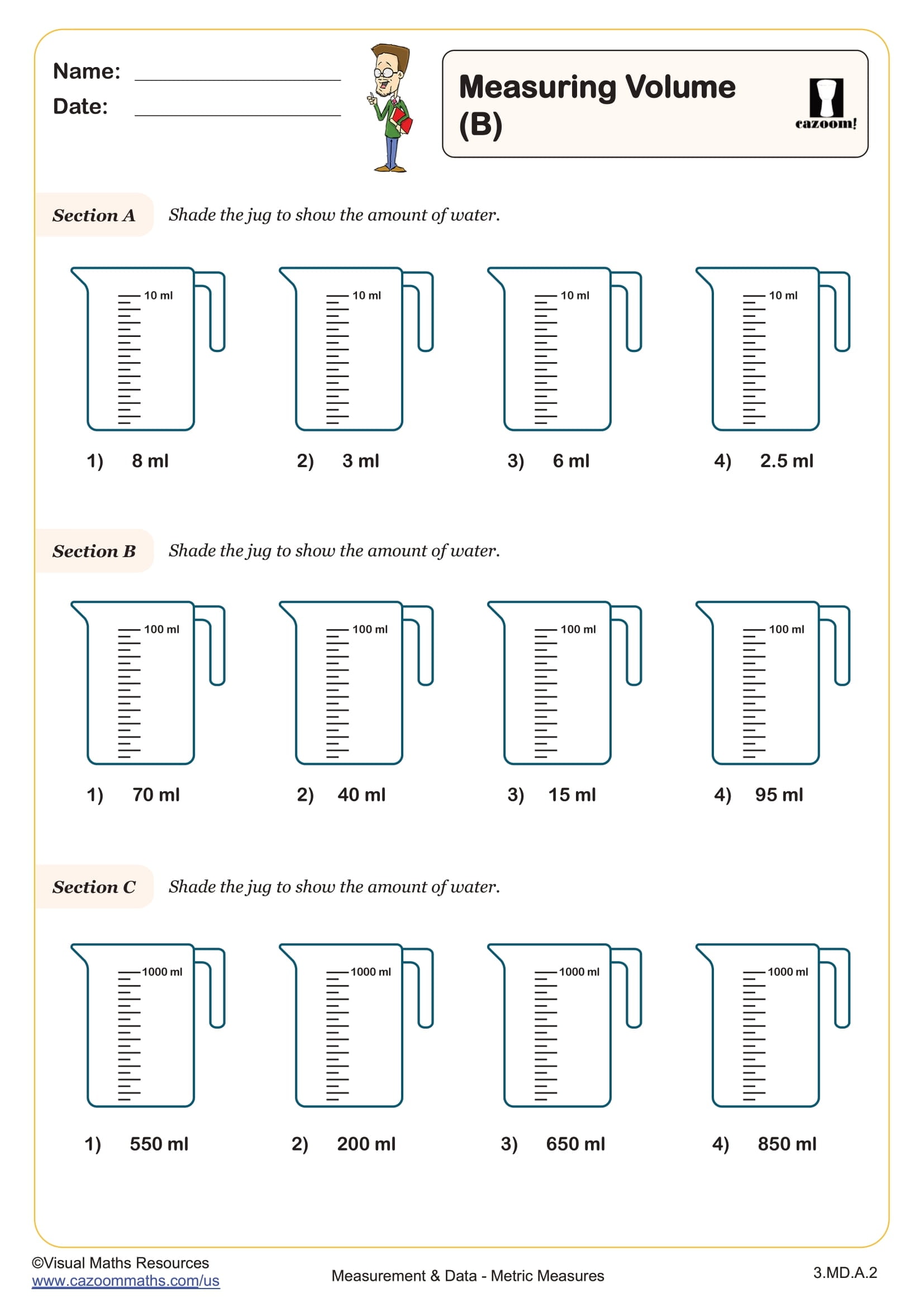
Measuring Volume (B)
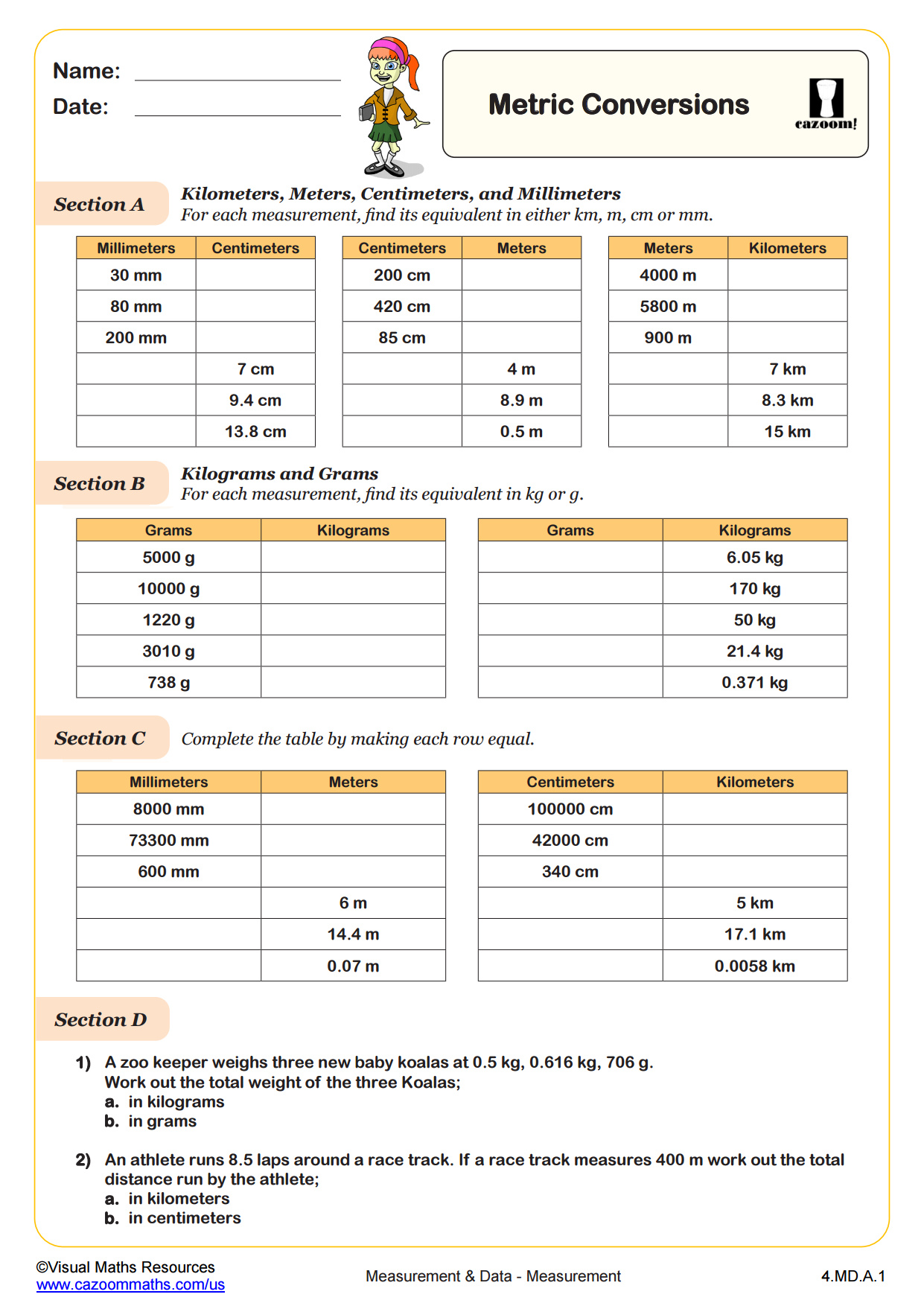
Metric Conversions
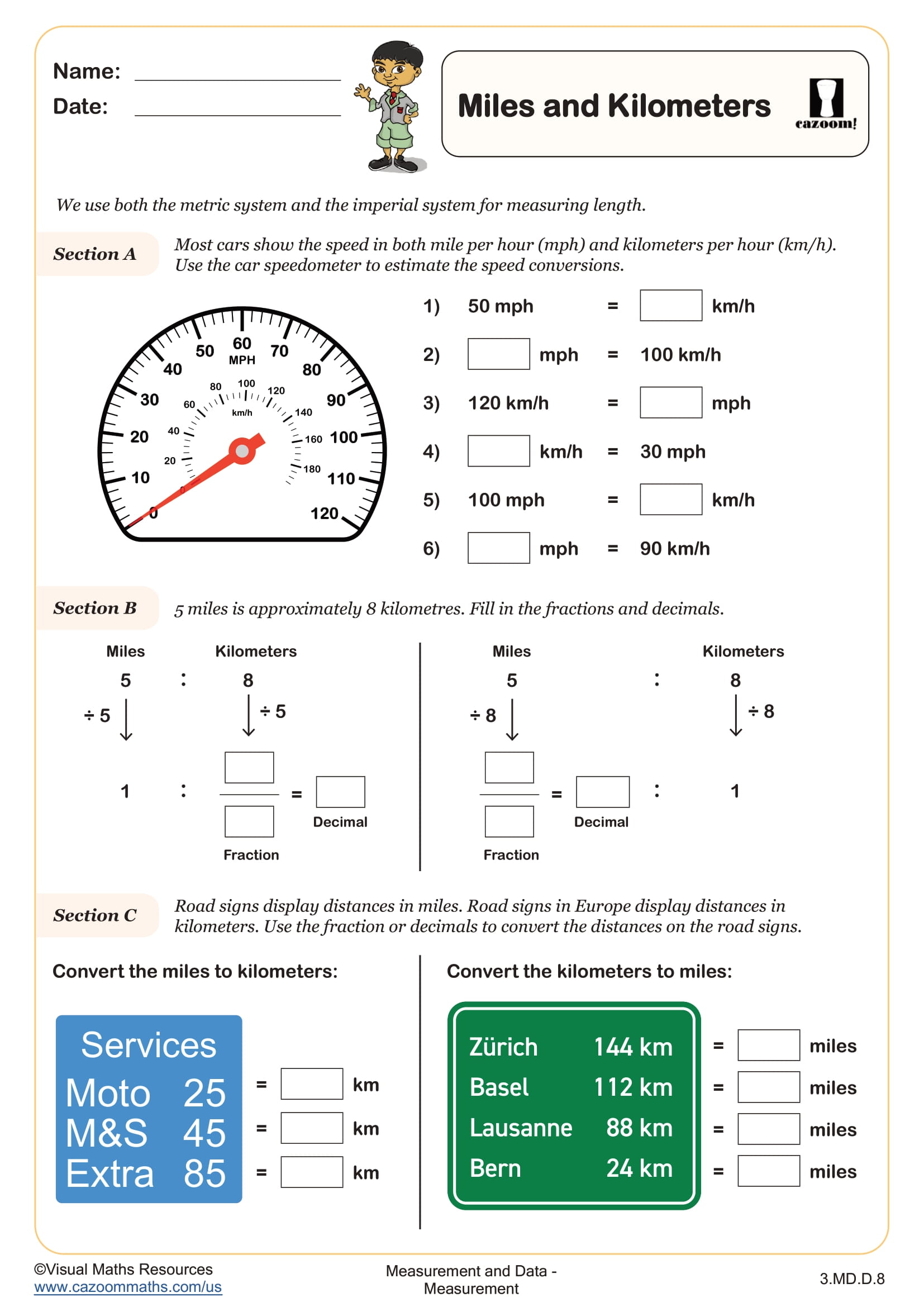
Miles and Kilometres
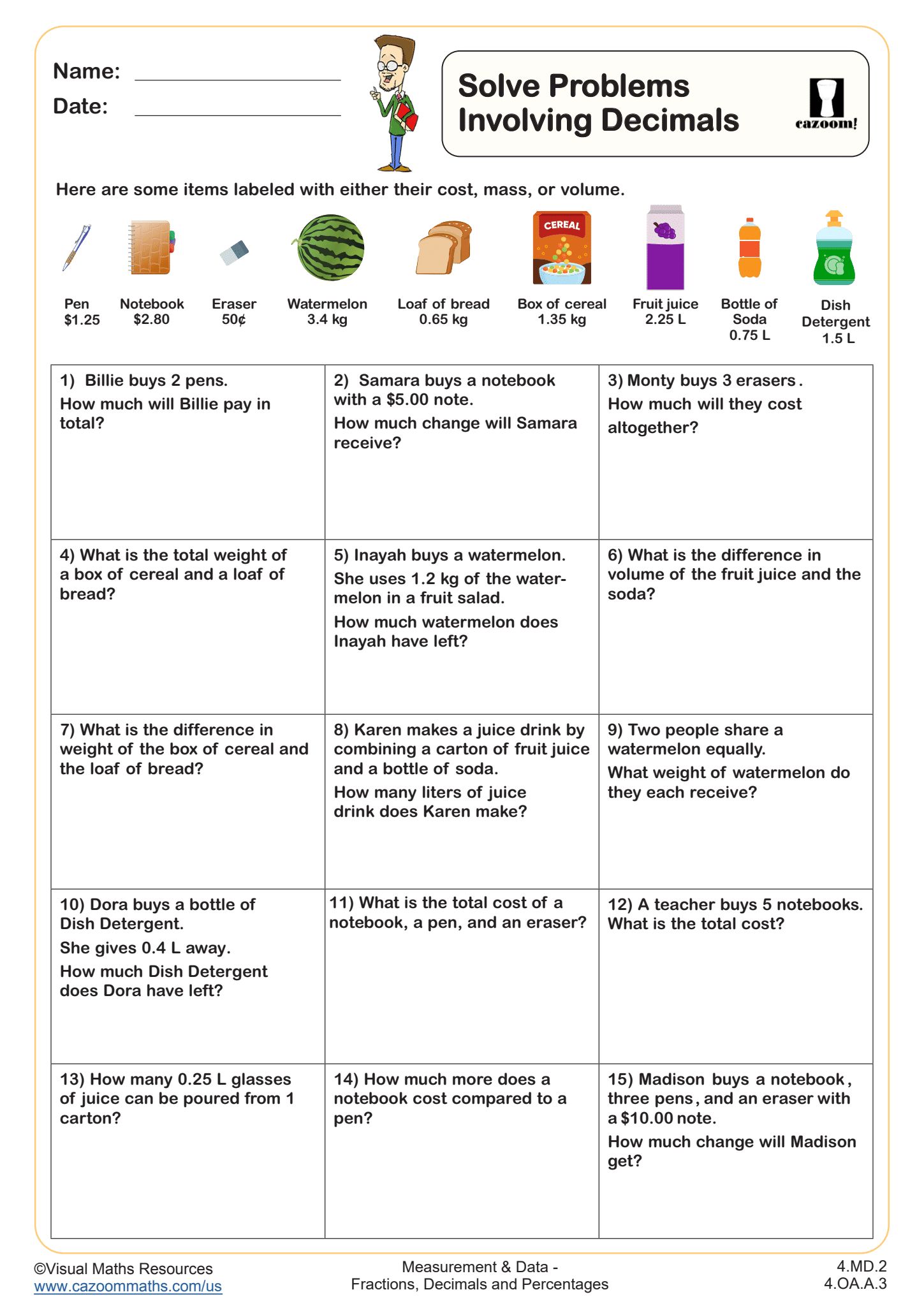
Solve Problems Involving Decimals
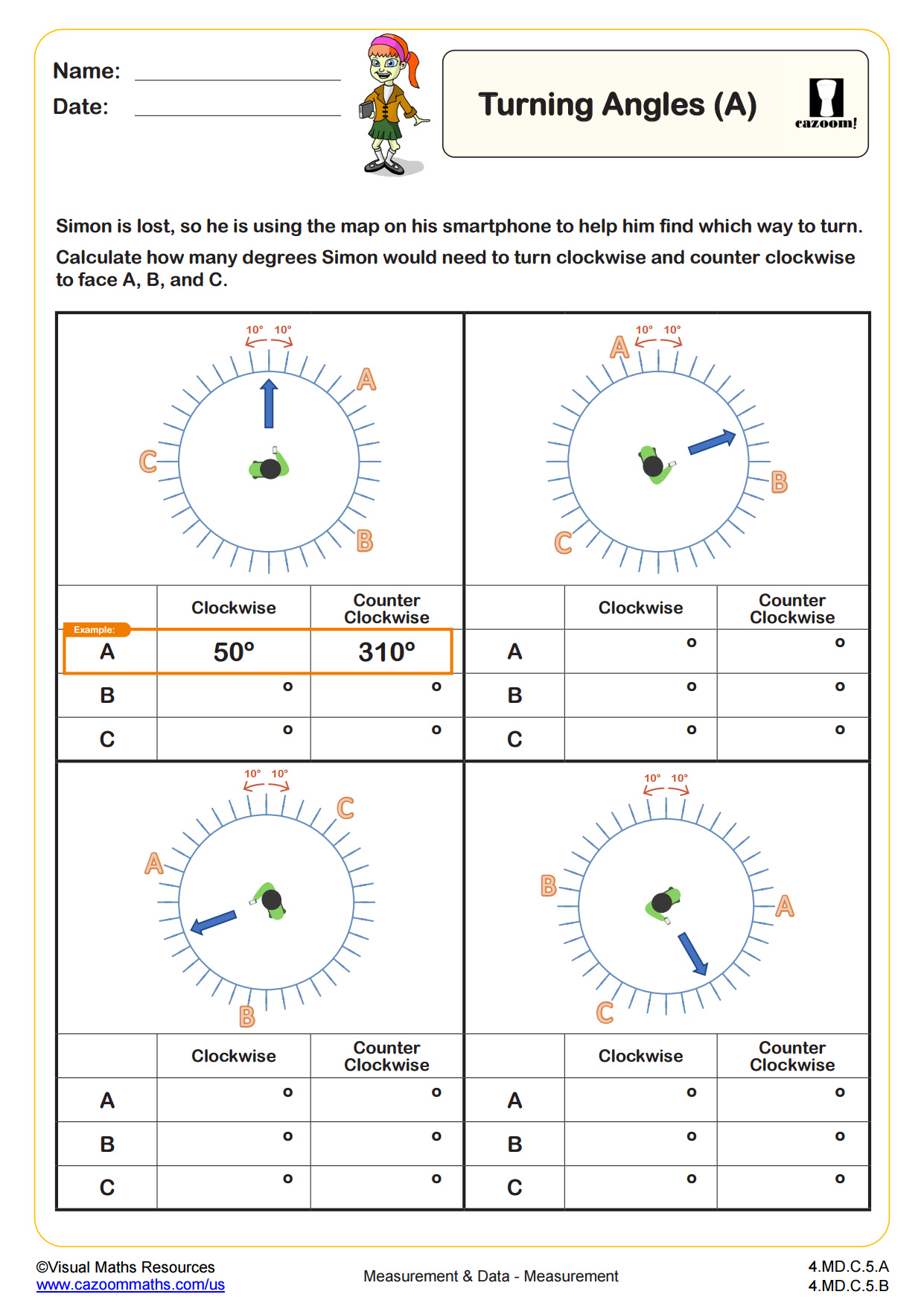
Turning Angles (A)
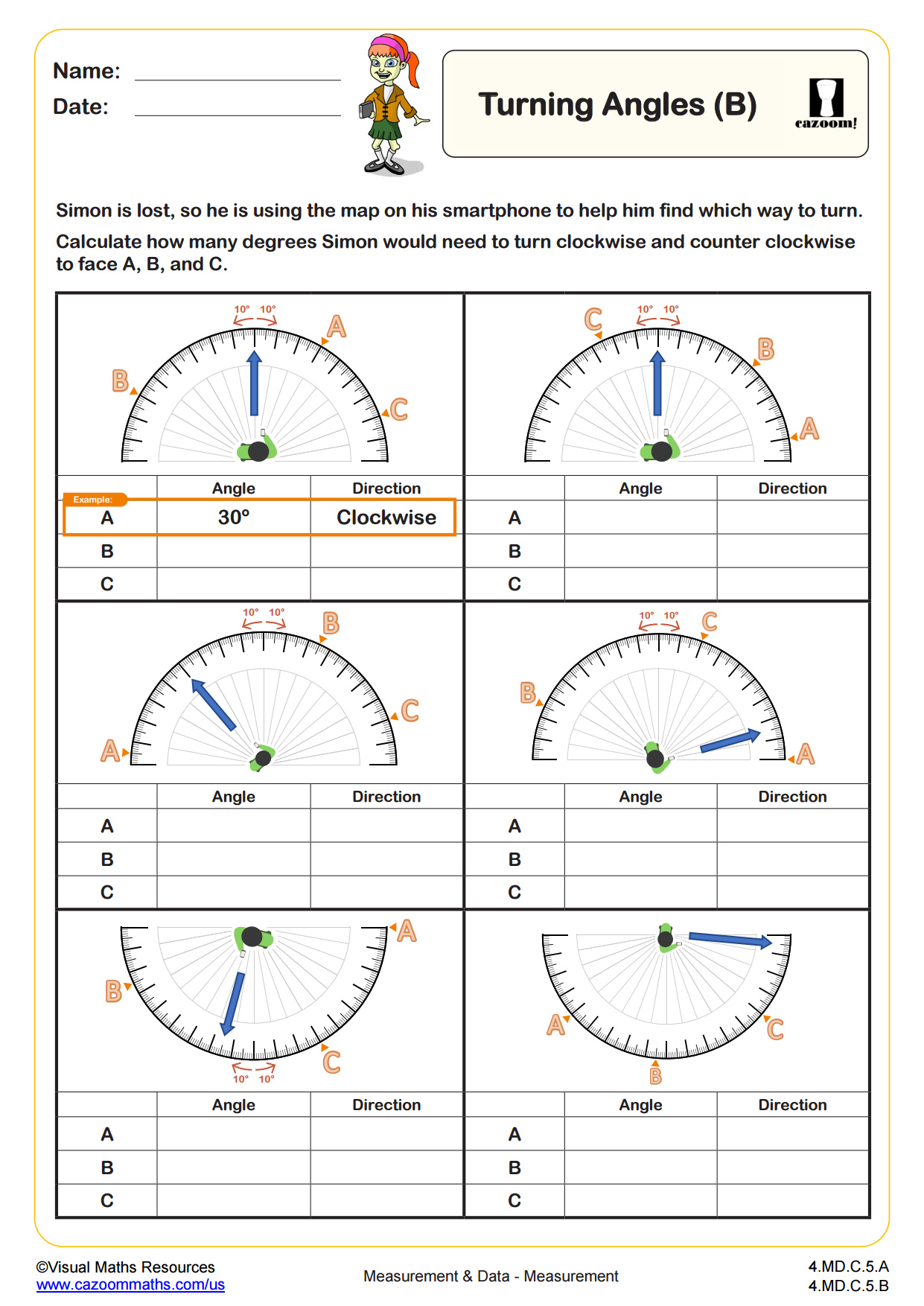
Turning Angles (B)
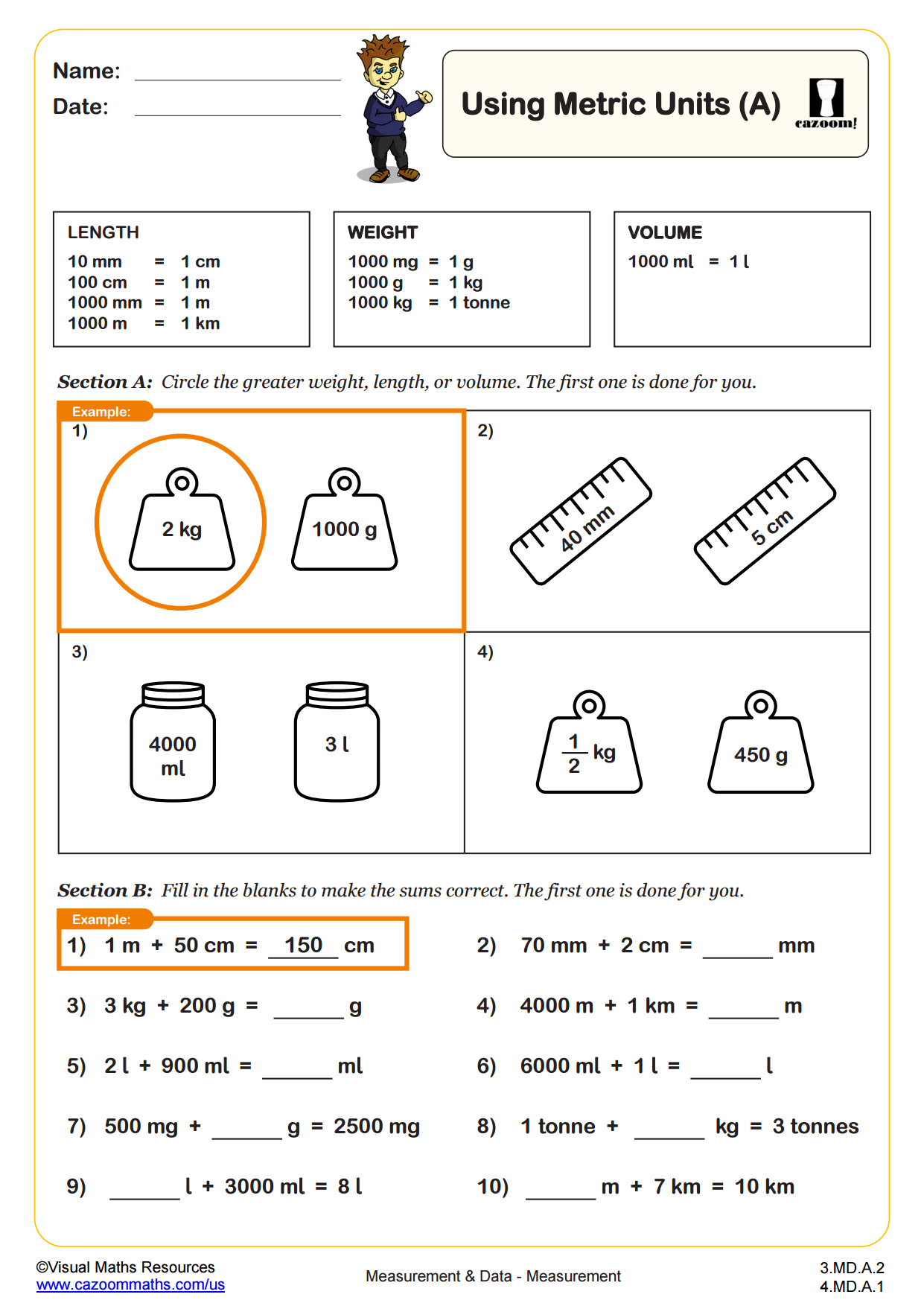
Using Metric Units (A)
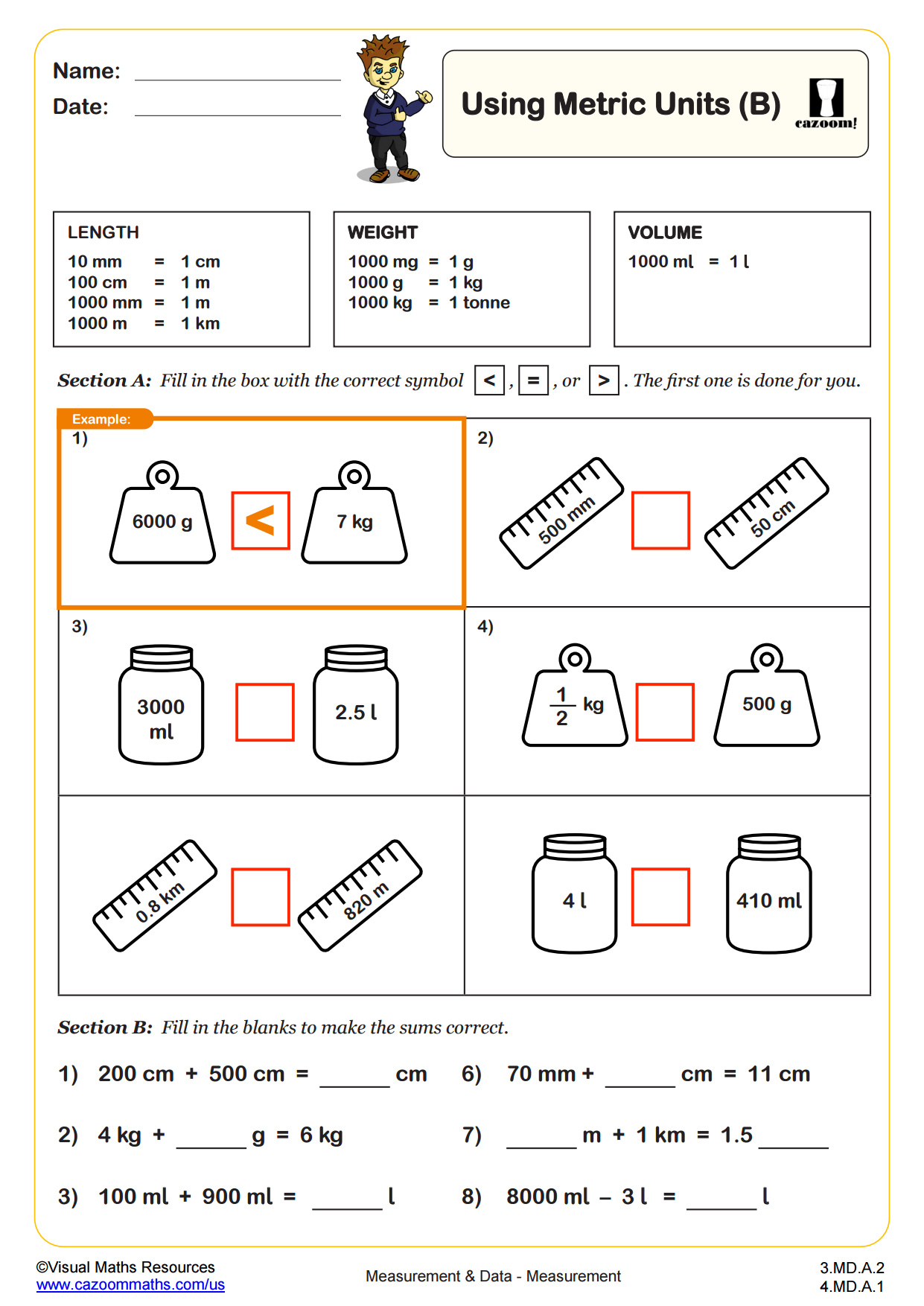
Using Metric Units (B)
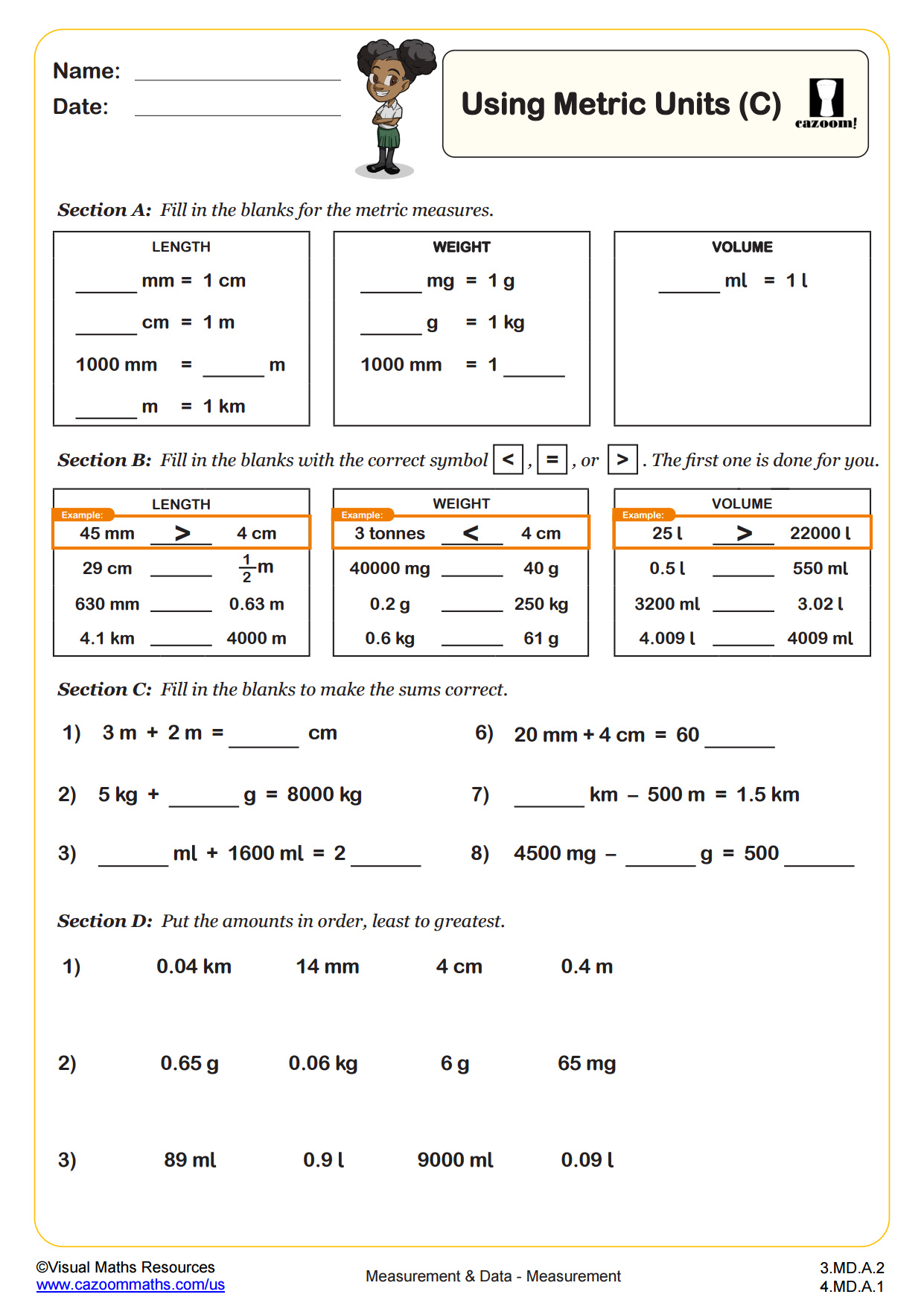
Using Metric Units (C)
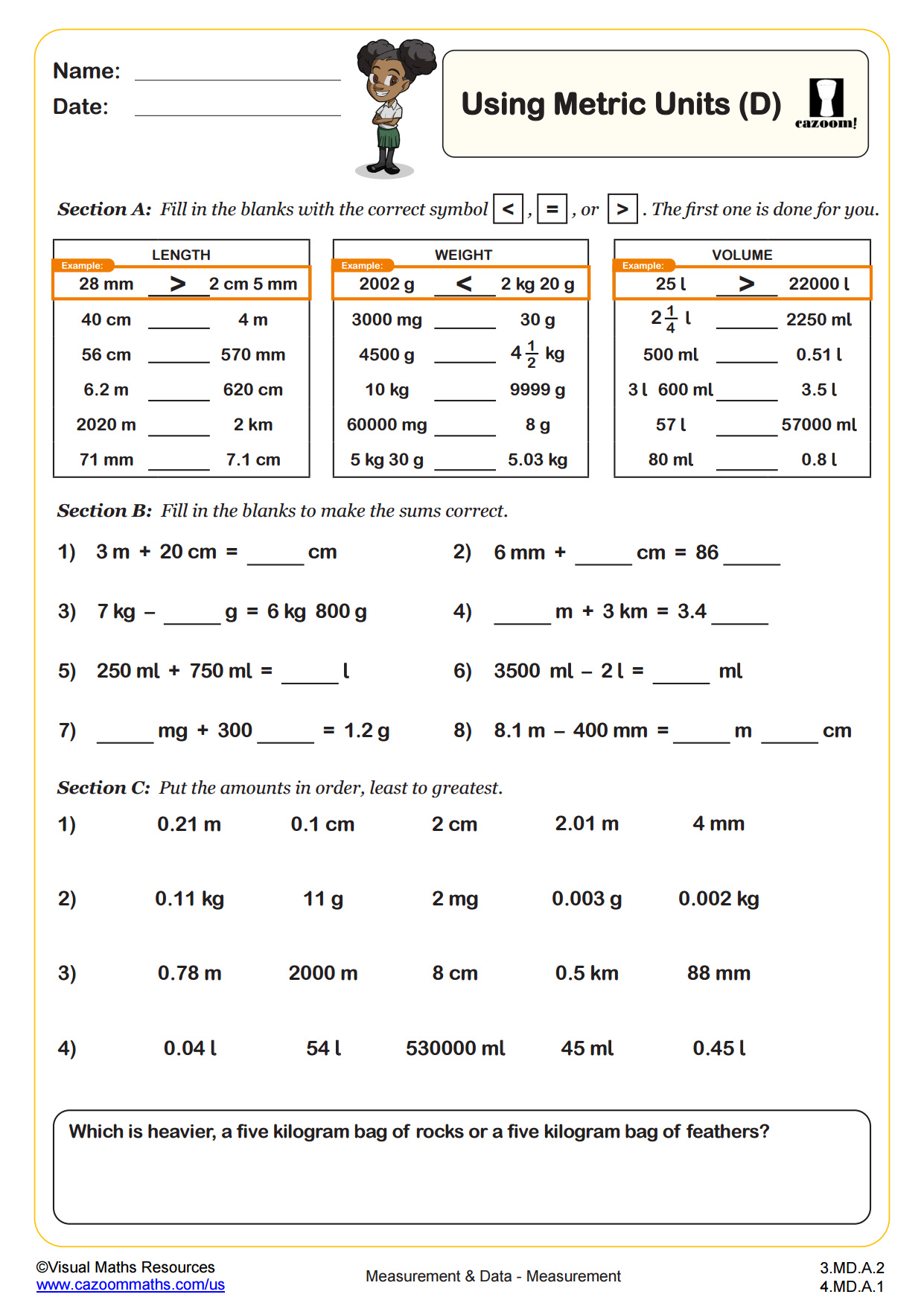
Using Metric Units (D)
All worksheets are created by the team of experienced teachers at Cazoom Math.
How do measurement and data math skills by grade build upon each other?
Math skills by grade in measurement and data follow a carefully structured progression that aligns with Common Core State Standards. Kindergarten students begin with direct comparison and non-standard units, first grade introduces standard units like inches and feet, second grade adds two-digit measurements, third grade incorporates metric units and simple data displays, fourth grade extends to mixed units and complex graphs, and fifth grade introduces statistical measures and coordinate planes.
Teachers notice that students who miss foundational measurement concepts in early grades struggle significantly with multi-step problems later. For example, students who don't master the relationship between grams and kilograms in third grade often have difficulty with unit conversions in middle school science classes, where precise measurements are critical for laboratory work and engineering applications.
What measurement concepts should students master at each grade level?
Grade-level expectations progress from concrete to abstract thinking across elementary years. Kindergarten through second grade focus on direct comparison, ordering objects by length, and using both non standard units of measurement and standard tools like rulers and scales. Third and fourth grades emphasize metric and customary unit conversions, area and perimeter calculations, and interpreting various graph types.
Fifth grade students tackle more sophisticated concepts including volume calculations, coordinate graphing, and statistical measures. Teachers frequently observe that students need extensive practice with metric conversions, particularly with grams and kilograms worksheets 3rd grade level problems, because American students have limited real-world exposure to metric measurements compared to customary units they encounter daily.
Why do students struggle with statistical concepts like mean, median, and mode?
Grade 5 math mean median mode worksheets reveal common misconceptions that teachers encounter repeatedly. Students often confuse these measures of central tendency because they don't understand the conceptual differences between them. Many students memorize procedures without grasping that mean represents equal distribution, median shows the middle value, and mode identifies the most frequent occurrence.
Teachers notice that students perform better when they connect these concepts to real situations like sports statistics, class test scores, or survey data. Hands-on activities using actual classroom data, such as student heights or favorite colors, help students understand when each measure provides the most useful information for interpreting data sets and making predictions.
How should teachers use these worksheets most effectively in their classrooms?
Teachers find the greatest success when they use these worksheets as targeted practice after introducing concepts through manipulatives and real-world exploration. The answer keys allow for immediate feedback, but teachers should encourage students to explain their reasoning rather than simply checking for correct answers. Pairing visual learners with hands-on measurement tools before worksheet practice significantly improves comprehension.
Many teachers incorporate these worksheets into math centers or homework assignments, using them to identify specific areas where students need additional support. Teachers also report success using the worksheets for differentiated instruction, allowing advanced students to work independently while providing guided practice for students who need more support with fundamental measurement concepts.