Elementary School Measurement Worksheets
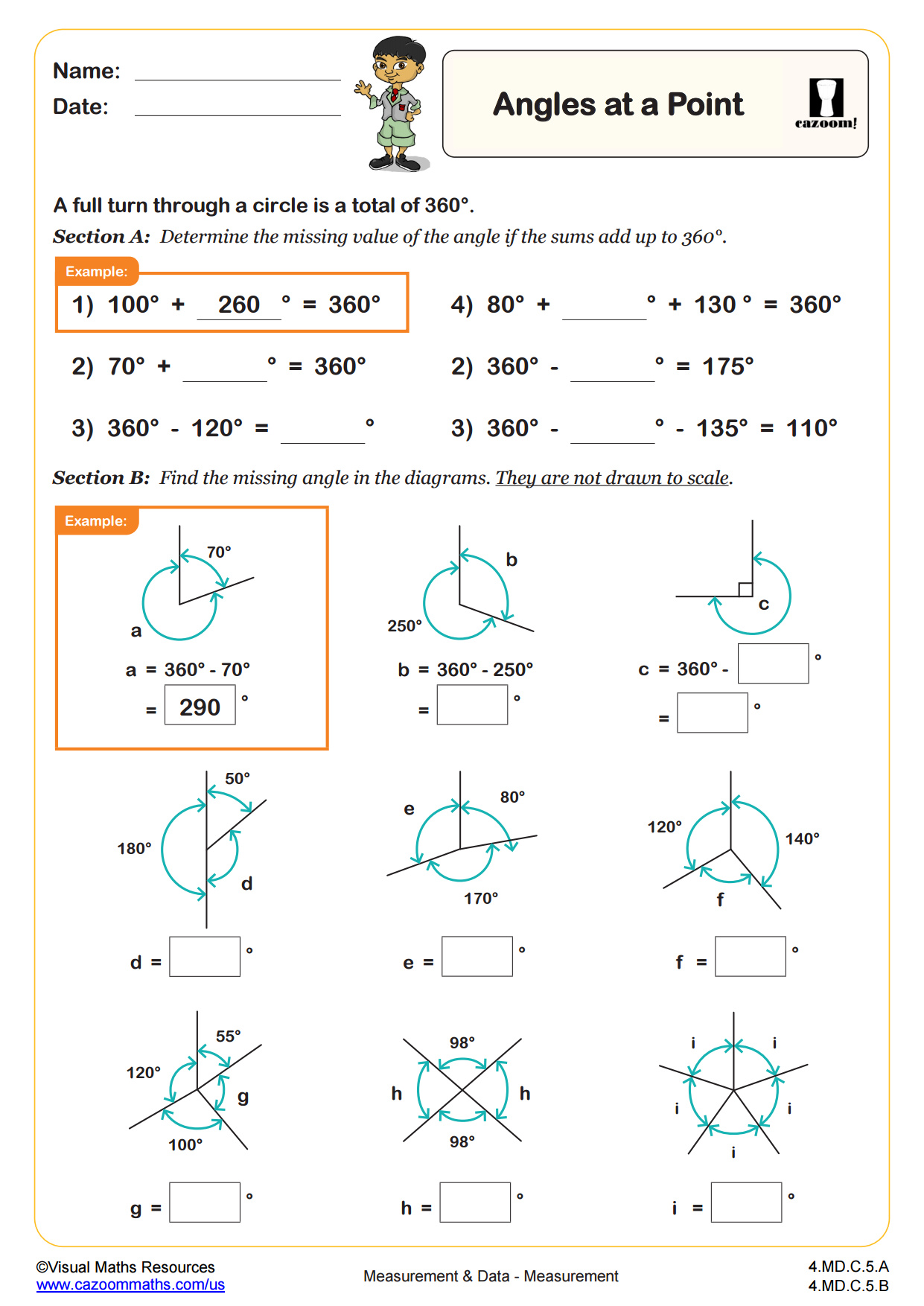
Angles at a Point
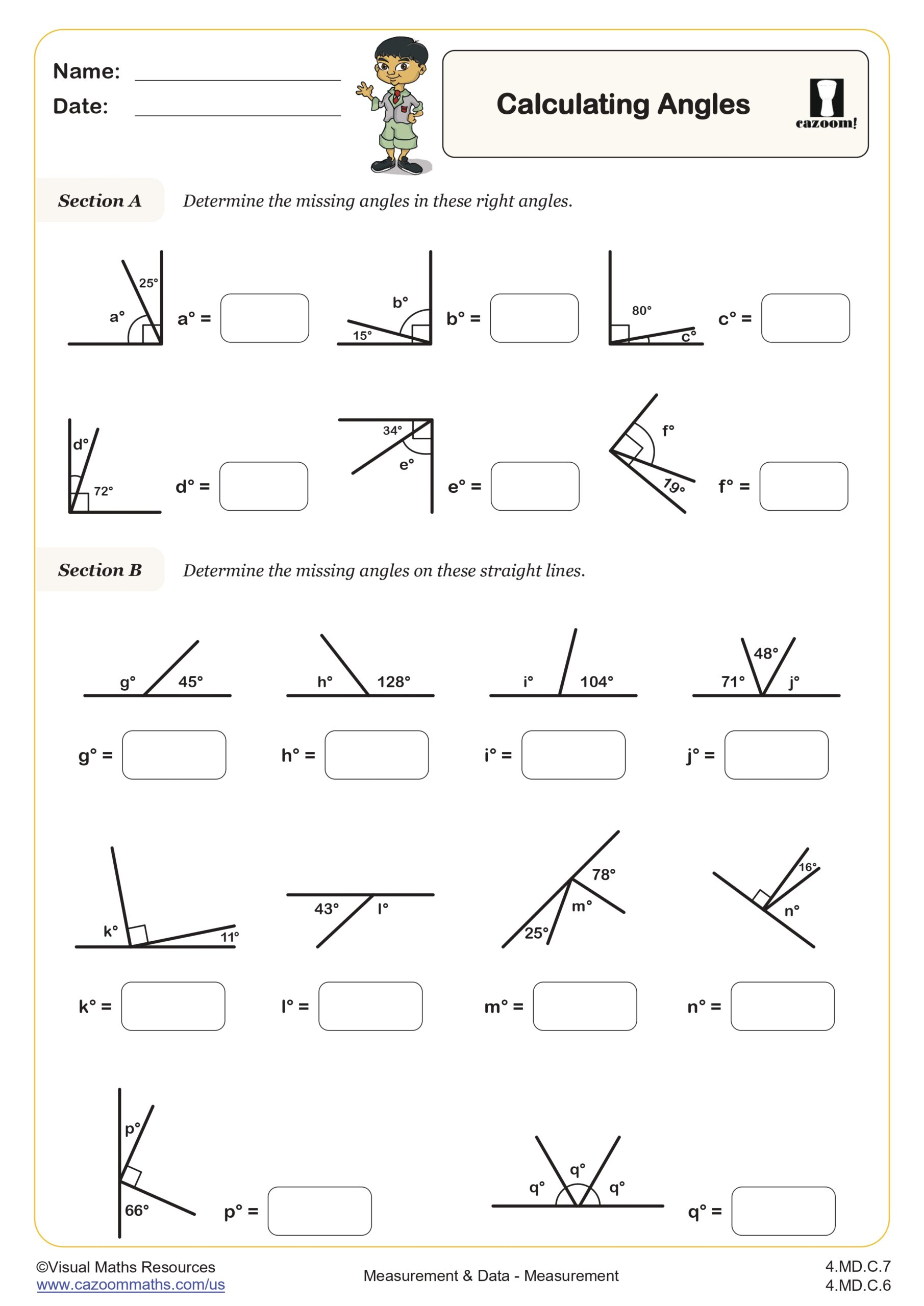
Calculating Angles
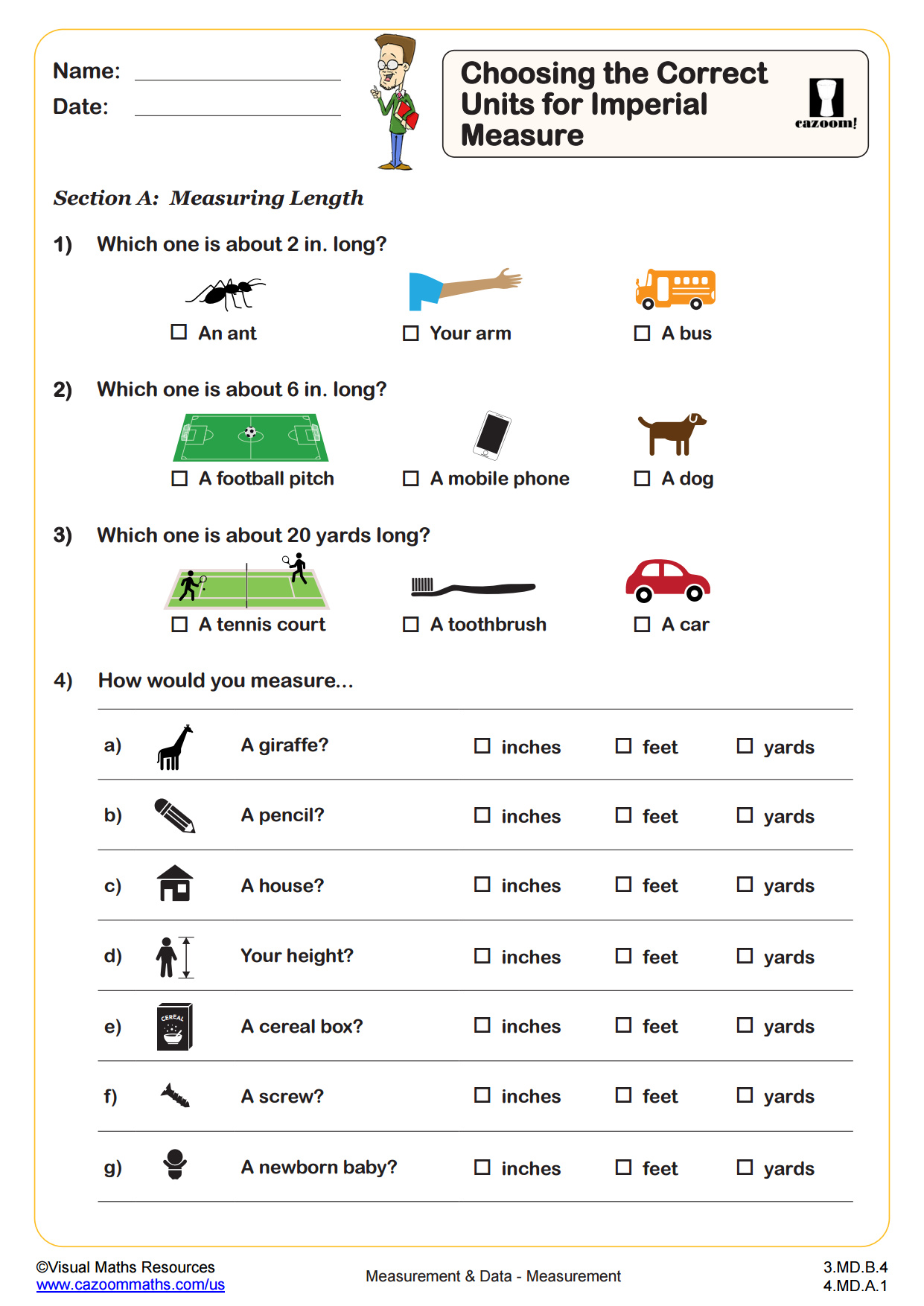
Choosing the Correct Units for Imperial Measure
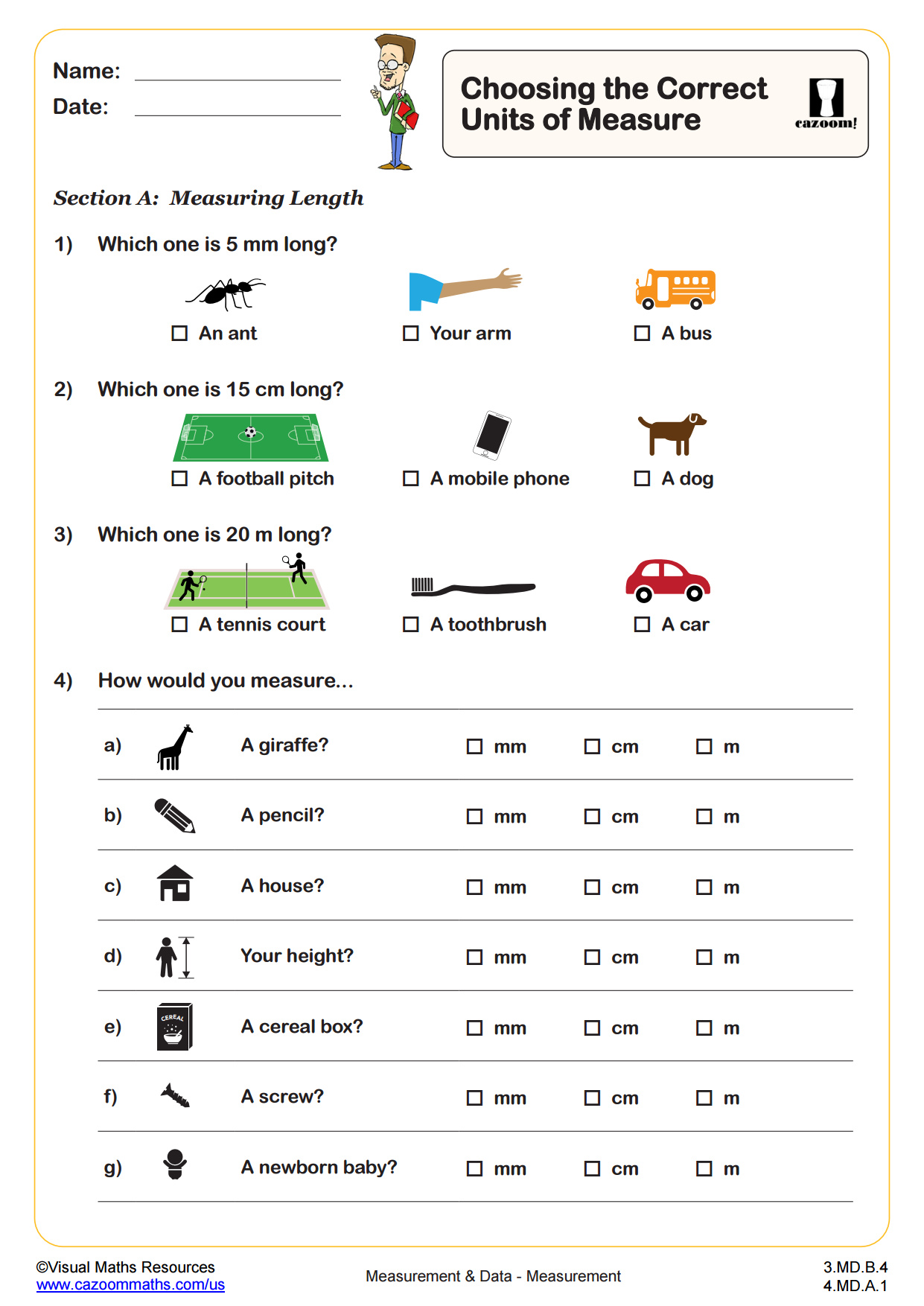
Choosing the Correct Units of Measure
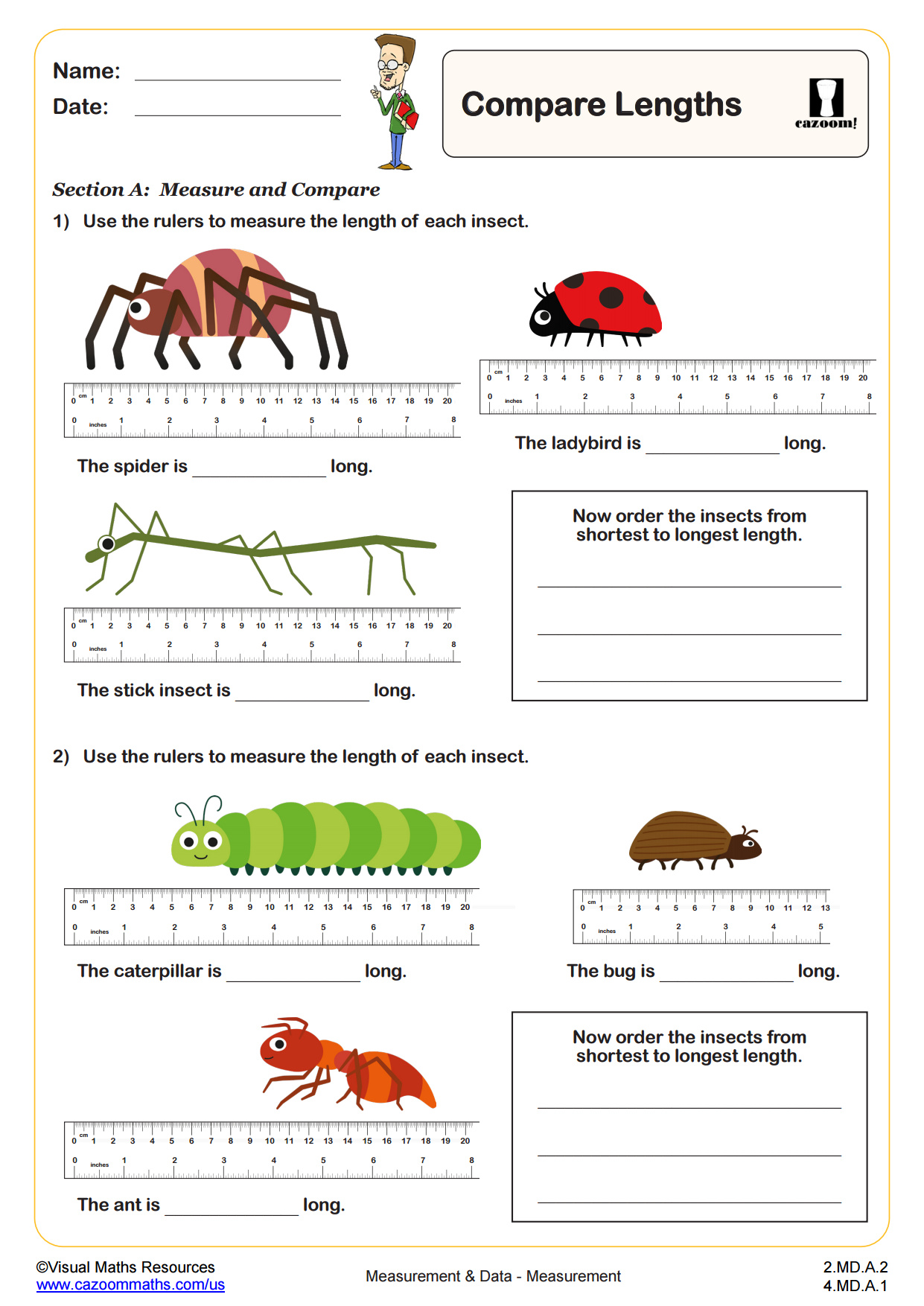
Compare Lengths
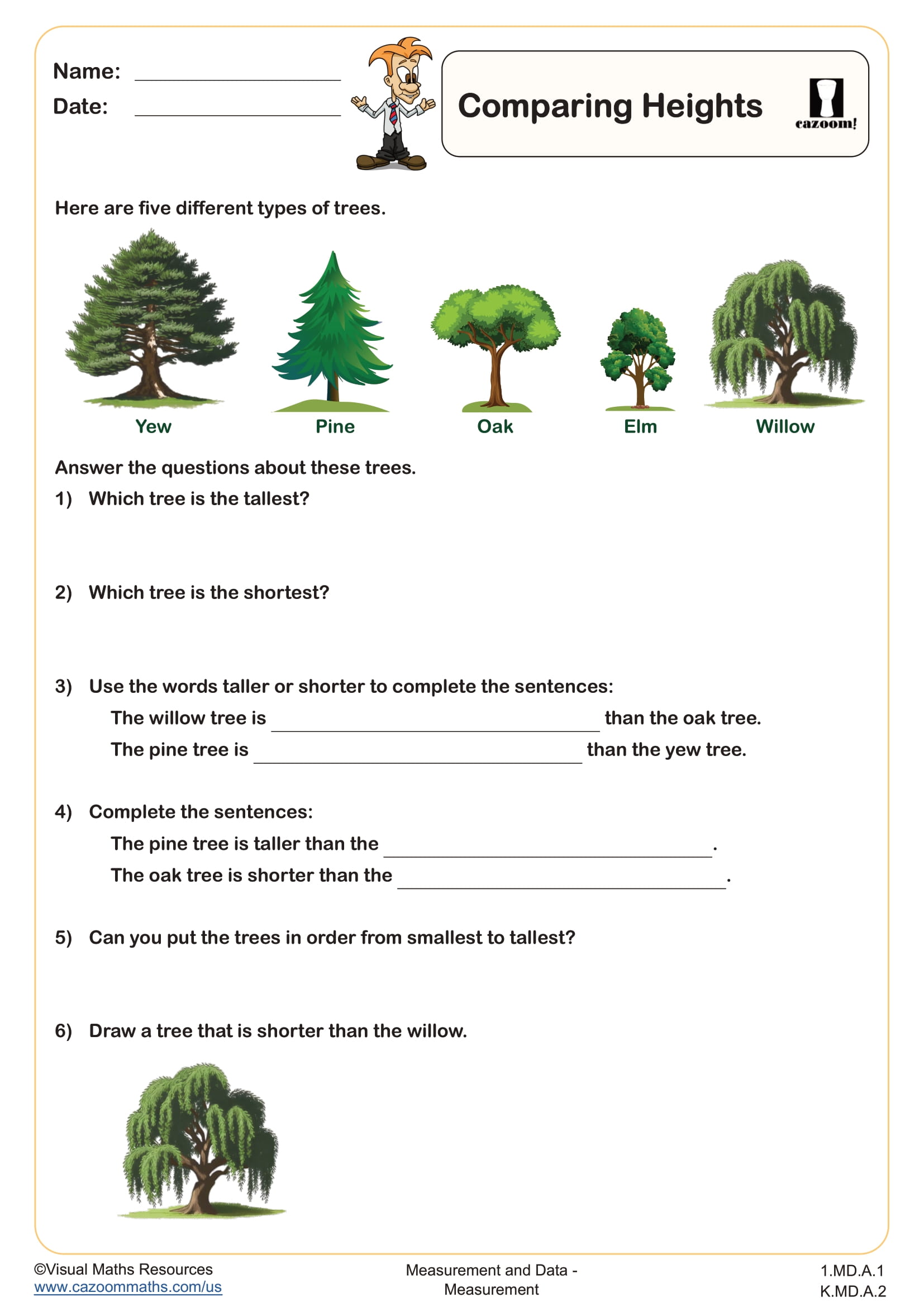
Comparing Heights
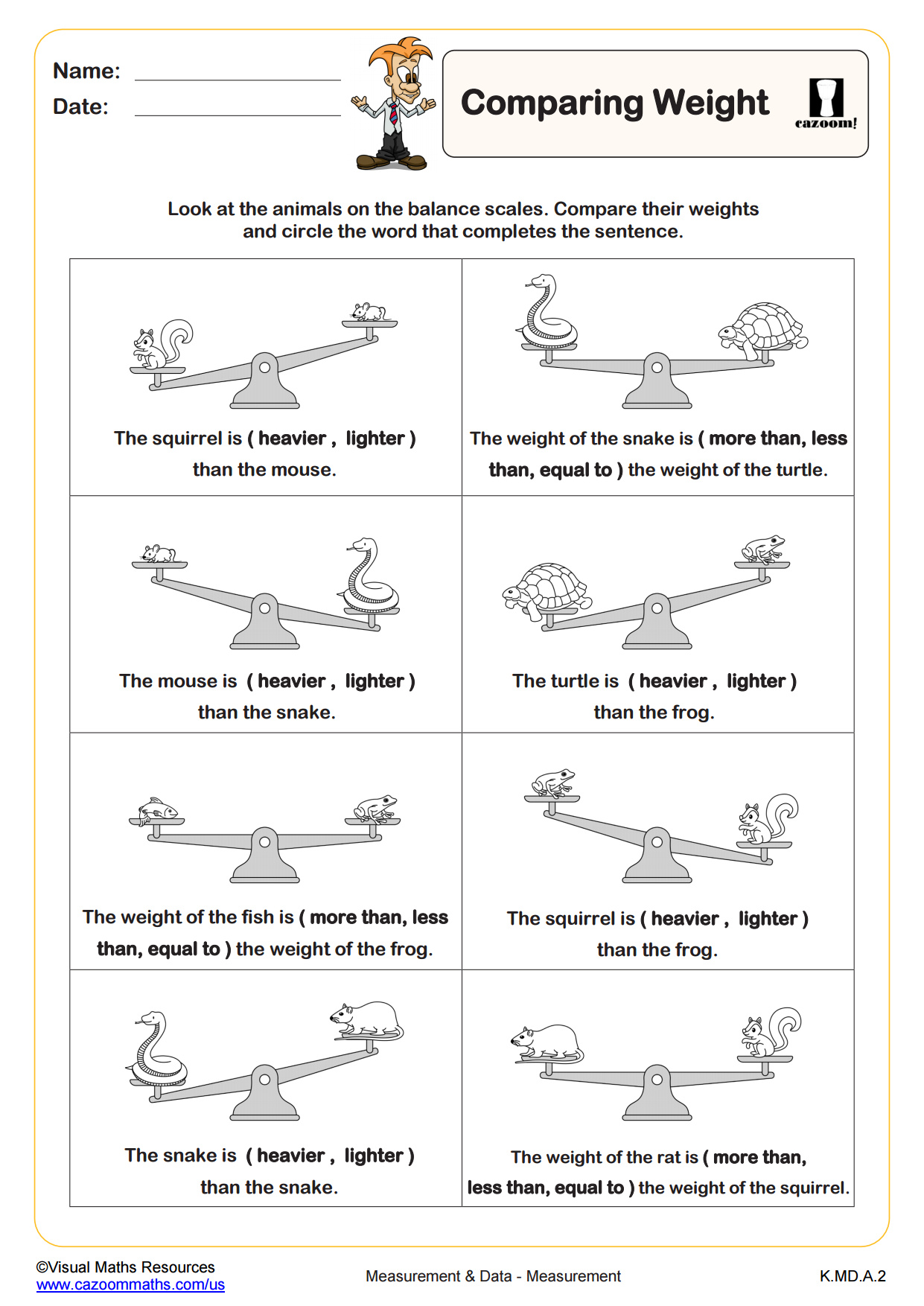
Comparing Weight
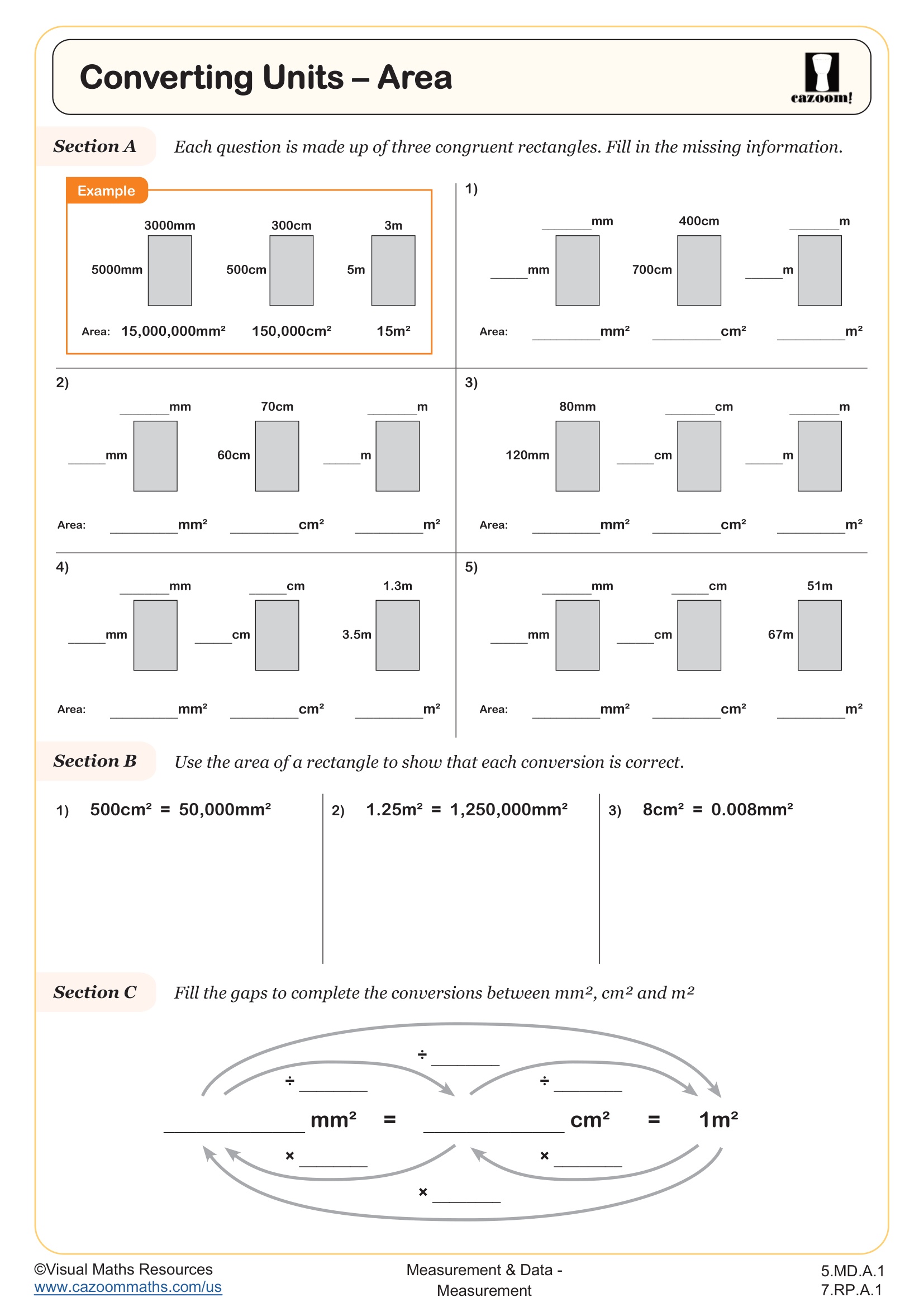
Converting Units - Area
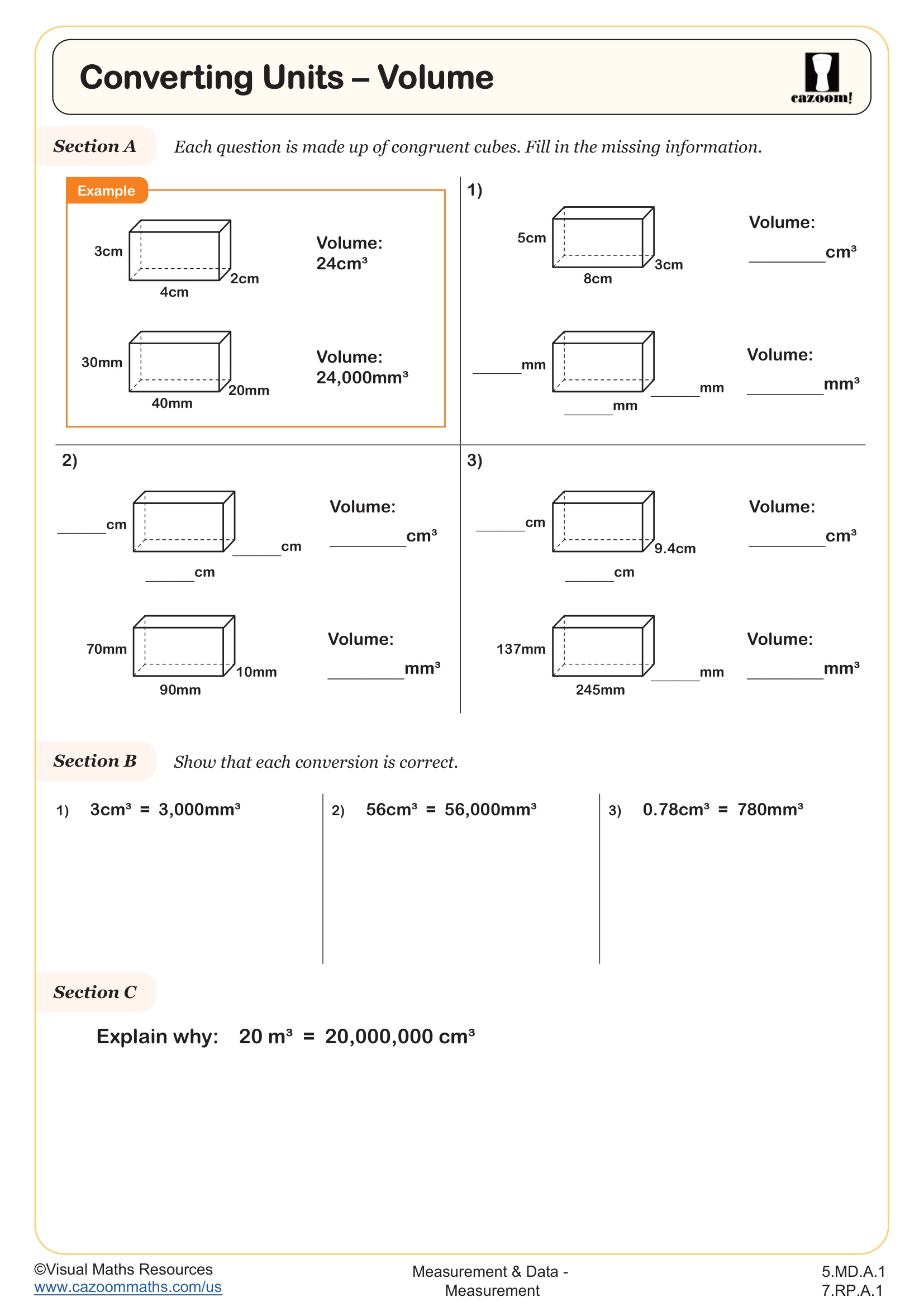
Converting Units - Volume
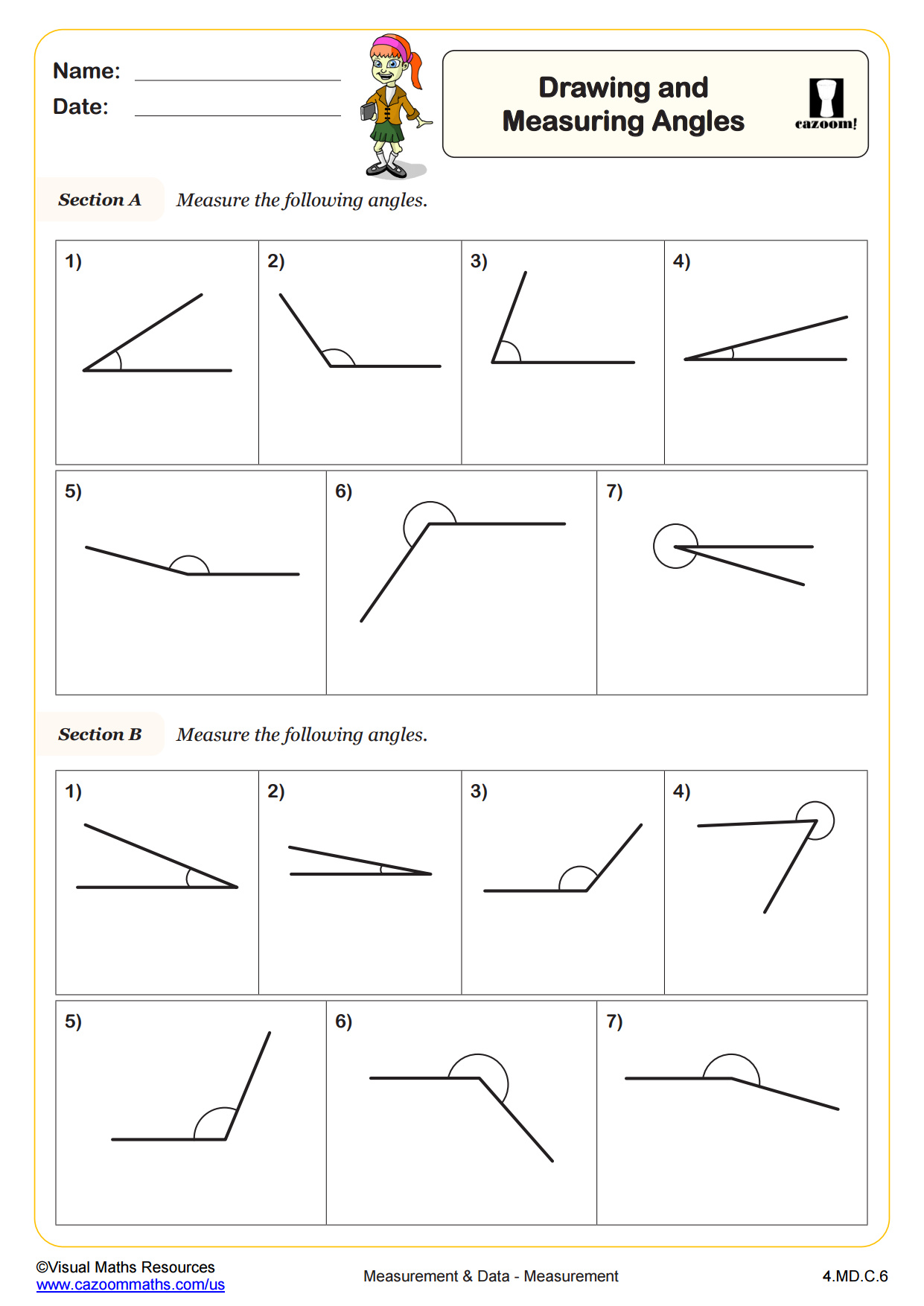
Drawing and Measuring Angles
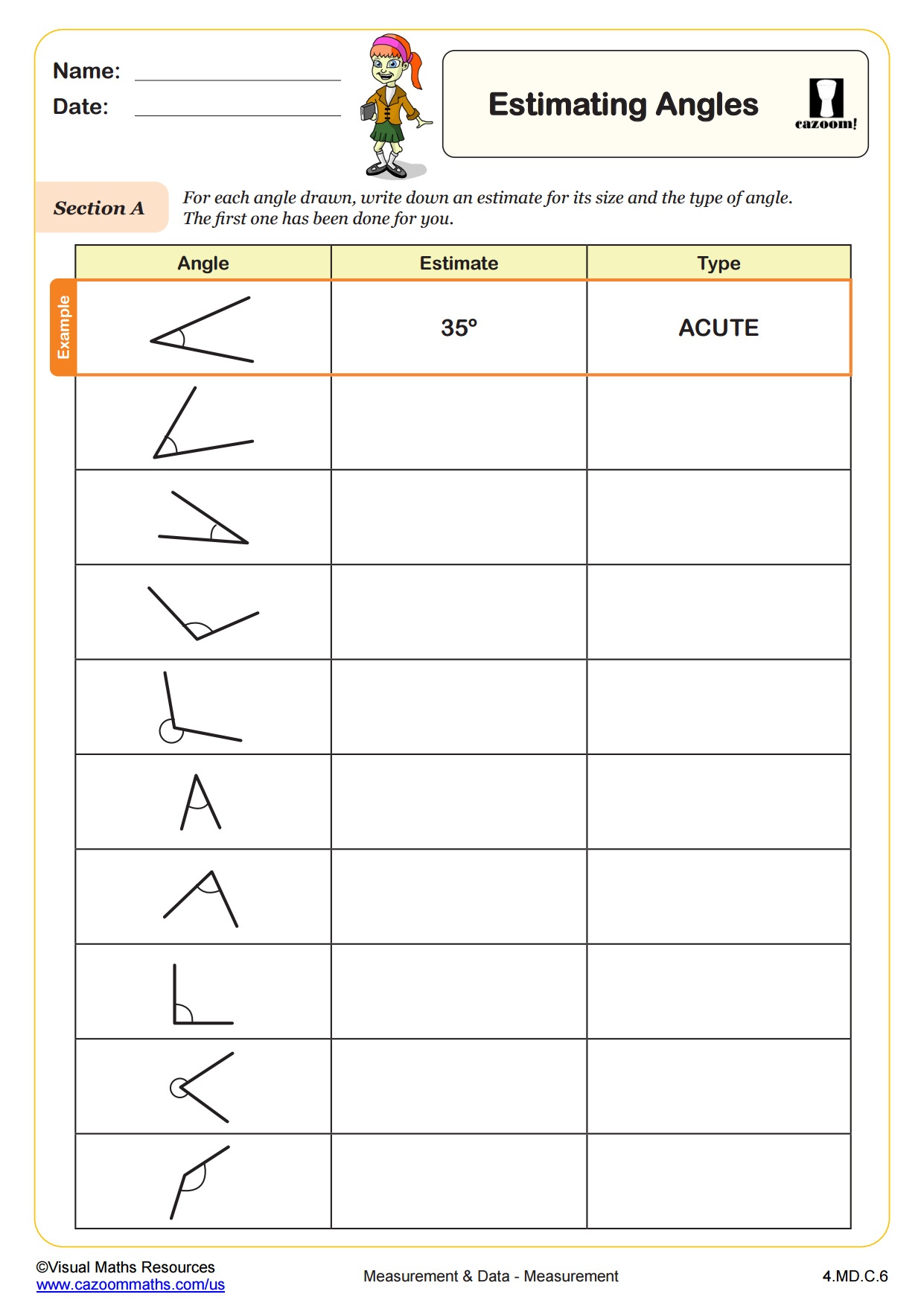
Estimating Angles
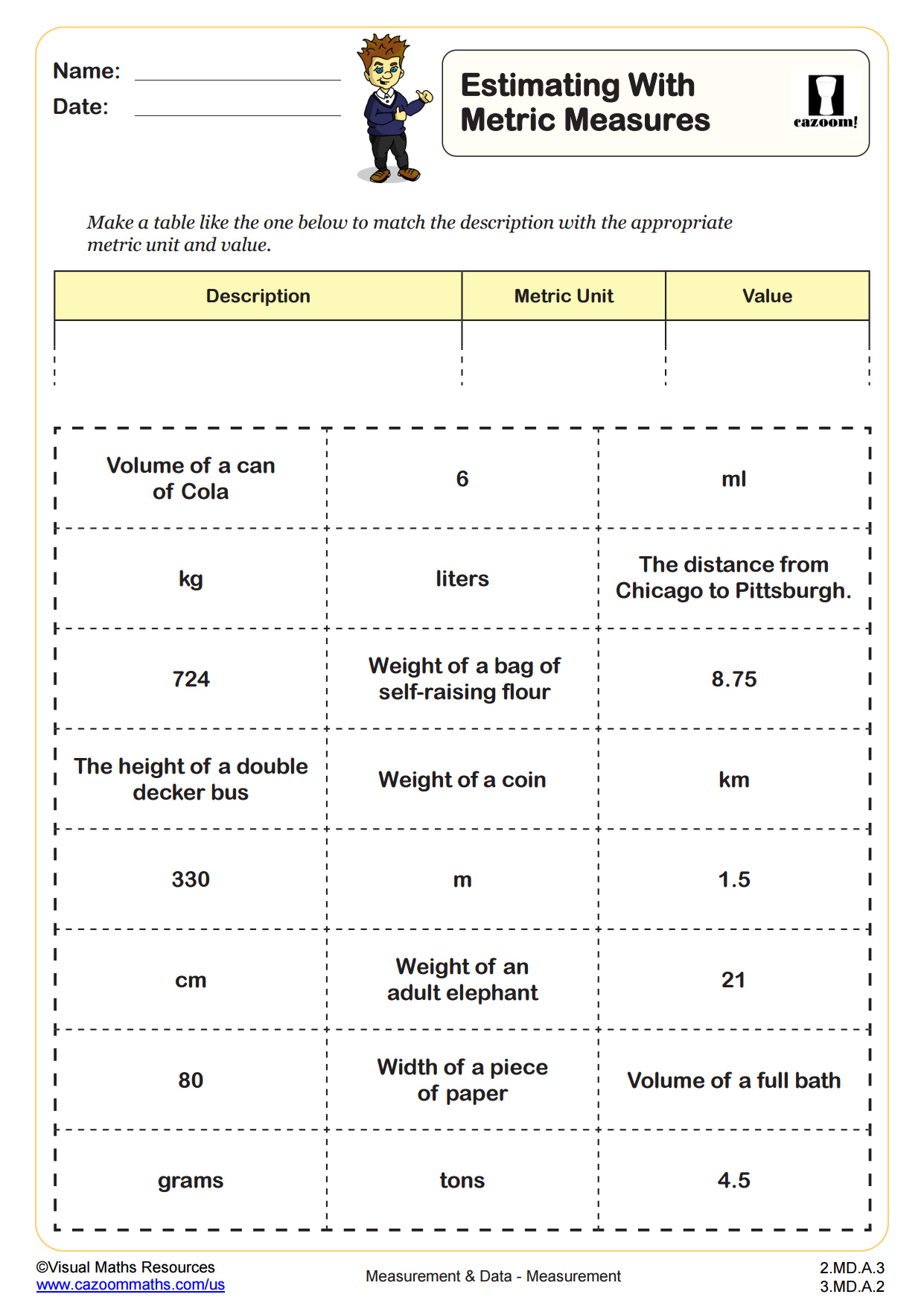
Estimating Metric Measures
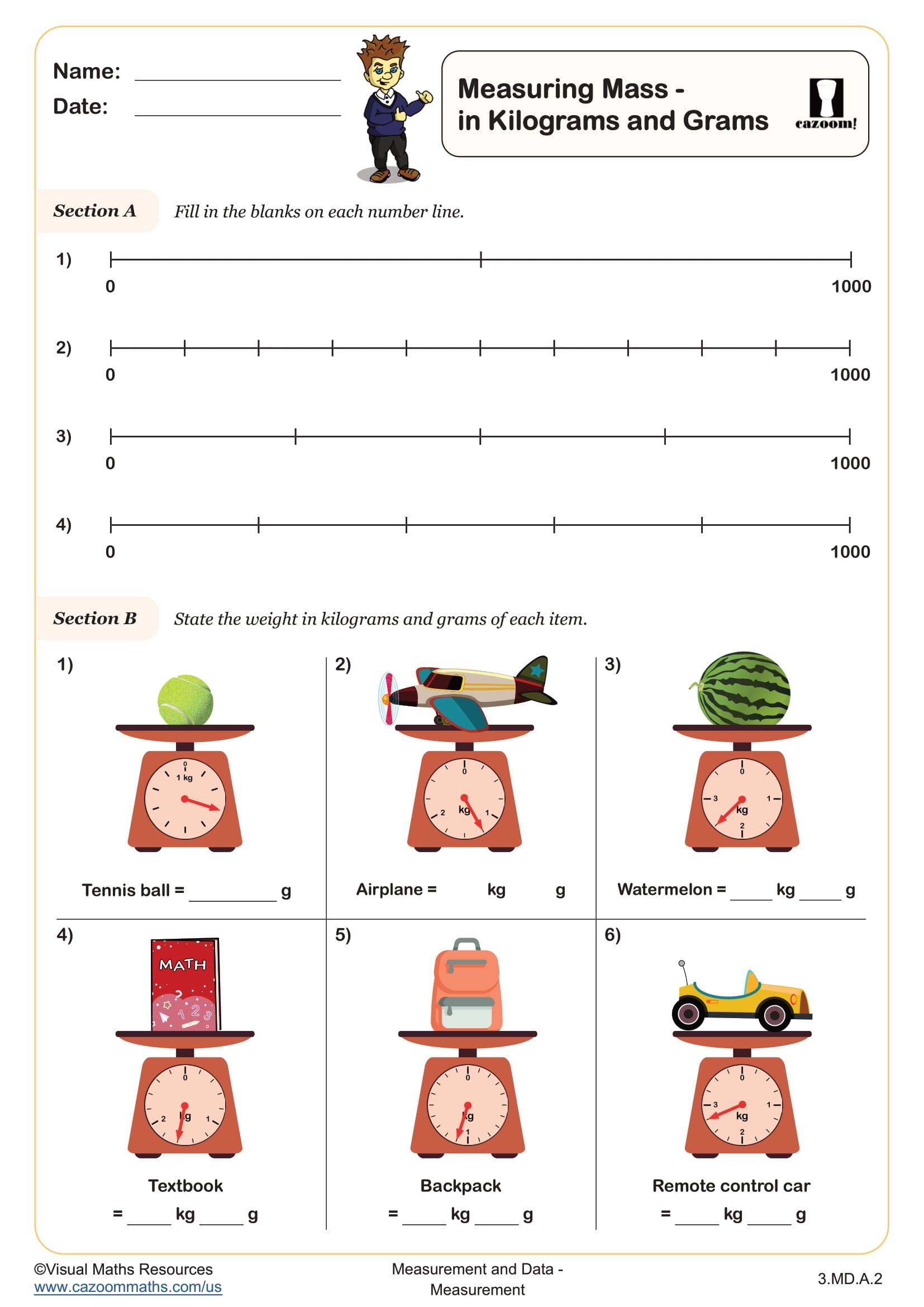
Imperial and Metric Lengths
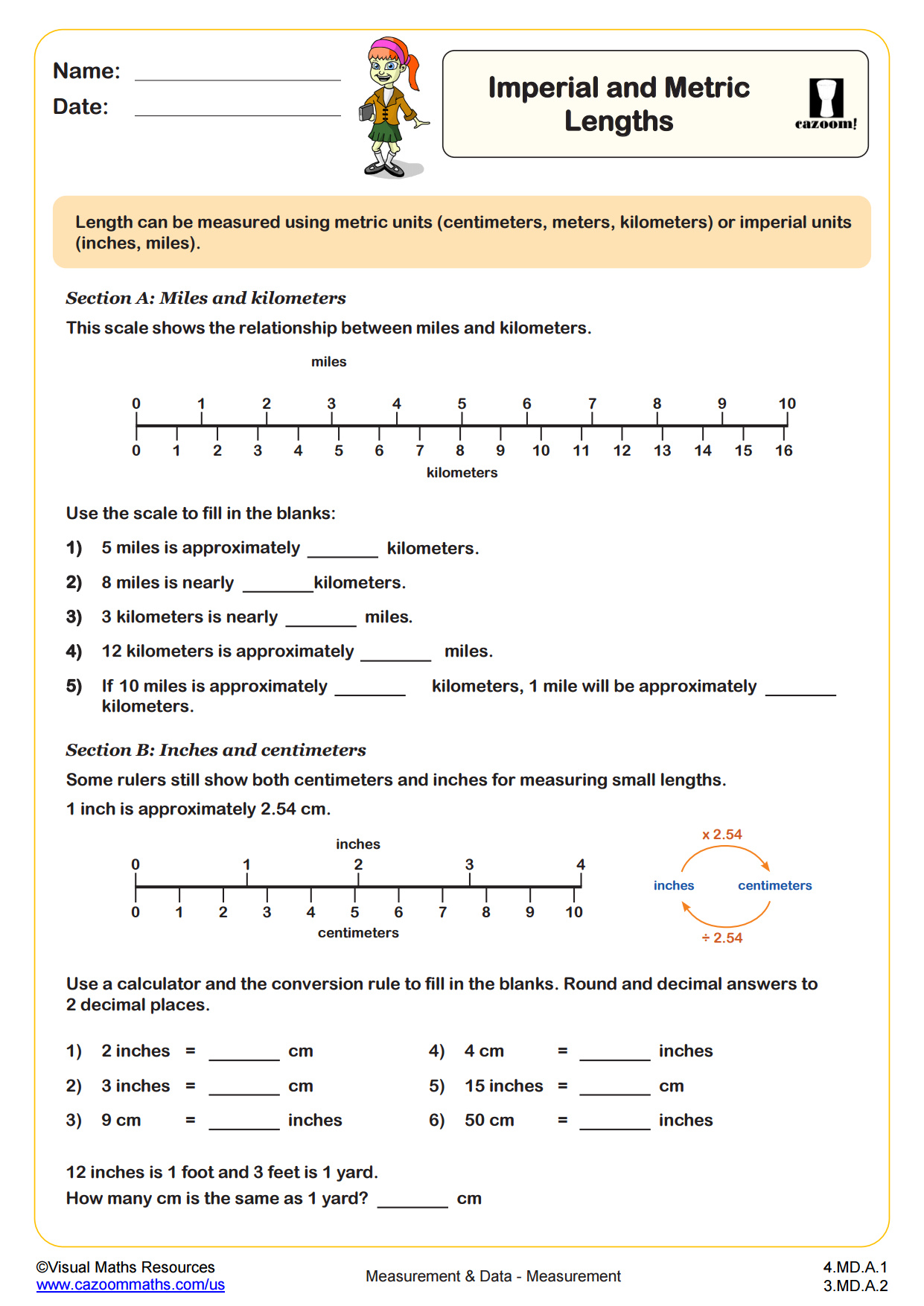
Kilometers and Meters
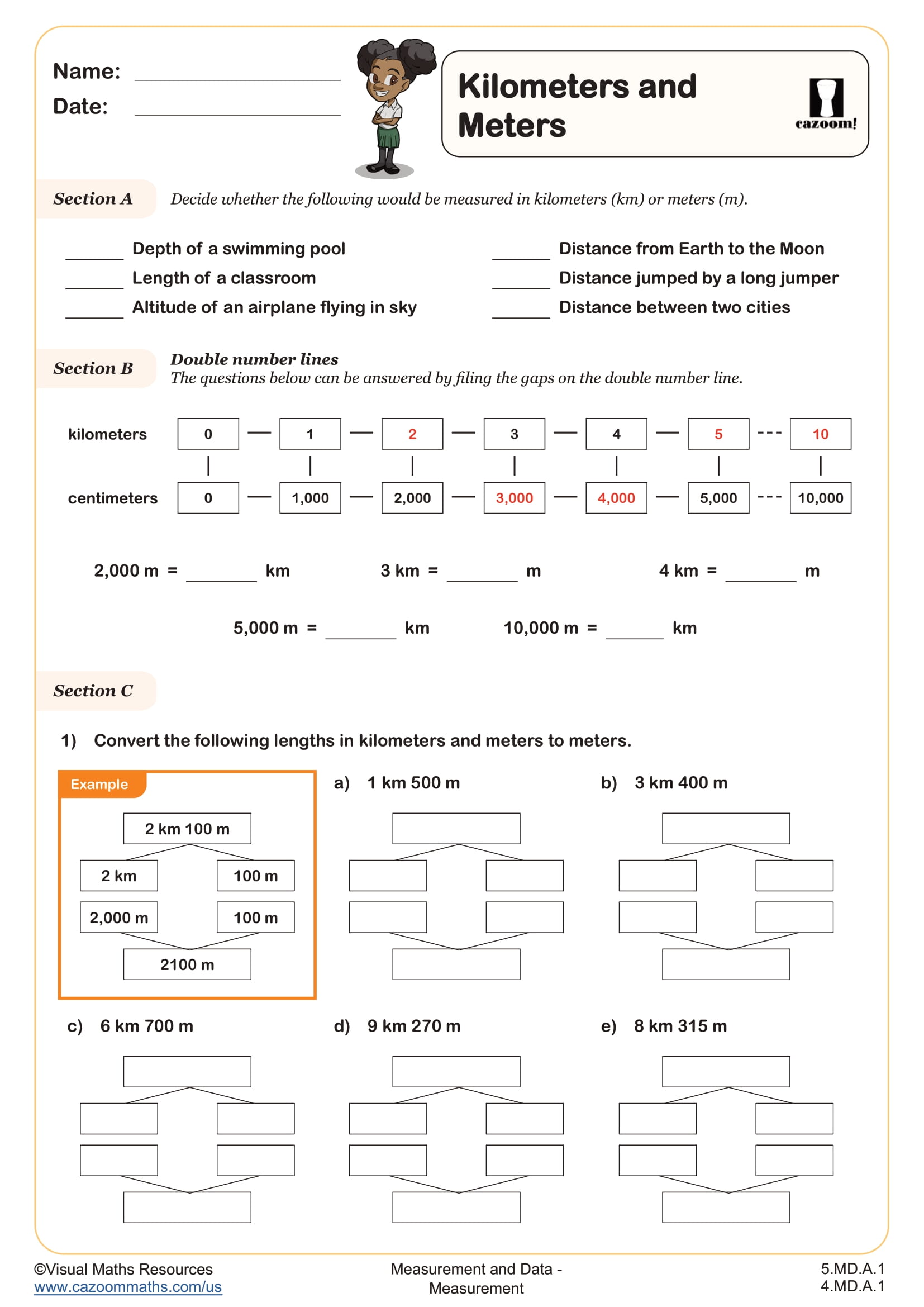
Measure Mass In Grams (A)
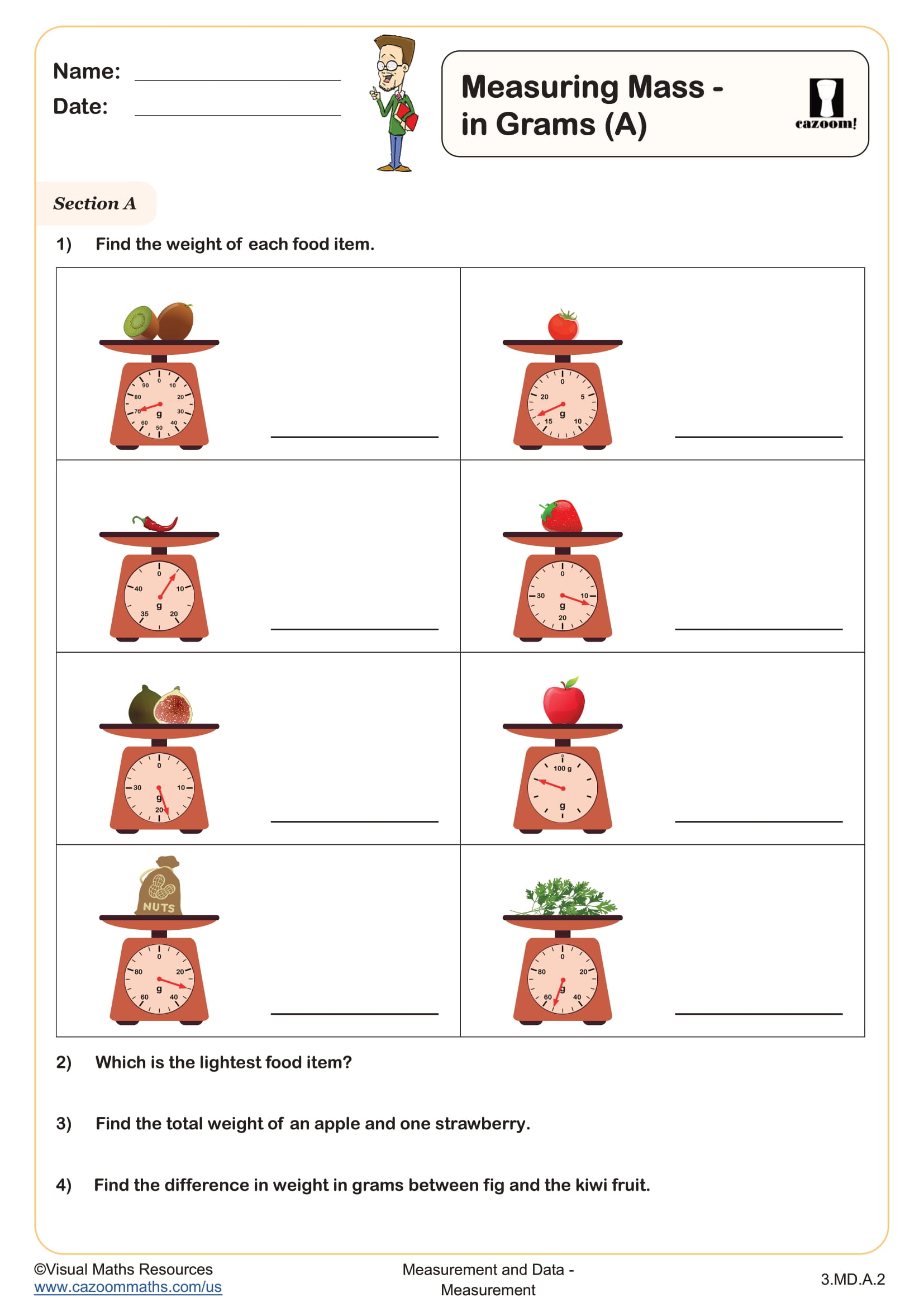
Measure Mass in Kilograms and Grams
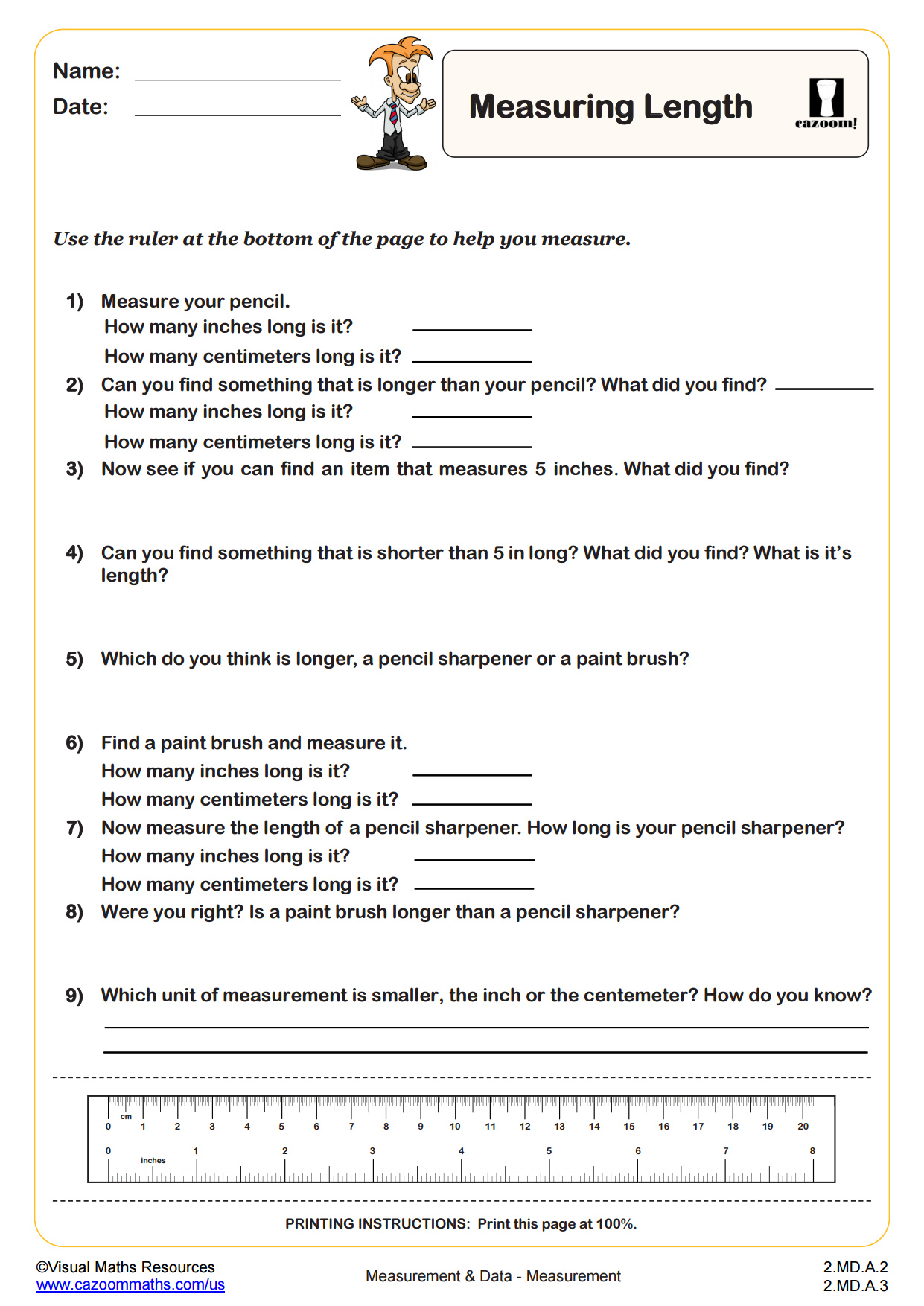
Measuring Length
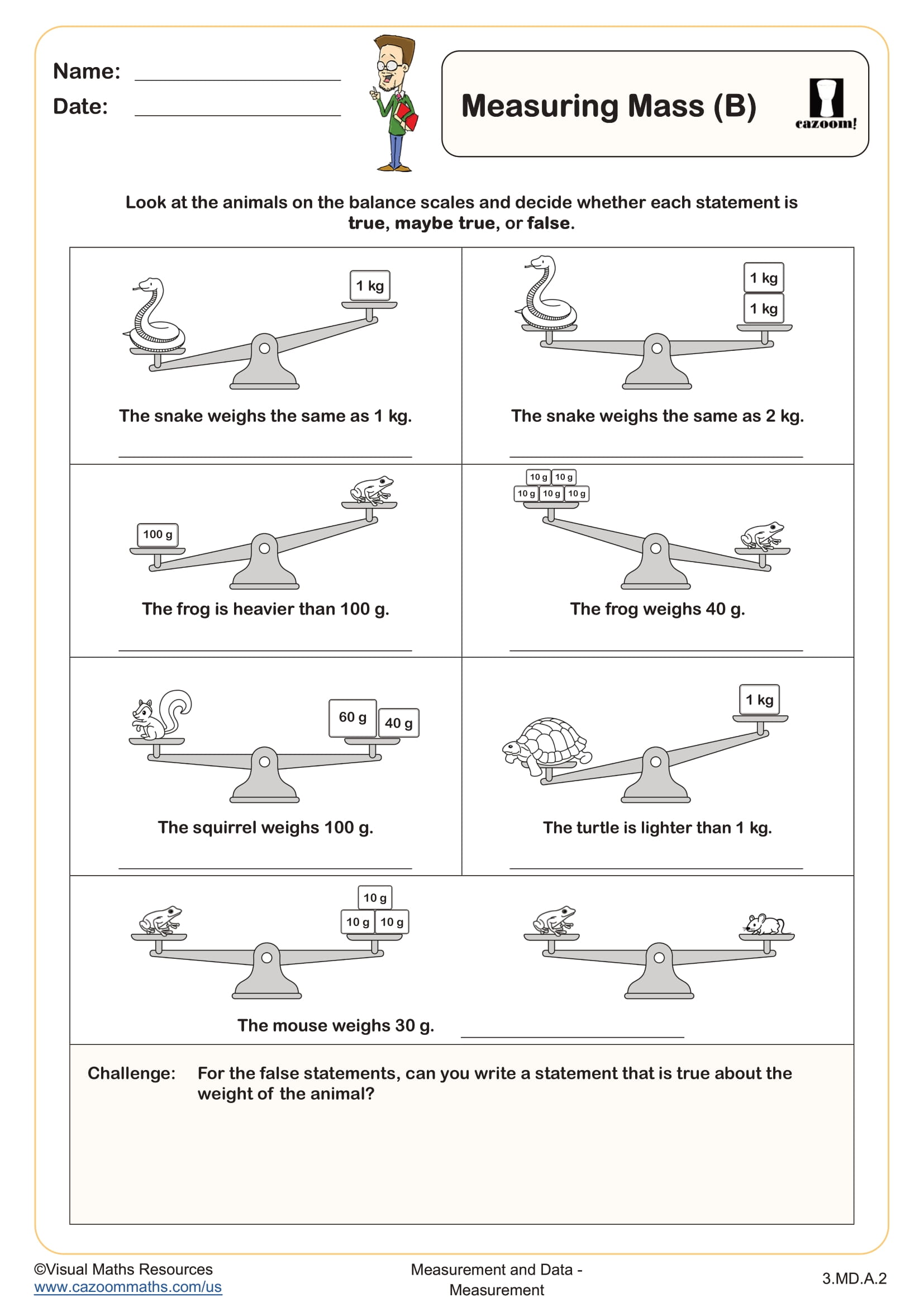
Measuring Mass (B)
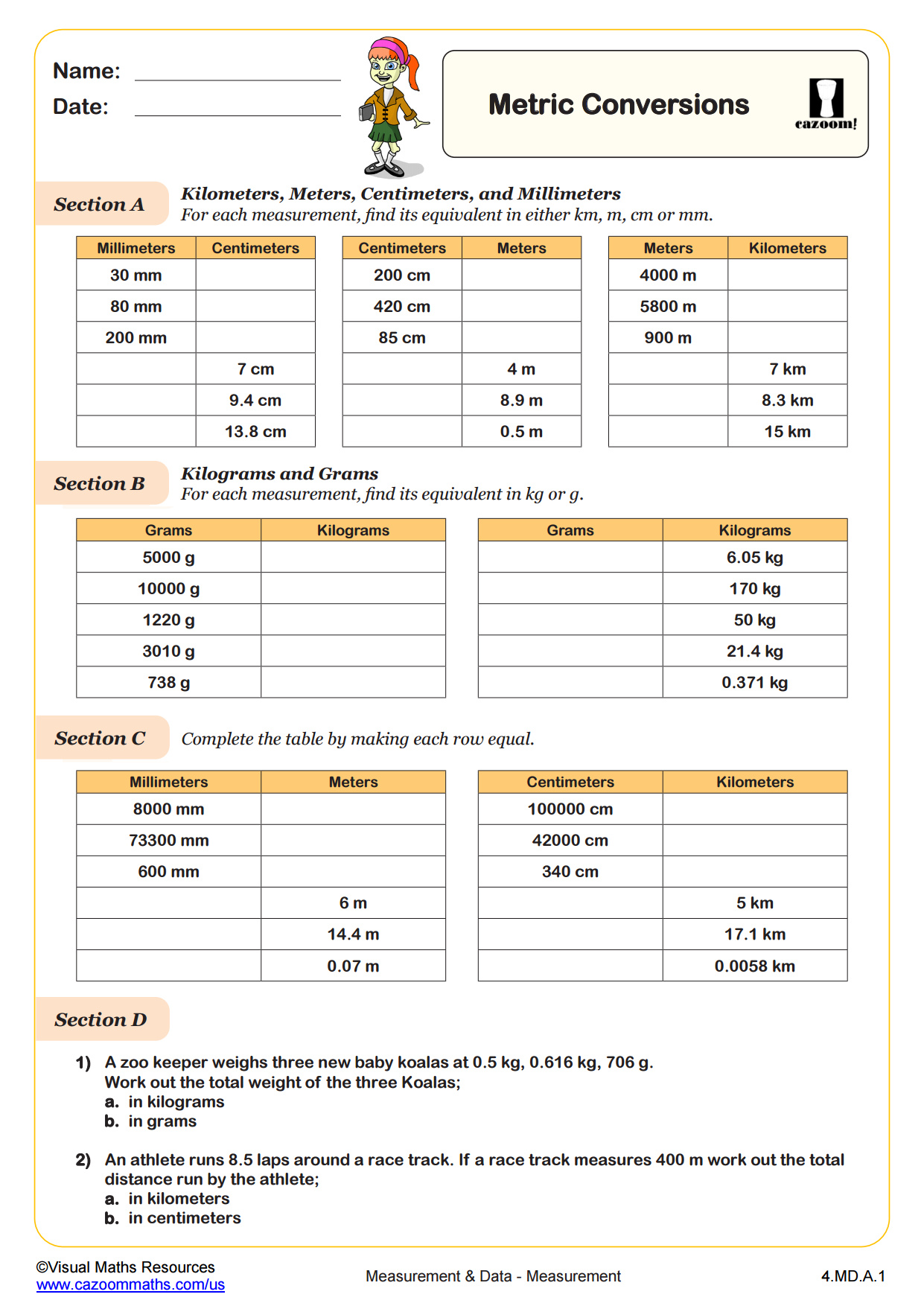
Metric Conversions
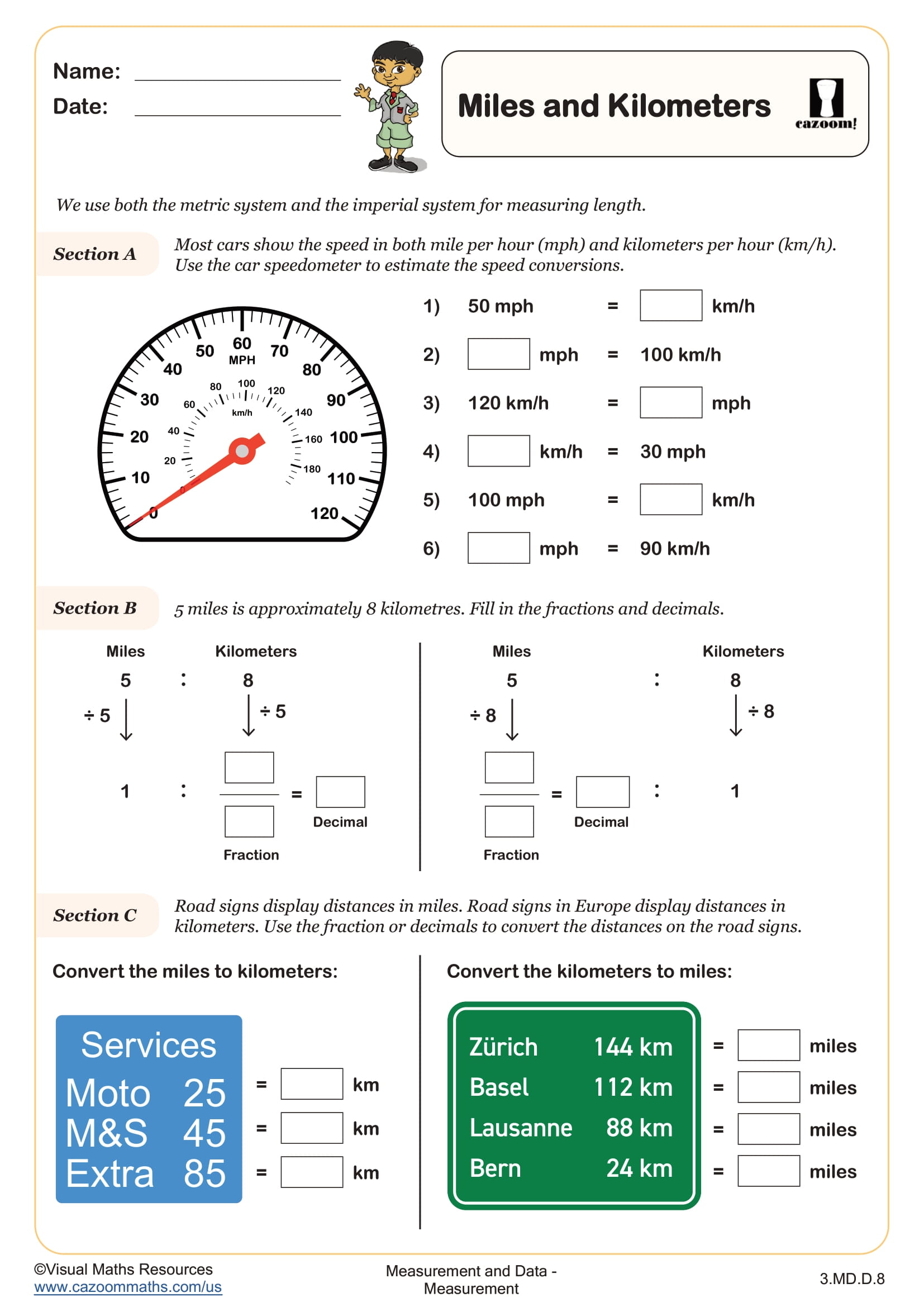
Miles and Kilometres
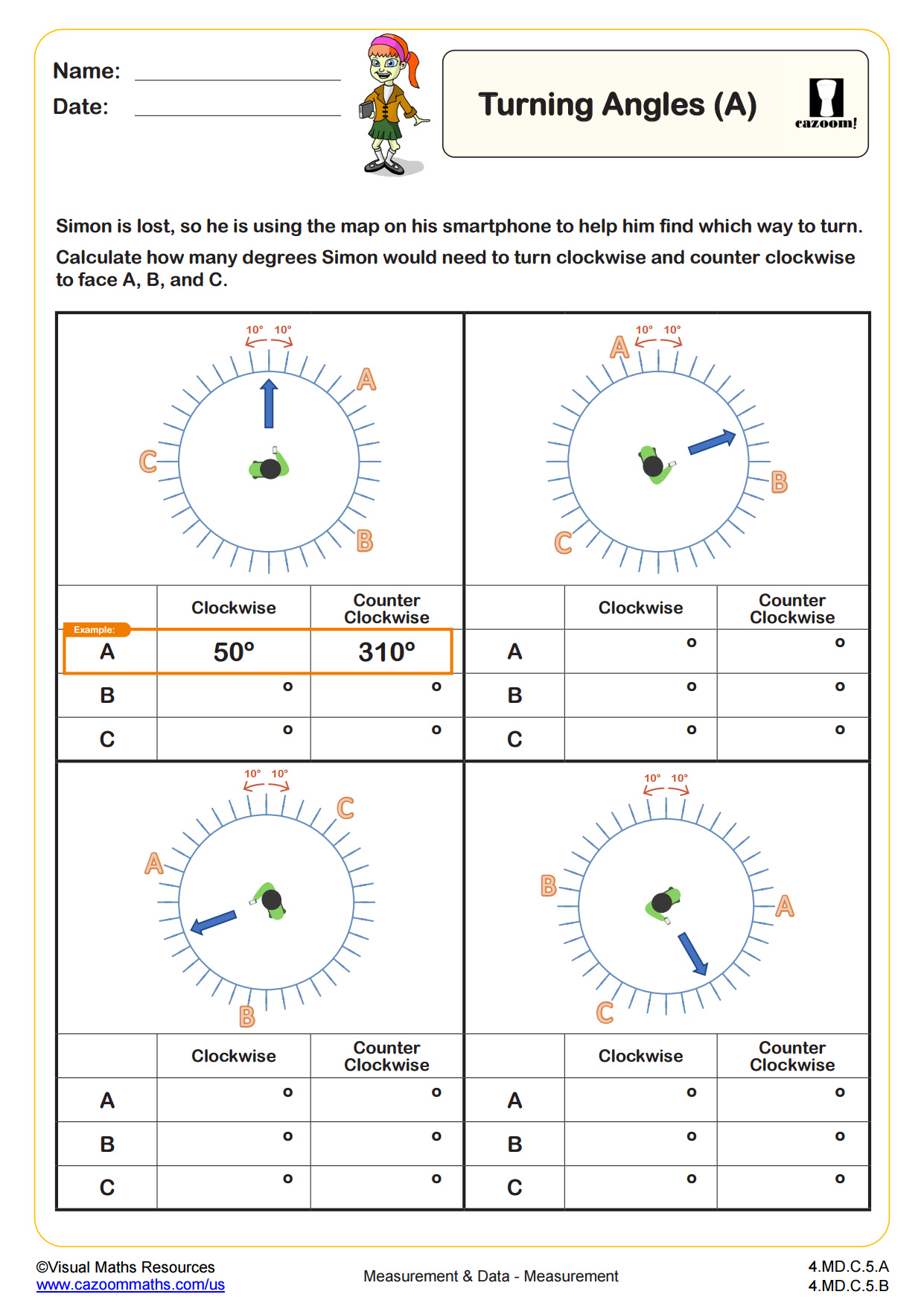
Turning Angles (A)
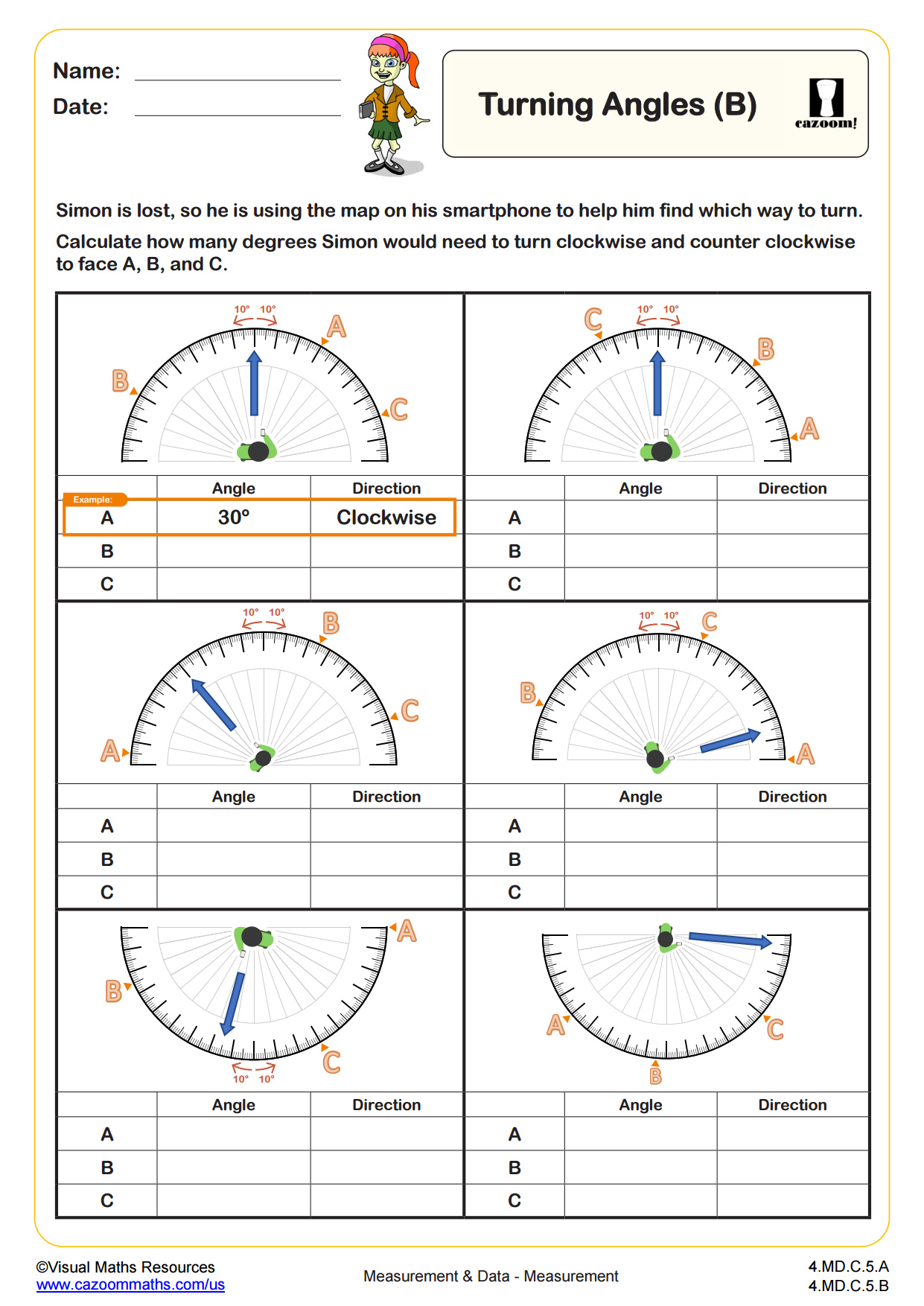
Turning Angles (B)
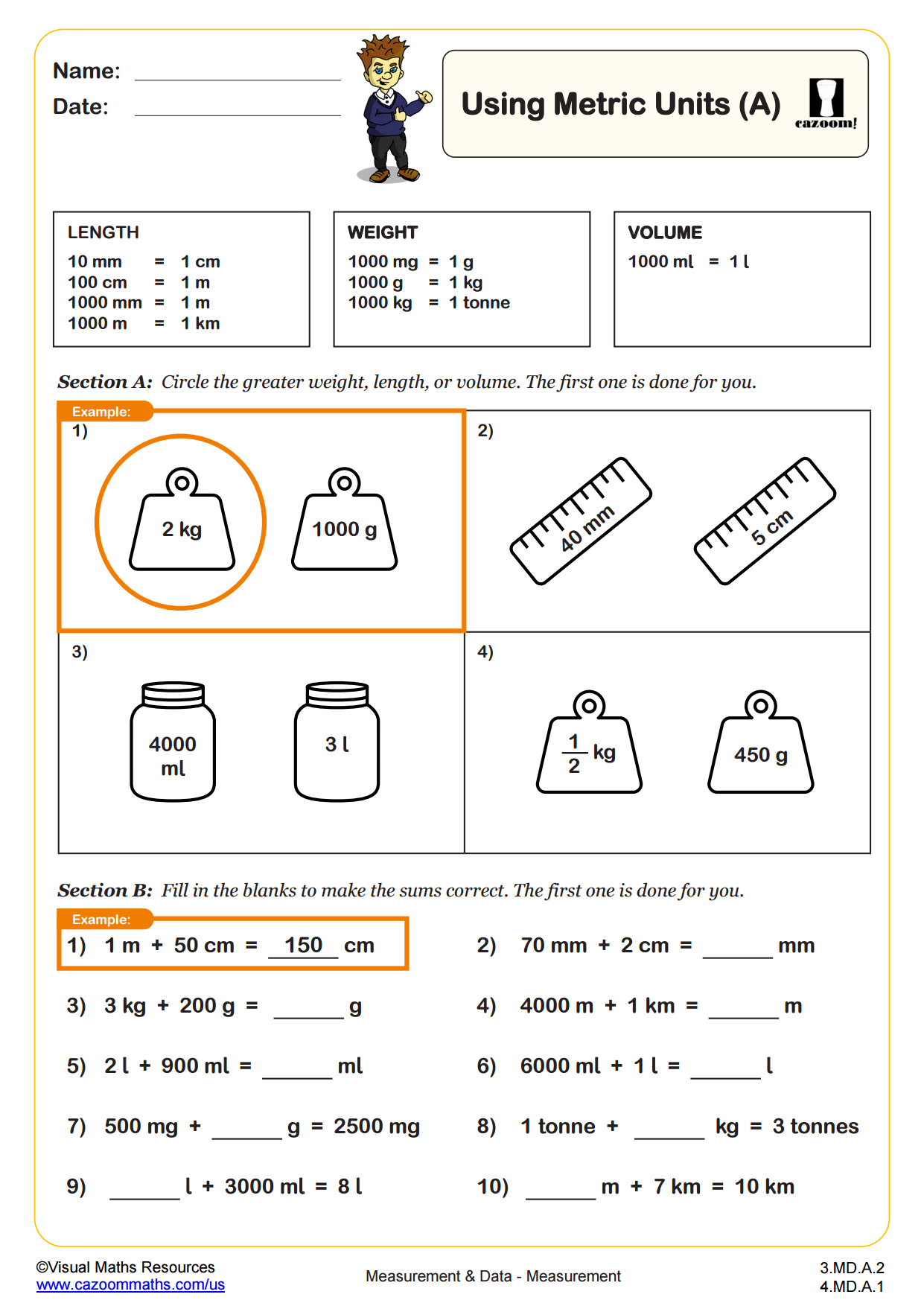
Using Metric Units (A)
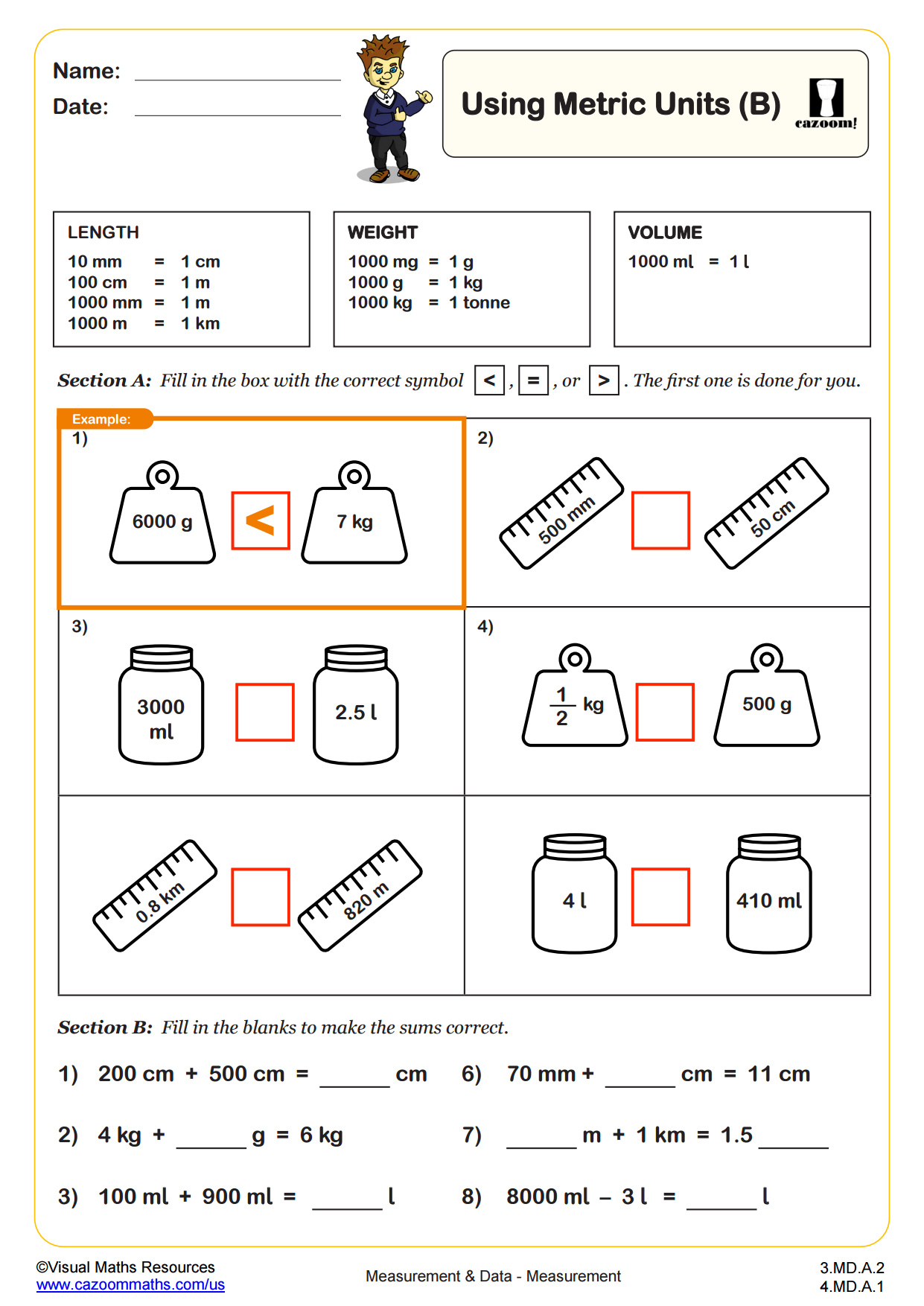
Using Metric Units (B)
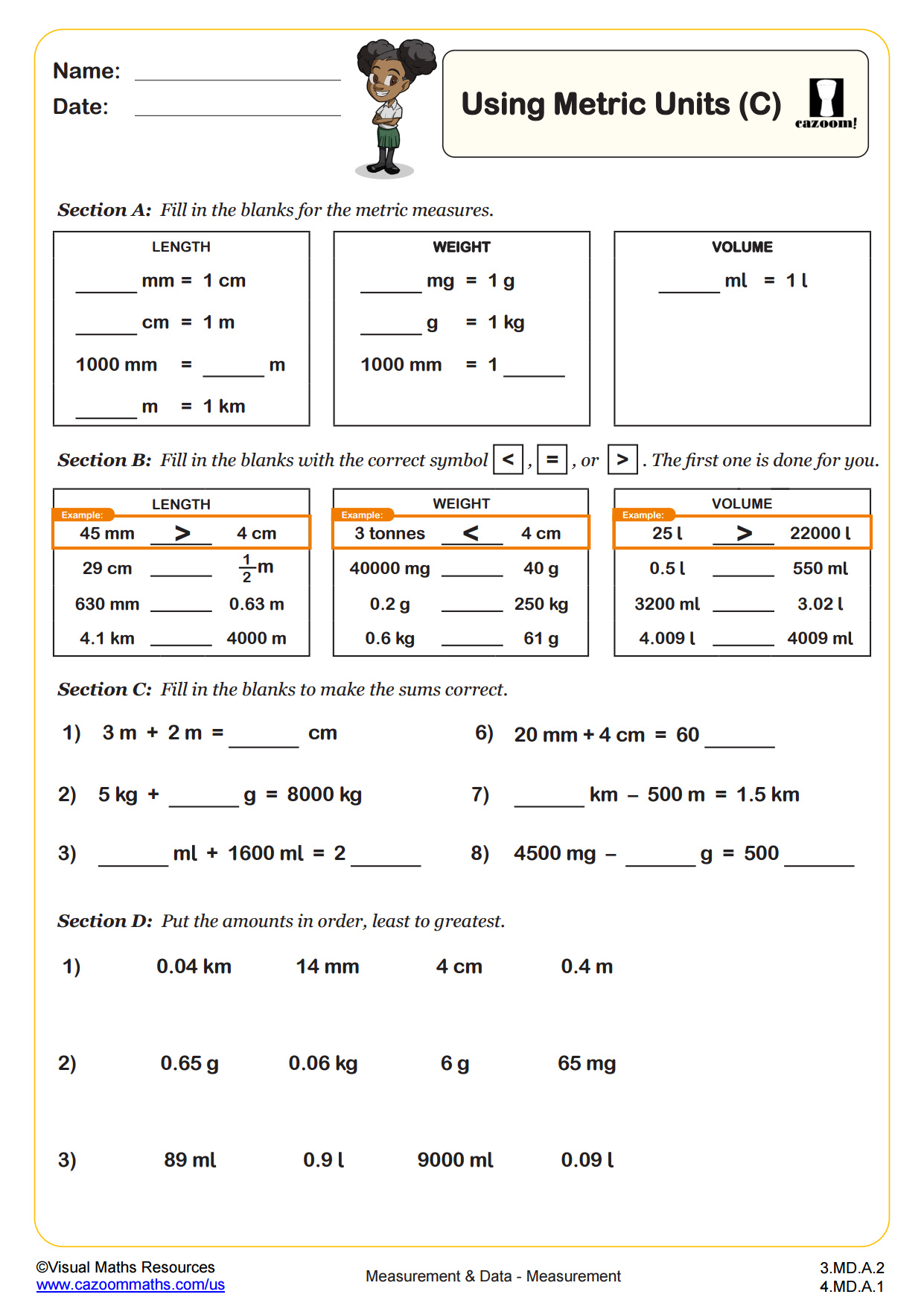
Using Metric Units (C)
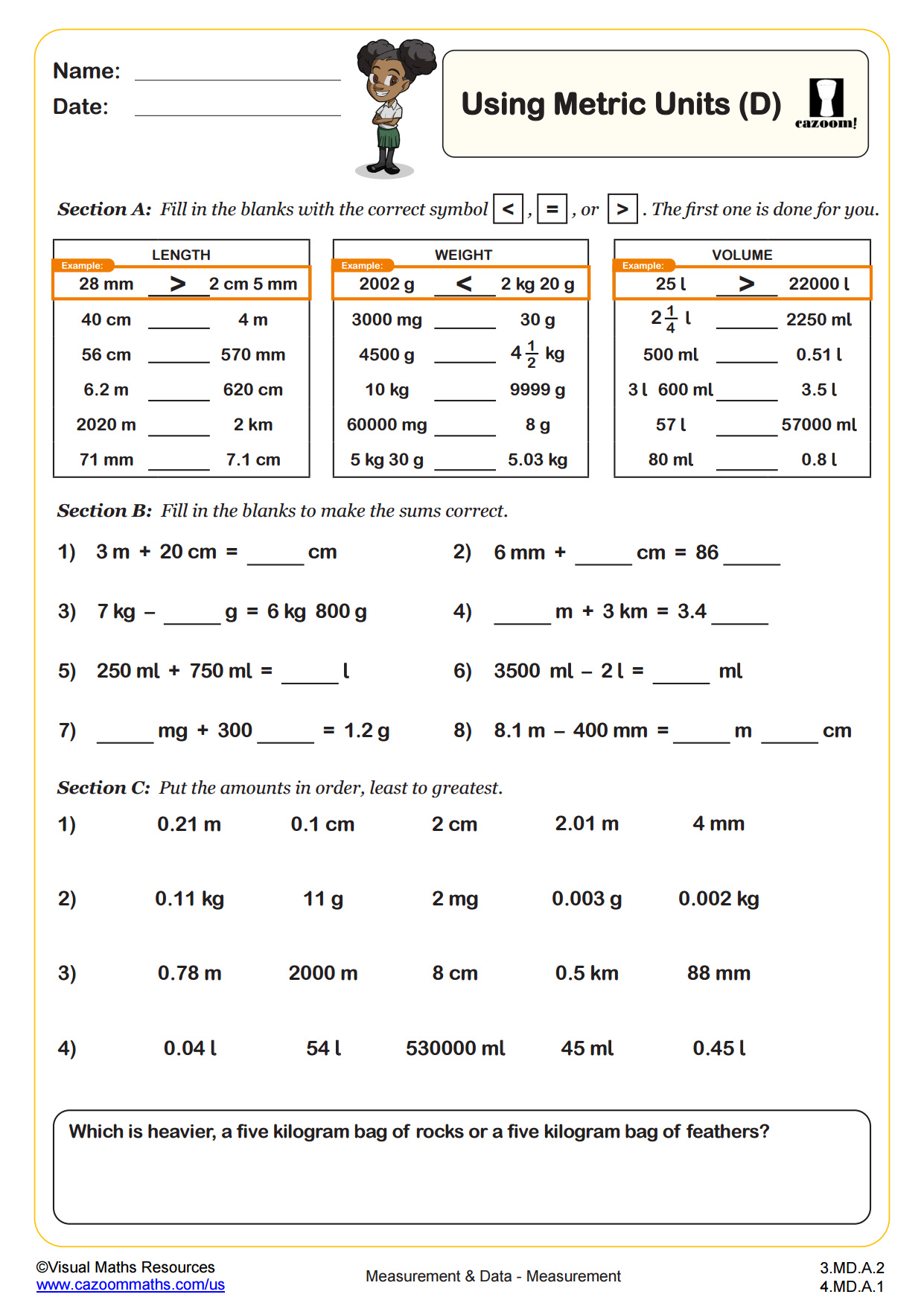
Using Metric Units (D)
All worksheets are created by the team of experienced teachers at Cazoom Math.
What measurement skills do elementary students need to master?
Elementary measurement standards progress from direct comparison in kindergarten to multi-step unit conversions by 5th grade. Students begin by comparing objects using terms like heavier, lighter, longer, and shorter, then advance to measuring with standard units like inches, feet, centimeters, and meters. By 3rd grade, students estimate and measure liquid volume and mass, while 4th and 5th graders tackle angle measurement and unit conversions within the customary system.
A common misconception emerges when students assume larger units always produce larger numerical measurements. For example, when measuring a desk that's 48 inches long, students sometimes expect the measurement in feet to also be a larger number. Teachers find that having students physically measure the same object with different units helps them understand this inverse relationship between unit size and measurement value.
Which grade levels do these measurement worksheets cover?
These measurement worksheets serve kindergarten, 1st grade, 2nd grade, 3rd grade, 4th grade, and 5th grade students throughout elementary school. Early elementary focuses on comparing objects and measuring with non-standard units, while upper elementary emphasizes precision with rulers and protractors, angle calculations, and selecting appropriate measurement units for real-world contexts.
The progression builds systematically across grade levels. Kindergarten and 1st grade worksheets emphasize comparison vocabulary and ordering objects by measurable attributes. Second and 3rd grade materials introduce standard rulers and measuring to the nearest inch or centimeter. Fourth and 5th grade worksheets add protractor skills, angle relationships, and deciding when to use inches versus feet or ounces versus pounds based on what's being measured.
How do students learn to draw and measure angles accurately?
Drawing and measuring angles with a protractor requires aligning the protractor's center point with the angle's vertex and the baseline with one ray of the angle. Students read the degree measurement where the second ray crosses the protractor's scale, paying attention to whether they're reading the inner or outer scale. Many students lose points on assessments by reading the wrong scale or misaligning the vertex, so worksheets that provide practice with various angle orientations prove particularly valuable.
Angle measurement connects directly to navigation, engineering, and construction careers. Surveyors use angle measurements to map property boundaries, architects calculate angles when designing roof slopes and structural supports, and robotics programmers specify rotation angles when coding movement sequences. Students often make the connection between compass directions and angle measures when they realize that turning from north to east represents a 90° rotation, making abstract degree measurements suddenly tangible.
How can teachers use these measurement worksheets effectively in the classroom?
These measurement worksheets provide structured practice that moves from concrete comparisons to abstract calculations, with answer keys that allow students to check their work independently or enable teachers to provide quick feedback. The variety of subtopics means teachers can assign targeted practice based on specific learning gaps, whether students need reinforcement with unit selection or additional protractor practice before a geometry unit.
Teachers often use measurement worksheets during math centers, pairing them with hands-on tools like rulers, protractors, and balance scales so students can verify their answers through physical measurement. The worksheets work well for differentiated instruction since students at different grade levels can work on appropriately leveled measurement concepts simultaneously. Many teachers assign these as homework after introducing new measurement tools in class, or use them for quick formative assessments to identify which students need small-group intervention before standardized testing.