High School Sequences Worksheets
Continuing Sequecnes from Patterns
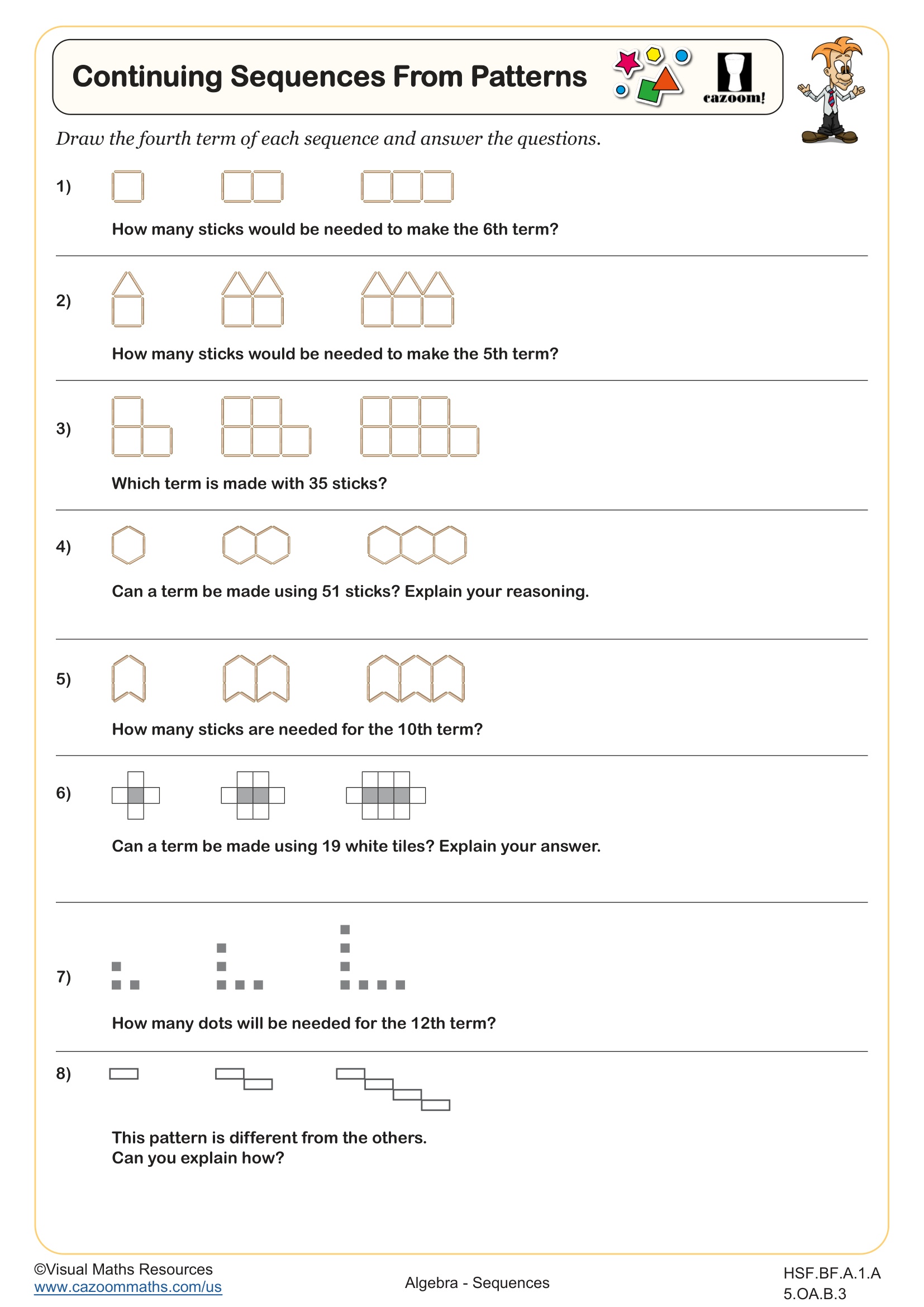
Continuing Sequences from Patterns
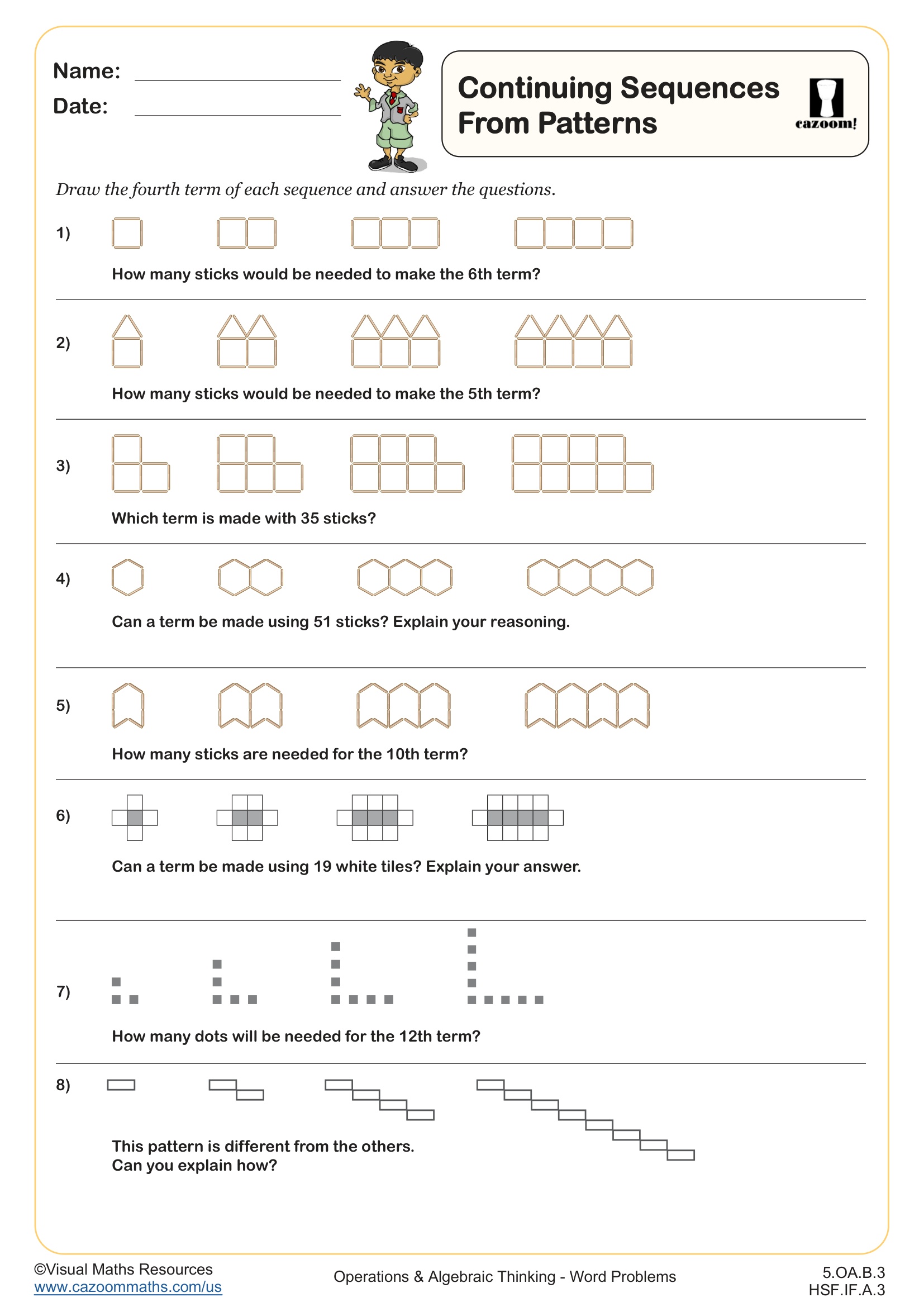
Expressing Patterns Algebraically
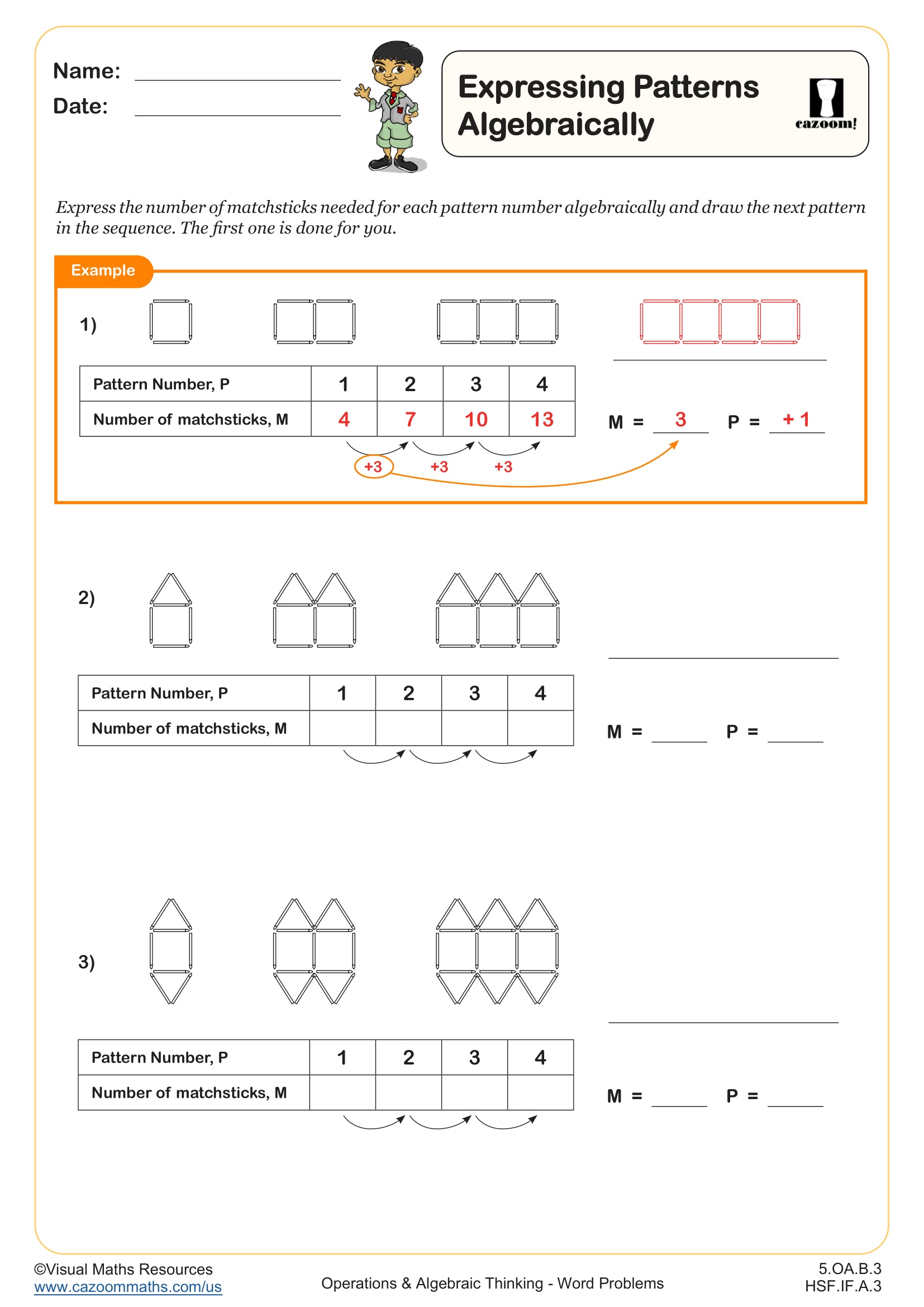
Finding Arithmetic nth Terms
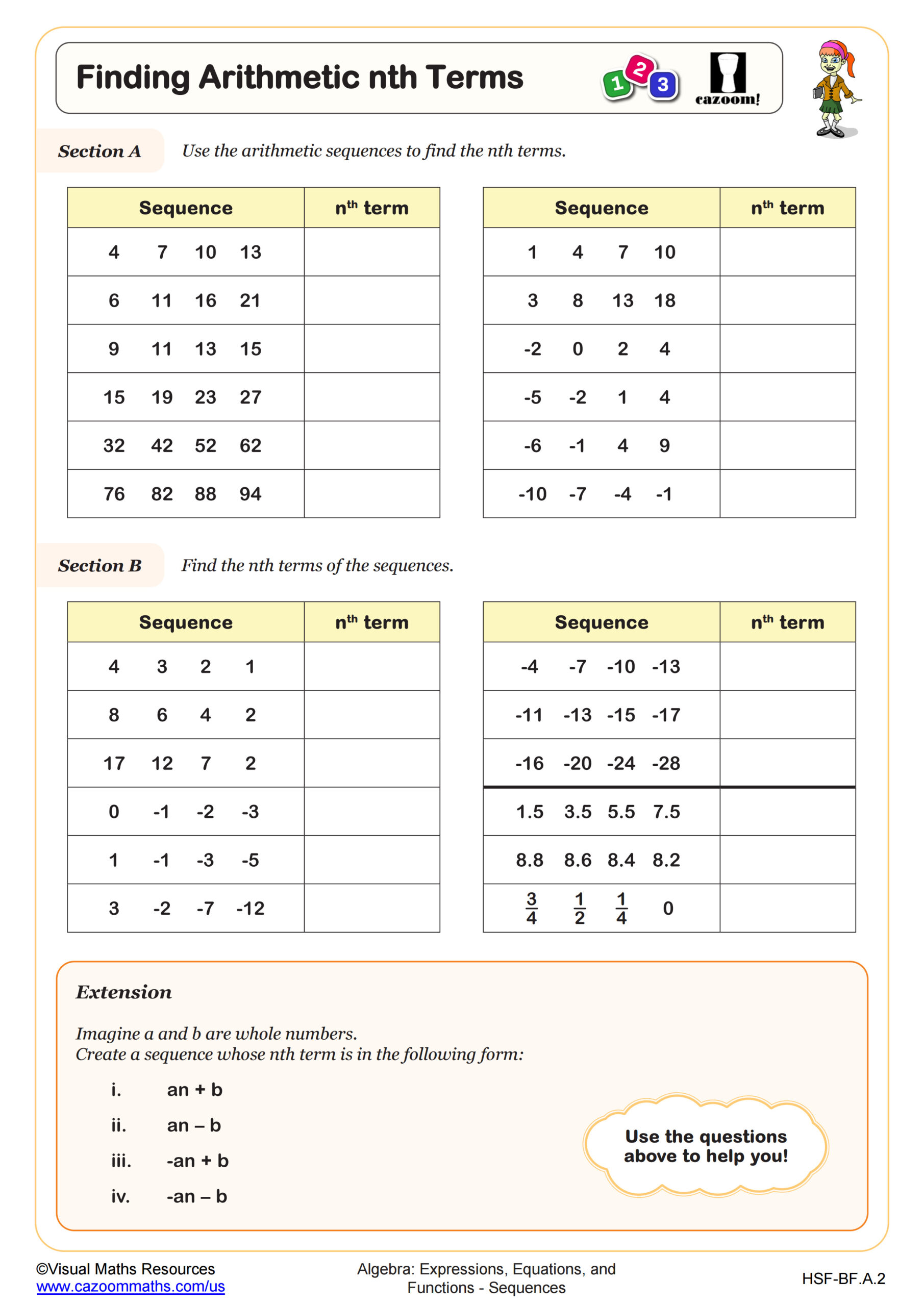
Finding nth Terms from Patterns
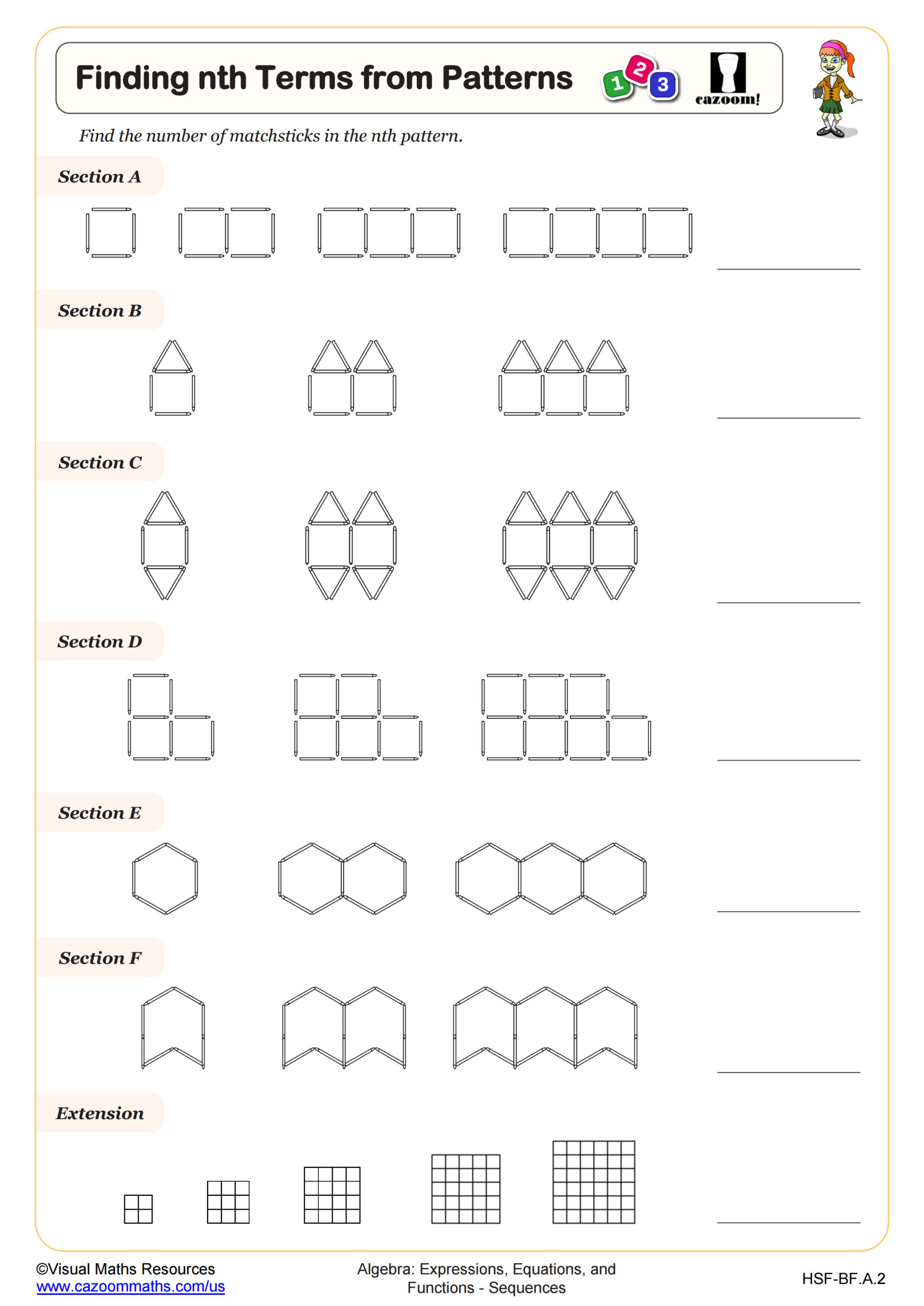
Generating Sequences from the Nth Term
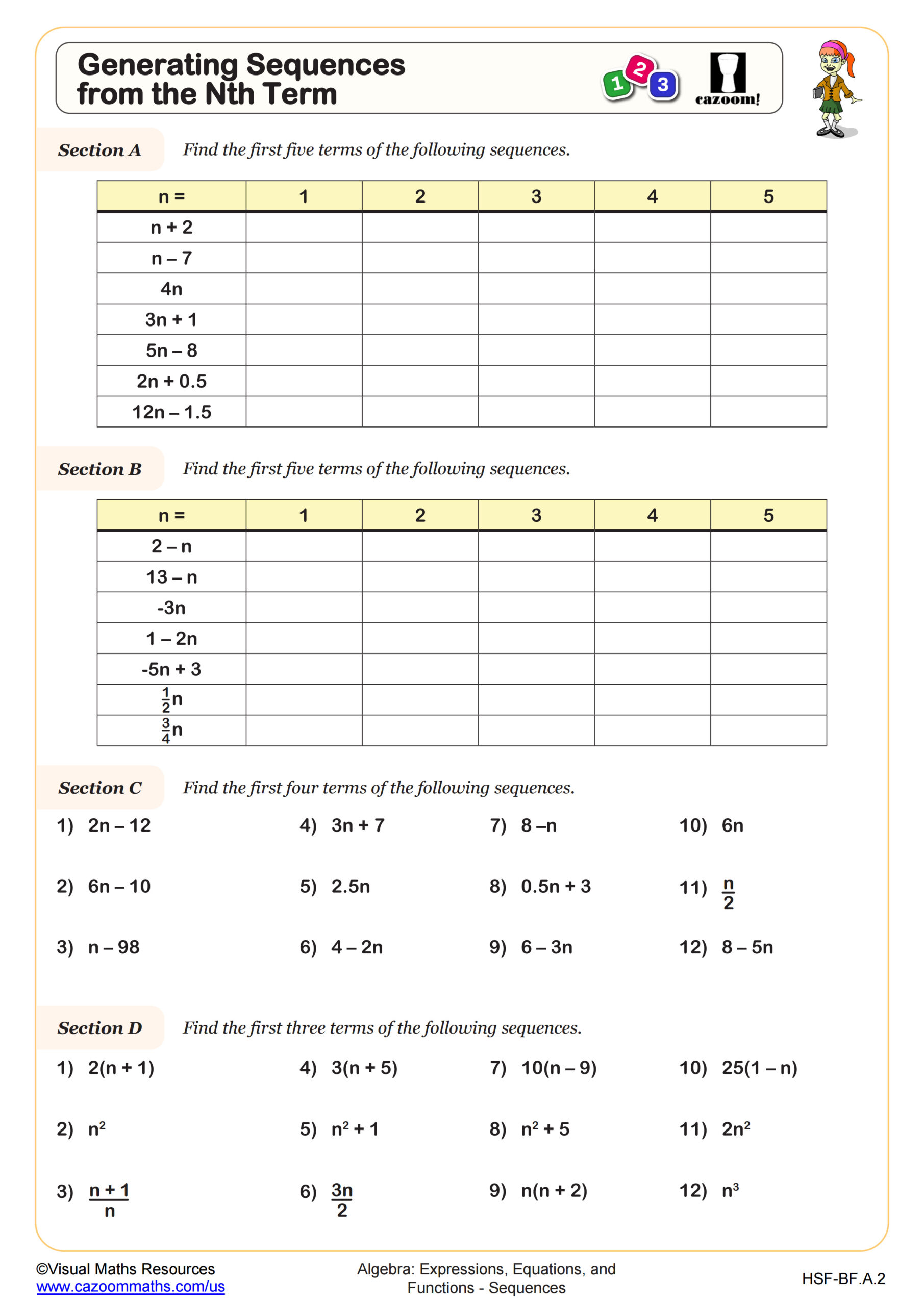
Geometric Sequences
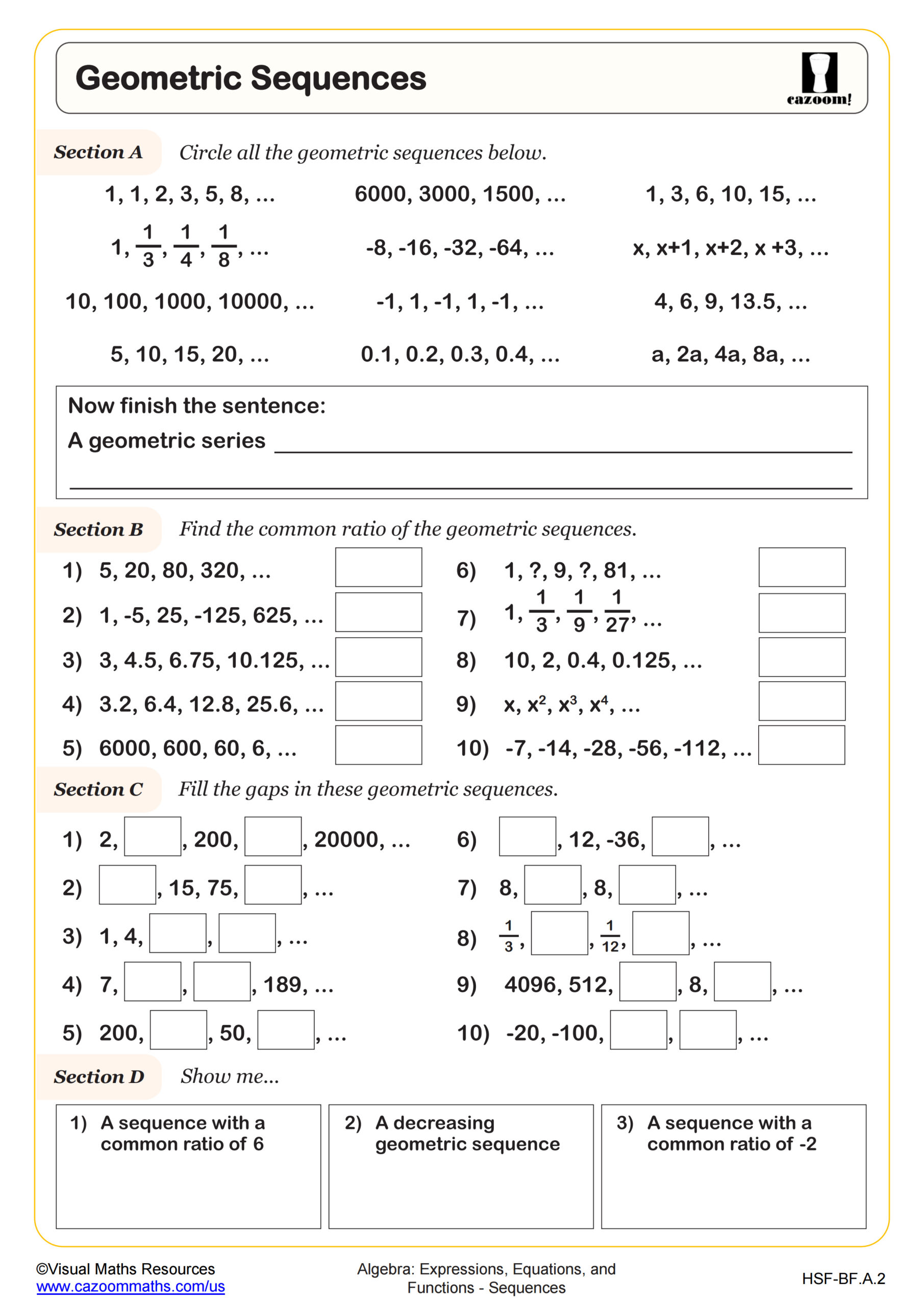
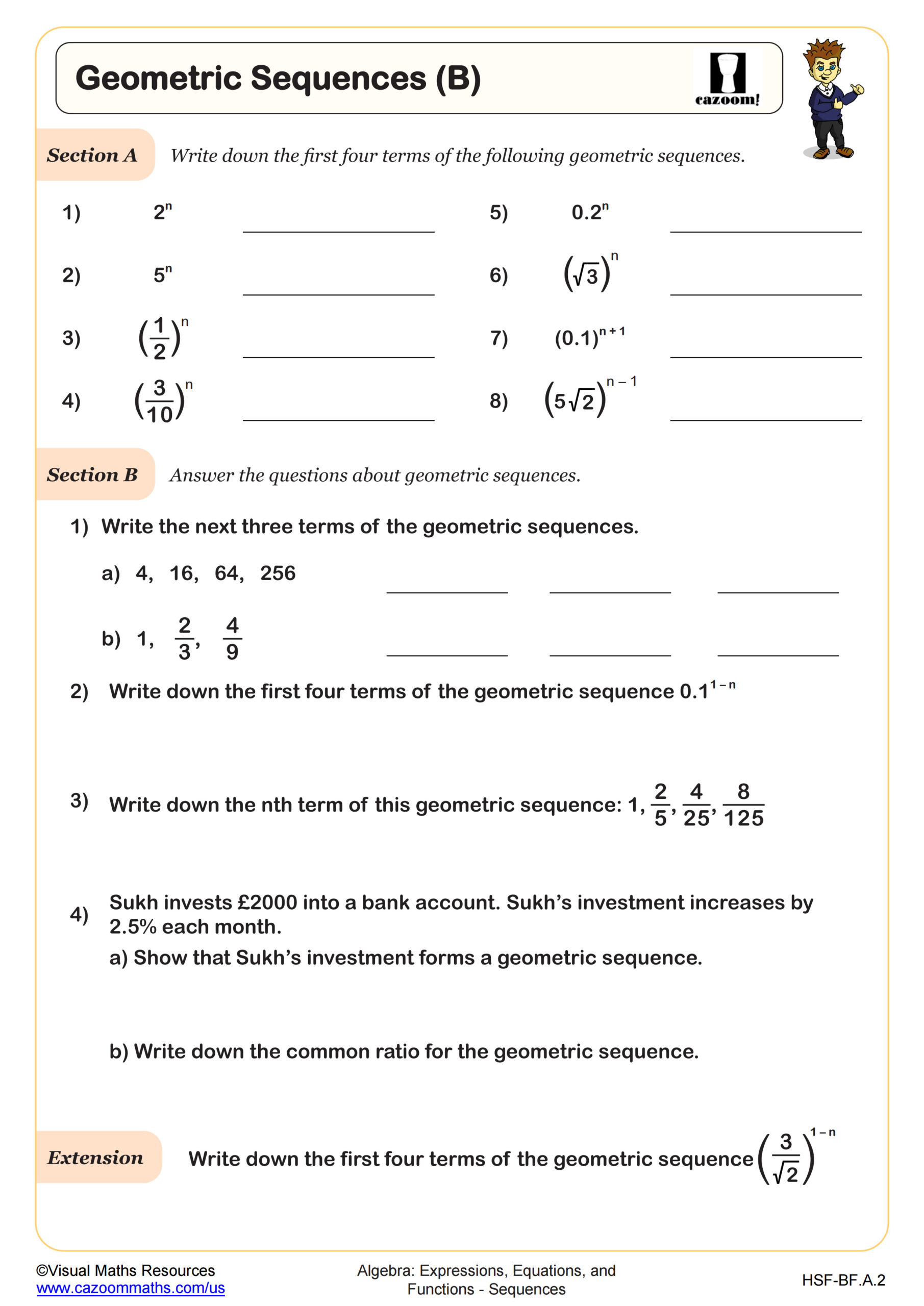
Geometric Sequences (B)
Quadratic Sequences (B)
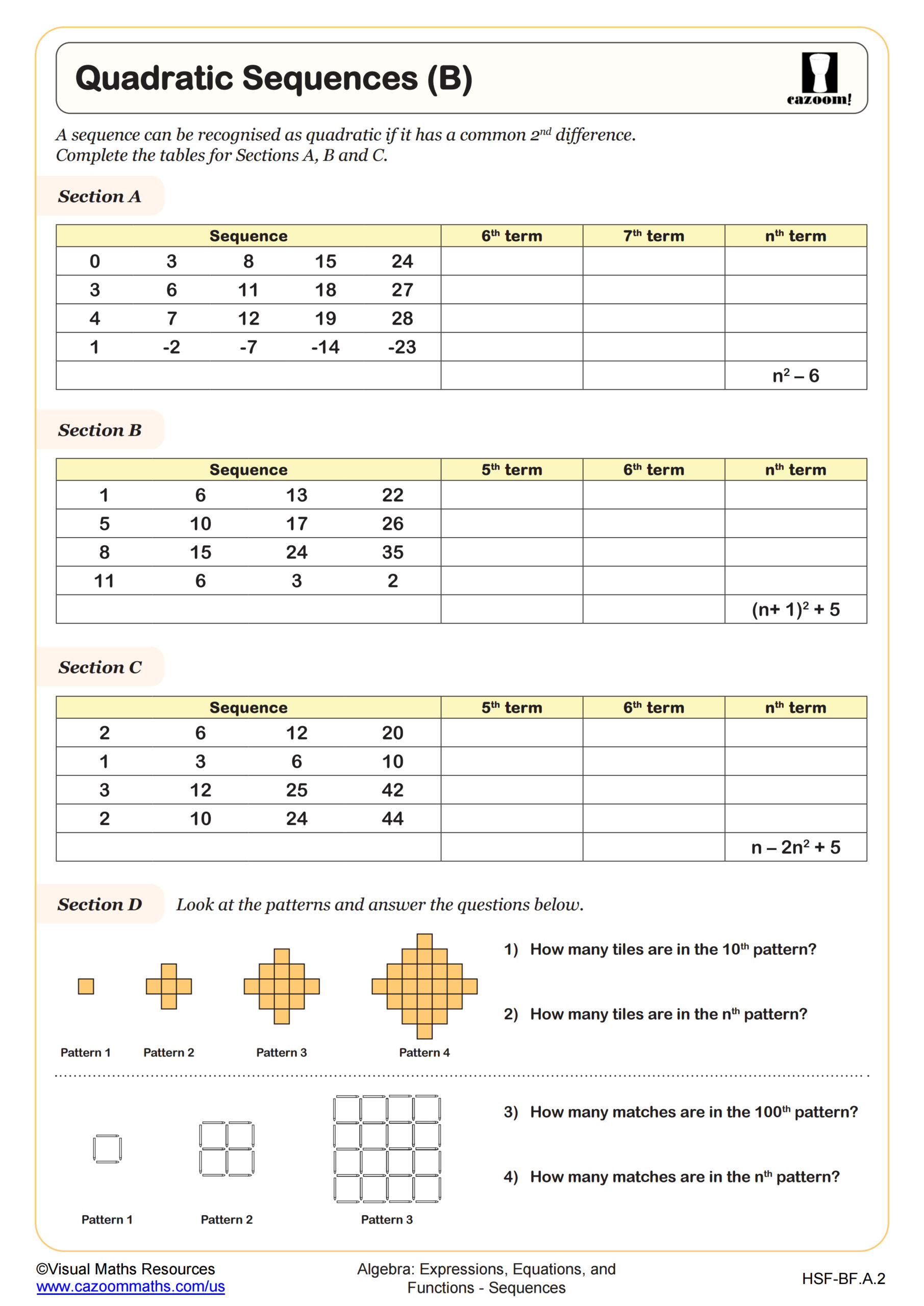
Special Sequences
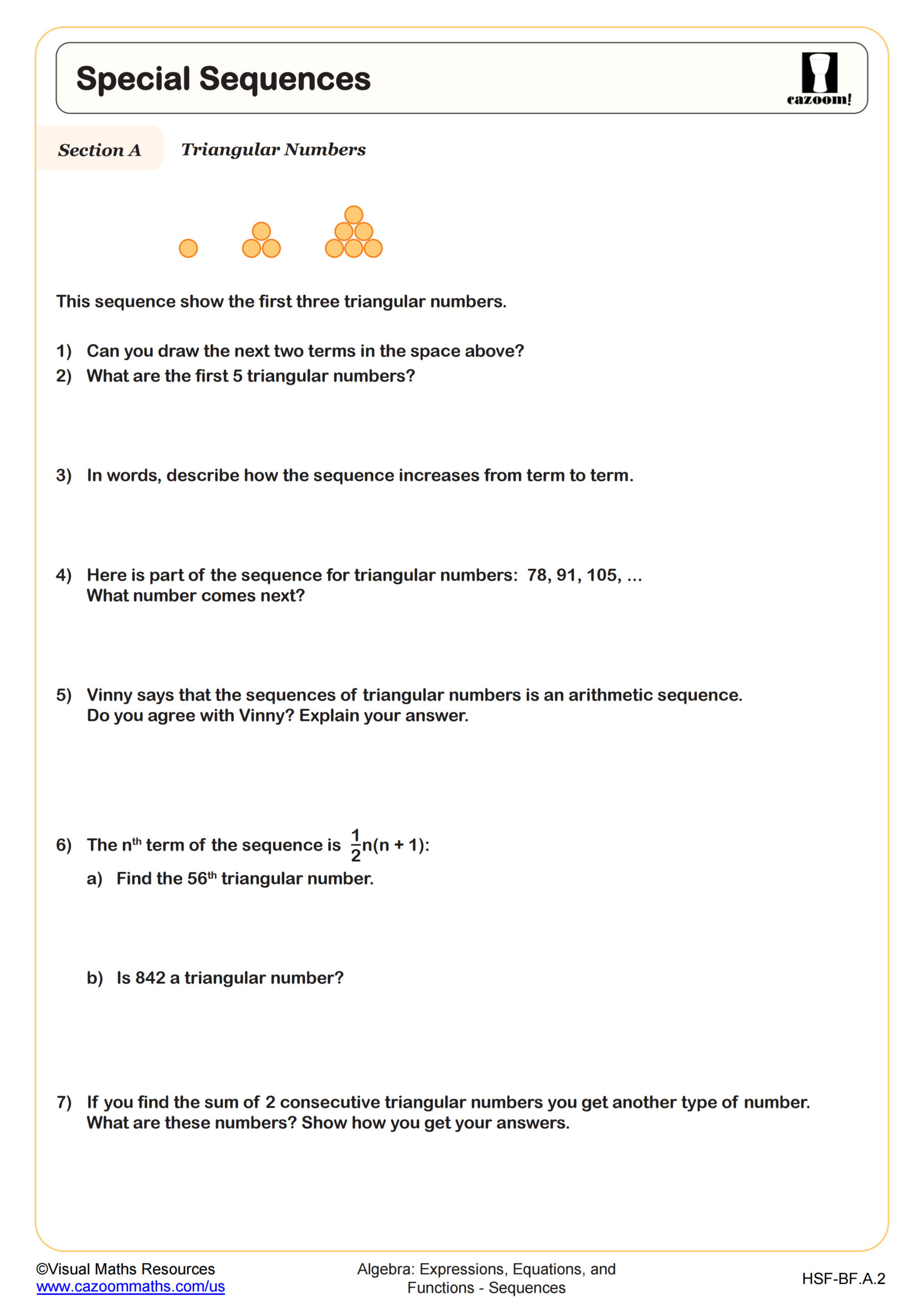
Using the Nth Term (Linear)
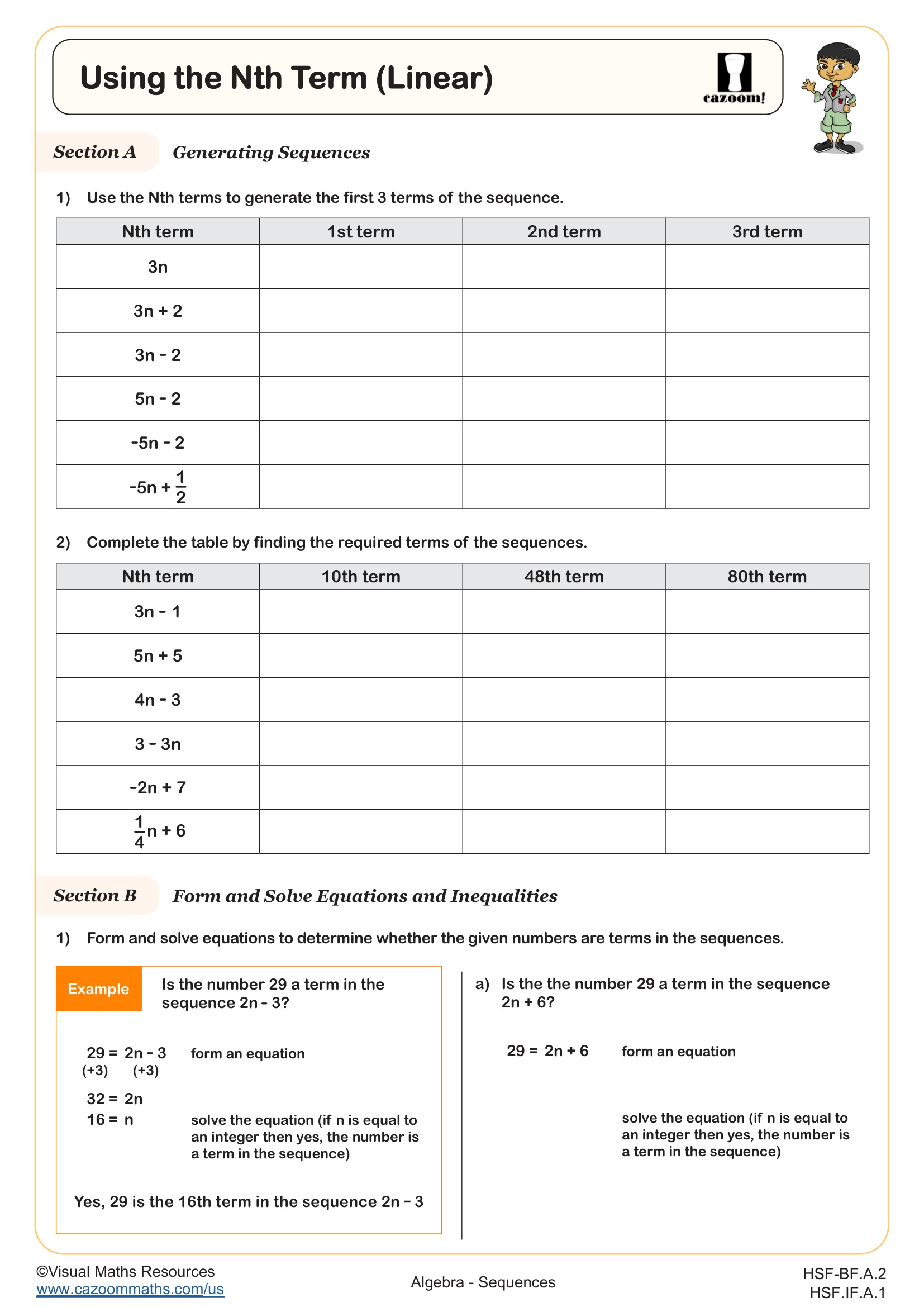
Writing Sequences
All worksheets are created by the team of experienced teachers at Cazoom Math.
What makes an effective sequence sheet for high school algebra?
An effective sequence sheet balances pattern recognition with formula application, typically starting with simple arithmetic progressions before advancing to geometric sequences and recursive formulas. These worksheets should align with Common Core standards A-SSE.4 and F-BF.2, which require students to derive sequence formulas and use them to solve problems.
Teachers notice that students perform better when sequence worksheets pdf materials include visual representations alongside algebraic expressions. The most successful algebra sequences worksheet designs present terms in both tabular and graphical formats, helping students see the linear growth in arithmetic sequences versus the exponential nature of geometric progressions.
How do sequence worksheets progress across high school grade levels?
Ninth-grade students typically begin with identifying patterns in simple arithmetic sequences, while tenth and eleventh graders work with geometric sequences and summation formulas. By senior year, students tackle recursive sequences and connect sequence concepts to function notation and calculus preparation.
Math teachers observe that the jump from recognizing patterns to writing explicit formulas challenges many students in grades 9-10. Worksheets on sequences should bridge this gap by providing scaffolded practice that moves gradually from pattern completion to formula derivation, ensuring students understand both the conceptual and computational aspects of sequence work.
Why do students struggle with geometric sequences more than arithmetic sequences?
Geometric sequences present conceptual challenges because students must work with ratios and exponential growth rather than simple addition patterns. Many students incorrectly try to find differences between terms instead of ratios, leading to confusion when applying formulas for the nth term.
Classroom experience shows that students benefit from math sequences worksheet problems that explicitly compare arithmetic and geometric patterns side by side. Teachers find success when sequence math worksheets include real-world contexts like population growth or compound interest, helping students understand why geometric sequences multiply by a constant factor rather than add a constant difference.
How should teachers use sequence worksheets for maximum learning impact?
Effective implementation involves using sequence worksheets as diagnostic tools first, then targeted practice based on student needs. Teachers should review common errors on the initial math sequencing worksheets before assigning additional practice, focusing on whether students struggle with pattern recognition or formula application.
Successful teachers use the answer keys strategically, having students work through problems in small groups before checking solutions together. This approach allows peer discussion about different solution methods and helps identify misconceptions early. The PDF format makes it easy to project problems for whole-class discussions about solution strategies and common pitfalls.