Middle School Area and Perimeter Worksheets
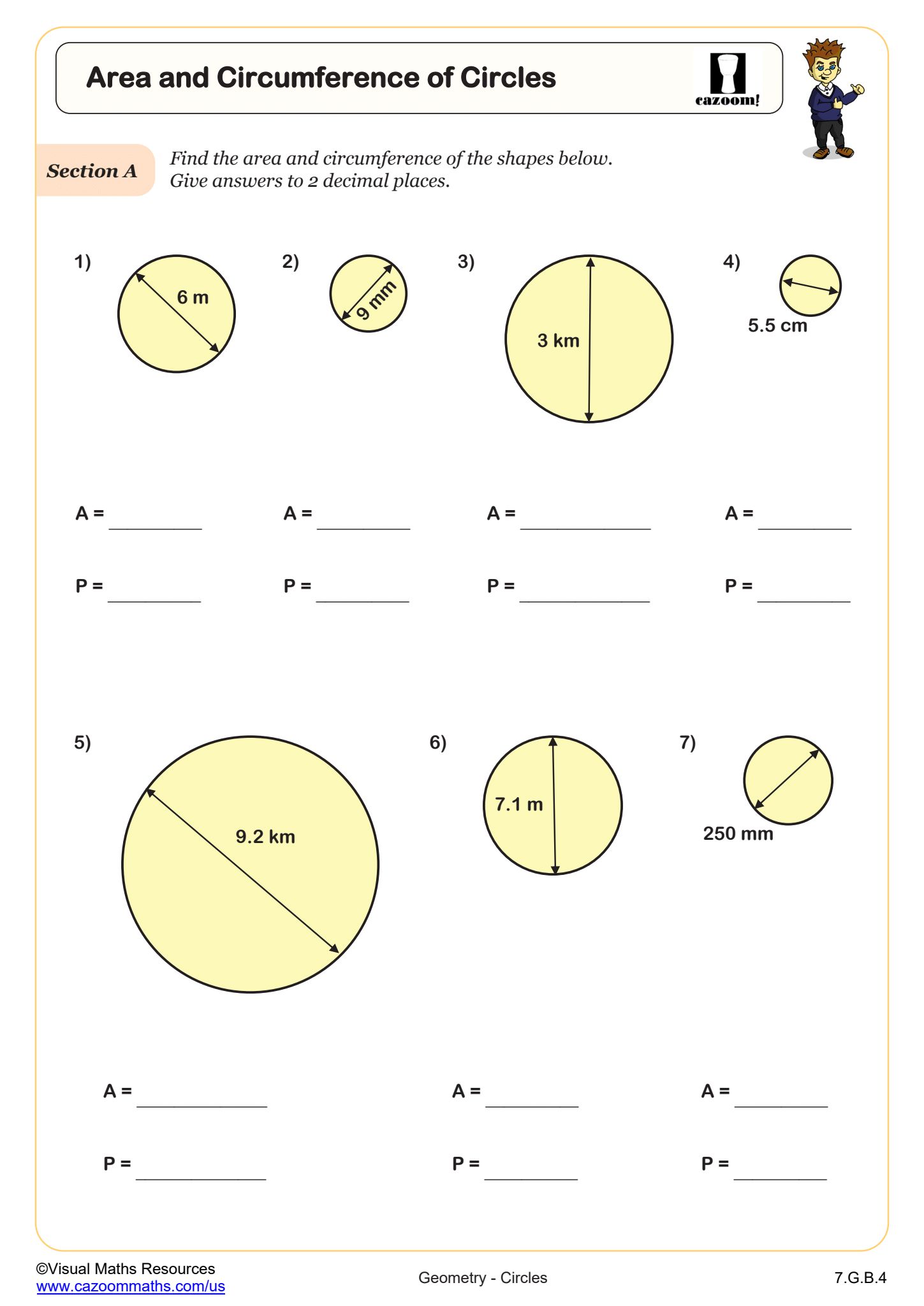
Area and Circumference of Circles
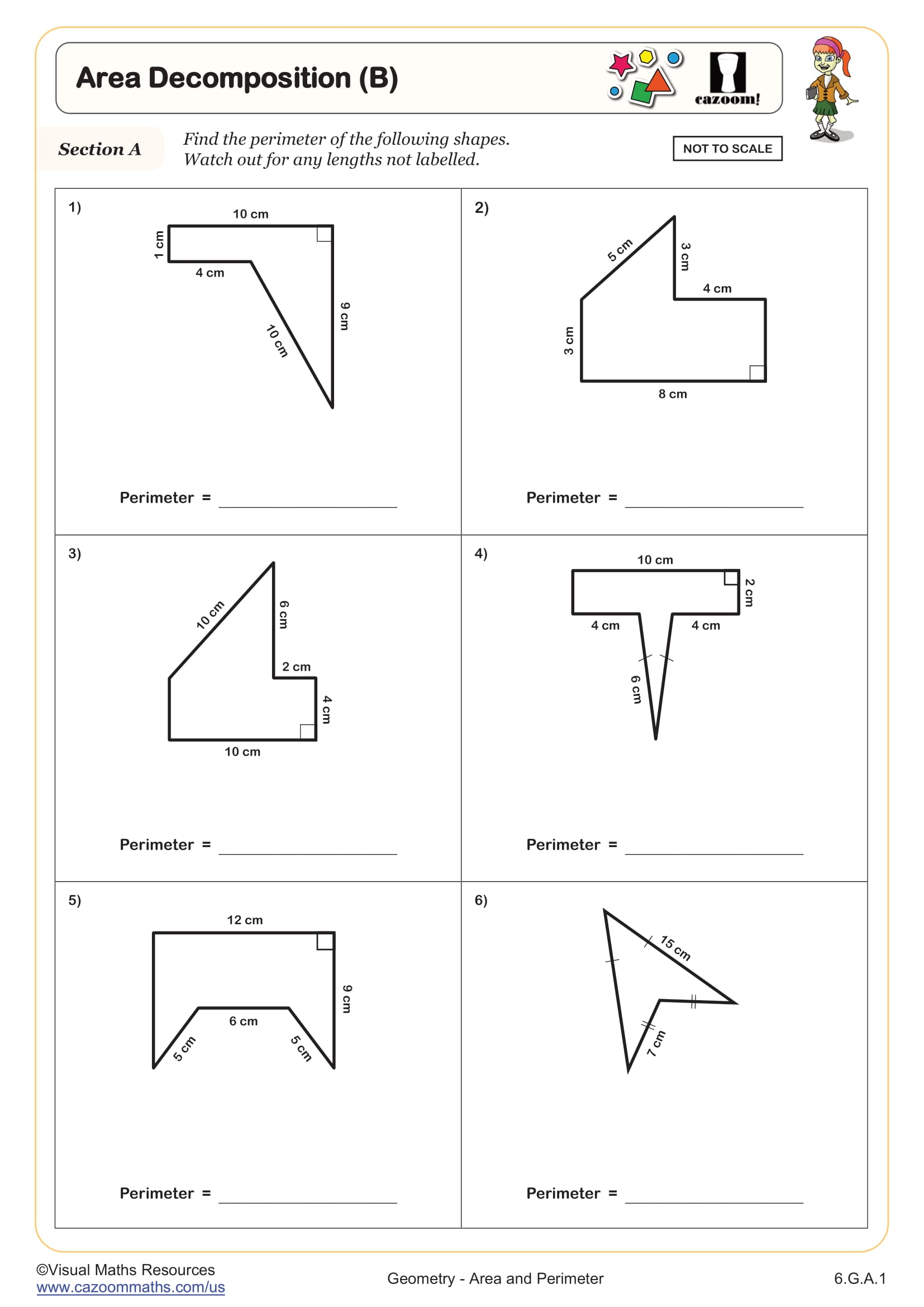
Area Decomposition (B)
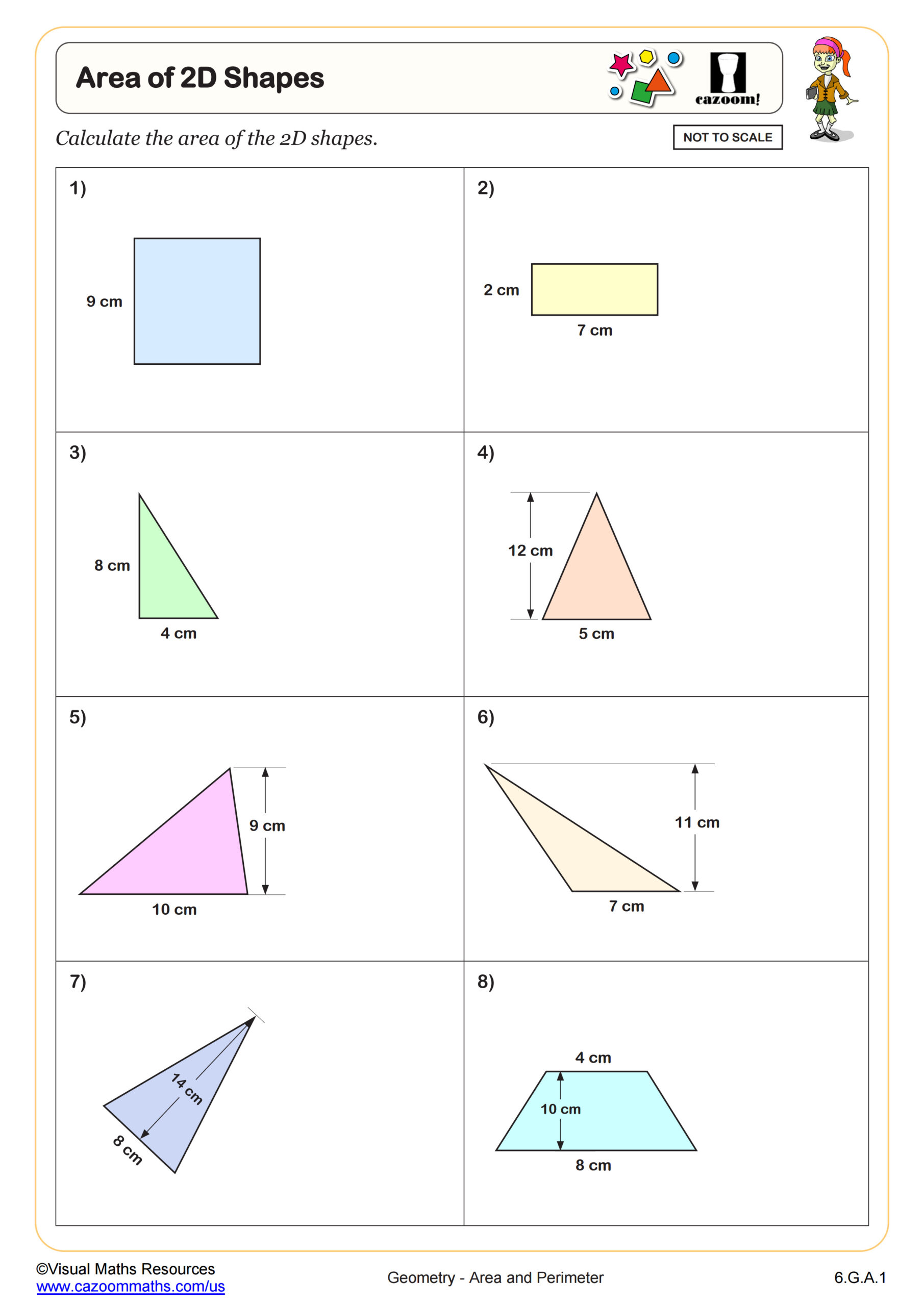
Area of 2D Shapes
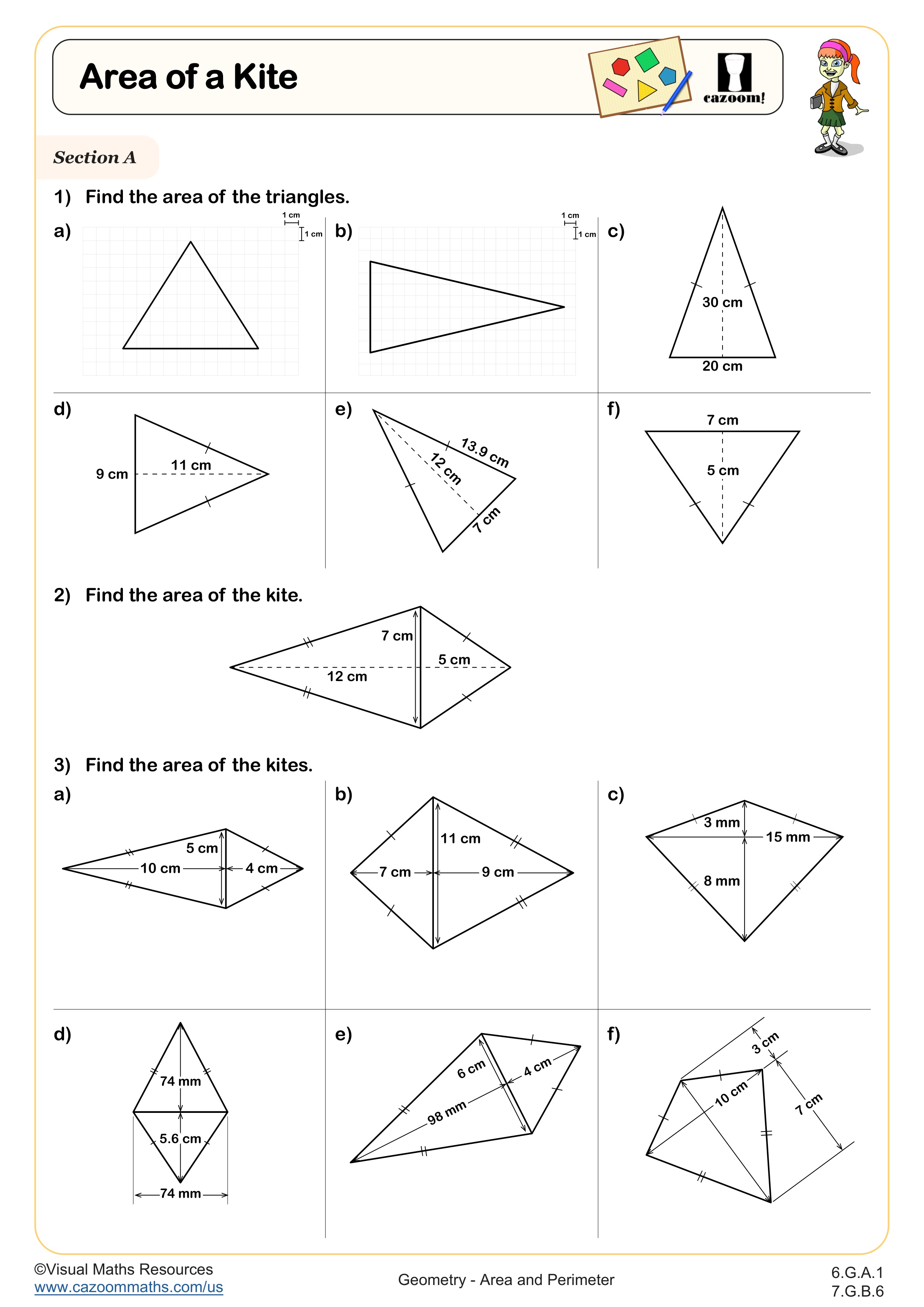
Area of a Kite
Area of a Triangle Using The Pythagorean Theorem
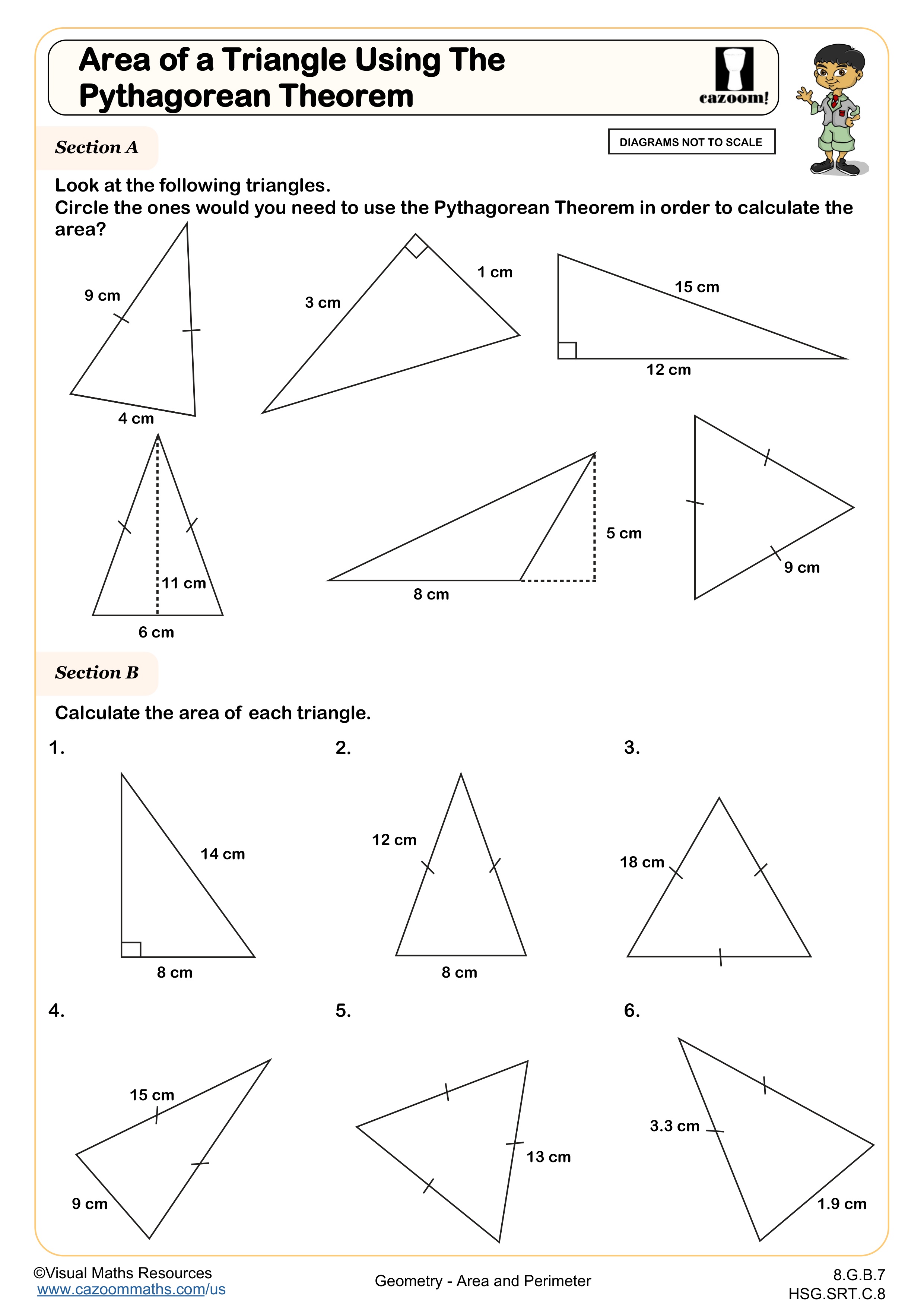
Area of Circle Word Problems
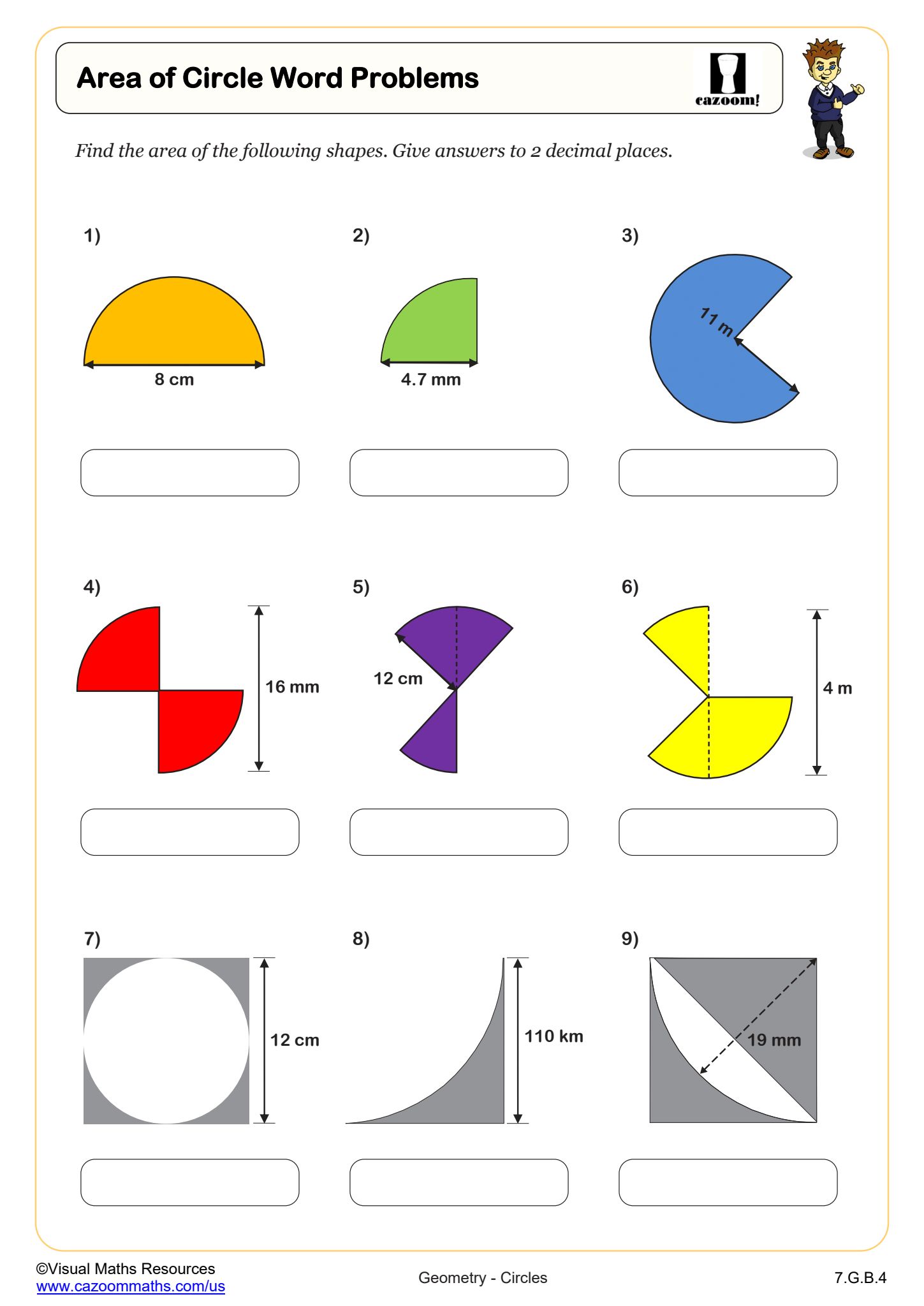
Area of Circles
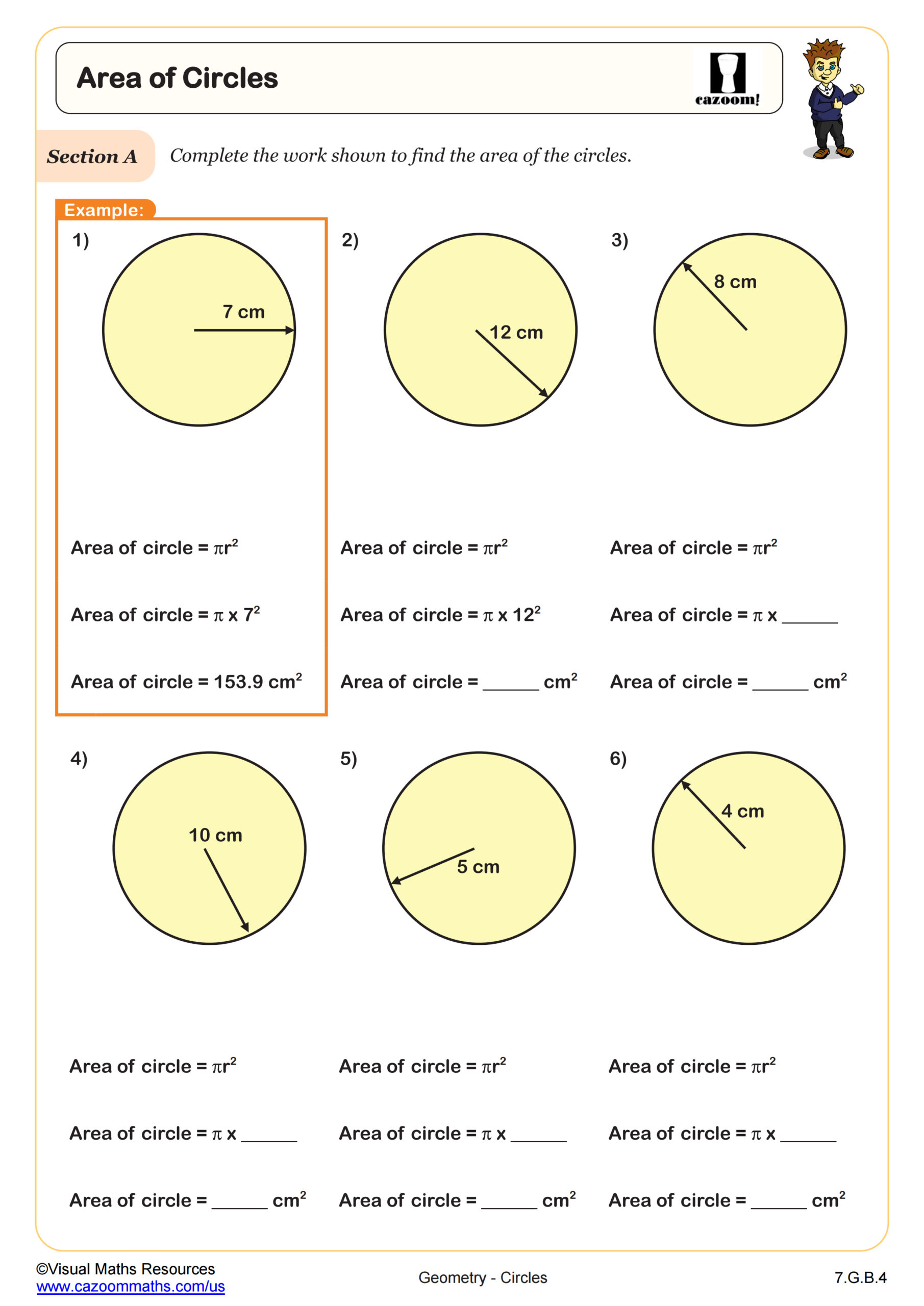
Area of Non-Right Angled Triangles
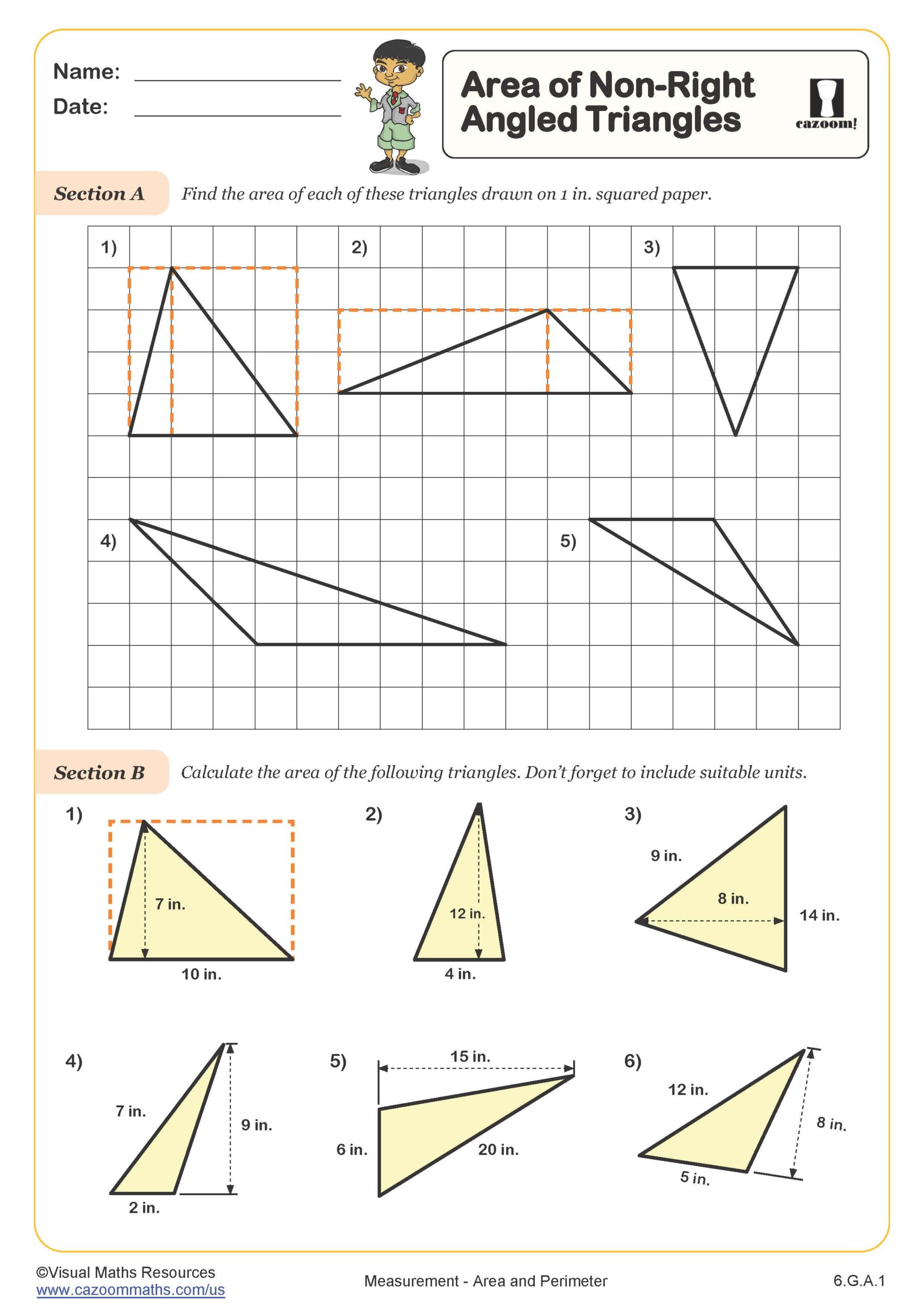
Area of Parallelograms
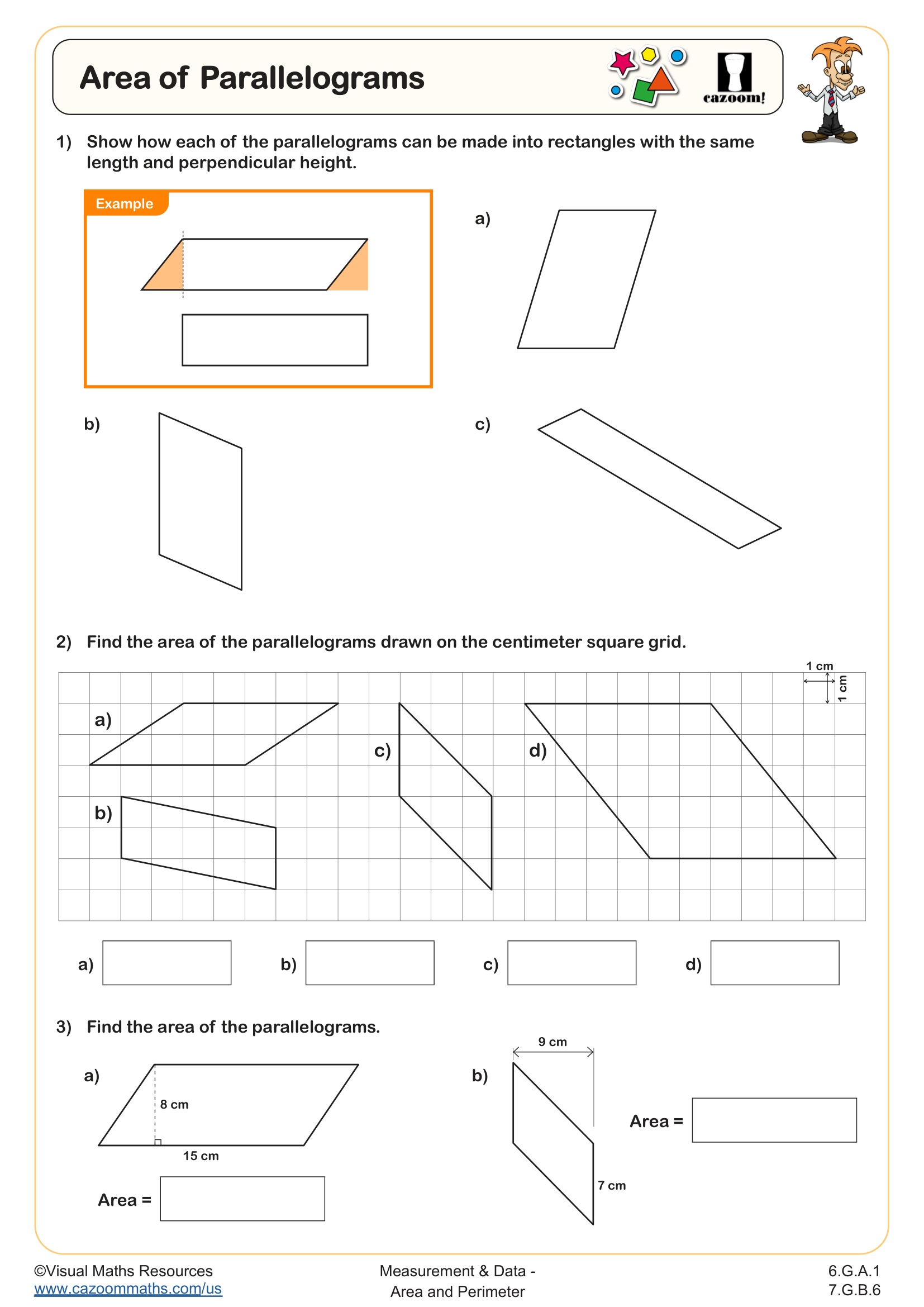
Area of Quadrilaterals (A)
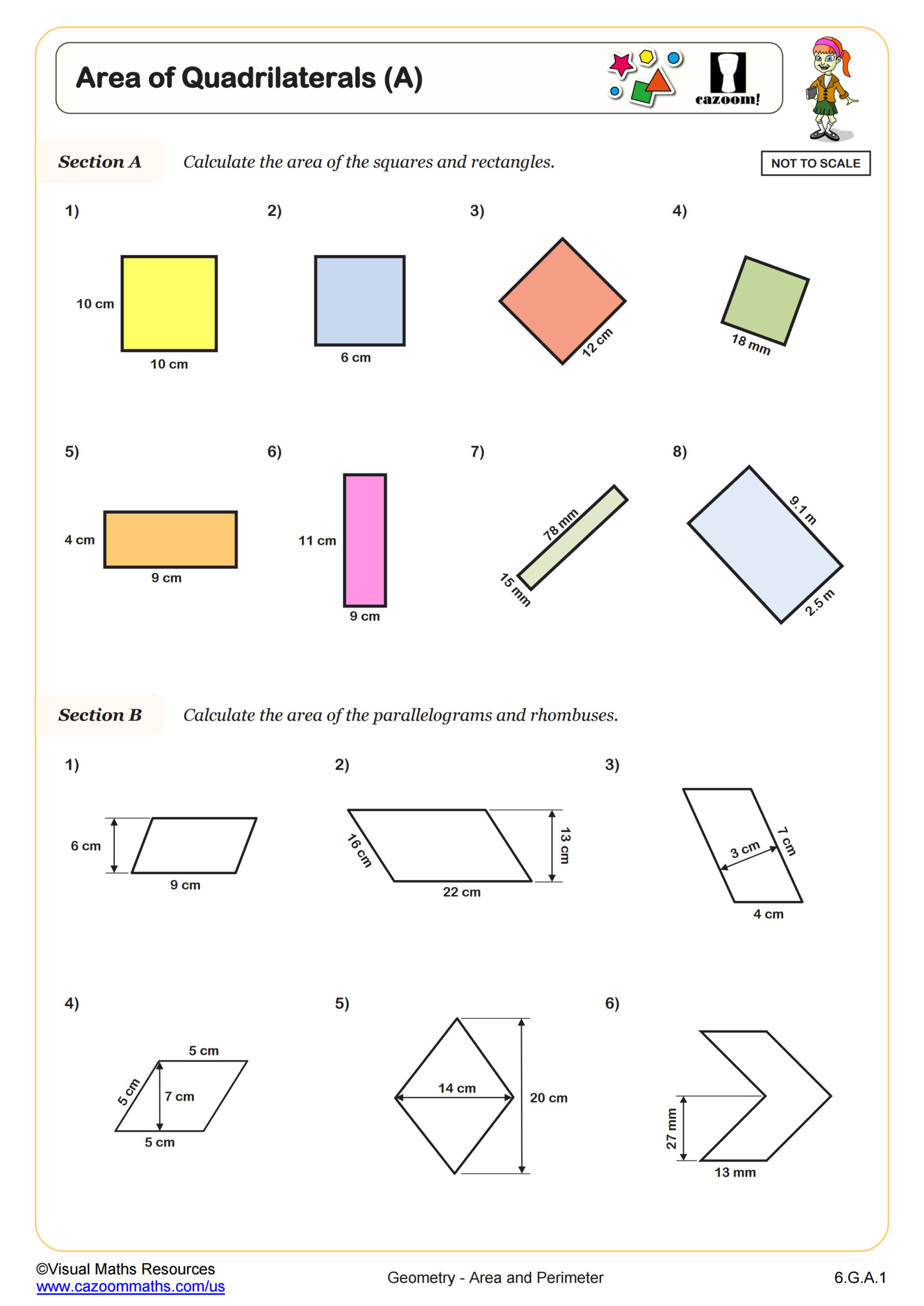
Area of Quadrilaterals (B)
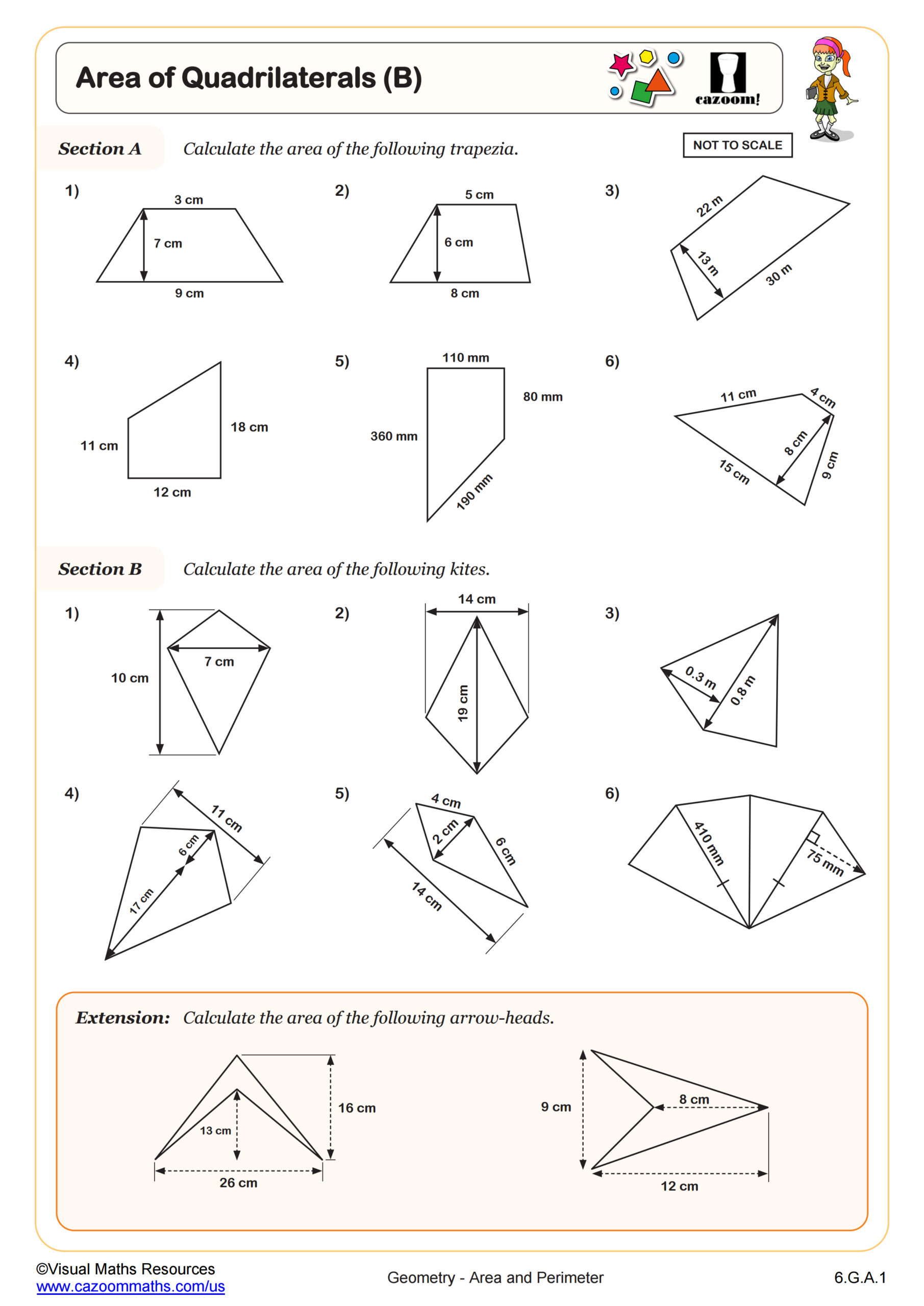
Area of Right Triangles
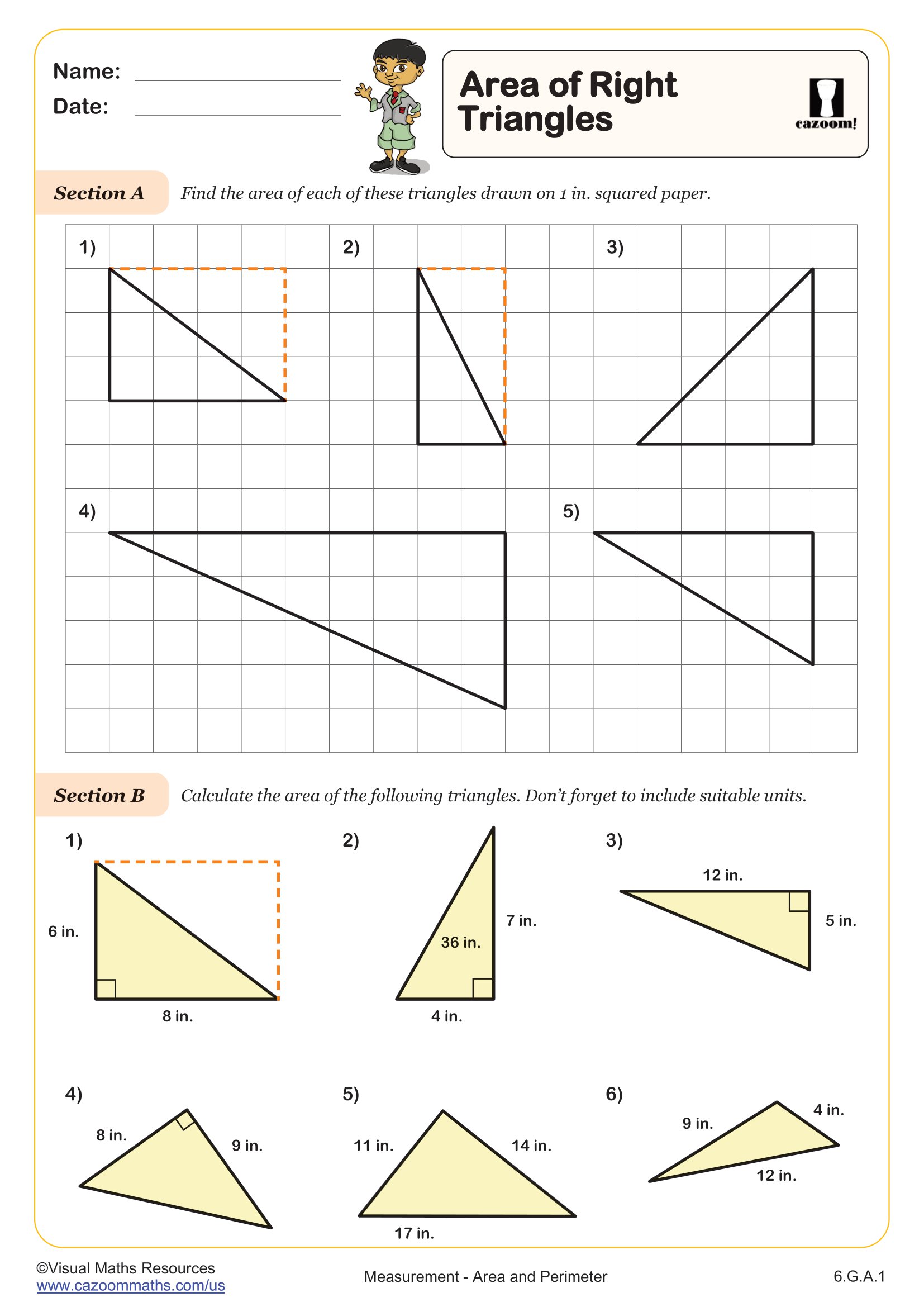
Area of Trapezoid (A)
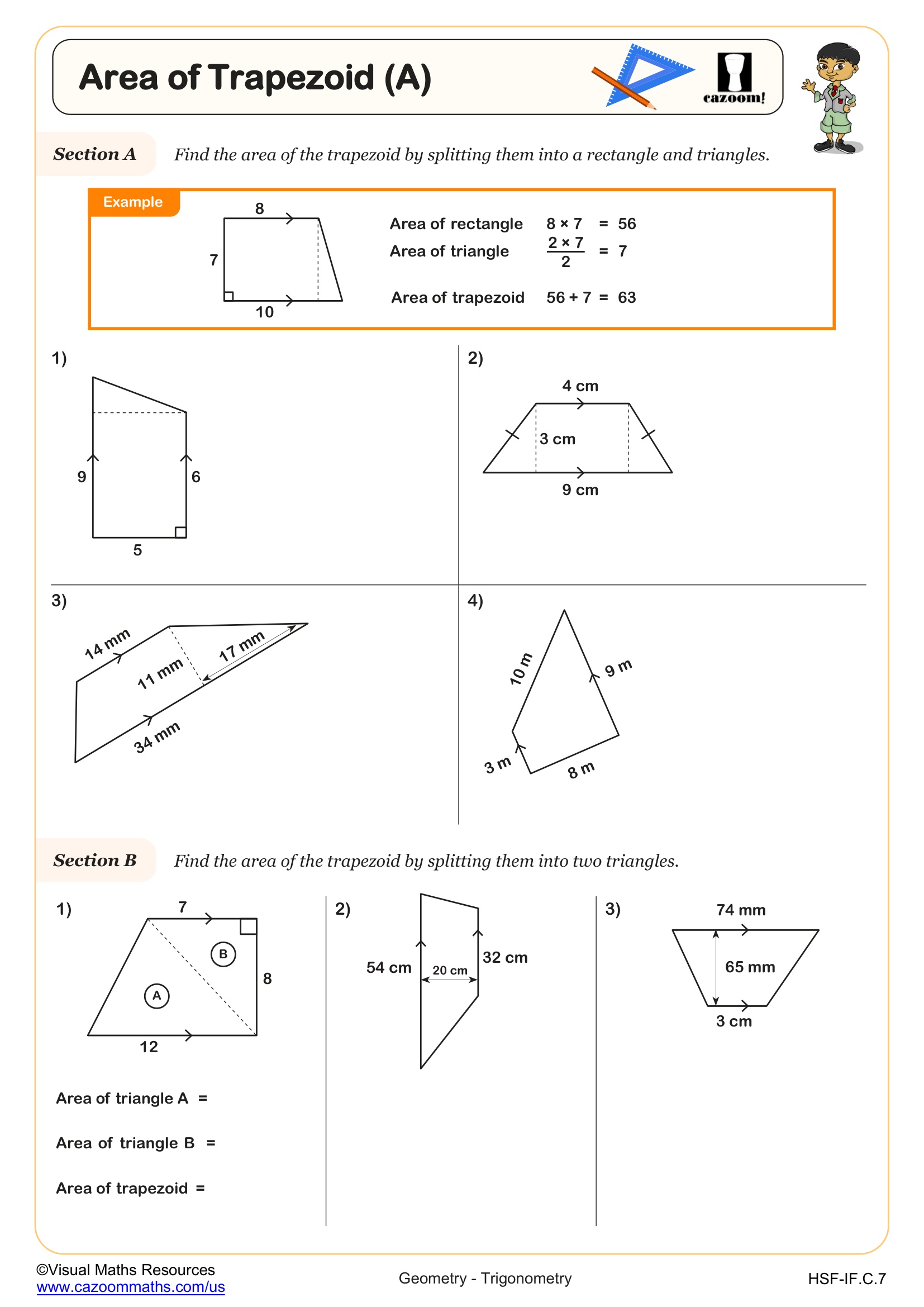
Area of Trapezoid (B)
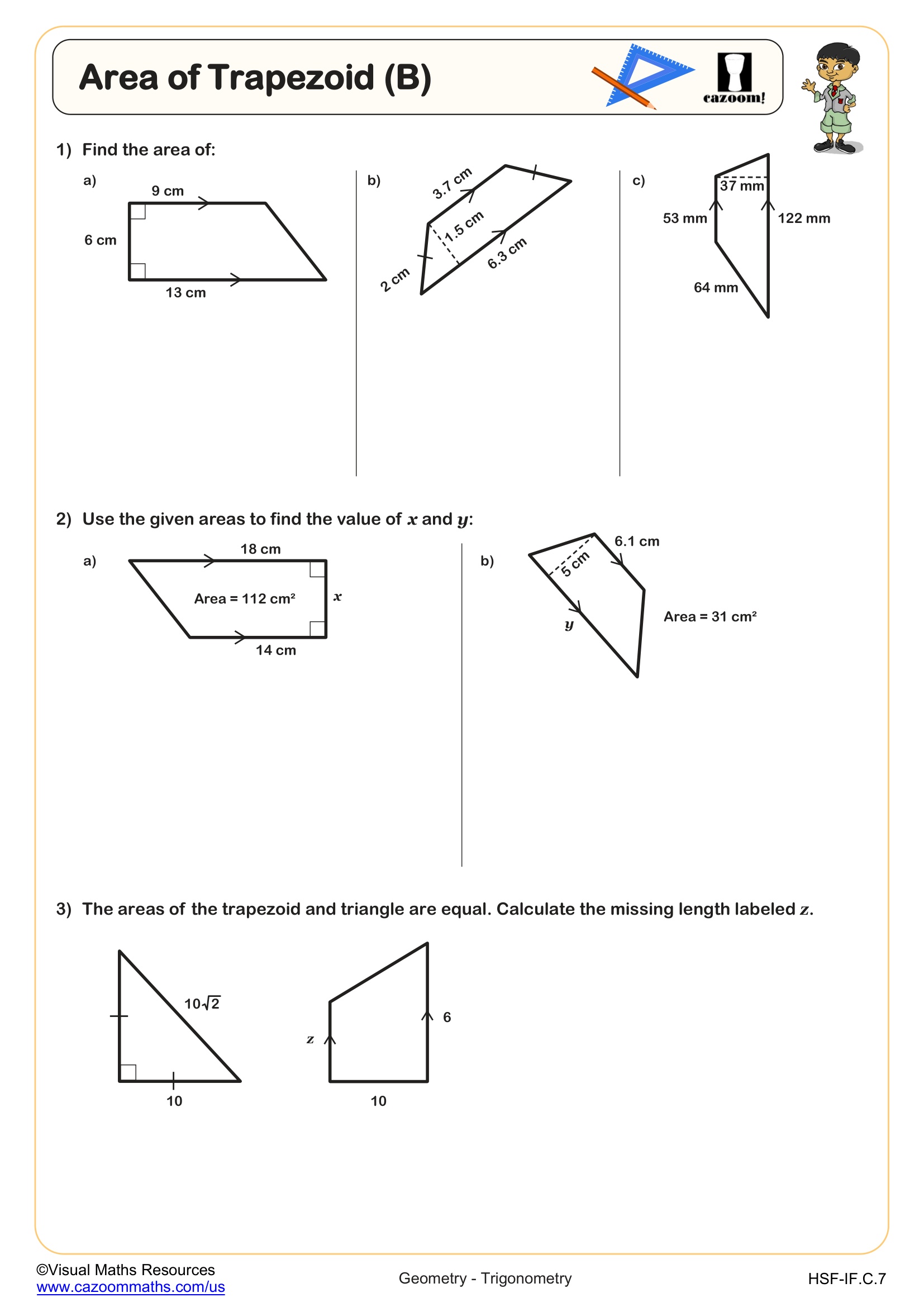
Areas of Kites
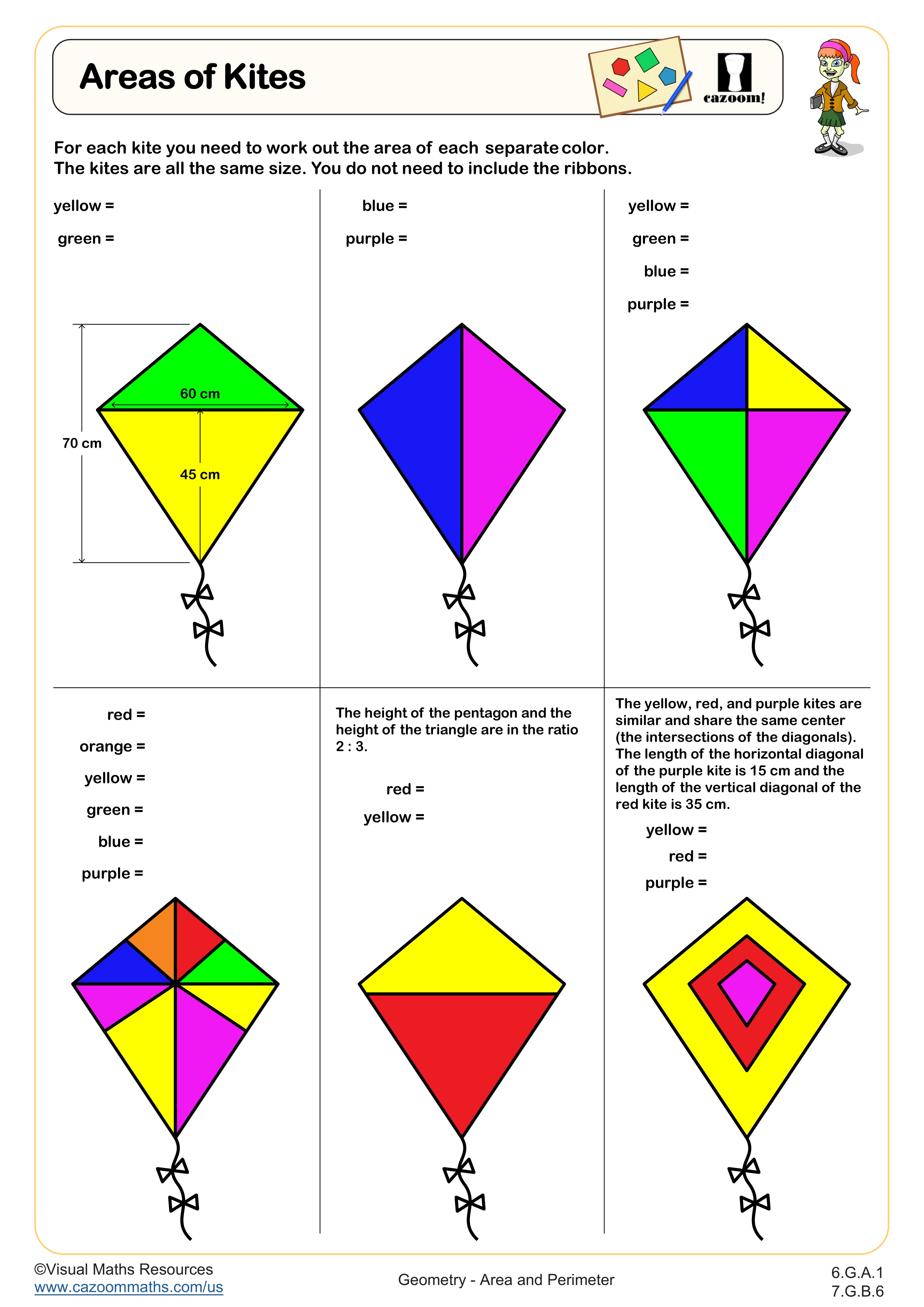
Circumference of Circles
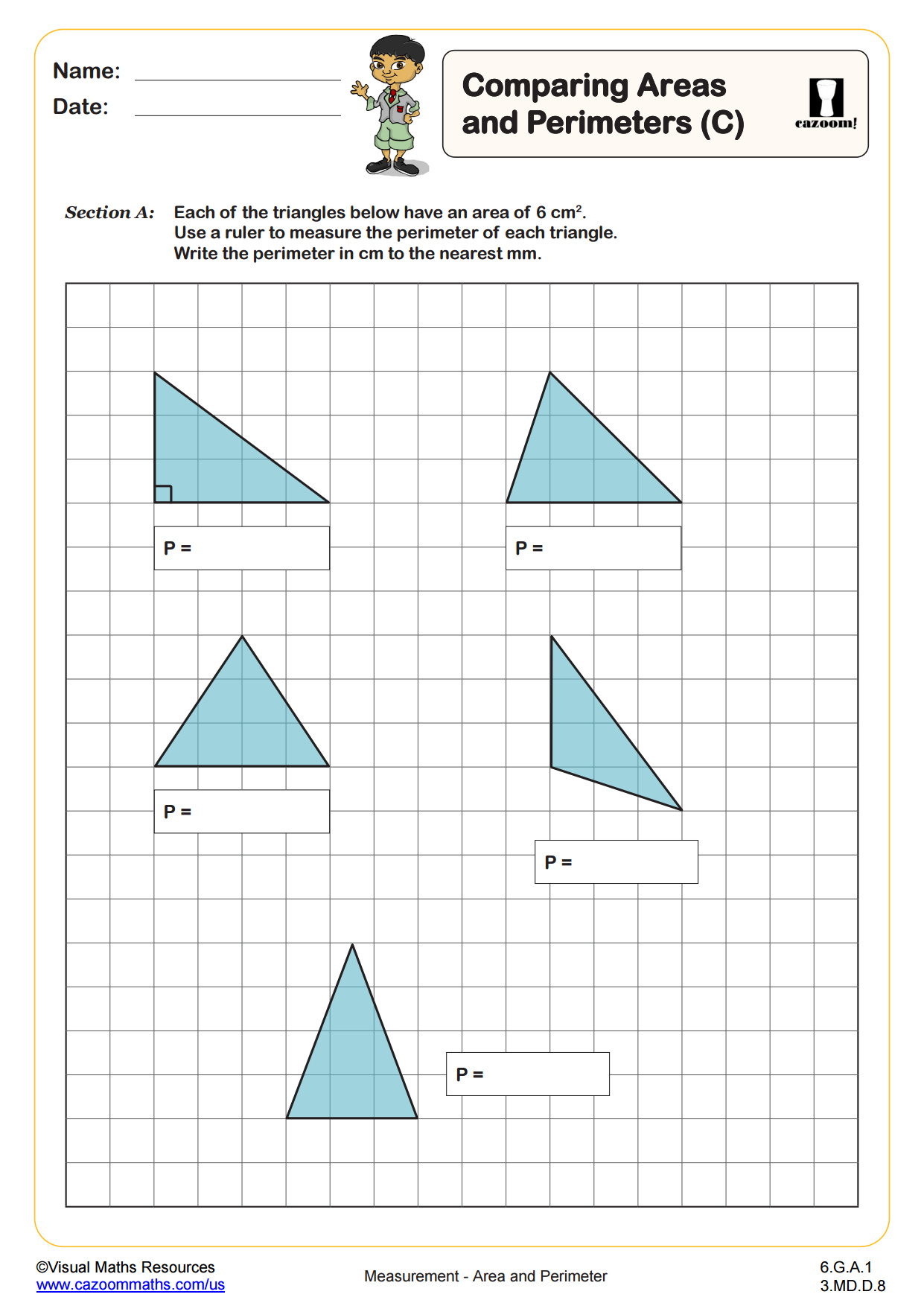
Comparing Areas and Perimeters (C)
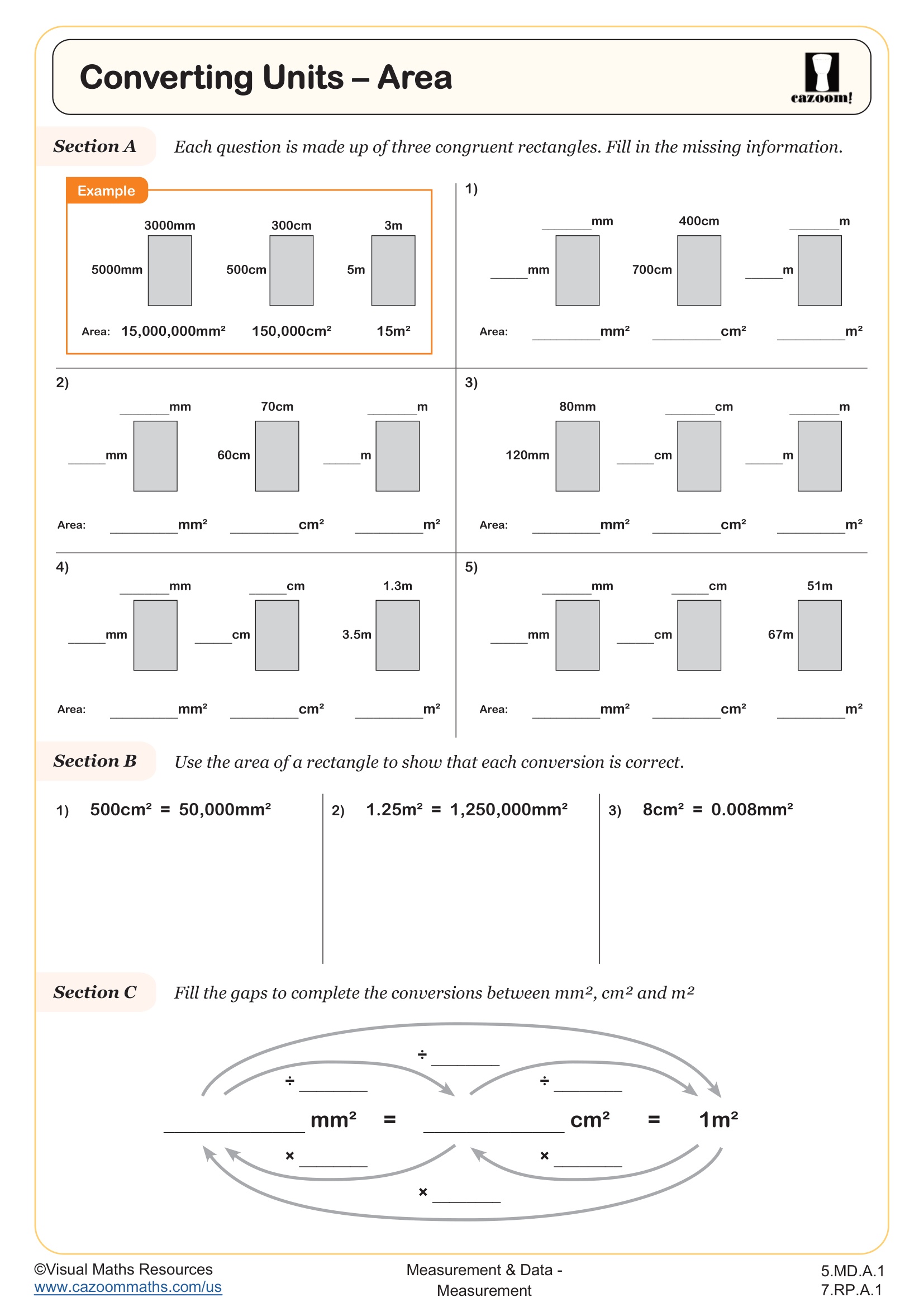
Converting Units - Area
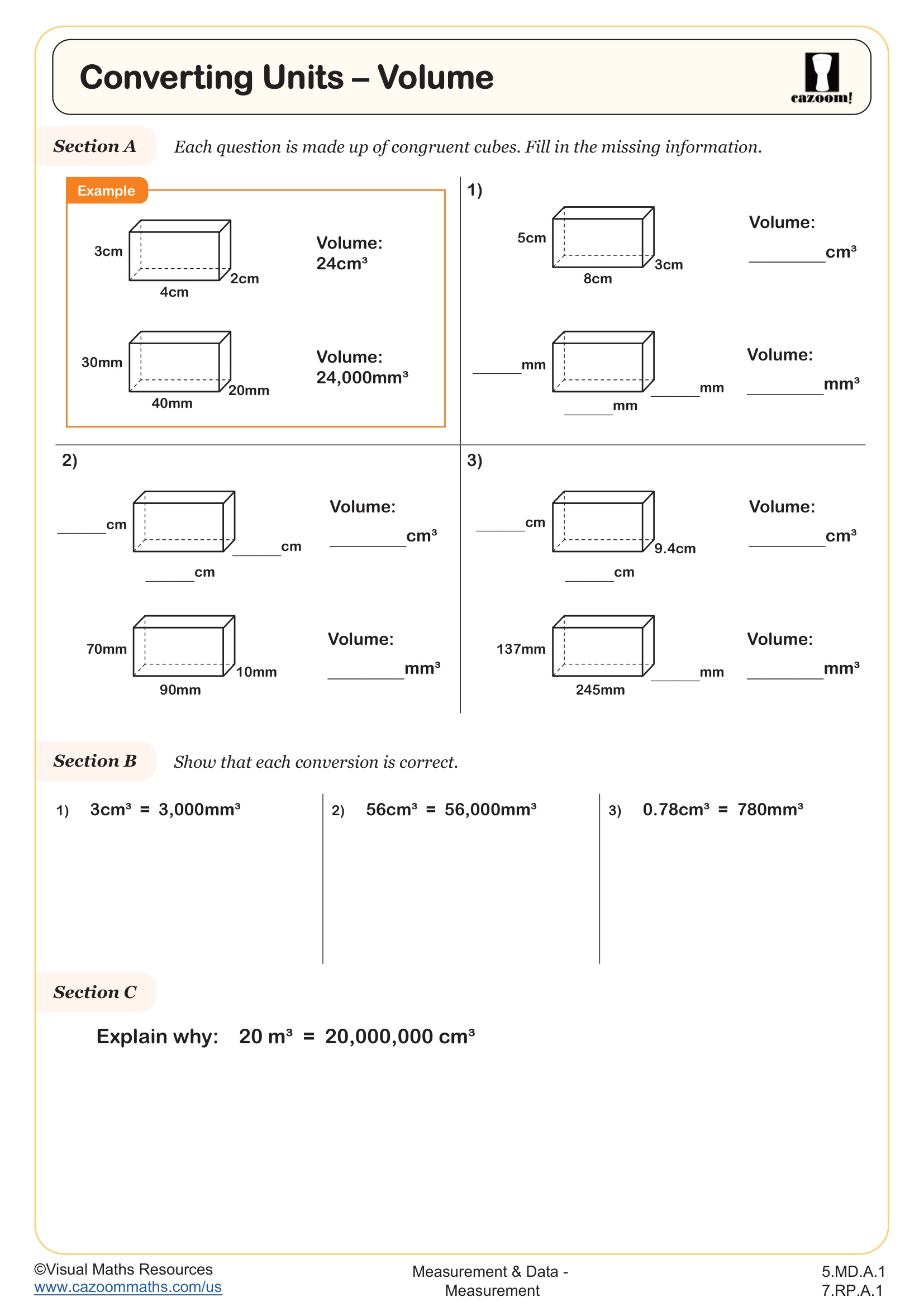
Converting Units - Volume
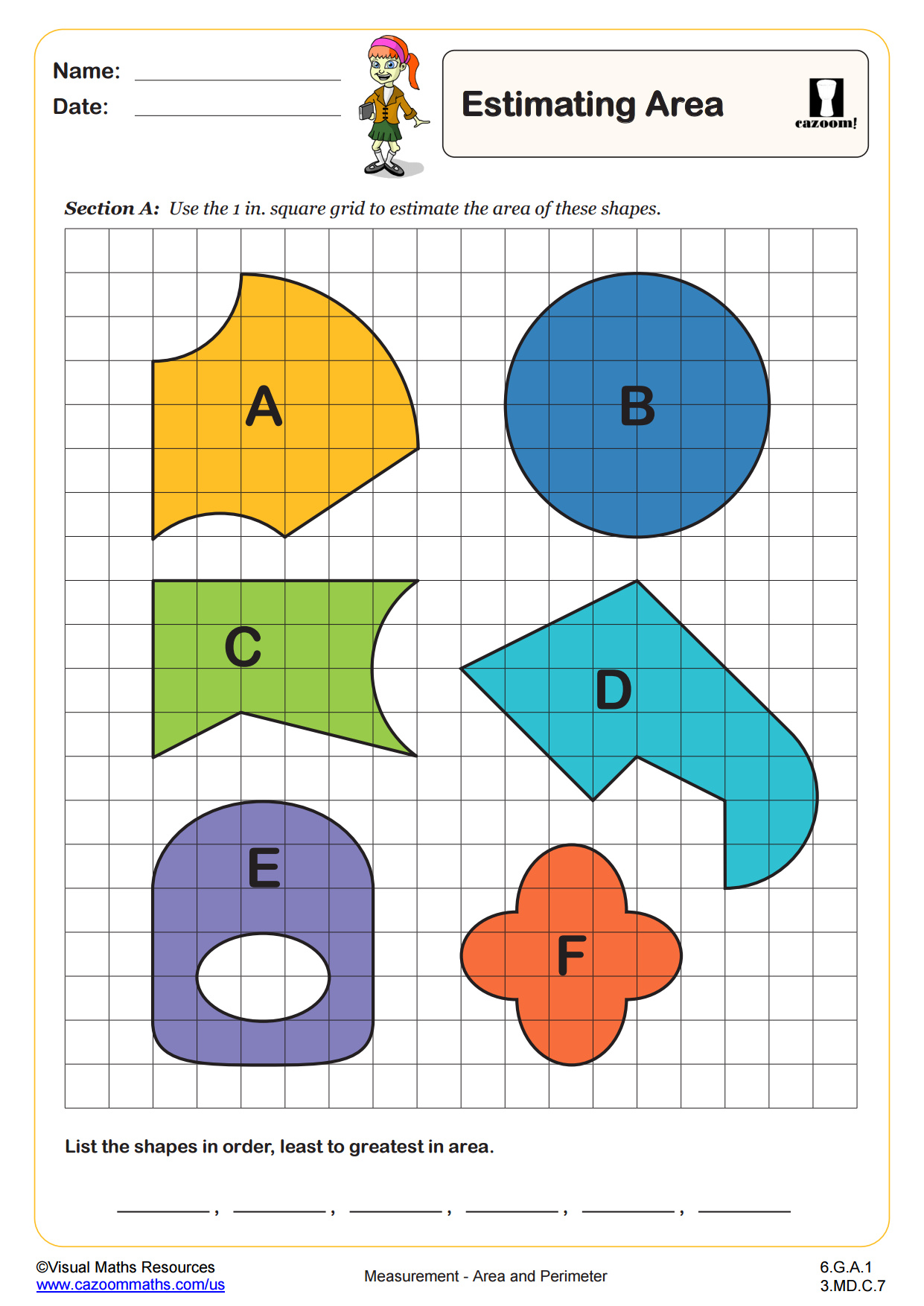
Estimating Area
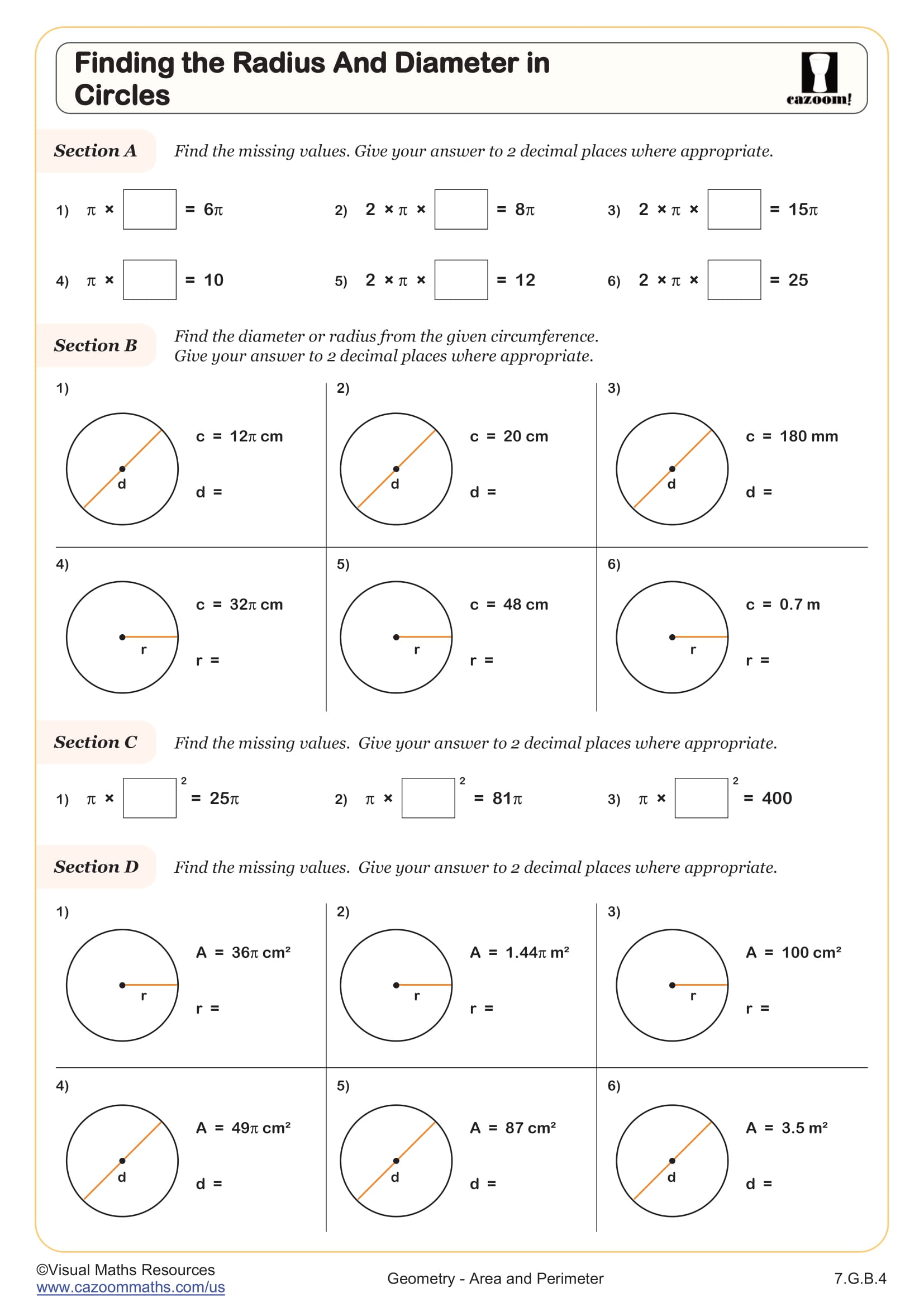
Finding the Radius and Diameter in Circles
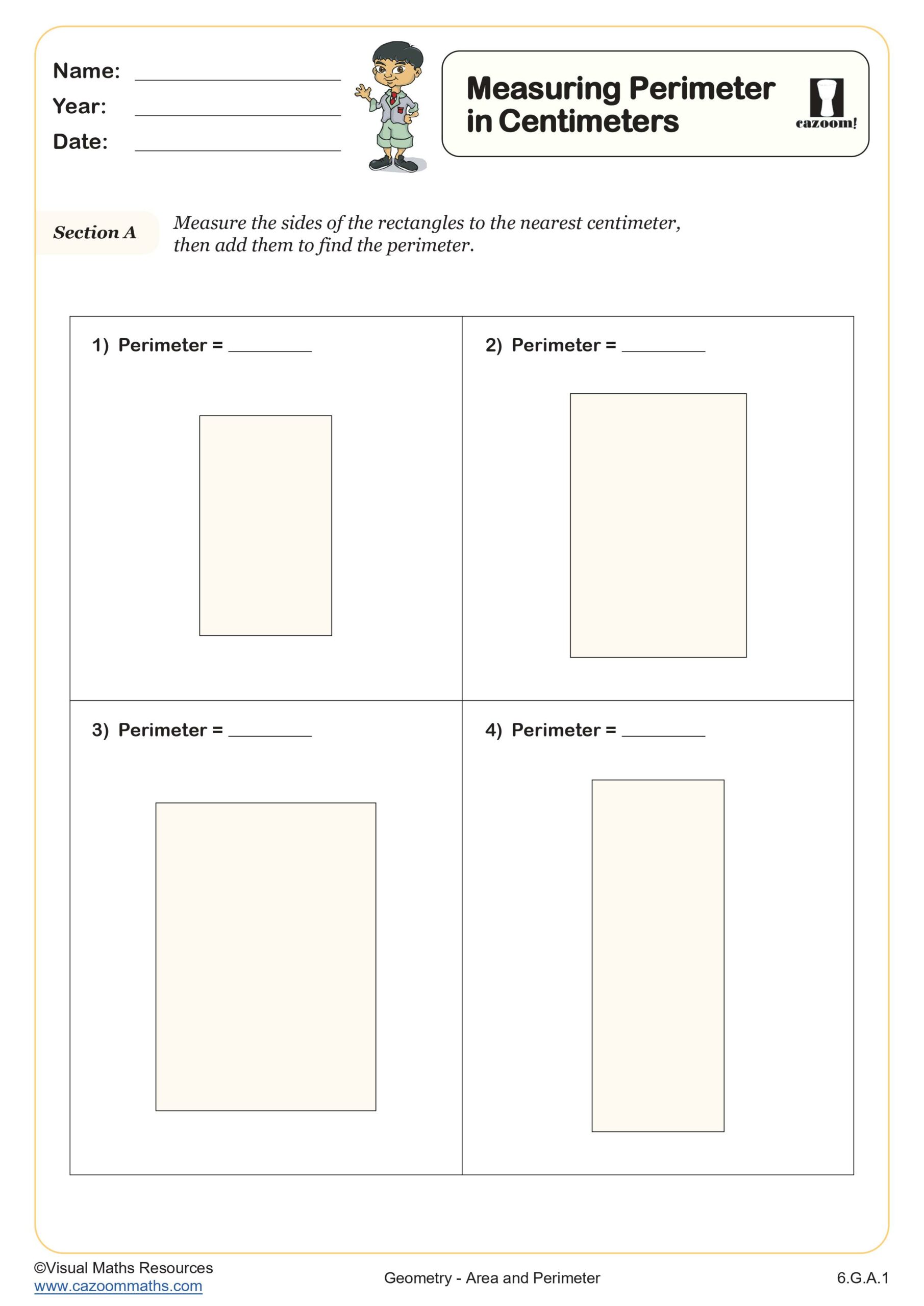
Measuring Perimeter in Centimeters
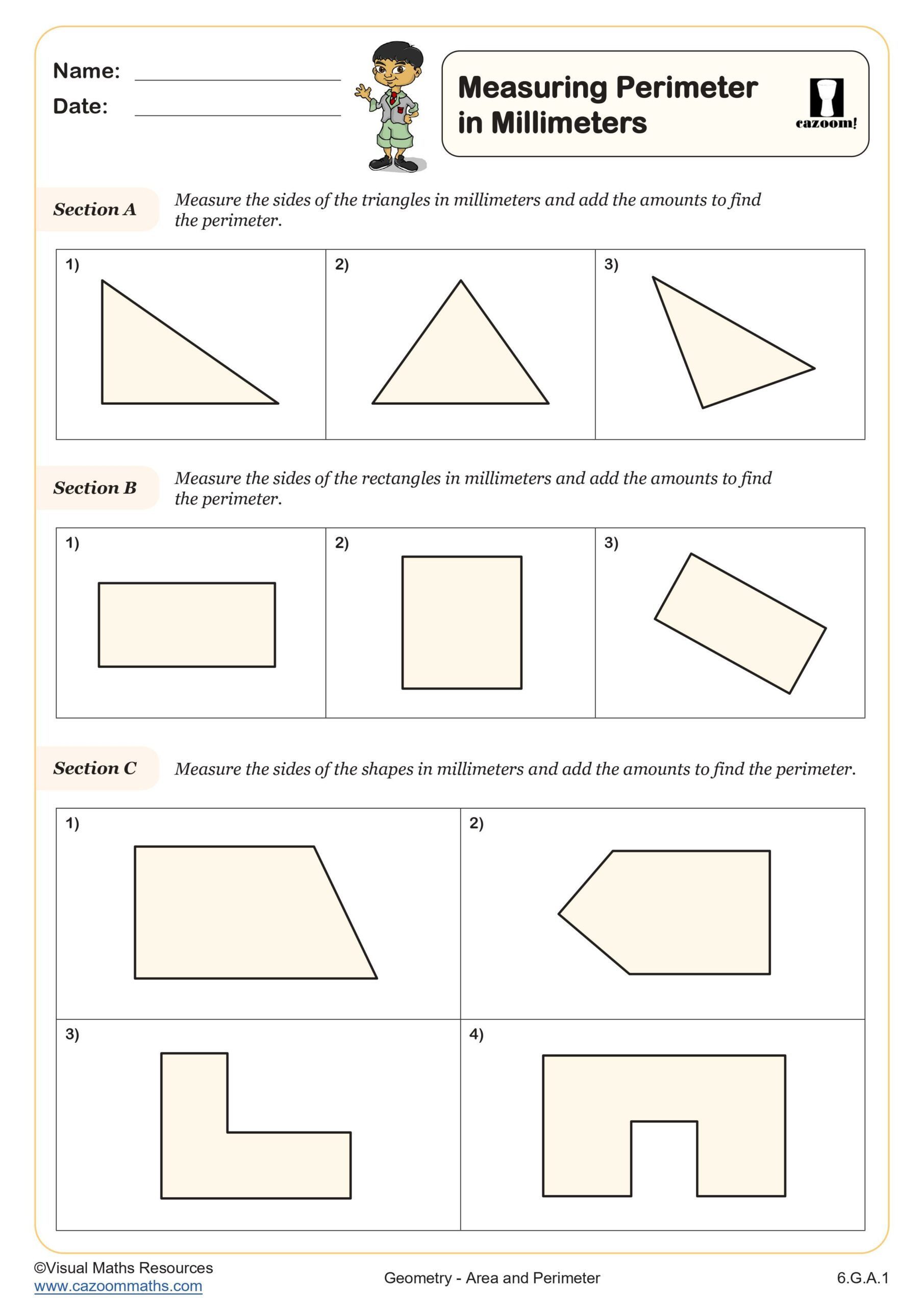
Measuring Perimeter in Millimeters
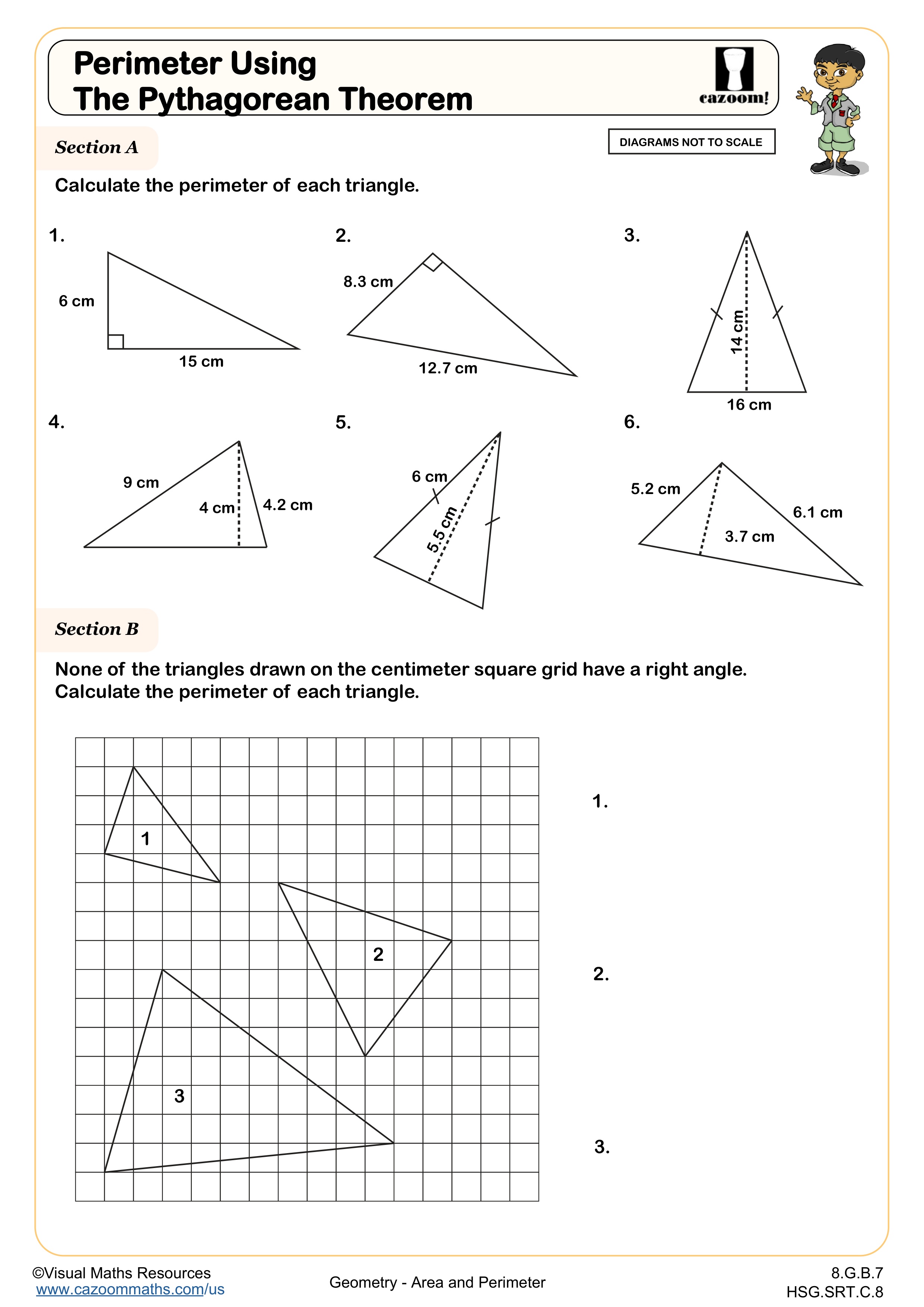
Perimeter Using The Pythagorean Theorem
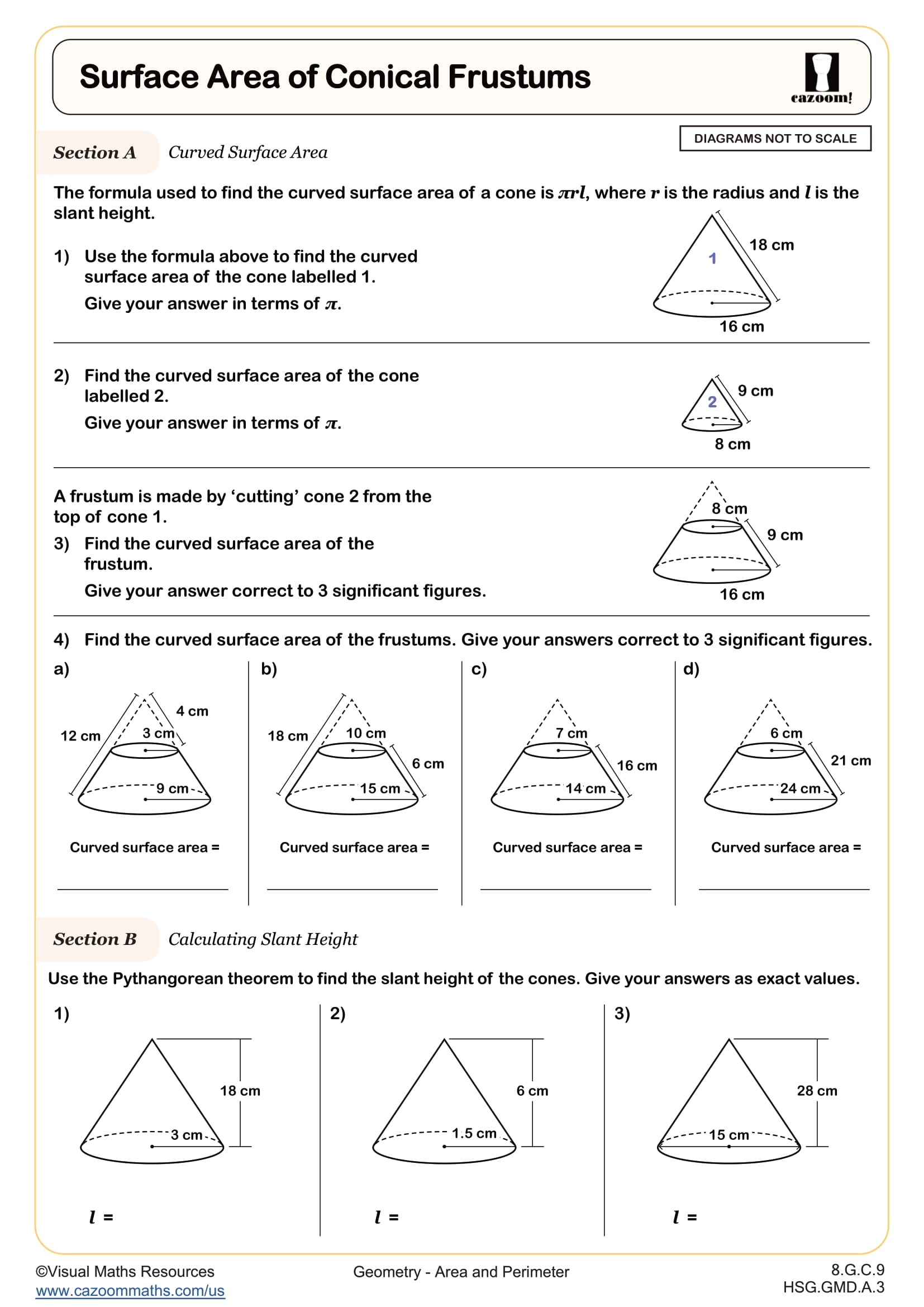
Surface Area of Conical Frustums
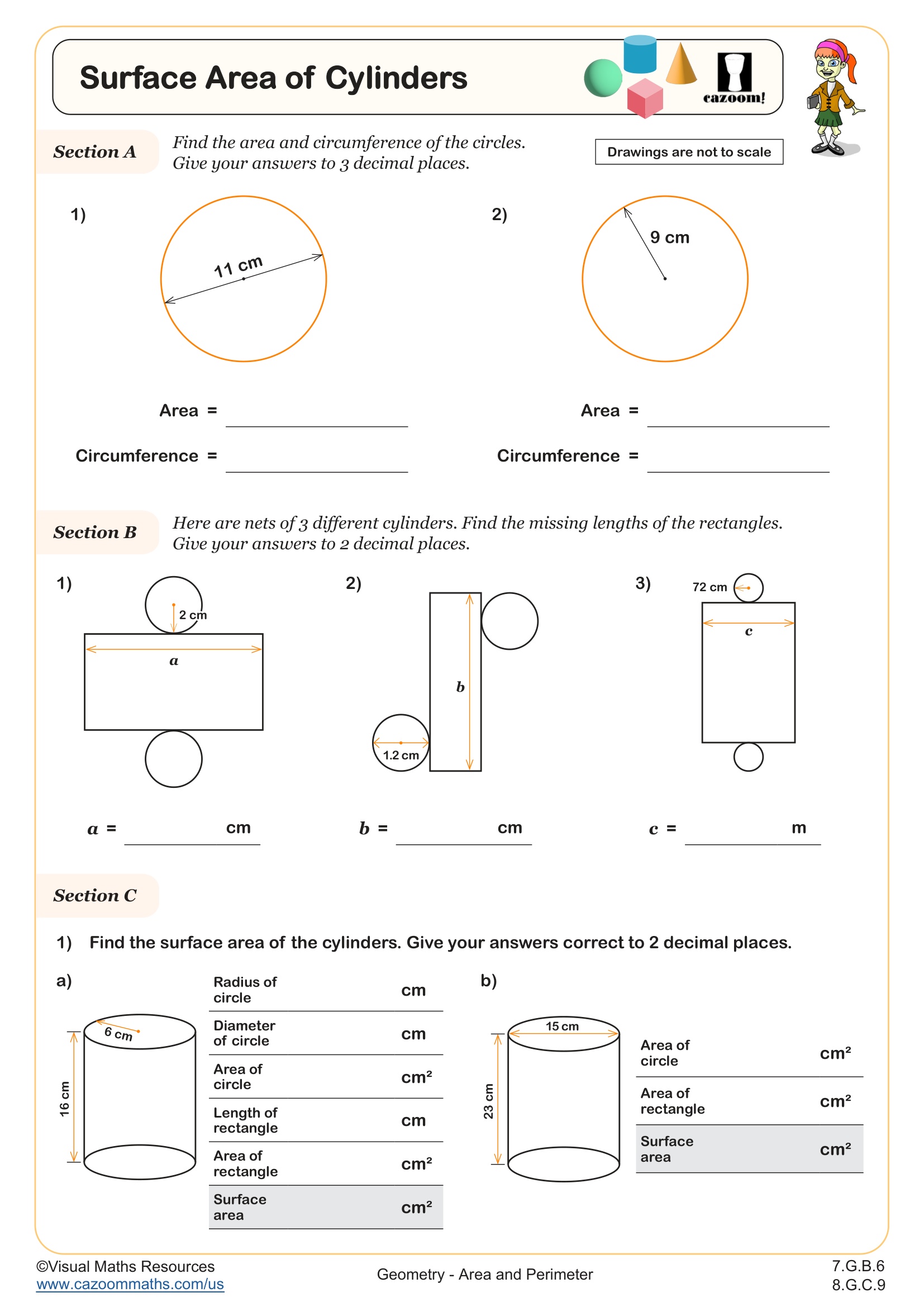
Surface Area of Cylinders
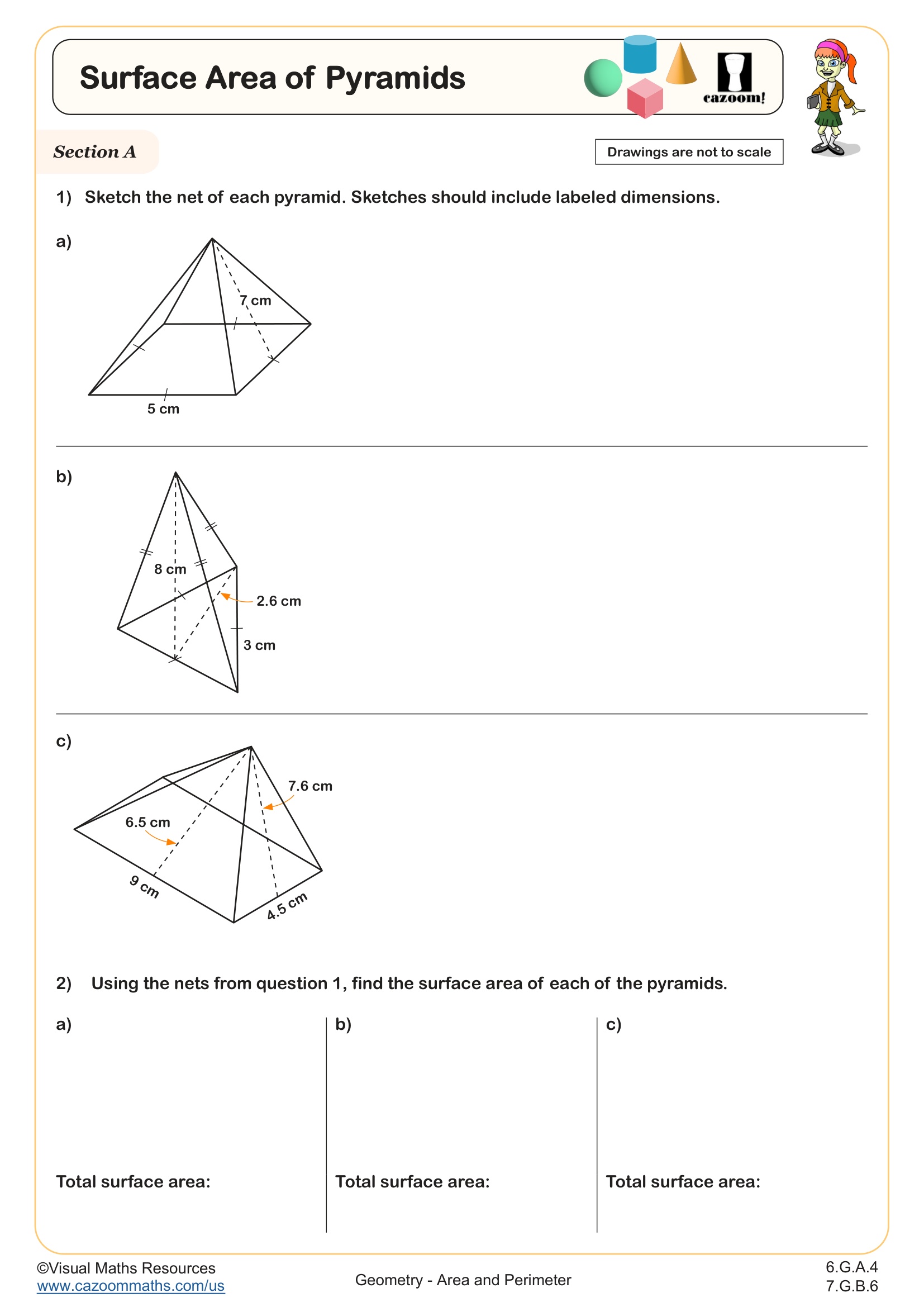
Surface Area of Pyramids
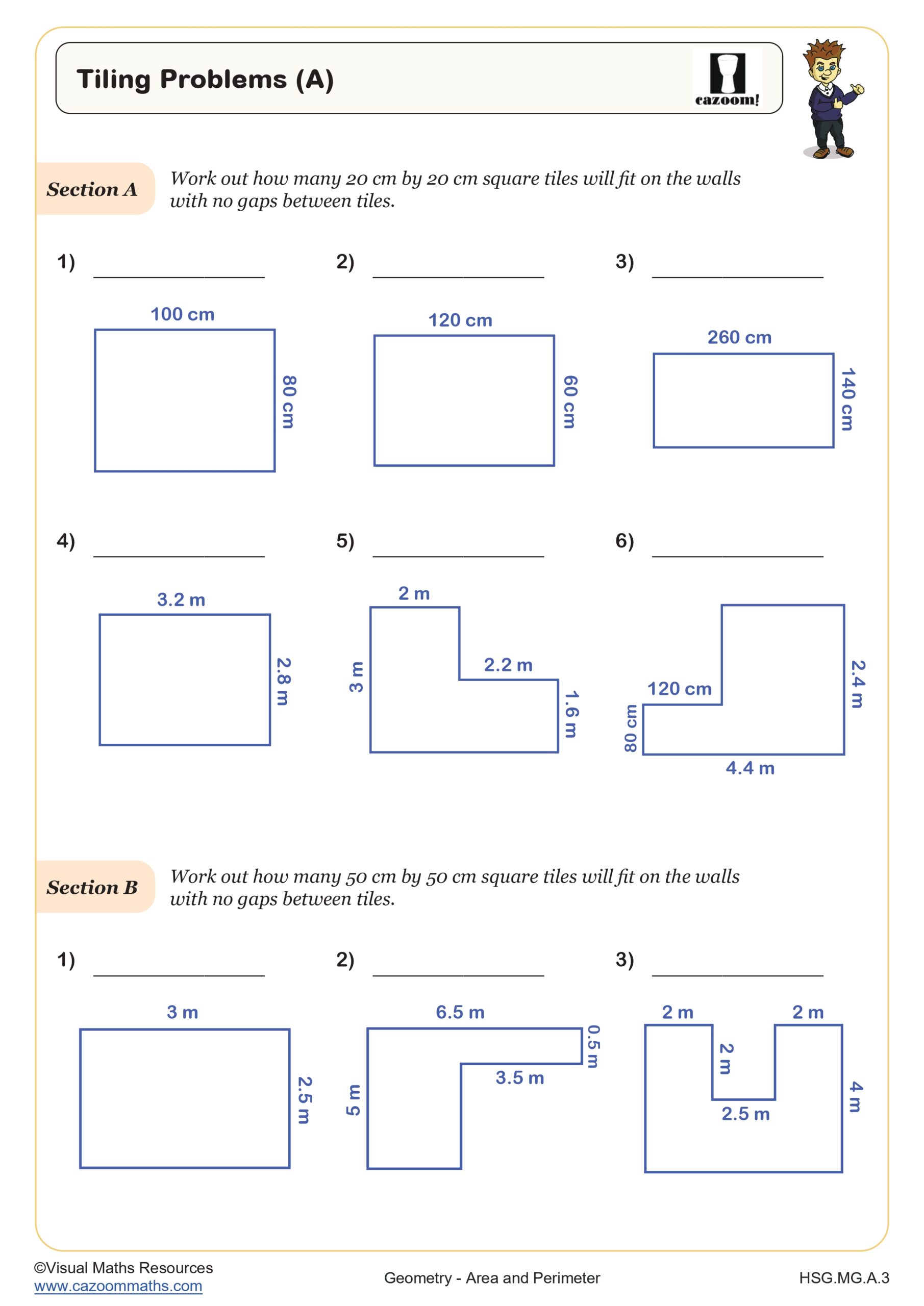
Tiling Problems (A)
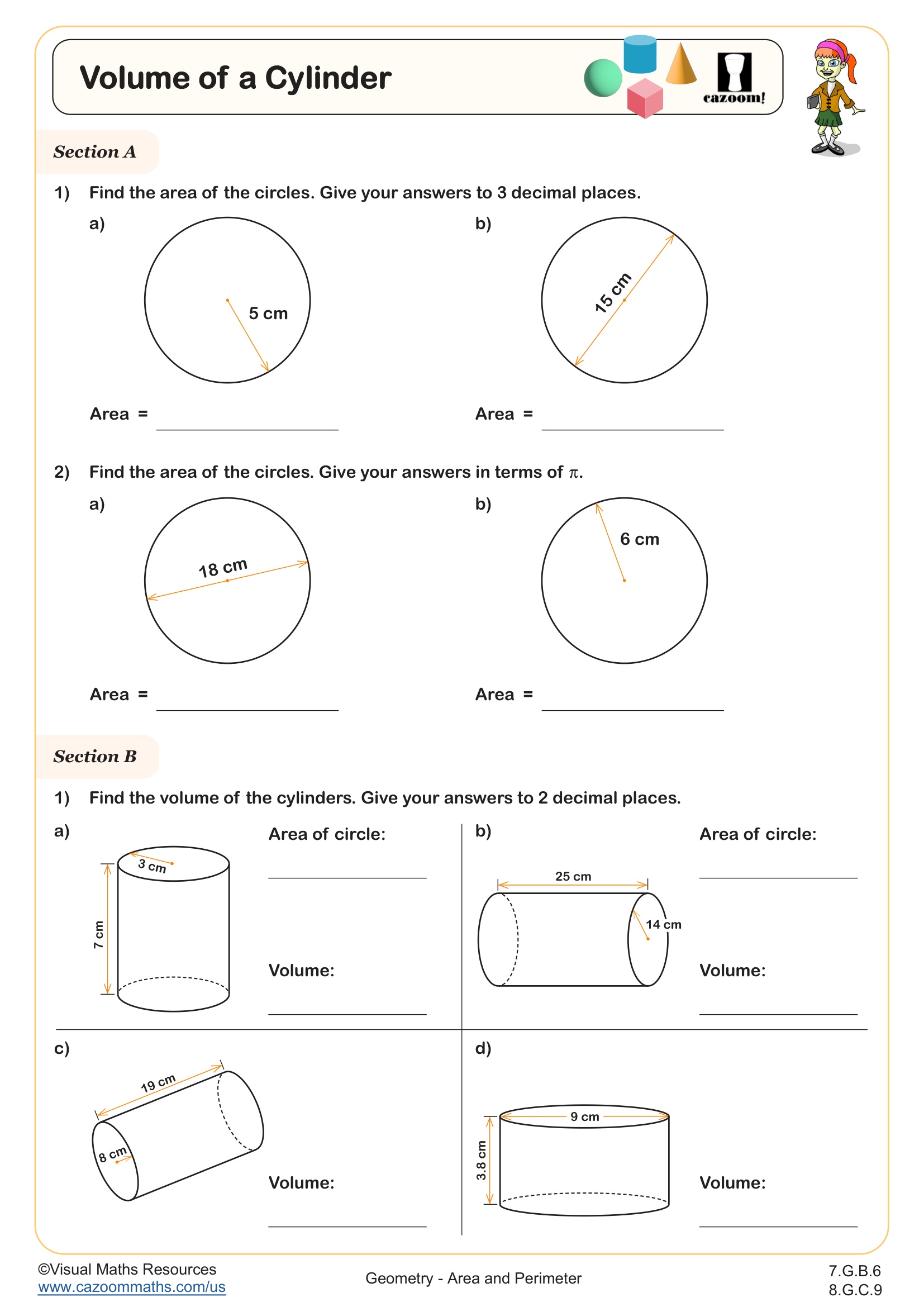
Volume of a Cylinder
All worksheets are created by the team of experienced teachers at Cazoom Math.
What do area and perimeter worksheets cover for middle school students?
Area and perimeter worksheet resources align with Common Core standards 6.G.A.1 and 7.G.B.6, covering rectangles, squares, triangles, parallelograms, and trapezoids. Students practice applying formulas, working with composite figures, and solving multi-step word problems that connect to construction and landscaping contexts.
Teachers notice students frequently mix up perimeter and area units, writing square units for perimeter or linear units for area. Grid-based exercises help students visualize the difference between counting unit squares for area versus tracing the boundary for perimeter, building conceptual understanding before moving to formula application.
How do area and perimeter skills progress through middle school grade levels?
Sixth graders begin with basic rectangles and squares, building on elementary fraction skills to work with fractional side lengths. Seventh grade introduces triangles and parallelograms, while eighth grade adds trapezoids and more complex composite figures that prepare students for high school geometry.
The progression moves from concrete grid counting to abstract formula application. Math questions for 8th graders typically involve multi-step problems where students must find missing dimensions or work backwards from given areas to find perimeter, skills that appear on state assessments and high school placement tests.
Why do students struggle with trapezoid area calculations?
Trapezoid area formulas present unique challenges because students must identify parallel bases and perpendicular height correctly. The formula A = ½(b₁ + b₂)h requires understanding that both parallel sides serve as bases, unlike triangles where only one base is used.
Teachers observe that grid problems help significantly with trapezoid comprehension. When students see area of trapezoid a and area of trapezoid b grid exercises, they can count unit squares to verify their formula calculations, building confidence in the abstract formula through concrete visualization and pattern recognition.
How should teachers use these worksheets most effectively in their classrooms?
Successful implementation starts with modeling one problem from each shape category before releasing students to independent practice. Teachers should emphasize checking answers by using alternative methods when possible, such as breaking composite figures into familiar rectangles and triangles.
The answer keys allow for immediate self-correction, but teachers report better results when students first attempt problems in pairs before checking solutions. This collaborative approach helps students catch formula errors and unit mistakes before they become ingrained habits, especially important for 8th grade math questions that appear on standardized assessments.