Middle School Area and Perimeter Worksheets
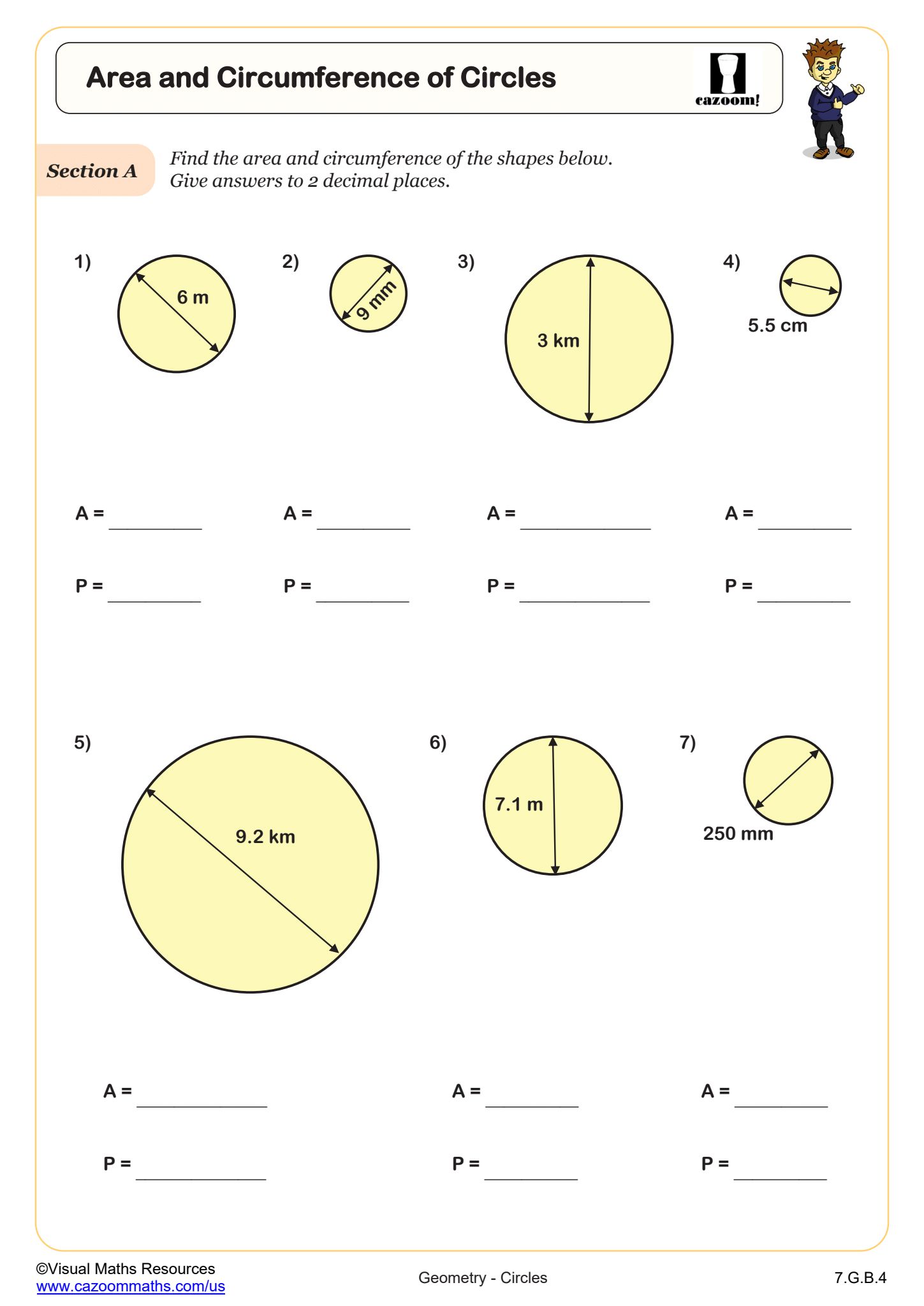
Area and Circumference of Circles
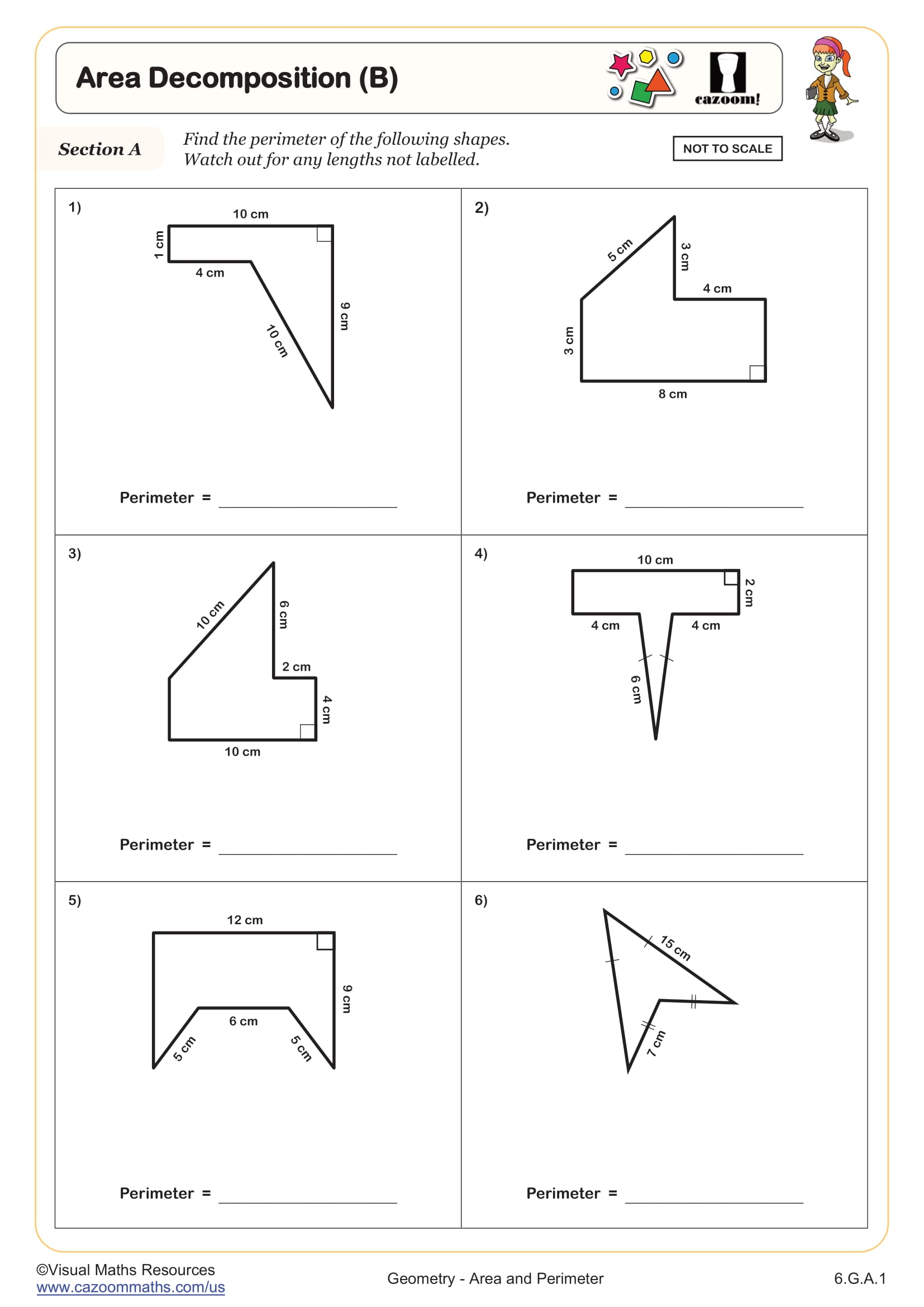
Area Decomposition (B)
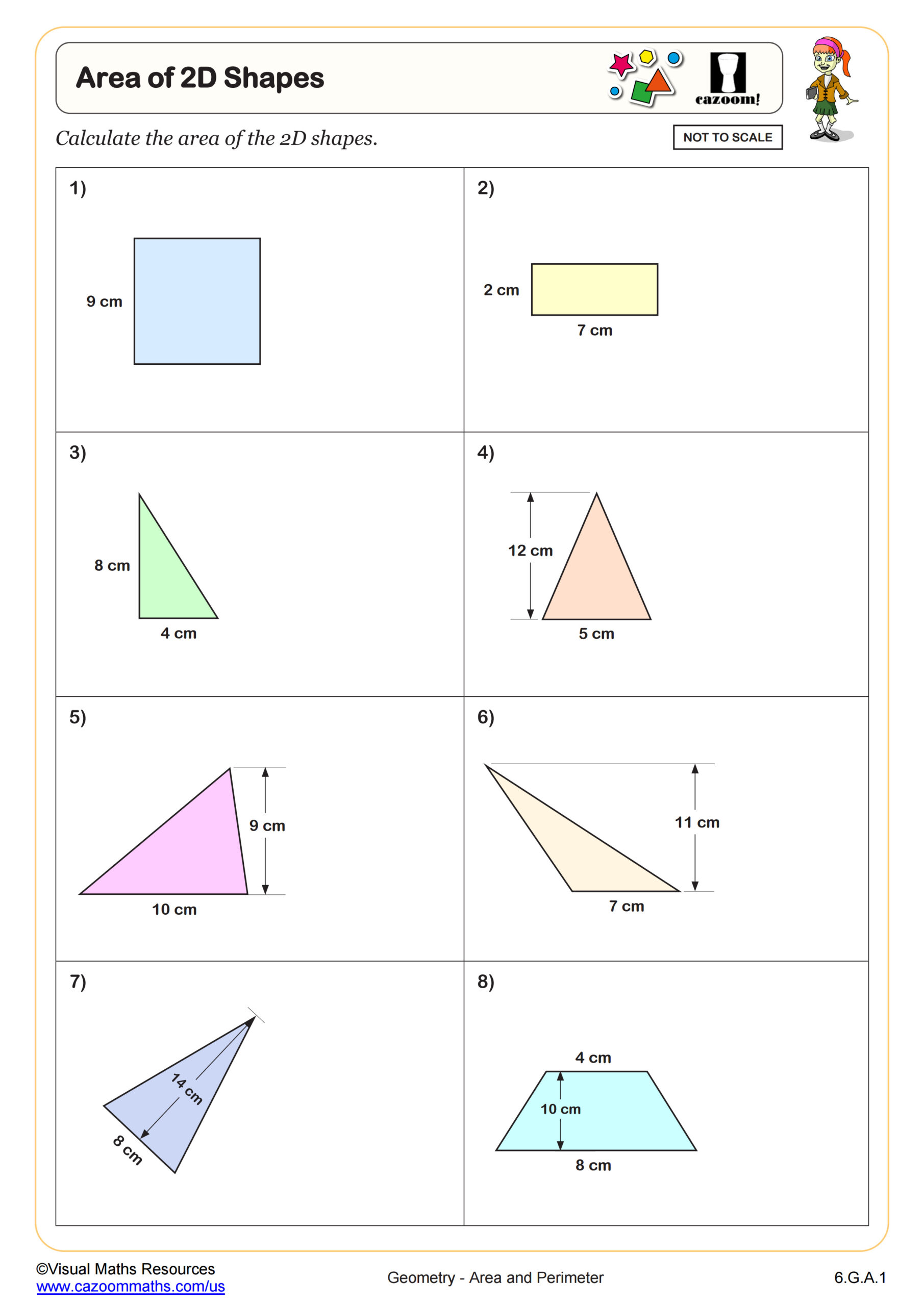
Area of 2D Shapes
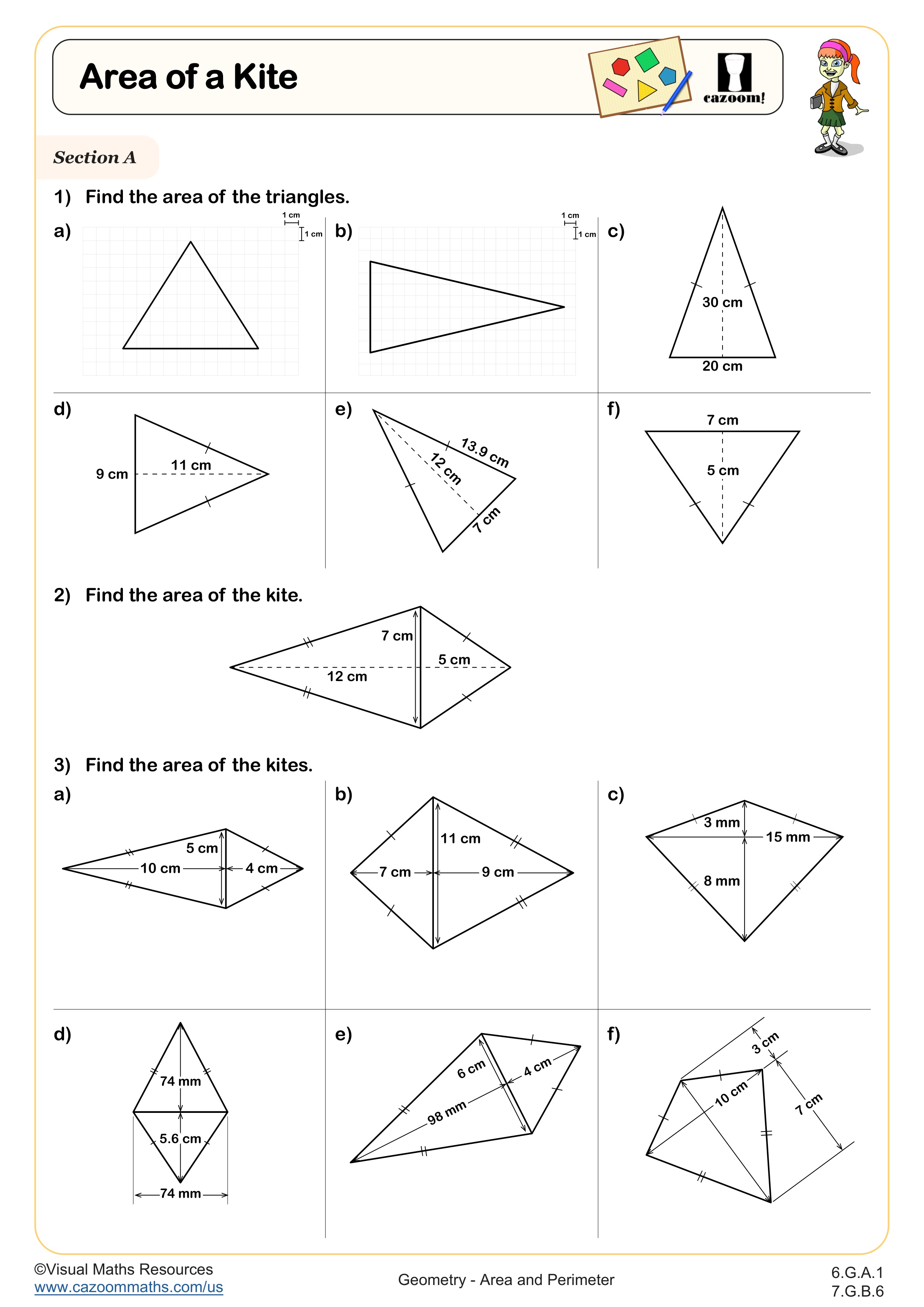
Area of a Kite
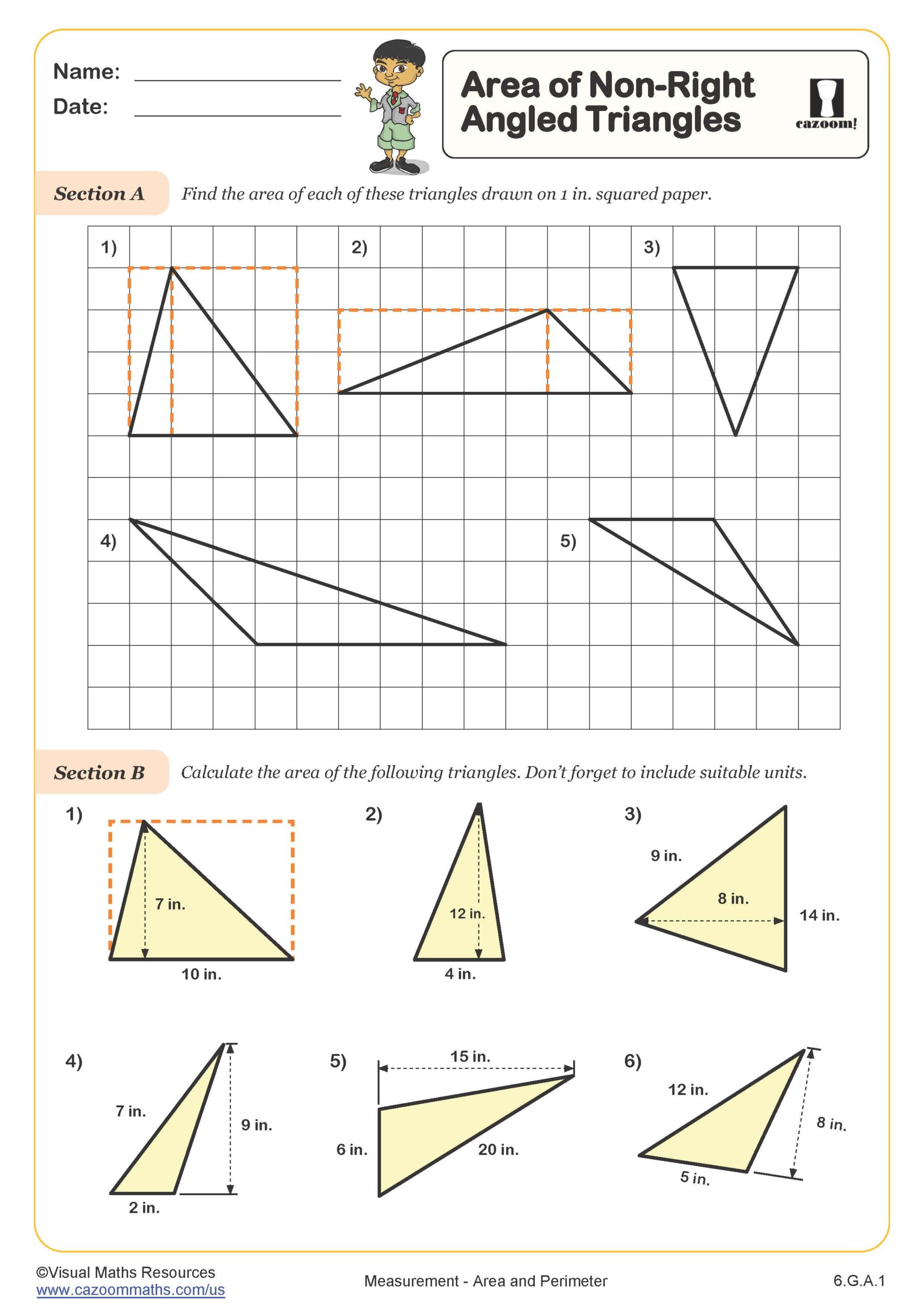
Area of a Triangle Using The Pythagorean Theorem
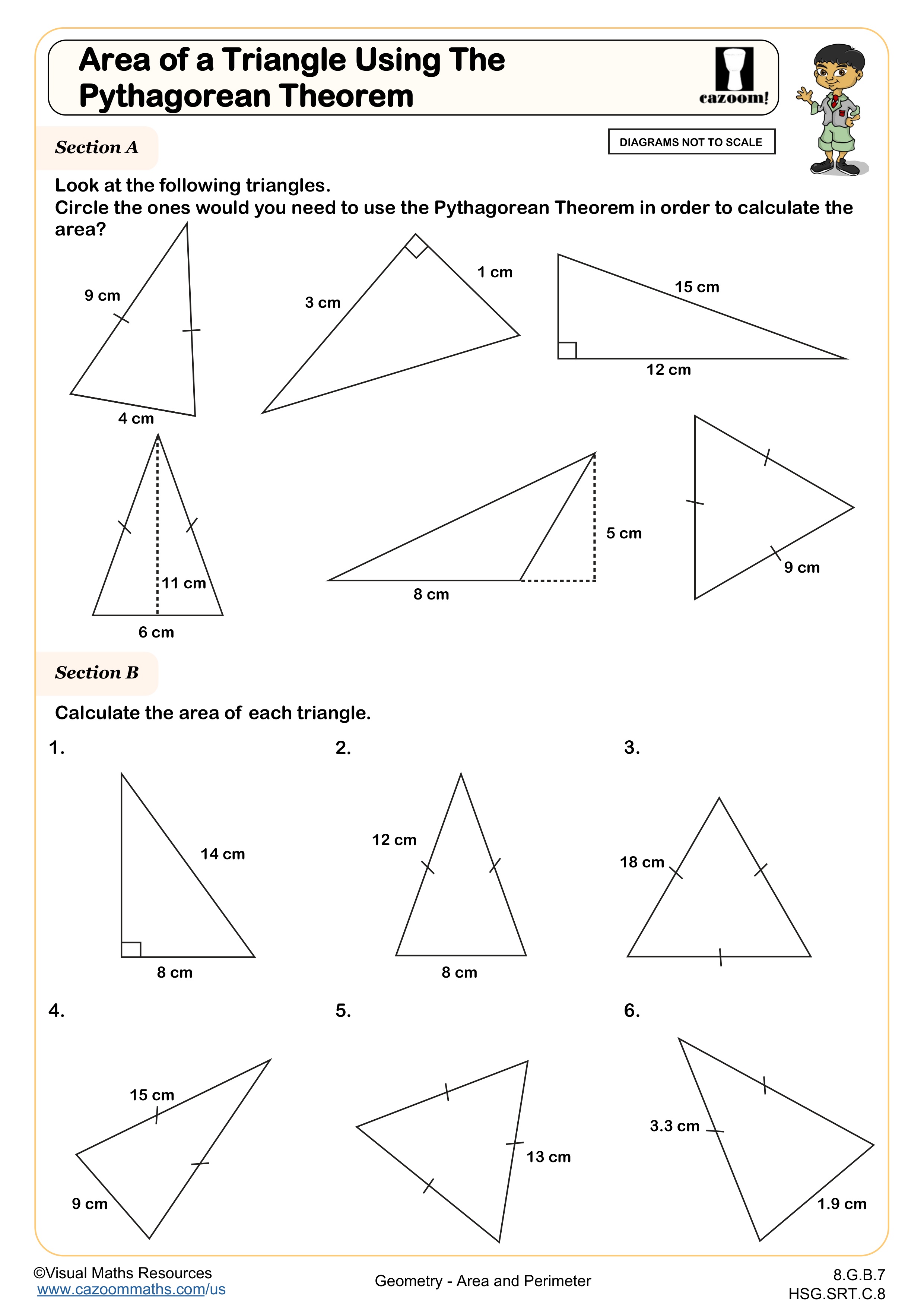
Area of Circle Word Problems
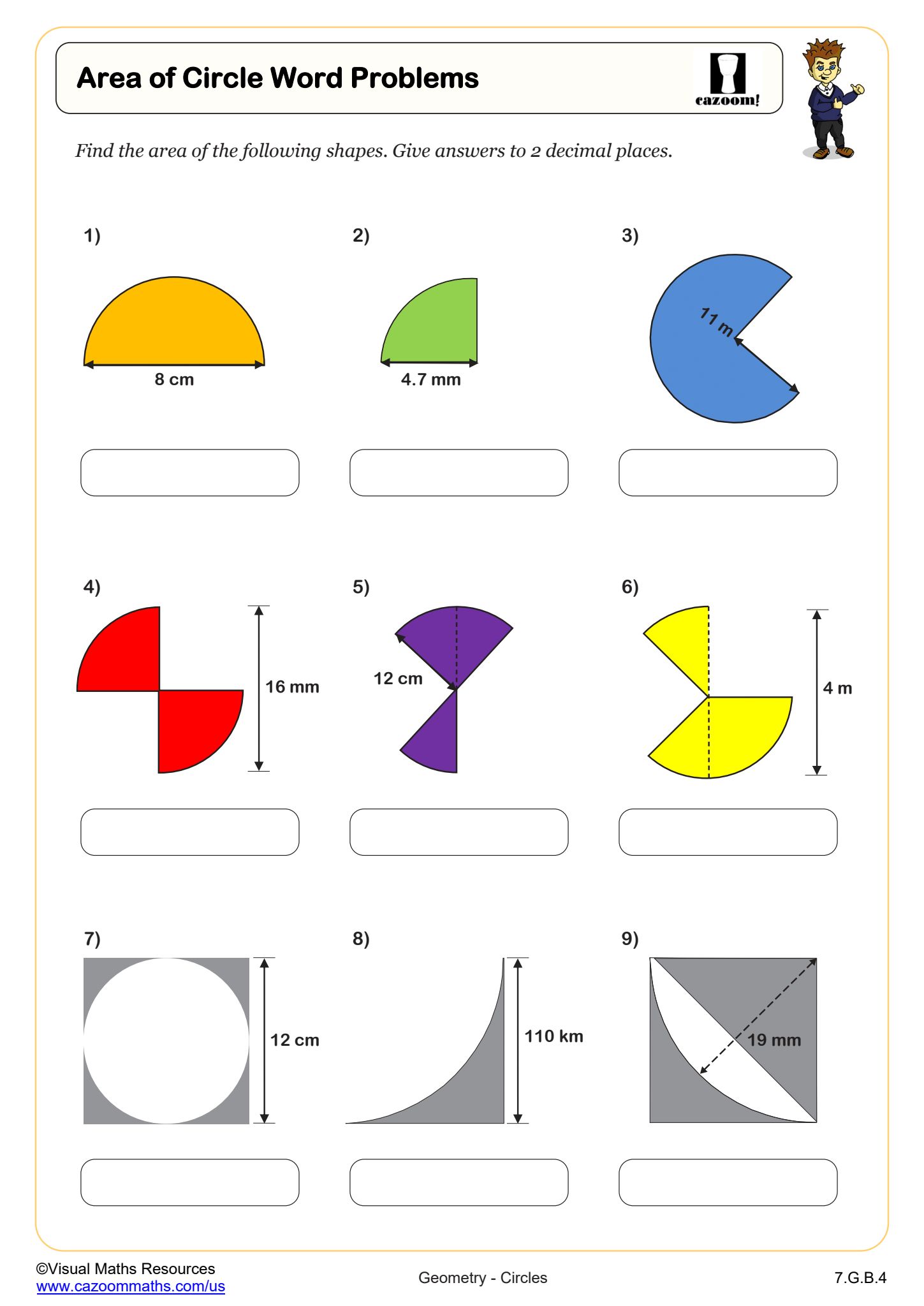
Area of Circles
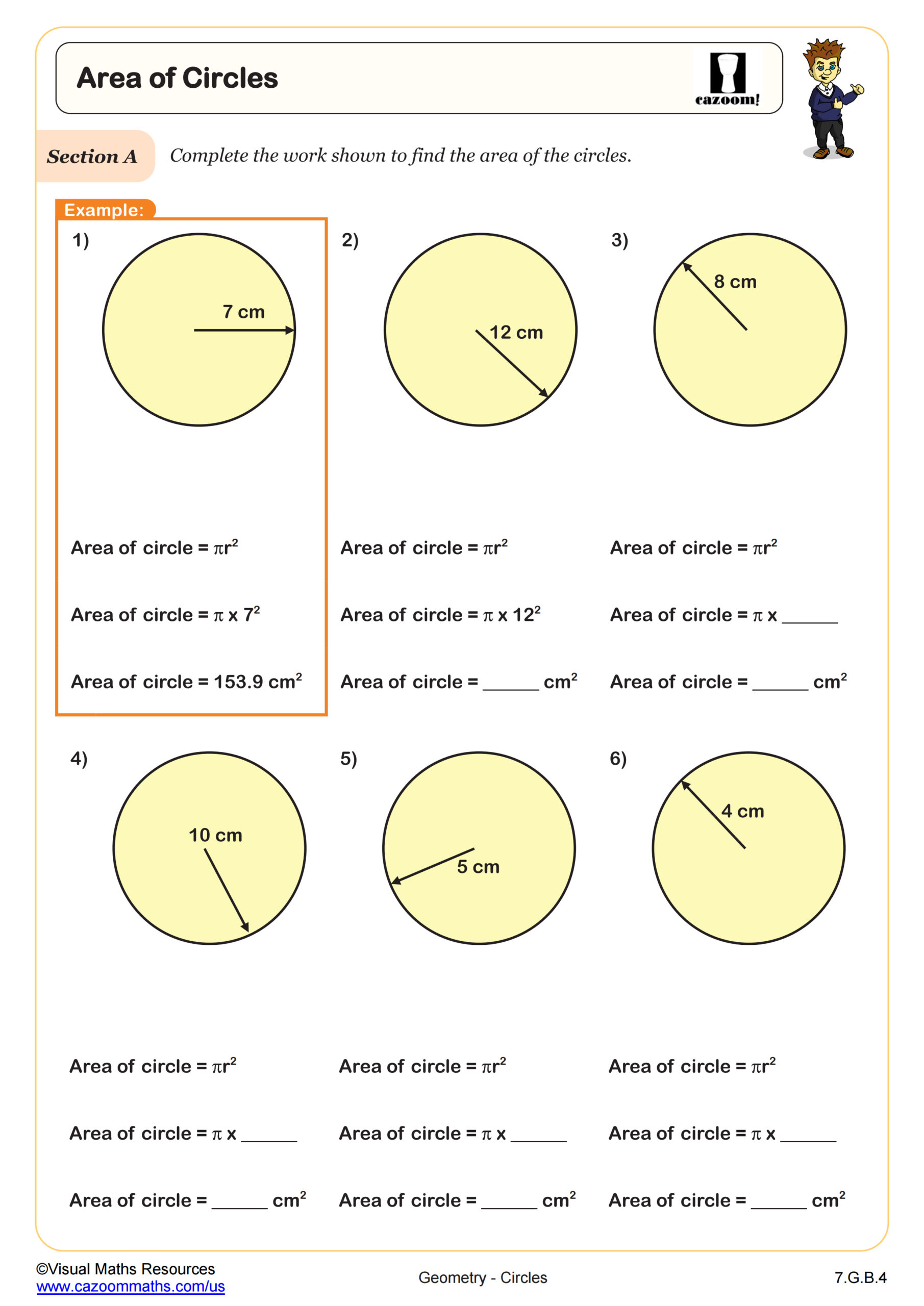
Area of Non-Right Angled Triangles
Area of Parallelograms
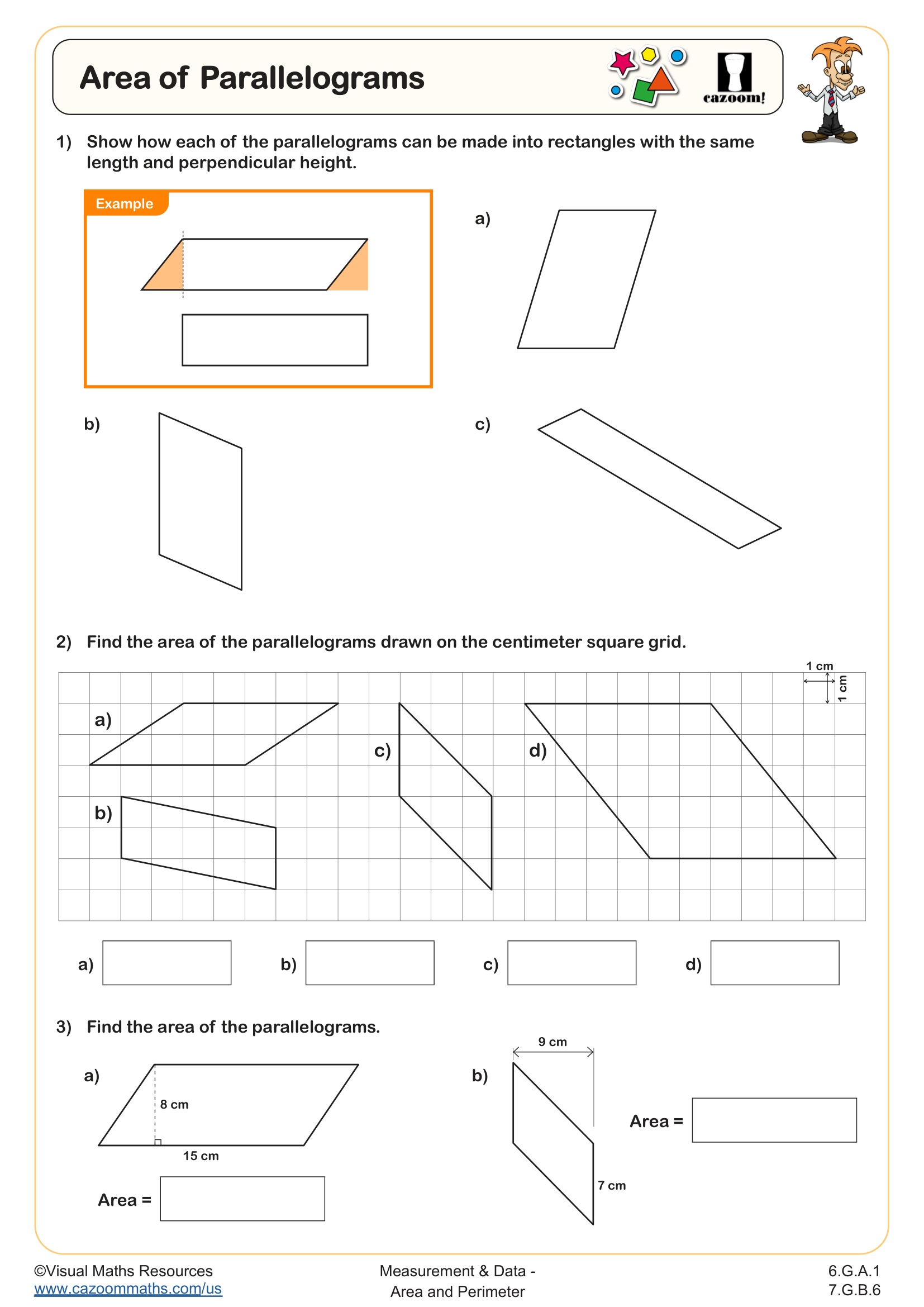
Area of Quadrilaterals (A)
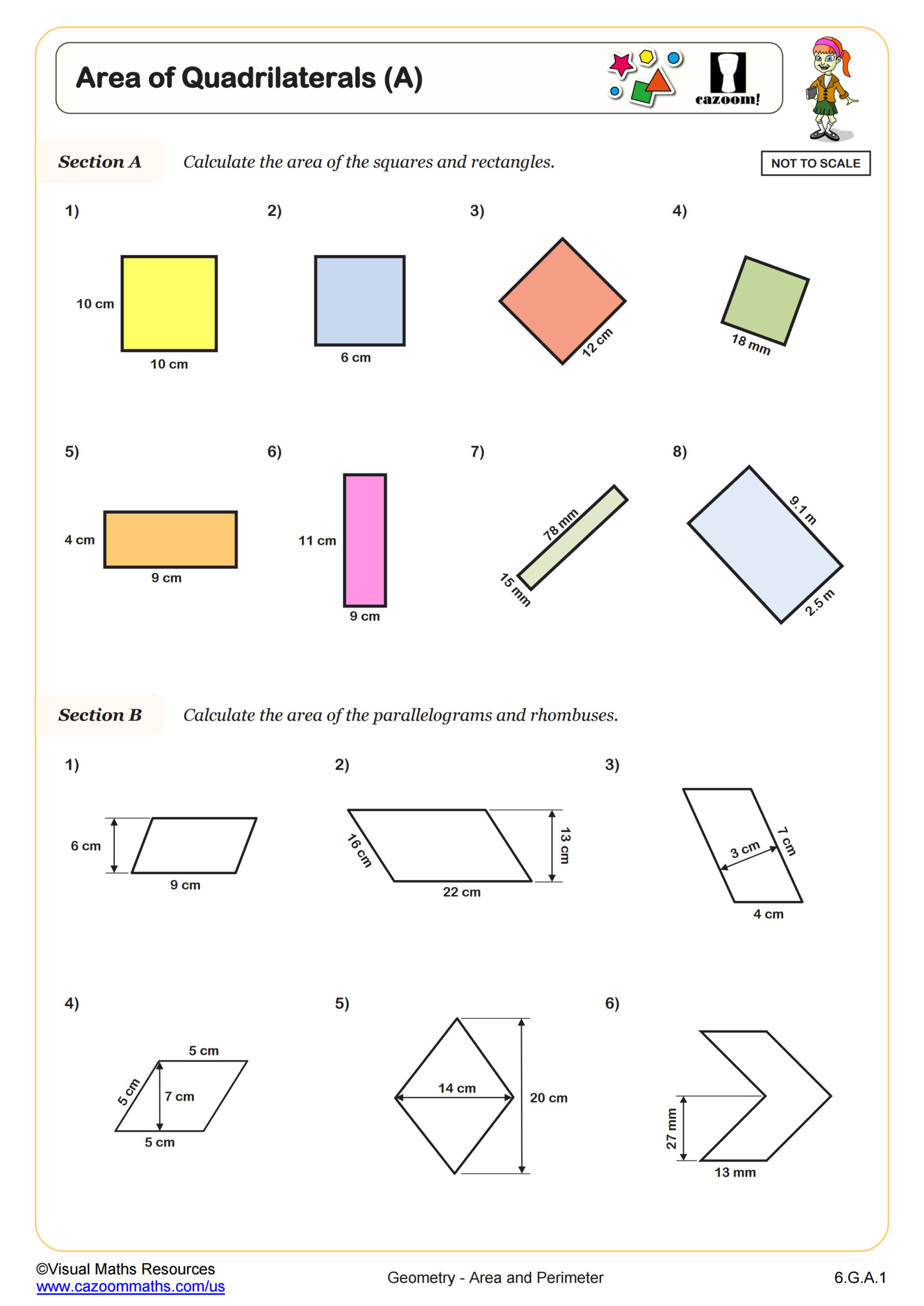
Area of Quadrilaterals (B)
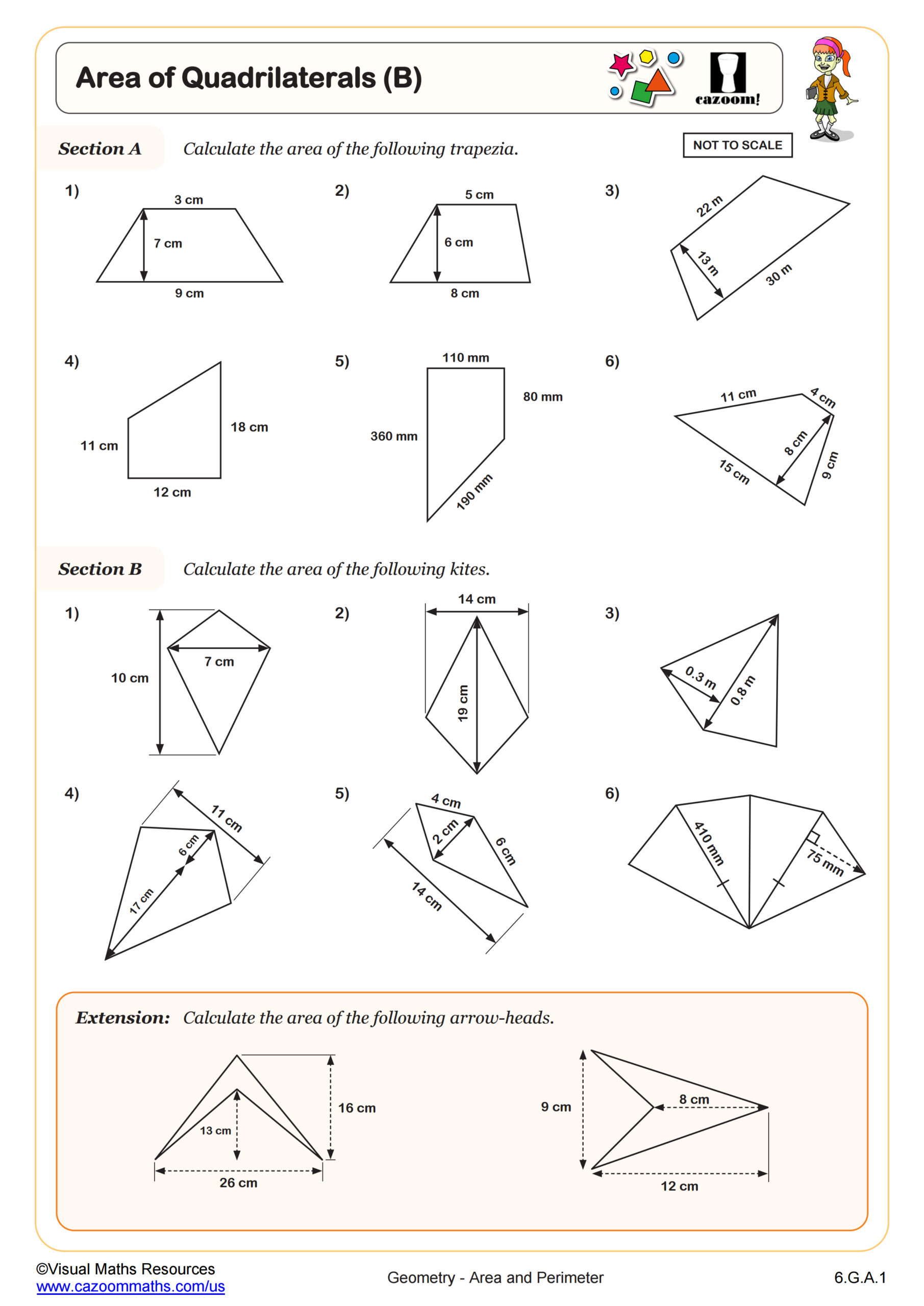
Area of Right Triangles
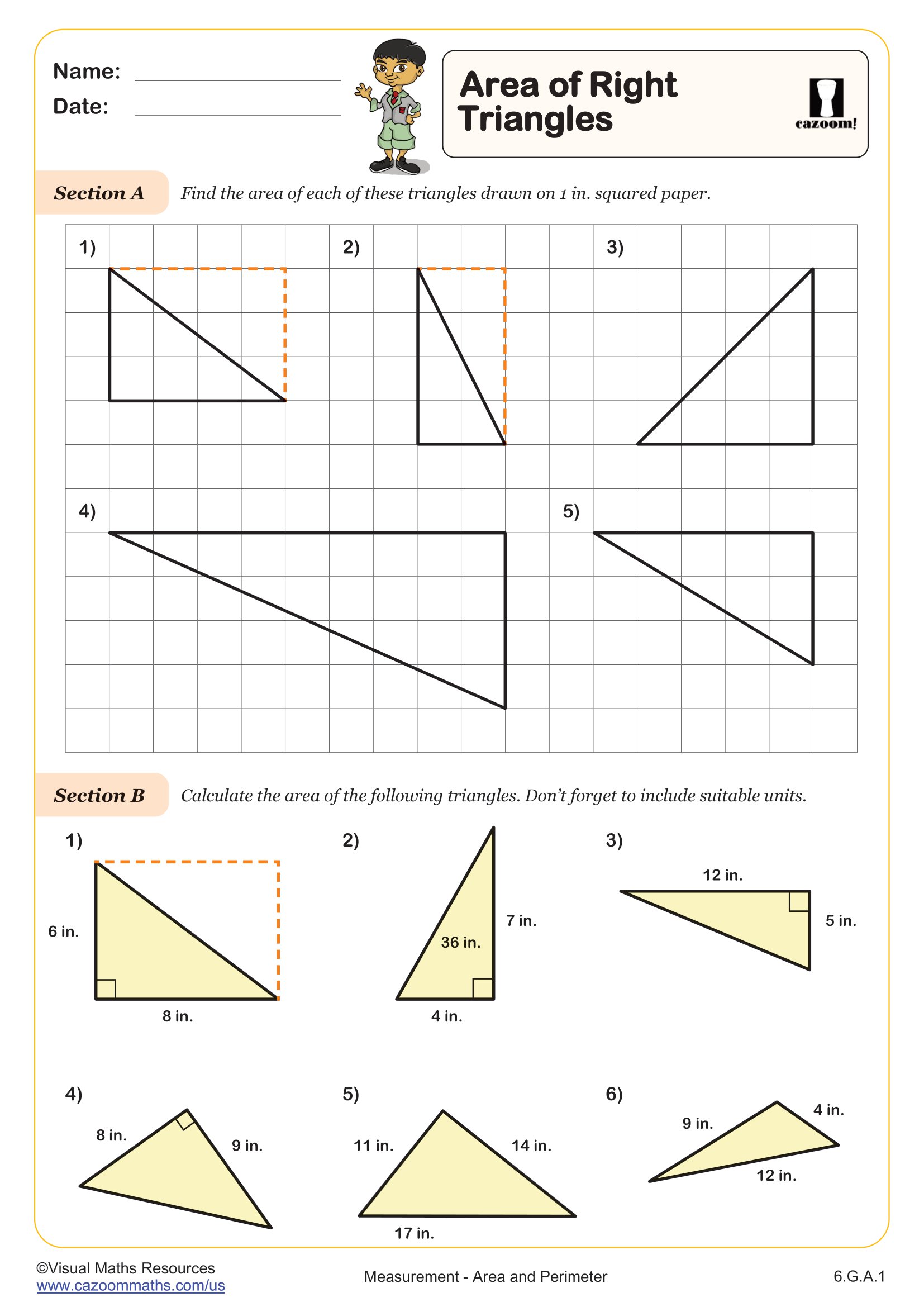
Area of Trapezoid (A)
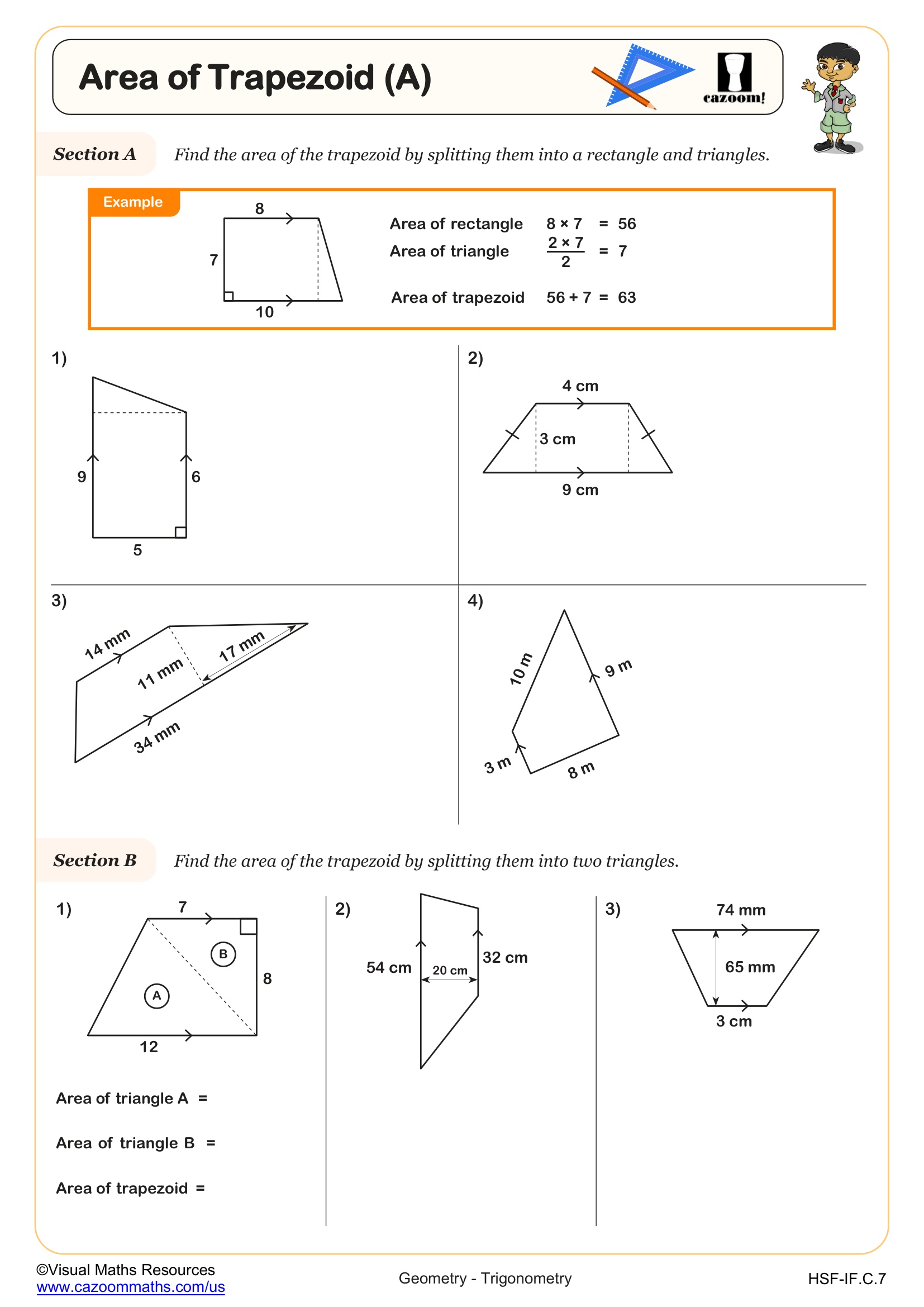
Area of Trapezoid (B)
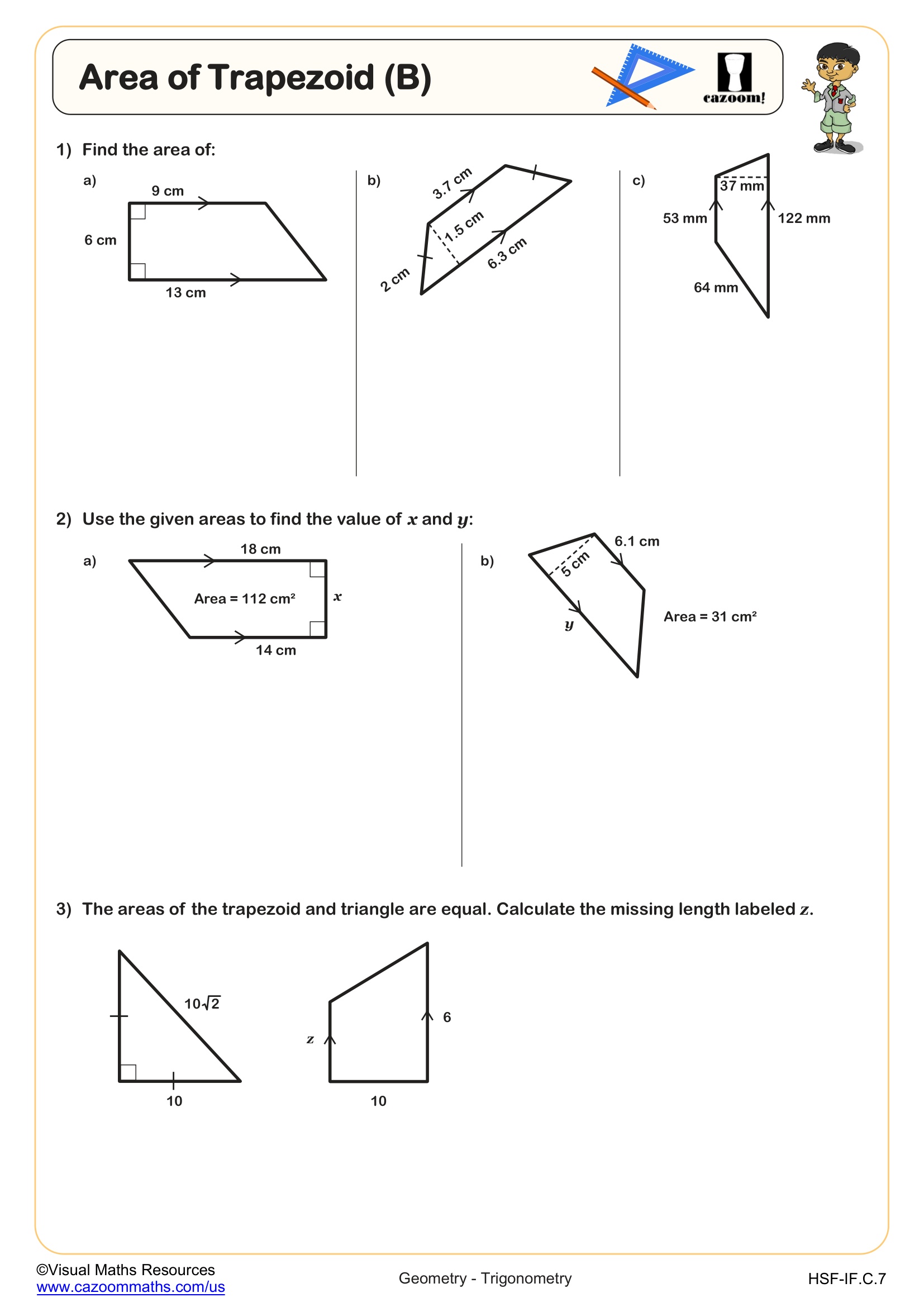
Areas of Kites
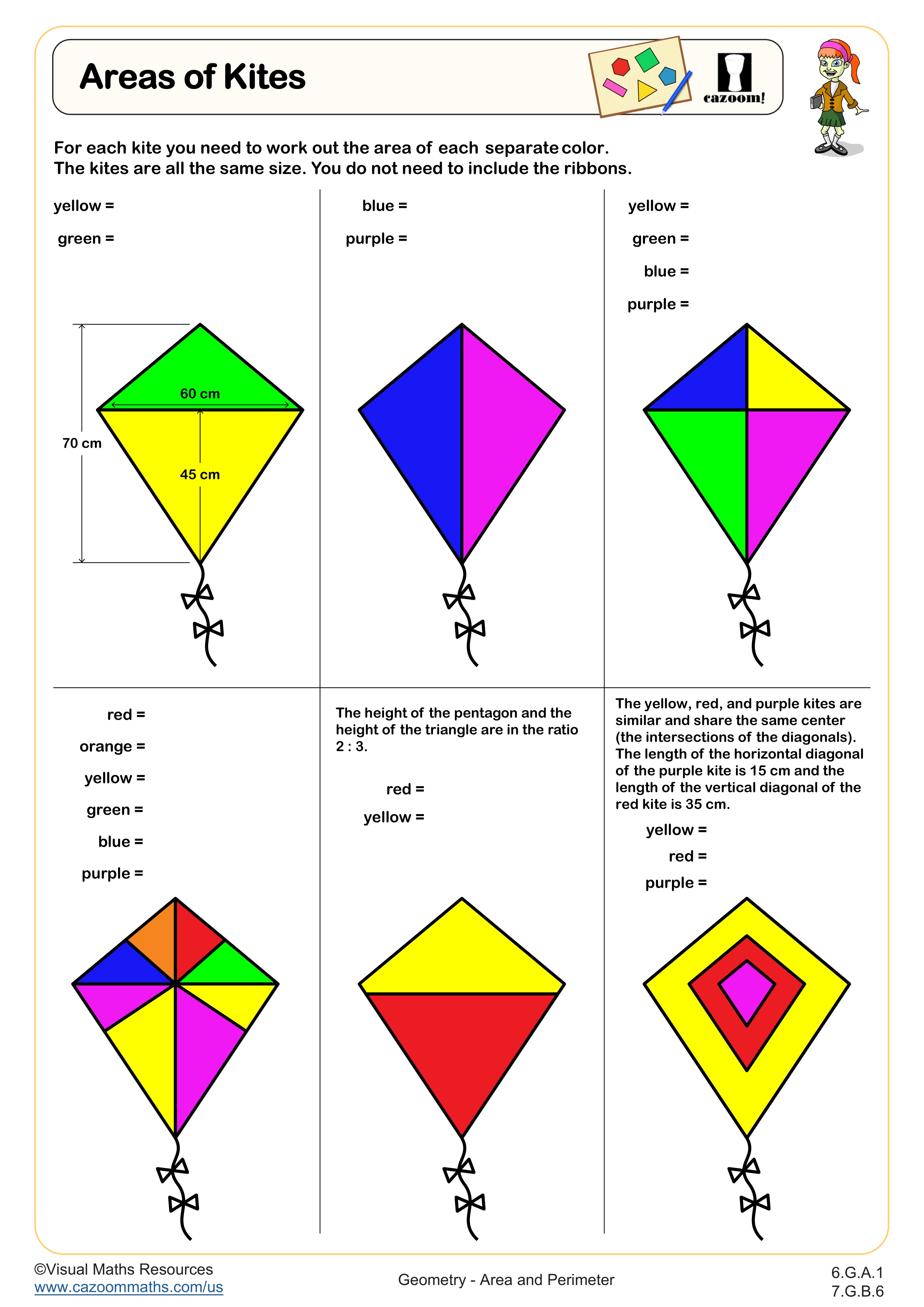
Circumference of Circles
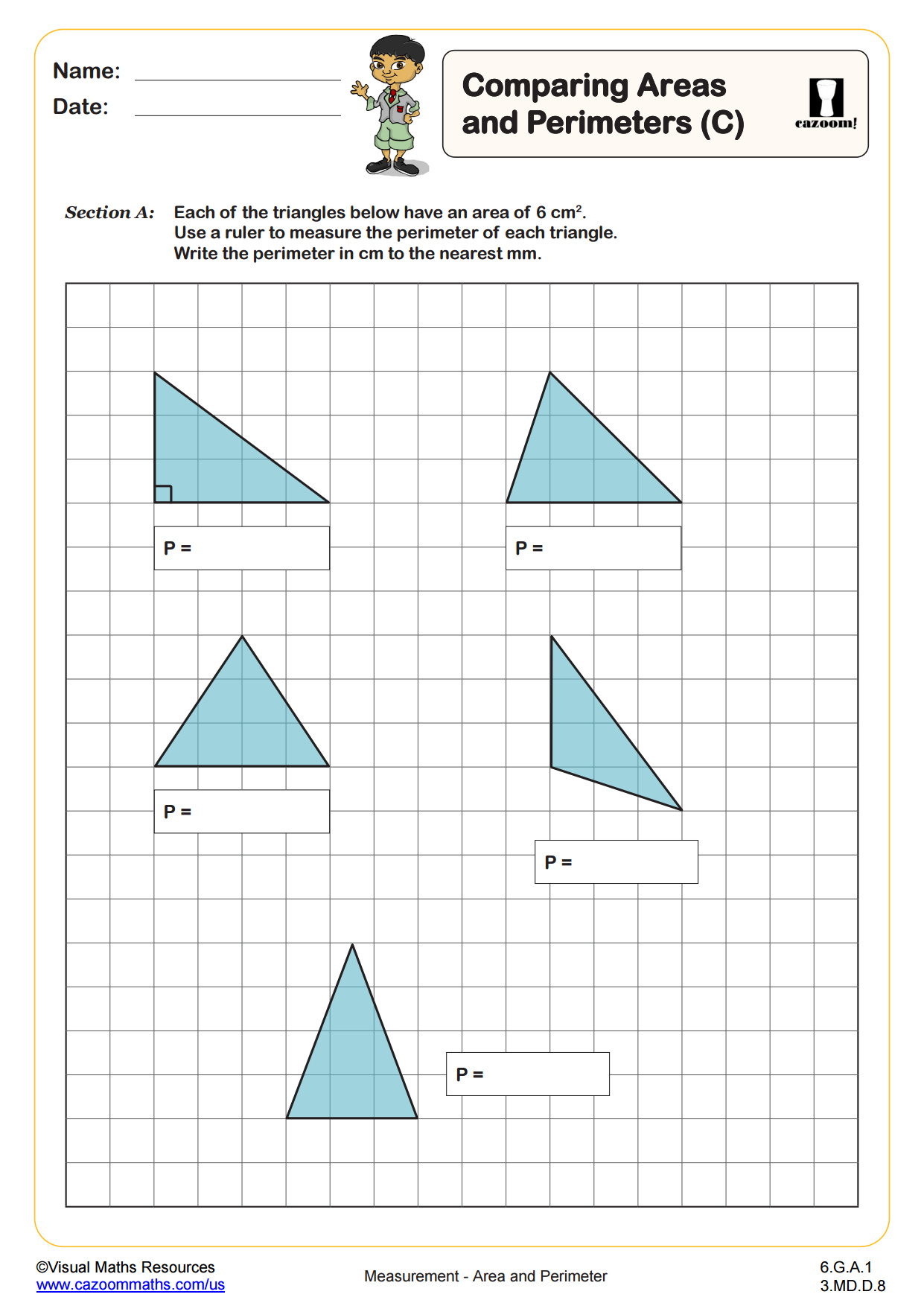
Comparing Areas and Perimeters (C)
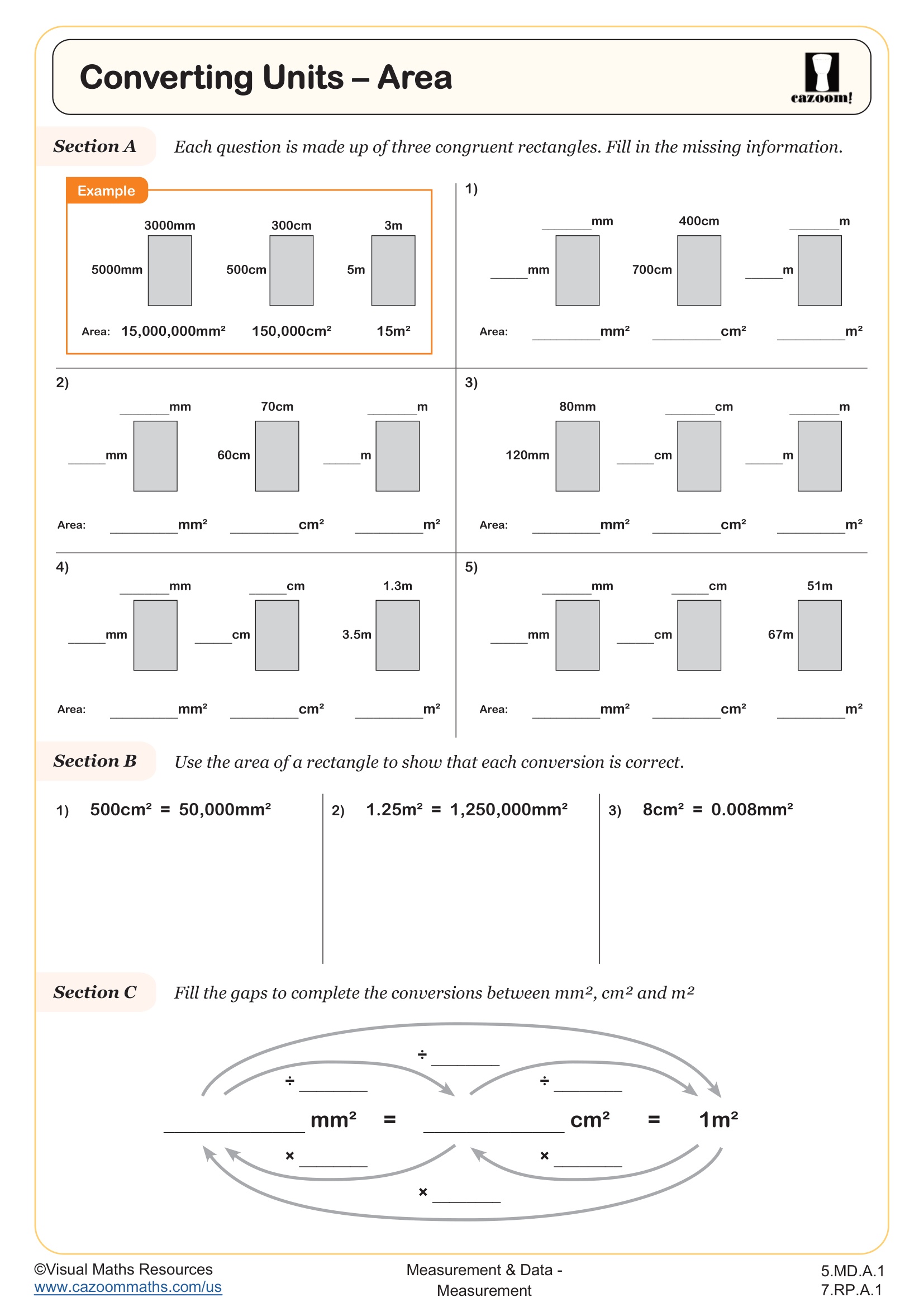
Converting Units - Area
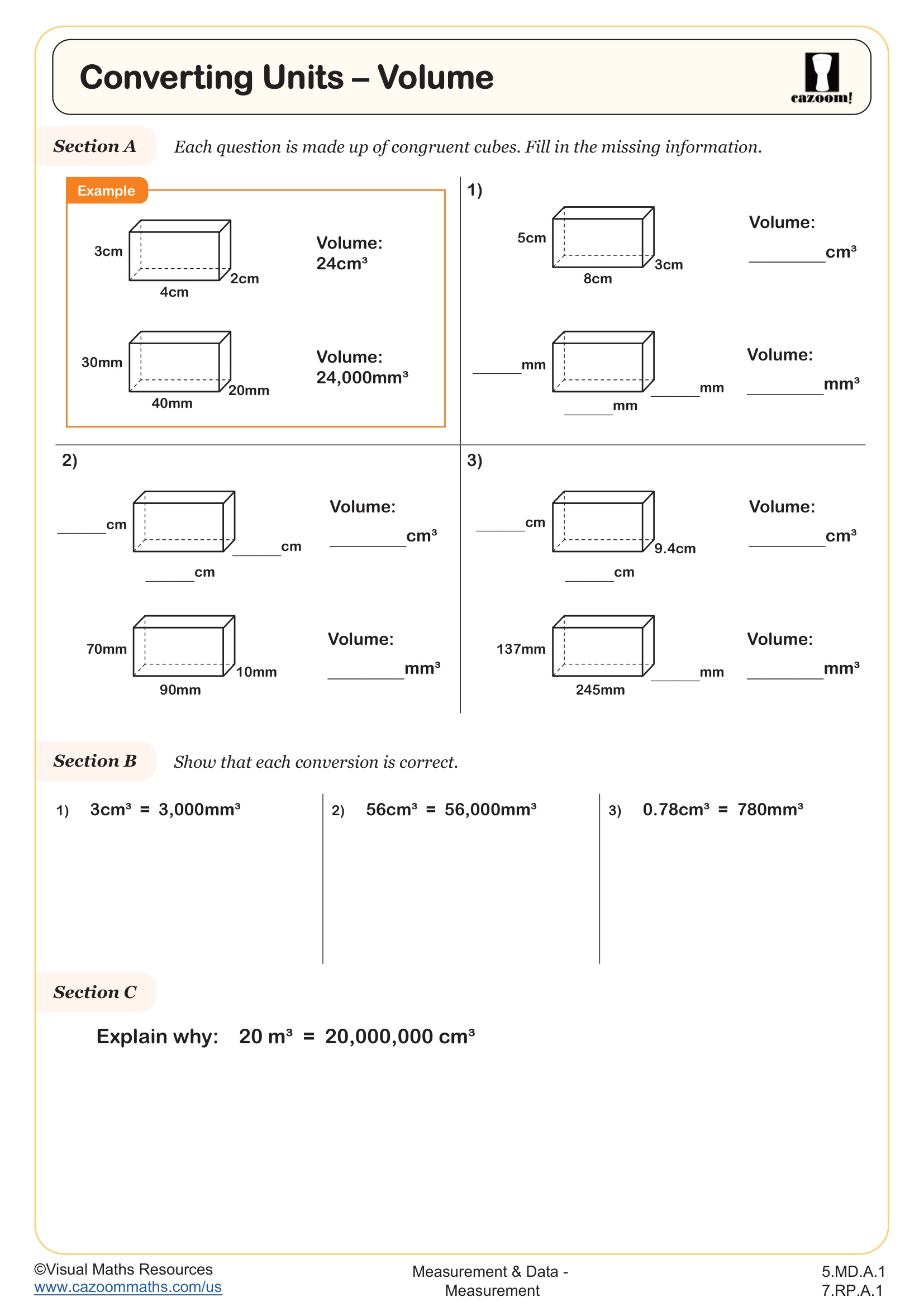
Converting Units - Volume
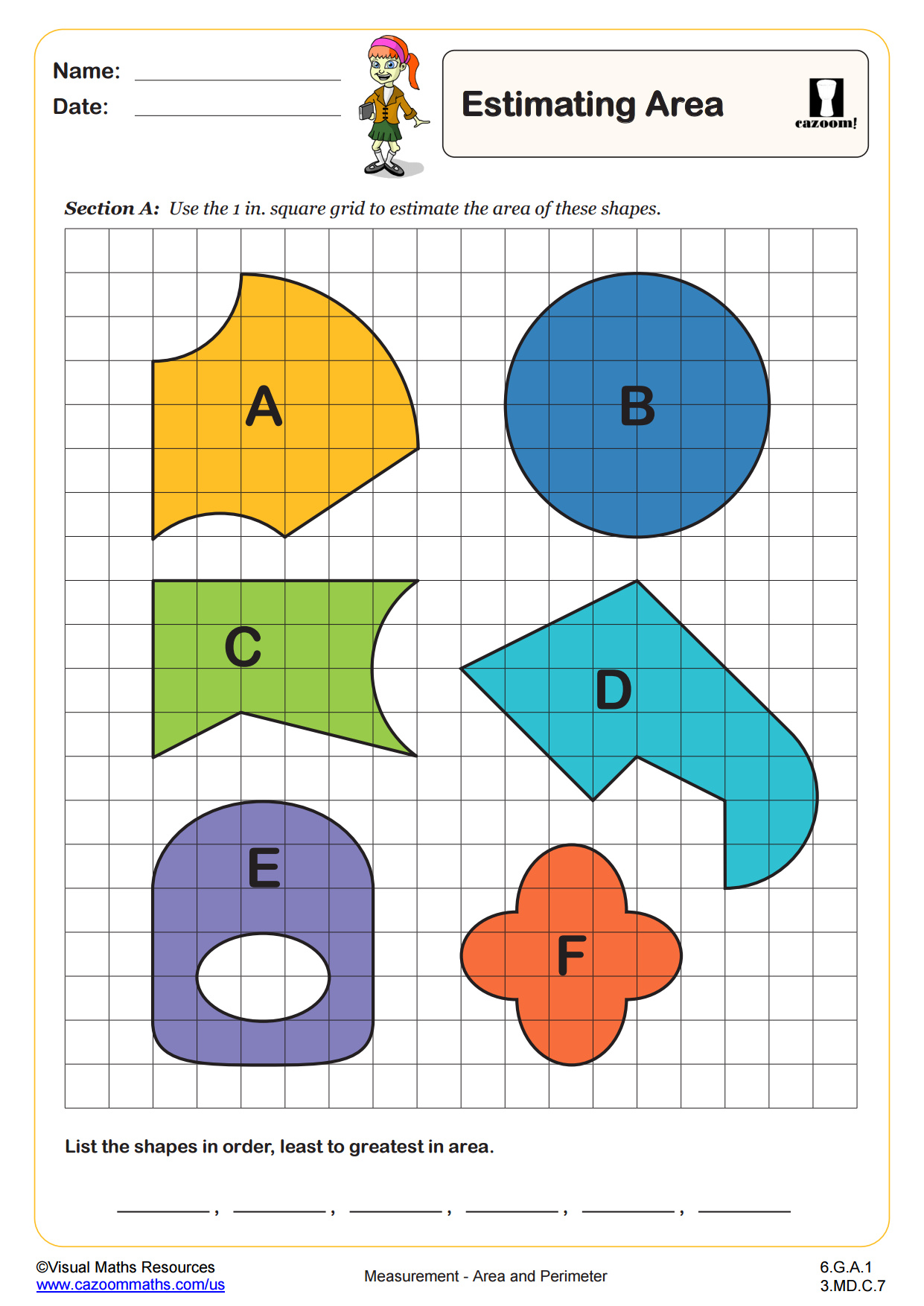
Estimating Area
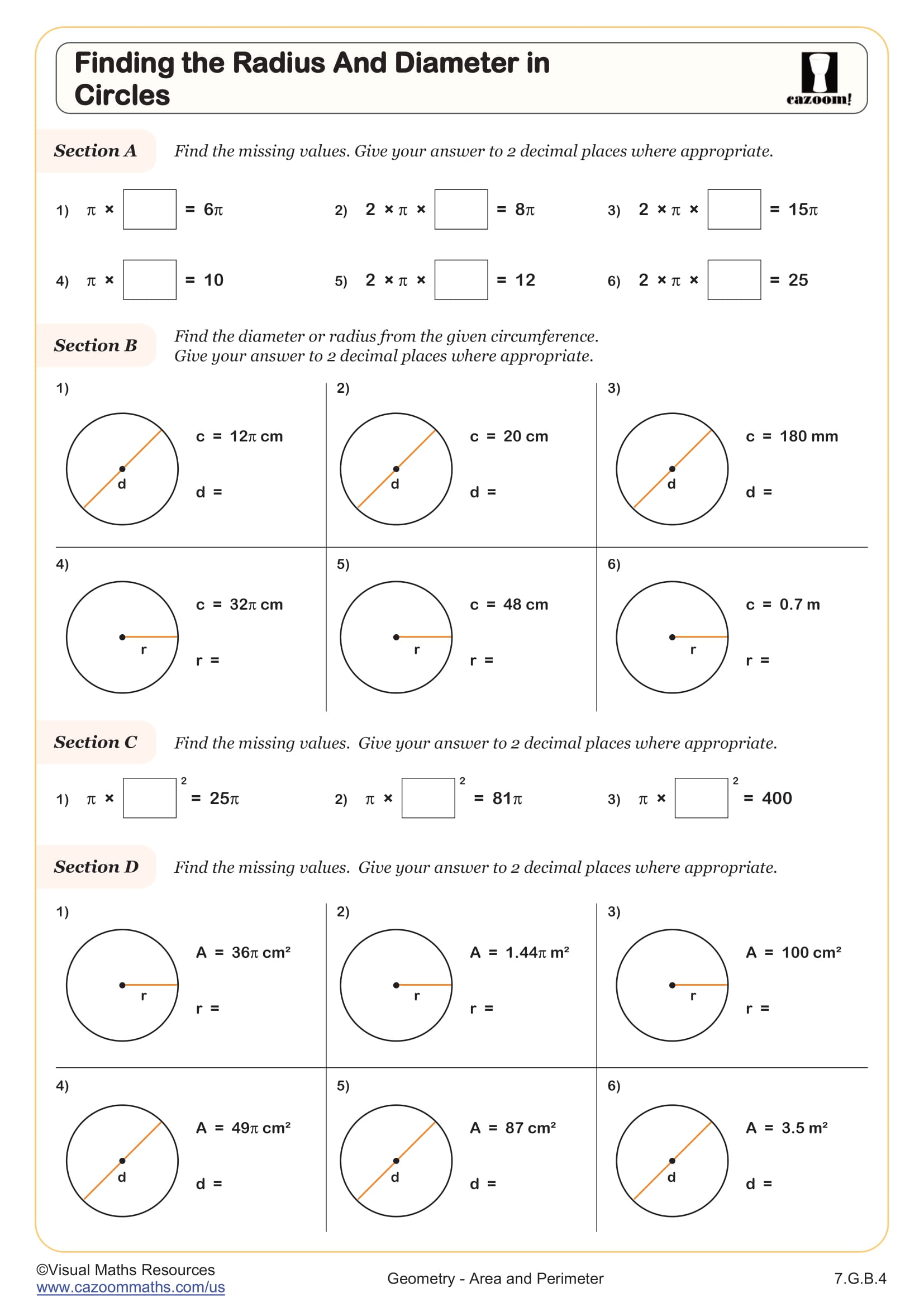
Finding the Radius and Diameter in Circles
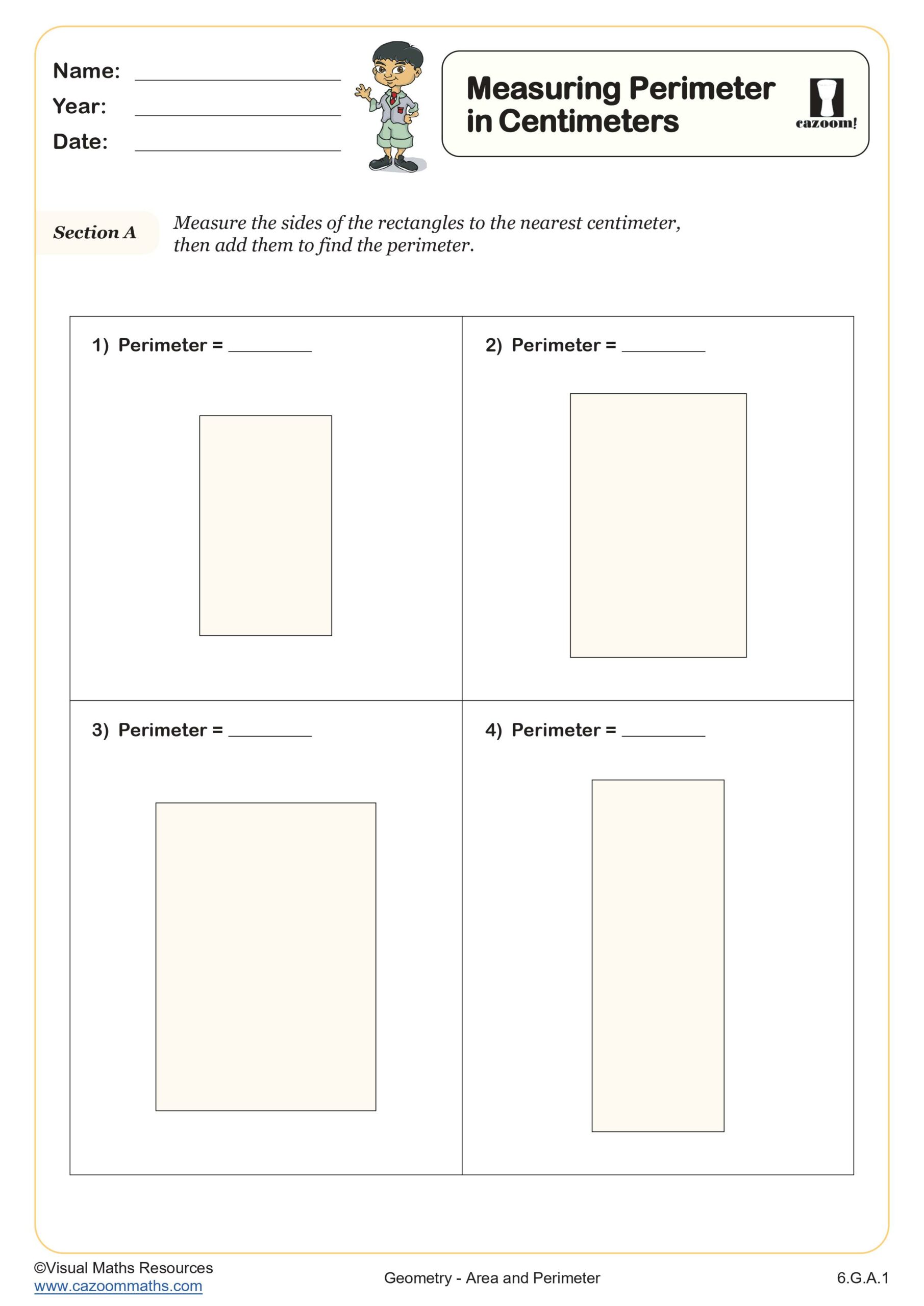
Measuring Perimeter in Centimeters
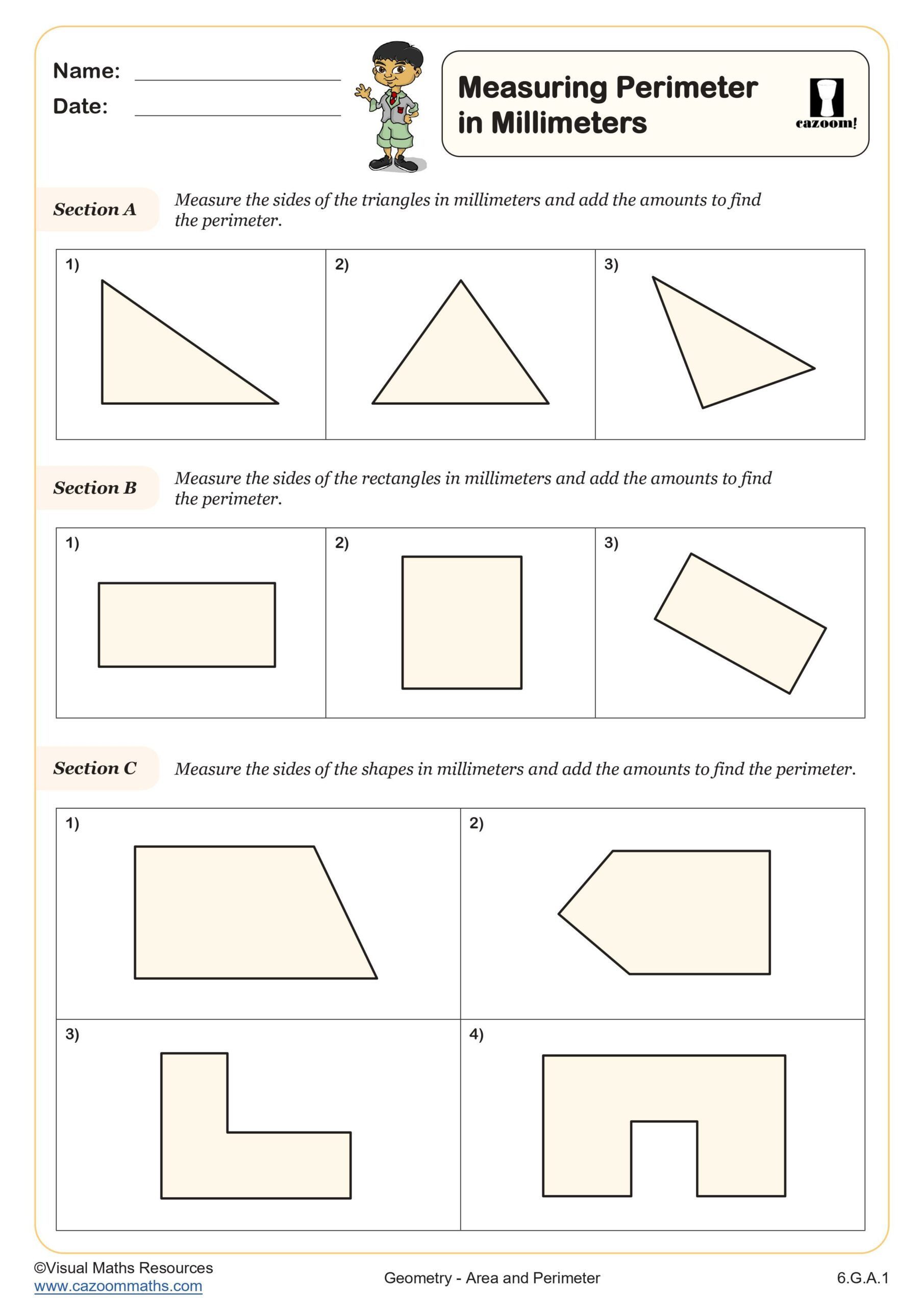
Measuring Perimeter in Millimeters
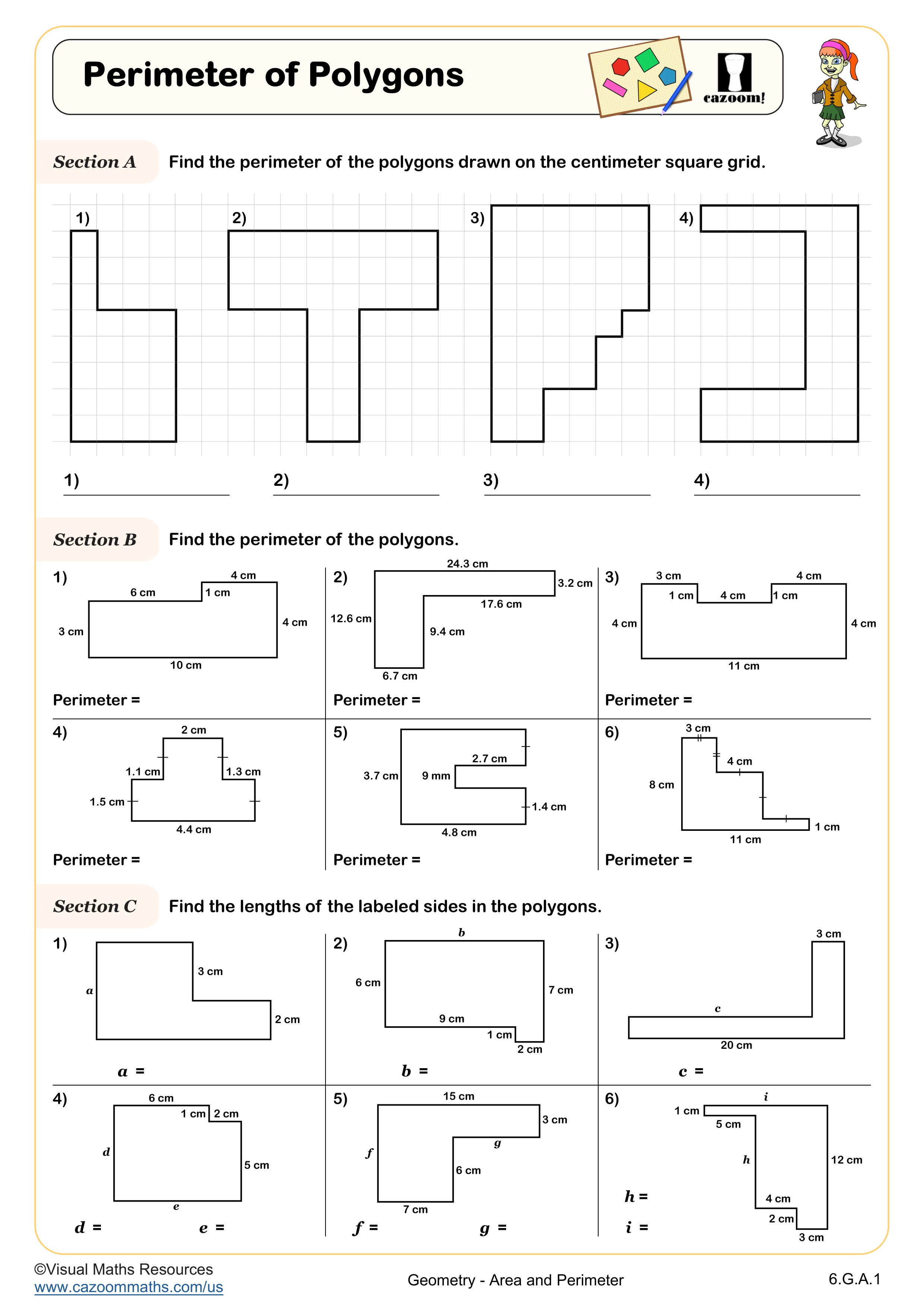
Perimeter of Rectilinear Shapes
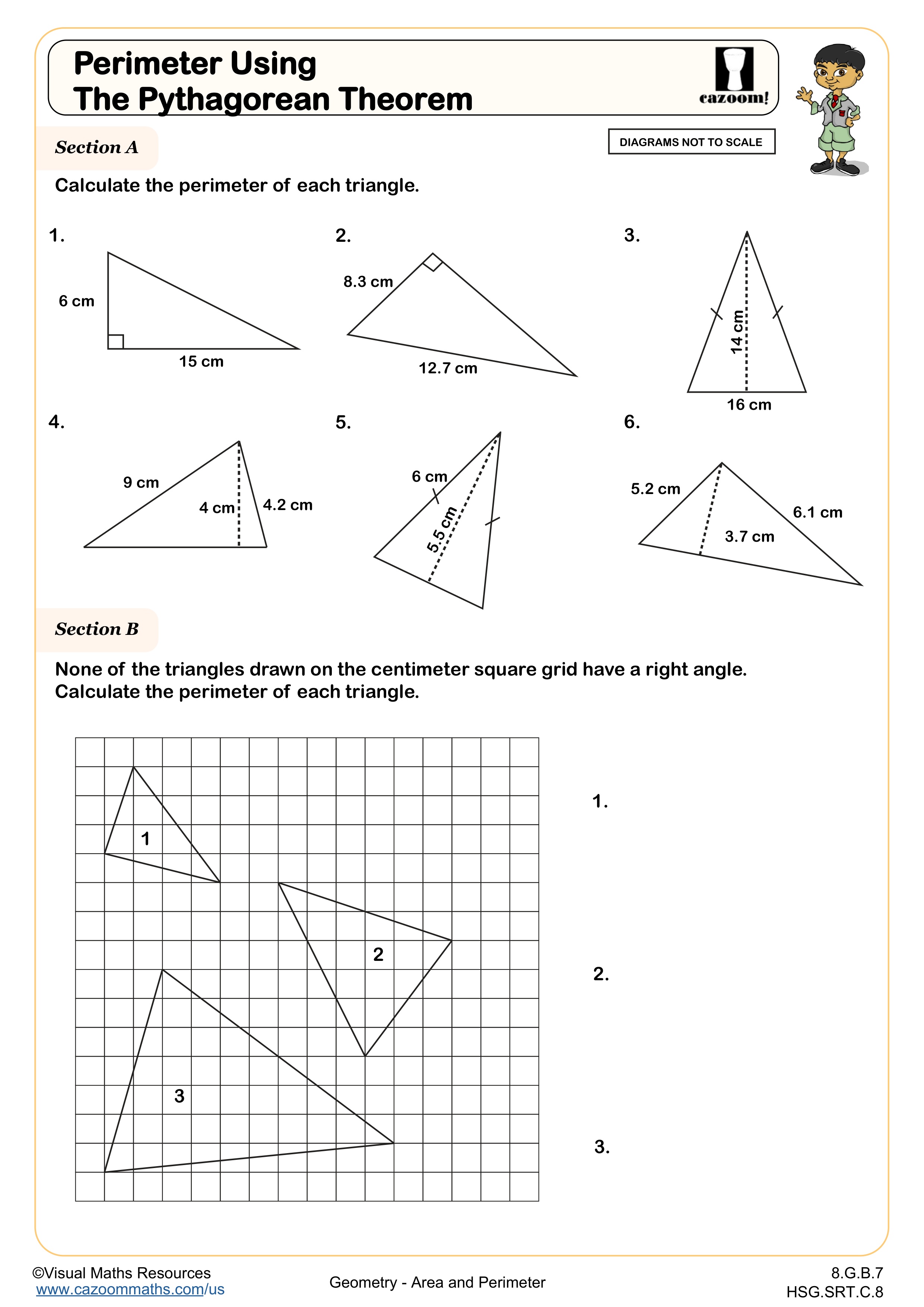
Perimeter Using The Pythagorean Theorem
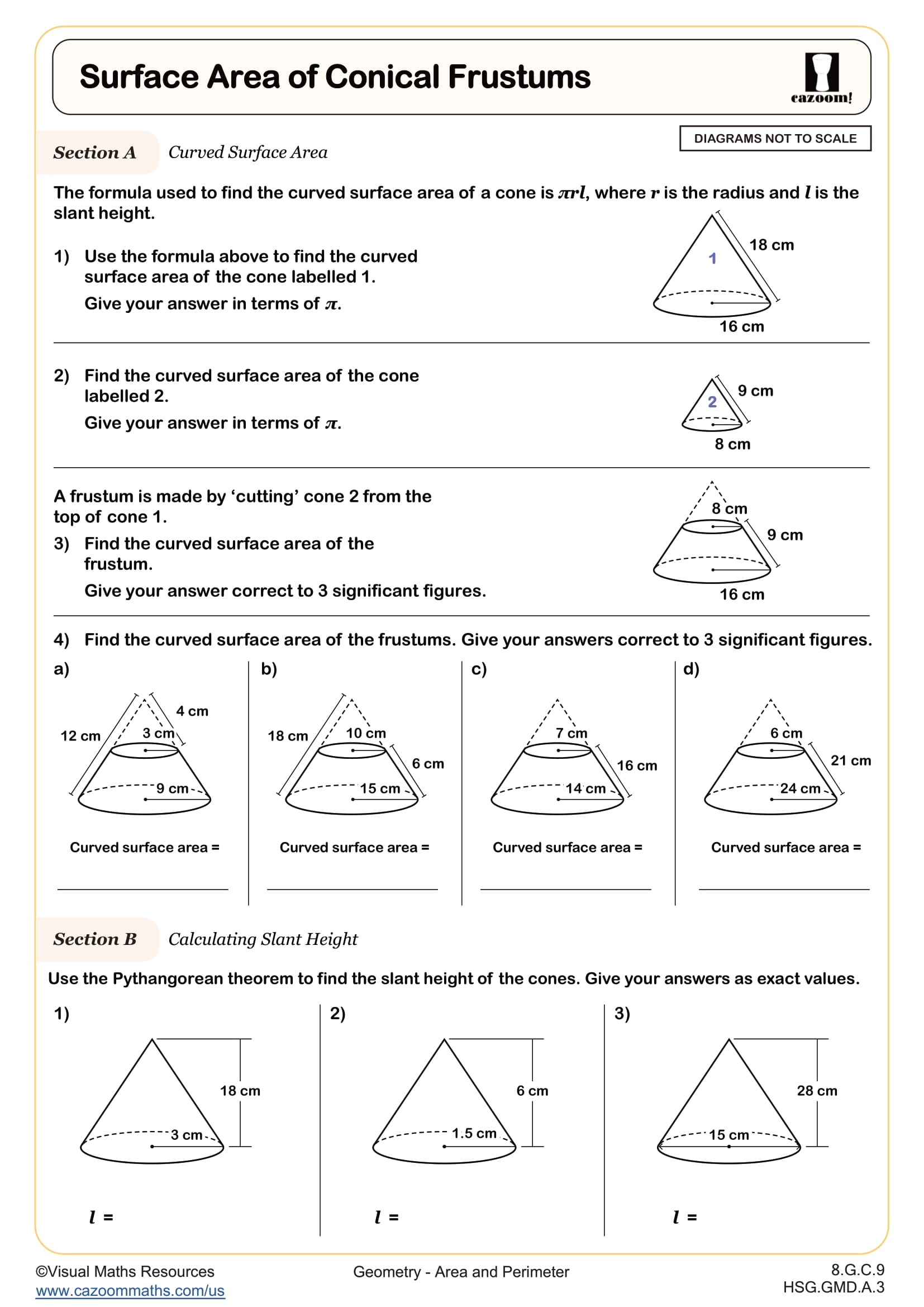
Surface Area of Conical Frustums
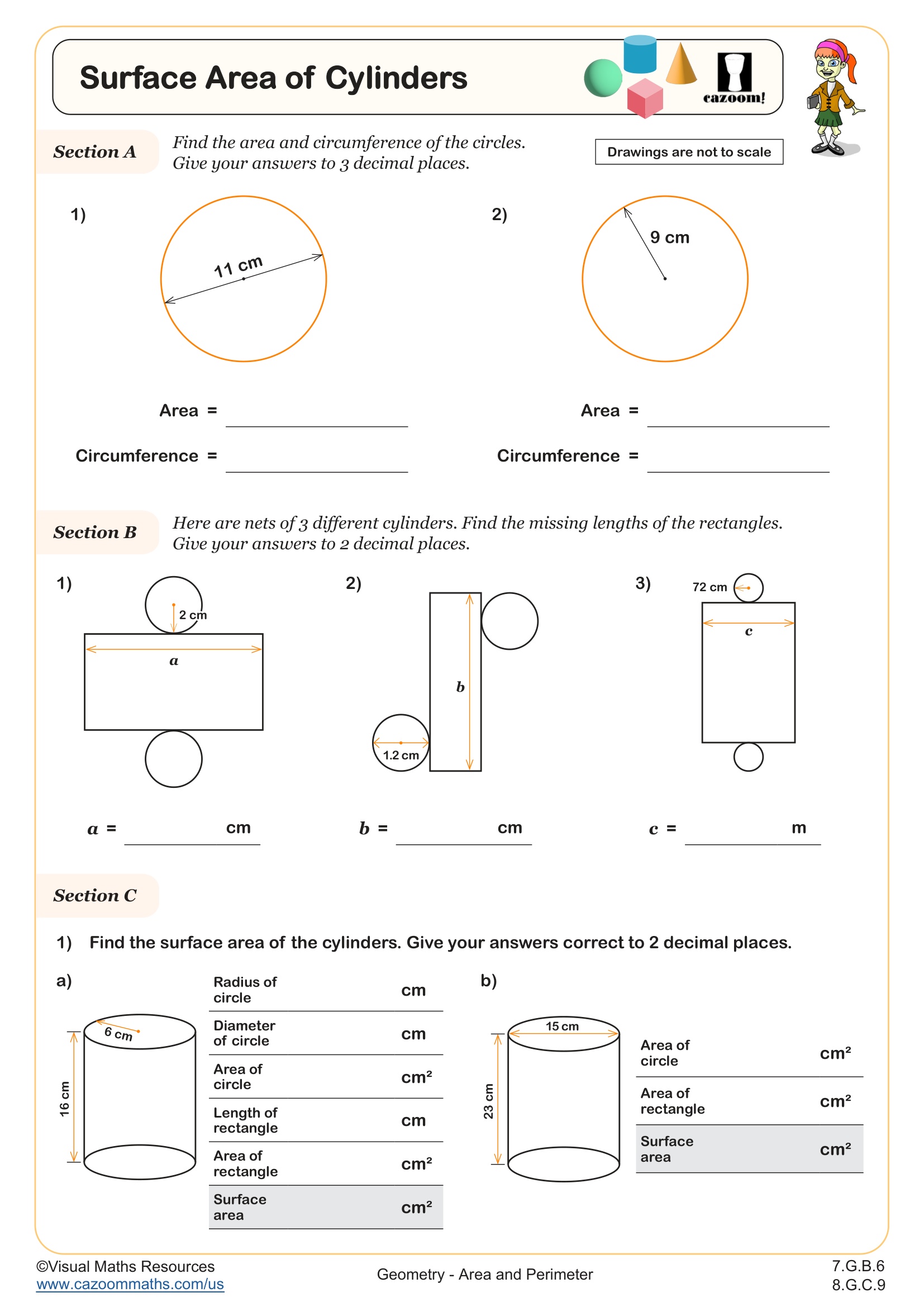
Surface Area of Cylinders
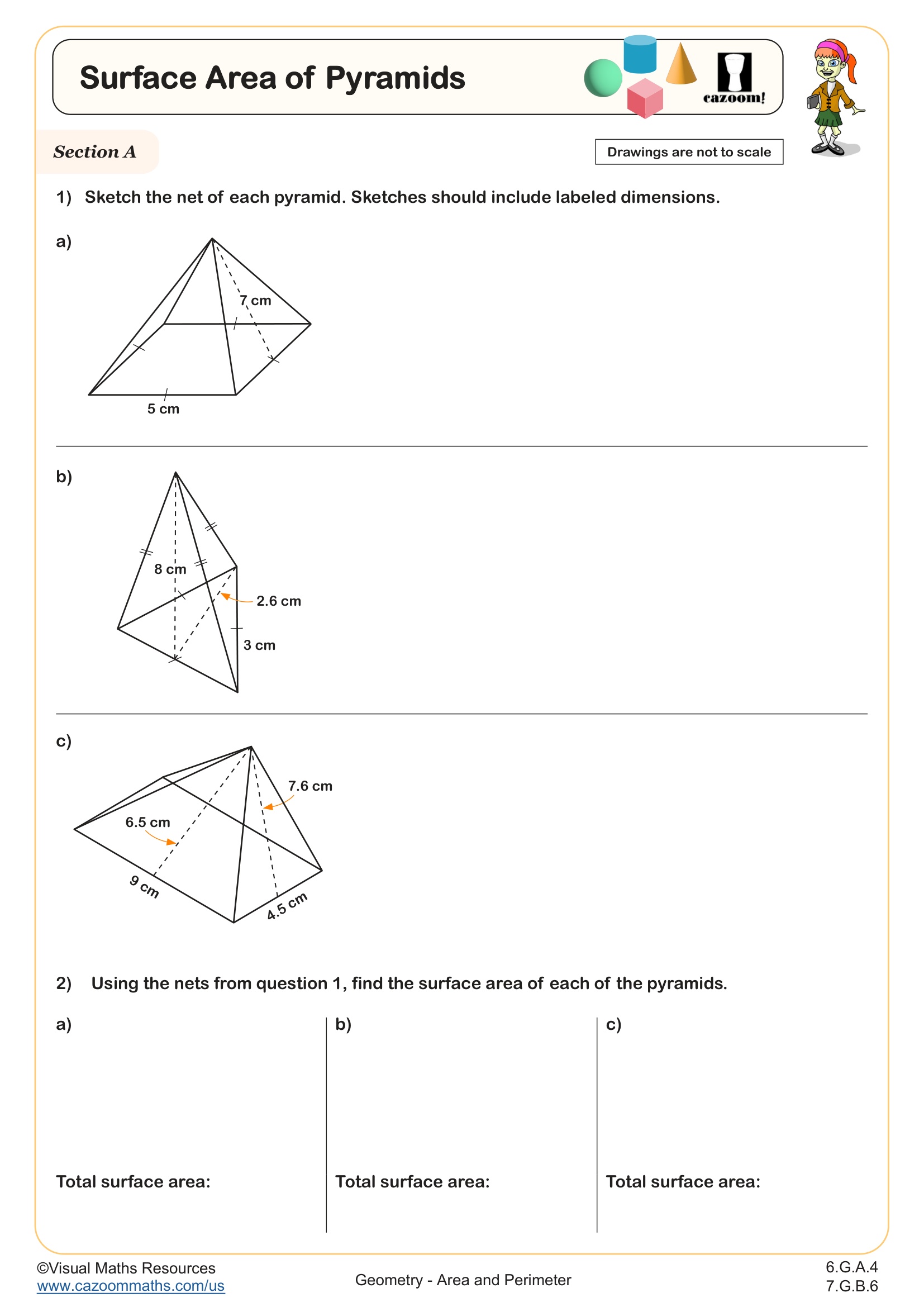
Surface Area of Pyramids
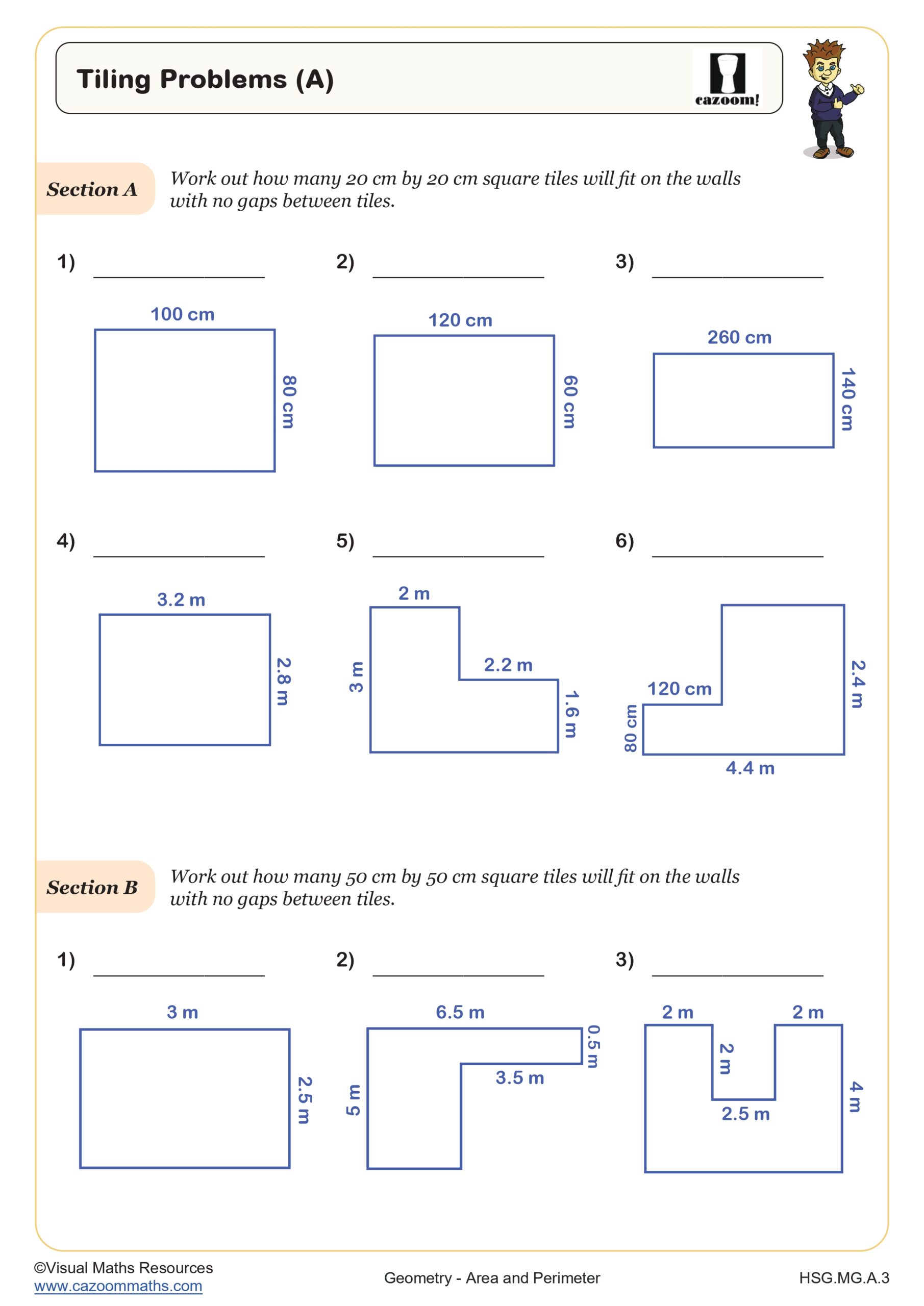
Tiling Problems (A)
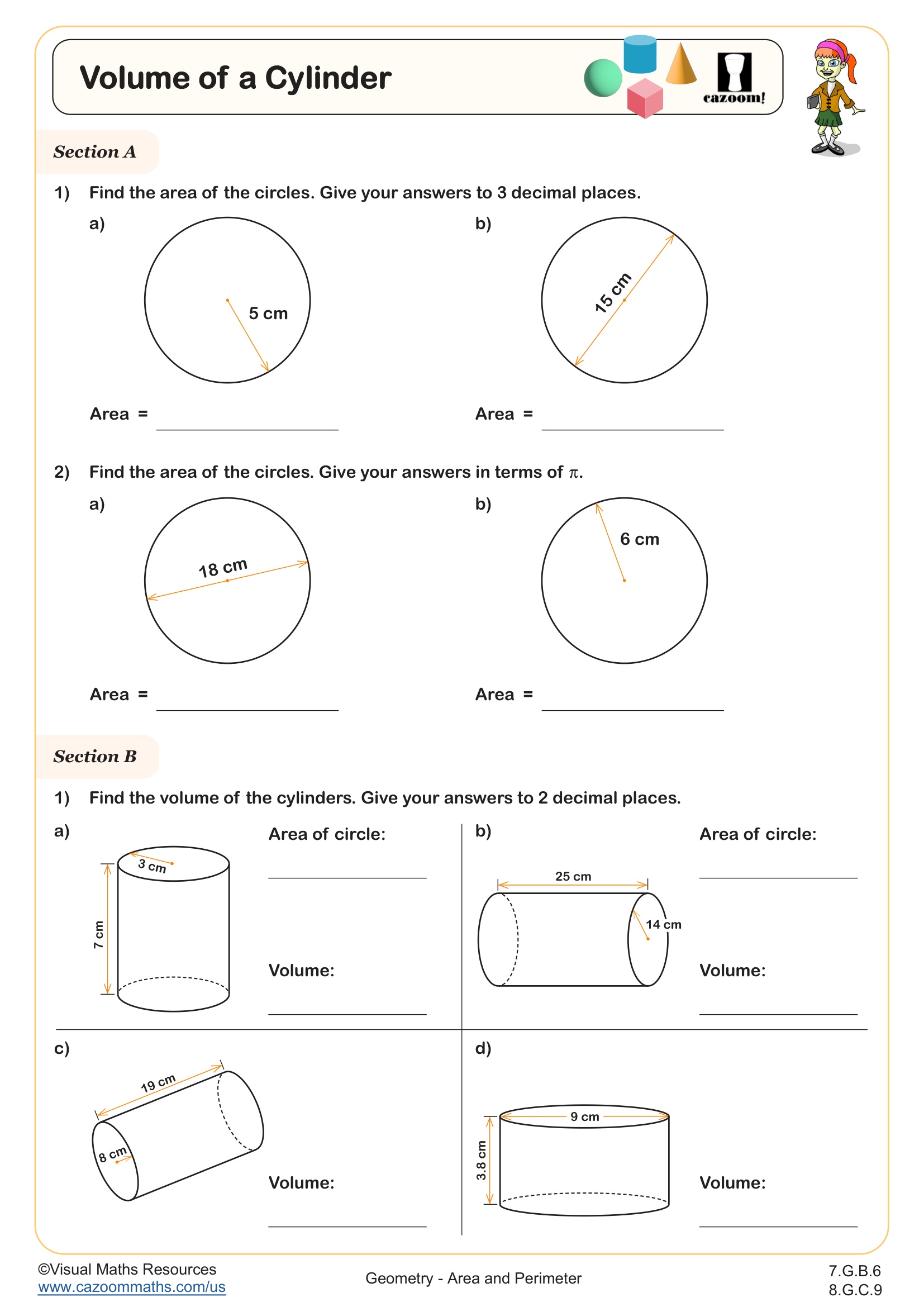
Volume of a Cylinder
All worksheets are created by the team of experienced teachers at Cazoom Math.
What's the difference between area and perimeter, and why do students mix them up?
Area measures the space inside a two-dimensional shape (calculated in square units like square inches or square centimeters), while perimeter measures the distance around the outside edge (calculated in linear units like inches or centimeters). The Common Core State Standards introduce these concepts in elementary grades but expect mastery and application with complex shapes by middle school.
Students frequently mix up these measurements because both involve the same shapes and dimensions. A breakthrough typically happens when students connect perimeter to real scenarios like fencing a yard and area to situations like carpeting a floor. Teachers notice fewer errors when students annotate problems with "distance around" or "space inside" before calculating, and standardized tests regularly include trap answers that use the correct numbers with the wrong operation.
Which grade levels use these area and perimeter worksheets?
These worksheets serve middle school students in grades 6, 7, and 8, aligning with progressive geometry standards at each level. Sixth graders typically work with basic formulas for rectangles, triangles, and composite shapes, while seventh and eighth graders tackle more sophisticated problems involving circles, shaded regions, and multi-step reasoning.
The difficulty progression reflects how state standards build geometric thinking across middle school. Sixth grade focuses on applying standard formulas with whole numbers and simple decimals. Seventh grade introduces circle measurements with pi and problems requiring students to work backward from given areas. By eighth grade, students solve complex shaded region problems that require subtracting areas and combining multiple formulas in one problem, preparing them for high school geometry proofs and coordinate plane applications.
How do shaded region problems prepare students for advanced math?
Shaded region problems require students to find the area of a complex shape by calculating separate areas and then adding or subtracting them. For instance, finding the area of a circle with a rectangular section removed means calculating the full circle's area, then the rectangle's area, and finally subtracting. This multi-step approach builds algebraic thinking and problem decomposition skills that appear throughout higher mathematics.
These problems connect directly to engineering and architecture, where professionals calculate material needs for irregular spaces. Construction managers determine flooring for rooms with bay windows or curved walls using the same decomposition strategy. Environmental scientists calculate habitat areas by breaking irregular land parcels into measurable sections. Students confidently tackle these applications once they recognize that complex shapes are just combinations of familiar ones—a skill that transfers to calculus when finding areas under curves.
How should teachers use these area and perimeter worksheets in class?
The worksheets provide scaffolded practice that moves from basic formula application to complex problem solving. The formula sheets serve as quick references during initial learning, while the targeted subtopic worksheets let teachers assign specific skills that need reinforcement. The included answer keys allow for immediate feedback during station work or enable students to self-check when working independently.
Many teachers find these effective for differentiated instruction—assigning basic perimeter worksheets to students still building foundational skills while giving shaded region problems to students ready for challenge work. The worksheets work well as warm-up exercises reviewing previous lessons, as homework following direct instruction, or as intervention material for students who struggled on assessments. Teachers also use them for paired problem solving, where partners must explain their reasoning to each other before checking the answer key.