Middle School Bearings Scale and Loci Worksheets
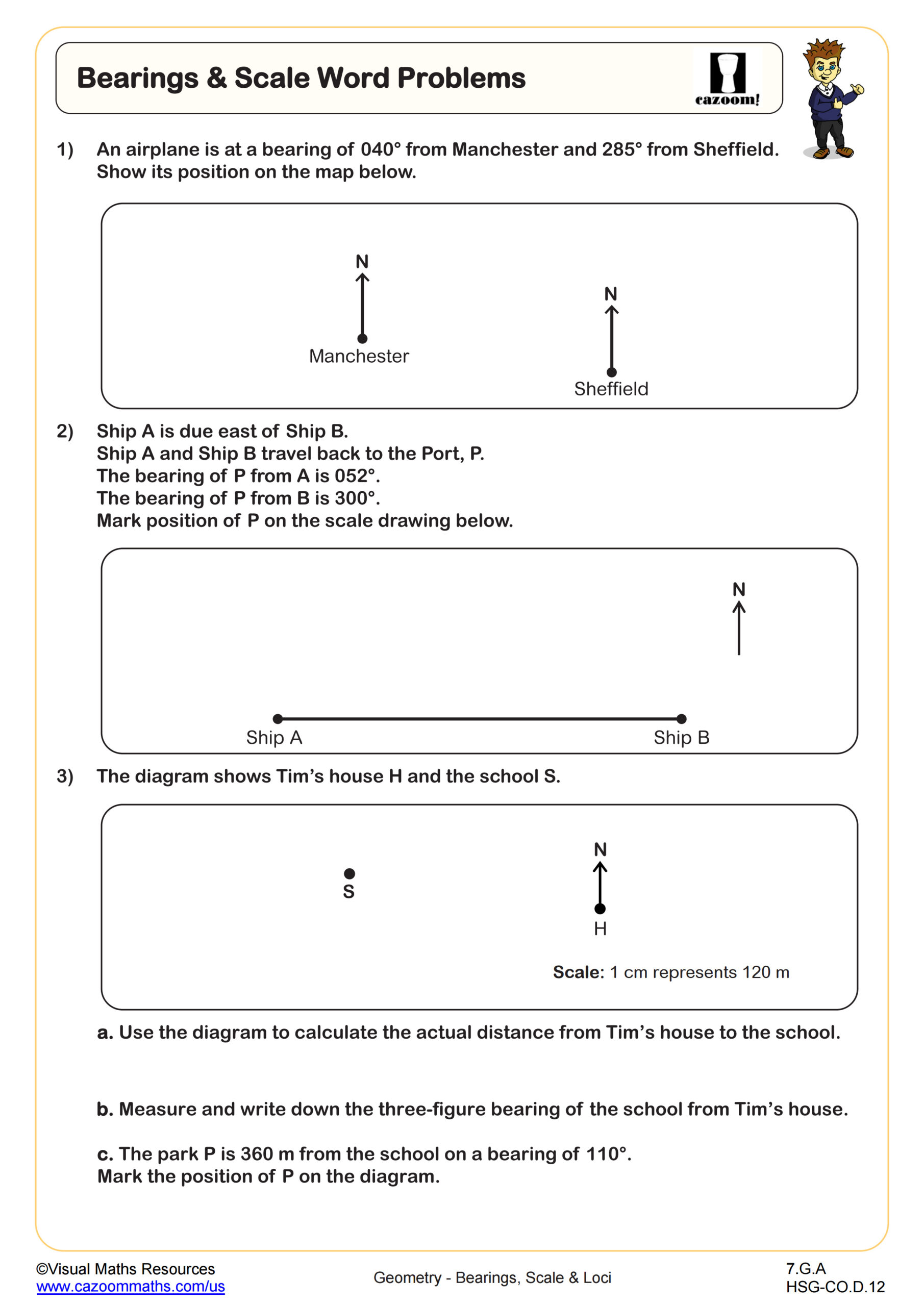
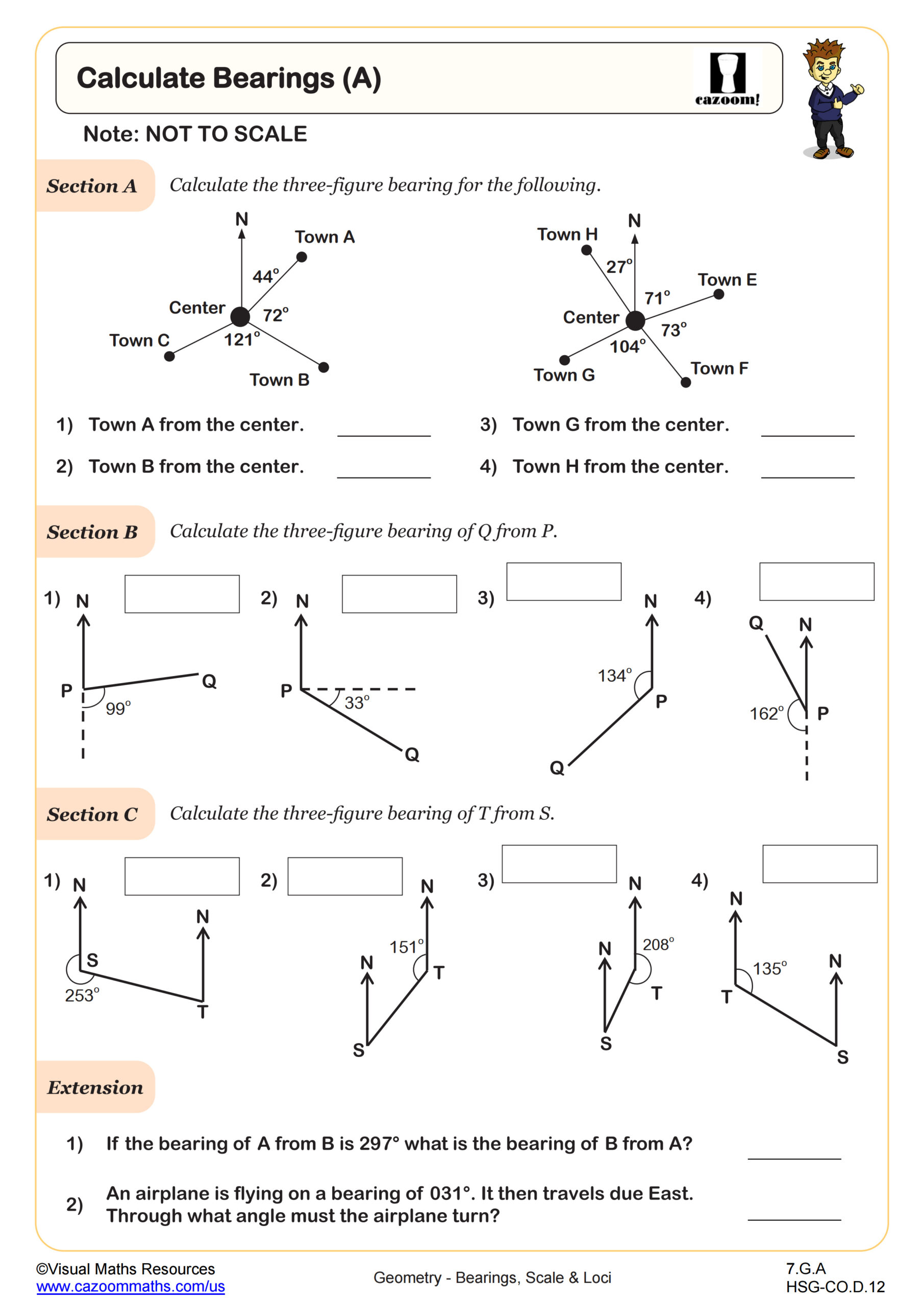
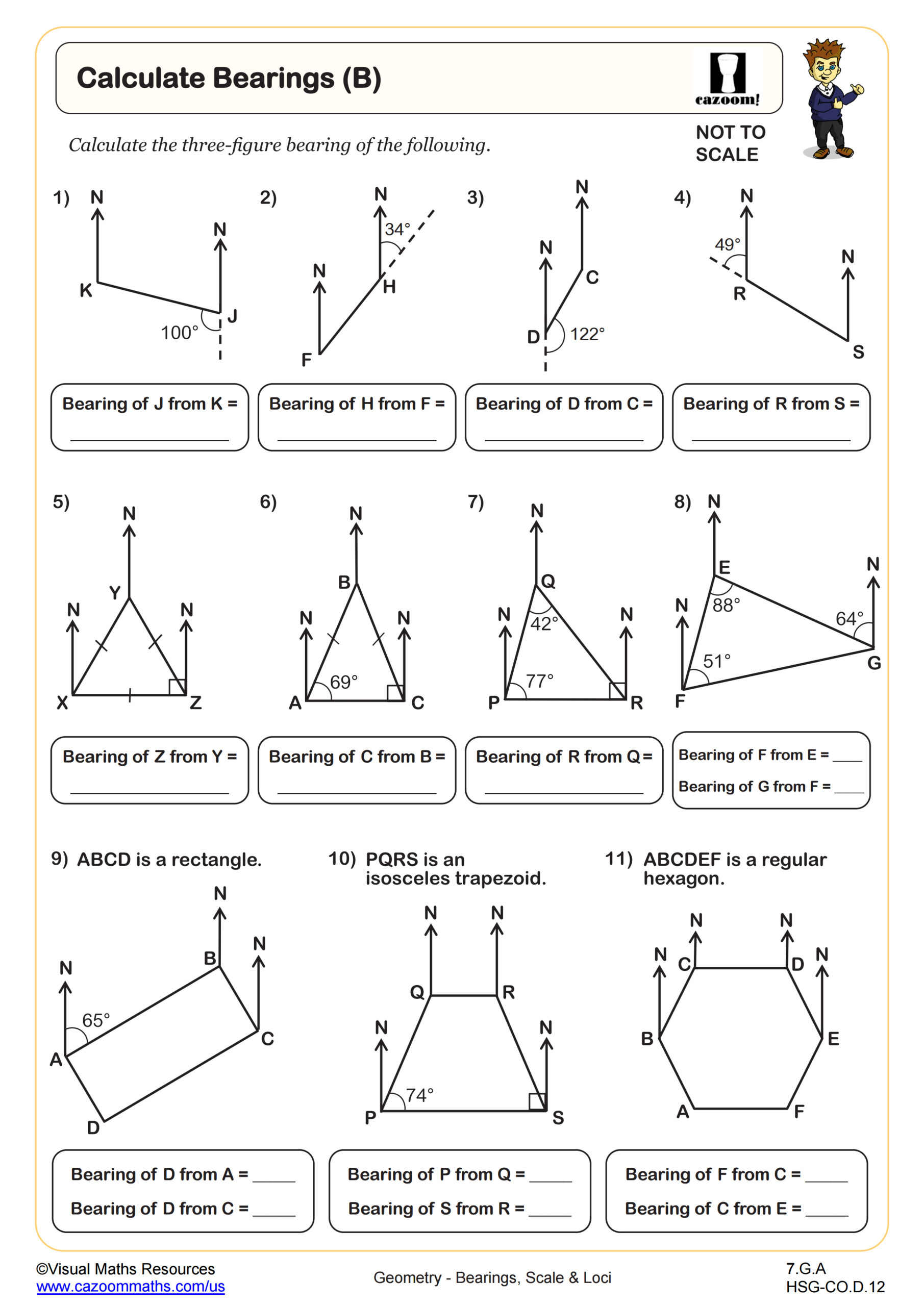
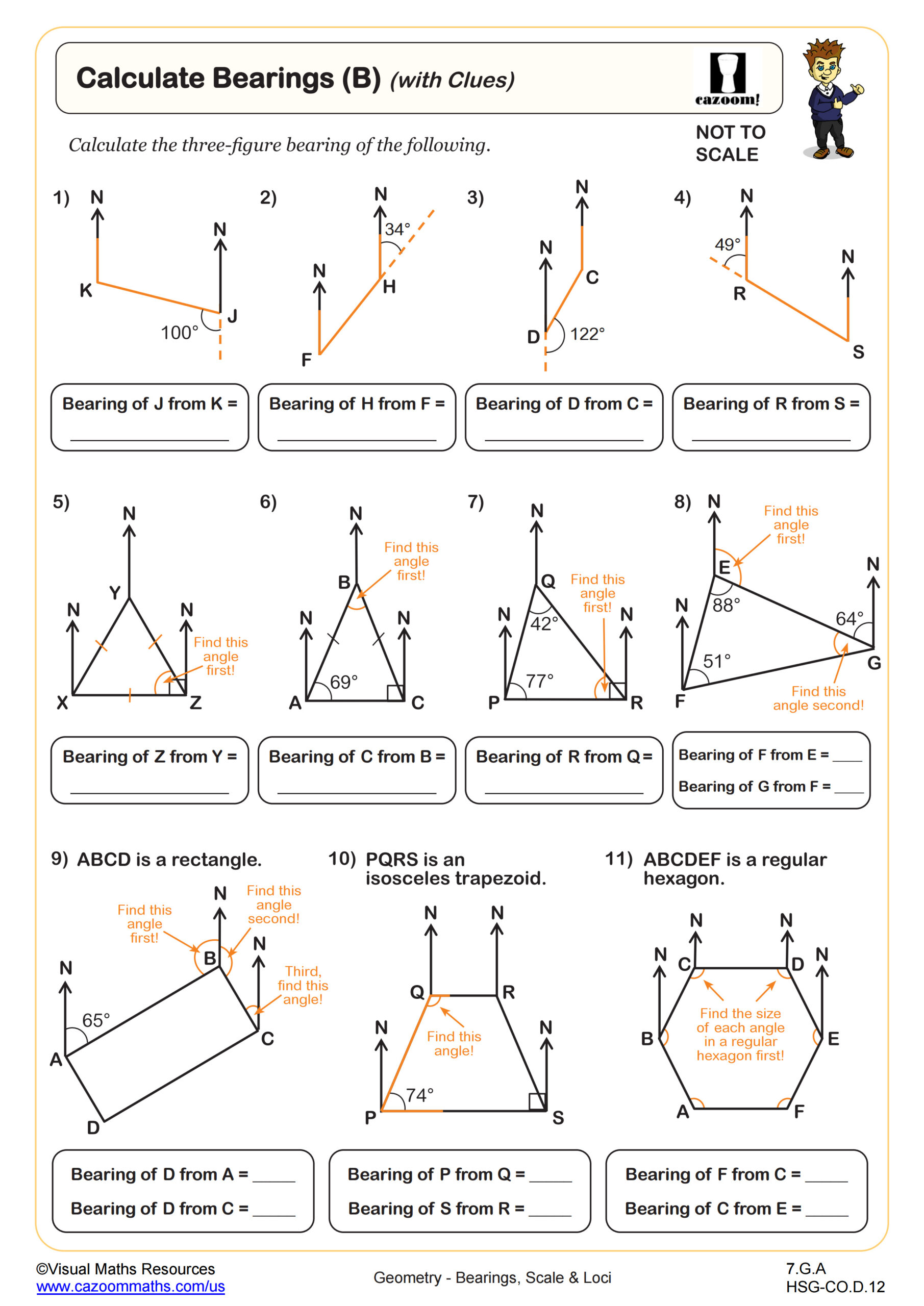
All worksheets are created by the team of experienced teachers at Cazoom Math.
What are bearings in math and why do students learn them?
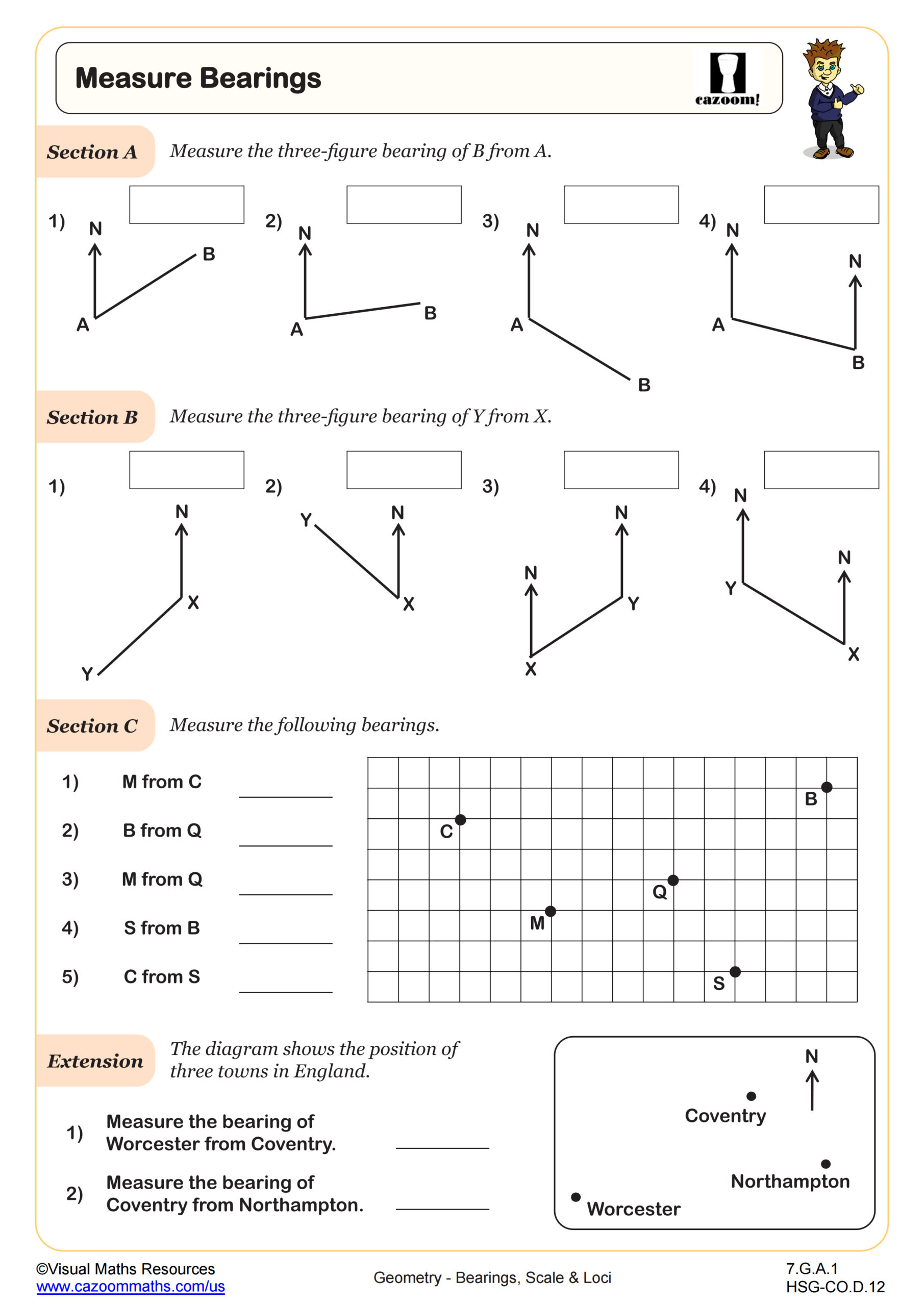
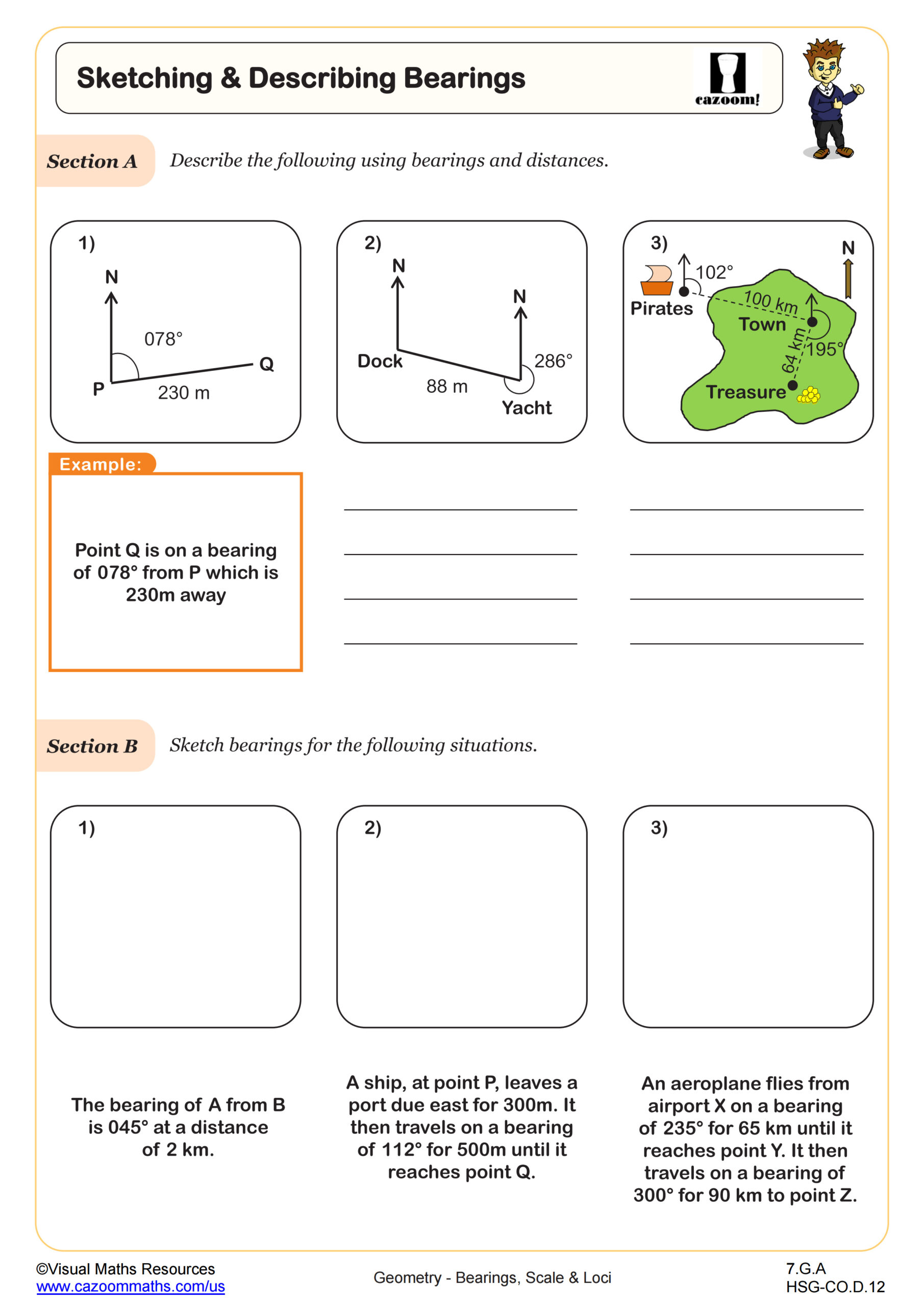
Bearings represent direction as three-figure angles measured clockwise from north, always written with three digits (such as 045° or 320°). This notation system differs from standard angle measurement because it establishes north as the reference point rather than the positive x-axis, preparing students for navigation, geography, and real-world directional systems used in aviation and maritime contexts.
Students frequently lose points on assessments when they write bearings with fewer than three digits or measure counterclockwise instead of clockwise. The transition from coordinate geometry to bearings challenges students because they must mentally reorient their reference frame, requiring explicit practice with compass diagrams before tackling calculation problems. Teachers find that having students physically draw north lines on every problem significantly reduces directional errors.
Which grade levels study bearings and loci?
These worksheets address middle school content for 6th, 7th, and 8th grade students. Bearings and loci appear in geometry and measurement standards as students develop spatial reasoning and apply angle concepts beyond abstract calculations, connecting mathematical thinking to practical navigation and location problems.
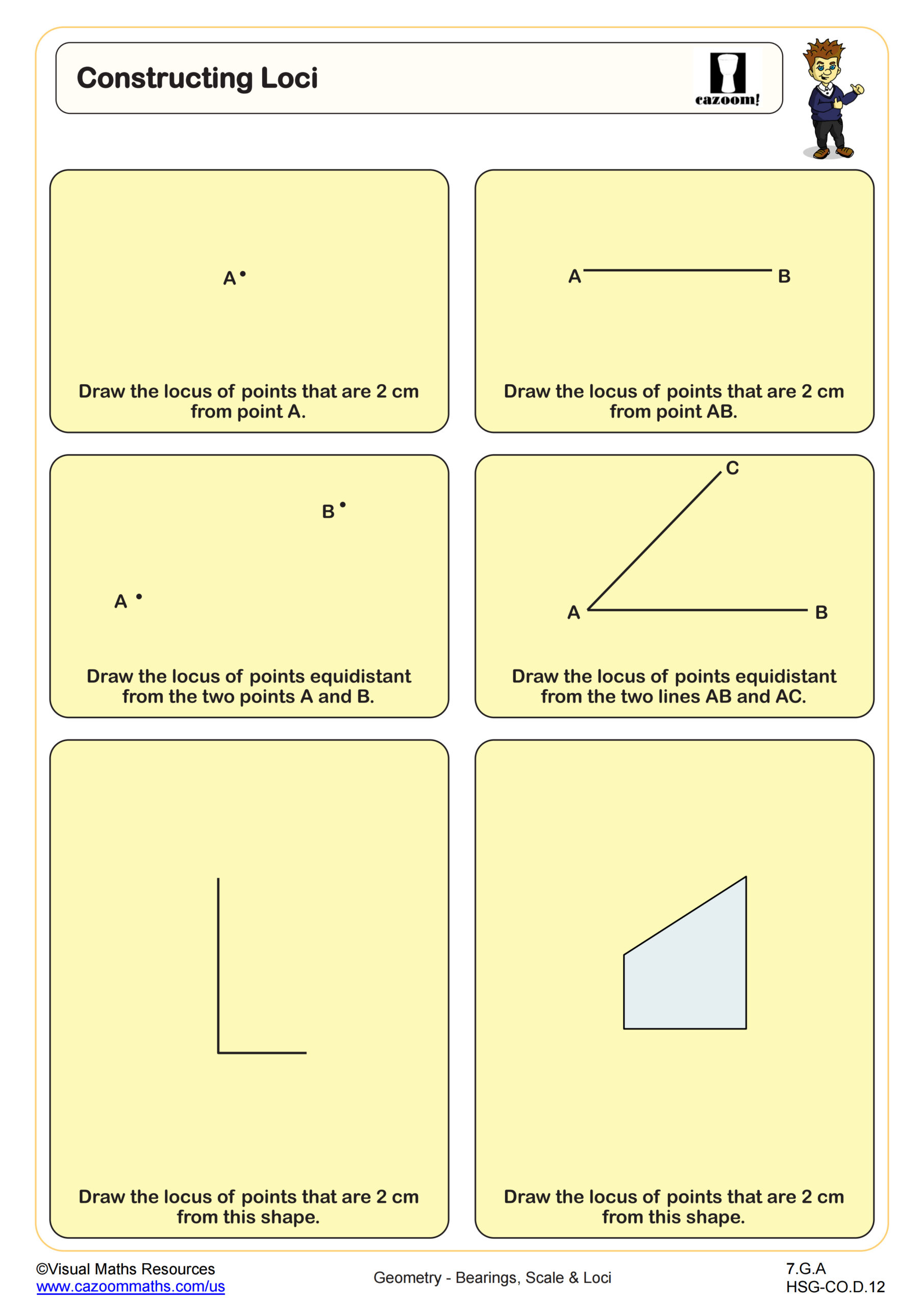
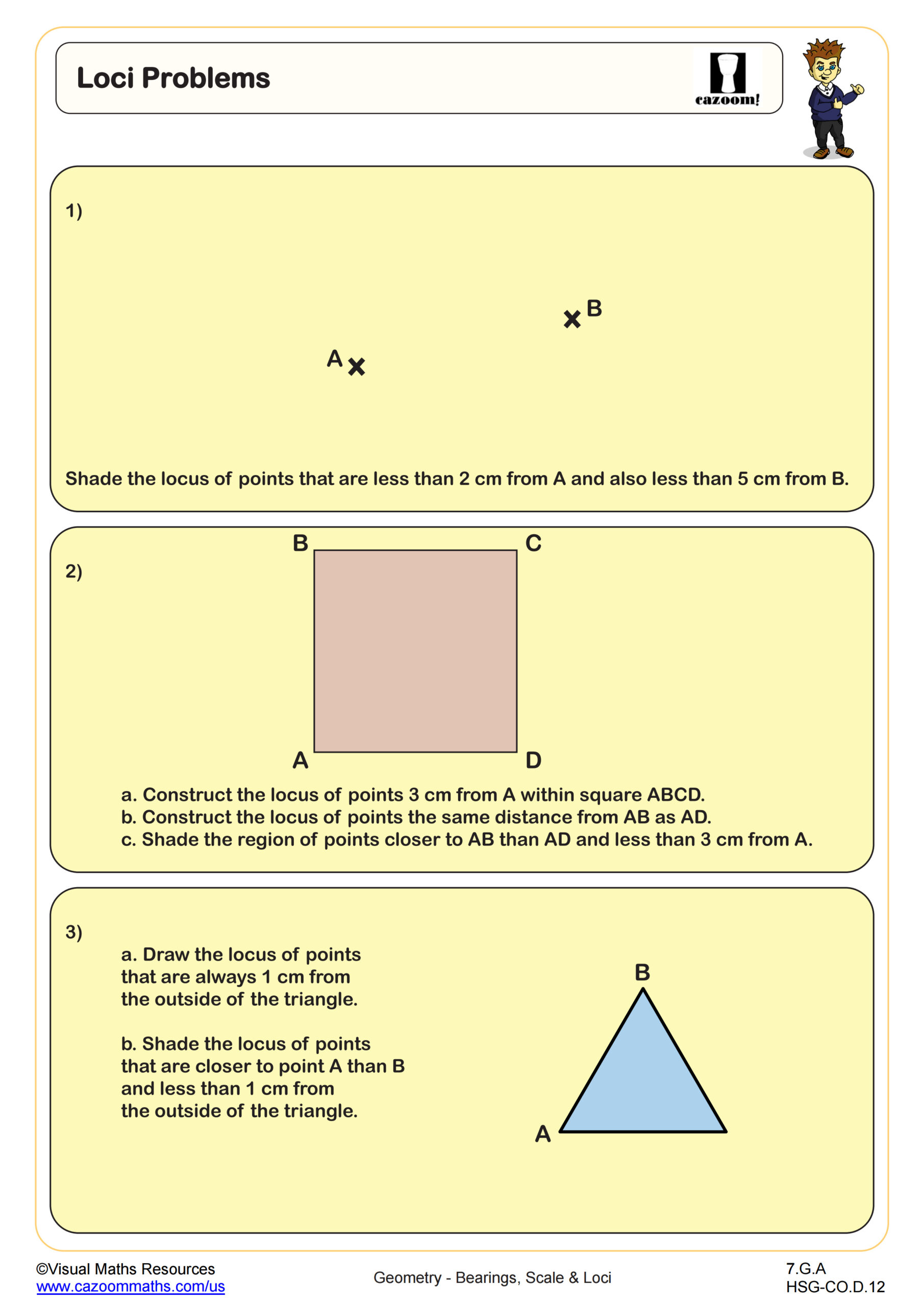
The progression across these grades moves from calculating single bearings using given angles to solving reverse bearing problems, then advancing to scale drawings that require converting between map distances and actual distances. By 8th grade, students tackle loci construction problems where they identify sets of points satisfying specific distance or angle conditions, combining compass and straightedge constructions with bearing calculations. Standardized tests expect students to interpret bearings within word problems rather than simply compute isolated angles.
How do scale drawings connect with bearings?
Scale drawings represent real distances proportionally on paper, requiring students to convert between scaled measurements and actual distances using ratios. When combined with bearings, students must maintain accurate directions while calculating distances, applying both angle measurement and proportional reasoning simultaneously to solve navigation problems.
This skill directly supports STEM fields including aviation, where pilots calculate flight paths using bearings and distances, and surveying, where land boundaries are recorded using bearing-and-distance notation. Emergency responders use bearings and scale maps to coordinate search patterns, while engineers employ these concepts when planning infrastructure routes. Students make stronger connections when teachers present problems asking them to plot hiking trails or design drone flight paths, demonstrating how mathematical precision translates to safety and efficiency in real navigation scenarios.
How should teachers use these bearings worksheets in class?
The worksheets progress from calculating bearings with visible angle measurements to problems requiring students to deduce missing information from contextual clues, building problem-solving stamina alongside computational accuracy. Answer keys allow students to verify their compass drawings and bearing calculations immediately, which proves particularly valuable since small measurement errors compound quickly in multi-step problems.
Many teachers assign the foundational bearing calculation sheets during initial instruction, then reserve the word problems and loci construction sheets for independent practice once students demonstrate measurement accuracy. These worksheets work well for differentiated stations where students self-select difficulty levels, or as intervention materials when standardized test data reveals gaps in spatial reasoning. Paired work helps because one student can check compass alignment while the other calculates, catching the directional reversal errors that commonly appear when students work alone.