Middle School Division Worksheets
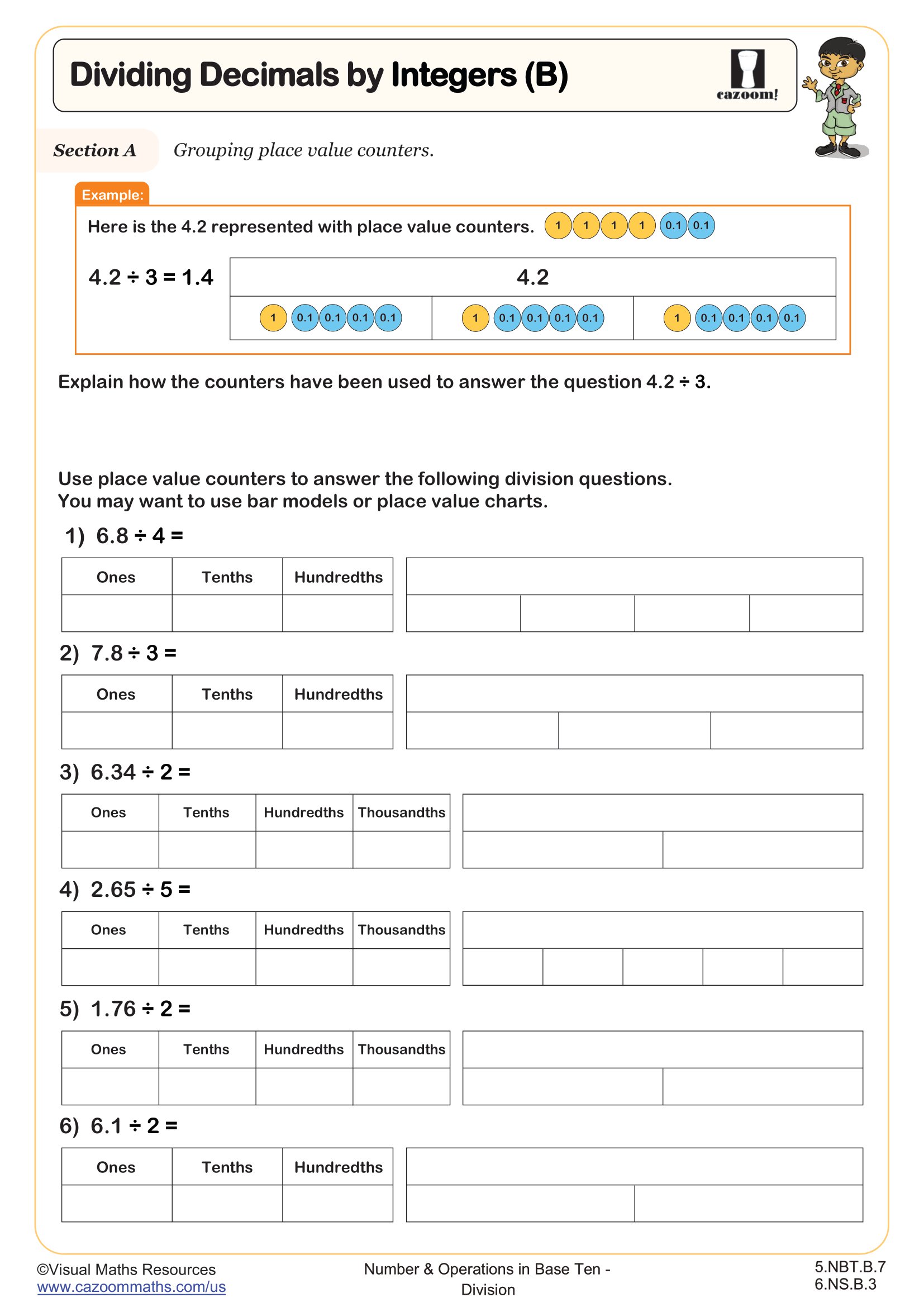
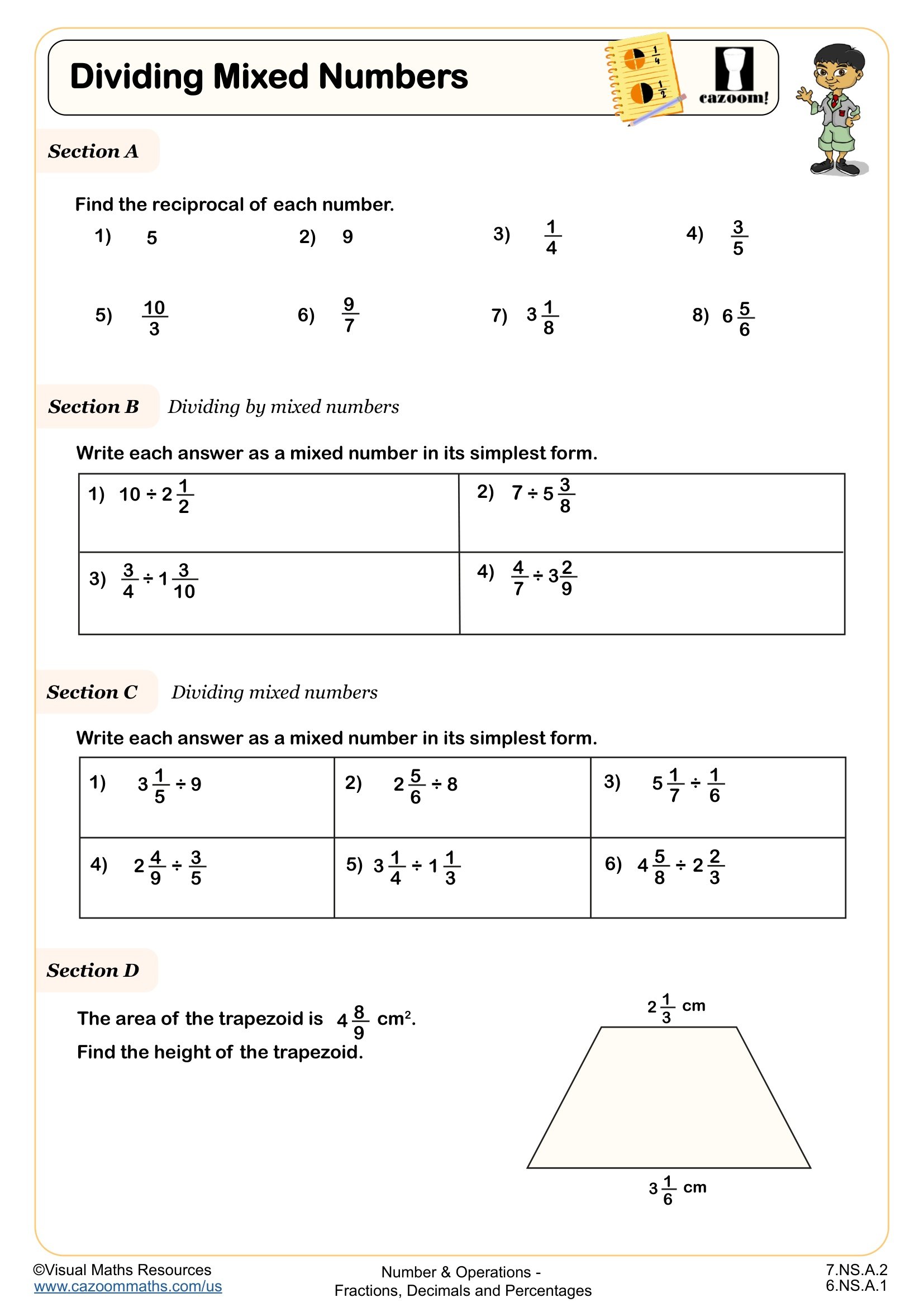
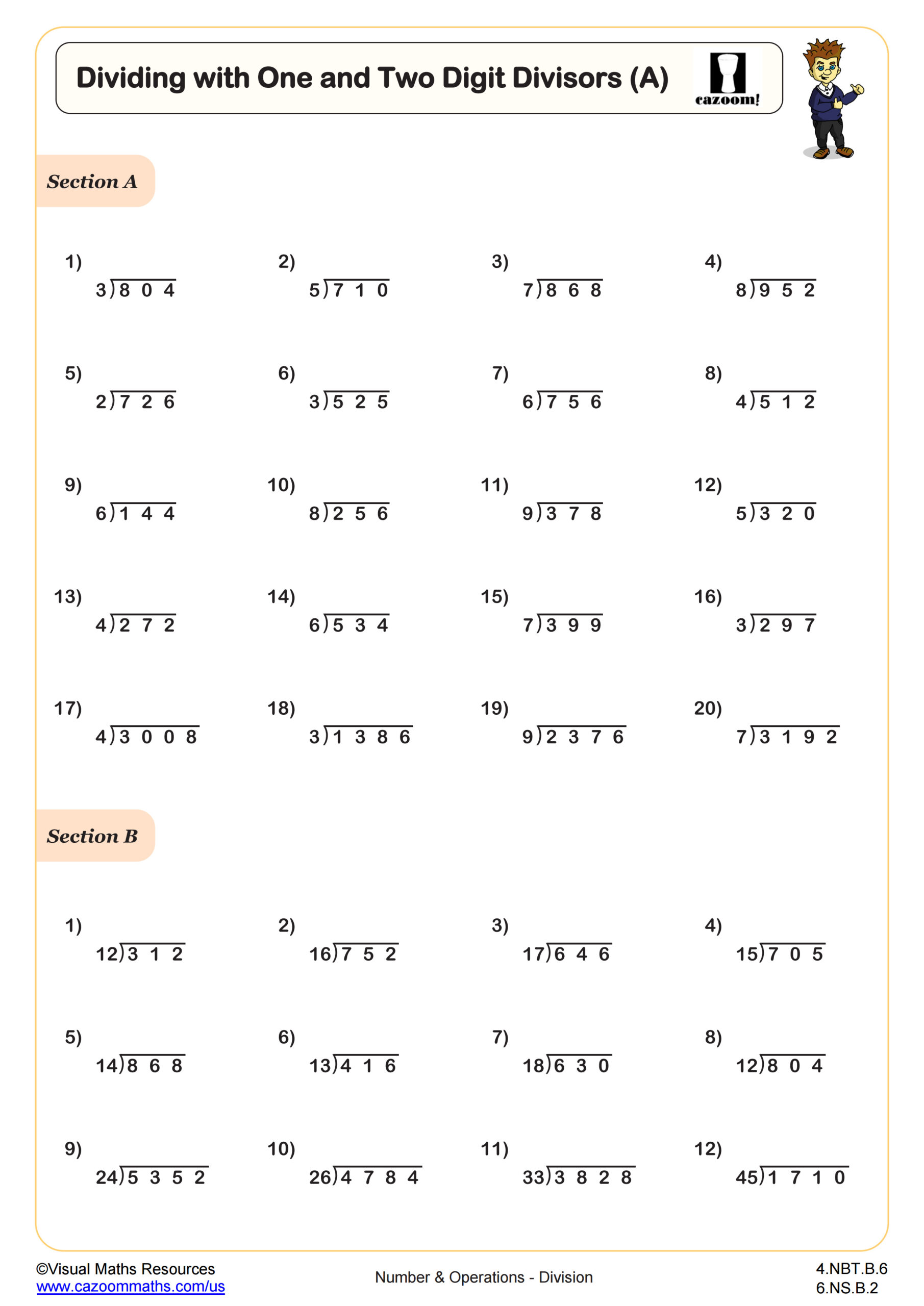
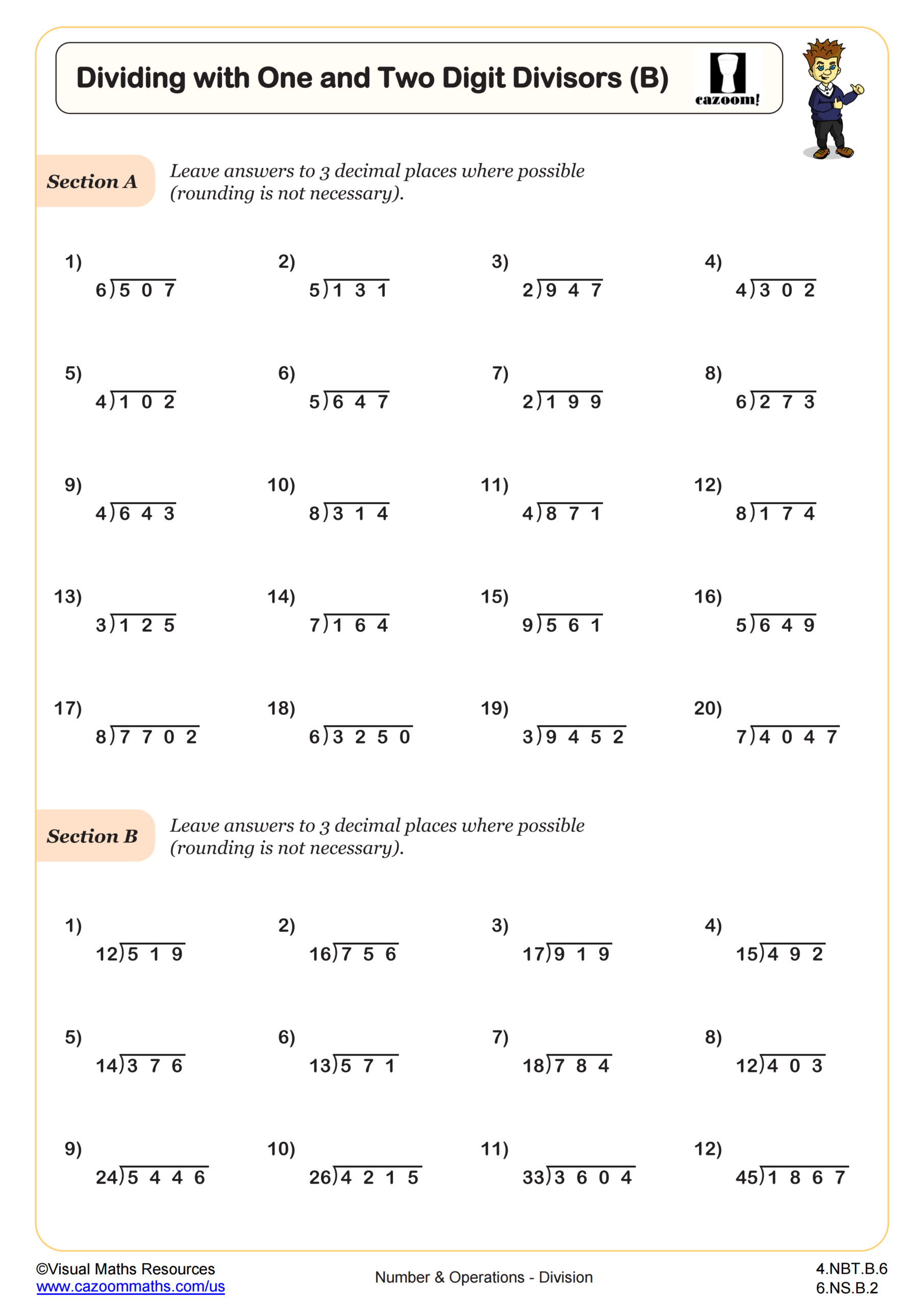
All worksheets are created by the team of experienced teachers at Cazoom Math.
Why is division still taught in middle school?
Division remains a core skill throughout middle school because students need automatic recall and efficient strategies to work with fractions, decimals, ratios, and algebraic expressions. While elementary students learn basic division concepts, middle schoolers refine their computational speed and tackle larger numbers, multi-digit divisors, and situations where division connects to other operations.
Students lose points on standardized tests when they can't quickly divide to simplify fractions or check whether one number is a factor of another. Teachers frequently observe that strong division skills directly impact success with proportional reasoning, percent problems, and unit rate calculations—all critical components of middle school math standards and high-stakes assessments.
What grade levels use these division worksheets?
These worksheets support students in 6th grade, 7th grade, and 8th grade across middle school. While students learn foundational division in elementary school, middle school worksheets focus on fluency, larger numbers, and applying division within multi-step problems that align with Common Core State Standards for these grade levels.
The progression moves from reinforcing division facts and patterns with tens to more complex short division techniques. Sixth graders typically work on strengthening basic division automaticity and dividing by powers of ten, while seventh and eighth graders apply these skills within fraction operations, rate problems, and pre-algebra contexts where division appears as part of solving equations or simplifying expressions.
What is short division and when do students use it?
Short division is an efficient mental math strategy where students divide without writing out the full long division algorithm. Instead of showing each step separately, students work through the division process mentally or with minimal notation, writing remainders as small numbers above the dividend. This method works particularly well for single-digit divisors and builds number sense about how division actually functions.
Engineers and technicians use mental division strategies constantly when making quick calculations about material quantities, scaling measurements, or converting units on the job. A machinist dividing a 156-inch steel rod into equal pieces or a chef scaling a recipe from 8 servings down to 3 both rely on the same short division thinking that students practice on these worksheets, demonstrating how computational fluency translates directly to professional problem-solving.
How can teachers use these worksheets most effectively?
The worksheets build from foundational division facts through increasingly complex problems, allowing teachers to select appropriate challenge levels based on student readiness. Answer keys enable students to self-check during independent practice or help teachers quickly identify patterns in student errors—such as consistently misplacing digits in quotients or struggling with remainders—that signal specific misunderstandings requiring reteaching.
Many teachers use these worksheets for differentiated math centers, where students work at different levels simultaneously, or as warm-up activities to maintain division fluency throughout the year. They work well for homework when students need focused practice on a specific skill, and the answer keys help parents support learning at home. Teachers also assign targeted worksheets during intervention blocks when assessment data shows students need additional work with particular division strategies before moving to more complex content.