Middle School Geometry Transformations Worksheets
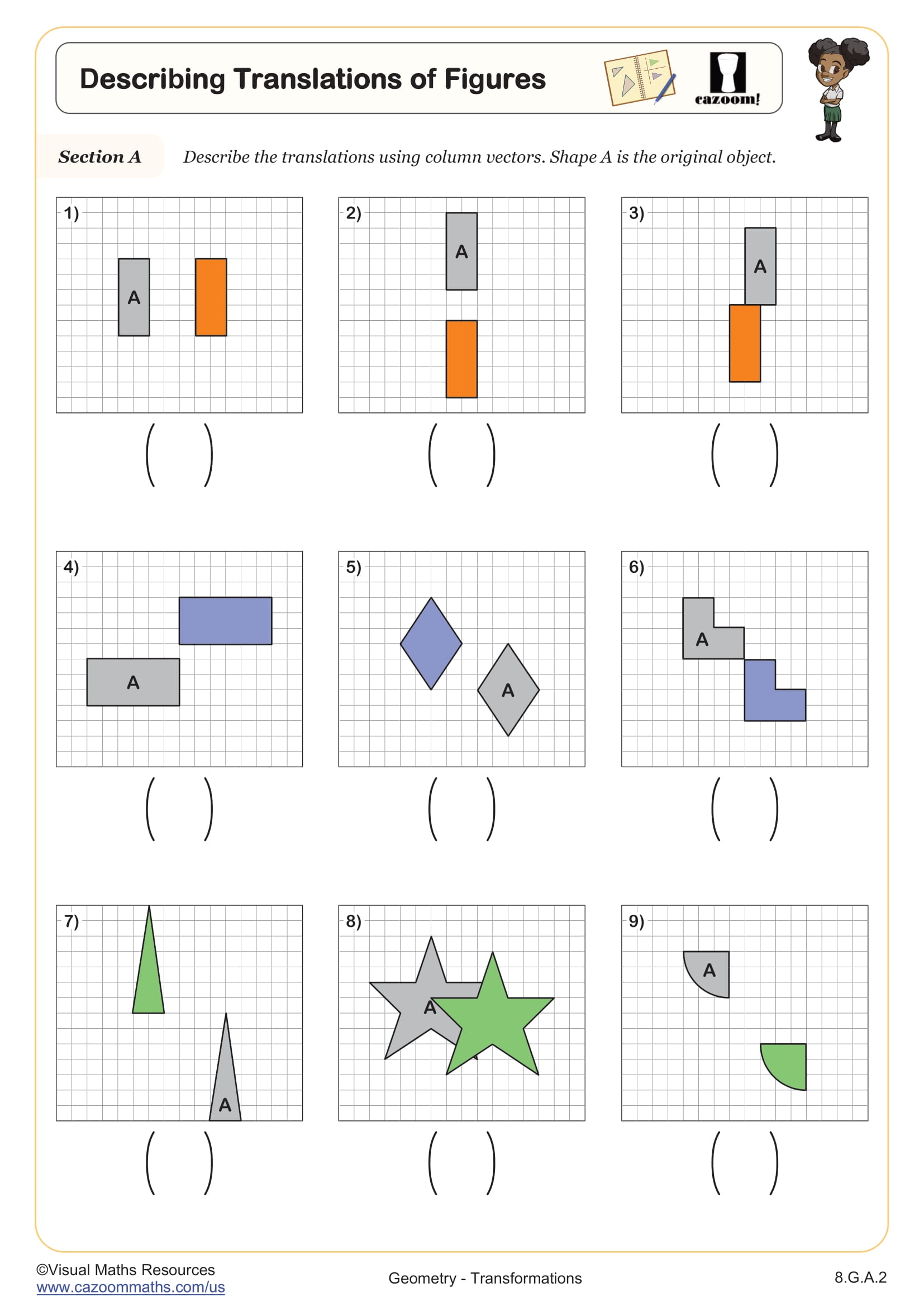
Describing Translations of Figures
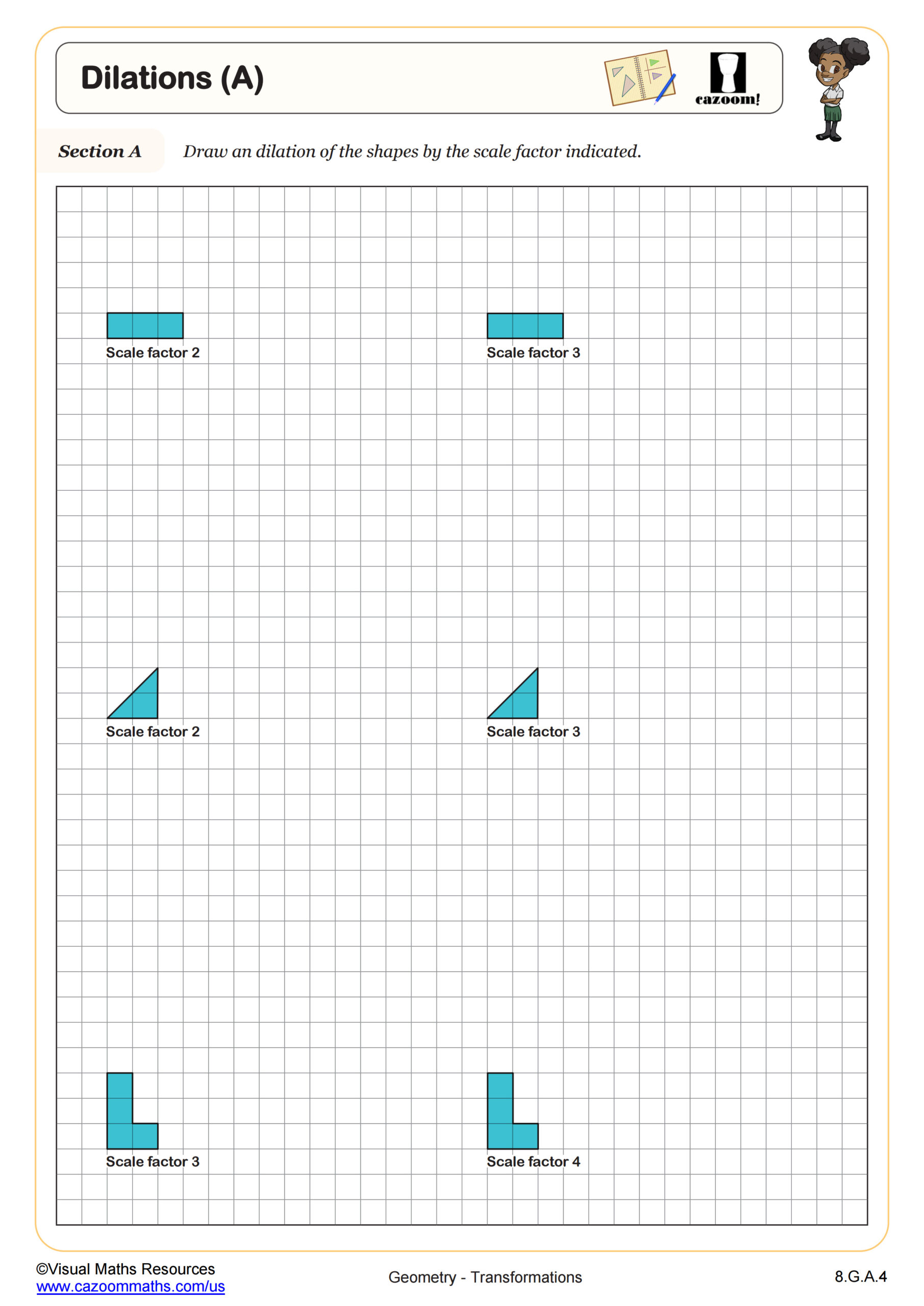
Dilations (A)
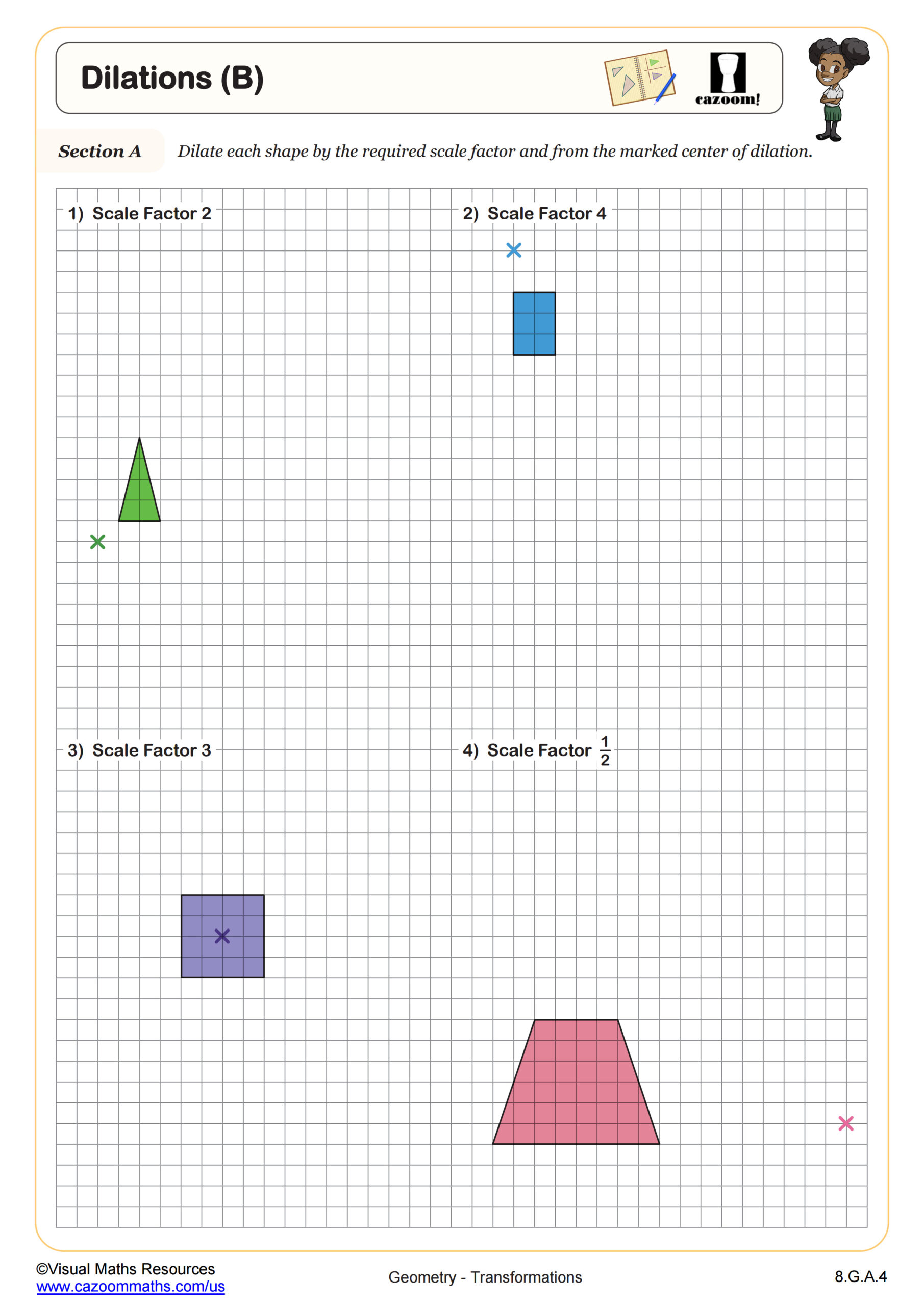
Dilations (B)
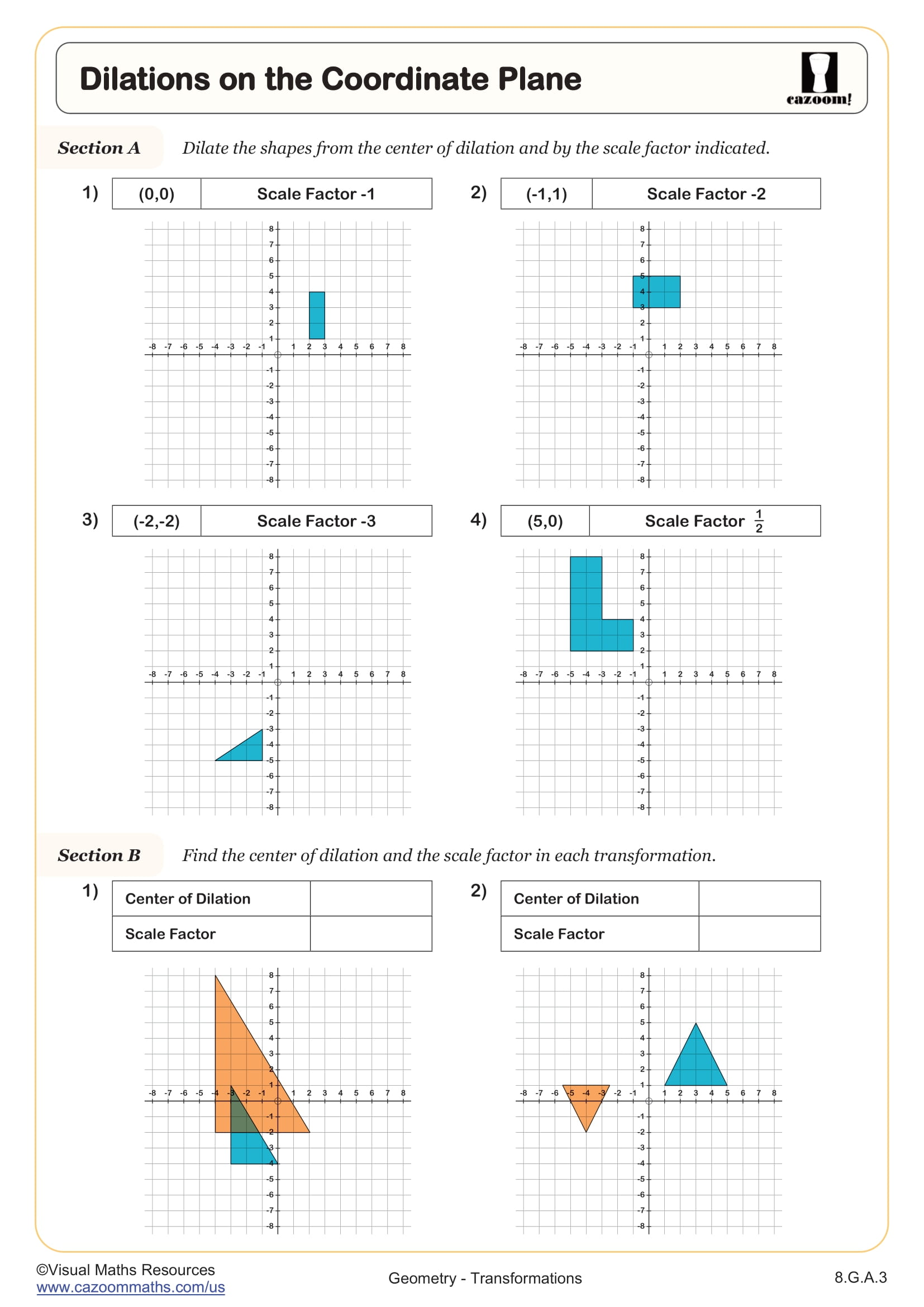
Dilations on the Coordinate Plane
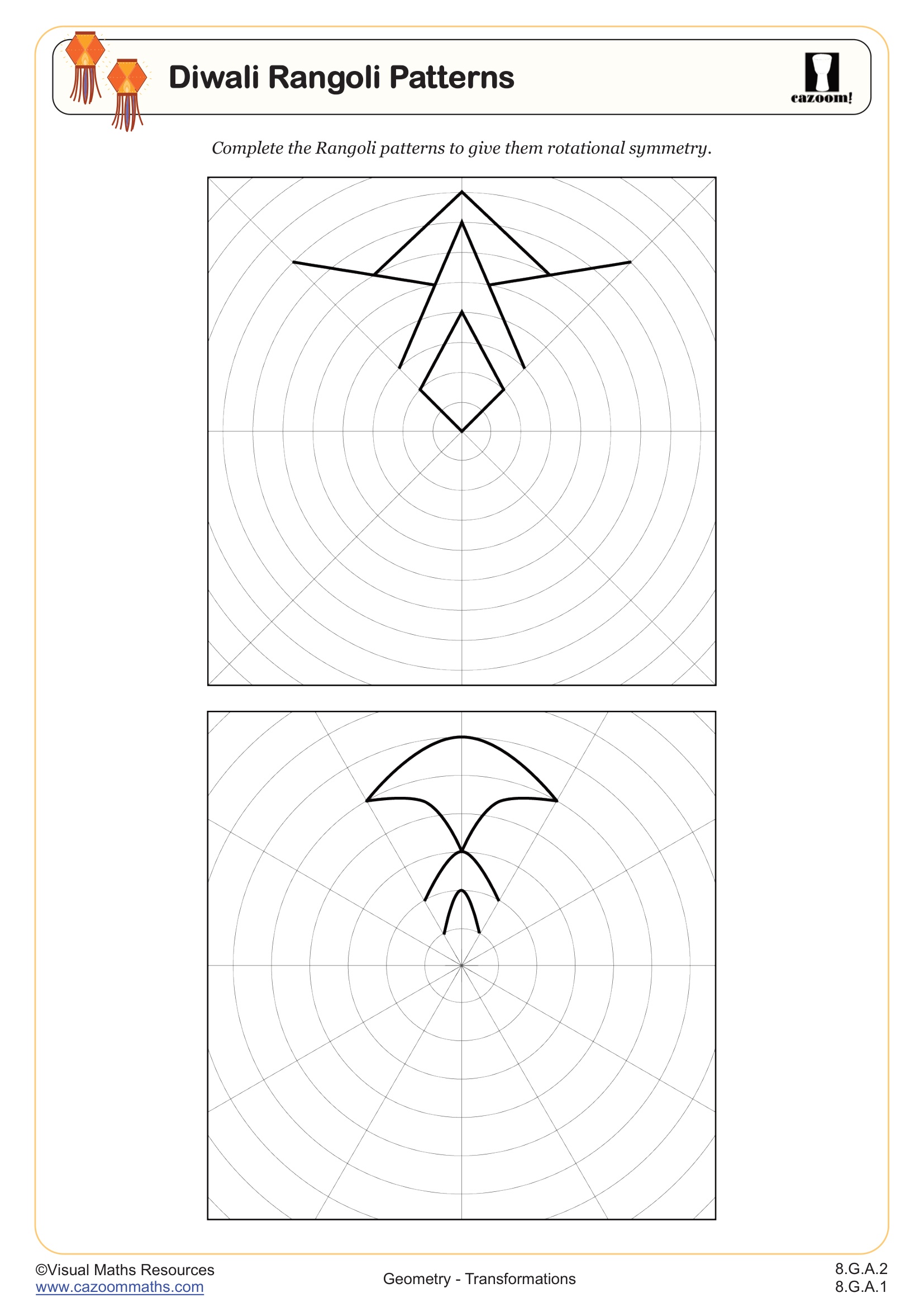
Diwali Rangoli Patterns
Enlargement with Fractional Scale Factors (A)
-Questions-Worksheet.jpg?w=3840)
Enlargement with Fractional Scale Factors (B)
-Questions-Worksheet.jpg?w=3840)
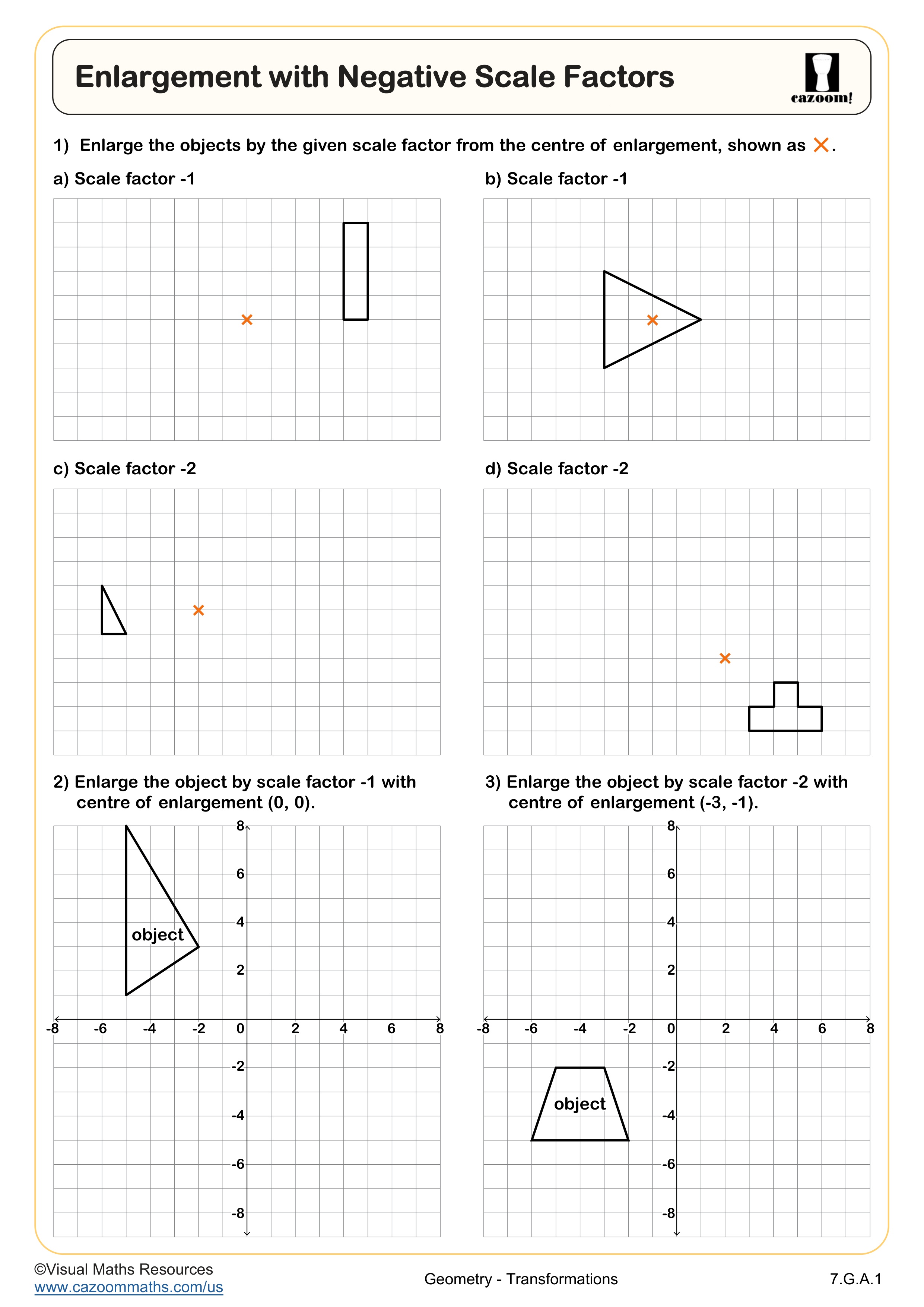
Enlargement with Negative Scale Factors
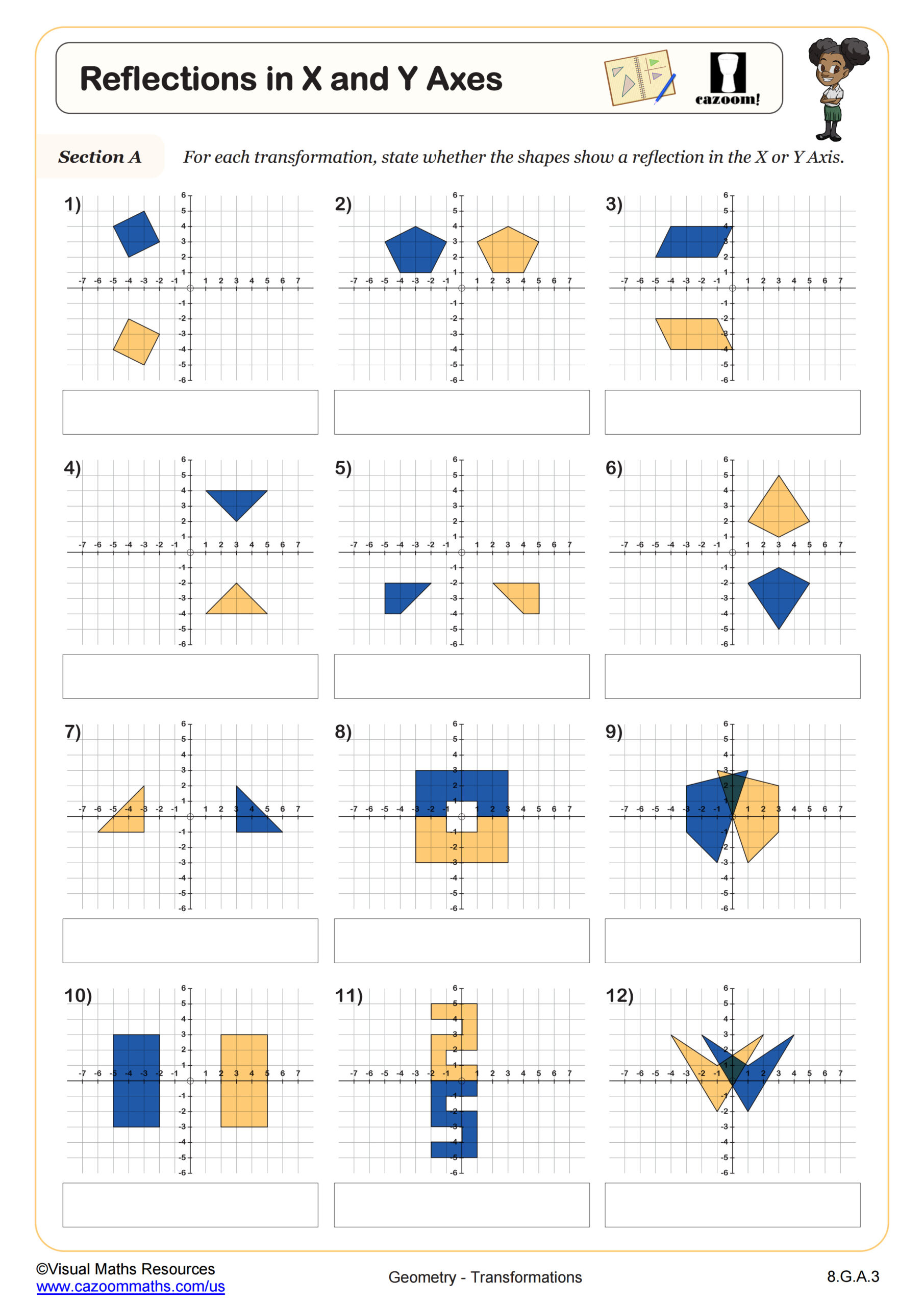
Reflection in X and Y Axes
Reflection Symmetry
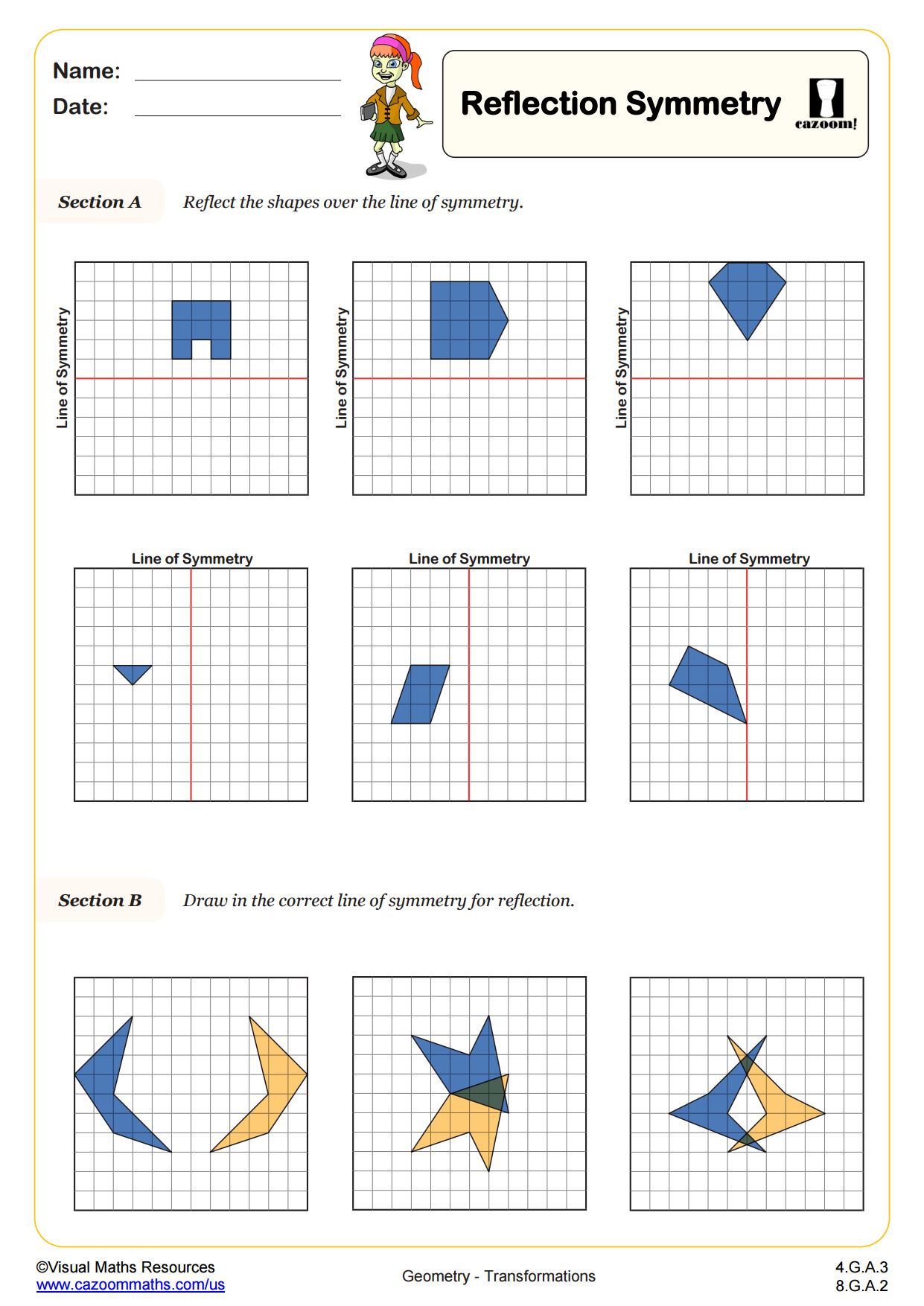
Reflection Symmetry
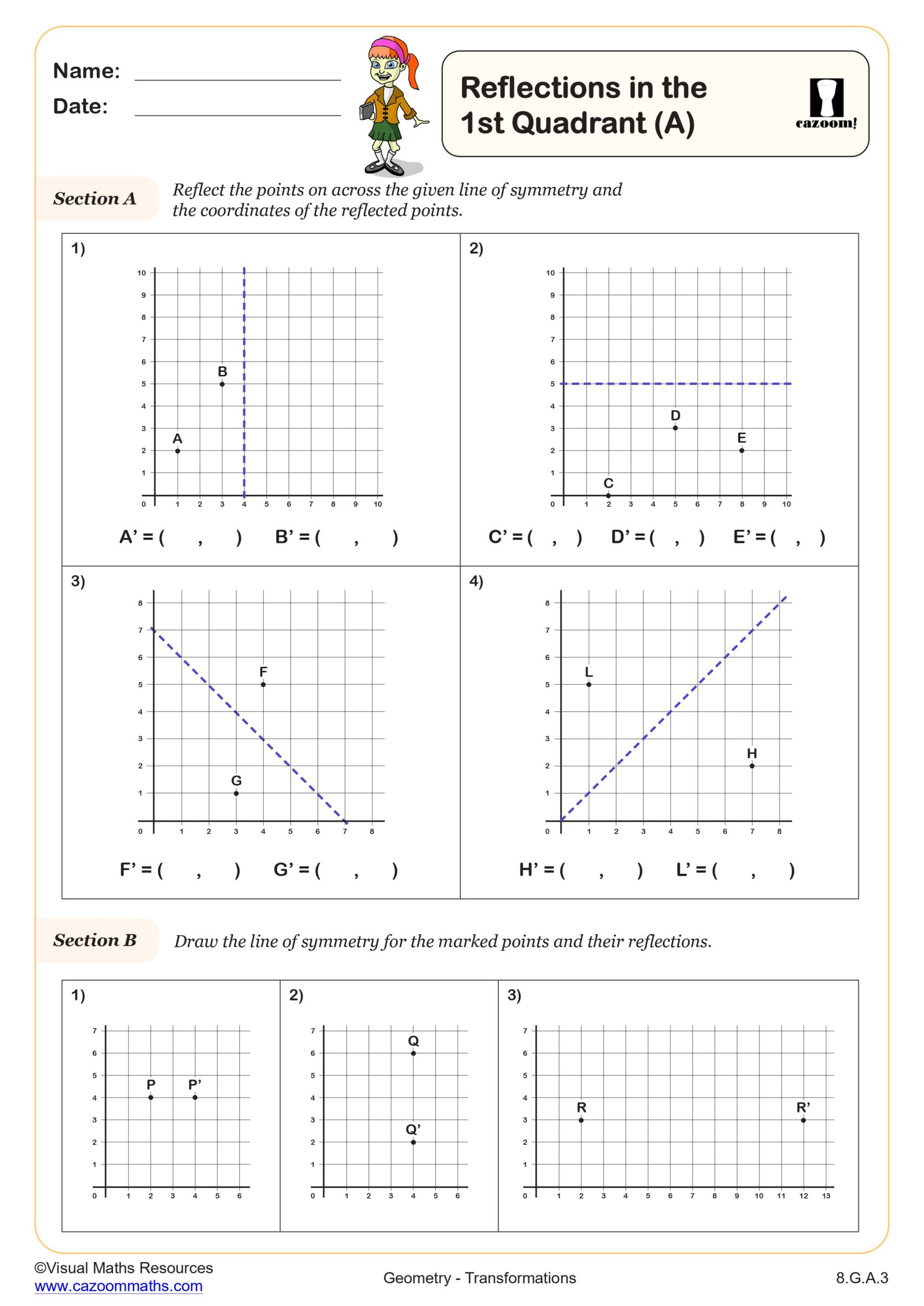
Reflections in the 1st Quadrant (A)
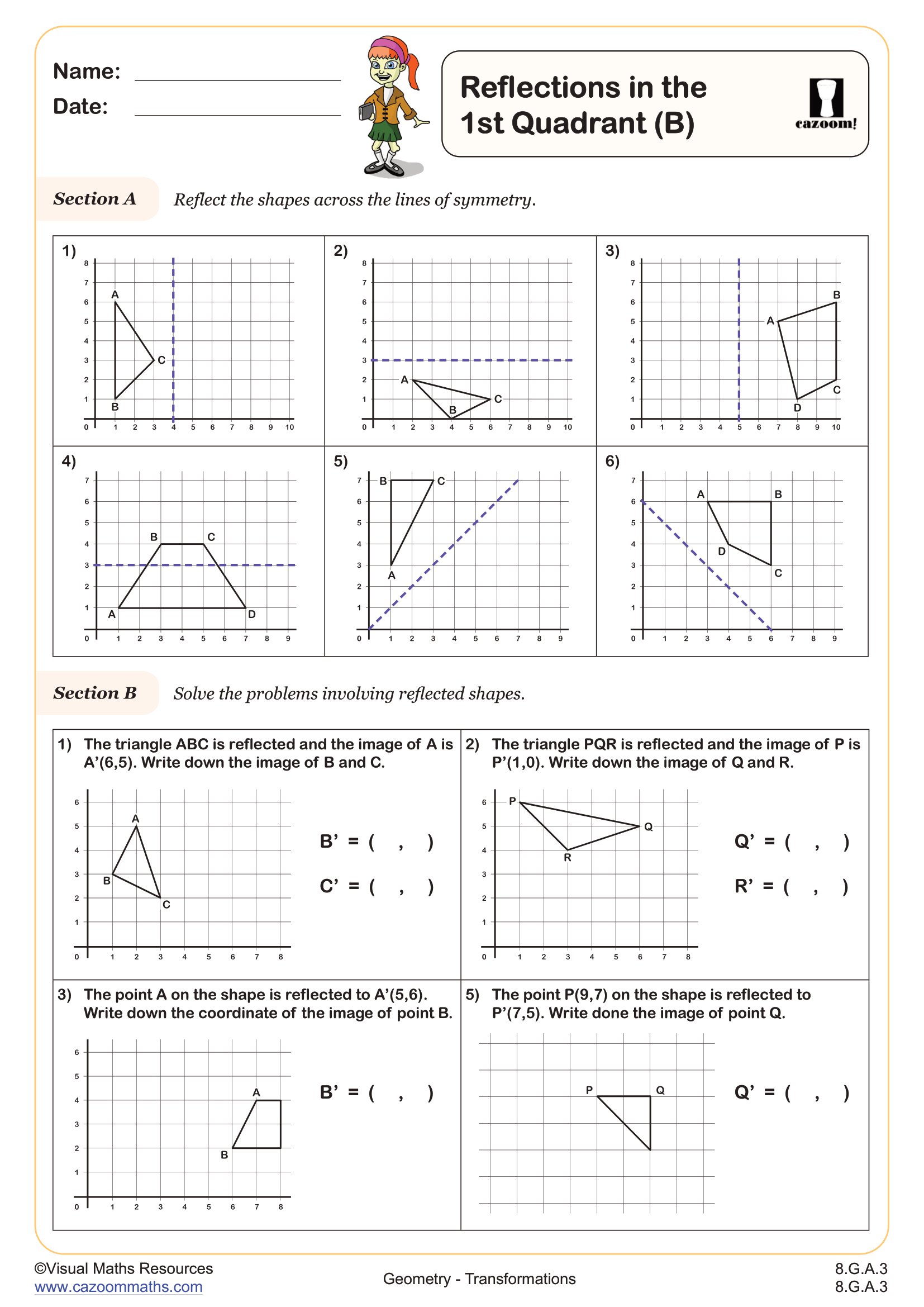
Reflections in the 1st Quadrant (B)
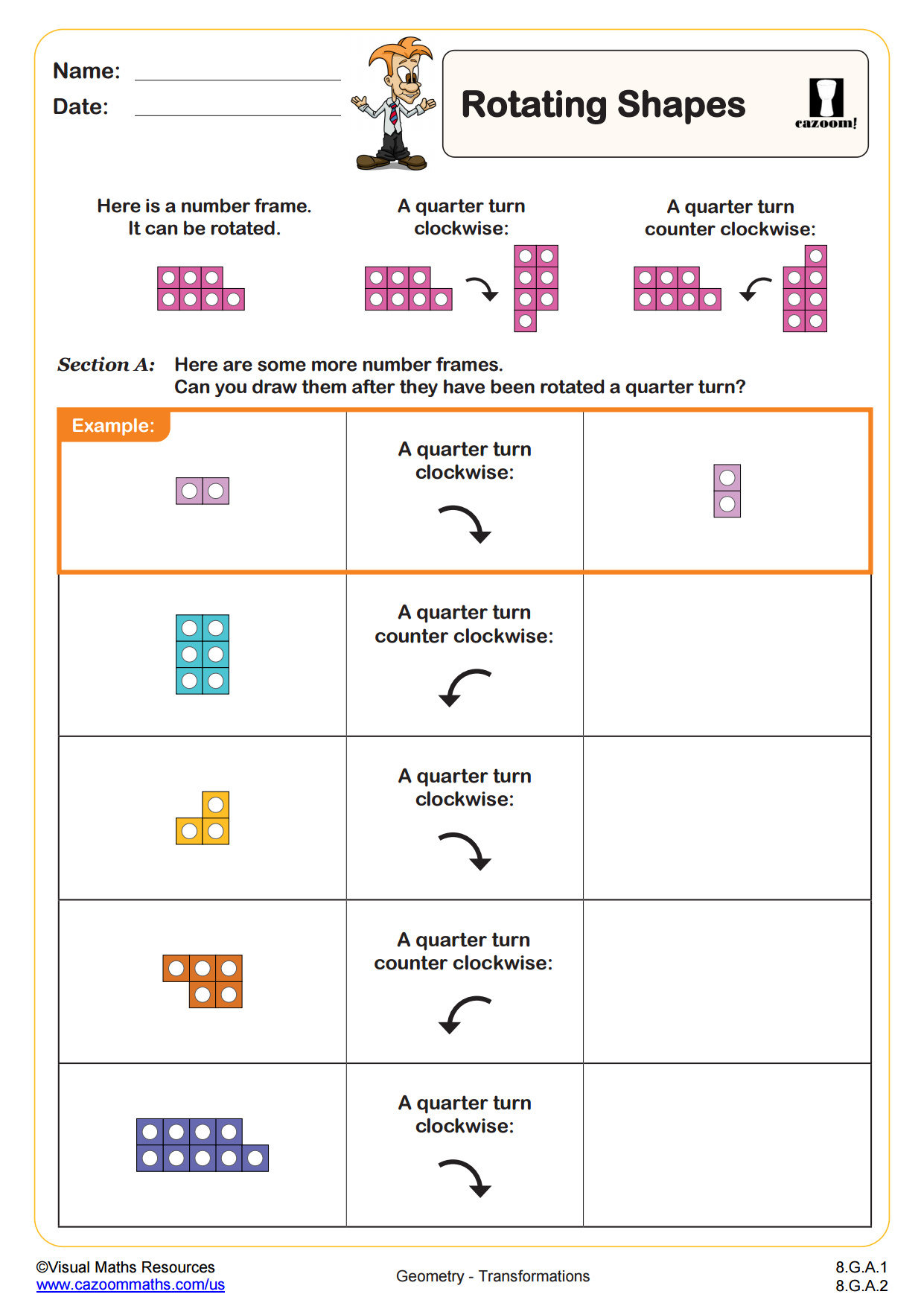
Rotating Shapes
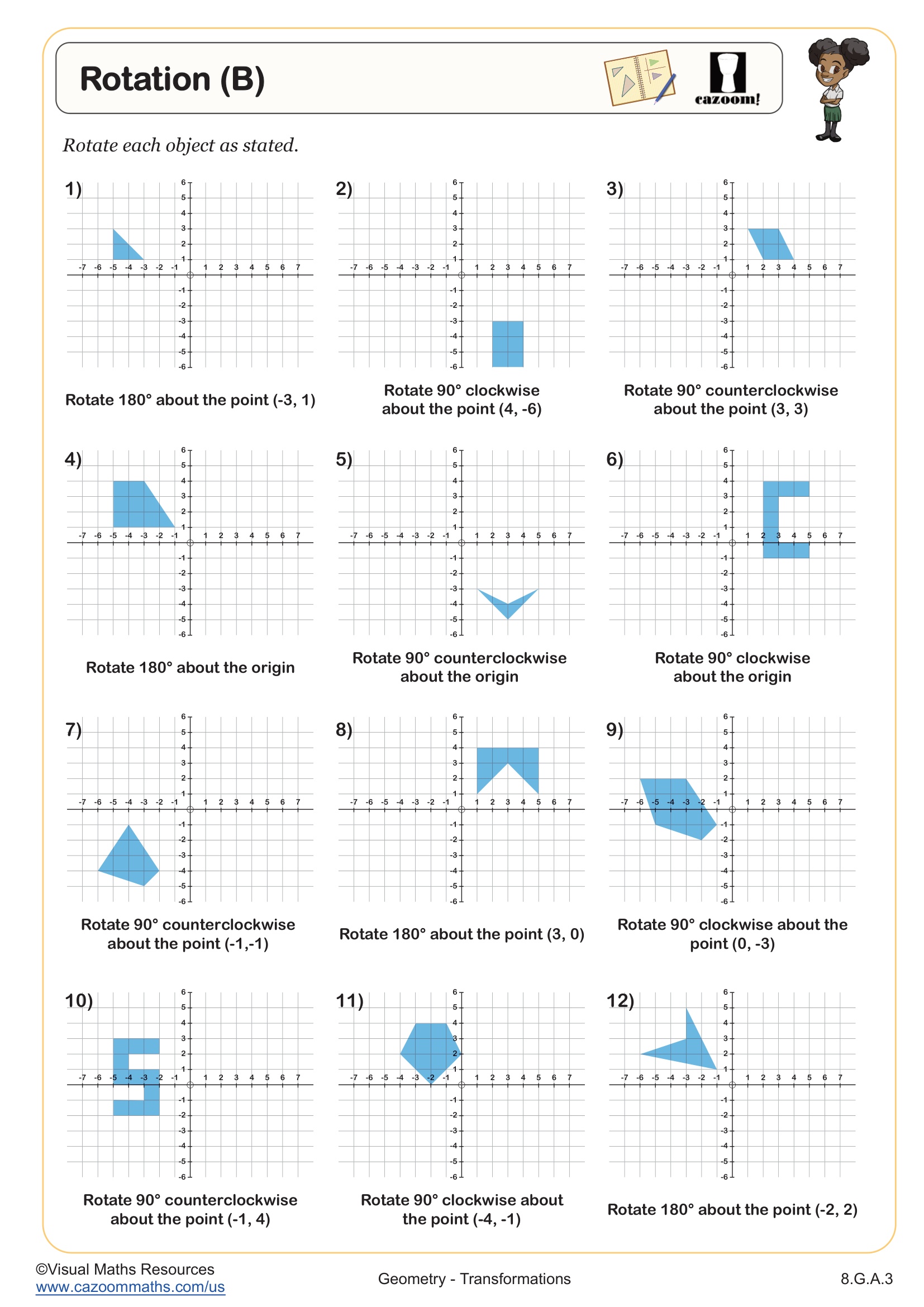
Rotation (B)
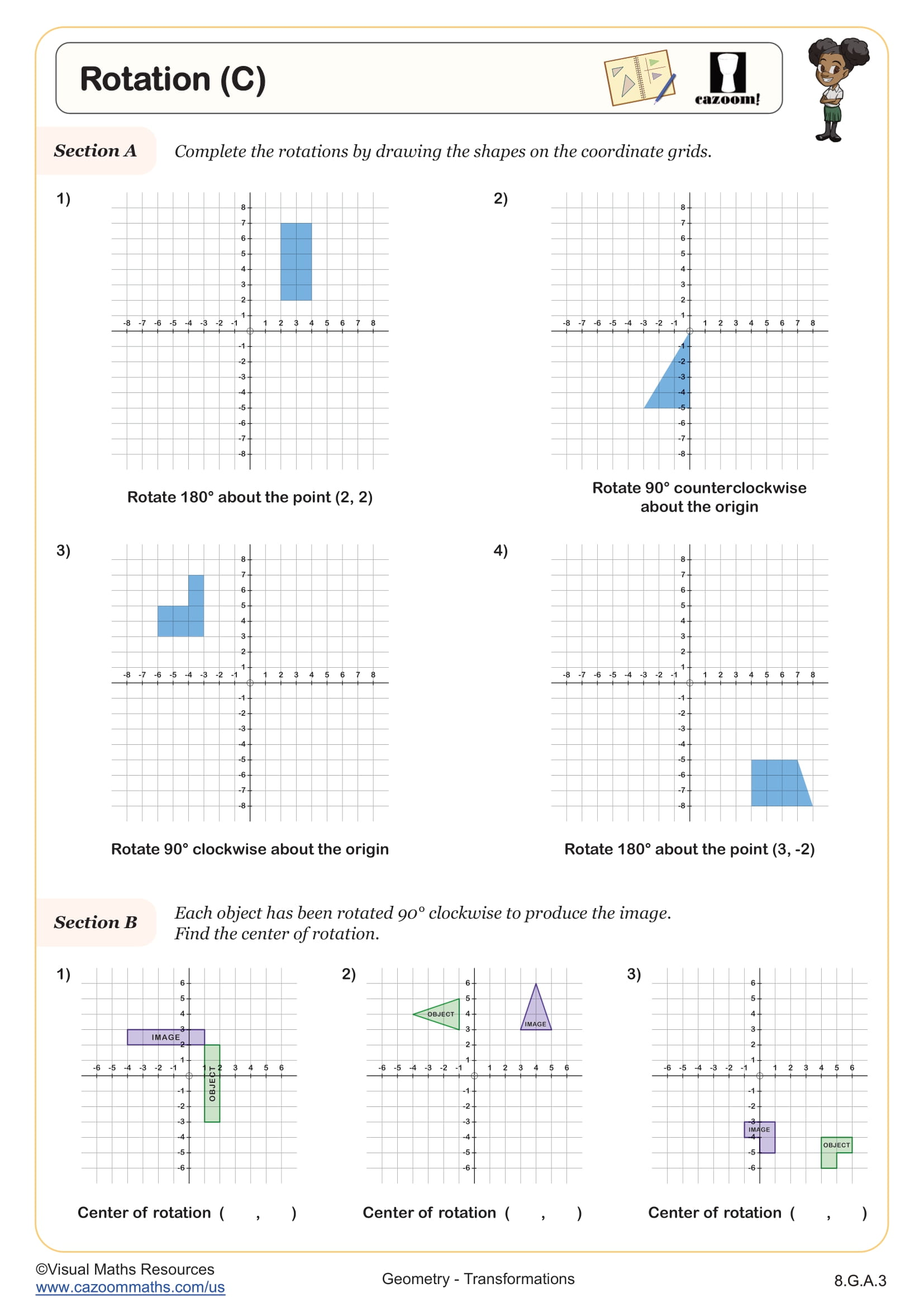
Rotation (C)
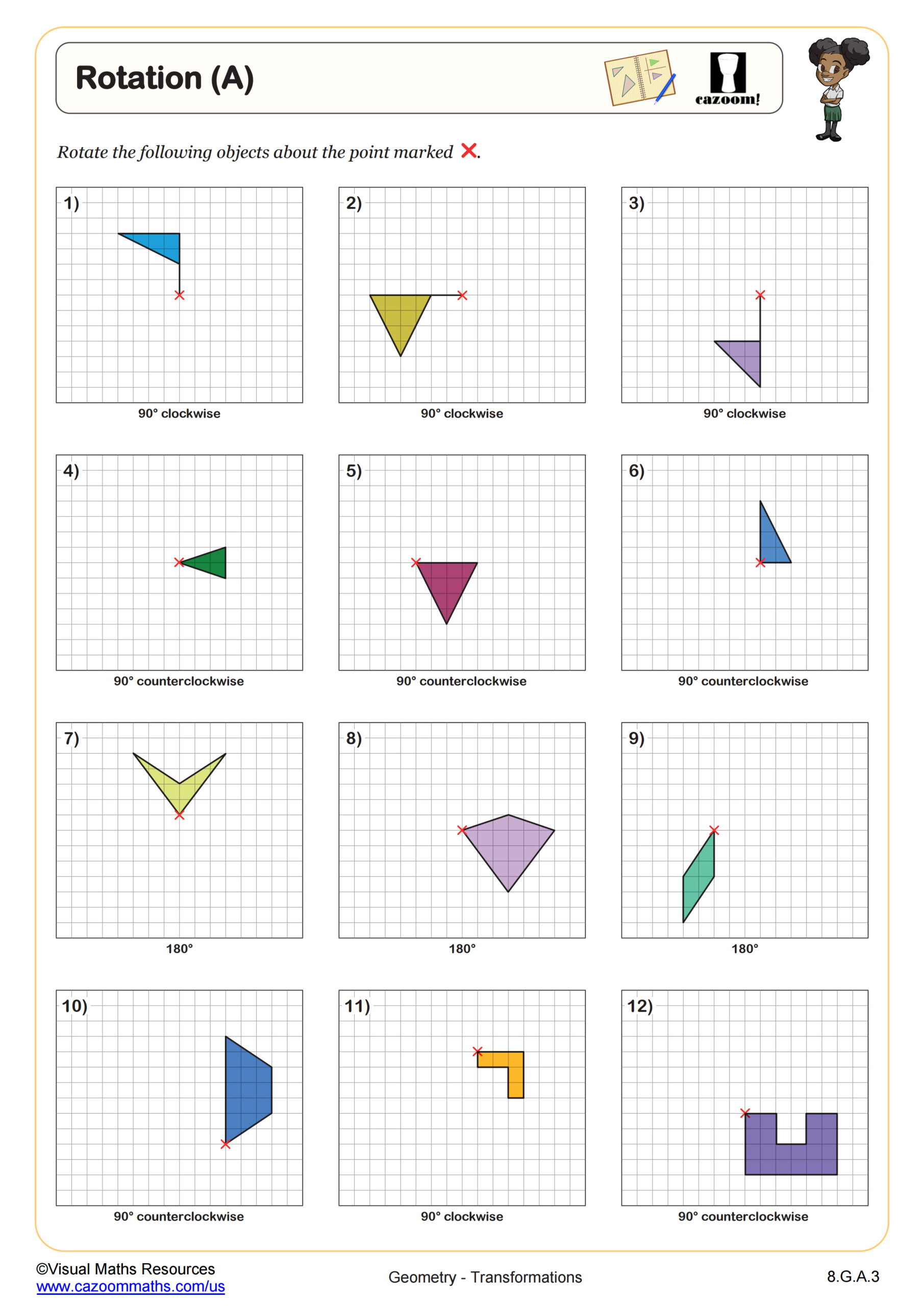
Rotations (A)
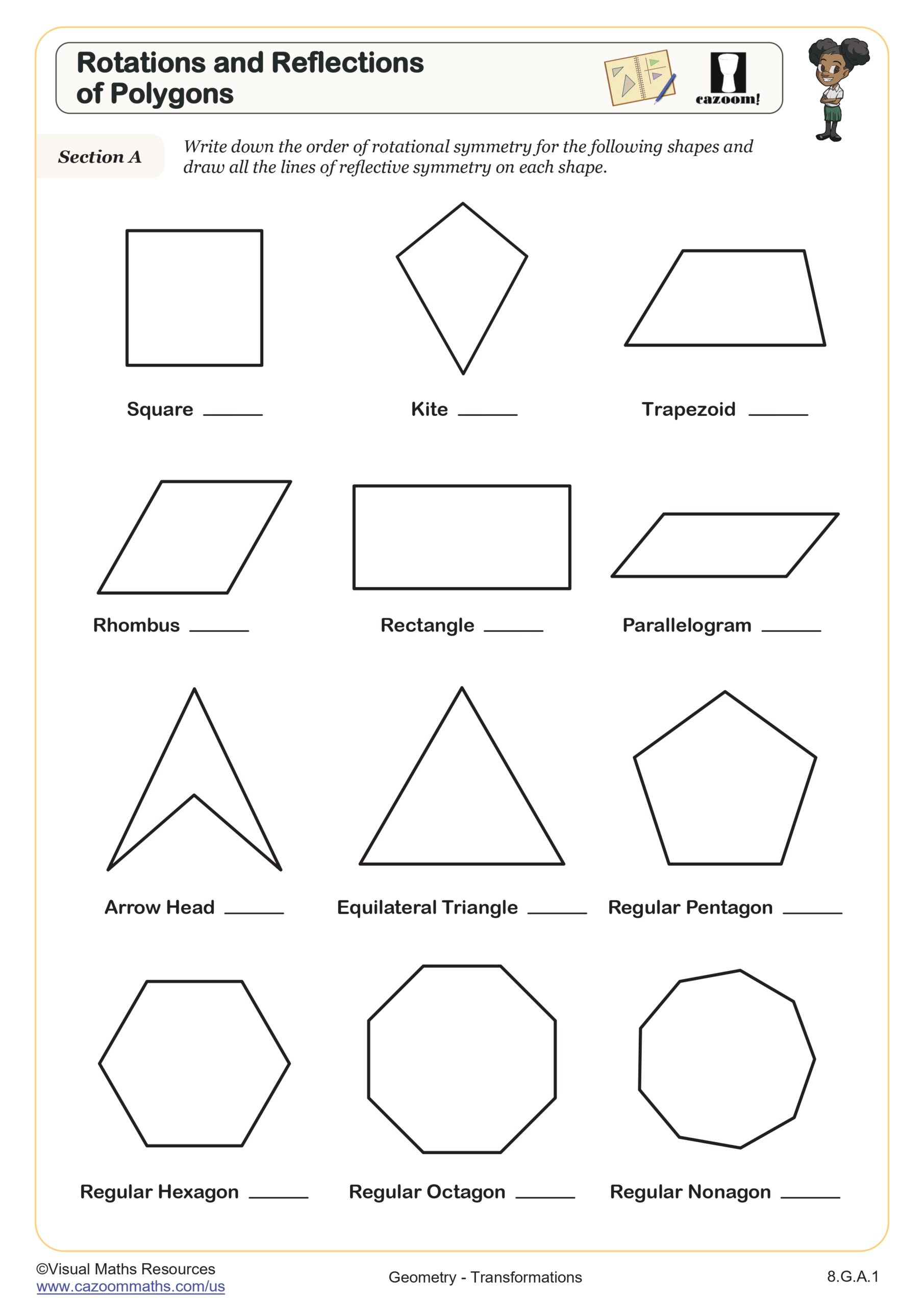
Rotations and Reflections of Polygons
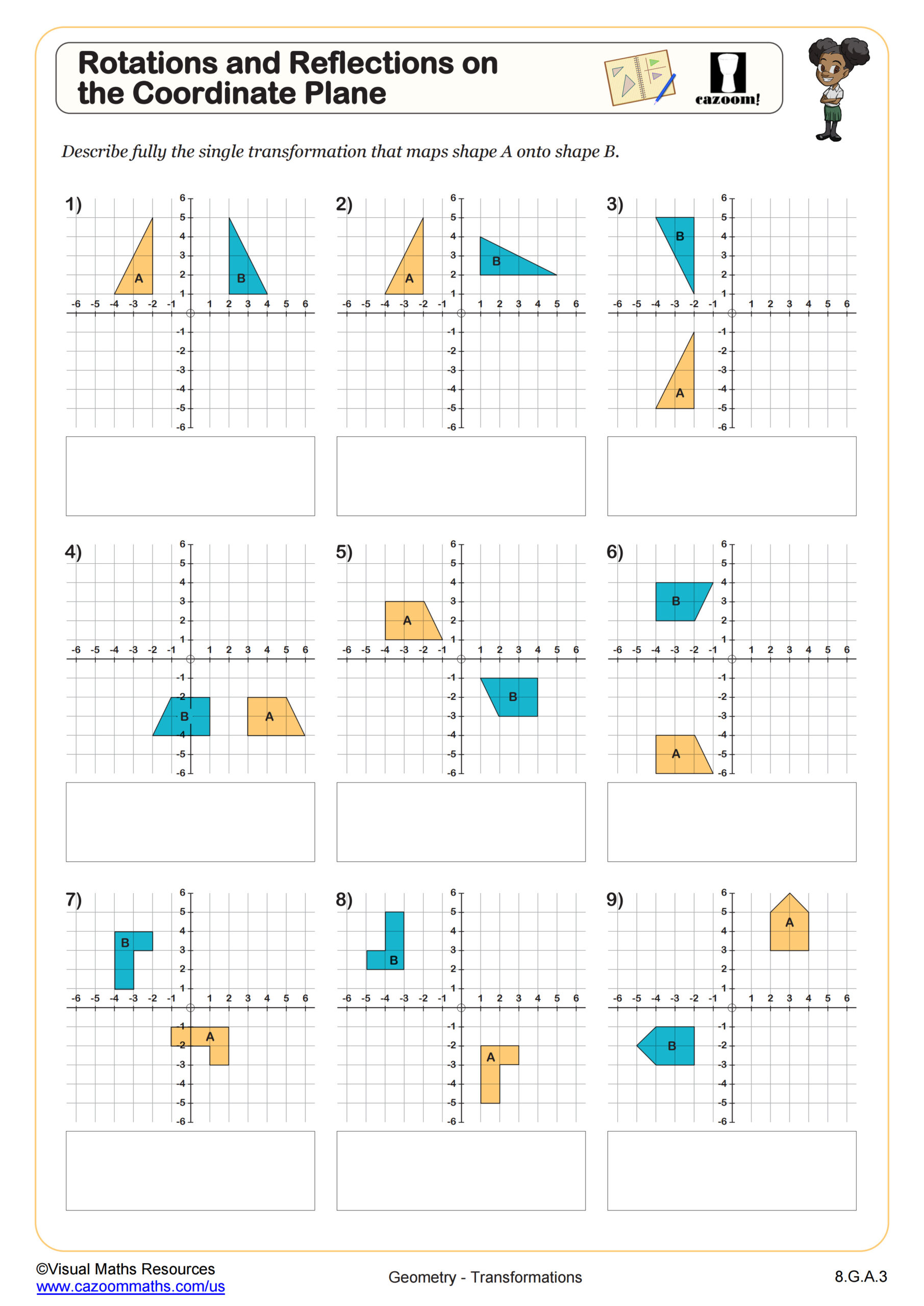
Rotations and Reflections on the Coordinate Plane
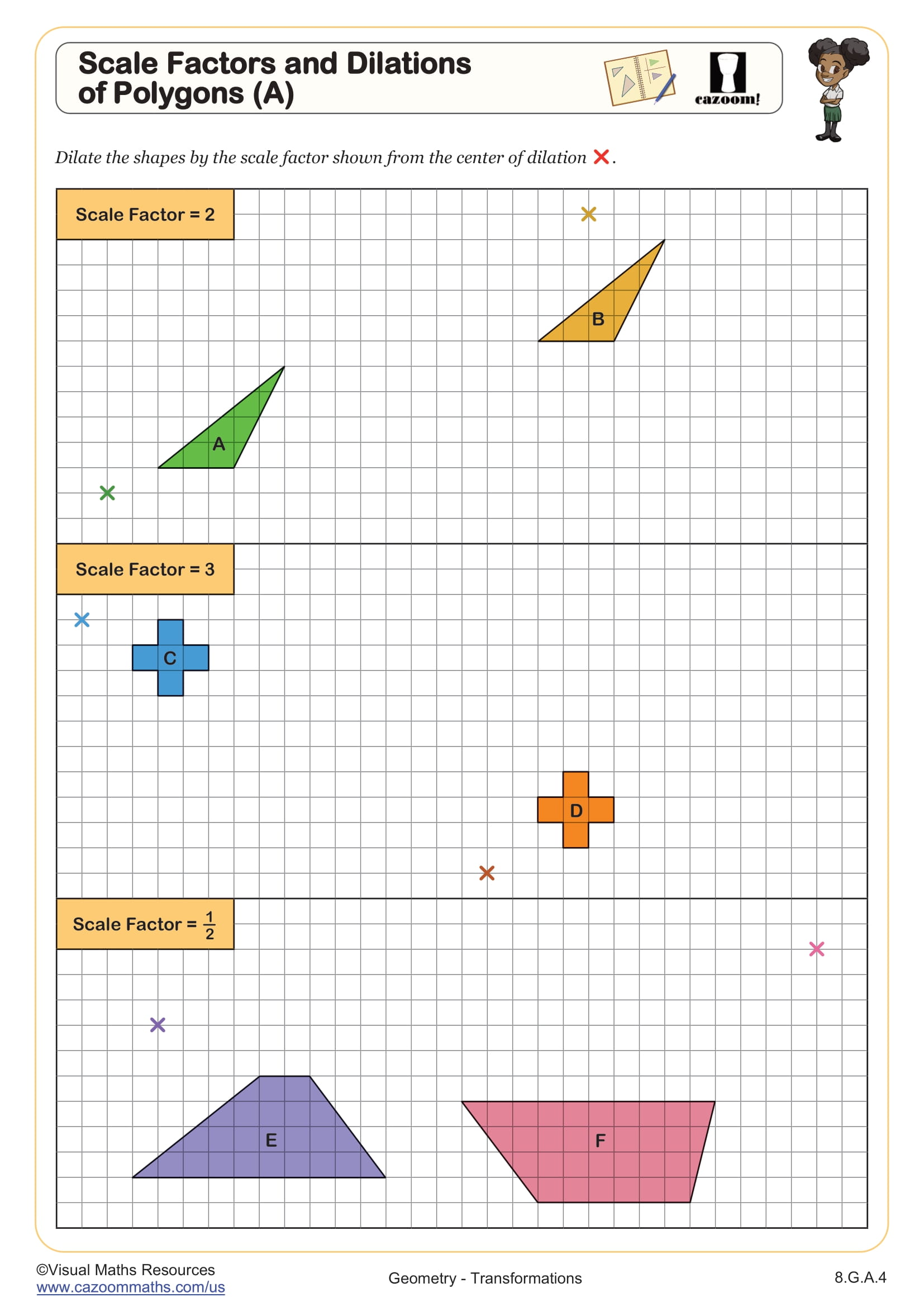
Scale Factors and Dilations of Polygons (A)
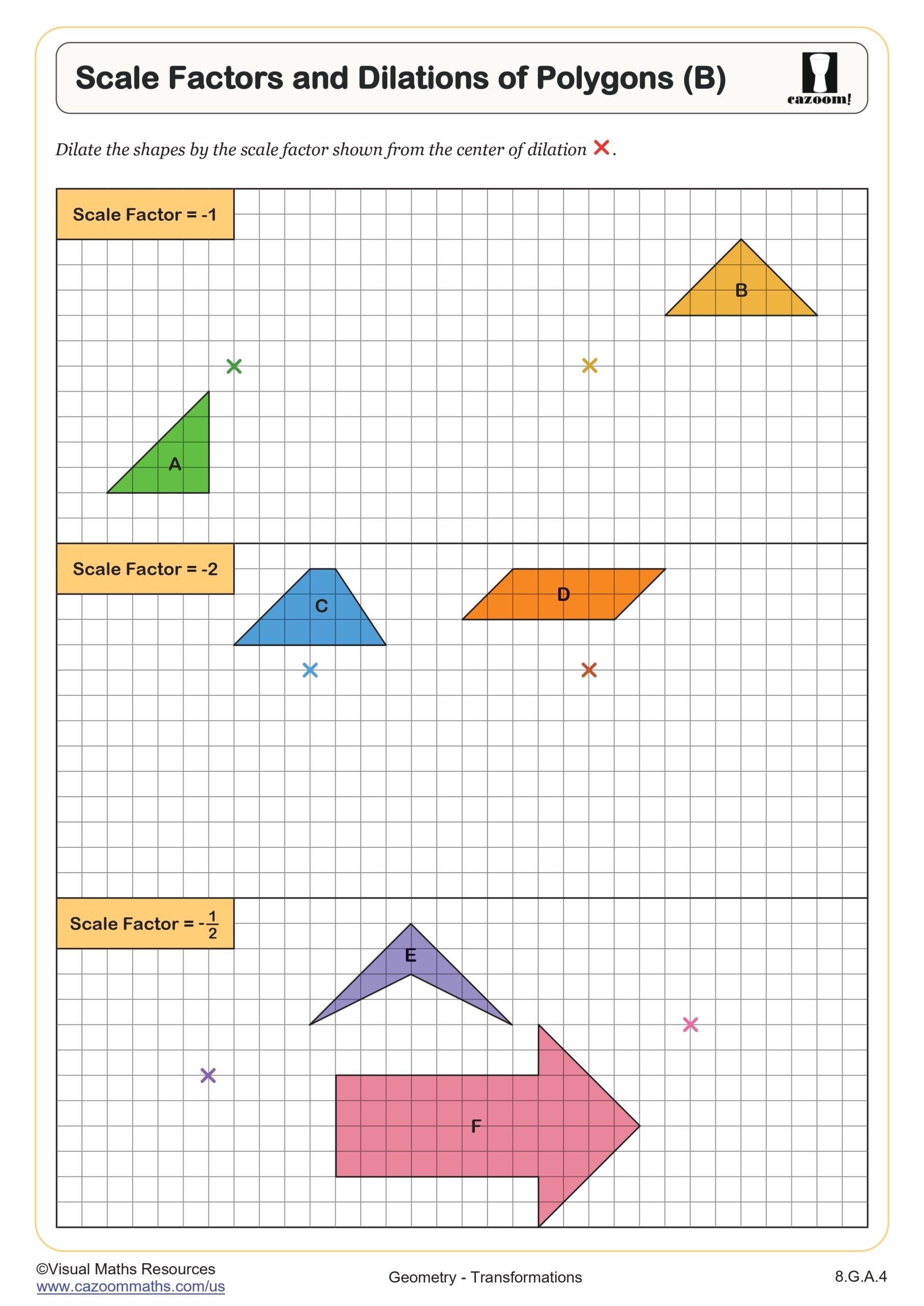
Scale Factors and Dilations of Polygons (B)
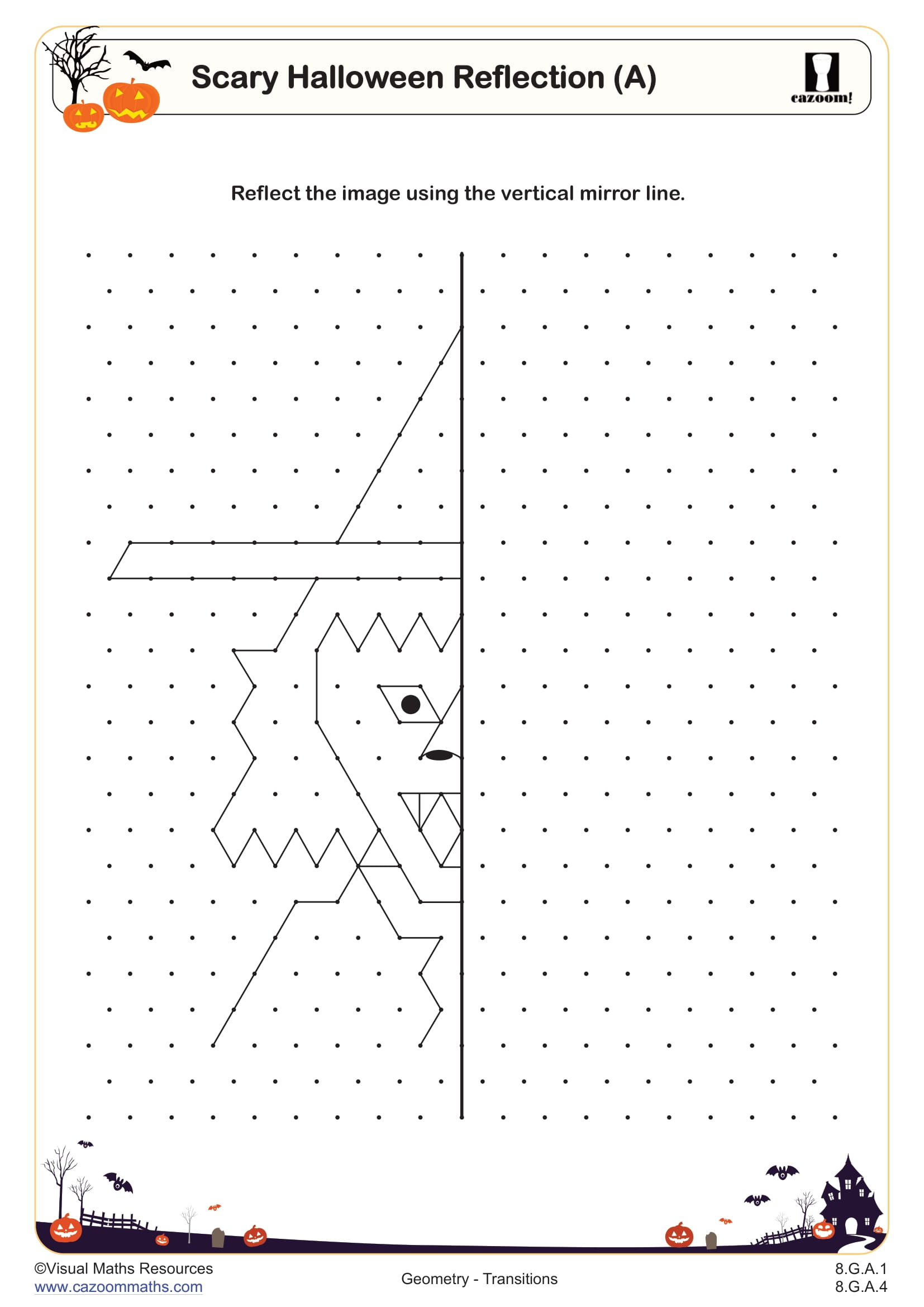
Scary Halloween Reflection (A)
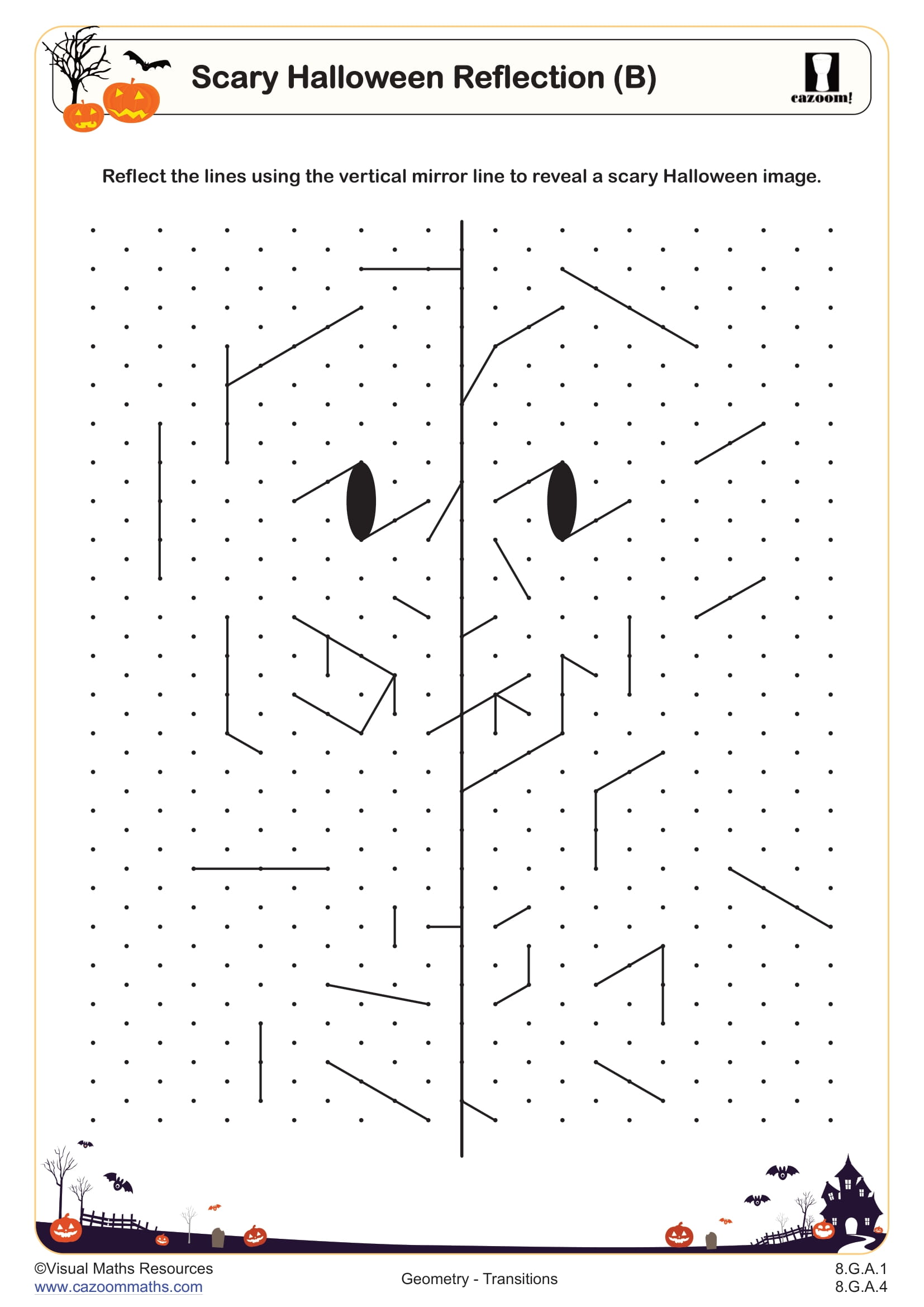
Scary Halloween Reflection (B)
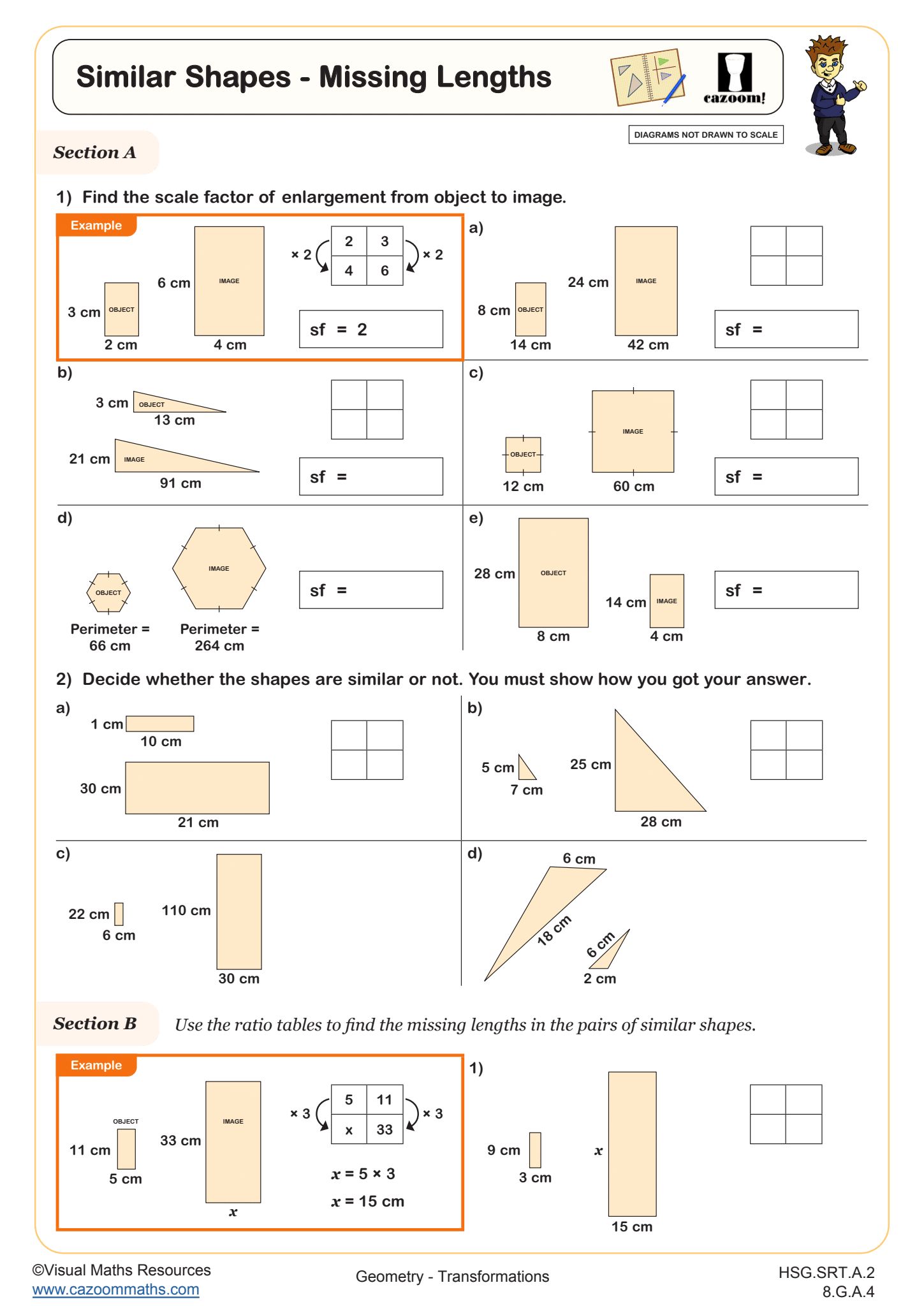
Similar Shapes - Missing Lengths
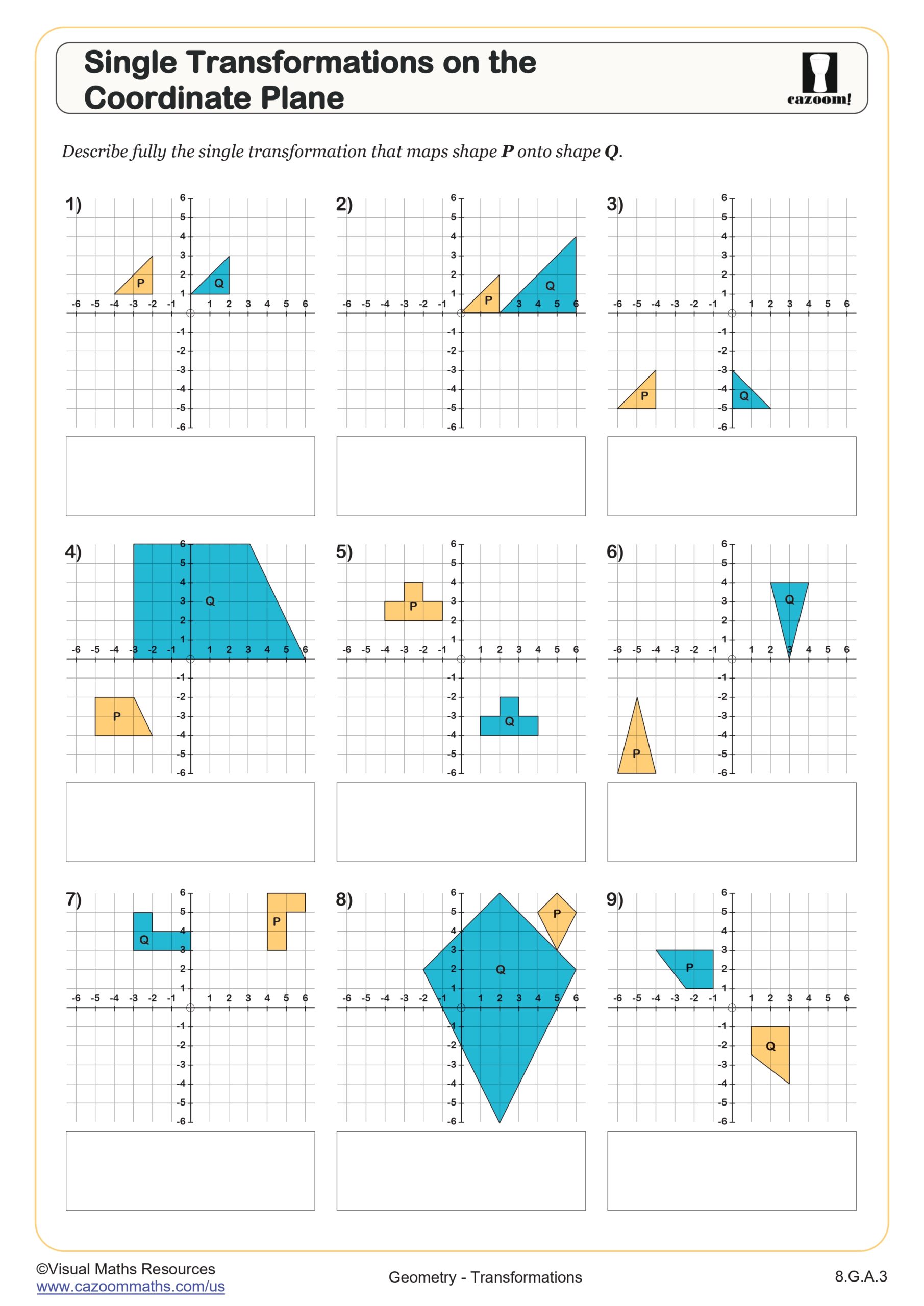
Single Transformations on the Coordinate Plane
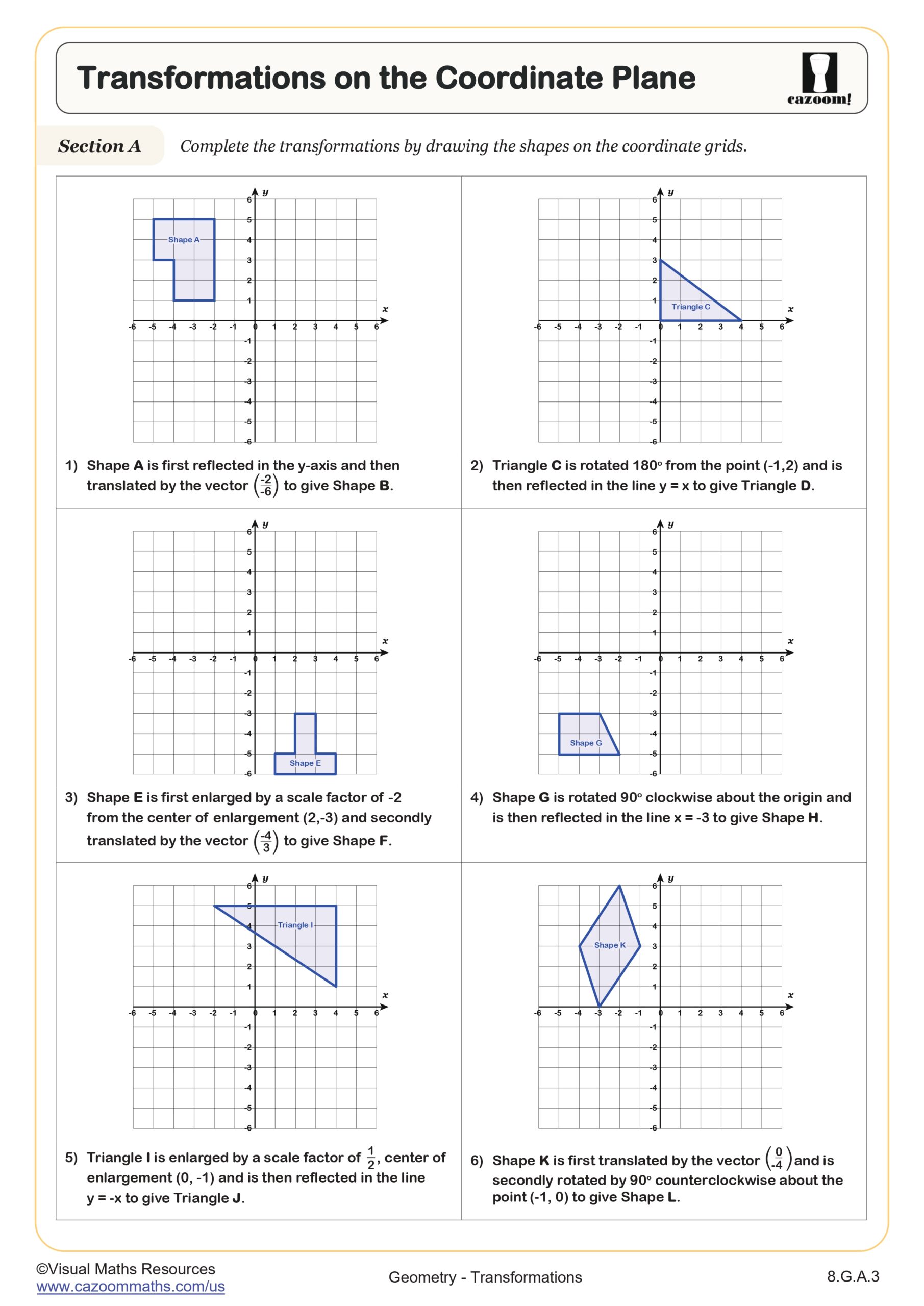
Transformations on the Coordinate Plane
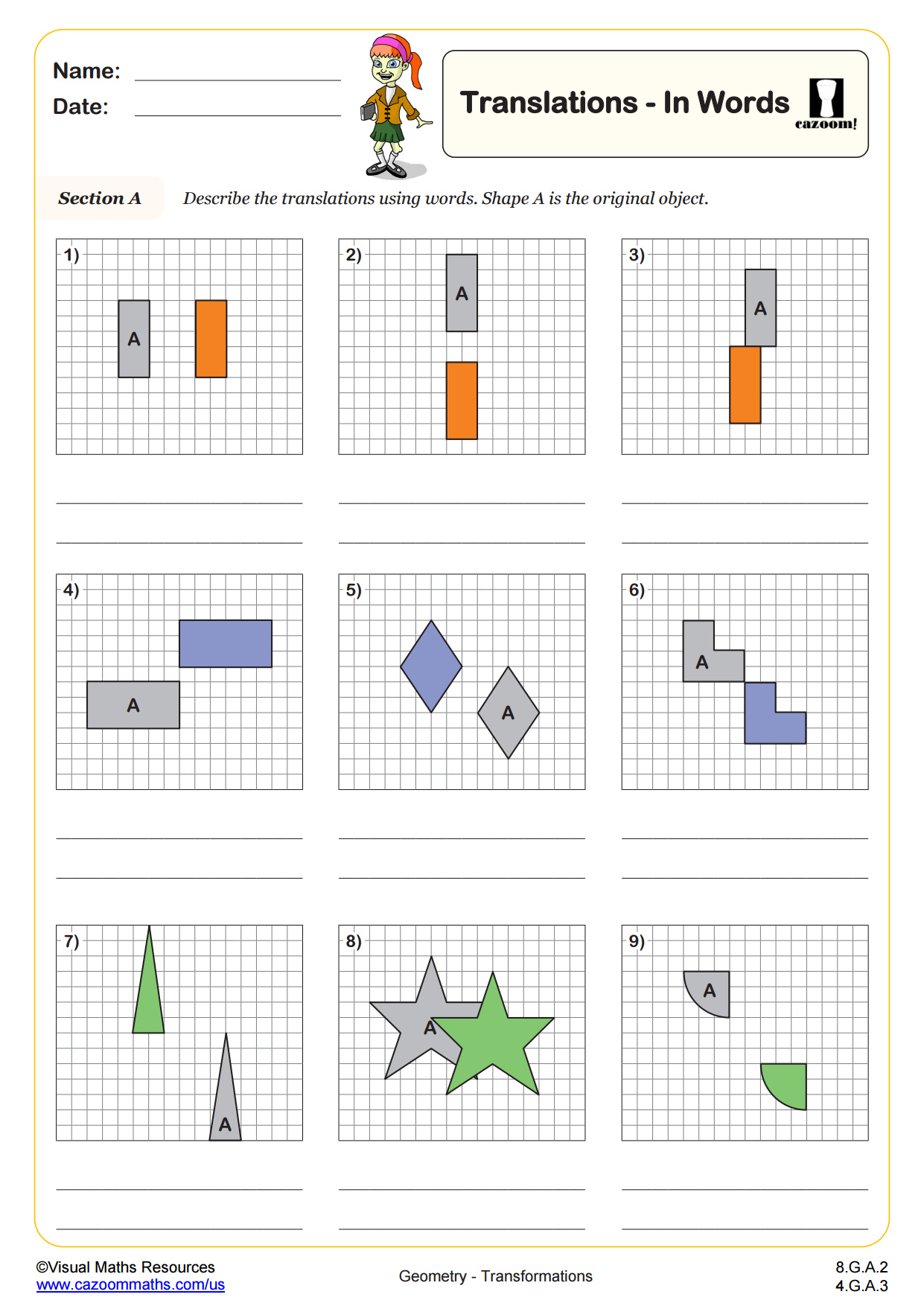
Translations - In Words
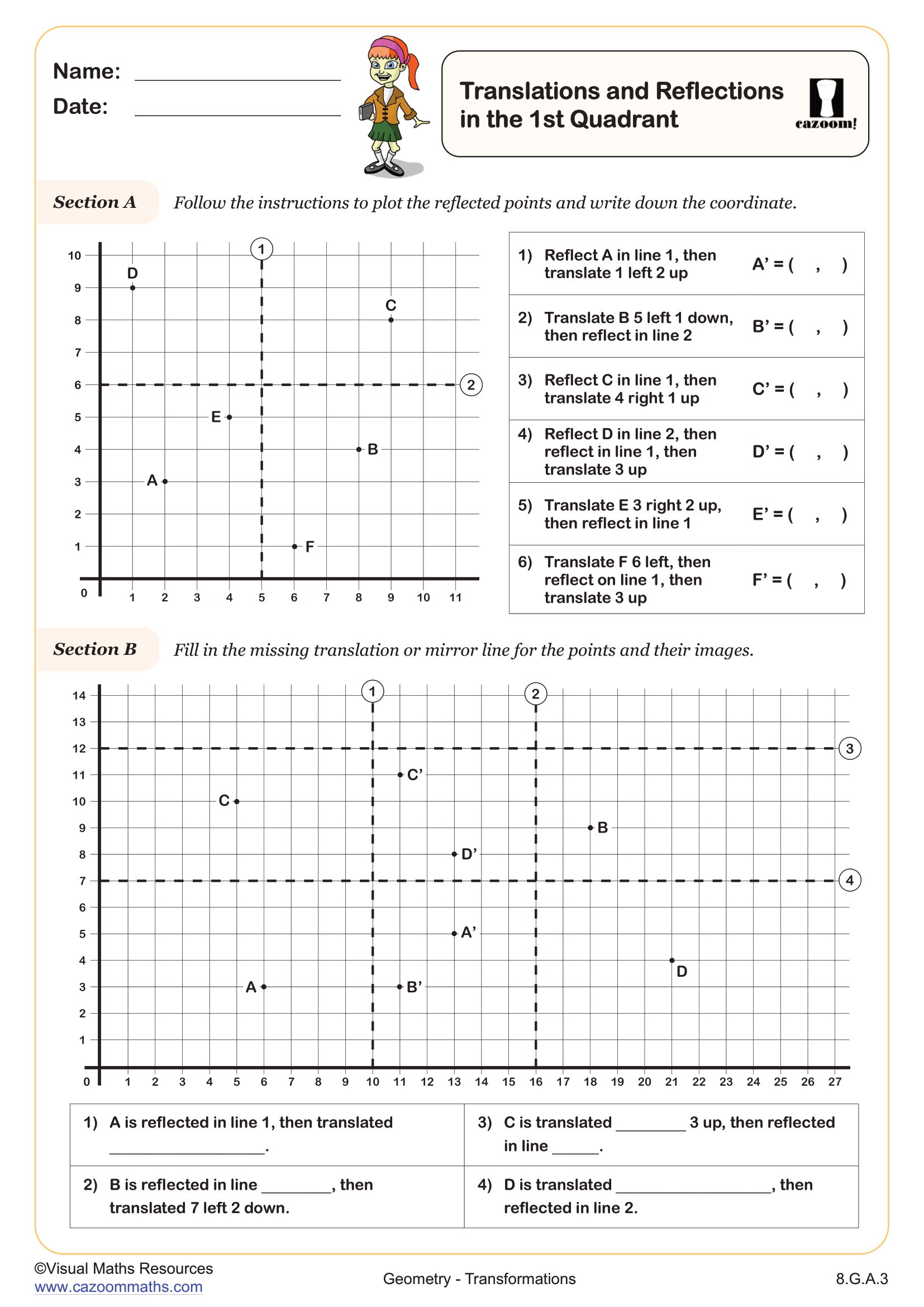
Translations and Reflections in the 1st Quadrant
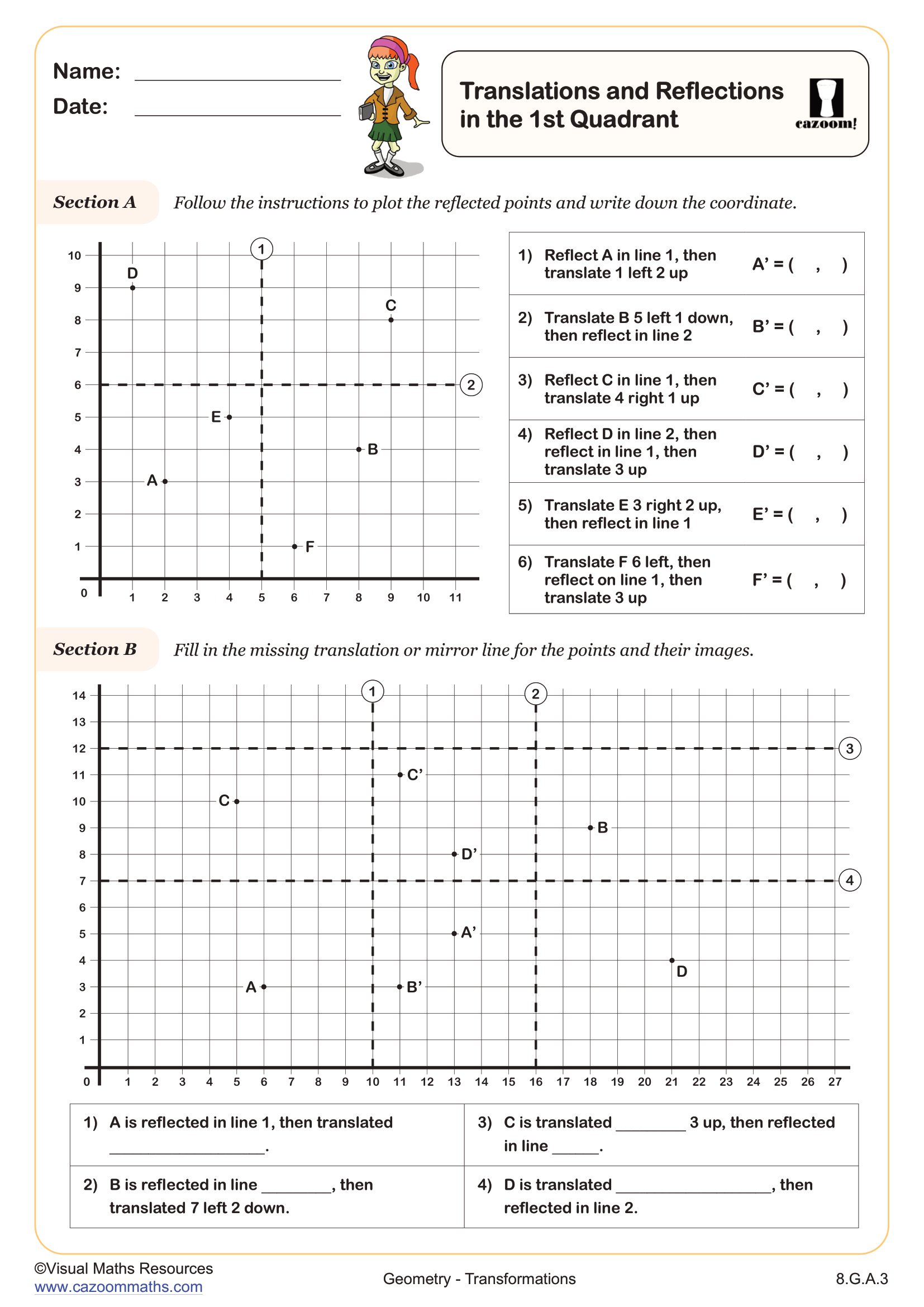
Translations in the 1st Quadrant (A)
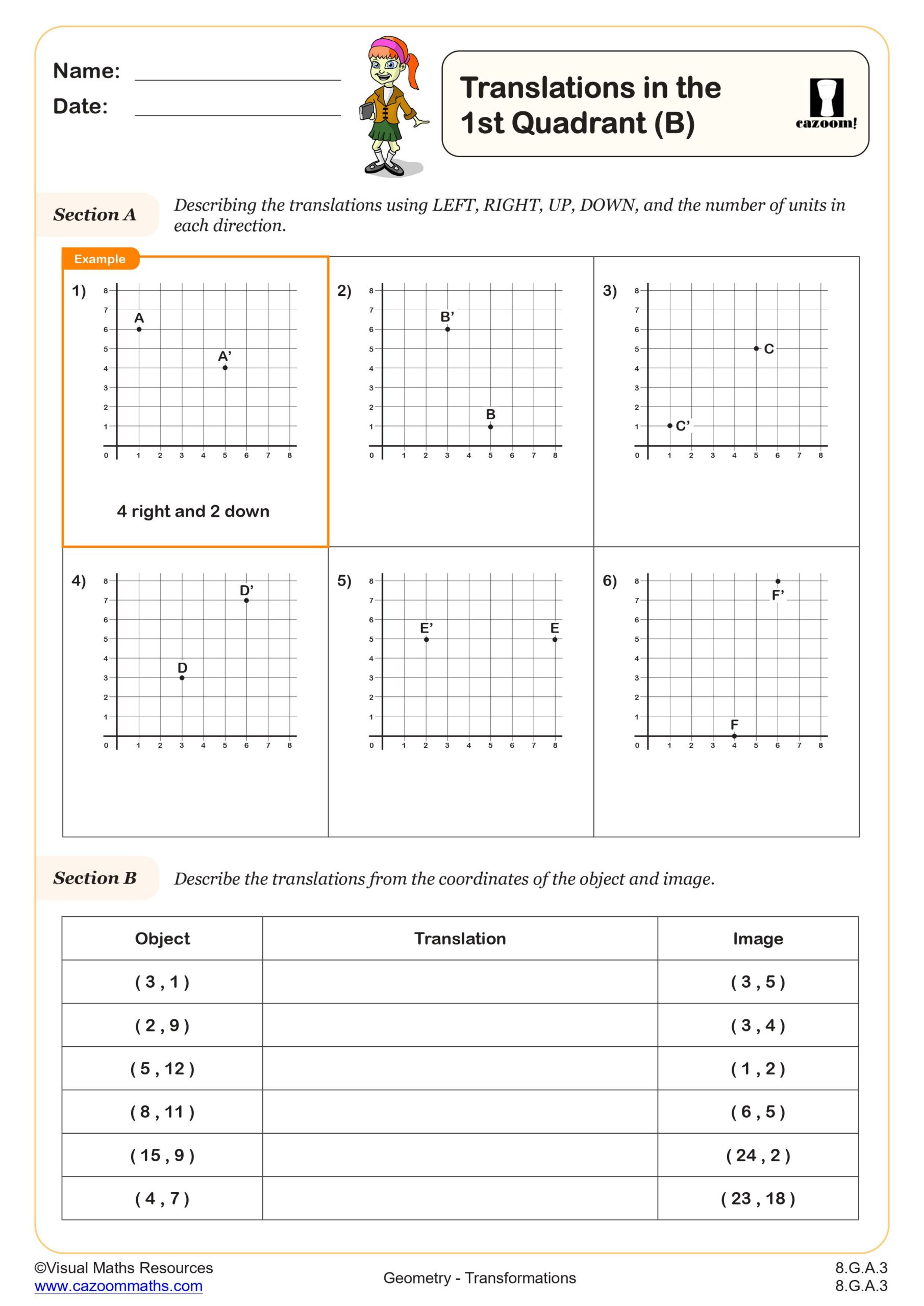
Translations in the 1st Quadrant (B)
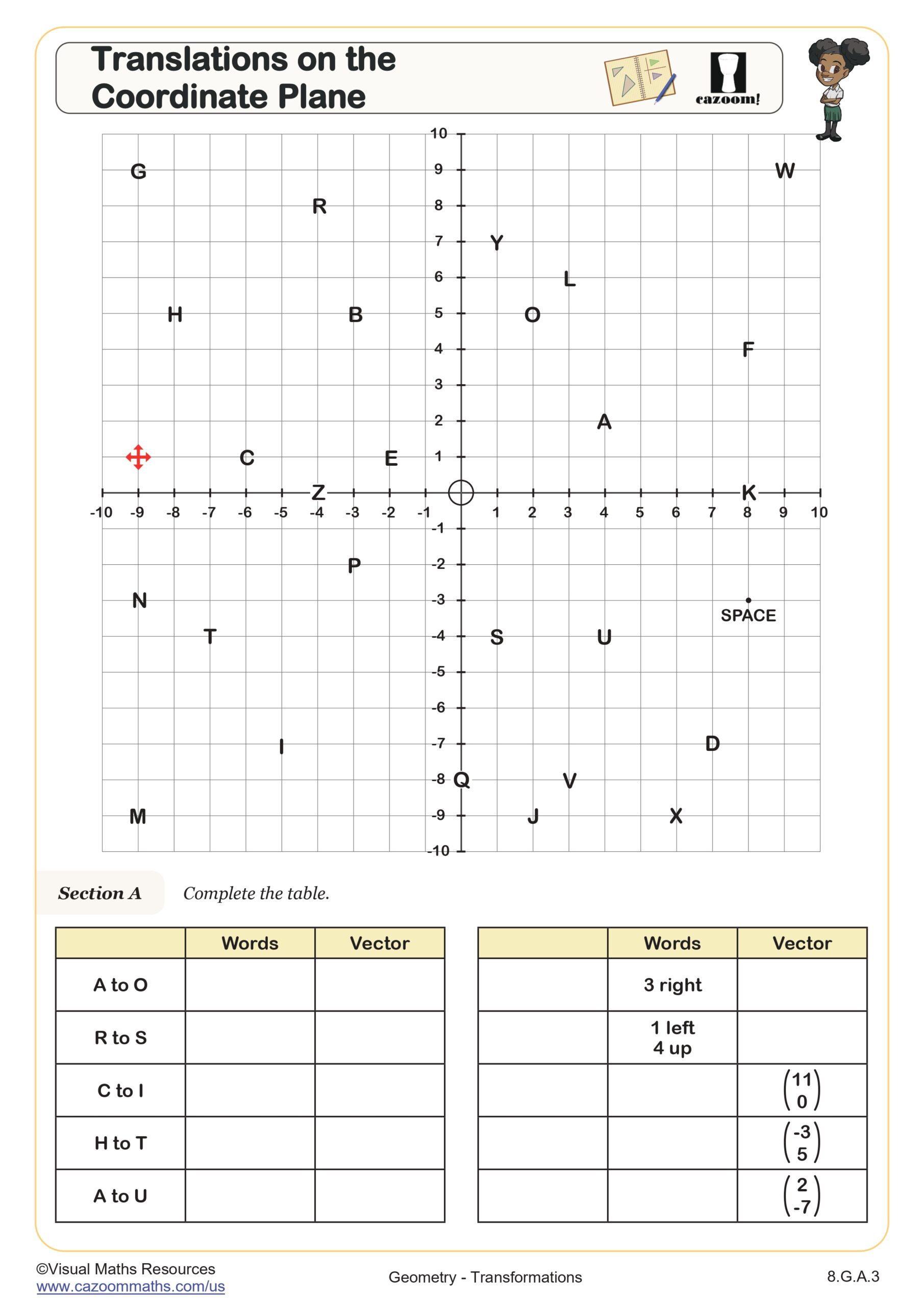
Translations on the Coordinate Plane
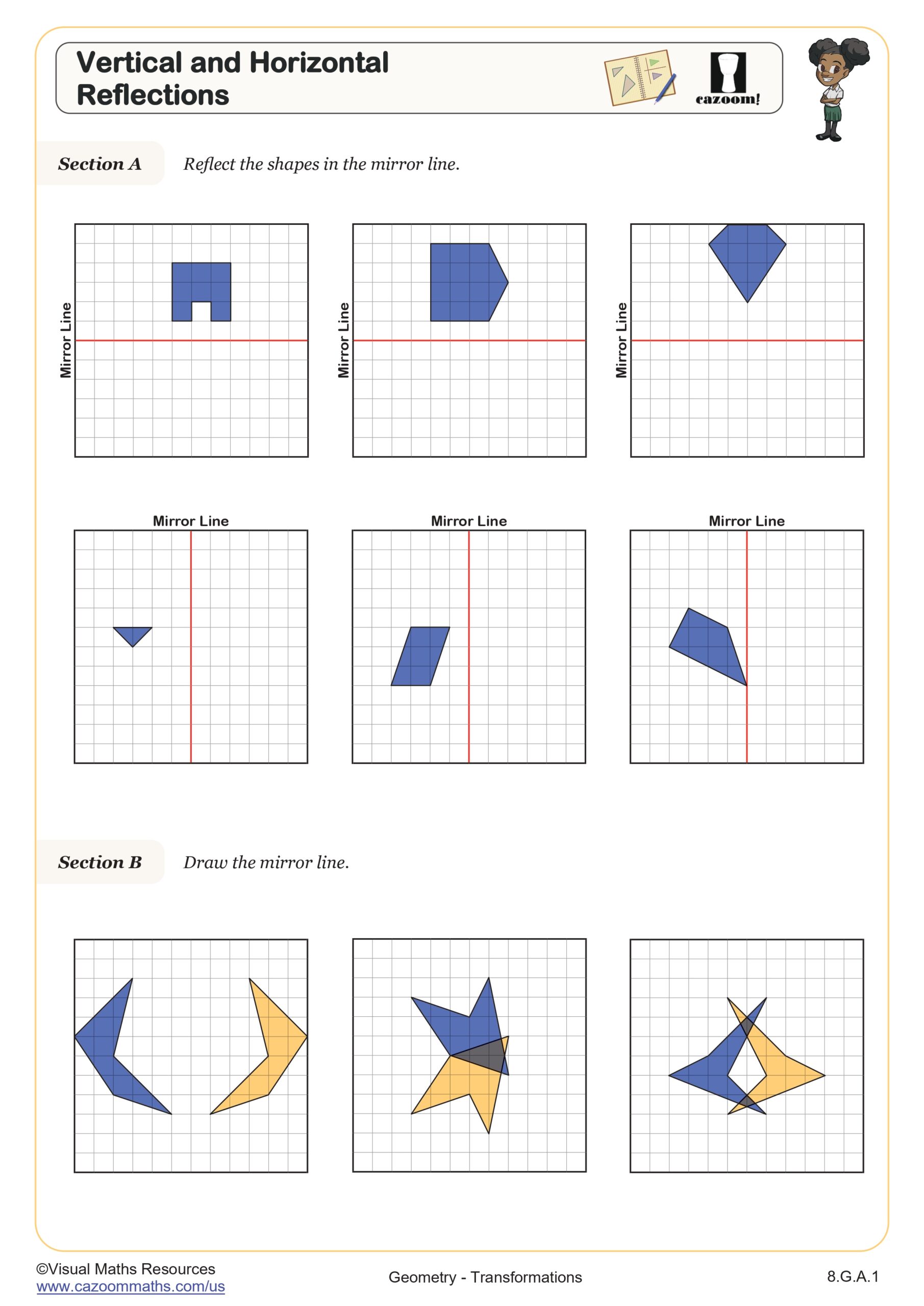
Vertical and Horizontal Reflections
All worksheets are created by the team of experienced teachers at Cazoom Math.
What should students expect from a geometry transformations worksheet?
A quality geometry transformations worksheet typically covers the four main types of transformations: translations (slides), rotations (turns), reflections (flips), and dilations (size changes). Students practice identifying transformations, performing them on coordinate planes, and describing them using proper mathematical language. Grade 8 transformations worksheets pdf formats often include both graphical and algebraic approaches to meet Common Core standards.
Teachers notice that students frequently confuse clockwise and counterclockwise rotations, especially when working with 90-degree turns. The most effective transformation worksheets 8th grade pdf with answers include step-by-step solutions showing the coordinate changes, helping students understand the systematic nature of each transformation type.
Which grade levels benefit most from transformations geometry worksheets?
Geometric transformations worksheets serve students across grades 6-8, with complexity increasing each year. Sixth graders typically begin with basic translations and reflections on grid paper, while seventh graders add rotations and simple coordinate work. Eighth grade students tackle all four transformation types using coordinate notation and algebraic descriptions.
Transformation worksheet grade 8 materials often emphasize the connection between transformations and congruence or similarity. Teachers find that students who master these concepts in middle school show significantly stronger performance in high school geometry, particularly when studying symmetry, tessellations, and proof writing.
How do transformations worksheets address coordinate plane skills?
Transformation geometry worksheets integrate coordinate plane work throughout all four transformation types. Students learn specific rules like (x, y) → (x + a, y + b) for translations and (x, y) → (-x, y) for reflections across the y-axis. This algebraic approach strengthens both geometry and algebra skills simultaneously.
Teachers observe that students often make sign errors when applying transformation rules, particularly with reflections and rotations. The best geometric transformation worksheets include plenty of practice with both positive and negative coordinates, helping students recognize patterns and avoid common calculation mistakes that cost points on assessments.
What makes geometry worksheets transformations effective for classroom use?
Effective transformations worksheet geometry materials provide clear visual examples alongside algebraic representations. Teachers find success when worksheets progress from concrete grid-based problems to abstract coordinate plane work. Answer keys become crucial for immediate feedback, especially when students work independently or in small groups.
Classroom teachers recommend using these worksheets as warm-up activities, homework assignments, or review materials before tests. Students benefit when worksheets connect transformations to real-world contexts like video game design, architectural blueprints, or satellite imagery, making abstract concepts more meaningful and memorable.