Middle School Lines and Angles Worksheets With Answers
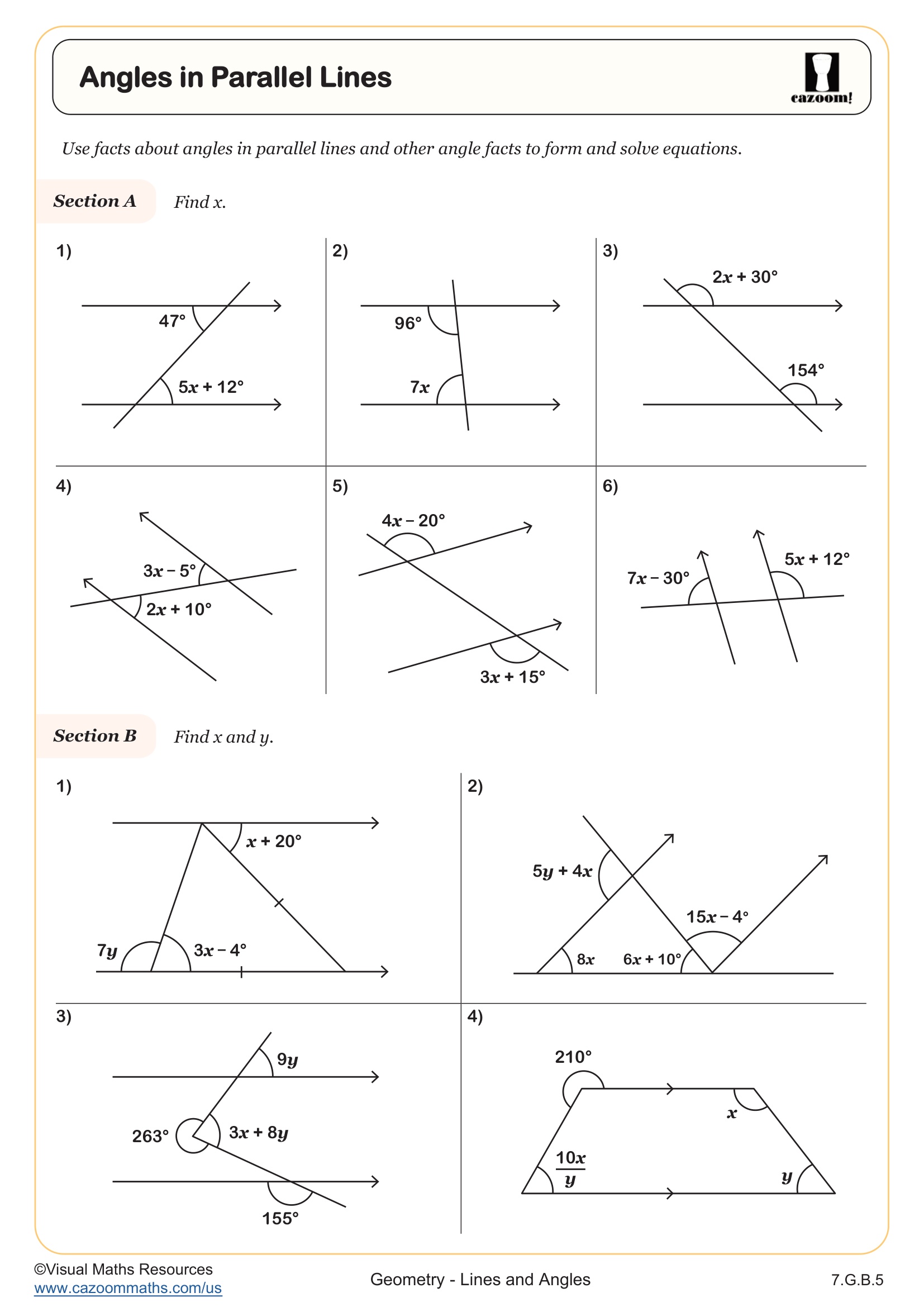
Algebraic Angles in Parallel Lines
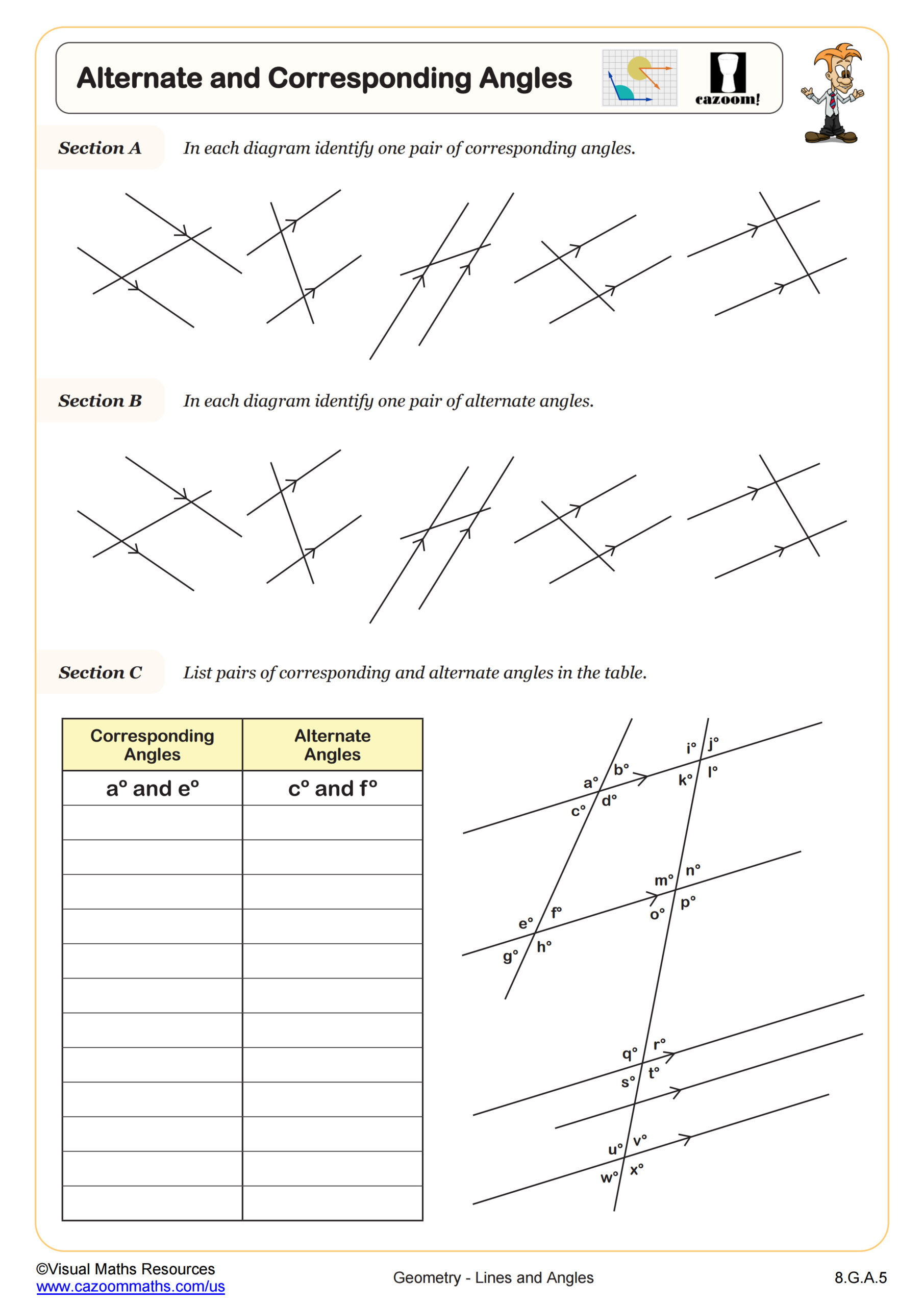
Alternate and Corresponding Angles
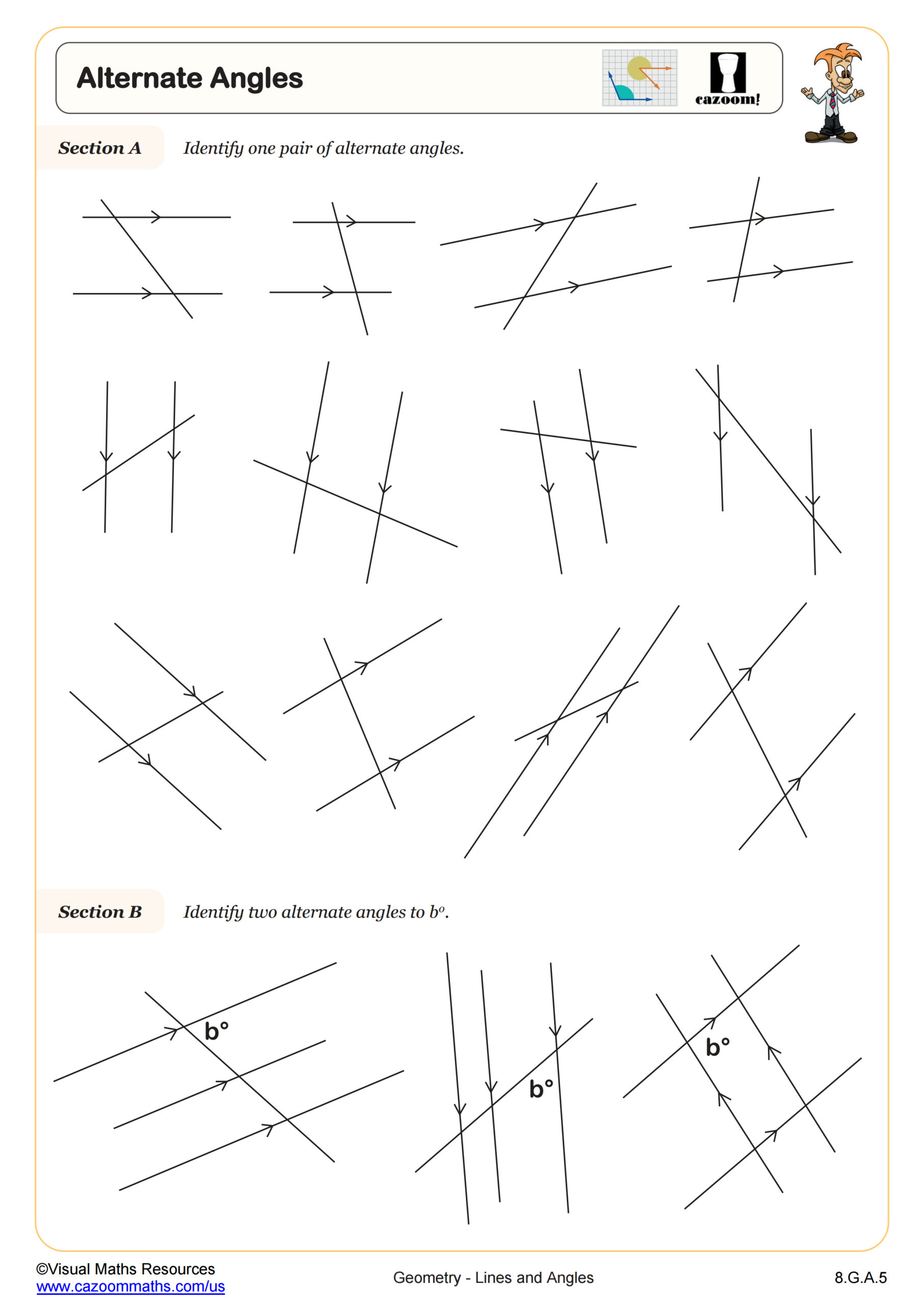
Alternate Angles
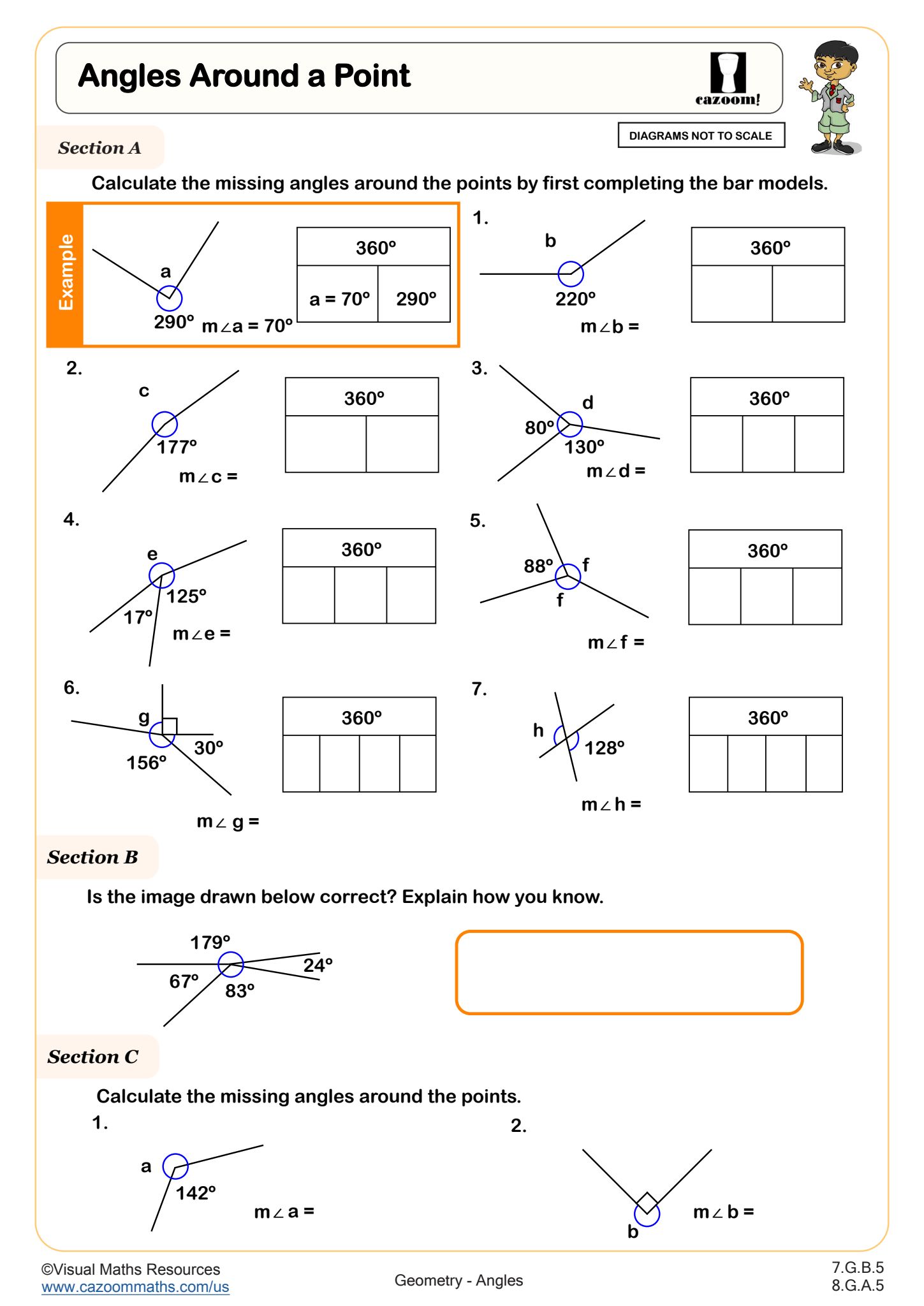
Angles Around a Point
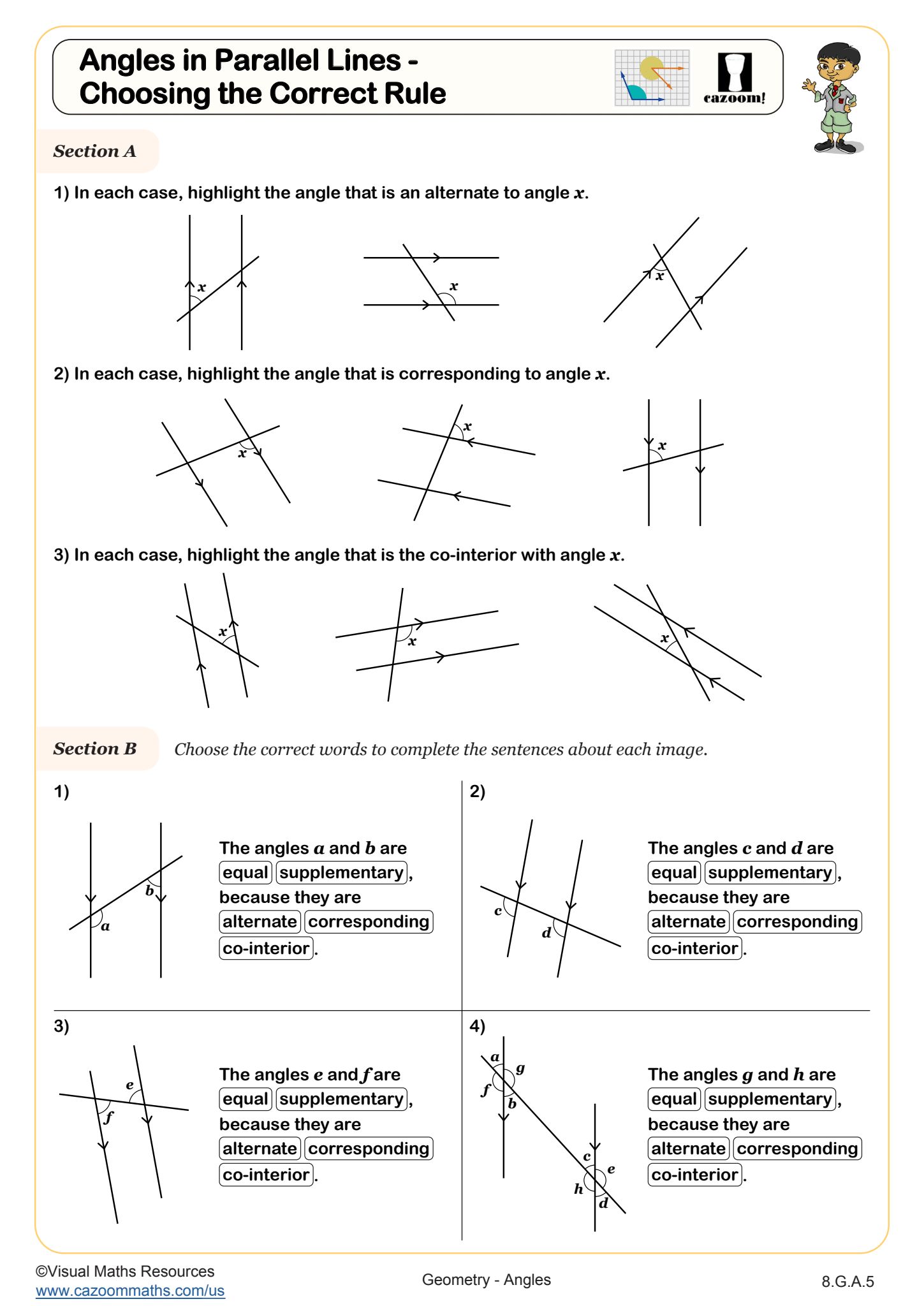
Angles in Parallel Lines - Choosing the Correct Rule
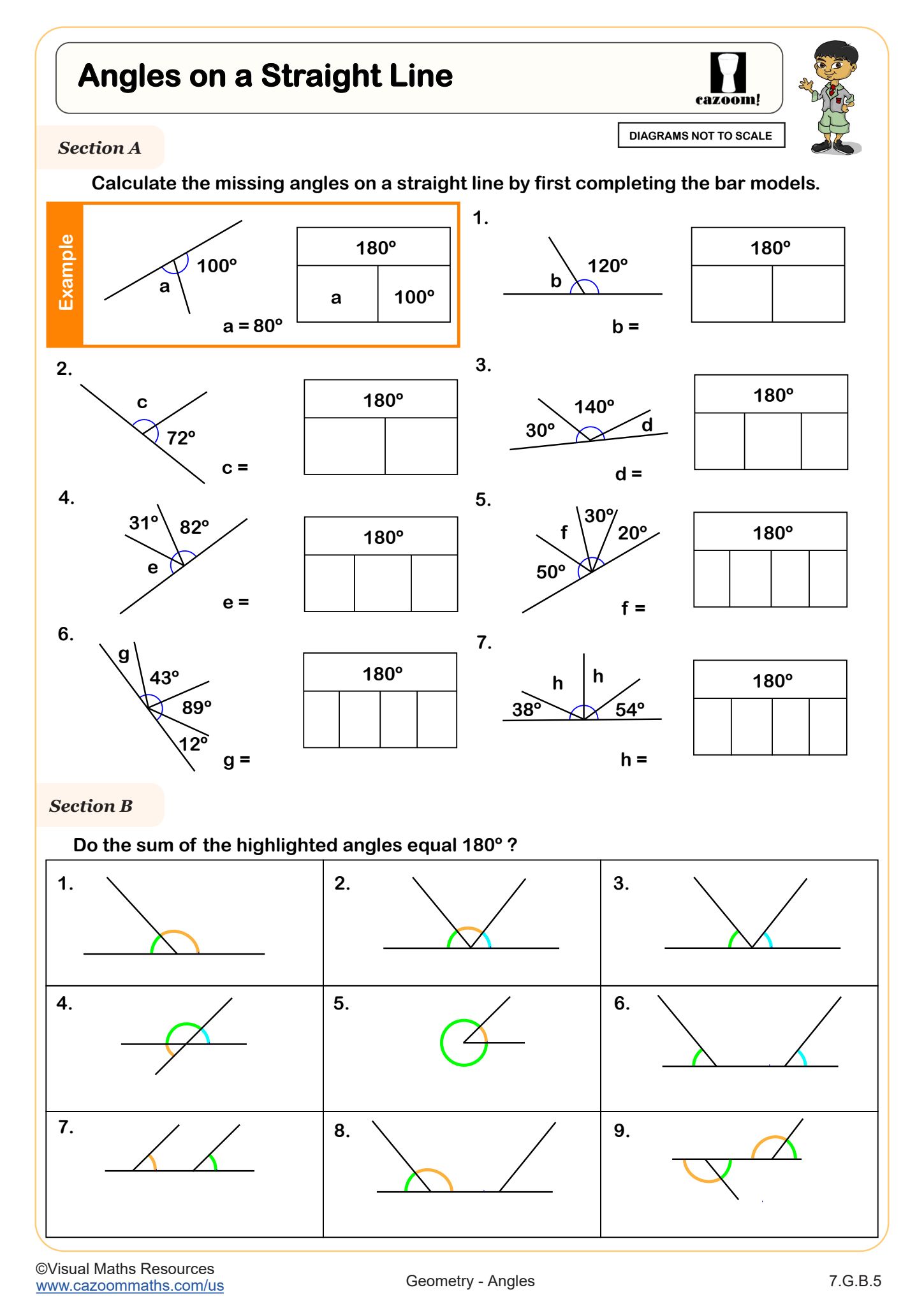
Angles on a Straight Line
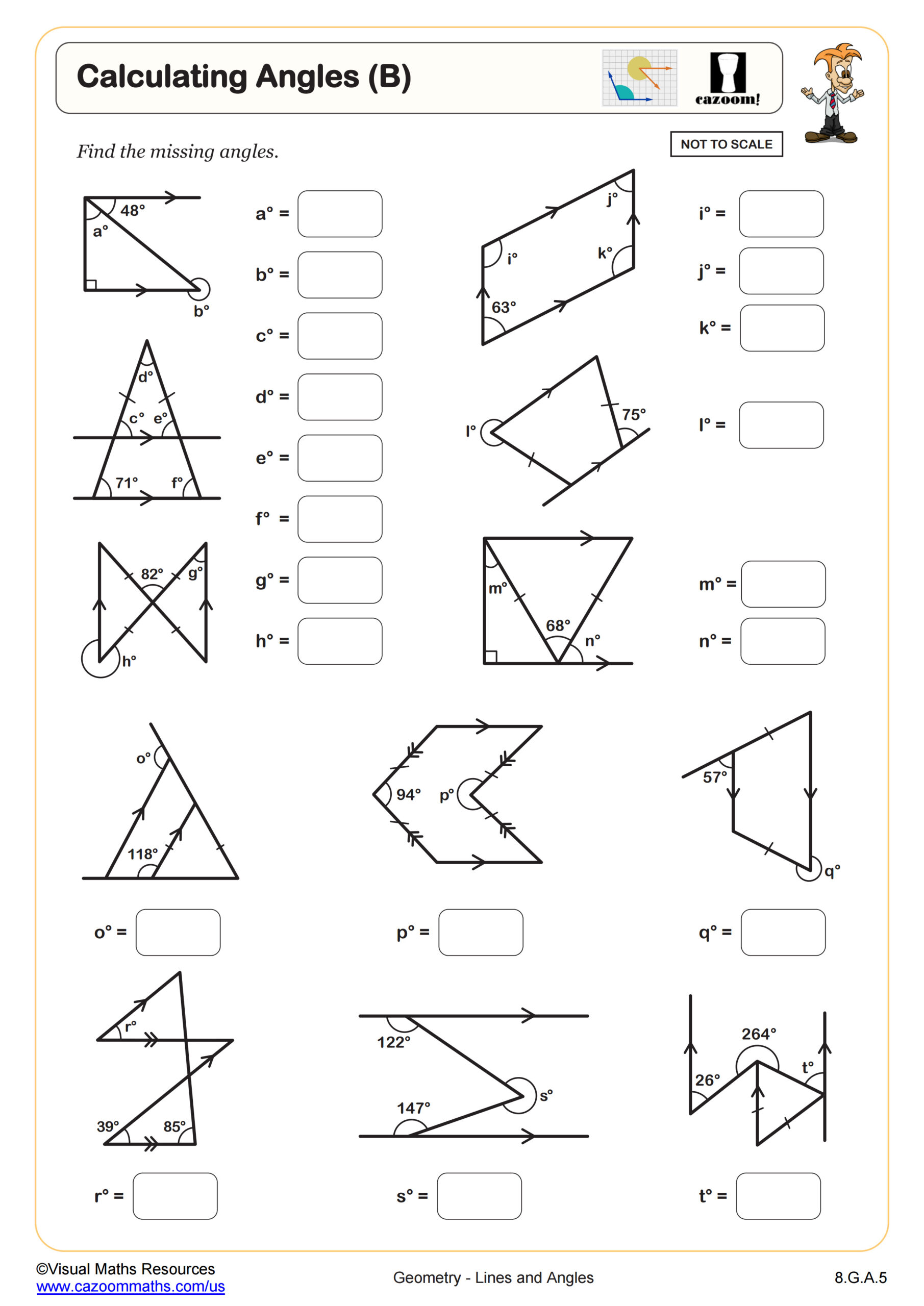
Calculating Angles (B)
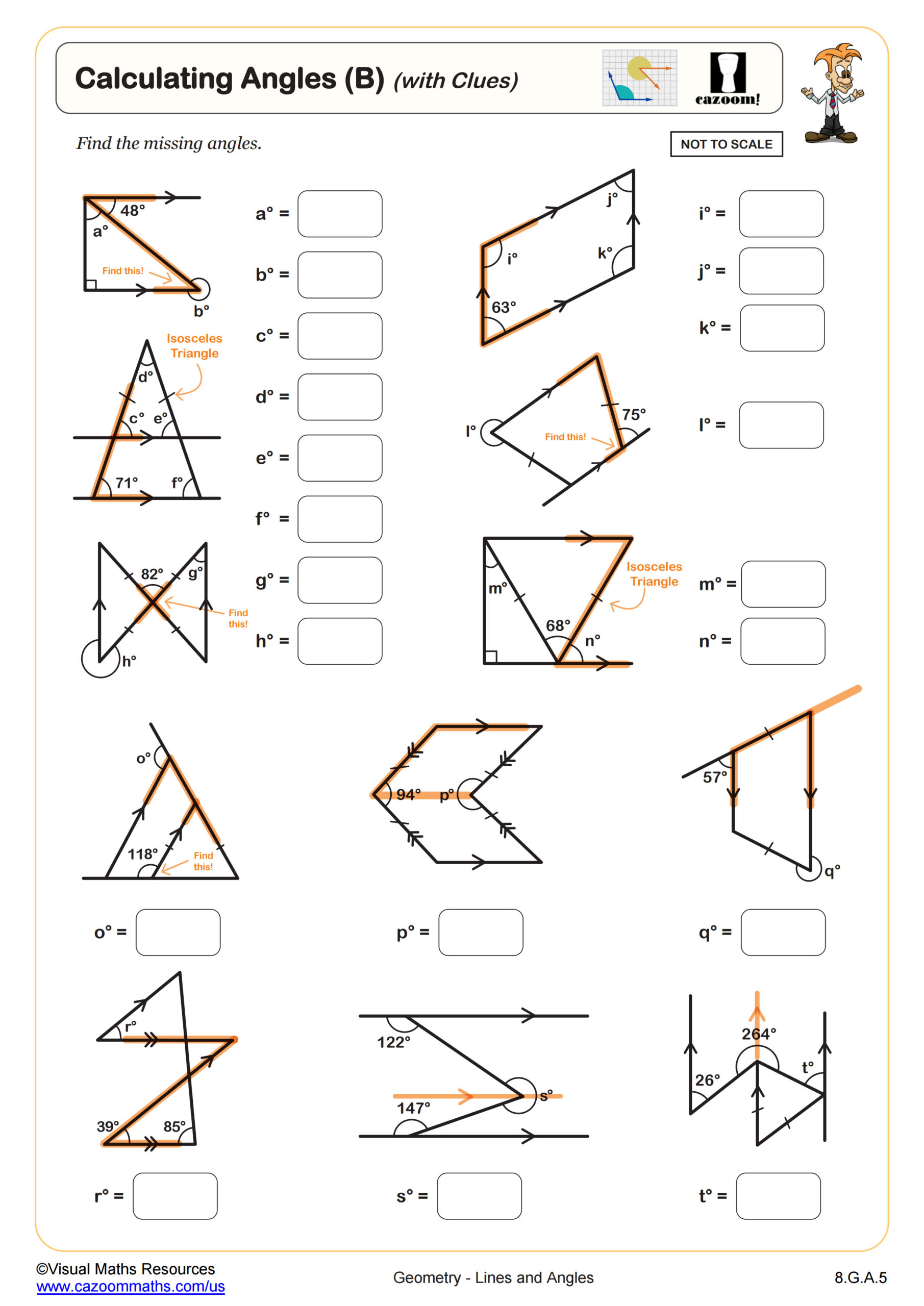
Calculating Angles (B) (With Clues)
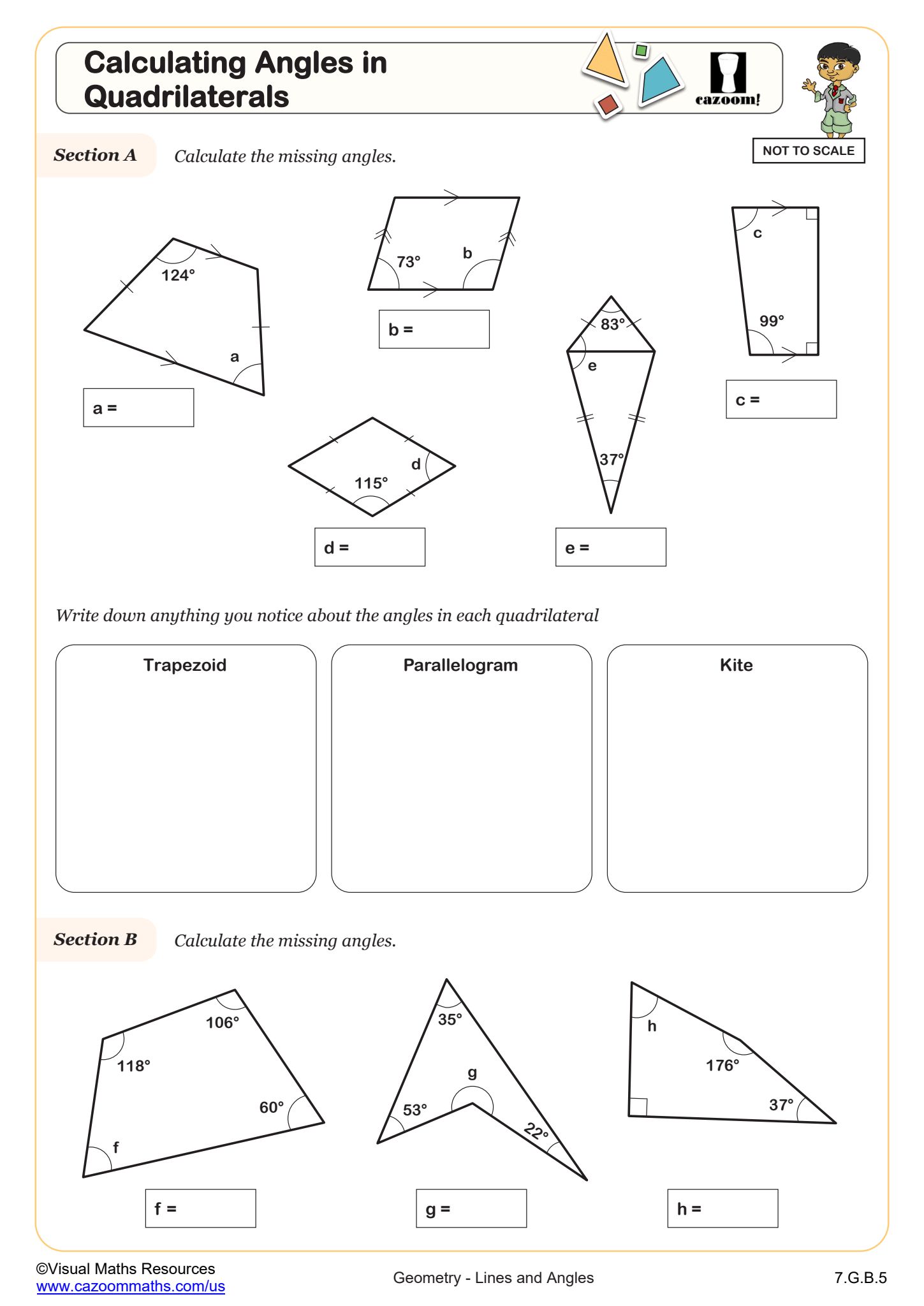
Calculating Angles in Quadrilaterals
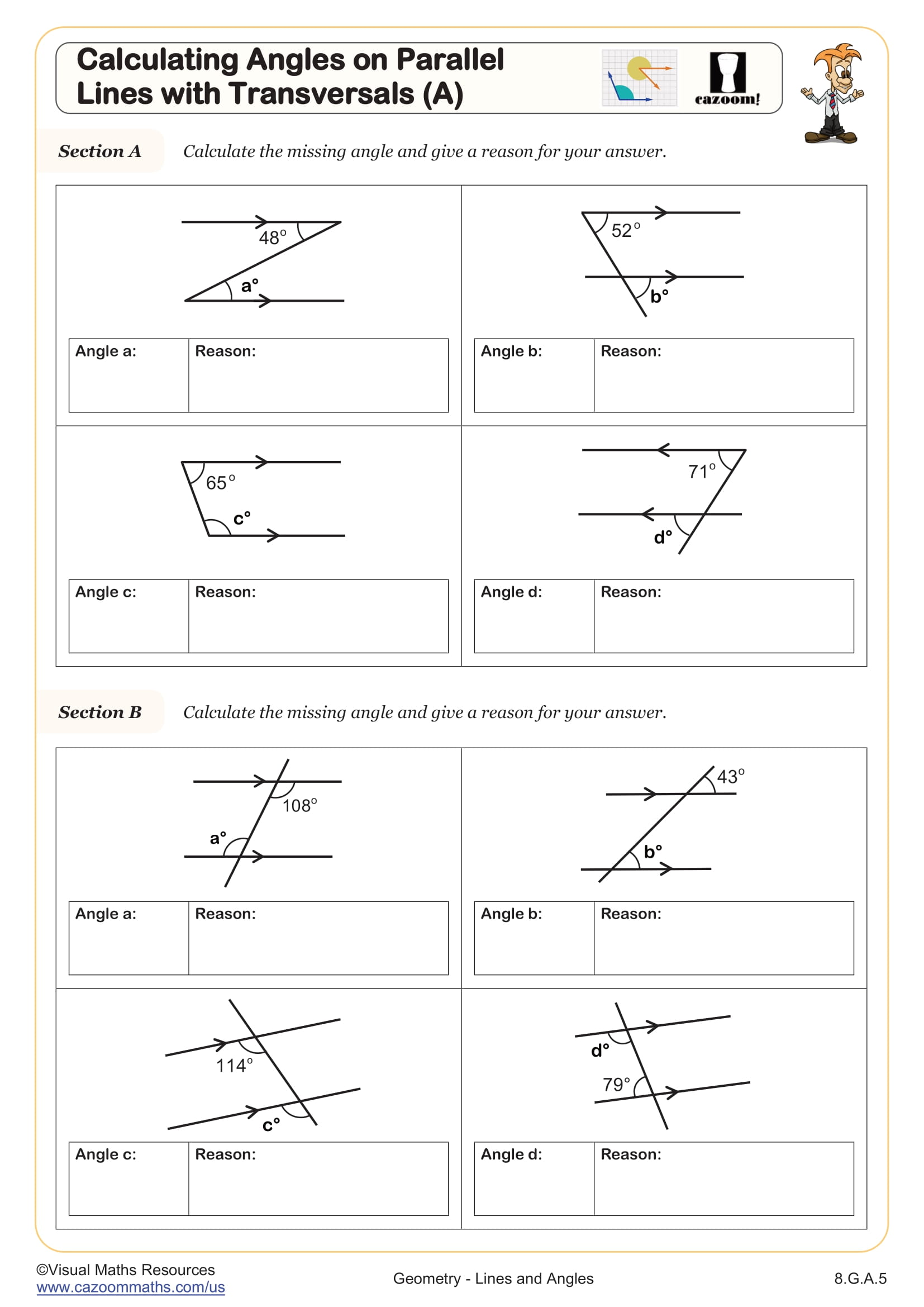
Calculating Angles on Parallel Lines with Transversals (A)
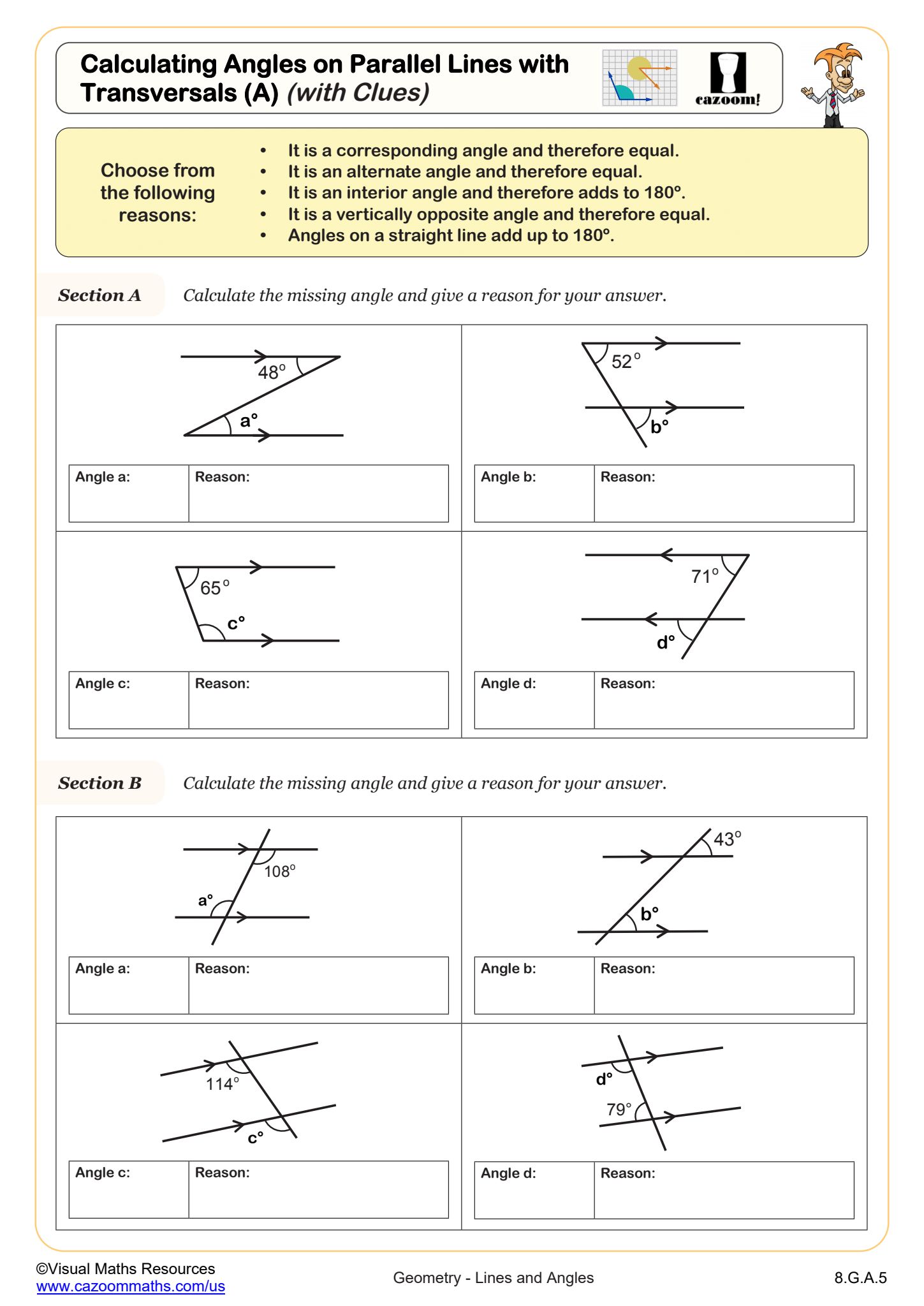
Calculating Angles on Parallel Lines with Transversals (A) (with clues)
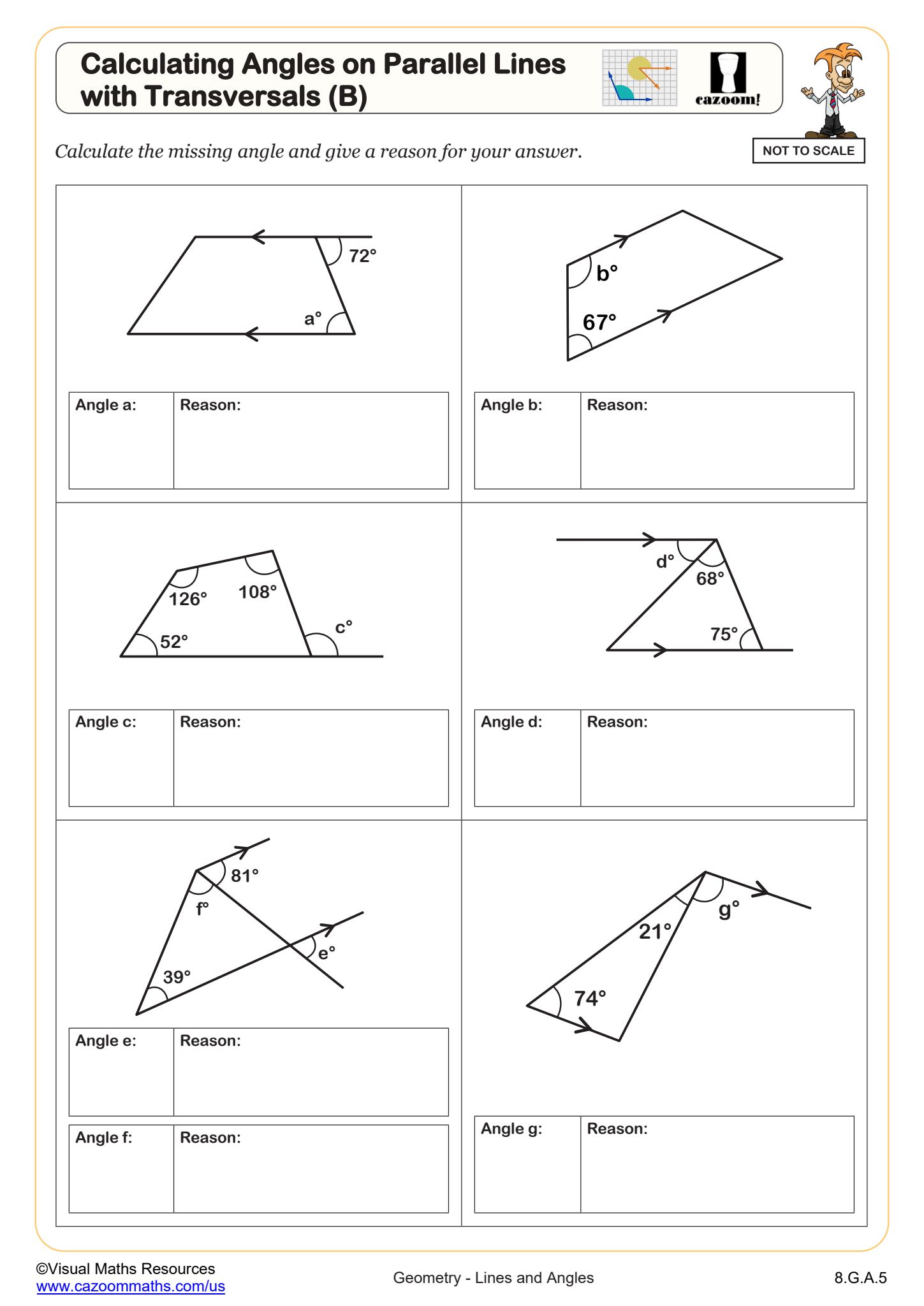
Calculating Angles on Parallel Lines with Transversals (B)
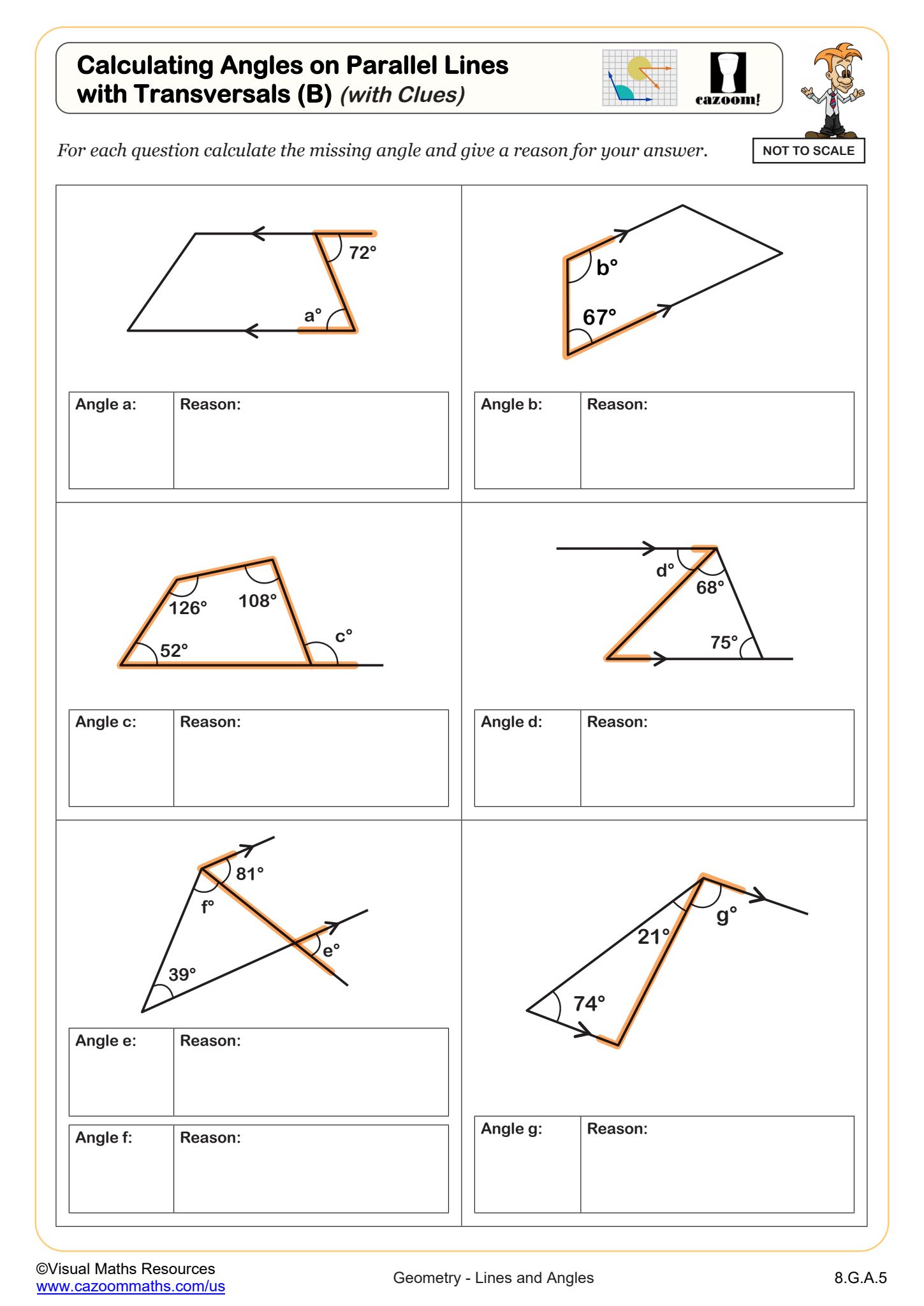
Calculating Angles on Parallel Lines with Transversals (B) (with clues)
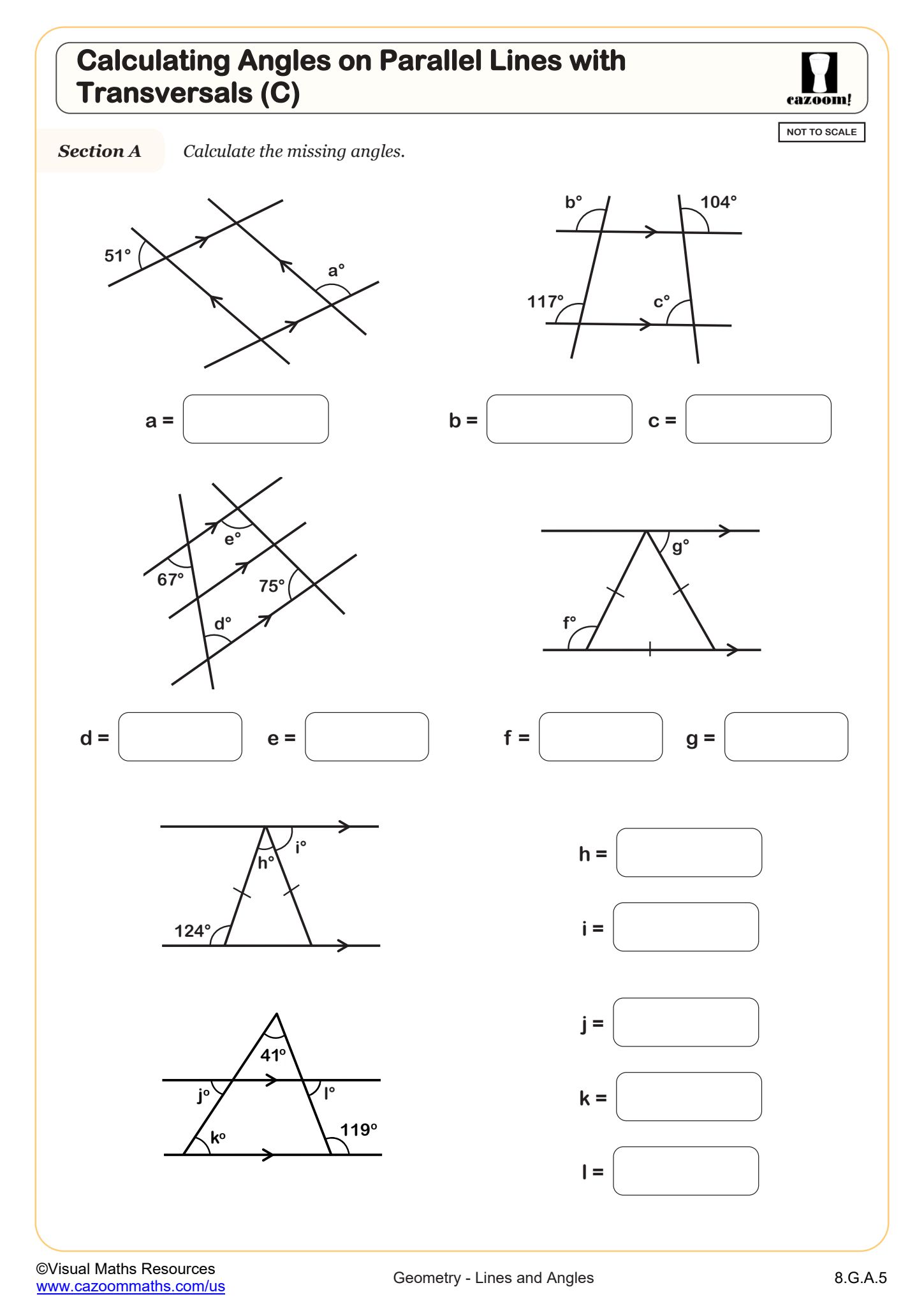
Calculating Angles on Parallel Lines with Transversals (C)
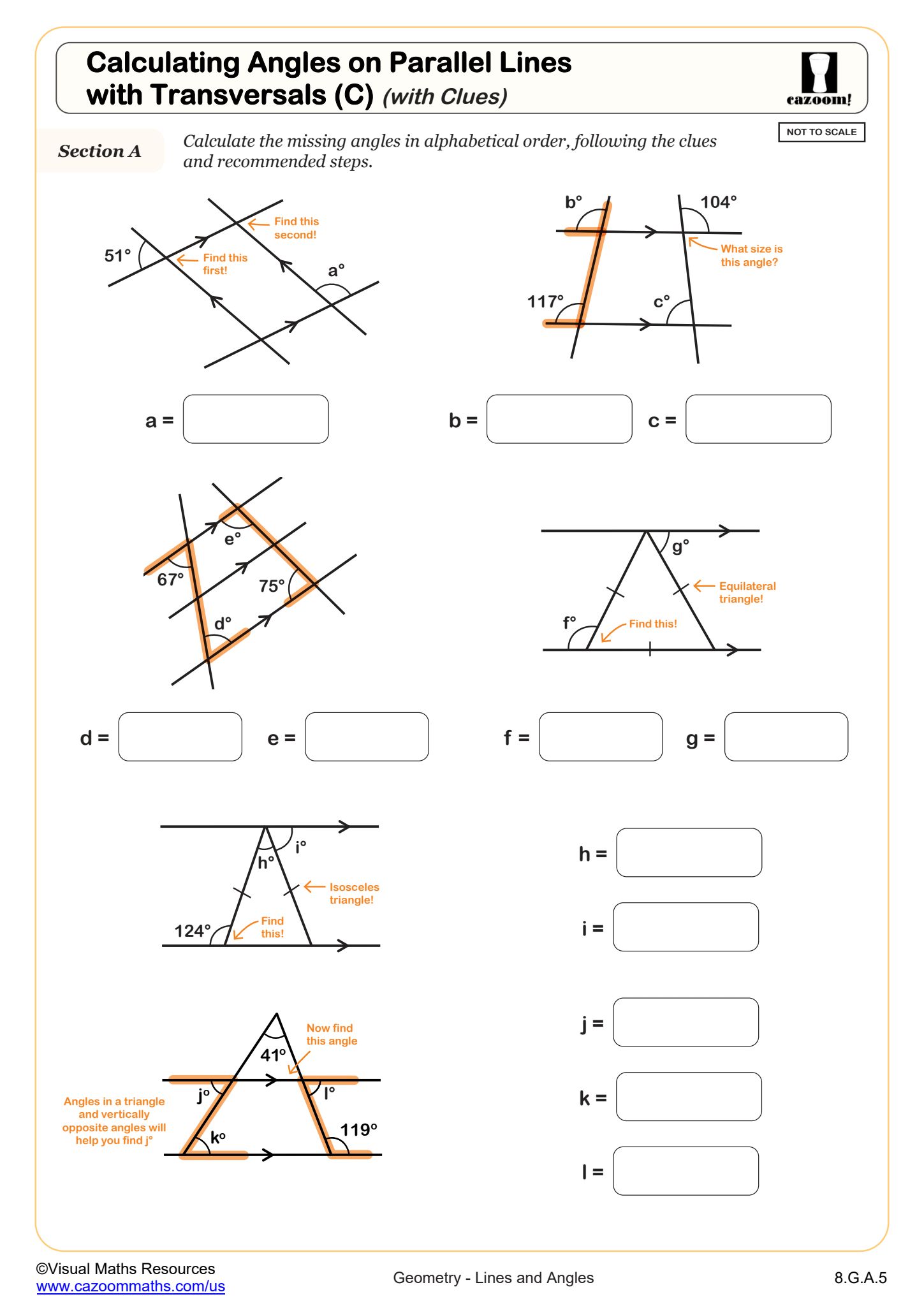
Calculating Angles on Parallel Lines with Transversals (C) (with clues)
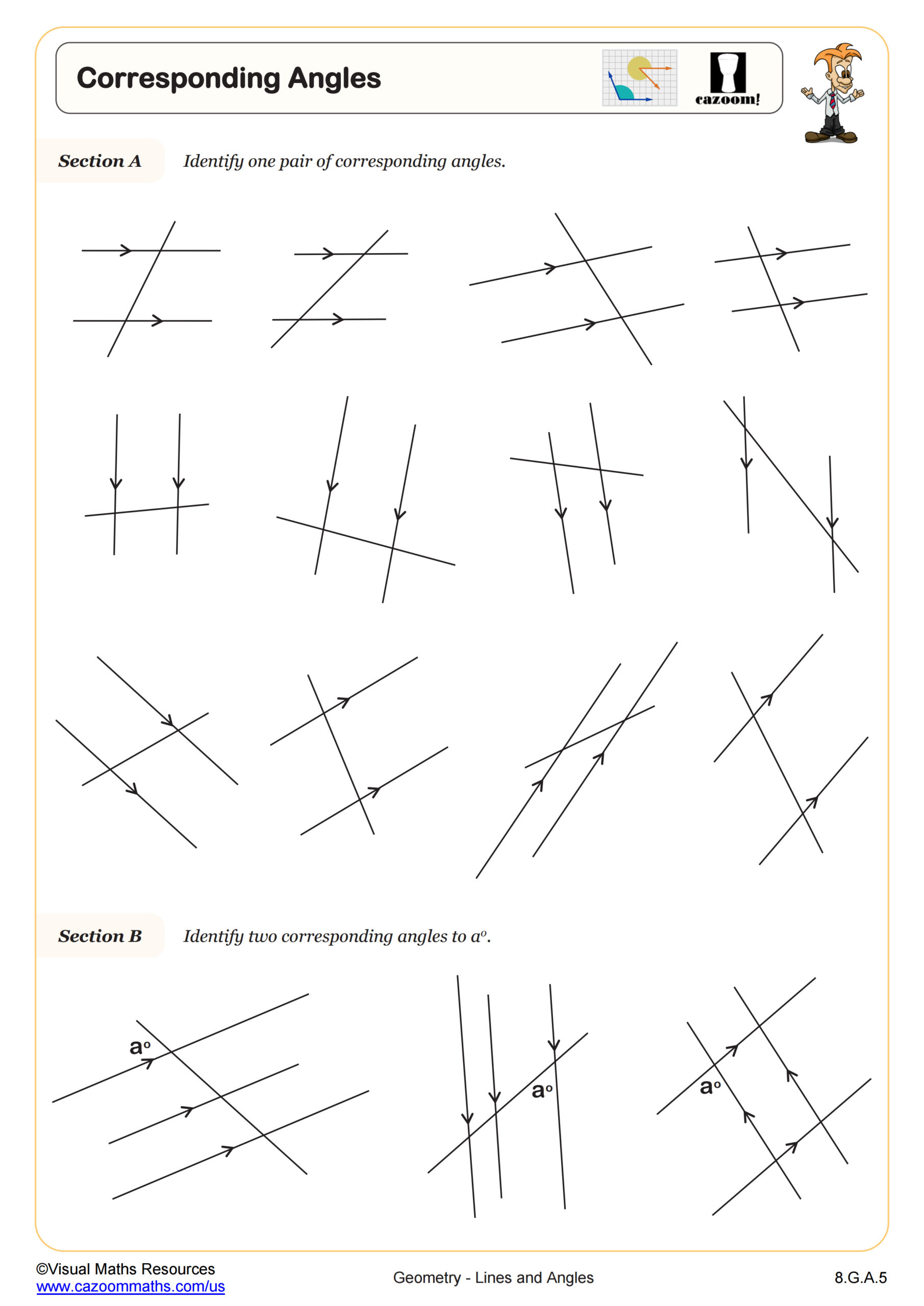
Corresponding Angles
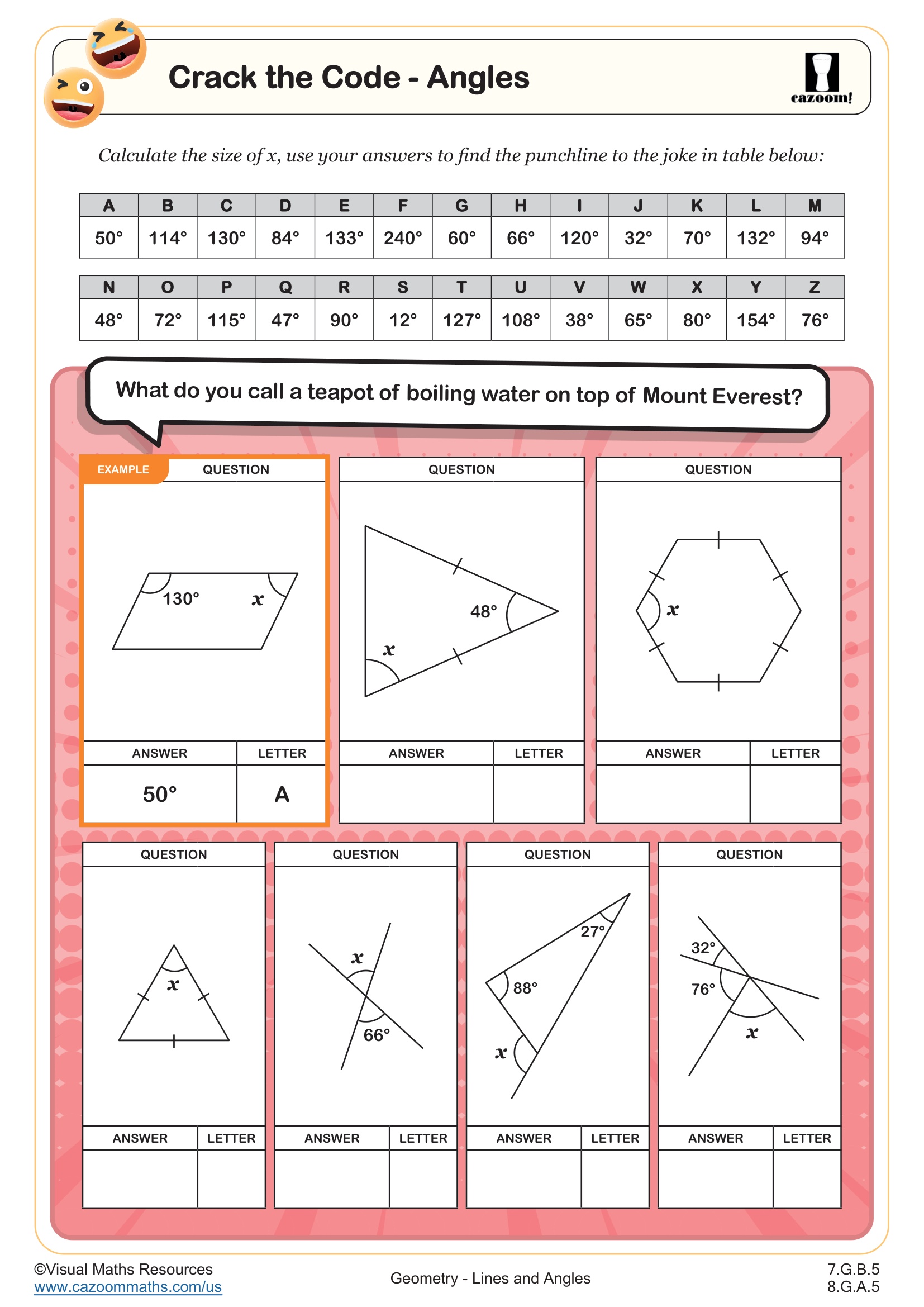
Crack the Code - Angles
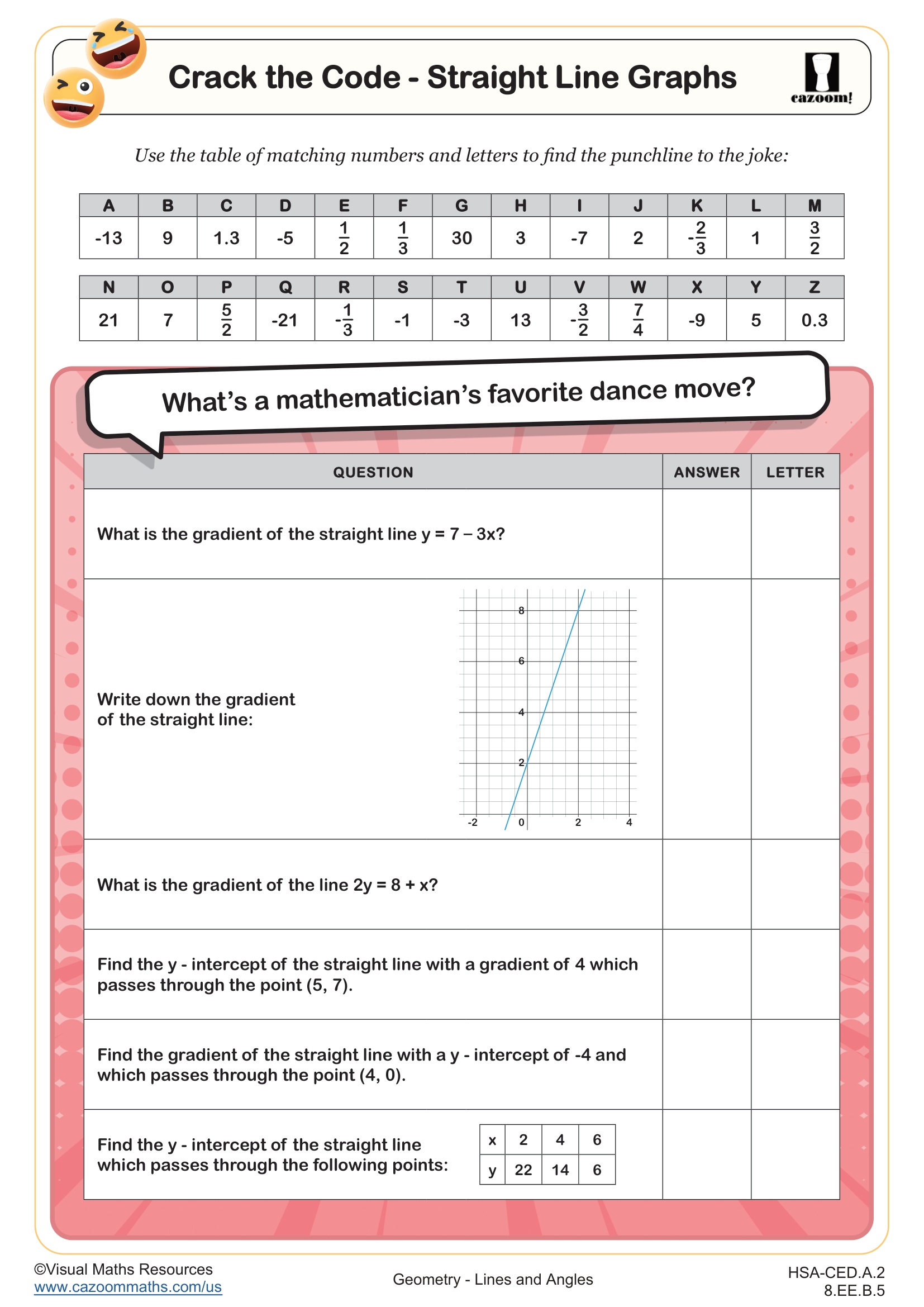
Crack the Code - Straight Line Graphs
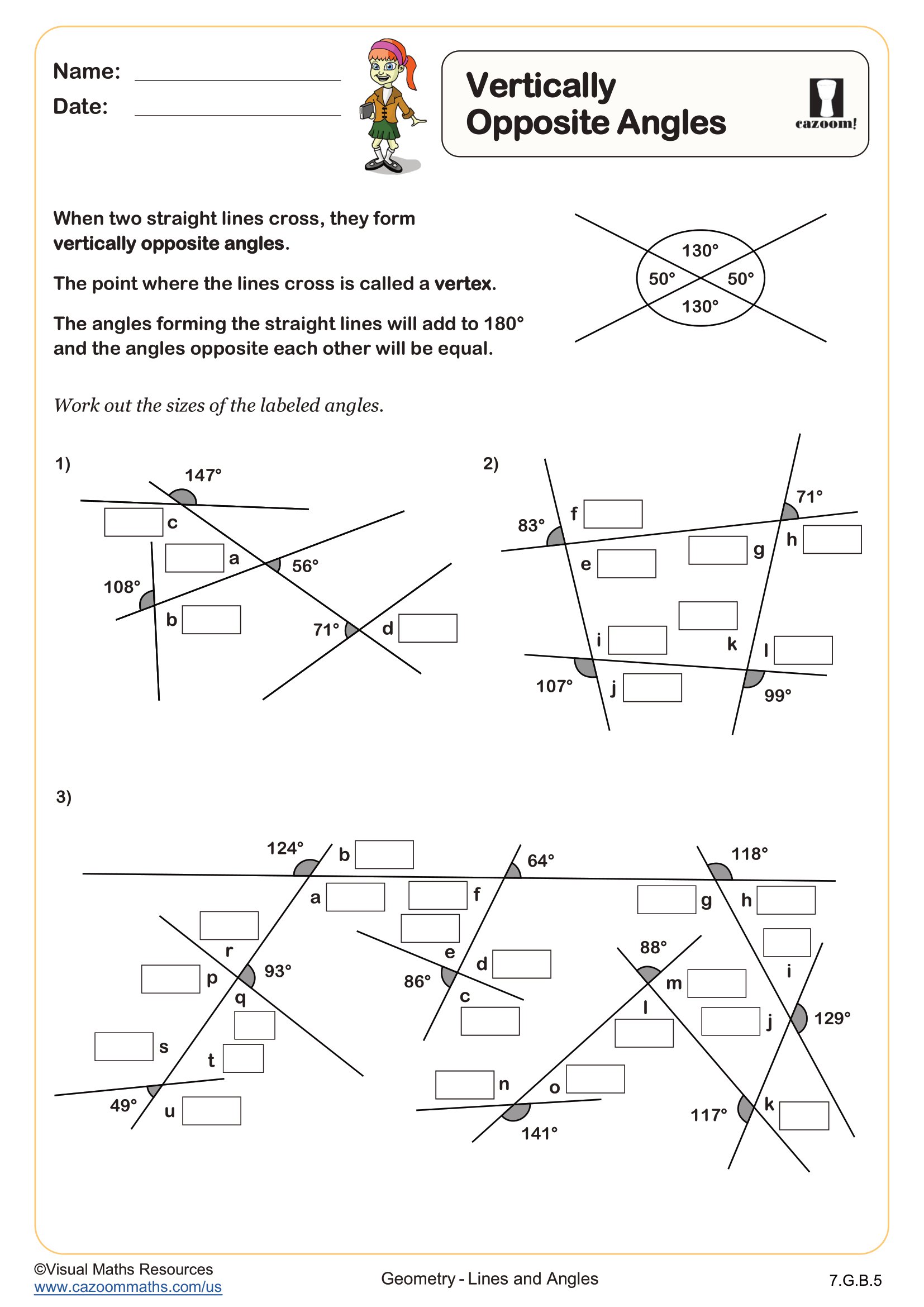
Vertically Opposite Angles
All worksheets are created by the team of experienced teachers at Cazoom Math.
Where can Teachers find calculating angles on parallel lines with transversals (c) answers?
All worksheets in this collection include detailed answer keys that show complete solutions for calculating angles on parallel lines with transversals c problems and similar exercises. These answer keys display step-by-step work for identifying corresponding angles, alternate interior angles, alternate exterior angles, and co-interior angle relationships.
Teachers notice that students often memorize angle names without understanding the underlying relationships, leading to incorrect applications. The answer keys specifically highlight which angle theorem applies in each situation, helping students develop systematic approaches to parallel line problems rather than relying on guesswork.
Which grade levels use these lines and angles worksheets most effectively?
These worksheets align with Common Core standards for grades 7-8, though many teachers successfully use them with advanced 6th graders or struggling 9th grade students. The progression moves from basic angle identification through complex parallel line calculations, matching typical middle school geometry sequences.
Teachers report that 7th graders often need additional scaffolding with vocabulary before tackling transversal problems, while 8th graders can typically handle the full range of exercises. The answer keys help teachers identify exactly where individual students need additional support, making differentiation more manageable in mixed-ability classrooms.
How do students typically approach vertical and adjacent angle problems?
Students generally master vertical angles quickly since the concept connects to their intuitive understanding of opposite positioning. However, adjacent angles cause more confusion because students sometimes assume all angles sharing a vertex are supplementary, even when they don't form linear pairs.
Math teachers find that drawing additional examples helps students distinguish between adjacent angles that are supplementary versus those that simply share a vertex. The worksheets provide varied diagrams that specifically target this misconception, helping students develop more precise reasoning about angle relationships before moving to parallel line applications.
What's the most effective way to use these worksheets for test preparation?
Teachers achieve best results by assigning worksheets in short, focused sessions rather than lengthy problem sets. Students retain angle relationship concepts better when they complete 8-10 problems with immediate feedback from answer keys, then discuss any errors before moving forward.
Many teachers use these worksheets as warm-up activities during the week leading to geometry assessments. The answer keys allow students to self-check their work during review sessions, freeing teachers to provide targeted help where students show persistent confusion. This approach builds confidence while identifying specific areas needing additional review.