Middle School Pythagorean Theorem Worksheets
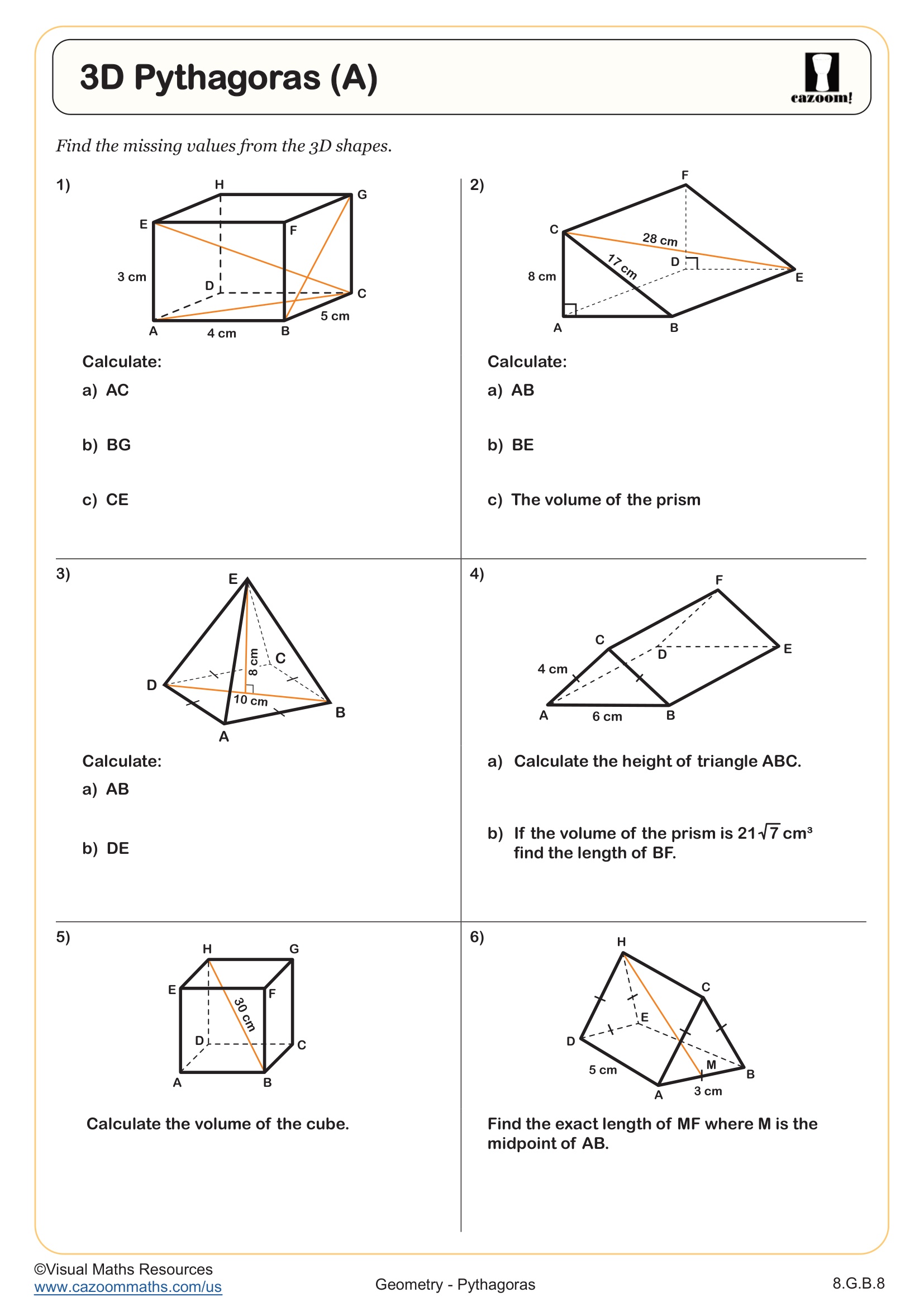
3D Pythagoras (A)
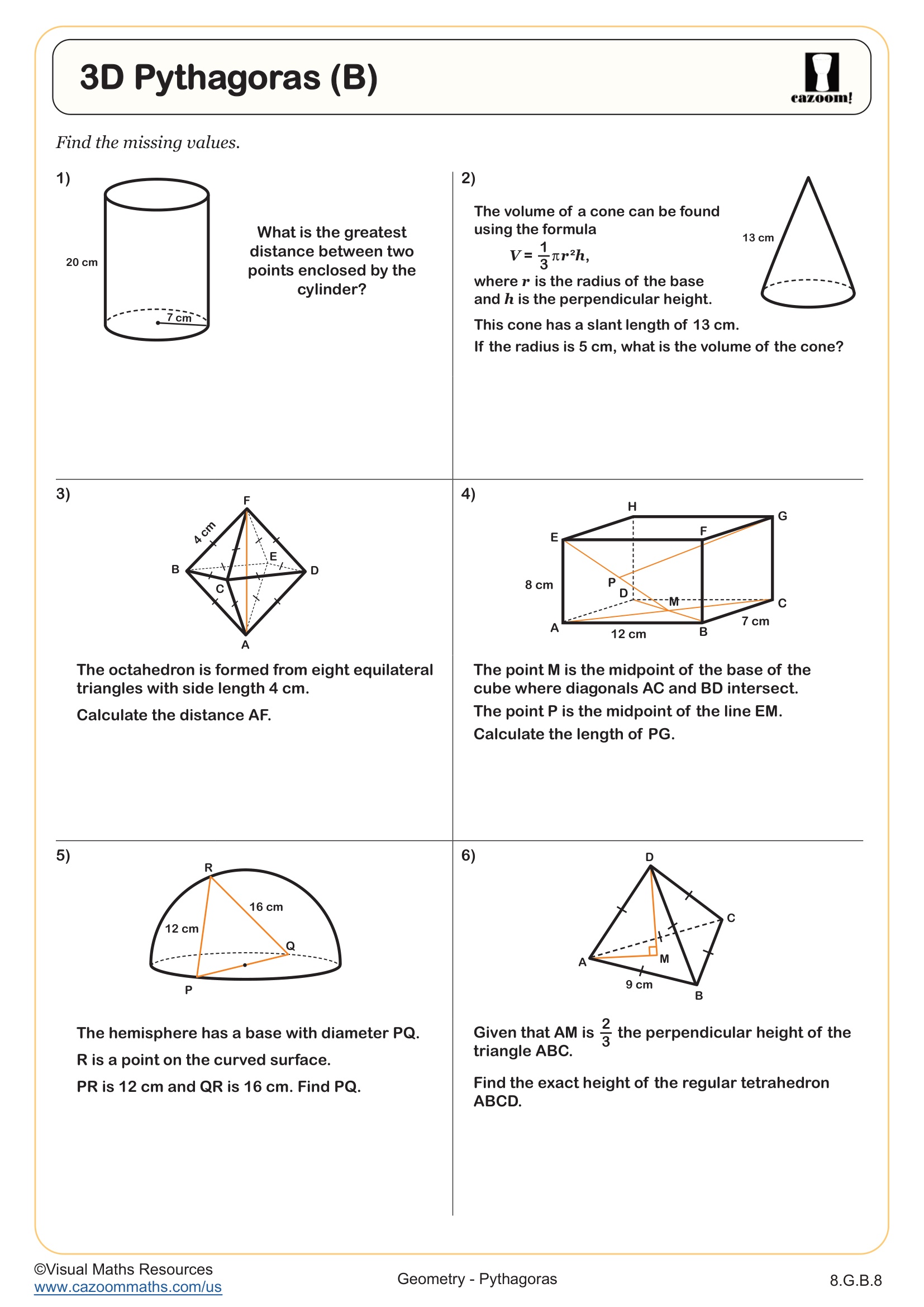
3D Pythagoras (B)
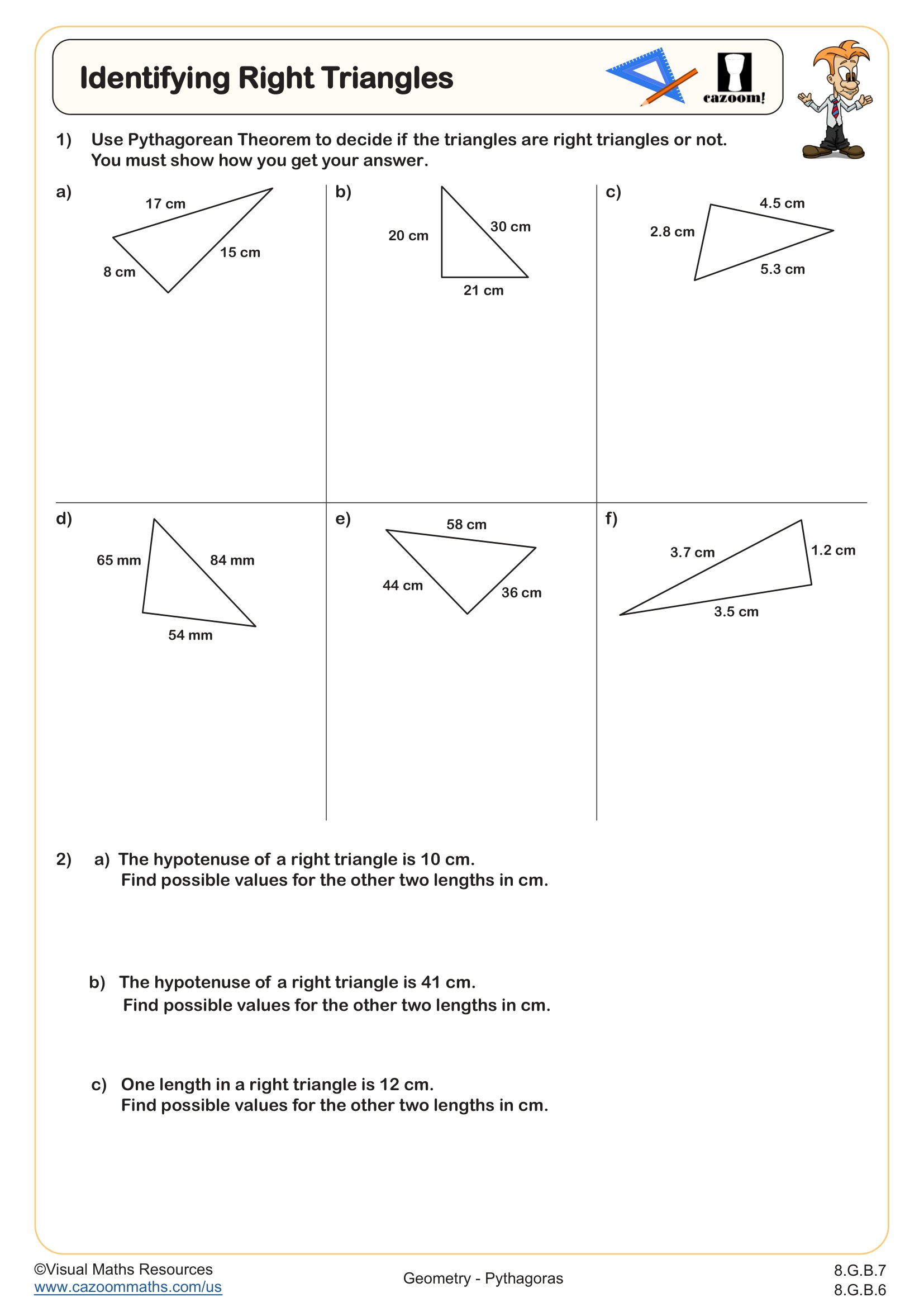
Identifying Right Triangles
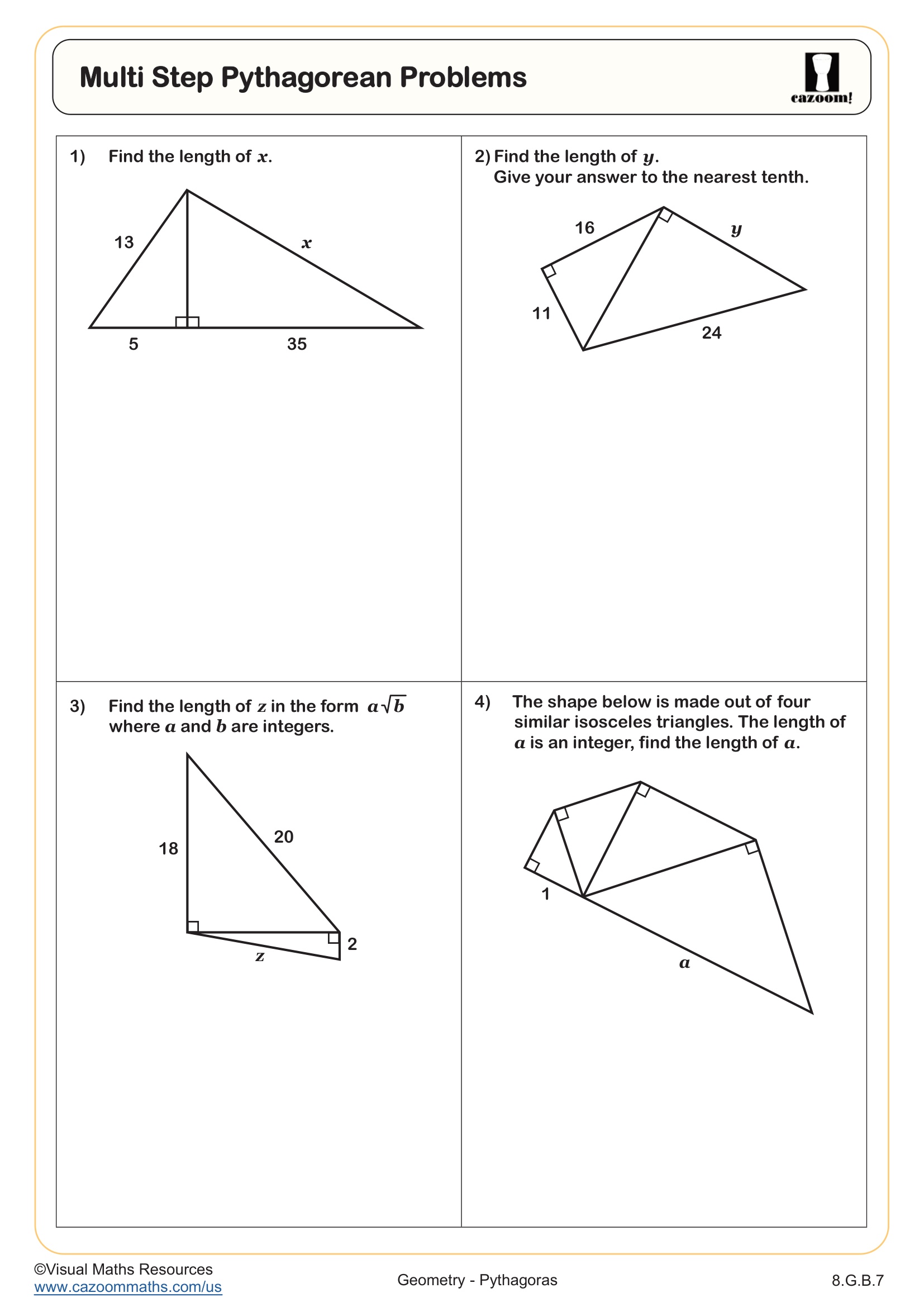
Multi Step Pythagorean Problems
Pythagorean Theorem and coordinates
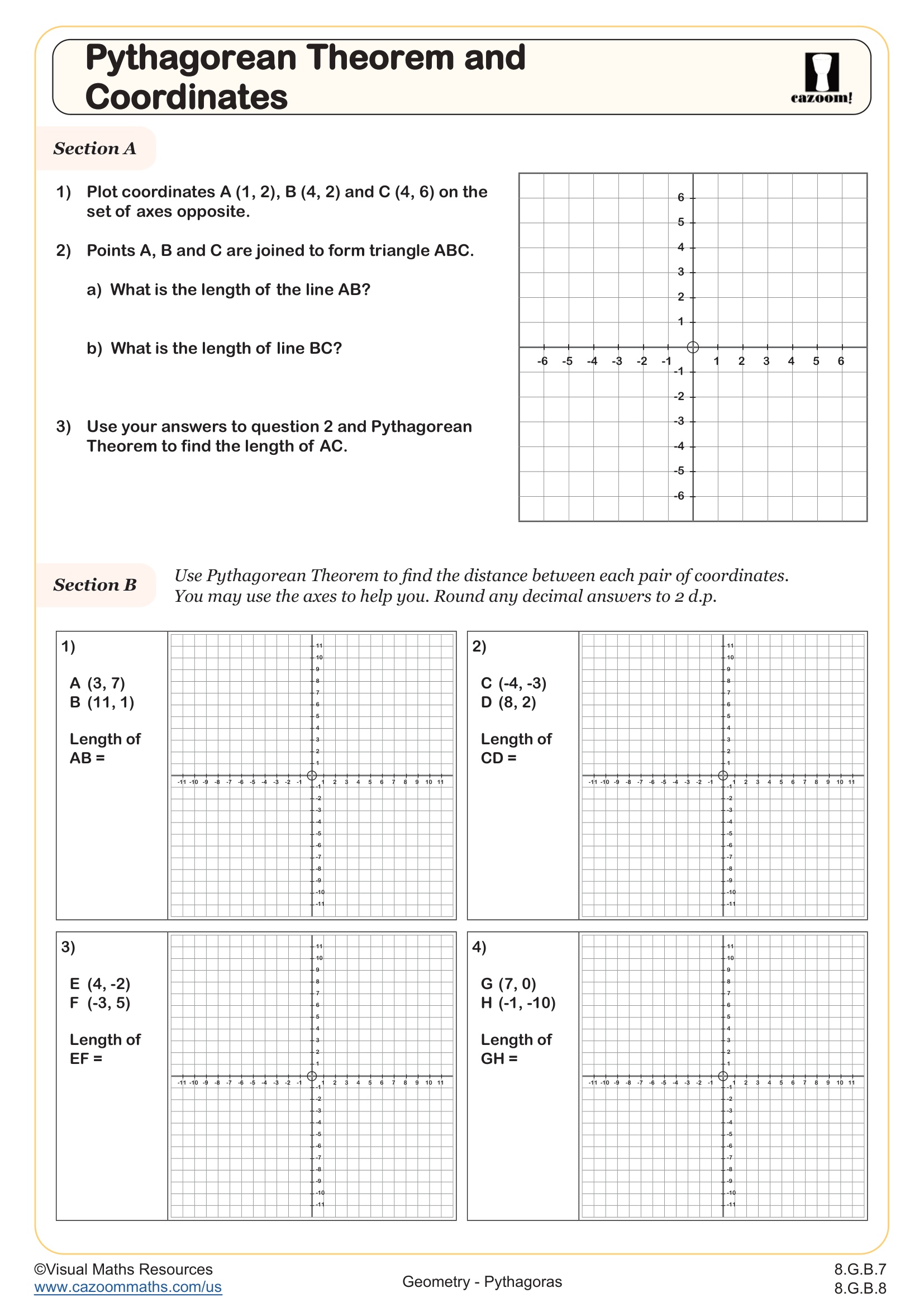
Pythagorean Theorem Word Problems
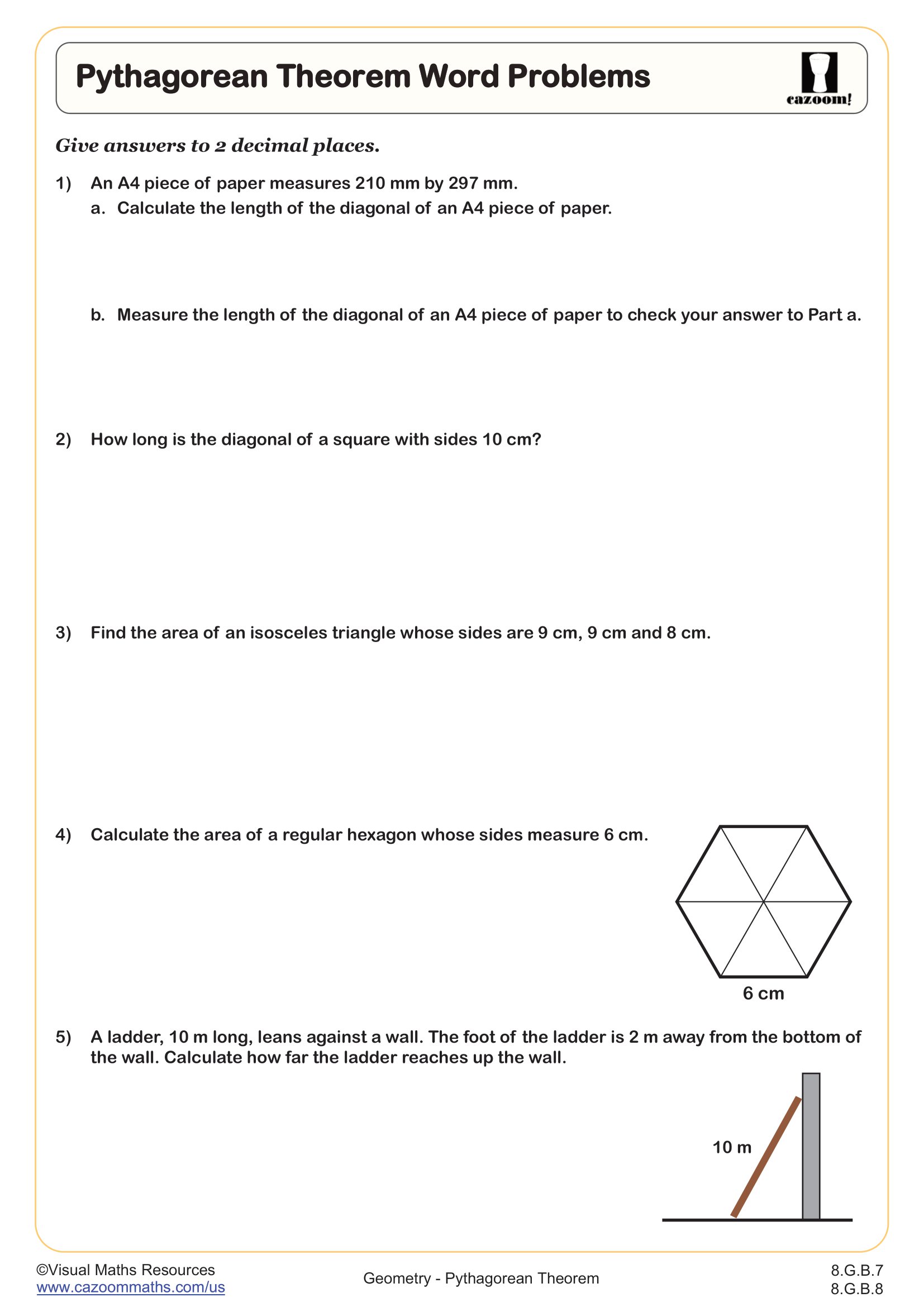
Pythagorean Theorem Word Problems (with clues)
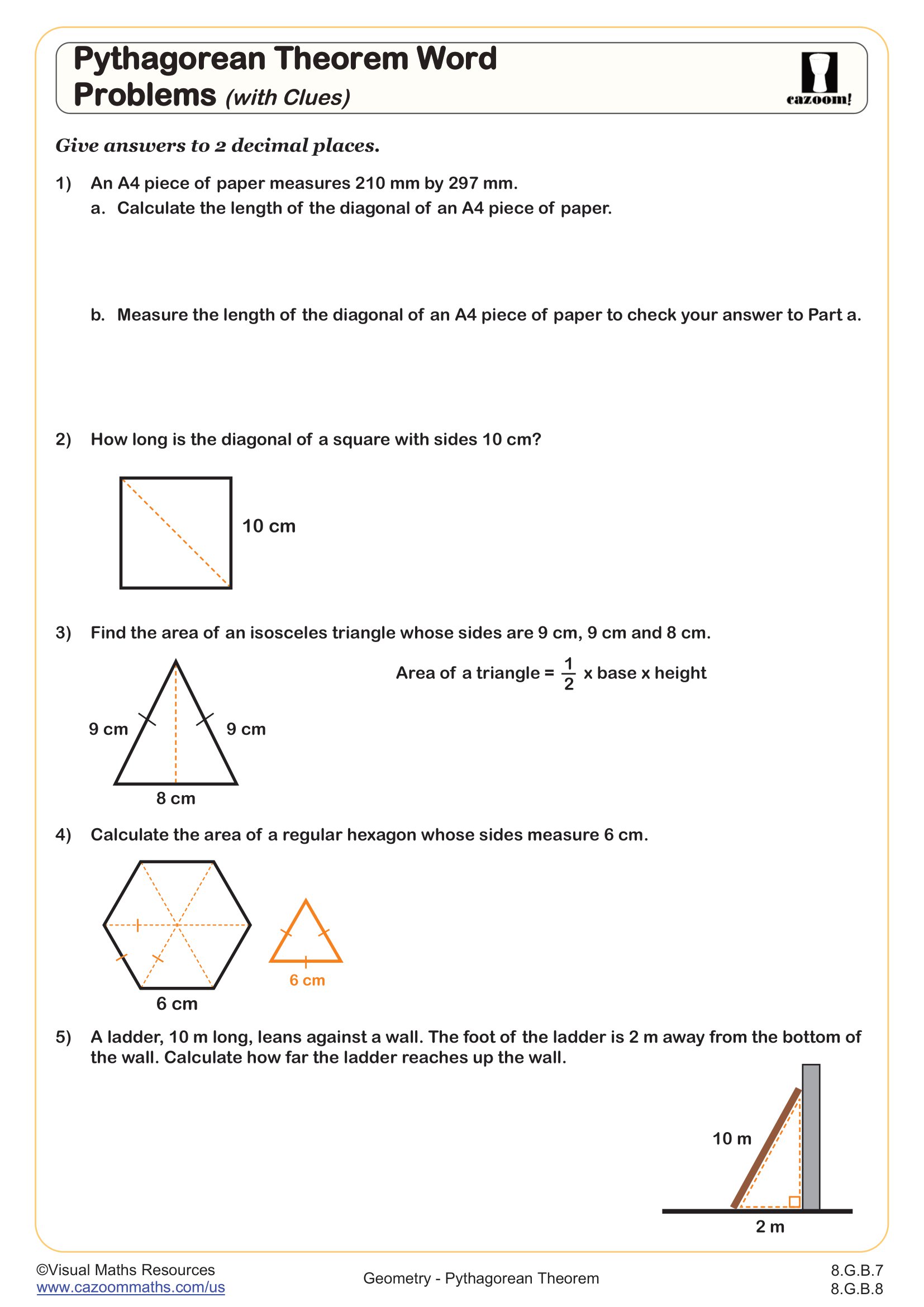
Pythagorean Theorem: Calculating Missing Side Lengths
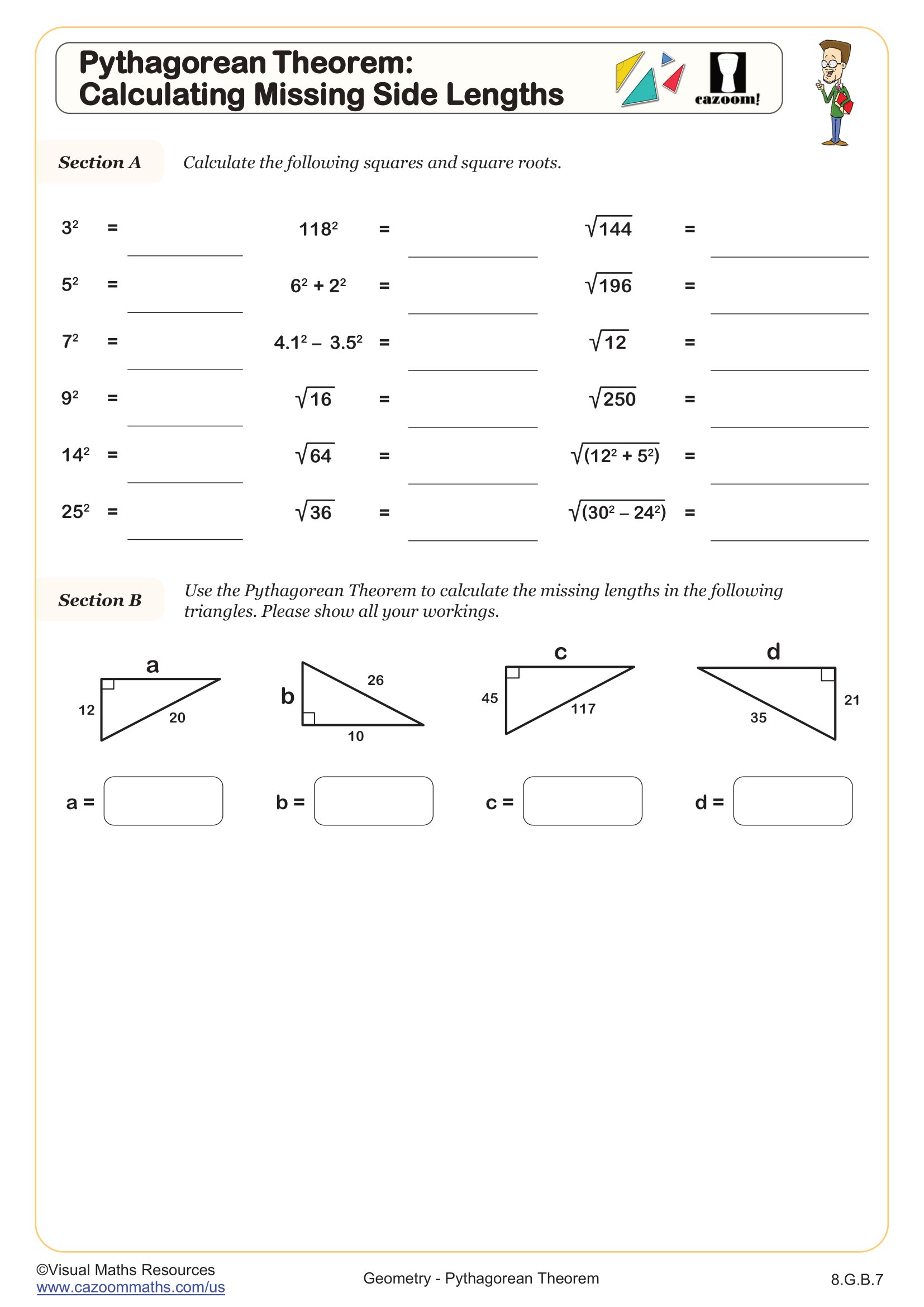
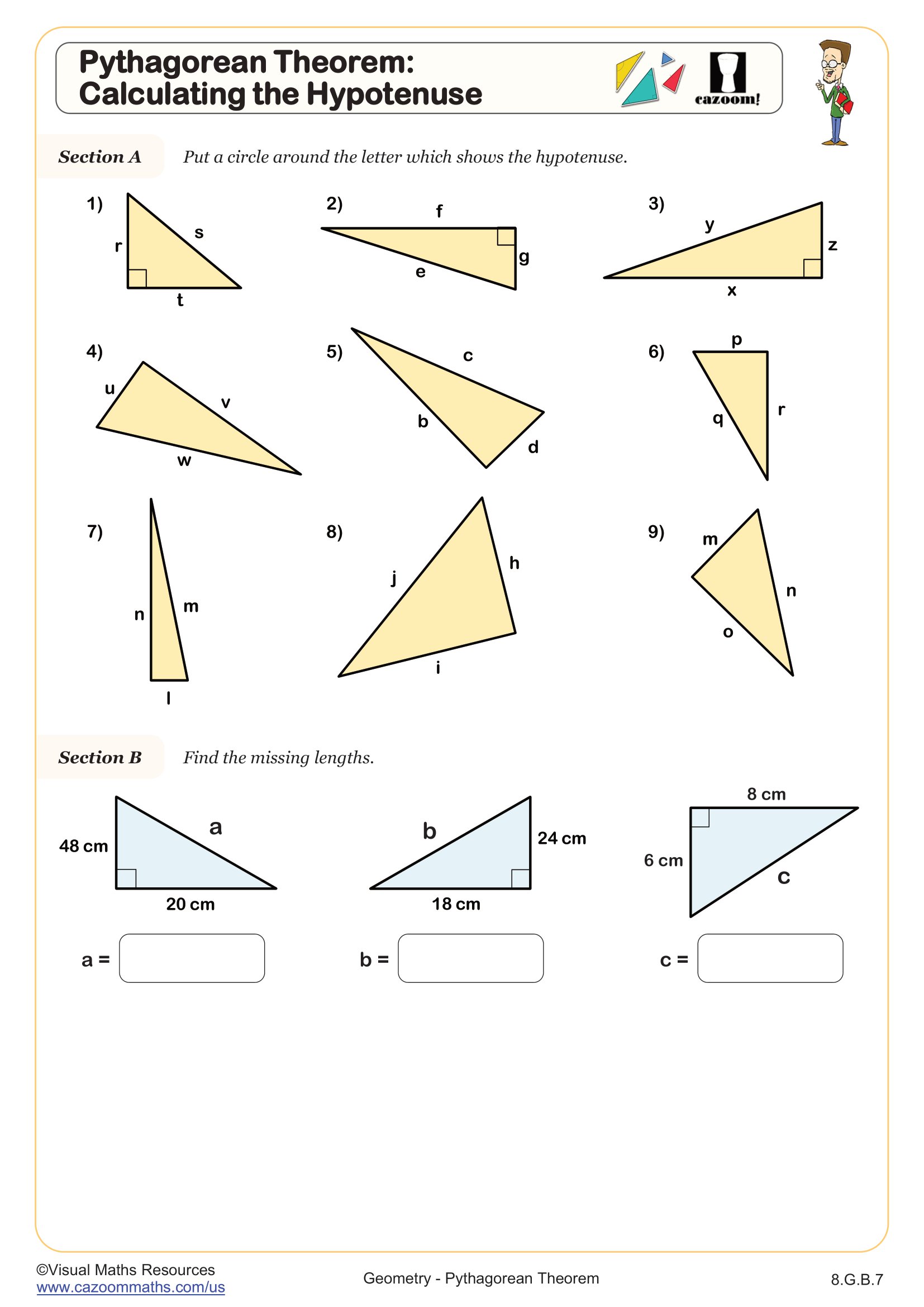
Pythagorean Theorem: Calculating the Hypotenuse
All worksheets are created by the team of experienced teachers at Cazoom Math.
What topics are covered in a pythagorean theorem on coordinate plane worksheet?
These worksheets typically focus on finding distances between two points plotted on a coordinate plane using the Pythagorean theorem. Students work with problems where they must identify the horizontal and vertical distances between points as the legs of a right triangle, then calculate the hypotenuse representing the direct distance. The coordinate plane context aligns with 8th grade Common Core standards for geometry and introduces students to analytical thinking about spatial relationships.
Teachers notice that many students initially try to count squares on the grid instead of using the theorem, especially when dealing with decimal coordinates. The worksheets progress from integer coordinates to rational numbers, helping students recognize that the Pythagorean theorem works regardless of the specific values involved. This foundation becomes valuable for understanding the distance formula in high school algebra.
What grade levels use pythagorean theorem coordinate plane worksheets?
Middle school students in grades 6-8 typically encounter these worksheets, with 8th grade being the primary focus according to Common Core State Standards. The coordinate plane introduction usually happens in 6th grade, while the Pythagorean theorem is formally taught in 8th grade geometry units. Some advanced 7th grade classes may also work with these concepts as enrichment material.
The progression makes sense developmentally because students need solid coordinate plane skills before tackling the theorem applications. Teachers find that 8th graders who master this concept transition more smoothly into high school algebra topics like the distance formula and analytical geometry. Some high school teachers also use these worksheets as review material for students who need to strengthen their foundational understanding before moving to more complex applications.
How do 3d pythagorean theorem worksheets differ from coordinate plane versions?
While standard coordinate plane worksheets work in two dimensions with x and y coordinates, 3d pythagorean theorem worksheets introduce a third dimension using x, y, and z coordinates. These advanced worksheets require students to find distances in three-dimensional space, which involves applying the theorem twice or using the extended formula d = √[(x₂-x₁)² + (y₂-y₁)² + (z₂-z₁)²]. This concept typically appears in advanced 8th grade or early high school geometry courses.
Teachers observe that students who struggled with visualizing right triangles on a coordinate plane often find the three-dimensional aspect even more challenging. The spatial reasoning required connects directly to STEM applications like engineering design, computer graphics, and architectural modeling. Starting with solid two-dimensional coordinate plane practice helps students build the foundational understanding needed for these more complex three-dimensional applications.
How can teachers effectively implement these worksheets in their lessons?
Teachers find success by starting with concrete examples using graph paper, having students physically plot points and draw the right triangles before calculating distances. The visual component helps students understand why the horizontal and vertical distances represent the legs of the triangle. Pairing worksheet practice with graphing calculator activities reinforces the connection between manual calculations and technology-based solutions.
Many educators use these worksheets as bridge activities between pure Pythagorean theorem practice and distance formula introduction. The included answer keys make them suitable for independent practice, homework assignments, or collaborative work where students can check their progress. Teachers also report using them for differentiated instruction, giving struggling students integer coordinate problems while challenging advanced learners with decimal coordinates or mixed positive and negative values.