Middle School Ratio Worksheets
Best Value for Money - the Unitary Method
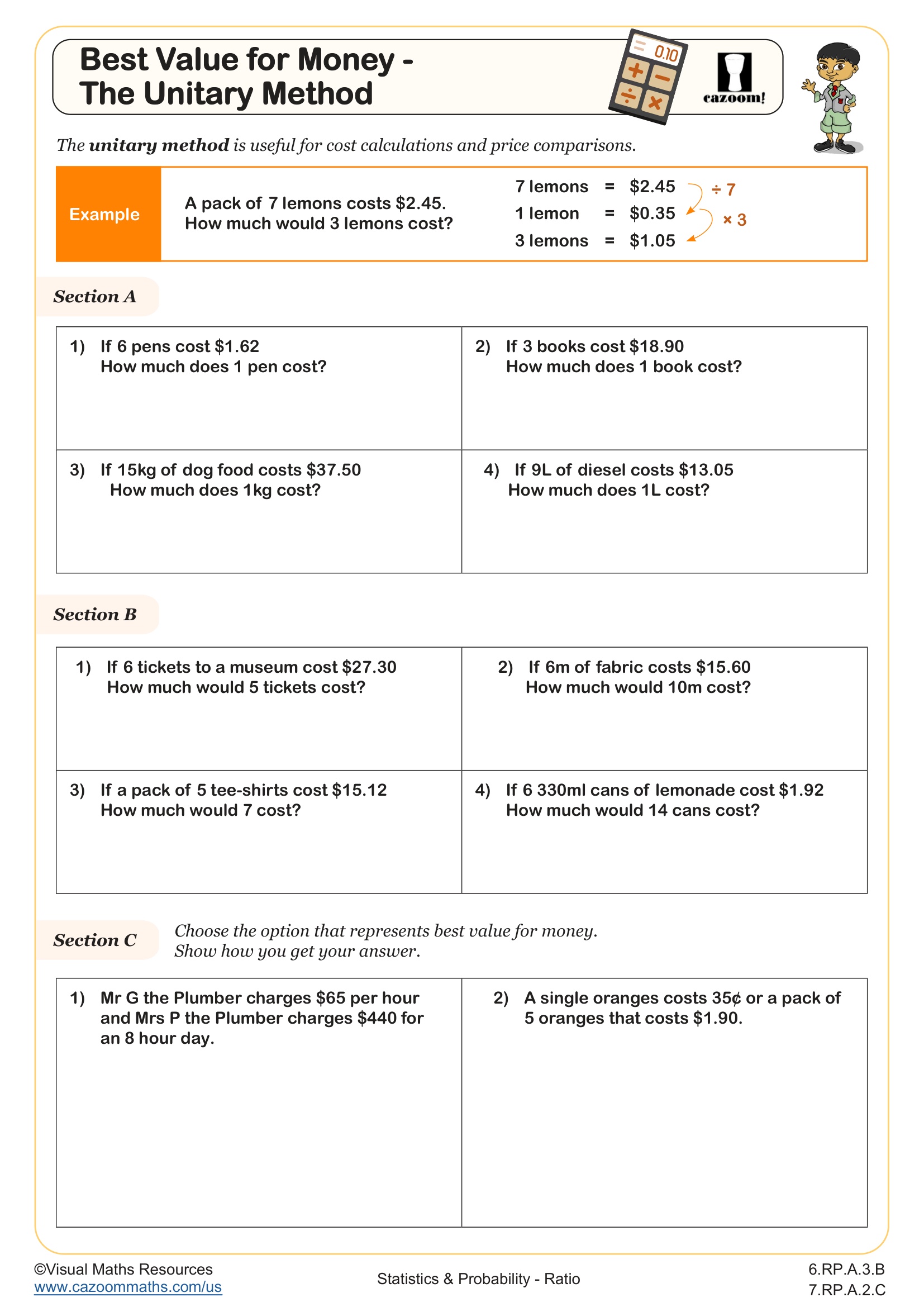
Changing Ratios
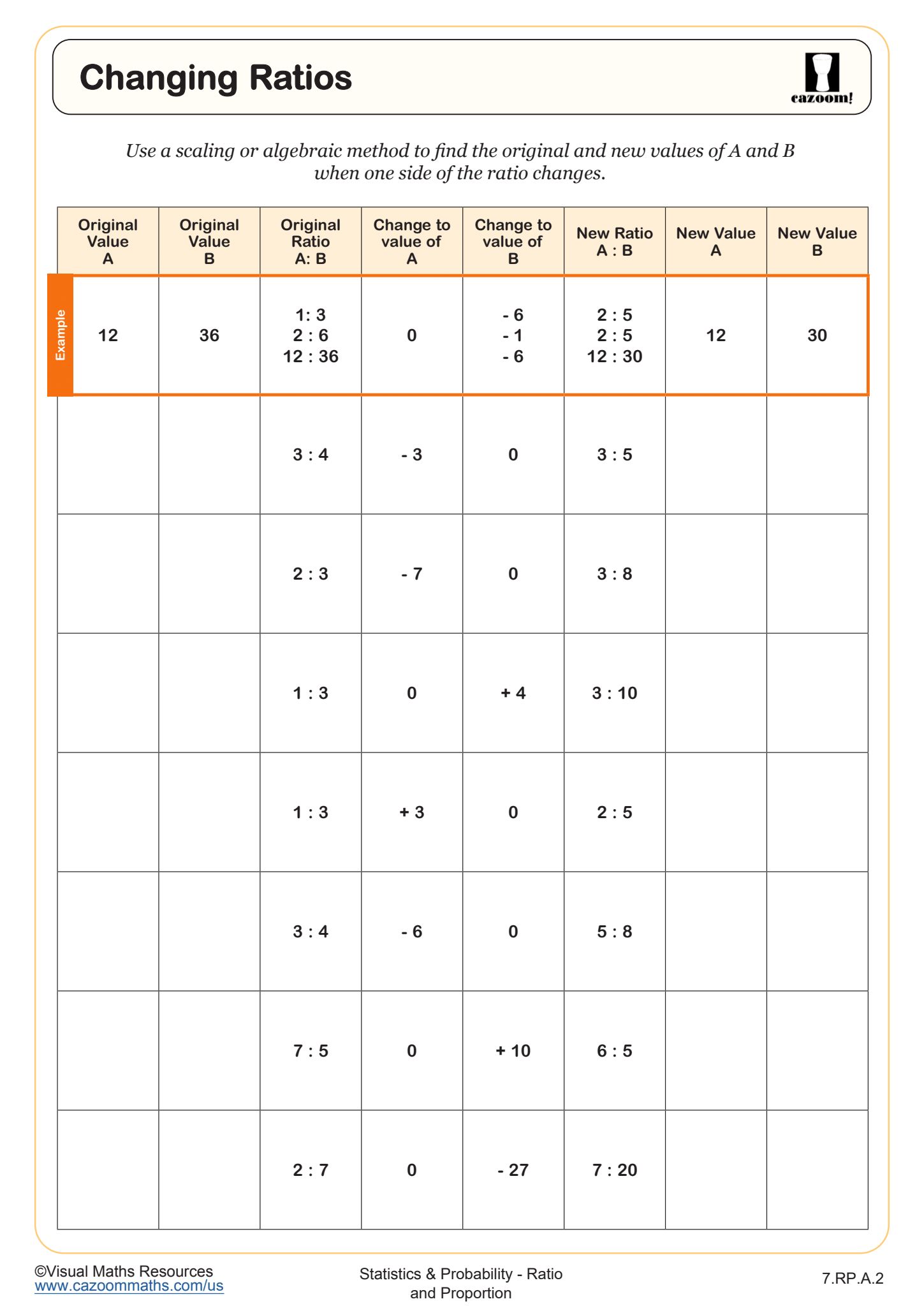
Creating Equivalent Ratios (A)
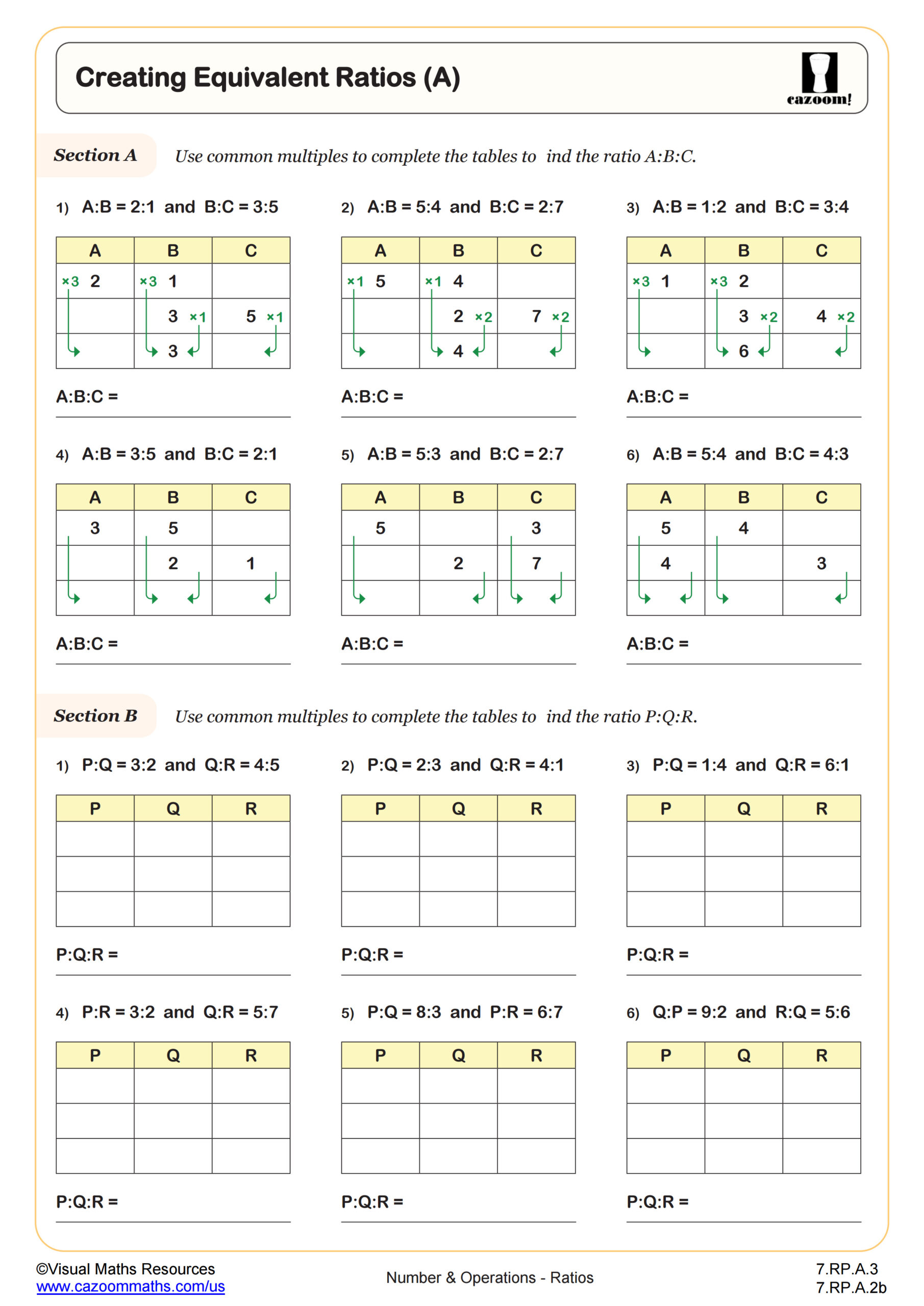
Creating Equivalent Ratios (B)
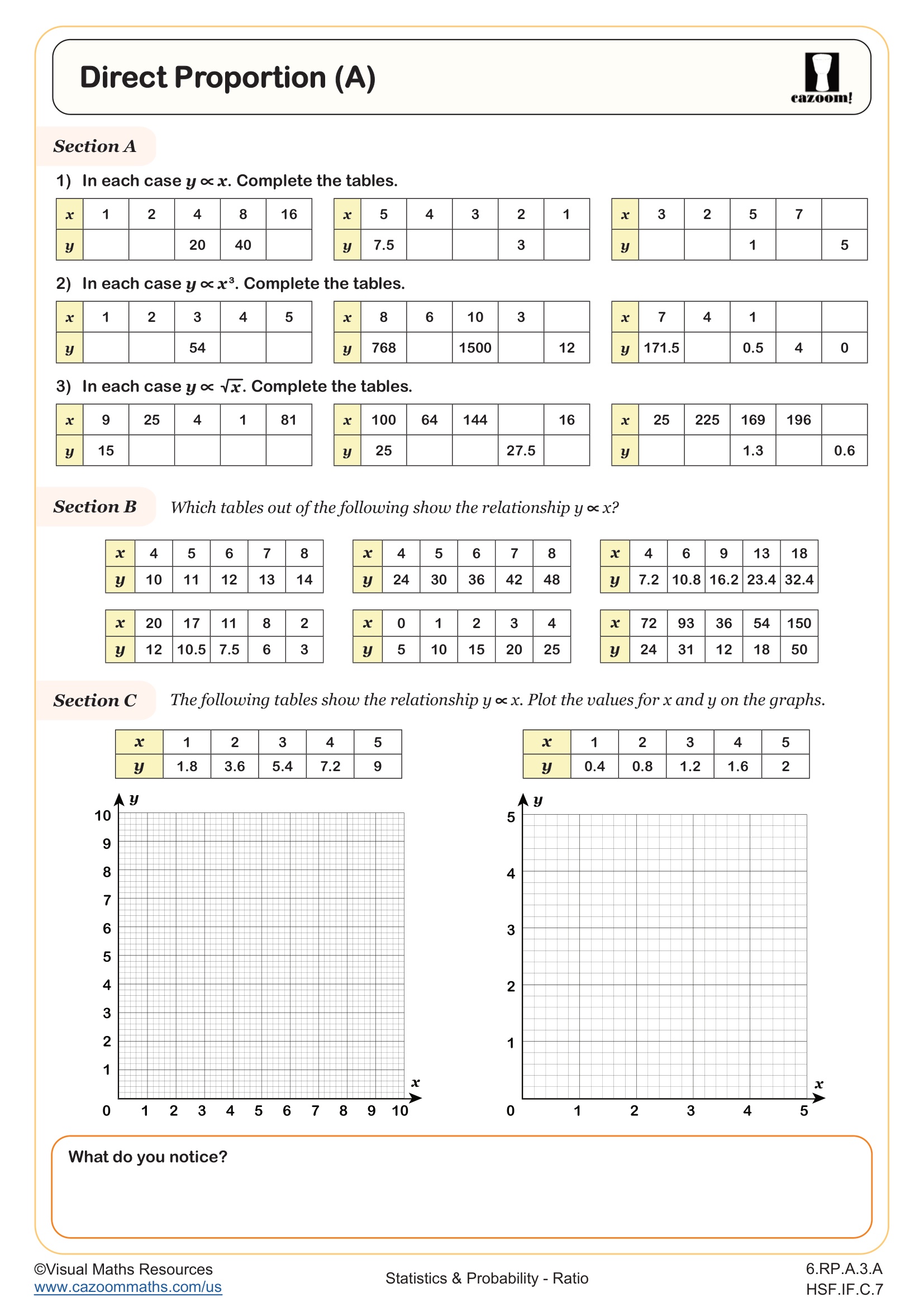
Direct Proportion (A)
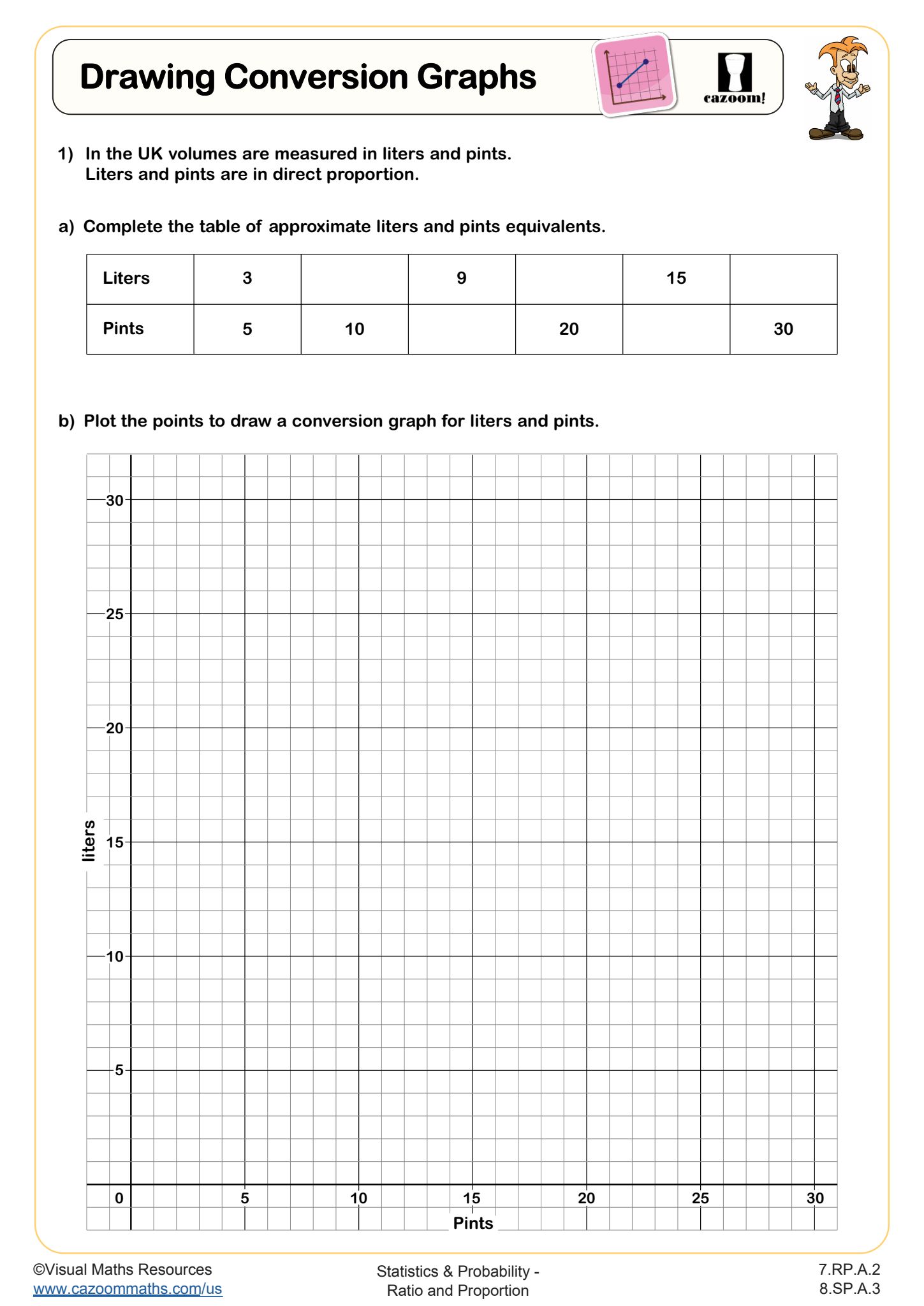
Drawing Conversion Graphs
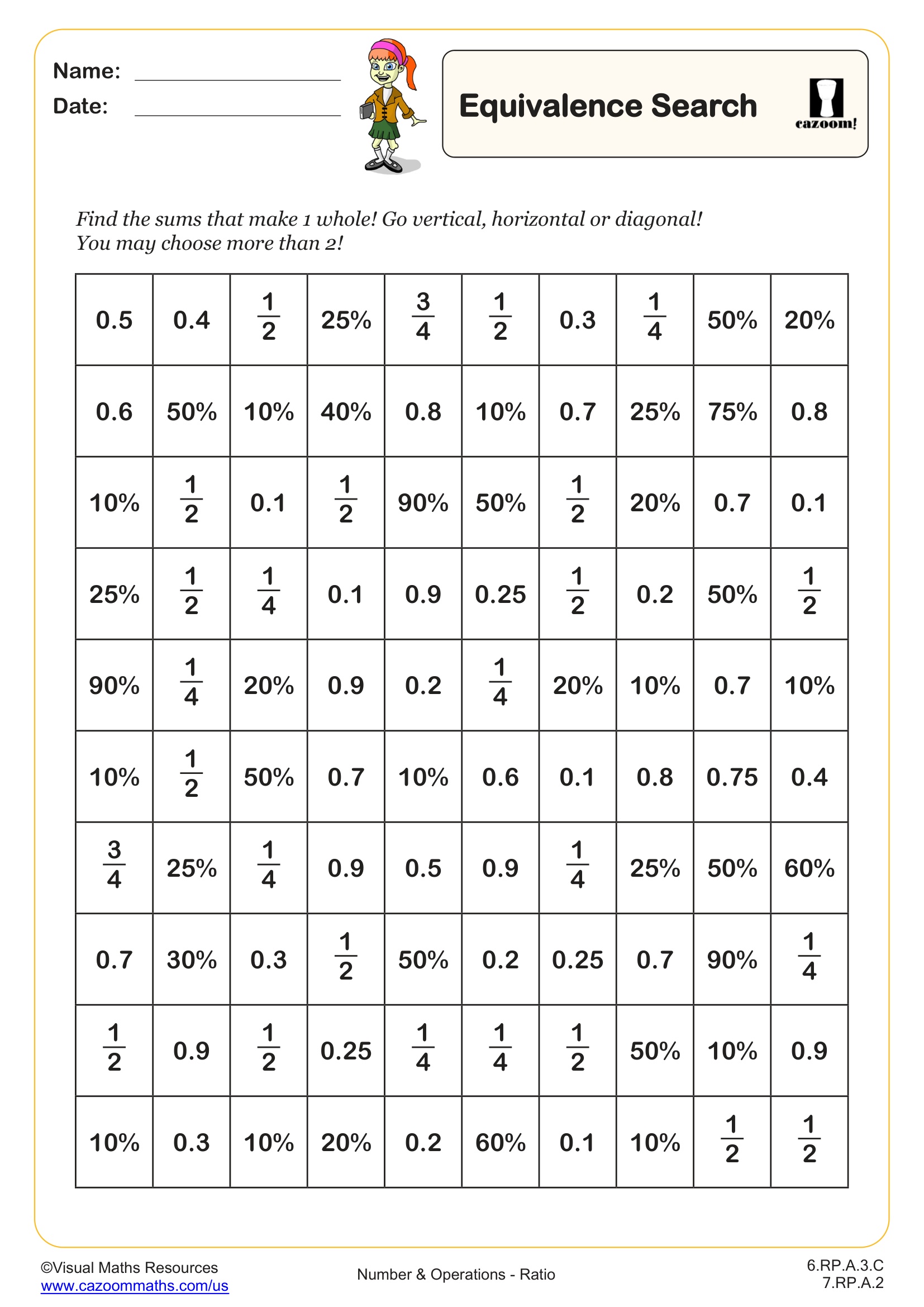
Equivalence Search (A)
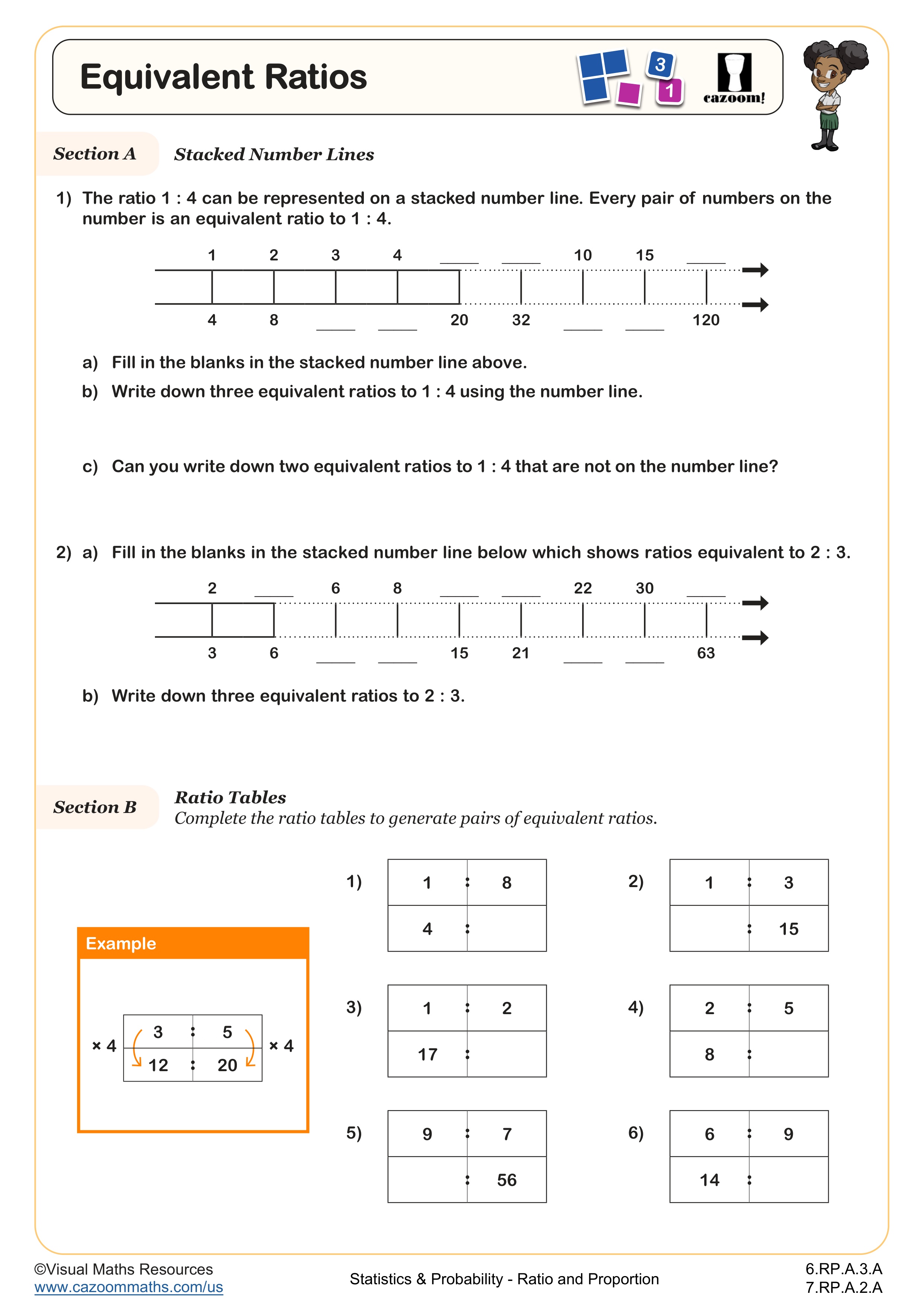
Equivalent Ratios
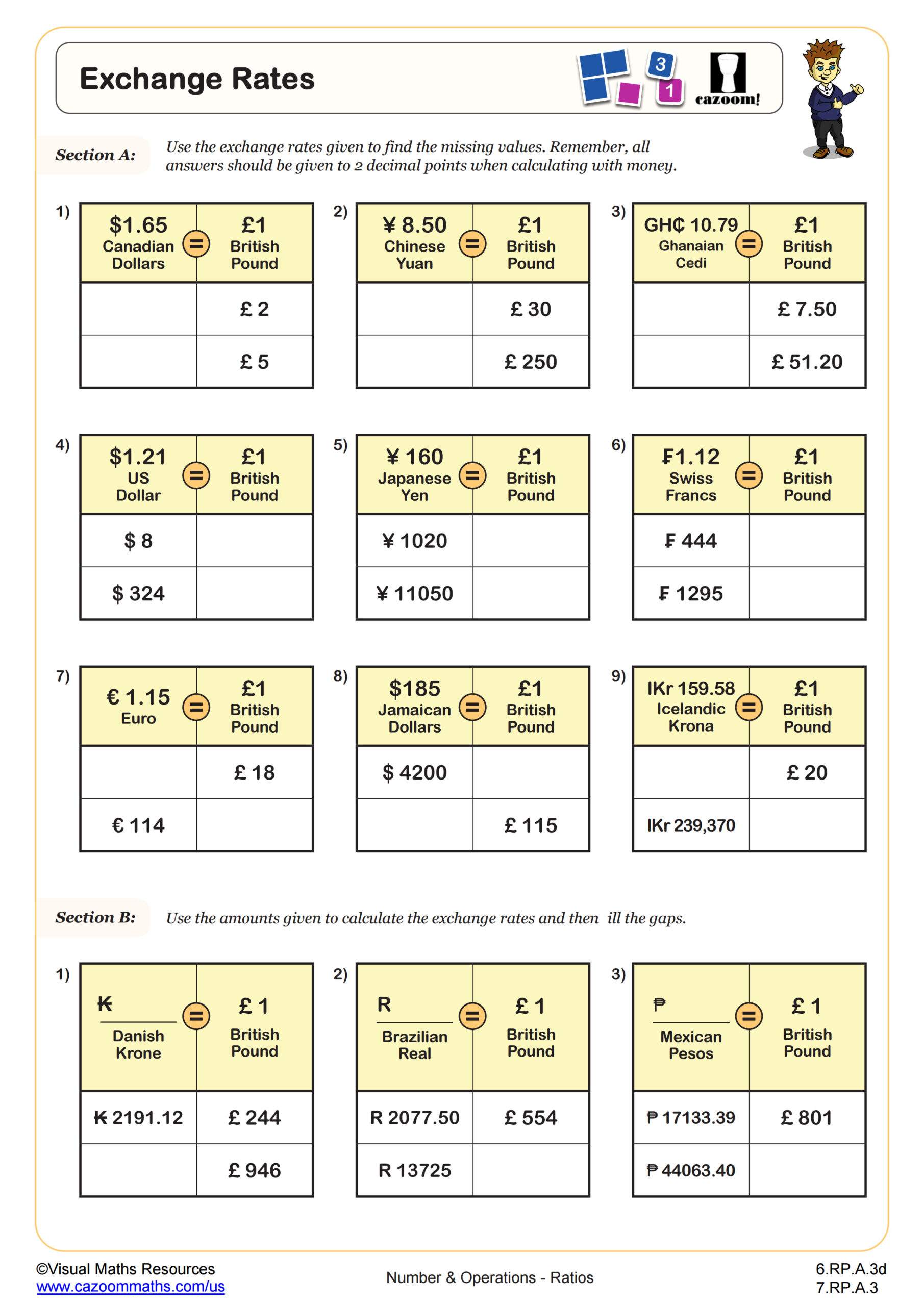
Exchange Rates
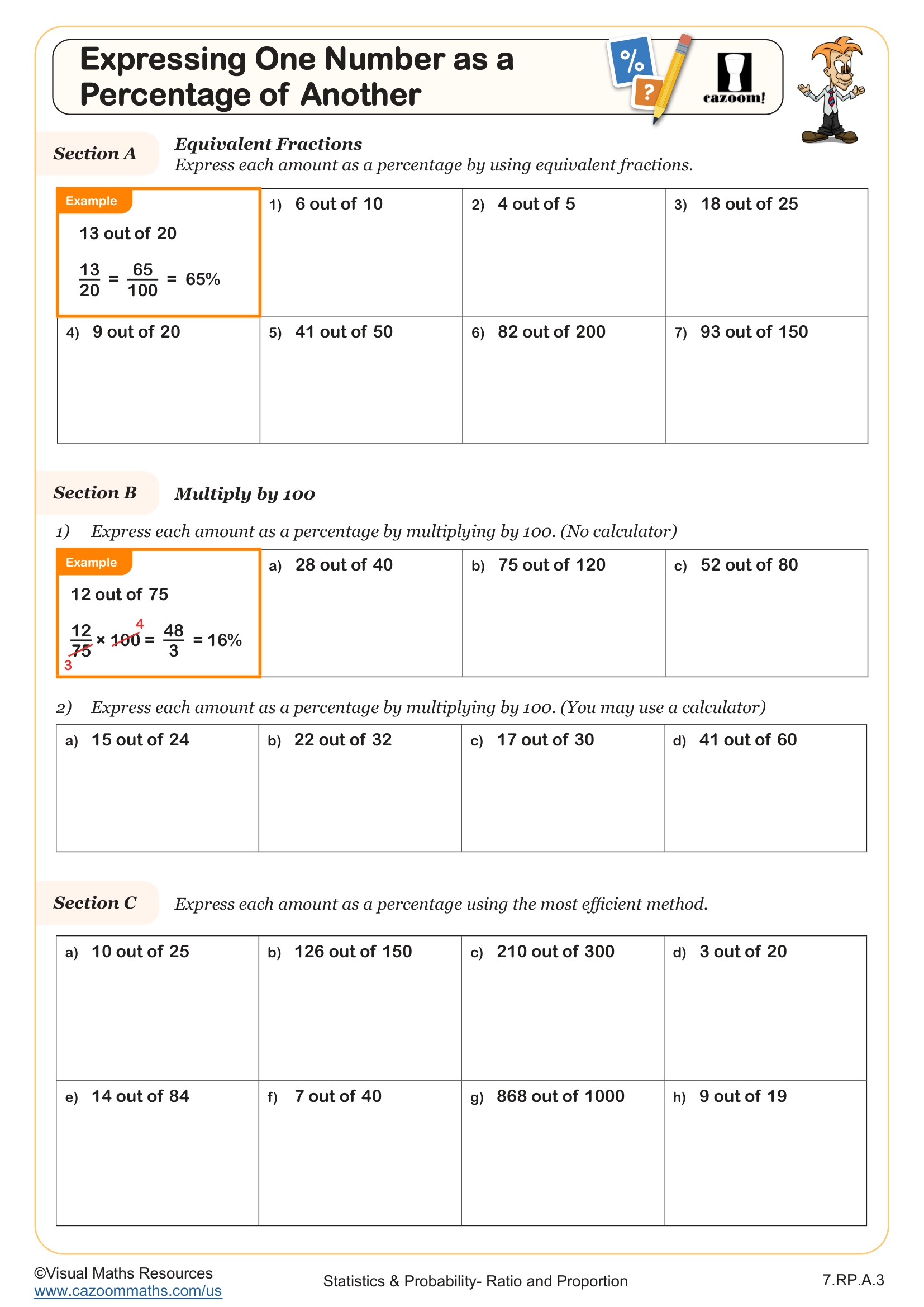
Express One Number as a Percentage of Another
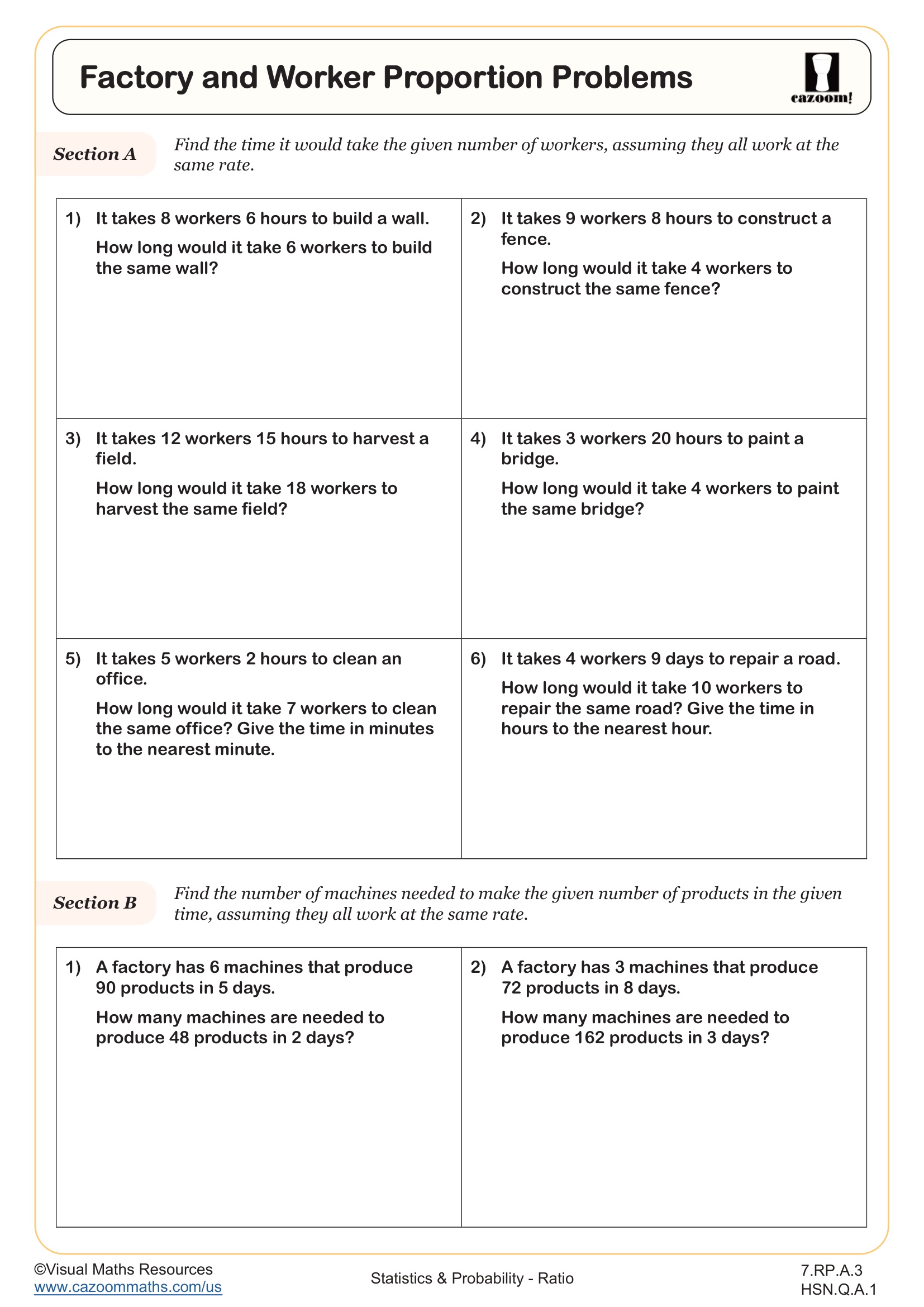
Factory and Worker Proportion Problems
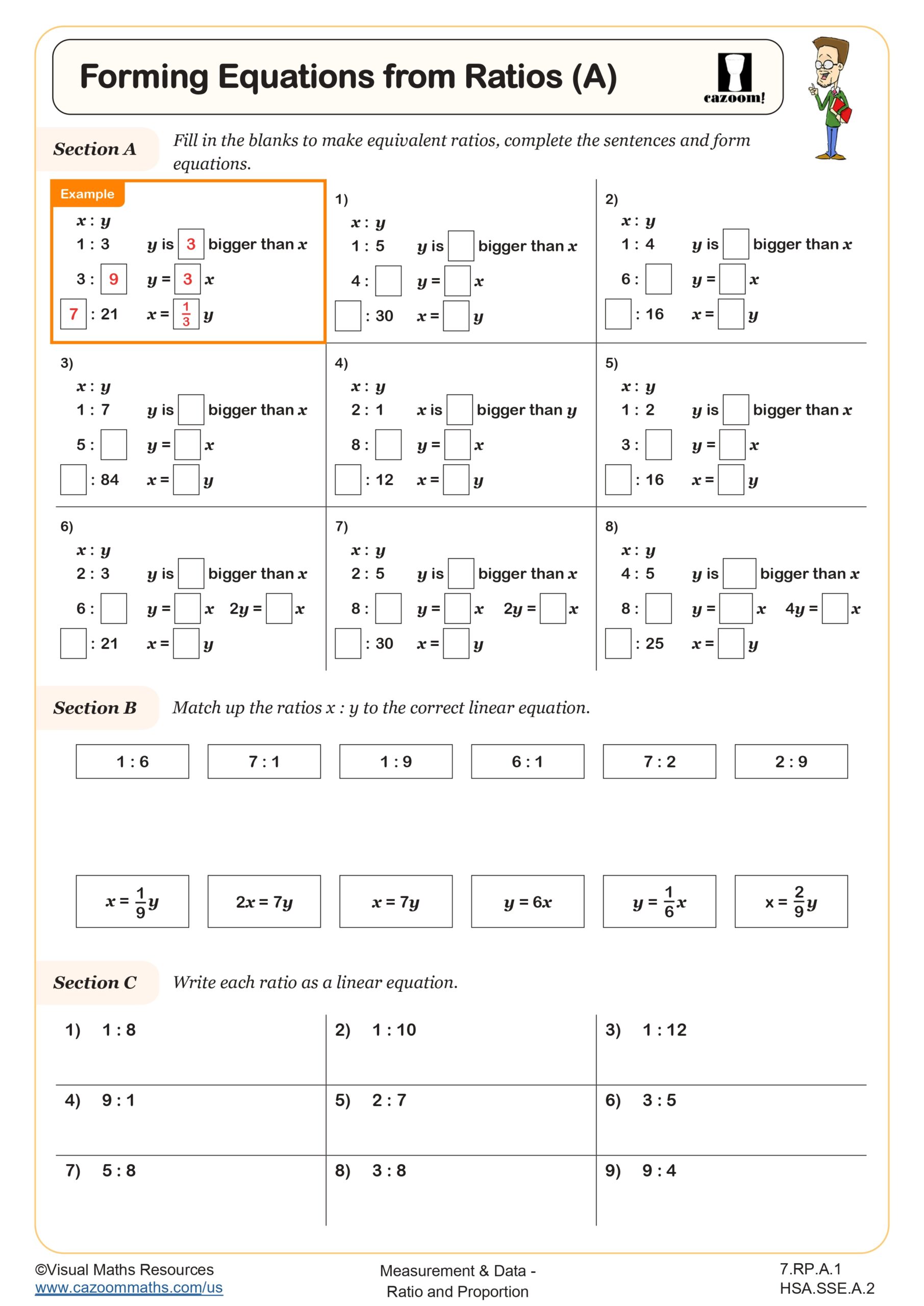
Forming Equations from Ratios (A)
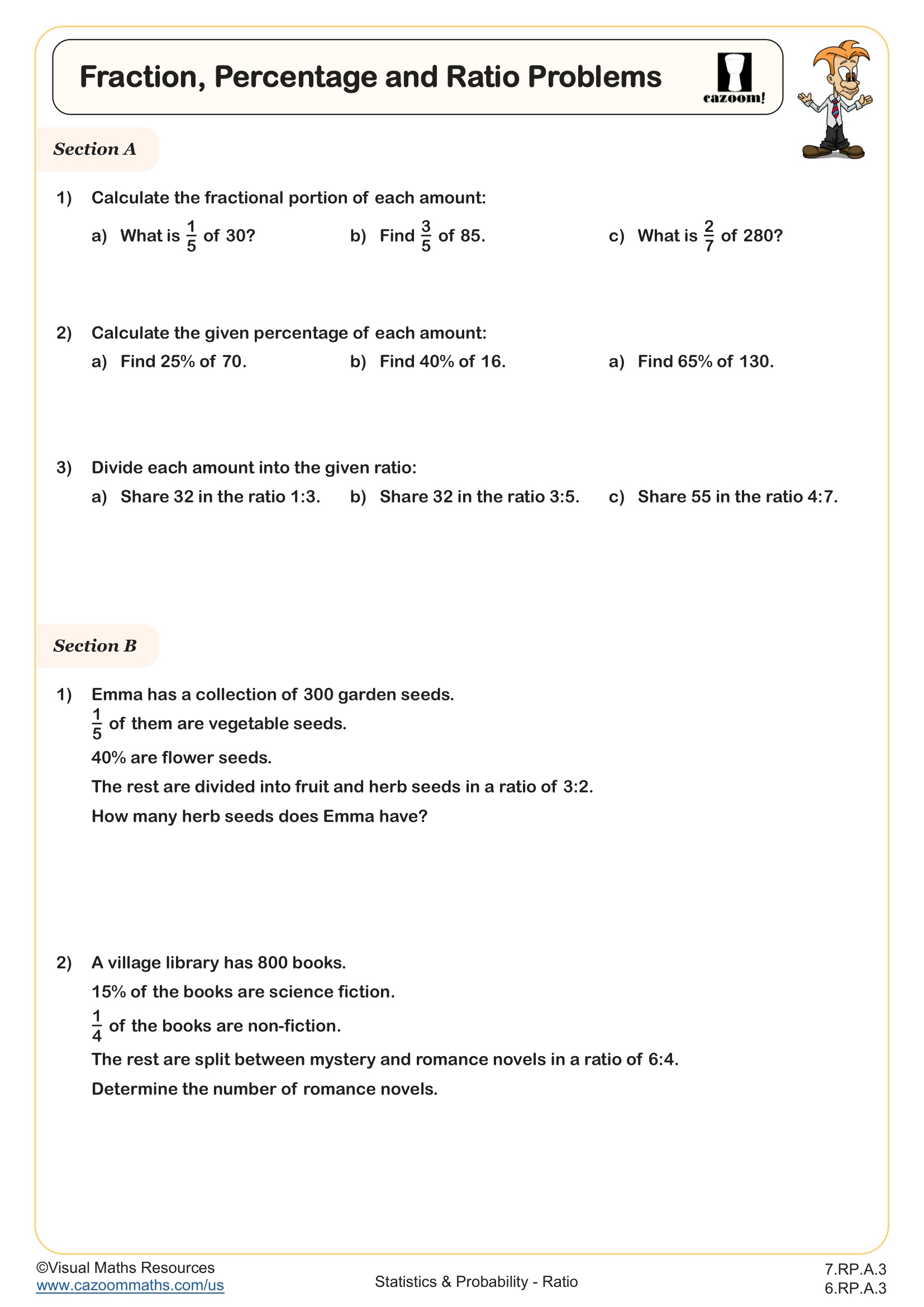
Fraction, Percentage and Ratio Problems
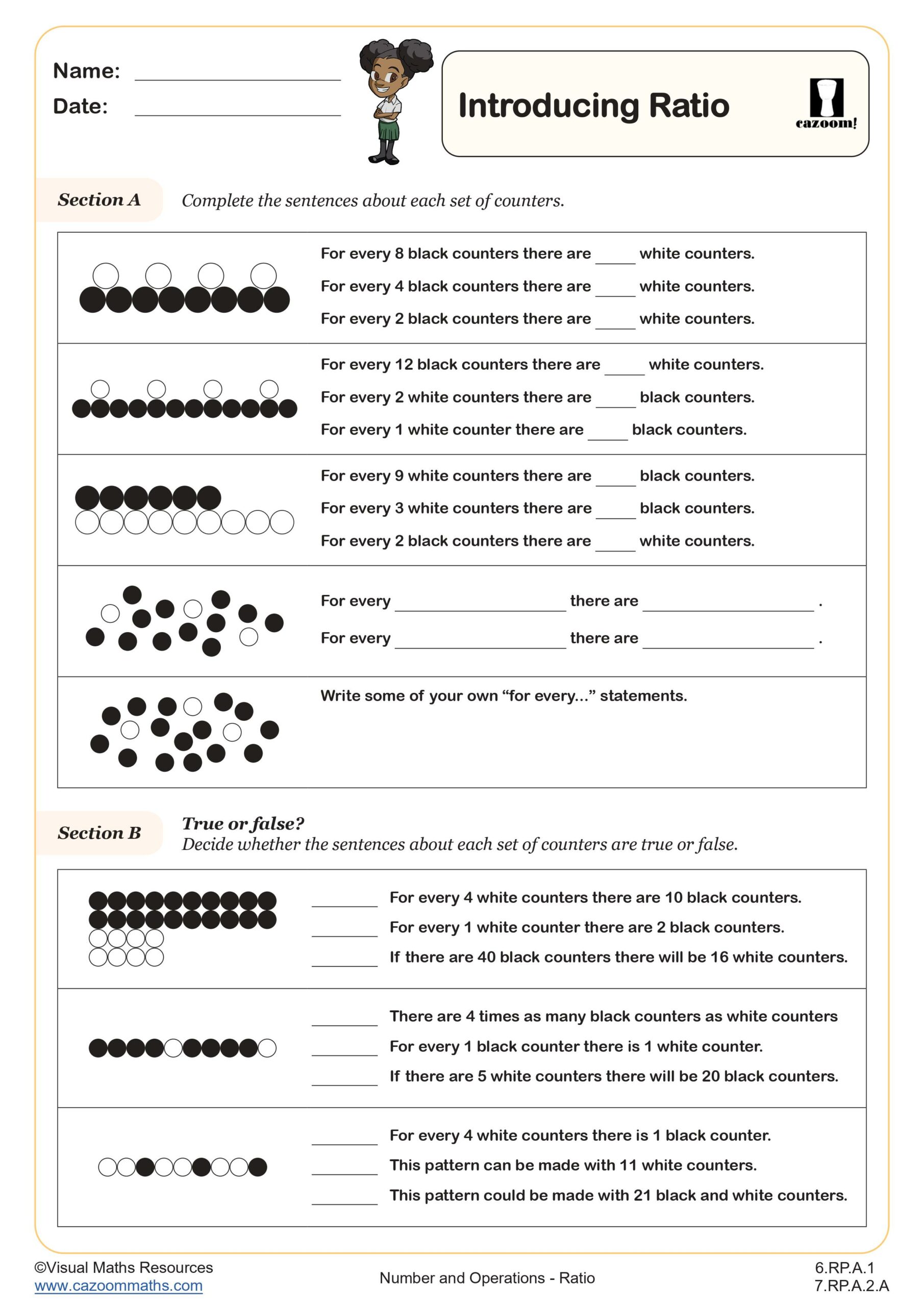
Introducing Ratio
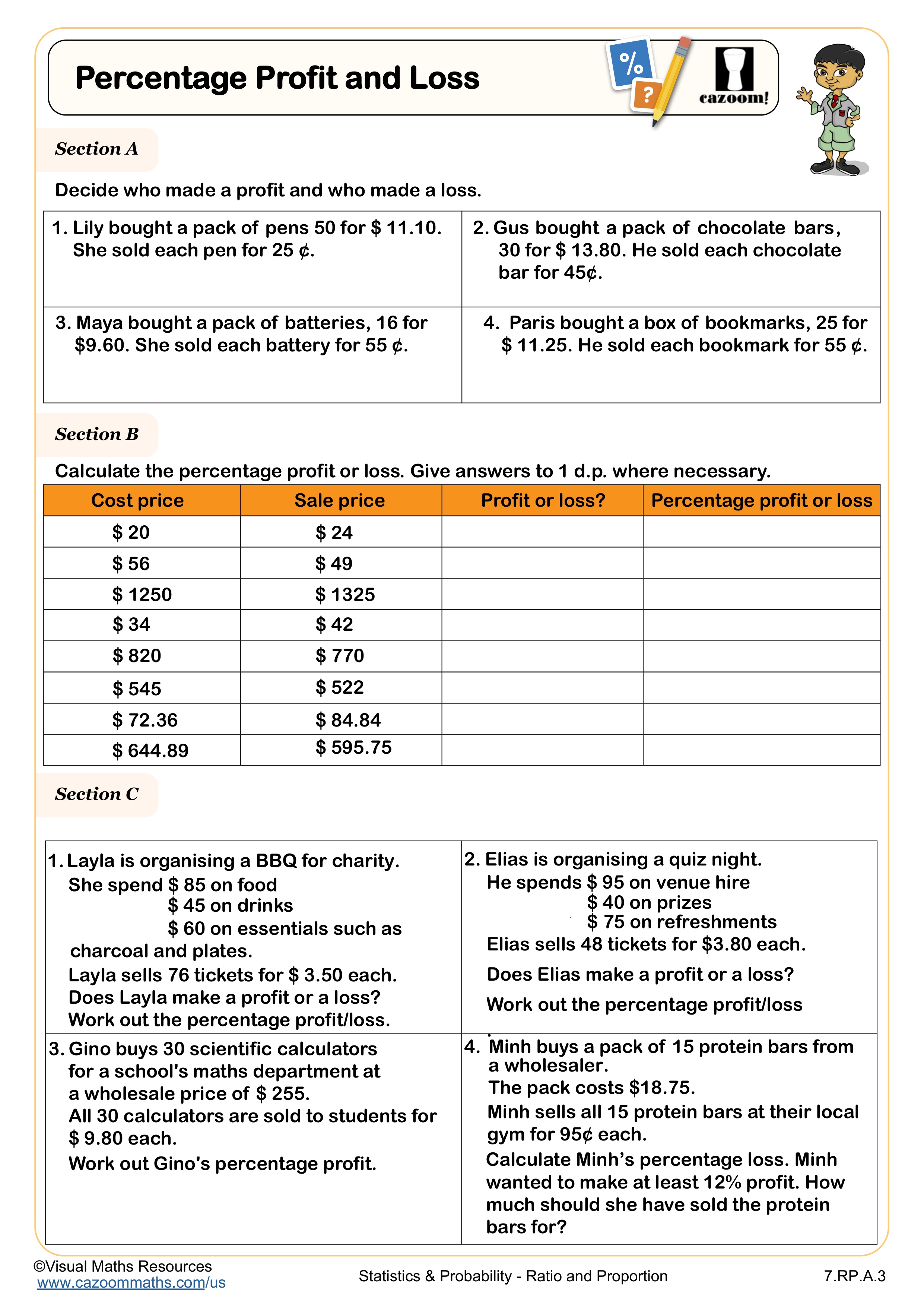
Percentage Profit and Loss
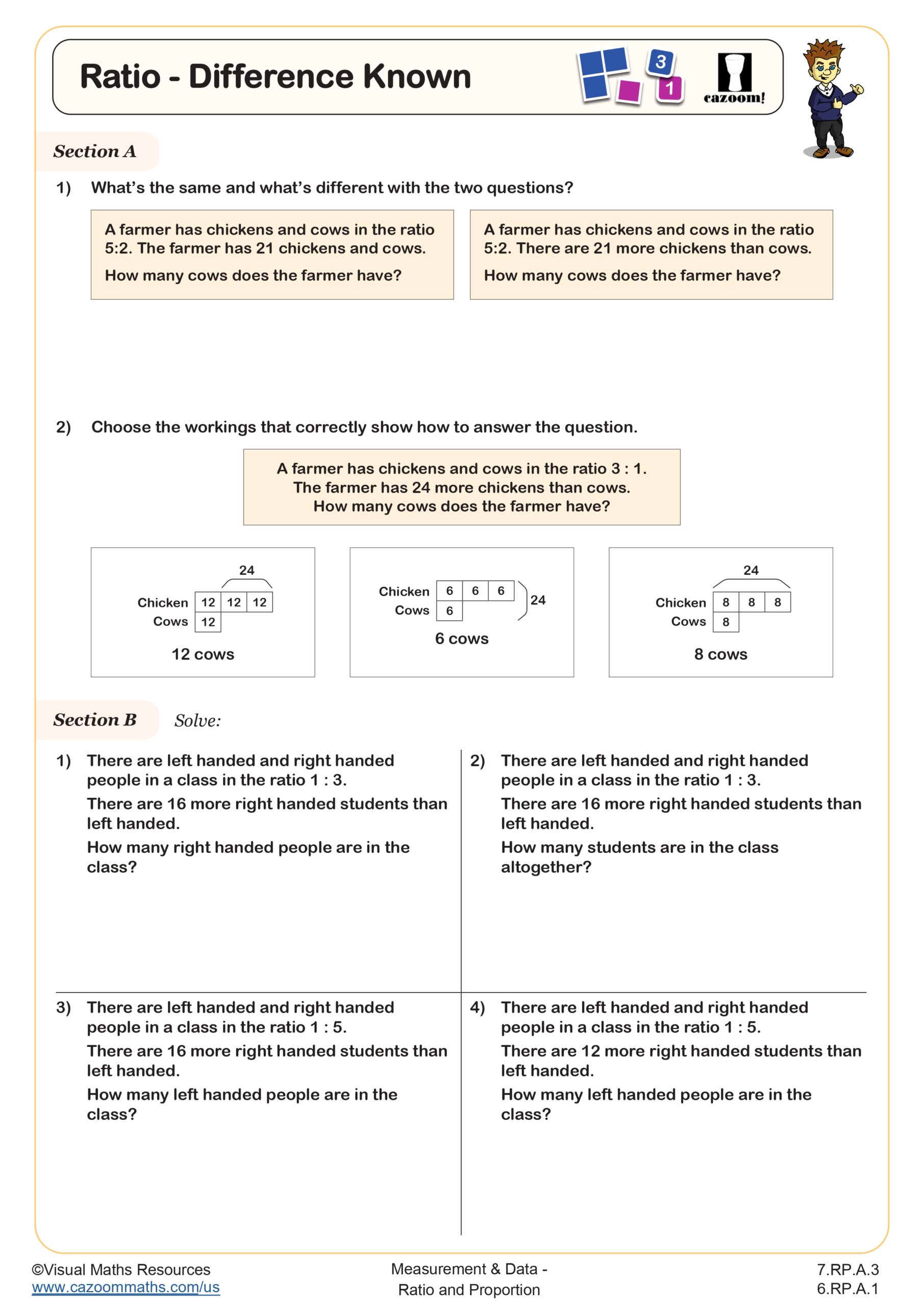
Ratio - Difference Known
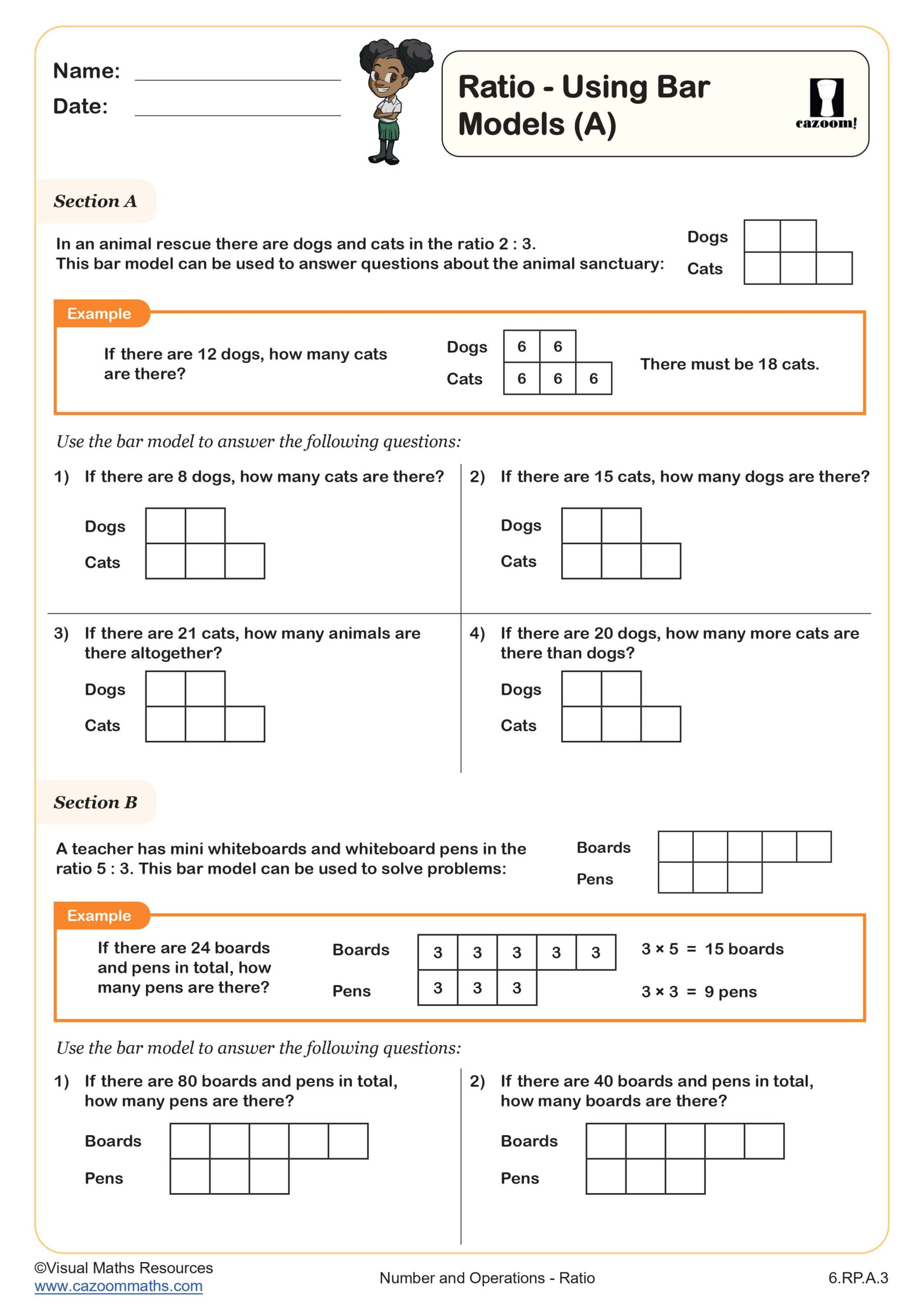
Ratio - Using Bar Models (A)
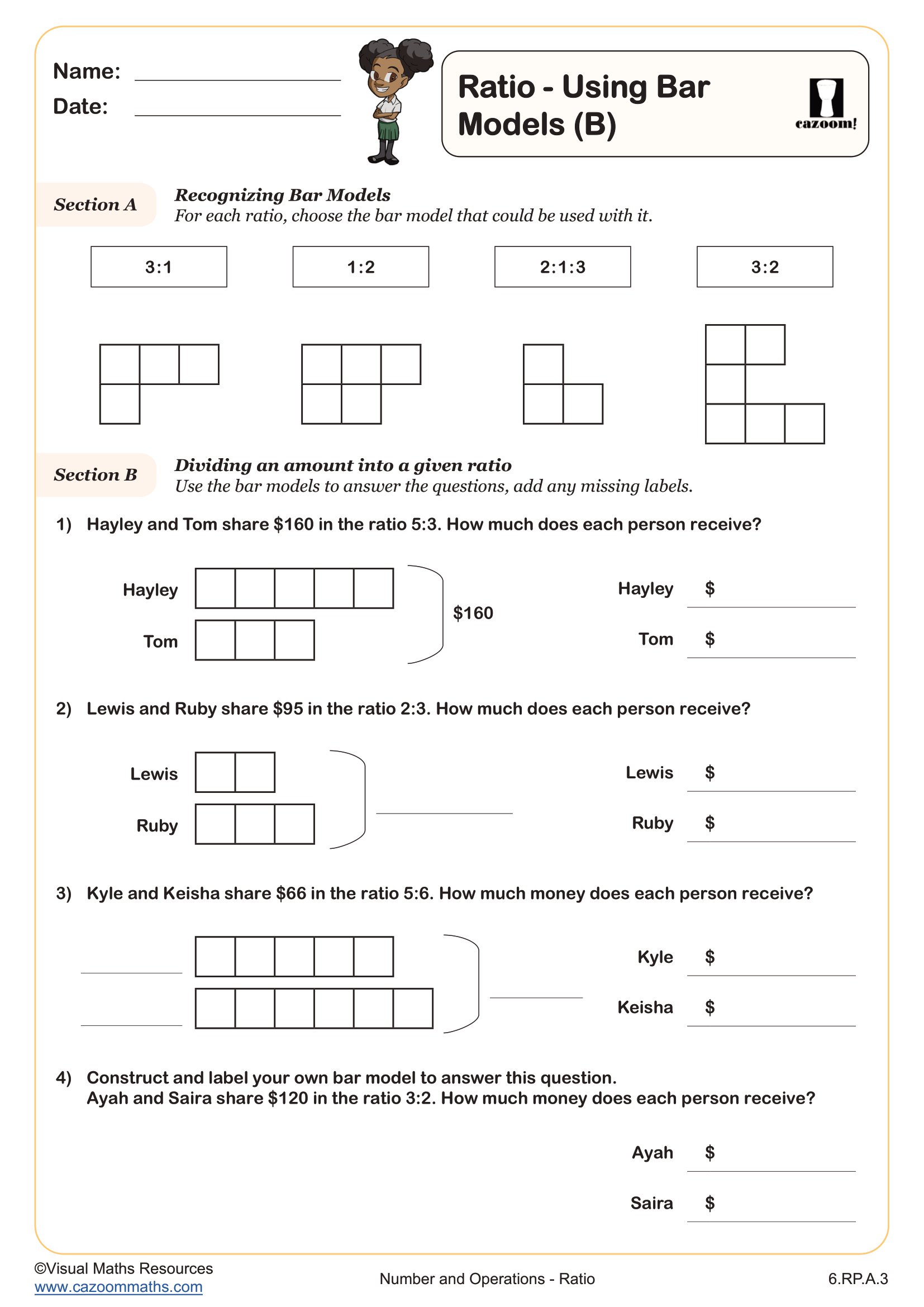
Ratio - Using Bar Models (B)
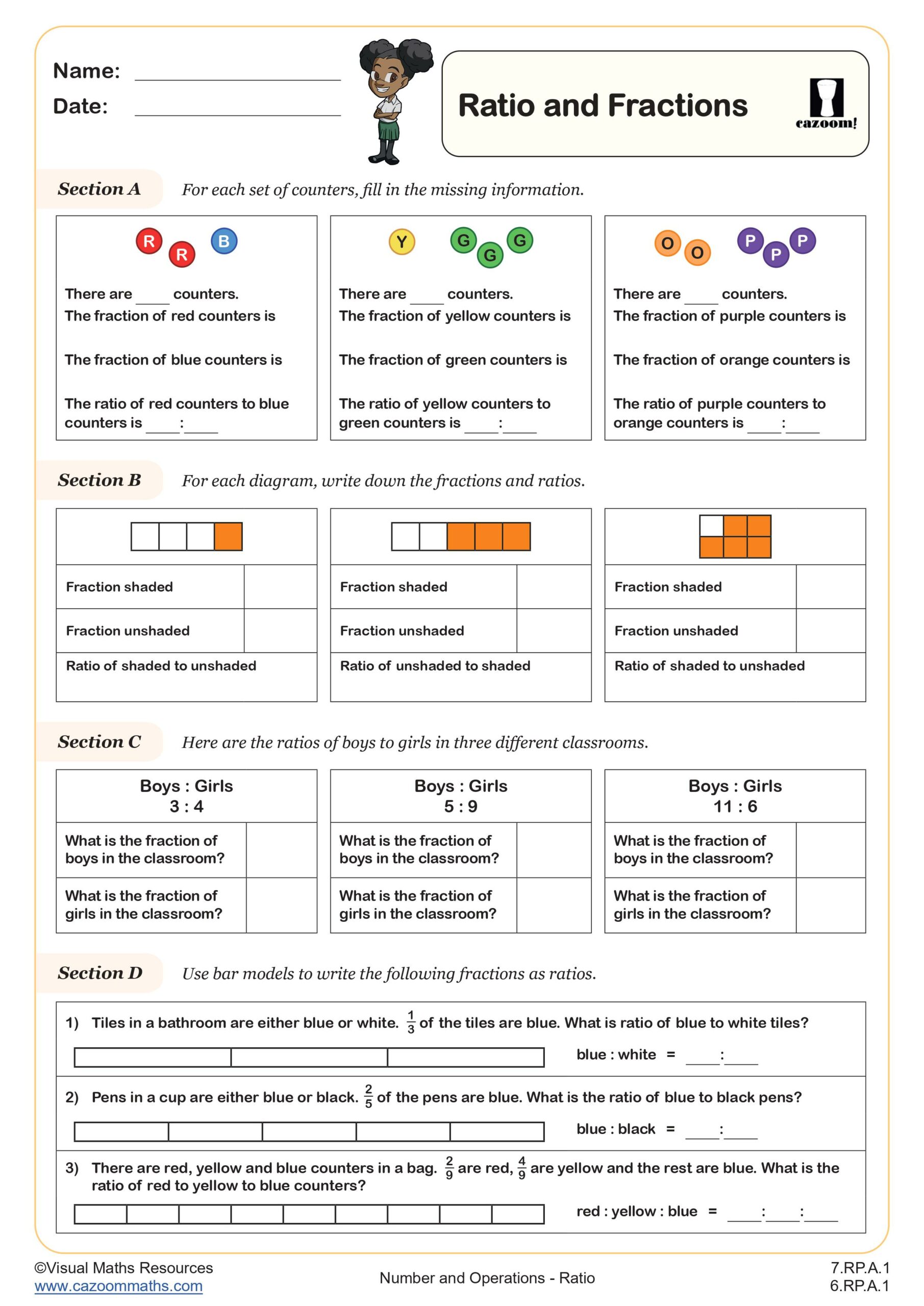
Ratio and Fractions
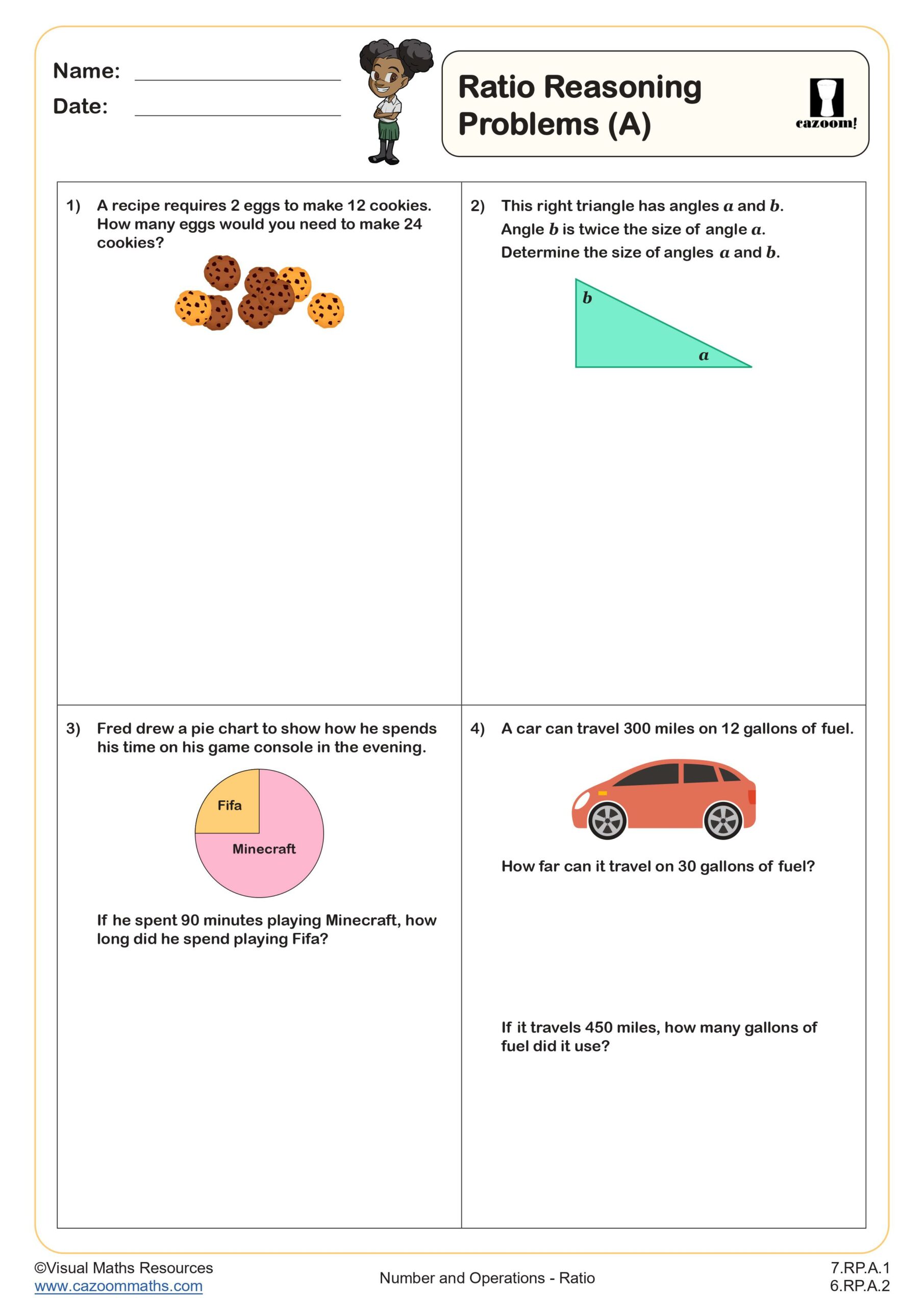
Ratio Reasoning Problems (A)
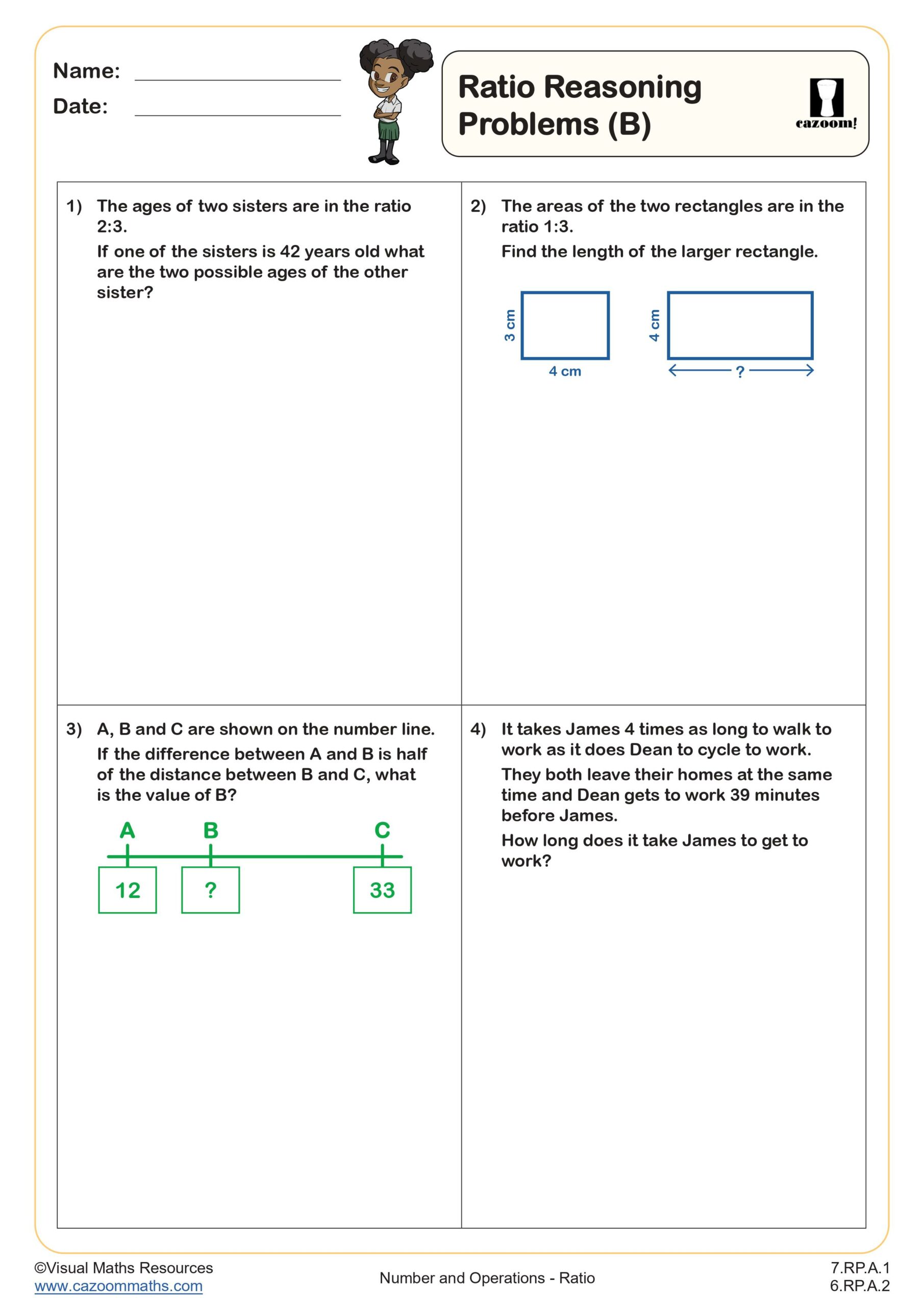
Ratio Reasoning Problems (B)
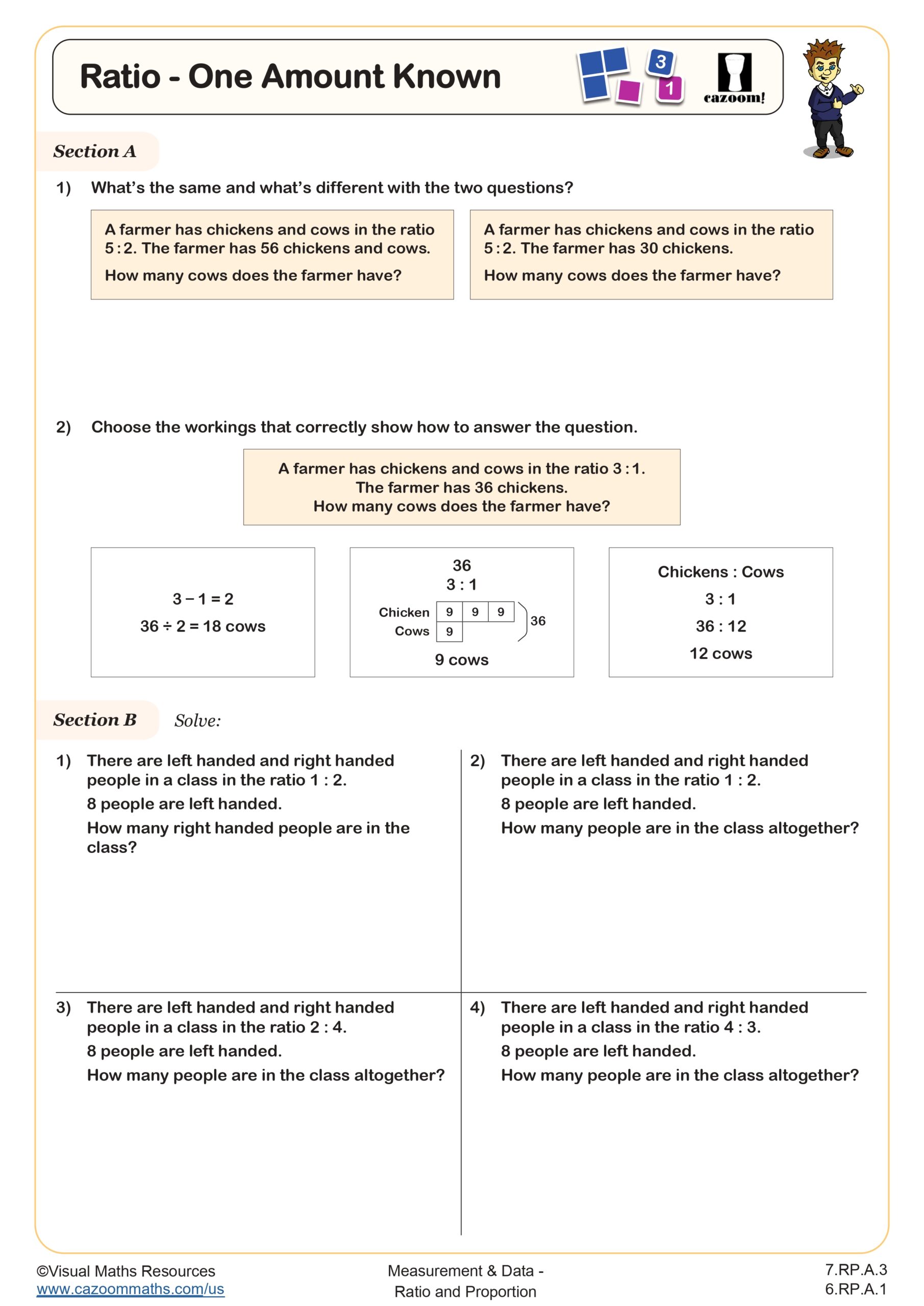
Ratio- One Amount Known
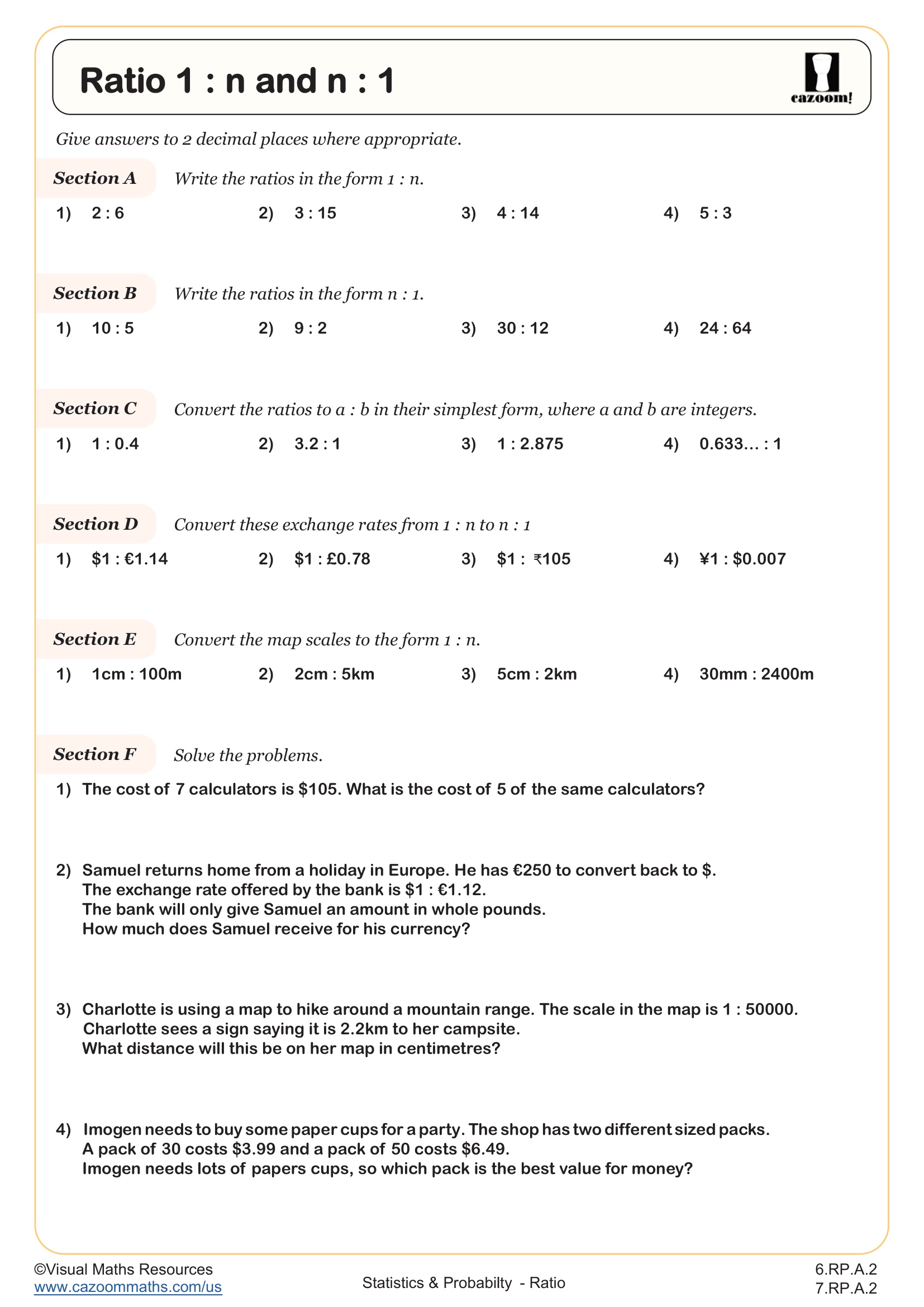
Ratios 1:n and n:1
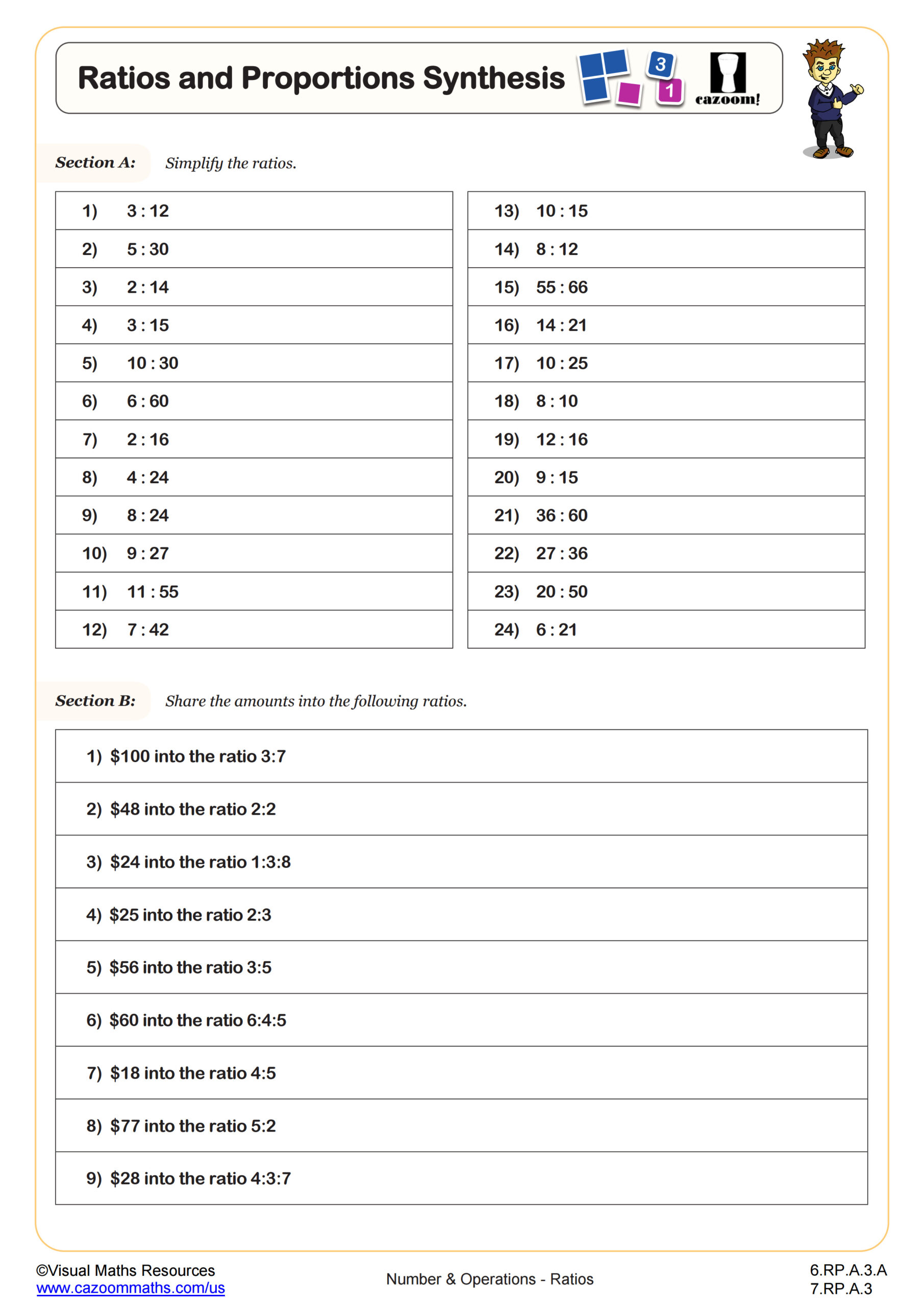
Ratios and Proportions Synthesis
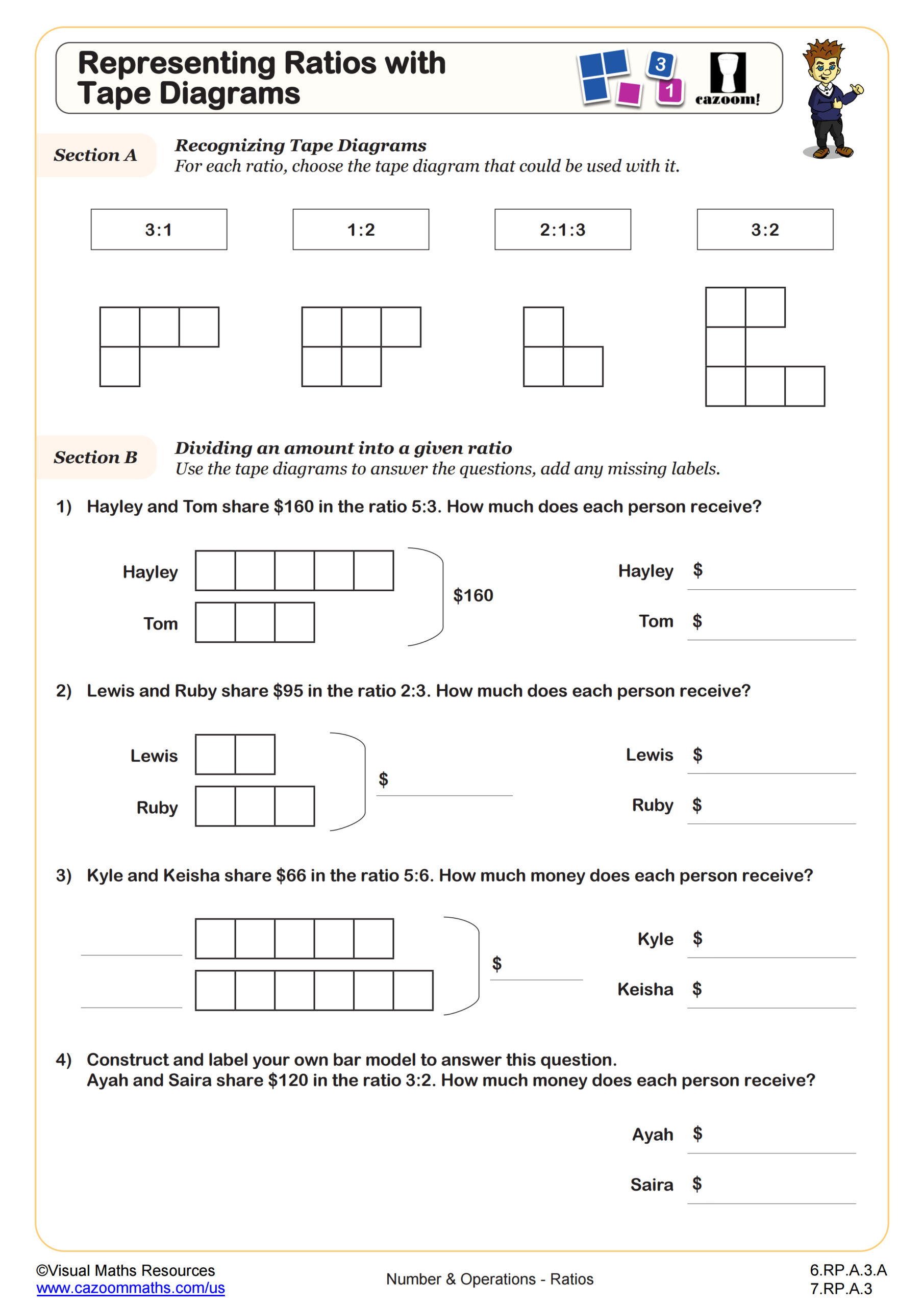
Representing Ratios with Tape Diagrams
Simplifying Ratios ( A )
.jpg?w=3840)
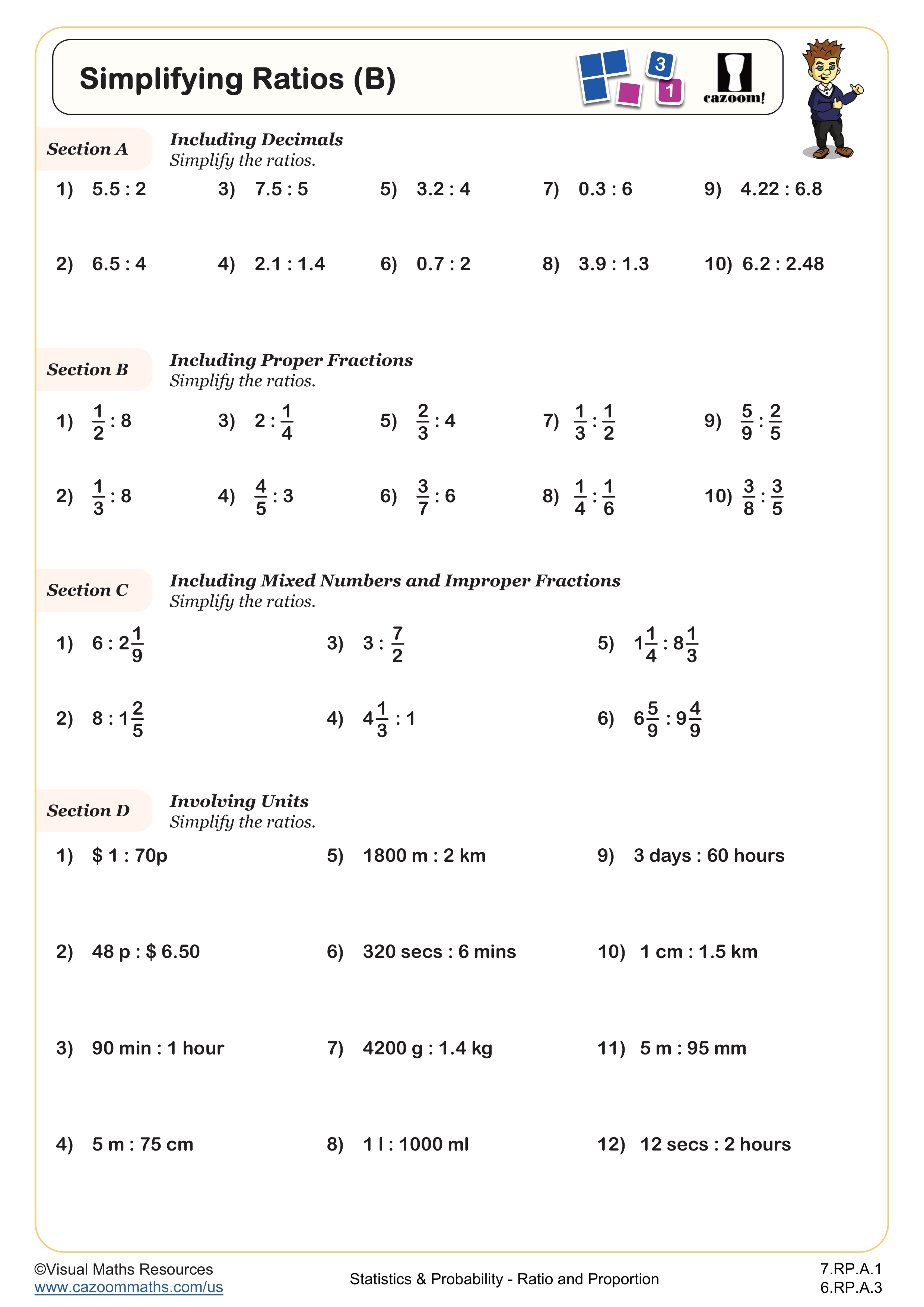
Simplifying Ratios (B)
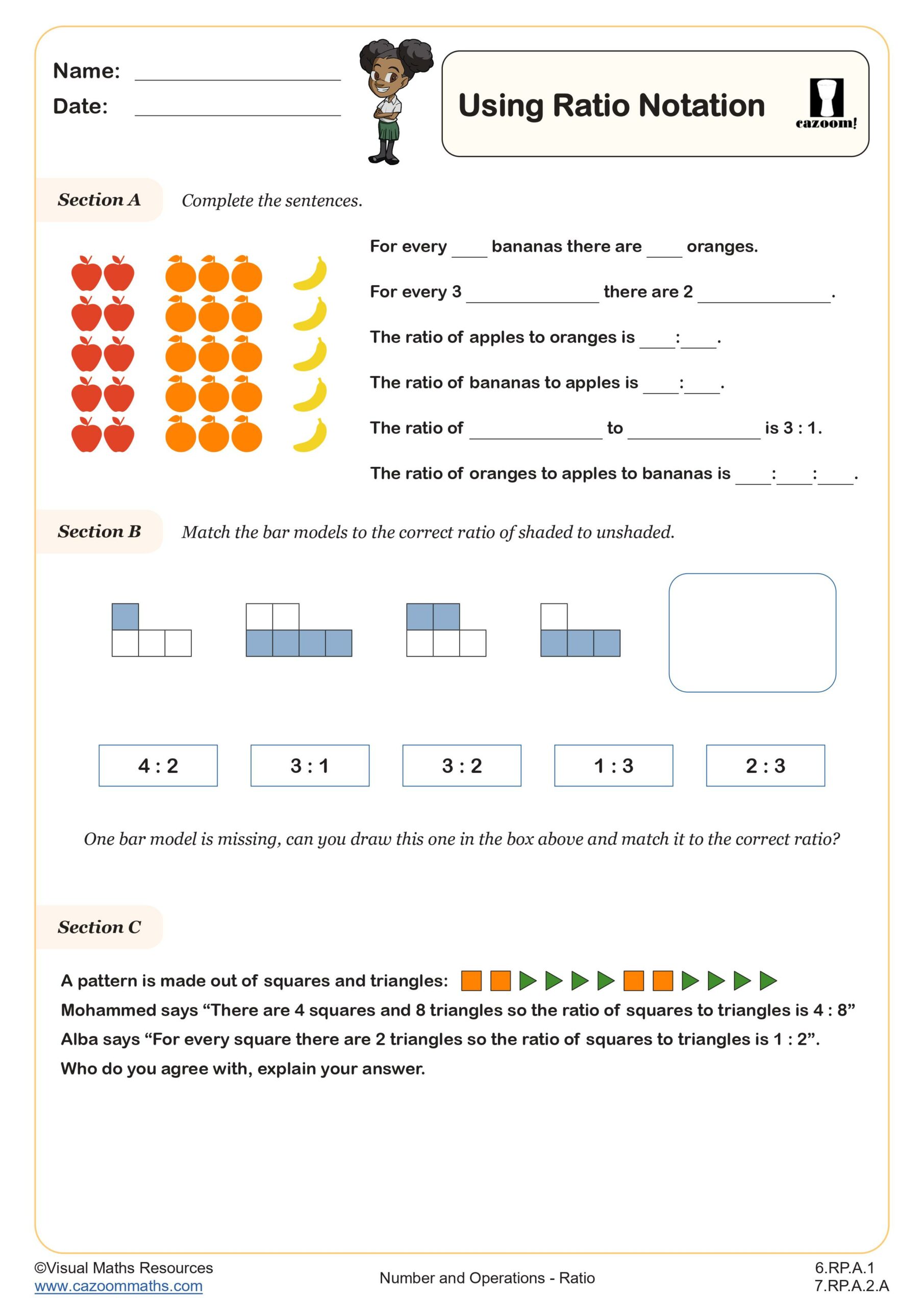
Using Ratio Notation
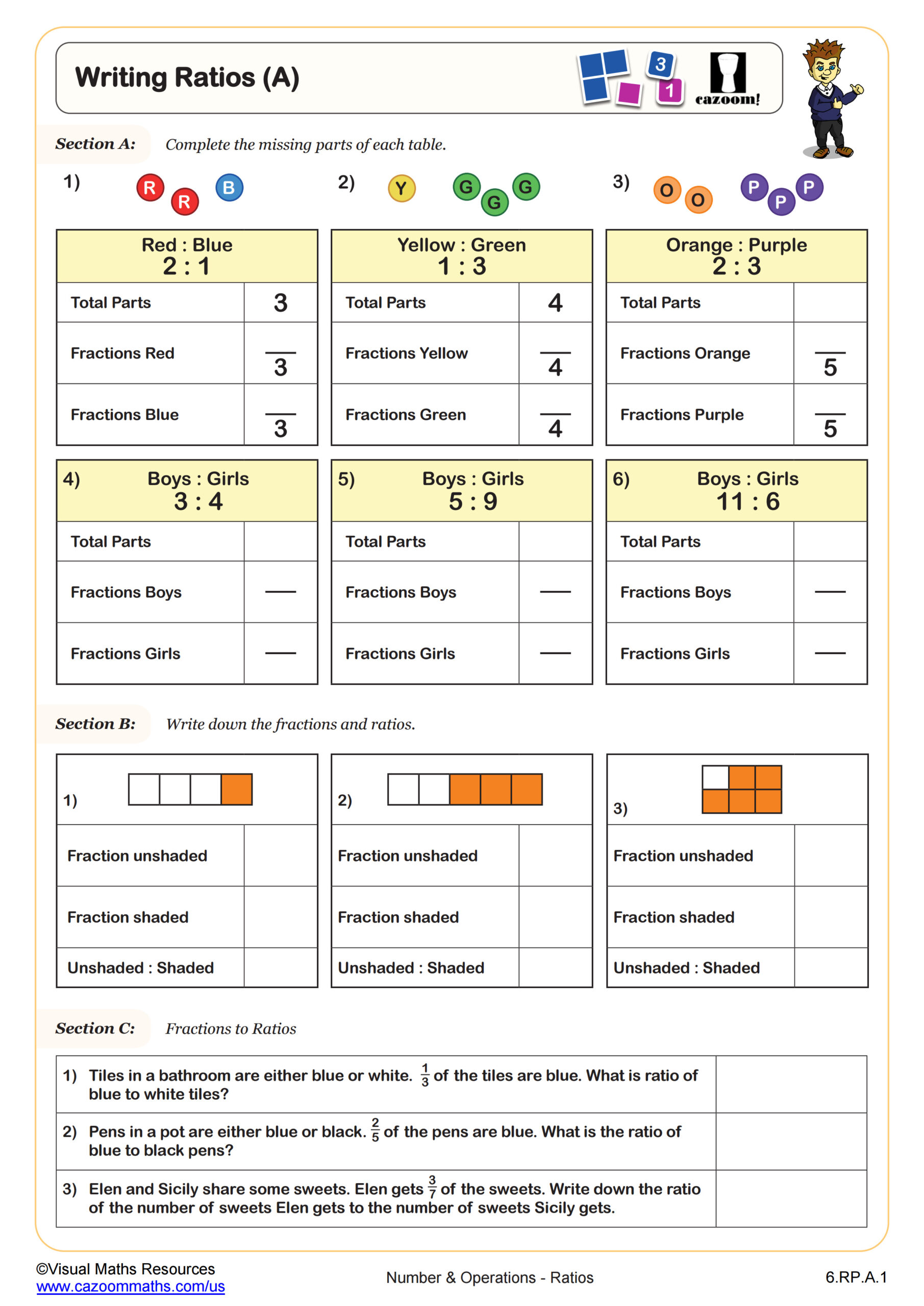
Writing Ratios (A)
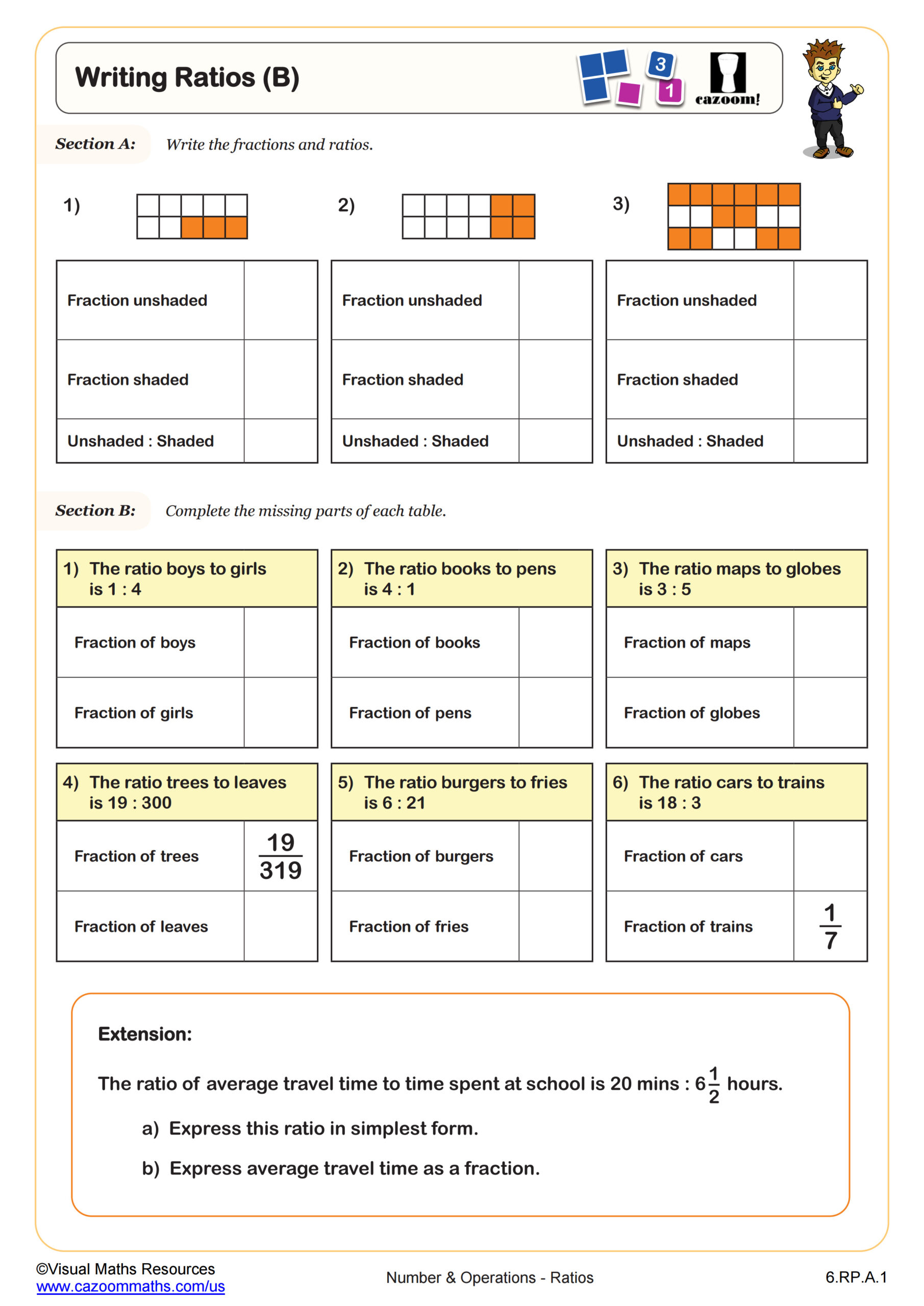
Writing Ratios (B)
All worksheets are created by the team of experienced teachers at Cazoom Math.
What makes ratio and rate grade 8 different from earlier grade levels?
Grade 8 ratio and rate work builds on the foundational understanding from grades 6-7 by introducing more complex multi-step problems and algebraic representations. Students move beyond simple equivalent ratio identification to solving proportional relationships using variables and working with rates involving compound units like miles per gallon or dollars per square foot.
Teachers notice that eighth graders often over-rely on cross-multiplication without understanding the underlying proportional relationship. The worksheets emphasize multiple solution strategies including ratio tables, unit rates, and graphical representations to develop deeper conceptual understanding rather than procedural shortcuts.
How do ratio concepts progress from grade 7 to grade 8?
The progression from rate and ratio grade 7 to grade 8 involves increased complexity in both numerical values and contextual applications. Seventh grade focuses on basic equivalent ratios with whole numbers and simple unit rates, while eighth grade introduces decimals, fractions, and multi-step rate problems that require proportional reasoning skills.
By grade 8, students should fluently move between different representations of the same proportional relationship. Teachers find that students who master the foundational ratio concepts in grade 7 are better prepared for the algebraic thinking required in high school mathematics, particularly when working with linear relationships and slope.
Why do students confuse equivalent ratios with equal ratios?
Students frequently mistake ratios that have the same numerical difference for equivalent ratios, such as thinking 2:3 and 4:5 are equivalent because both have a difference of 1. This misconception stems from additive thinking rather than the multiplicative reasoning that ratios require. Equivalent ratios maintain the same multiplicative relationship between terms.
Classroom experience shows that students benefit from visual models like ratio tables and double number lines that clearly demonstrate the multiplicative pattern. The worksheets include problems that specifically address this misconception by asking students to explain why certain ratios are not equivalent, forcing them to articulate the mathematical reasoning behind proportional relationships.
How can teachers use these worksheets most effectively in middle school classrooms?
Teachers report the most success when using these worksheets as guided practice after introducing concepts through manipulatives or real-world contexts. The problems work well for differentiated instruction since they range from basic equivalent ratio identification to complex rate applications suitable for advanced middle school students.
The answer keys allow teachers to implement self-checking stations or peer review activities that promote mathematical discourse. Many teachers use selected problems as warm-up activities or exit tickets to assess student understanding before moving to more challenging ratio and rate grade 9 concepts that build on these middle school foundations.