Middle School Ratio Worksheets
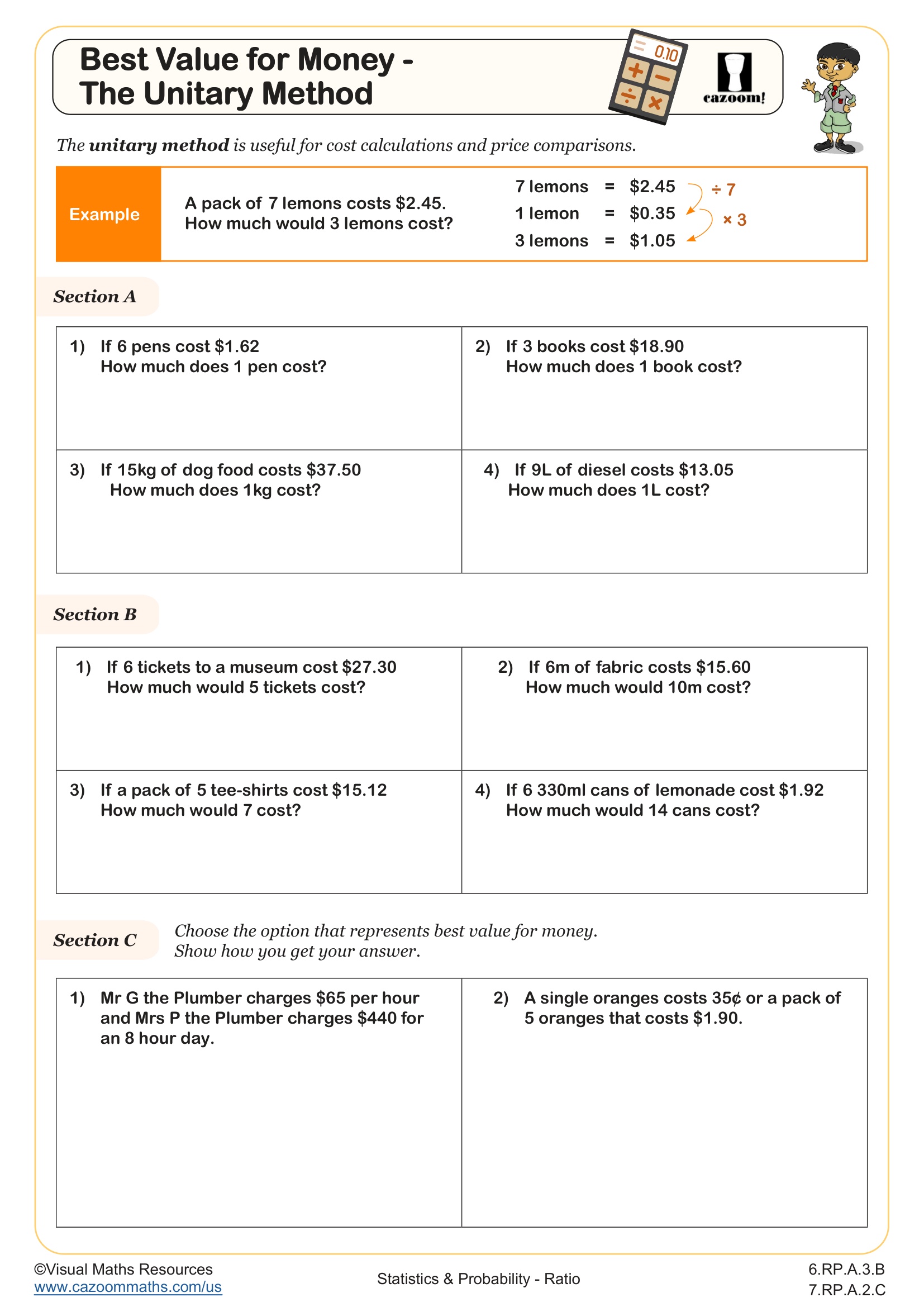
Best Value for Money - the Unitary Method
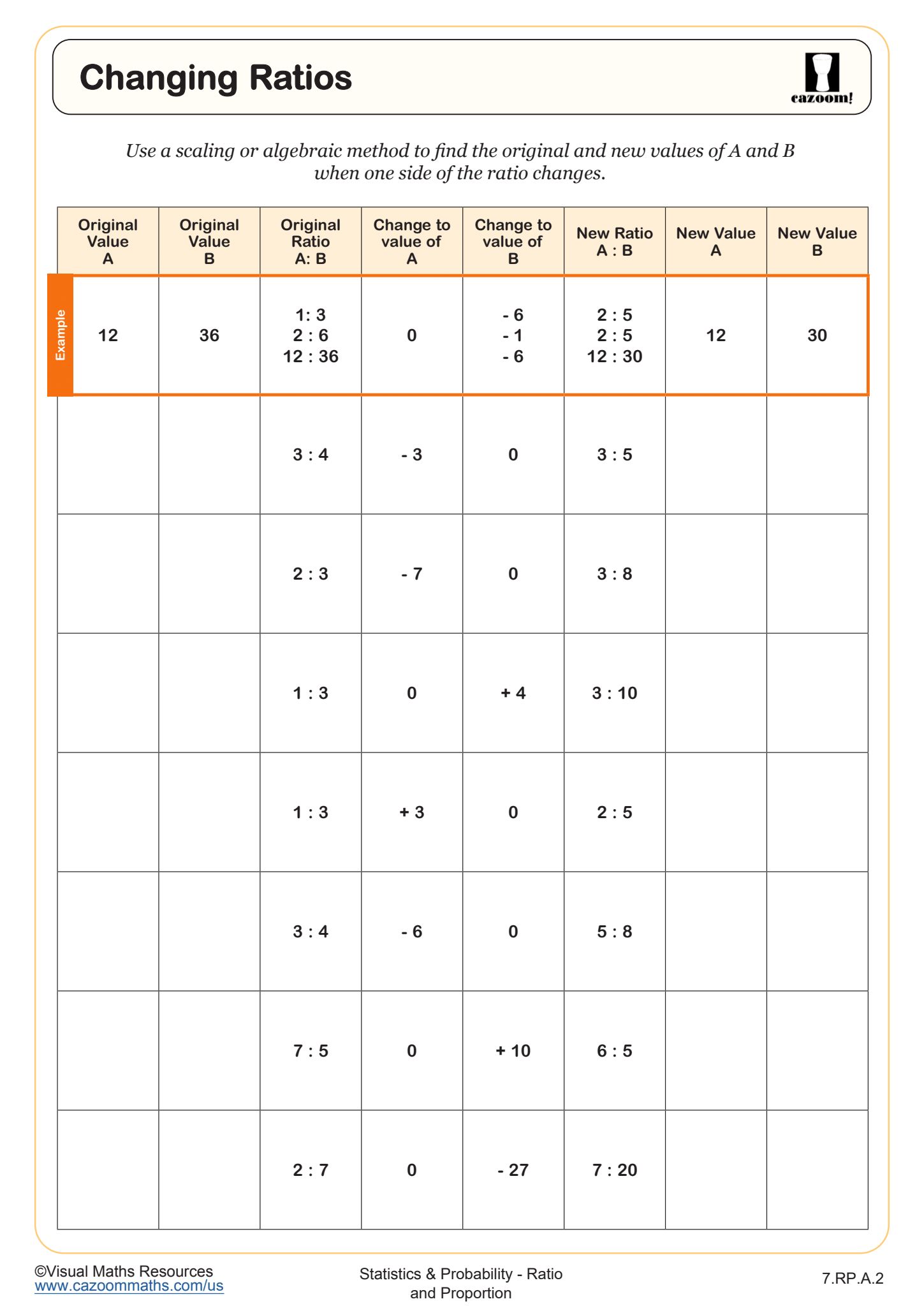
Changing Ratios
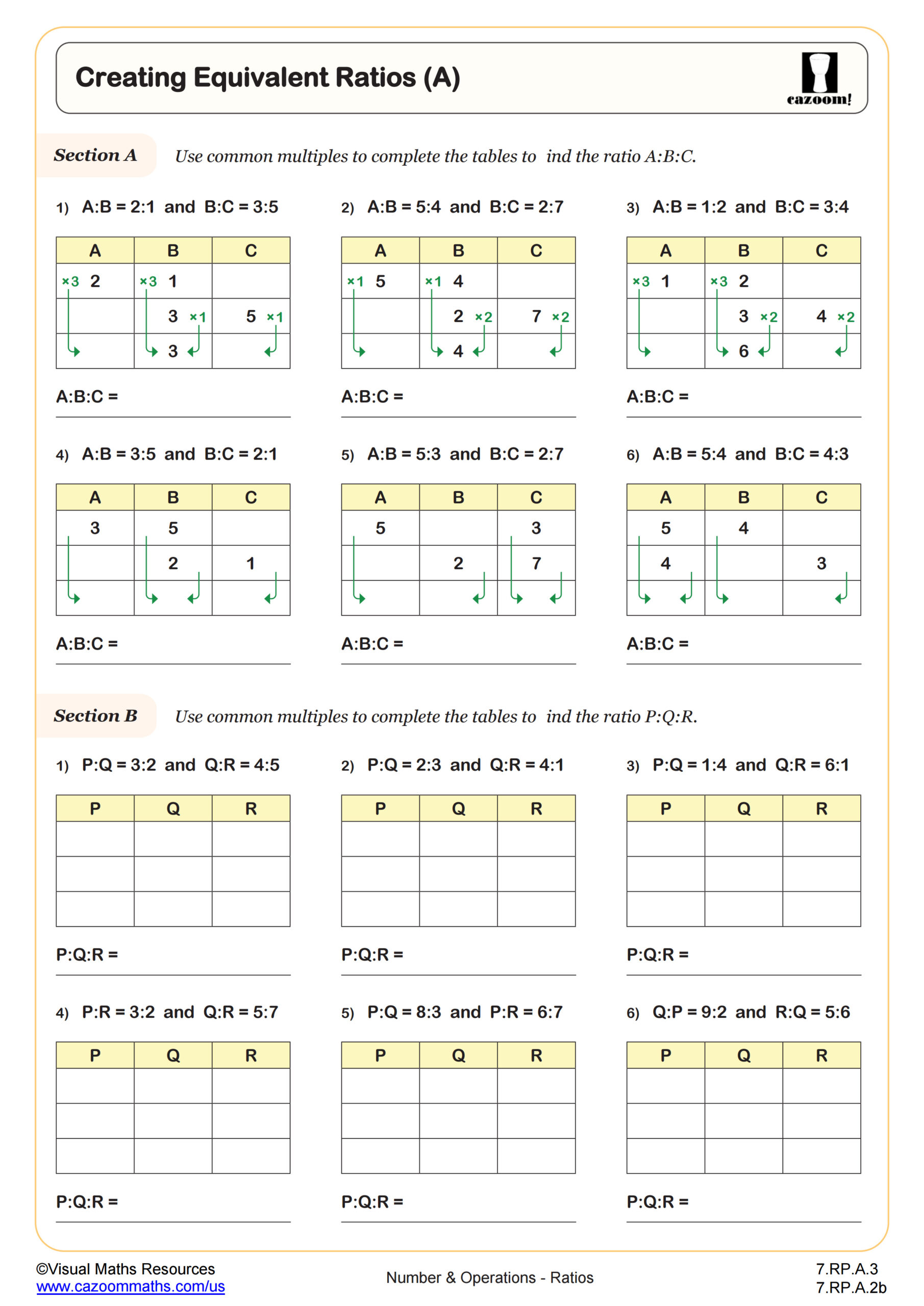
Creating Equivalent Ratios (A)
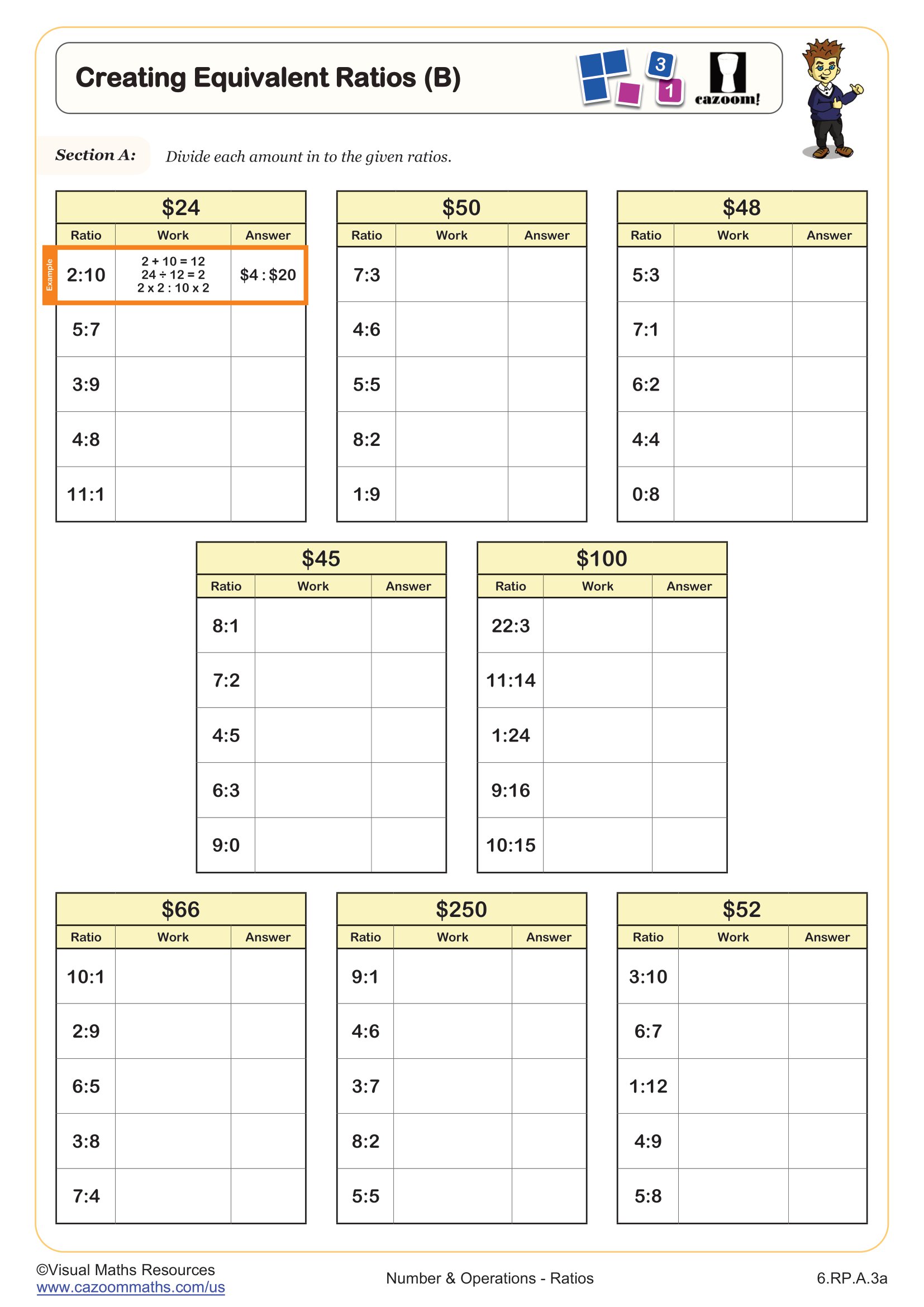
Creating Equivalent Ratios (B)
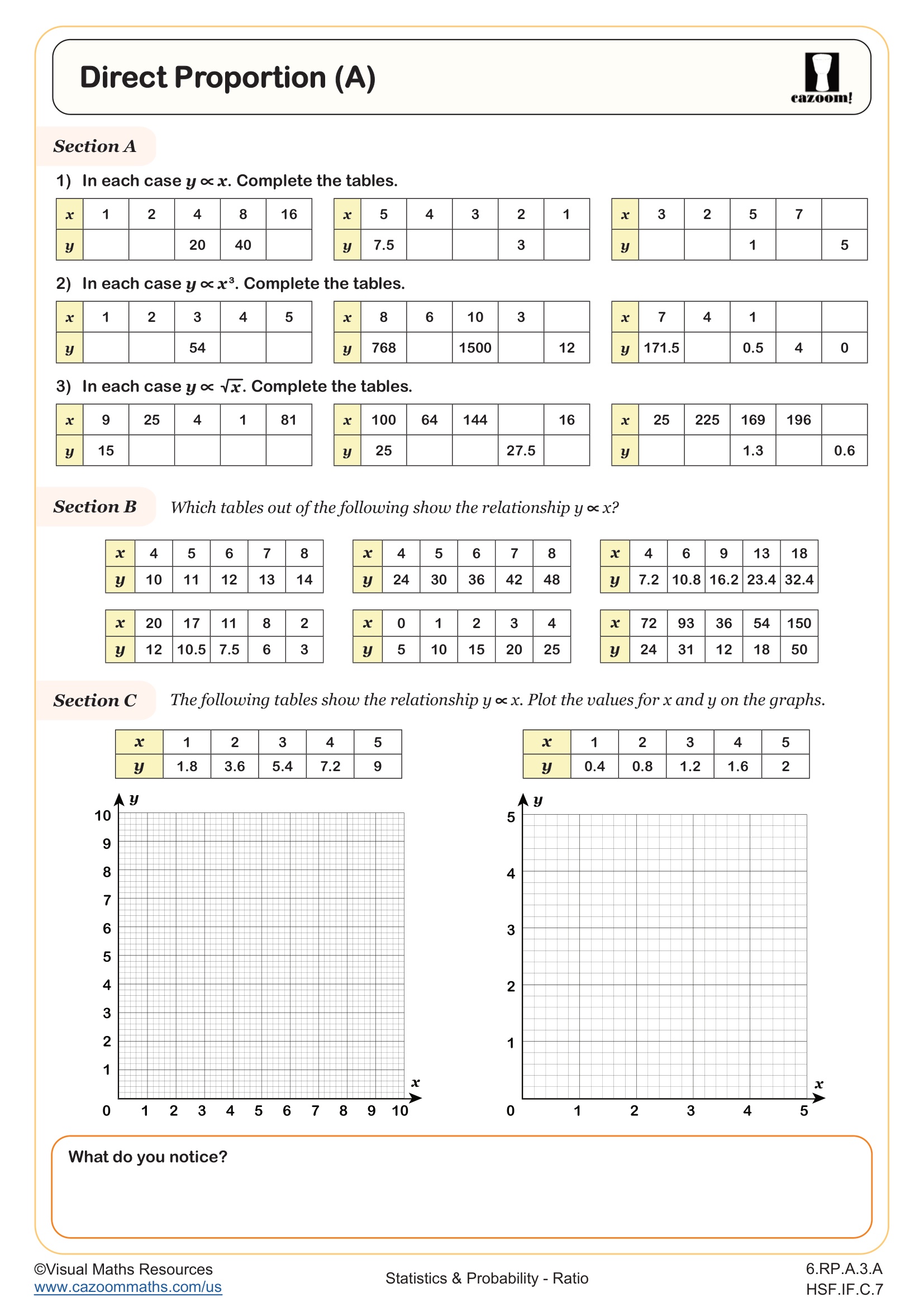
Direct Proportion (A)
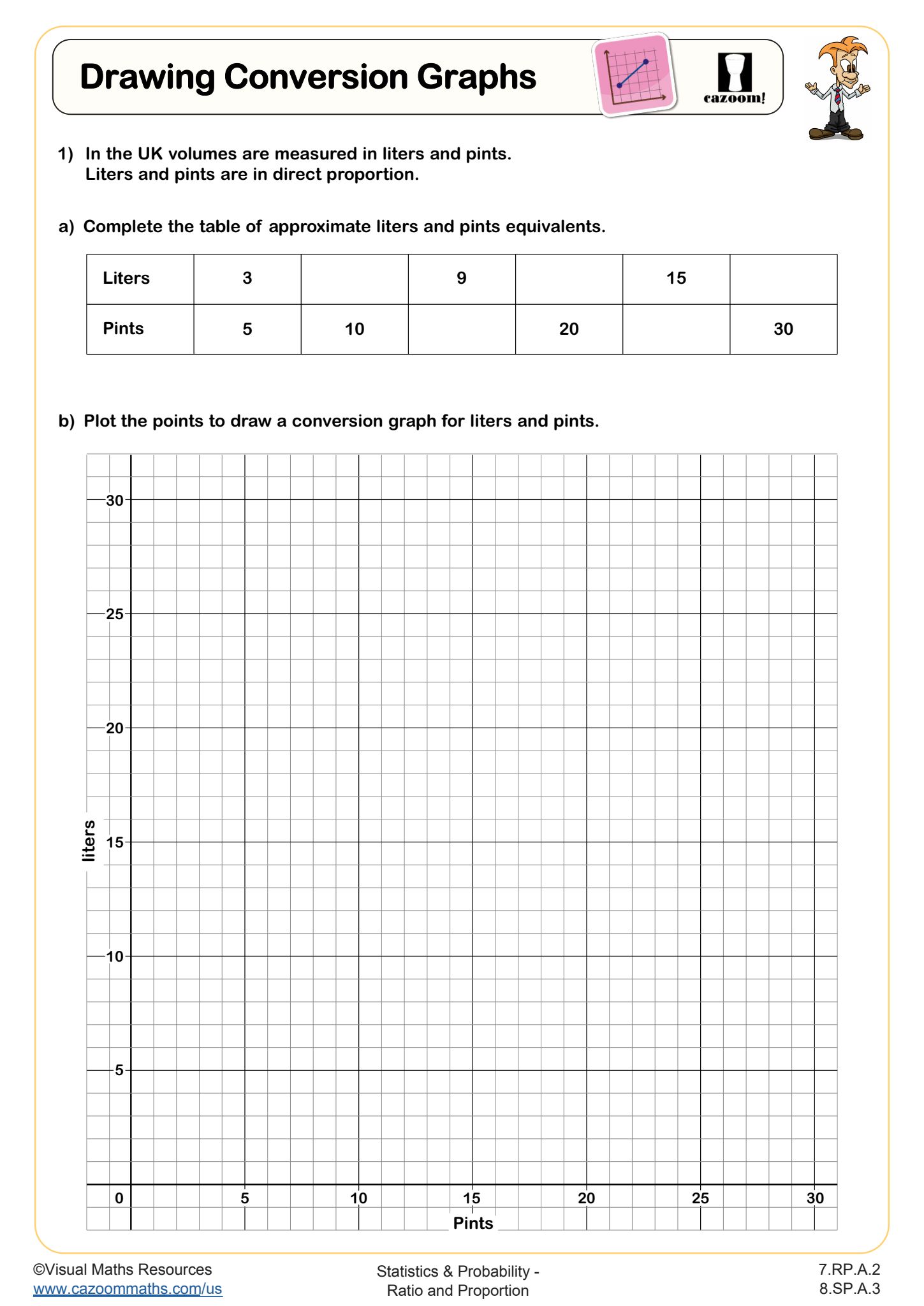
Drawing Conversion Graphs
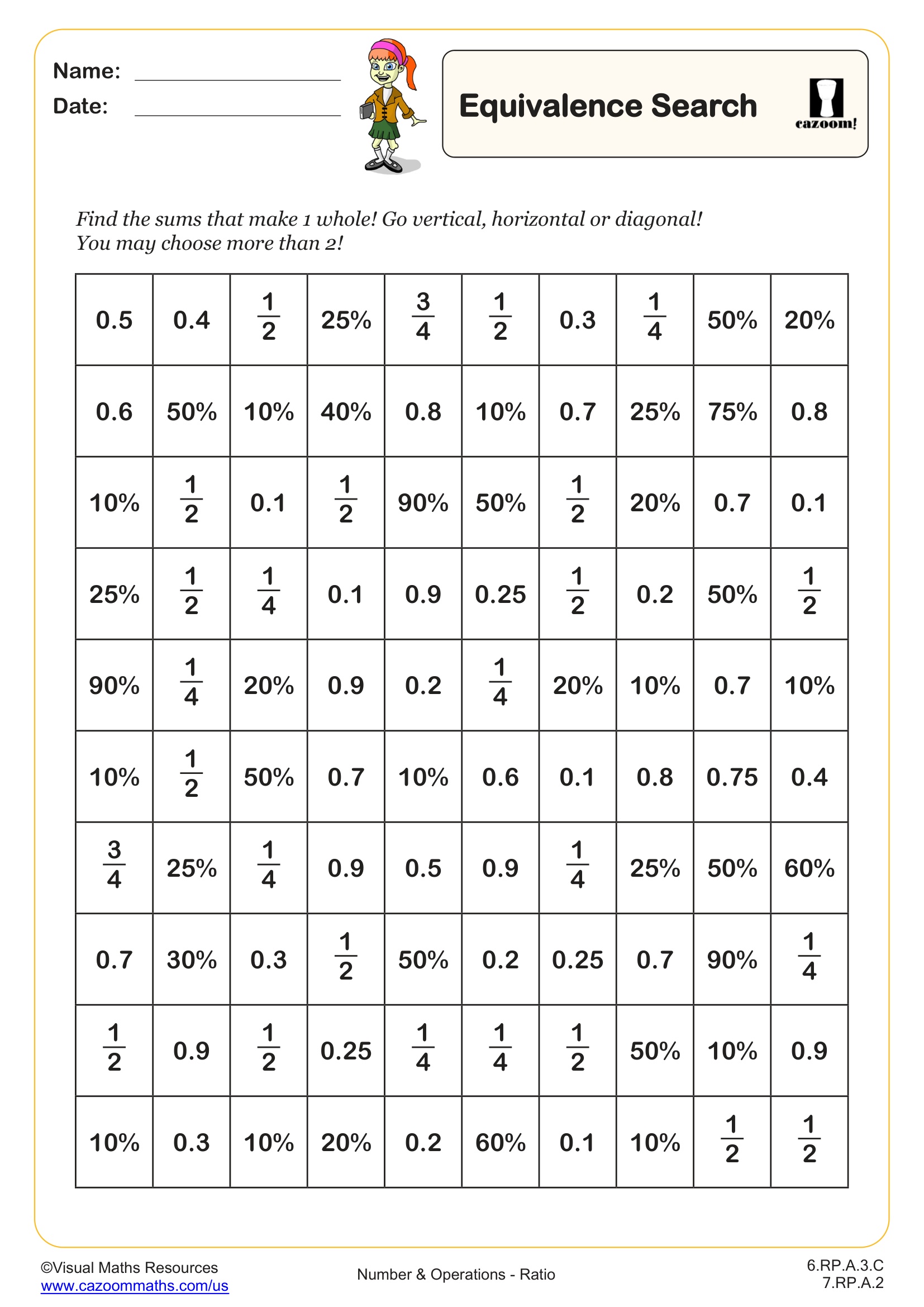
Equivalence Search (A)
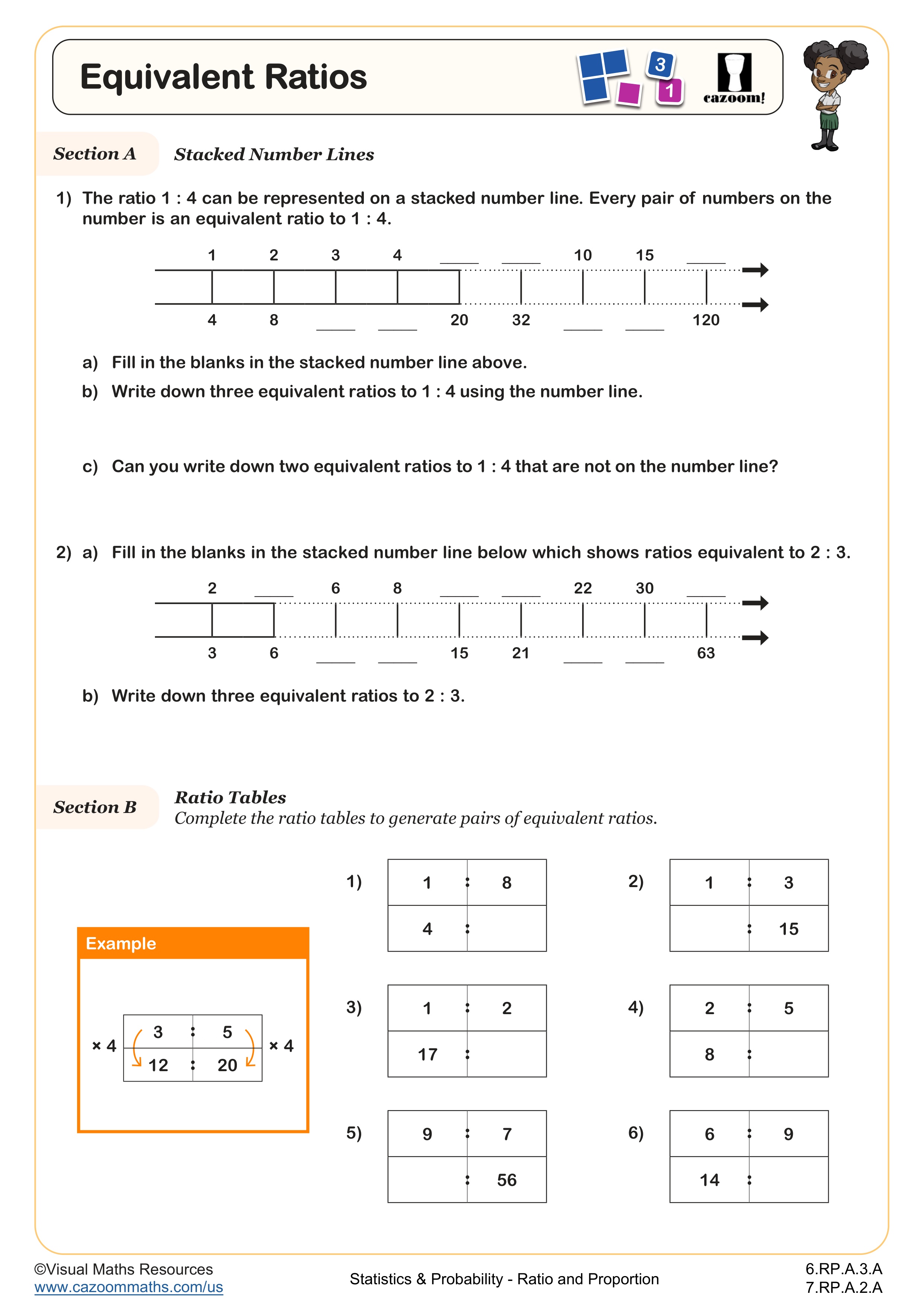
Equivalent Ratios
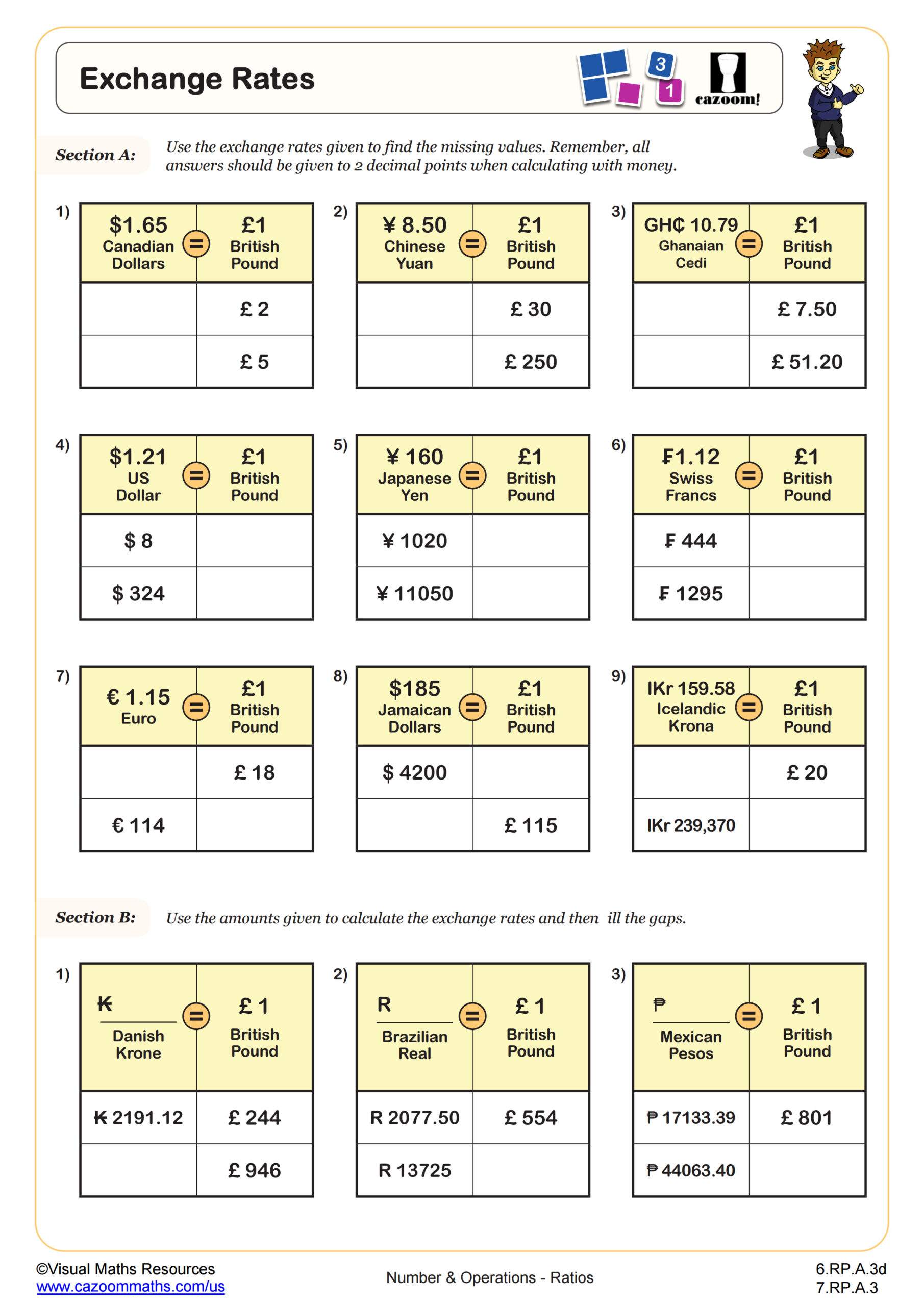
Exchange Rates
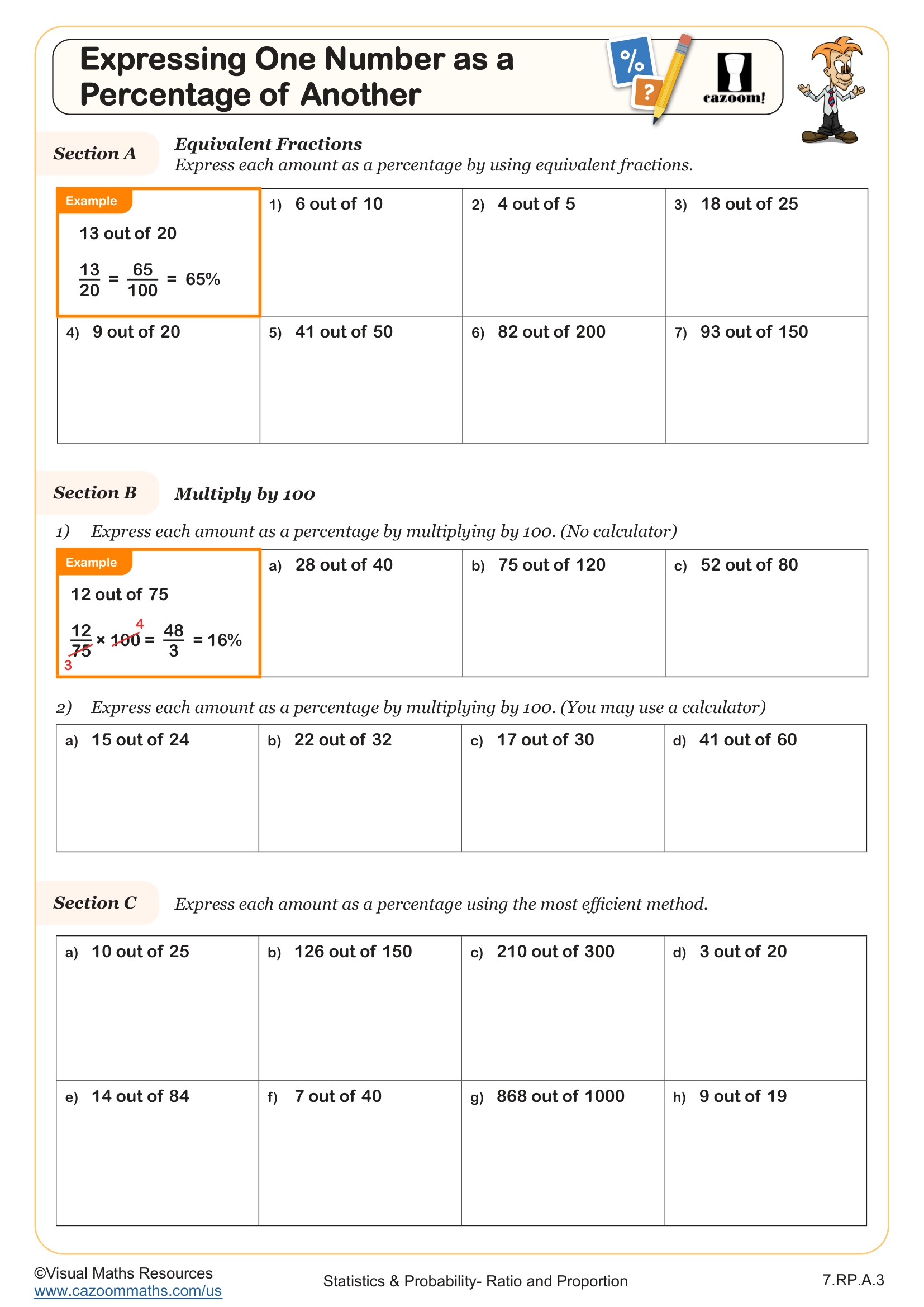
Express One Number as a Percentage of Another
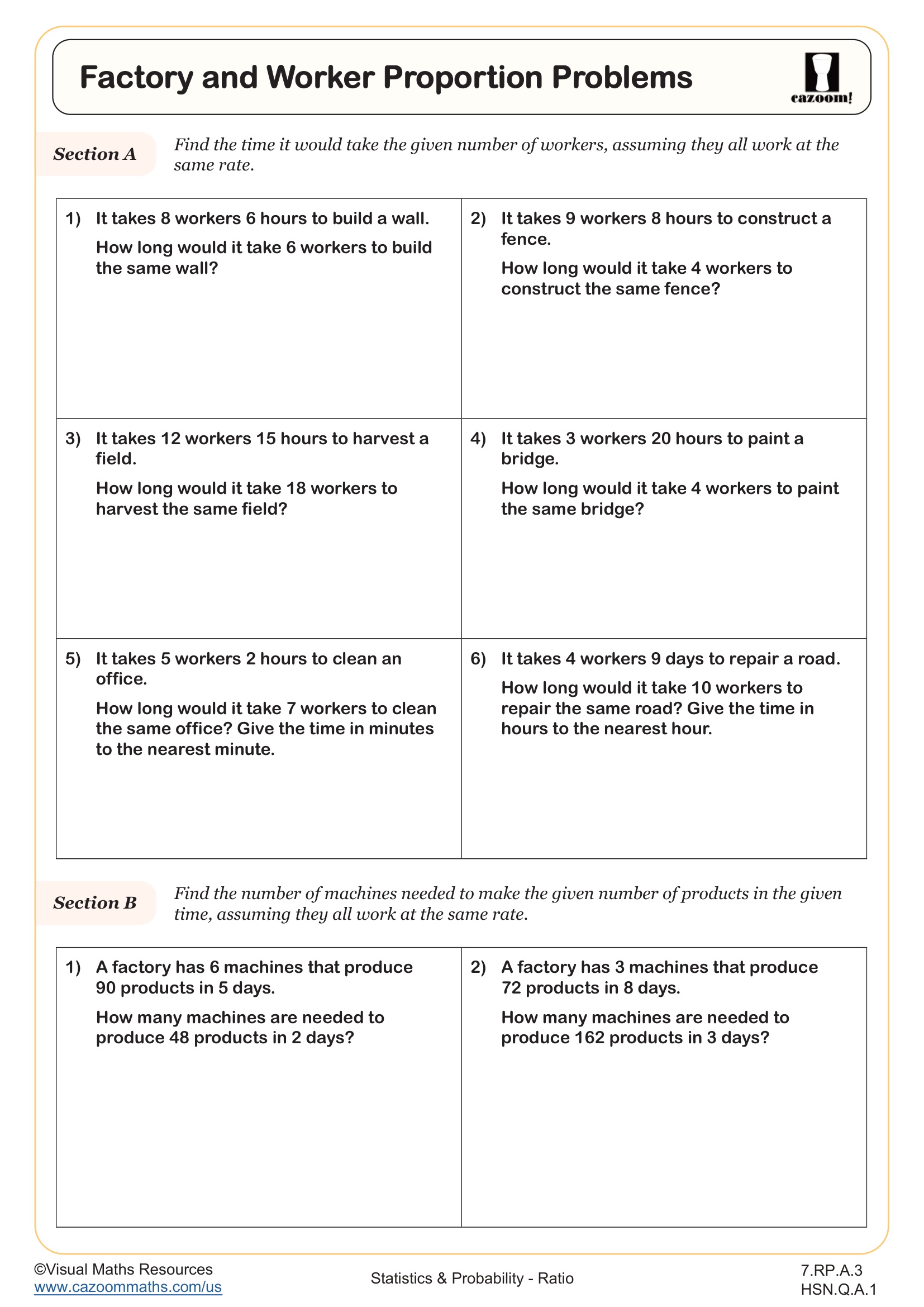
Factory and Worker Proportion Problems
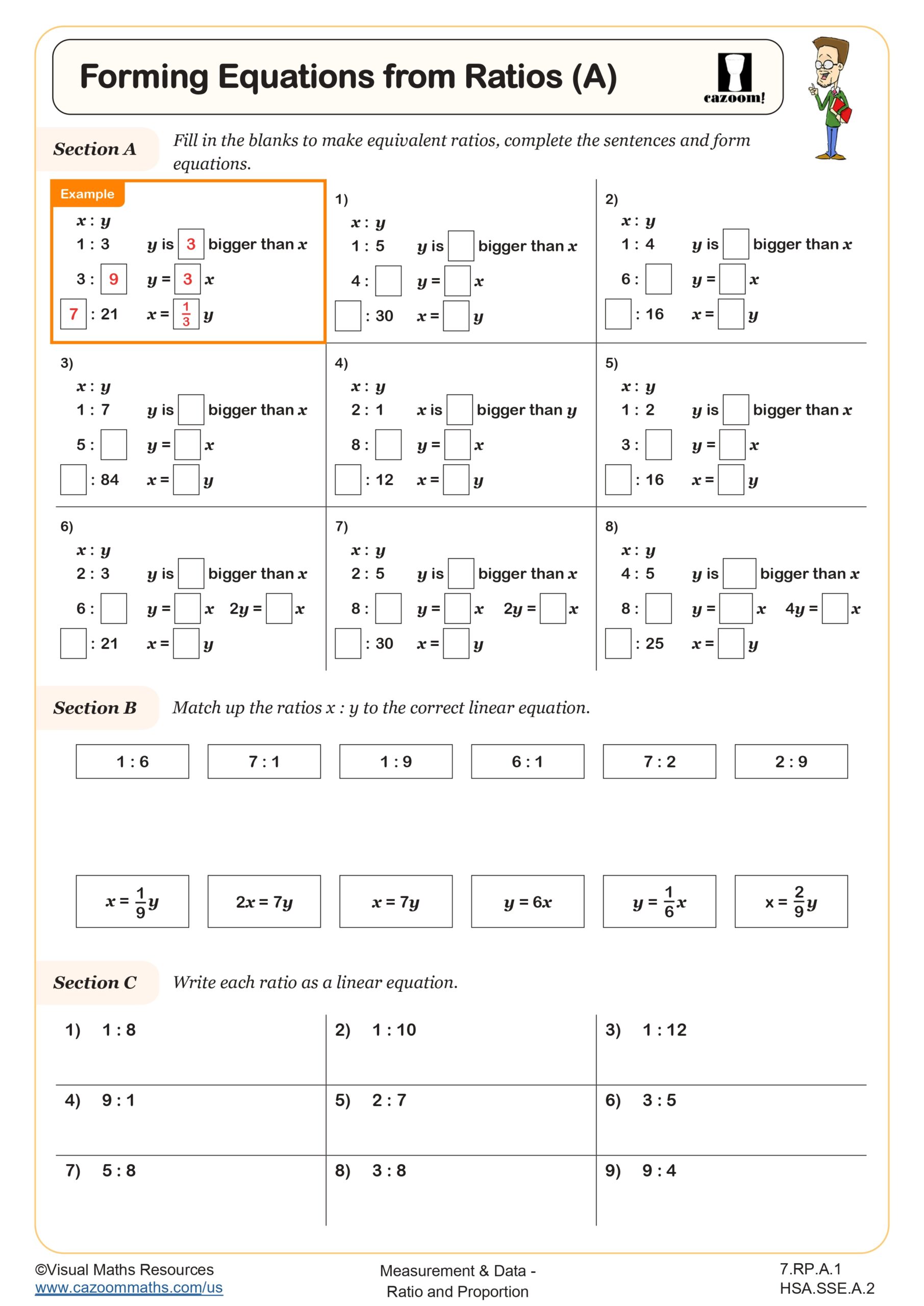
Forming Equations from Ratios (A)
Fraction, Percentage and Ratio Problems
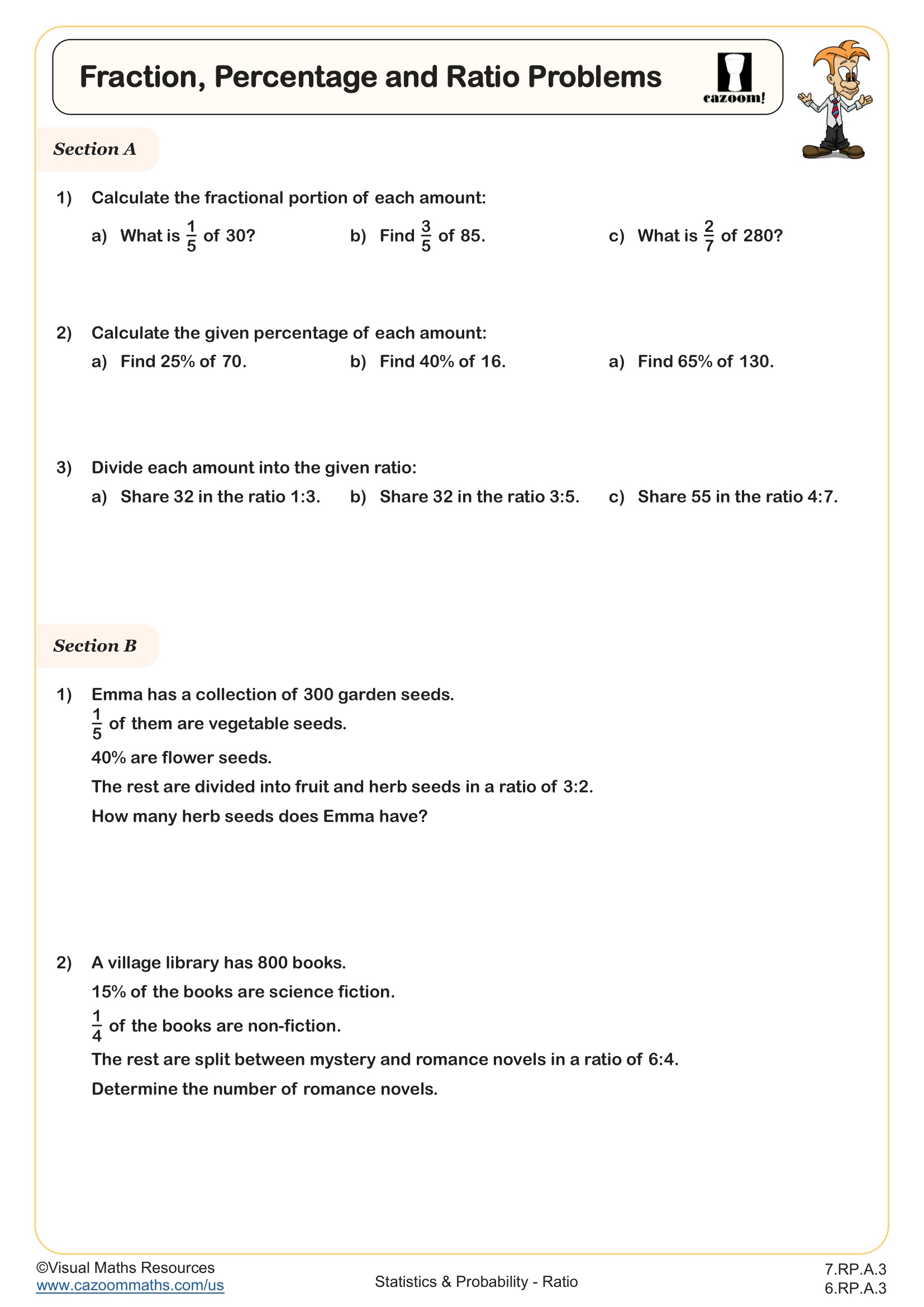
Introducing Ratio
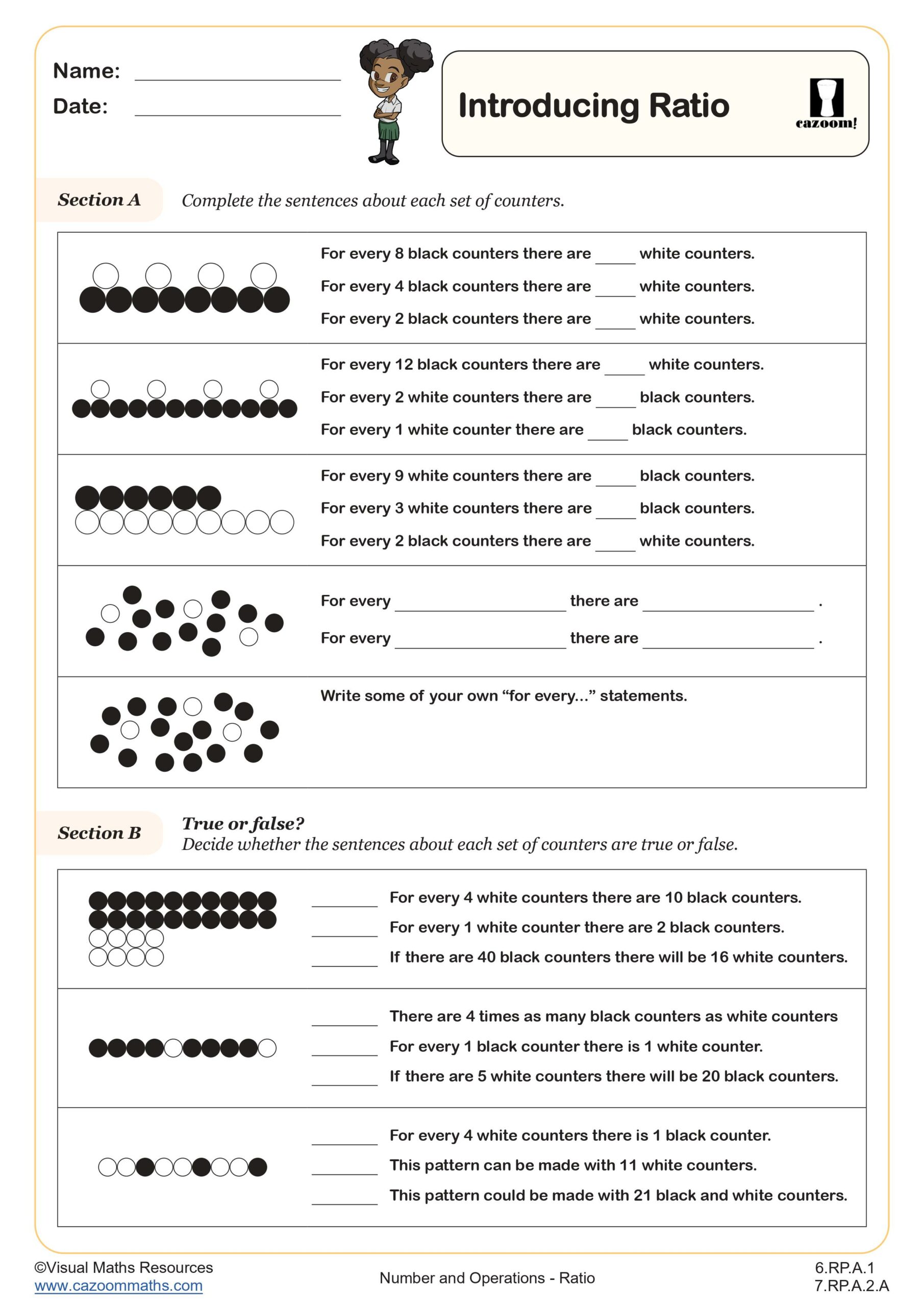
Percentage Profit and Loss
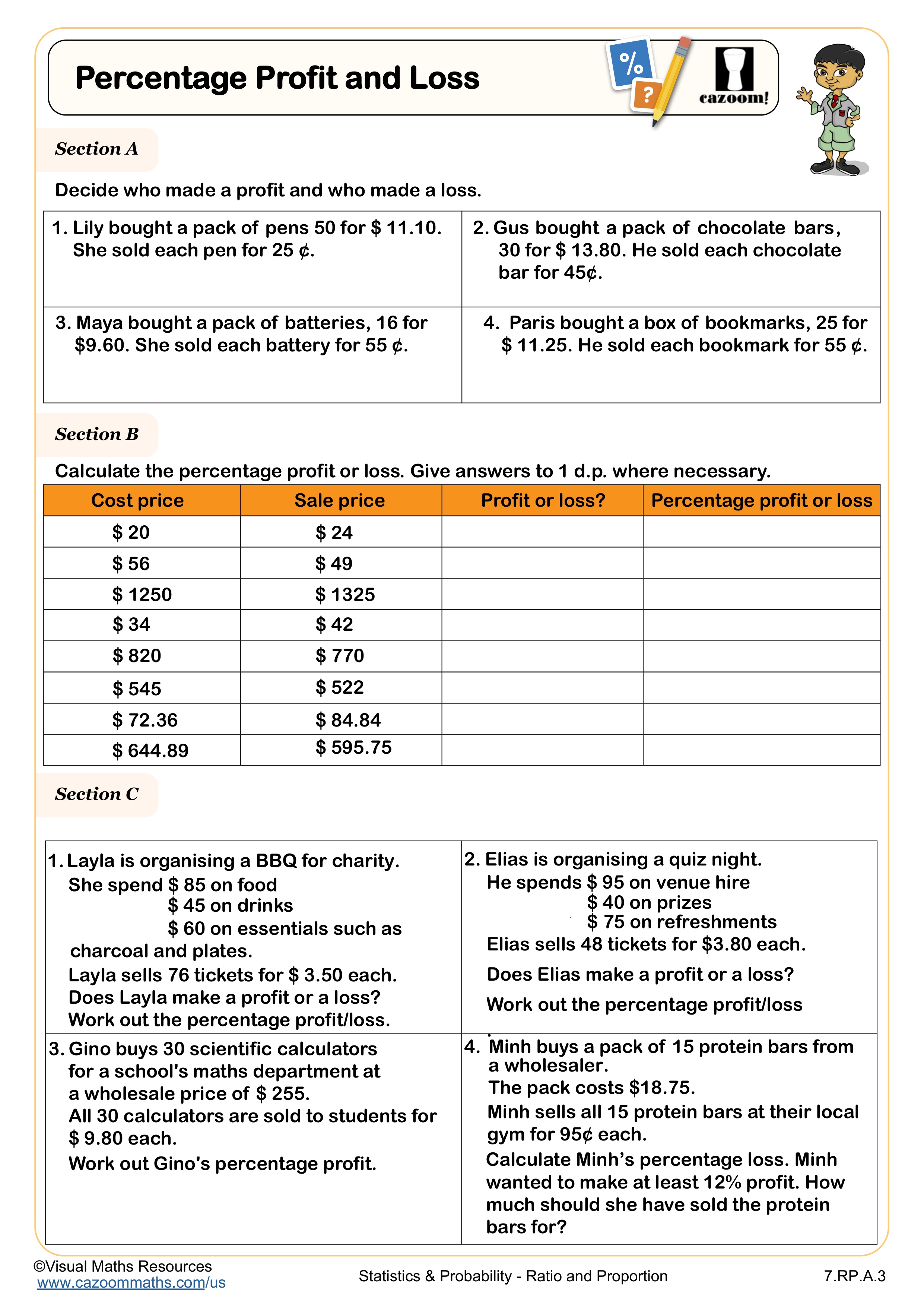
Ratio - Difference Known
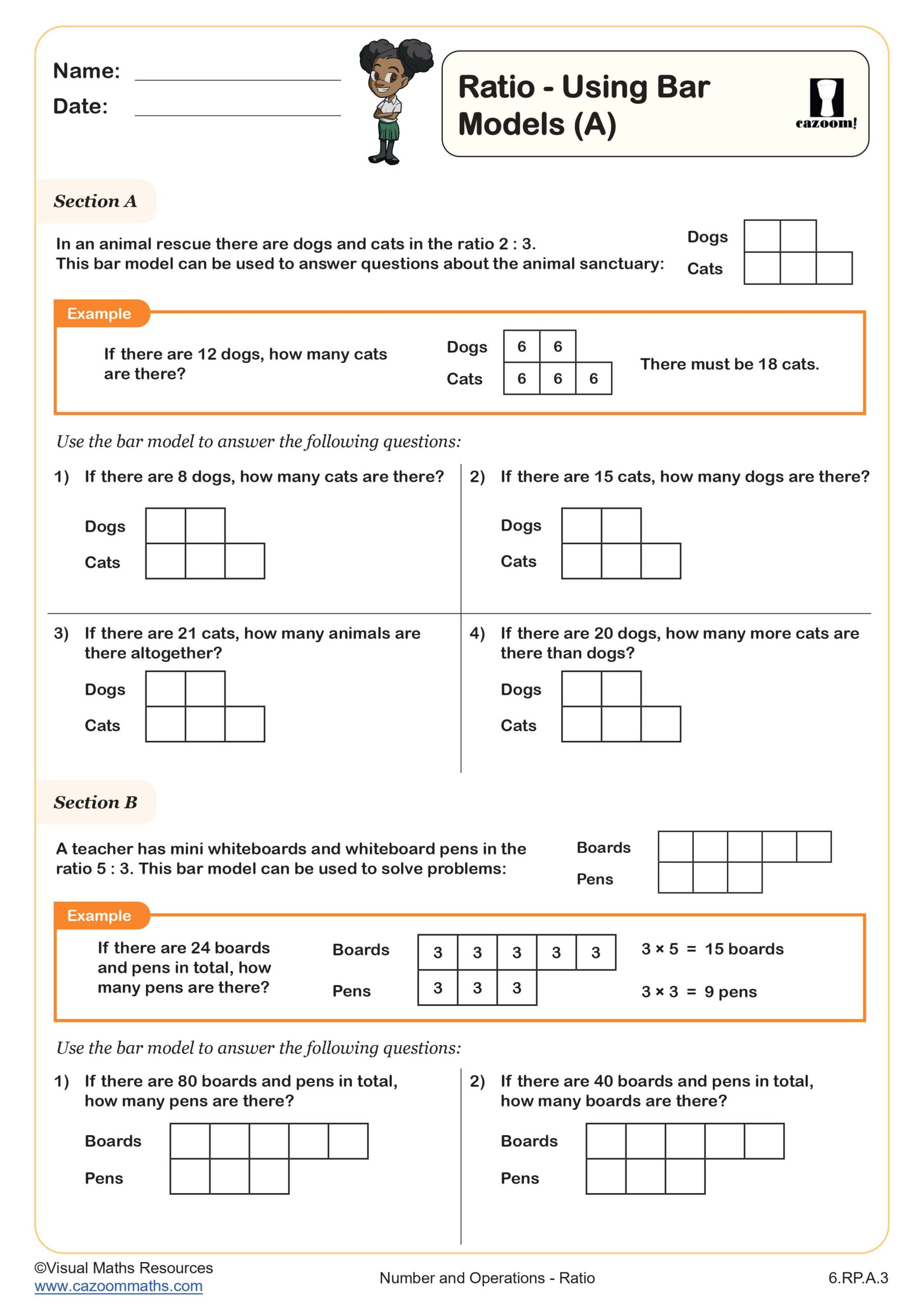
Ratio - Using Bar Models (A)
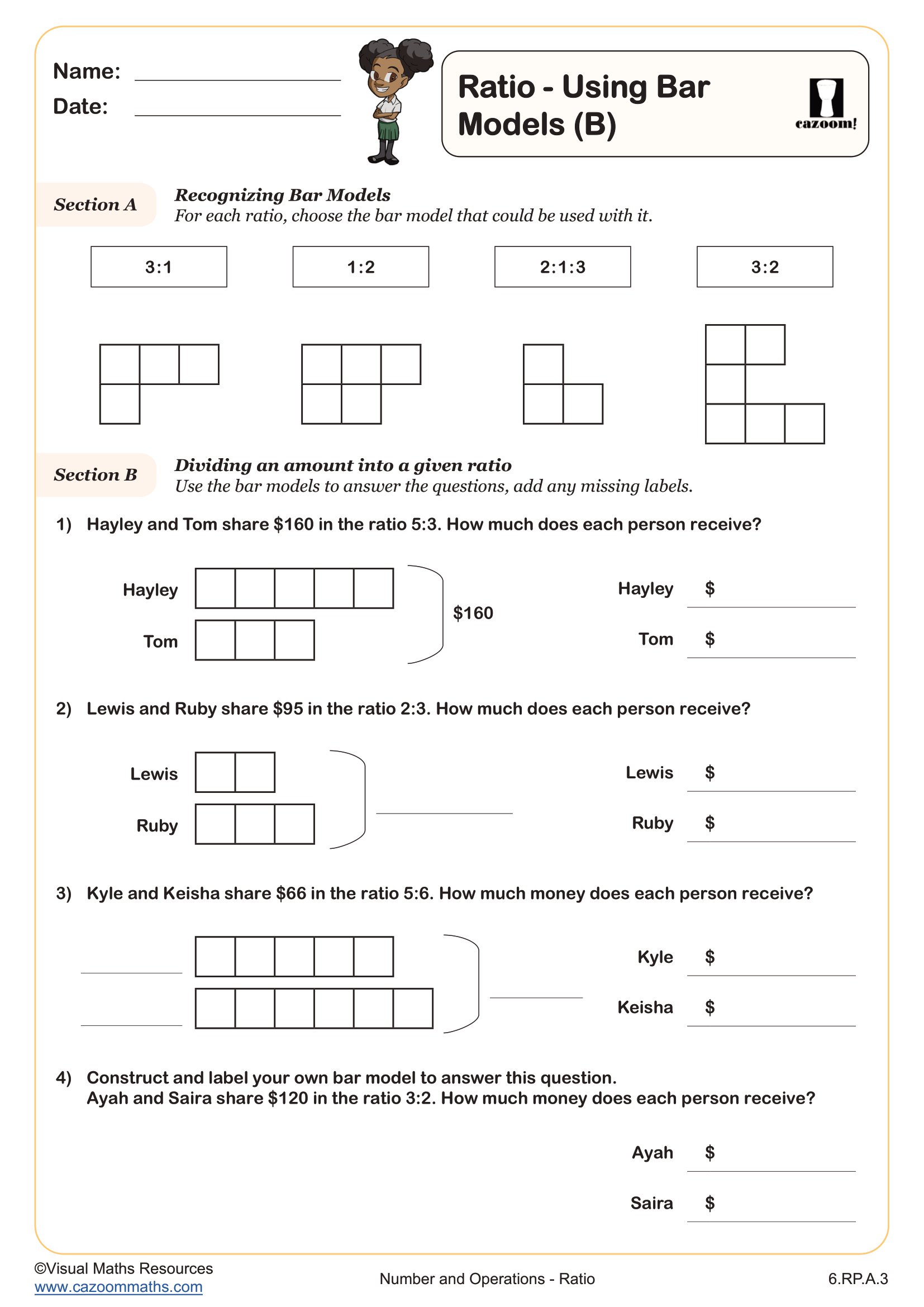
Ratio - Using Bar Models (B)
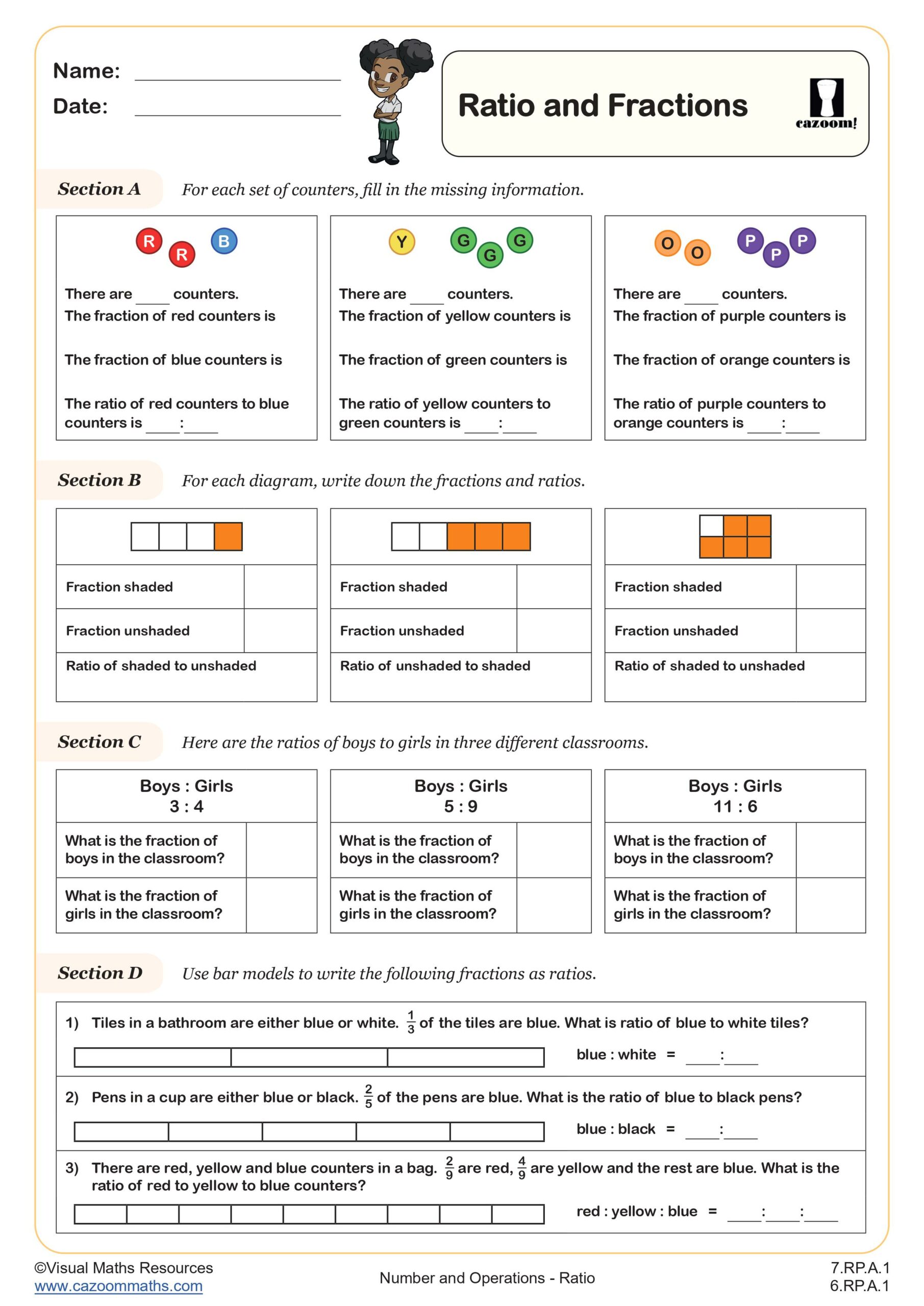
Ratio and Fractions
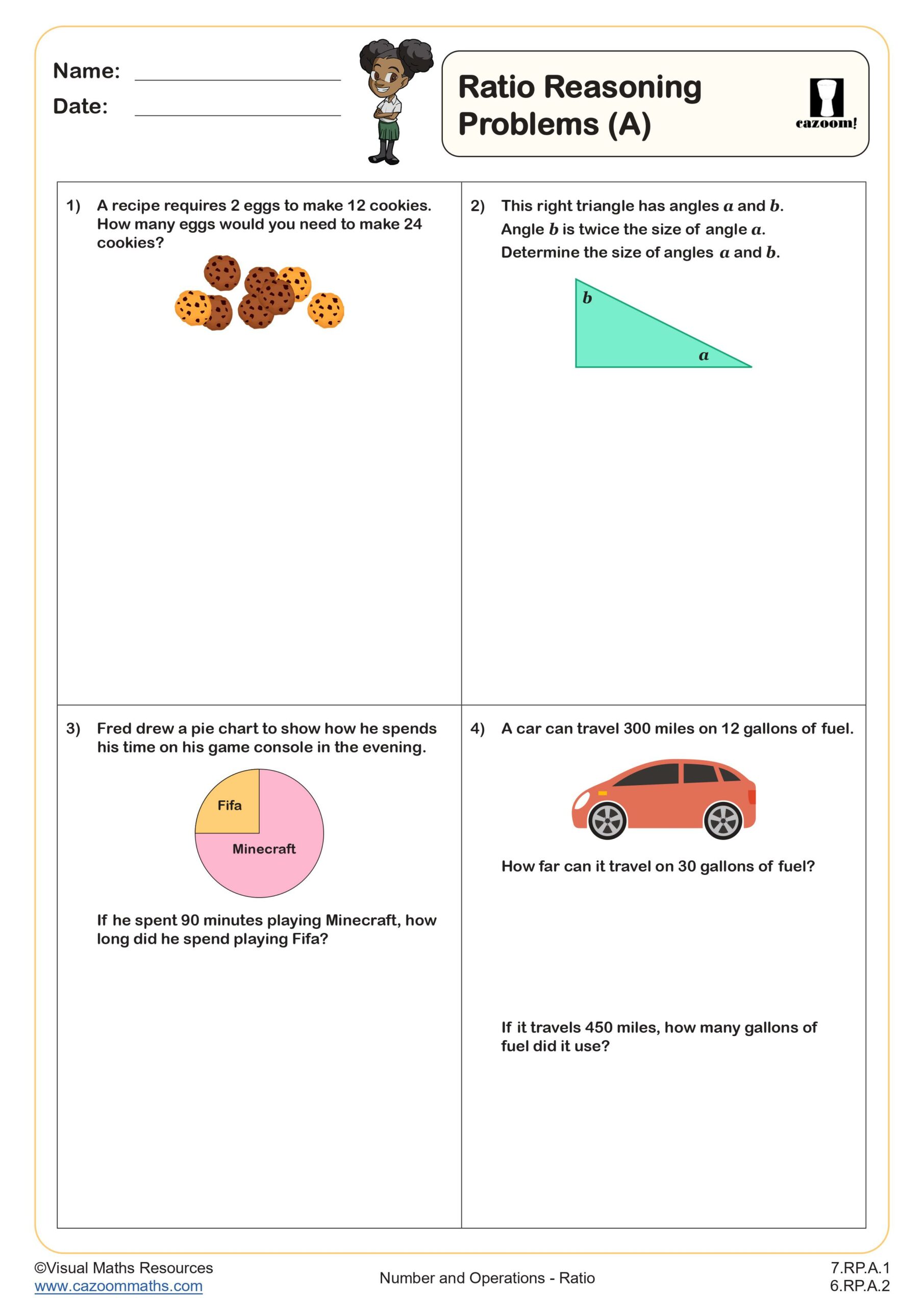
Ratio Reasoning Problems (A)
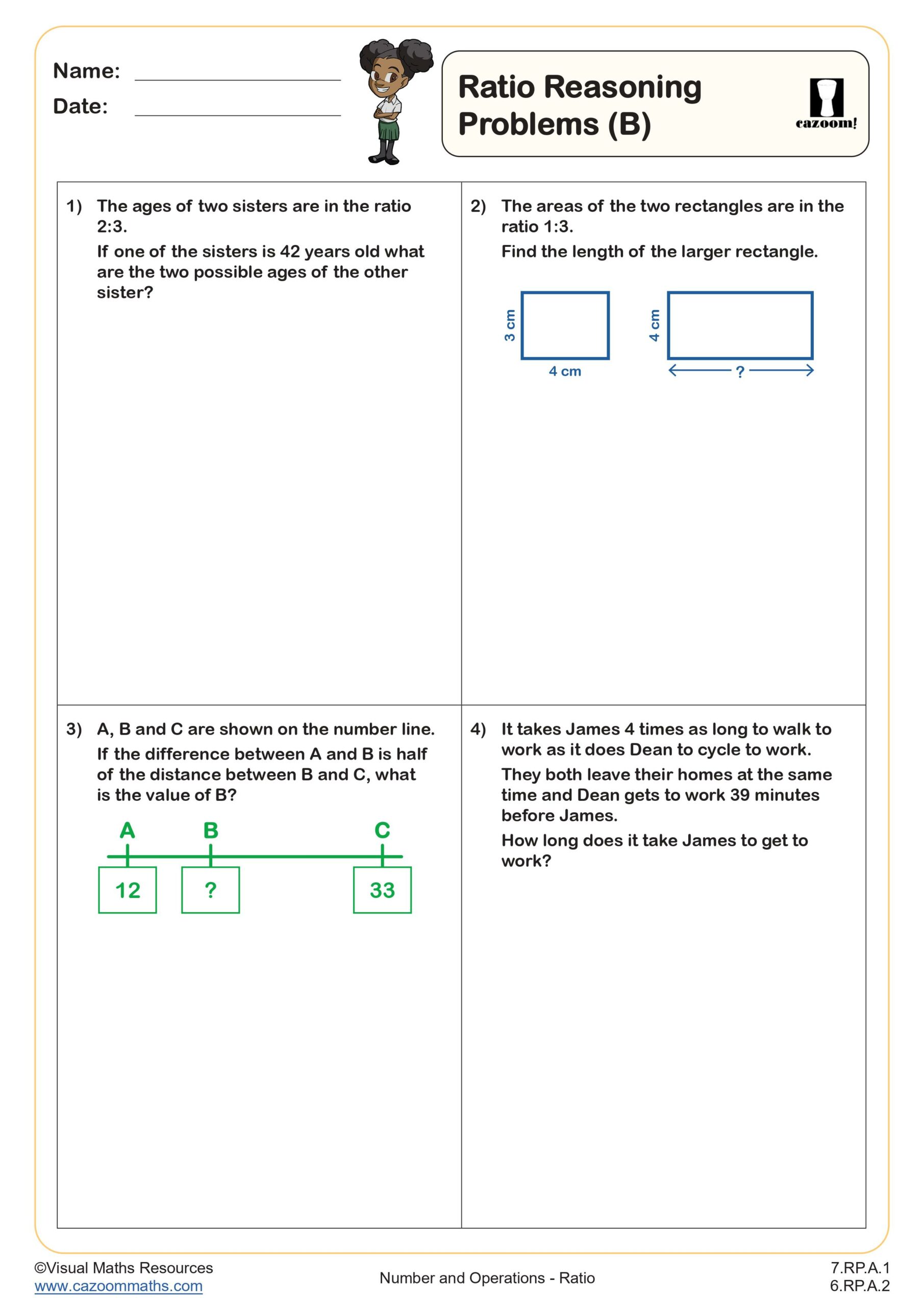
Ratio Reasoning Problems (B)
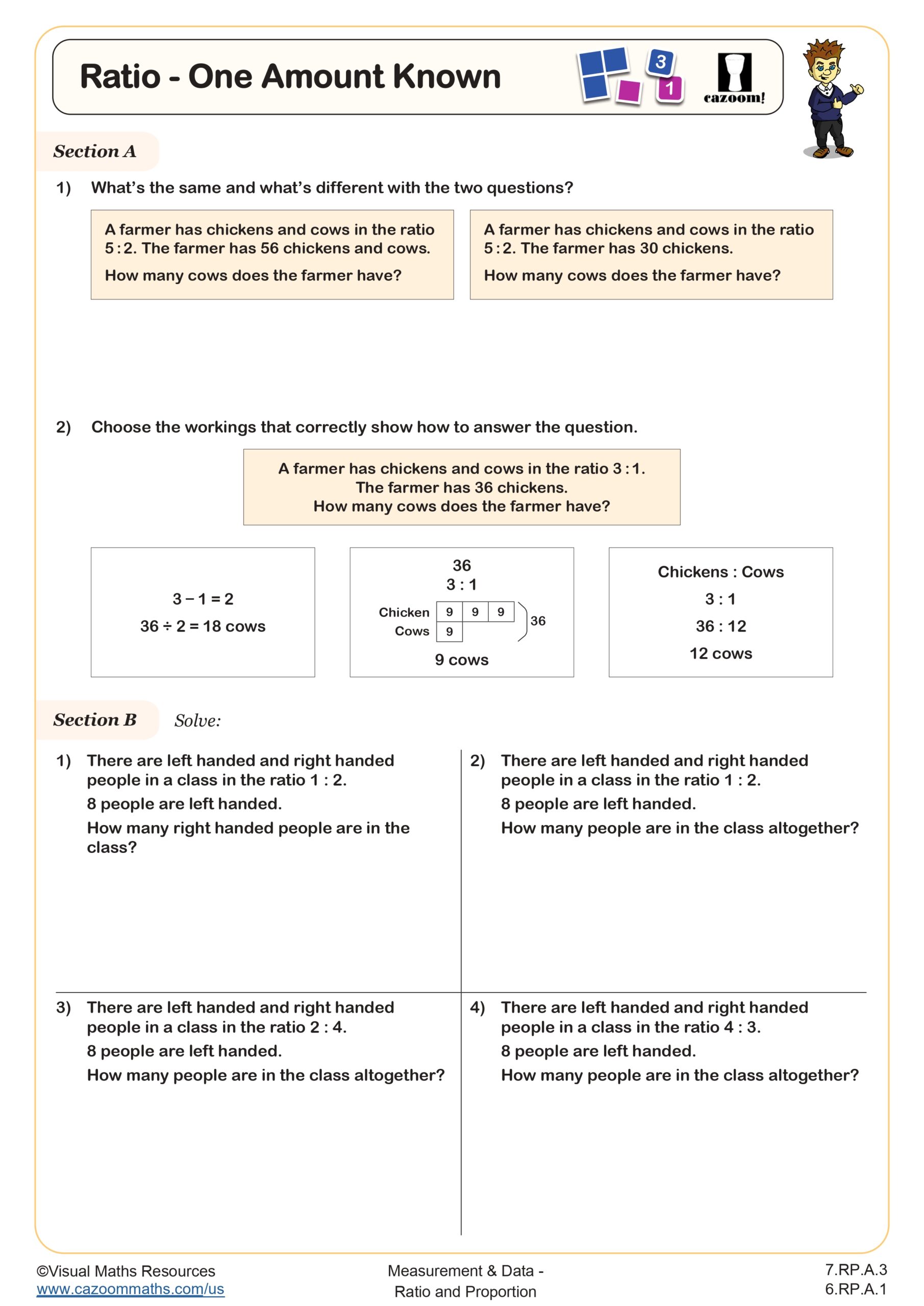
Ratio- One Amount Known
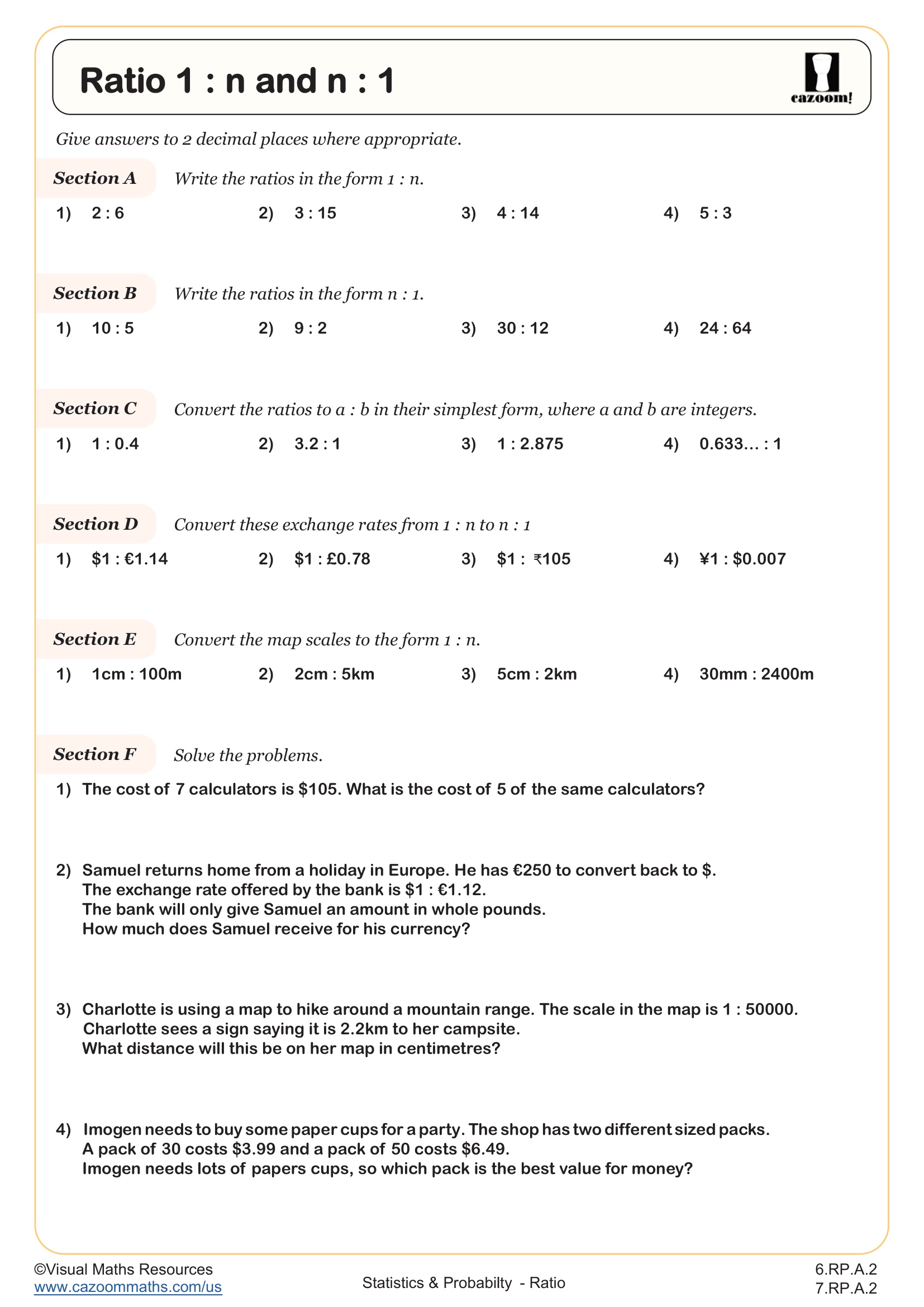
Ratios 1:n and n:1
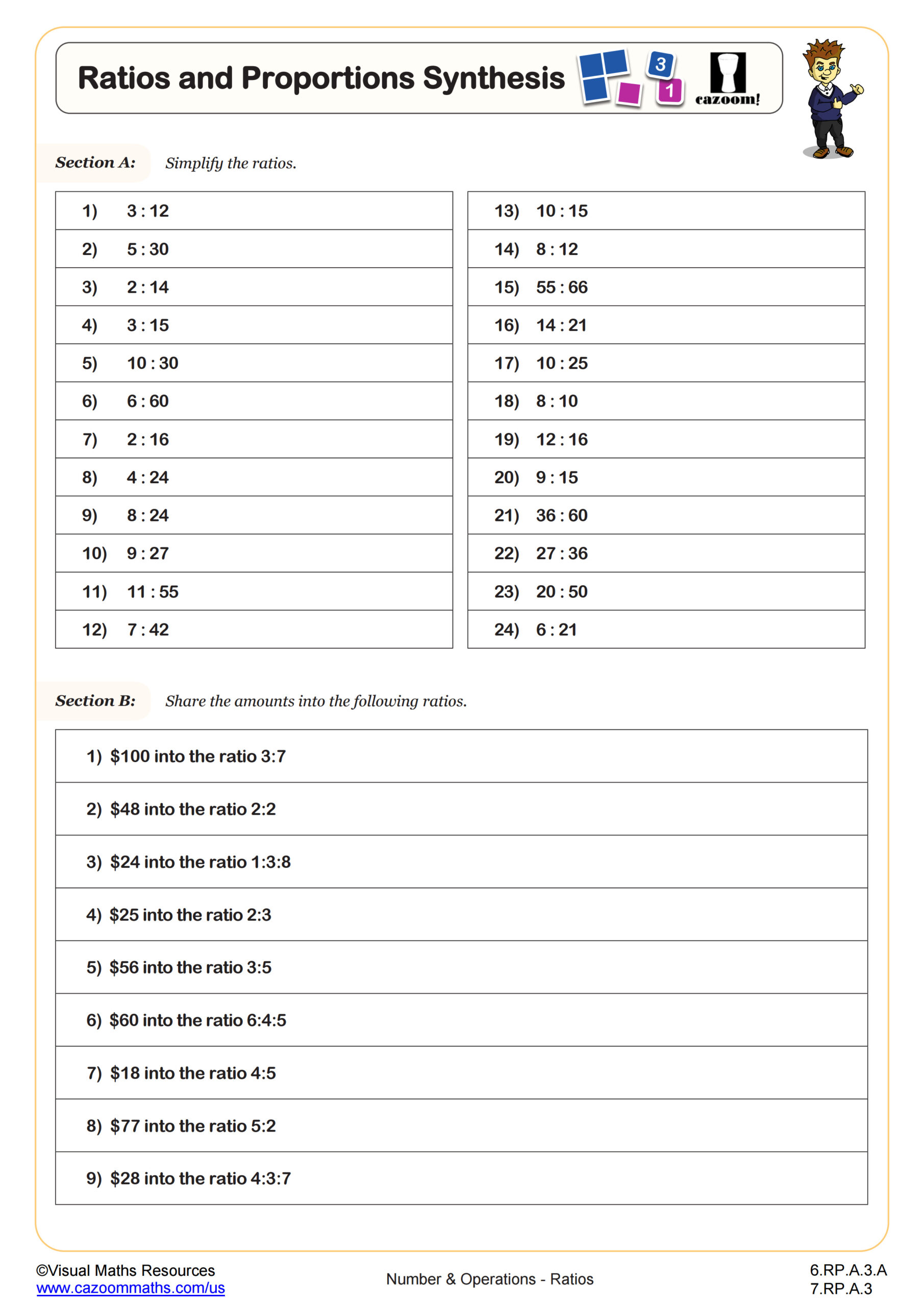
Ratios and Proportions Synthesis
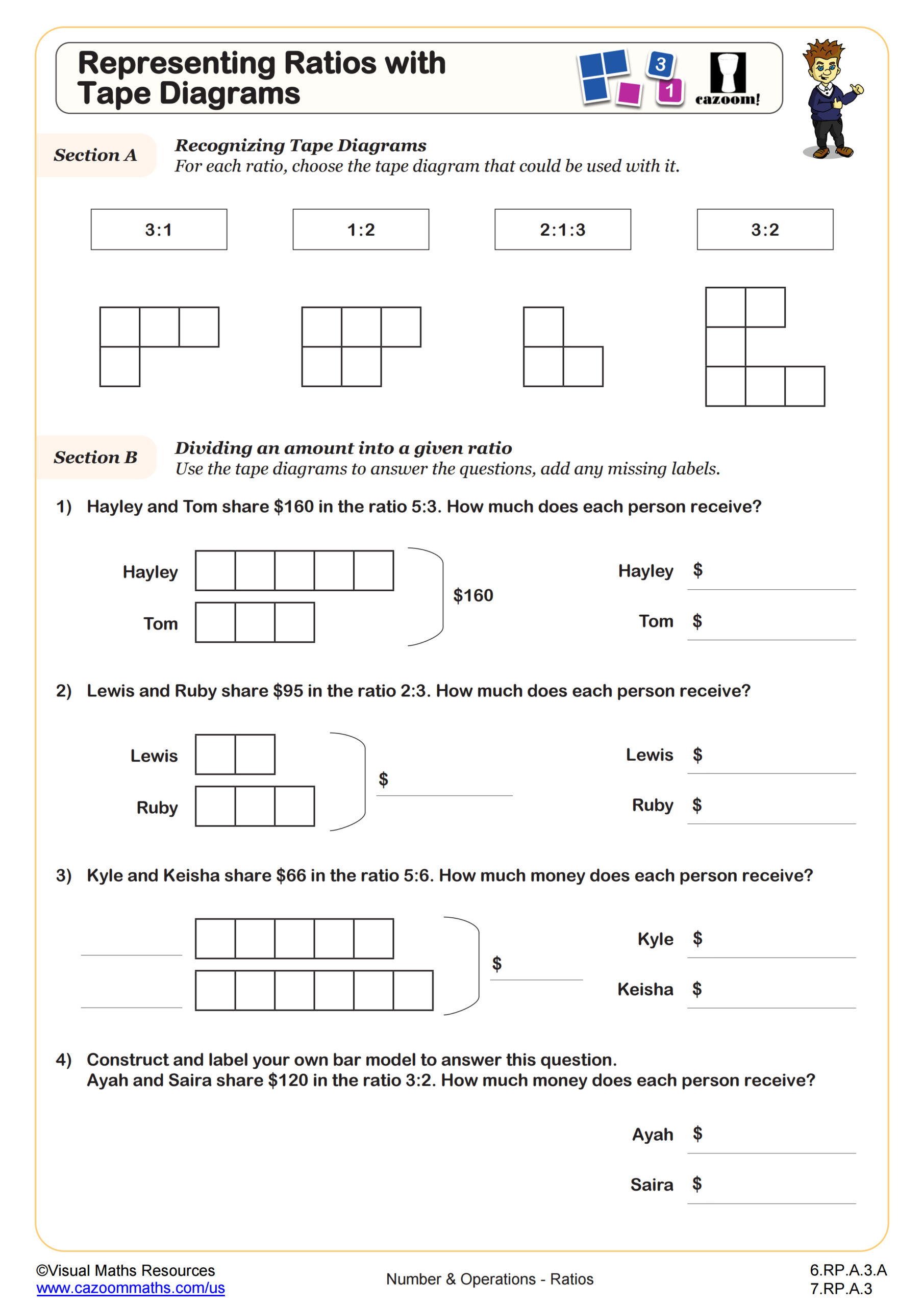
Representing Ratios with Tape Diagrams
Simplifying Ratios ( A )
.jpg?w=3840)
Simplifying Ratios (B)
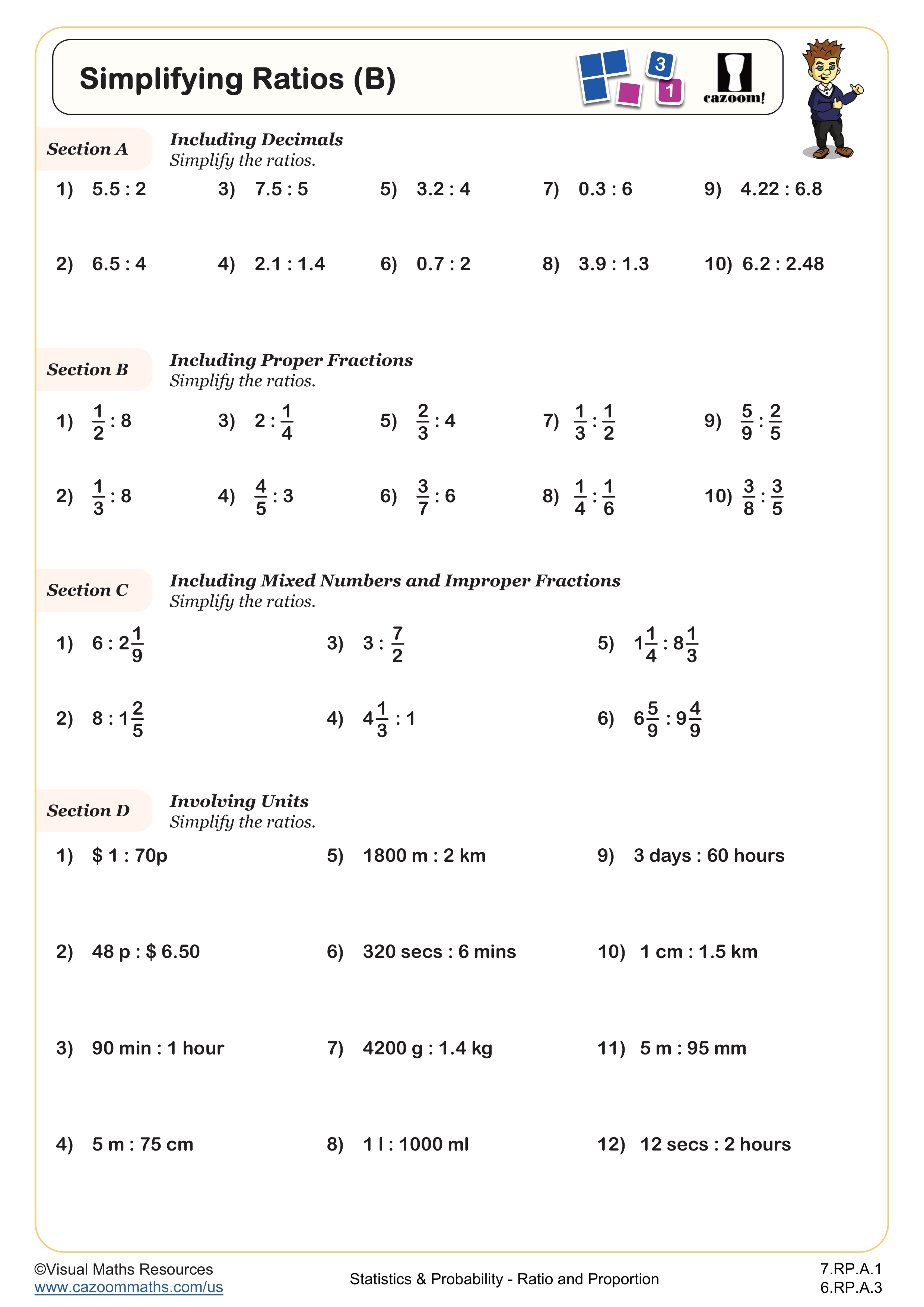
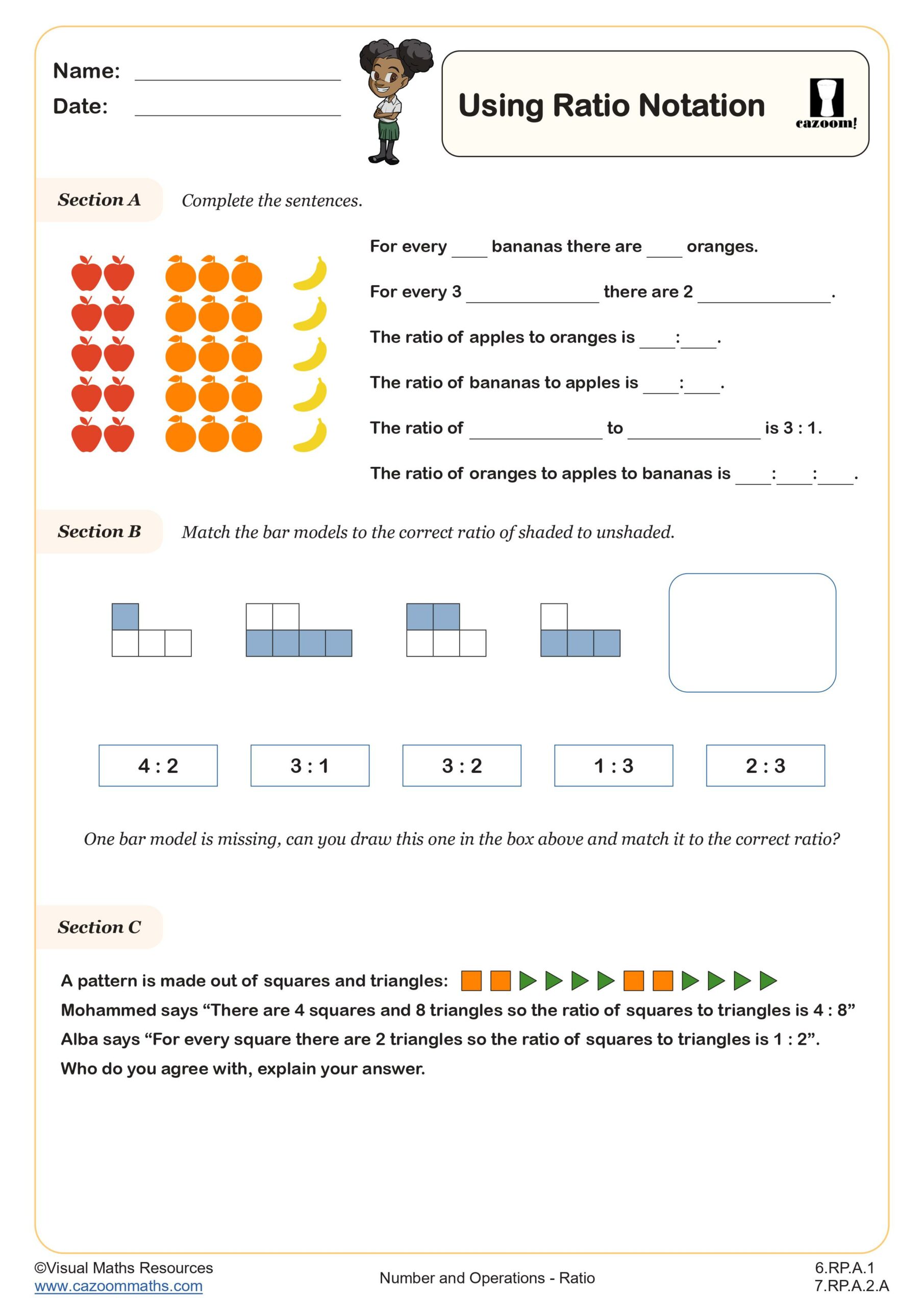
Using Ratio Notation
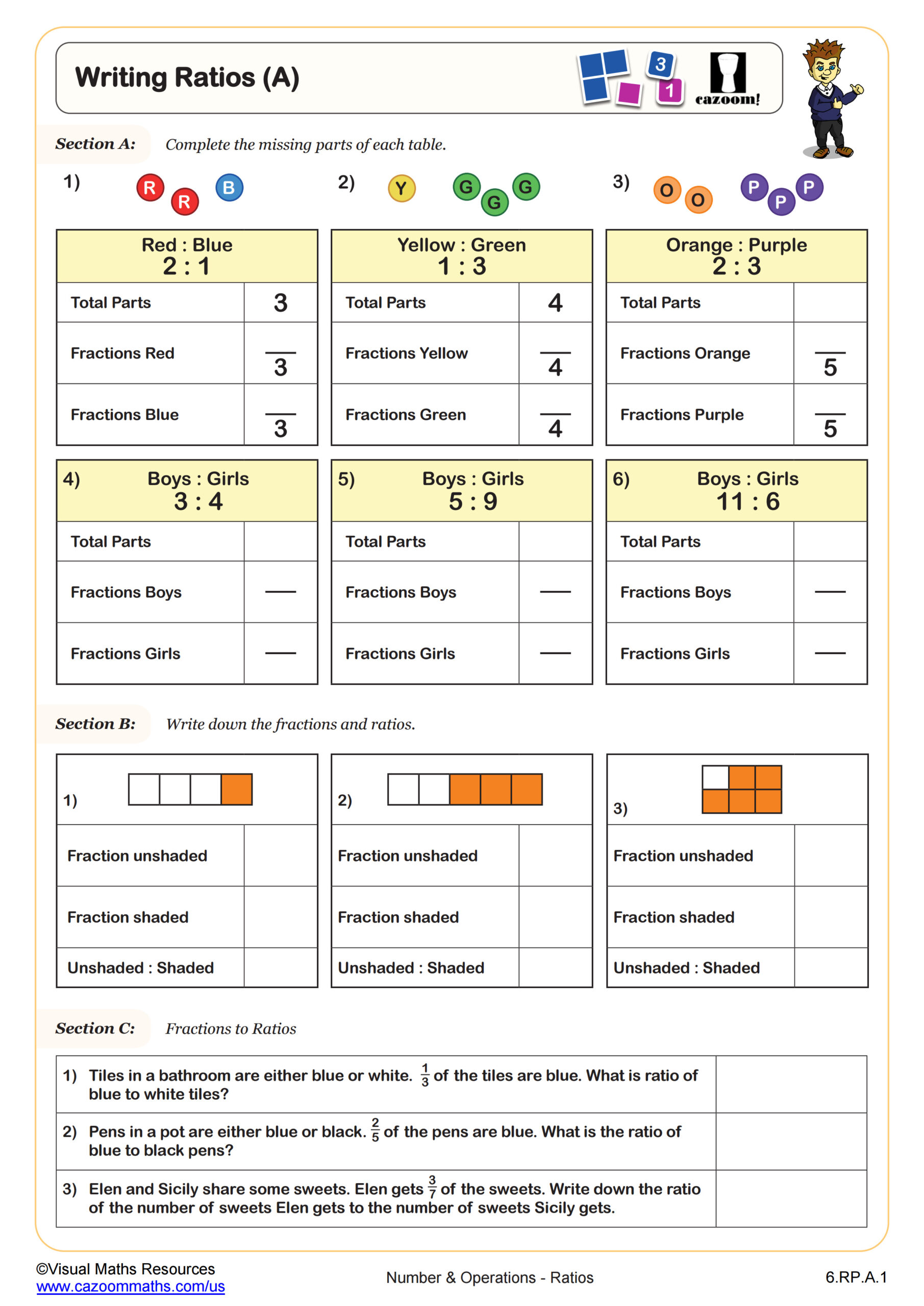
Writing Ratios (A)
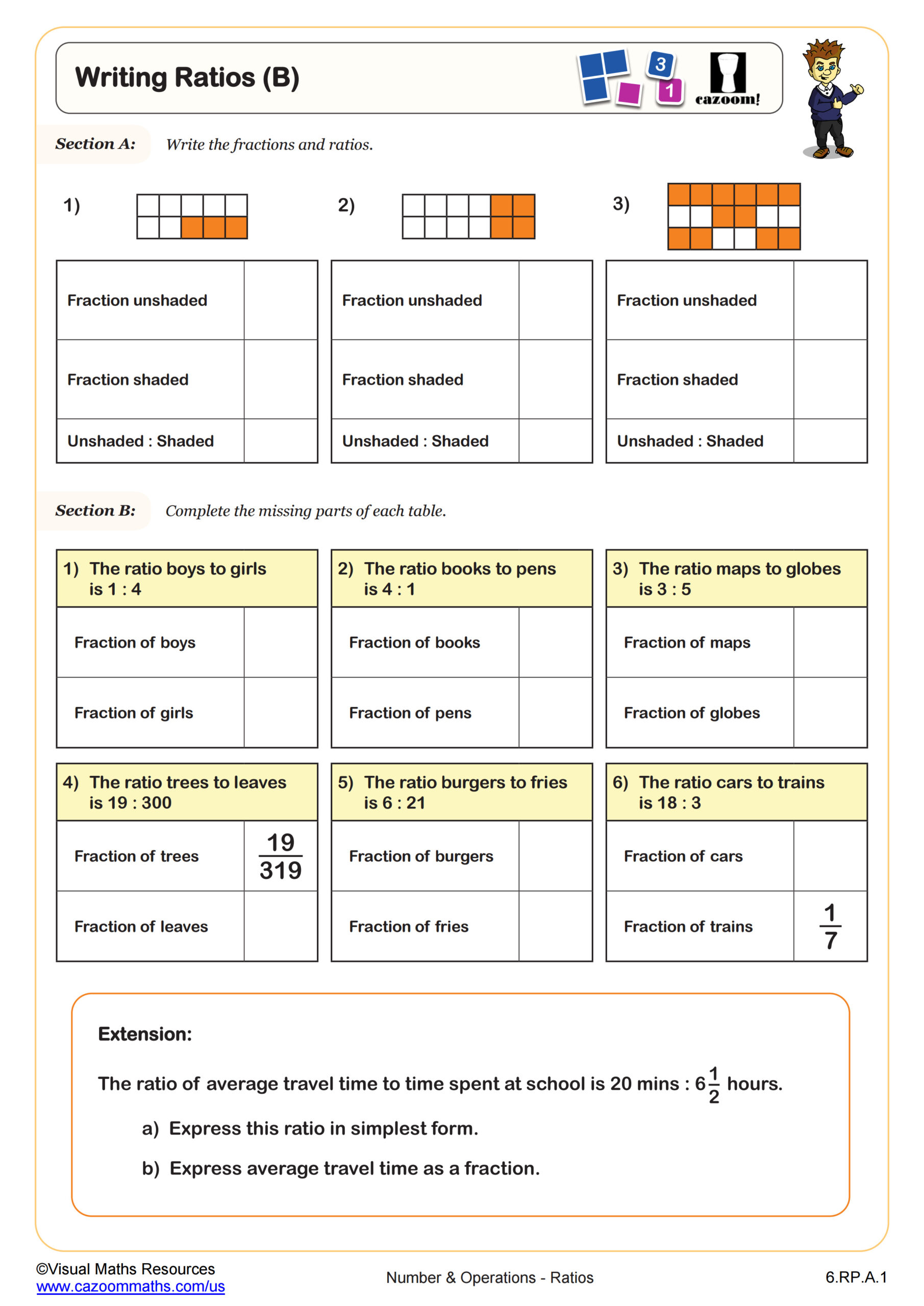
Writing Ratios (B)
All worksheets are created by the team of experienced teachers at Cazoom Math.
What are ratios and why do students learn them in middle school?
Ratios express the relationship between two or more quantities, showing how many times one value contains another or how quantities compare. Middle school standards introduce ratios in 6th grade as students transition from arithmetic to algebraic thinking, building skills they'll use throughout high school mathematics and STEM courses. Ratios appear in Common Core standards 6.RP.A.1 through 6.RP.A.3, expanding into proportional relationships in 7th grade.
Students often confuse ratios with fractions initially, writing 3:4 and 3/4 interchangeably without understanding the distinction. While ratios can be written as fractions, they represent comparisons (part-to-part or part-to-whole) rather than division operations. Teachers find that using concrete examples—like comparing boys to girls in a class versus the fraction of students who are boys—helps students recognize when they're working with comparative relationships instead of fractional amounts.
Which grade levels use these ratio worksheets?
These worksheets serve 6th grade, 7th grade, and 8th grade students across middle school. Sixth graders encounter ratios as a new concept, learning notation, equivalent ratios, and basic proportions. Seventh graders deepen their understanding with proportional relationships, constant rates, and multi-step problems. Eighth graders apply ratio reasoning to more complex contexts including scale drawings, slope, and scientific notation.
The progression reflects increasing abstraction and problem complexity. Sixth grade worksheets focus on writing ratios from visual models and finding equivalent ratios using multiplication. By 7th grade, students solve proportion problems algebraically and analyze proportional relationships graphically. Eighth grade materials incorporate ratios into geometry, algebra, and applied contexts where students must identify proportional relationships within multi-step problems rather than having ratios explicitly stated.
How do bar models help students understand ratios?
Bar models provide a visual representation where quantities are shown as rectangular bars divided into equal parts, making ratio relationships concrete before students work abstractly. Students draw bars to represent each quantity in a ratio, partitioning them into units that match the ratio's numbers. For a 3:5 ratio, one bar shows 3 equal parts while the other shows 5 equal parts, helping students see that the parts themselves must be the same size across both bars.
This visualization technique directly supports STEM fields where proportional reasoning appears constantly. Engineers use bar models and similar diagrams when scaling designs or calculating material ratios for construction projects. Chemists rely on proportional thinking when mixing solutions at specific concentrations. Students who master bar models in middle school can visualize mixture problems in chemistry, scale factors in physics, and dosage calculations in healthcare, recognizing these as ratio applications they already understand.
How can teachers use these ratio worksheets in the classroom?
These worksheets provide scaffolded practice that moves from concrete examples with visual support to abstract problem-solving. Worksheets covering ratio notation and bar models work well early in a unit when students need visual anchors, while exchange rates and multi-step fraction-percentage-ratio problems challenge students ready for application. The included answer keys let students check their own work during independent practice or allow teachers to quickly identify patterns in student errors during formative assessment.
Many teachers use these materials for differentiated instruction, assigning foundational ratio notation worksheets to students still developing the concept while giving proportion and exchange rate problems to students ready for challenge. The worksheets work effectively as warm-up activities to review prerequisite skills, homework to reinforce daily lessons, or intervention materials when addressing gaps before state assessments. Paired work often proves valuable—students catch each other's setup errors and discuss whether answers are reasonable given the problem context.