Middle School Scale & Loci Worksheets
All worksheets are created by the team of experienced teachers at Cazoom Math.
What Are Bearings and Why Do Middle School Students Learn Them?
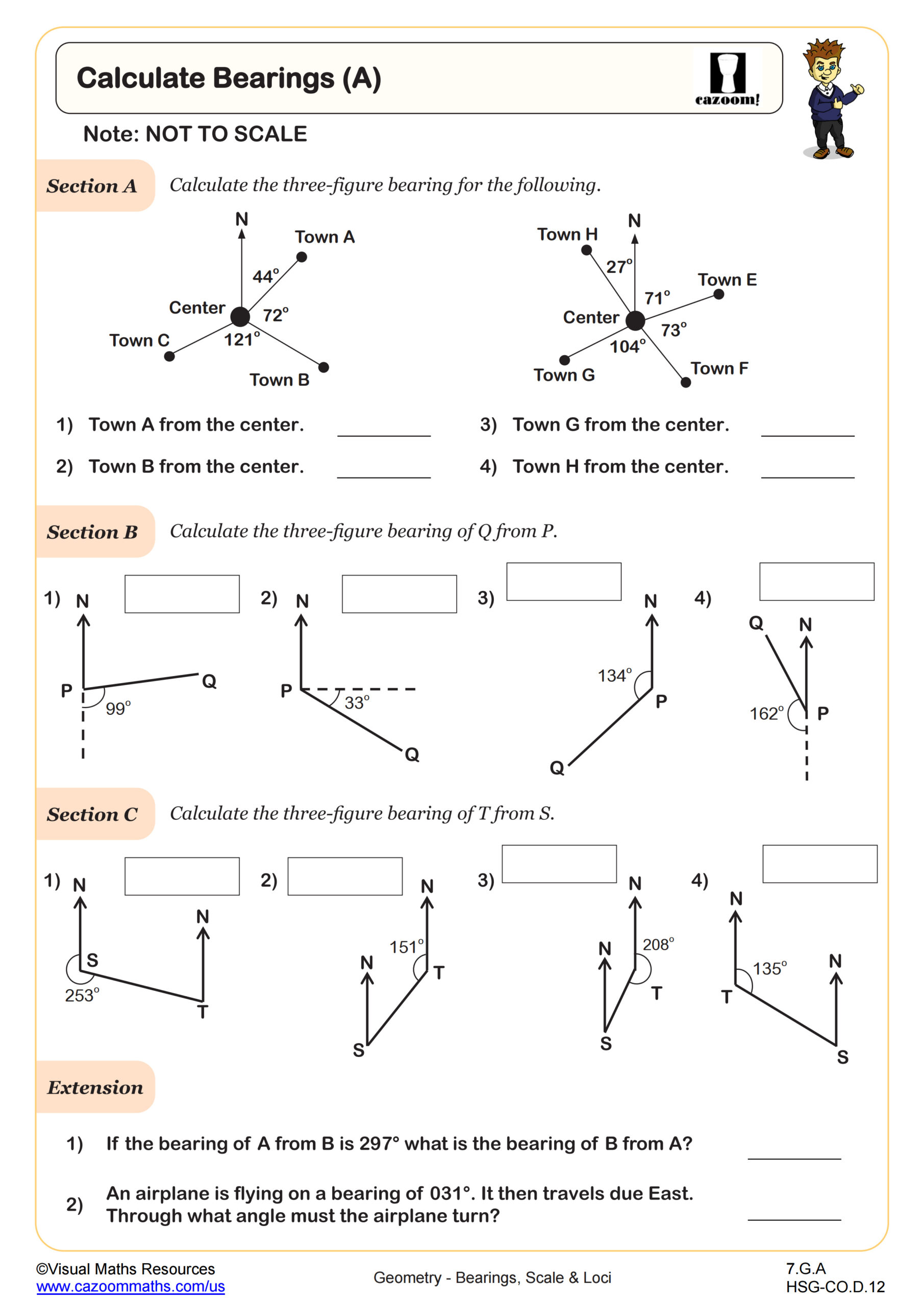
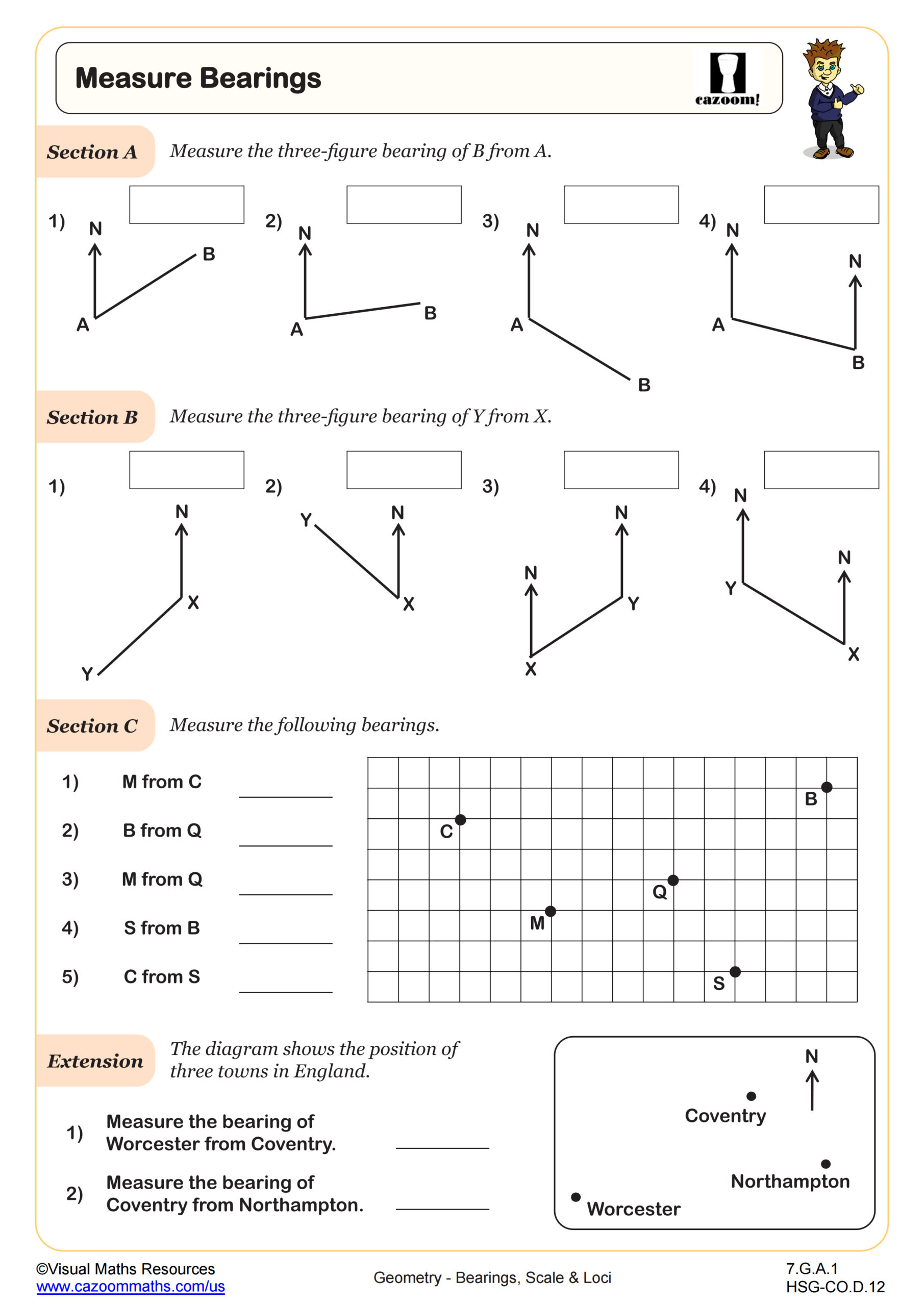
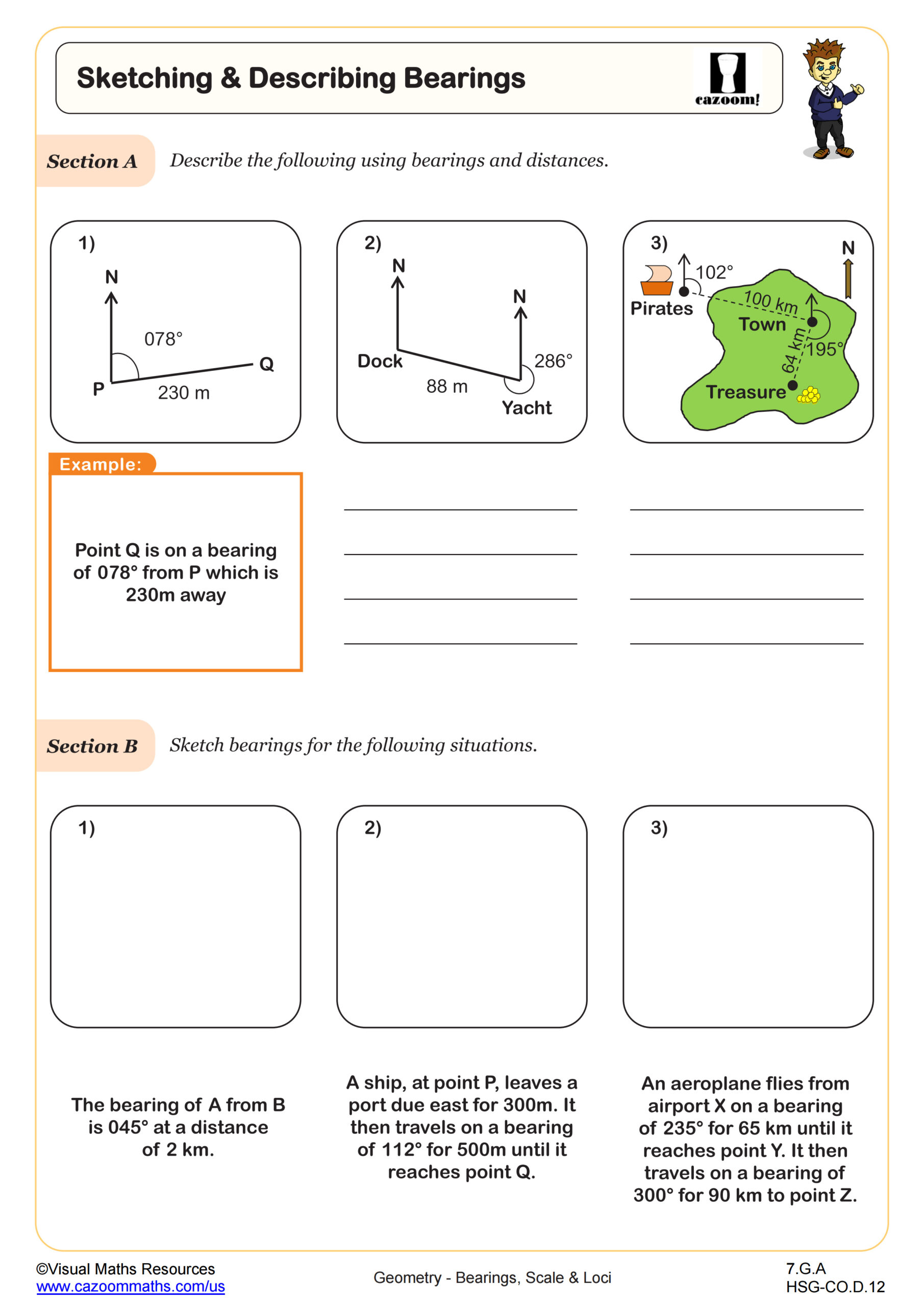
Bearings represent direction as three-figure angles measured clockwise from north, a convention used in navigation, surveying, and mapping. Middle school students typically encounter bearings in 7th and 8th grade as part of geometry standards covering angles, constructions, and coordinate systems. Understanding bearings connects angle measurement to practical applications and prepares students for transformations and vector concepts in high school.
Students often lose points by writing bearings as two-digit numbers instead of three-figure notation (writing 45° instead of 045°) or by measuring counterclockwise from north. Teachers notice that having students physically rotate protractors to align with north dramatically reduces errors. The connection between bearings and ordered pairs becomes clearer when students recognize that both systems require a fixed reference point and consistent measurement conventions.
Which Grade Levels Cover Scale and Loci Worksheets?
These worksheets align with 6th grade, 7th grade, and 8th grade middle school mathematics standards. Sixth graders typically begin with basic scale factor calculations and simple bearing problems. Seventh and eighth graders progress to more complex loci constructions, multi-step bearing calculations, and word problems that combine scale with bearings in navigation contexts.
The progression moves from identifying bearings on diagrams to calculating bearings between points, then to constructing loci that satisfy multiple conditions. By 8th grade, students work with bearing problems that require reverse calculations and scale drawings that involve multiple conversions. State assessments often include one or two questions involving bearings or scale, making these skills valuable for test preparation as students transition toward high school geometry.
How Do Students Construct Loci in Geometry?
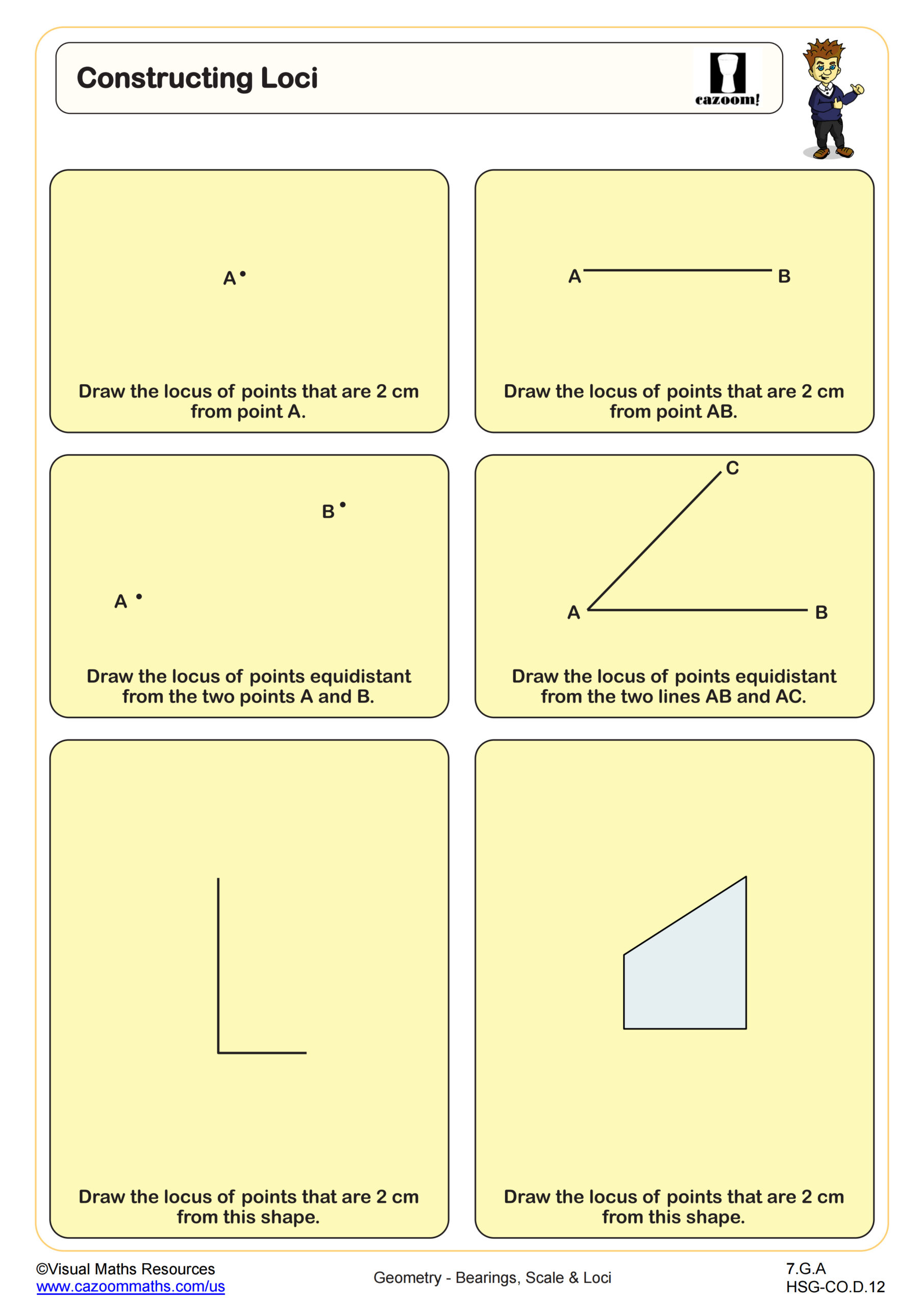
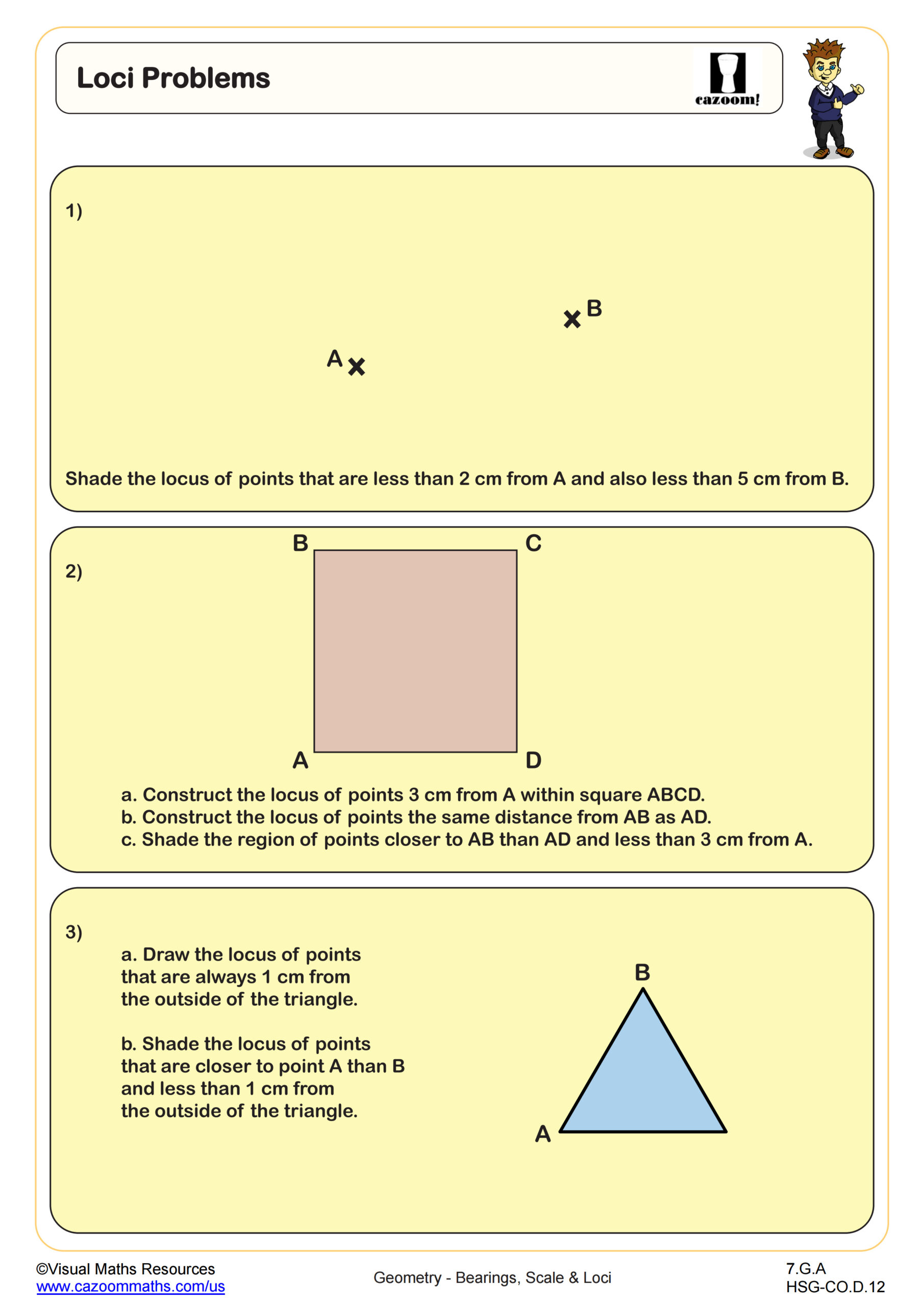
A locus represents all points that satisfy a specific condition or set of conditions, such as all points equidistant from a fixed point (forming a circle) or all points equidistant from two points (forming a perpendicular bisector). Students use compass and straightedge constructions to create these geometric paths, developing precision with mathematical tools. Common loci include circles, perpendicular bisectors, angle bisectors, and parallel lines at specified distances.
Architects and urban planners use loci concepts when determining service areas for facilities like fire stations or cell towers, where coverage depends on distance constraints. Engineers apply locus principles in robotics when programming movement paths and in manufacturing when designing parts with specific clearance requirements. Students who master loci construction recognize that GPS systems essentially calculate loci from multiple satellites to determine precise locations, connecting classroom geometry to the navigation technology they use daily.
How Can Teachers Use These Scale and Loci Worksheets Effectively?
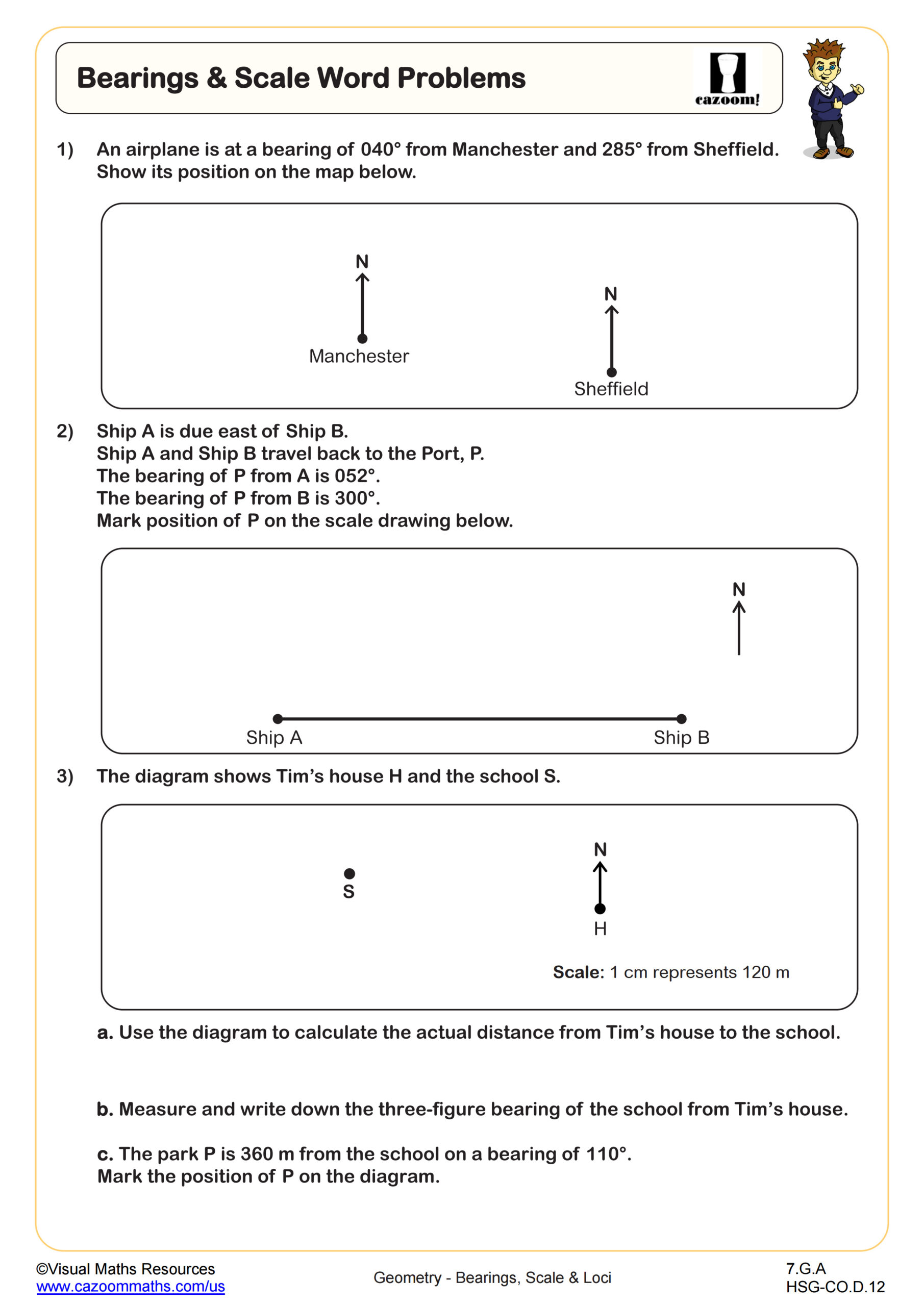
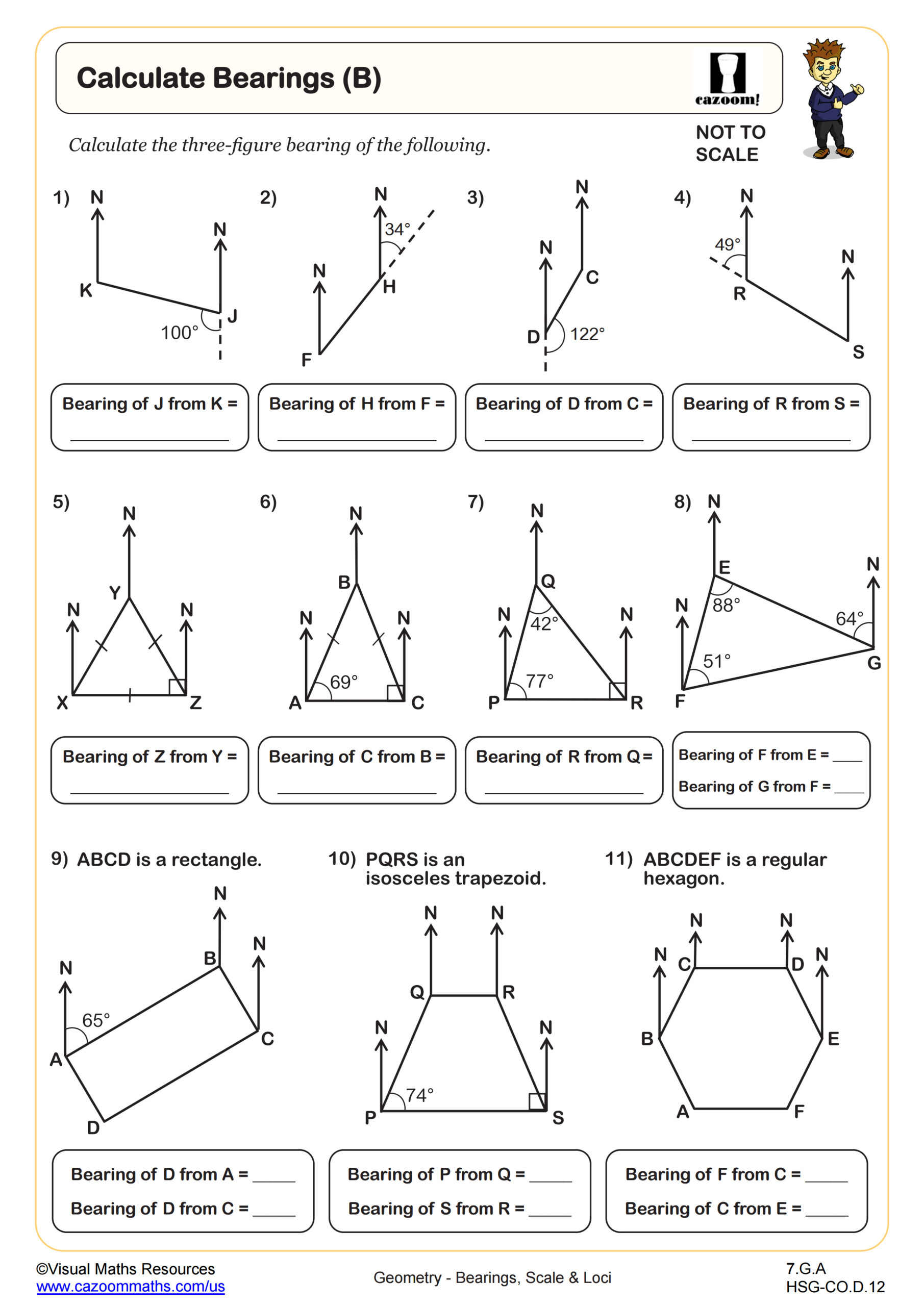
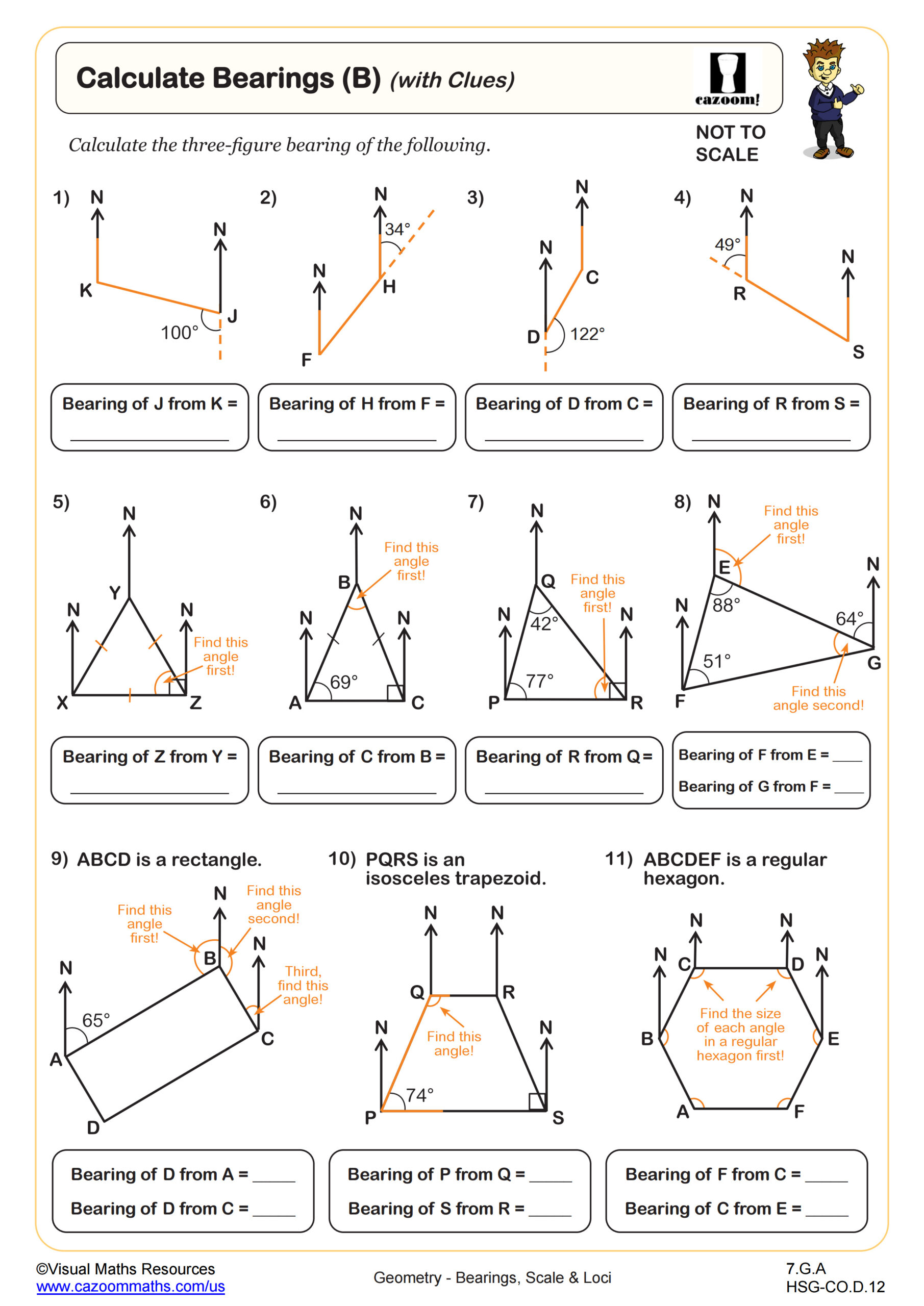
The worksheets scaffold from calculating single bearings to solving multi-step problems with clues, allowing teachers to differentiate instruction based on student readiness. Answer keys with complete worked solutions help students identify where errors occur in their construction or calculation process, particularly helpful for self-checking during independent practice. The bearing worksheets with clues provide intermediate steps that support struggling learners while more advanced students can work through standard bearing calculations independently.
Many teachers use the construction loci worksheets during paired activities where one student reads conditions while the other constructs, promoting mathematical communication. The word problems combining bearings and scale work well as formative assessments to identify students who understand concepts in isolation but struggle with integration. These worksheets also serve effectively as homework following hands-on compass and protractor lessons, reinforcing techniques students practiced with physical tools before standardized testing where estimation and visualization become necessary.