Middle School Solving Equations Worksheets
Combining Like Terms - Using Algebra Tiles
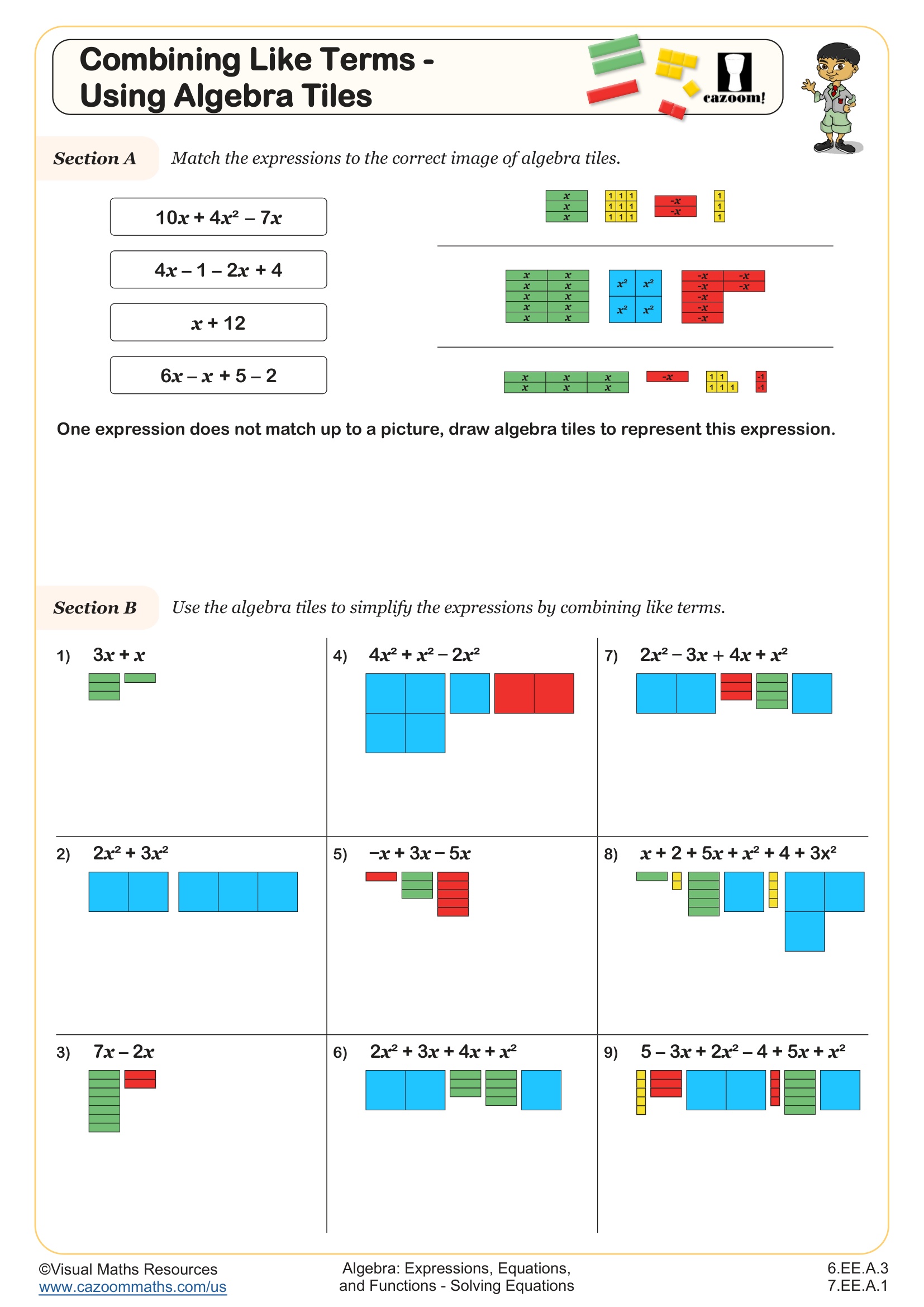
Does the Point Lie on the Line?
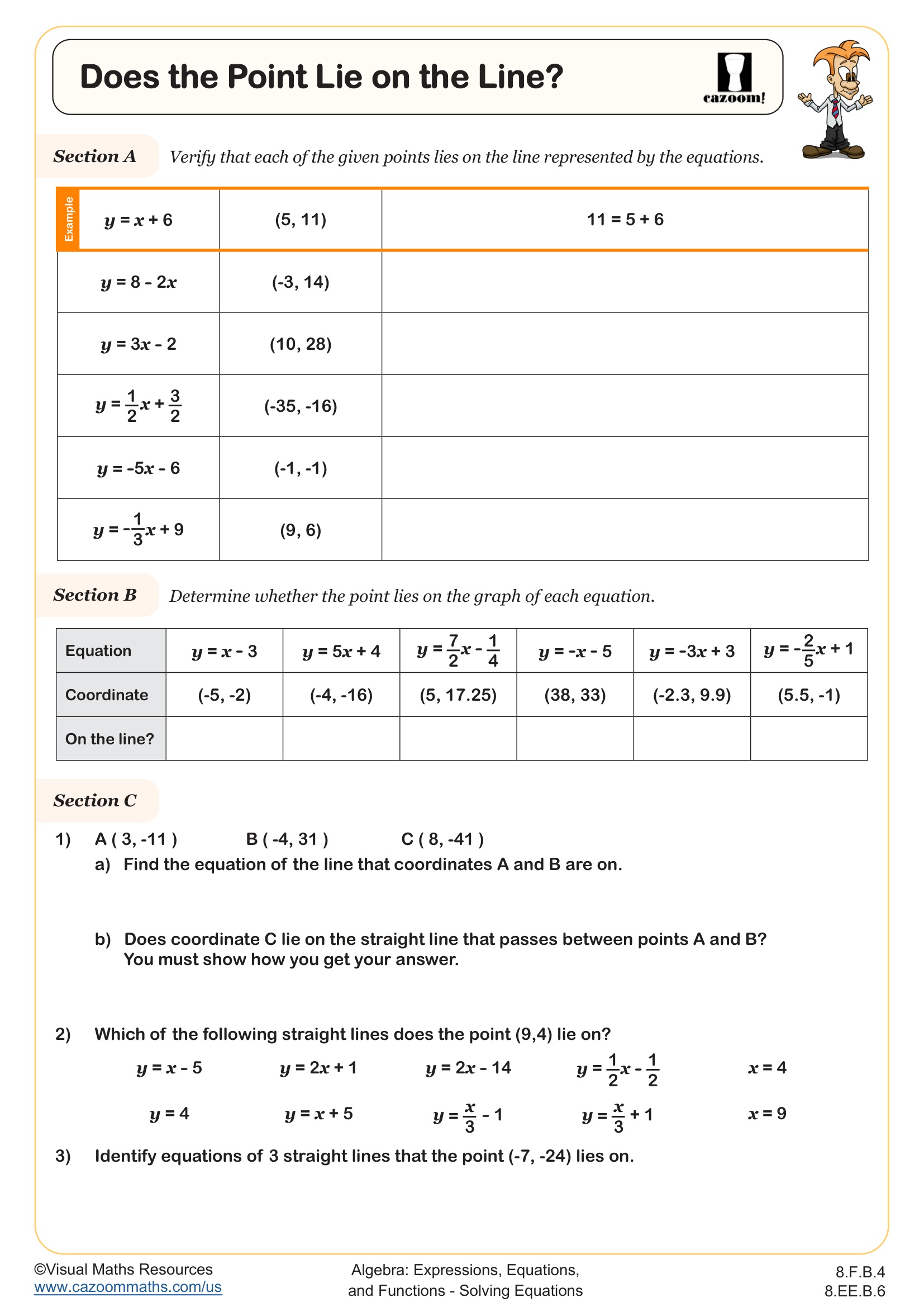
Equations of Proportion - with Three Variables
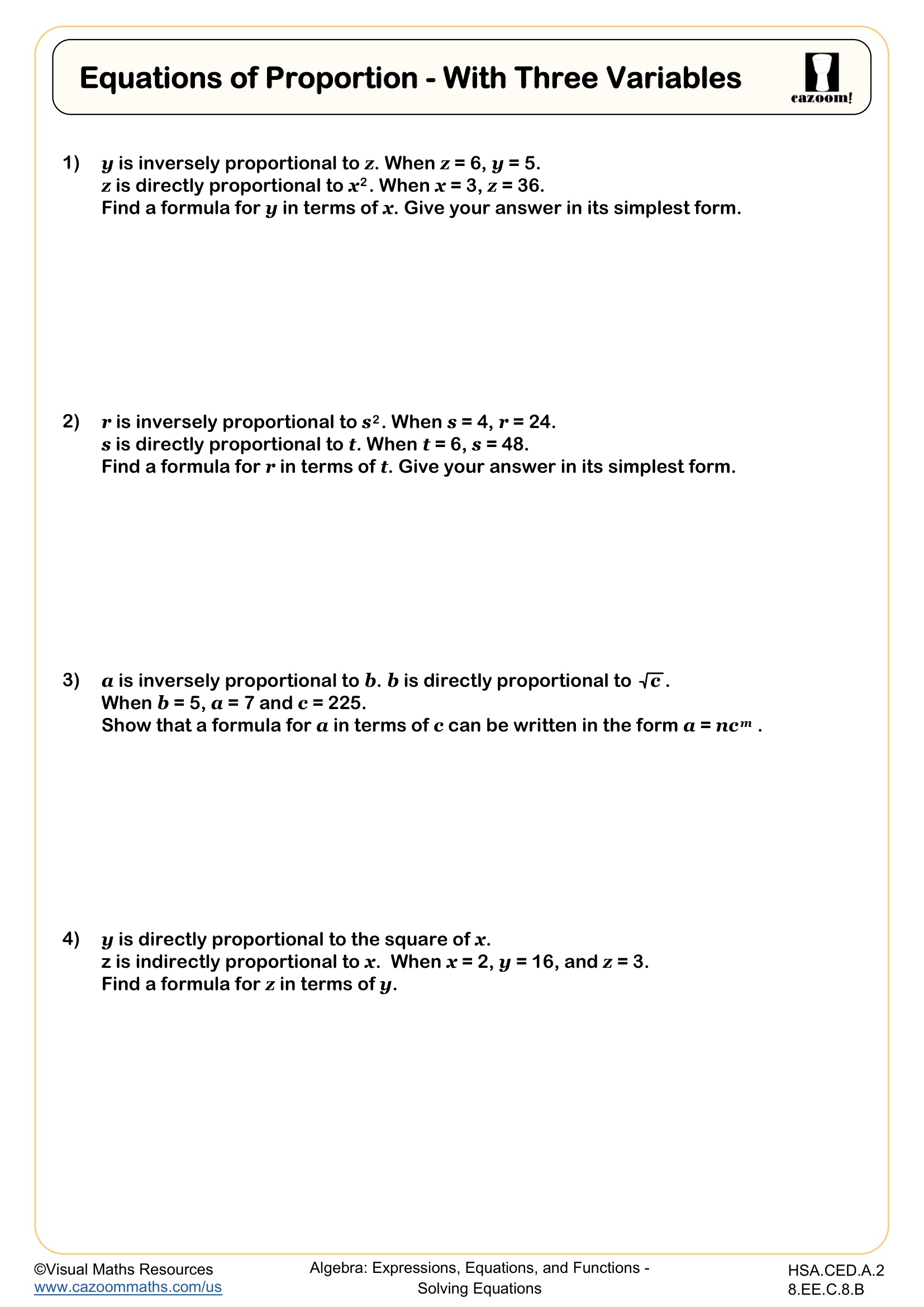
Finding the Equation of the Line (C)
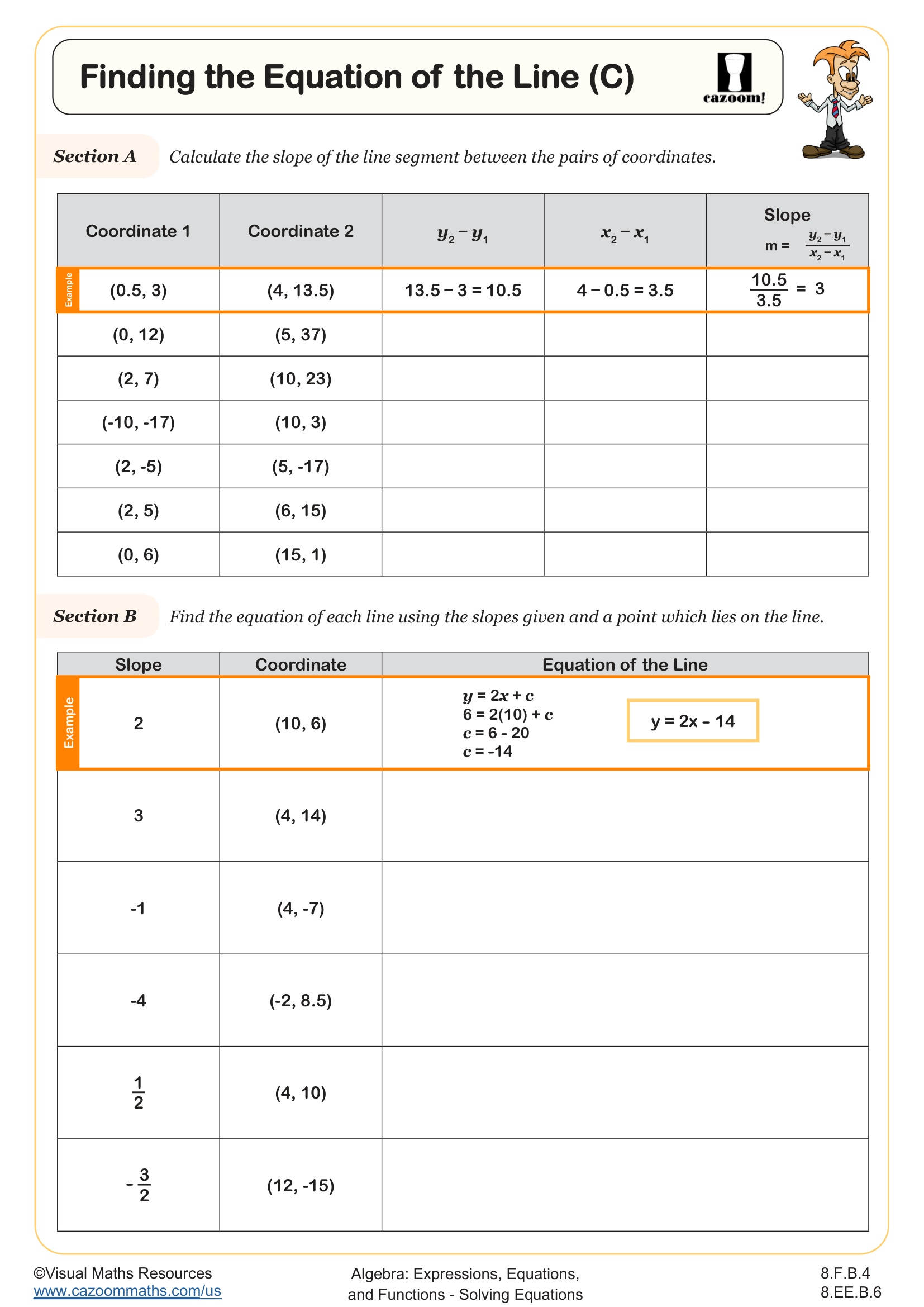
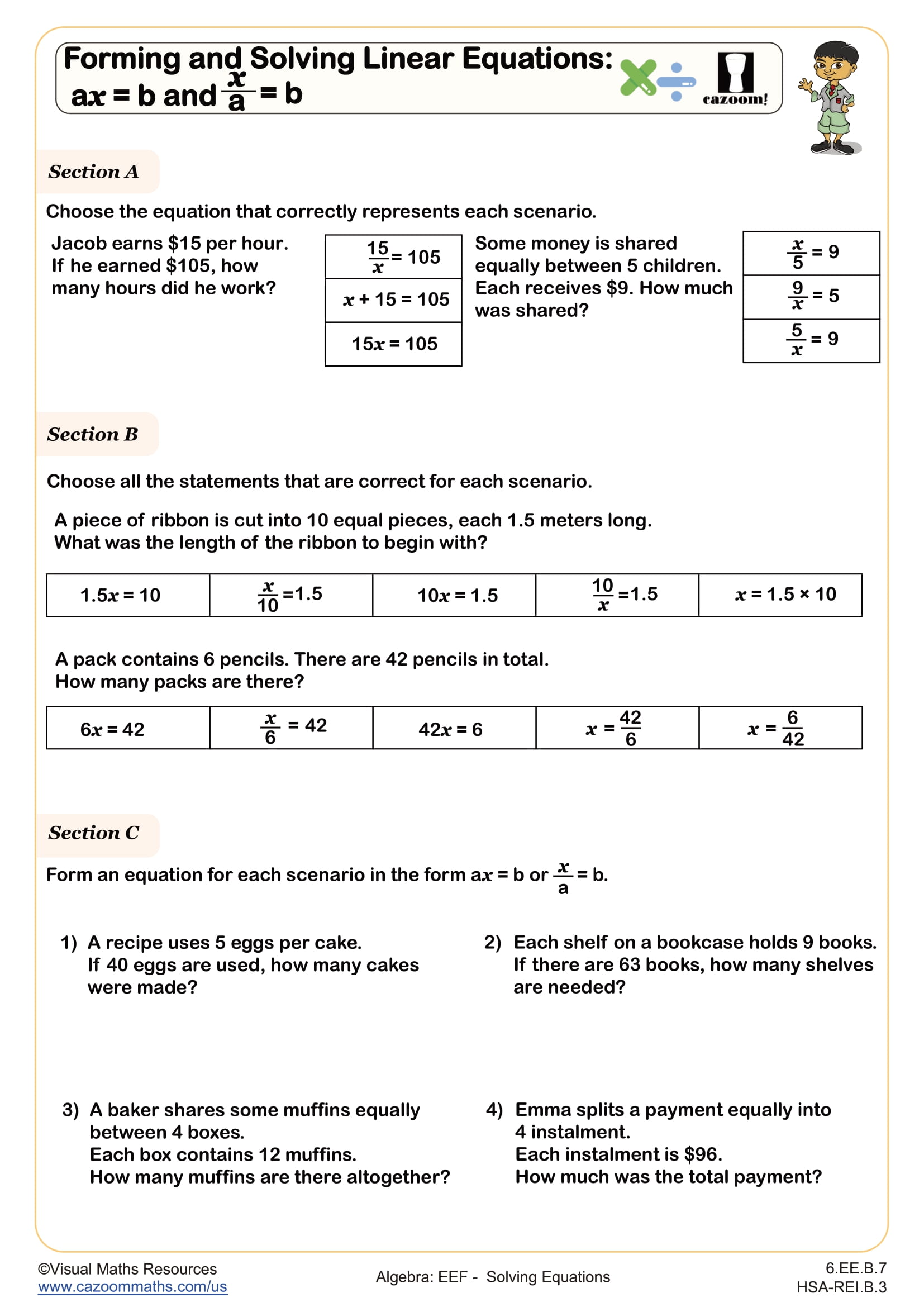
Forming and Solving Linear Equations: a𝑥 = b and 𝑥/a = b
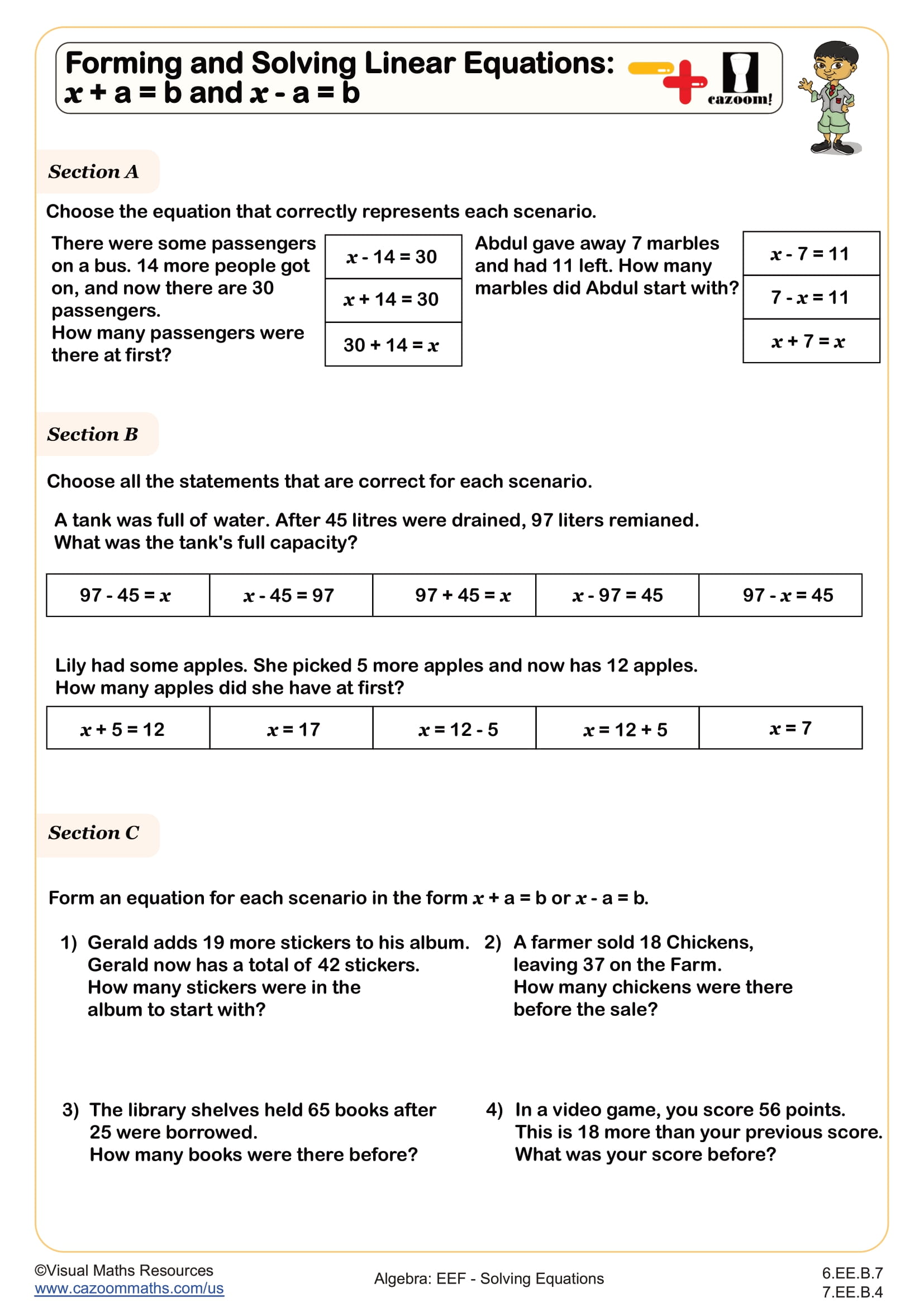
Forming and Solving Linear Equations: 𝑥 + a = b and 𝑥 - a = b
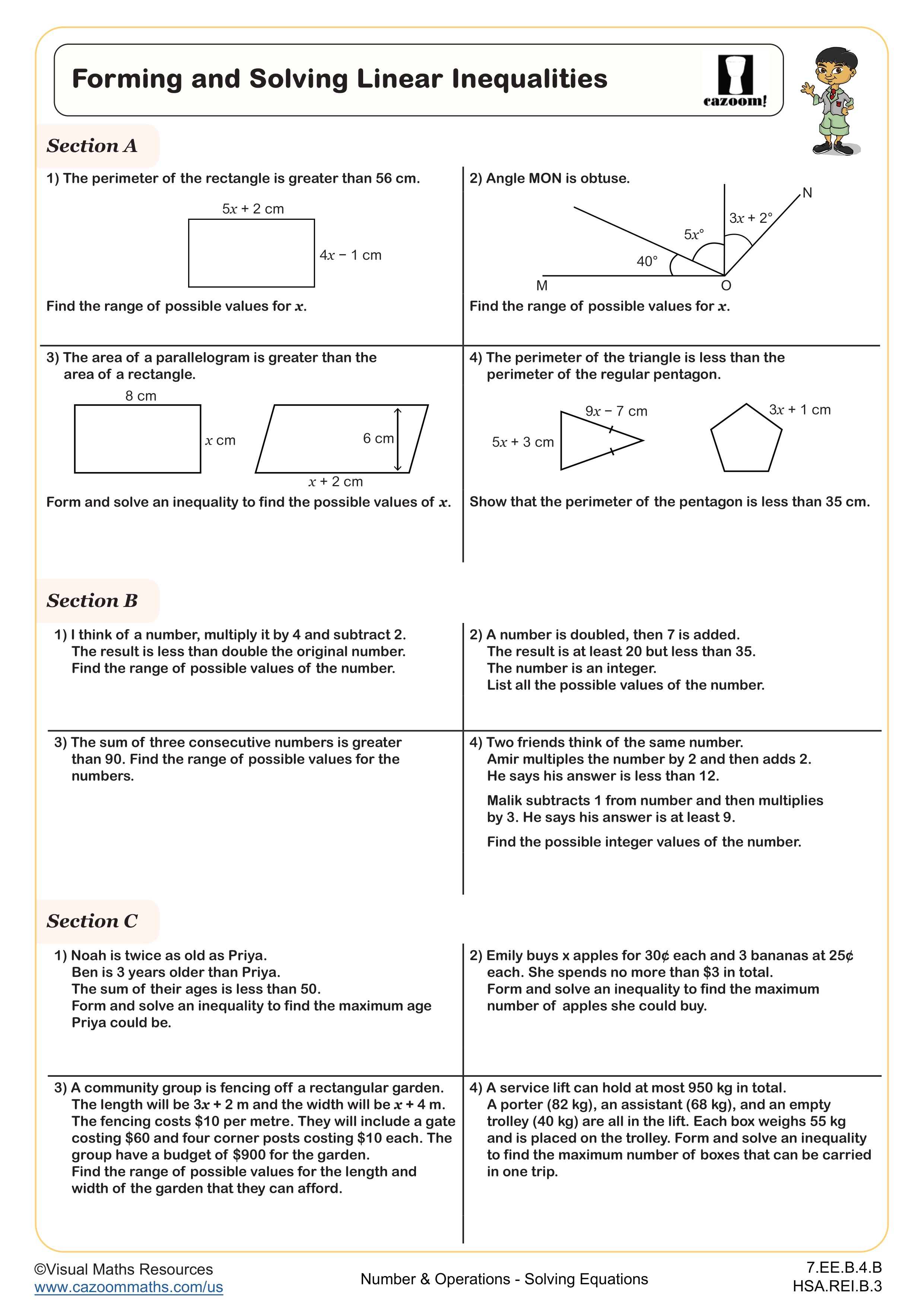
Forming and Solving Linear Inequalities
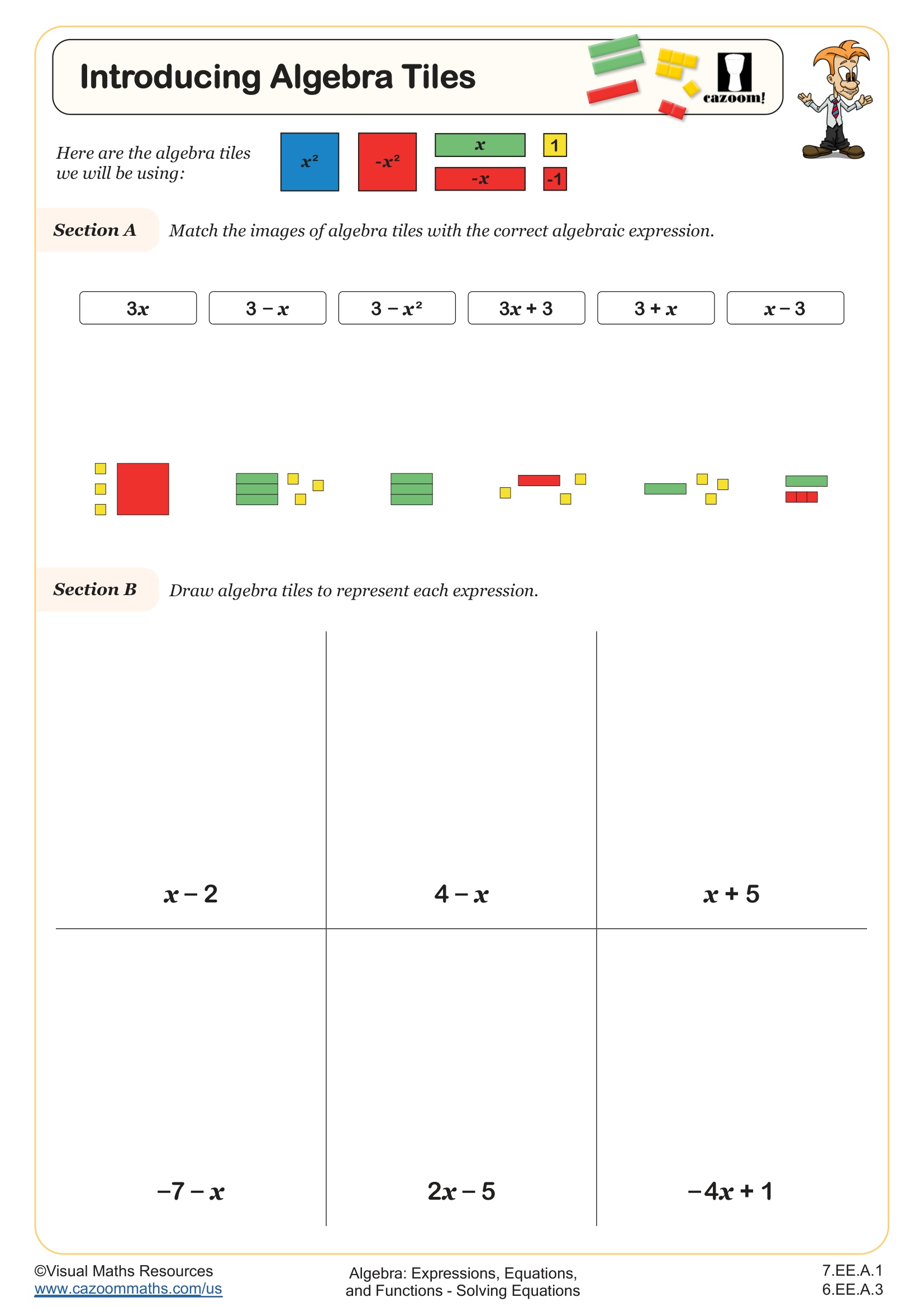
Introducing Algebra Tiles
Multiplying 3 Binomials (A)
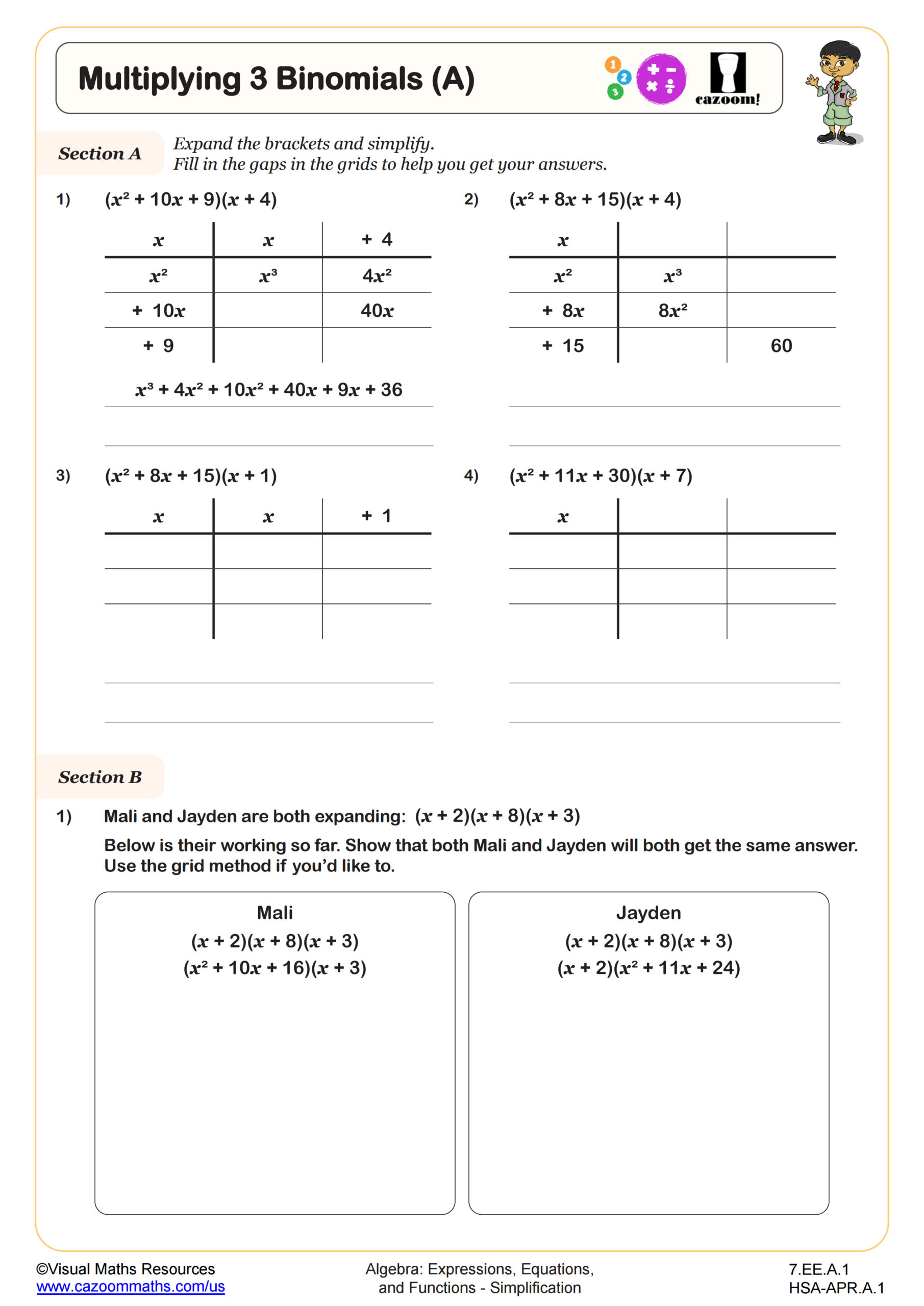
Multiplying 3 Binomials (B)
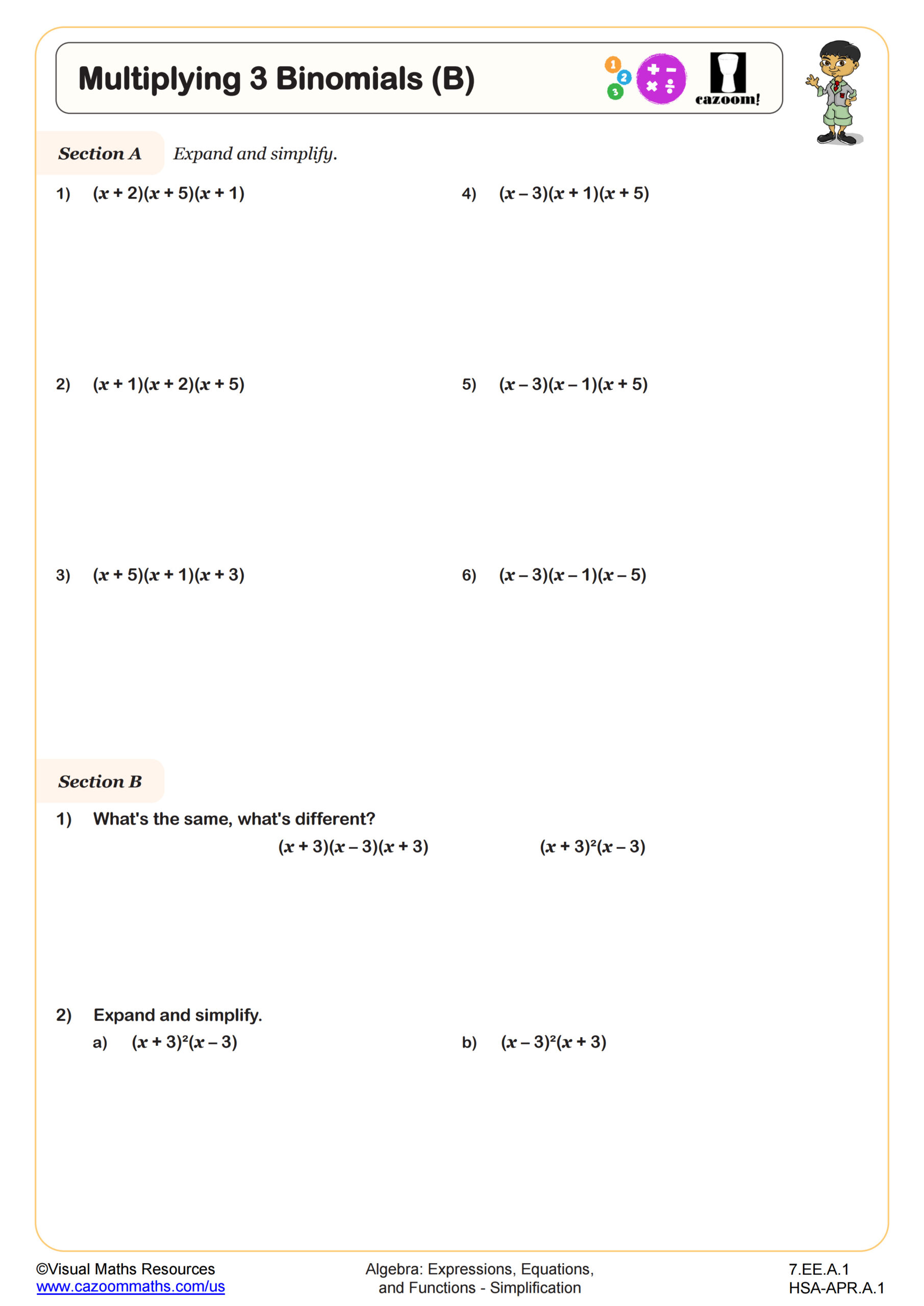
Multiplying Binomials
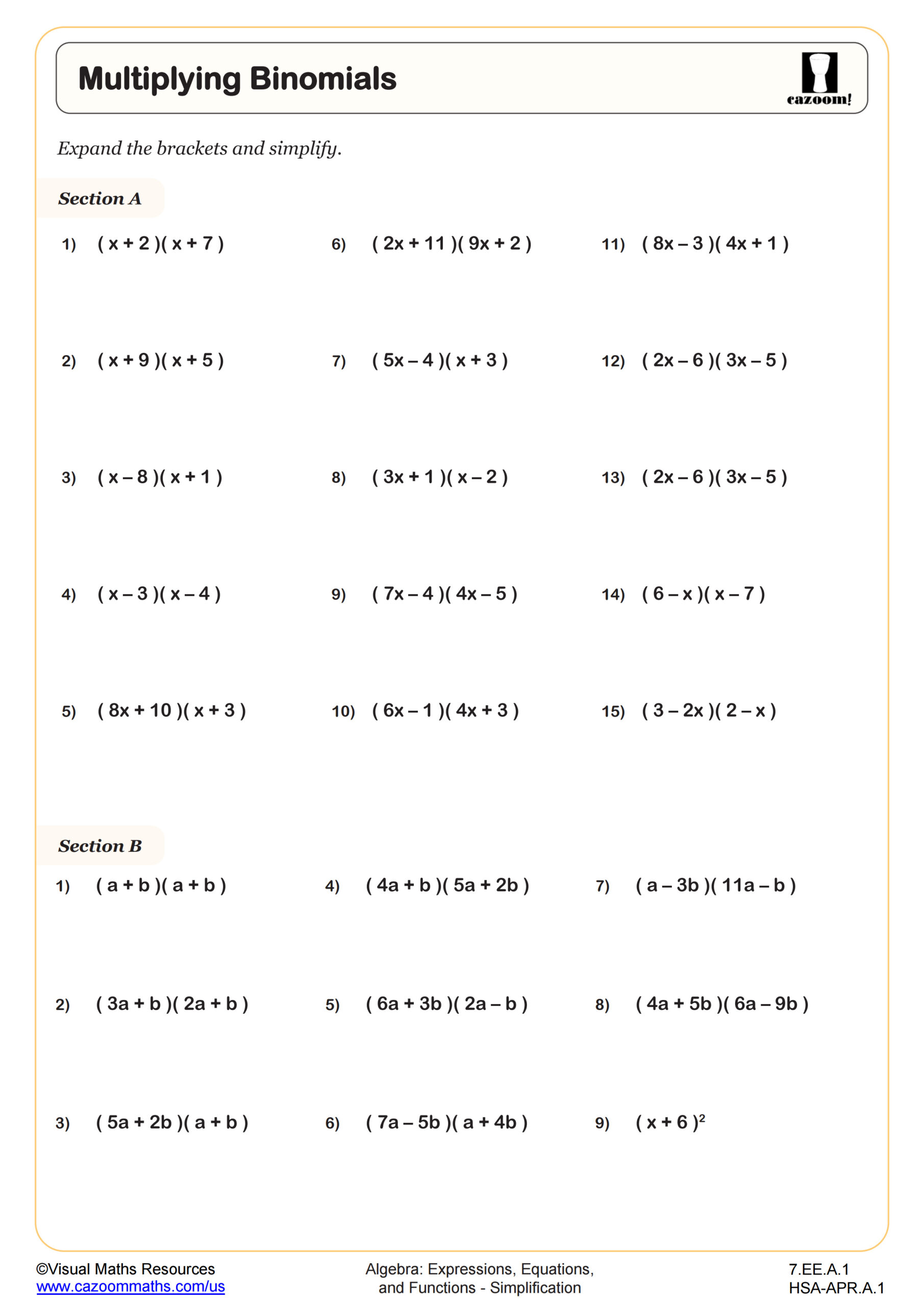
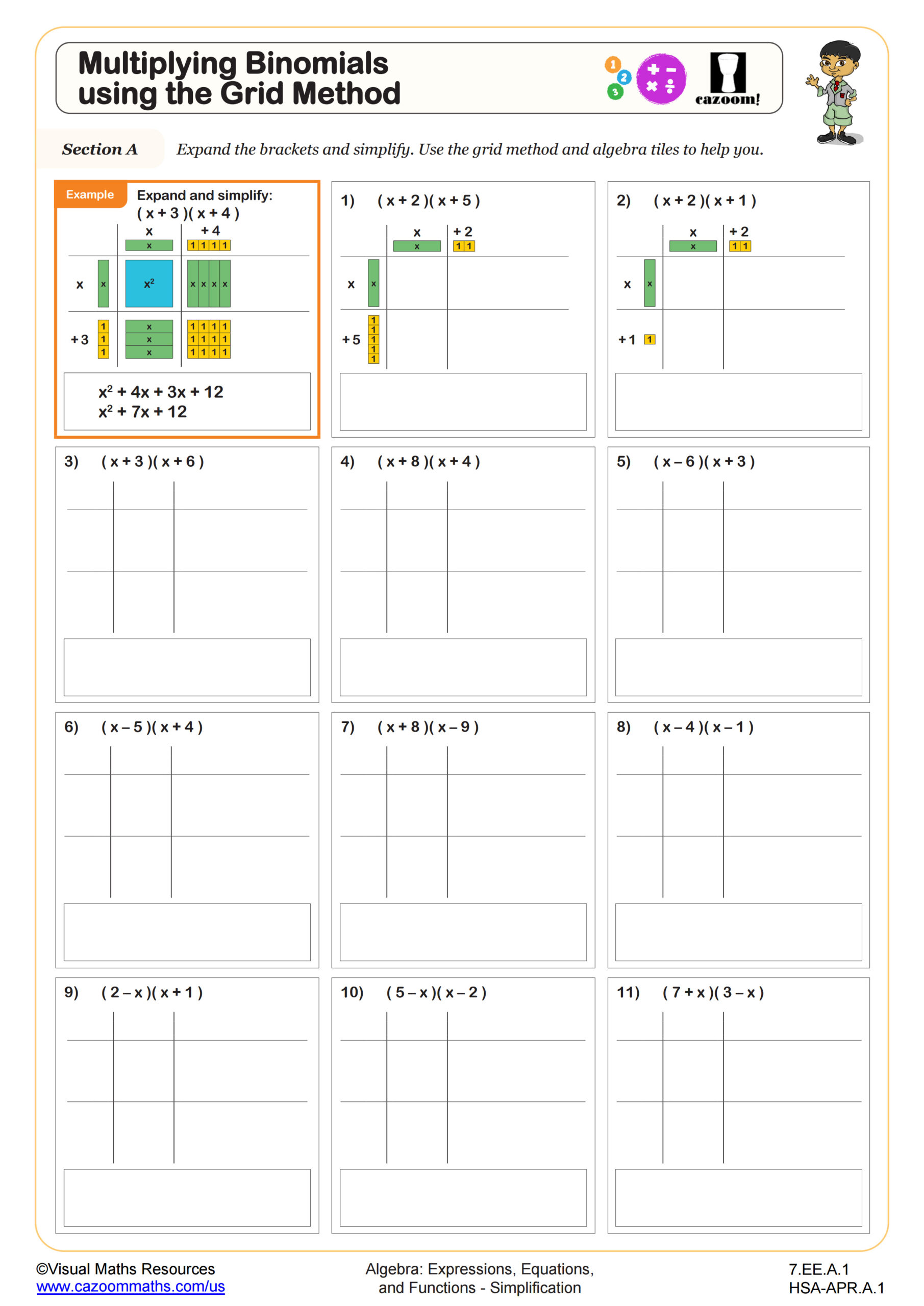
Multiplying Binomials using the Grid Method
Order of Operations - Calculating with Exponents
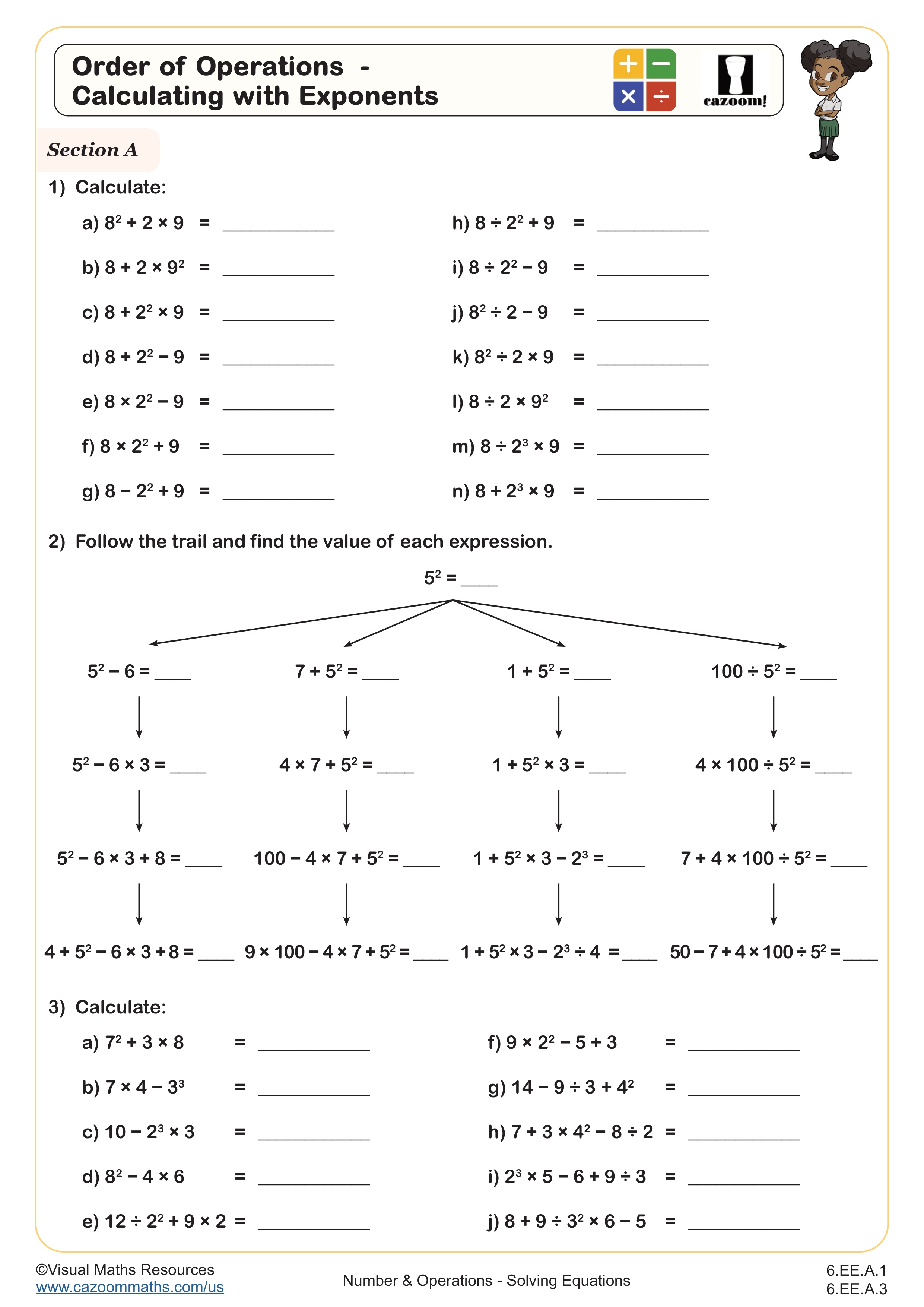
Simplify - Using Algebra Tiles
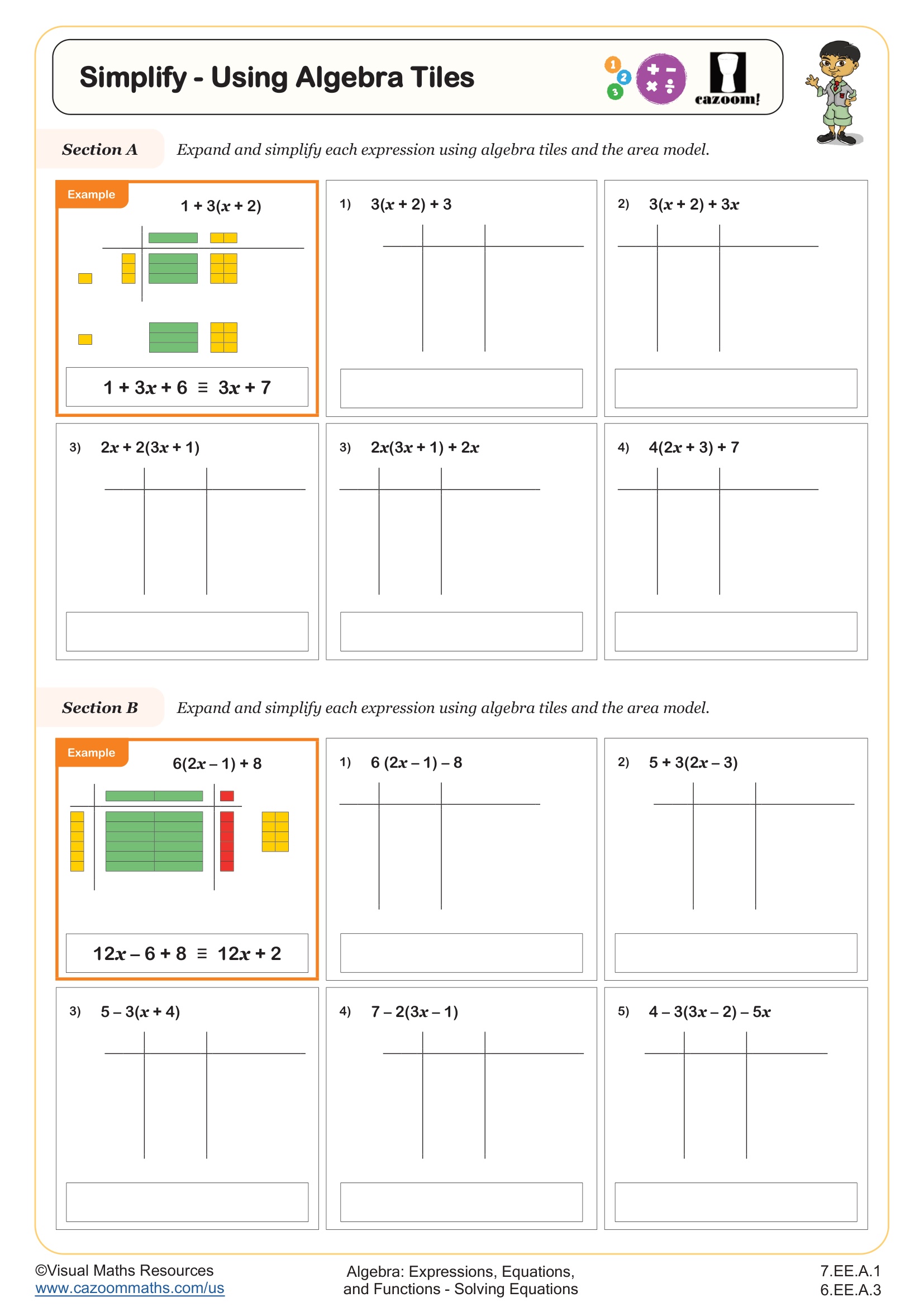
Solving One Step Equations with Algebra Tiles
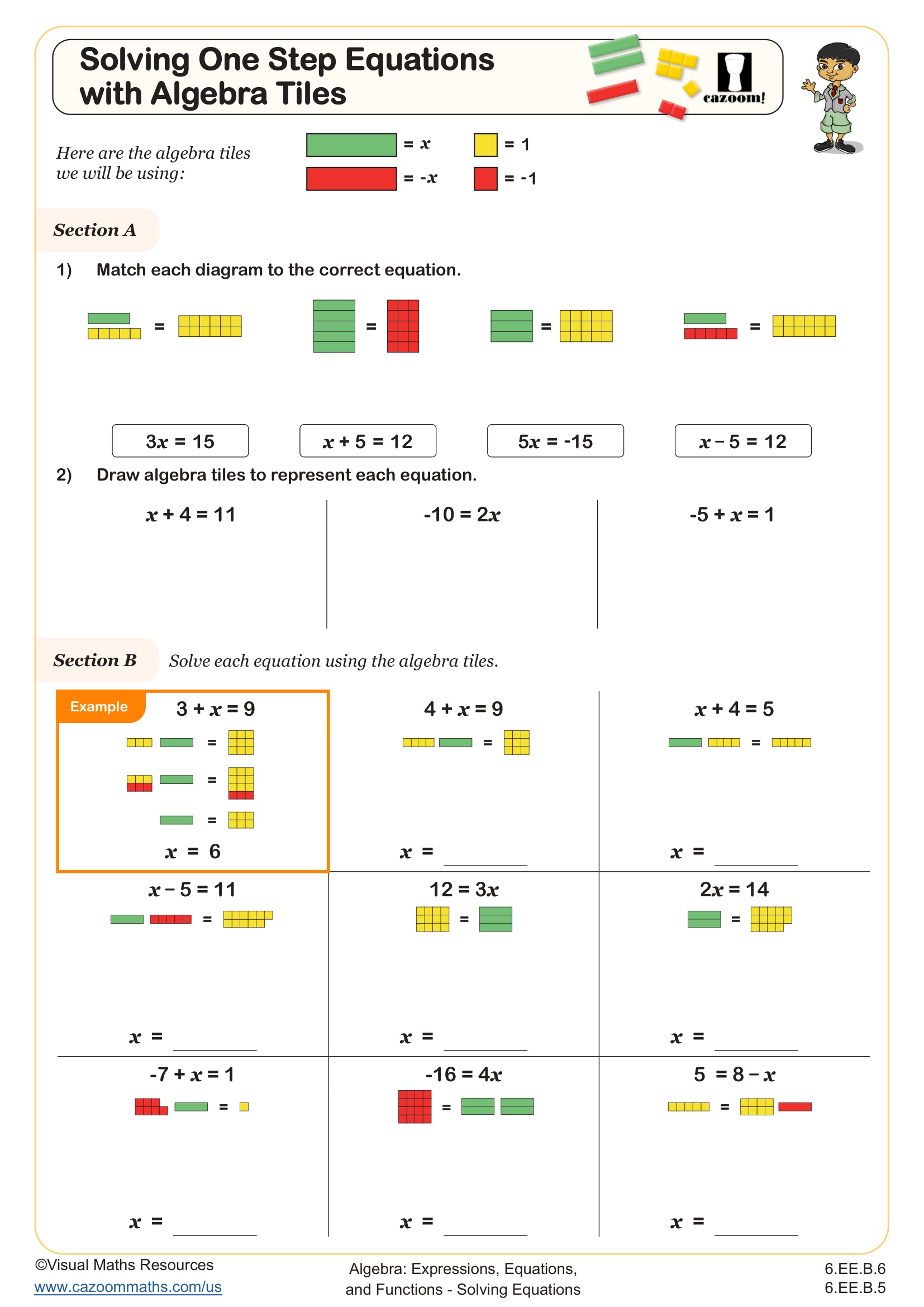
Solving One Step Linear Equations
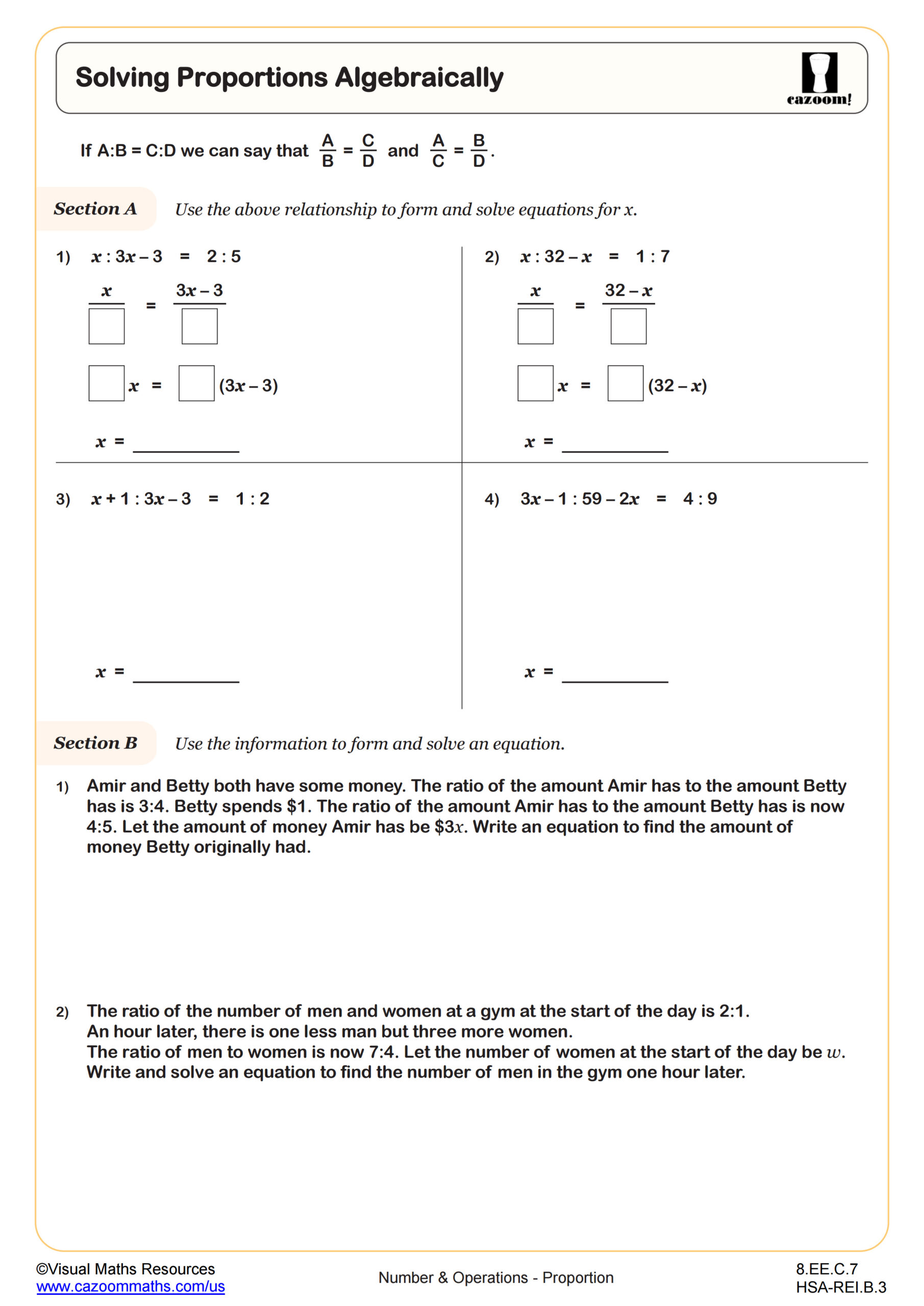
Solving Proportions Algebraically
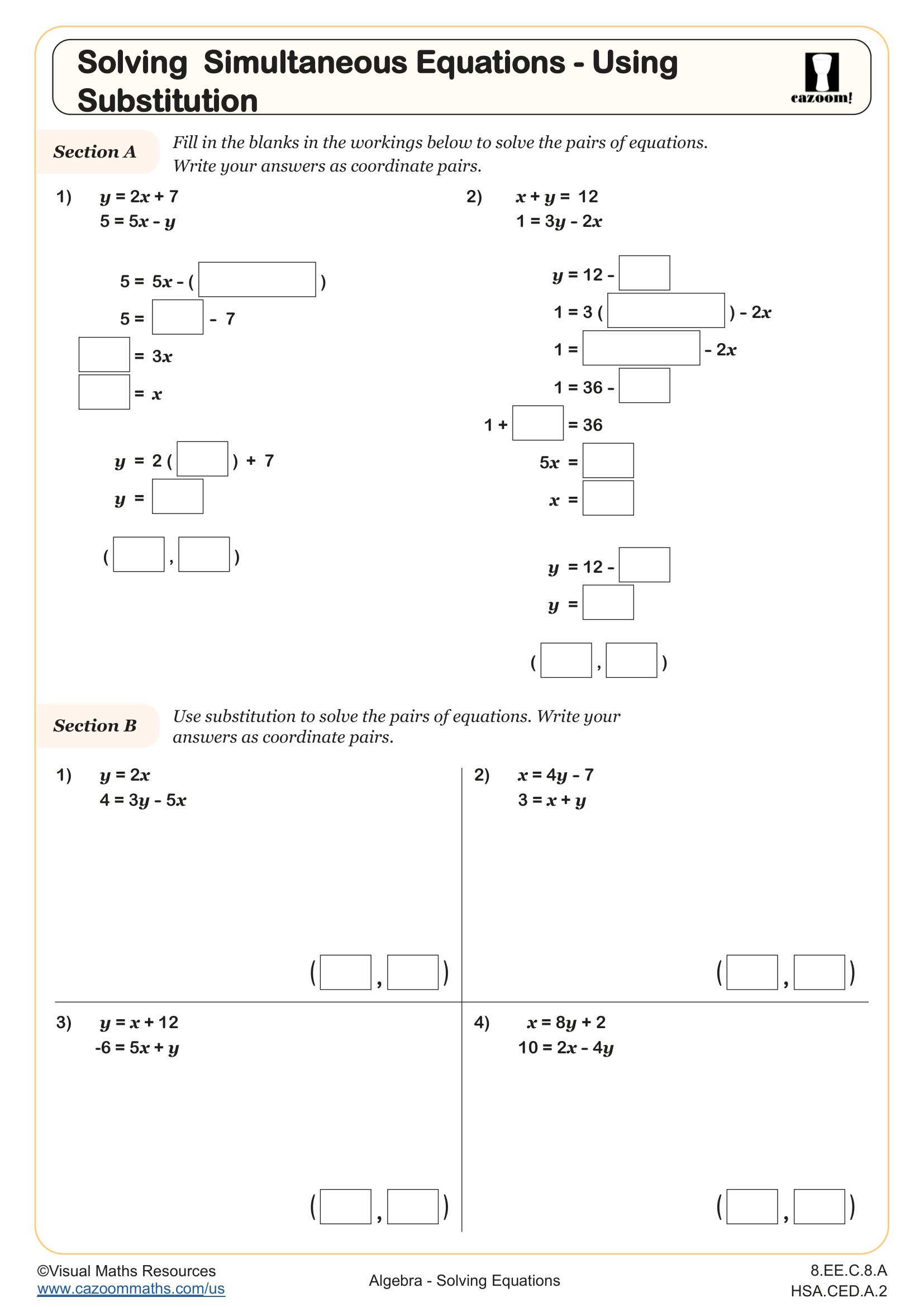
Solving Simultaneous Equations - Using Substitution
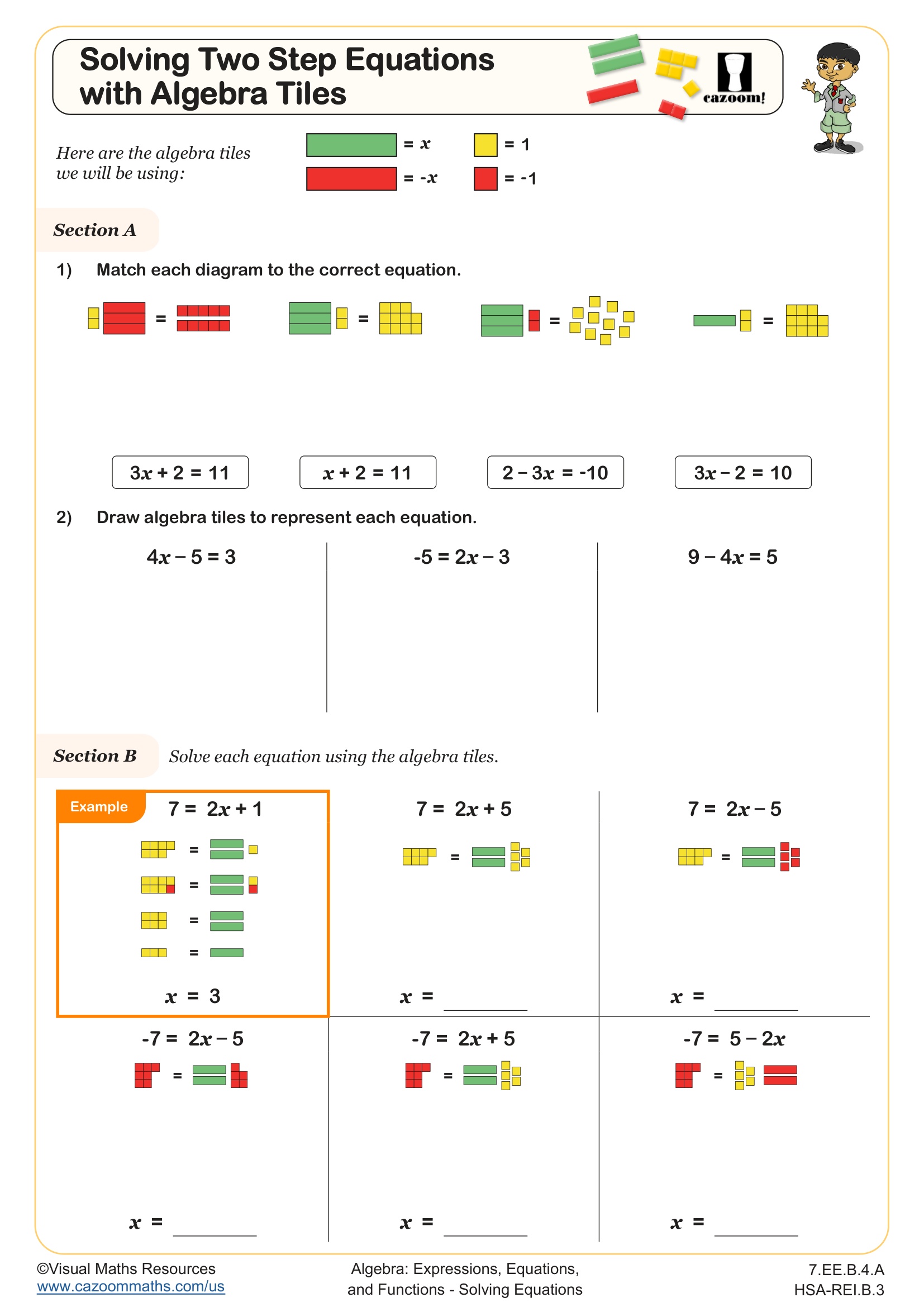
Solving Two Step Equations with Algebra Tiles
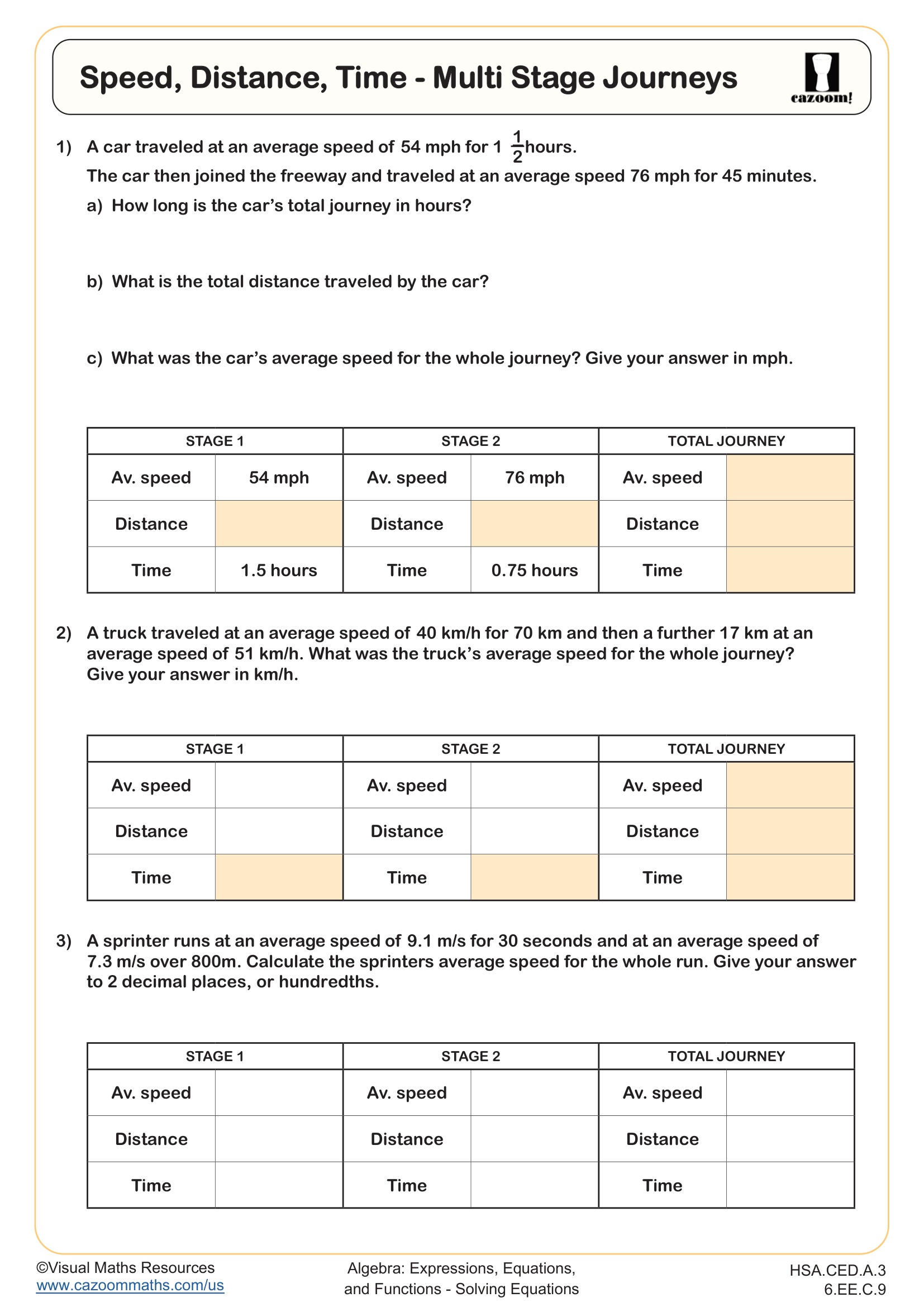
Speed, Distance, Time - Multi Stage Journeys
All worksheets are created by the team of experienced teachers at Cazoom Math.
What types of equations do middle school students learn to solve?
Middle school students progress from solving one-step equations in 6th grade through multi-step linear equations and basic quadratic equations by 8th grade. The Common Core State Standards introduce equation solving with simple expressions like x + 5 = 12, then build toward equations requiring distribution, combining like terms, and variables on both sides. By 8th grade, students encounter quadratic equations and learn the quadratic formula as a systematic solving method.
A common misconception occurs when students treat the equals sign as a "do something" symbol rather than a balance. Students often write 3 + 4 = 7 + 2 = 9 in a chain, not recognizing that 7 does not equal 9. This misunderstanding surfaces later when solving multi-step equations, where maintaining balance between both sides becomes essential for finding correct solutions.
Which grade levels use these solving equations worksheets?
These worksheets cover 6th grade, 7th grade, and 8th grade across the middle school years. Students encounter equation solving as a foundational algebra skill that appears on state assessments and standardized tests throughout these grade levels. The worksheets align with middle school mathematics standards that emphasize algebraic thinking and formal equation-solving procedures.
The progression increases in complexity each year. Sixth graders typically solve one-step and simple two-step equations with whole numbers and basic fractions. Seventh grade introduces equations with negative numbers, distribution, and combining like terms on the same side. Eighth graders tackle equations with variables on both sides, work with the quadratic formula, and apply equations to real-world contexts like compound interest calculations.
How do algebra tiles help students combine like terms when solving equations?
Algebra tiles provide a concrete, visual representation of abstract algebraic expressions. Students use rectangular tiles to represent variables and small square tiles for constants, physically grouping like terms together before solving. This hands-on approach helps students see that 3x and 2x can combine into 5x because they represent the same type of quantity, while 3x and 2 cannot combine because they're fundamentally different.
This visual foundation connects directly to STEM fields where engineers and computer scientists manipulate variables and constants. In computer programming, students combine like terms when optimizing code—consolidating repeated operations just as they consolidate 4x + 3x into 7x. Chemical engineers use similar thinking when balancing equations, grouping like elements on each side of a reaction. The tile method builds intuition that transfers beyond algebra class.
How can teachers use these equation-solving worksheets in the classroom?
The worksheets provide structured practice that moves from guided examples to independent problem-solving. Many include function machine templates that help students visualize the inverse operations needed to isolate variables. Teachers find that worked examples at the top of each worksheet give students a reference point when they get stuck, reducing frustration during independent work while still requiring them to think through each step.
These worksheets work well for differentiated instruction, allowing teachers to assign specific problem sets based on student readiness. Some teachers use them for warm-up activities to activate prior knowledge, while others assign them for homework after introducing new solving techniques. The answer keys make them practical for math centers or paired work, where students can check their solutions and identify errors without waiting for teacher feedback. They're particularly valuable for intervention sessions targeting specific gaps in equation-solving skills.