8th Grade Geometry Worksheets
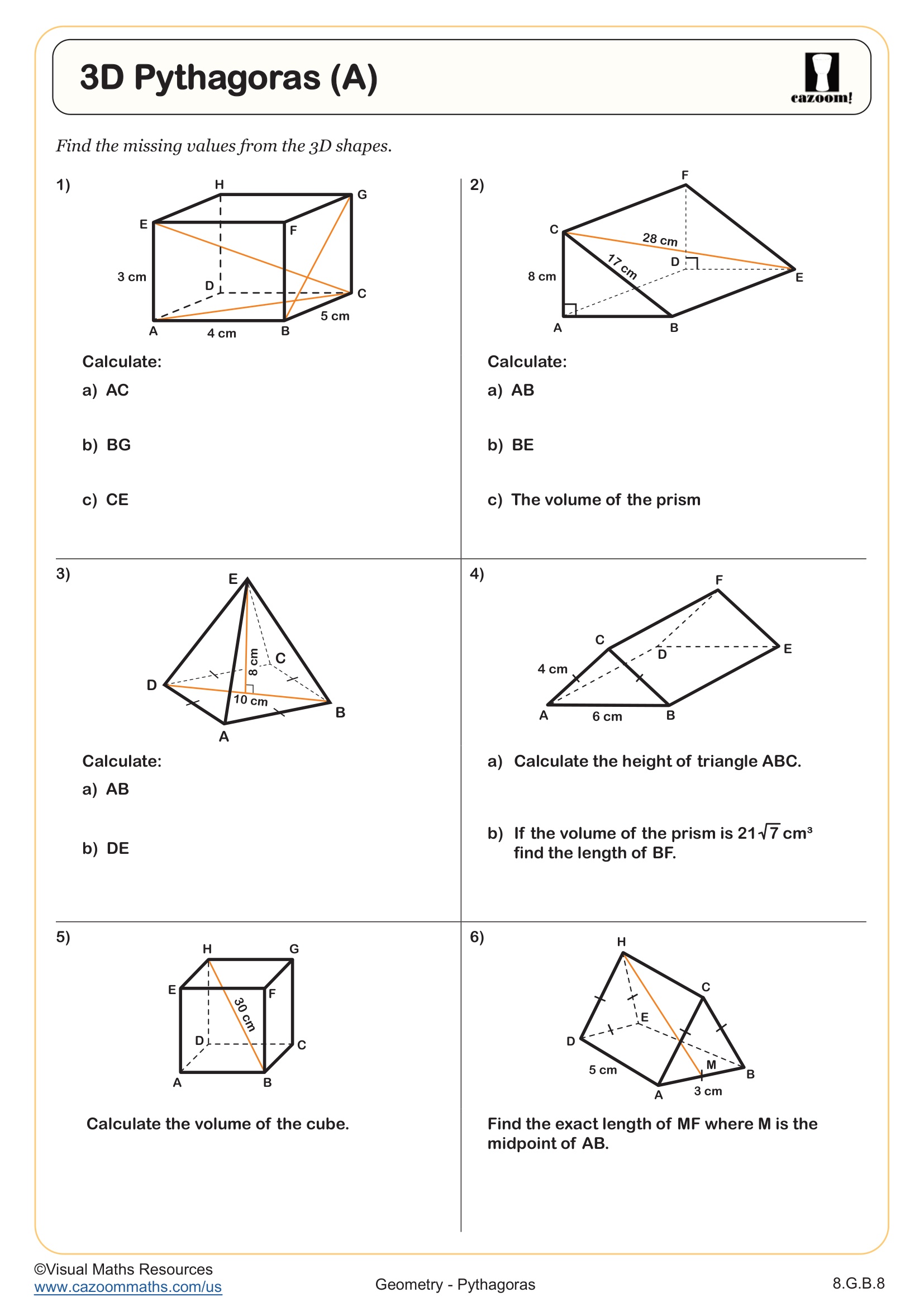
3D Pythagoras (A)
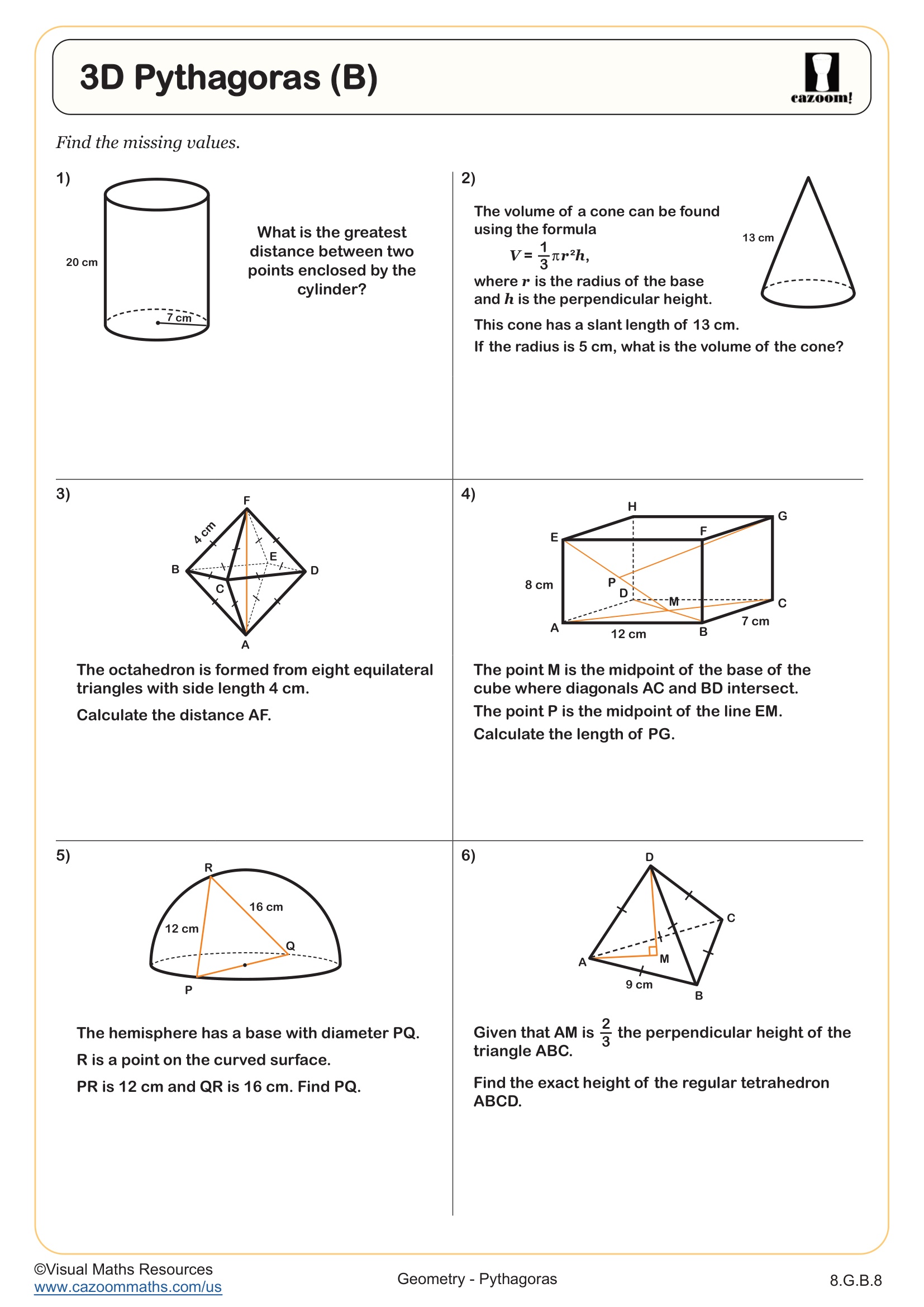
3D Pythagoras (B)
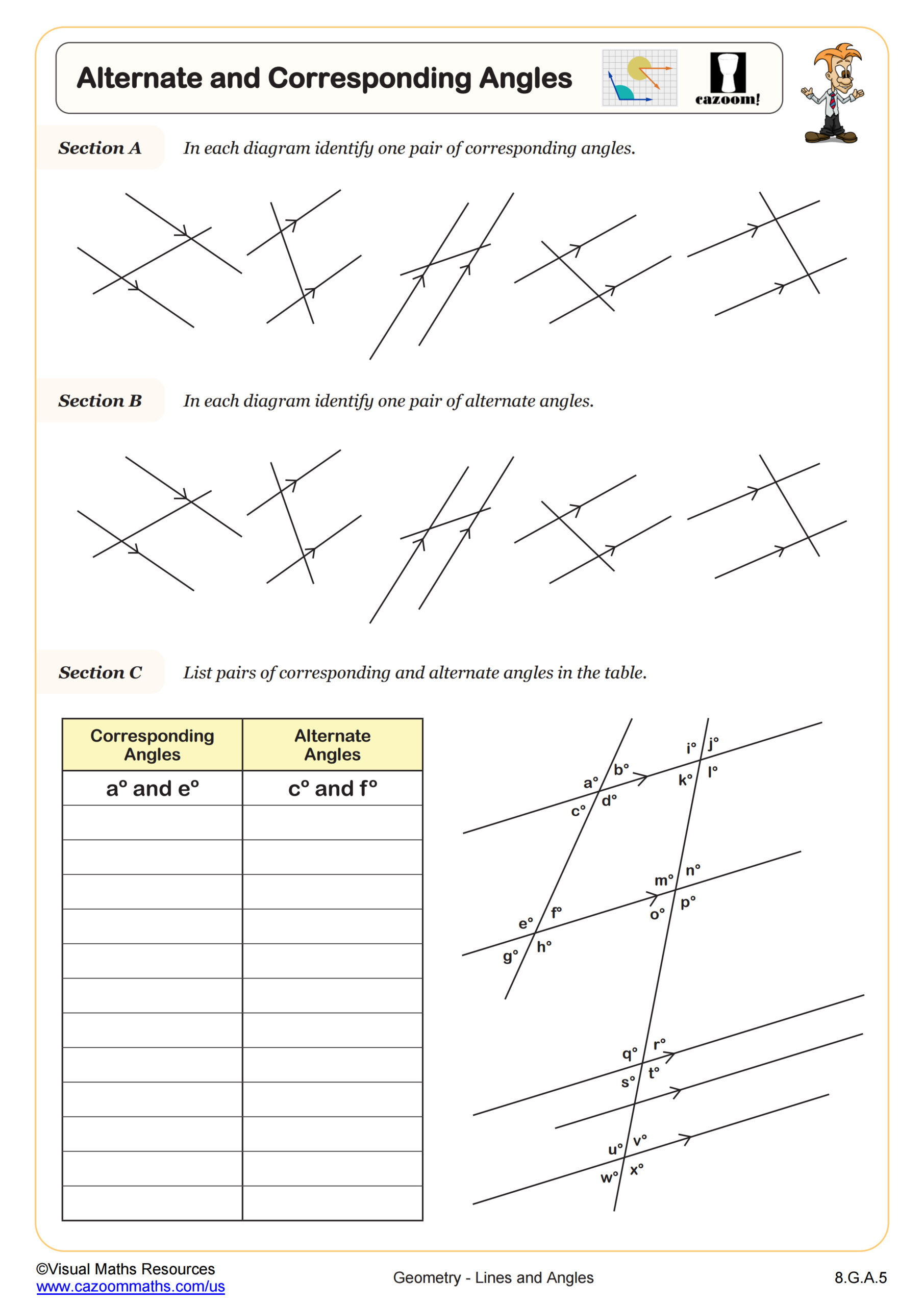
Alternate and Corresponding Angles
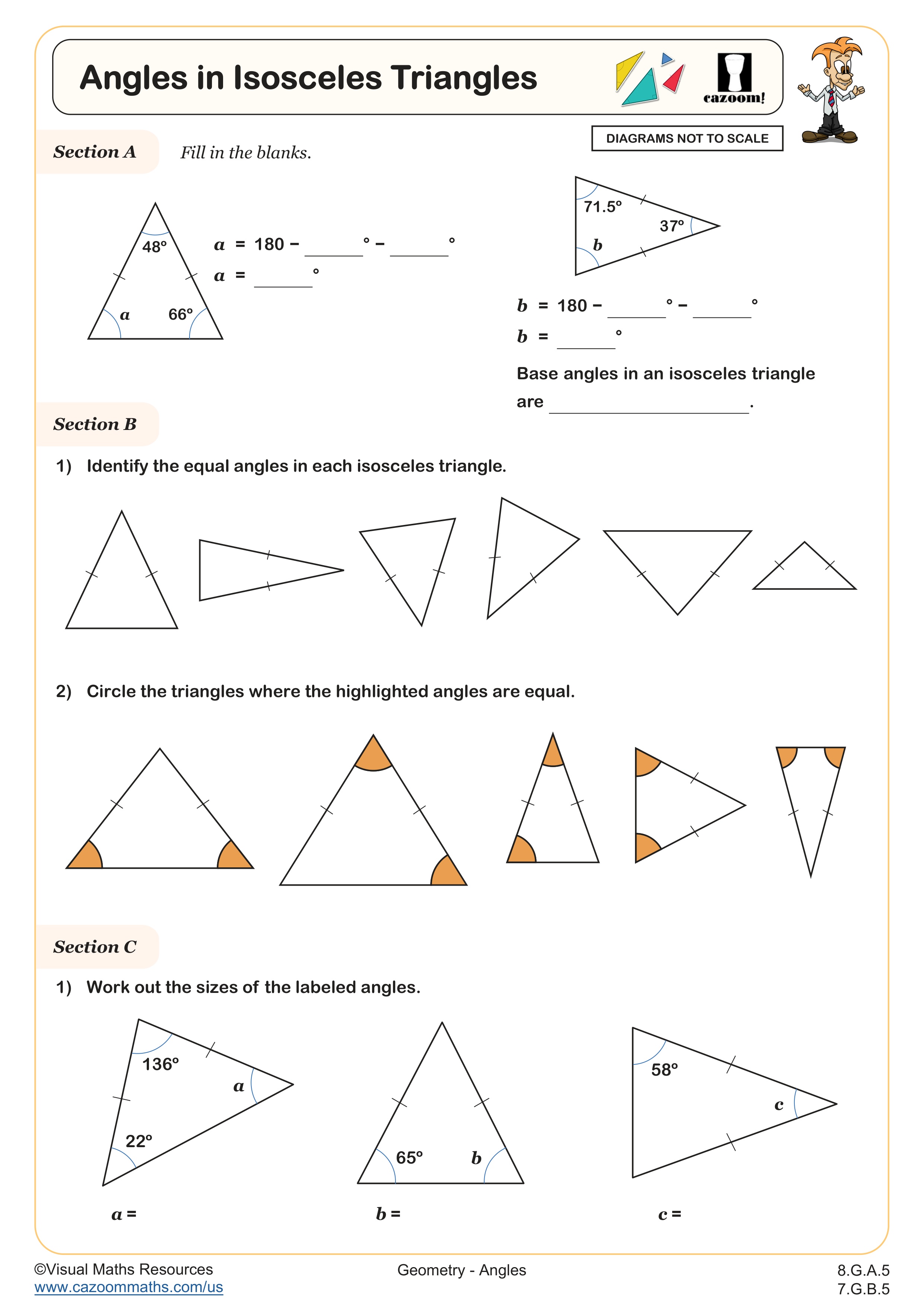
Angles in Isosceles Triangles
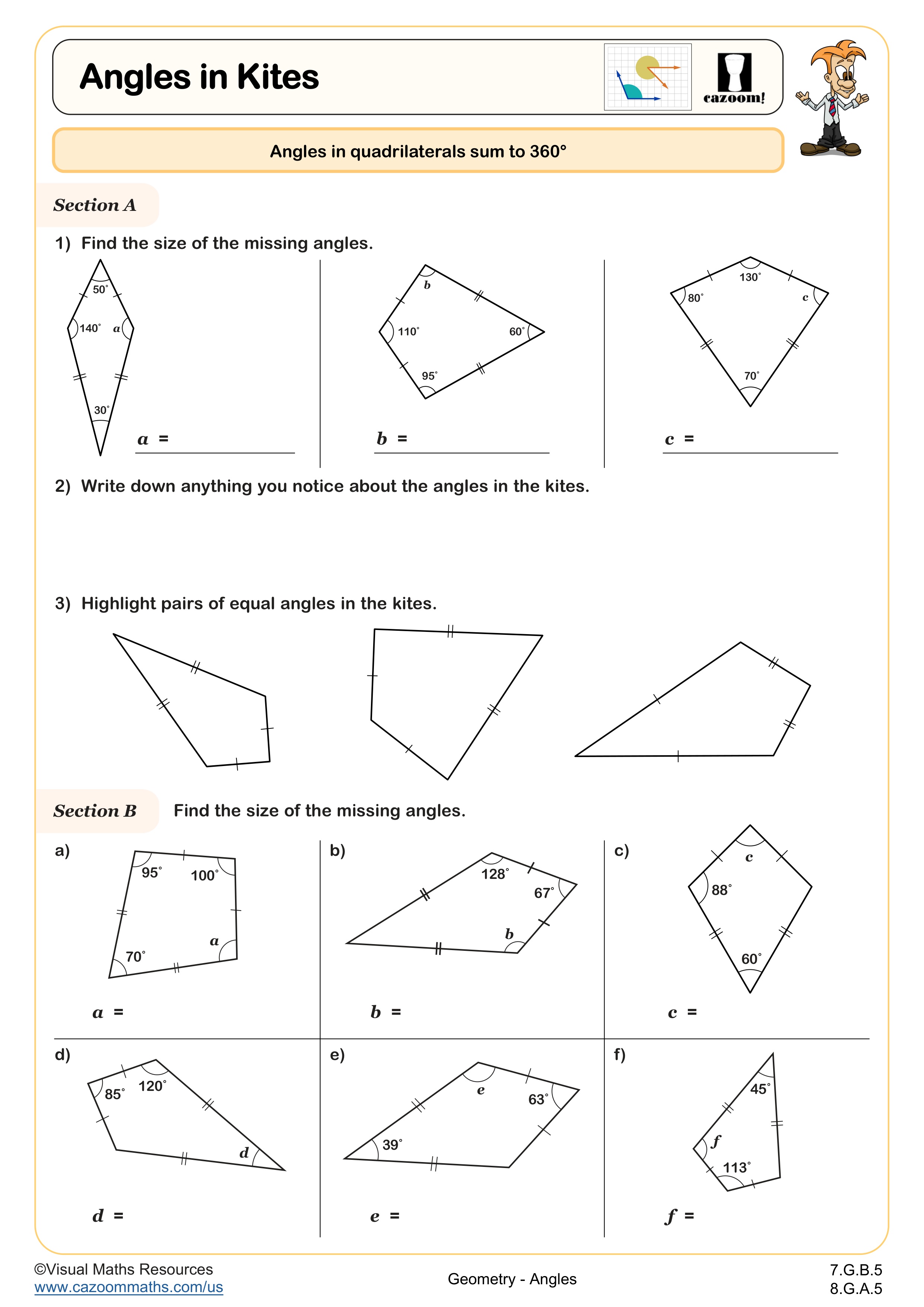
Angles in Kites
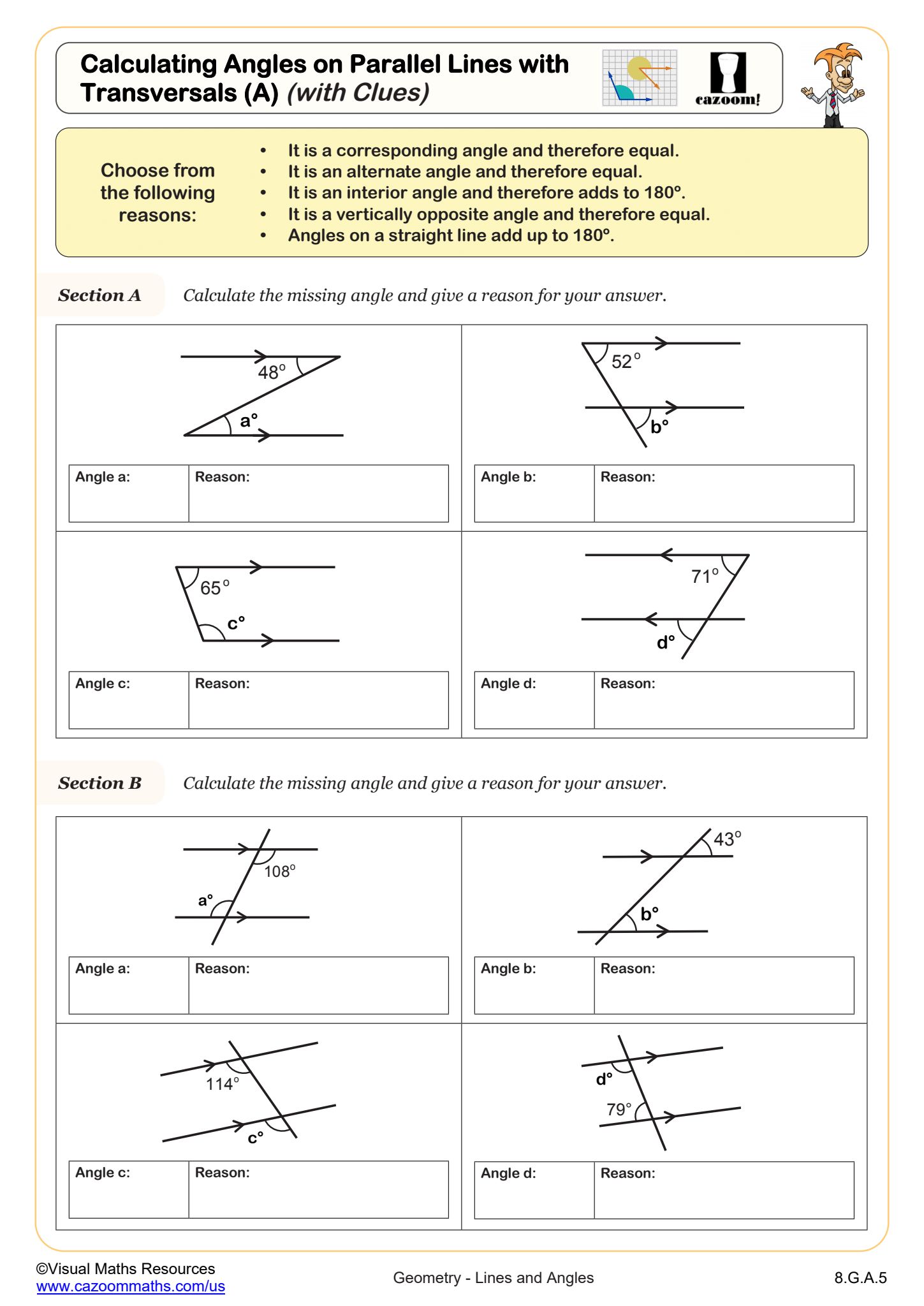
Calculating Angles on Parallel Lines with Transversals (A) (with clues)
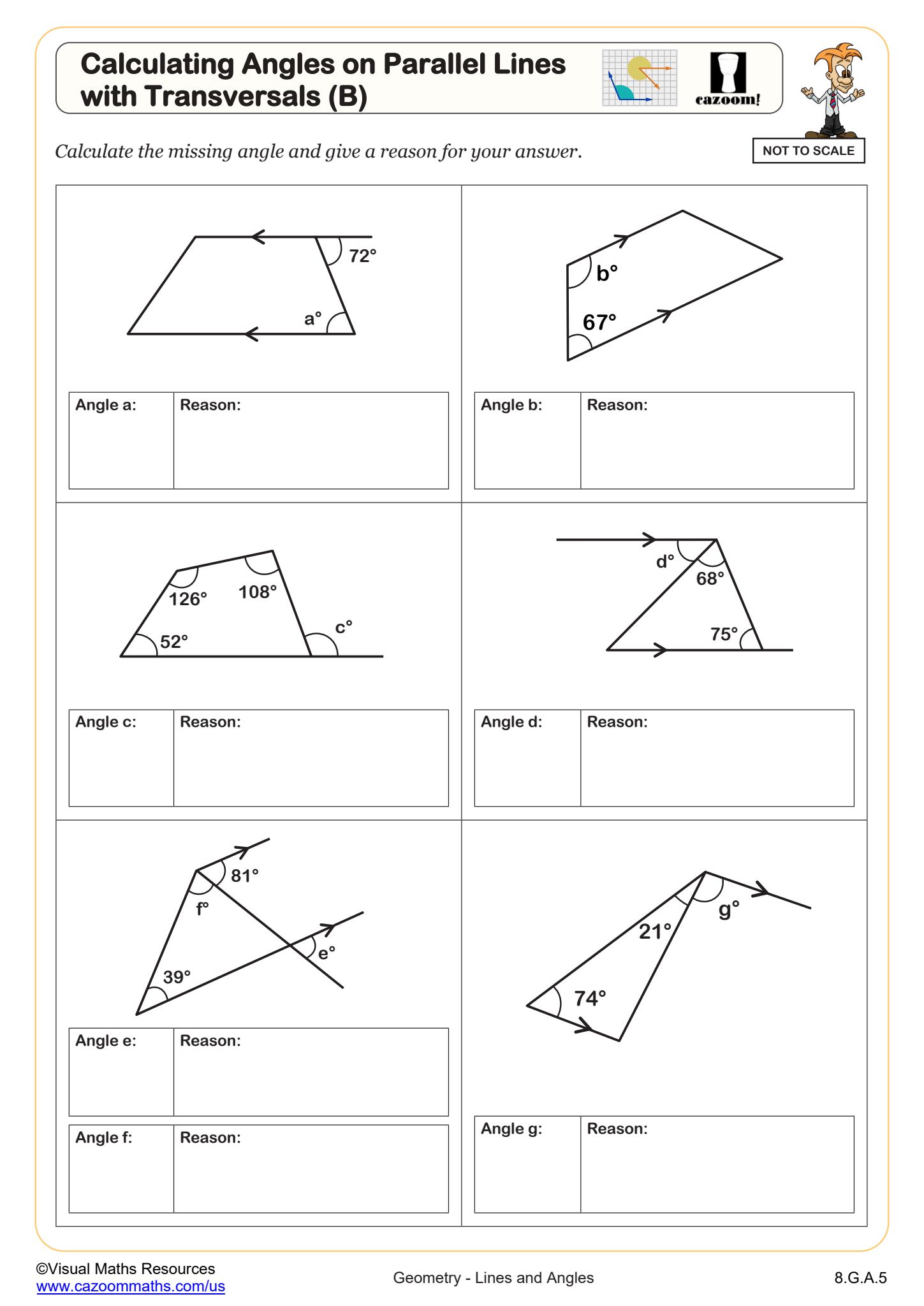
Calculating Angles on Parallel Lines with Transversals (B)
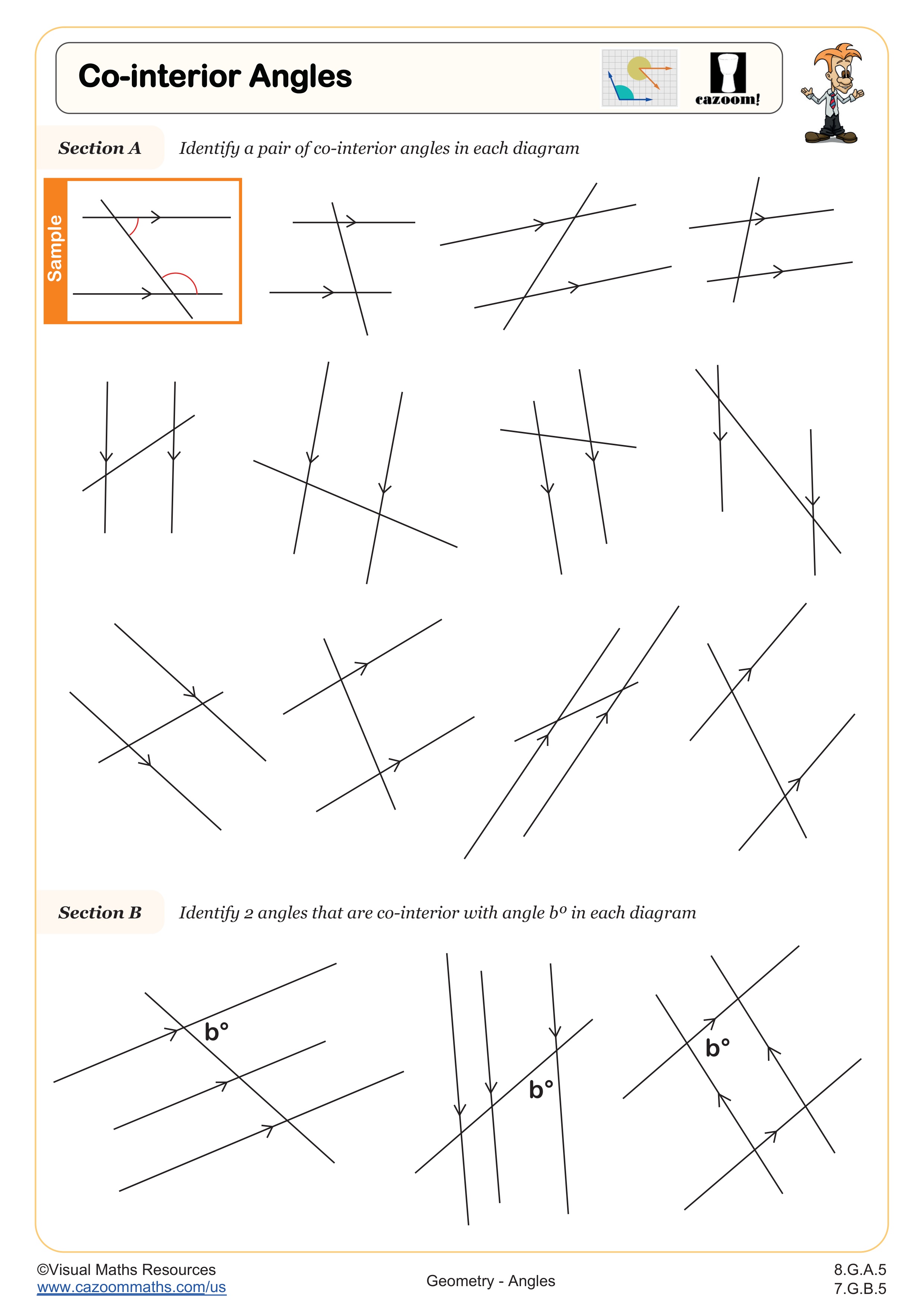
Co-interior Angles
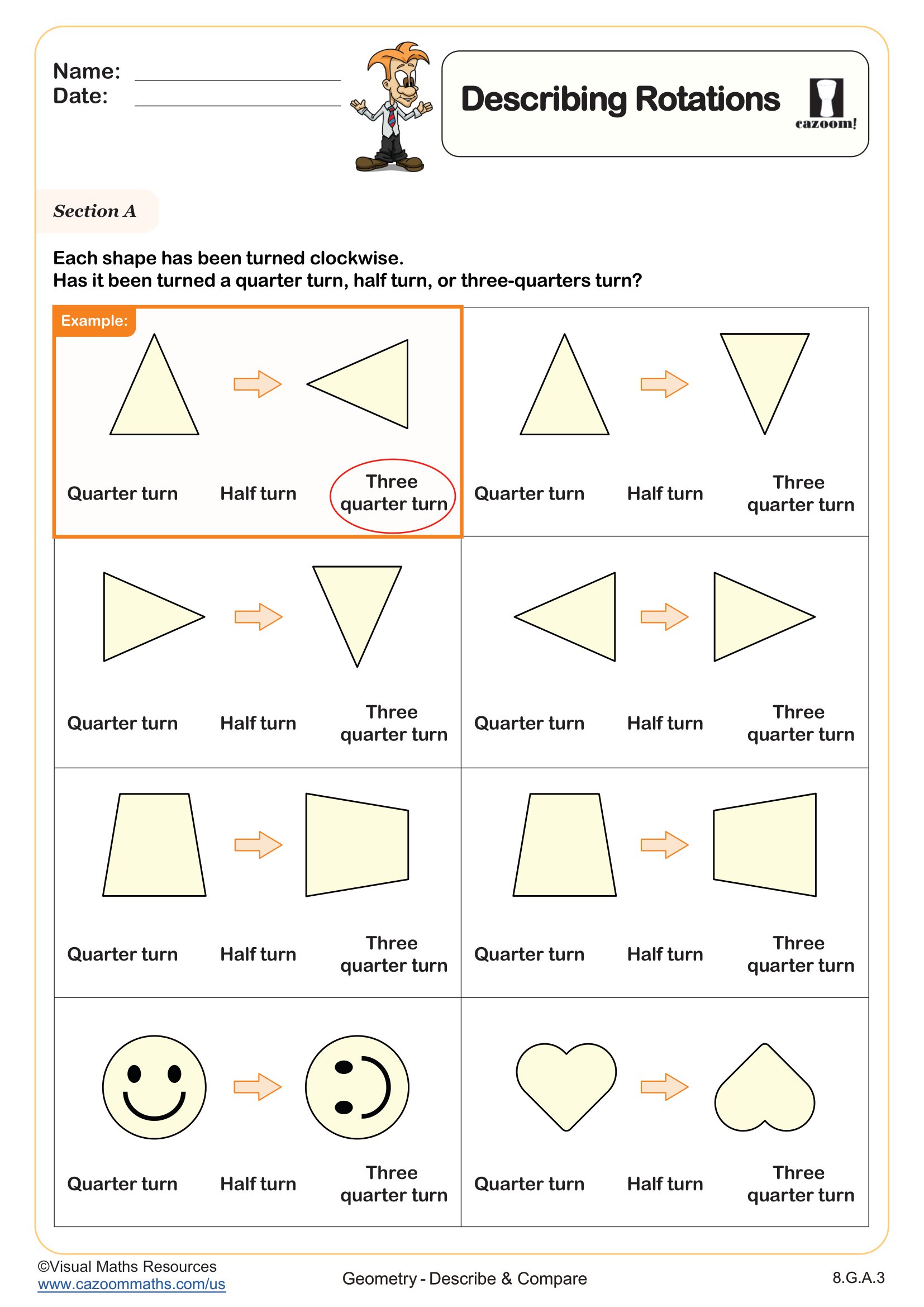
Describing Rotations
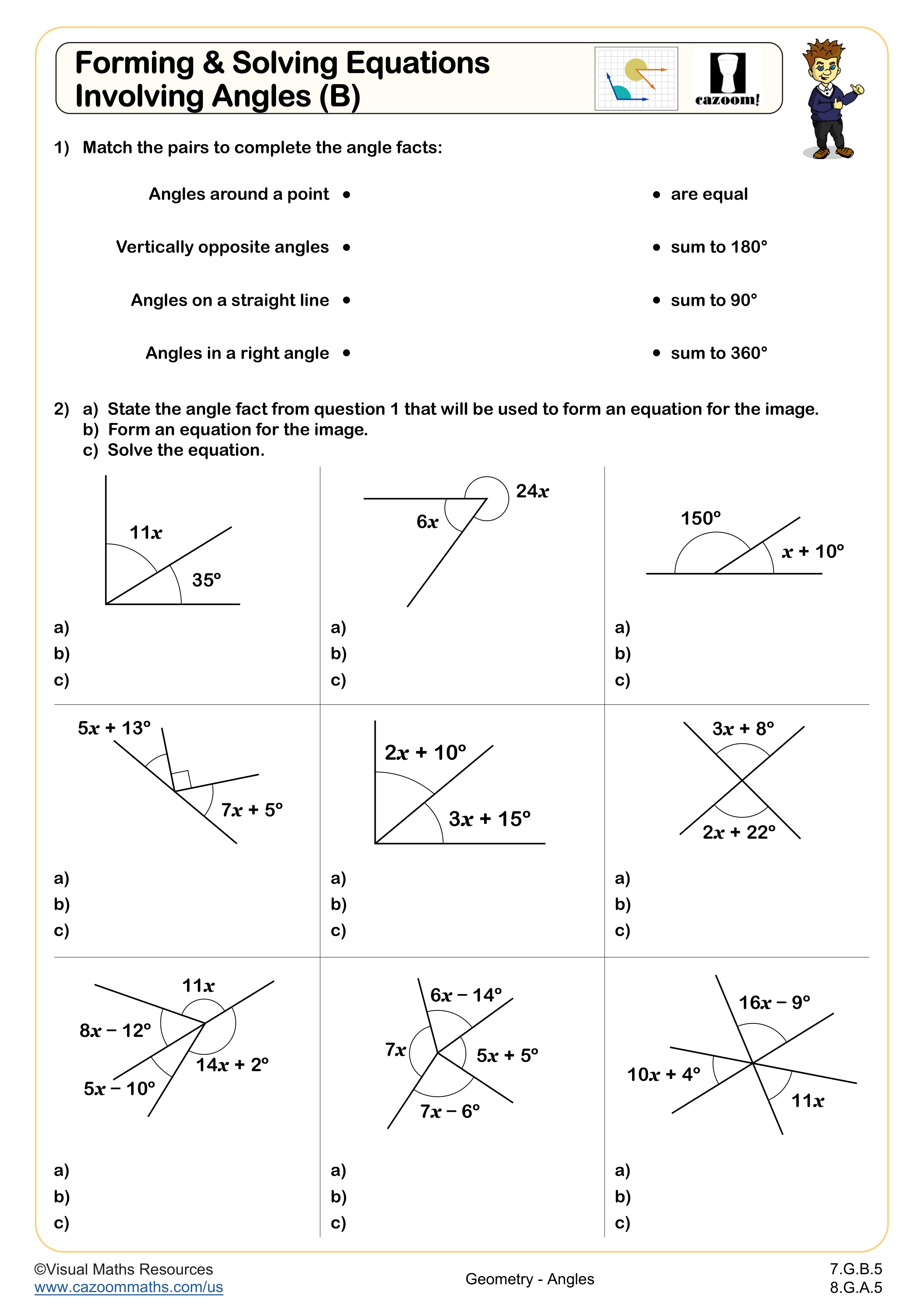
Forming and Solving Equations Involving Angles (B)
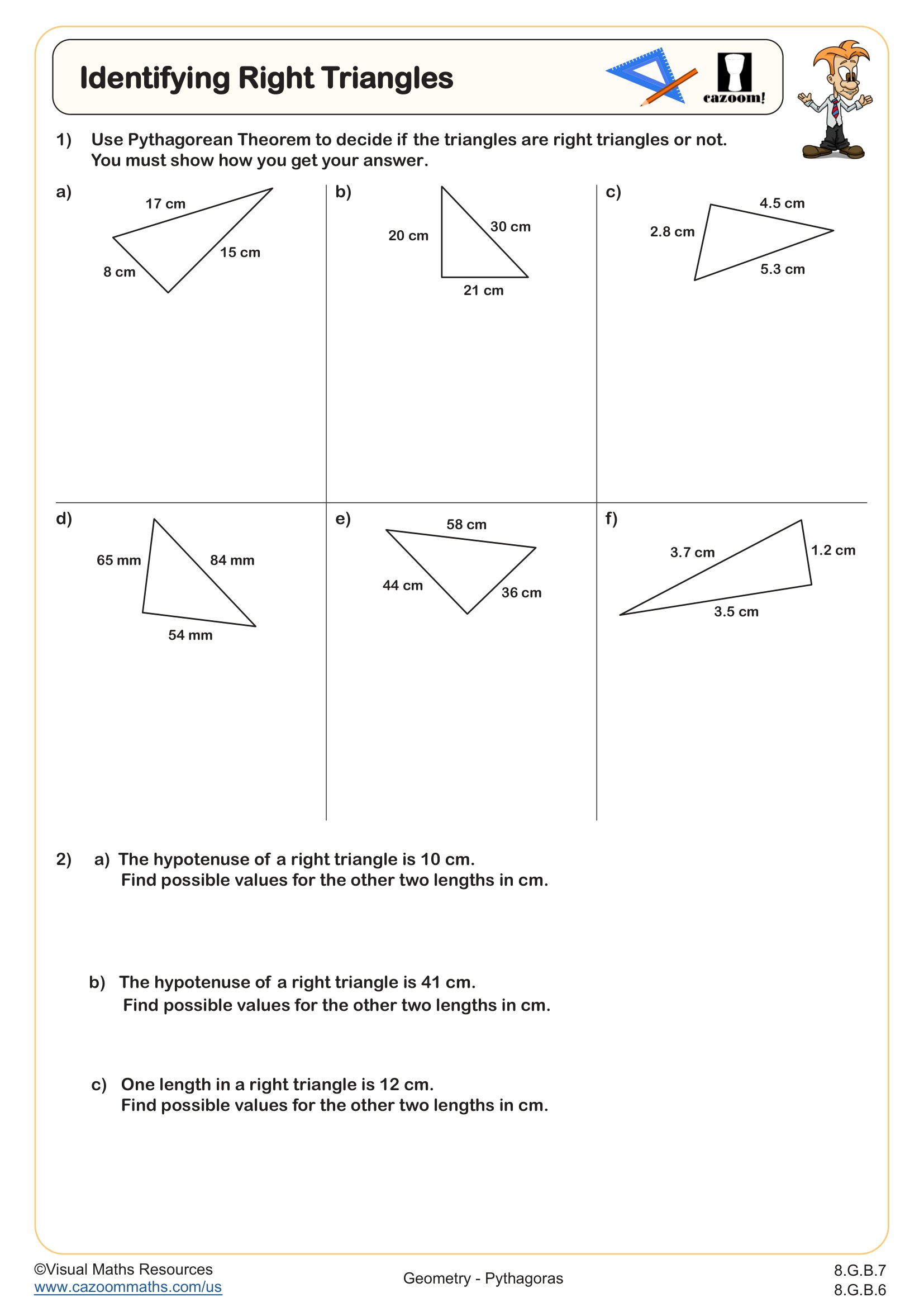
Identifying Right Triangles
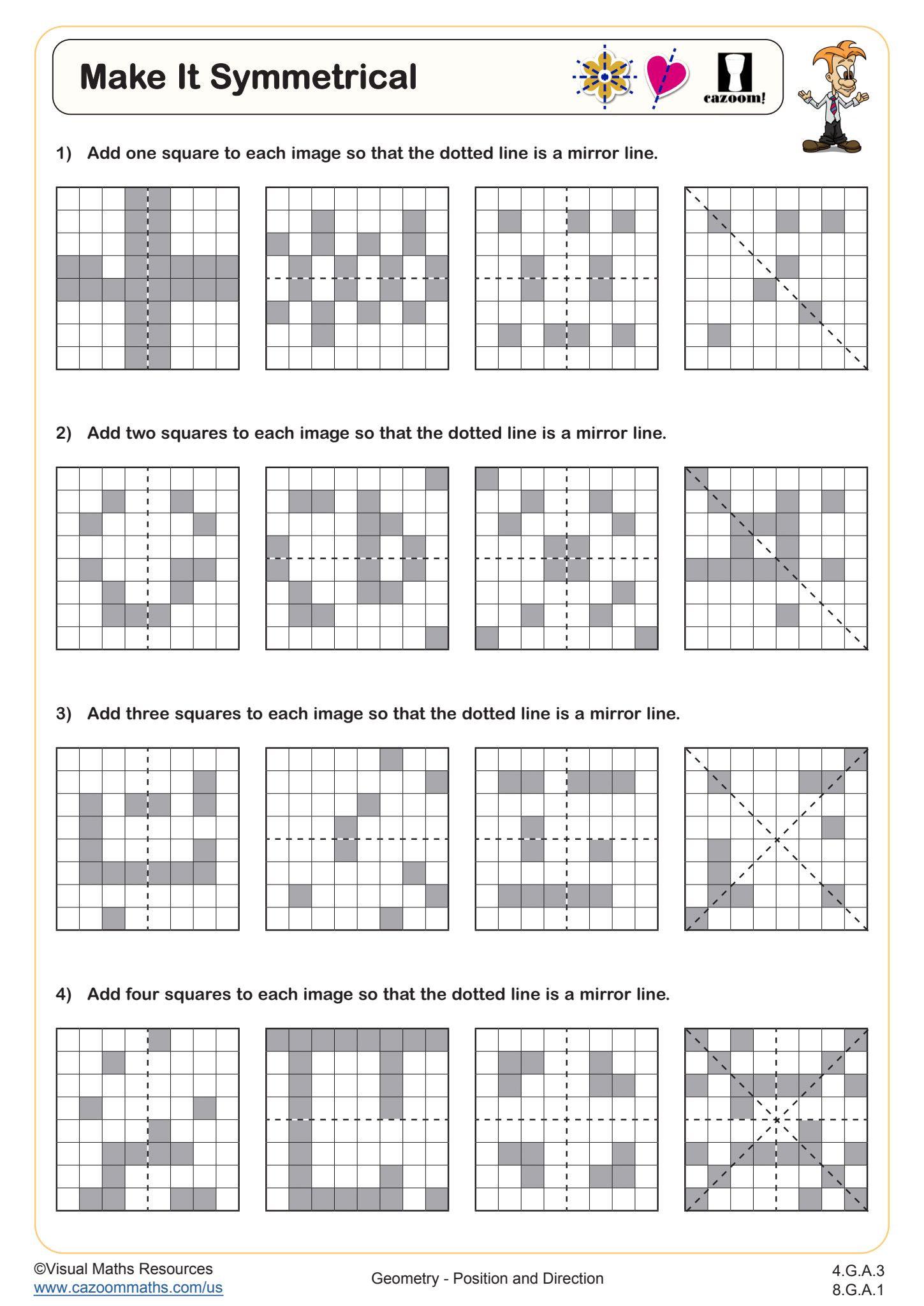
Make it Symmetrical
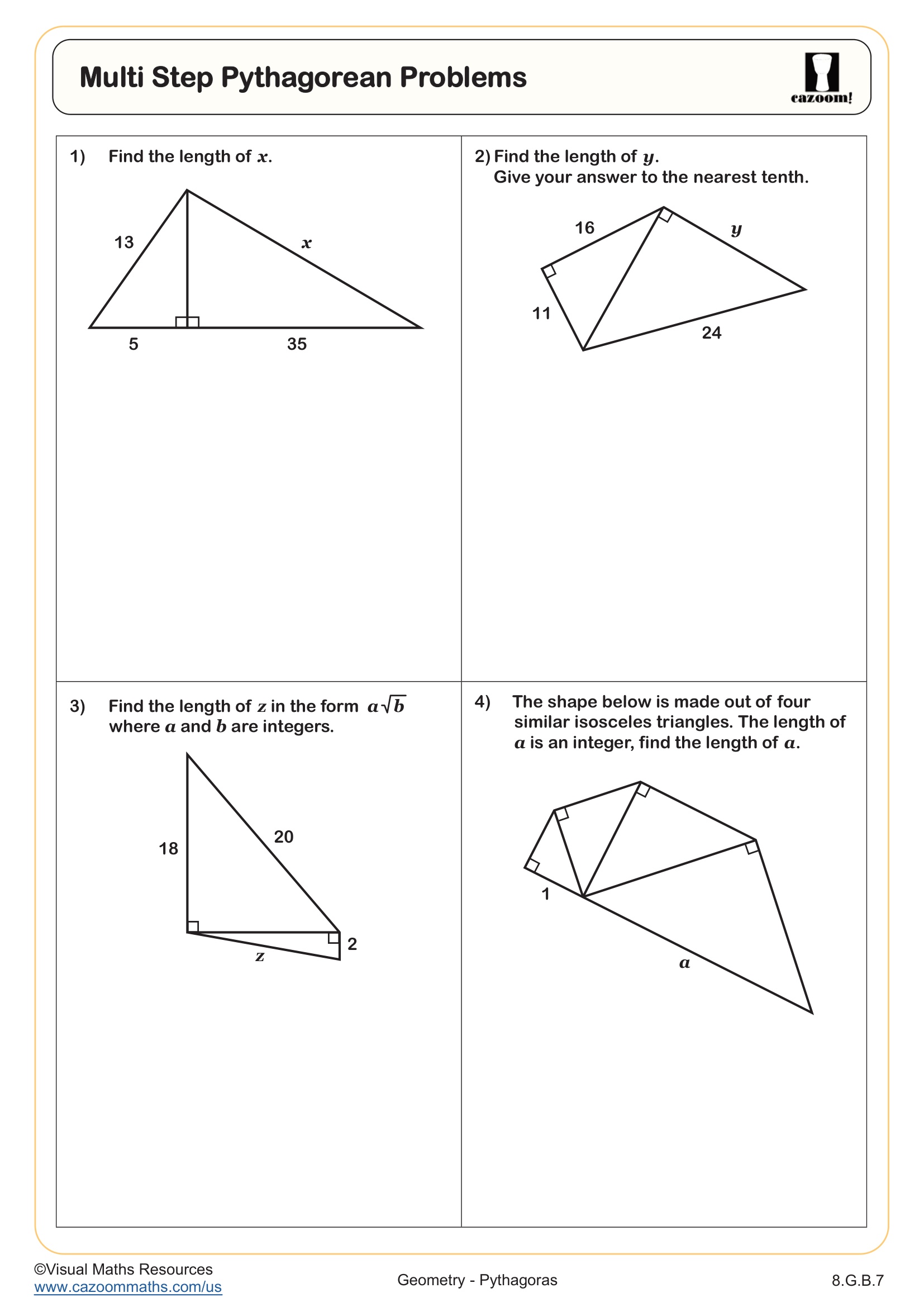
Multi Step Pythagorean Problems
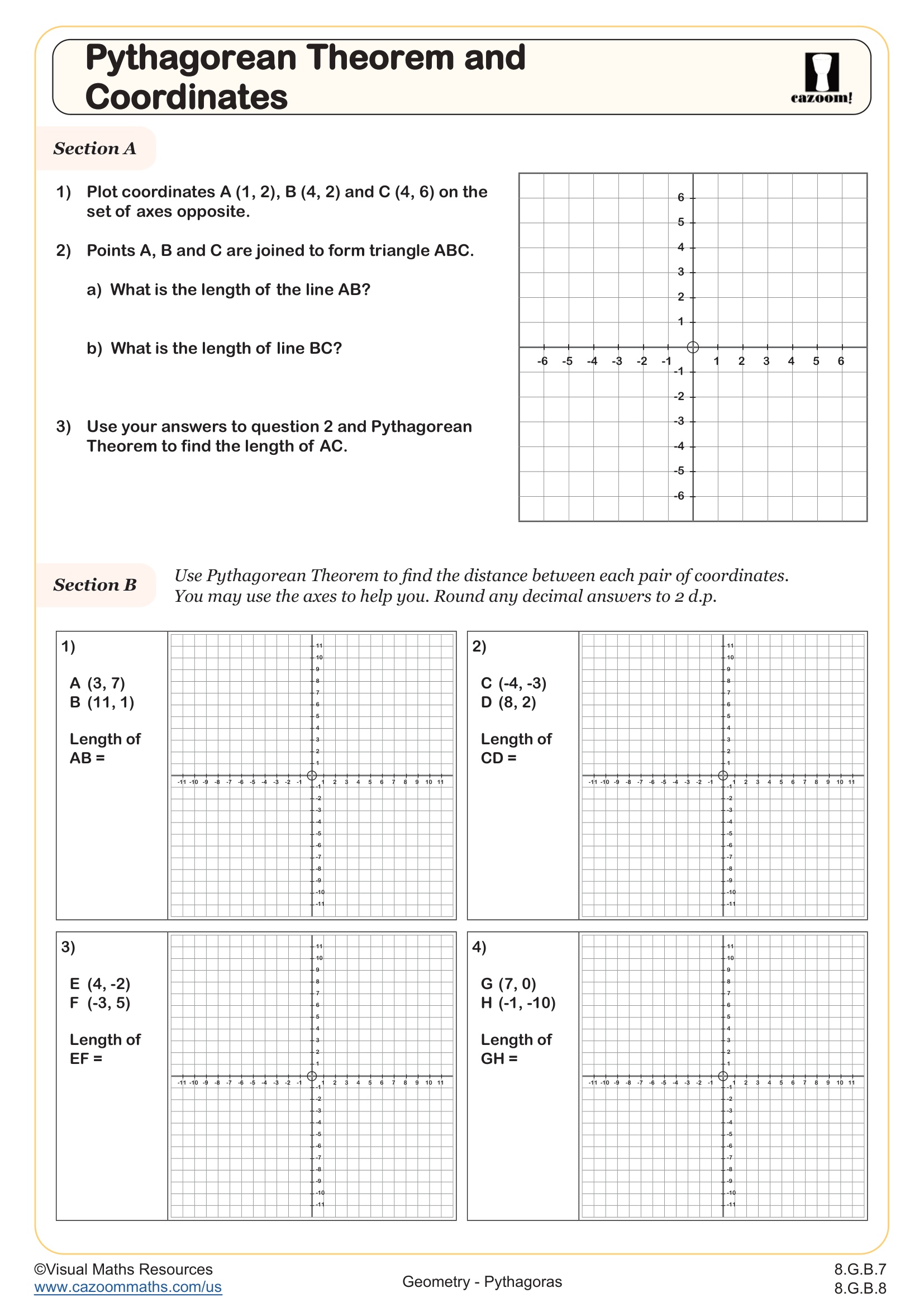
Pythagorean Theorem and coordinates
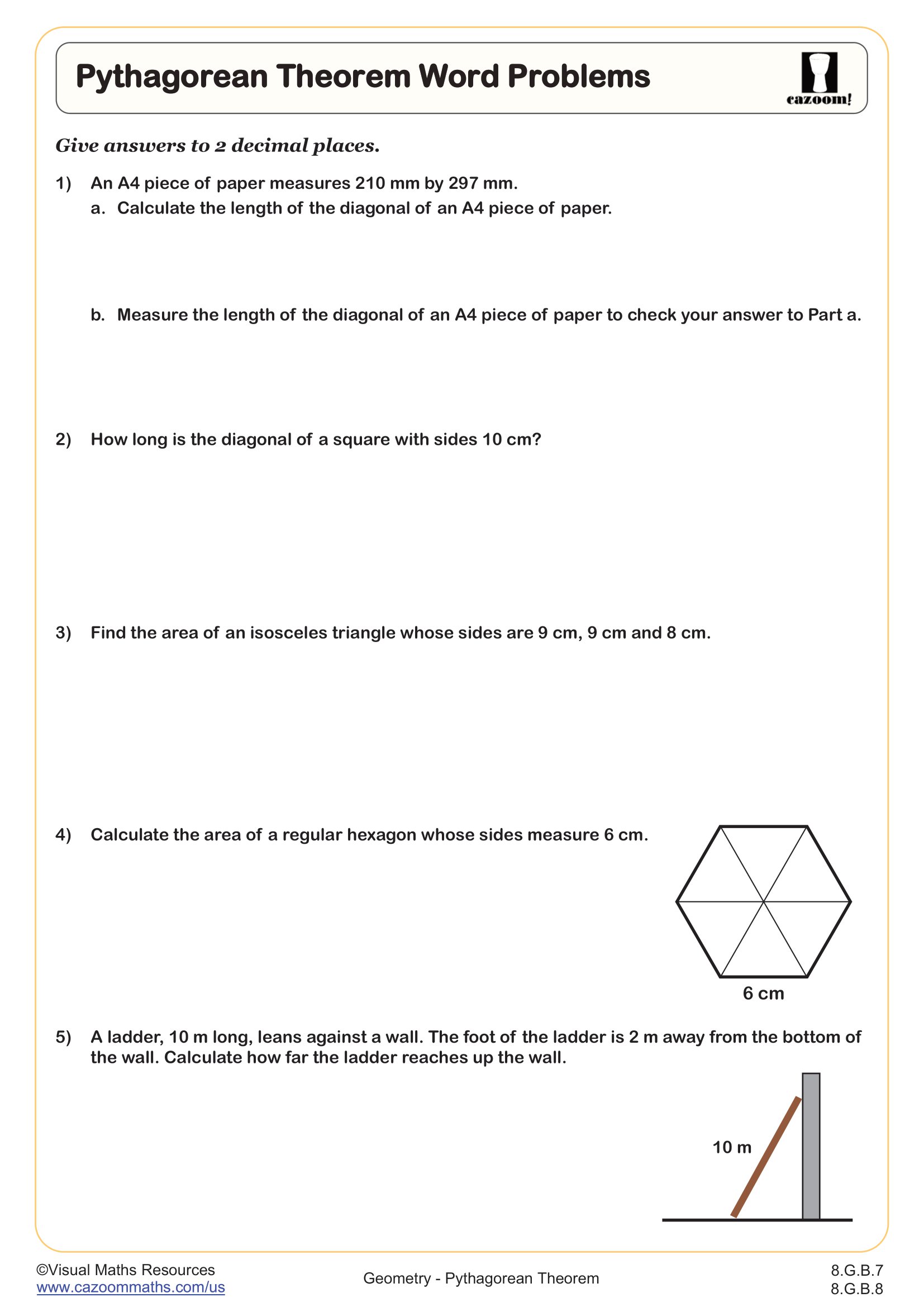
Pythagorean Theorem Word Problems
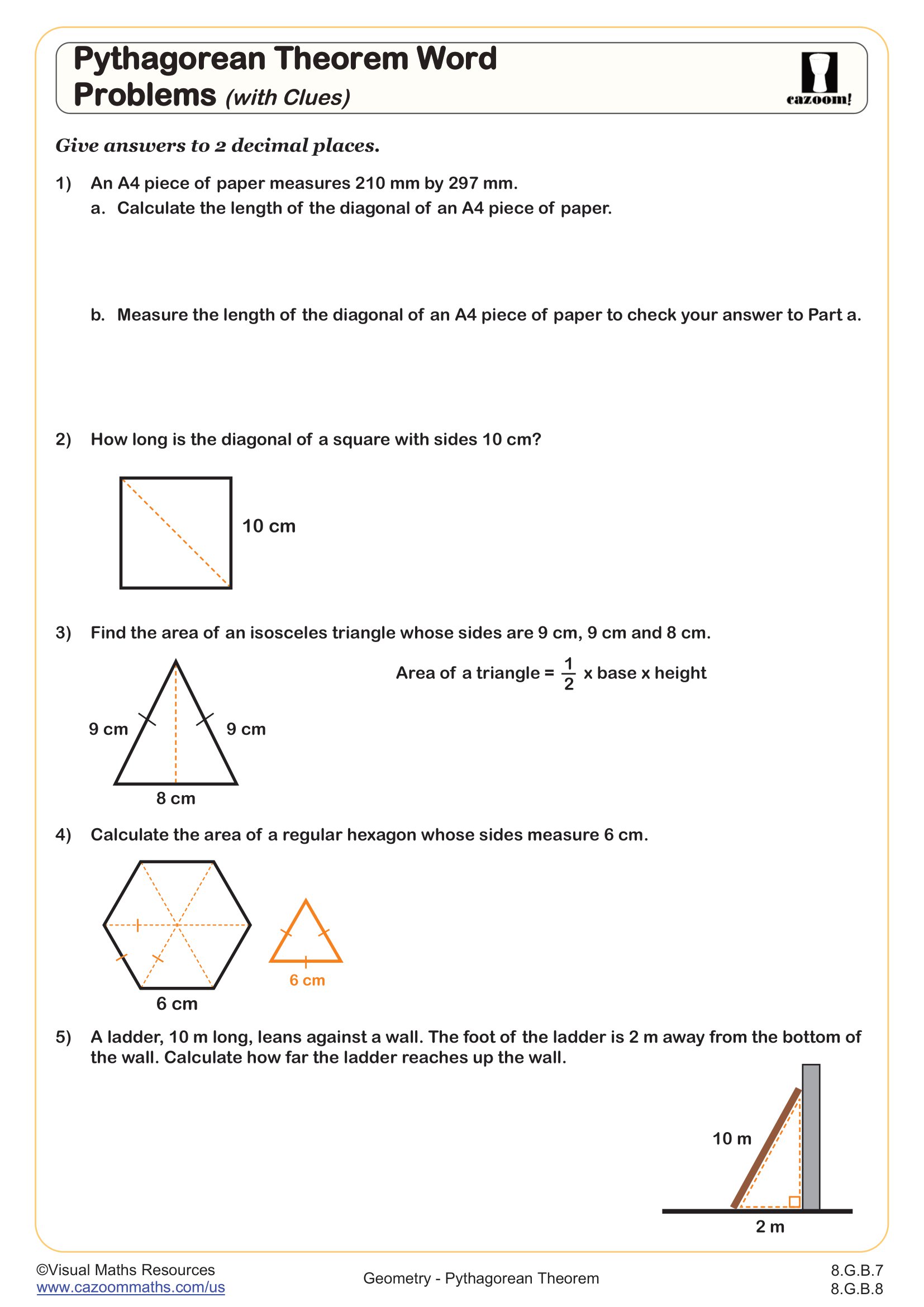
Pythagorean Theorem Word Problems (with clues)
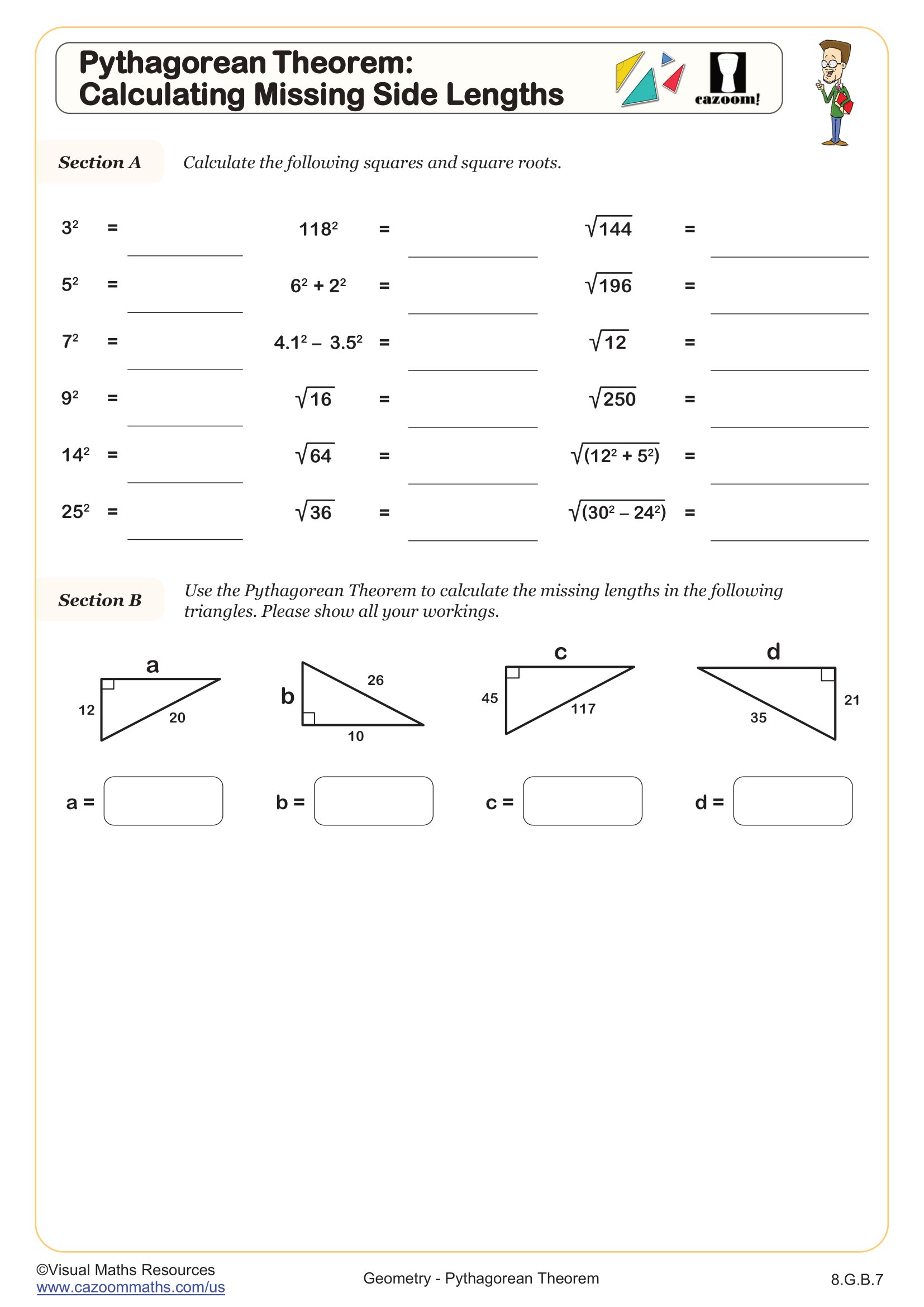
Pythagorean Theorem: Calculating Missing Side Lengths
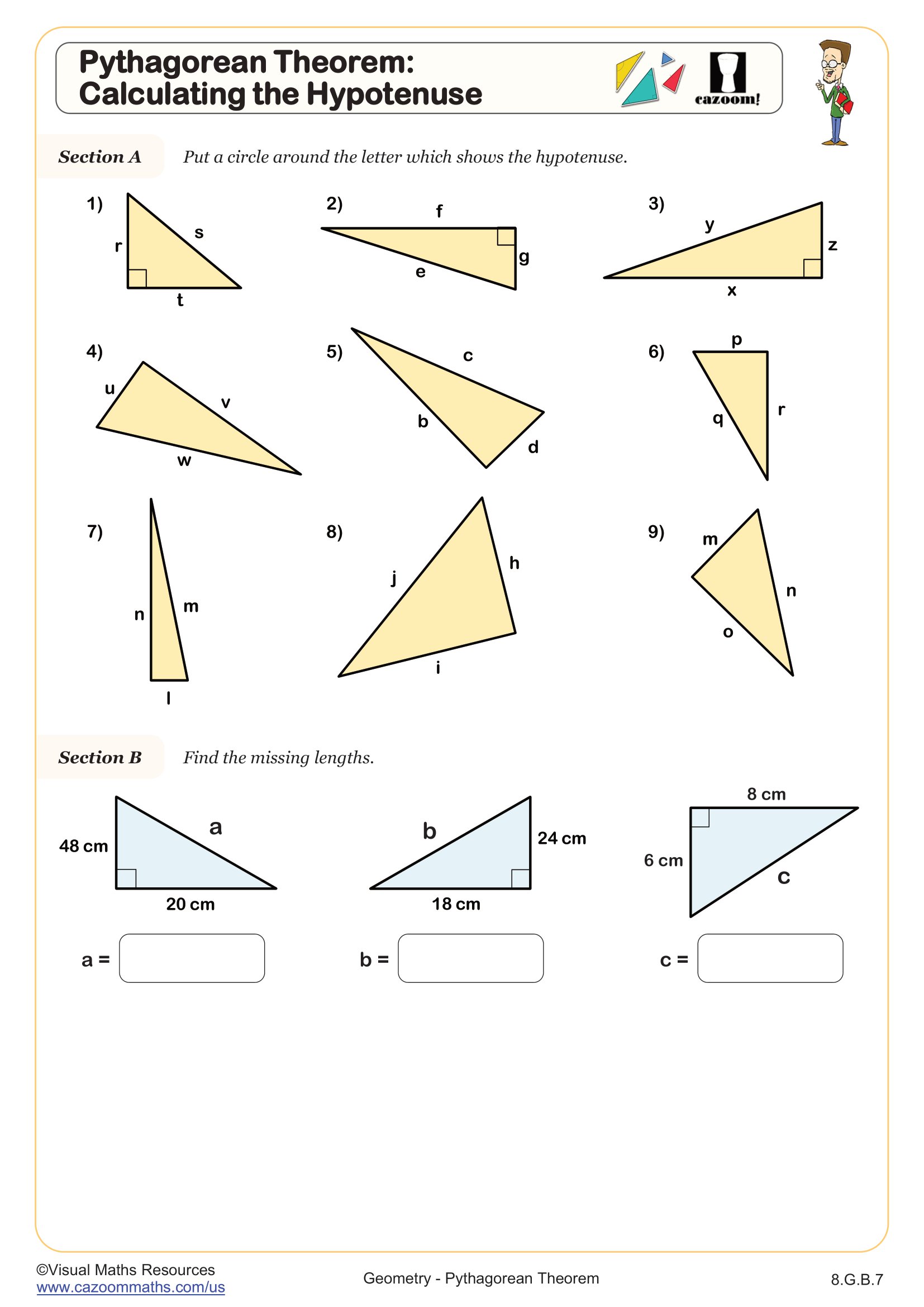
Pythagorean Theorem: Calculating the Hypotenuse
All worksheets are created by the team of experienced teachers at Cazoom Math.
What topics do 8th grade geometry worksheets typically cover?
8th grade geometry worksheets align with Common Core standards 8.G.1 through 8.G.9, covering coordinate geometry transformations, angle relationships with parallel lines and transversals, congruent triangles, and applications of the Pythagorean theorem. Students practice reflections, rotations, translations, and dilations on the coordinate plane while developing understanding of similarity and congruence.
Teachers often observe that students initially confuse the order of operations when performing multiple transformations, such as reflecting a triangle across the y-axis then rotating it 90 degrees. The worksheets include specific problems like calculating angles on parallel lines with transversals answers to help students master these sequential reasoning skills that are crucial for success in geometry.
Are these worksheets appropriate for students below or above 8th grade level?
Advanced 7th graders who have mastered basic geometric concepts can benefit from these 8th grade geometry worksheets, particularly those involving coordinate plane work and angle calculations. However, students should have solid skills with integer operations and basic algebraic thinking before attempting transformation problems or Pythagorean theorem applications.
Some 9th grade teachers use these materials for review at the start of formal geometry courses, especially when students need reinforcement with coordinate geometry or parallel line angle relationships. Teachers find that struggling high school students often benefit from revisiting these foundational concepts before moving into proof-based geometry work.
How do students typically approach parallel line and transversal problems?
Students learning about parallel lines cut by transversals often memorize angle relationship names without understanding the underlying spatial relationships. Teachers notice that many eighth graders can identify corresponding angles but struggle when problems require them to set up equations using multiple angle relationships to solve for unknown measures.
The most effective approach involves having students physically trace the transversal and identify which angles share the same position relative to each parallel line. When working through calculating angles on parallel lines with transversals problems, students benefit from color-coding different angle types before setting up algebraic equations, helping them visualize these abstract relationships more concretely.
What's the best way to use these worksheets for maximum student learning?
Teachers find the most success when they introduce concepts through hands-on activities before assigning worksheet practice. For transformation problems, students benefit from using graph paper or coordinate plane manipulatives to physically move shapes before attempting the 8th grade geometry worksheets pdf problems independently.
The answer keys allow for immediate feedback, but teachers recommend having students explain their reasoning during review sessions rather than simply checking final answers. This approach helps identify conceptual gaps that might not be obvious from correct numerical answers alone, particularly important when students will need these skills for high school geometry proofs and more advanced spatial reasoning tasks.