High School Quadratic and Cubic Functions Worksheets
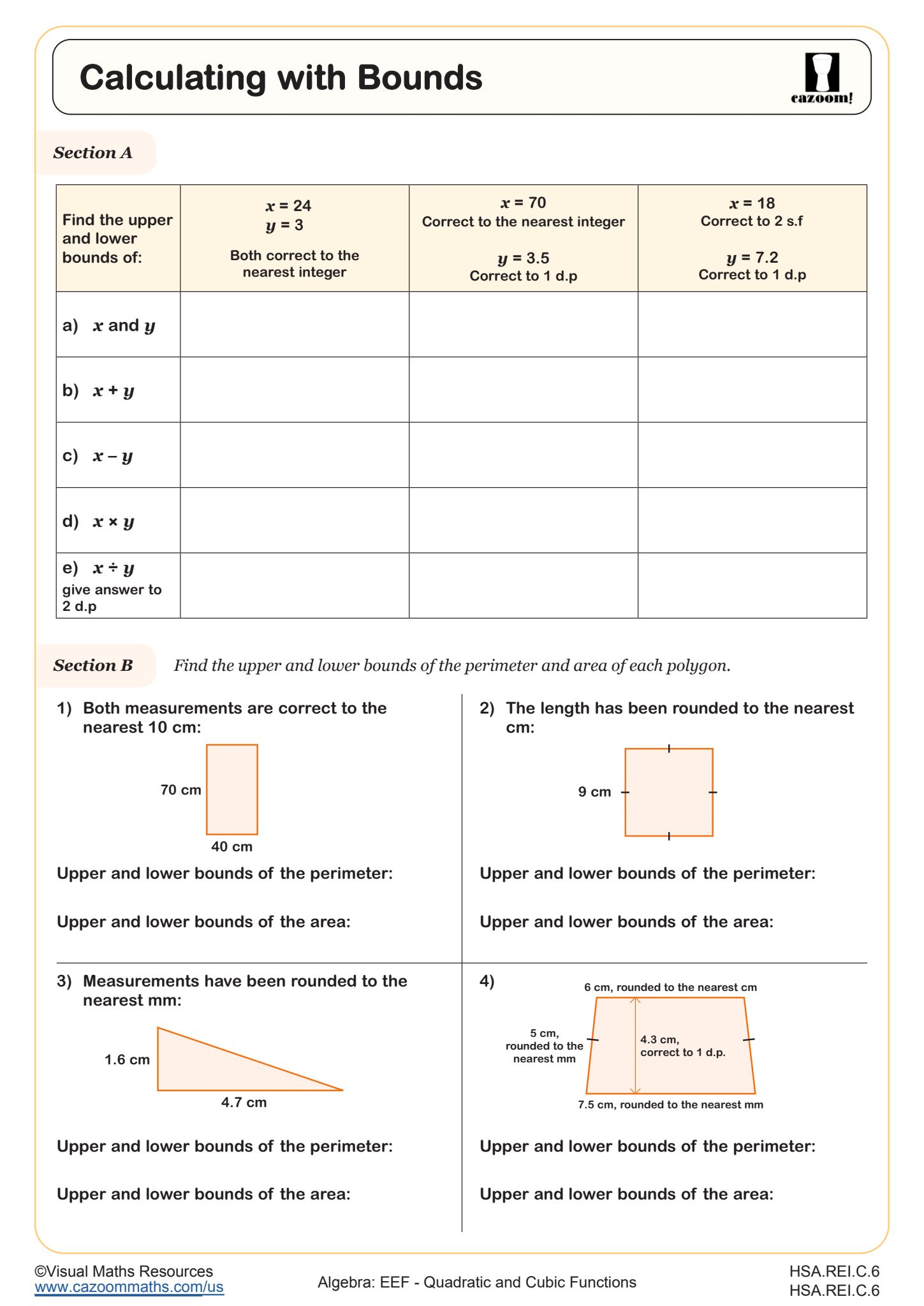
Calculating with Bounds
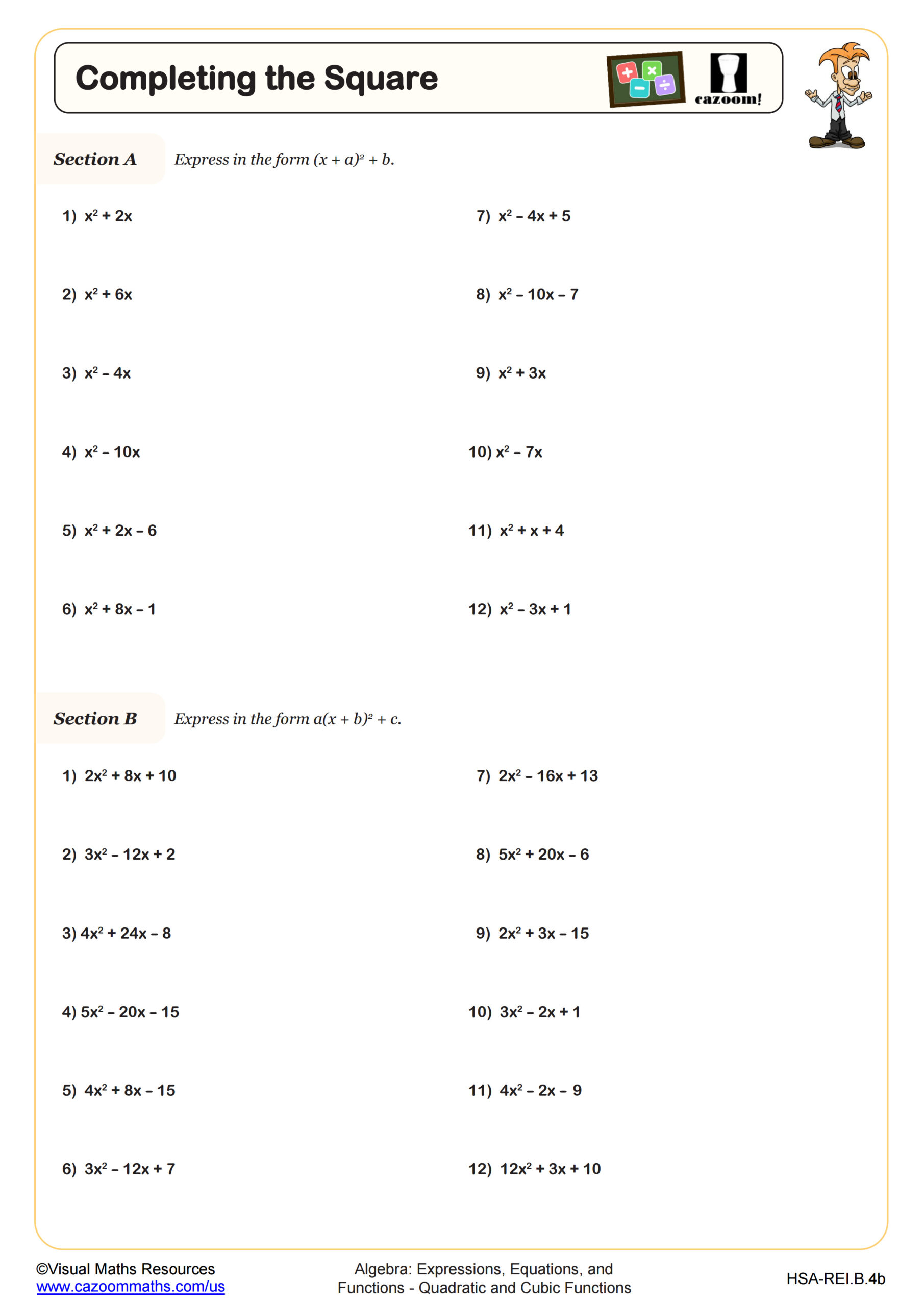
Completing the Square
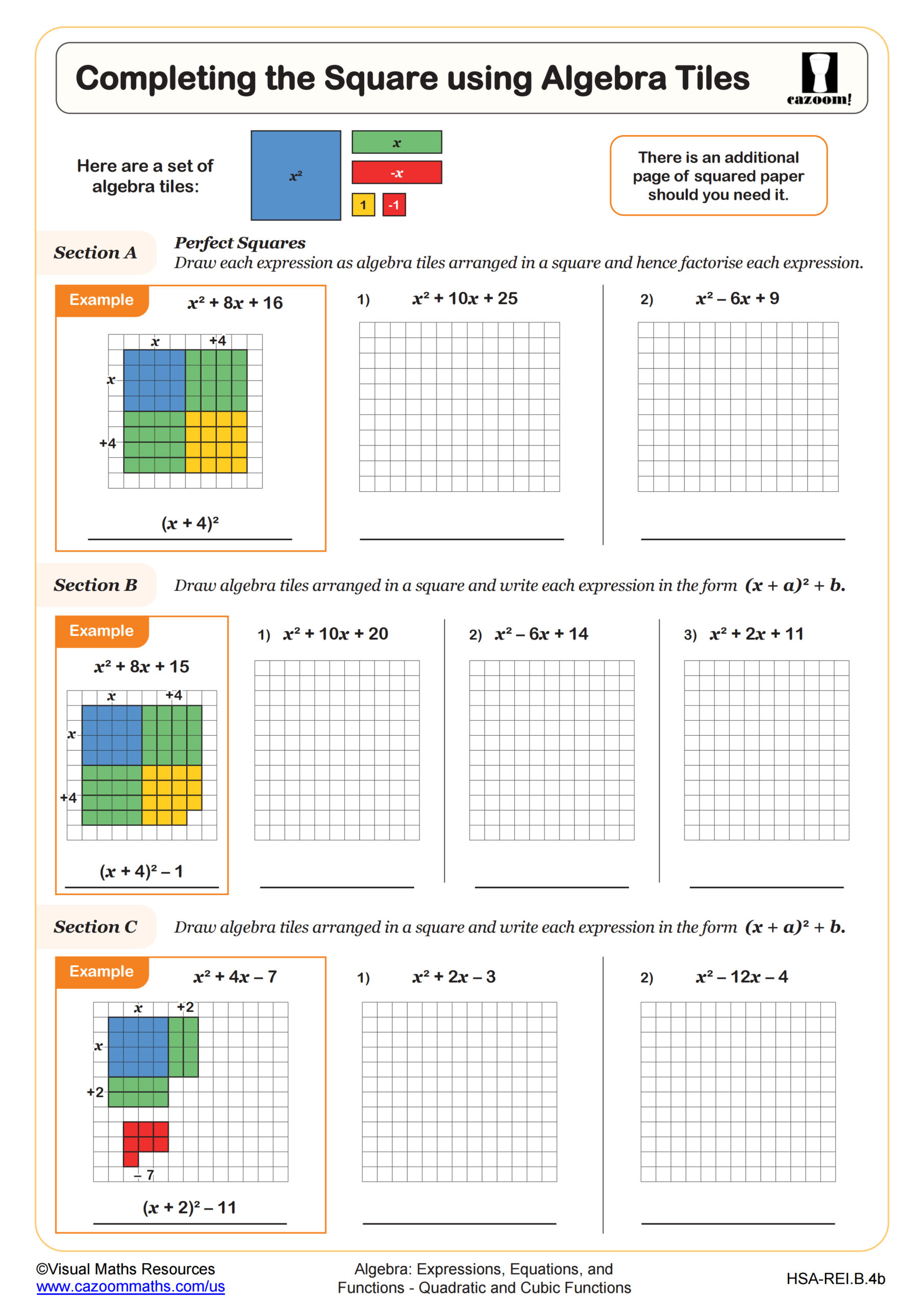
Completing the Square using Algebra Tiles
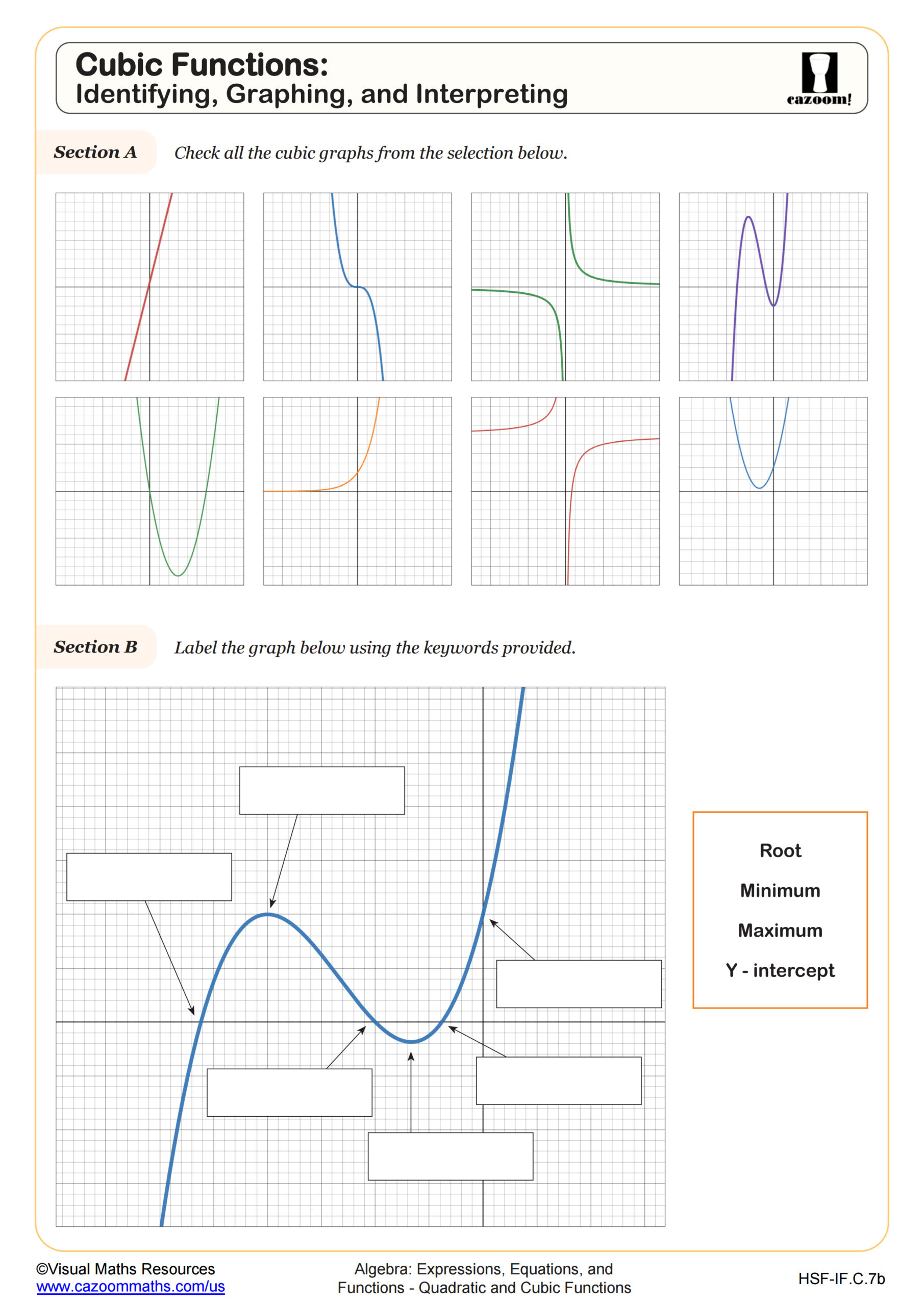
Cubic Functions: Identifying, Graphing, and Interpreting
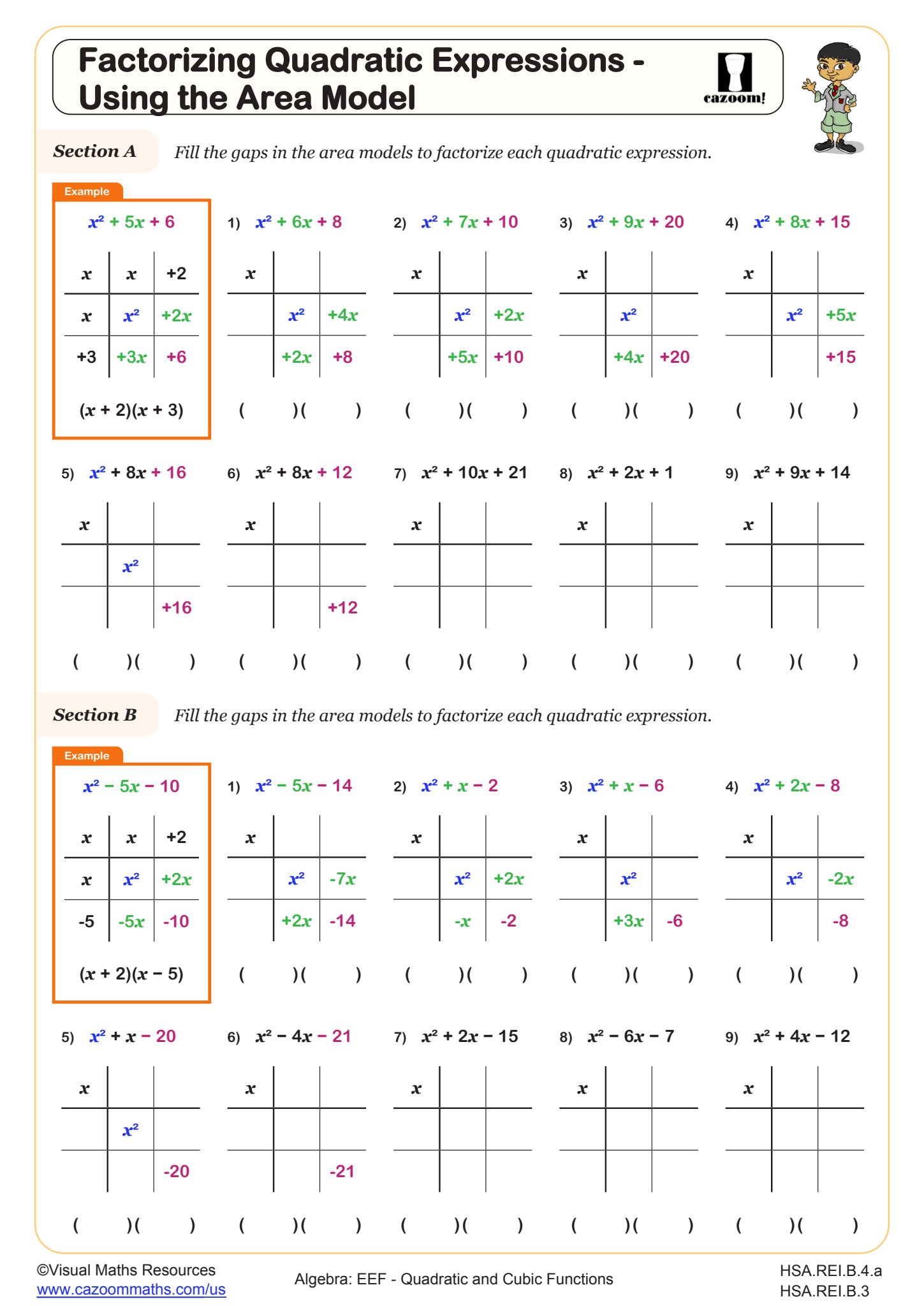
Factorising Quadratic Expressions - Using the Area Model
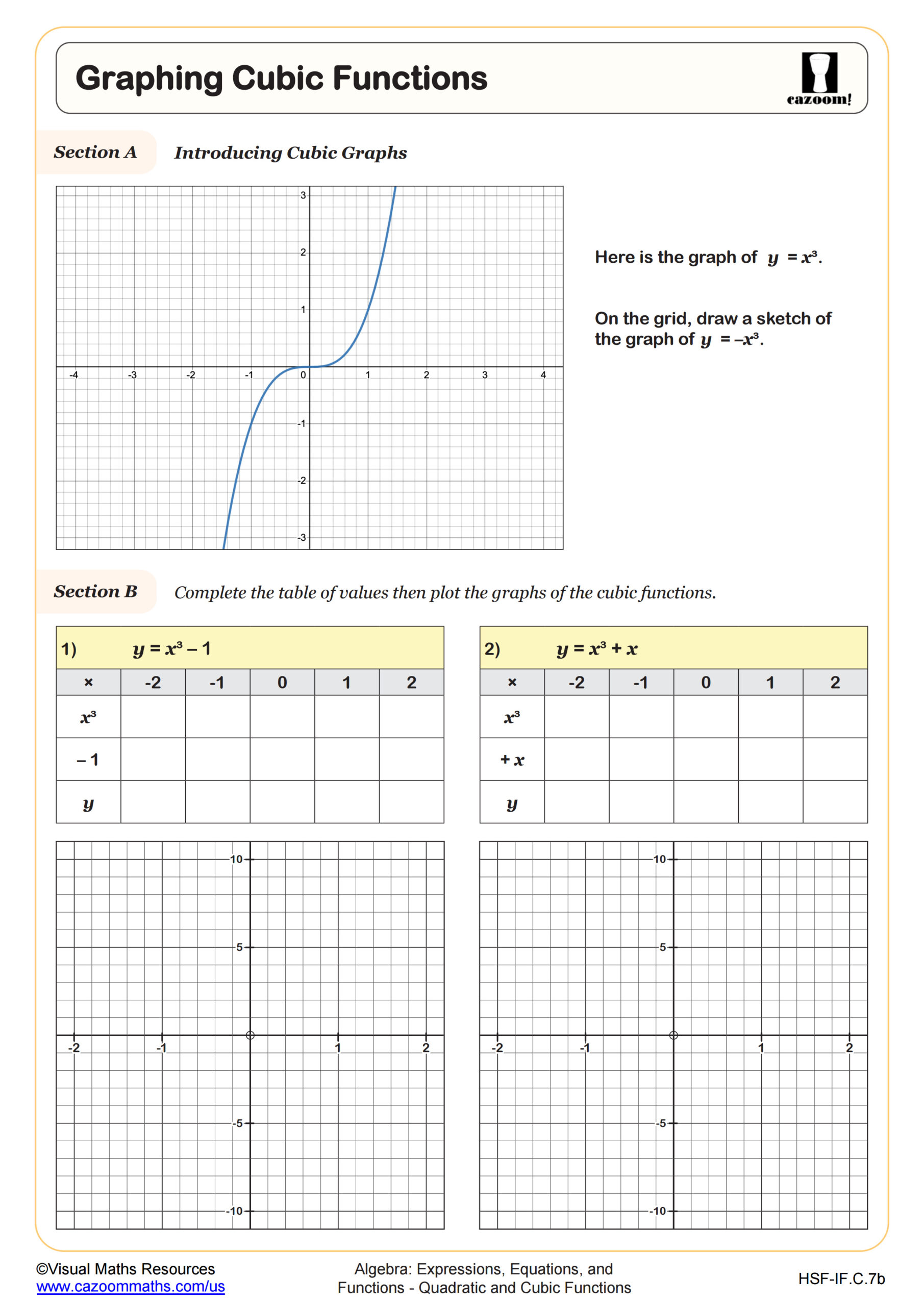
Graphing Cubic Functions
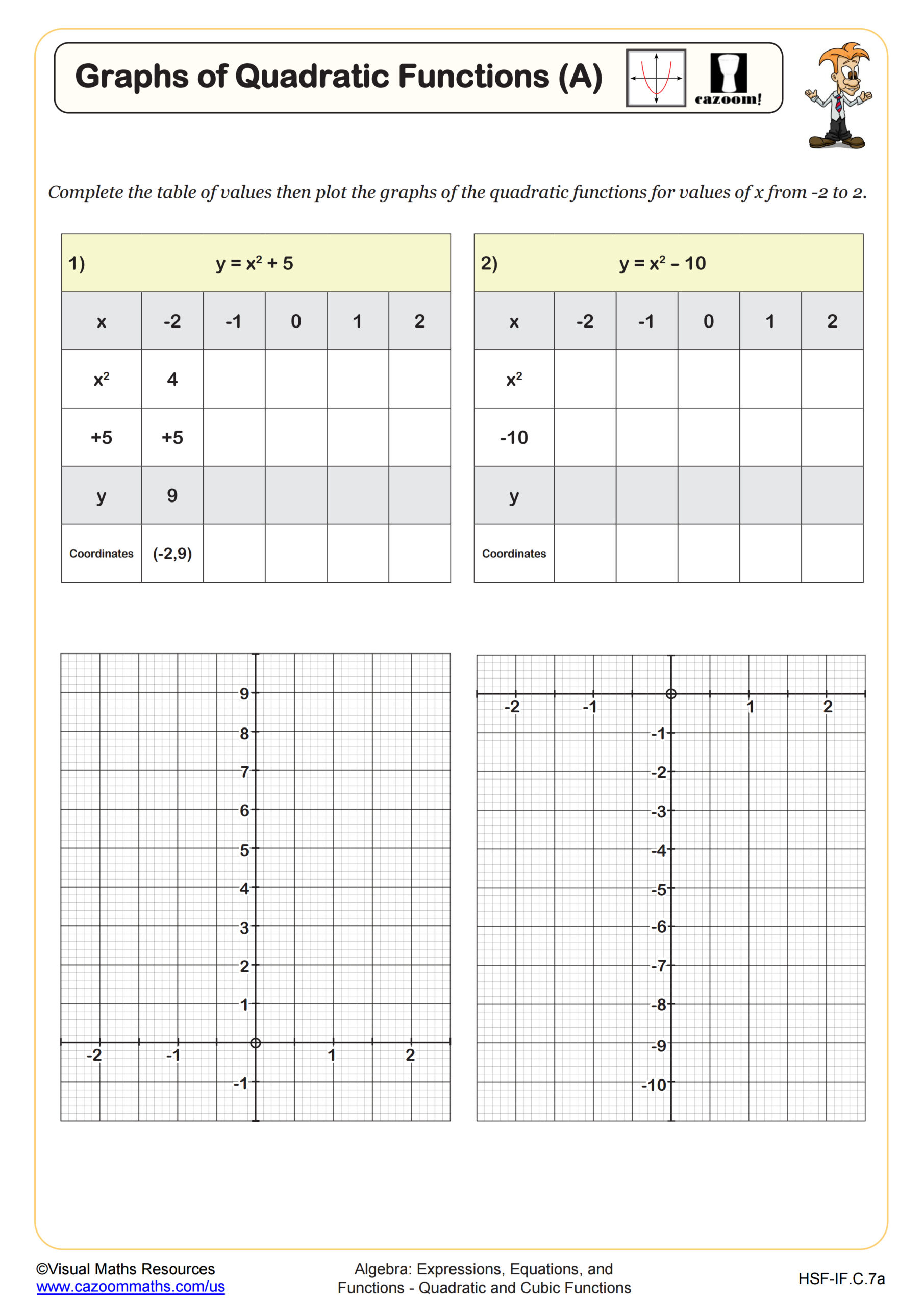
Graphs of Quadratic Functions (A)
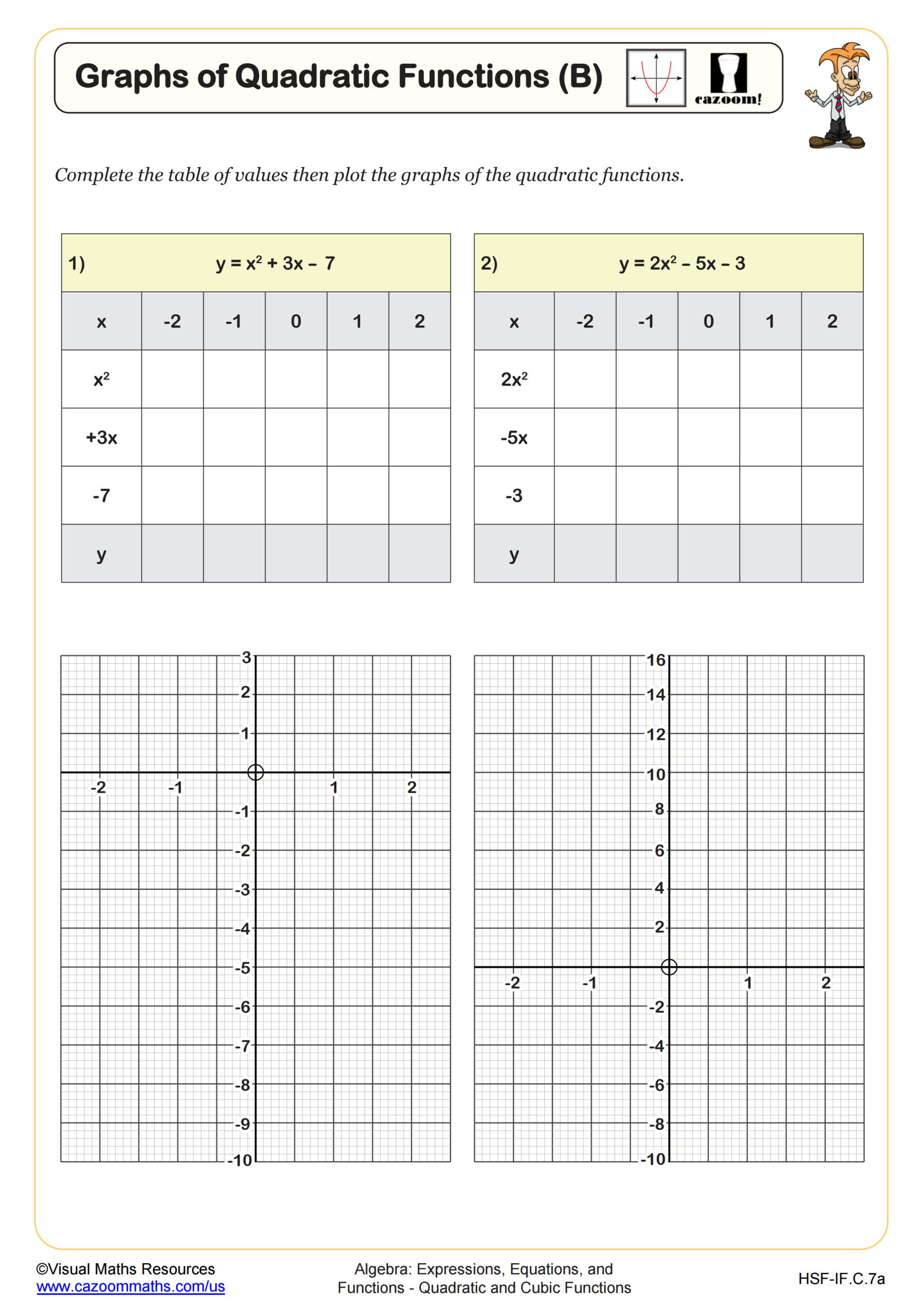
Graphs of Quadratic Functions (B)
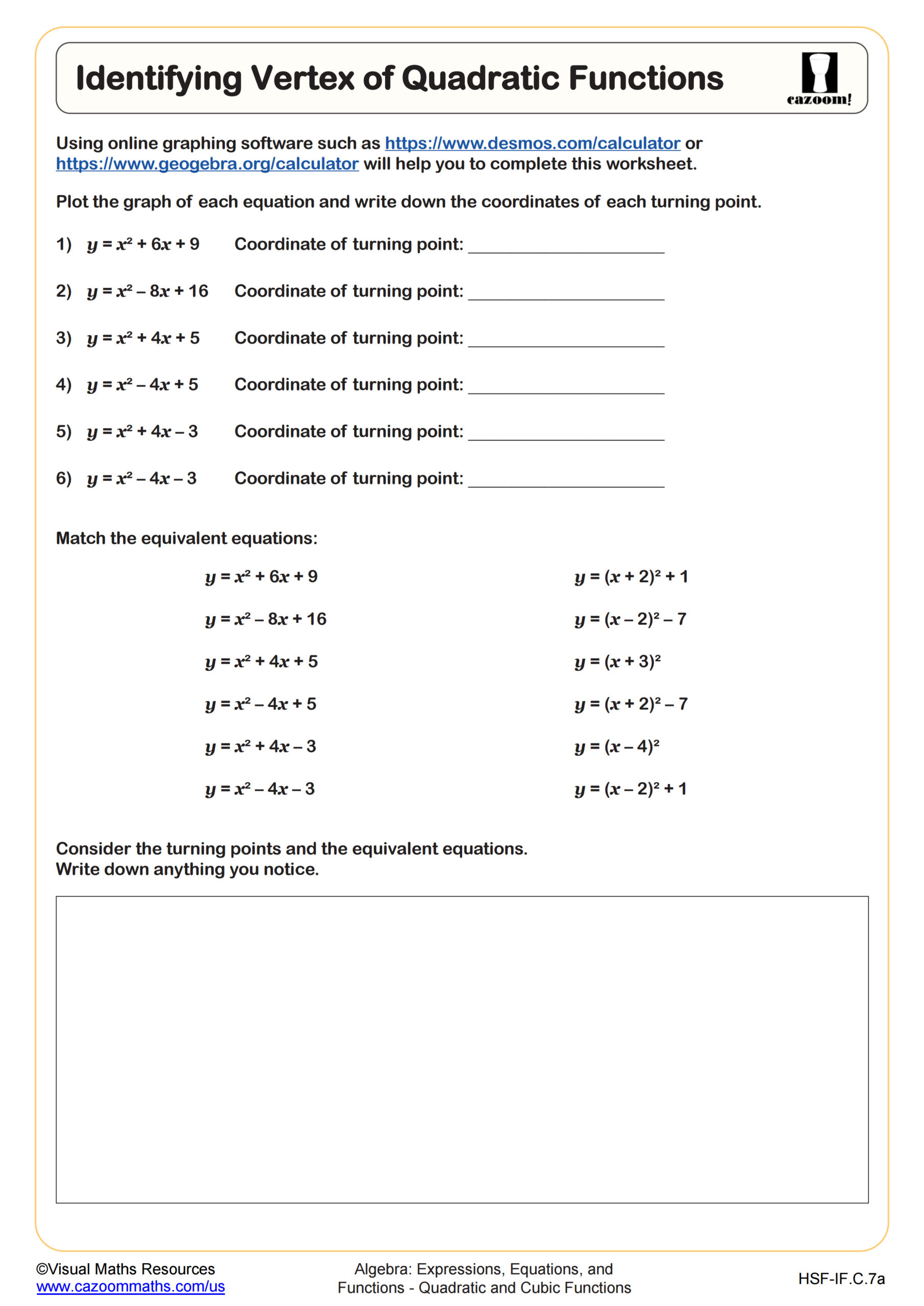
Identifying Vertex of Quadratic Functions
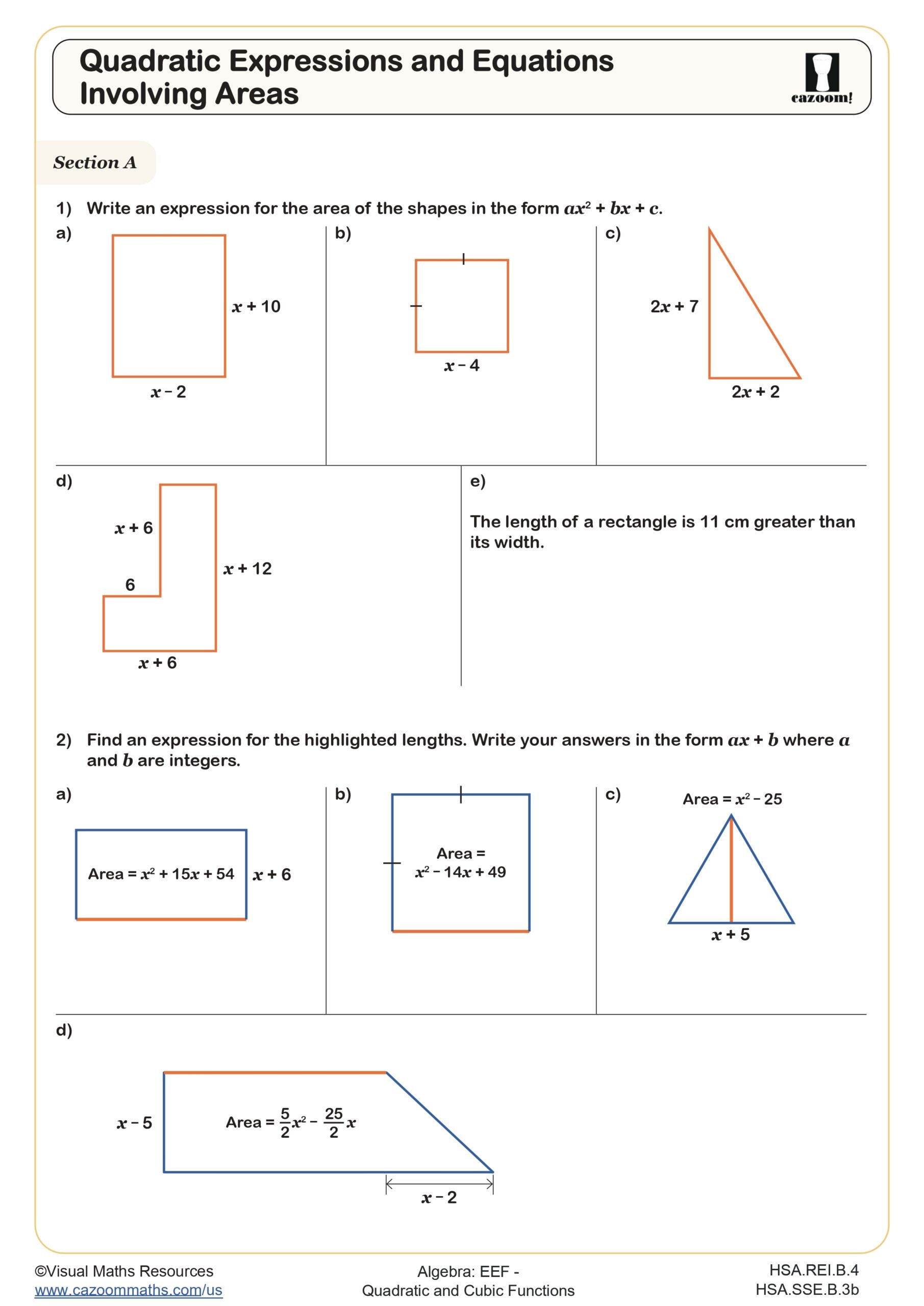
Quadratic Expressions and Equations Involving Areas
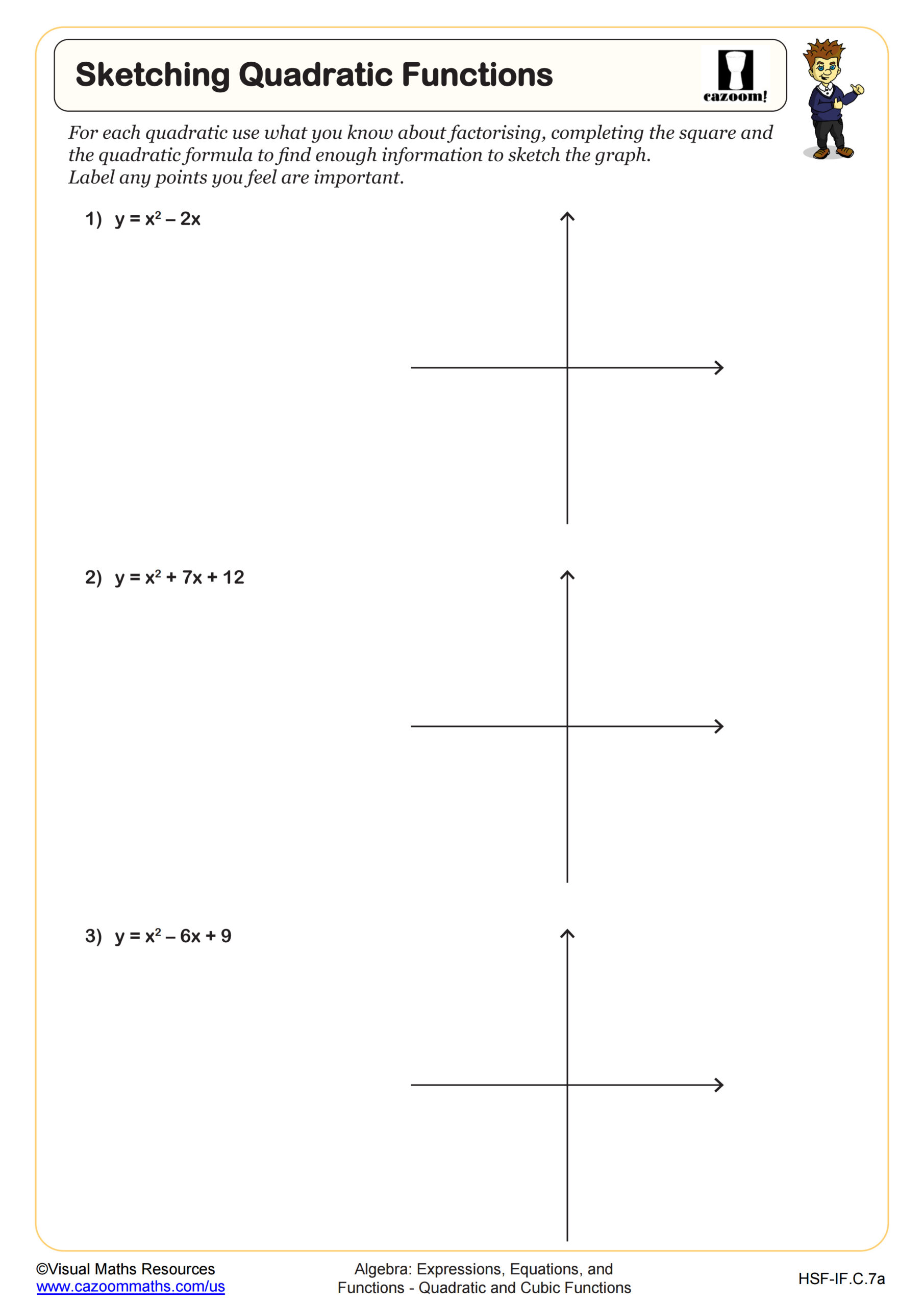
Sketching Quadratic Functions
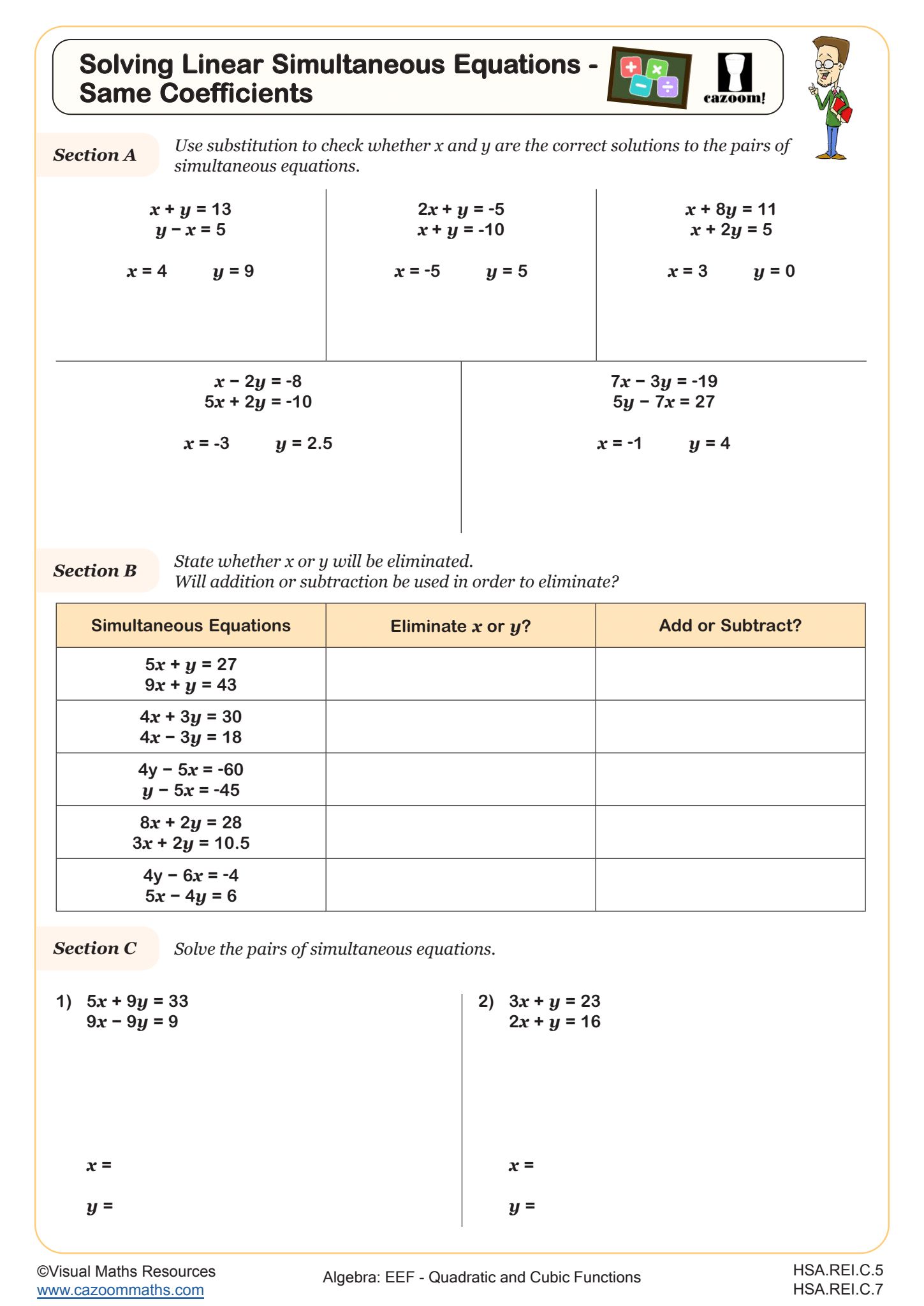
Solving Linear Simultaneous Equations - Same Coefficients
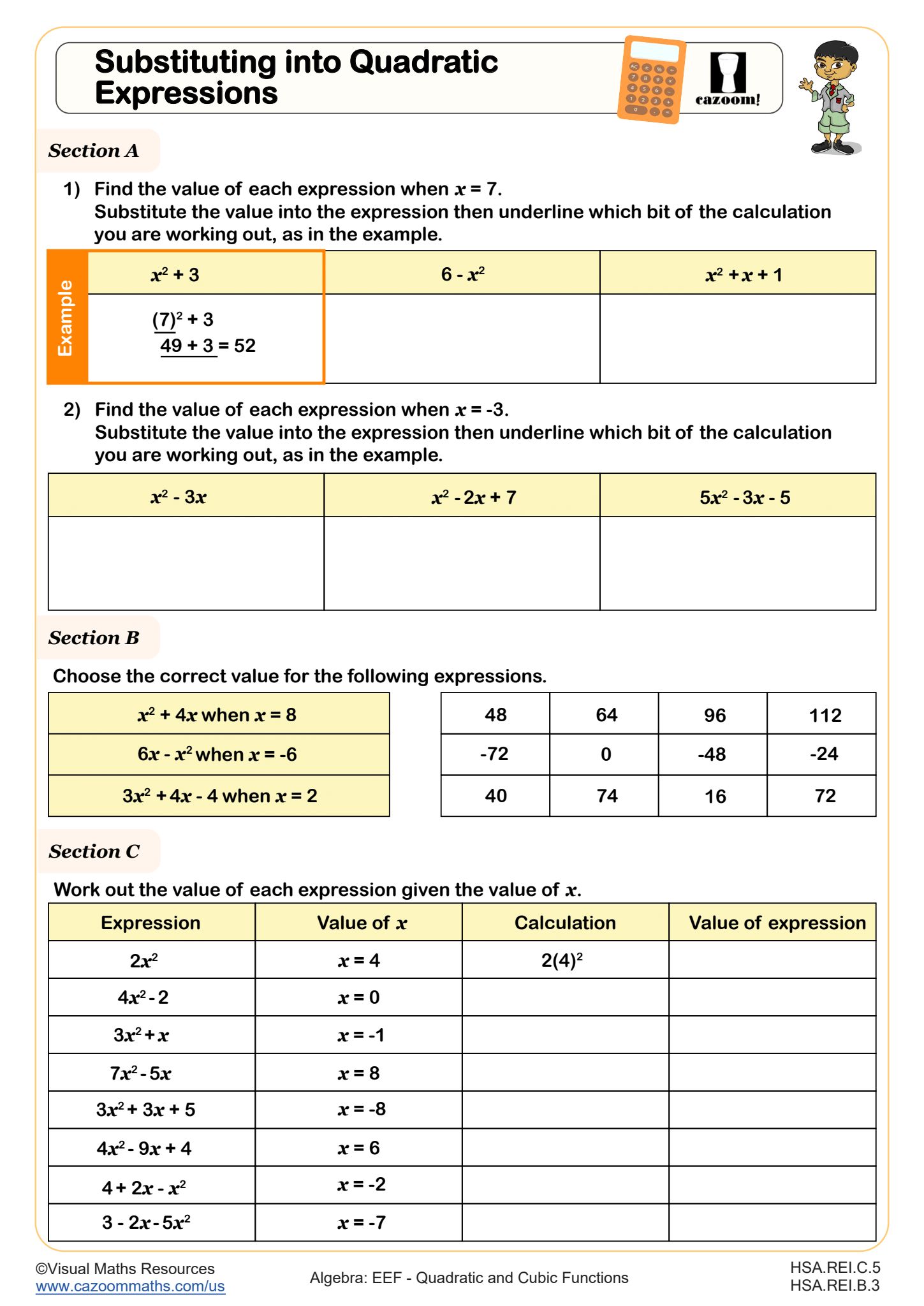
Substituting into Quadratic Expressions
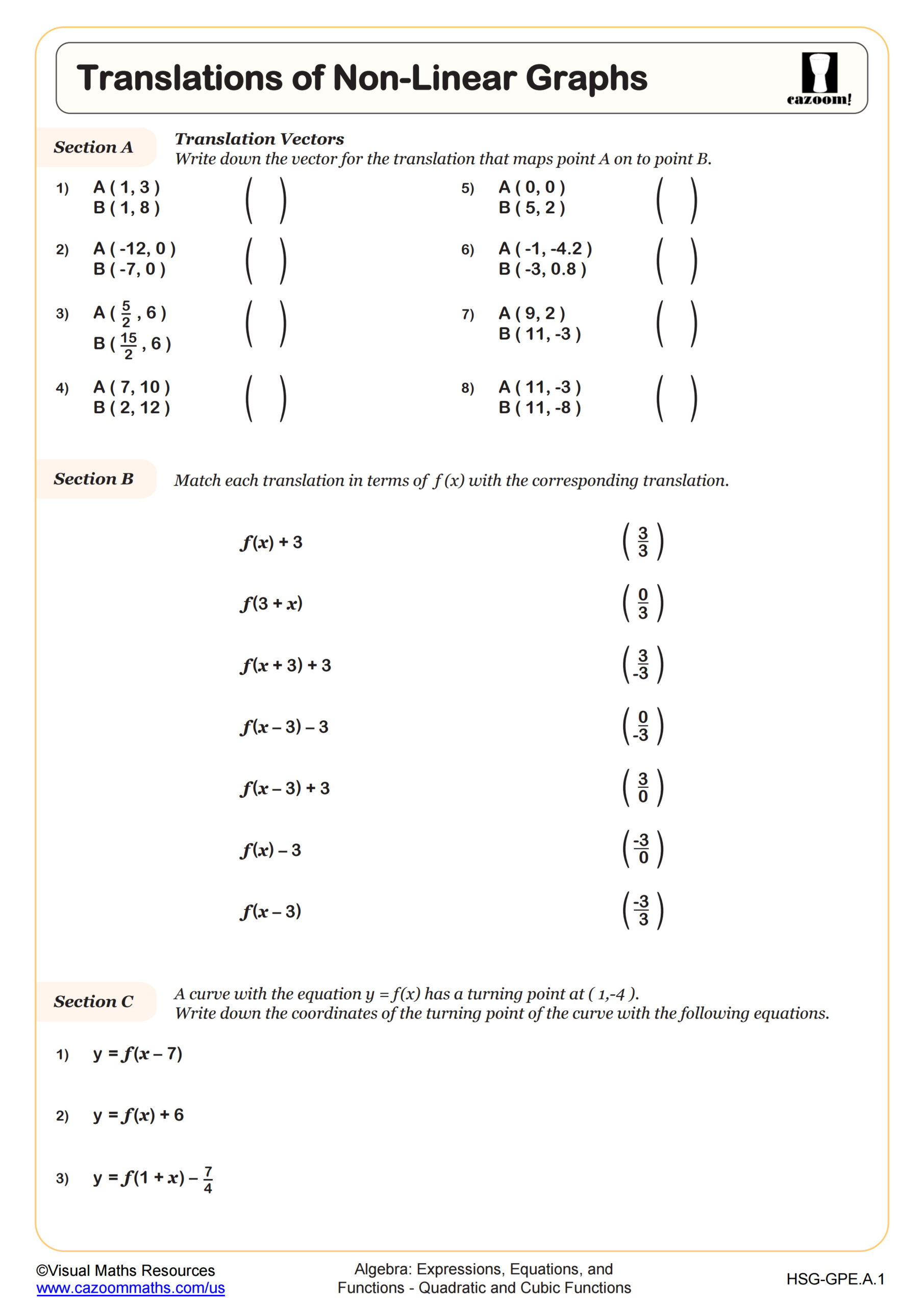
Translations of Non-Linear Graphs
All worksheets are created by the team of experienced teachers at Cazoom Math.
Why These Printable PDFs High School Quadratic and Cubic Functions Activities Make Exam Prep Easier
These worksheets directly connect to the linear functions that students mastered in earlier grades. They practice recognizing how parabolas and cubic curves behave differently from straight lines. Students discover patterns between algebraic forms and their corresponding graphs. This builds intuition about polynomial behavior before encountering derivatives.
Regular practice with these functions prepares students for the topics of trigonometry and exponential functions ahead. They develop flexibility in choosing factoring, completing the square, or graphing approaches. Working through varied problems trains students to match techniques to specific situations. This strategic thinking becomes essential for rational functions and logarithms.
What’s Included? Calculating with Bounds, Cubic Functions, Factorising Quadratic Expressions and More
These worksheets take students from numeric substitution to graphical representation and finally to abstract algebraic manipulation. Learners begin by substituting values into quadratic expressions before advancing to completing the square and sketching parabolas. Each worksheet includes complete, worked examples demonstrating each stage of reasoning. Covering factoring, graphing, cubic behavior, and applied quadratic problems, this collection helps students connect algebraic structure to visual patterns and real-world contexts.
Are You Teaching Quadratic and Cubic Functions the Best Way? Try These Cazoom Math Algebra Resources
Teachers appreciate how these worksheets fit directly into lesson planning without modification. The graduated difficulty levels let instructors differentiate instruction across student abilities simultaneously. Quick starter problems begin lessons, while extension questions challenge advanced learners. Solution keys reveal complete reasoning pathways, making it straightforward to identify misconceptions.
The structured progression saves grading time through clear solution formats. Teachers effectively deploy these sheets for homework, classwork, and review sessions. A variety of problems prevent memorization of patterns while reinforcing conceptual understanding. Many educators find that students grasp vertex form and factoring methods more quickly when using these materials. The worksheets adapt easily to both individual practice and collaborative group work.
From Sports to Weather Predictions: Where These Skills Show Up in Real Life
Students encounter numerous real-world applications of quadratic and cubic functions that extend beyond their schoolwork. The equations help engineers determine how loads distribute throughout structures. The supply and demand curves in economics help economists determine market equilibrium points. Game developers utilize polynomial functions to create realistic motion physics in their games.
•Calculating projectile paths in sports
•Designing suspension bridge tensions
•Modeling bacteria growth rates
•Creating animation movement paths