Edexcel iGCSE Algebra Revision Worksheets
Browse our iGCSE revision worksheets for the Algebra section of Edexcel International GCSE Mathematics (4MA1). All worksheets include full answers and worked solutions.
2.2Foundation & Higher
Use index notation for positive and negative integer powers (including zero). Use index laws in algebra for multiplication, division and powers of powers
2.3Foundation & Higher
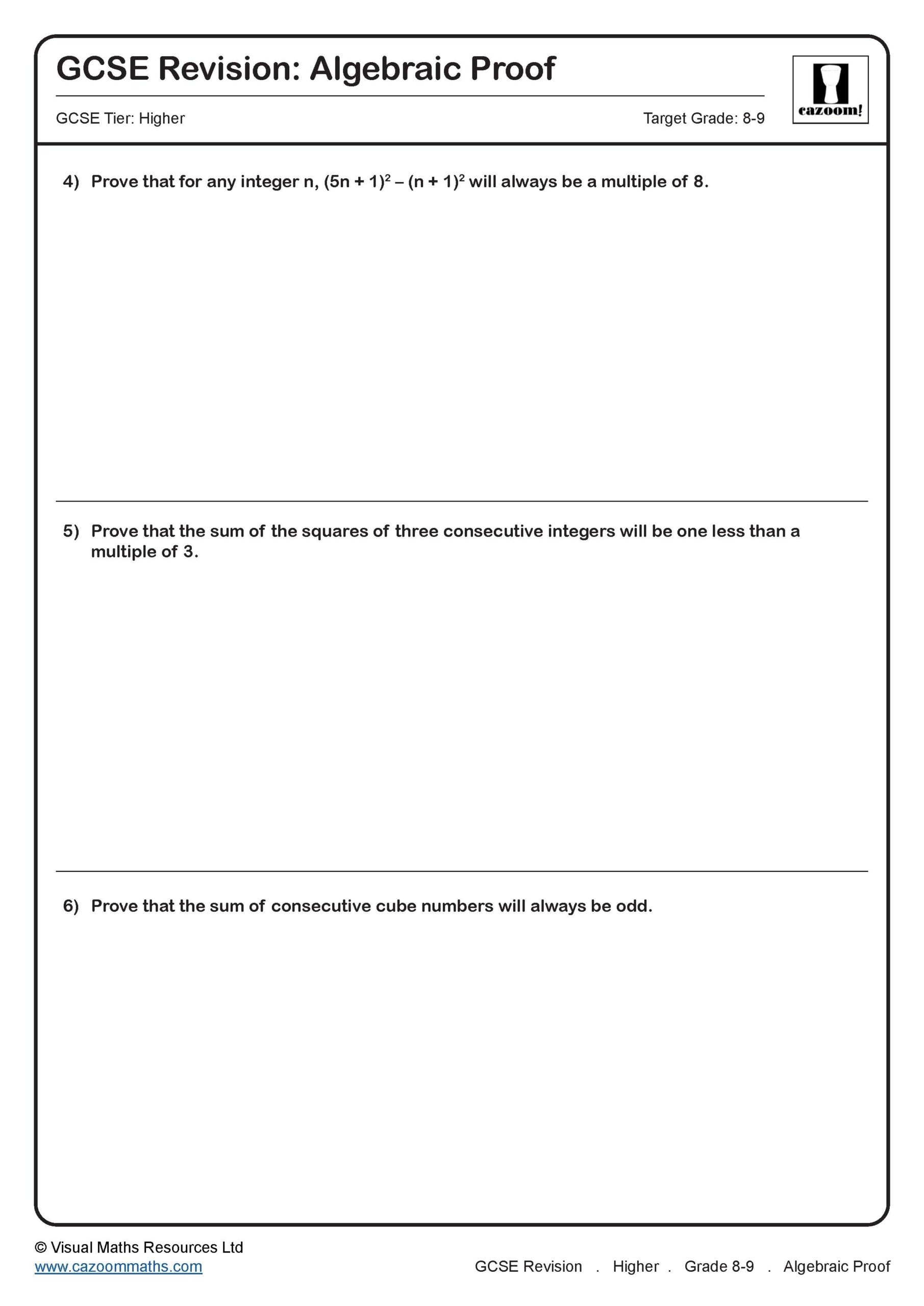
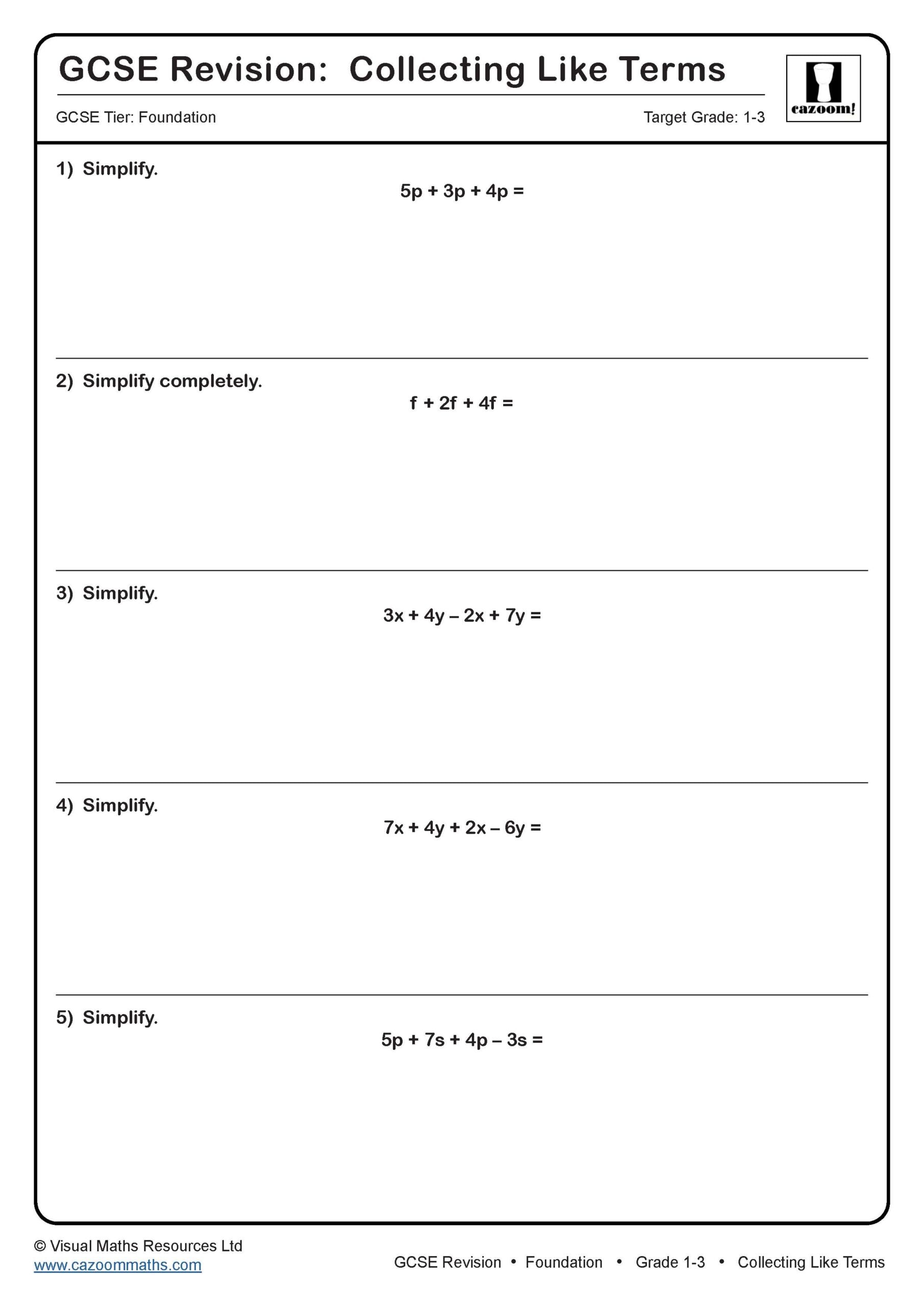
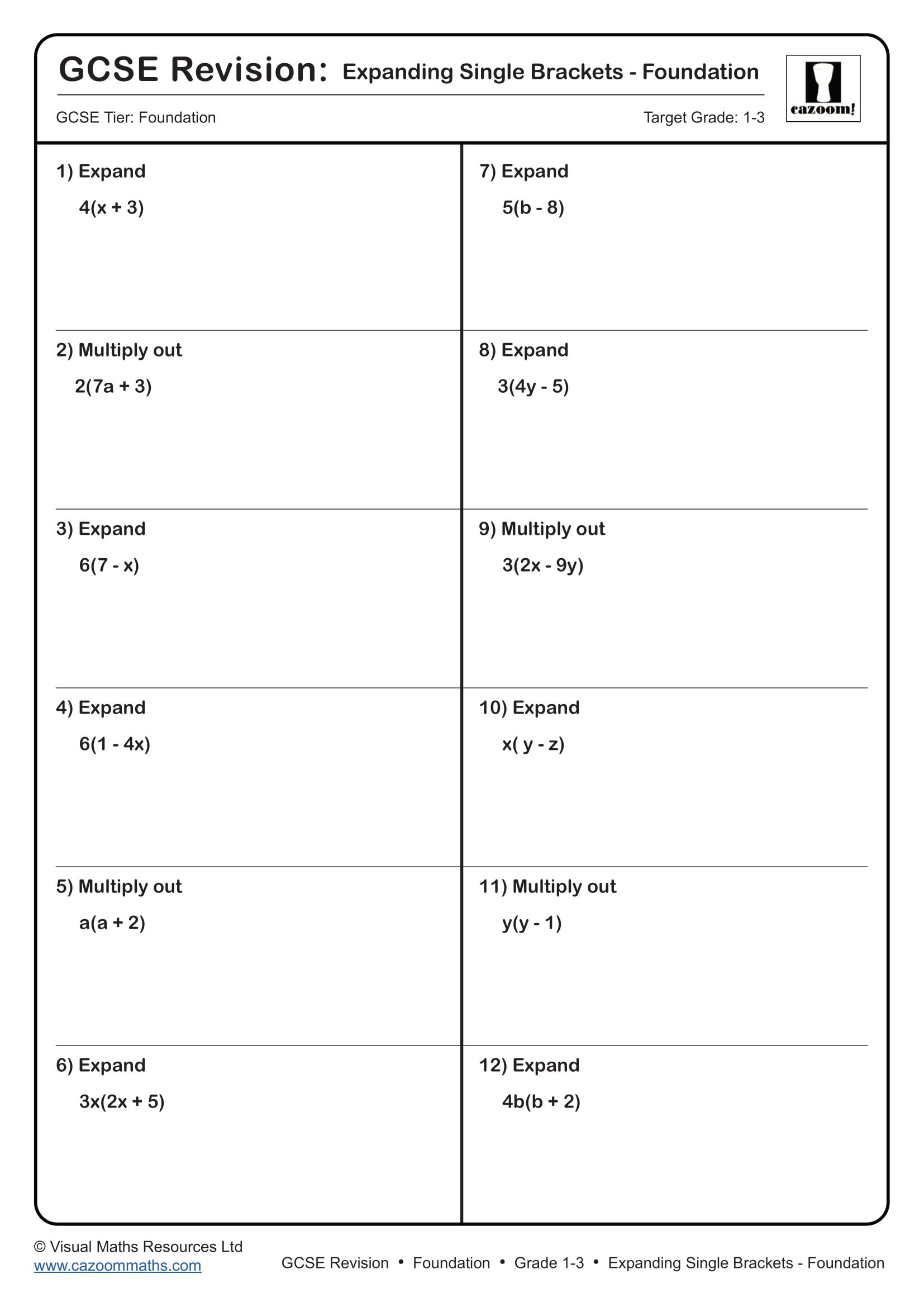
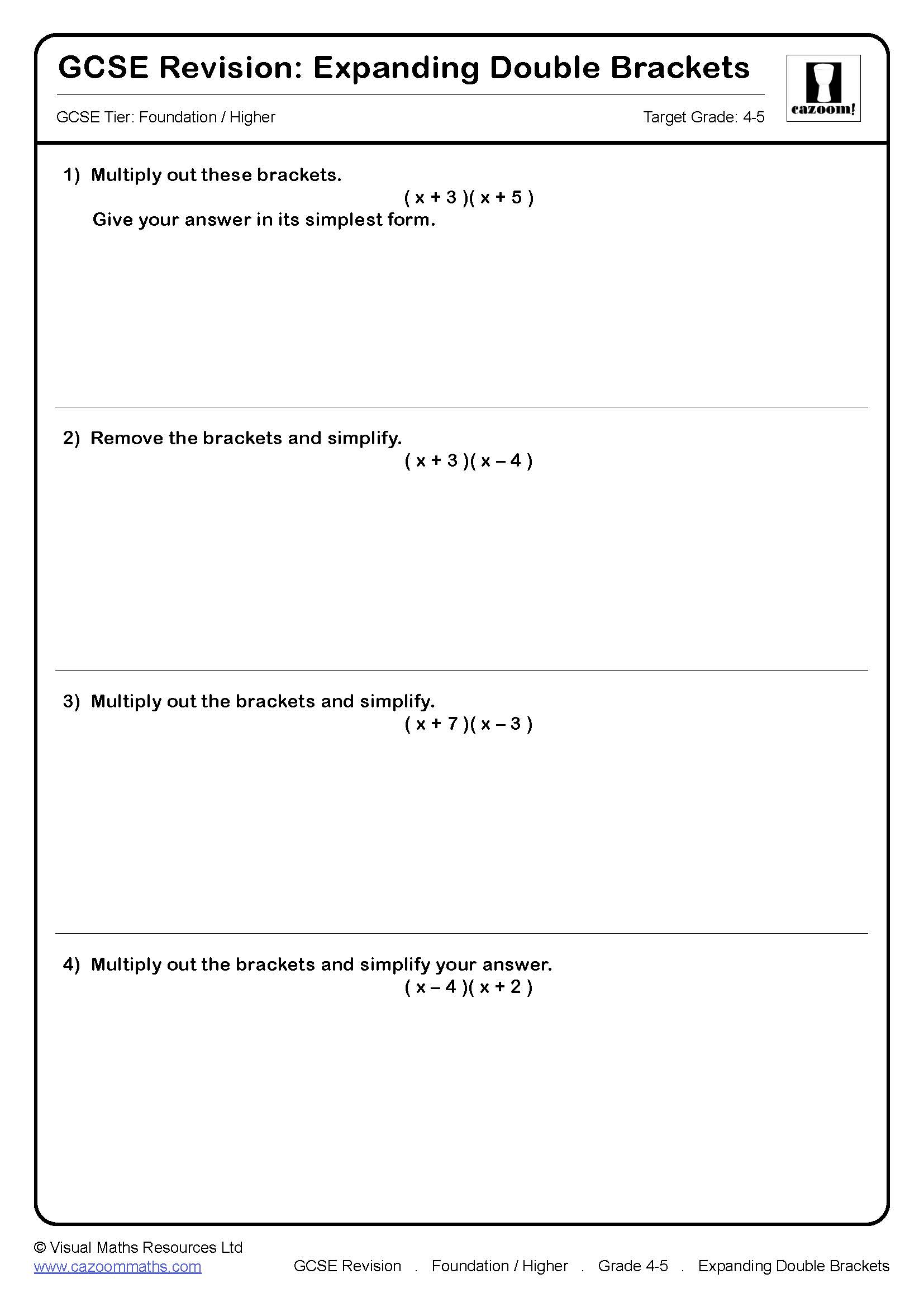
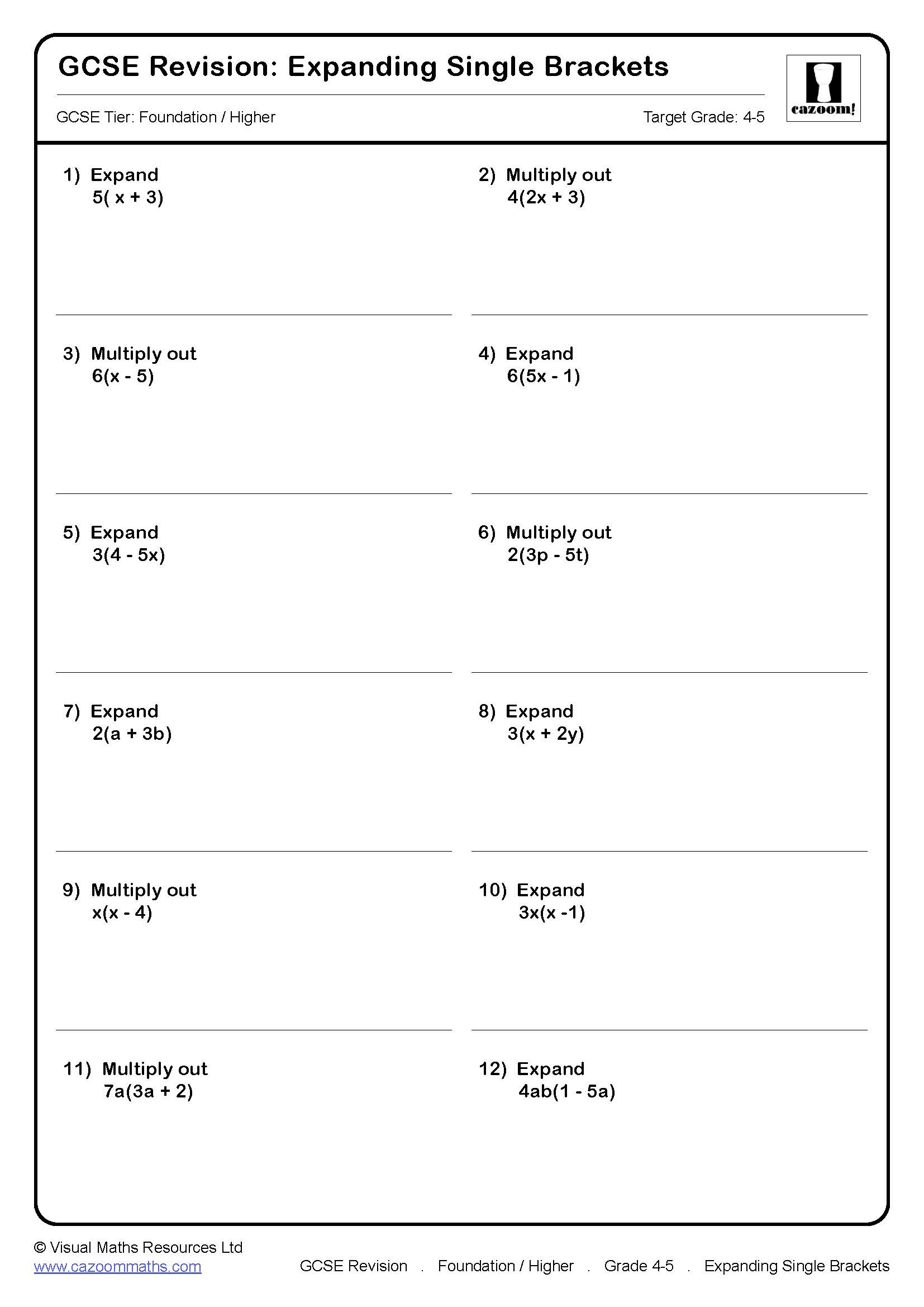
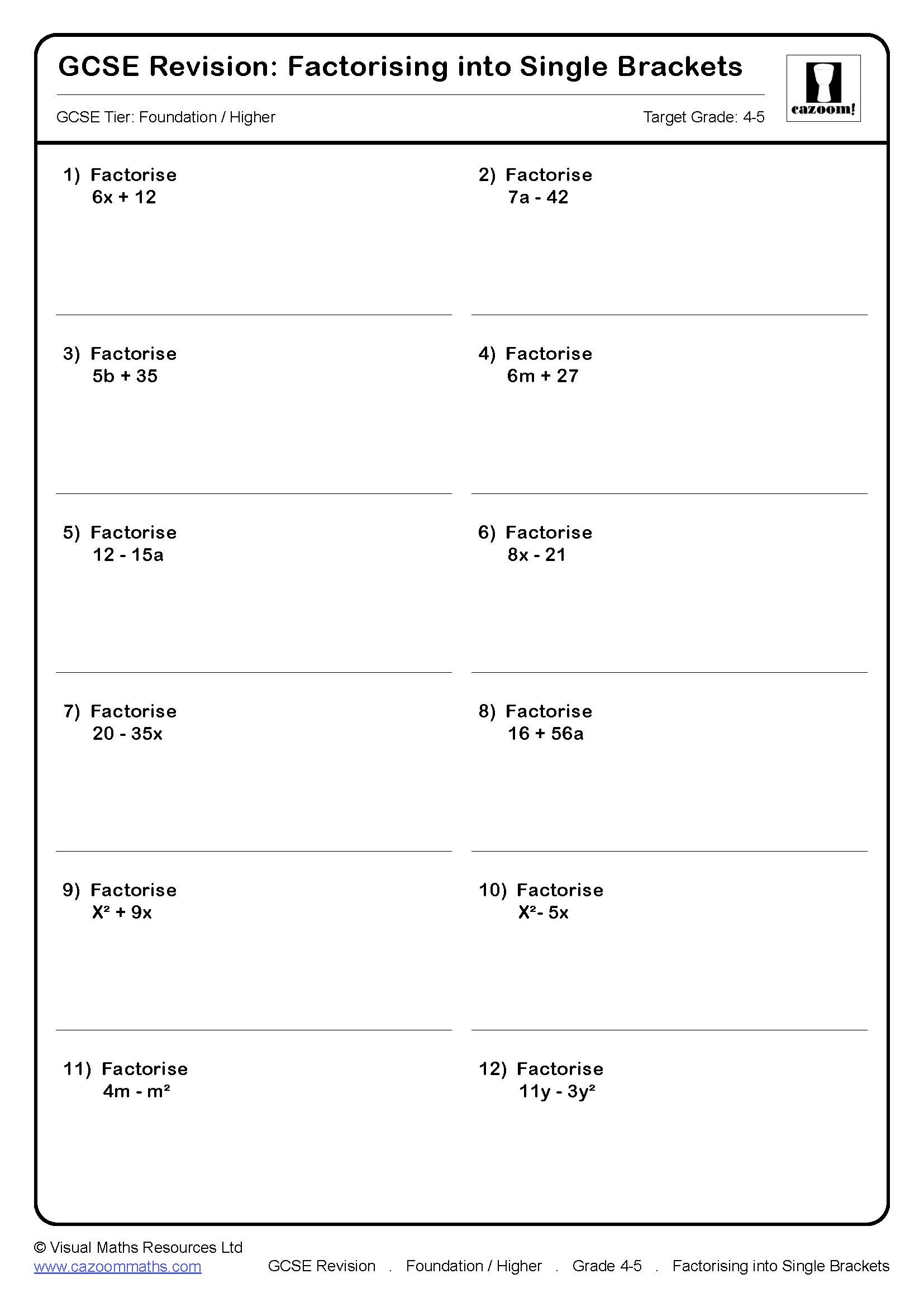
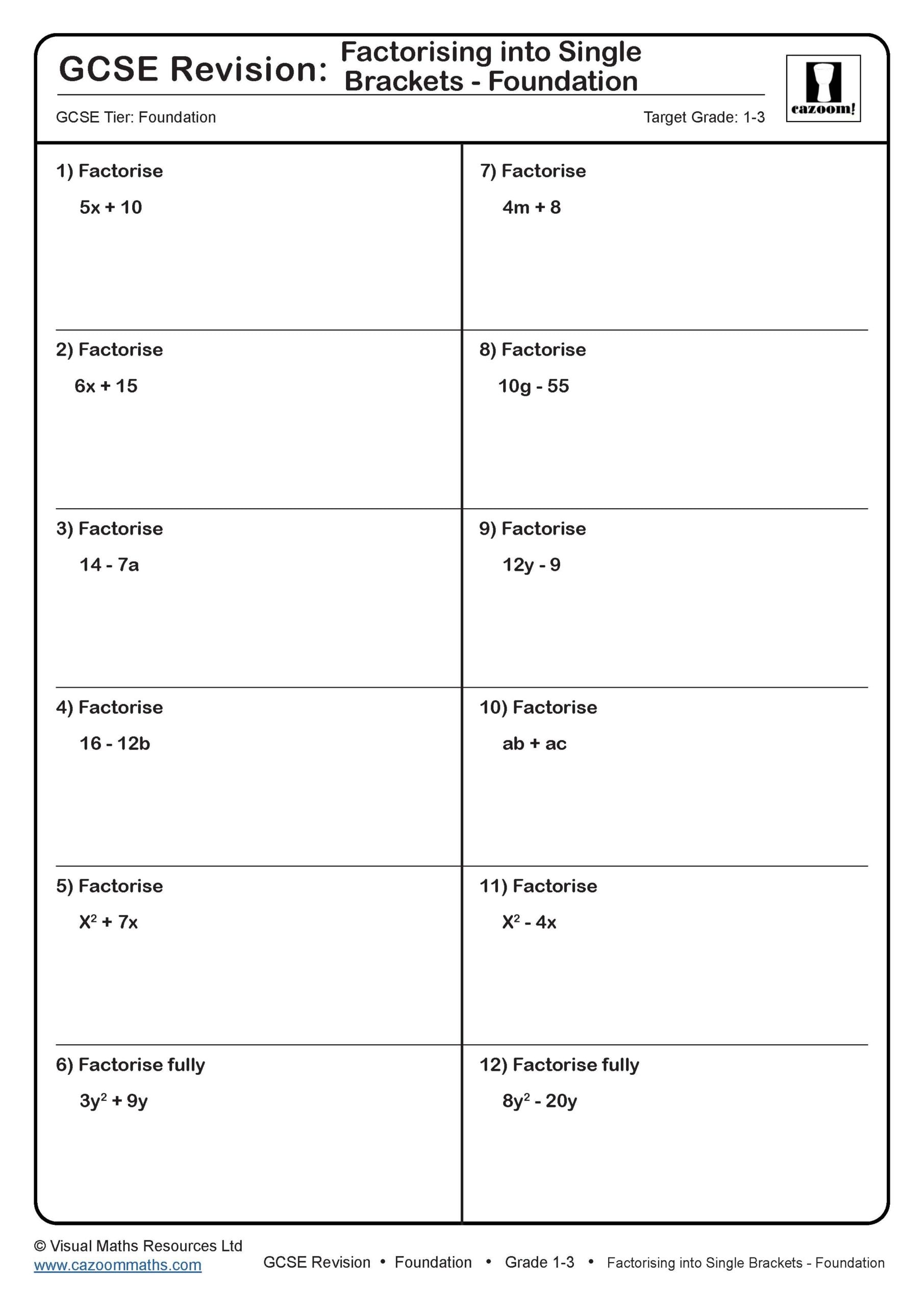
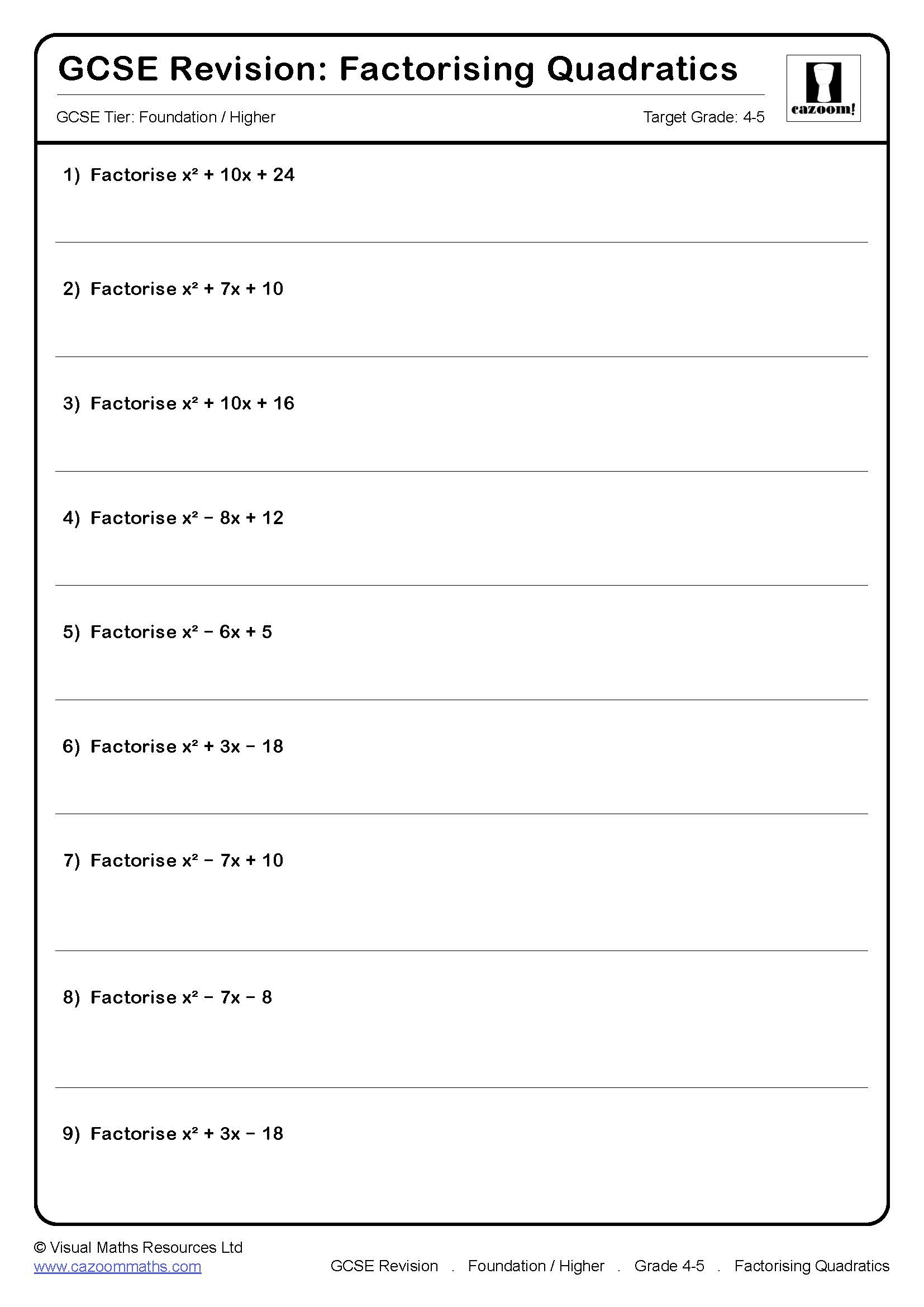
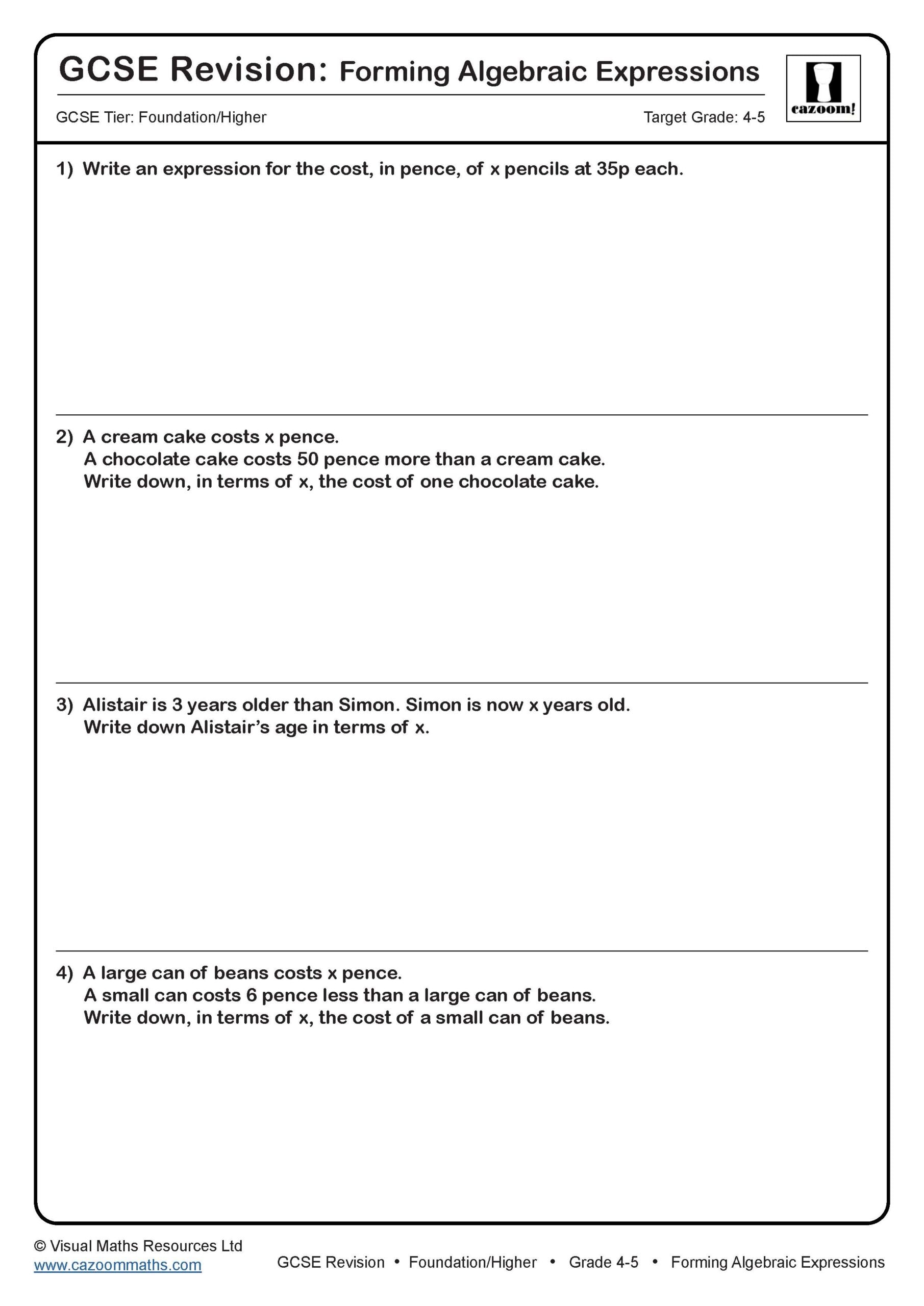
Manipulate algebraic expressions by collecting like terms, by multiplying a single term over a bracket, and by taking out common factors. Expand product of two linear expressions. Factorise quadratic expressions including the difference of two squares. Simplify rational expressions
2.4Higher
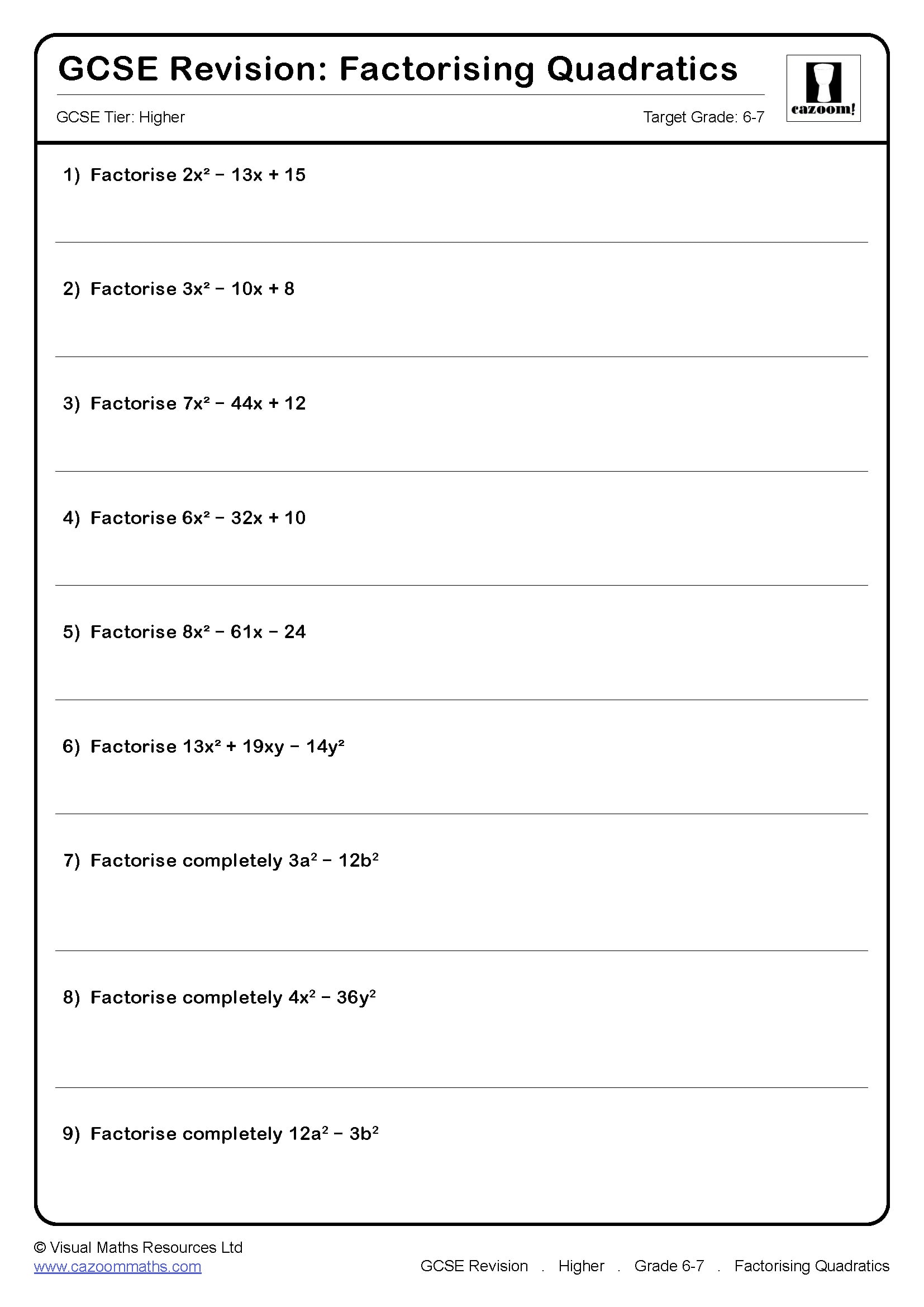
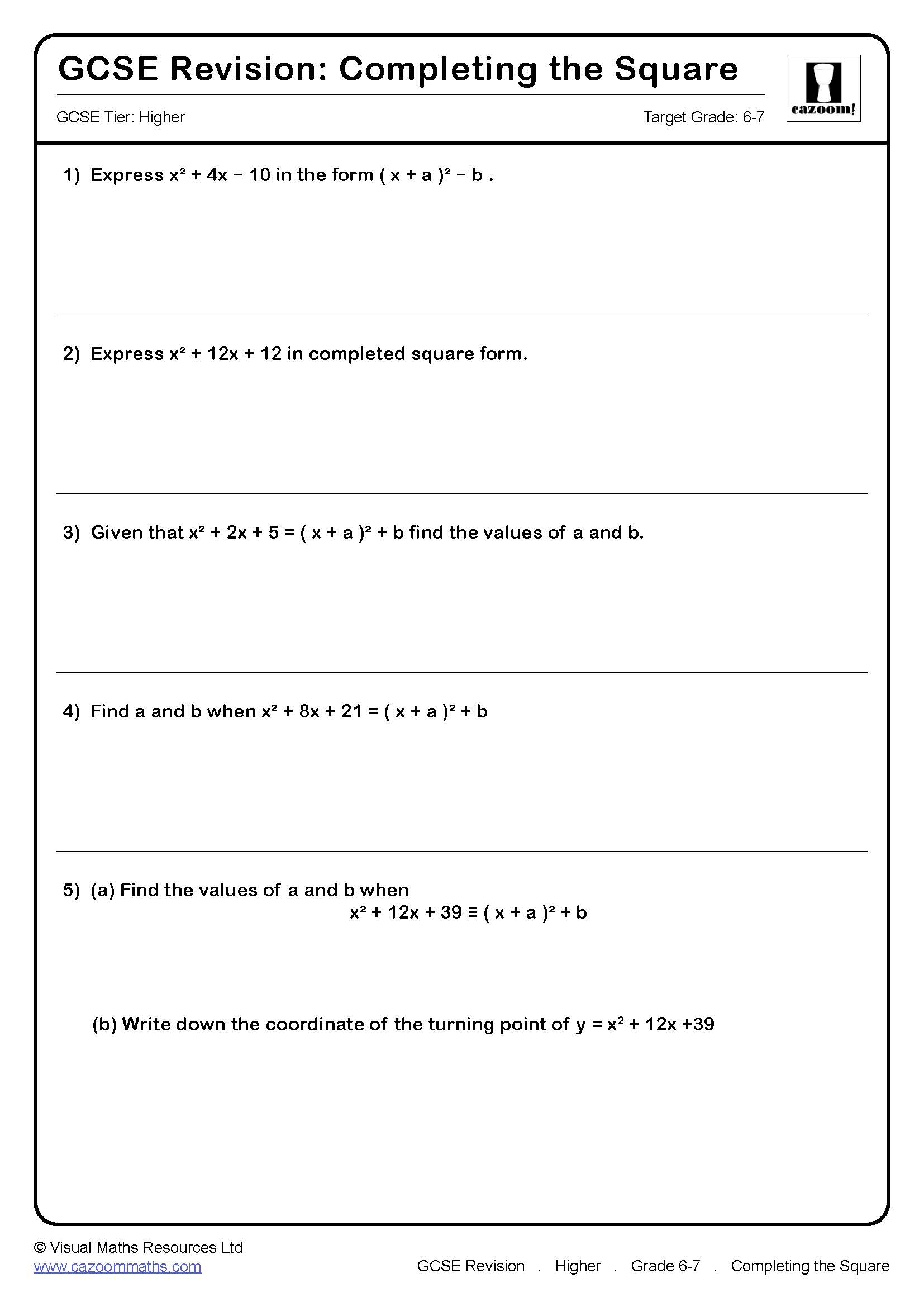
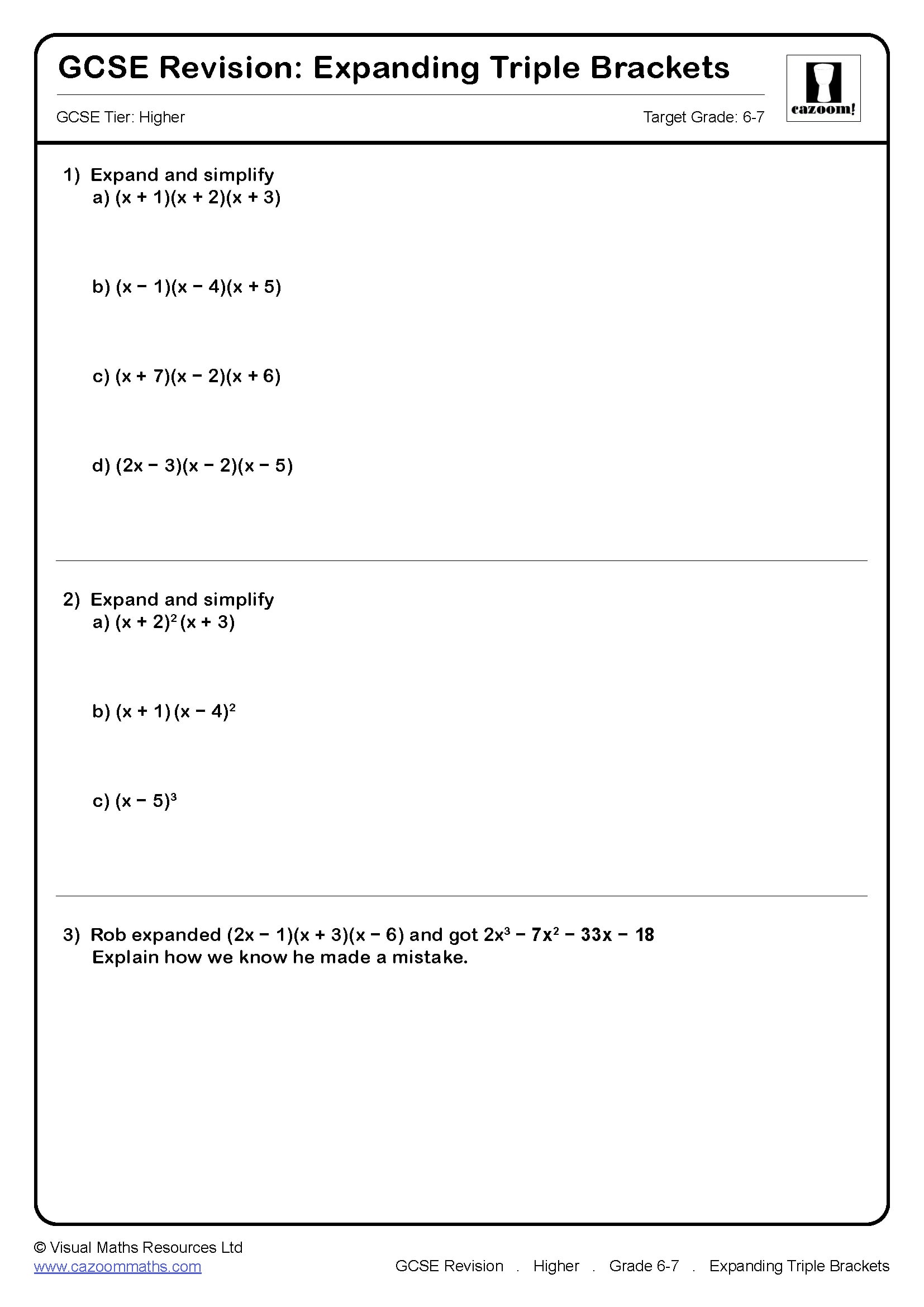
Expand products of more than two binomials. Factorise quadratics of the form ax² + bx + c. Complete the square for a quadratic expression. Simplify algebraic fractions by factorising and cancelling
2.5Foundation & Higher
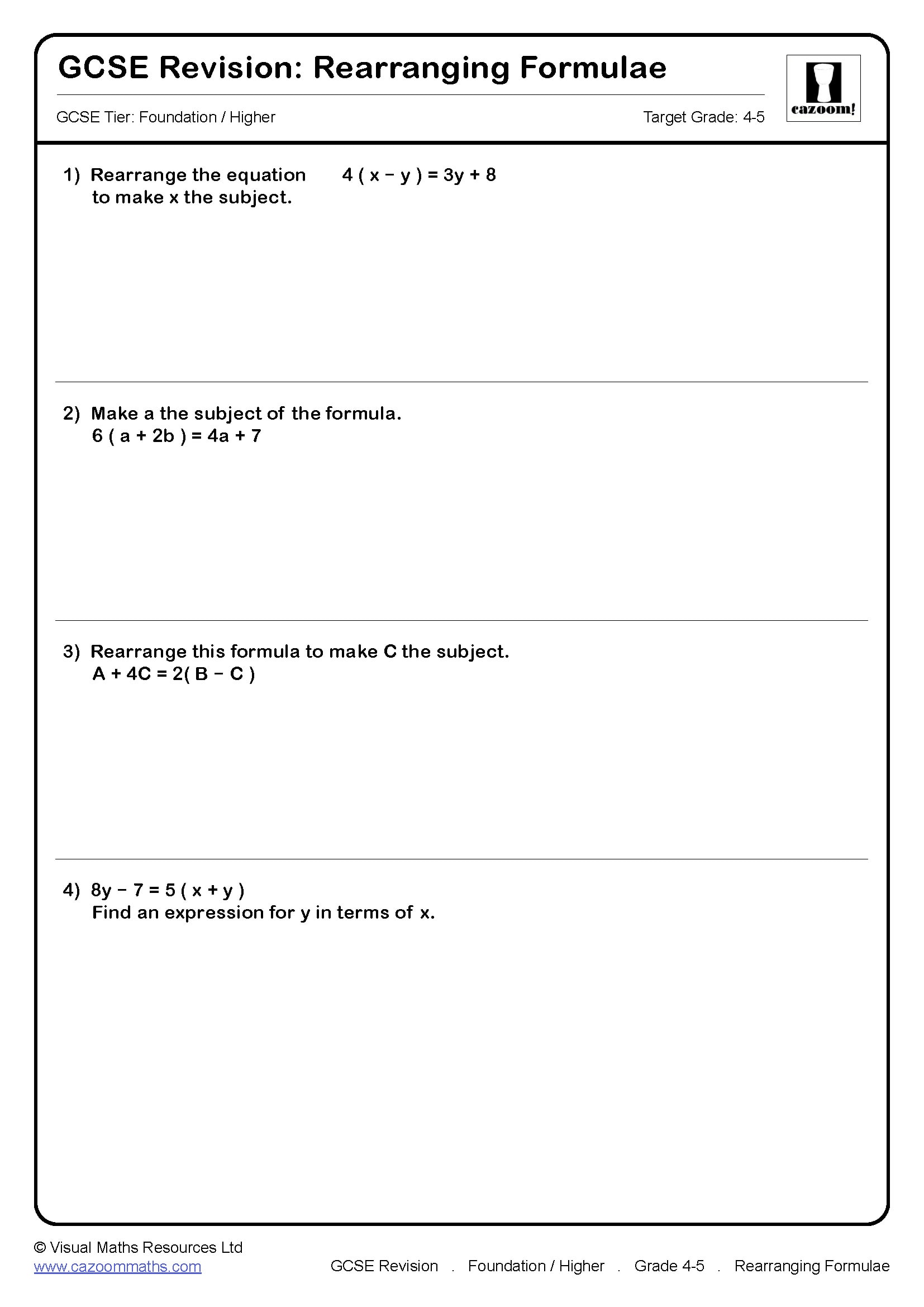
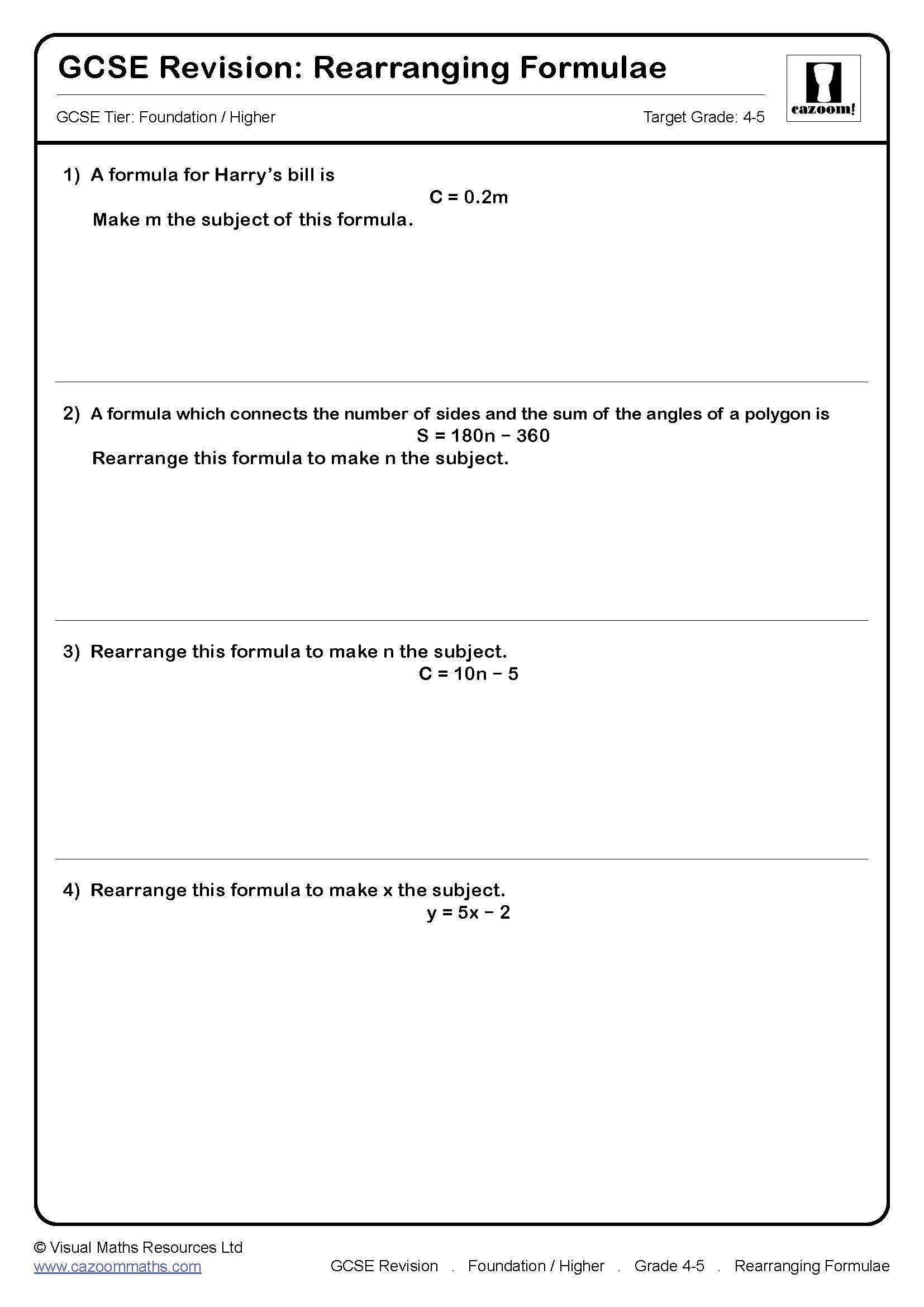
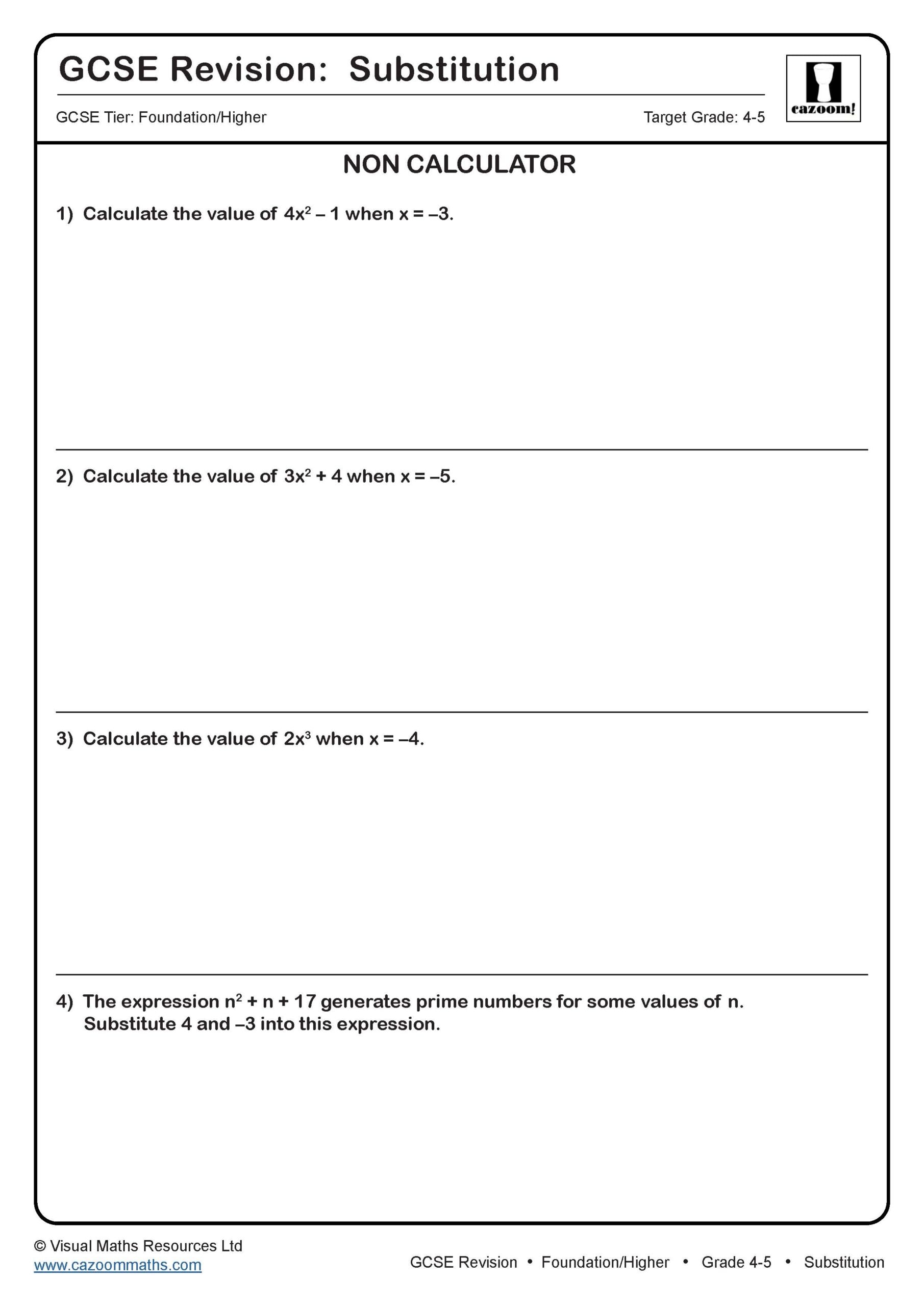
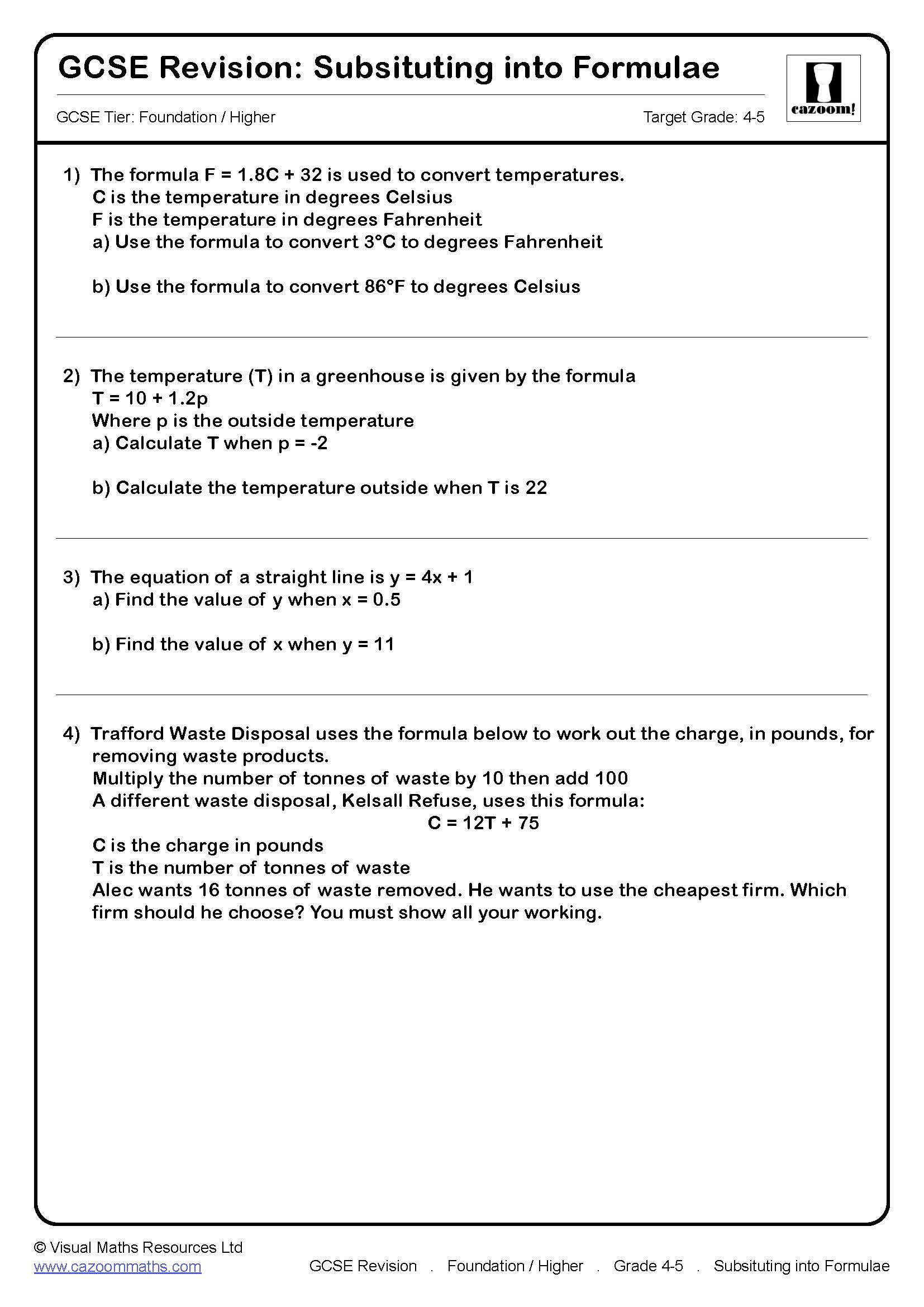
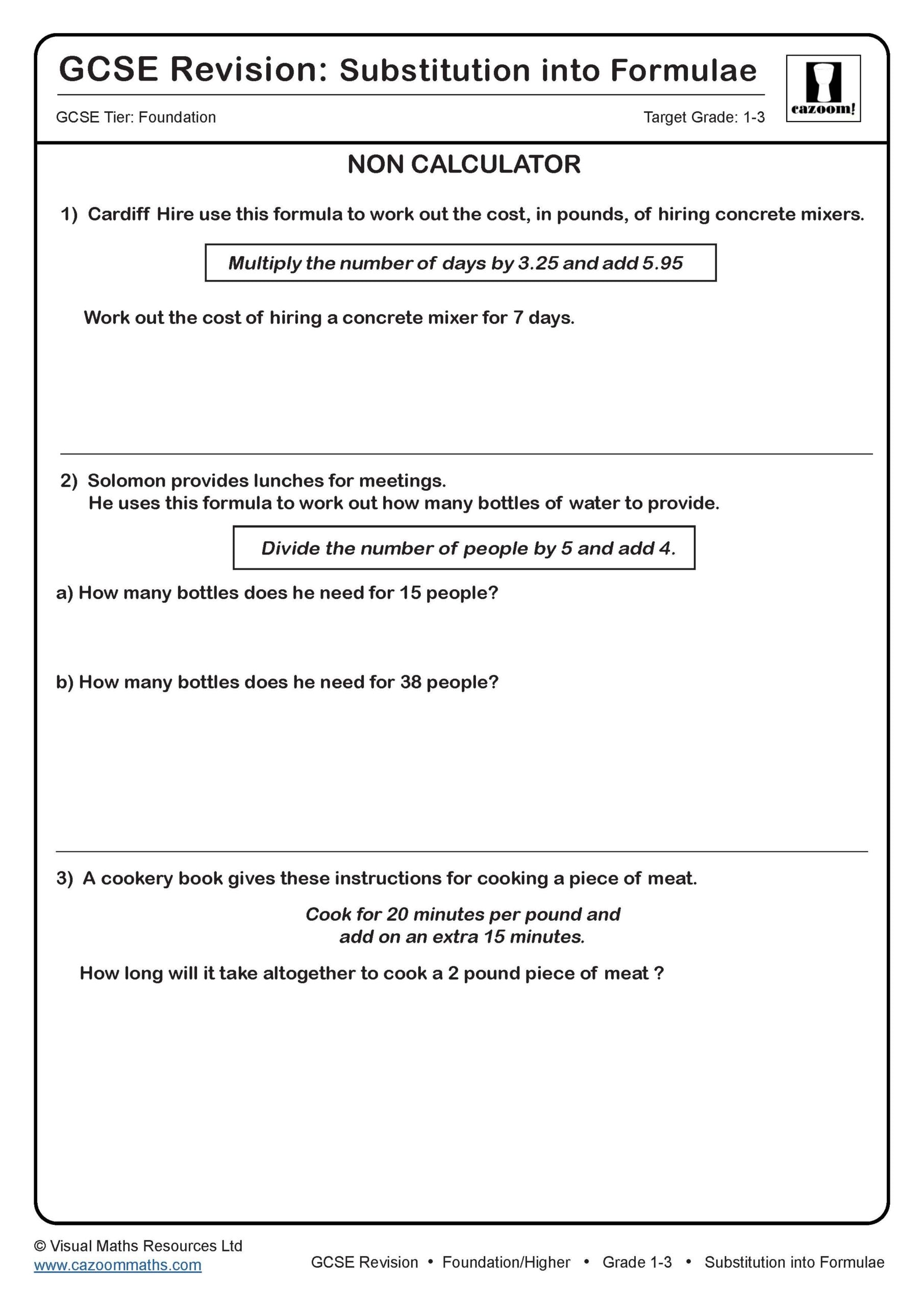
Derive a formula, substitute numbers into a formula and change the subject of a formula. Substitute numbers into expressions and formulae
2.6Foundation & Higher
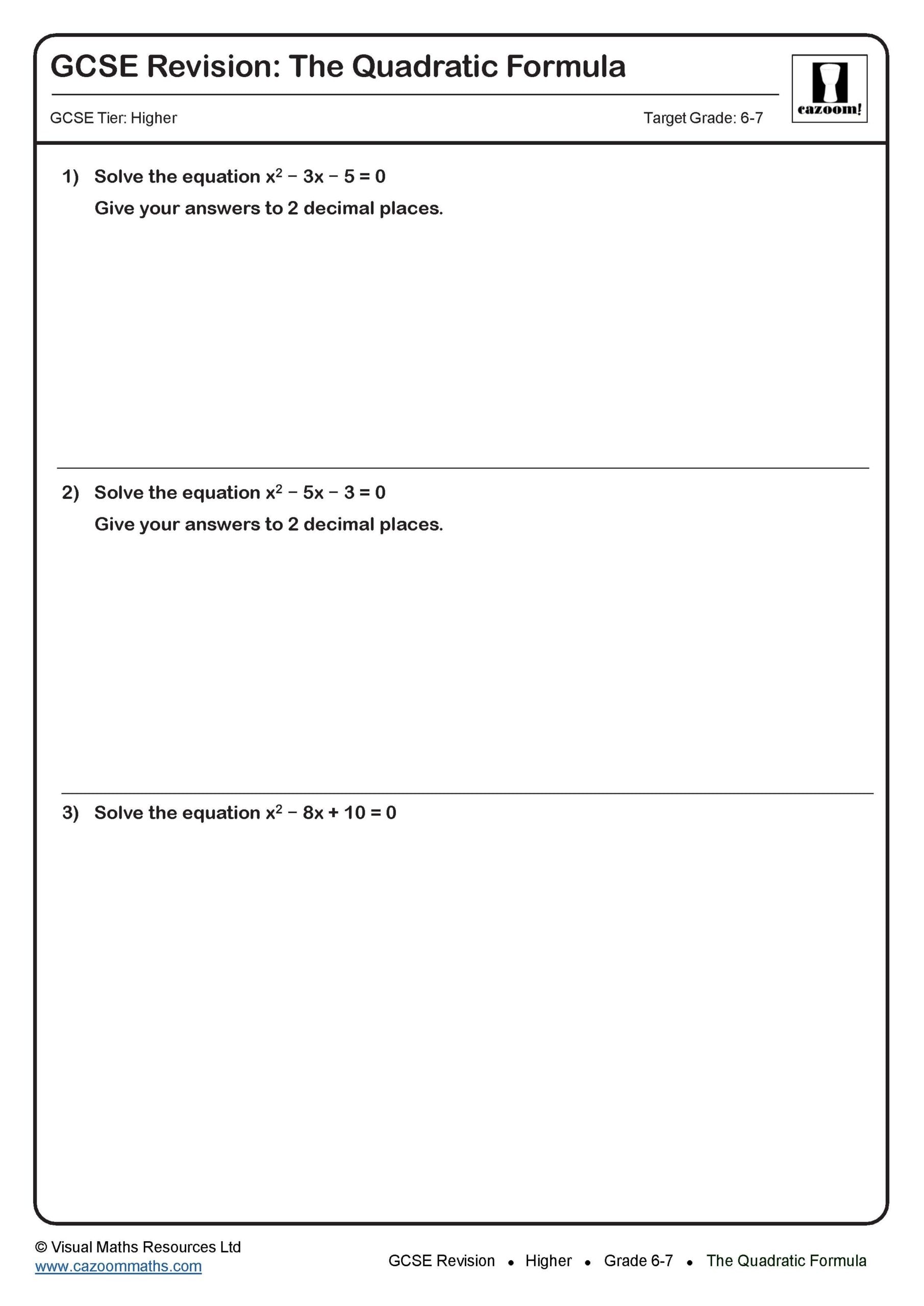
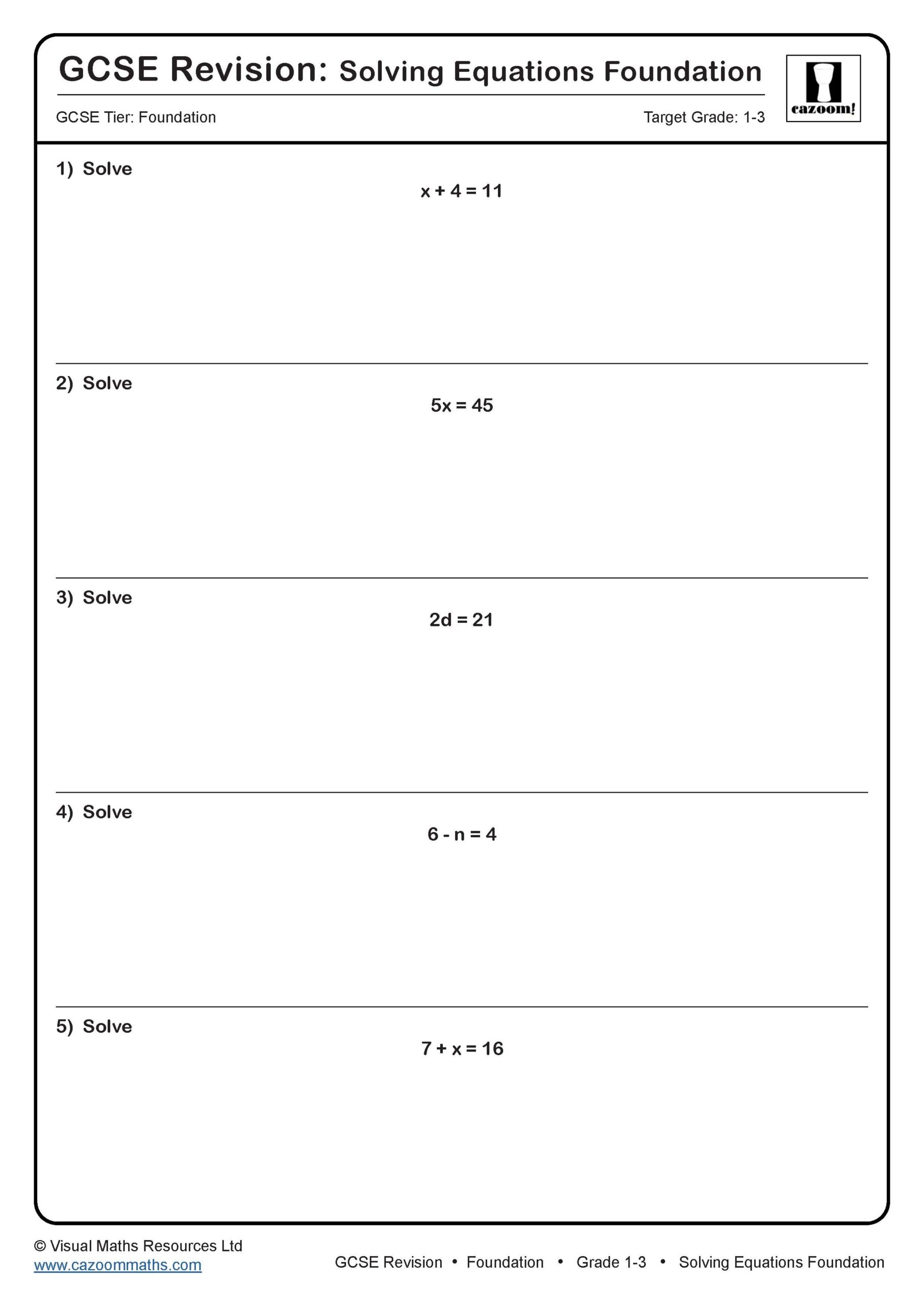
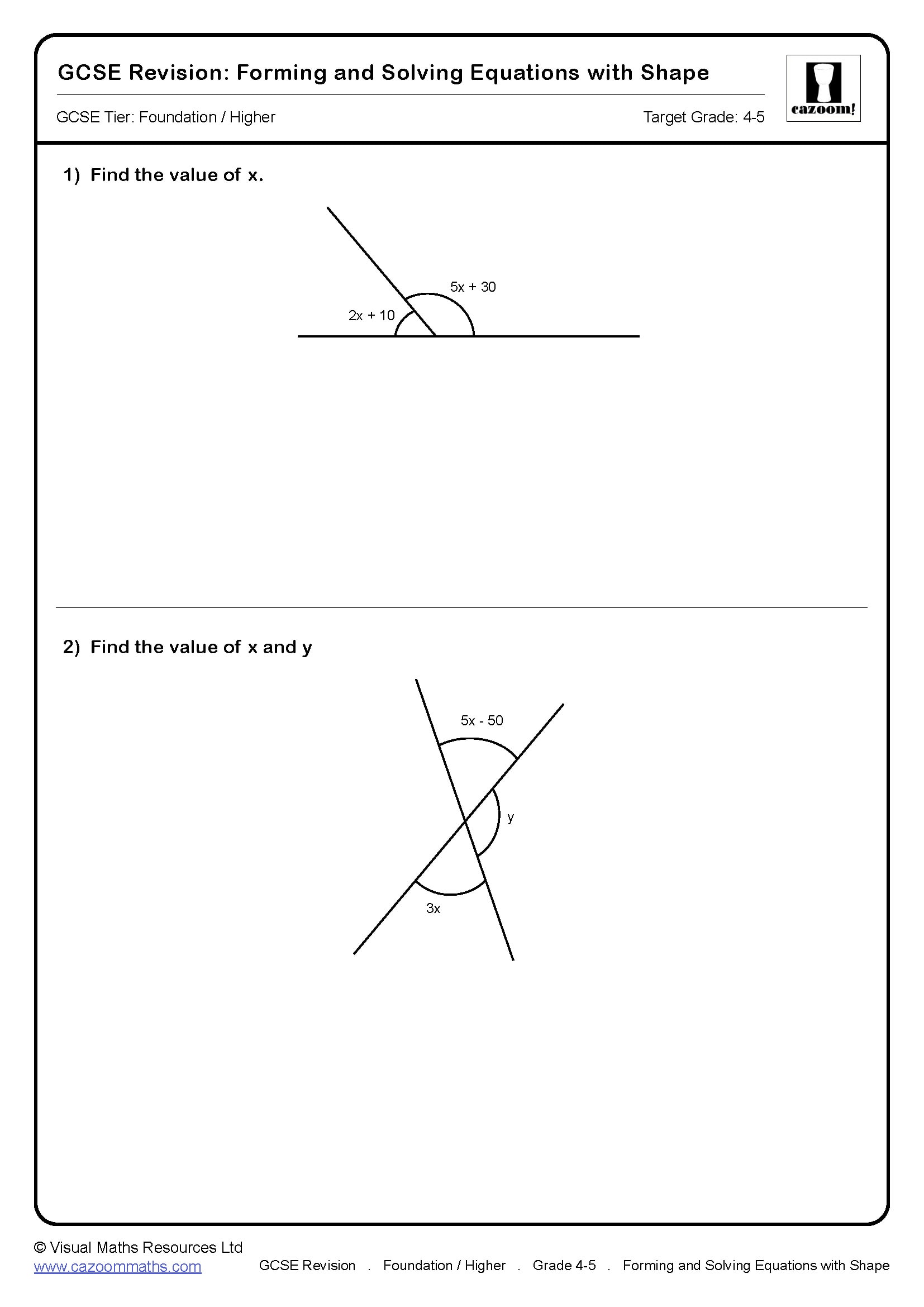
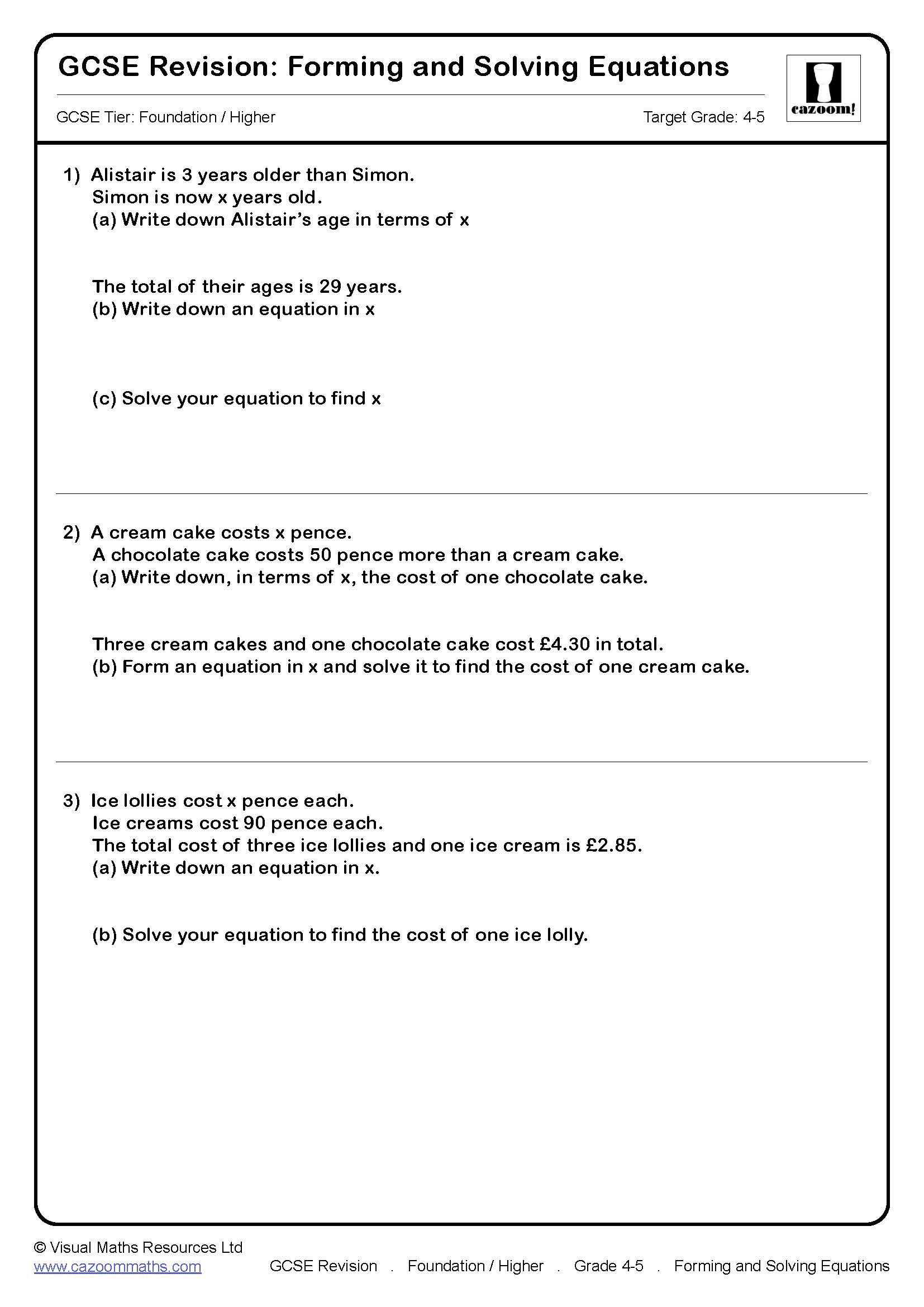
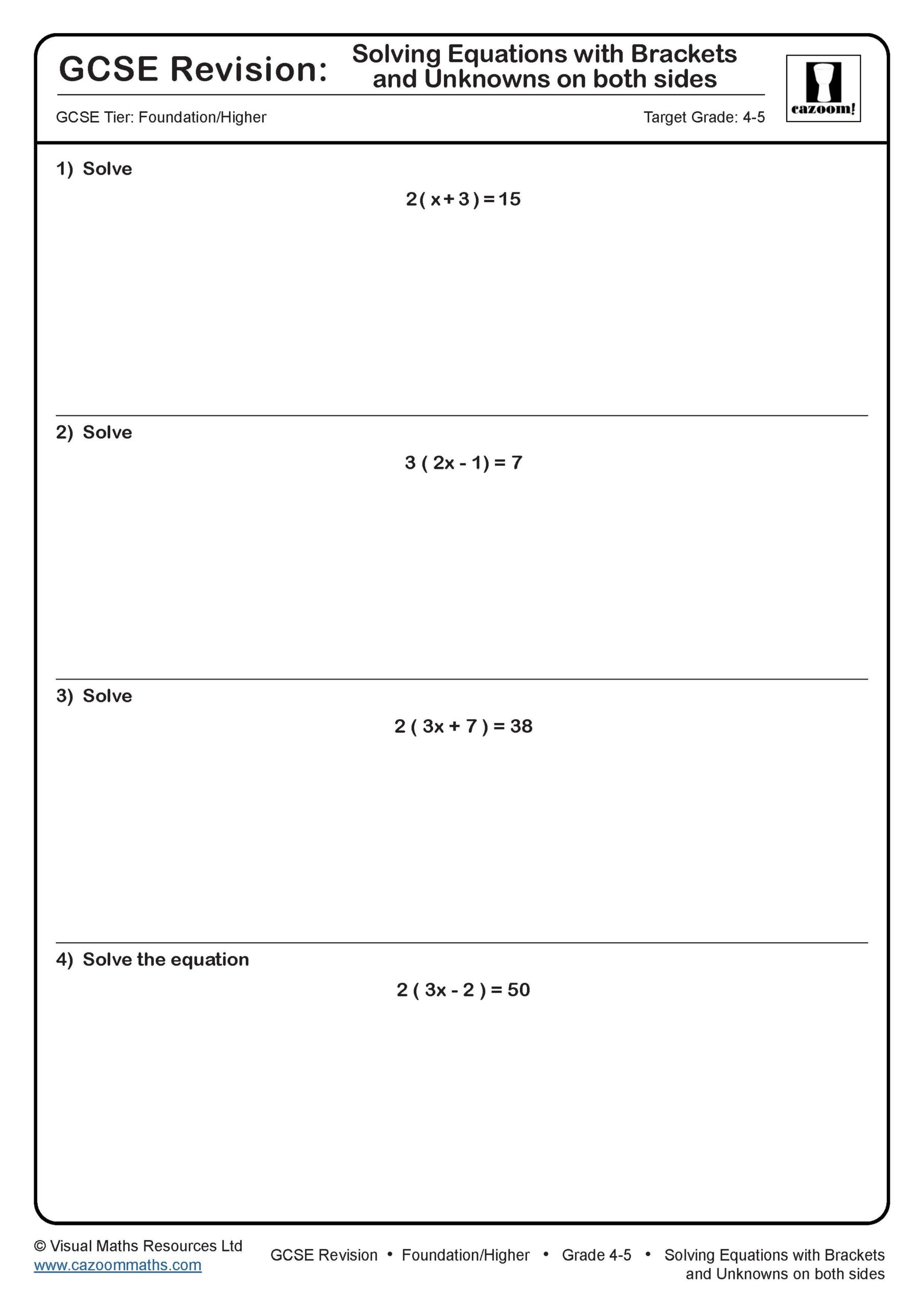
Solve linear equations in one unknown. Set up simple linear equations from given data. Solve linear equations with fractional coefficients
2.7Foundation & Higher
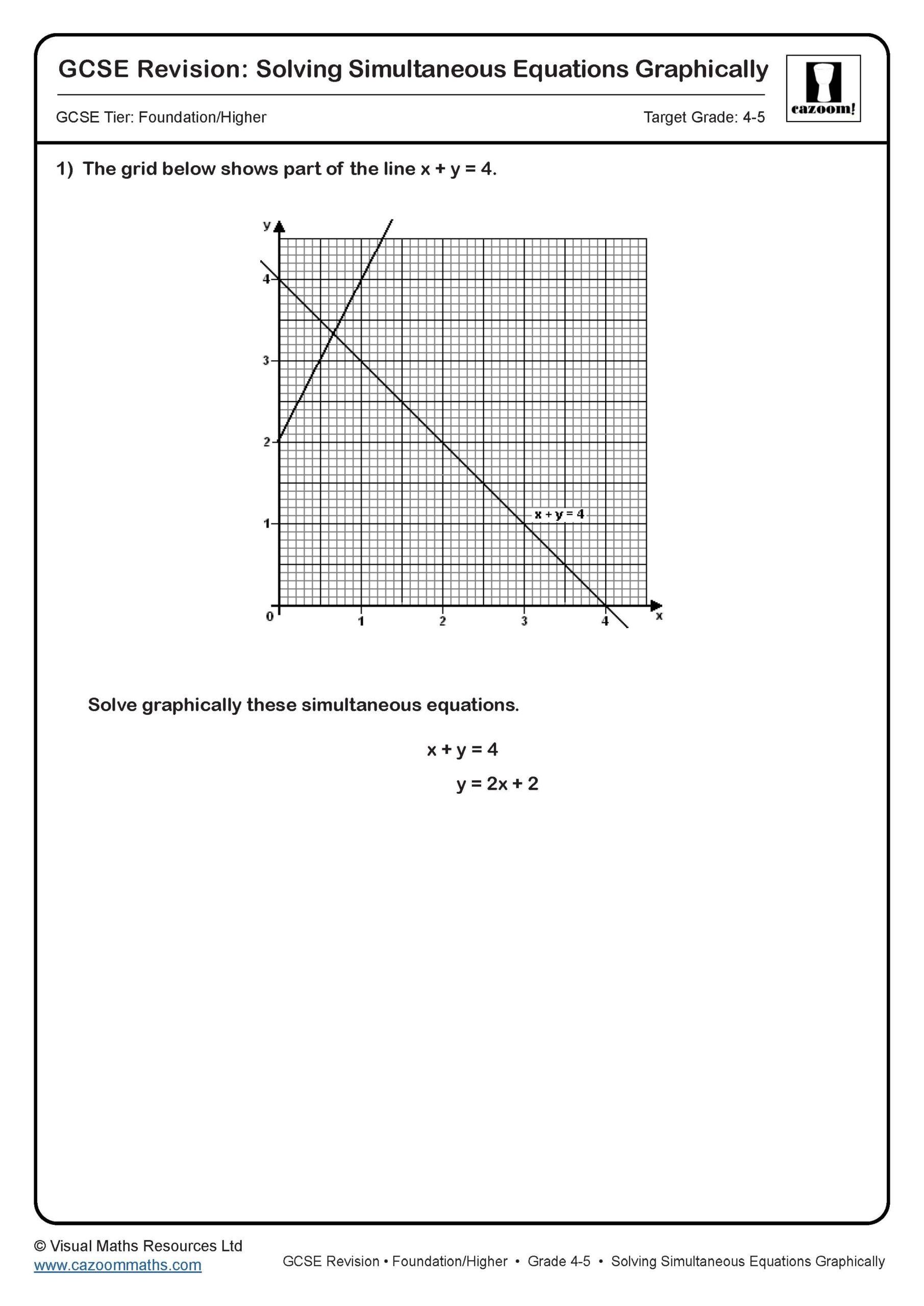
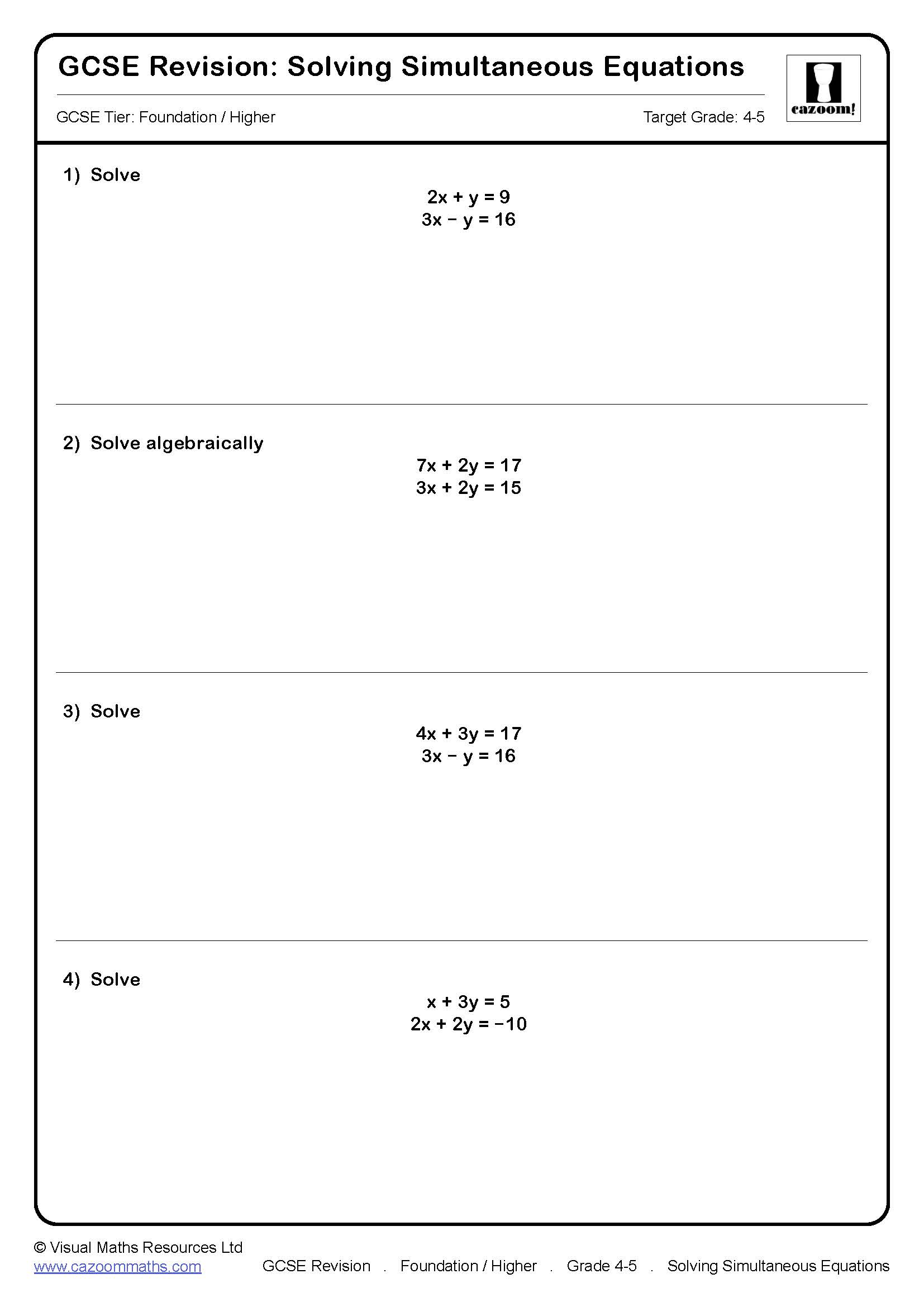
Solve simultaneous linear equations in two unknowns
2.8Higher
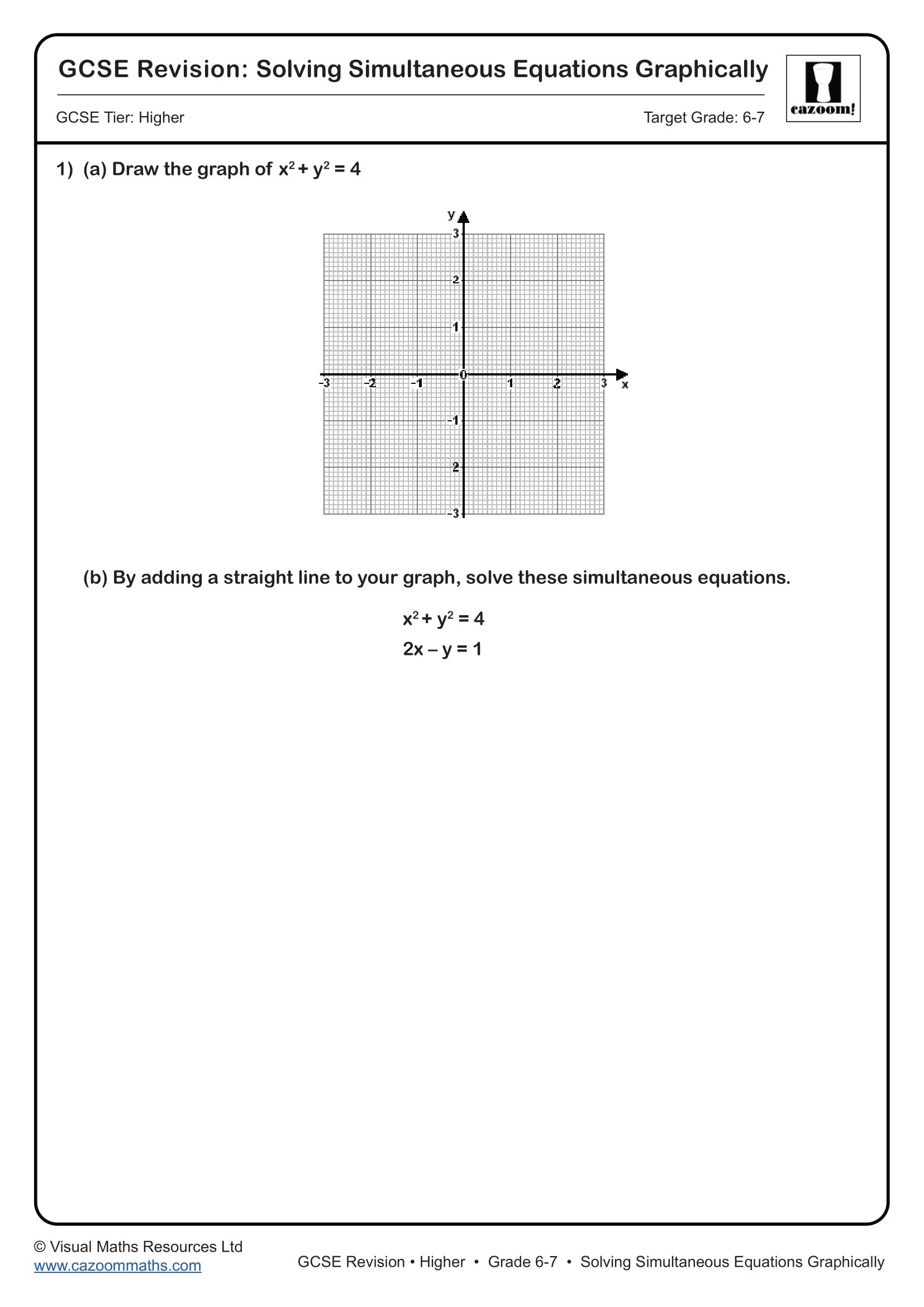
Solve simultaneous equations where one is linear and one is non-linear
2.9Foundation & Higher
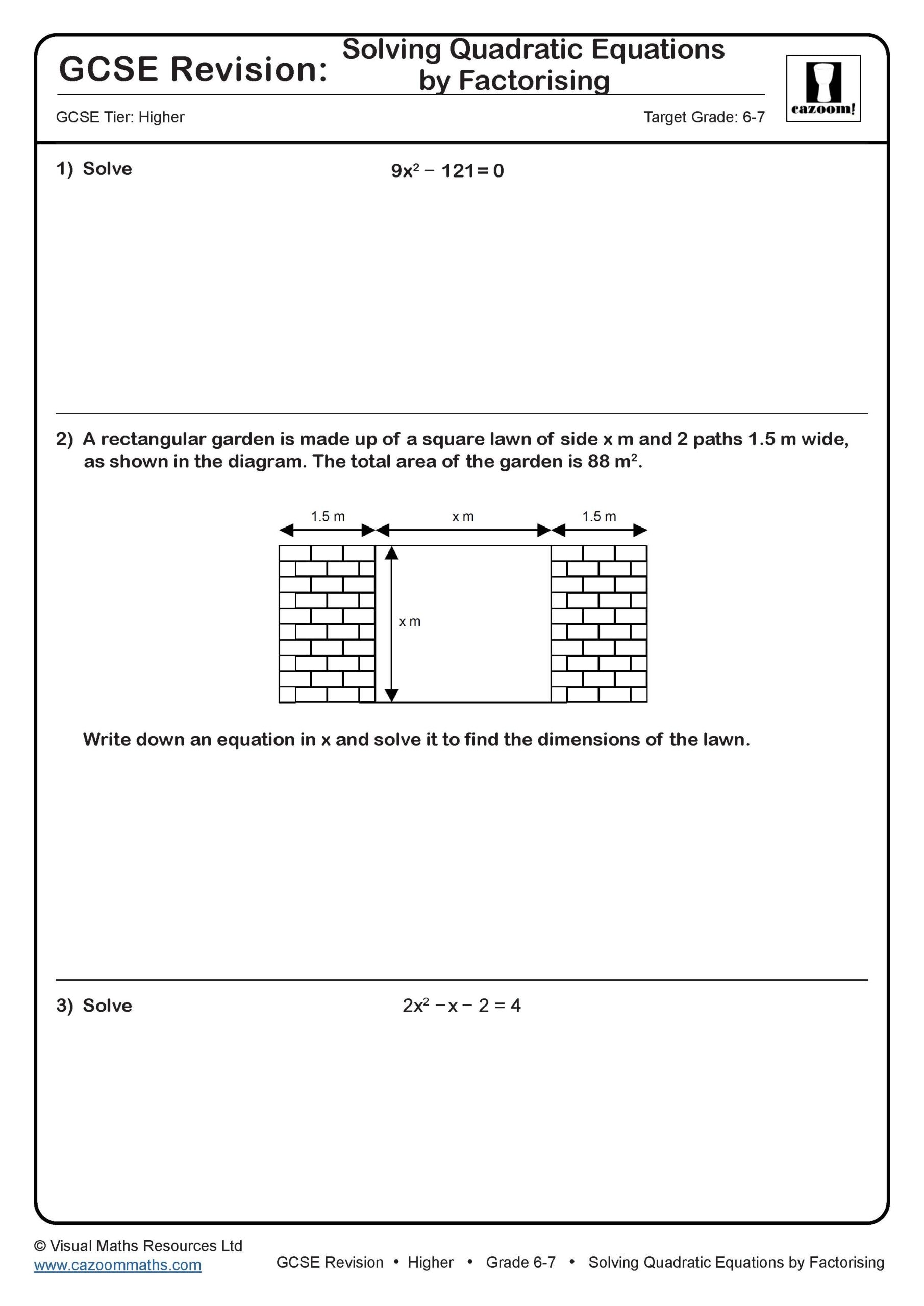
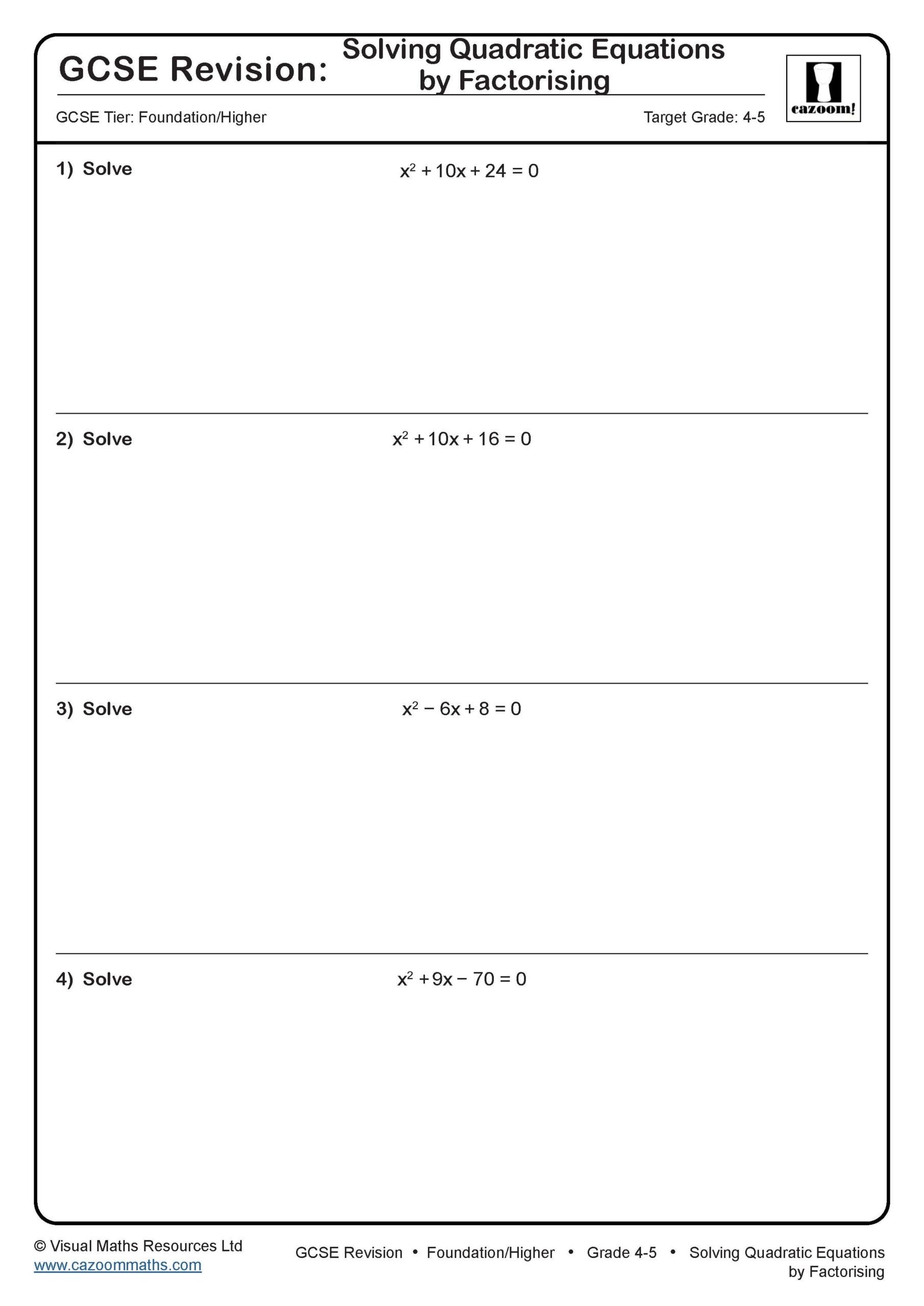
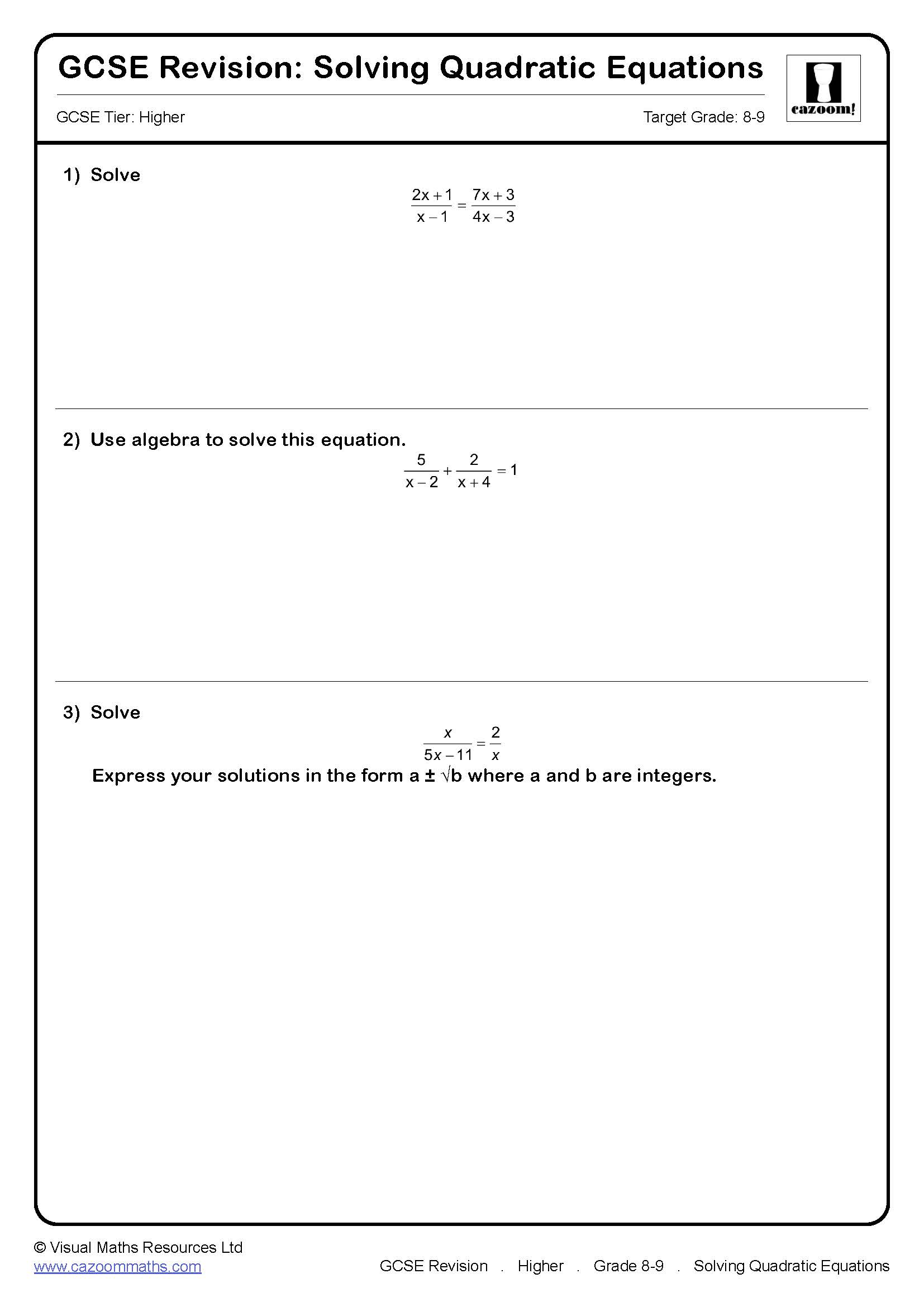
Solve quadratic equations by factorisation. Solve quadratic equations by using the quadratic formula. Solve quadratic equations by completing the square
2.10Foundation & Higher
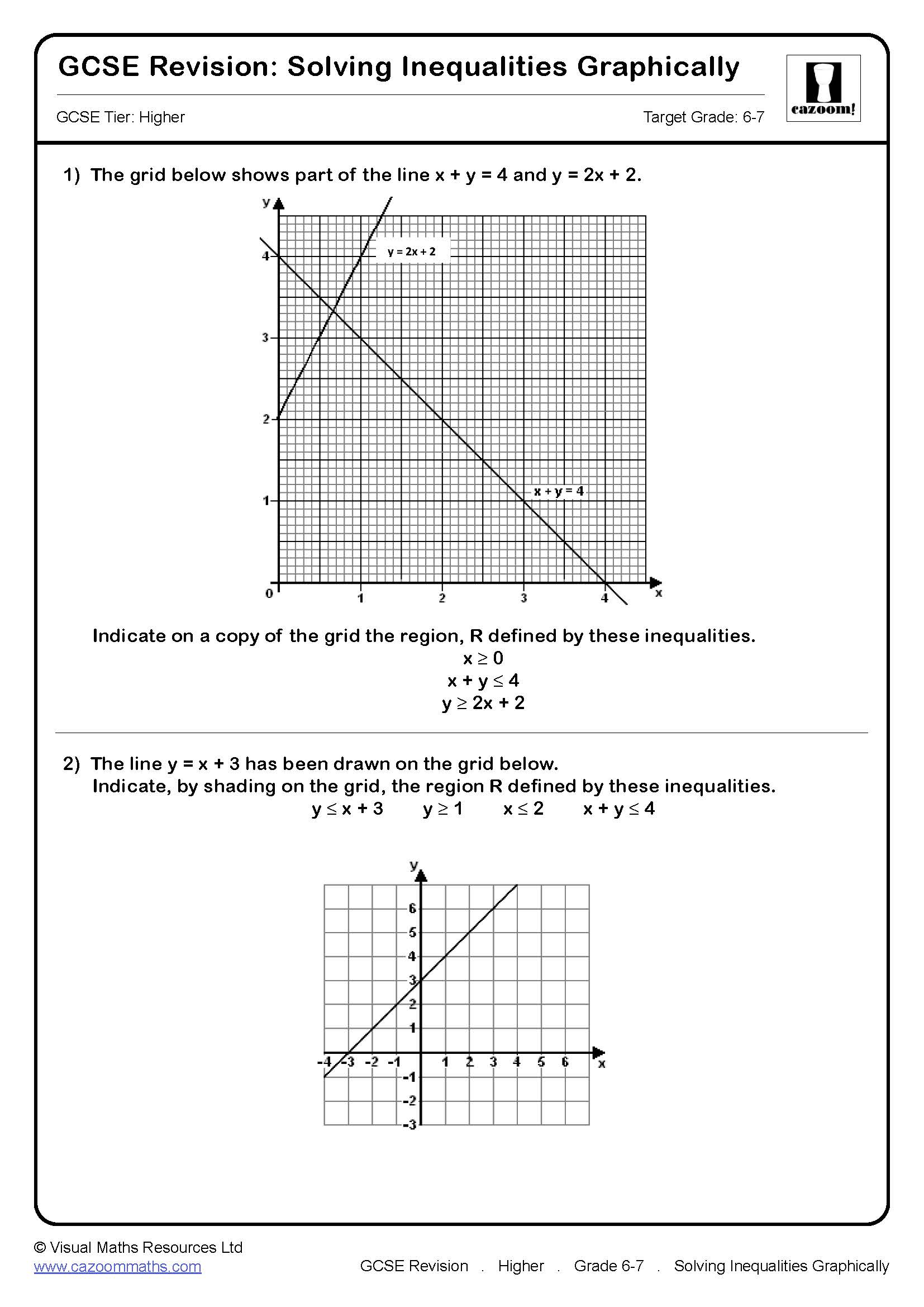
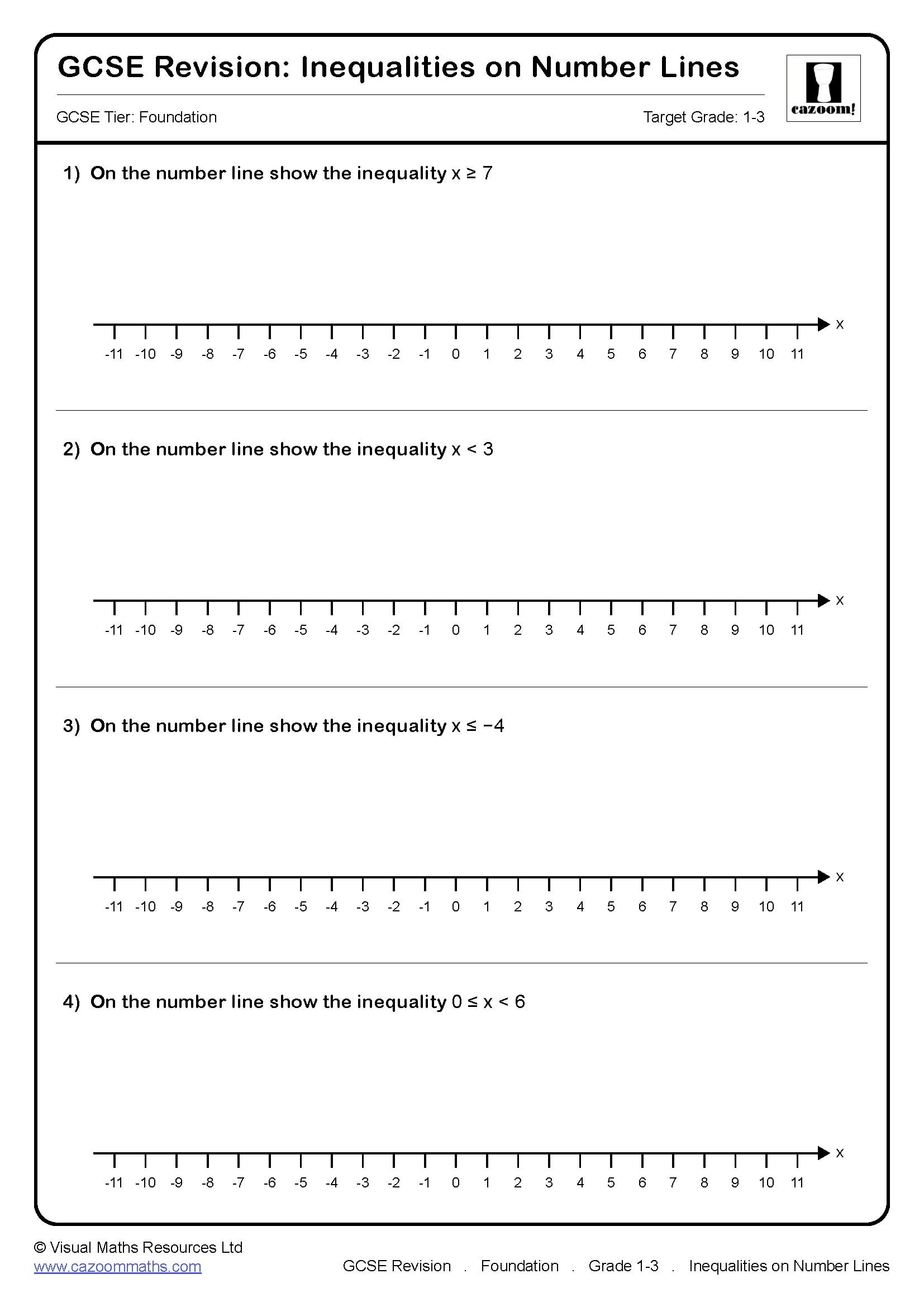
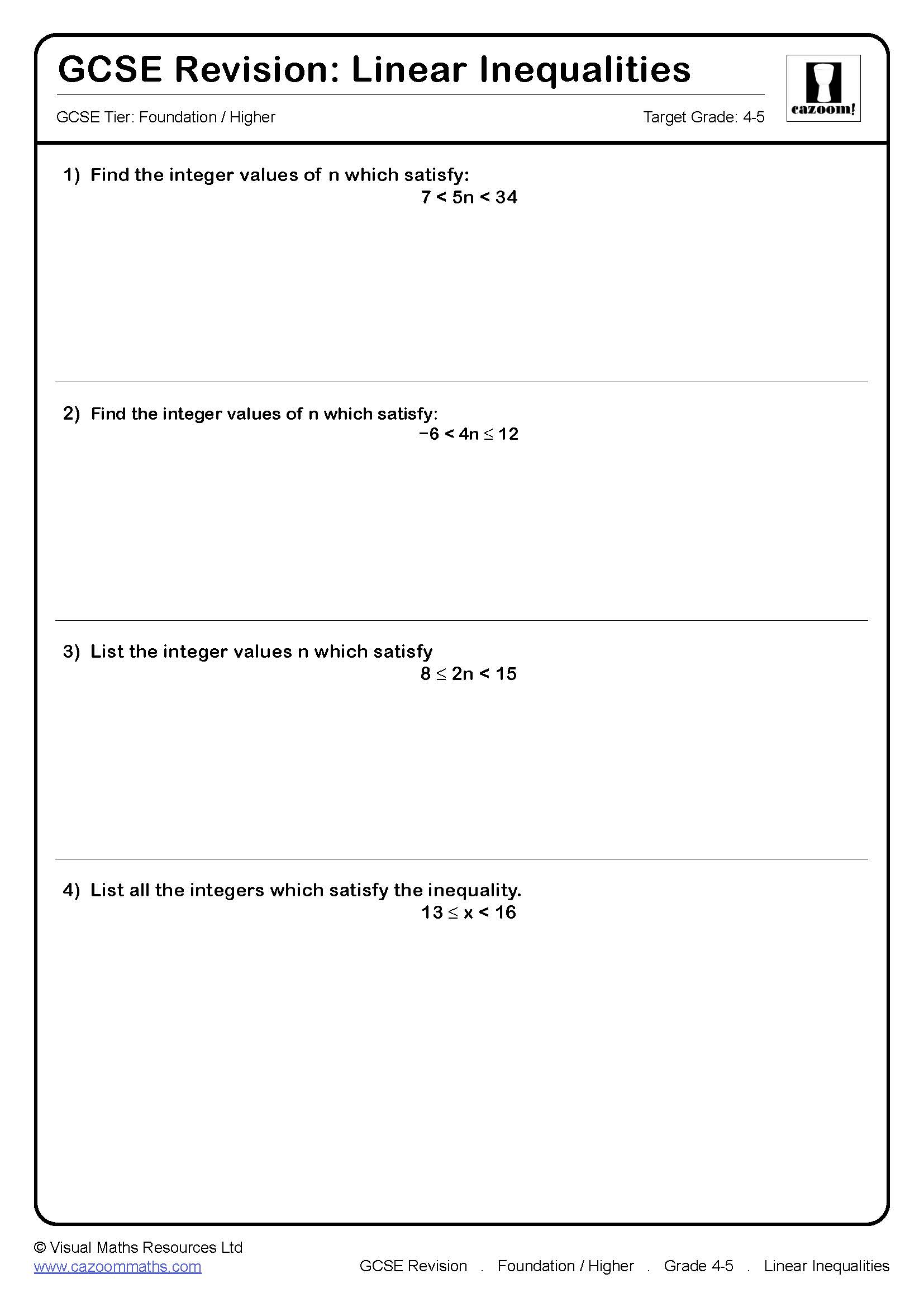
Solve linear inequalities in one or two variables and represent the solution set on a number line. Represent a simple linear inequality on a graph
2.11Higher
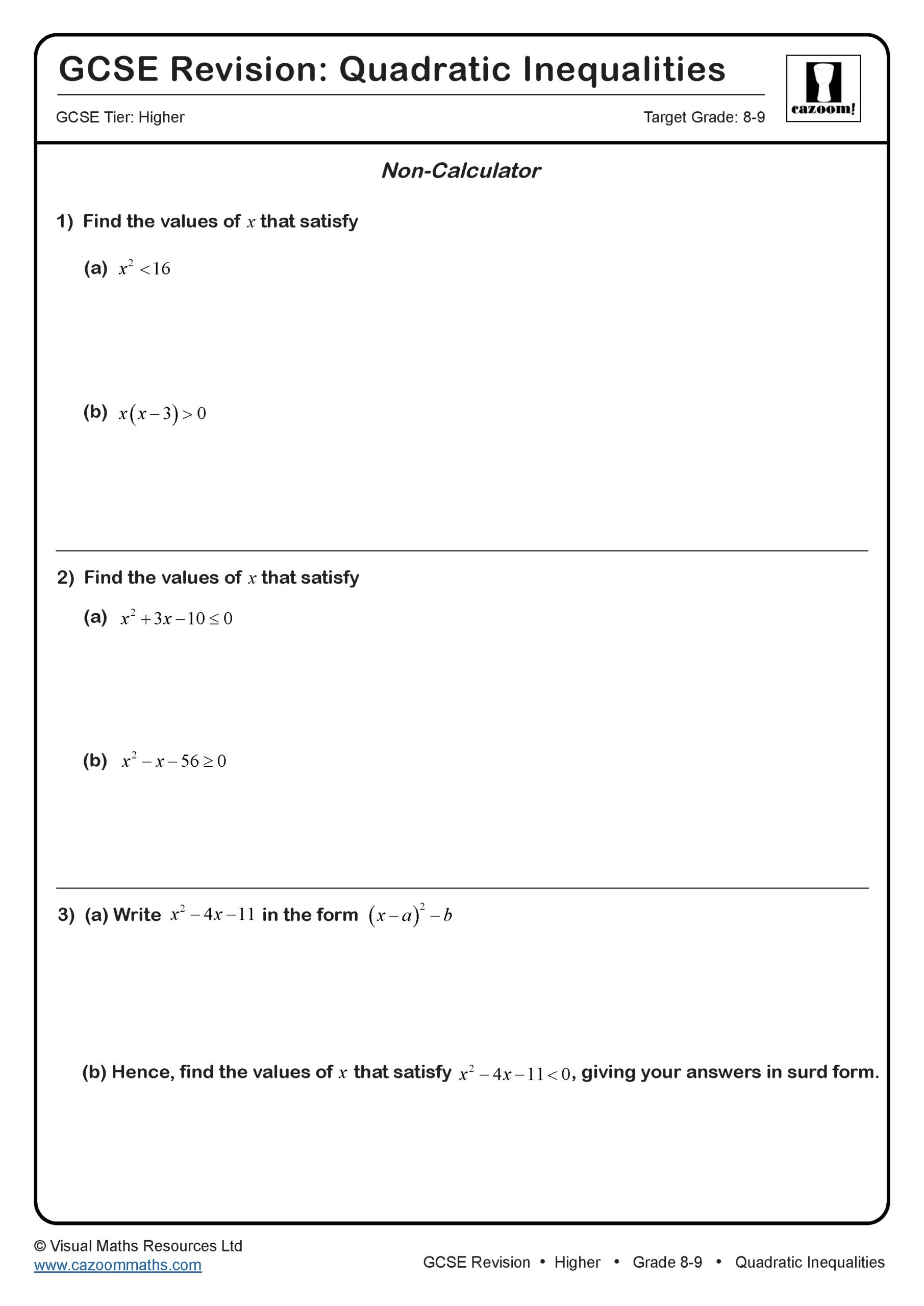
Solve quadratic inequalities in one variable. Represent the solution set on a number line
2.12Foundation & Higher
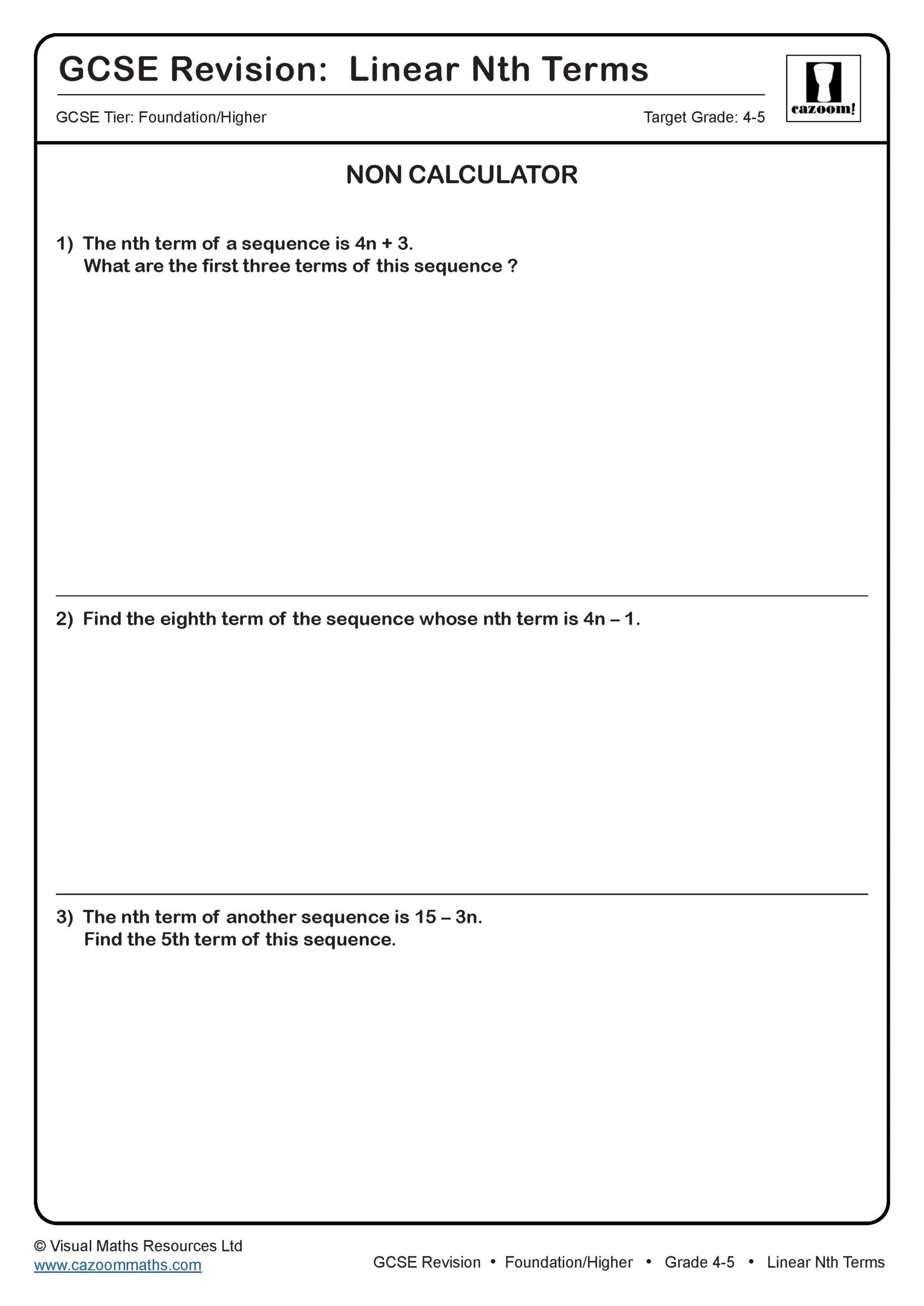
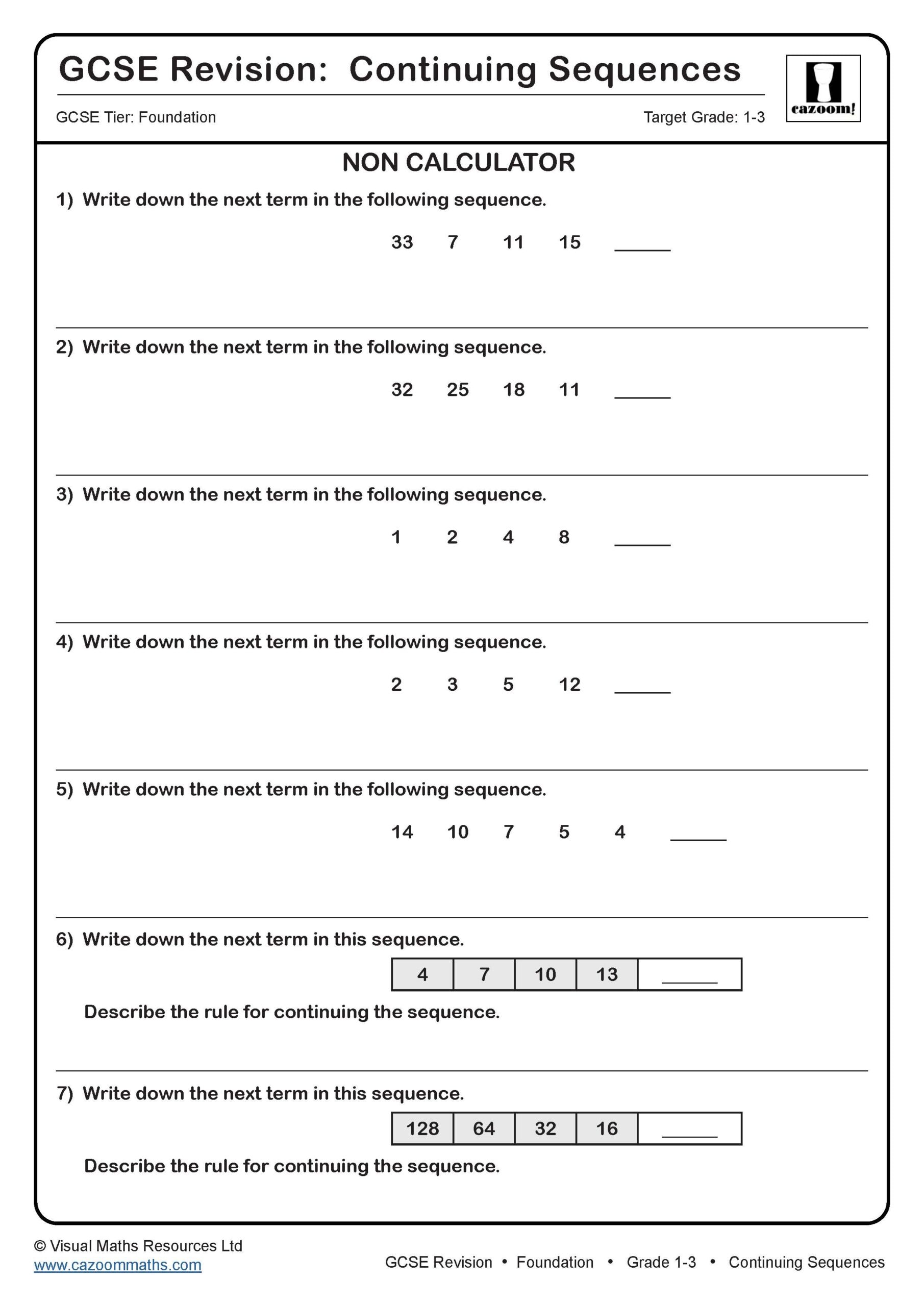
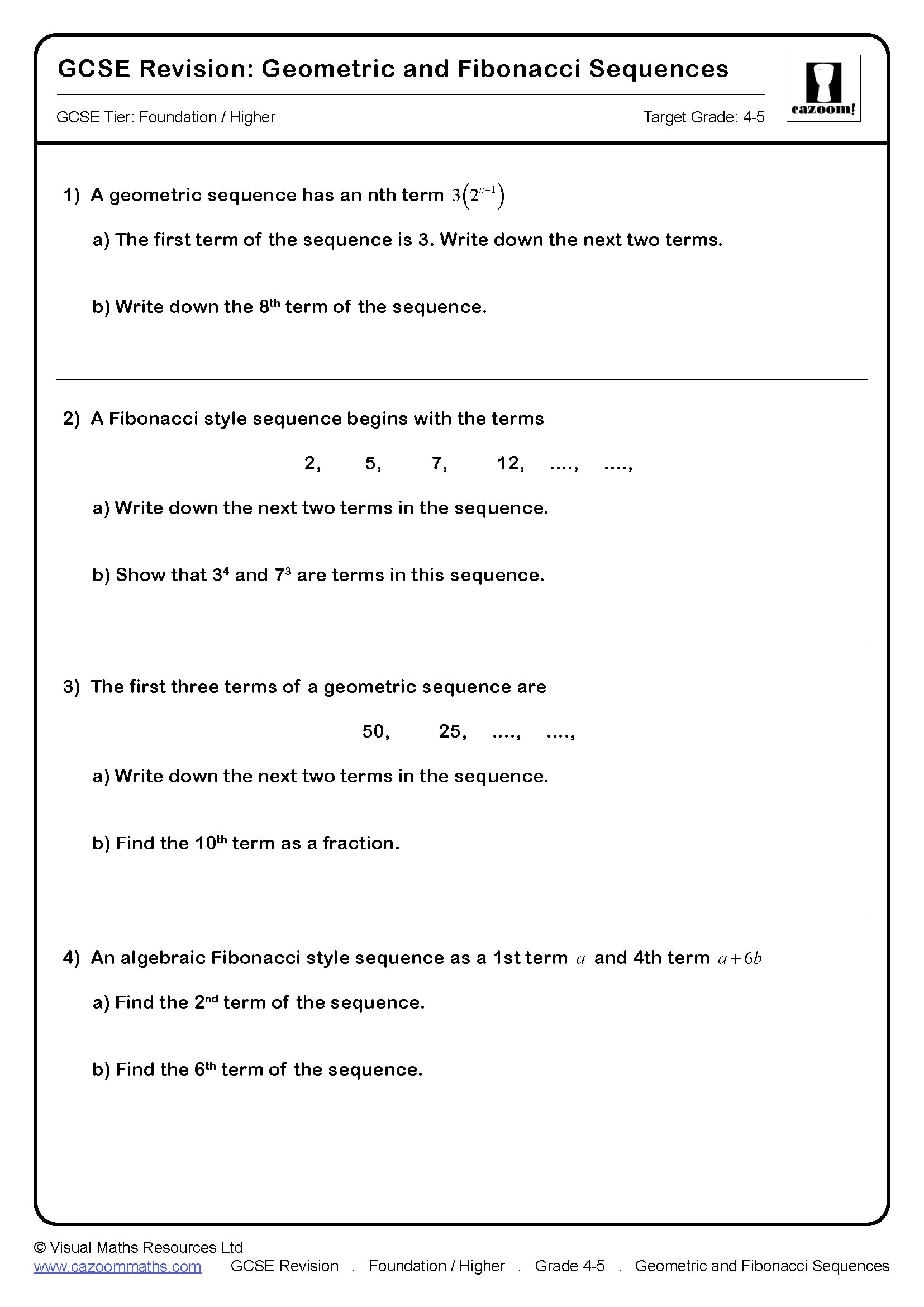
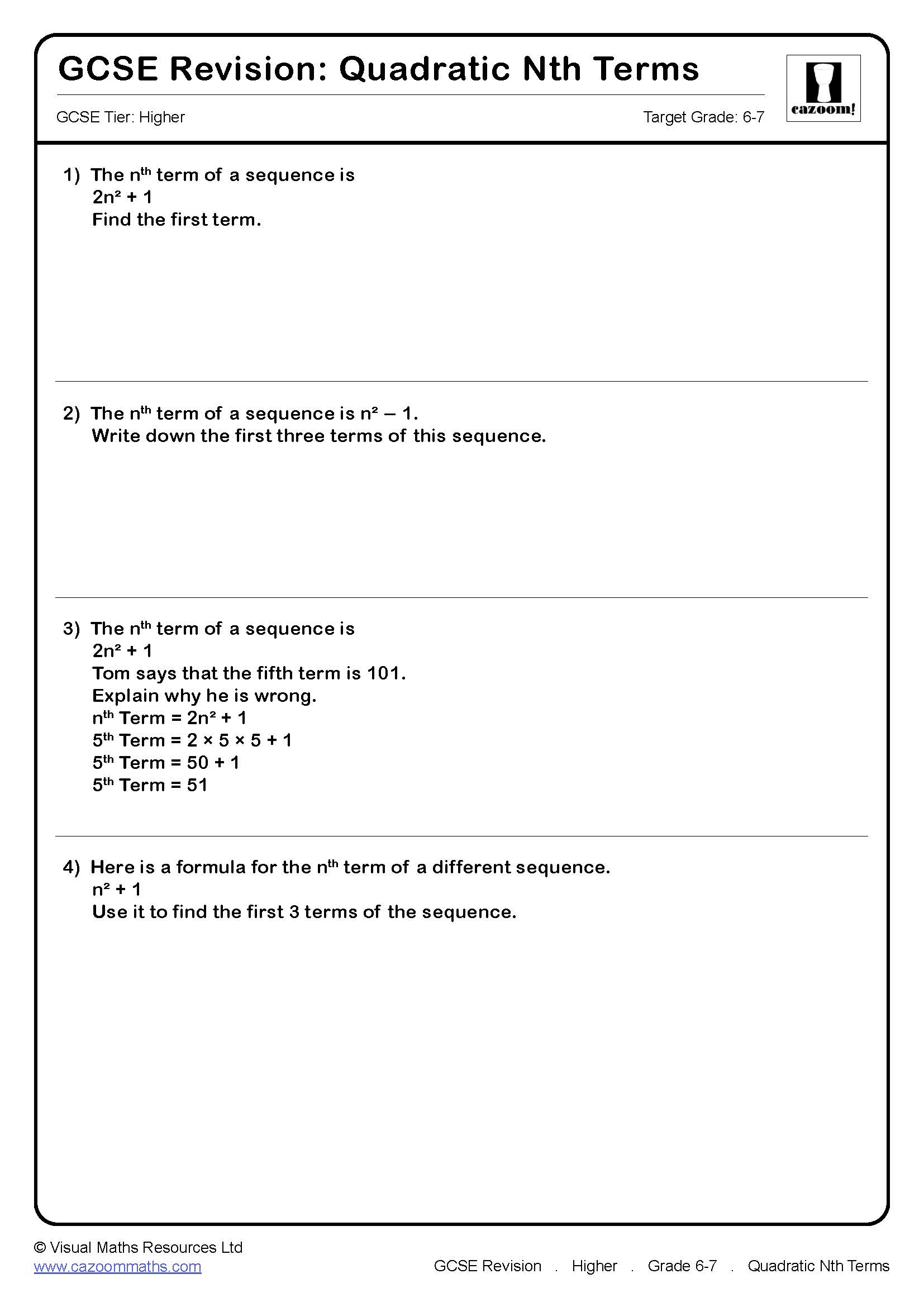
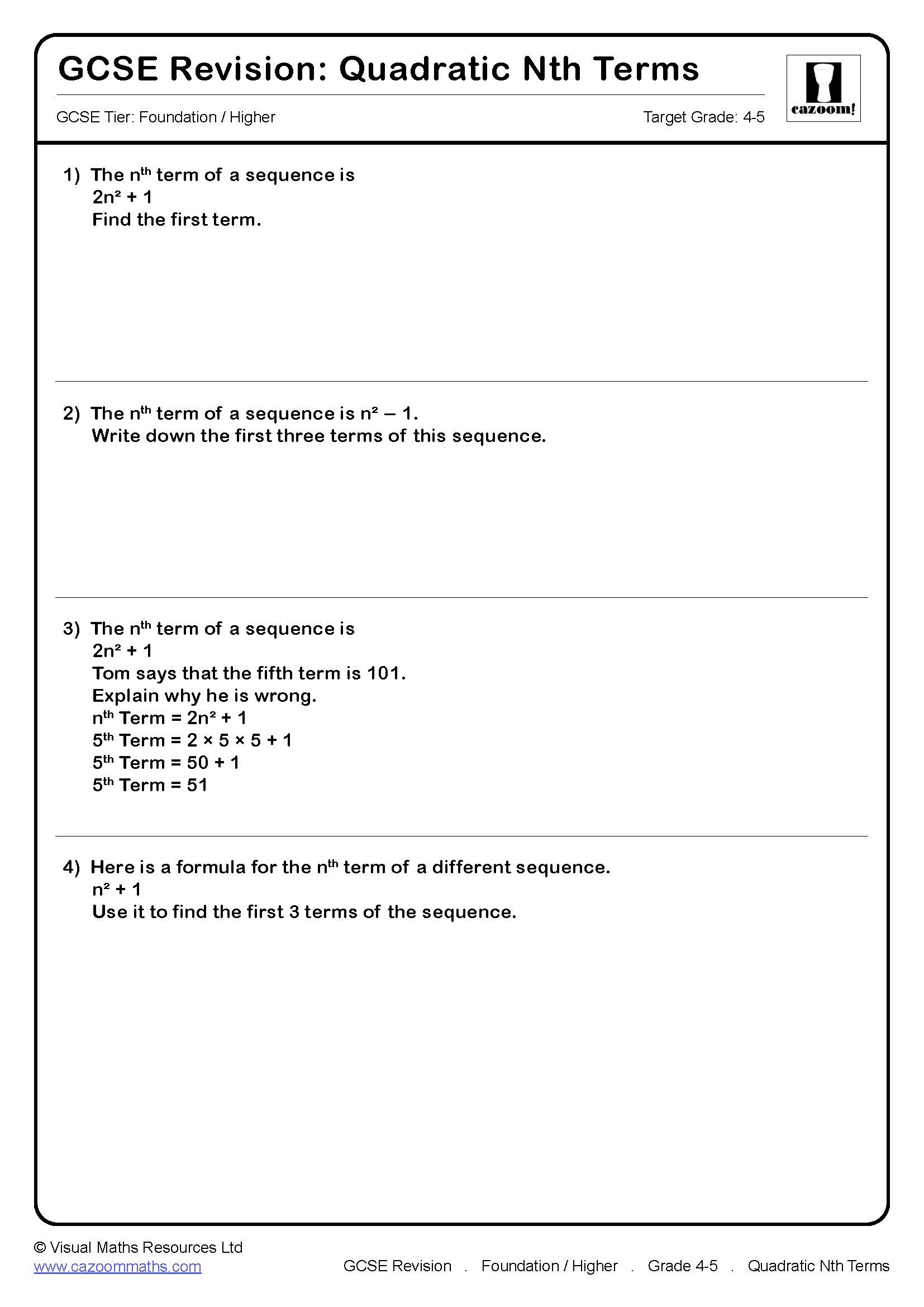
Generate terms of a sequence using term-to-term and position-to-term rules. Find subsequent terms and the nth term of linear sequences. Find subsequent terms and the nth term of quadratic sequences
2.13Foundation & Higher
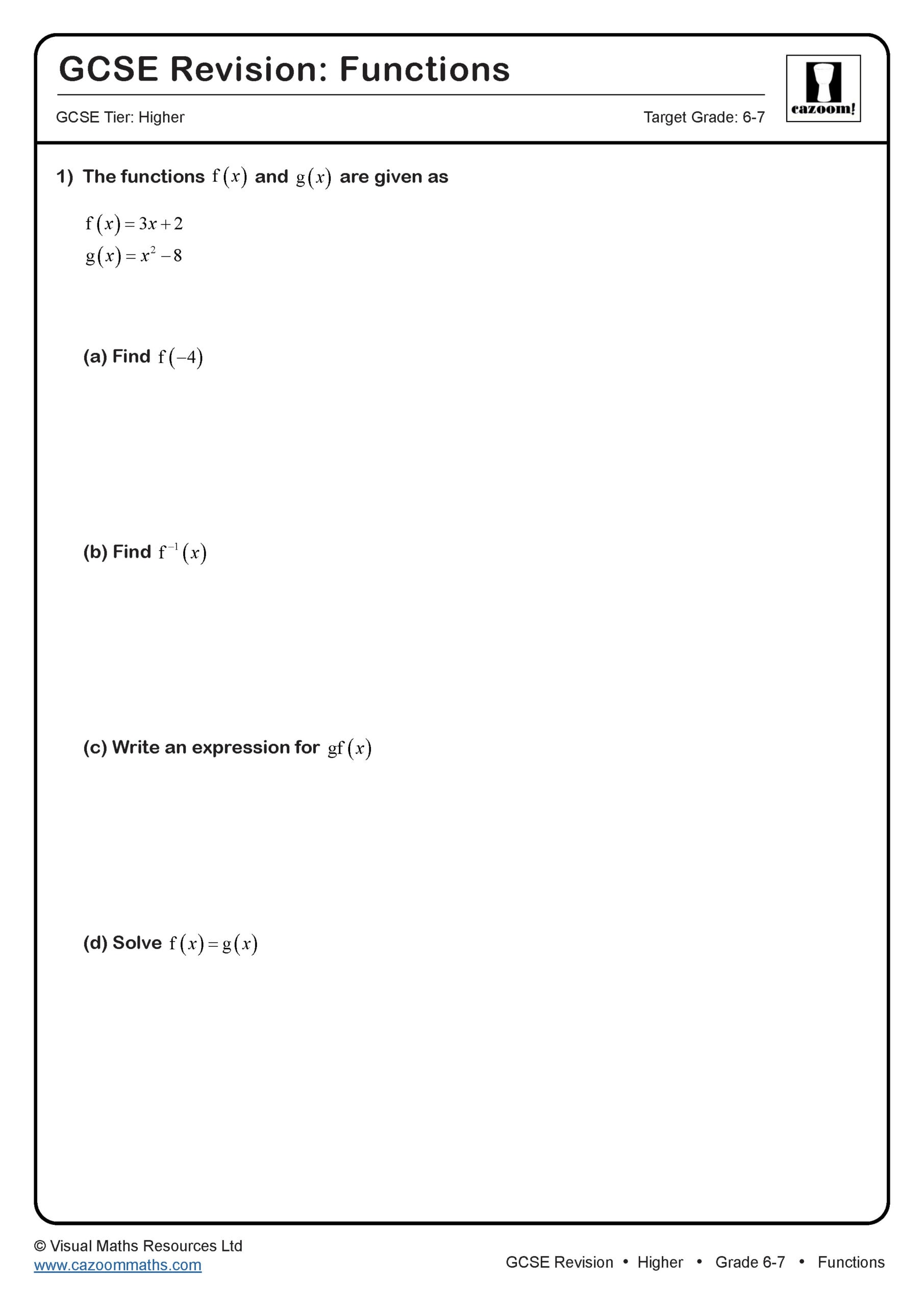
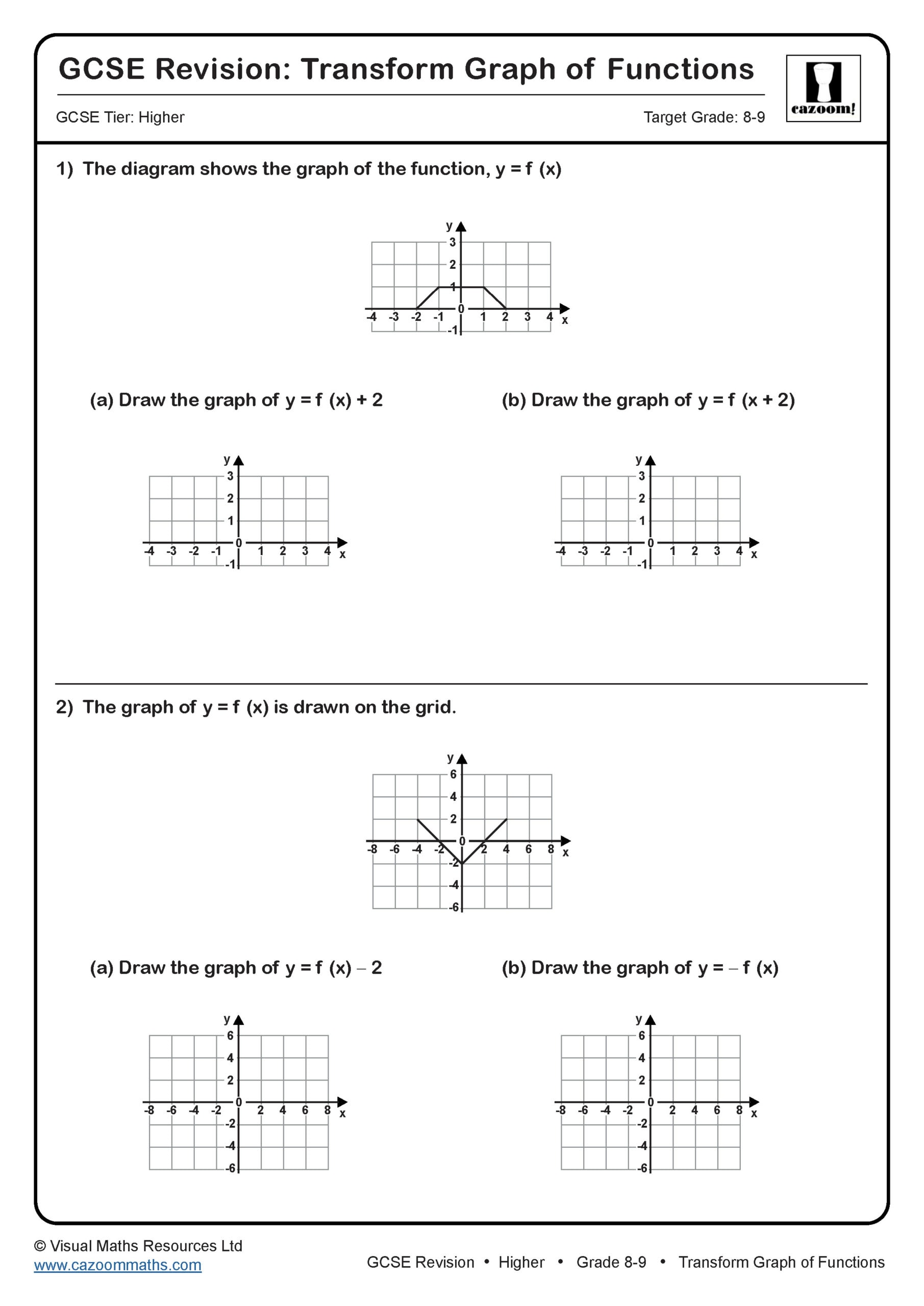
Recognise, interpret and use function notation. Find the inverse of a linear function. Find the composite of two functions
2.14Foundation & Higher
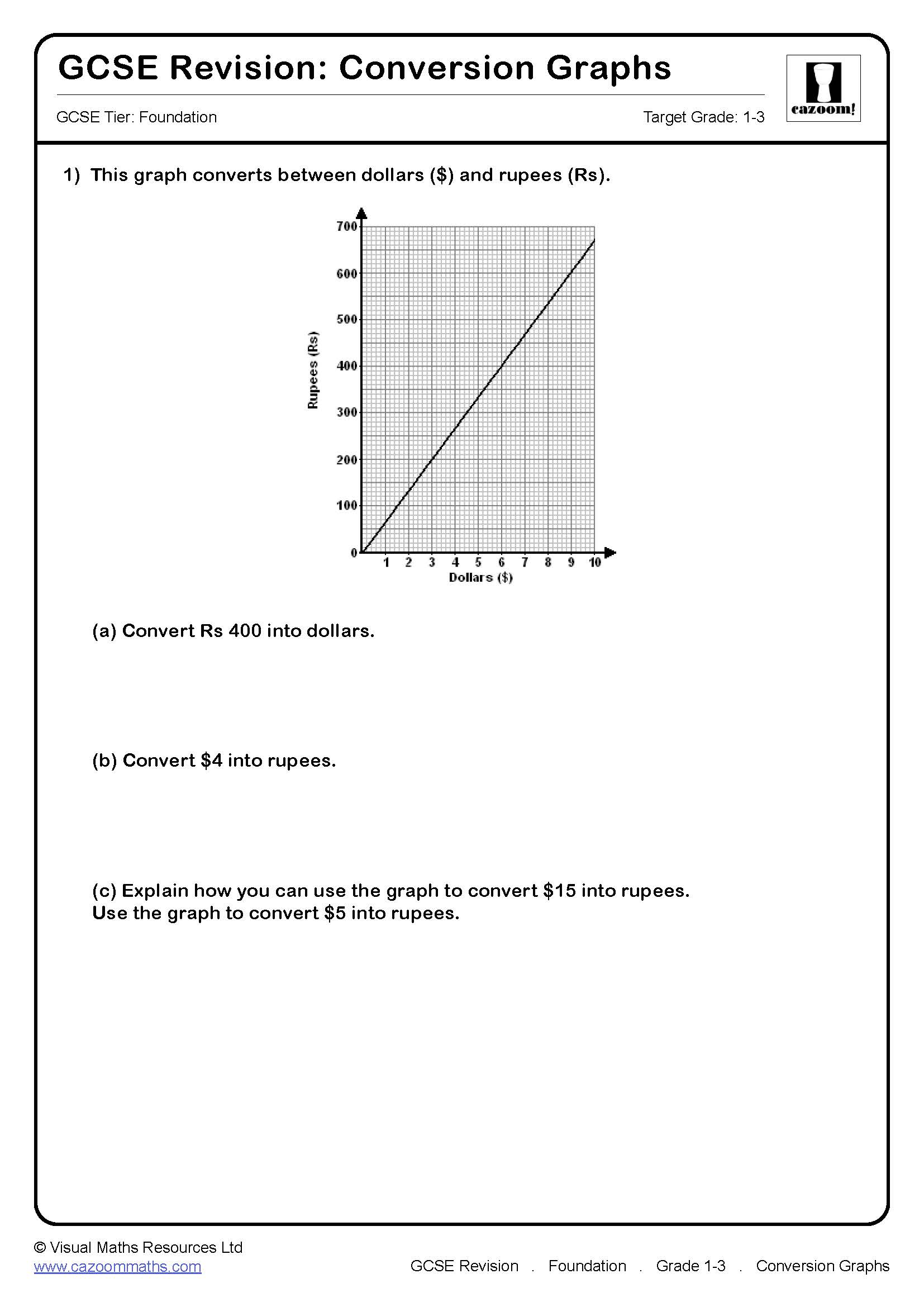
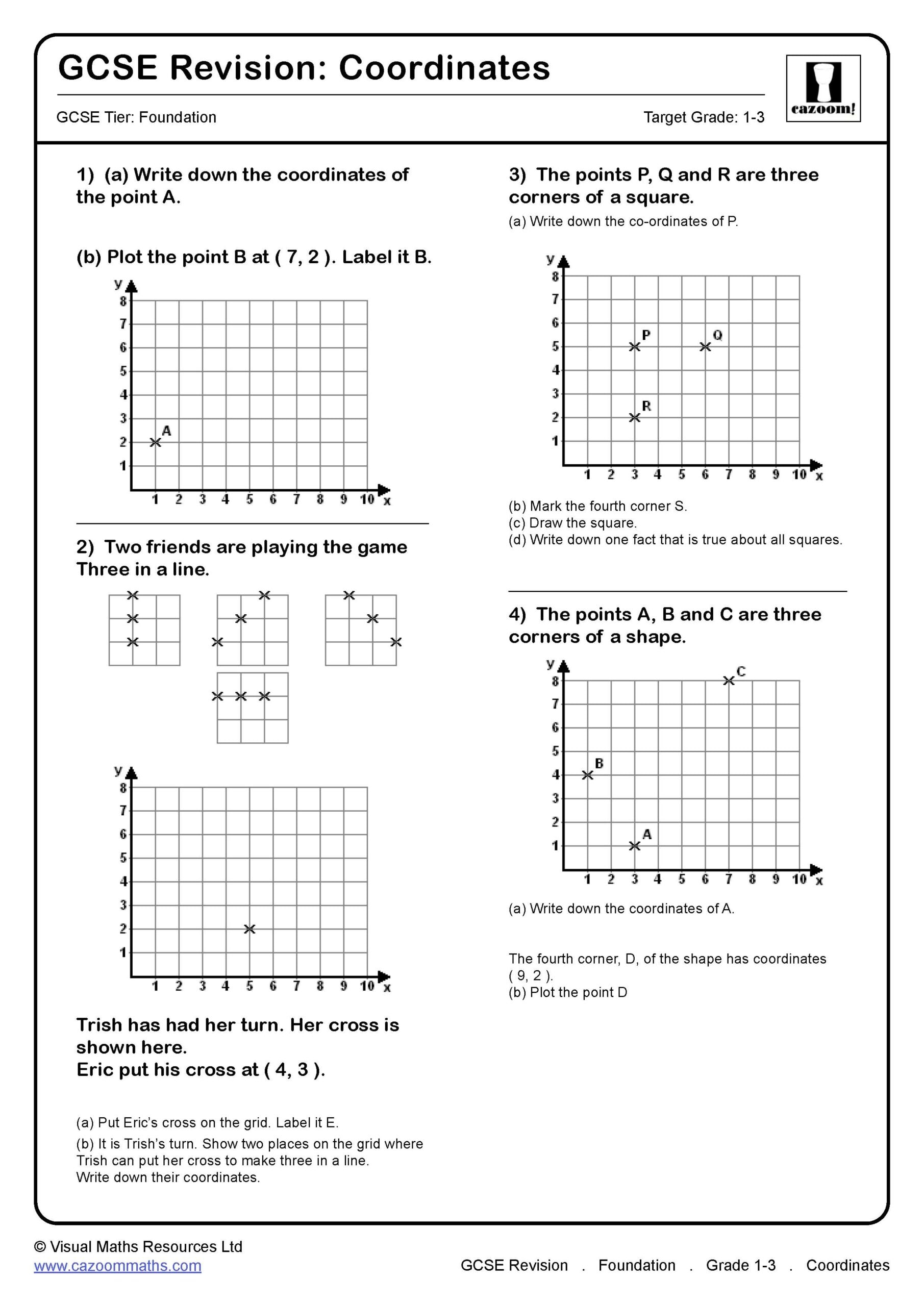
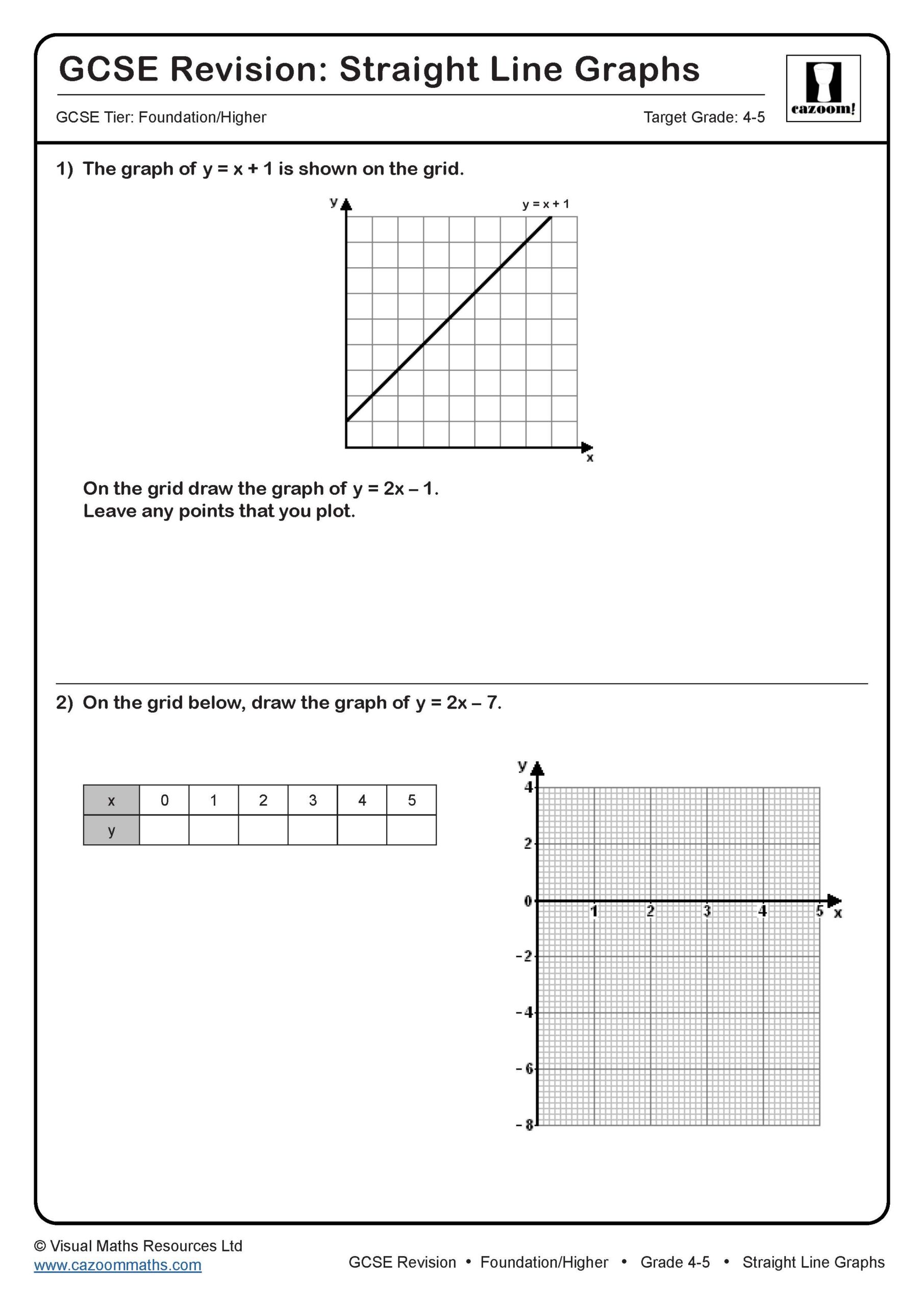
Use Cartesian coordinates in two dimensions. Draw and interpret straight line graphs for linear functions. Find the gradient and the y-intercept of a straight line from its equation or graph. Find the equation of a straight line from its graph or from given information
2.15Higher
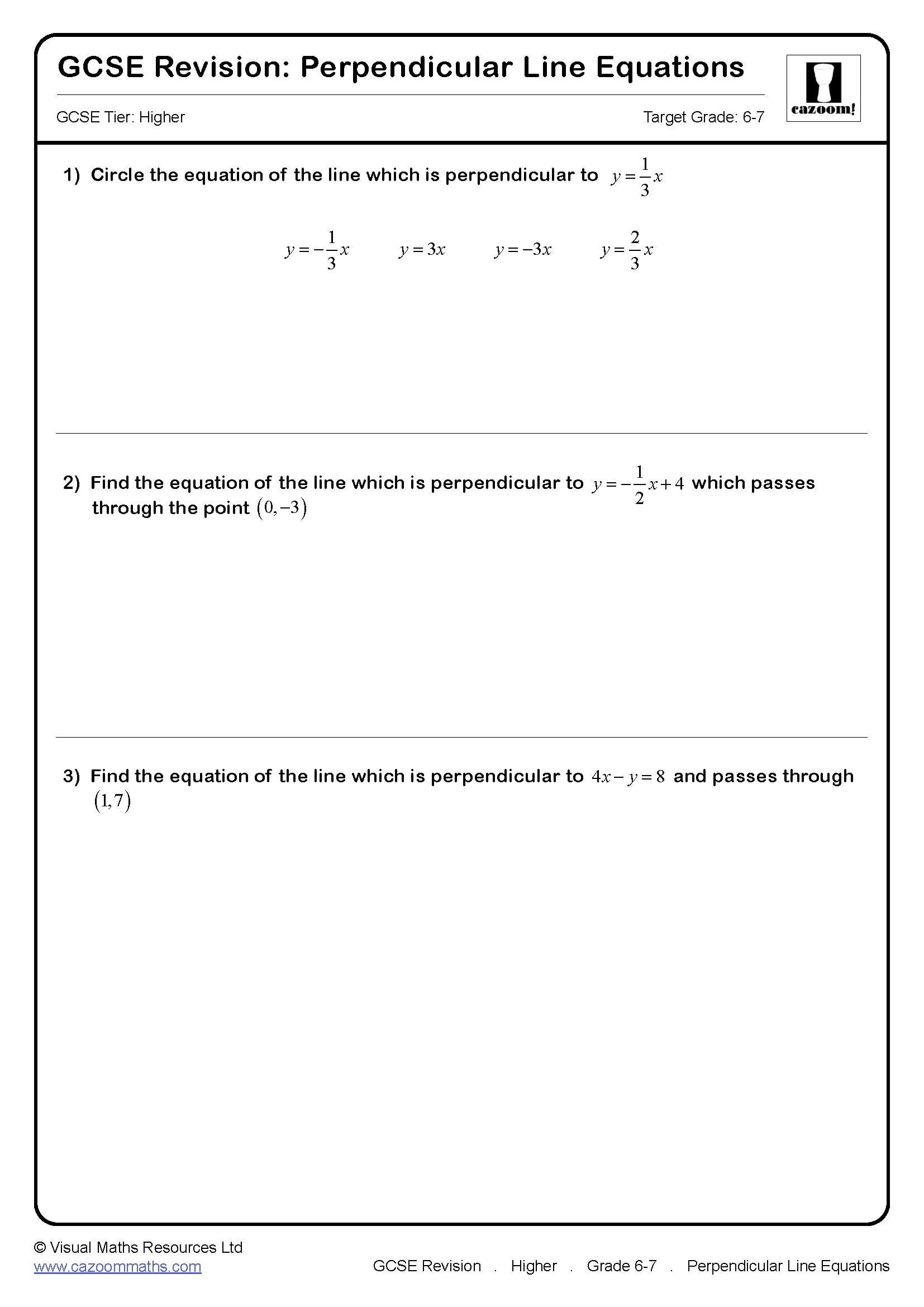
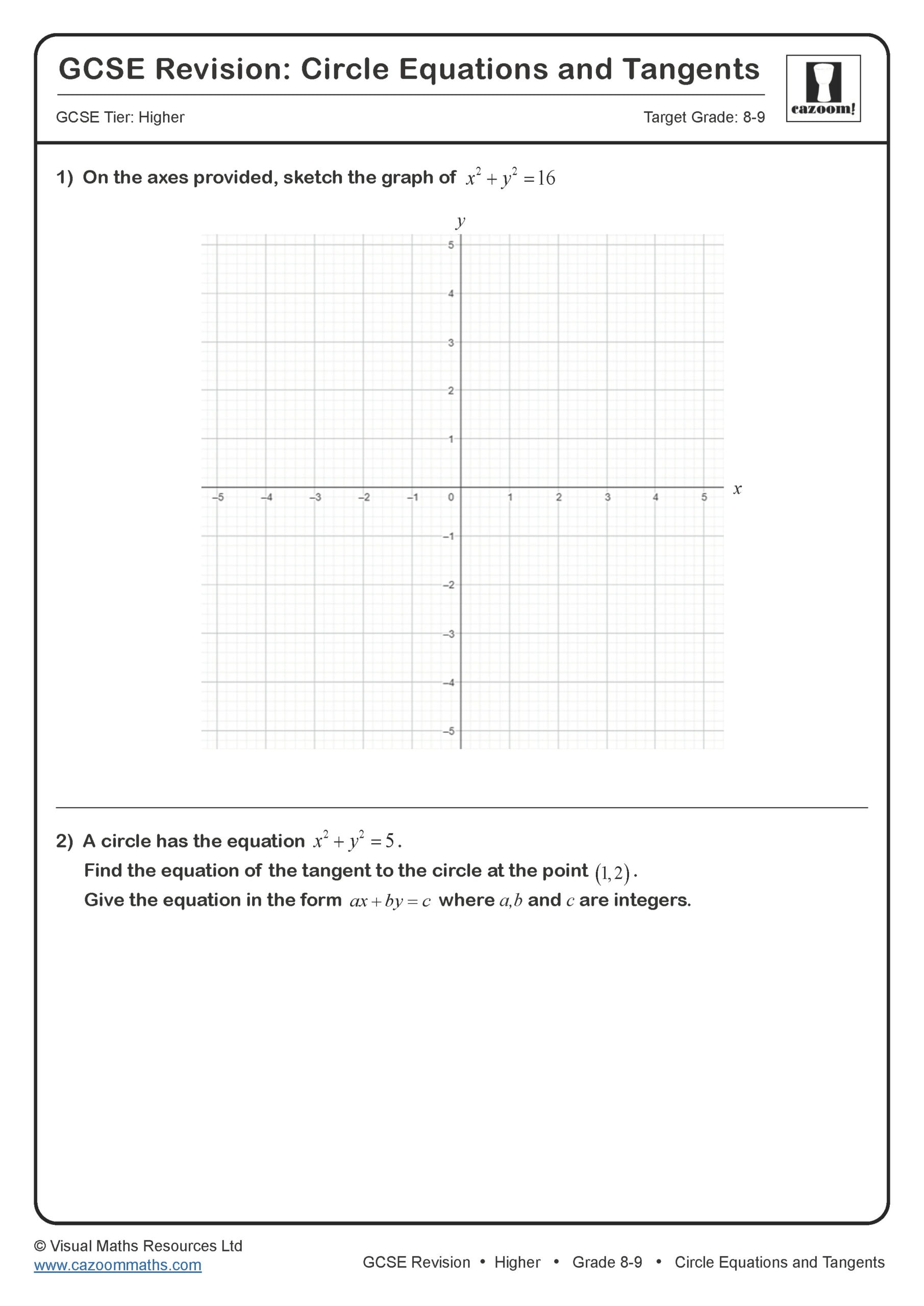
Find the equation of a line through two given points or through one point with a given gradient. Understand that parallel lines have the same gradient. Understand that the gradients of perpendicular lines are negative reciprocals. Find the equation of a line perpendicular to a given line through a given point
2.16Foundation & Higher
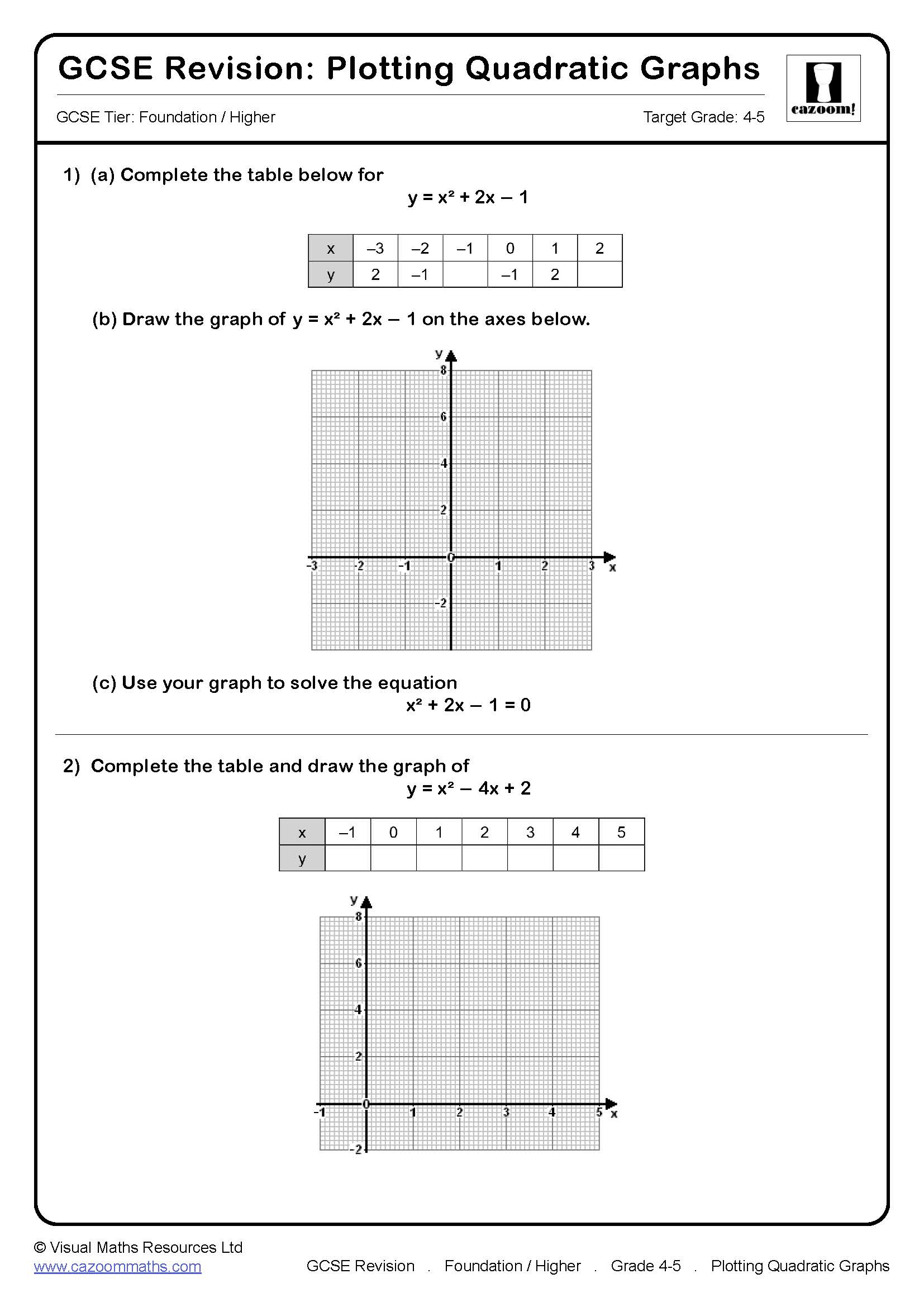
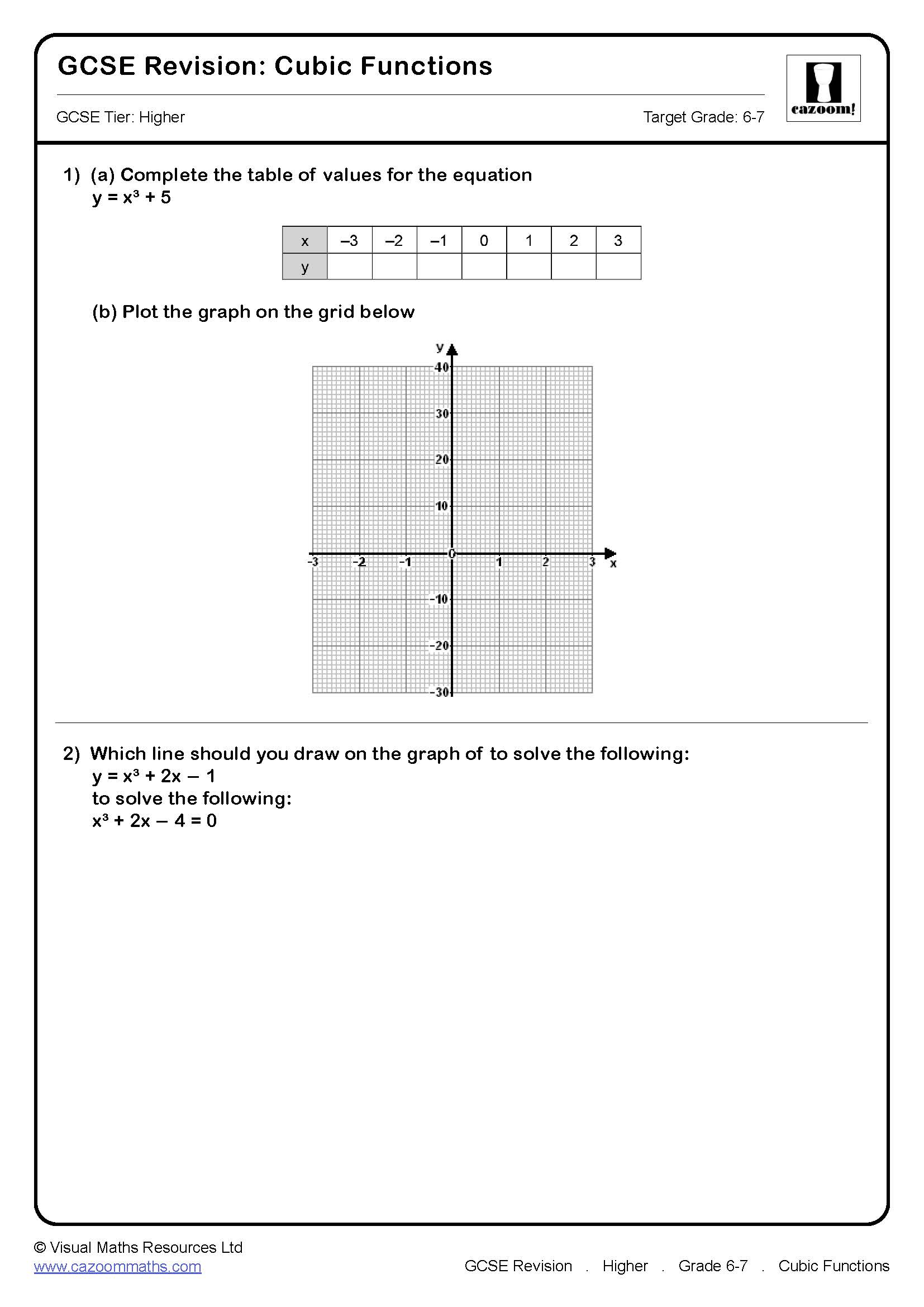
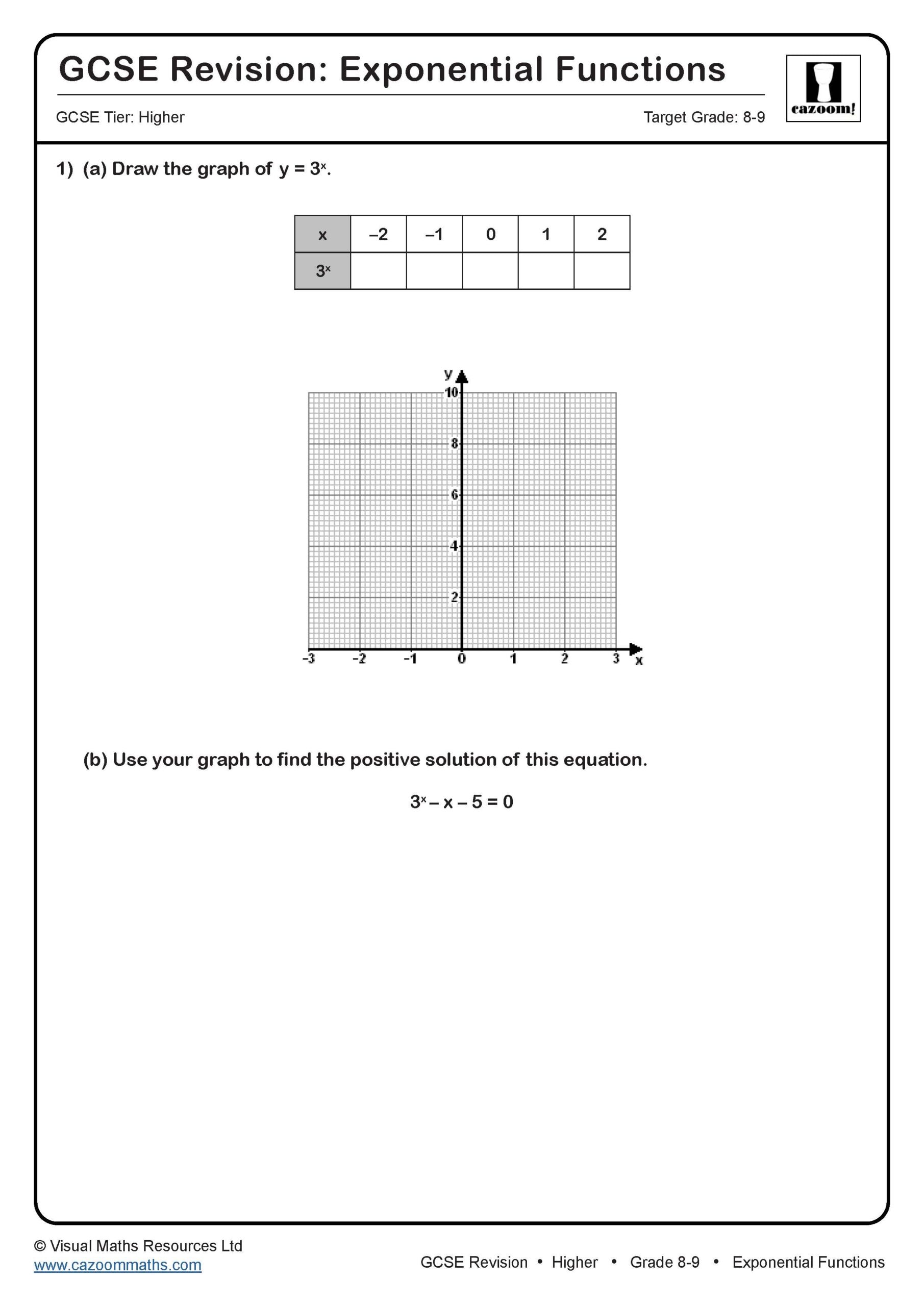
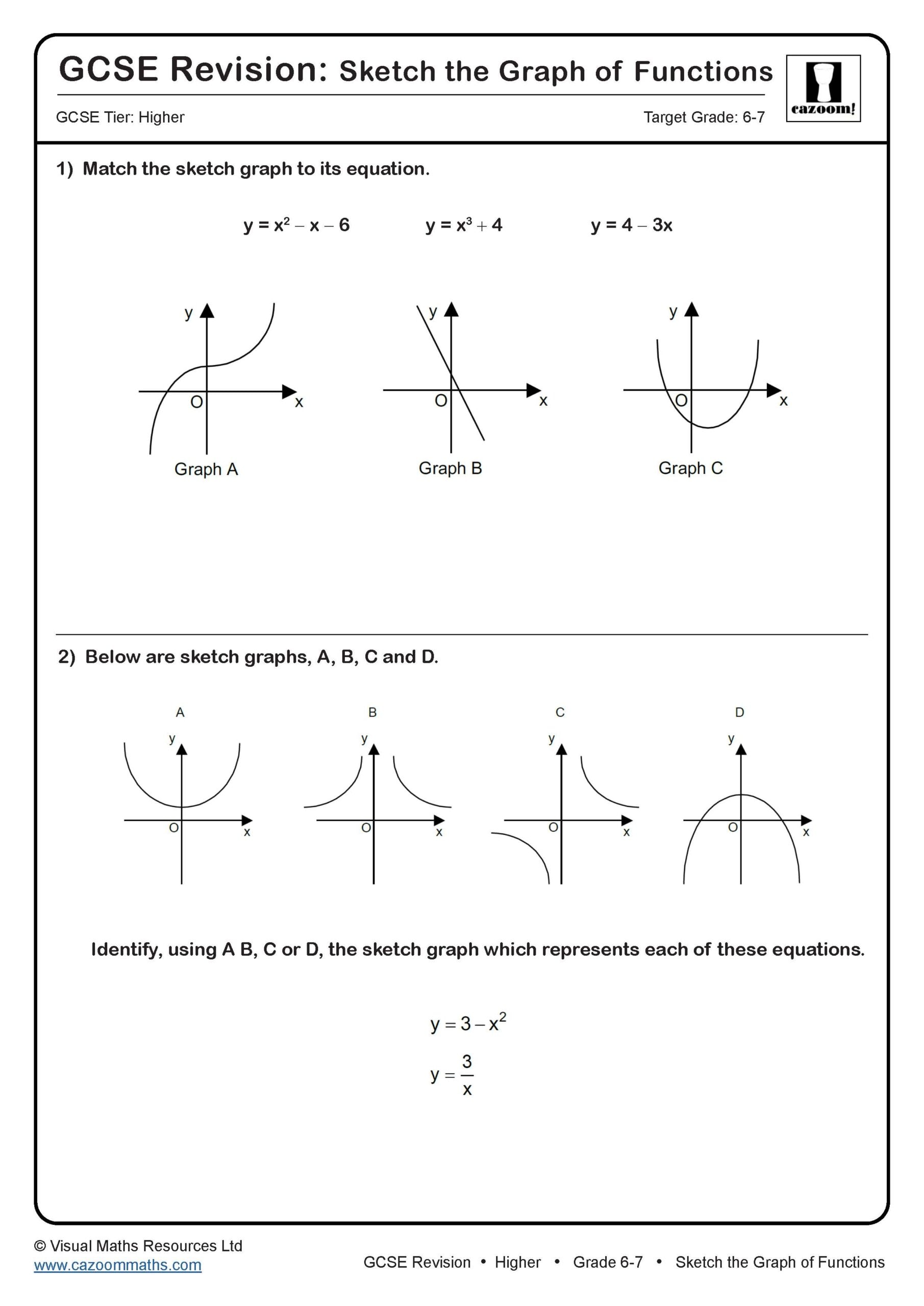
Recognise, plot and draw graphs of quadratic, cubic, reciprocal and exponential functions. Use graphs to solve equations, read off solutions and find approximate solutions. Use the graphs of these functions to find approximate solutions to related equations
2.17Foundation & Higher
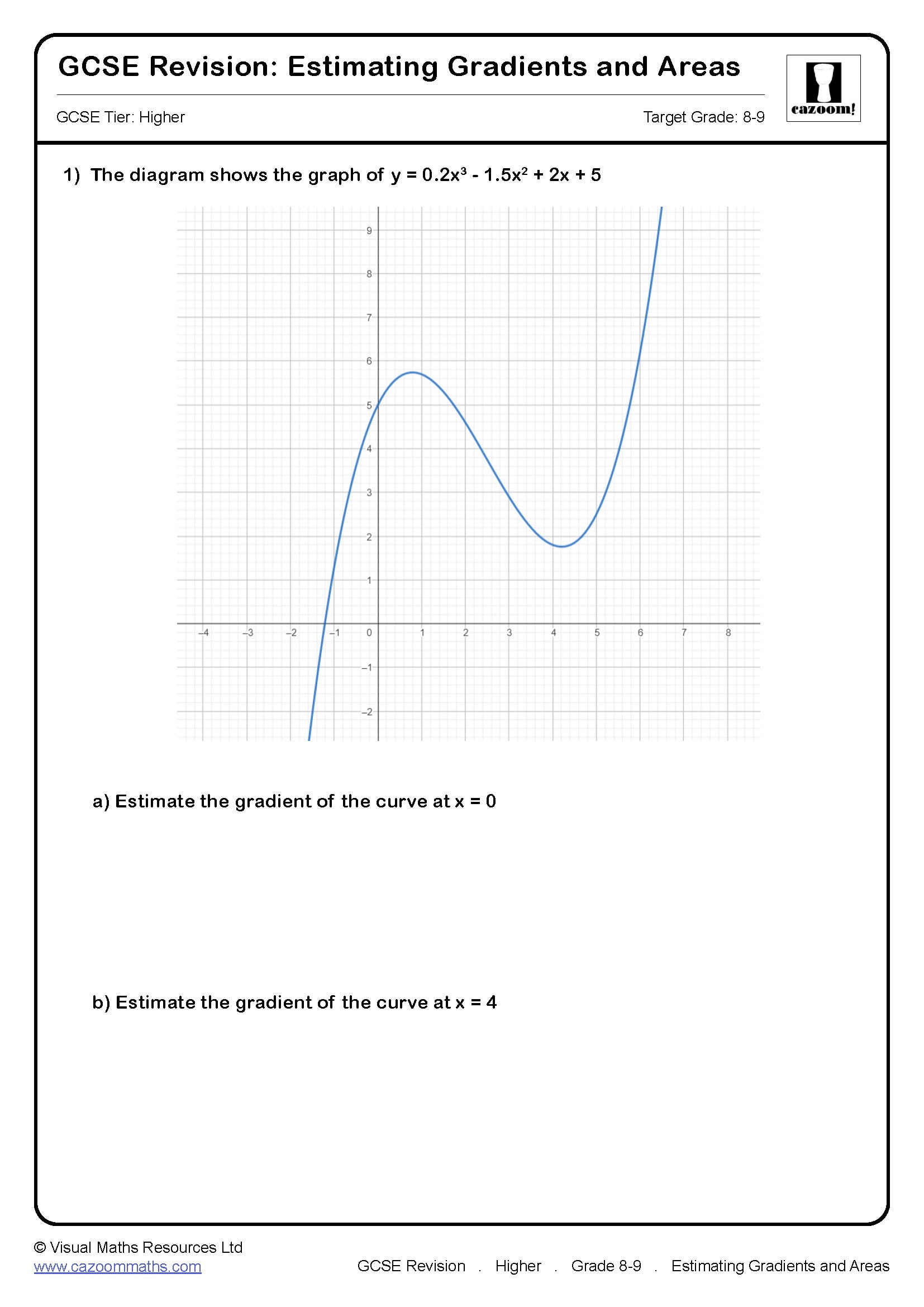
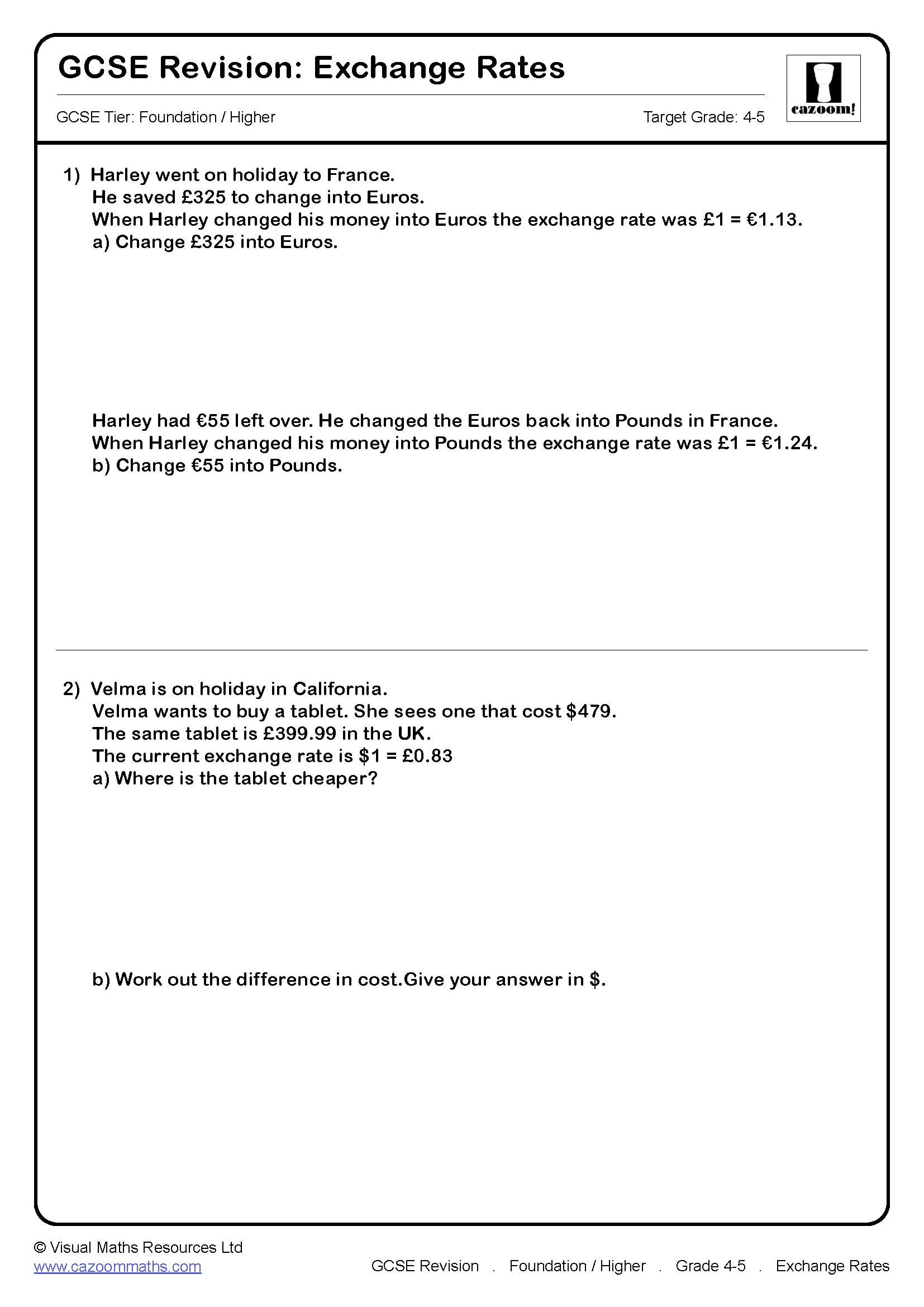
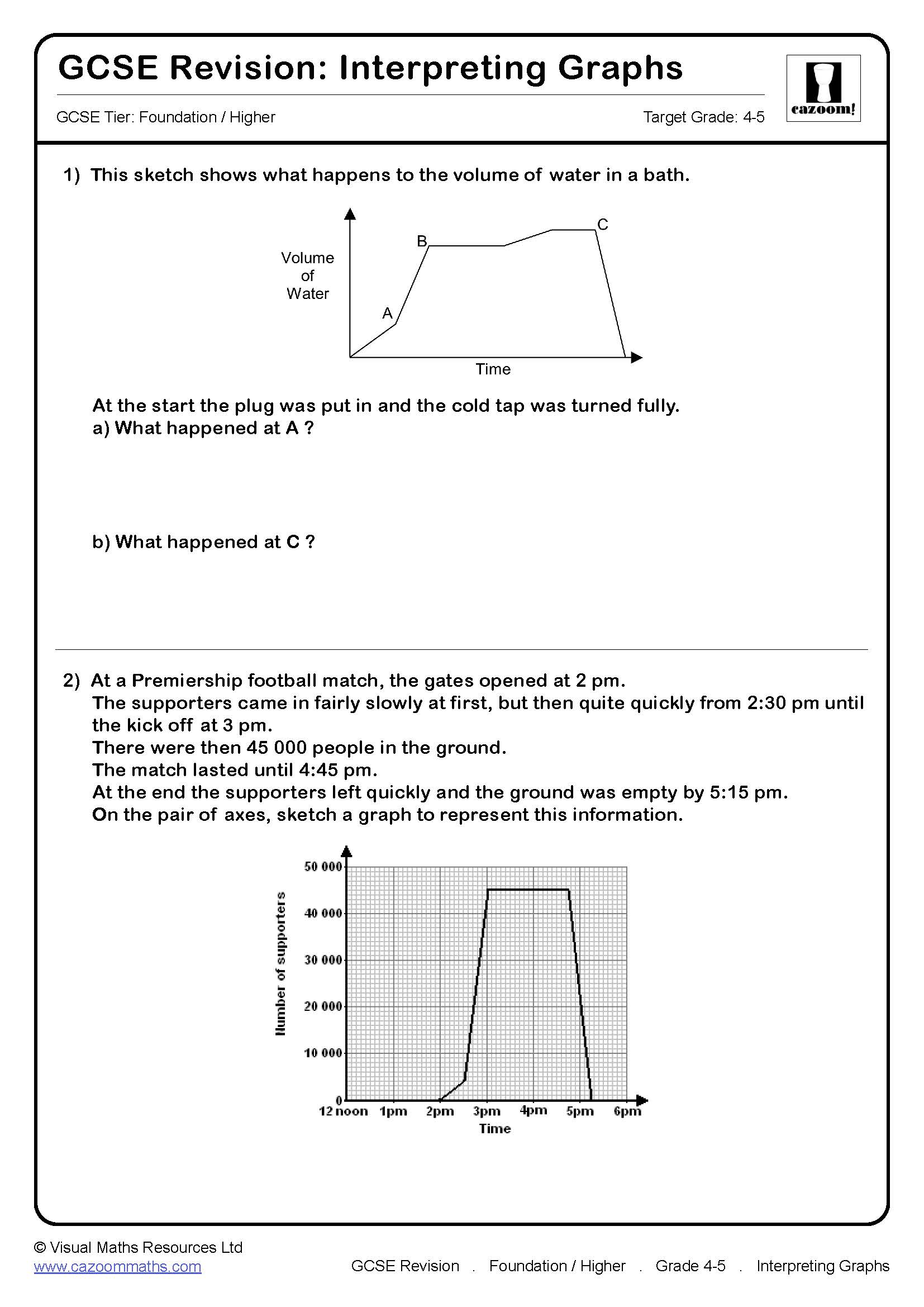
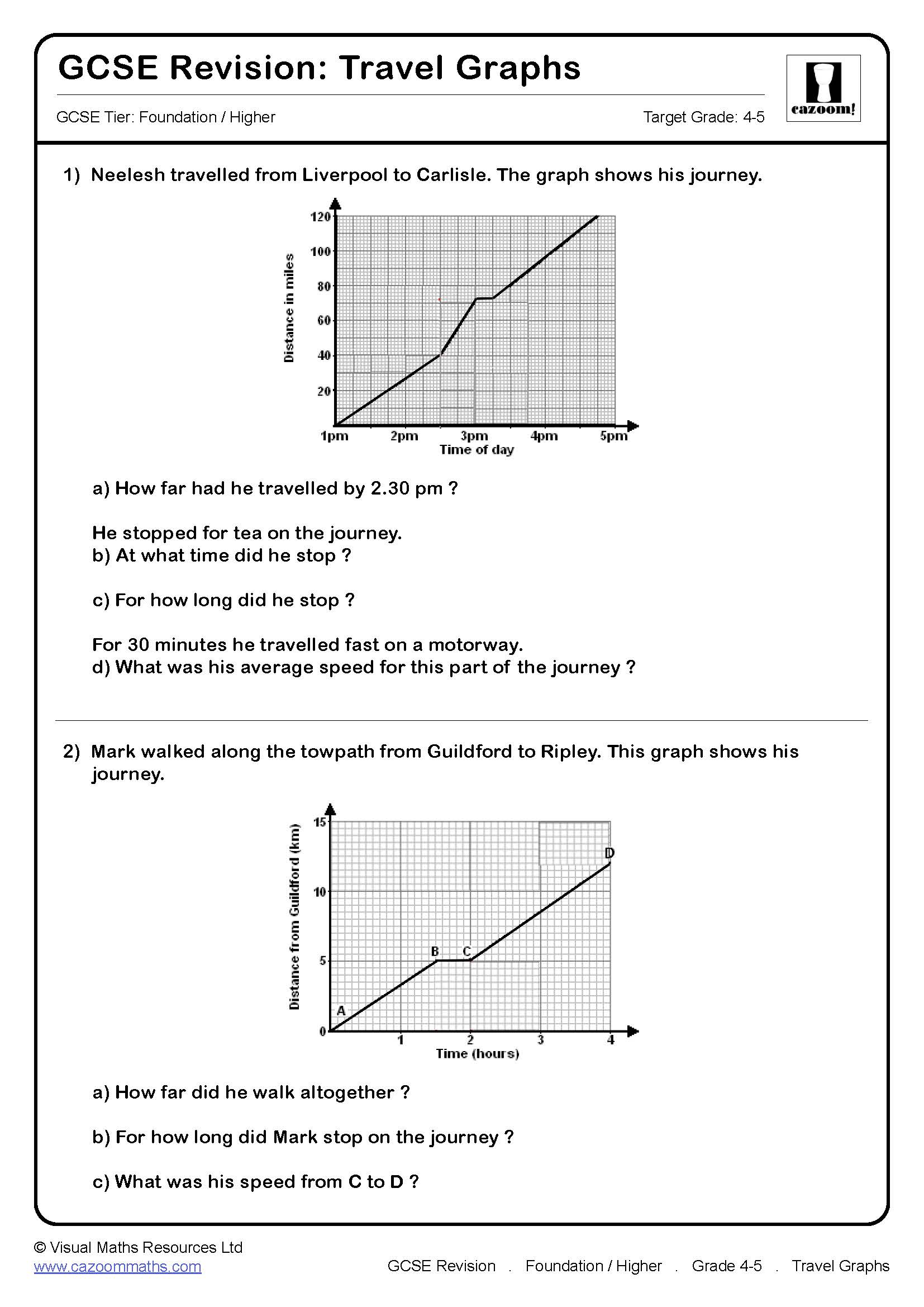
Interpret and use real-life graphs, including distance–time and speed–time graphs. Calculate the area under a speed–time graph to work out the distance travelled. Estimate the gradient of a curve by drawing a tangent
2.18Higher
Sketch graphs of trigonometric functions y = sin x, y = cos x and y = tan x for 0° ≤ x ≤ 360°. Recognise the characteristic shapes of all these functions