Pythagoras' Theorem iGCSE REVISION WORKSHEET
About This Worksheet
This iGCSE revision worksheet covers Pythagoras' Theorem, aligned to Cambridge iGCSE (0580) syllabus codes C4.5, E3.6, C5.2, E1.16 and Edexcel iGCSE (4MA1) codes 3.8, 4.4, 1.10. Answers and worked solutions are included.
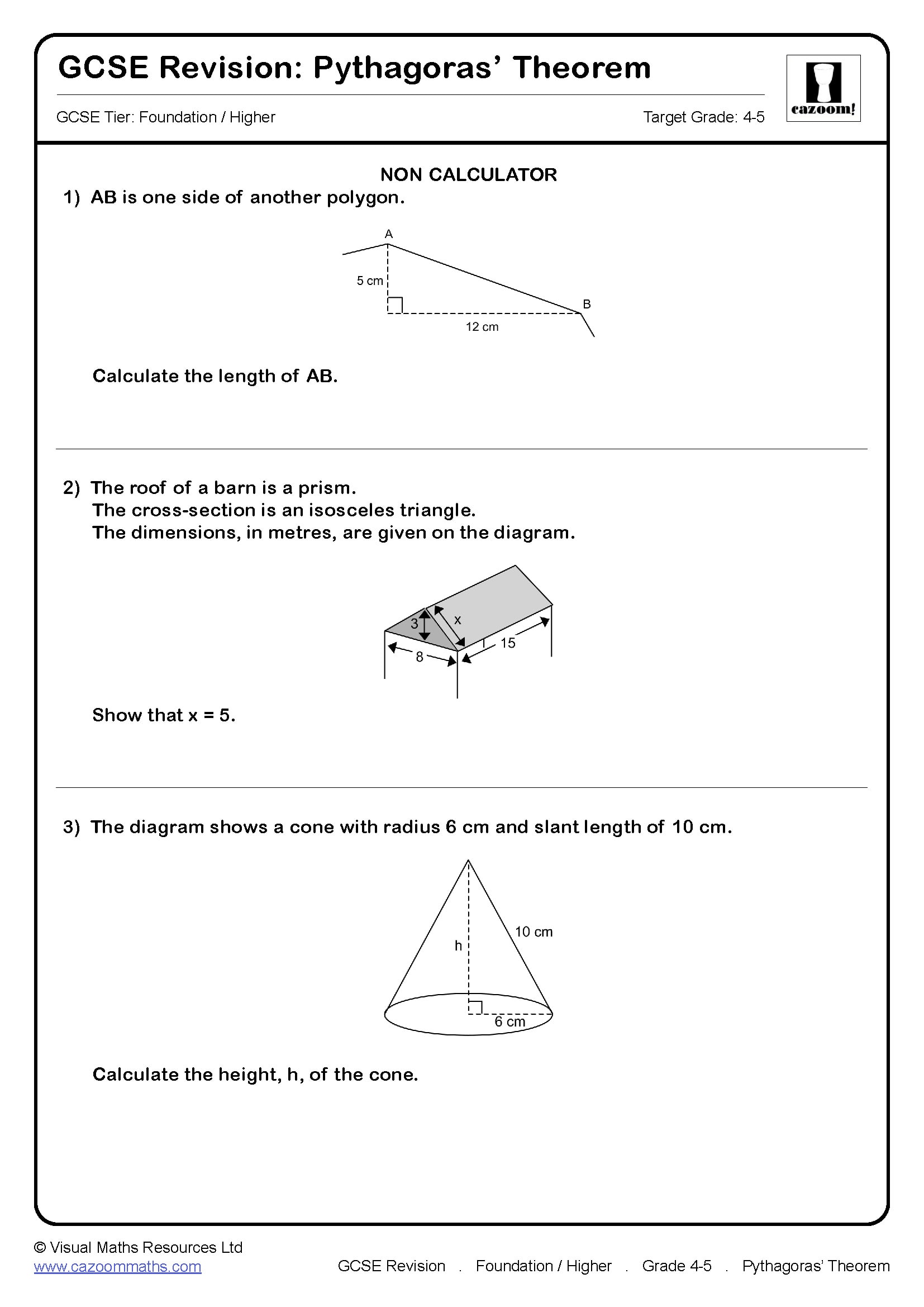
This extensive collection of questions covers both non-calculator and calculator-style problems. There are also questions involving the application of Pythagoras' Theorem, such as the distance between two cartesian coordinates or the height of a cone.
All worksheets are created by the team of experienced teachers at Cazoom Maths.
iGCSE Syllabus Alignment
Cambridge iGCSE Maths (0580)
Calculate the length of a line segment from the coordinates of its end points
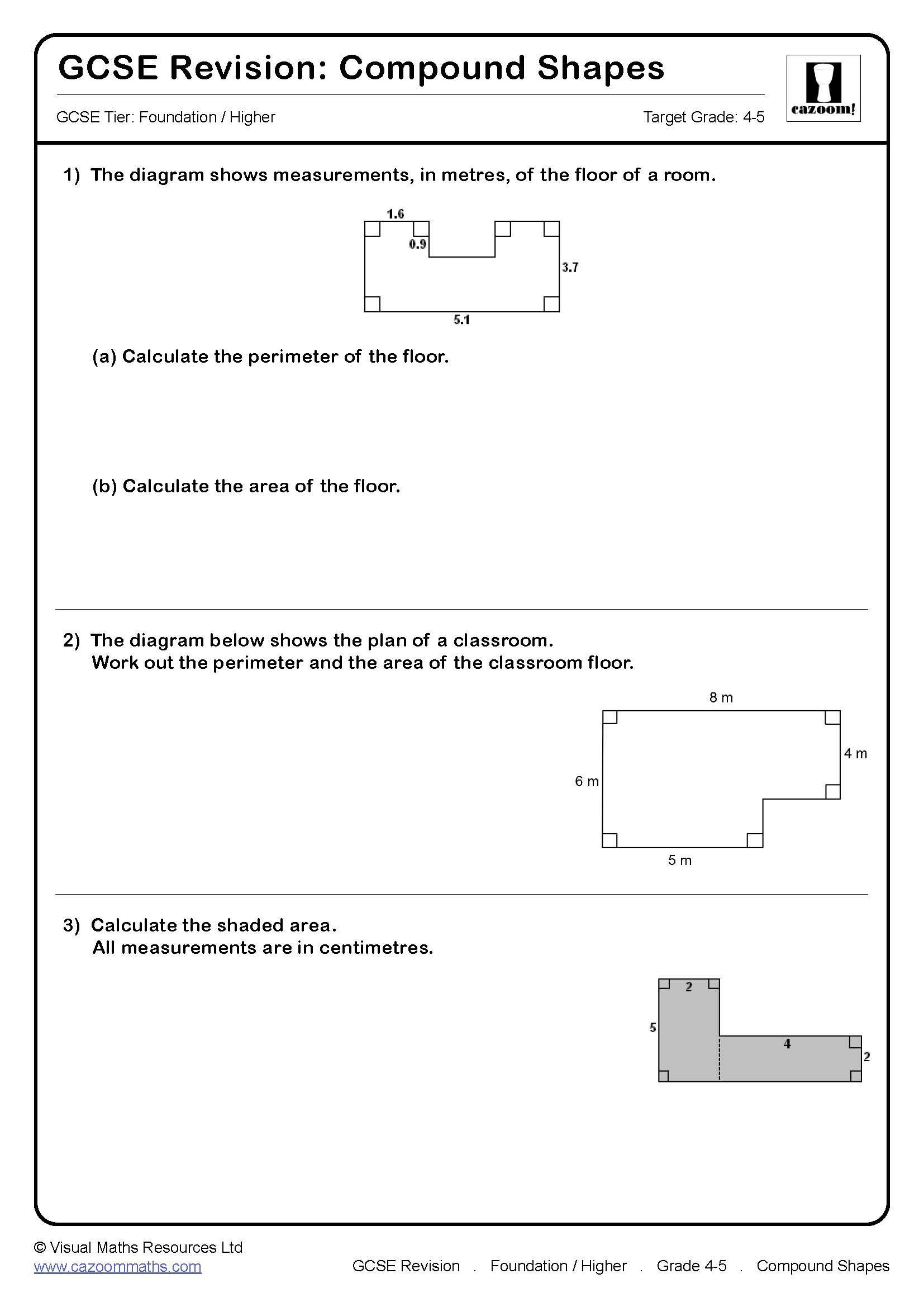
Coordinate geometryCarry out calculations involving the perimeter and area of a rectangle, triangle, parallelogram and trapezium and compound shapes derived from these
MensurationEdexcel iGCSE Maths (4MA1)
Calculate the perimeter and area of rectangles, triangles, parallelograms, trapezia, circles, semicircles, sectors and compound shapes
Mensuration