KS1 Adding Three Numbers Worksheets
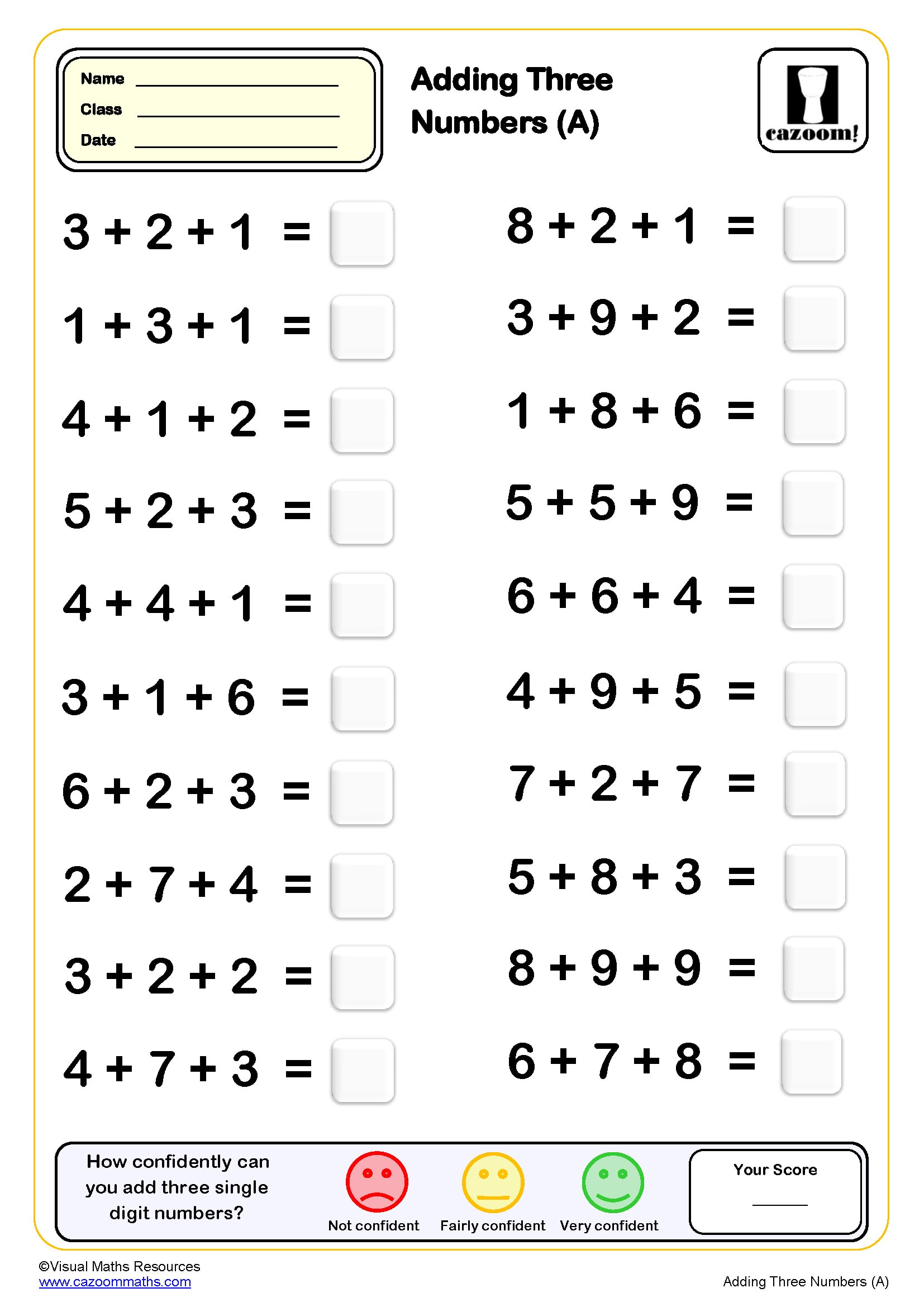
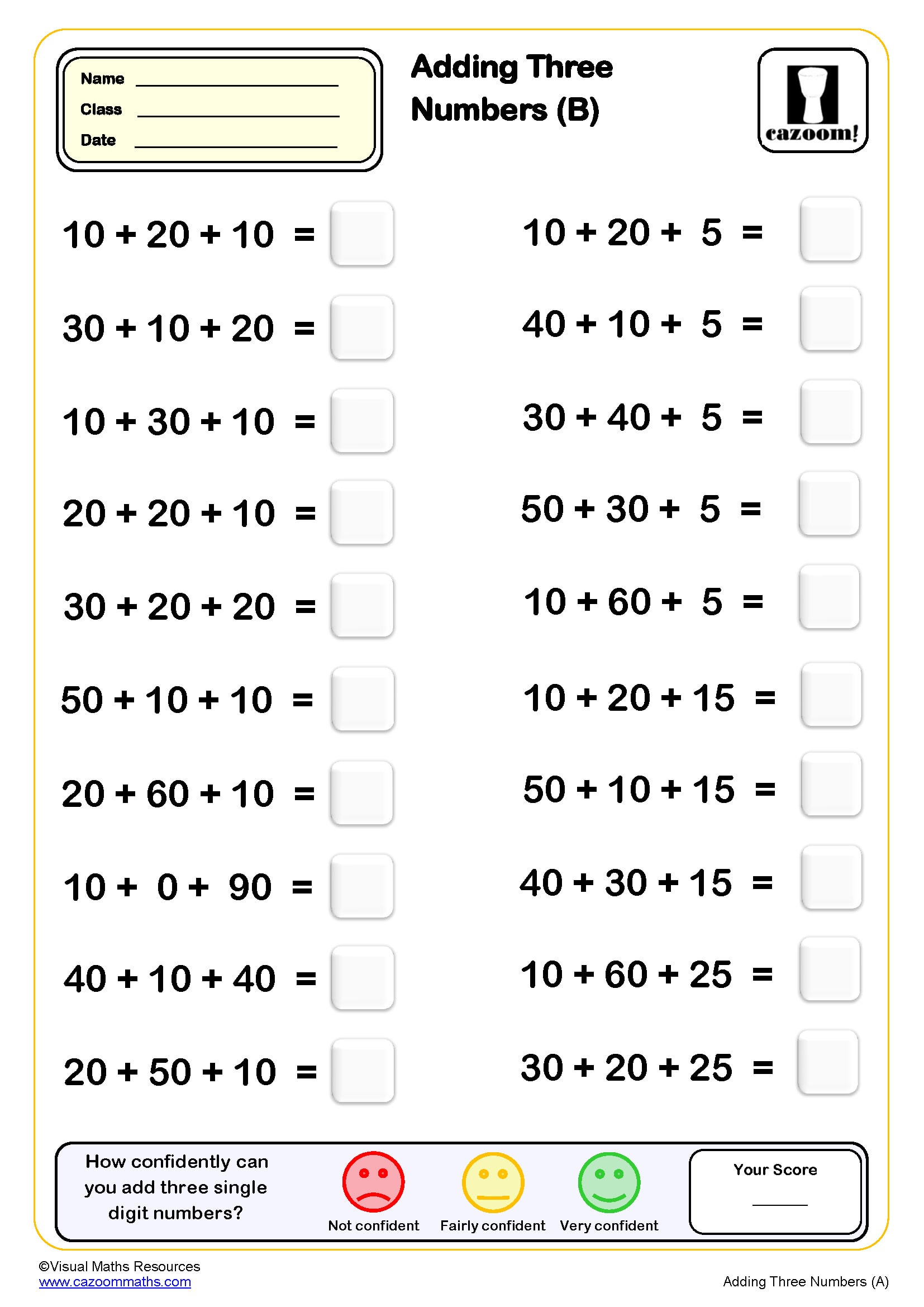
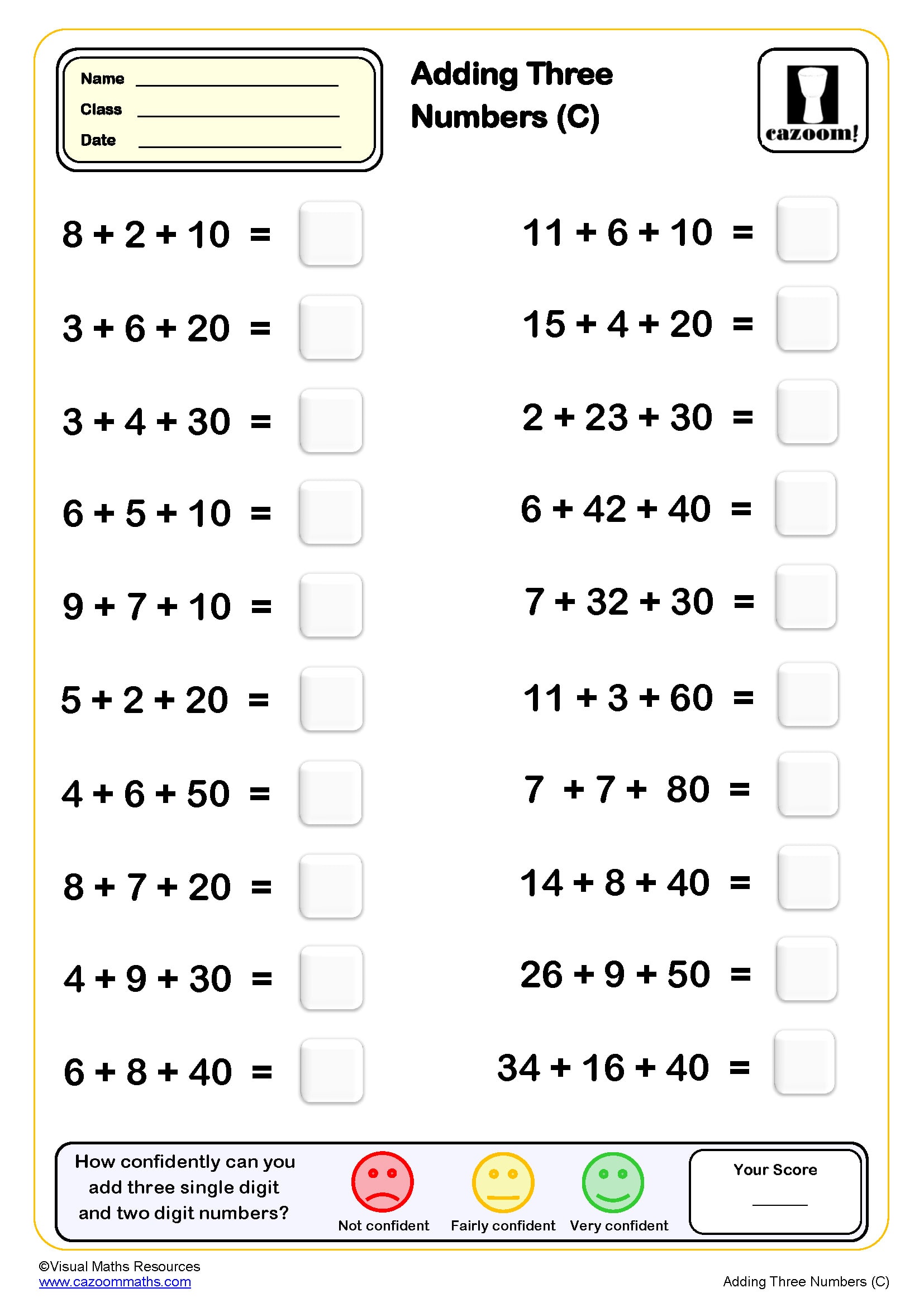
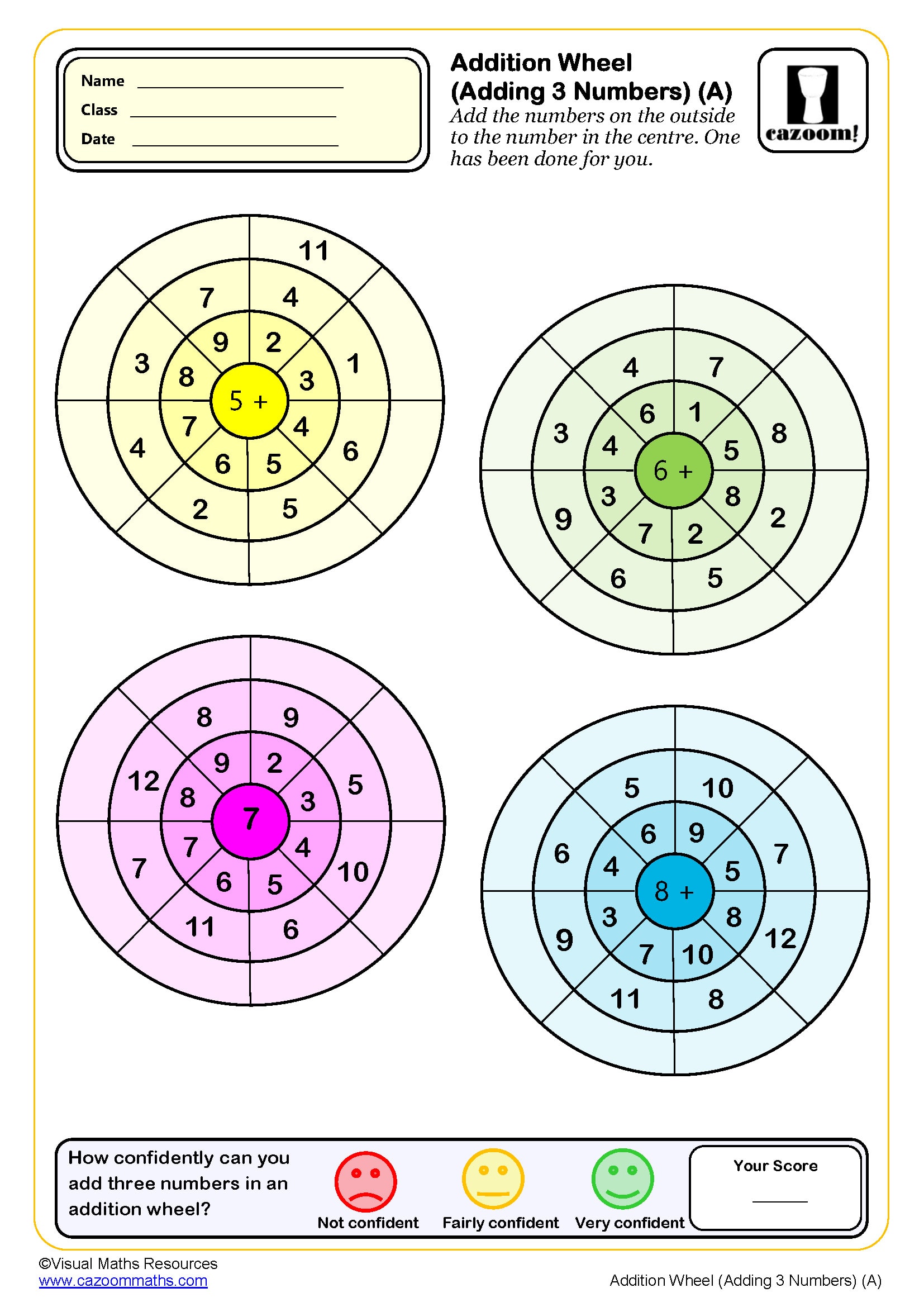
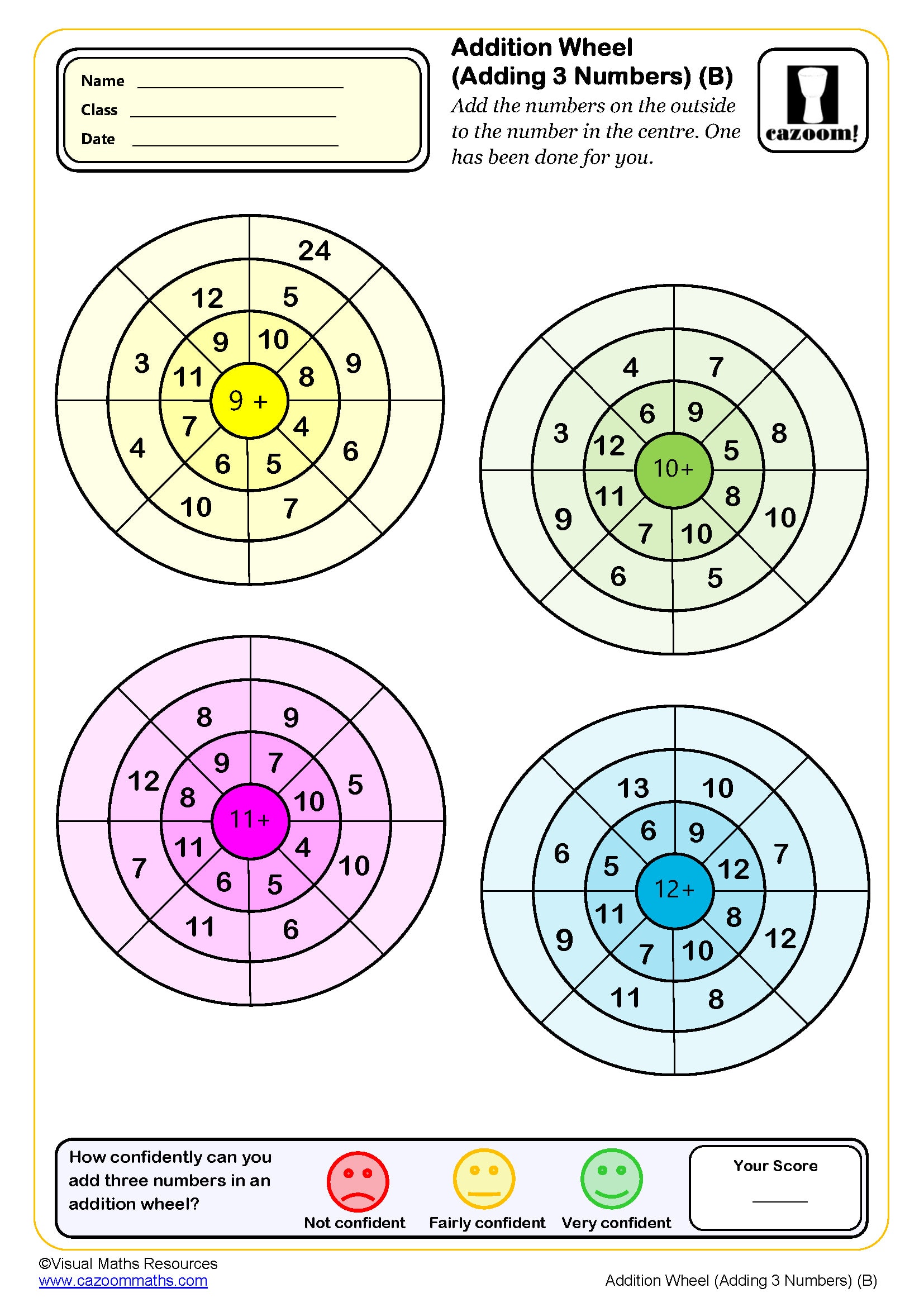
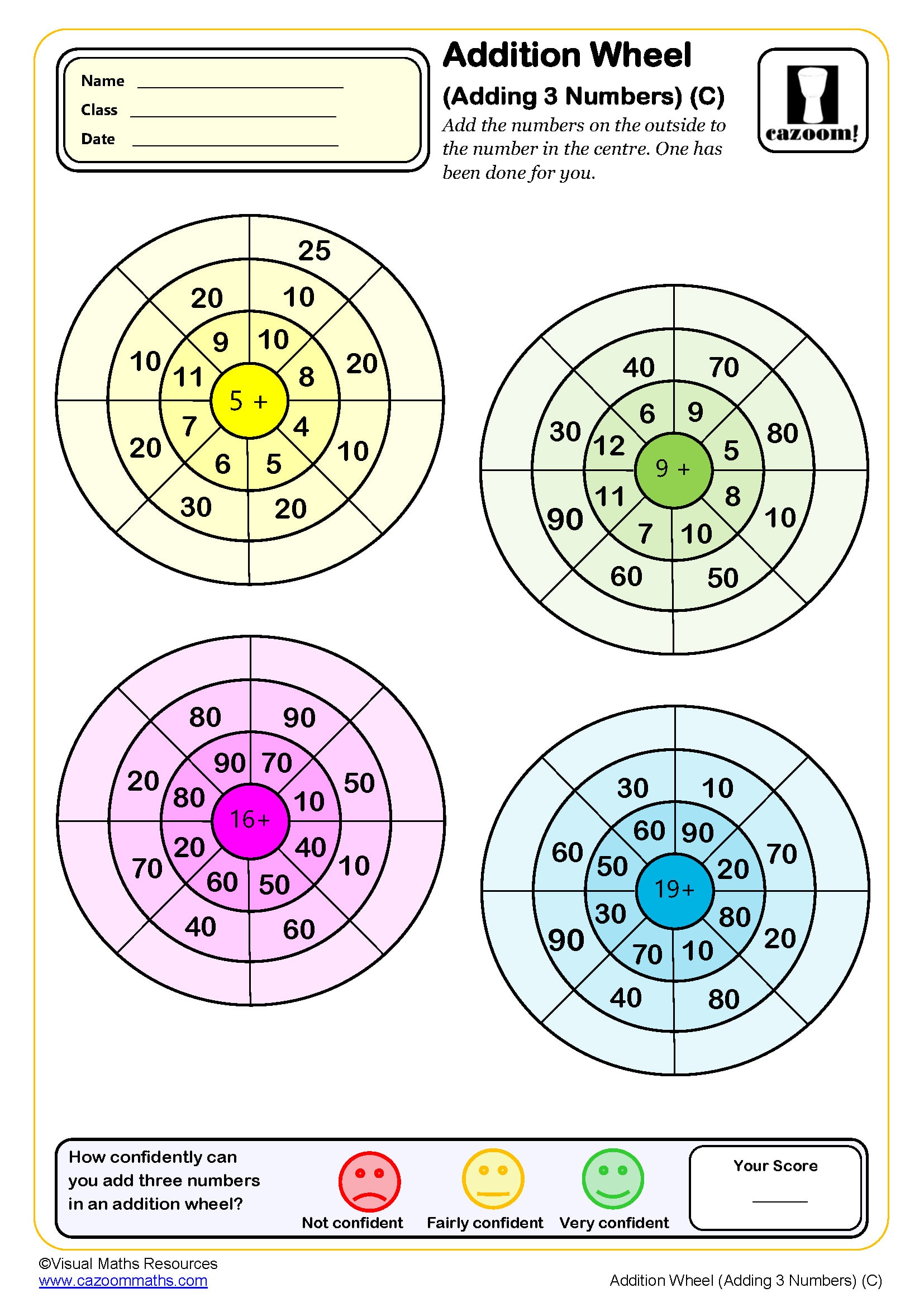
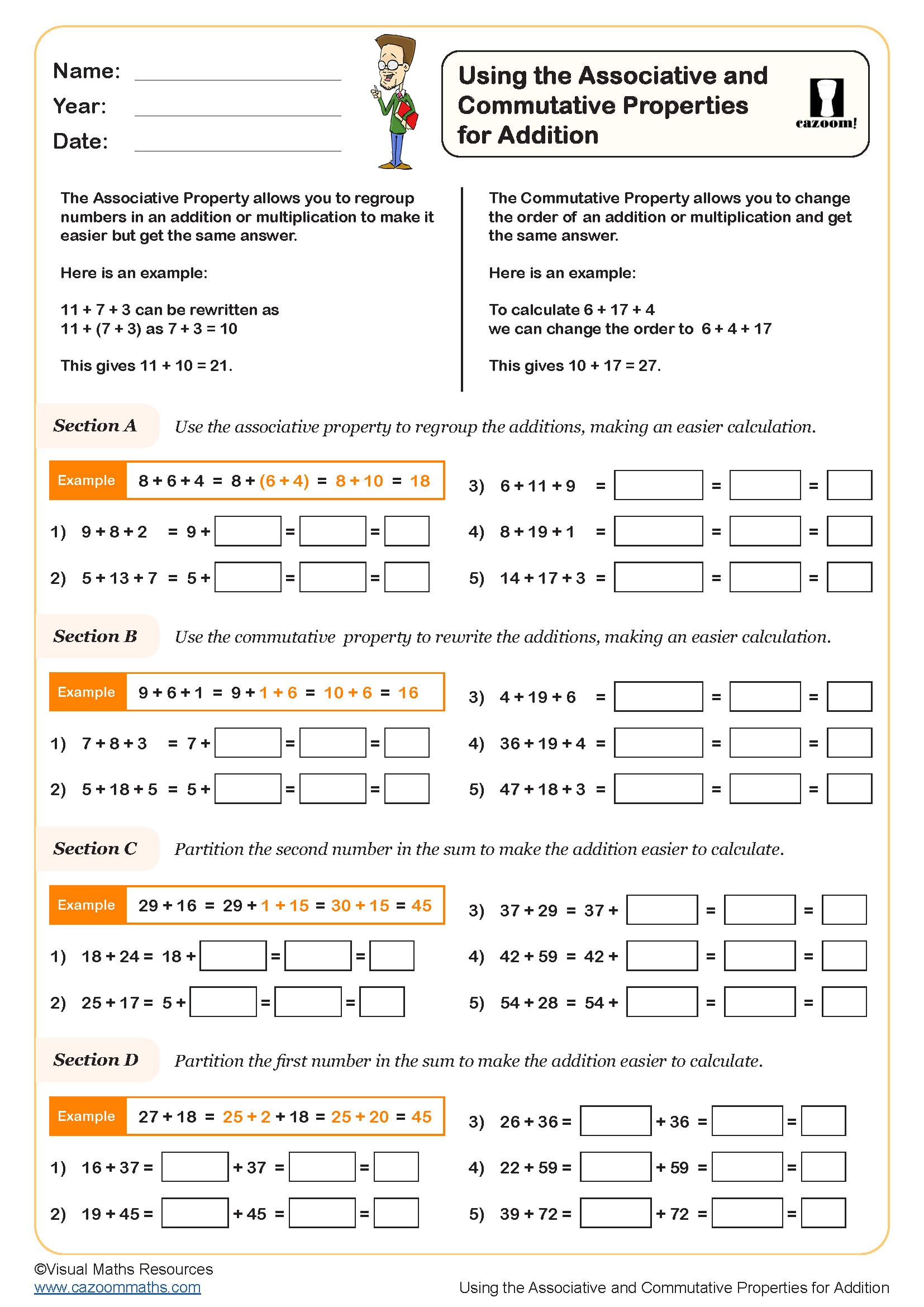
All worksheets are created by the team of experienced teachers at Cazoom Maths.
Why is adding three numbers important in Year 2?
Adding three numbers extends pupils' understanding beyond simple two-number calculations and develops crucial mathematical thinking skills. In Year 2, children learn to recognise that addition can be performed in any order and that grouping numbers strategically makes calculations easier. For example, when adding 7 + 5 + 3, spotting that 7 + 3 = 10 first simplifies the problem significantly. This skill strengthens number bonds, enhances mental calculation strategies, and introduces the associative property of addition. It also prepares children for column addition with multiple addends and problem-solving situations where several quantities need combining. Regular practice with three-number addition builds fluency and mathematical confidence that supports progression through Key Stage 1 and beyond.
Which year group should use these adding three numbers worksheets?
These worksheets are specifically designed for Year 2 pupils working within the Key Stage 1 curriculum. At this stage, children are expected to add numbers using concrete objects and pictorial representations before moving to formal written methods. Year 2 pupils should be comfortable adding two single-digit numbers and recognising number bonds to 20 before tackling three-number additions confidently. The worksheets scaffold learning appropriately for this age group, starting with smaller numbers and visual supports before progressing to more abstract calculations. Teachers might also use these resources for intervention work with older pupils who need additional practice with addition fundamentals, or for extension work with confident Year 1 children approaching the end of Key Stage 1.
What strategies help children add three numbers successfully?
The most effective strategy is teaching children to look for number pairs that make 10 or other friendly numbers. When faced with 8 + 6 + 2, spotting that 8 + 2 = 10 first makes the calculation much simpler. Another approach involves adding the first two numbers, then adding the third to that total—this sequential method works well when children are comfortable holding a running total. Some pupils benefit from physically grouping objects or using tens frames to visualise the calculation. As confidence grows, children can explore different combinations and discover that the order doesn't matter, reinforcing the commutative property. Our worksheets include varied question formats that encourage pupils to develop and apply these strategic approaches rather than simply counting on their fingers.
Do these worksheets include answers?
Yes, every worksheet in this collection includes a complete answer sheet. This feature saves considerable marking time for teachers and makes these resources ideal for independent practice, homework assignments, or intervention sessions. Parents supporting home learning will find the answer sheets particularly valuable for checking work confidently without second-guessing their own calculations. The answers are presented clearly, allowing children to self-mark their work when appropriate—an important skill that encourages mathematical independence and helps pupils identify their own misconceptions. Teachers can use the answer sheets to quickly assess which calculation strategies children are using successfully and where additional support might be needed. This comprehensive approach means you have everything required for effective maths practice in one downloadable resource.