KS1 Adding to 2 digit numbers Worksheets
Adding 10 to 2 digit numbers (10 questions)
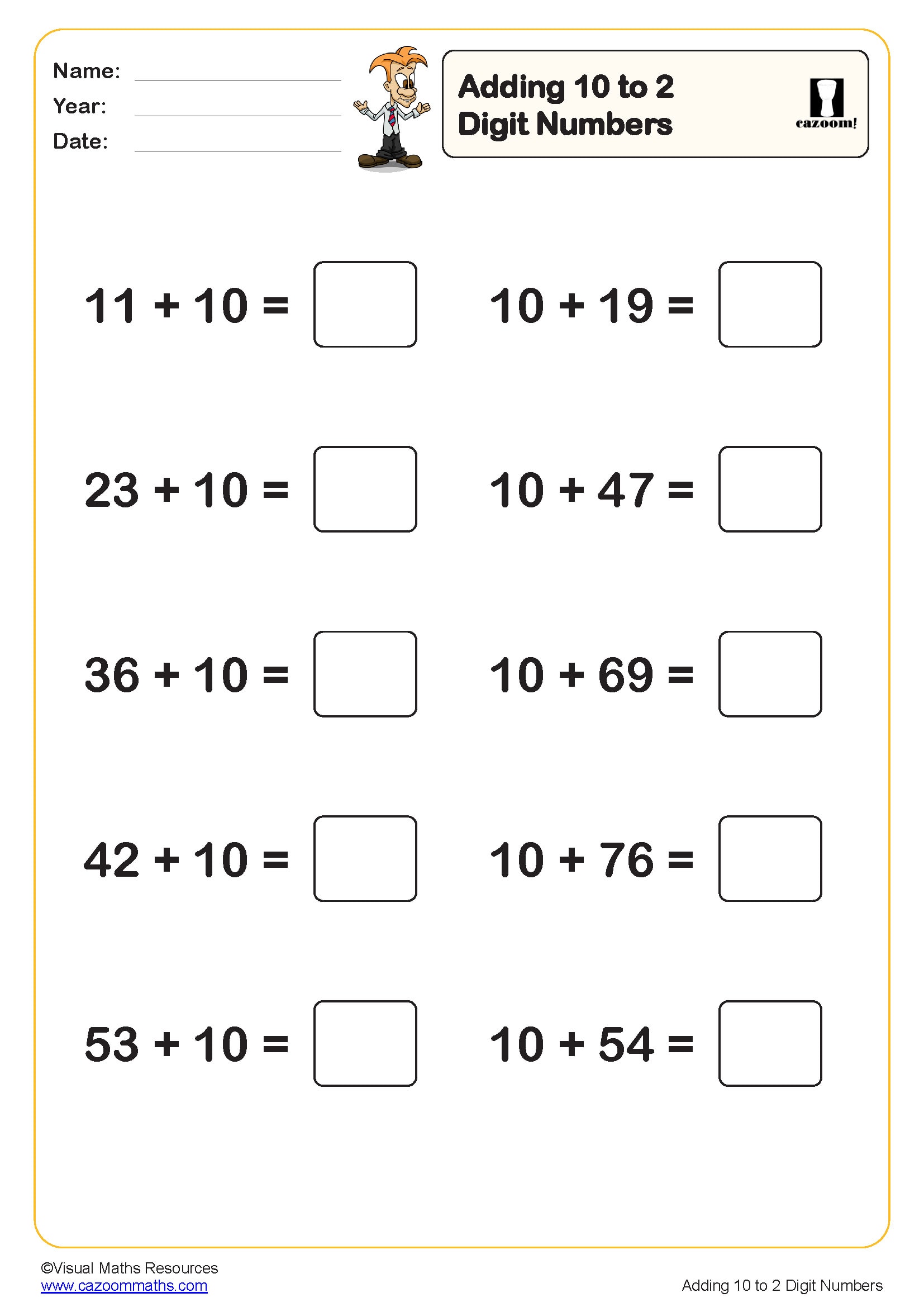
Adding 10 to 2 digit numbers (20 questions)
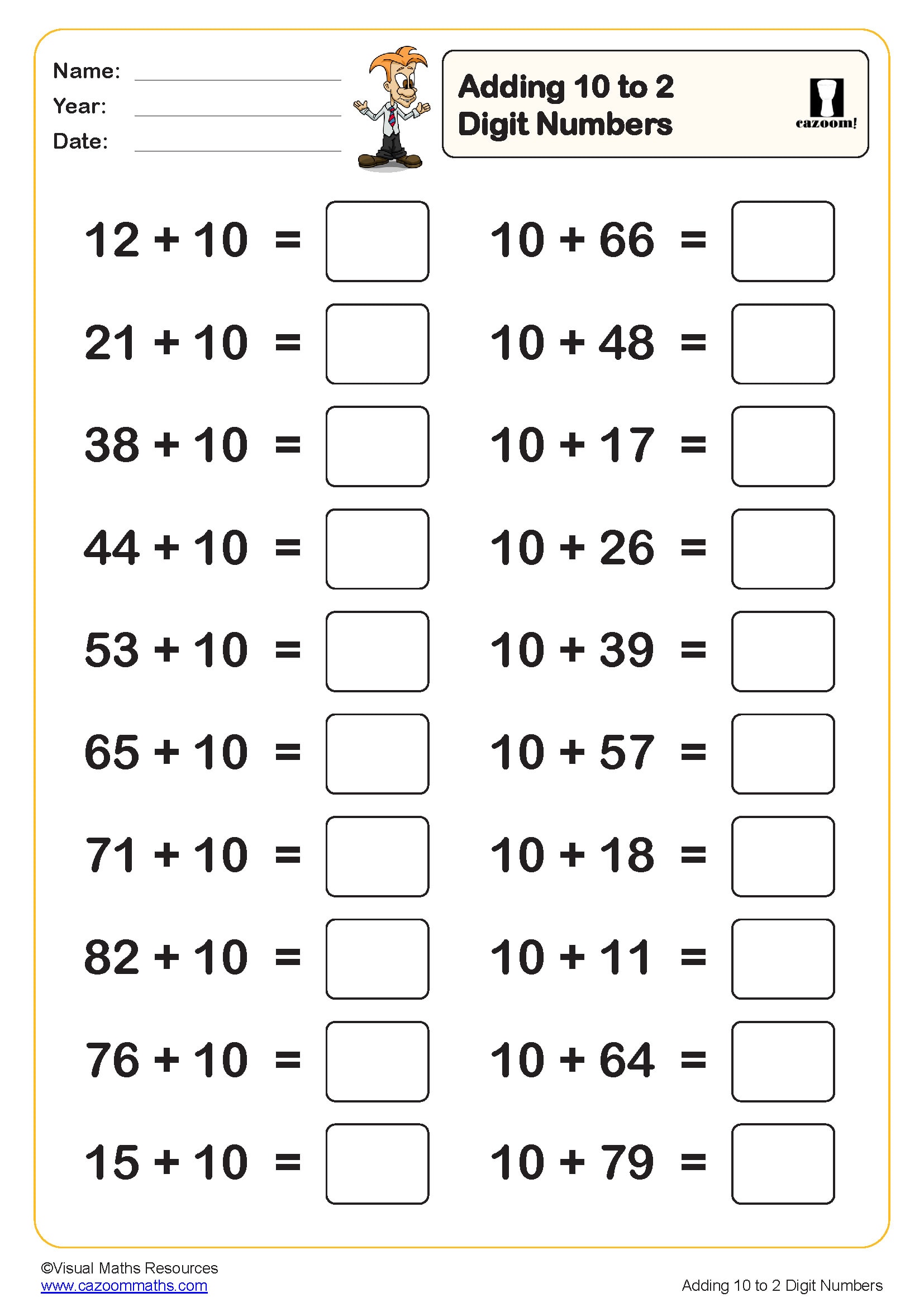
Adding 10 to 2 digit numbers (50 questions)
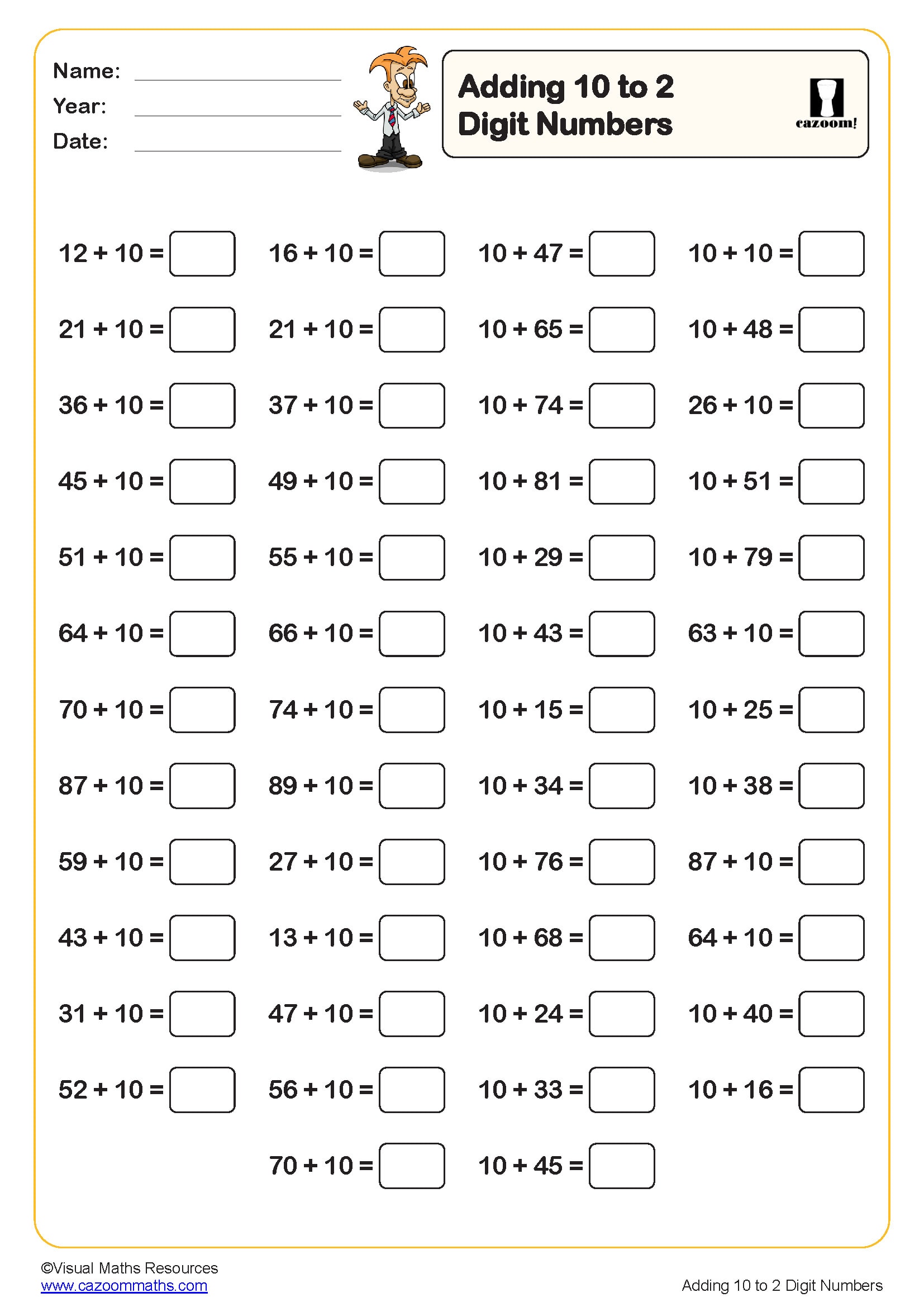
Adding 11 to 2 digit numbers (10 questions)
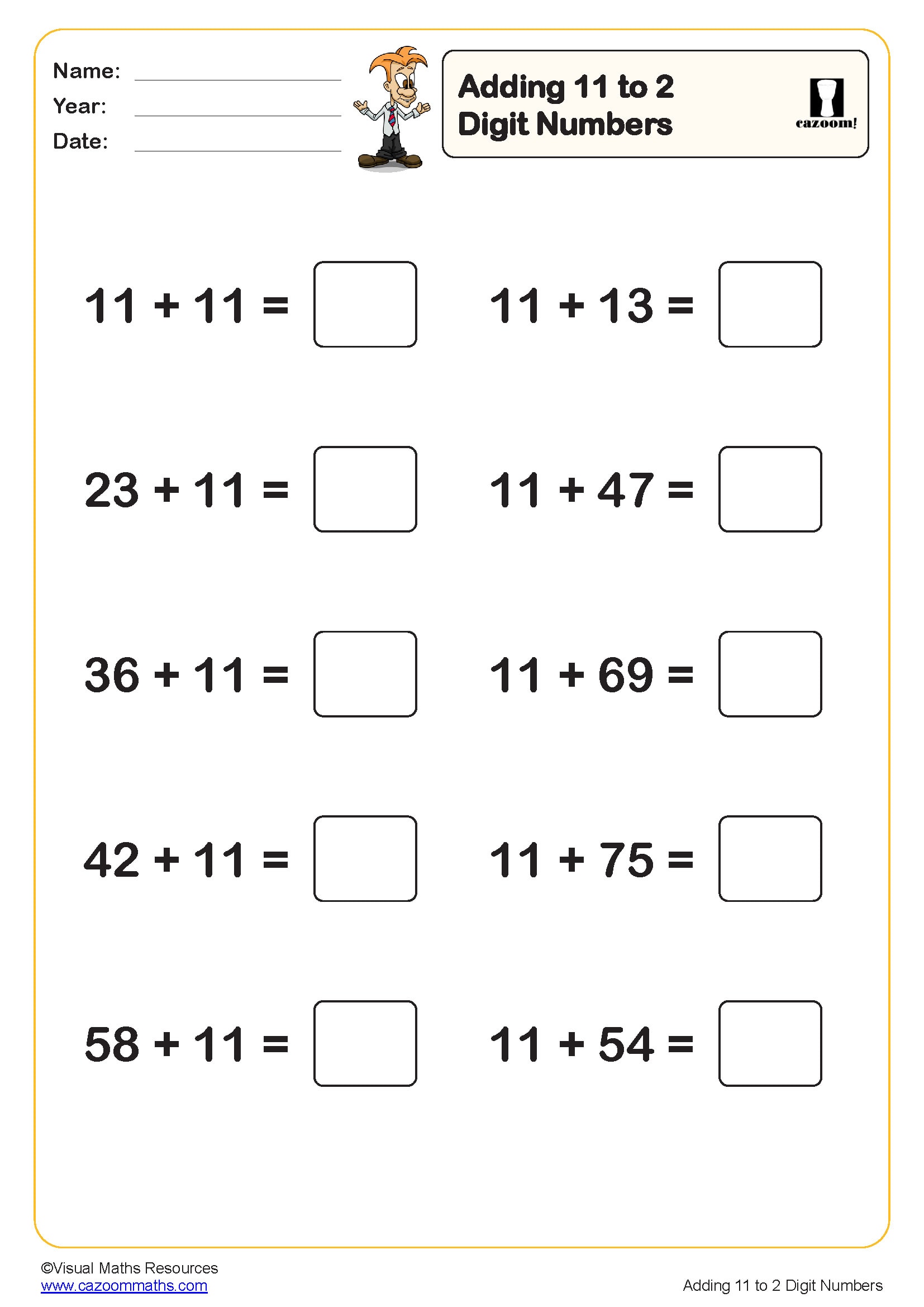
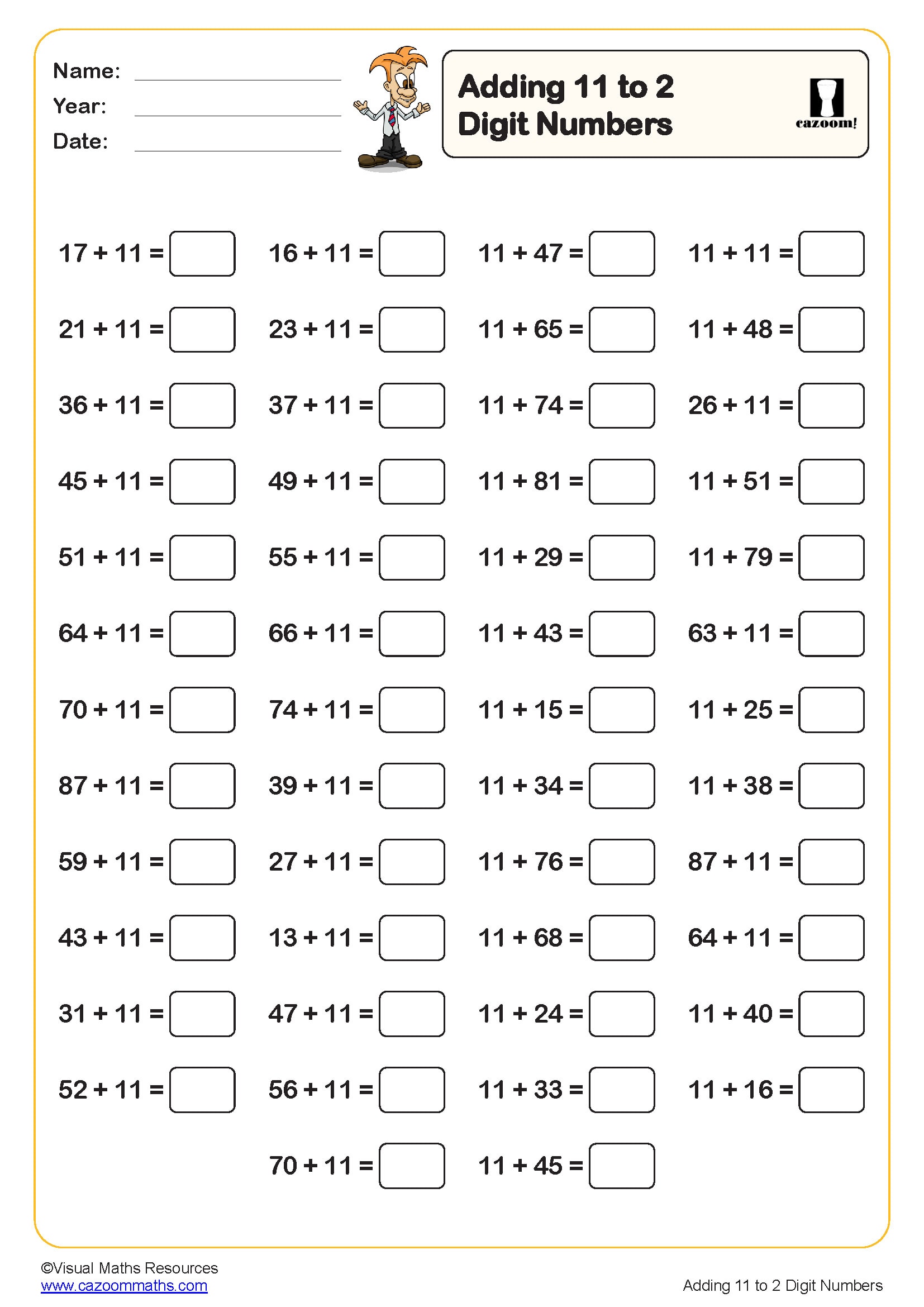
Adding 11 to 2 digit numbers (20 questions)
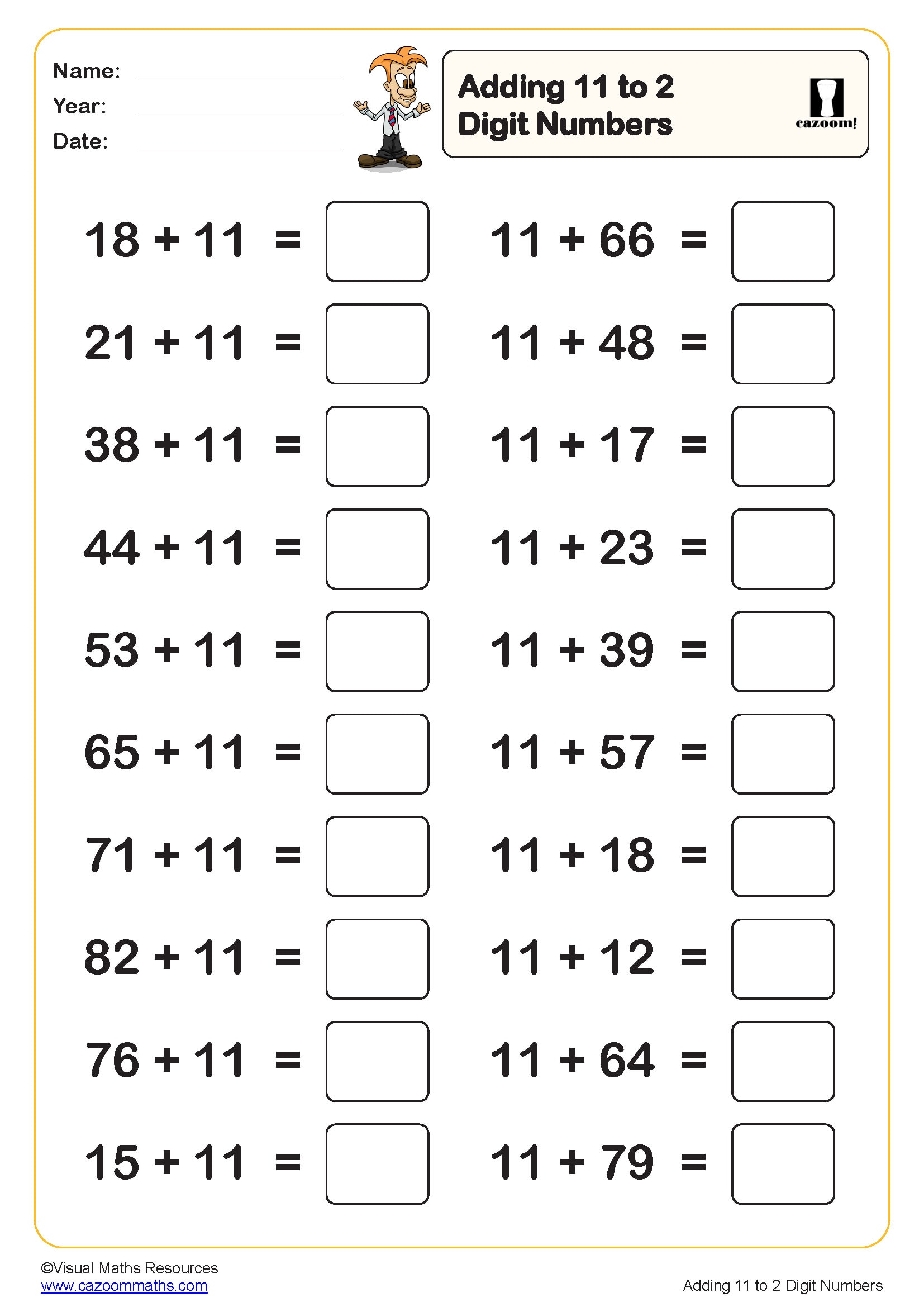
Adding 11 to 2 digit numbers (50 questions)
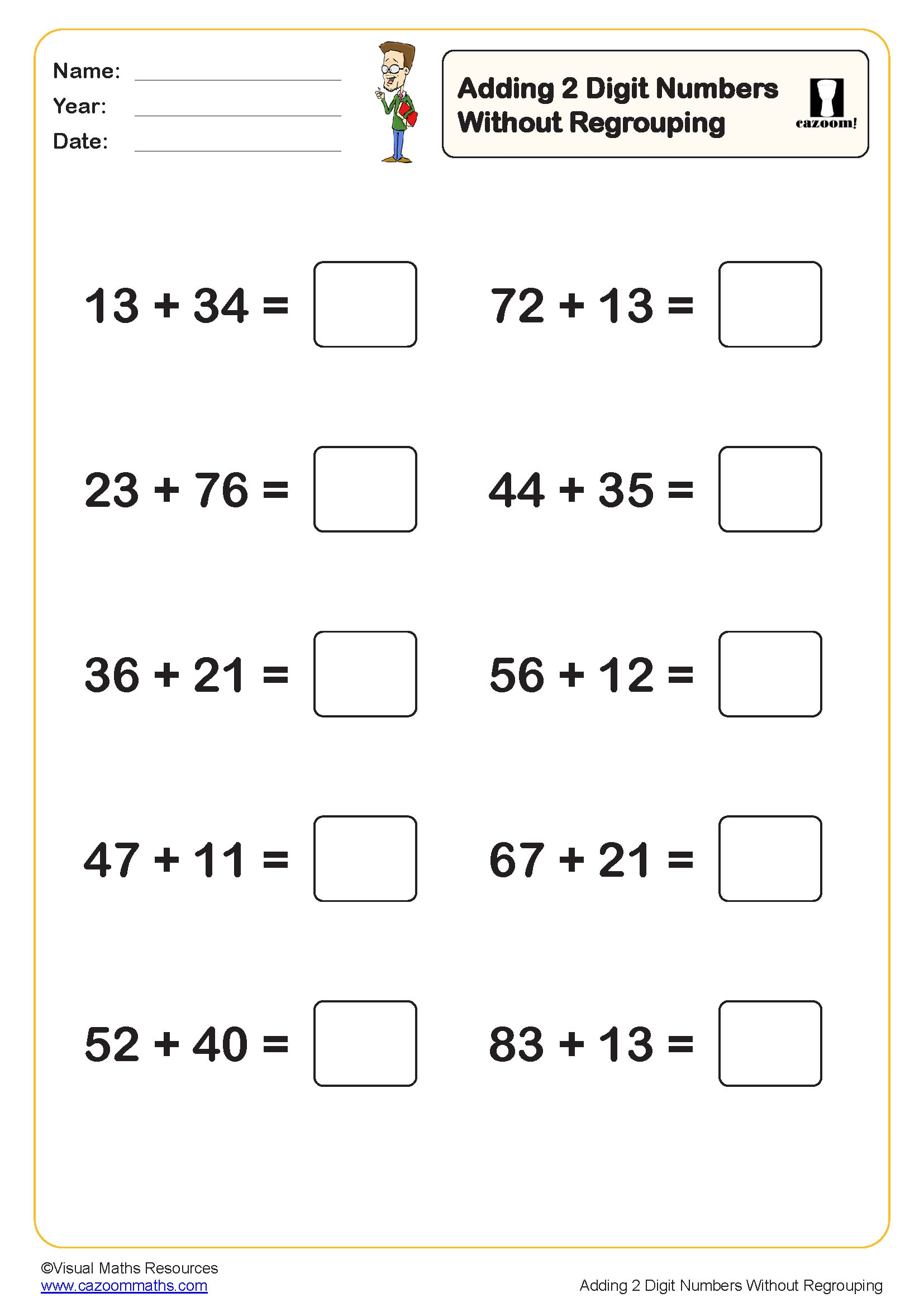
Adding 2 digit numbers without regrouping (10 questions)
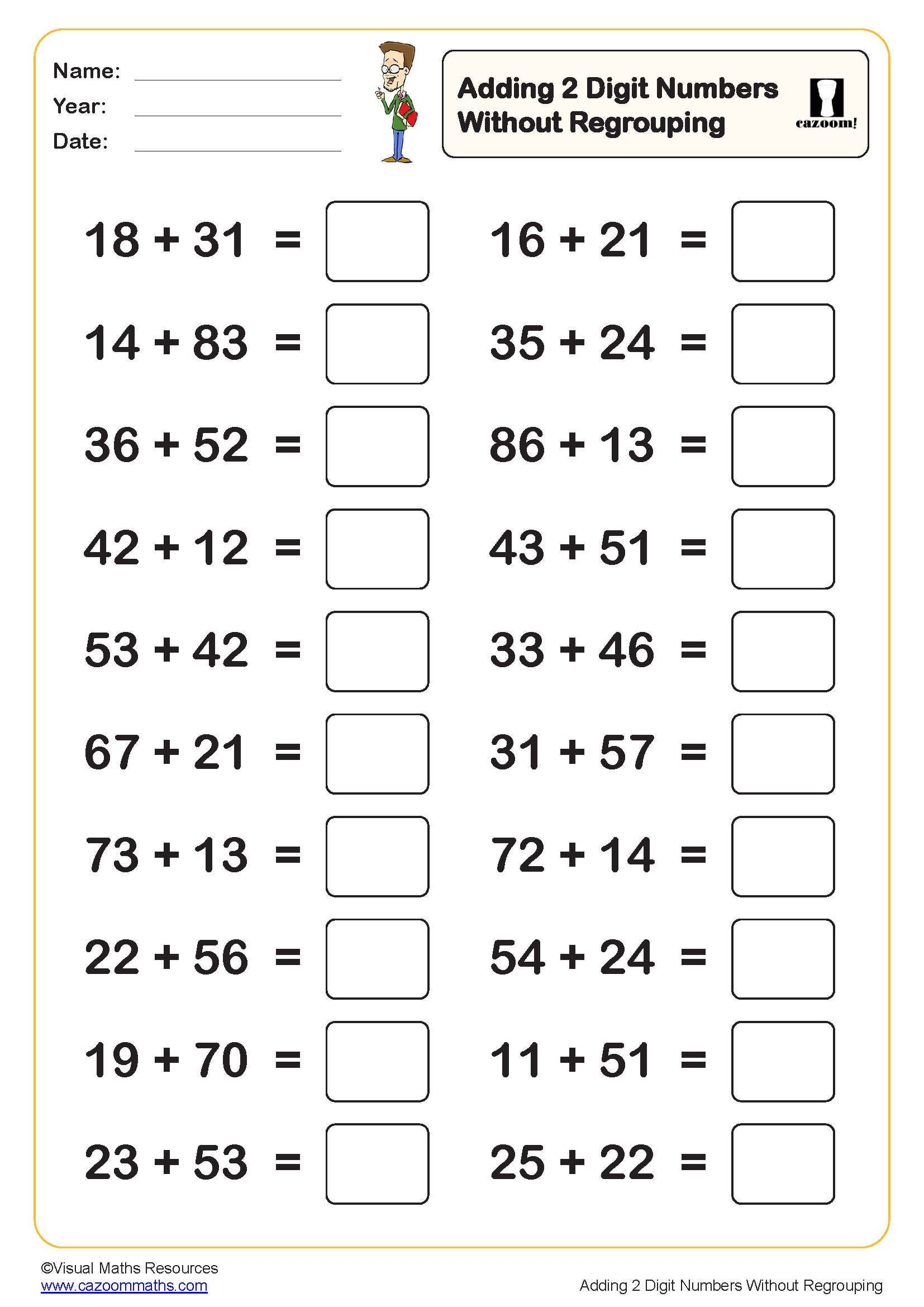
Adding 2 digit numbers without regrouping (20 questions)
Adding 2 digit numbers without regrouping (50 questions)
Adding 5 to 2 digit numbers (10 questions)
Adding 5 to 2 digit numbers (20 questions)
Adding 5 to 2 digit numbers (50 questions)
Adding 6 to 2 digit numbers (10 questions)
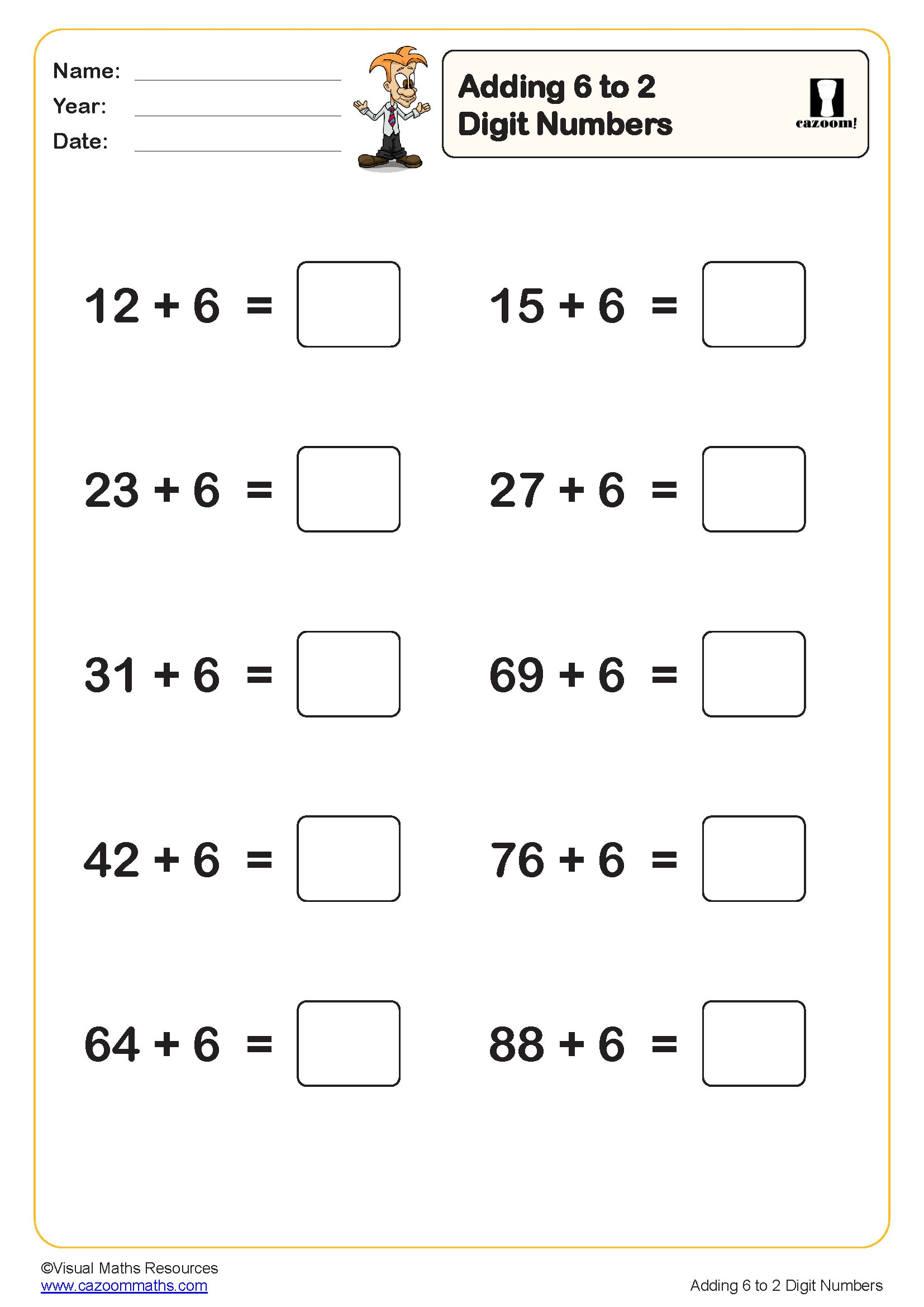
Adding 6 to 2 digit numbers (20 questions)
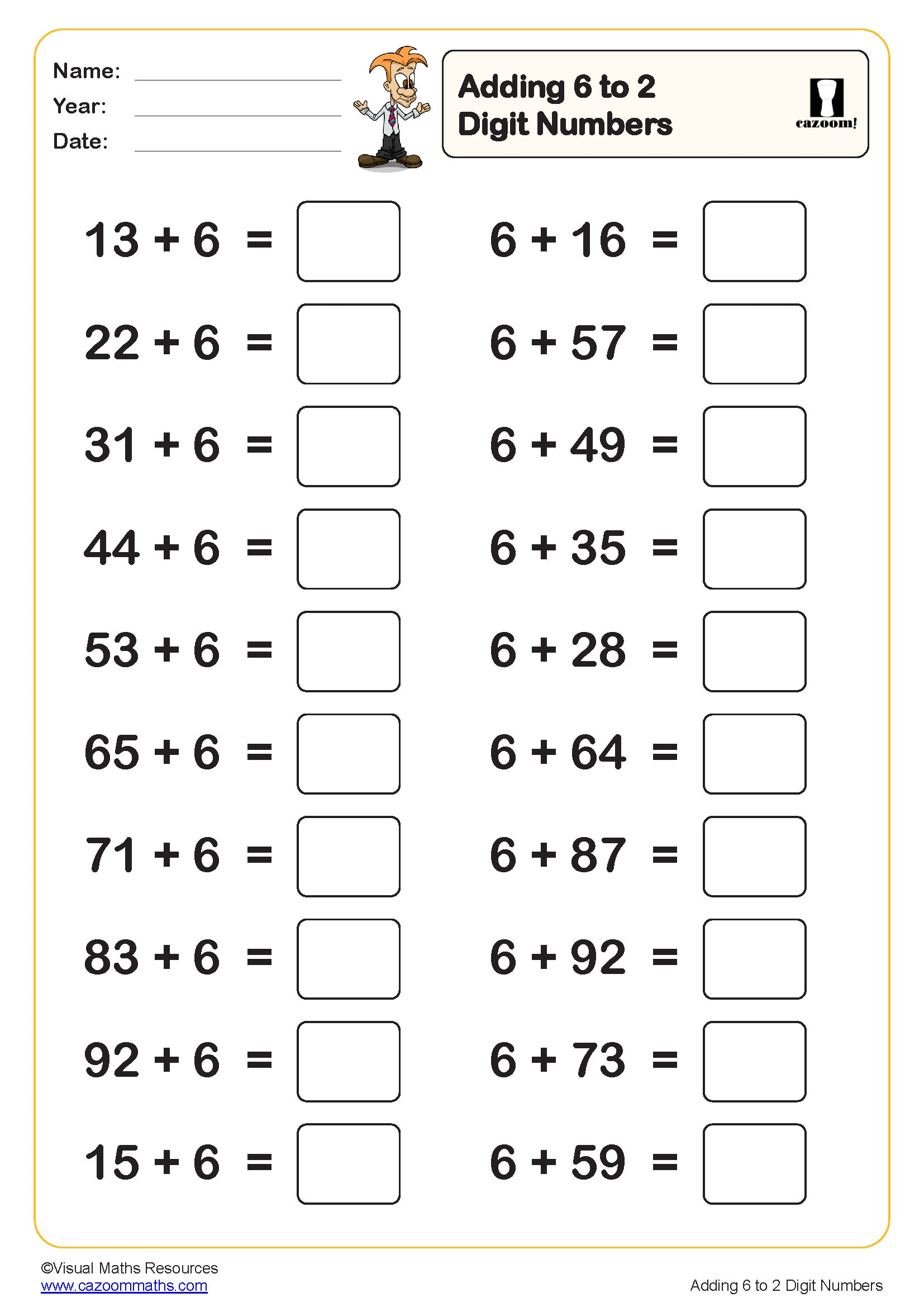
Adding 6 to 2 digit numbers (50 questions)
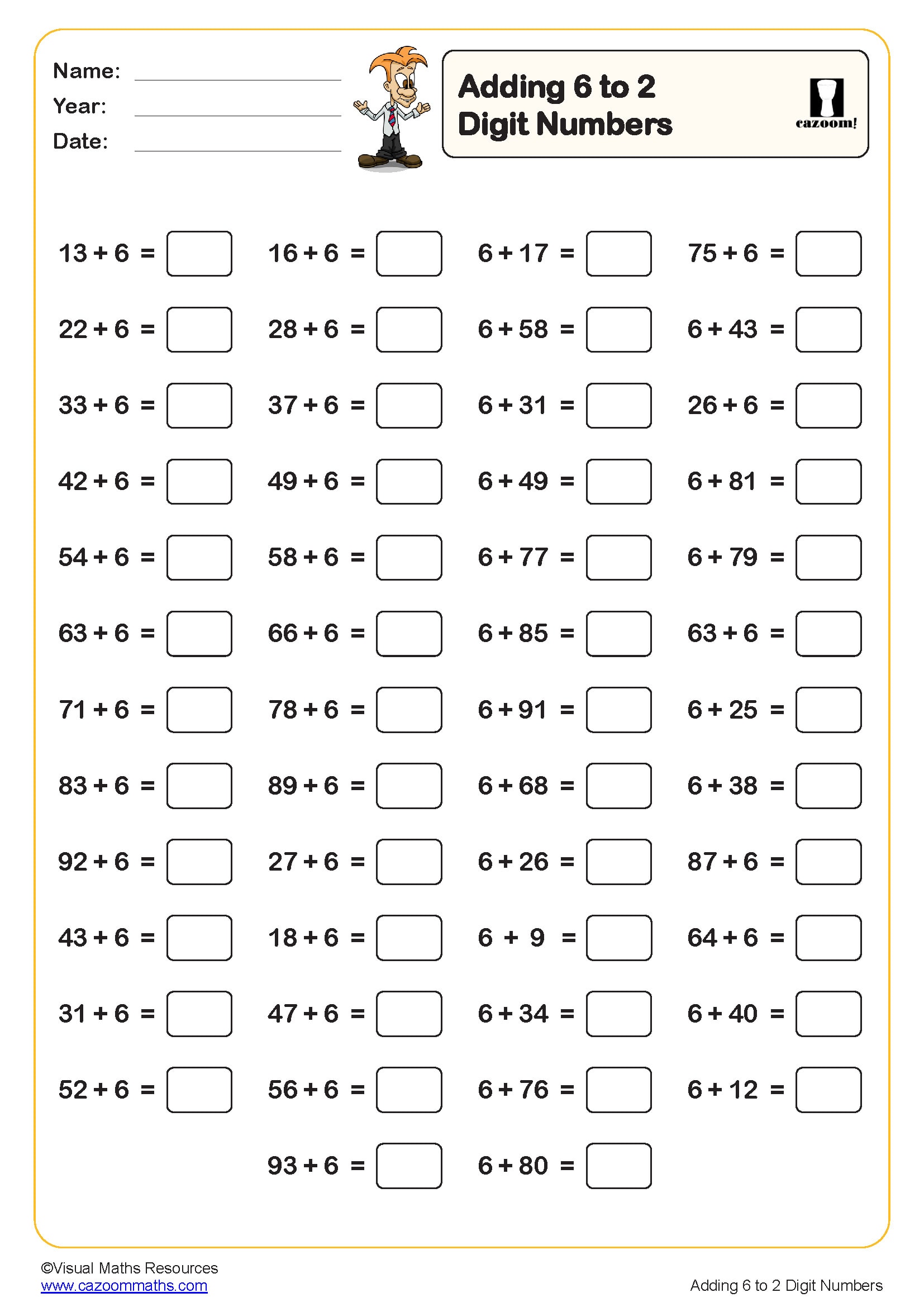
Adding 7 to 2 digit numbers (10 questions)
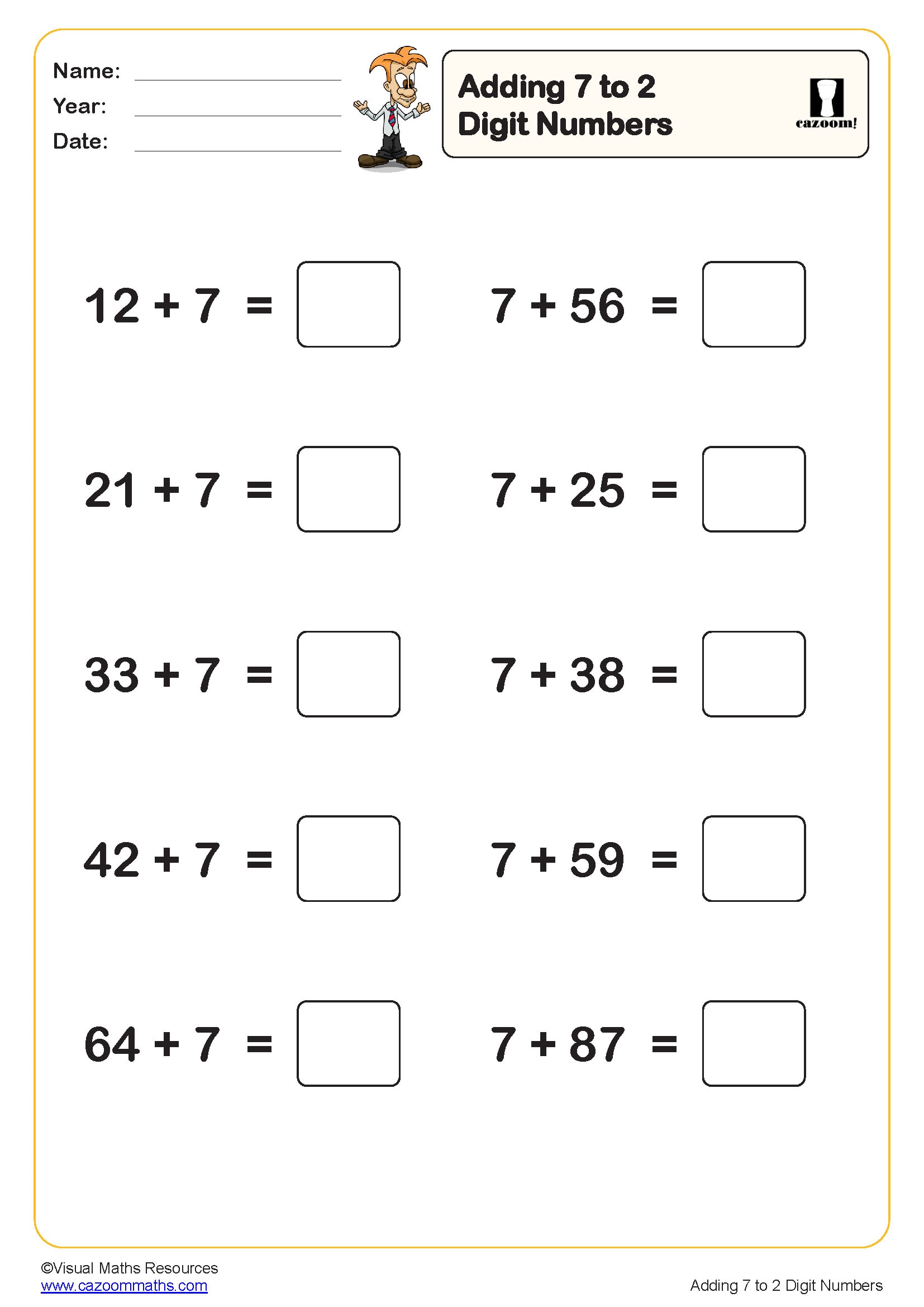
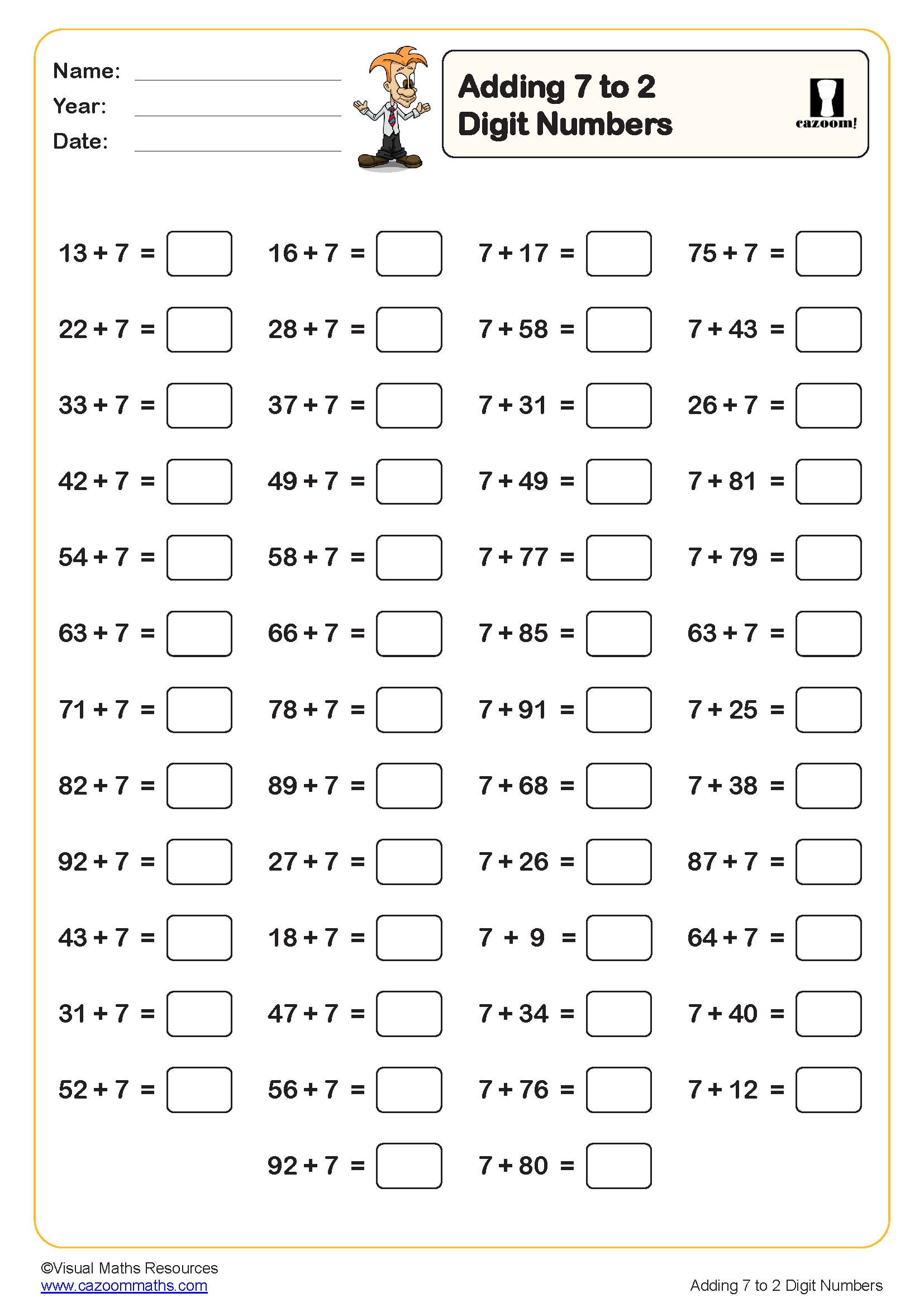
Adding 7 to 2 digit numbers (20 questions)
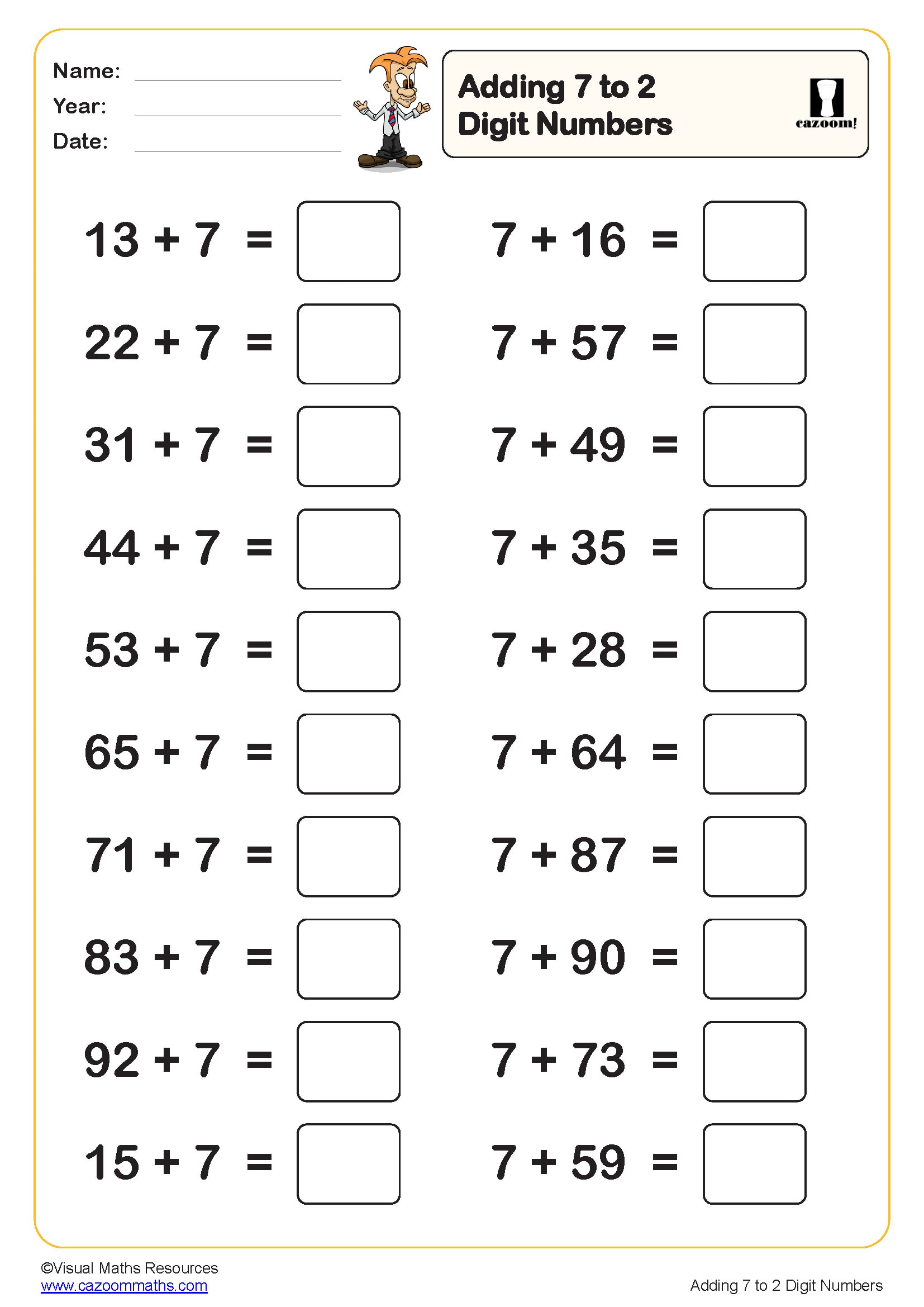
Adding 7 to 2 digit numbers (50 questions)
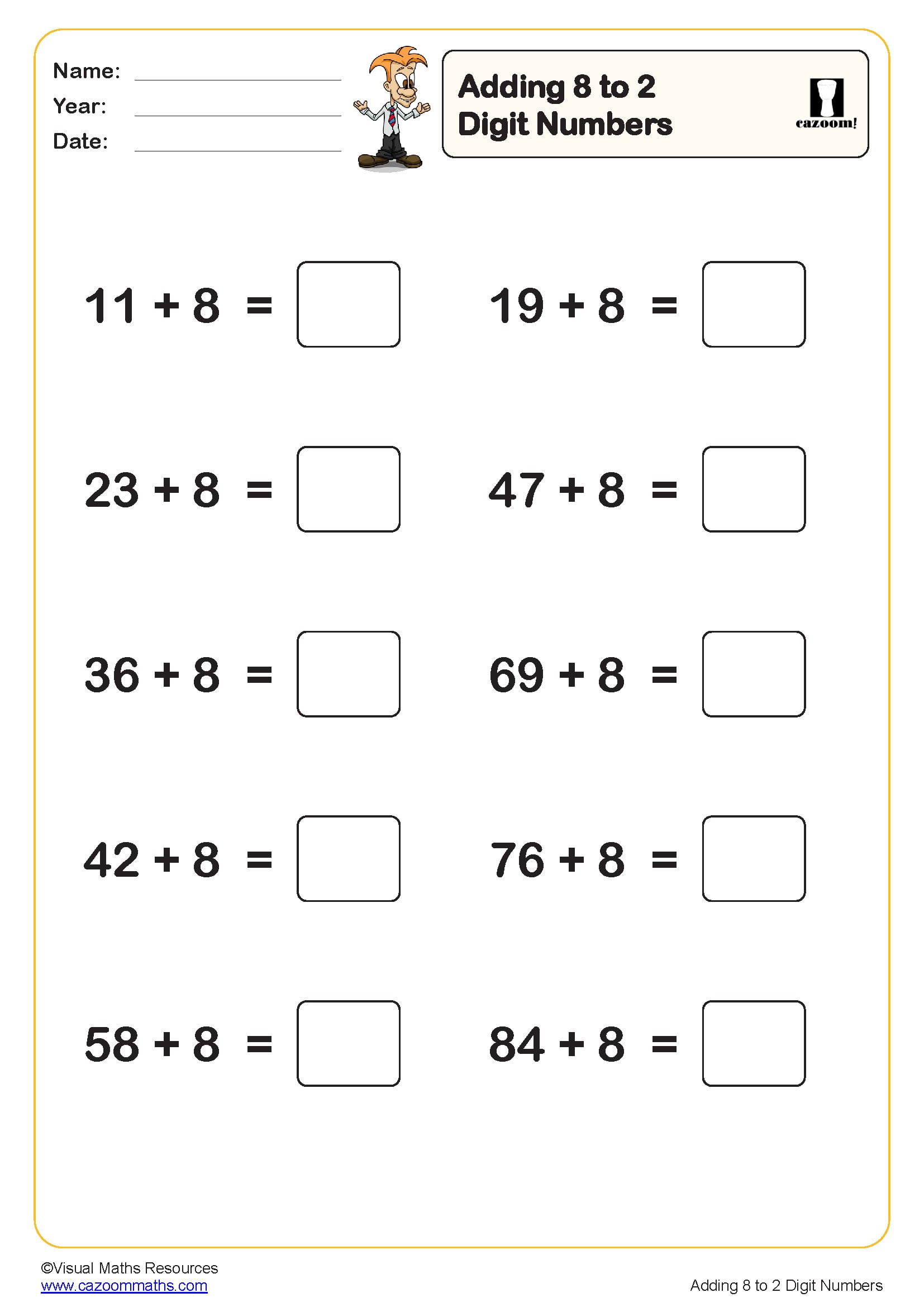
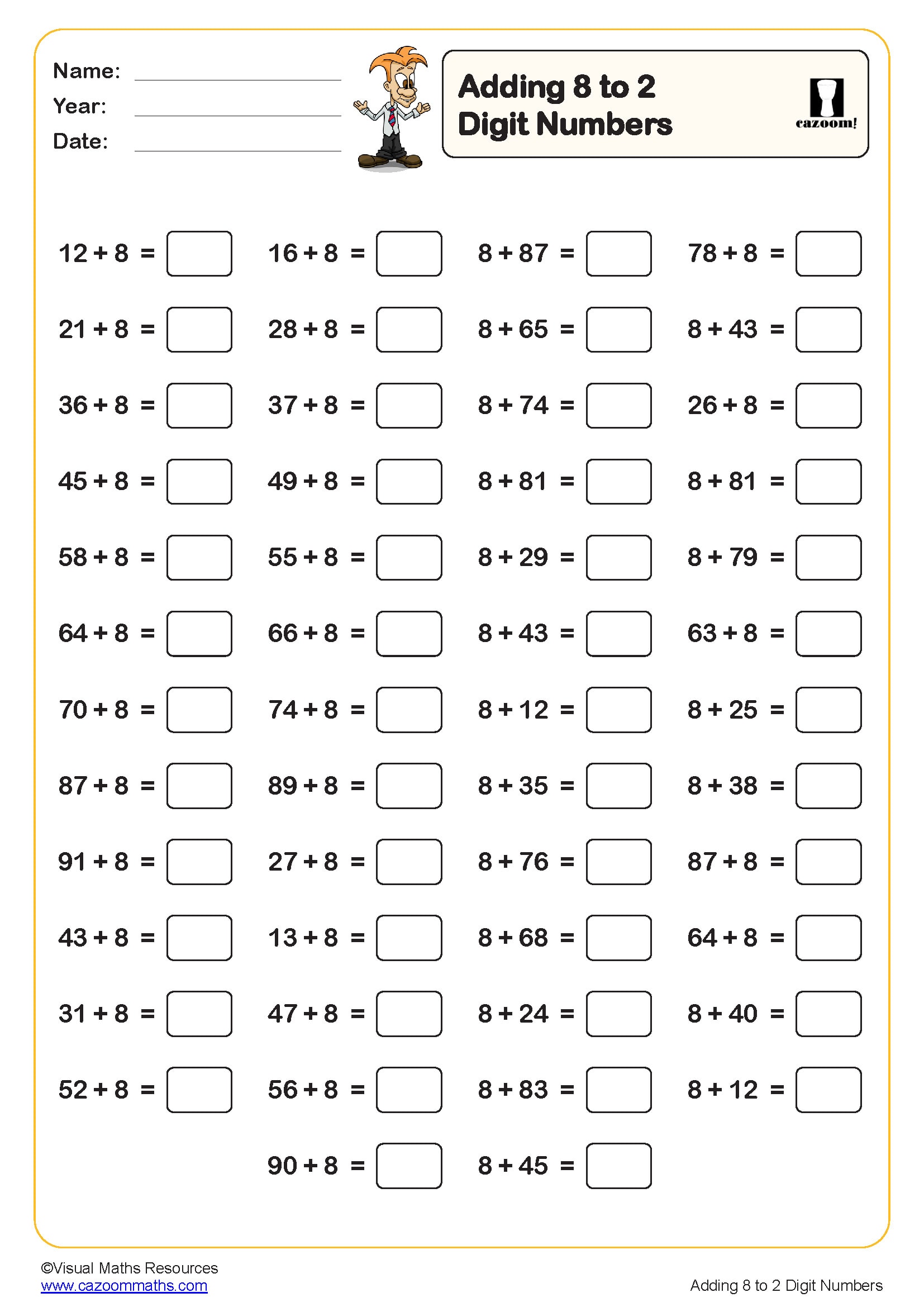
Adding 8 to 2 digit numbers (10 questions)
Adding 8 to 2 digit numbers (20 questions)
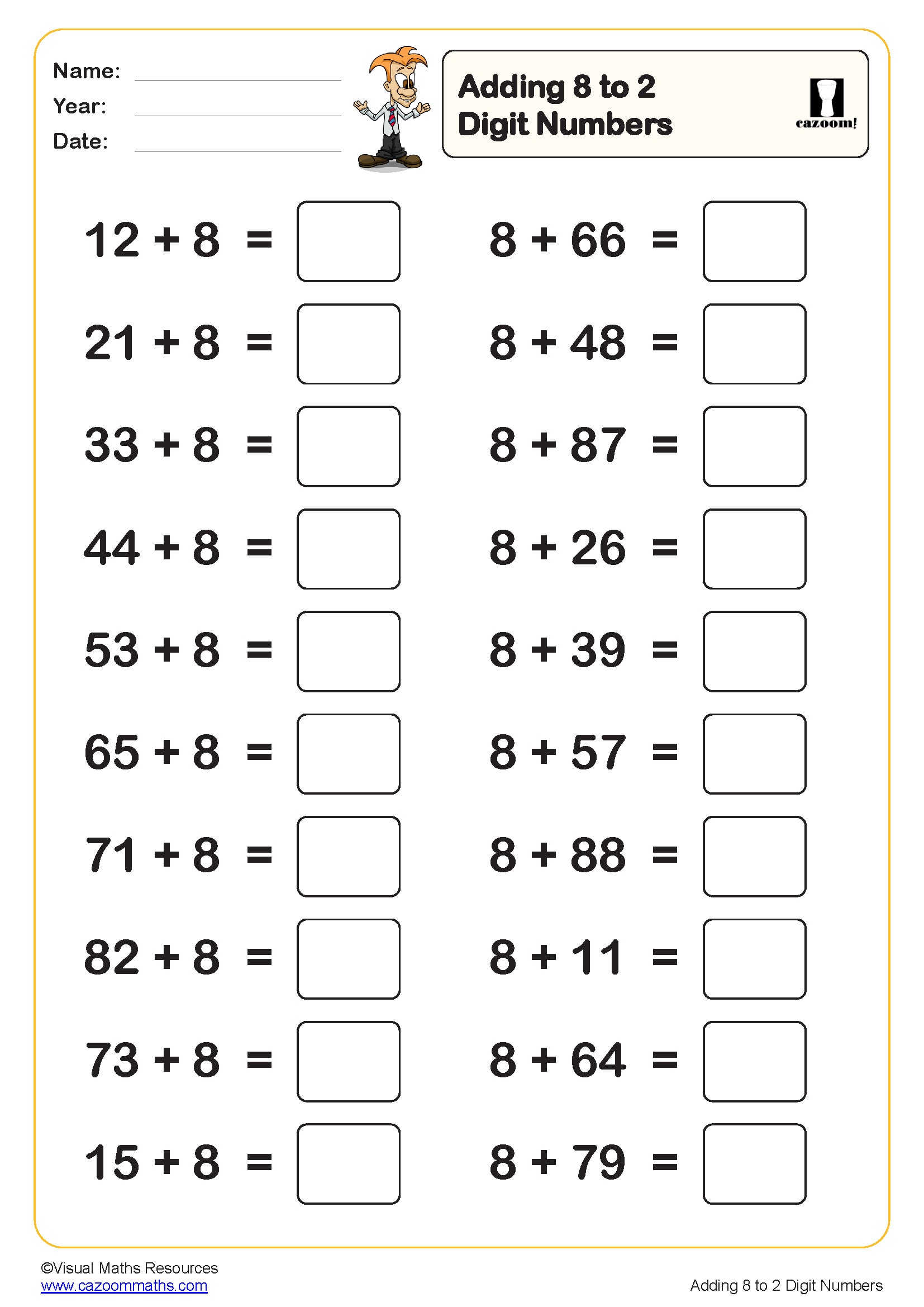
Adding 8 to 2 digit numbers (50 questions)
Adding 9 to 2 digit numbers (10 questions)
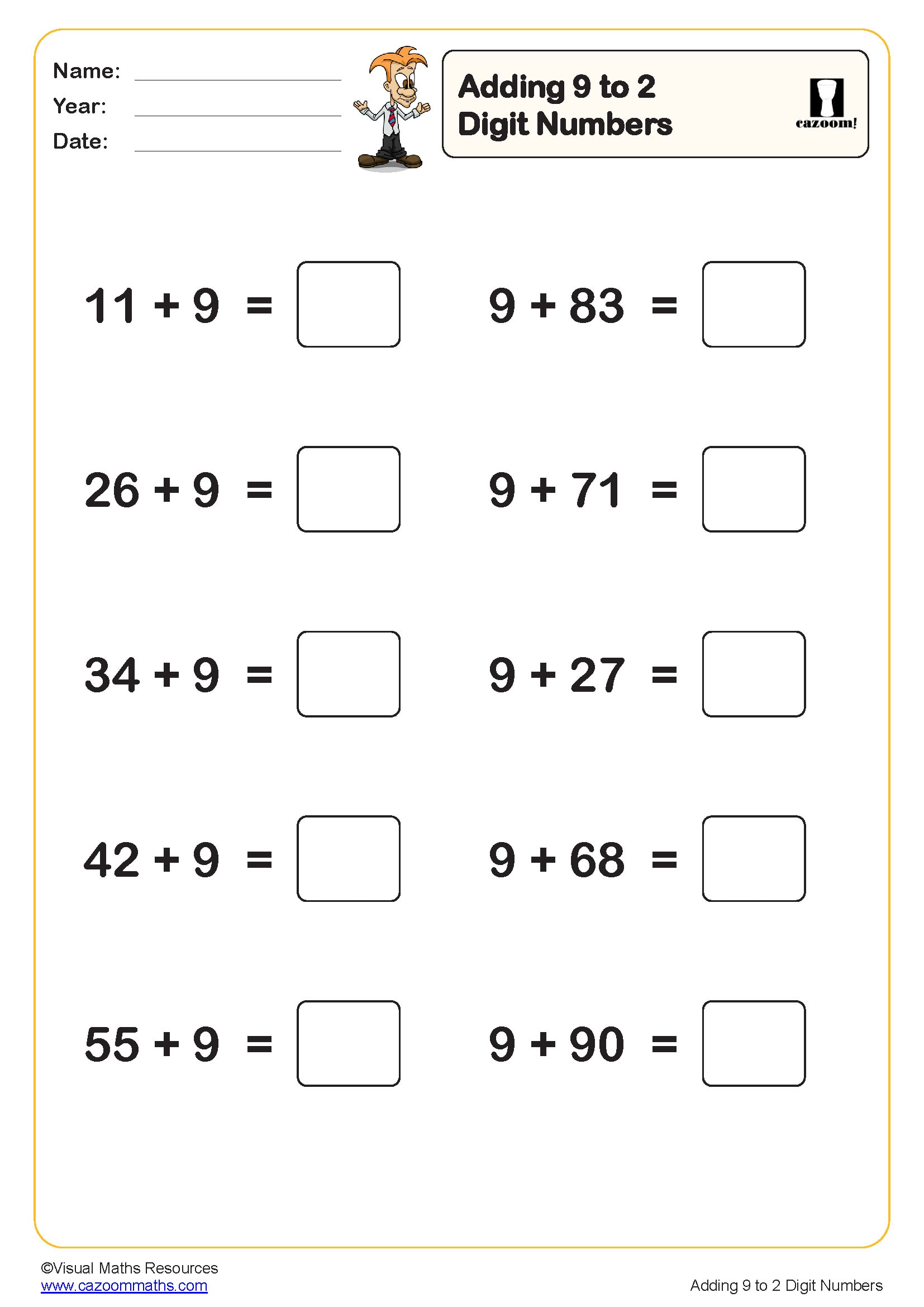
Adding 9 to 2 digit numbers (20 questions)
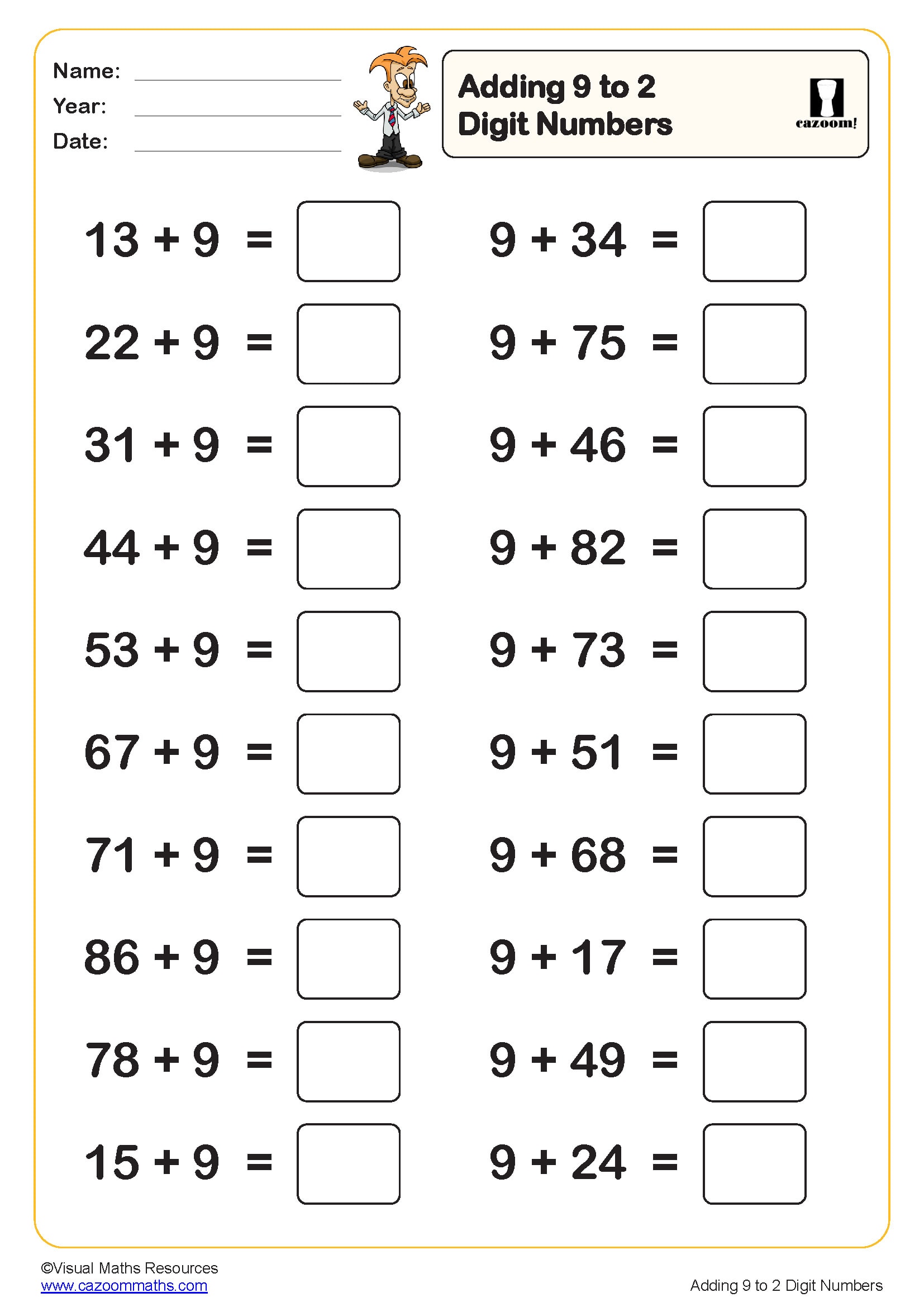
Adding 9 to 2 digit numbers (50 questions)

Adding mulitples of 10 to a 2 digit number (10 questions)
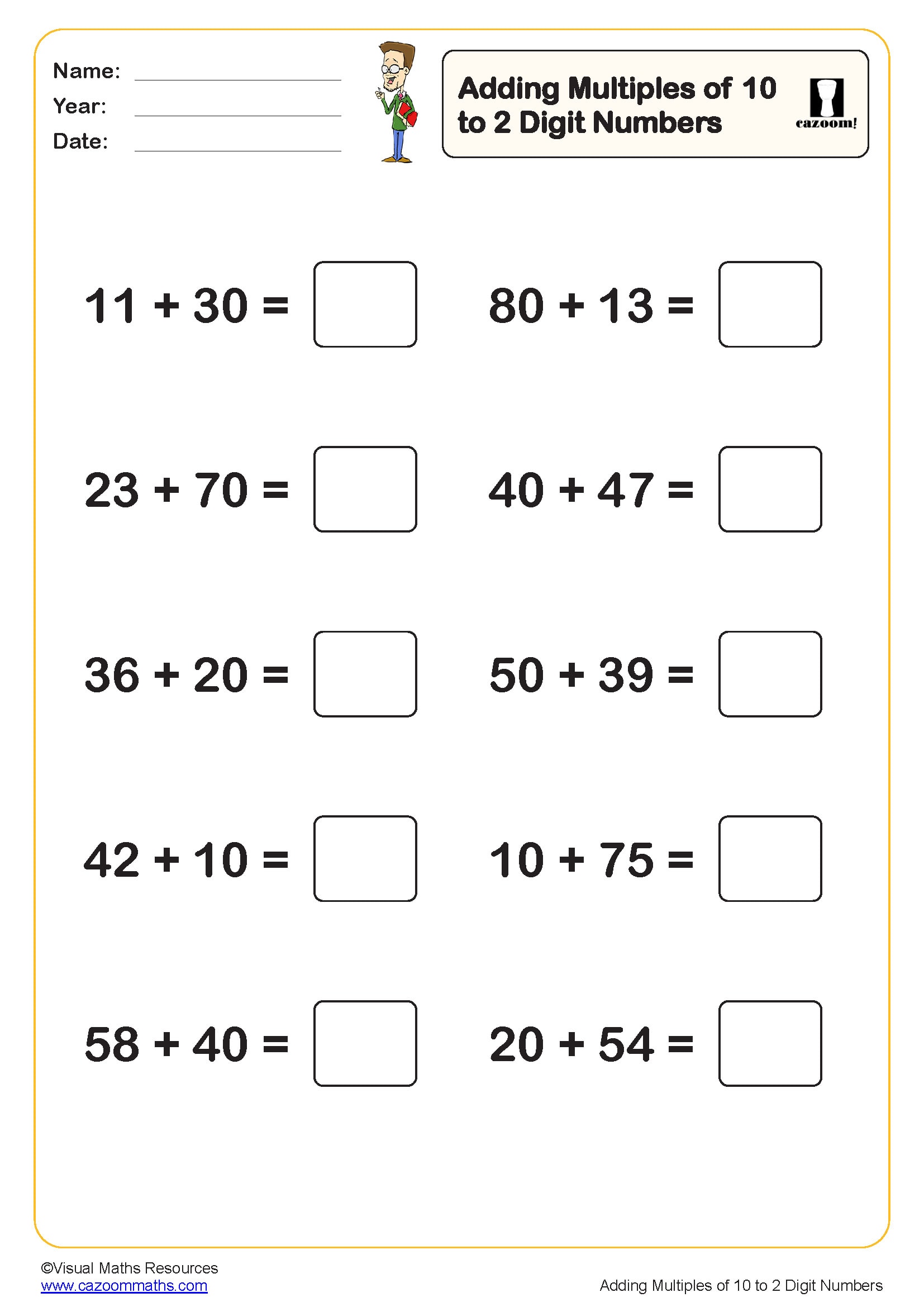
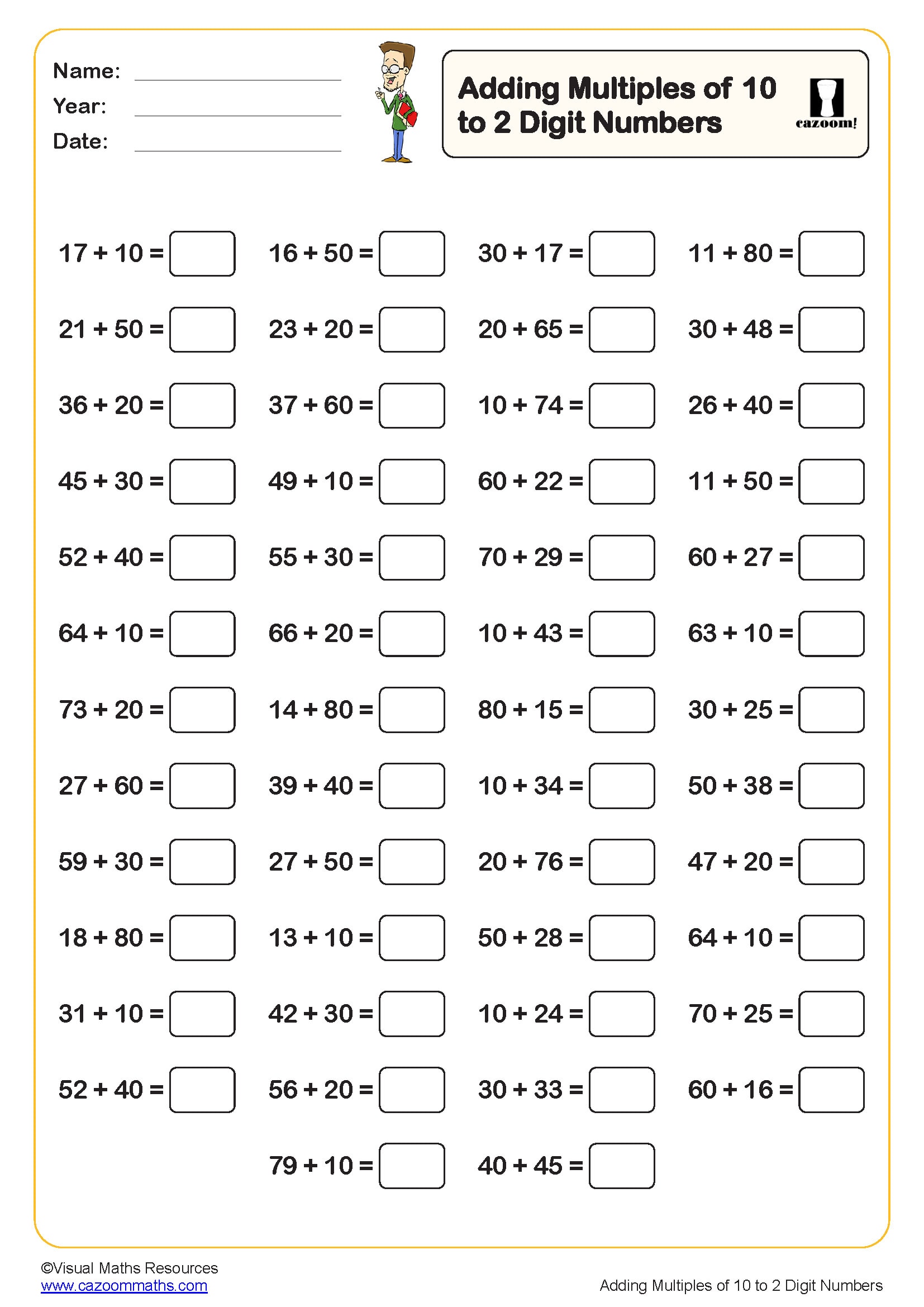
Adding mulitples of 10 to a 2 digit number (20 questions)
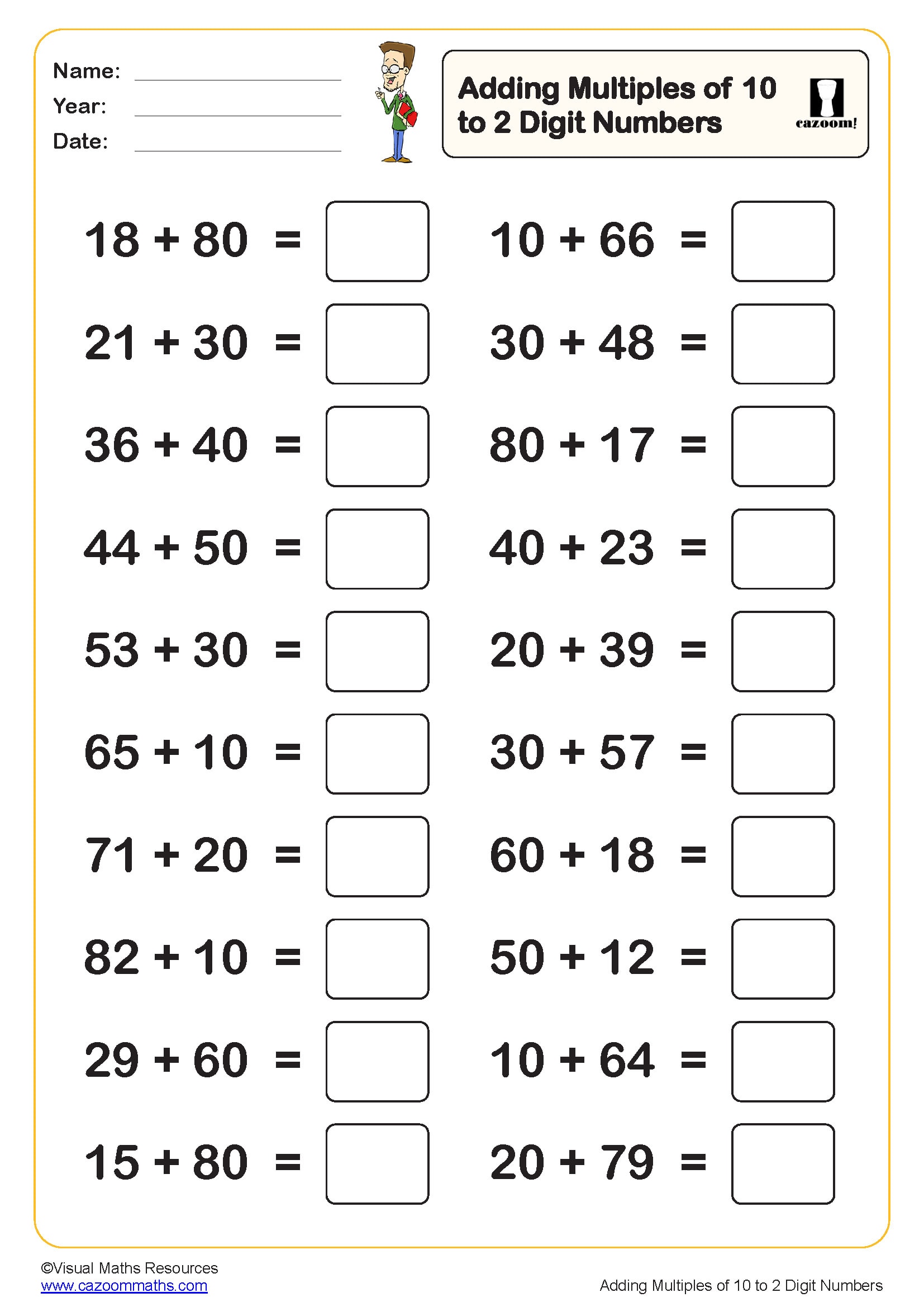
Adding mulitples of 10 to a 2 digit number (50 questions)
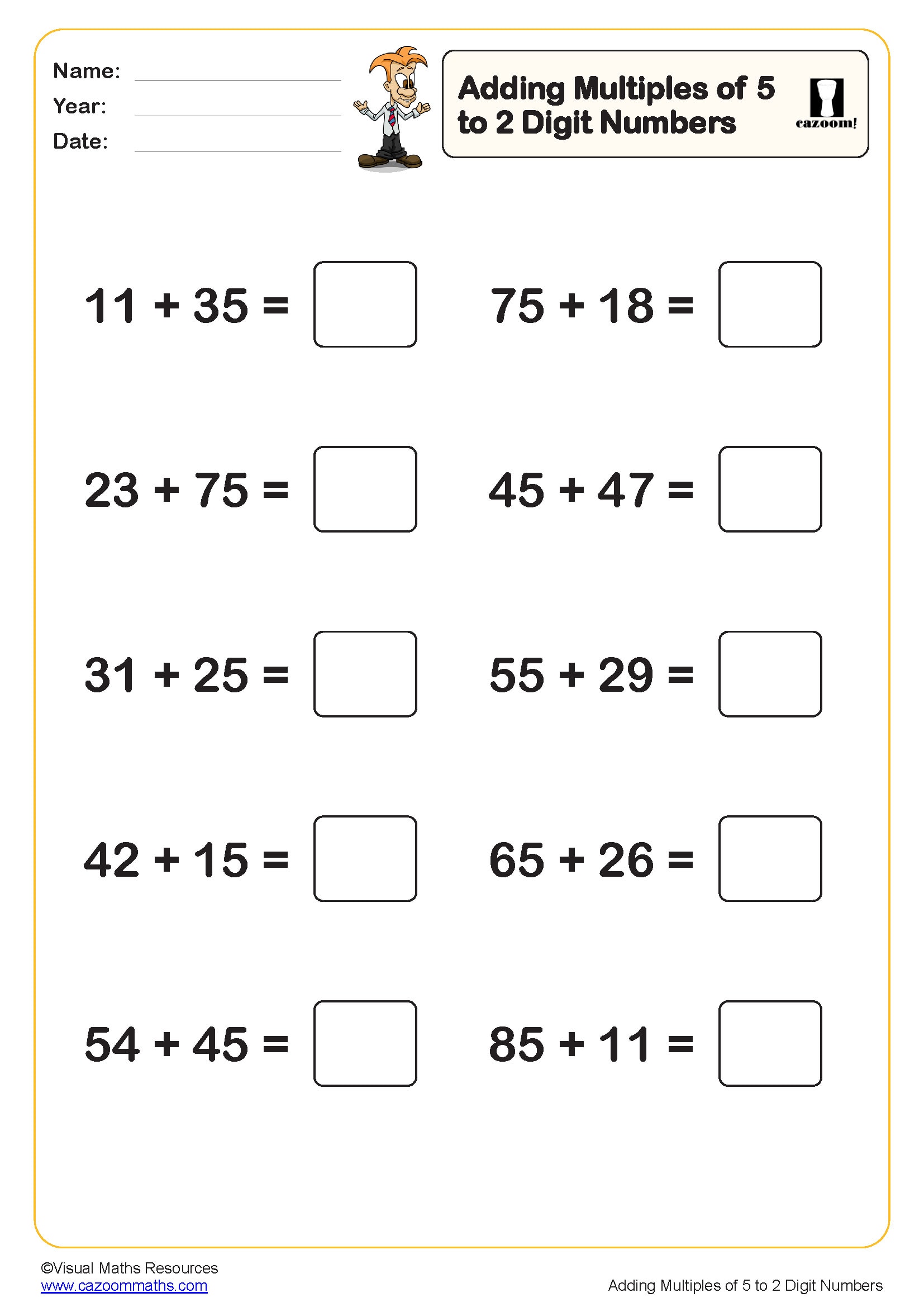
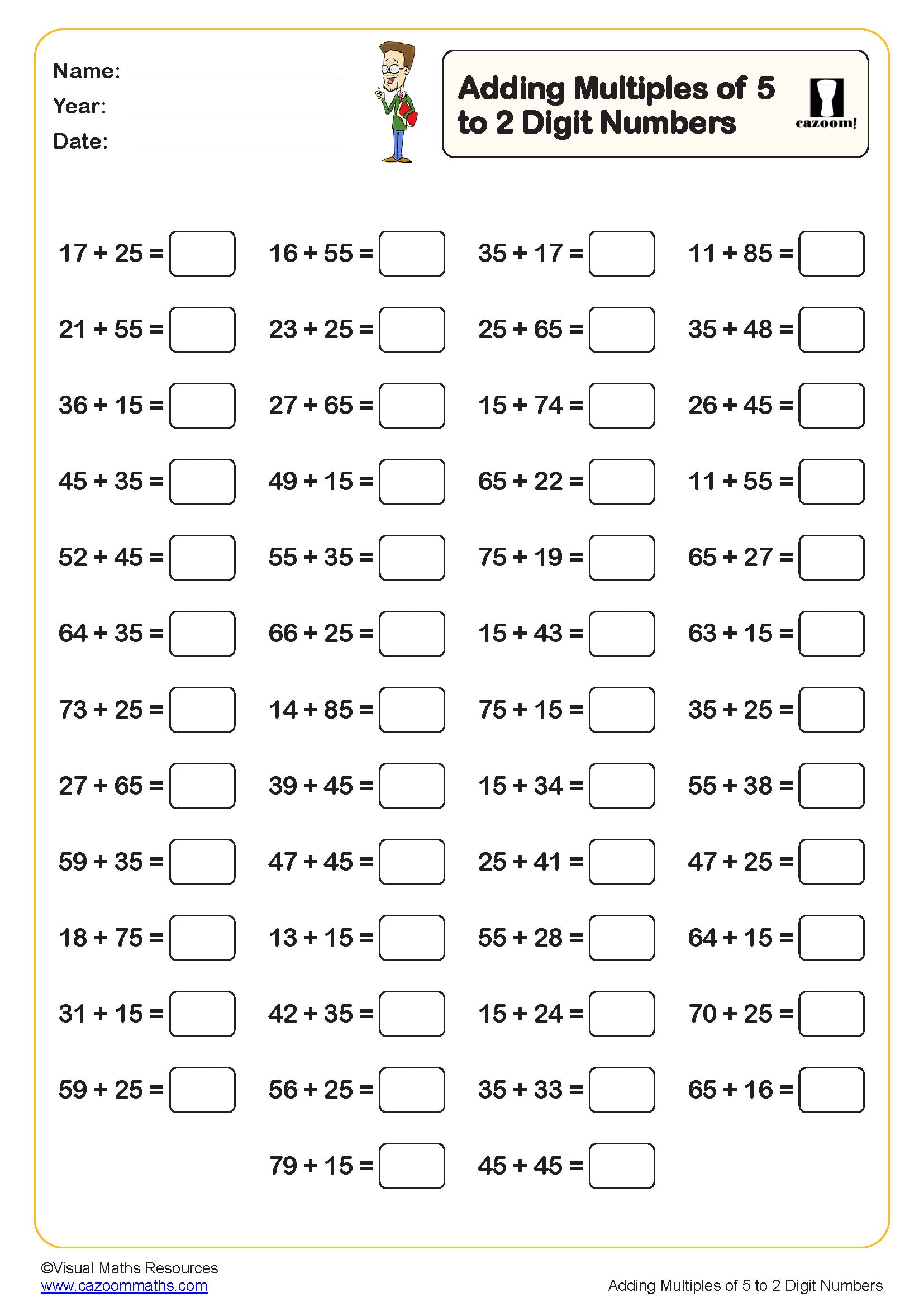
Adding mulitples of 5 to a 2 digit number (10 questions)
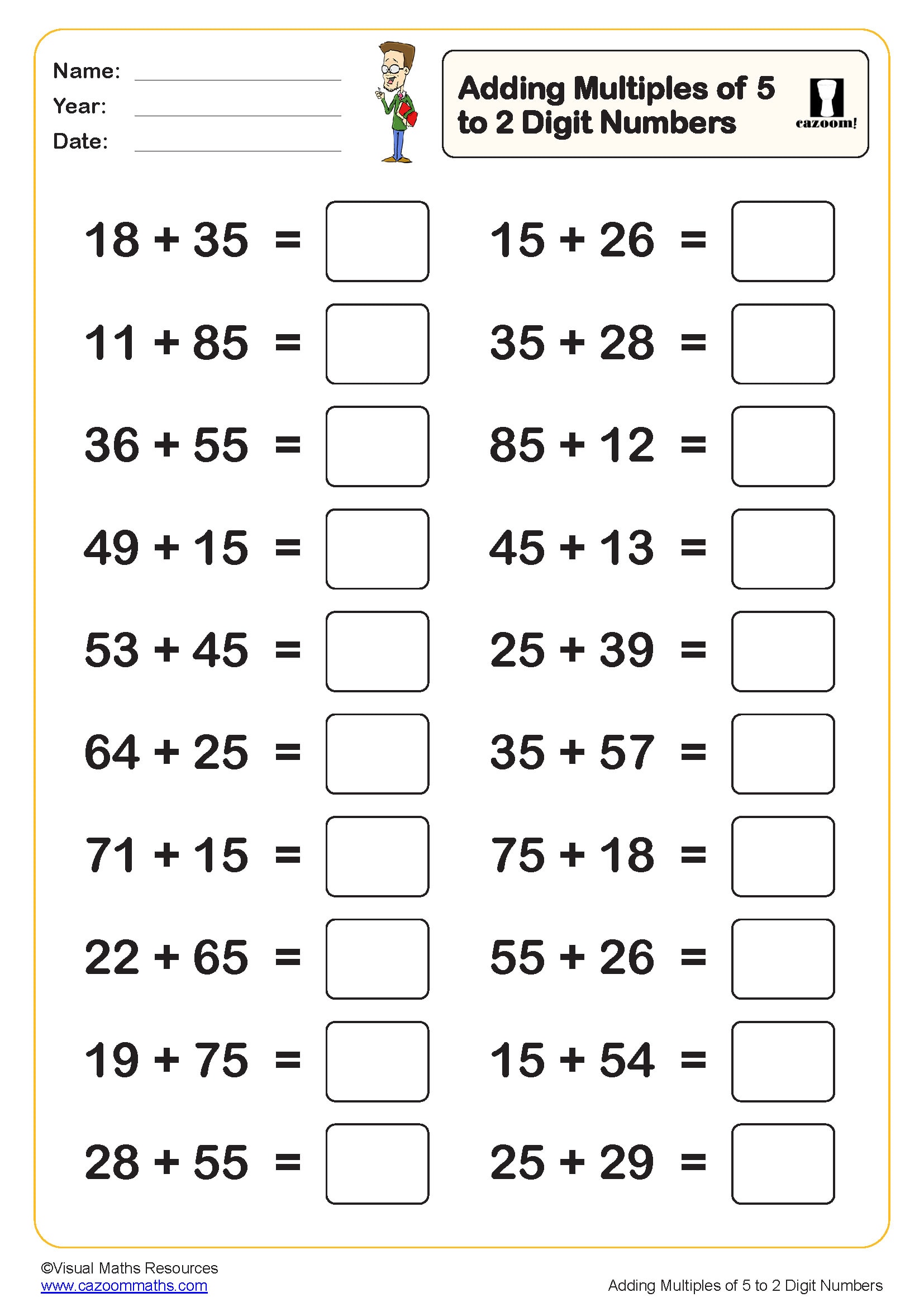
Adding mulitples of 5 to a 2 digit number (20 questions)
Adding mulitples of 5 to a 2 digit number (50 questions)
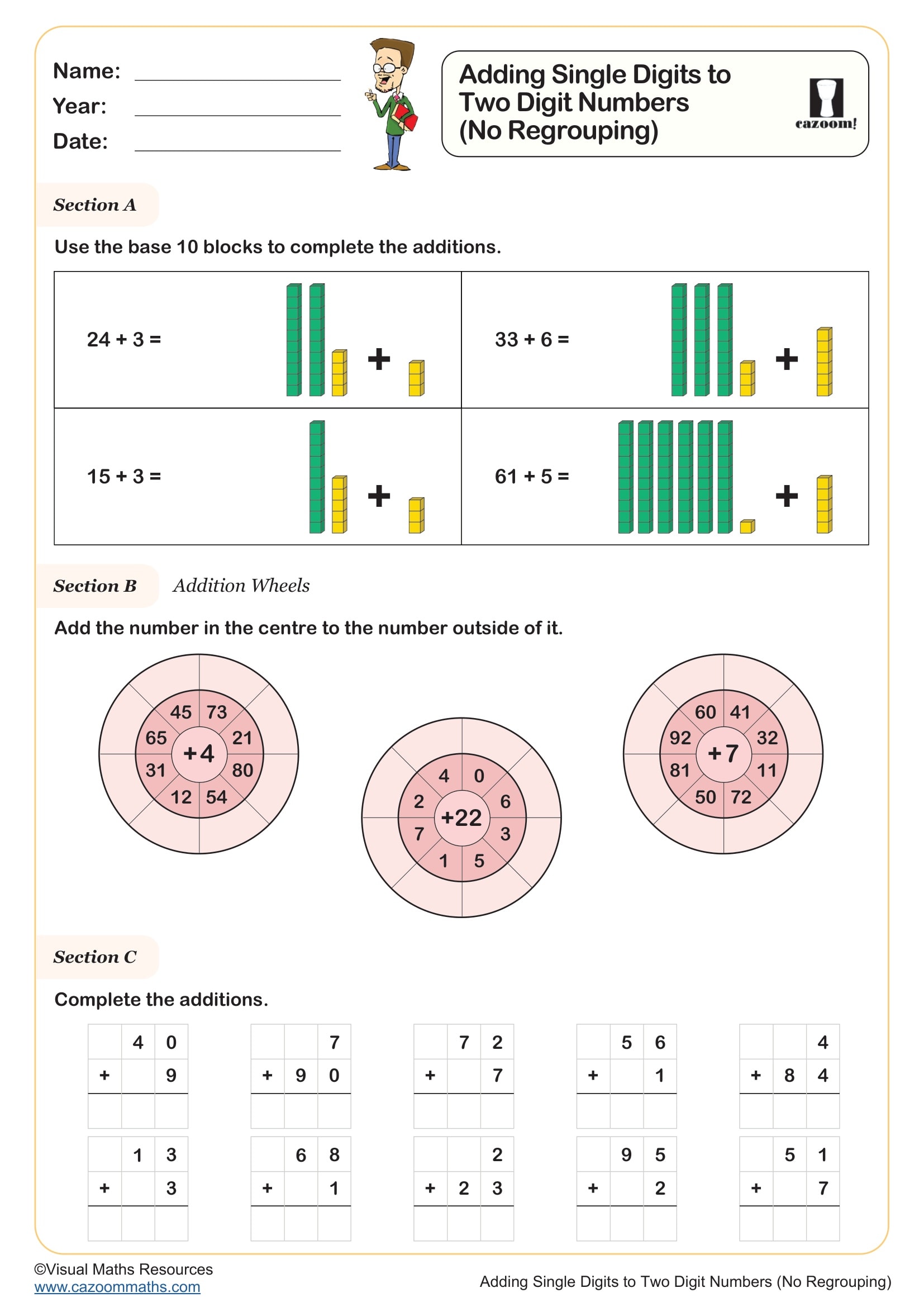
Adding Single Digits to Two Digit Numbers (No Regrouping)
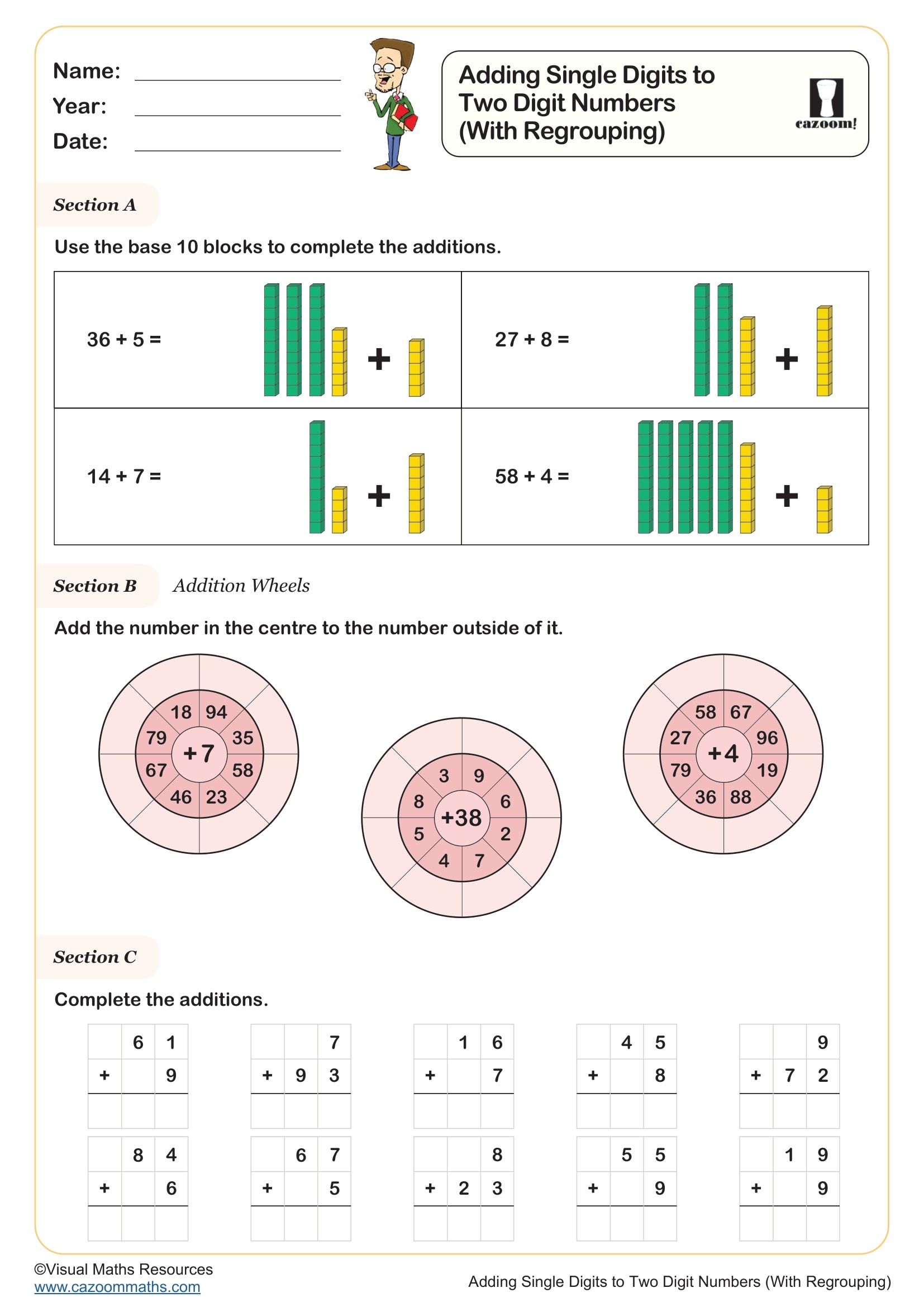
Adding Single Digits to Two Digit Numbers (With Regrouping)
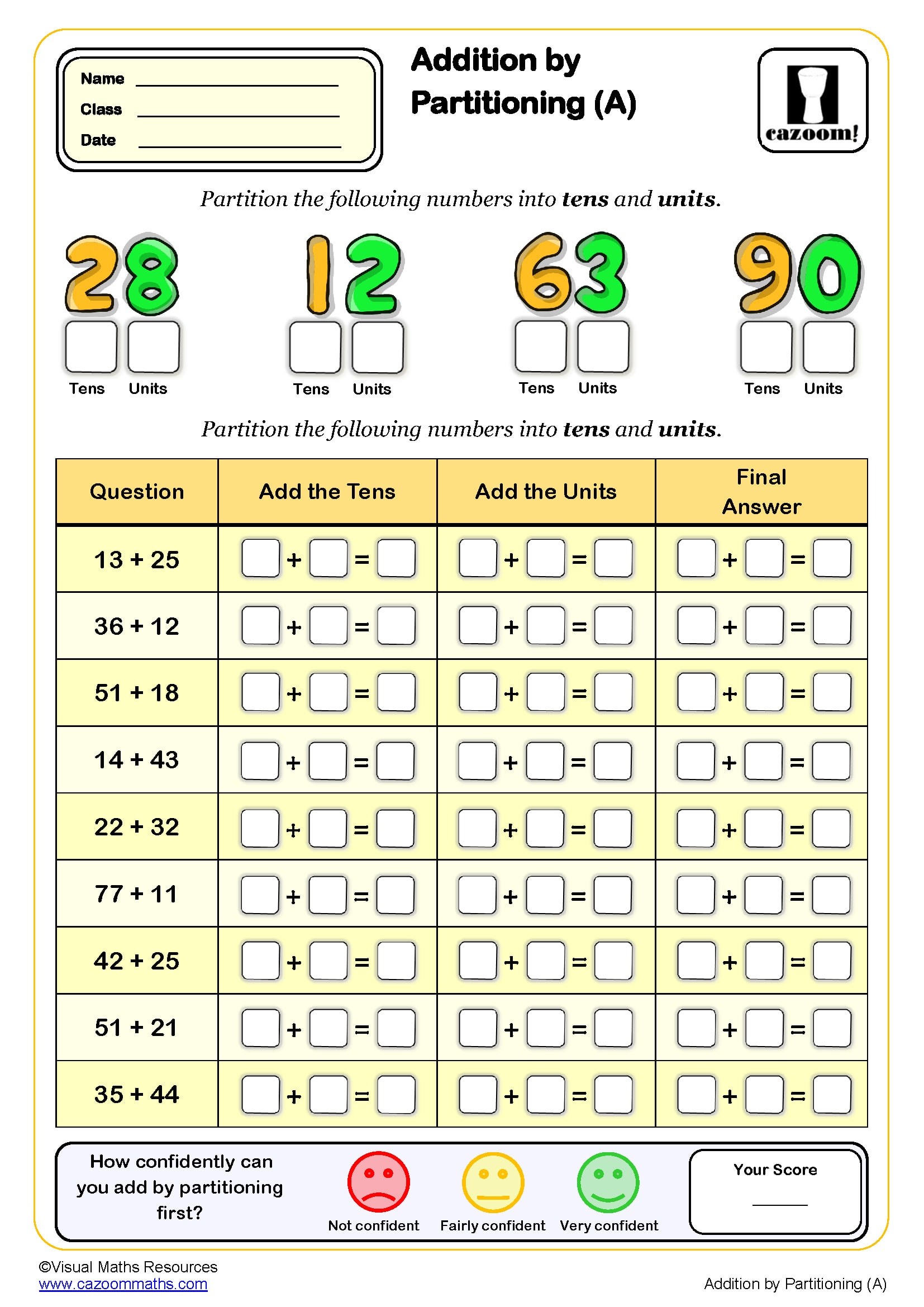
Addition by partitioning (A)
Addition by partitioning (B)

Addition Colouring (C)
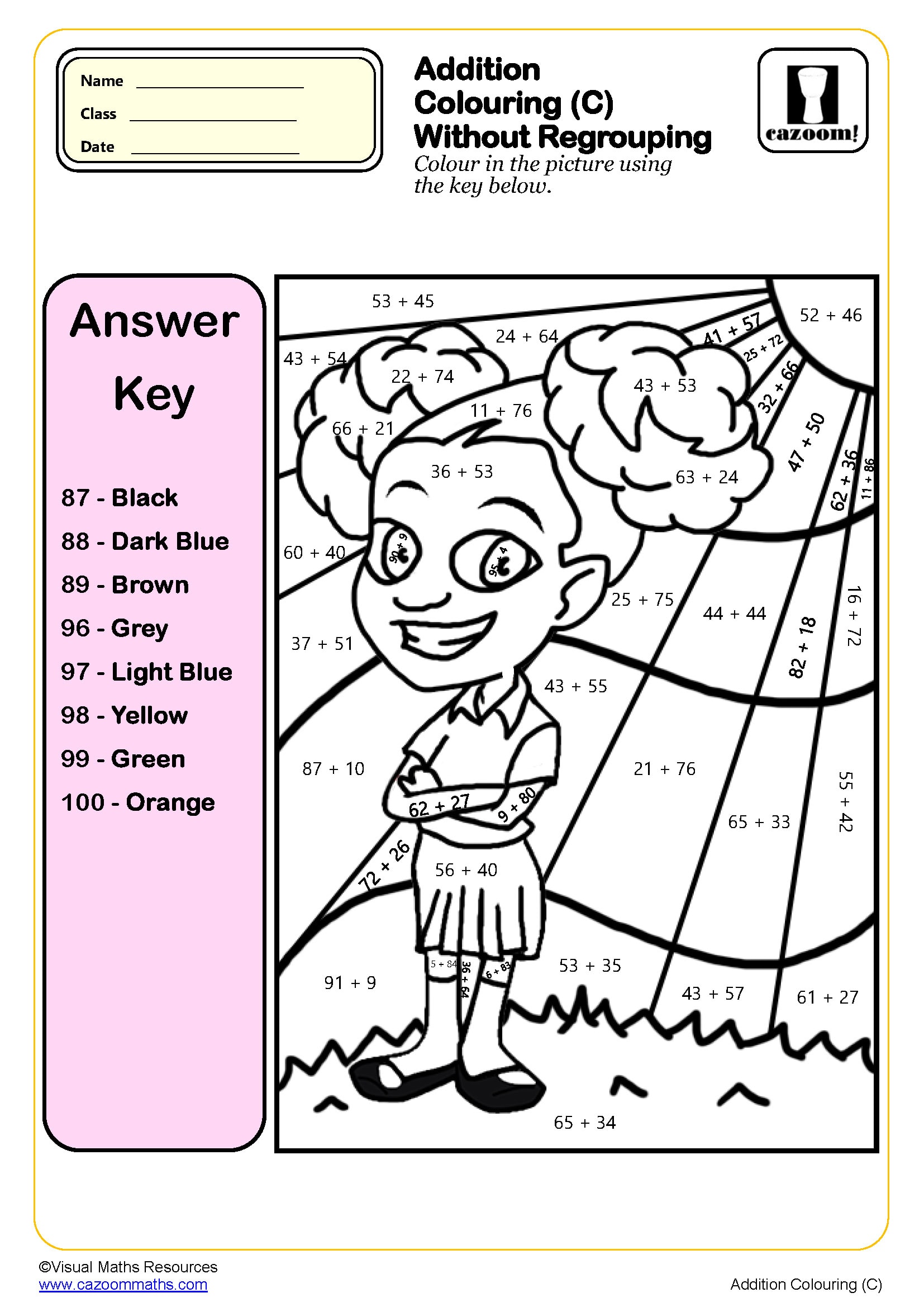
Addition Colouring (D)
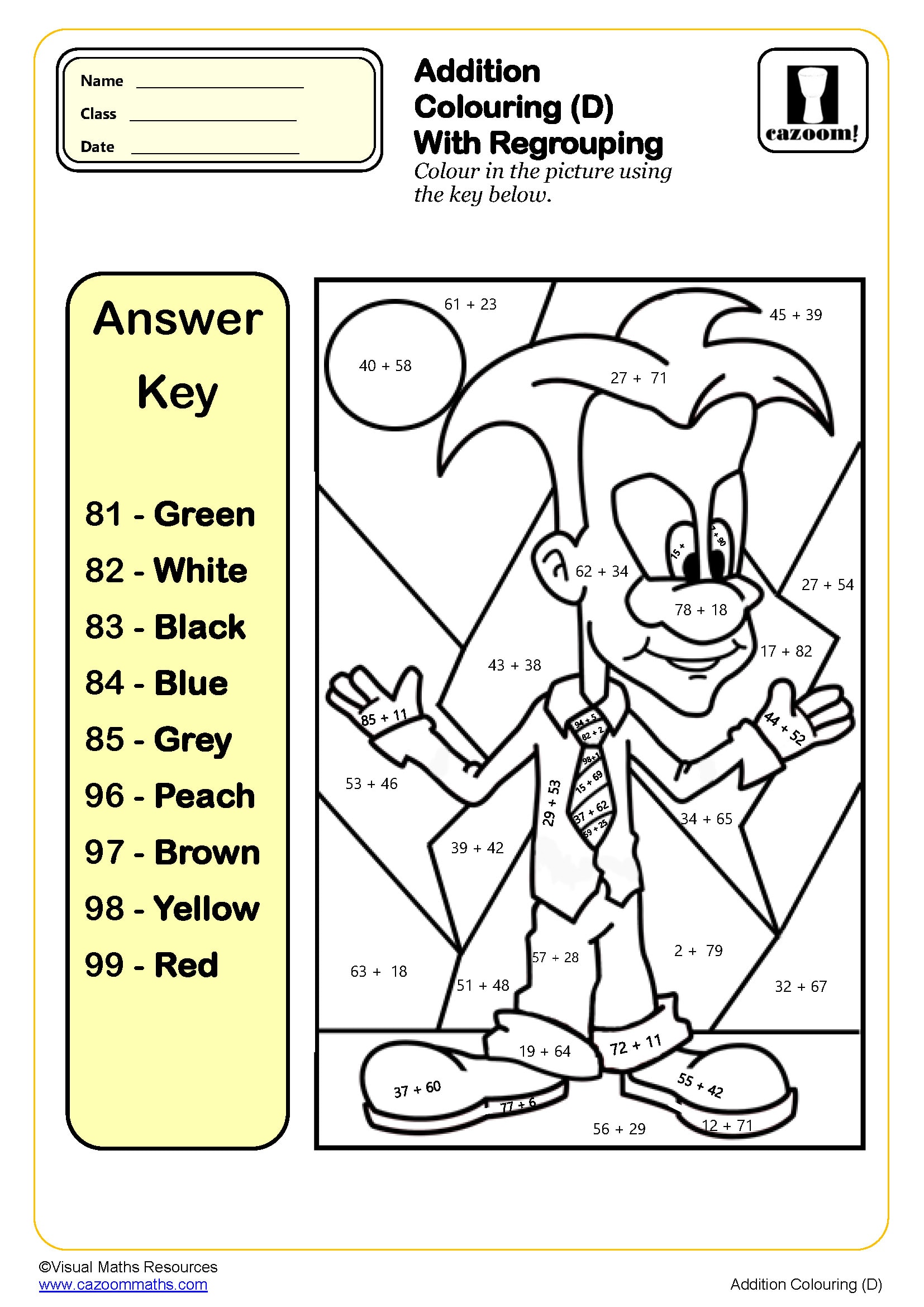
Addition Grids (2 digits)
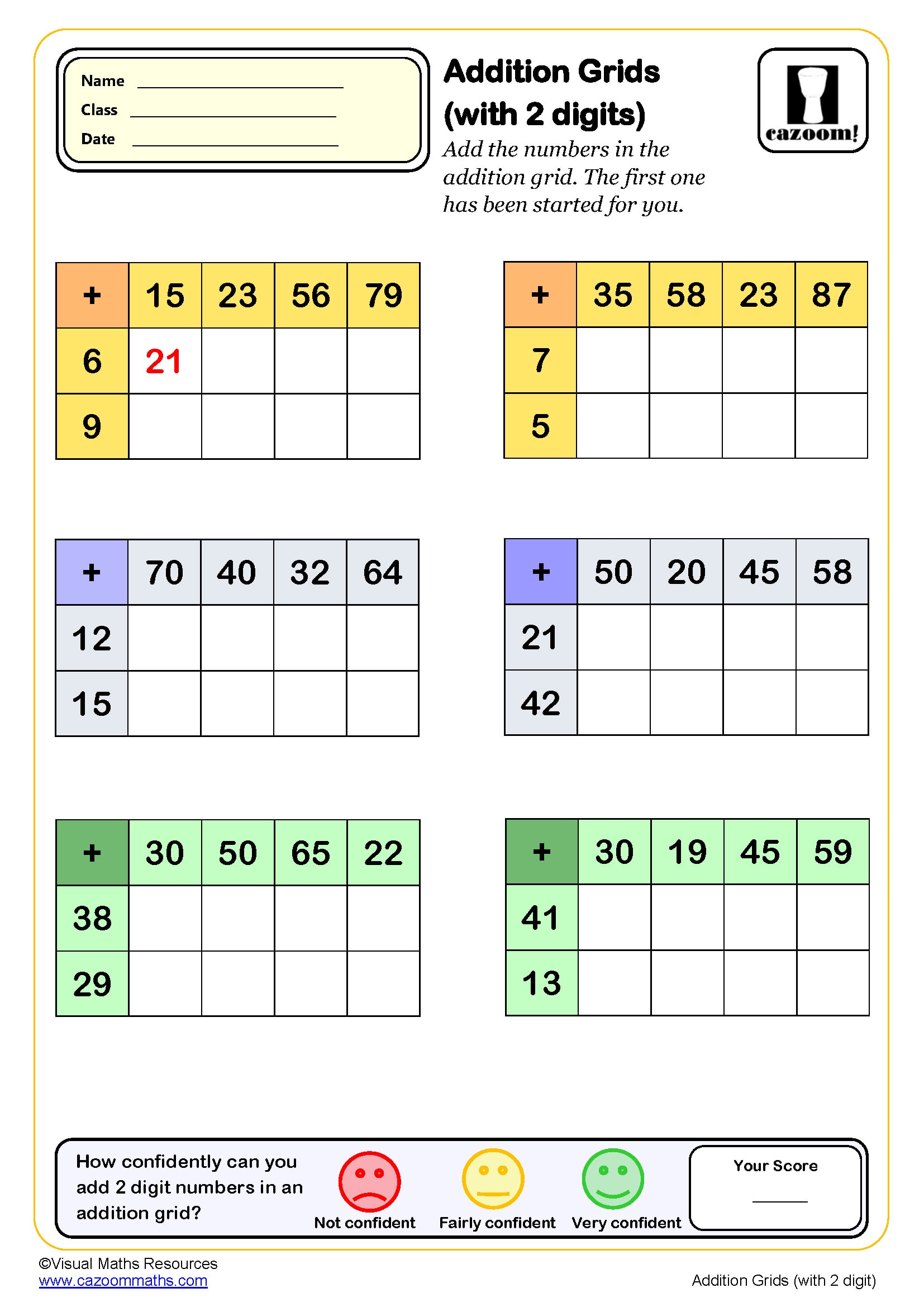
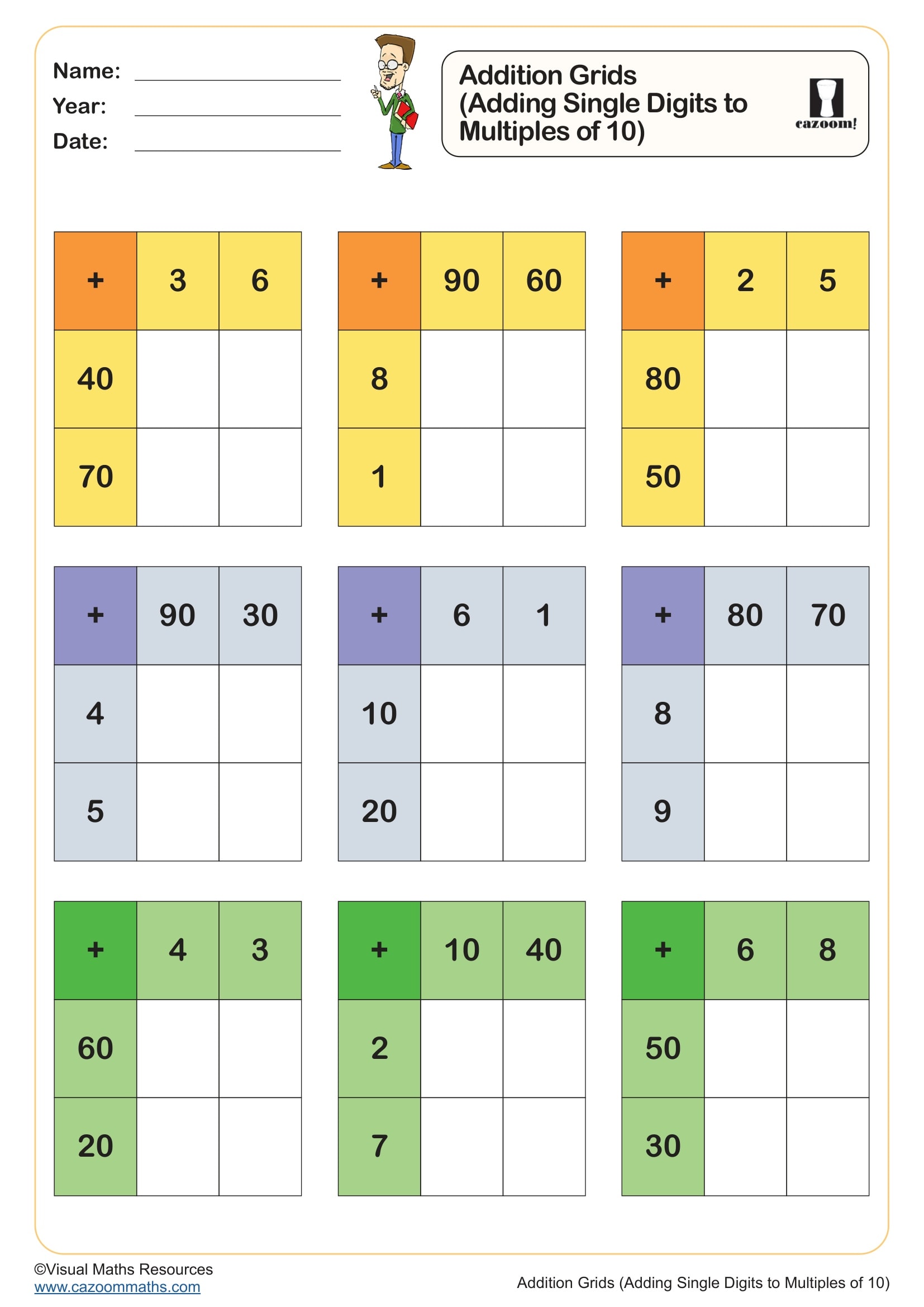
Addition Grids (Adding Single Digits to Multiples of 10)
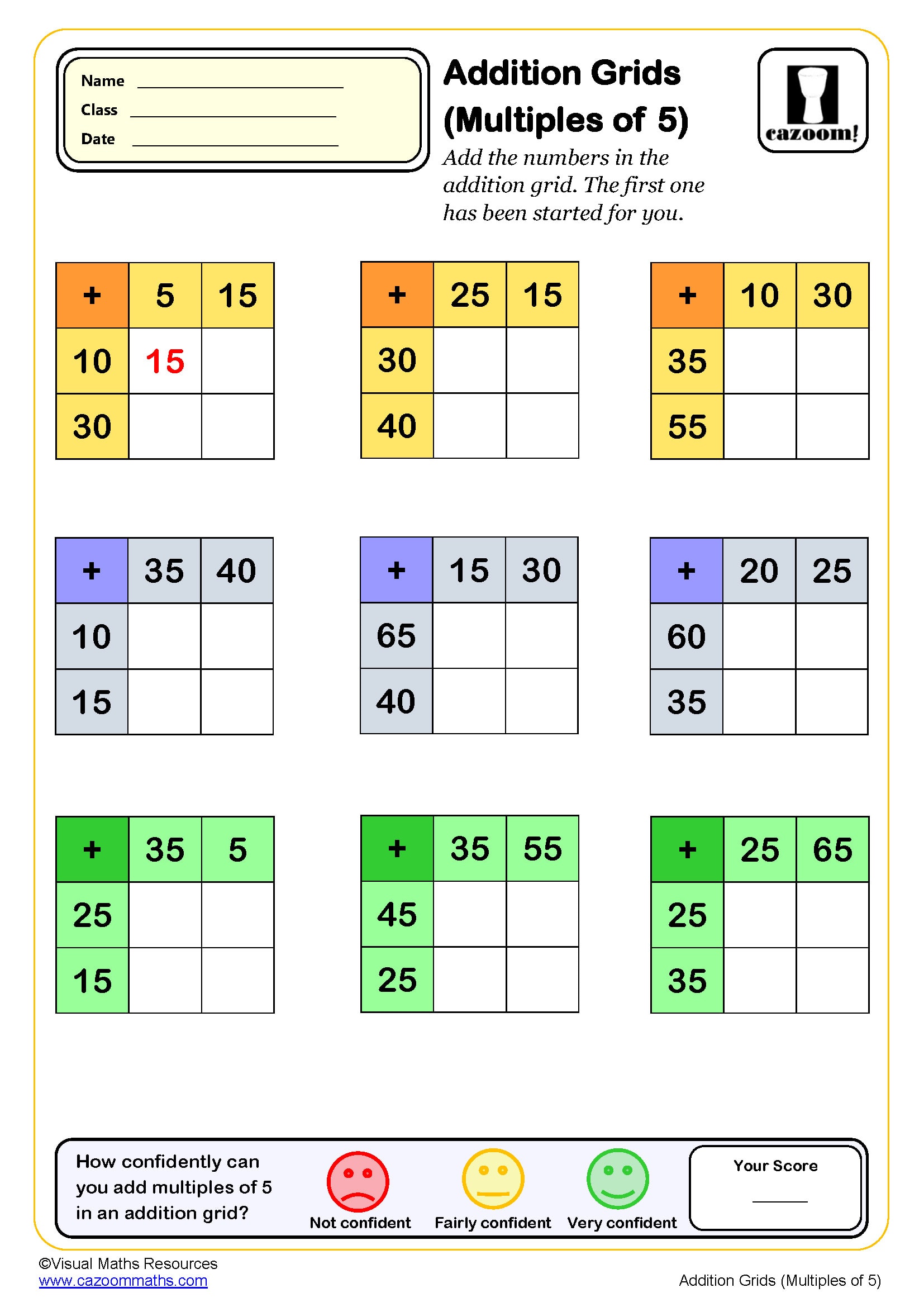
Addition Grids (Mulitples of 5)
Addition Grids (Multipes of 10)
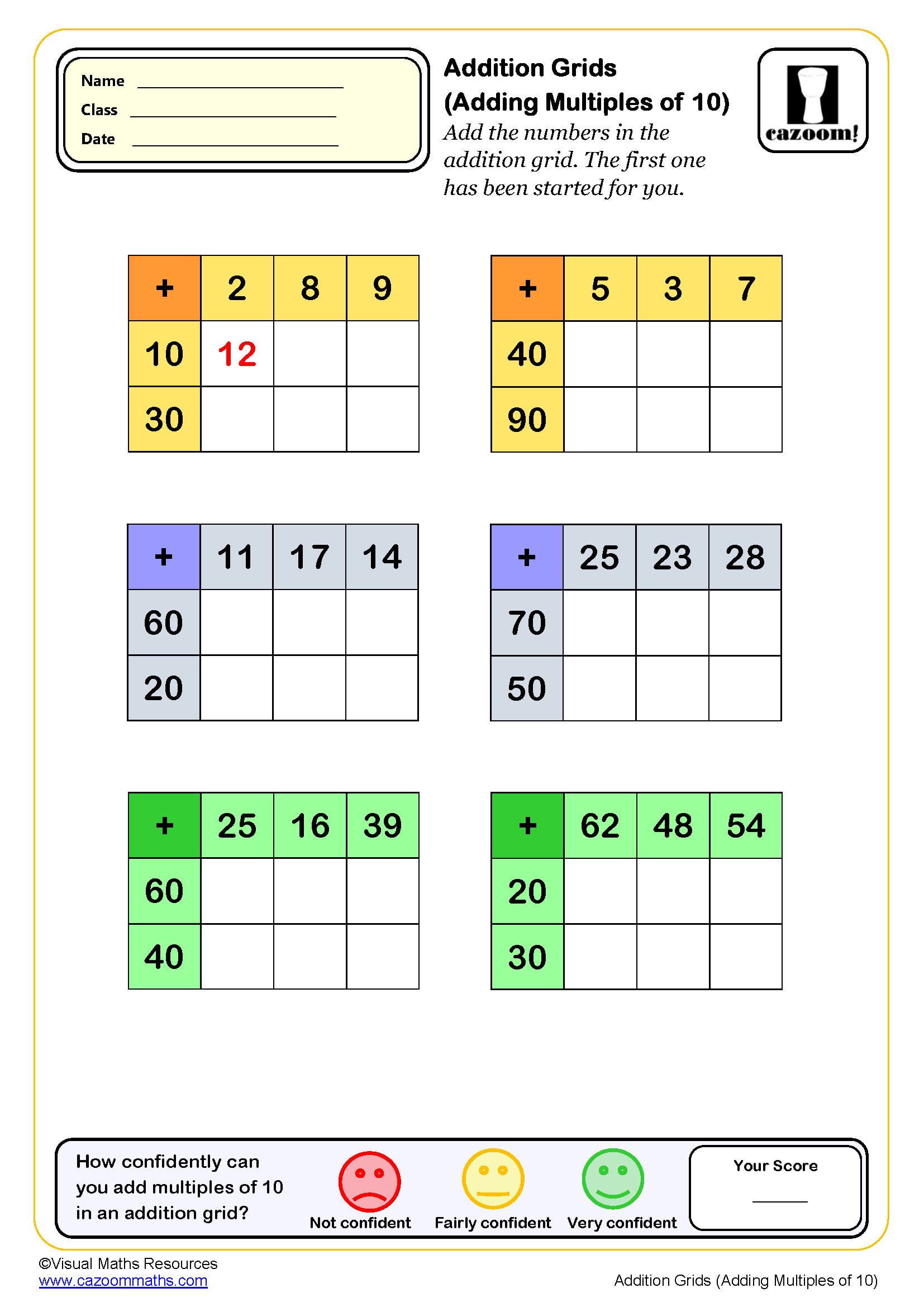
Addition Grids (Up to 15)
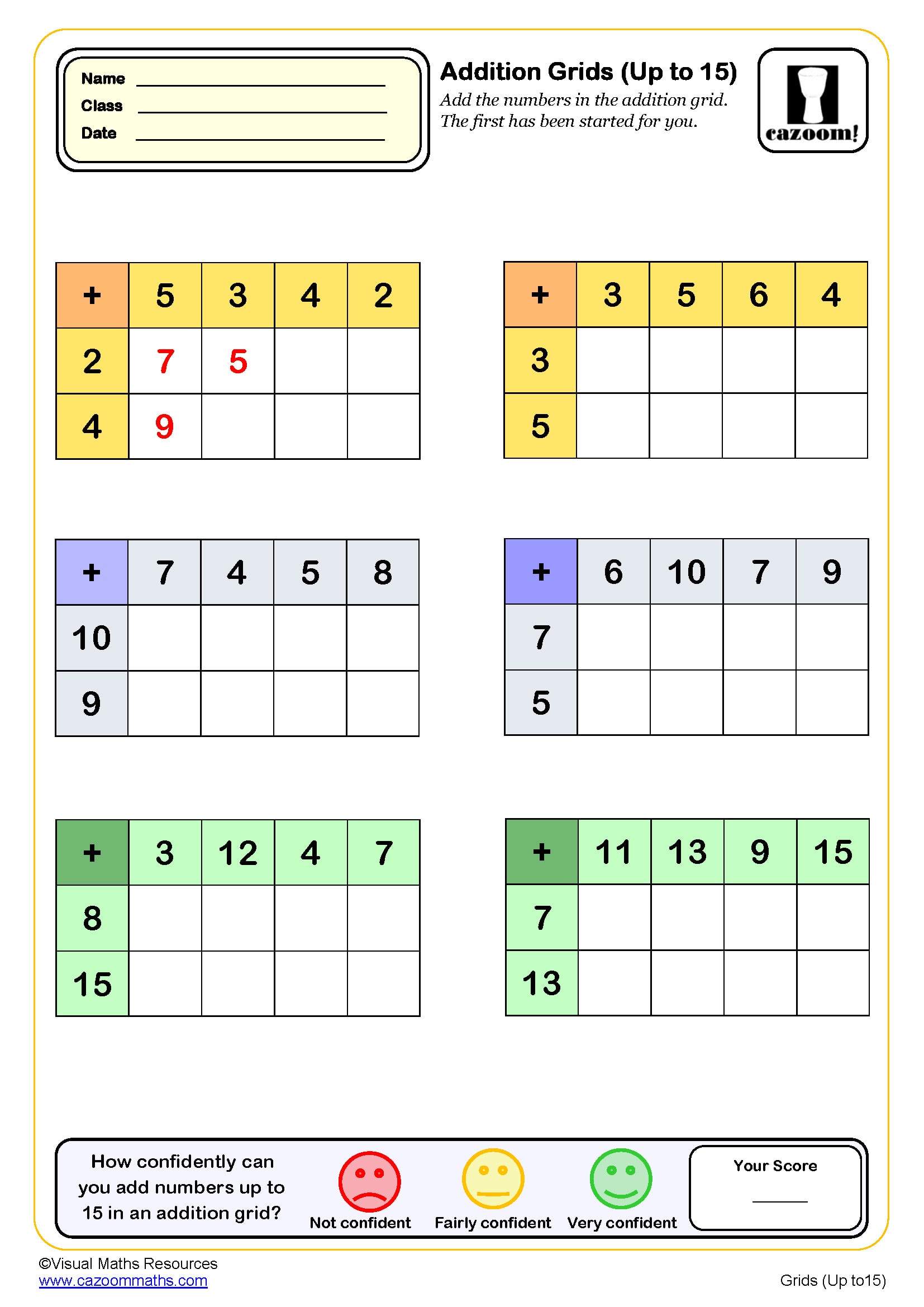
Addition Using Dice (A)
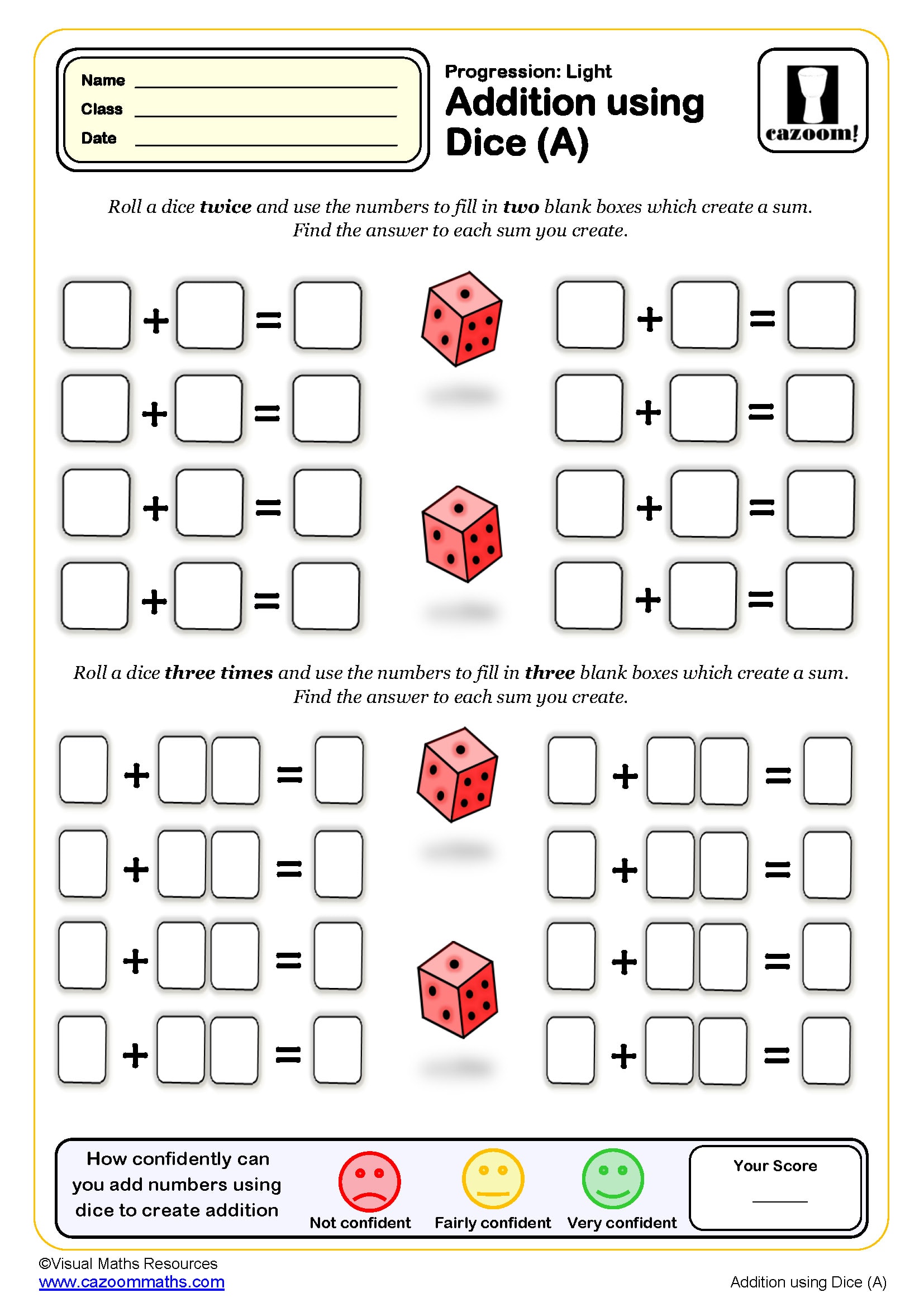
Addition Using Dice (B)
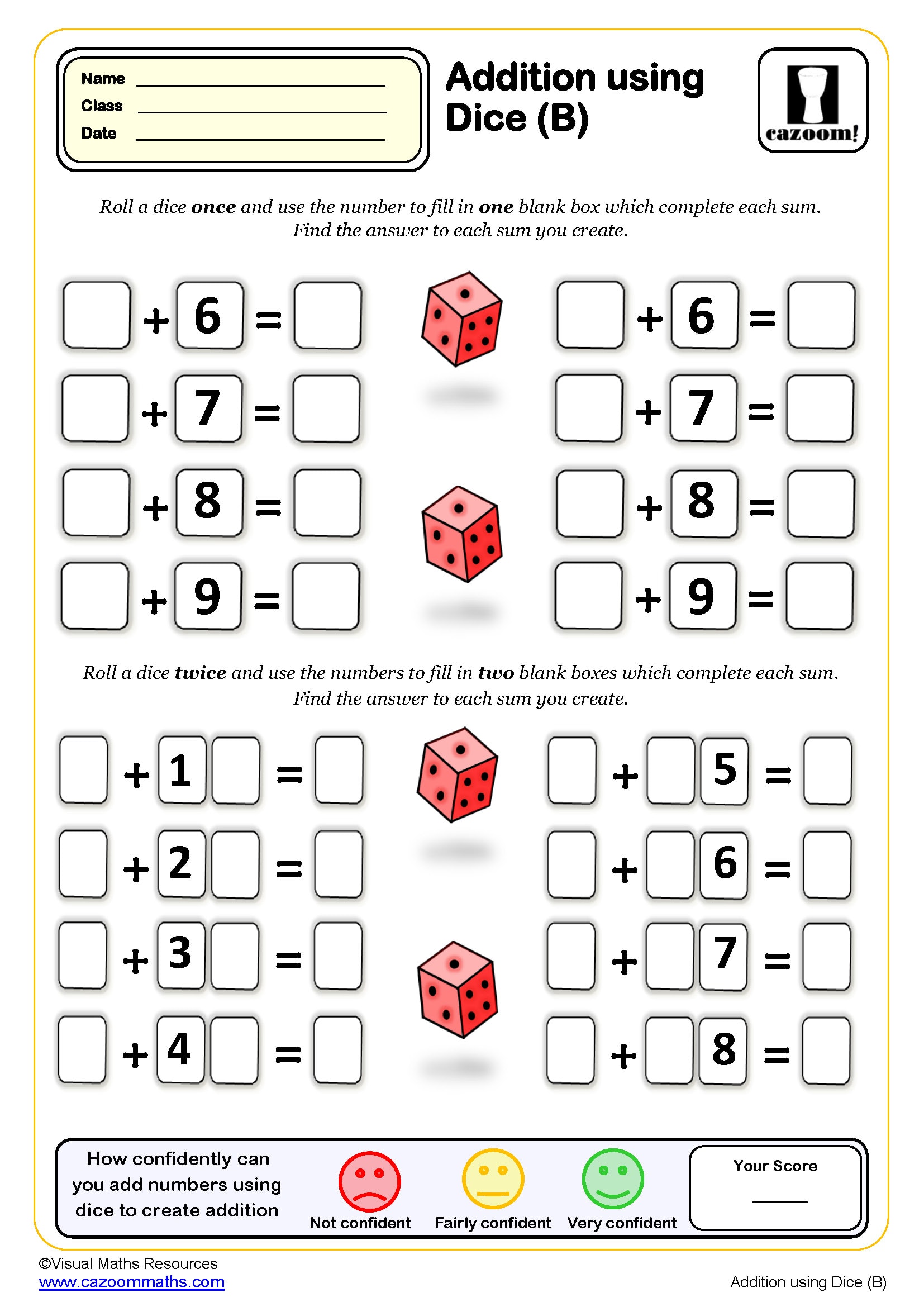
Addition Using Dice (C)
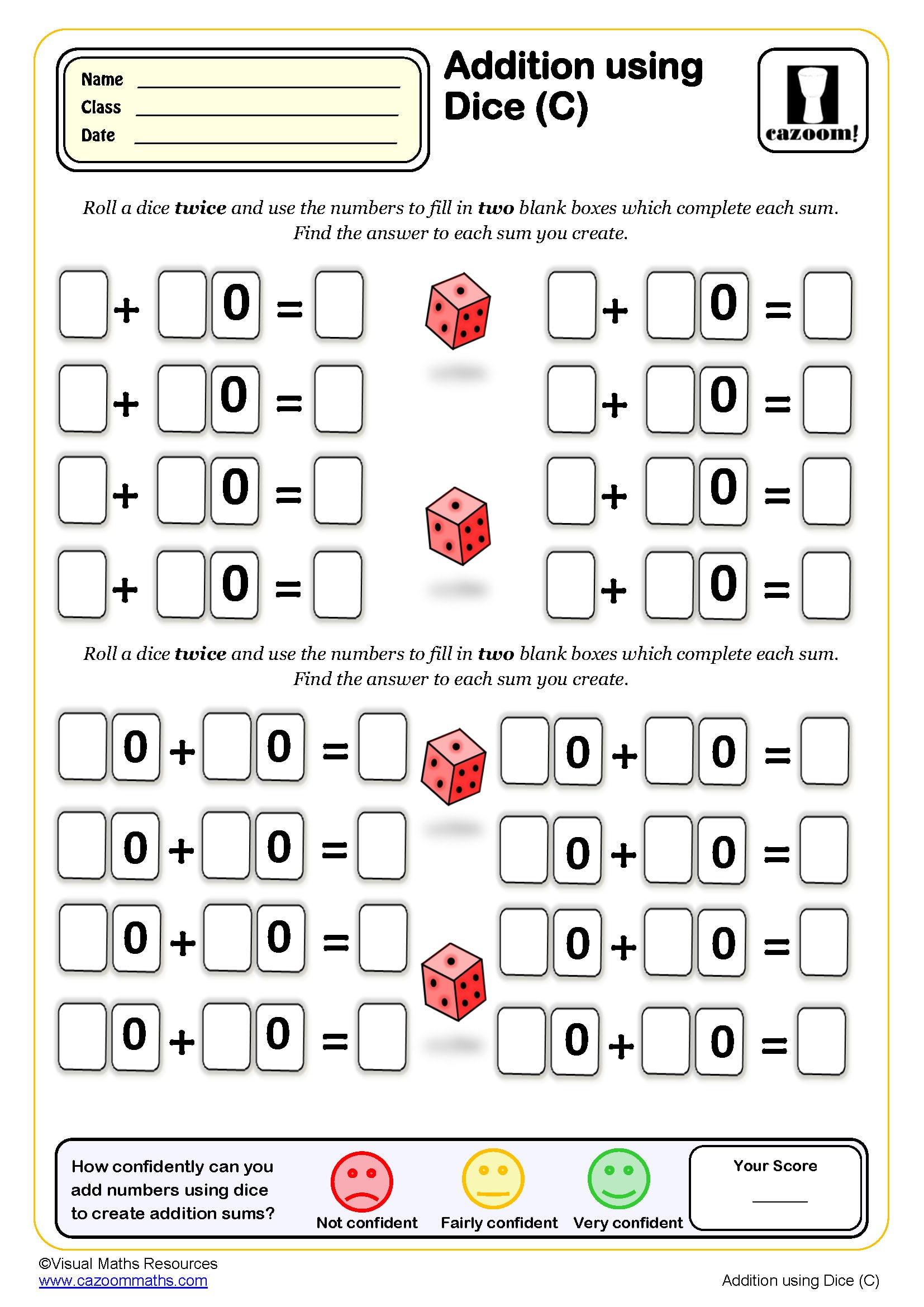
Addition Using Dice (D)
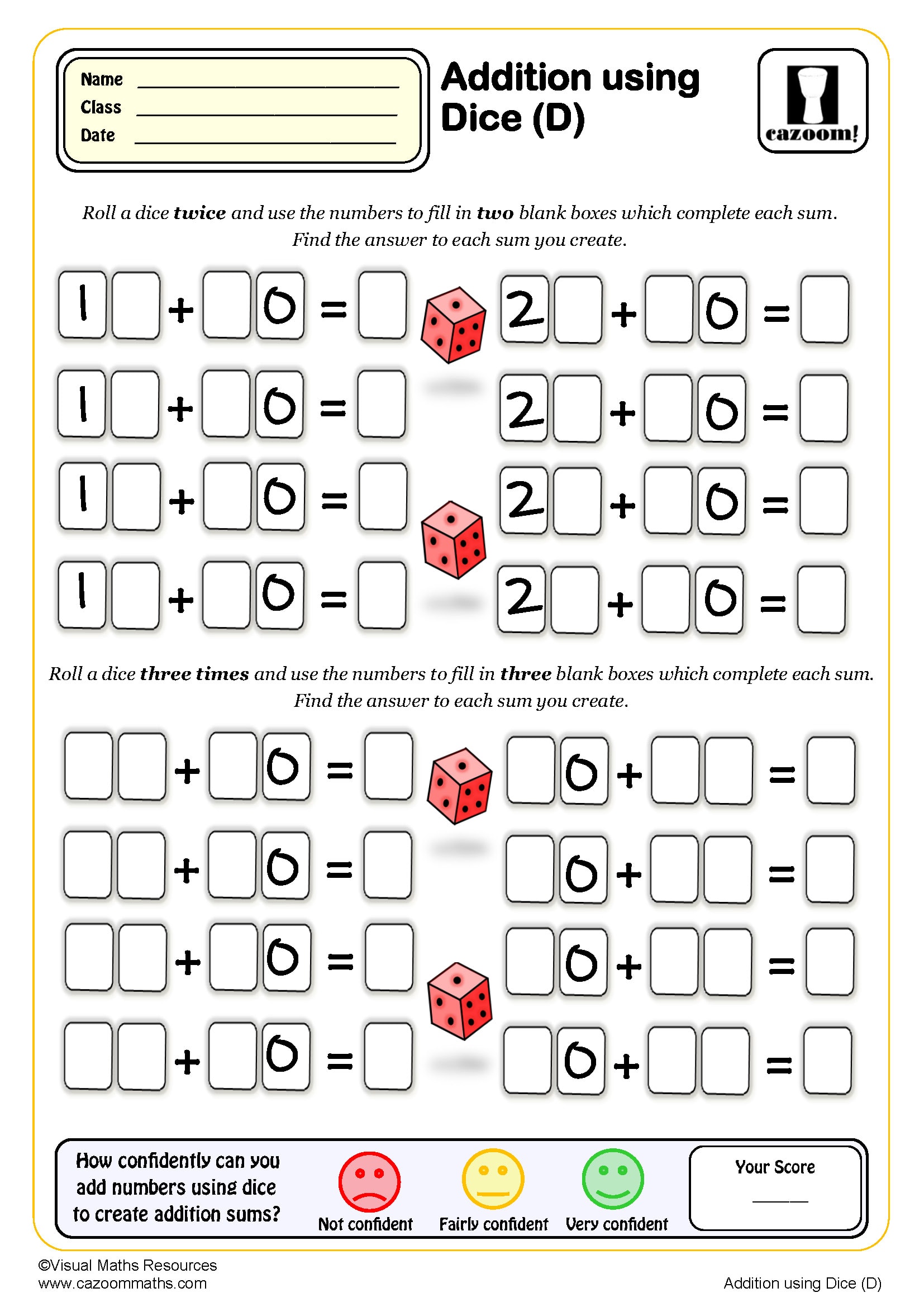
Addition Using Dice (E)
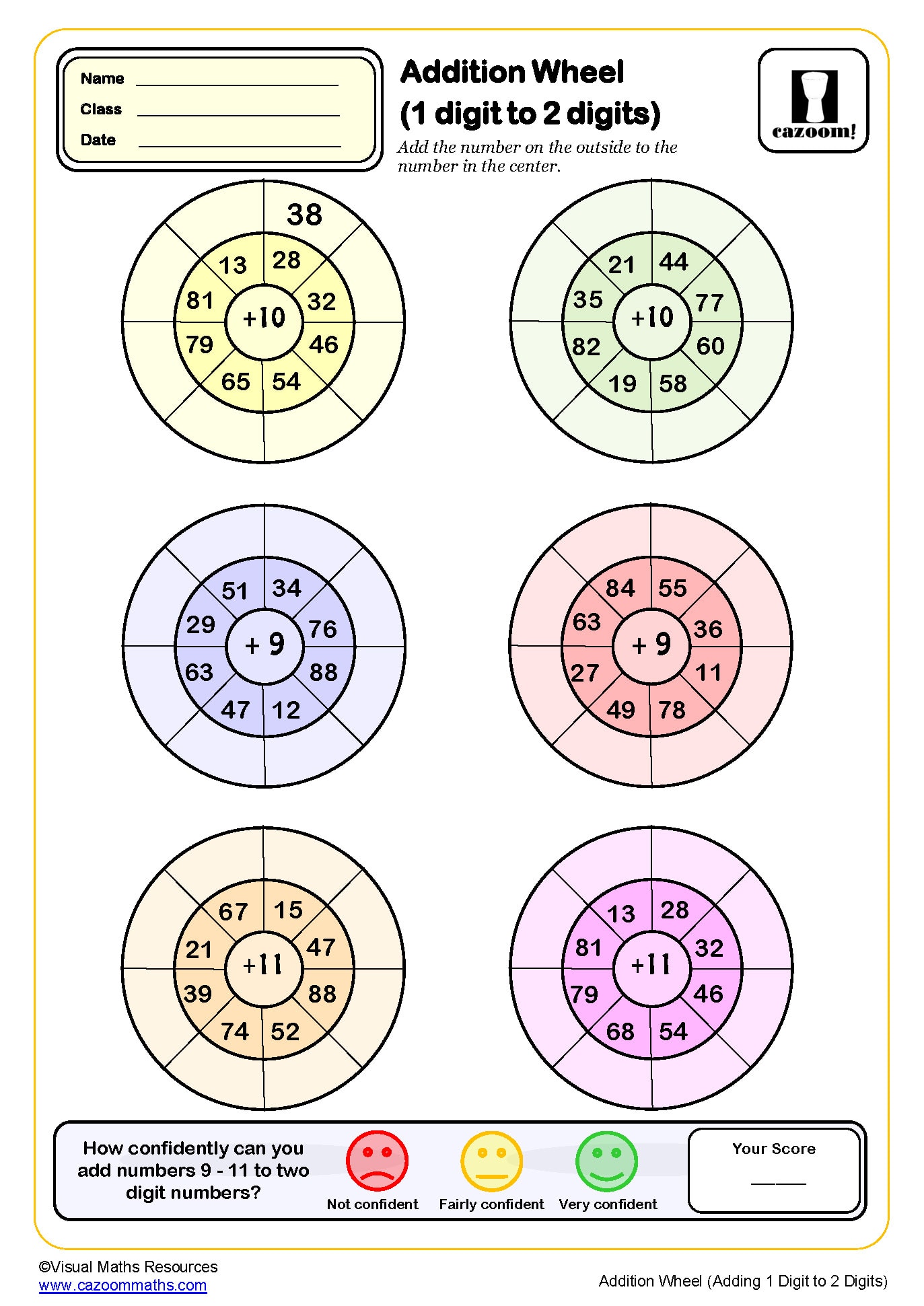
Addition Wheel (adding 9 - 11 to 2 digits)
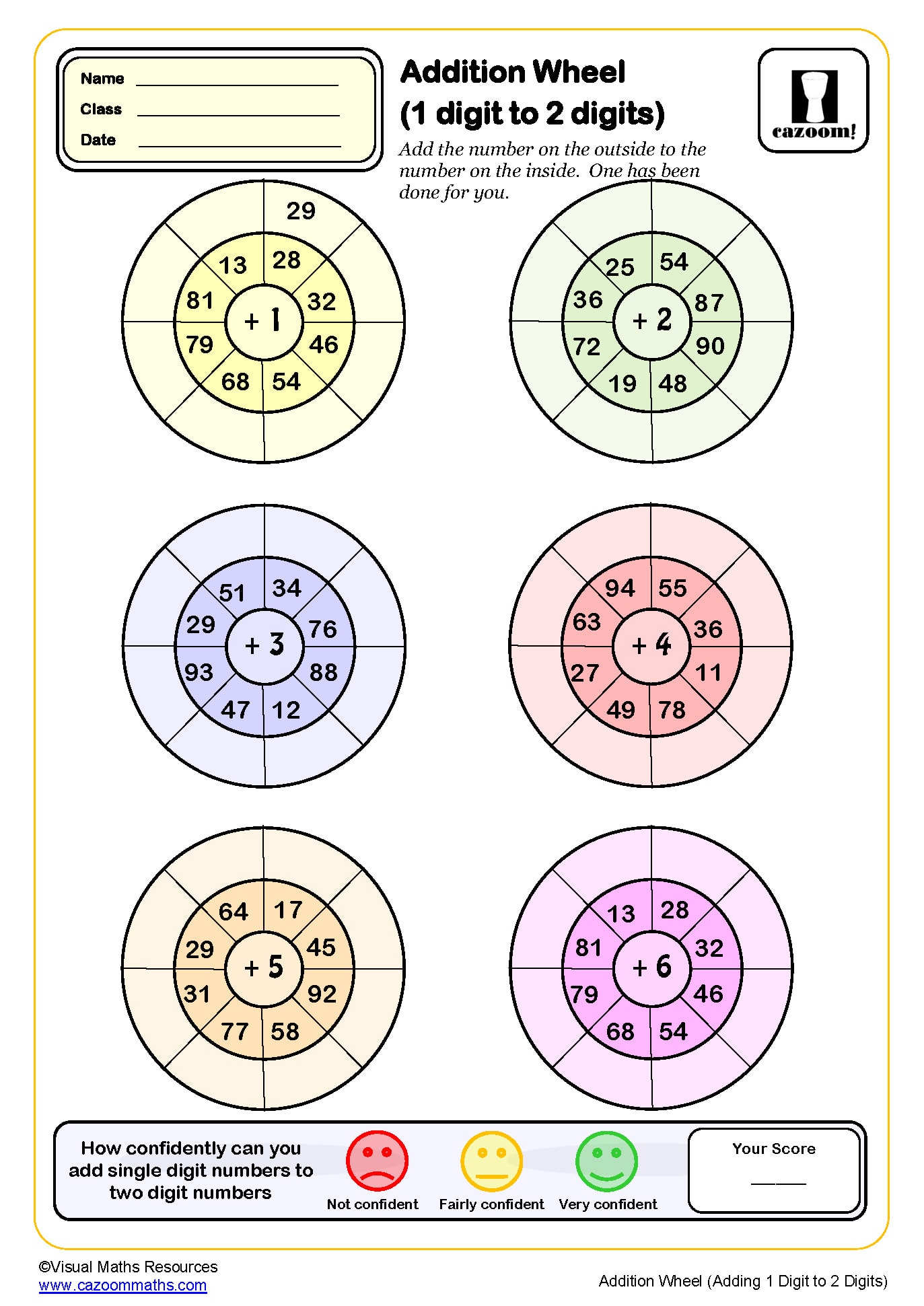
Addition Wheels (1 digit to 2 digits)
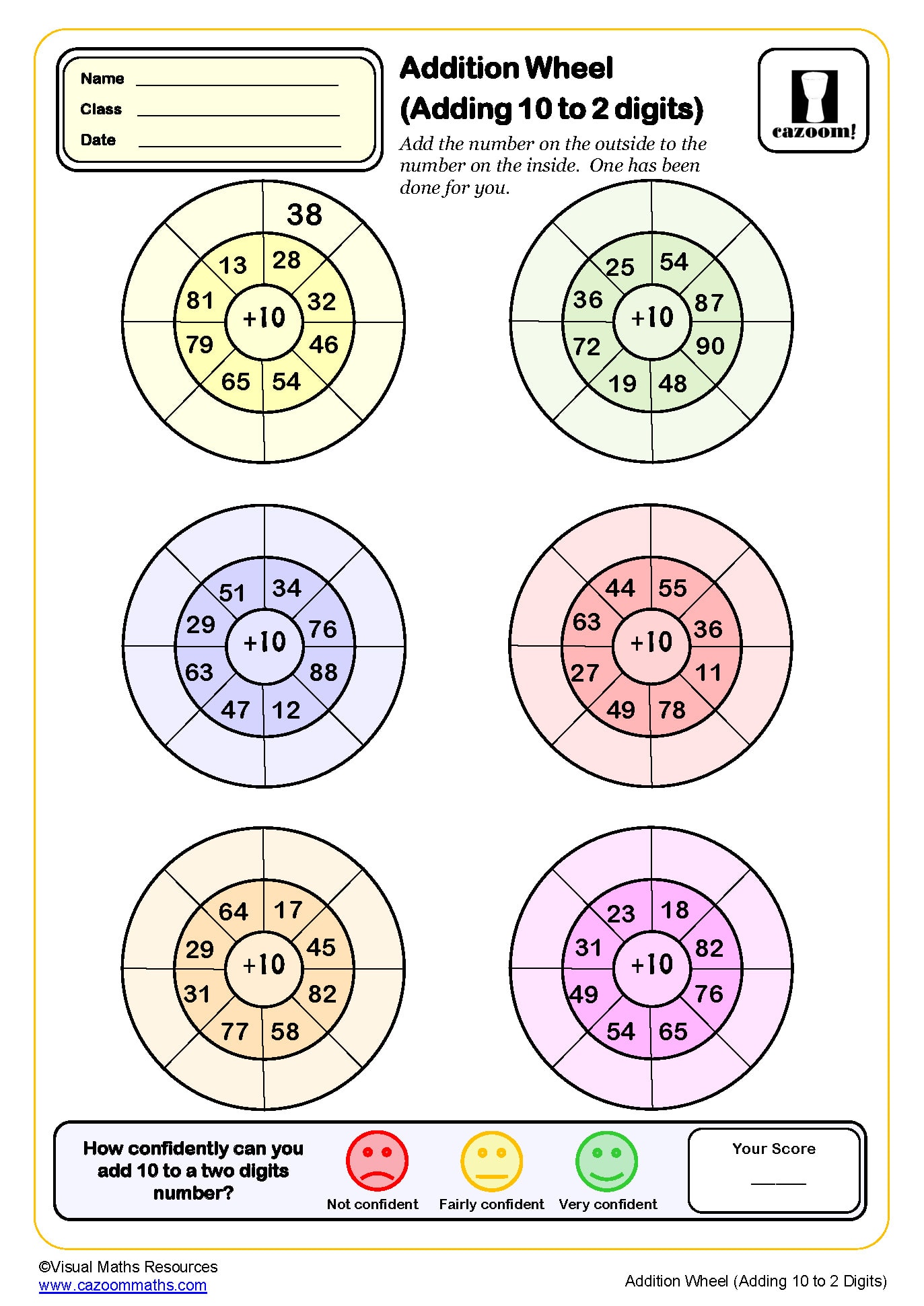
Addition Wheels (adding 10 to 2 digits)
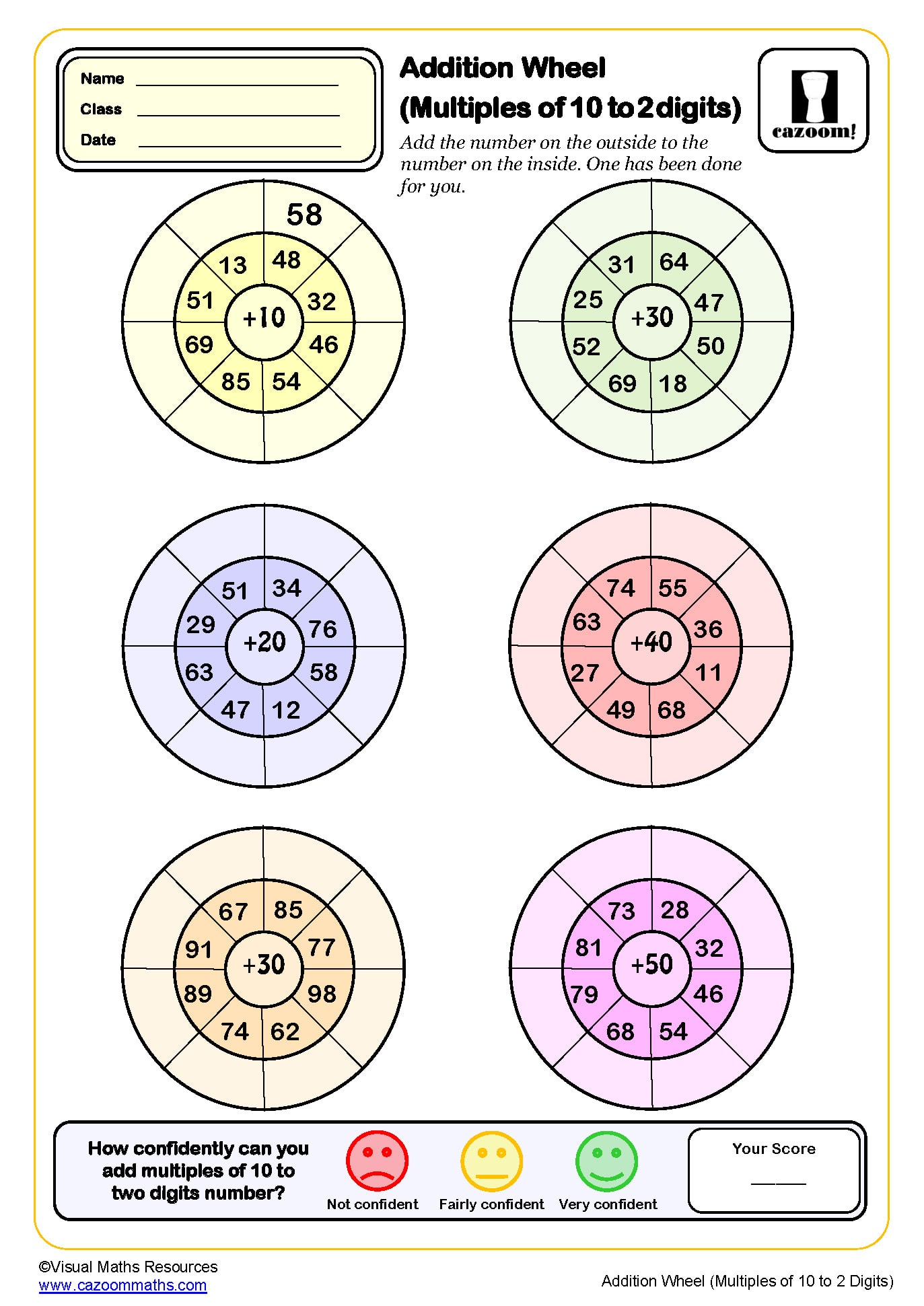
Addition Wheels (adding multiples of 10 to 2 digits)
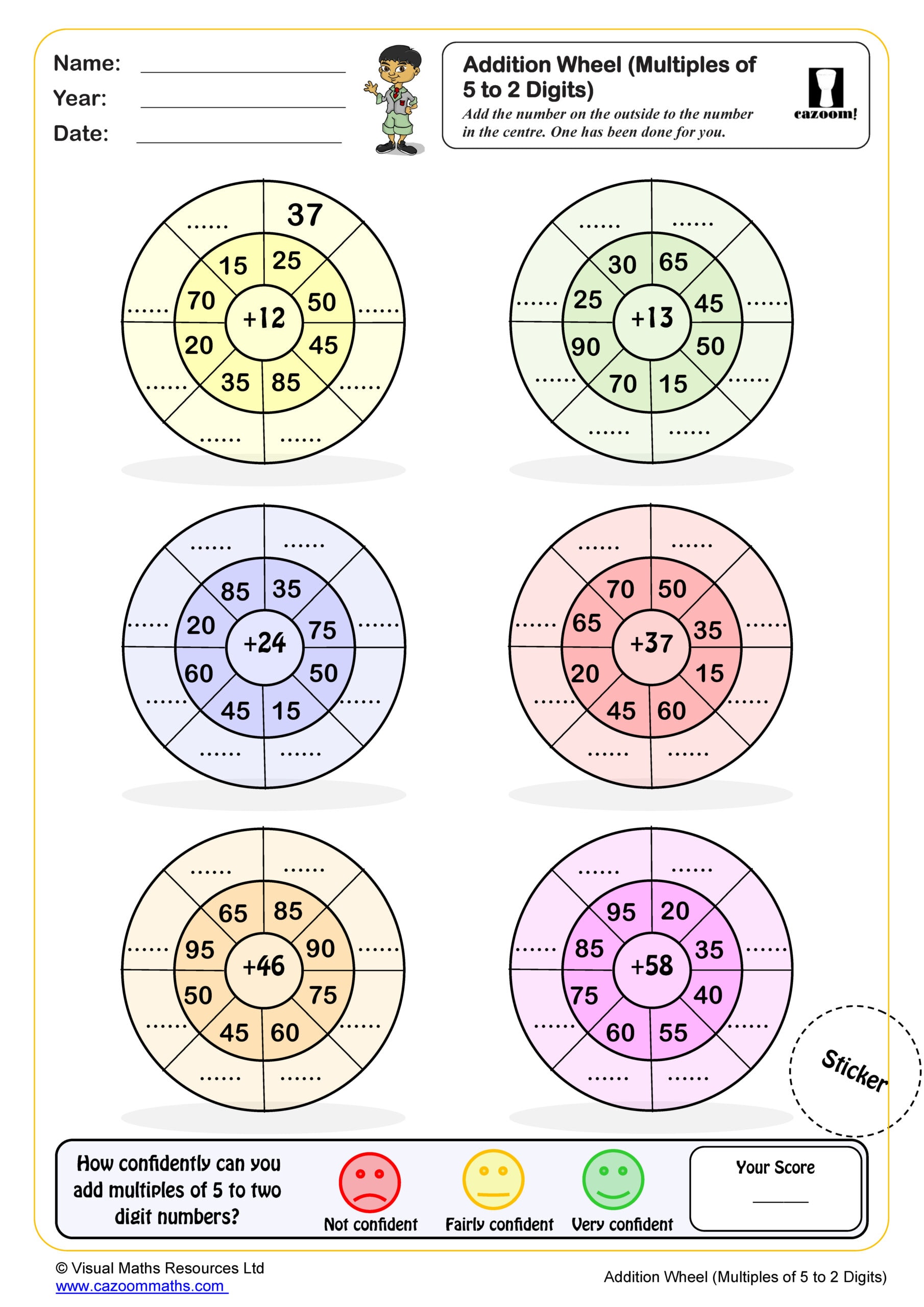
Addition wheels (multiples of 5 to 2 digits)
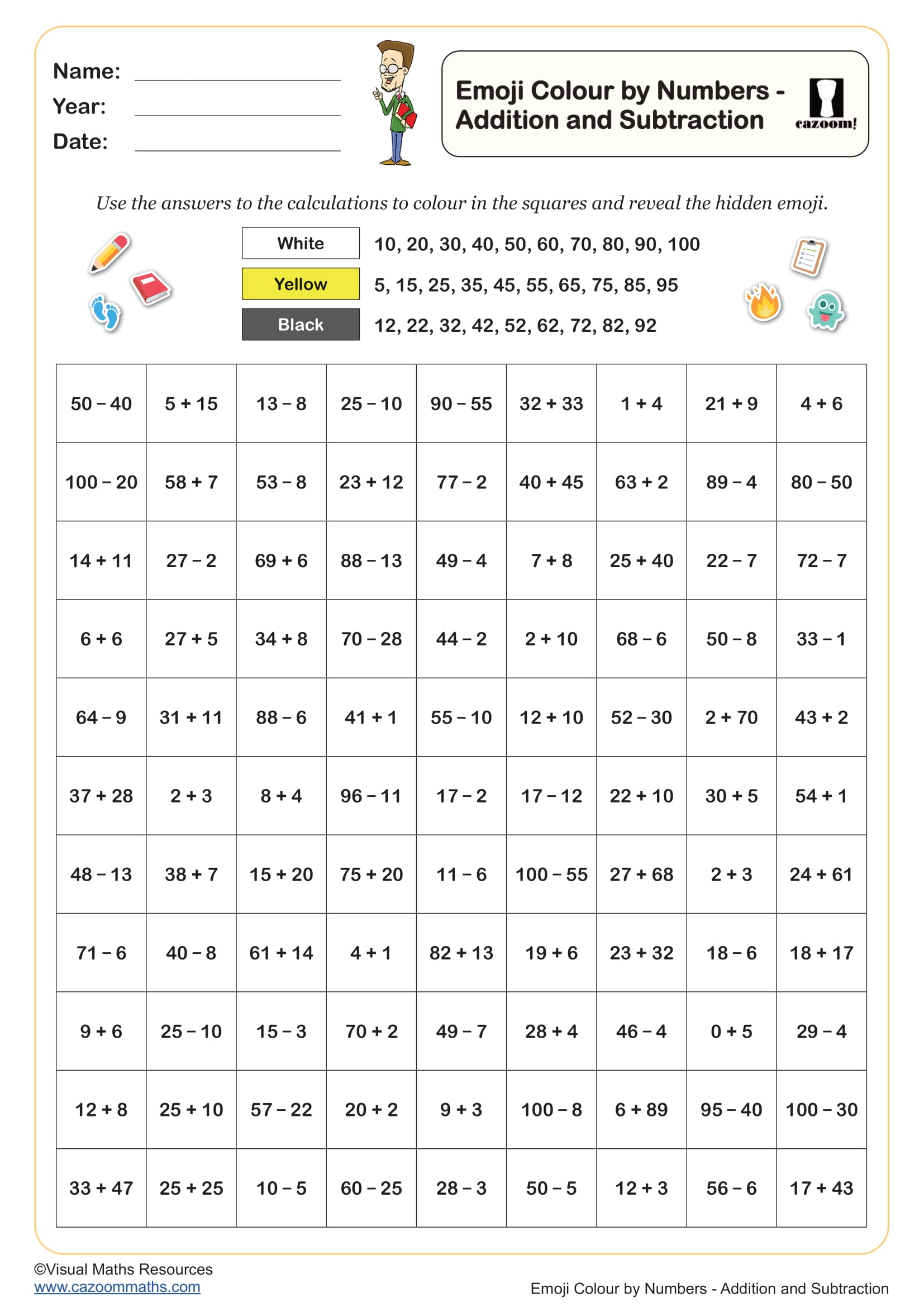
Emoji Colour by Numbers - Addition and Subtraction
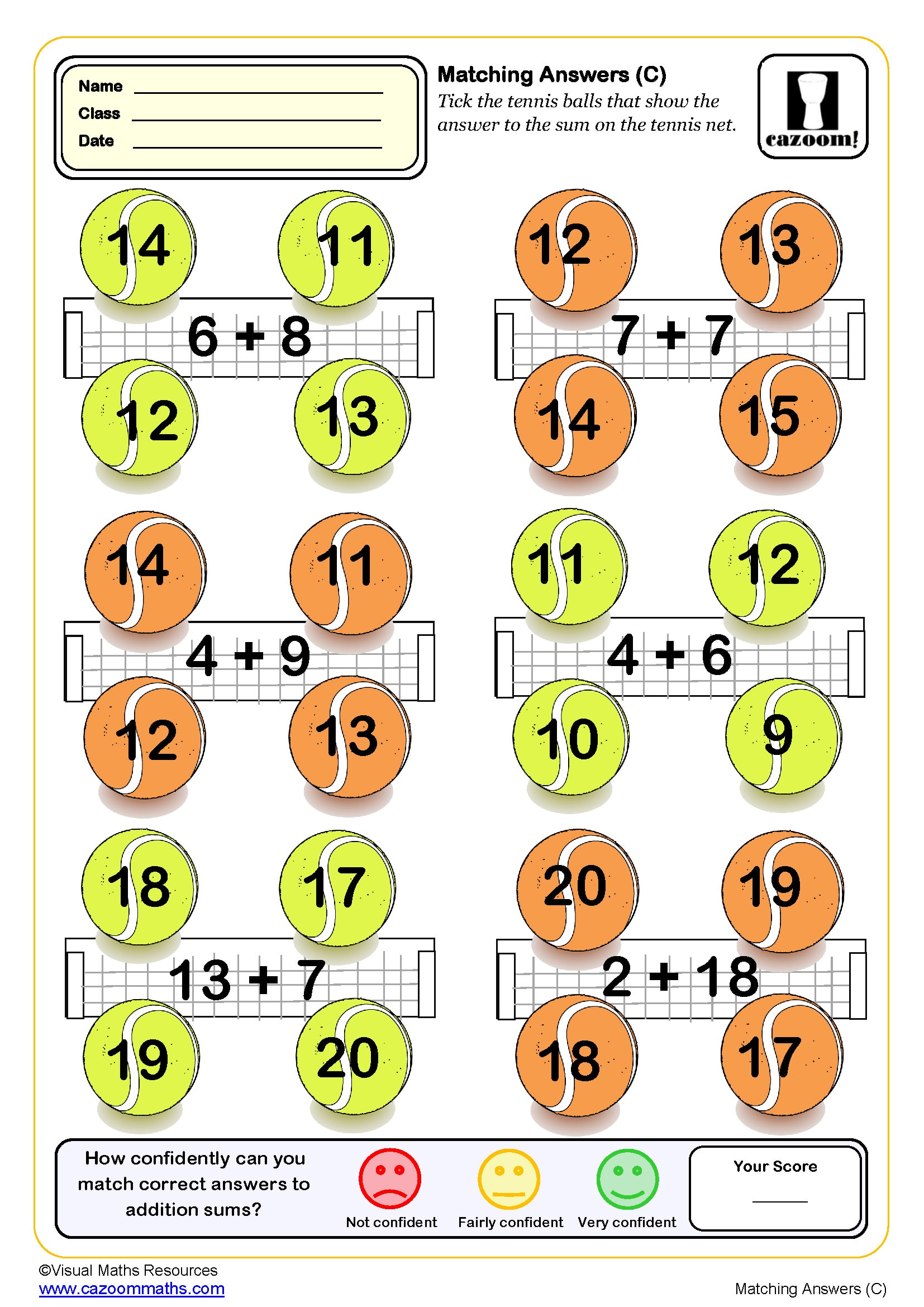
Matching Answers (C)
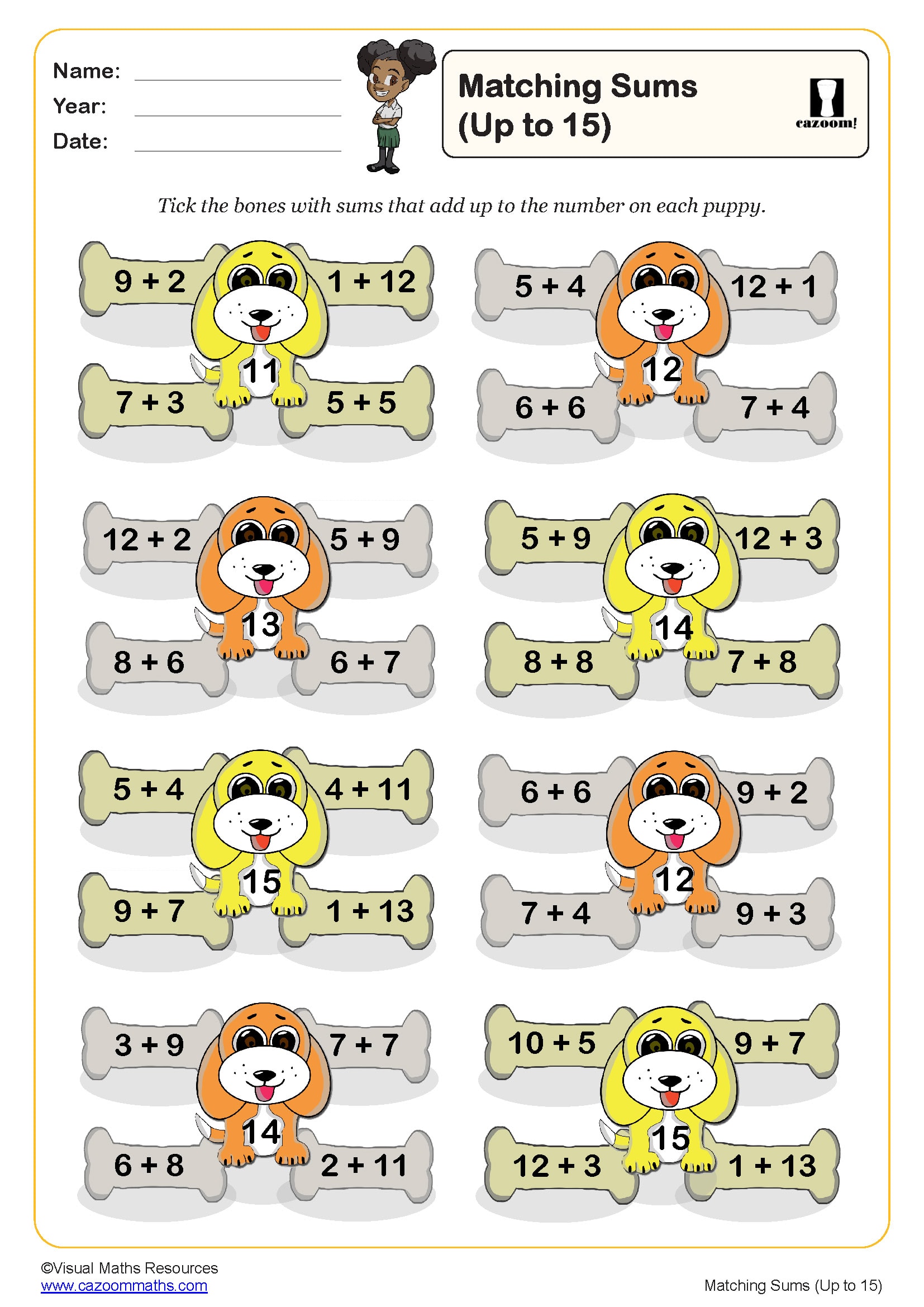
Matching sums (Up to 15)
All worksheets are created by the team of experienced teachers at Cazoom Maths.
What do KS1 add two-digit numbers worksheets cover?
KS1 worksheets for adding to two-digit numbers focus on developing children's understanding of addition within 100. Pupils practise adding single-digit numbers to two-digit numbers, such as 23 + 5 or 47 + 8, which builds essential skills in place value and mental calculation strategies. The worksheets introduce various methods including counting on, using number lines, partitioning, and column addition, allowing children to find approaches that suit their learning style.
Which year groups use adding to 2 digit numbers worksheets?
These adding to 2 digit numbers worksheets are designed specifically for Year 1 and Year 2 pupils studying Key Stage 1 mathematics. In Year 1, children typically begin by adding single-digit numbers to two-digit numbers without crossing the tens boundary, such as 34 + 5. As they progress through Year 1 and into Year 2, they tackle calculations that require regrouping, such as 38 + 7, developing their understanding of place value.
How do number lines help with adding to 2 digit numbers?
Number lines are an effective visual tool that helps KS1 pupils understand the process of adding to two-digit numbers. By starting at the two-digit number and counting on the single-digit addend in jumps, children can see how addition increases value and moves along the number sequence. This method is particularly useful for children who need concrete representations before moving to abstract calculations, and it supports their understanding of place value.
Do the worksheets include answer sheets?
Yes, every worksheet in this collection includes a complete answer sheet. This feature saves considerable time for teachers and parents, allowing them to mark work quickly and provide immediate feedback to pupils. The answer sheets show all solutions clearly, making it easy to identify where children might need additional support or clarification on particular types of calculations.