KS1 Adding to a Single Digit Worksheets
Adding 1 drills (10 questions)
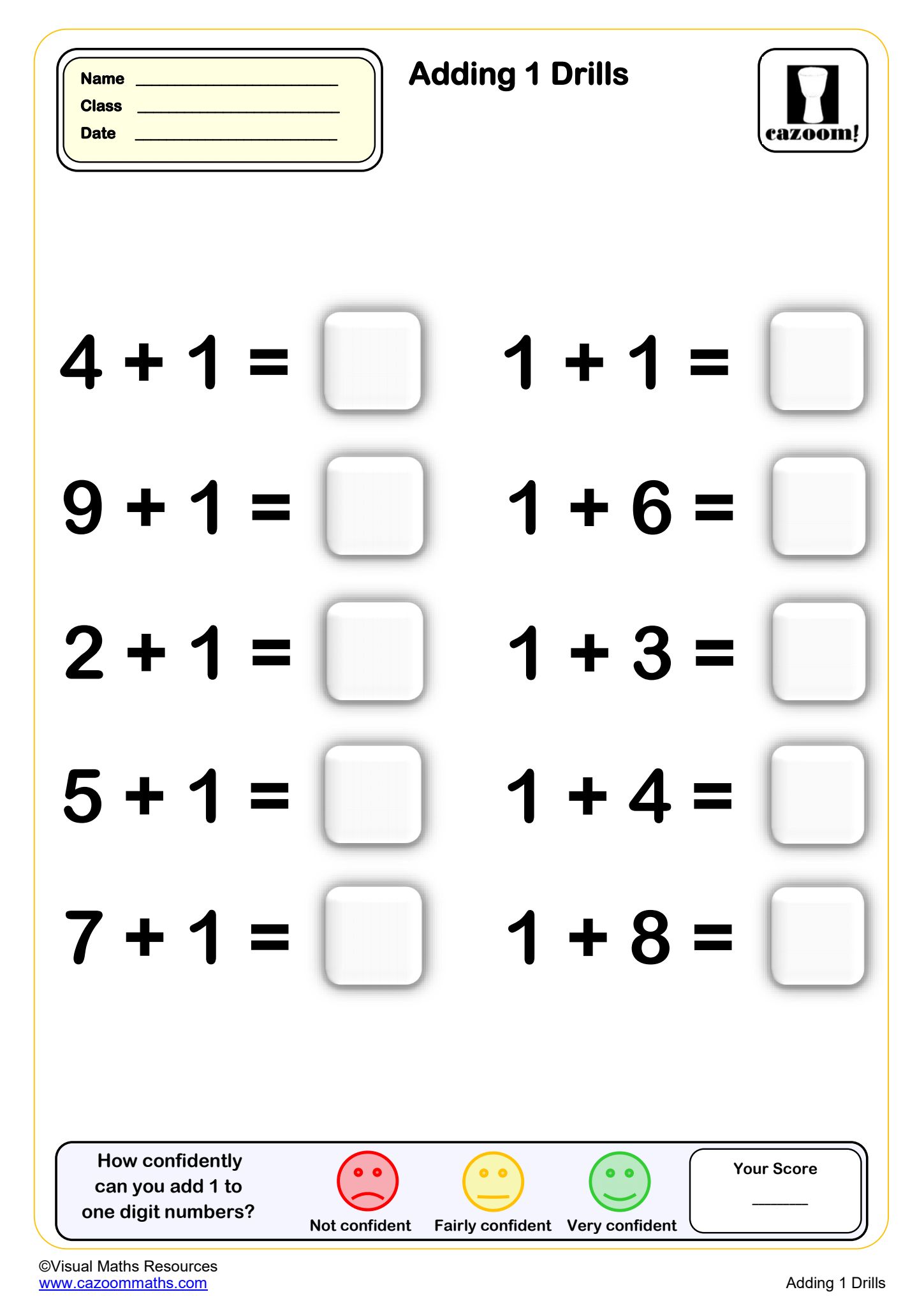
Adding 1 drills (20 questions)
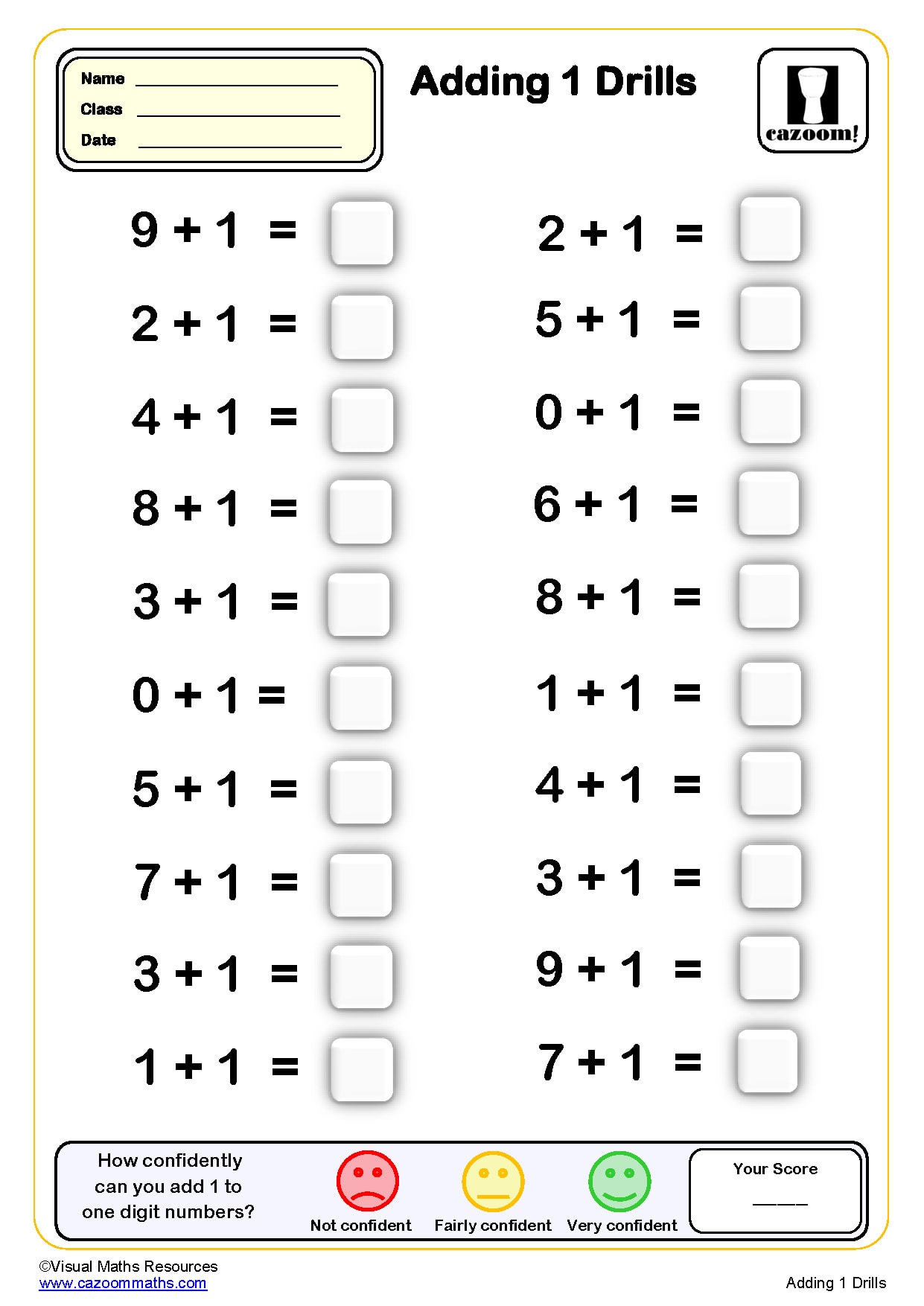
Adding 1 drills (50 questions)
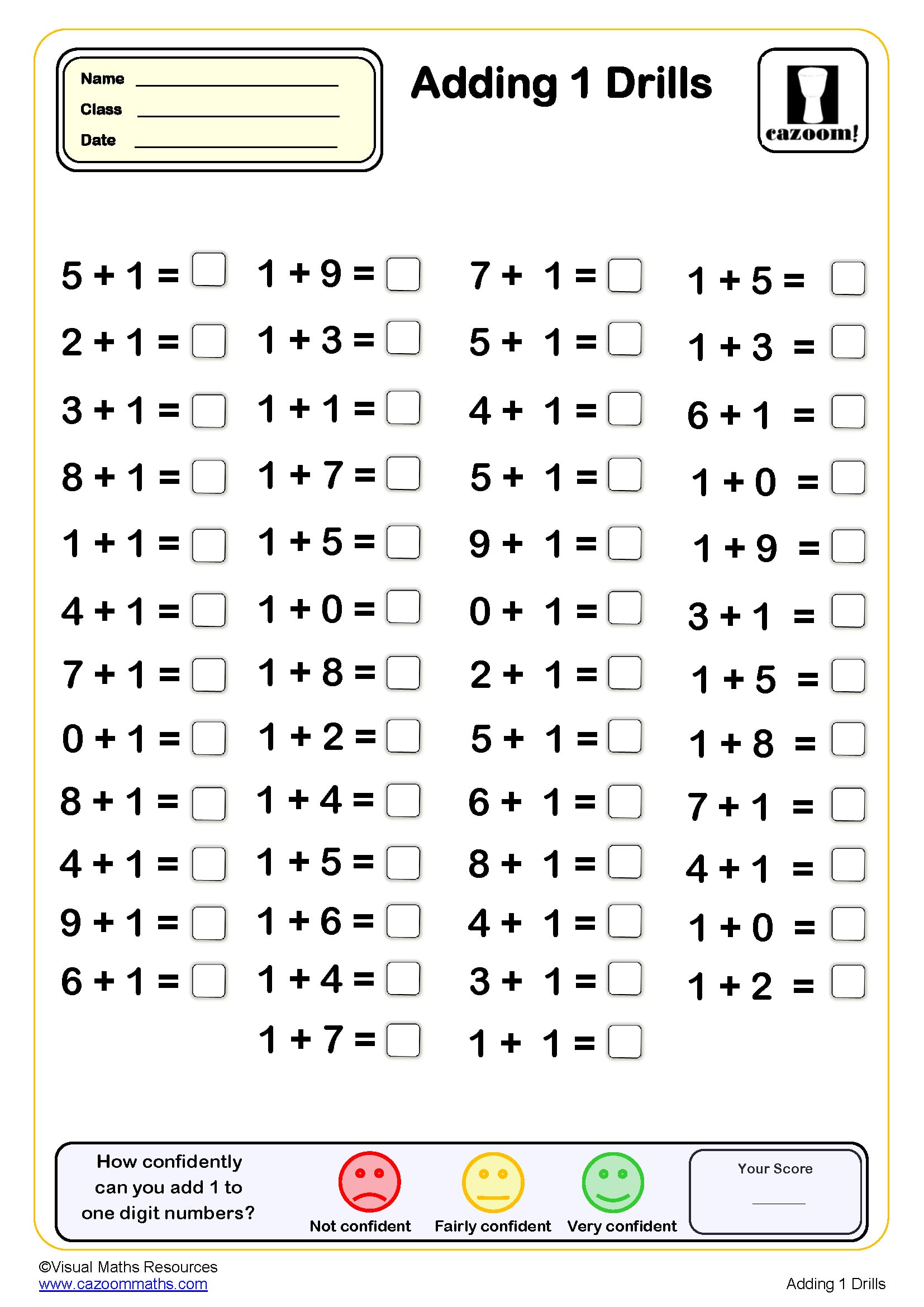
Adding 2 drills (10 questions)
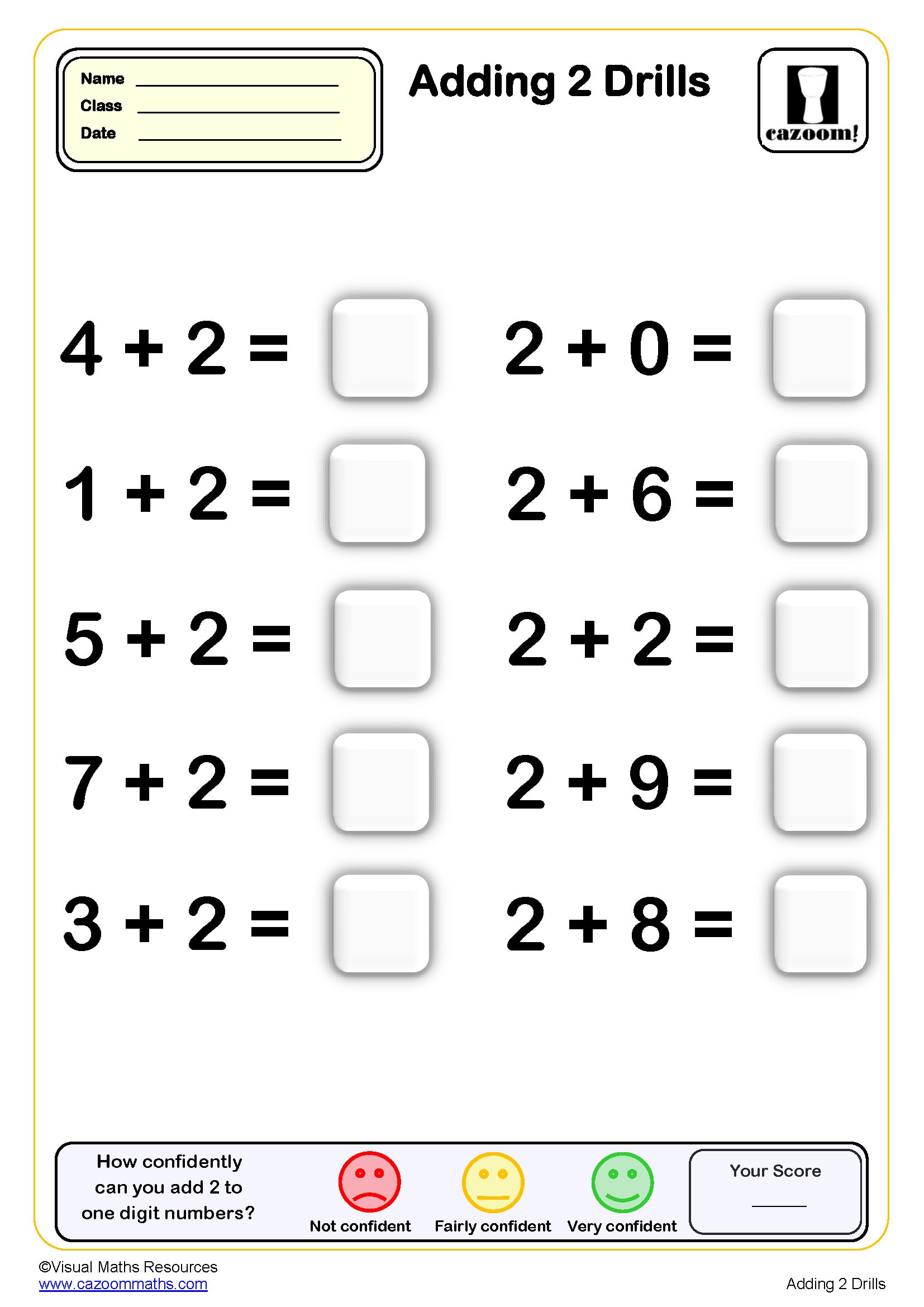
Adding 2 drills (20 questions)
Adding 2 drills (50 questions)
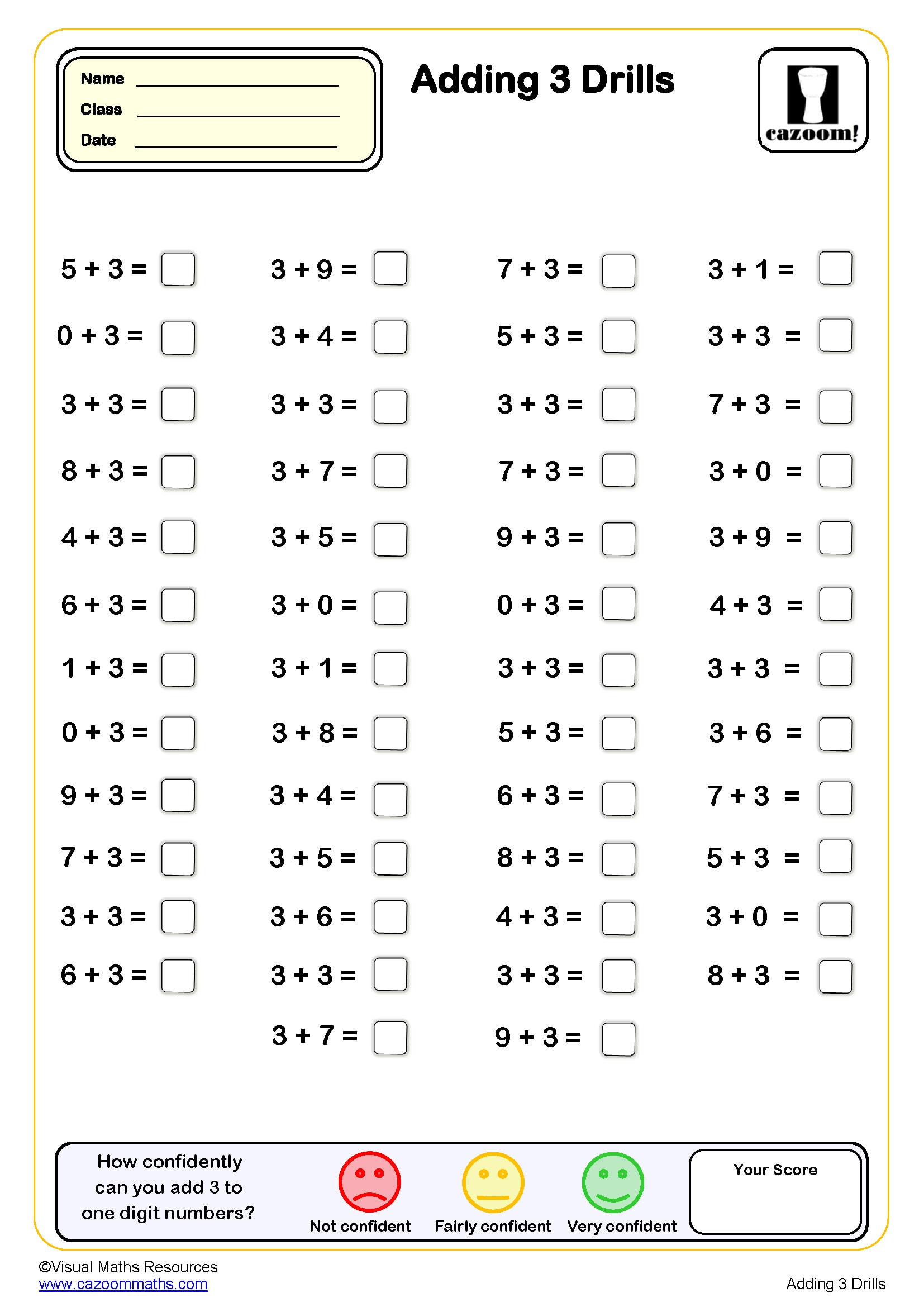
Adding 3 drills (10 questions)
Adding 3 drills (20 questions)
Adding 3 drills (50 questions)
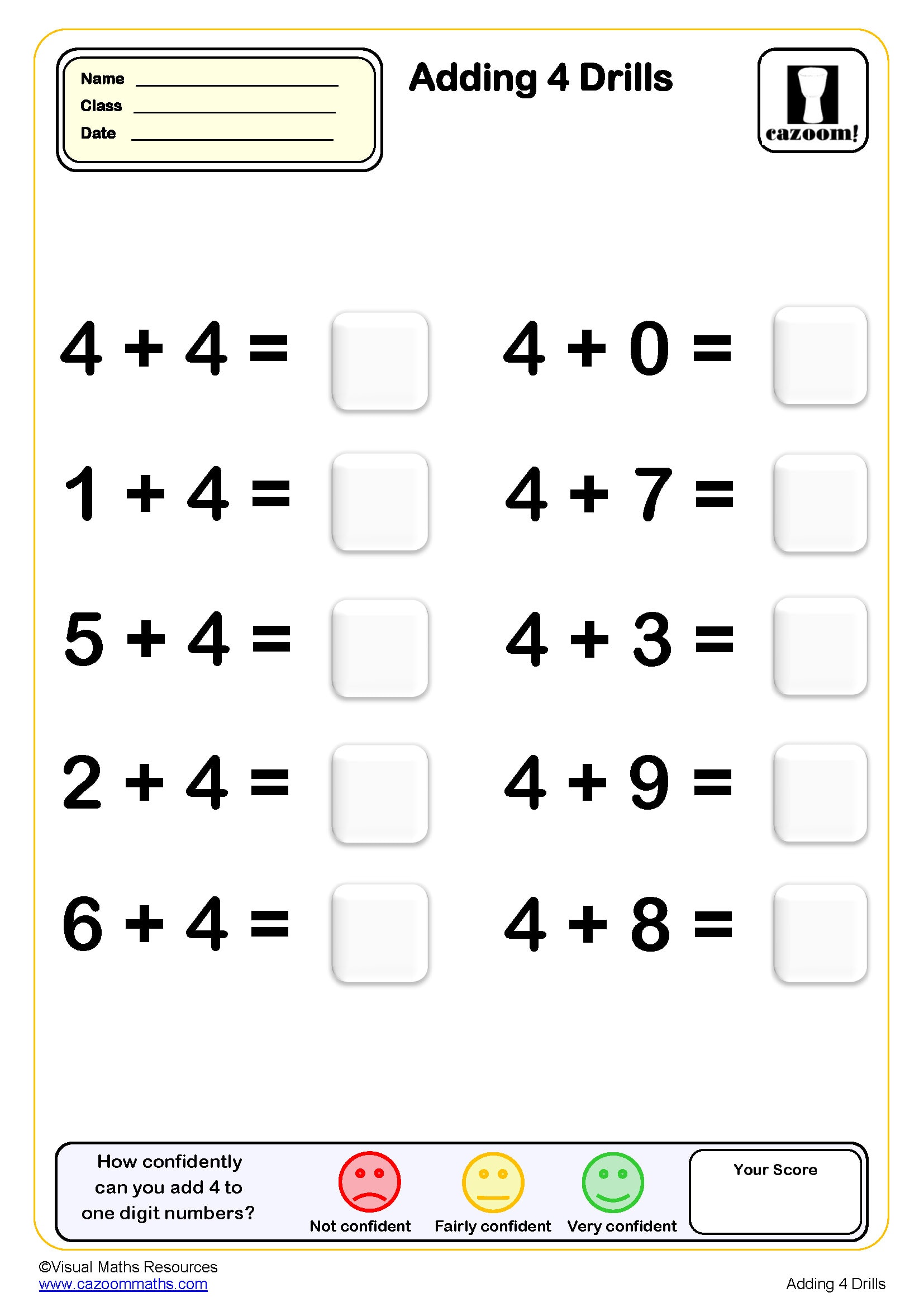
Adding 4 drills (10 questions)
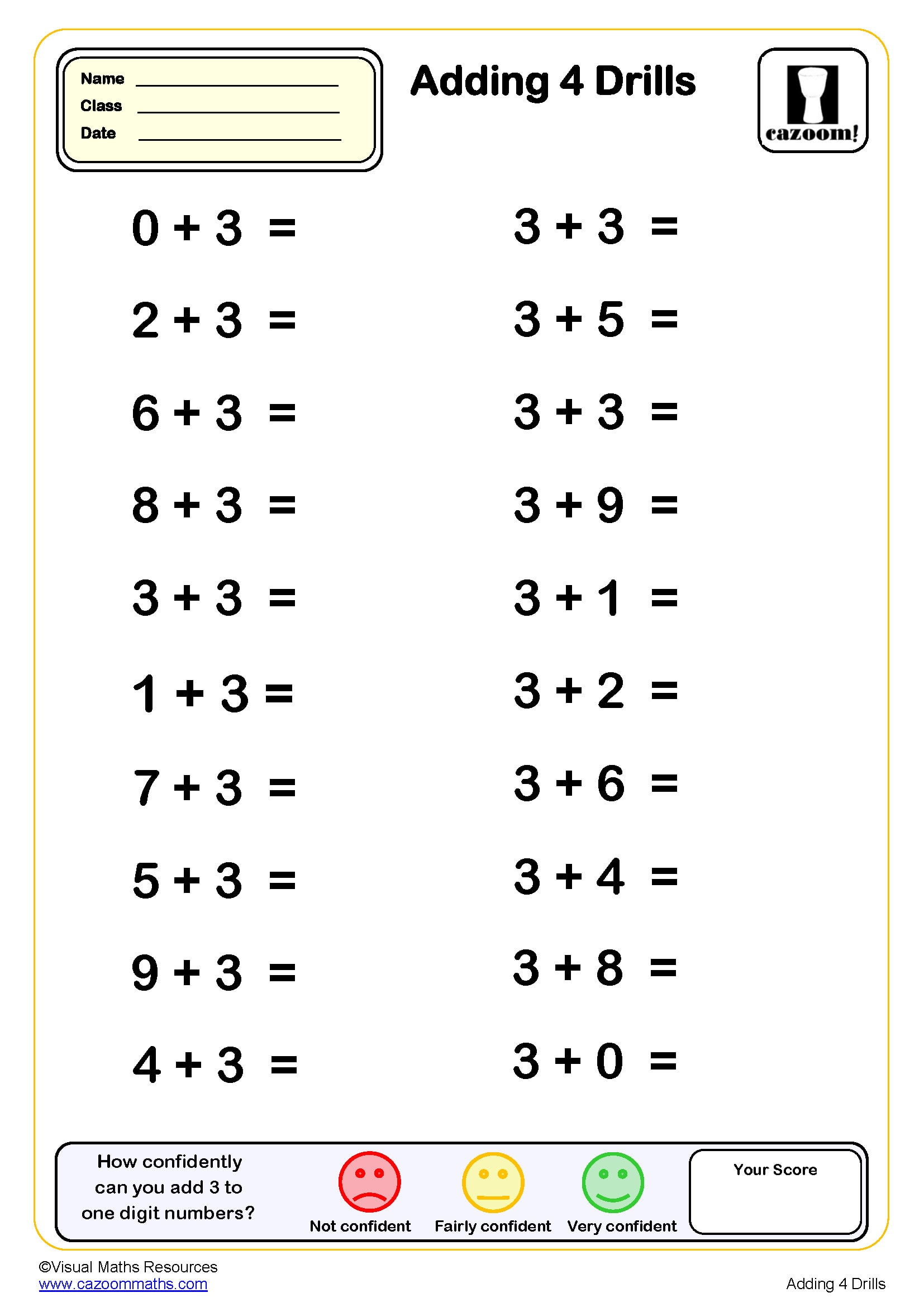
Adding 4 drills (20 questions)
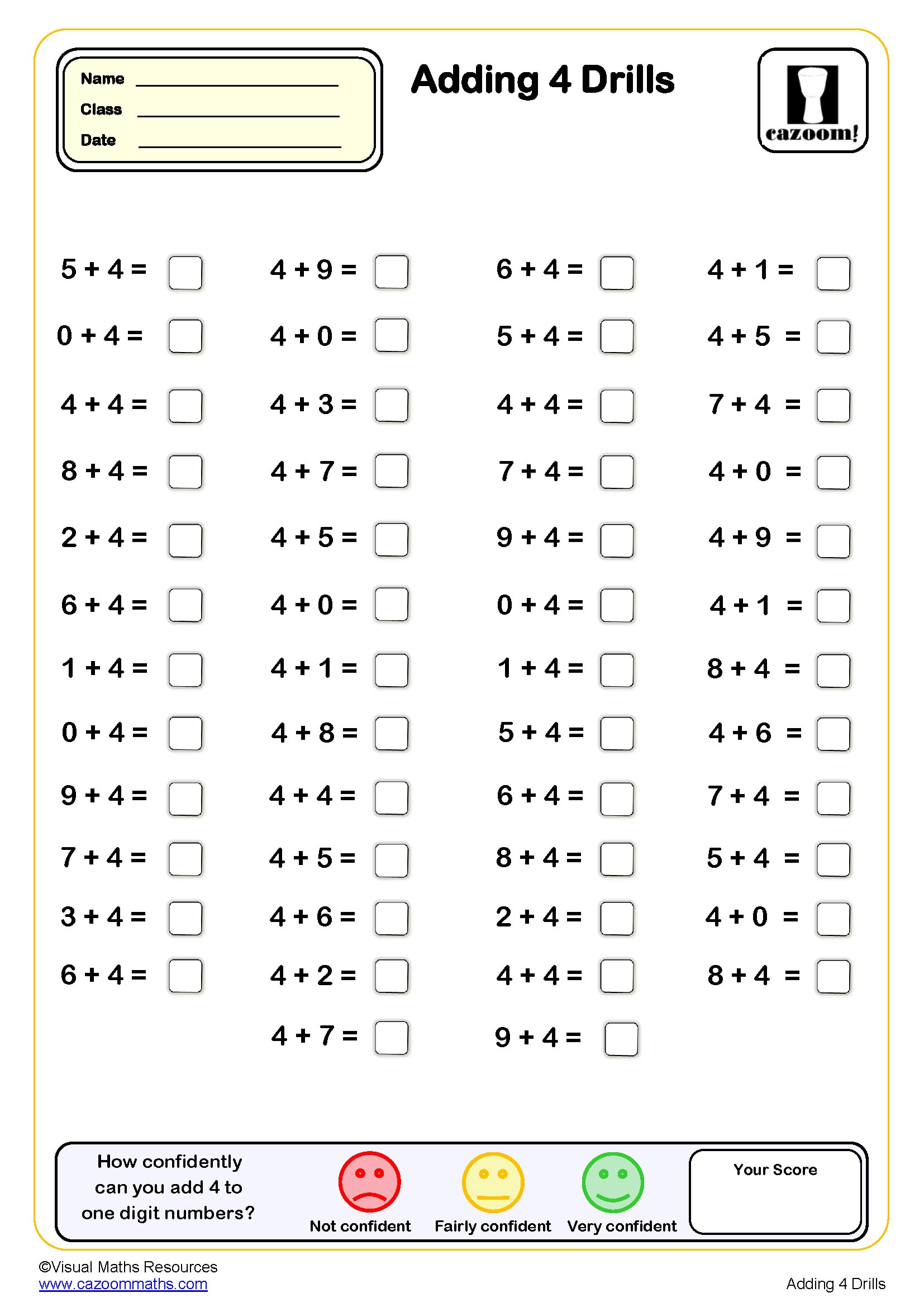
Adding 4 drills (50 questions)
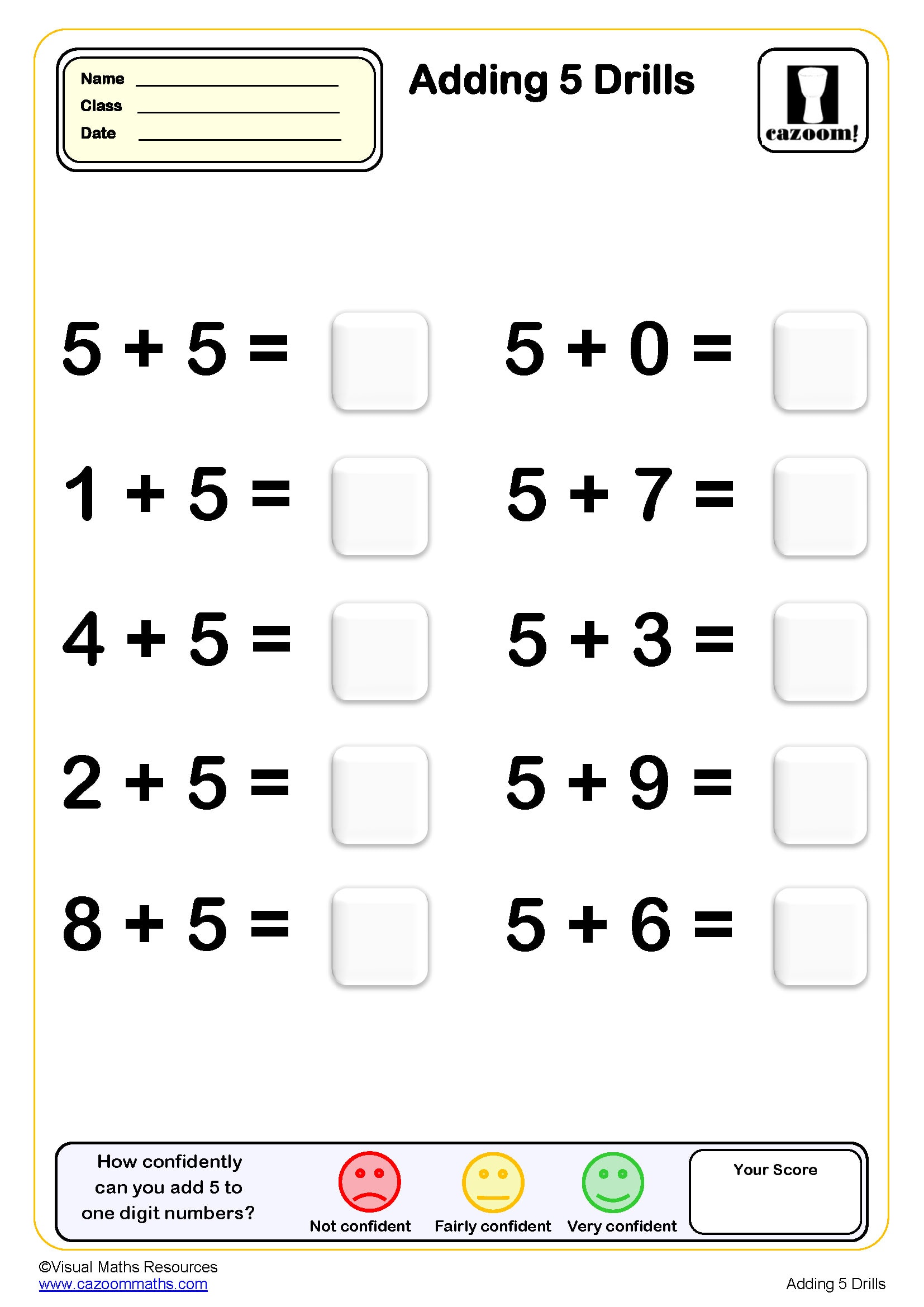
Adding 5 drills (10 questions)
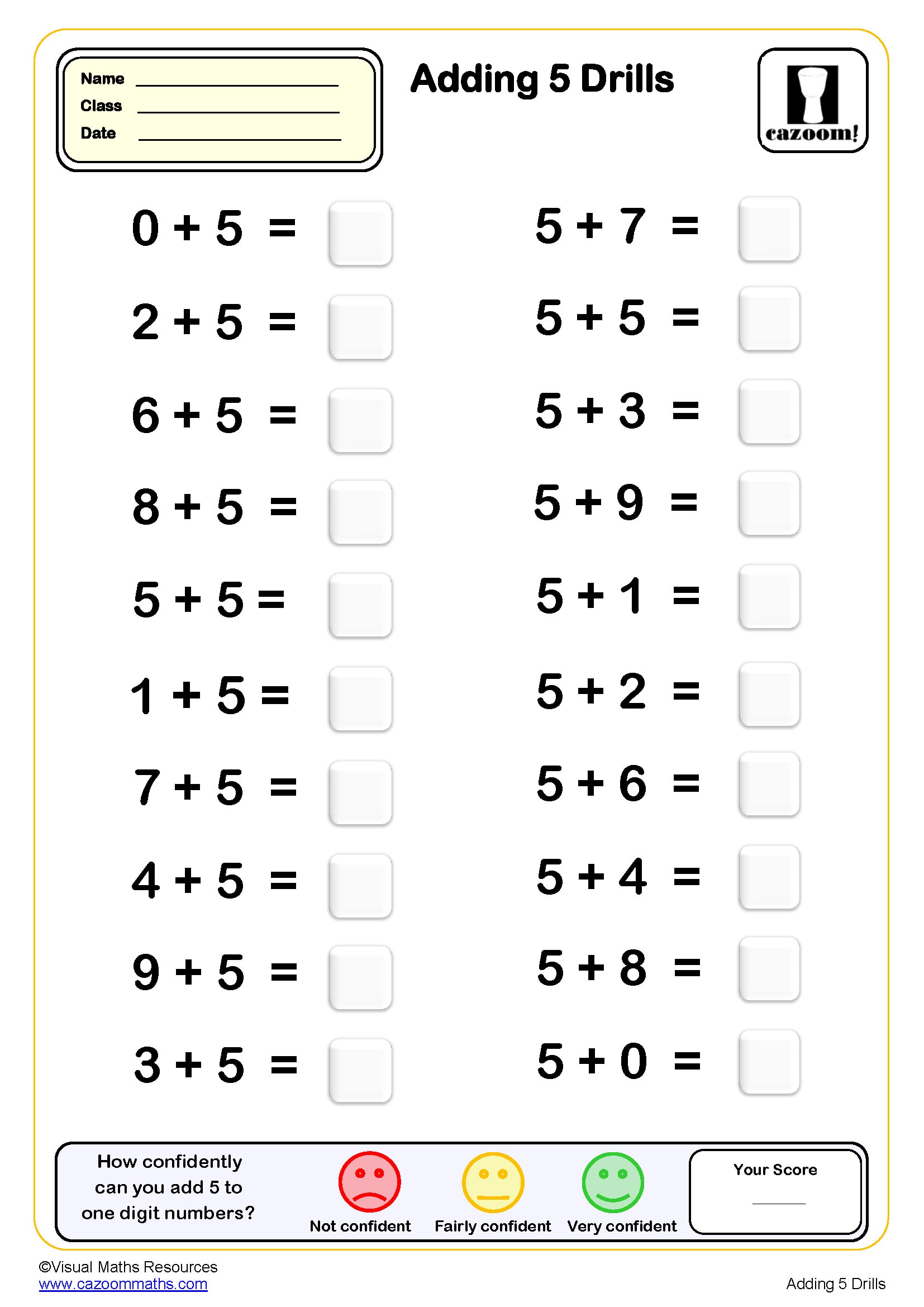
Adding 5 drills (20 questions)
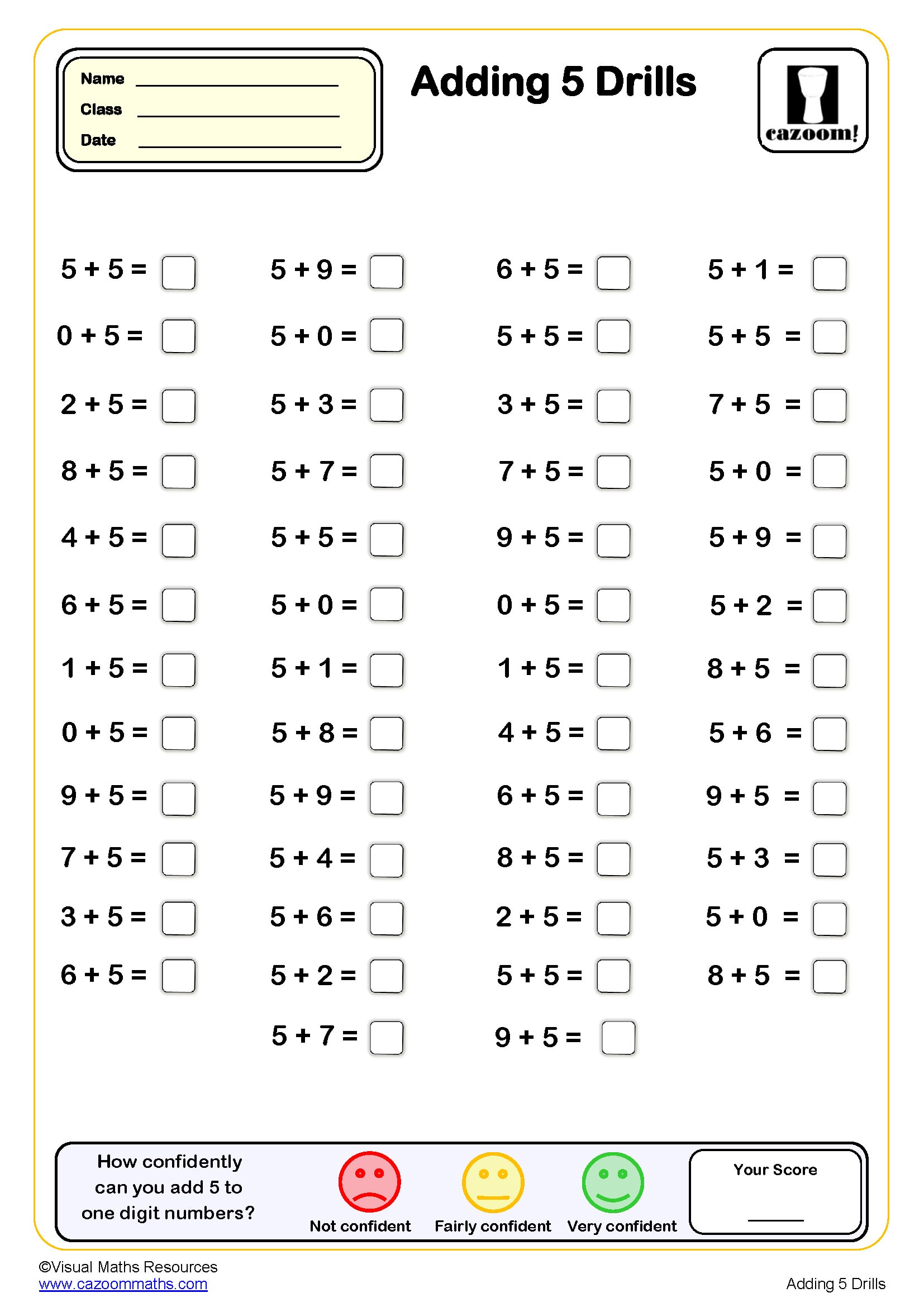
Adding 5 drills (50 questions)
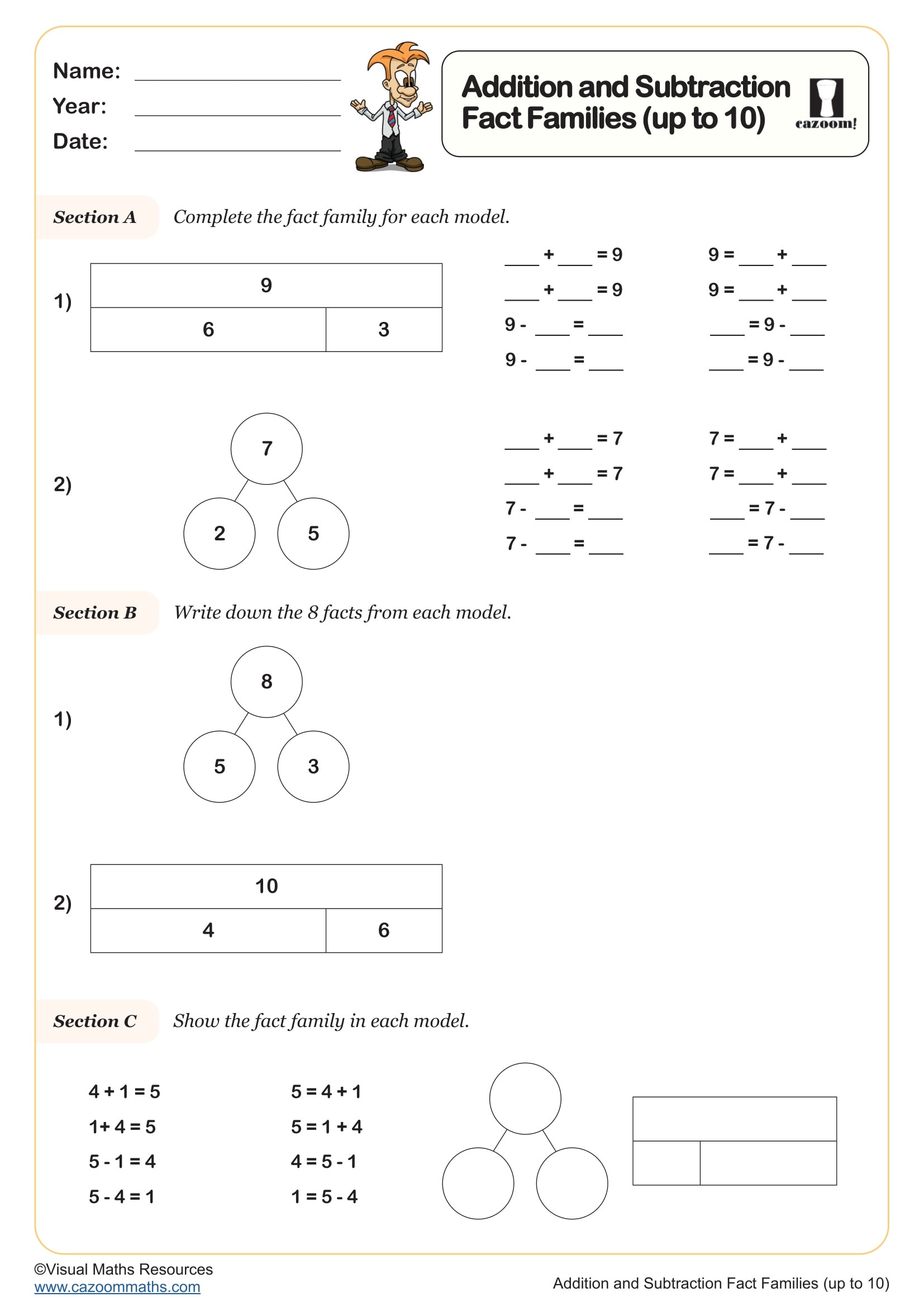
Addition and Subtraction Fact Families (up to 10)
Addition Colouring (A) Single Digits
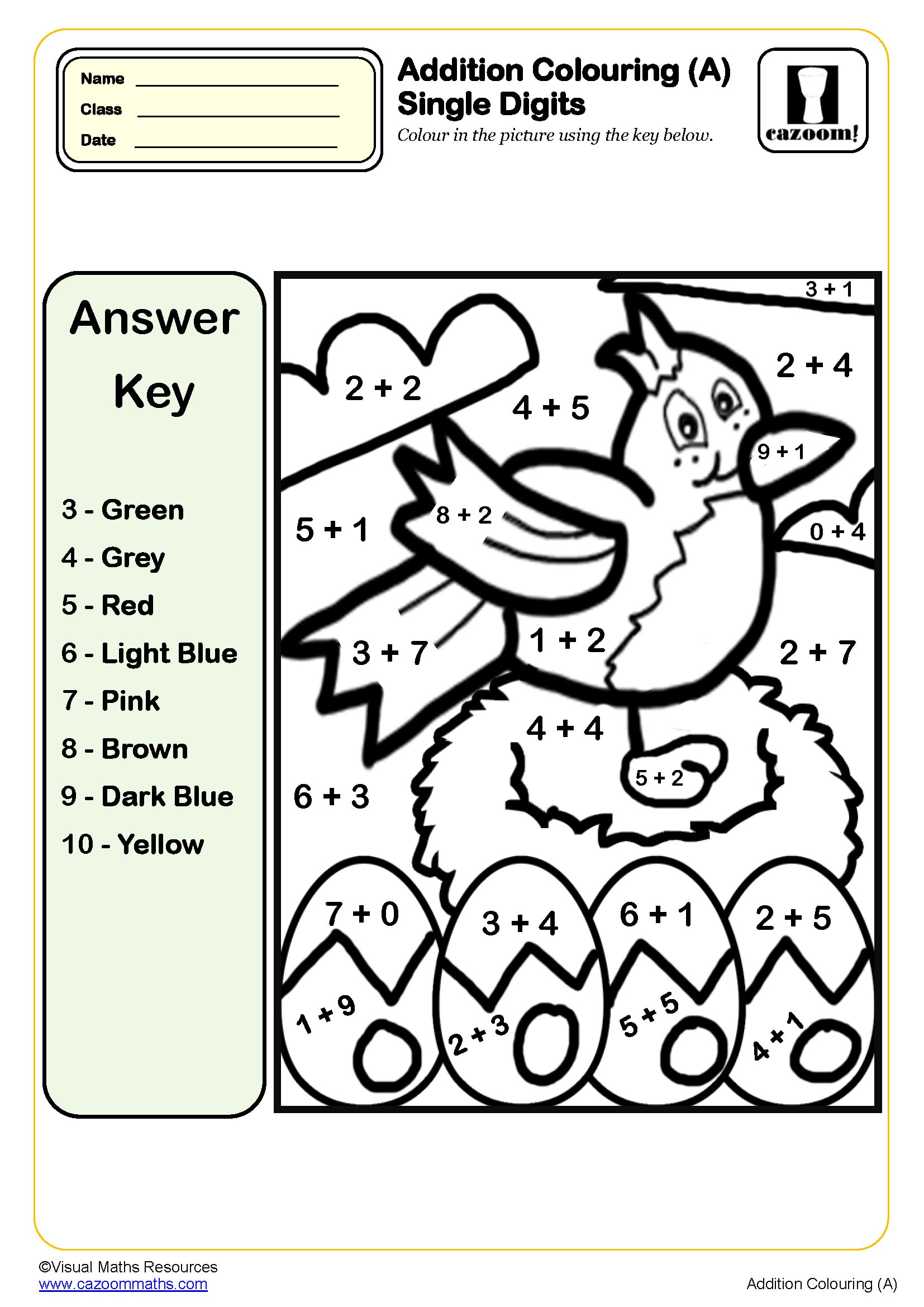
Addition Colouring (B)

Addition Grids (Up to 5)
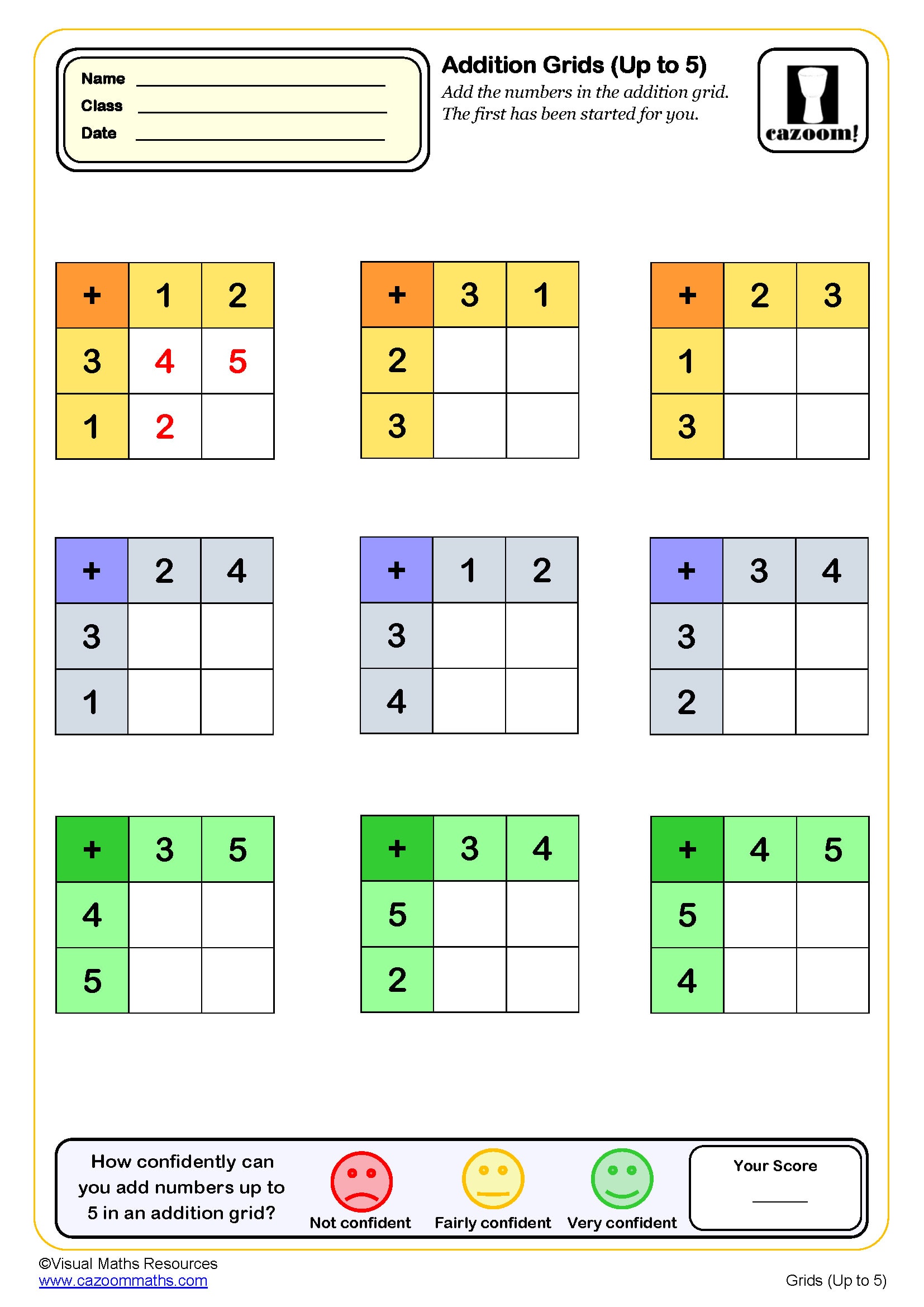
Addition Grids up to 10
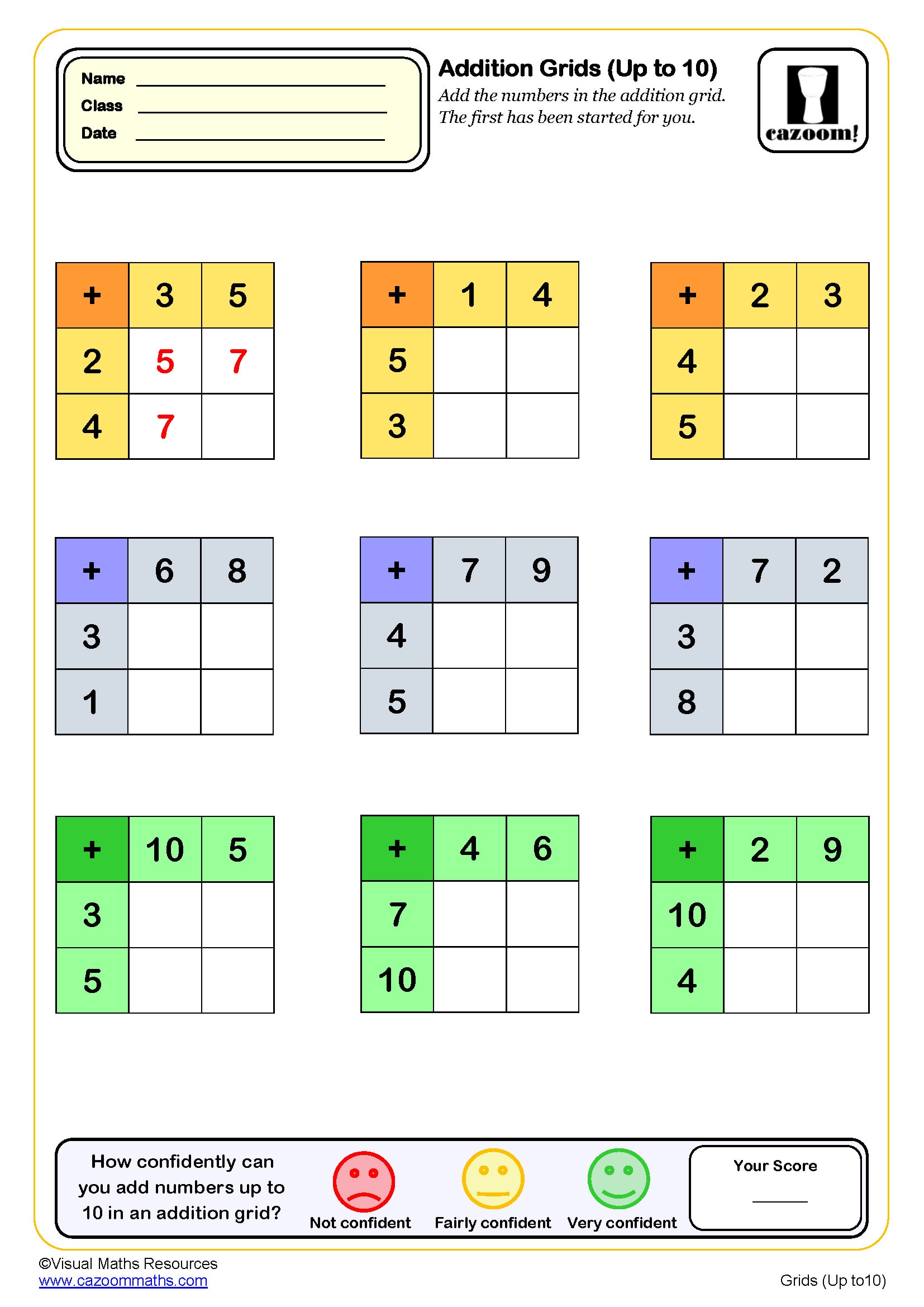
Addition Wheels (adding 1)
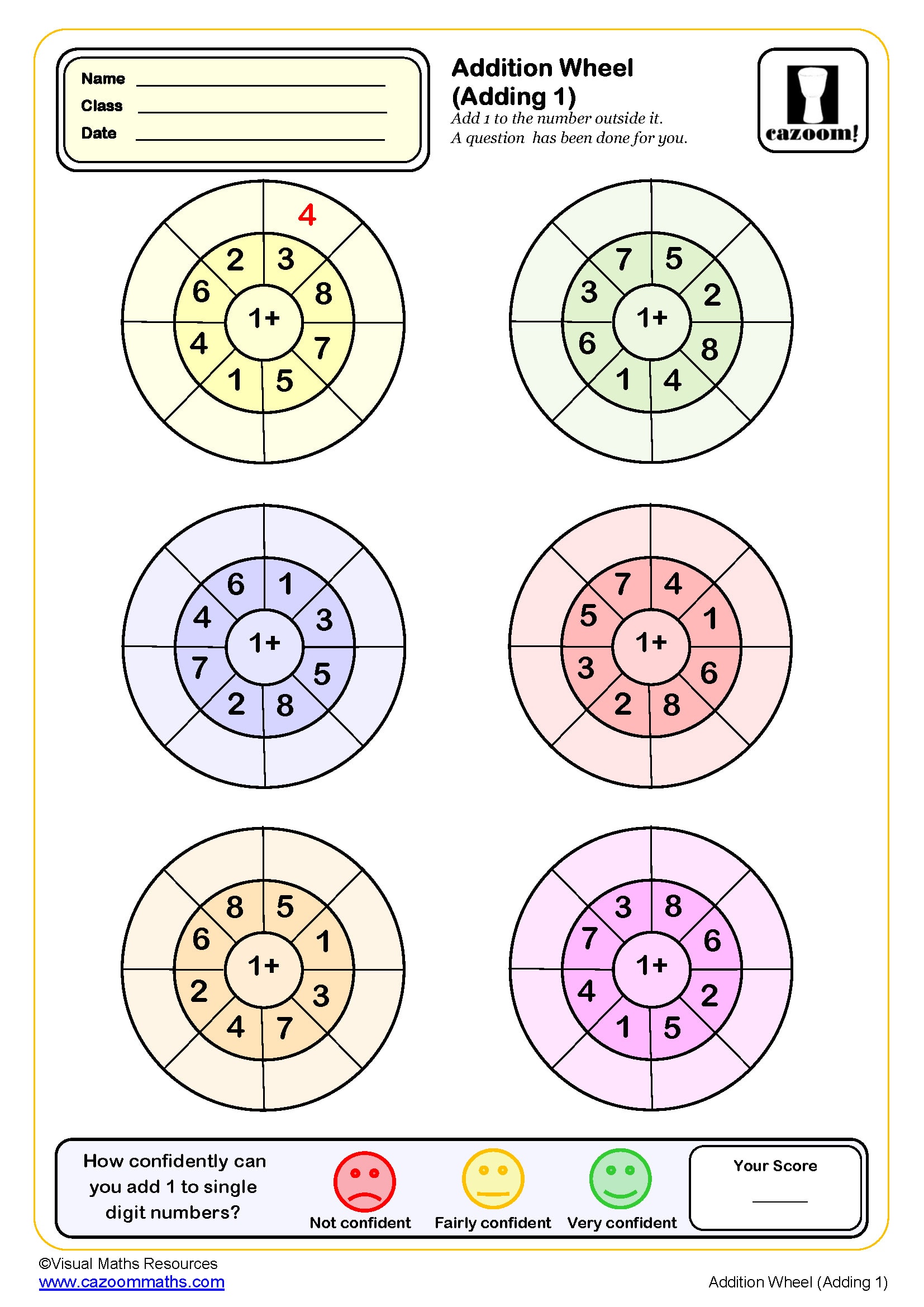
Addition Wheels (adding 2)
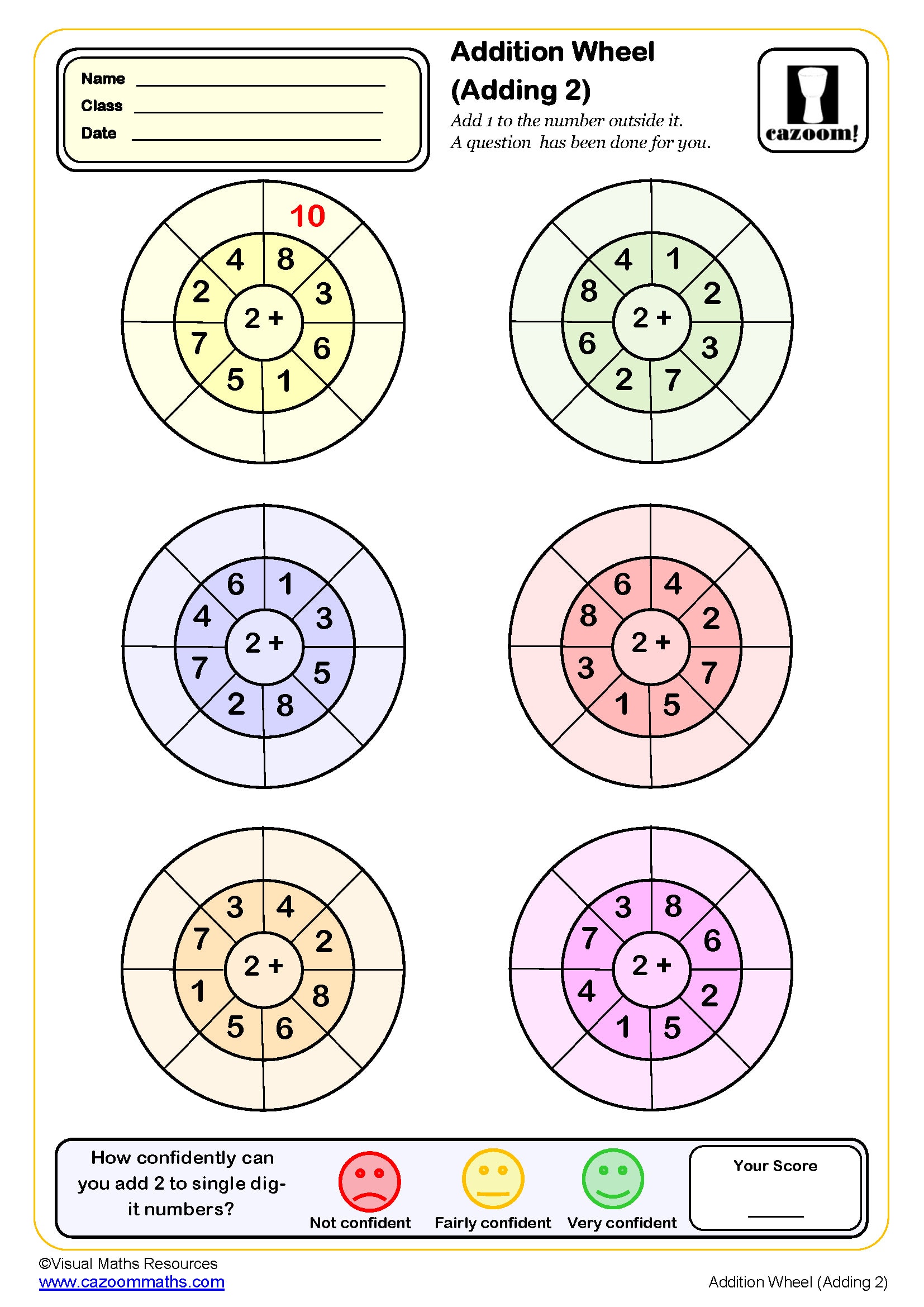
Addition Wheels (Up to 10)
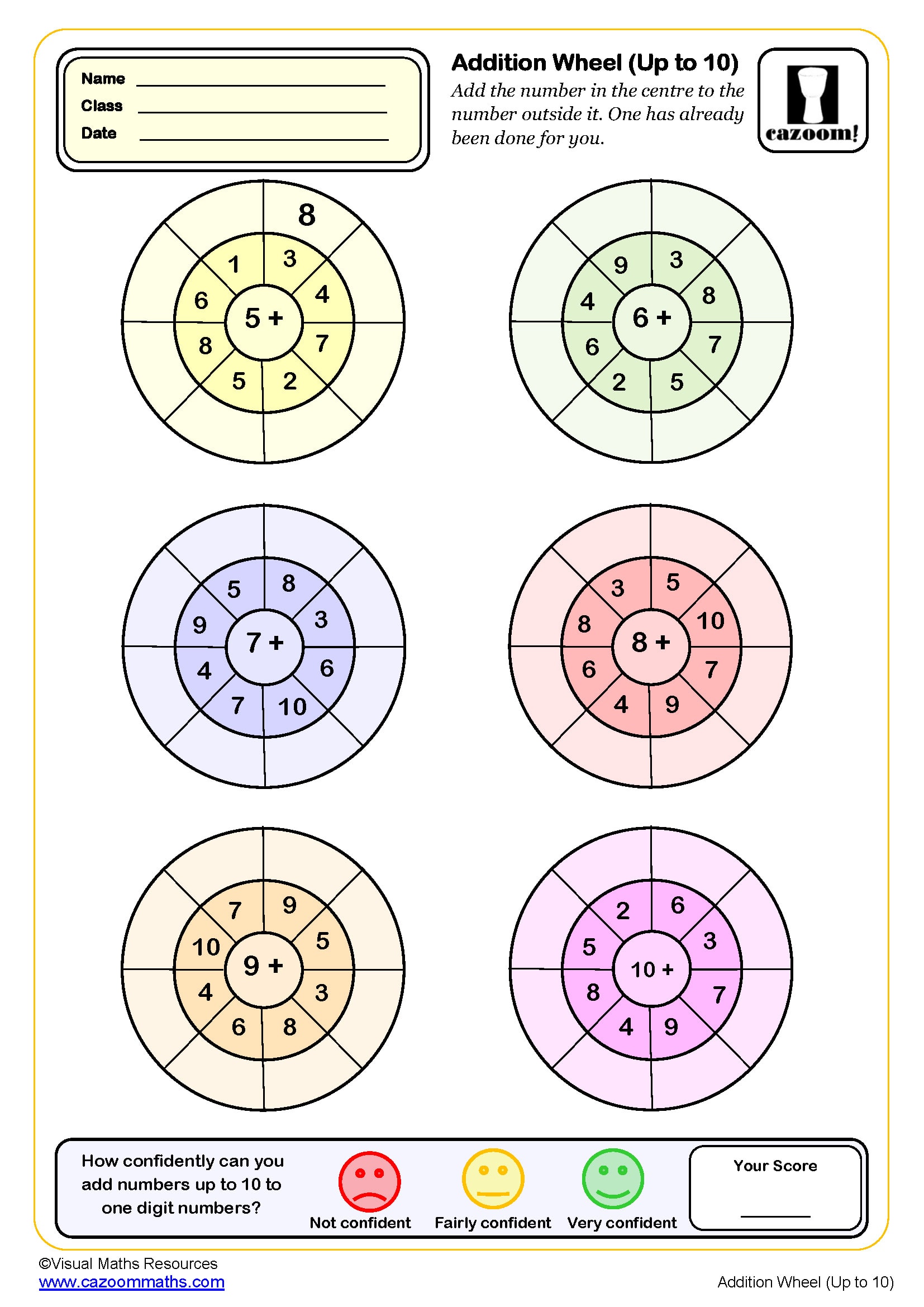
Addition Wheels (Up to 17)
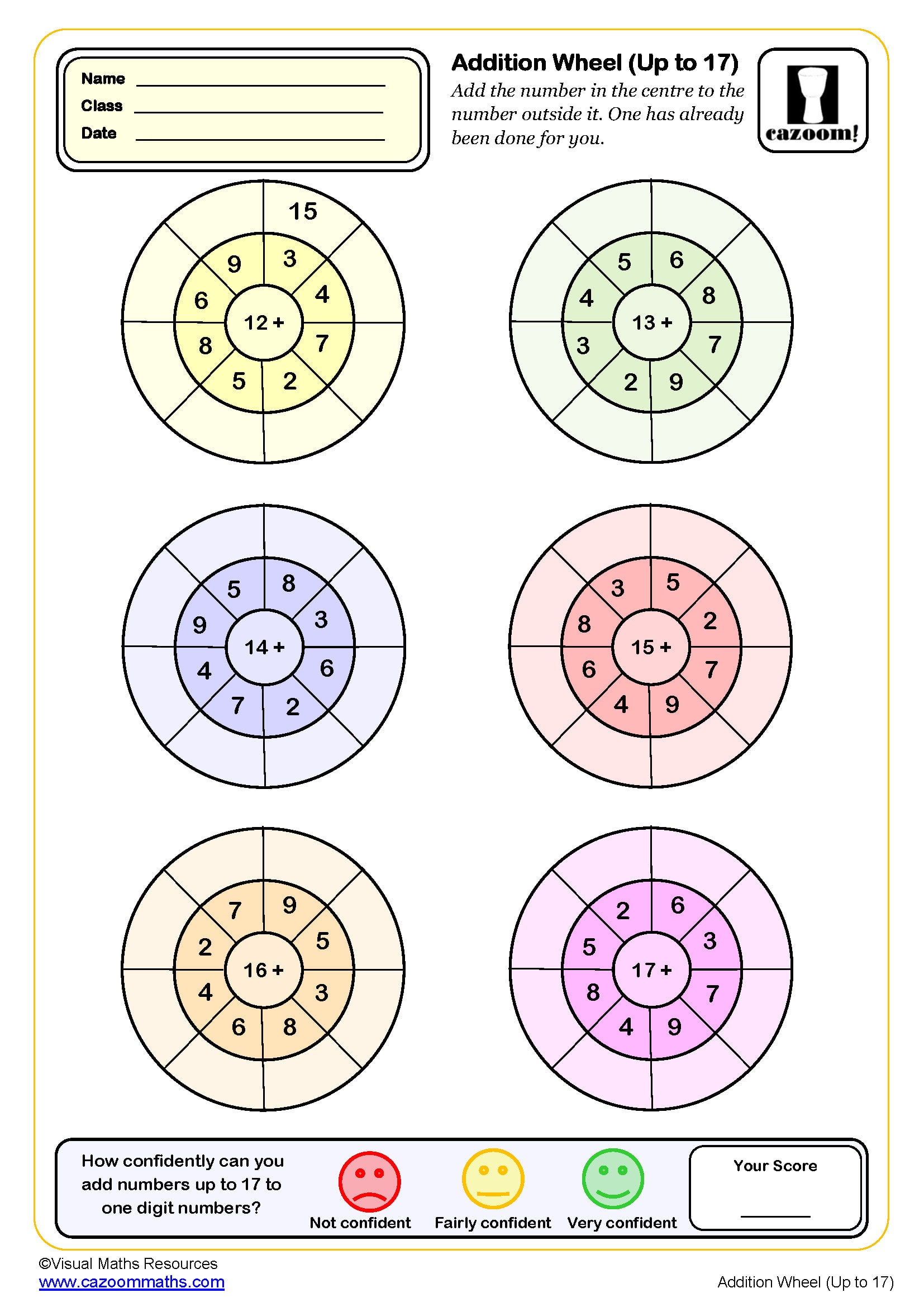
Addition Wheels (Up to 3)
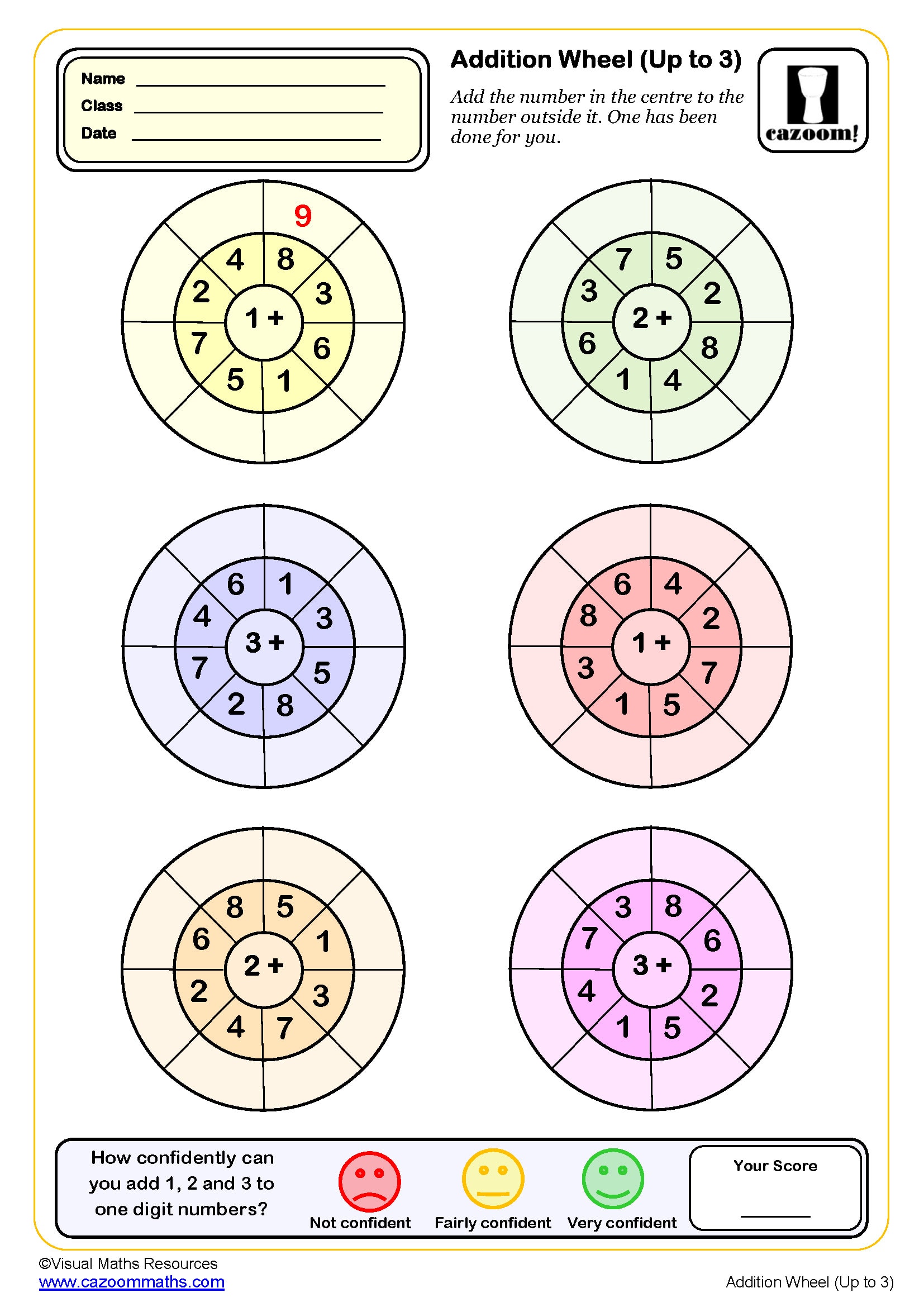
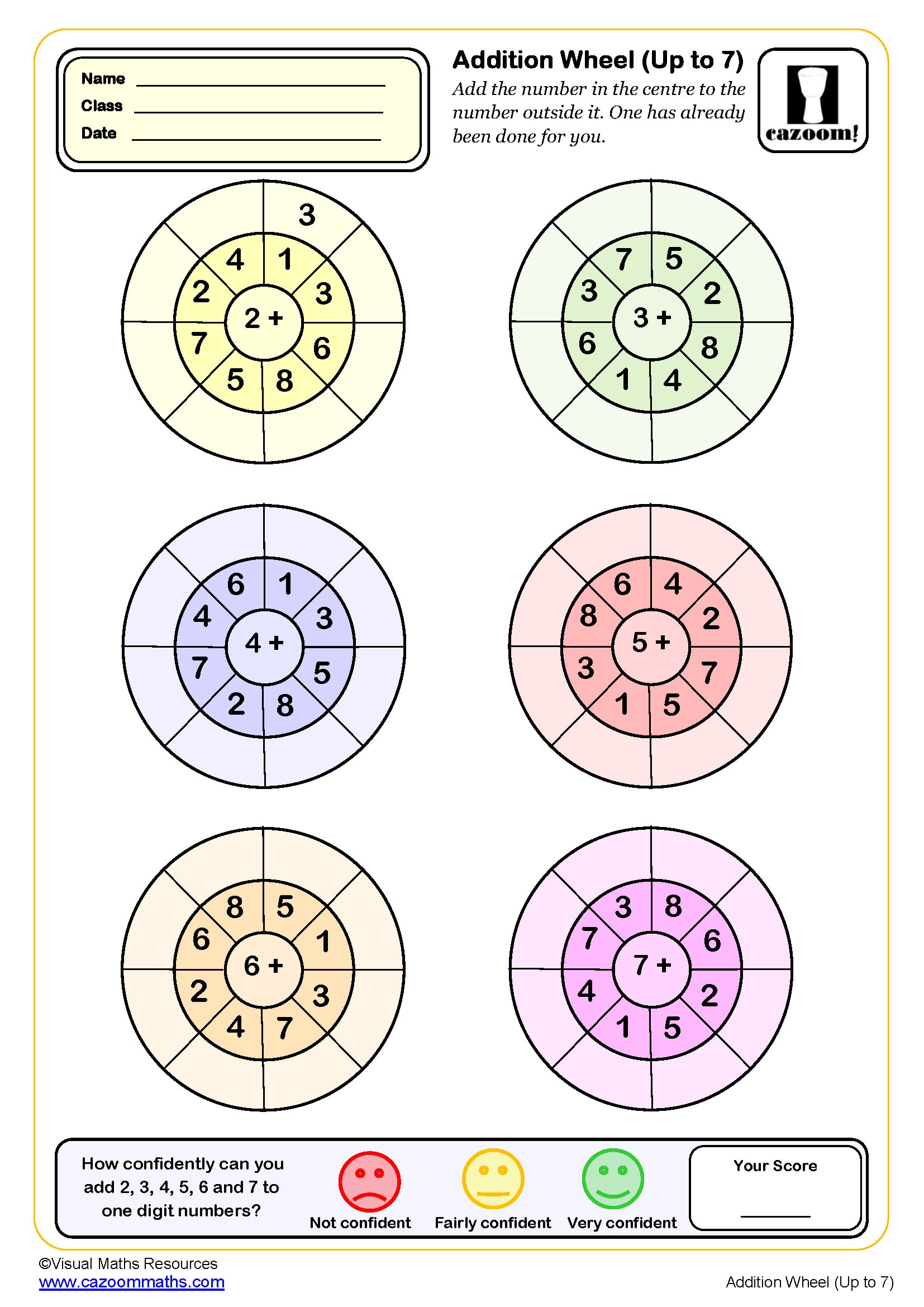
Addition Wheels (Up to 7)
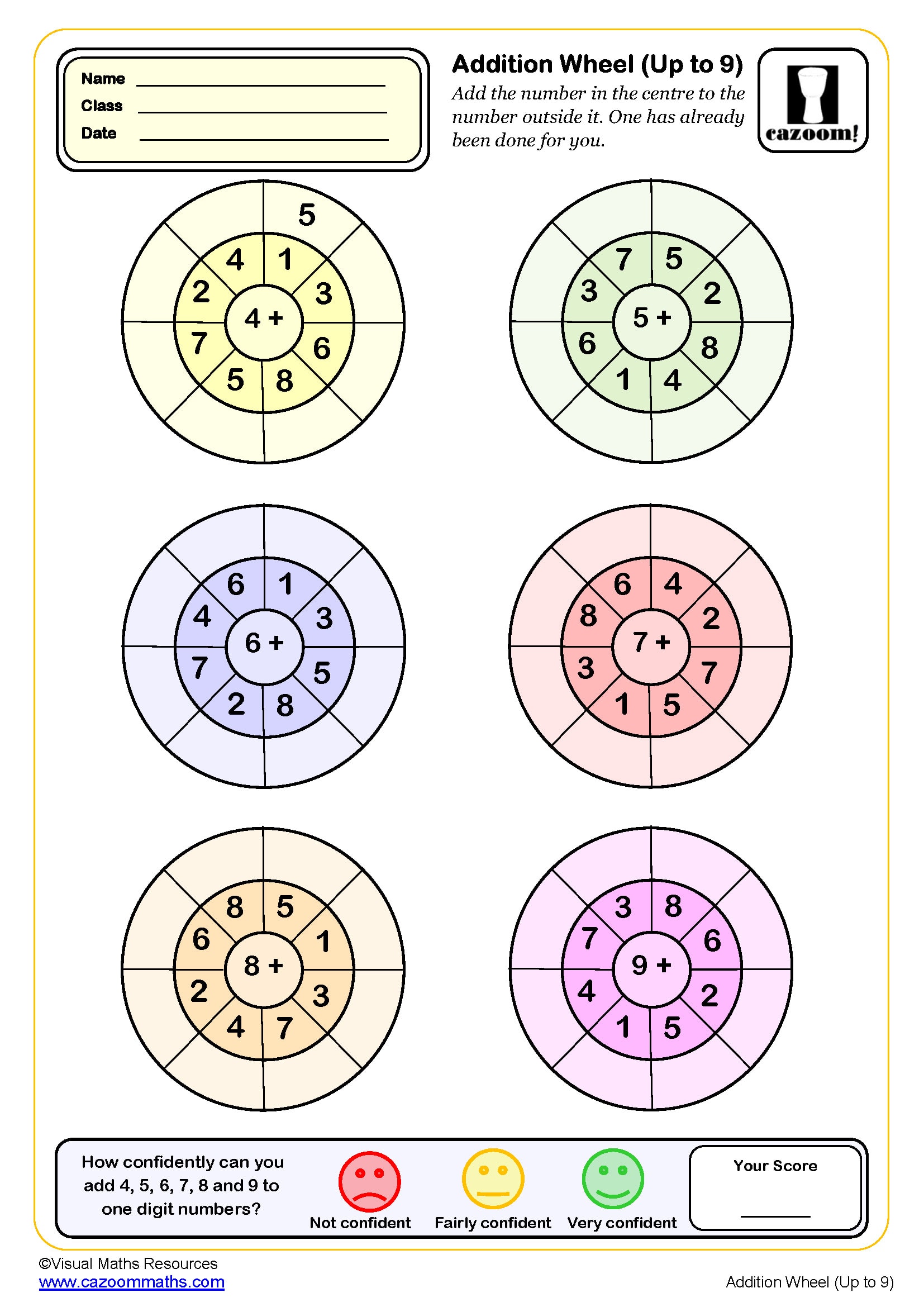
Additoin Wheels (Up to 9)
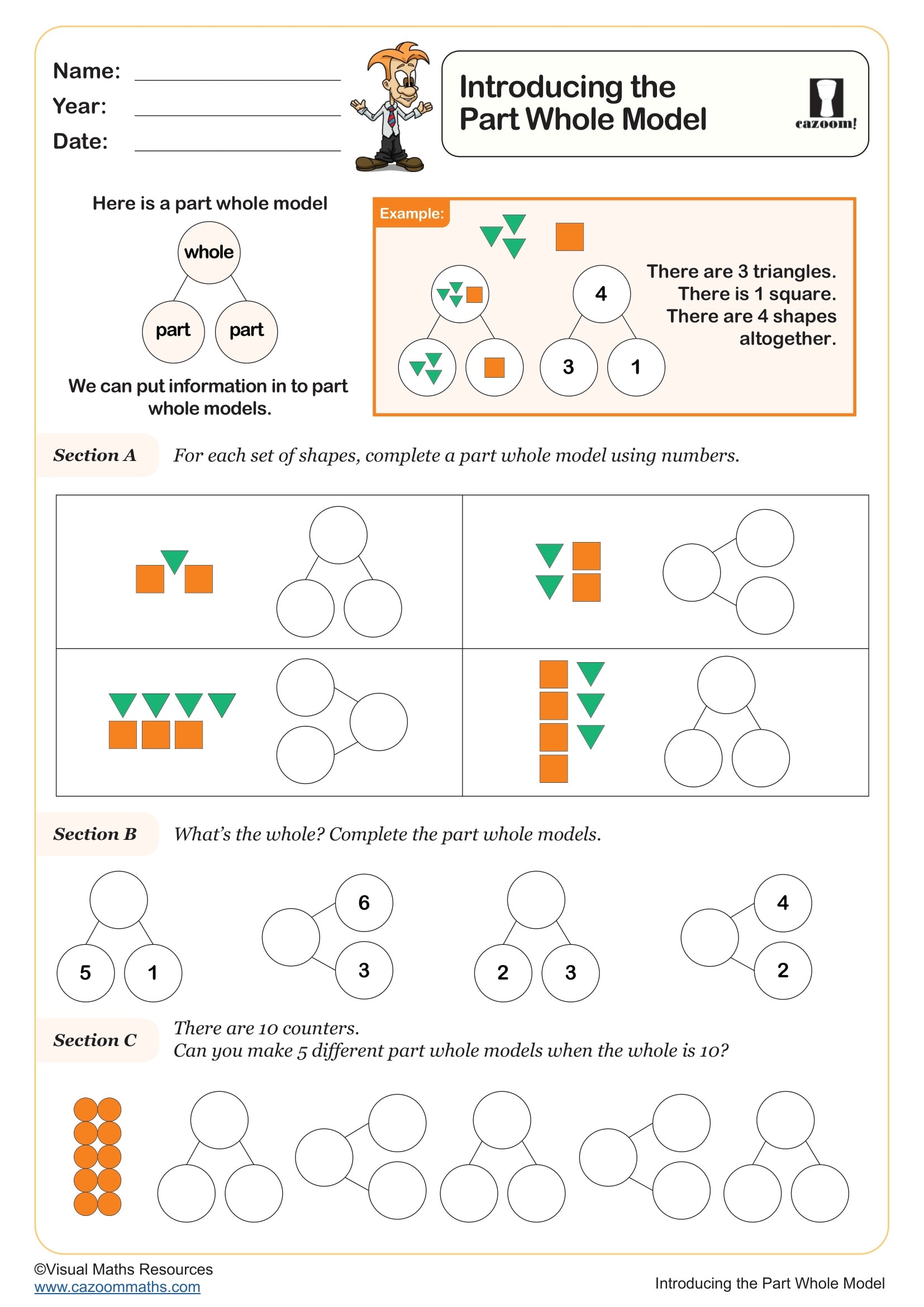
Introducing the Part Whole Model
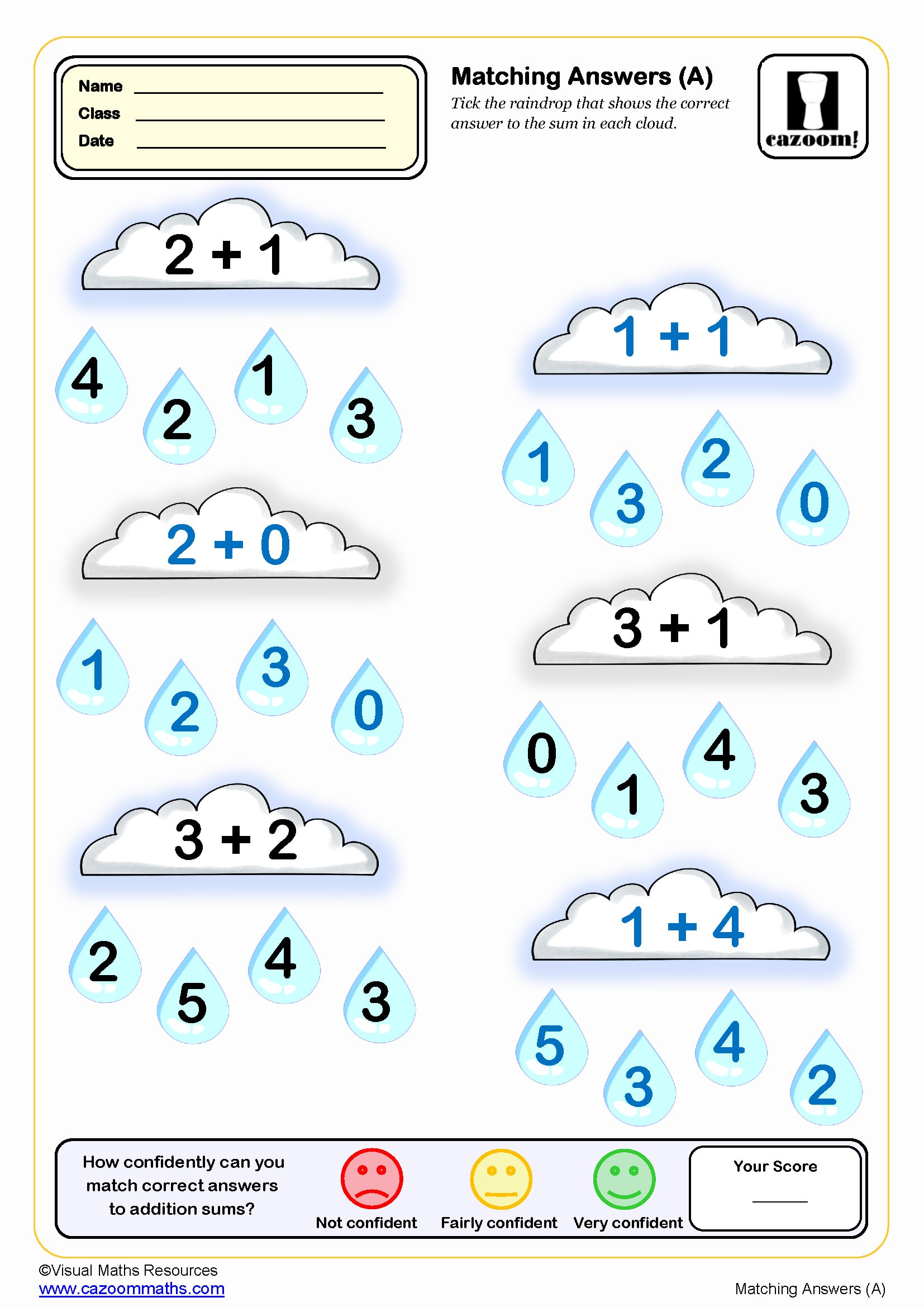
Matching Answers (A)
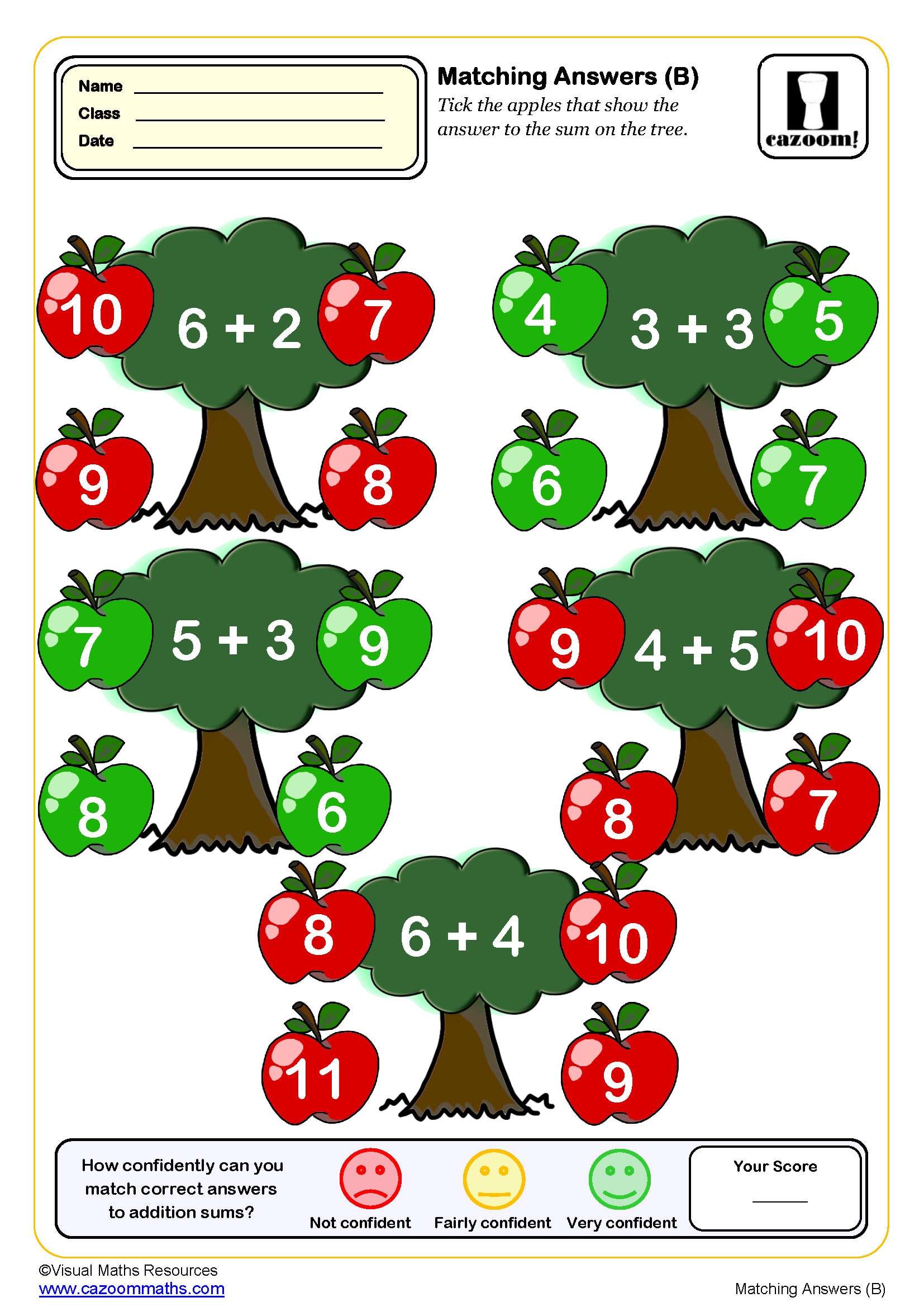
Matching Answers (B)
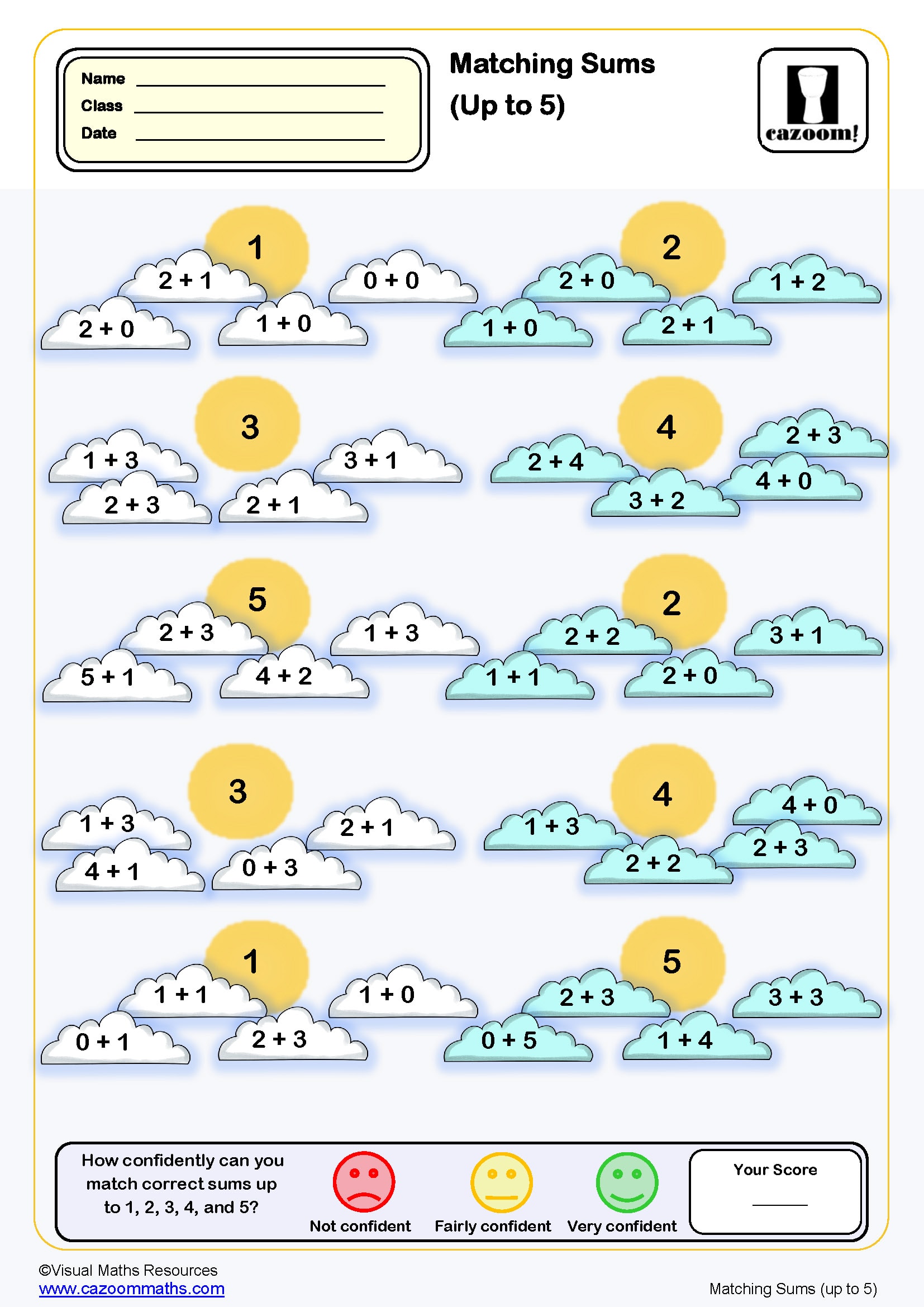
Matching Sums (up to 5)
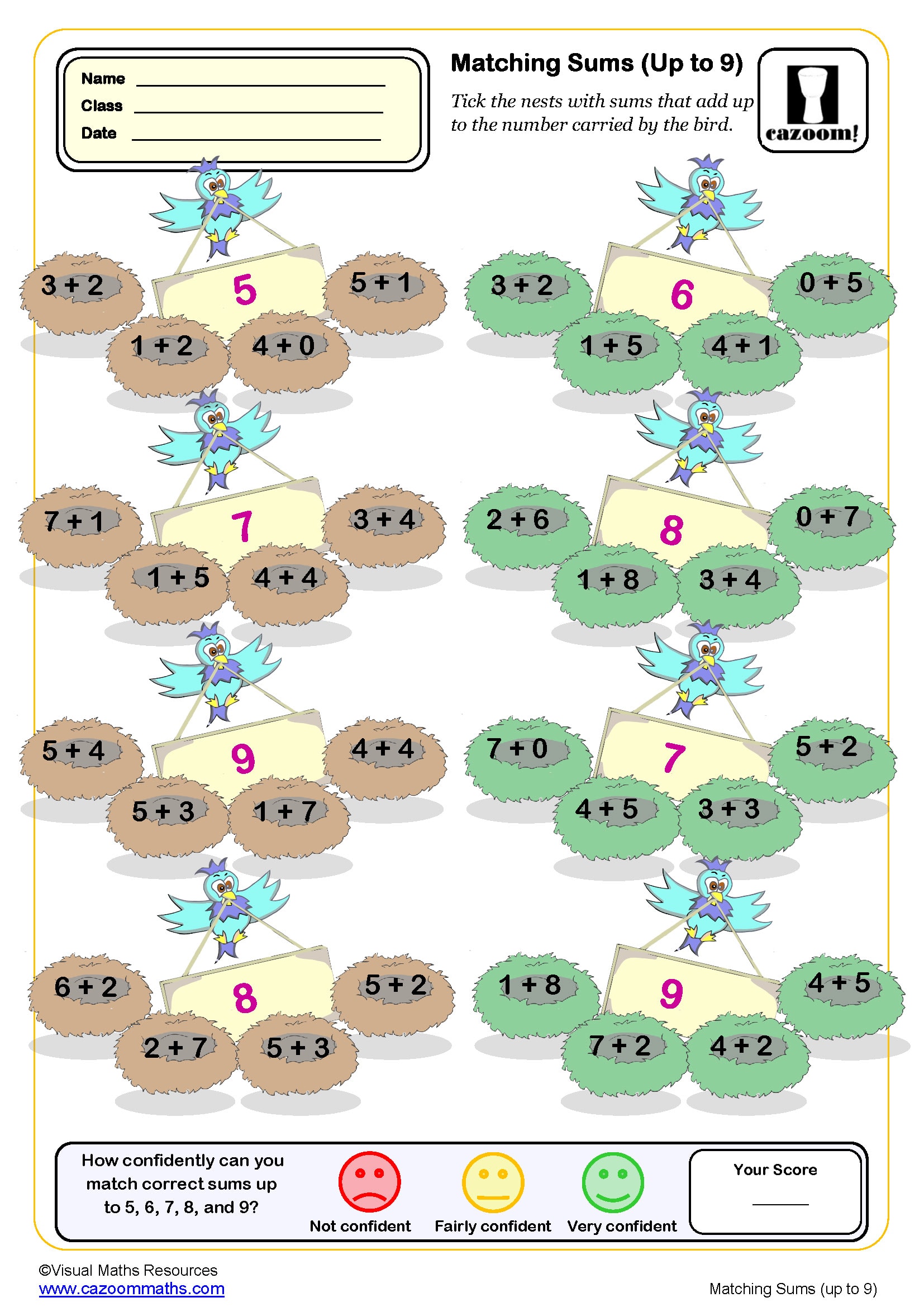
Matching Sums (up to 9)
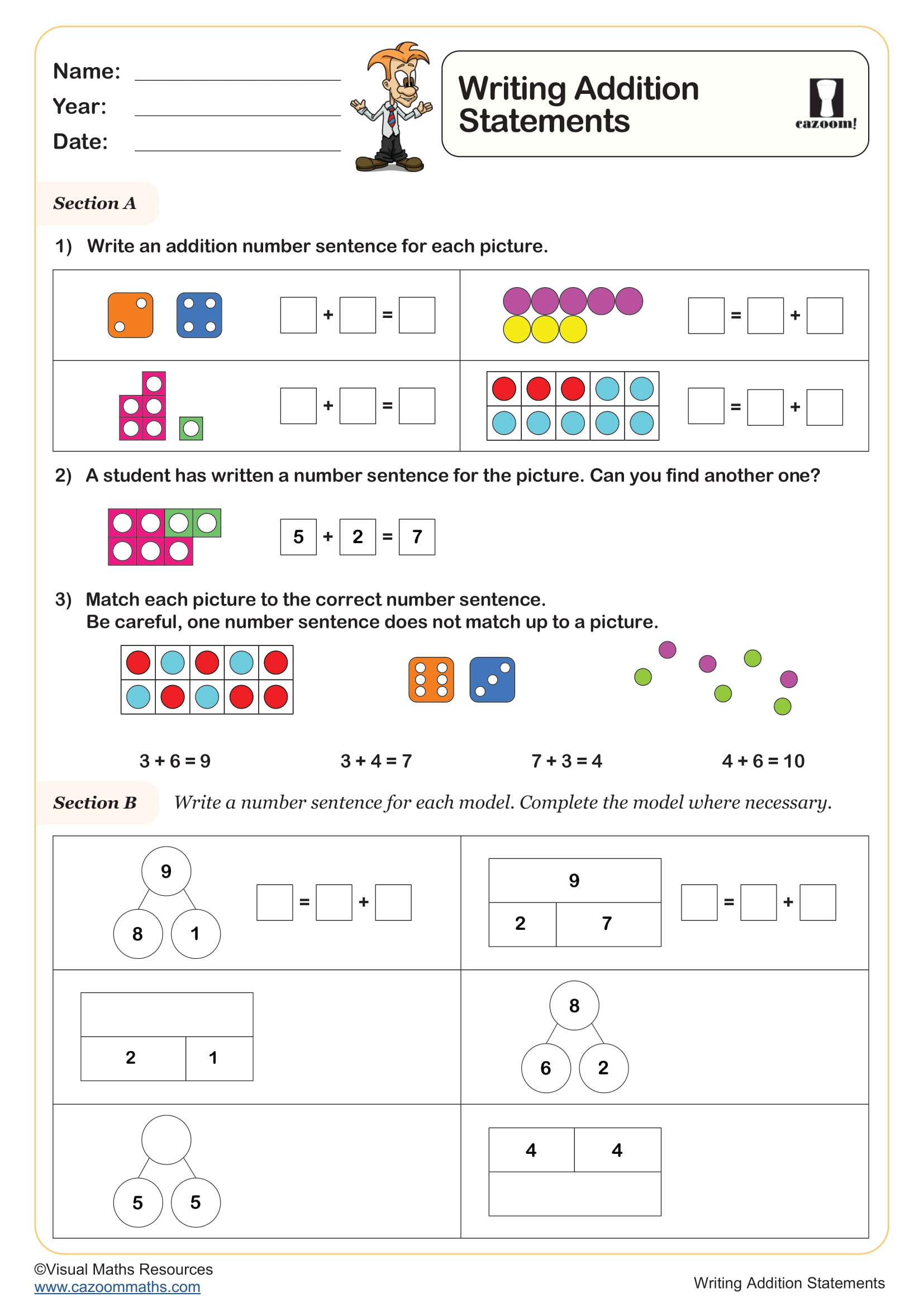
Writing Addition Statements
All worksheets are created by the team of experienced teachers at Cazoom Maths.
What does adding to a single digit mean in Year 1 maths?
Adding to a single digit involves combining two or more numbers where at least one number is between 0 and 9, typically resulting in totals within 20. In Year 1, children focus on number bonds within 10, learning combinations like 3 + 4 = 7 or 5 + 2 = 7. This foundational skill helps pupils understand how numbers fit together and prepares them for mental arithmetic.
Which year groups use these adding to a single digit worksheets?
These worksheets are specifically designed for Year 1 pupils in Key Stage 1, aligning with the National Curriculum expectations for this age group. At this stage, children are typically aged 5-6 and are developing their understanding of addition as combining two groups of objects or numbers. The resources match the statutory requirements for pupils to read, write, and interpret mathematical statements involving the addition symbol.
How do number bonds help with single-digit addition?
Number bonds are pairs of numbers that combine to make a target number, and they're fundamental to developing fluency in addition. For single-digit work, children typically focus on bonds to 10, such as 6 + 4, 7 + 3, or 8 + 2. Learning these relationships by heart allows pupils to calculate quickly without counting individual objects, building mental maths confidence and speed.
What's included with these addition worksheets?
Each worksheet in this collection comes with a complete answer sheet, enabling efficient marking and allowing pupils to self-assess their work. The resources are provided as downloadable PDFs, which you can print as many times as needed for your class or child. This format makes them convenient for immediate use without preparation time, and you can easily store digital copies for future use.