KS1 Addition with visual aids Worksheets
Addition Sums with Pictures (A)
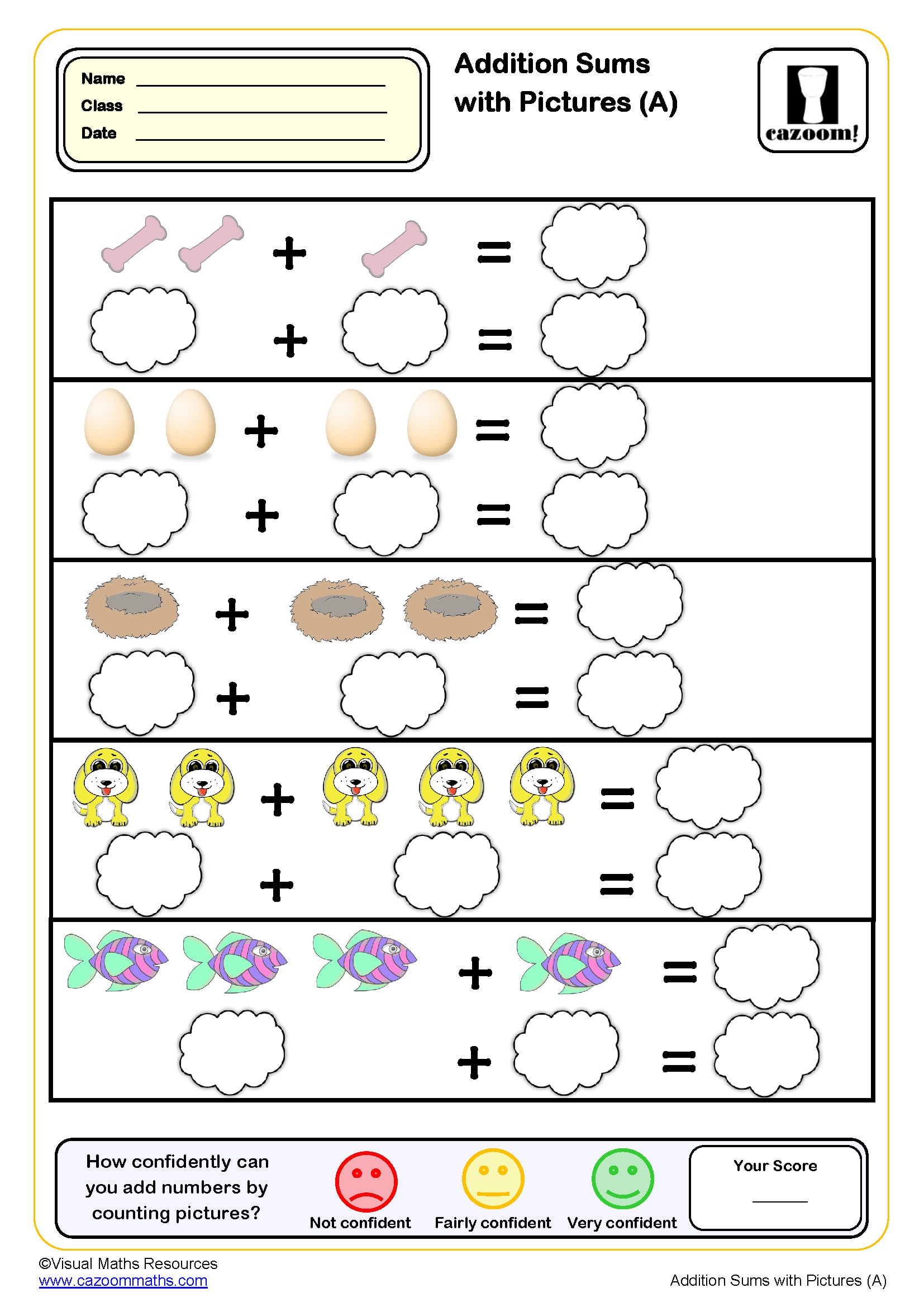
Addition Sums with Pictures (B)
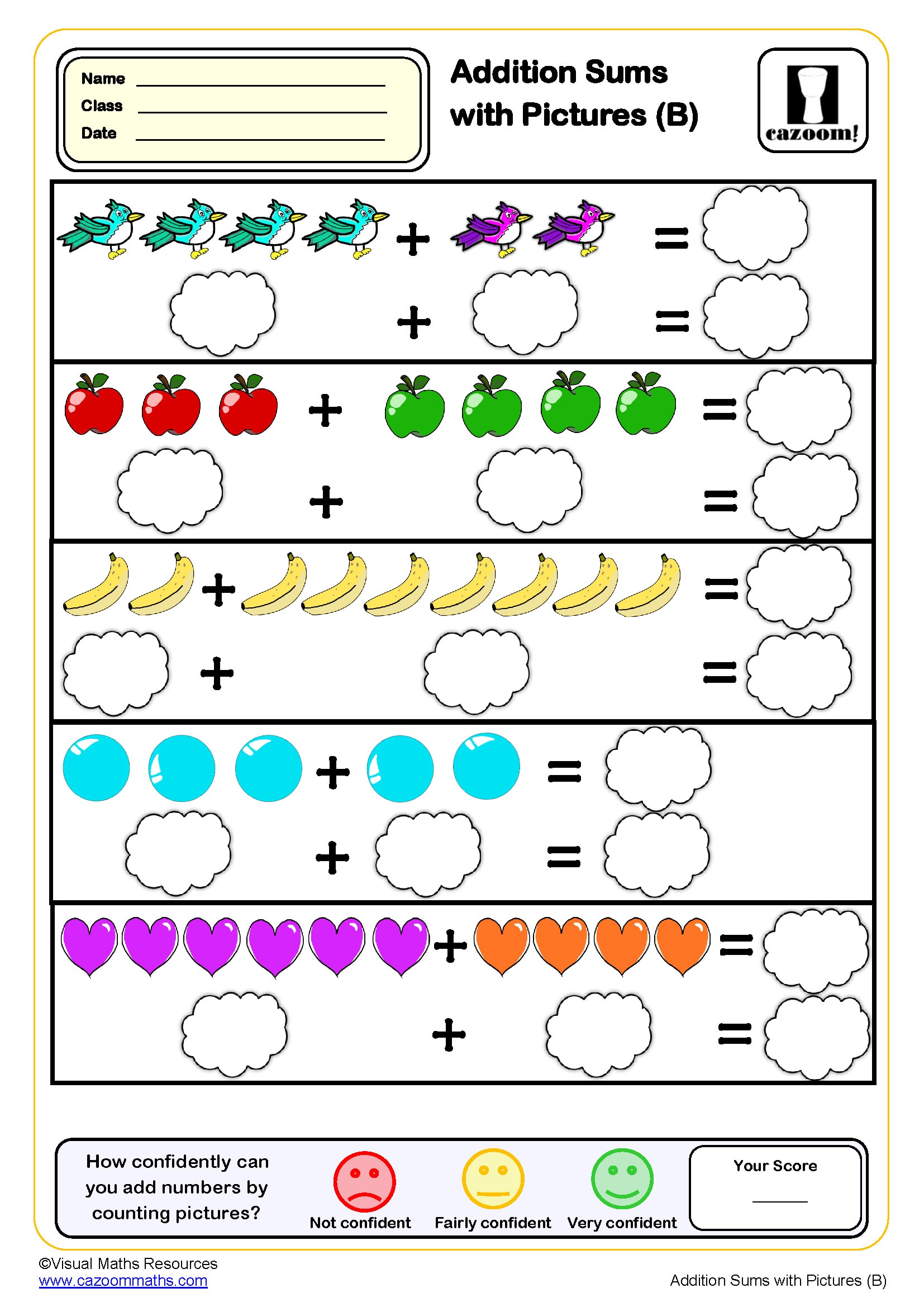
Addition with dots (A)
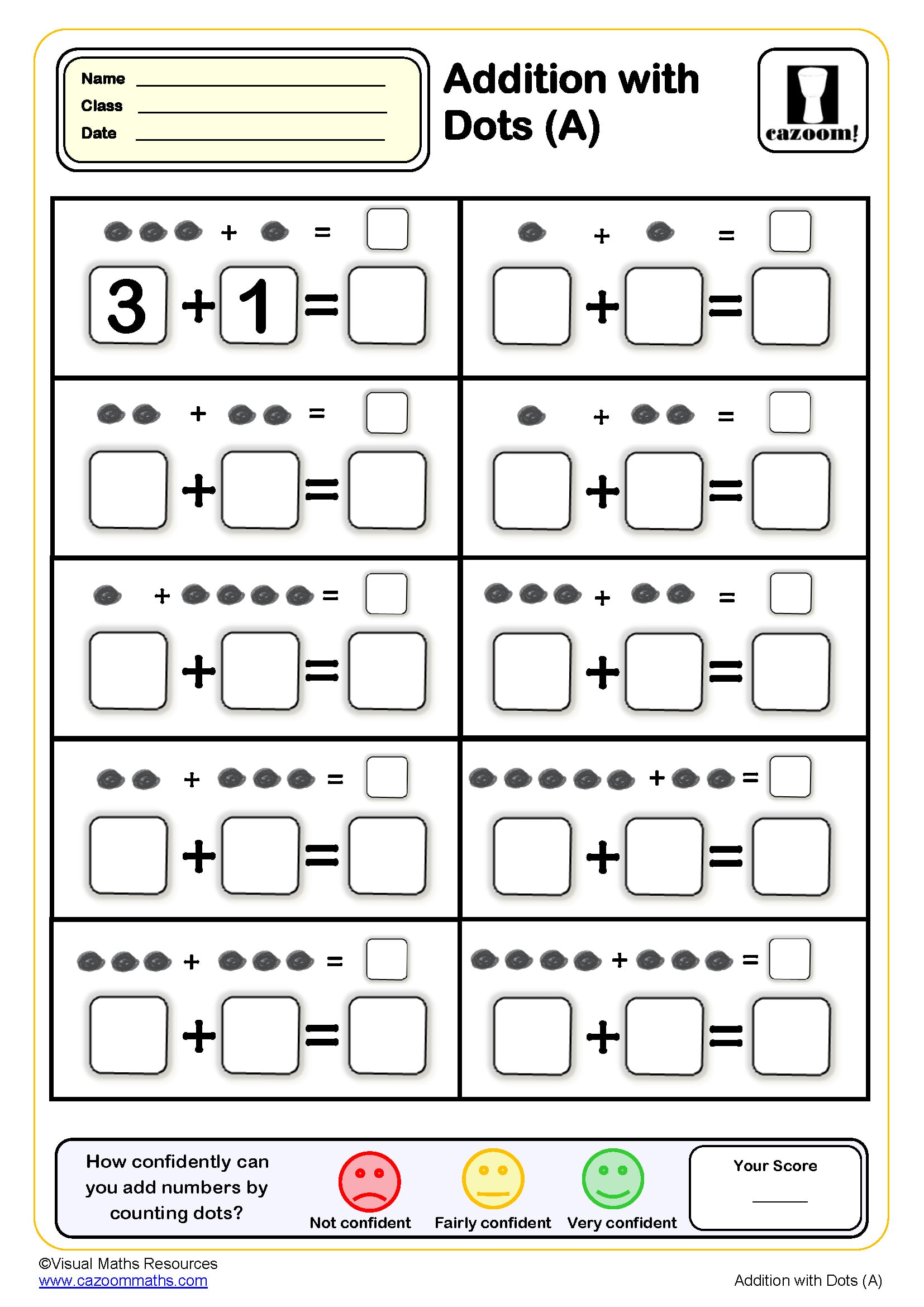
Addition with Dots (B)
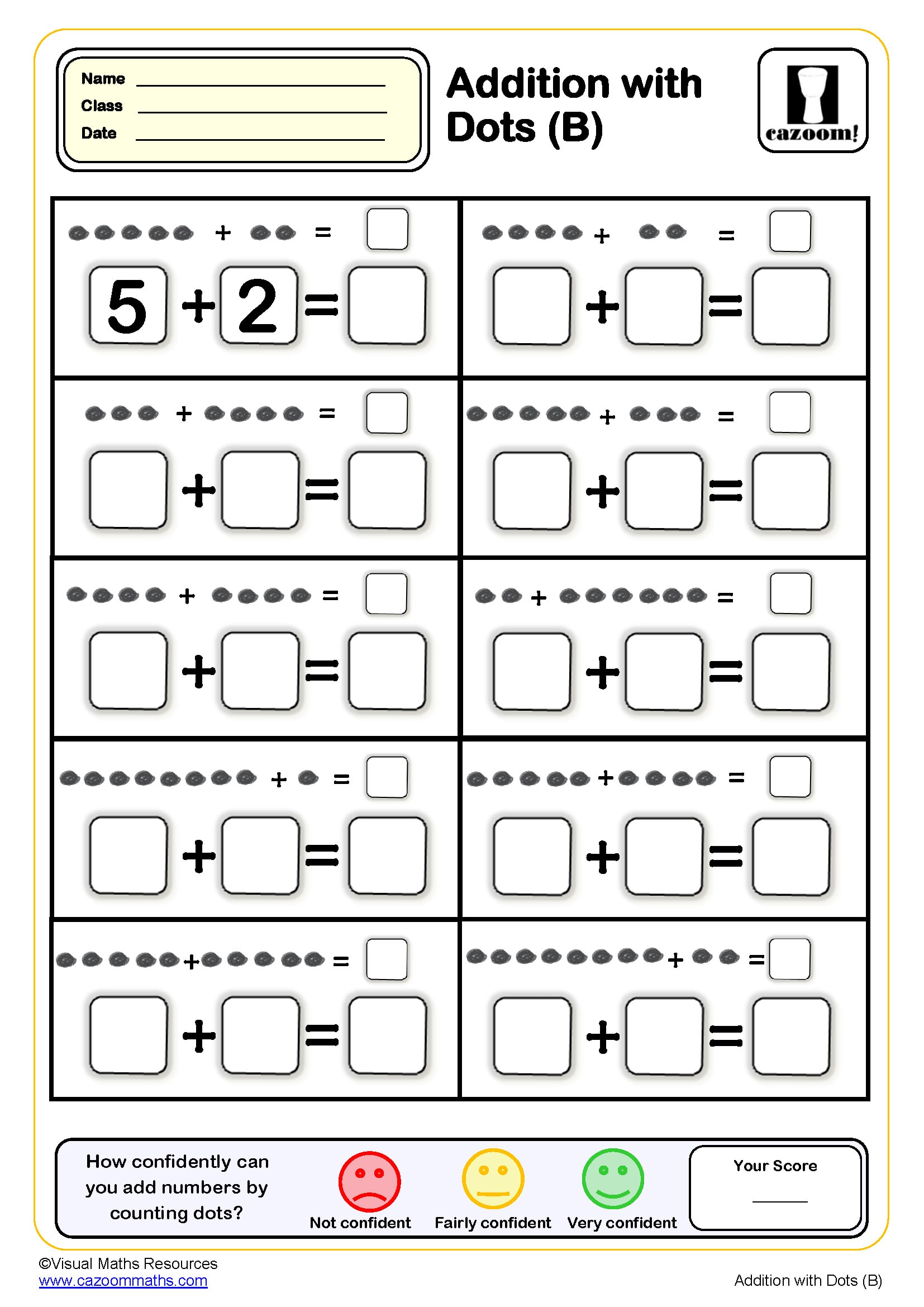
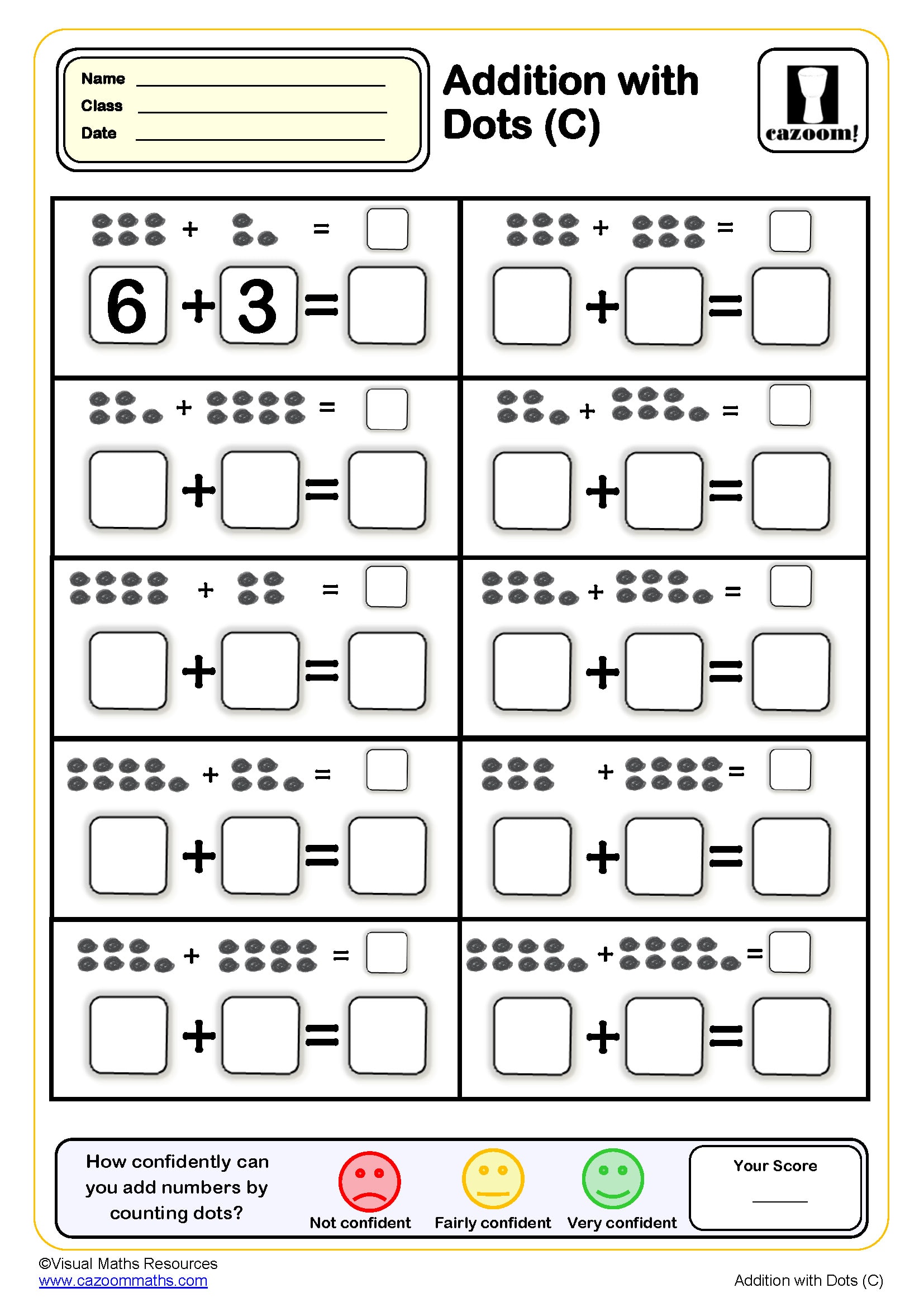
Addition with Dots (C)
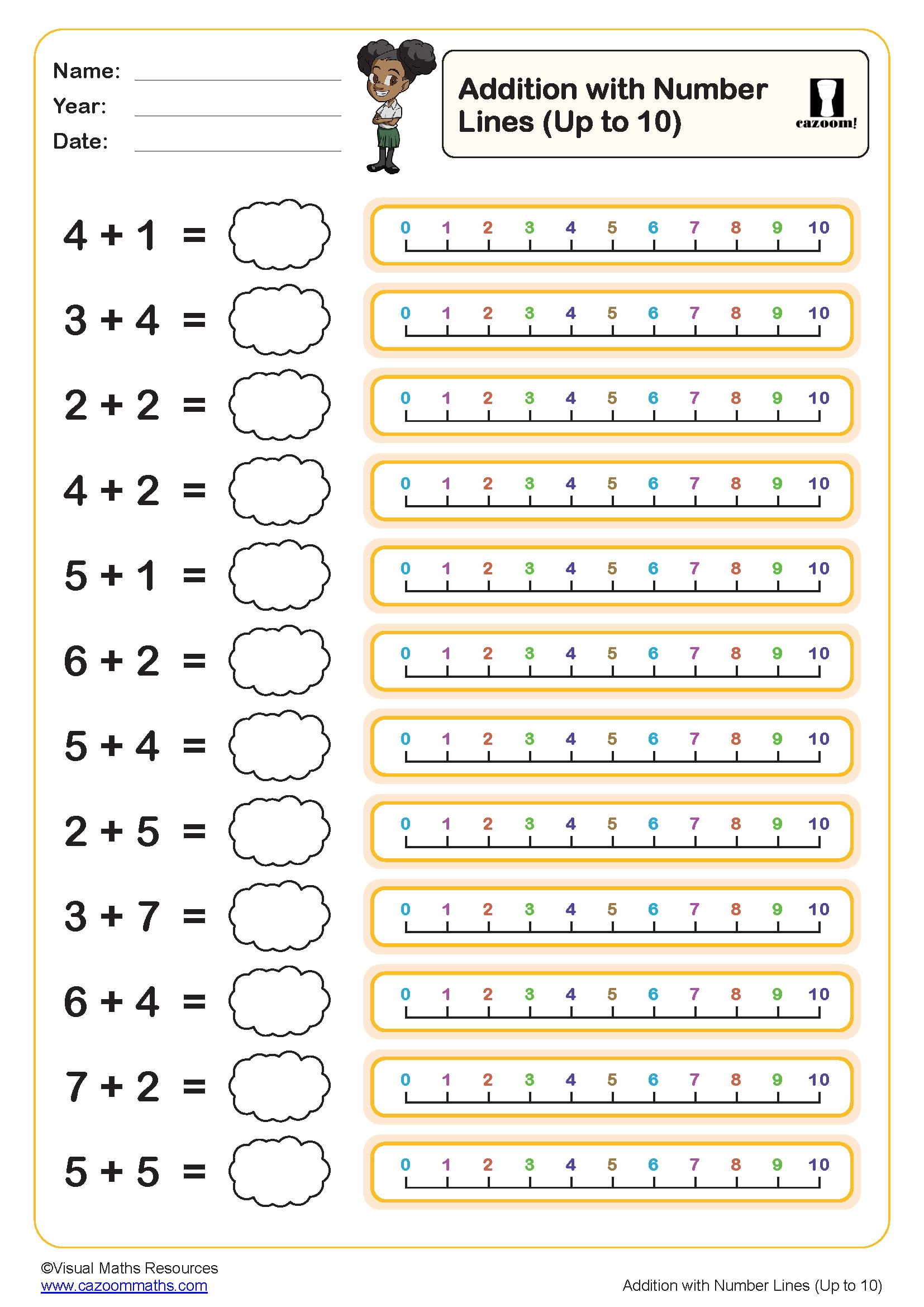
Addition with Number Lines (up to 10)
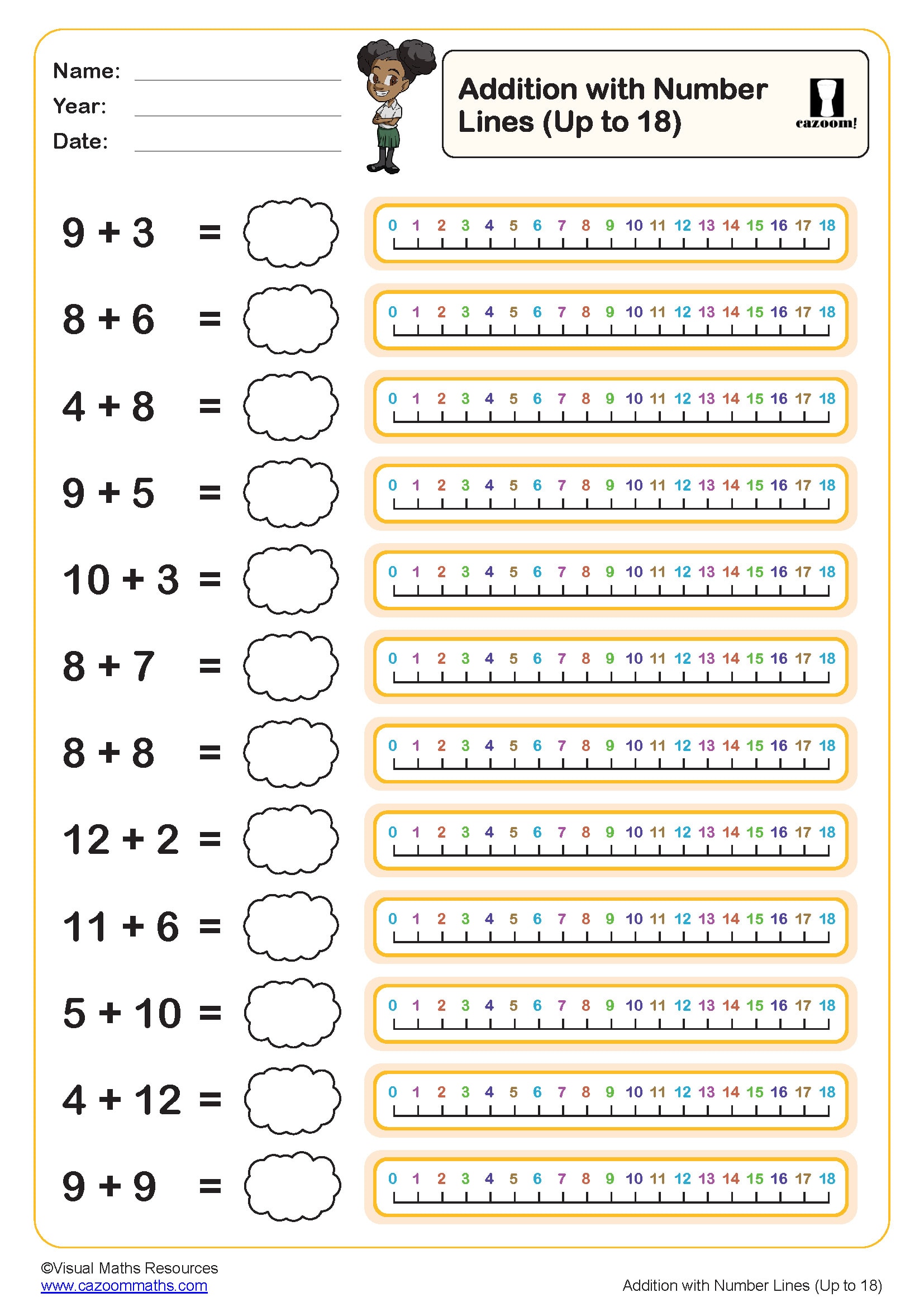
Addition with Number Lines (up to 18)
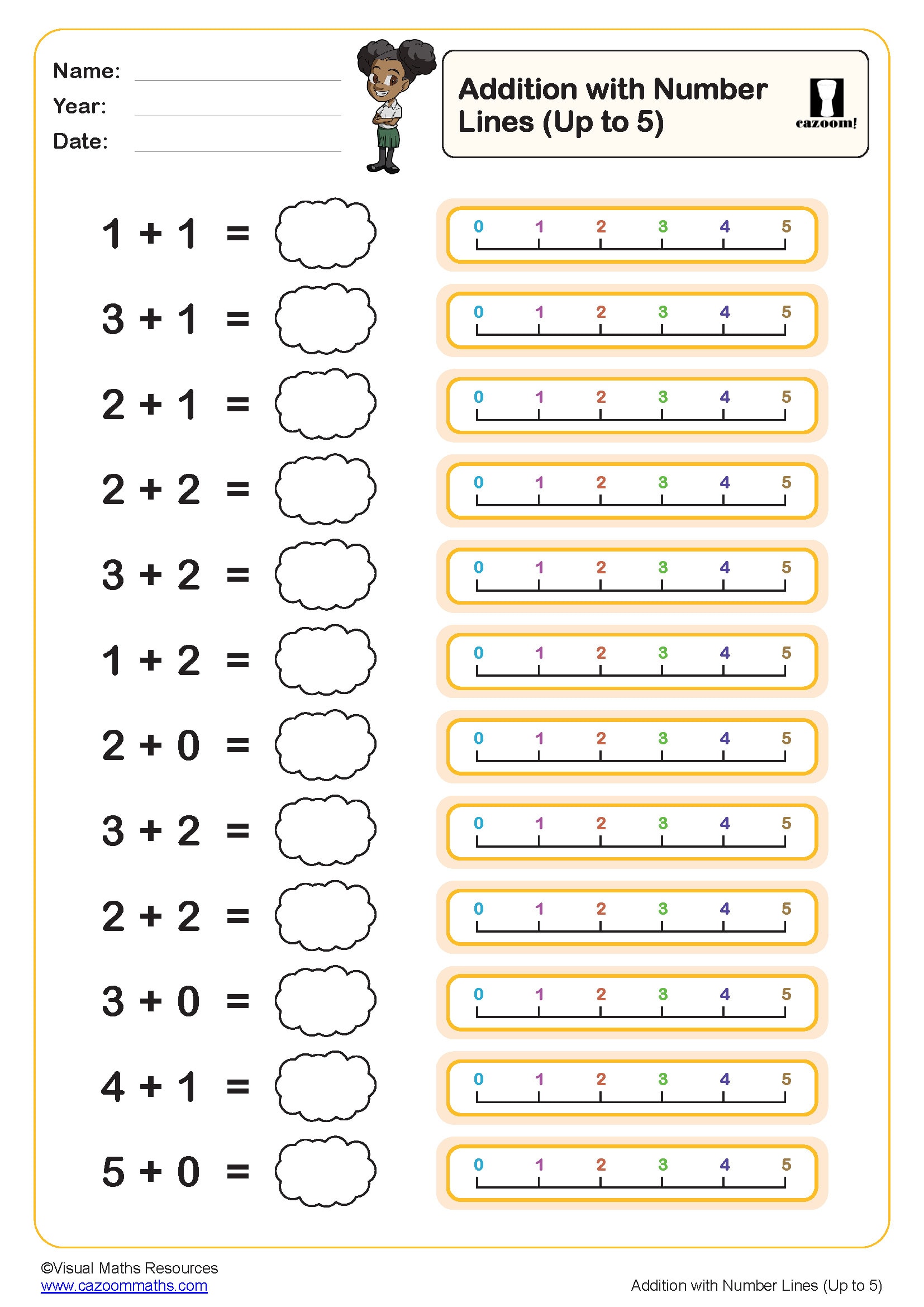
Addition with Number Lines (up to 5)
Addition with Sticks (A)
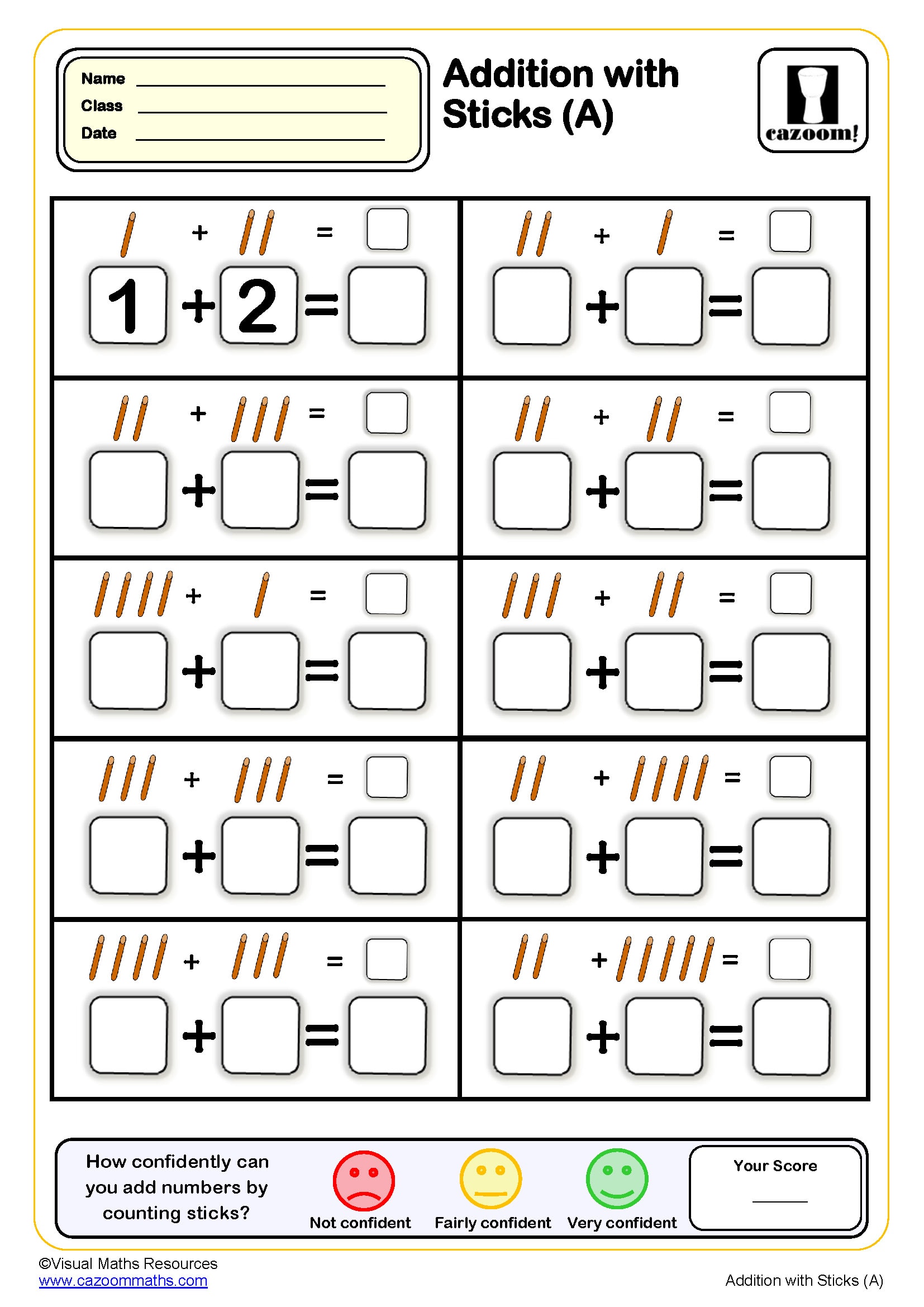
Addition with Sticks (B)
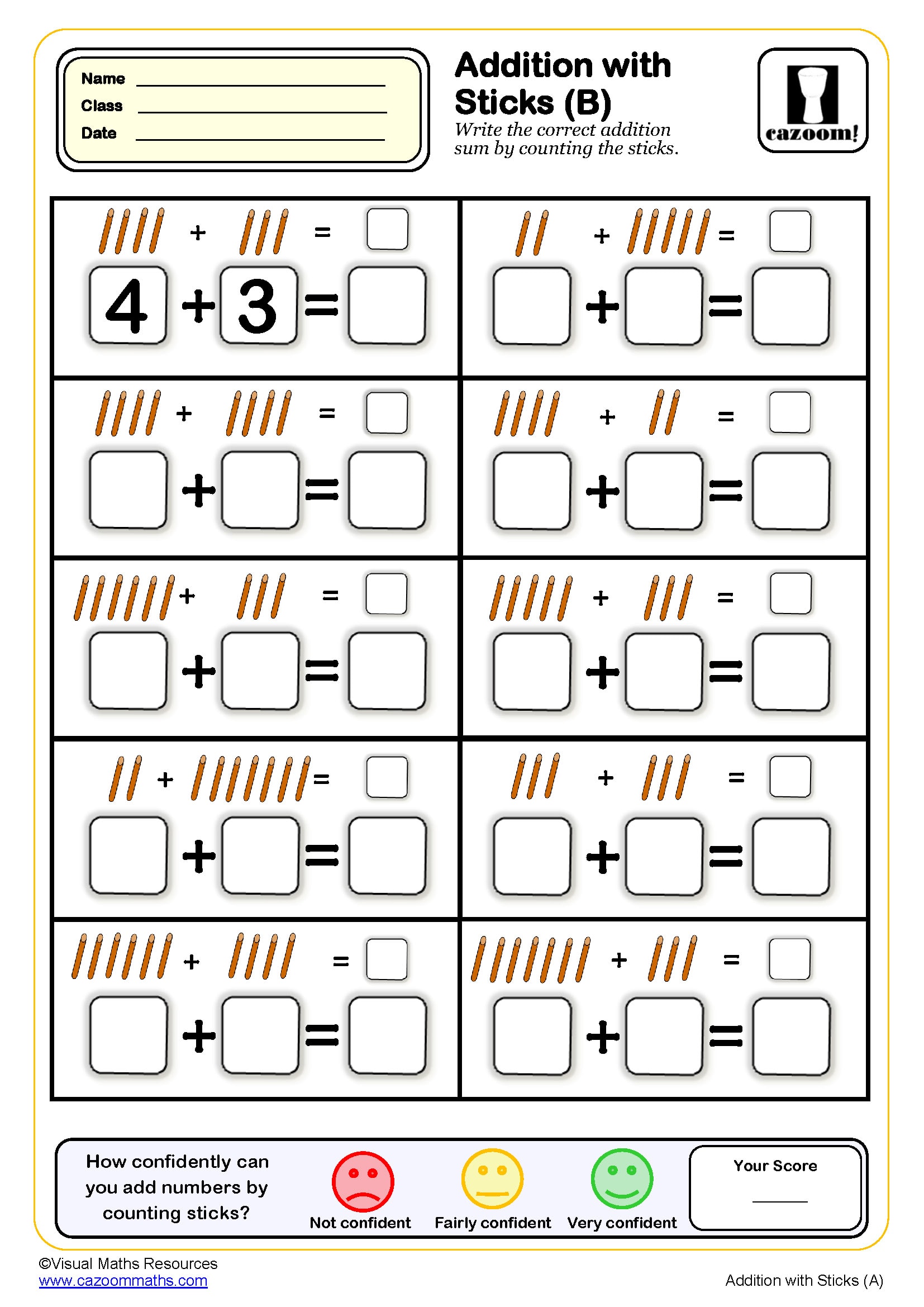
Addition with Sticks (C)
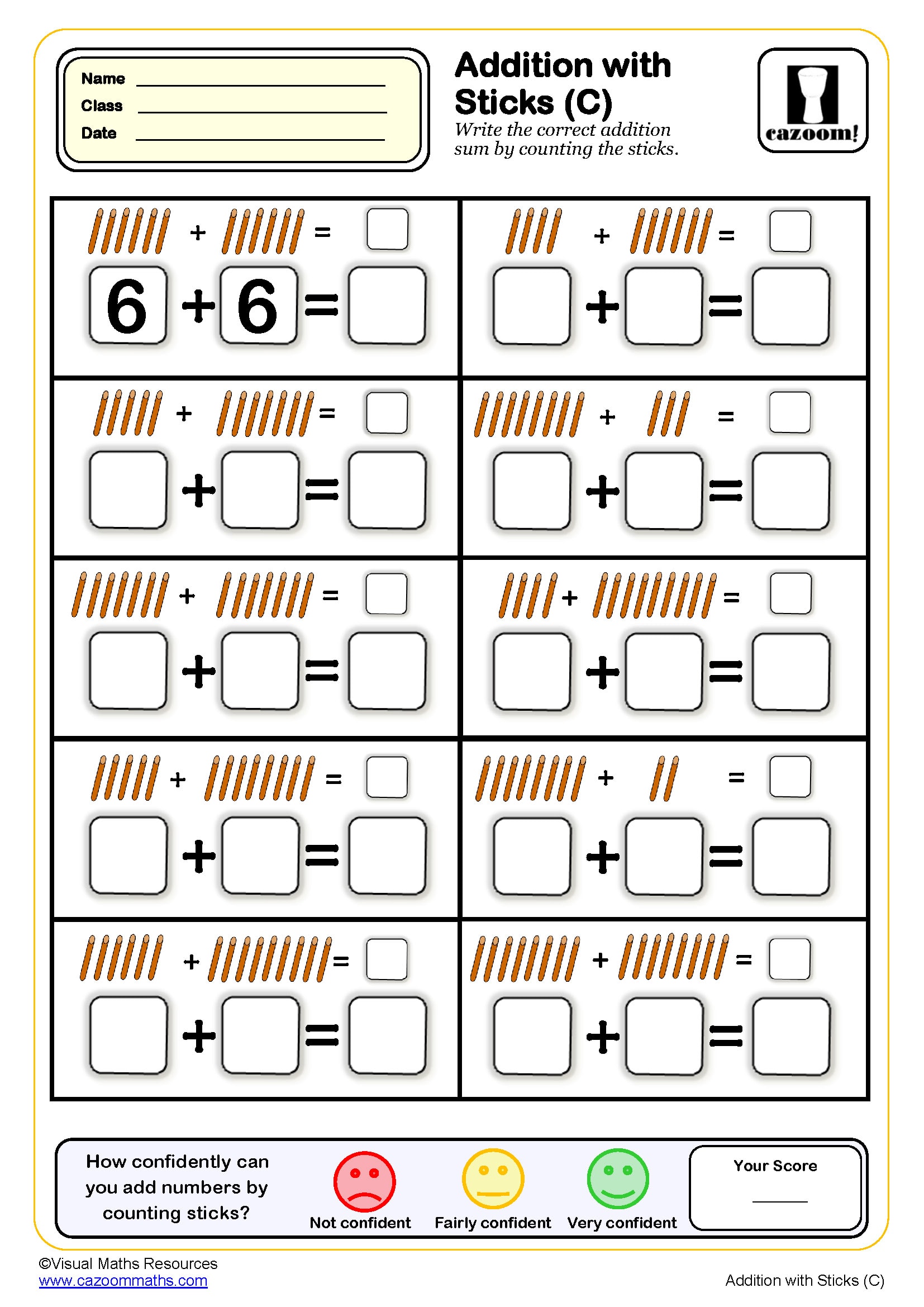
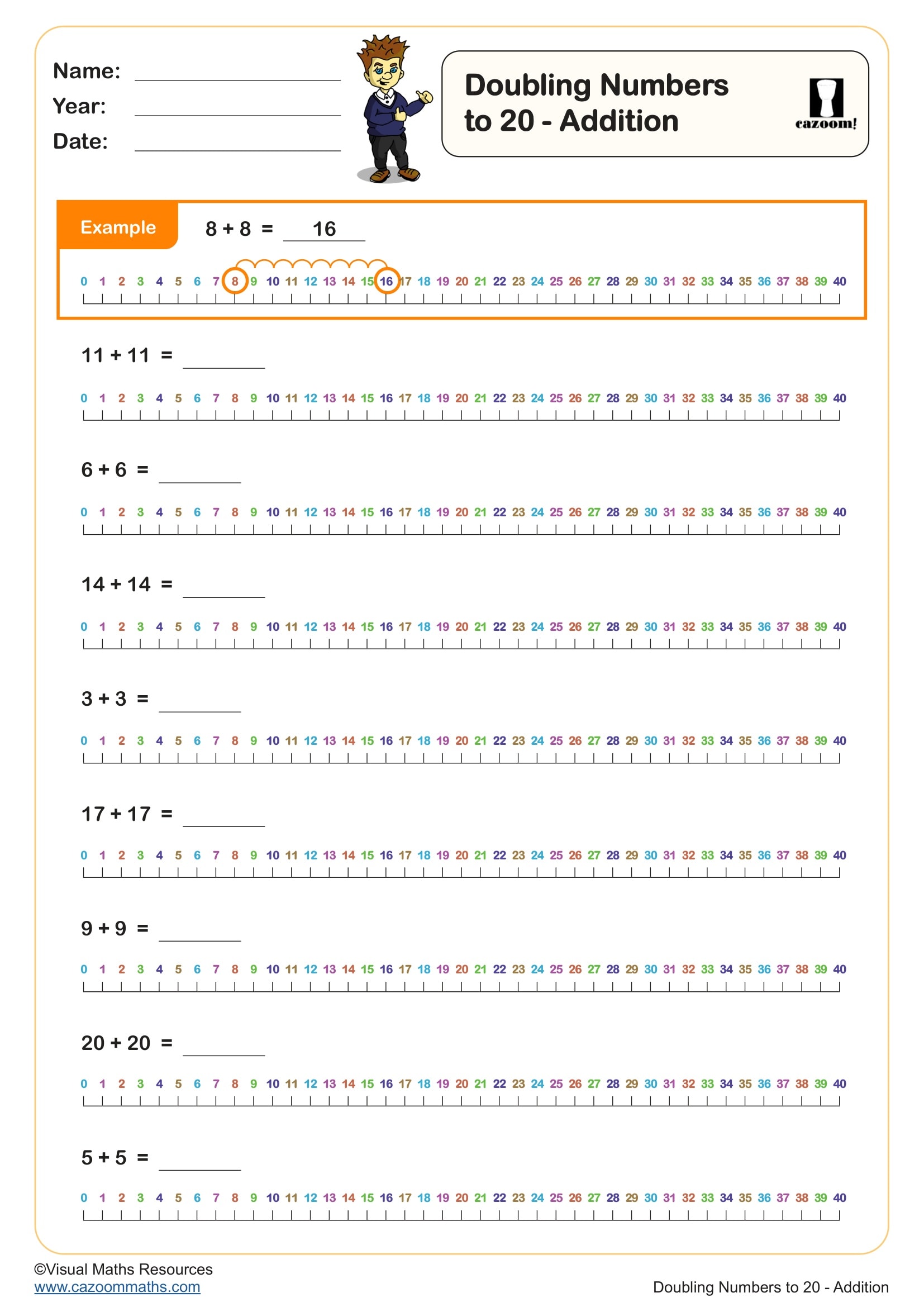
Doubling Numbers to 20 - Addition
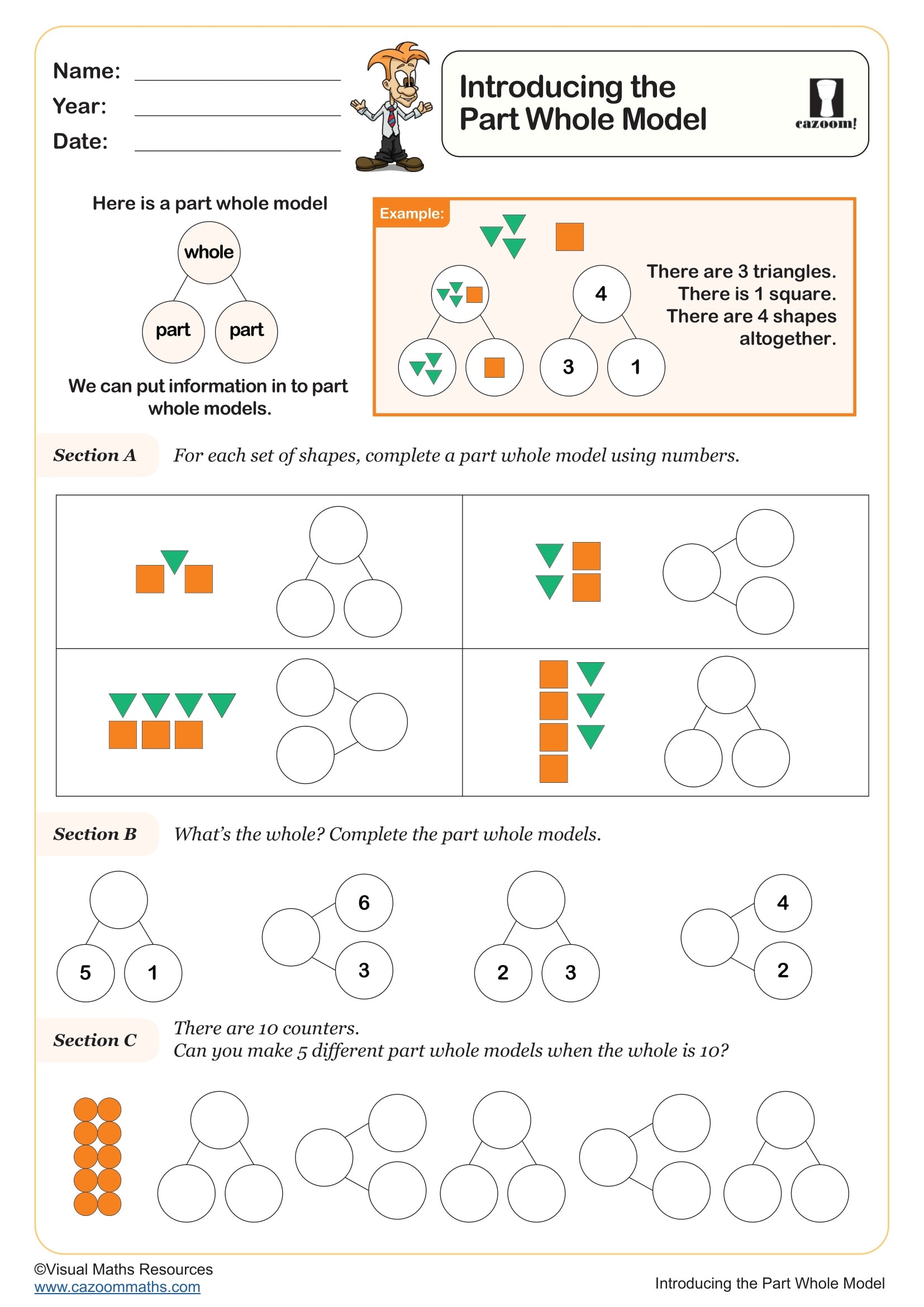
Introducing the Part Whole Model
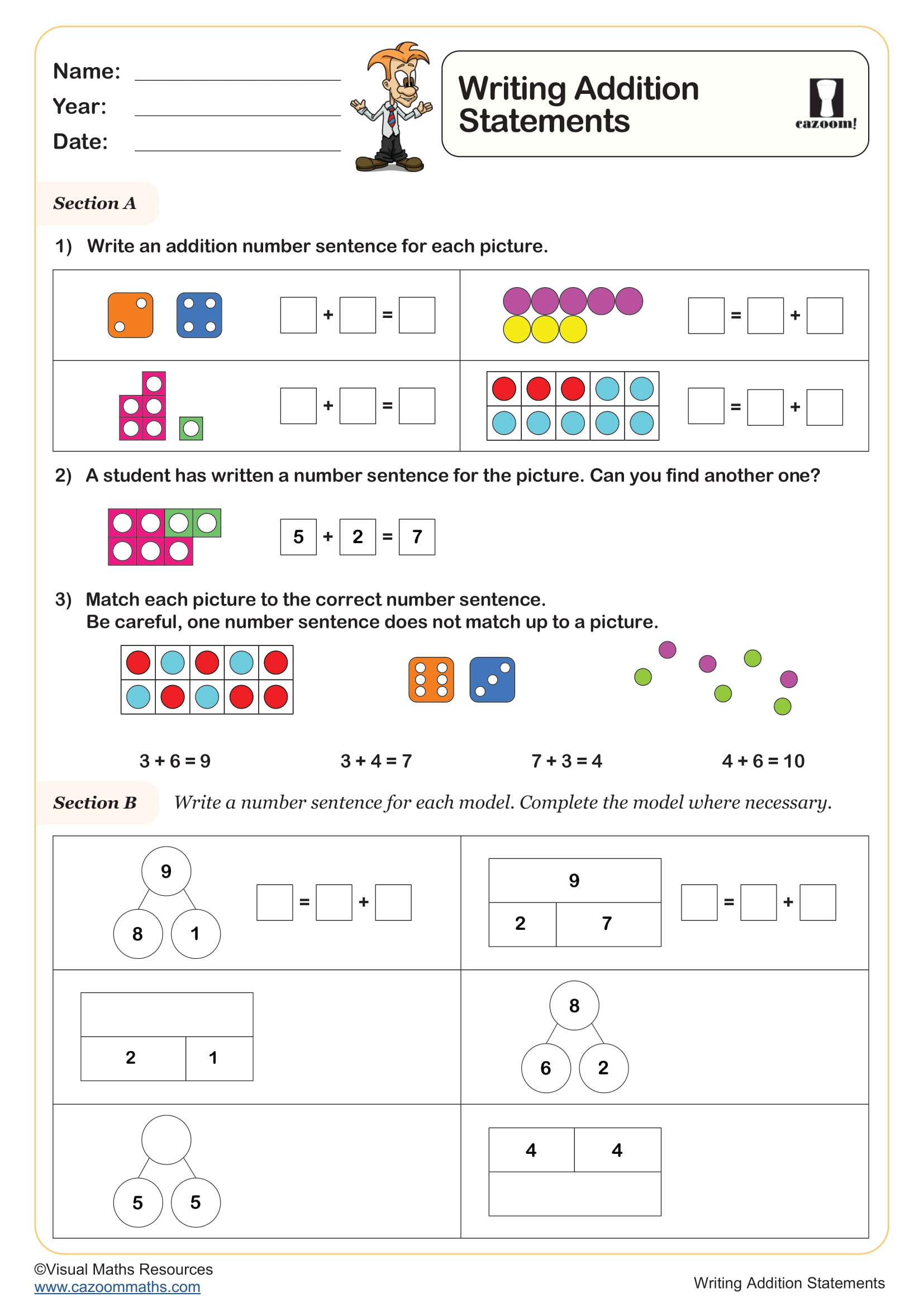
Writing Addition Statements
All worksheets are created by the team of experienced teachers at Cazoom Maths.
Why are visual aids important for KS1 addition?
Visual aids provide concrete representations that help young children understand what addition actually means. When pupils in Year 1 and Year 2 can see objects being combined—whether through pictures, counters or ten frames—they develop a deeper conceptual understanding rather than just memorising procedures. This concrete-pictorial-abstract approach is fundamental to the National Curriculum's emphasis on mathematical mastery.
Which year groups are these addition worksheets suitable for?
These worksheets are specifically designed for Key Stage 1, covering Year 1 and Year 2 pupils. The resources align with National Curriculum expectations for early addition, starting with combining groups of objects and progressing to adding single-digit numbers with visual support. Year 1 pupils typically work on adding one-digit numbers to 20, whilst Year 2 children build towards adding two-digit numbers.
How do ten frames help with addition practice?
Ten frames are powerful visual tools that help children develop number sense and understand place value from an early age. By organising counters or dots into a structured 5×2 grid, pupils can quickly recognise quantities and see how numbers relate to 5 and 10. This makes addition more intuitive—children can spot that 7 and 3 make 10 without counting individual dots, building mental calculation fluency.
What's included with these worksheets?
Every worksheet in this collection includes a complete answer sheet, allowing teachers and parents to mark work quickly and accurately. The worksheets are provided as downloadable PDFs that can be printed as many times as needed, making them ideal for whole-class teaching, small group work or home learning. This flexibility means you can differentiate easily and provide additional practise for pupils who need it.