KS1 Number bonds over 20 Worksheets
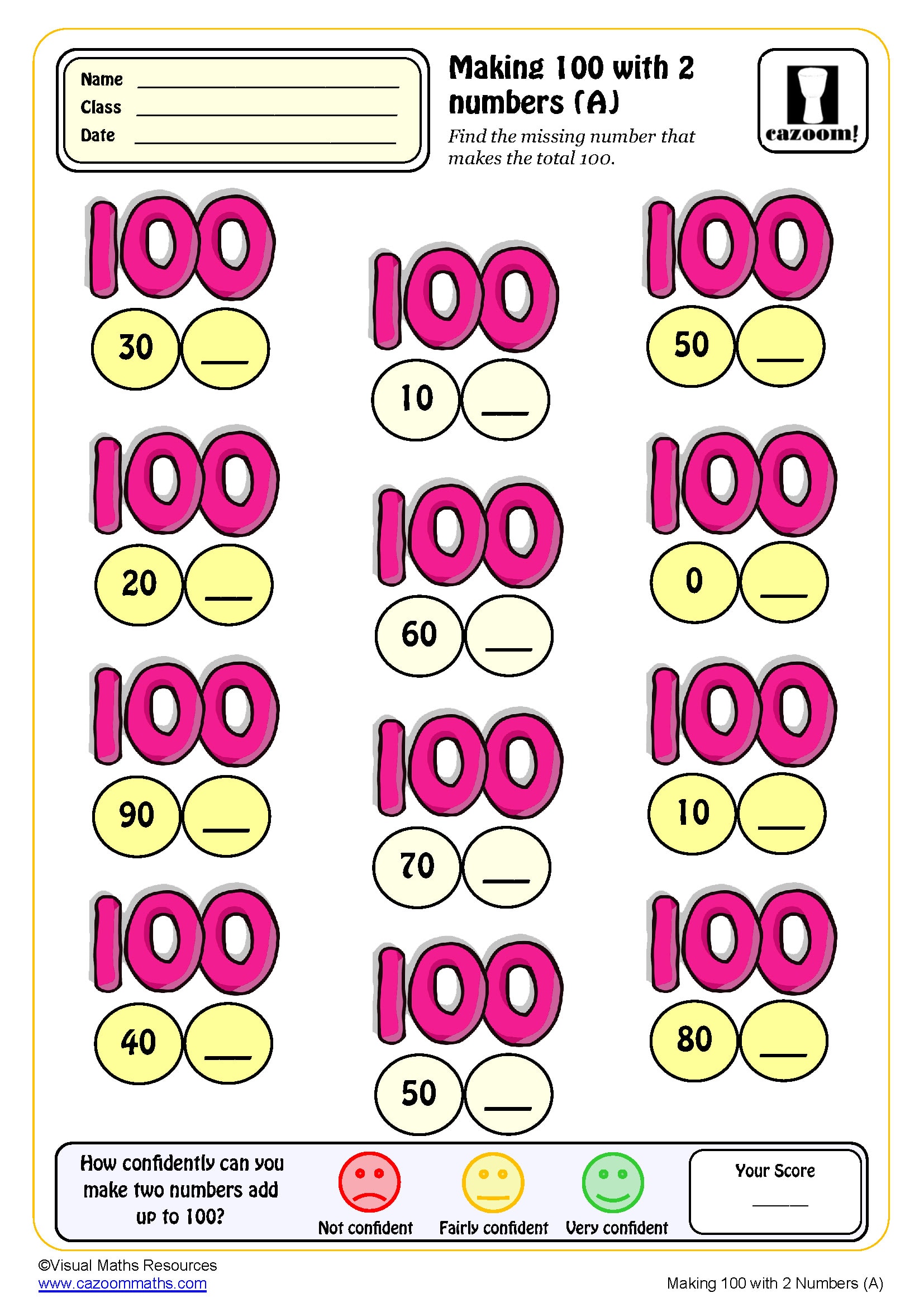
Making 100 with 2 Numbers (A) (Multiples of 10)
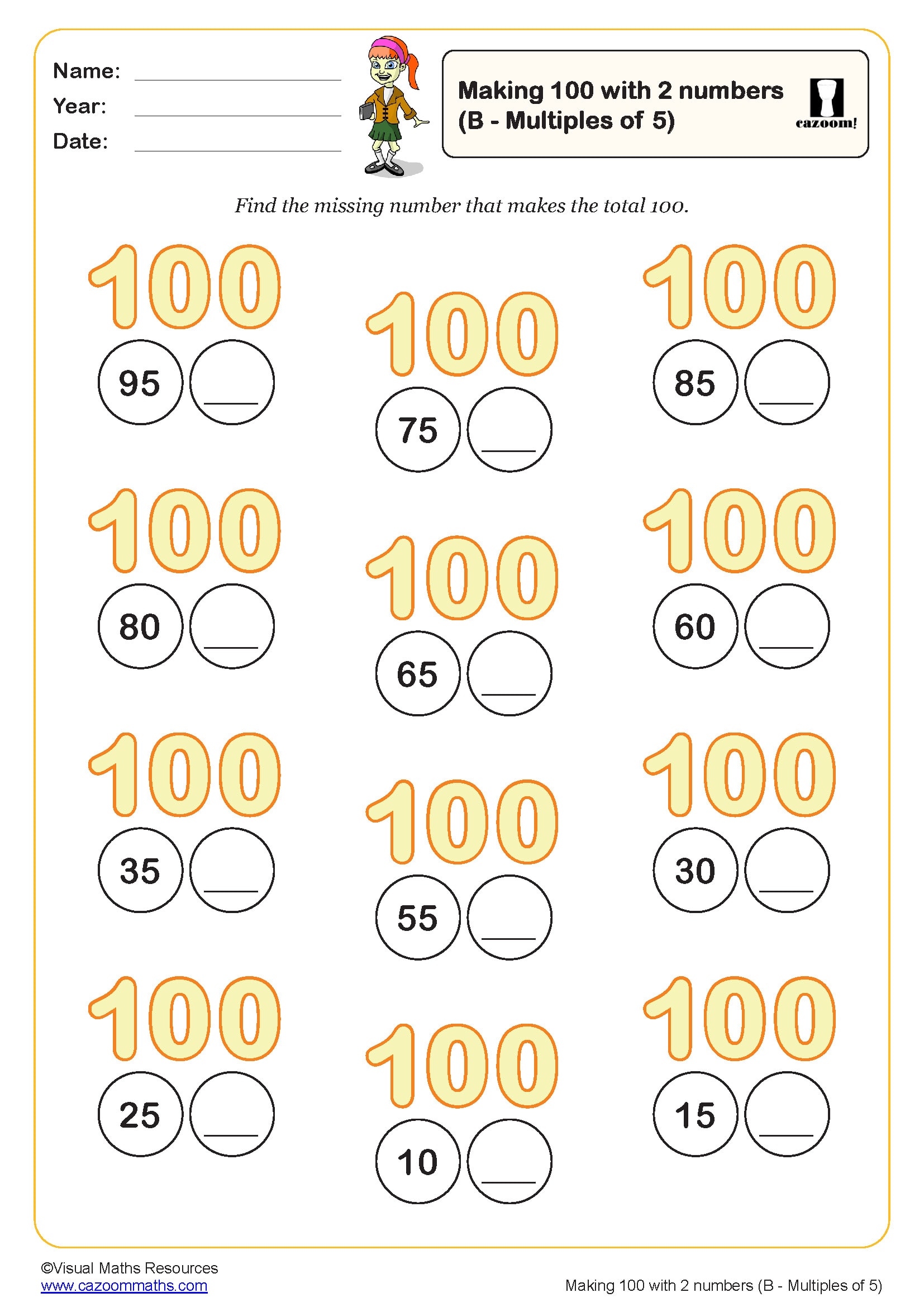
Making 100 with 2 numbers (B) (Multiples of 5)
Making 100 with 2 numbers (blanks)
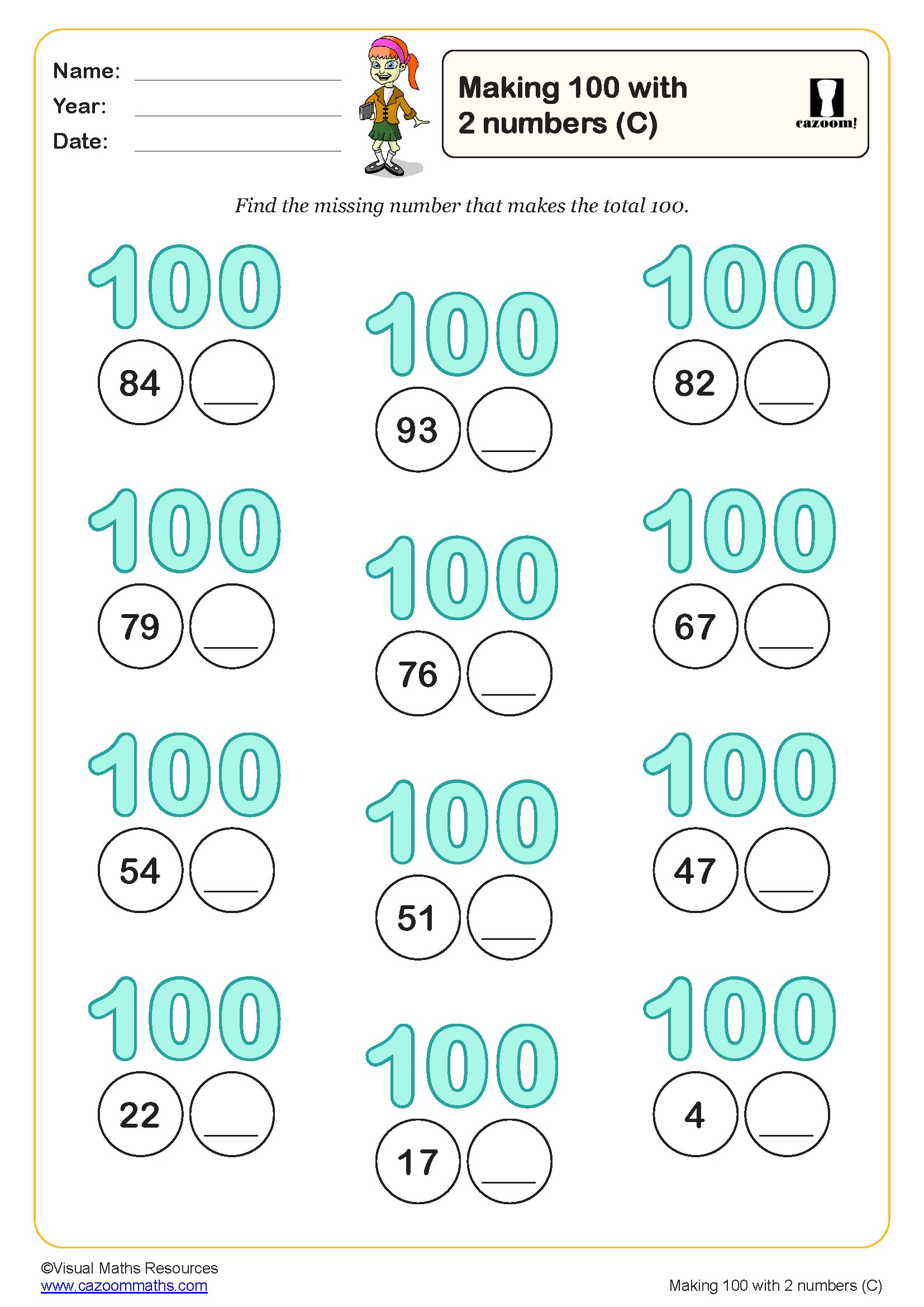
Making 100 with 2 numbers (C)
Making 100 with 3 Numbers (A) (Multiples of 10)
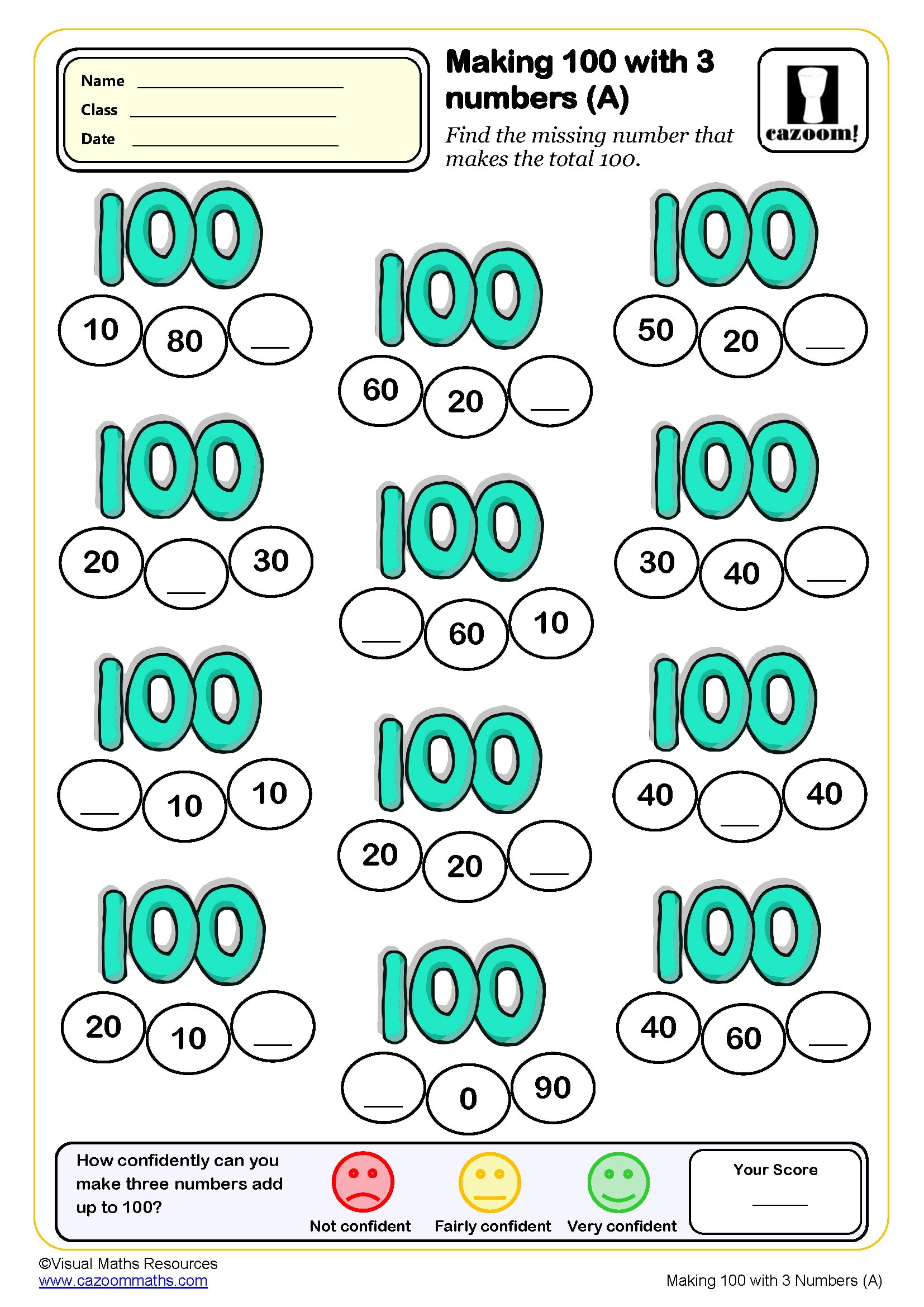
Making 100 with 3 numbers (B) (Multiples of 5)
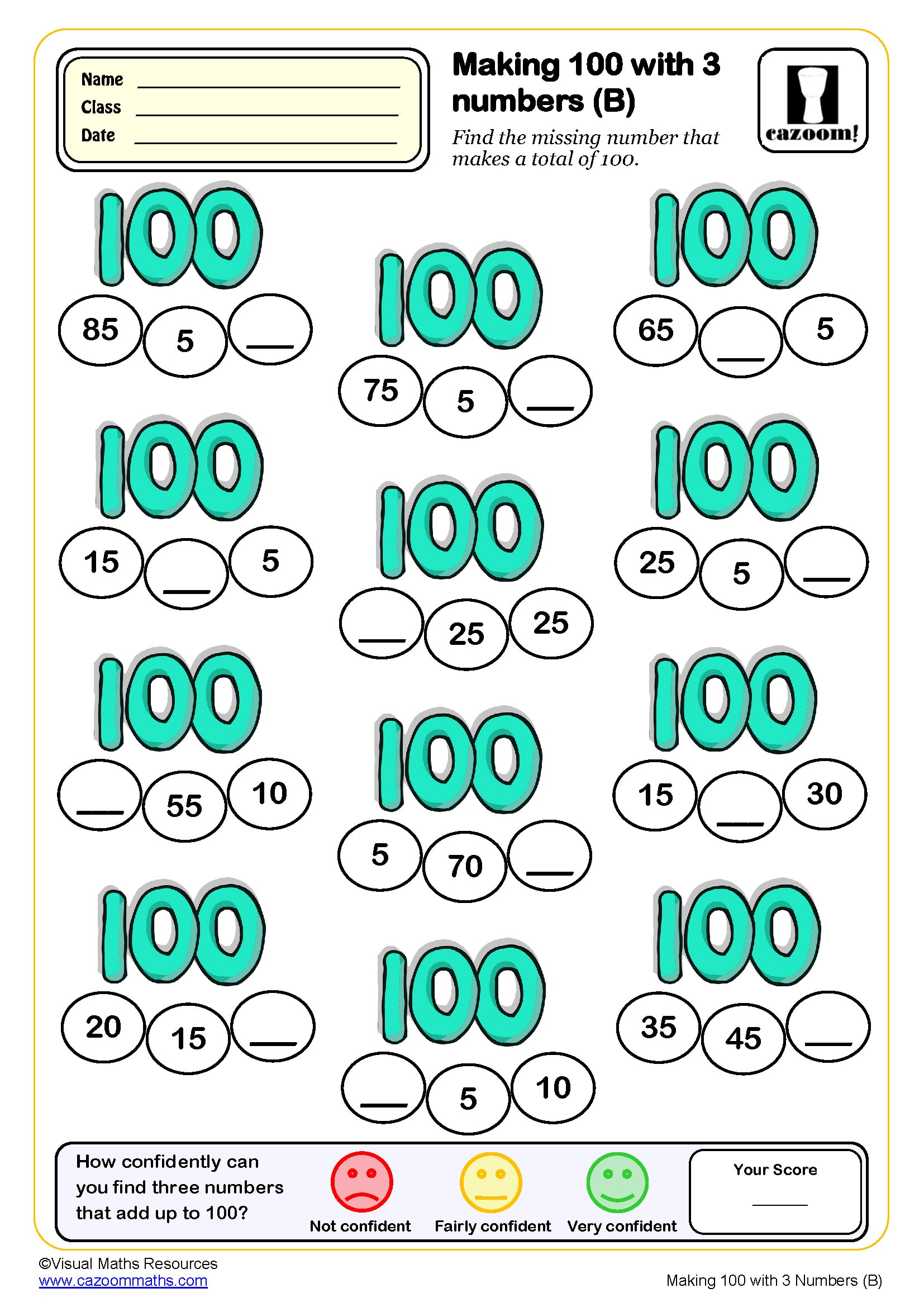
Making 100 with 3 numbers (blanks)
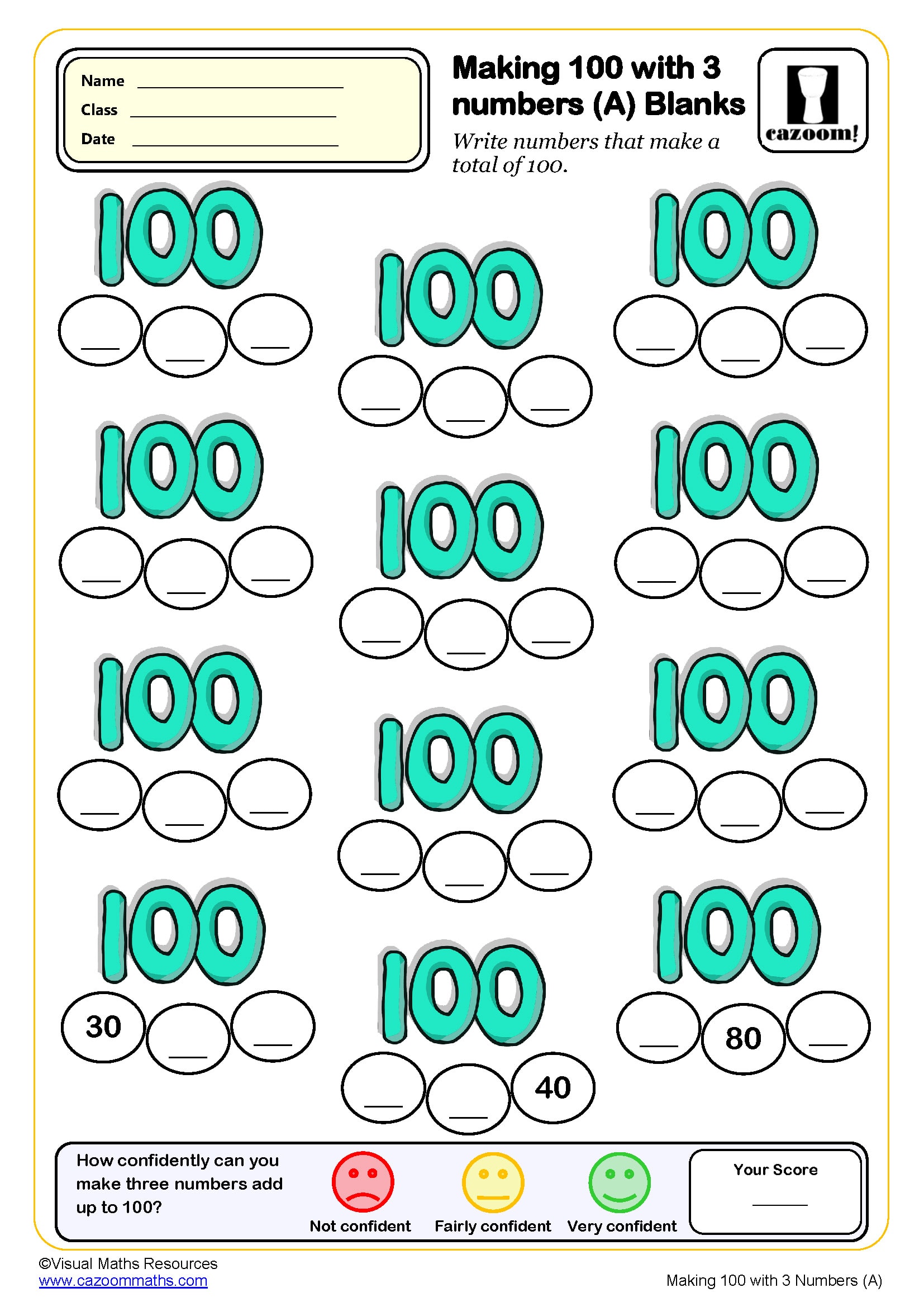
Making 100 with 3 numbers (C)
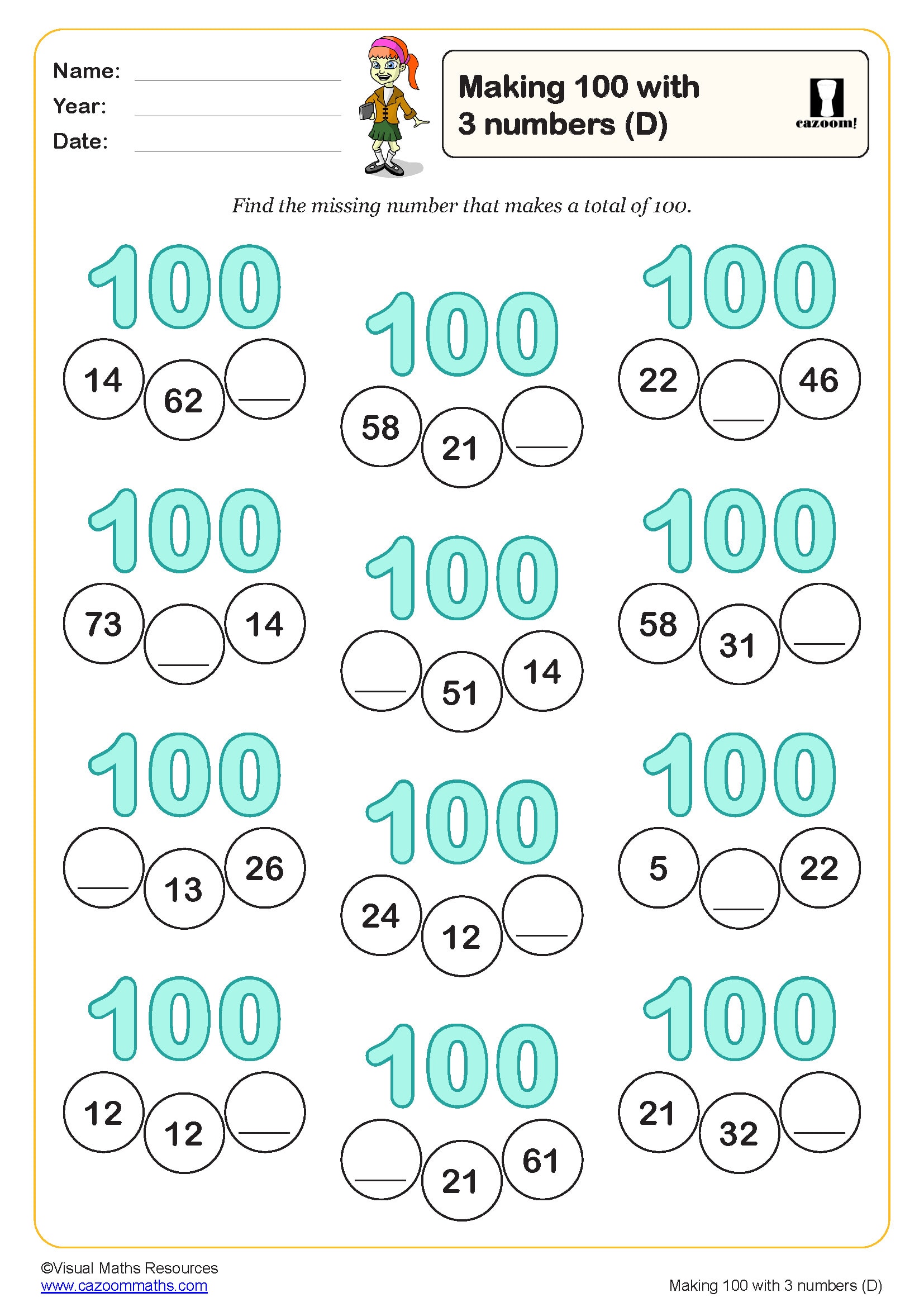
Making 100 with 3 numbers (D) (No regrouping)
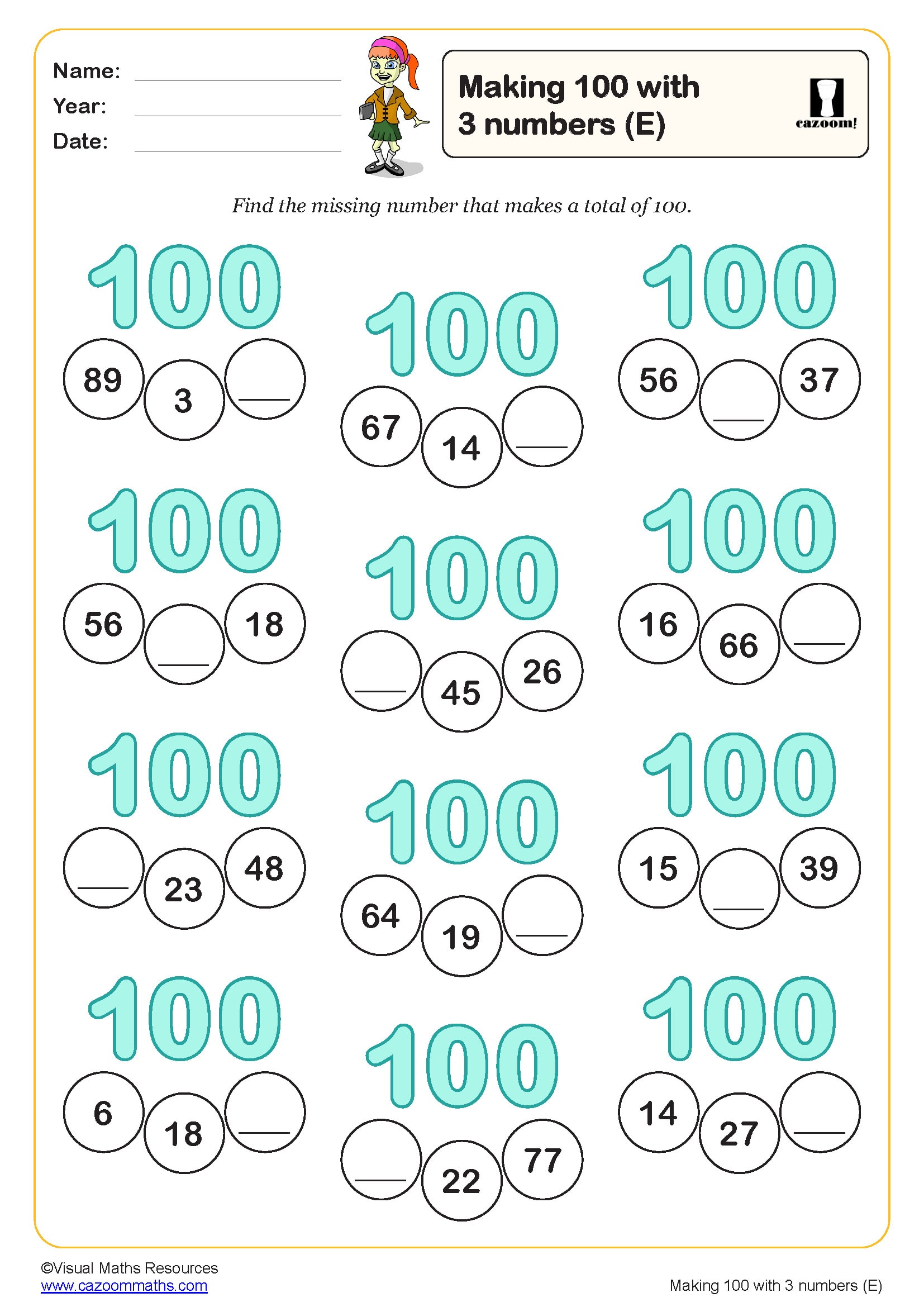
Making 100 with 3 numbers (E) (With regrouping)
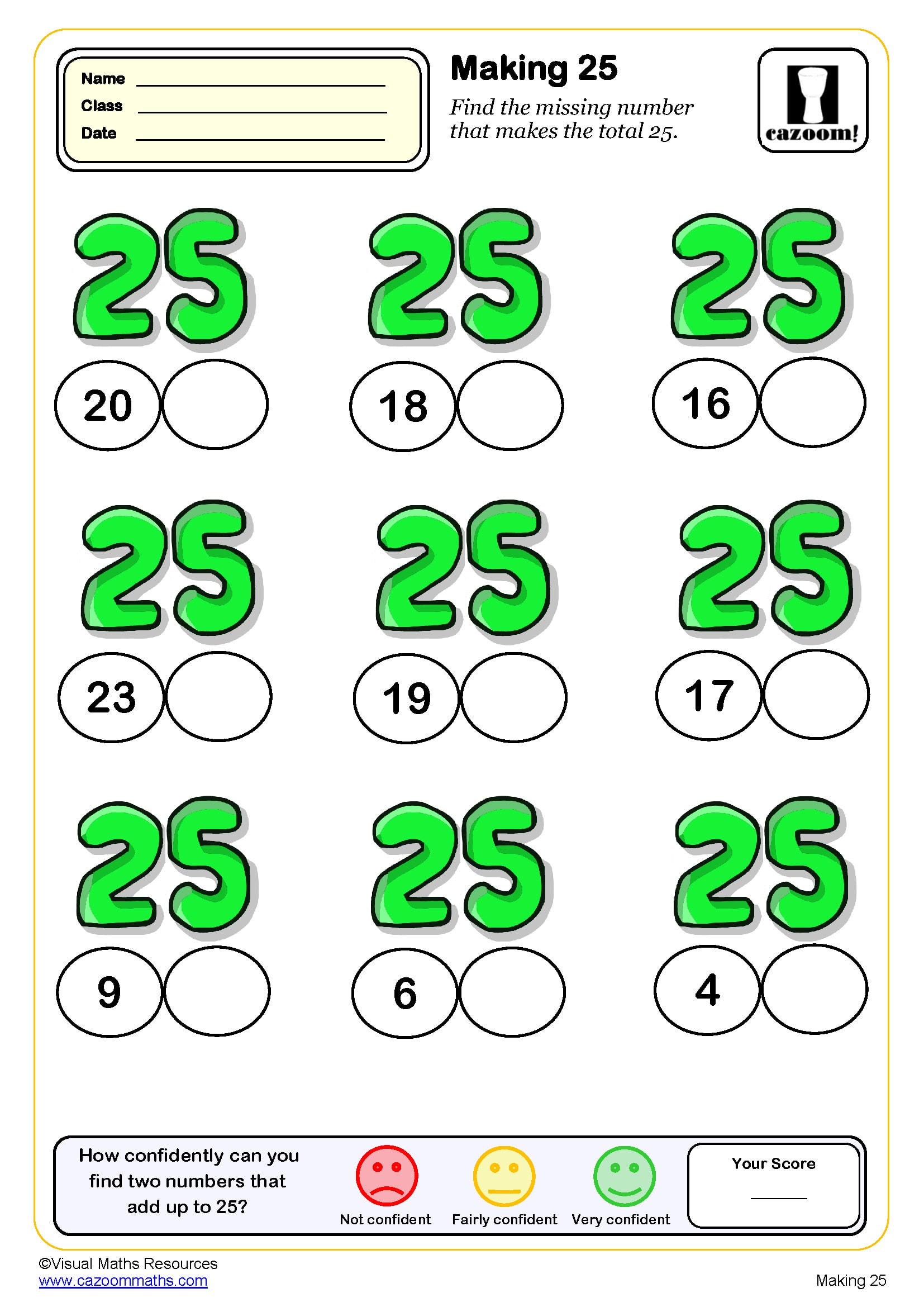
Making 25
Making 25 (Blanks)
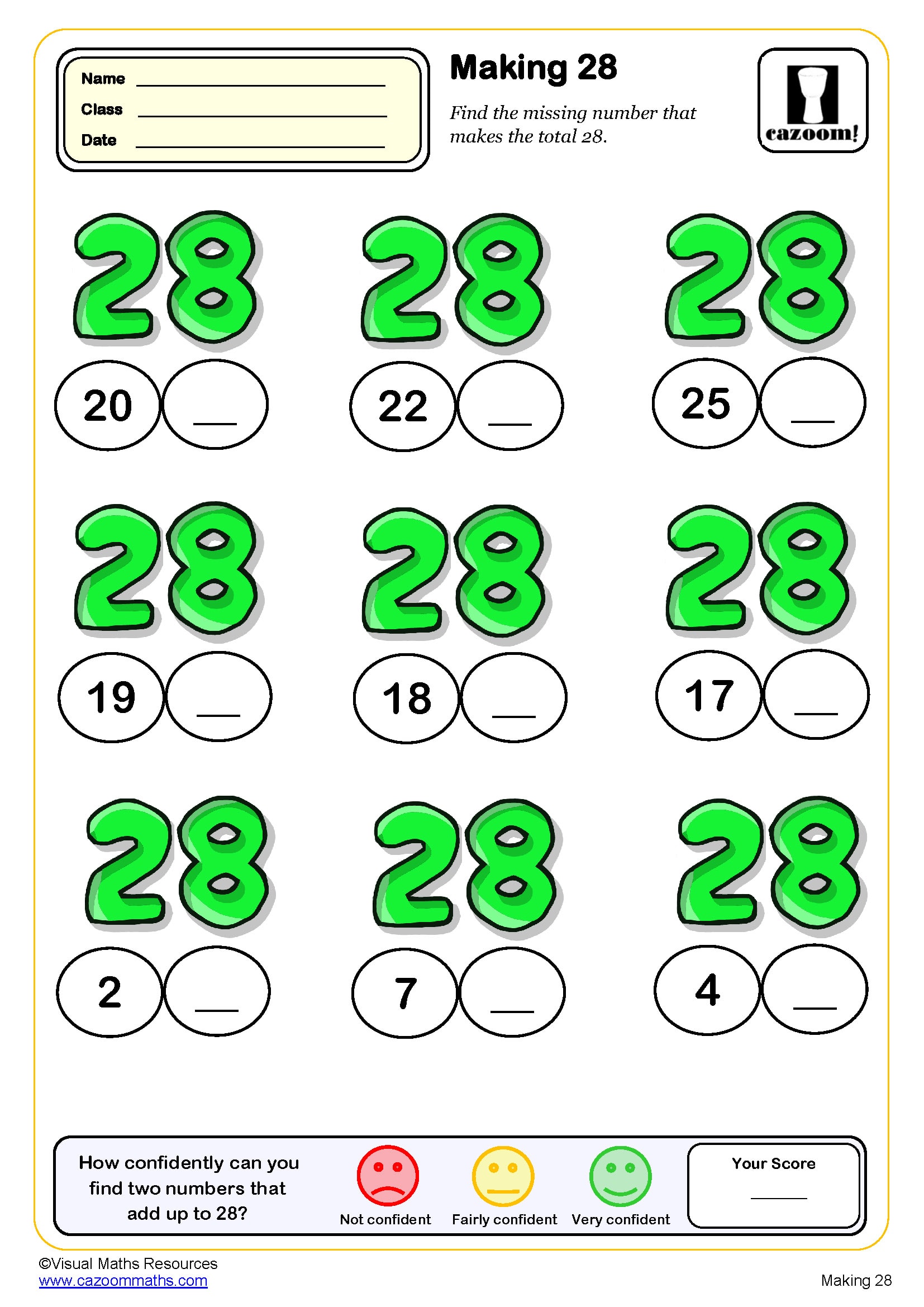
Making 28
Making 28 (Blanks)
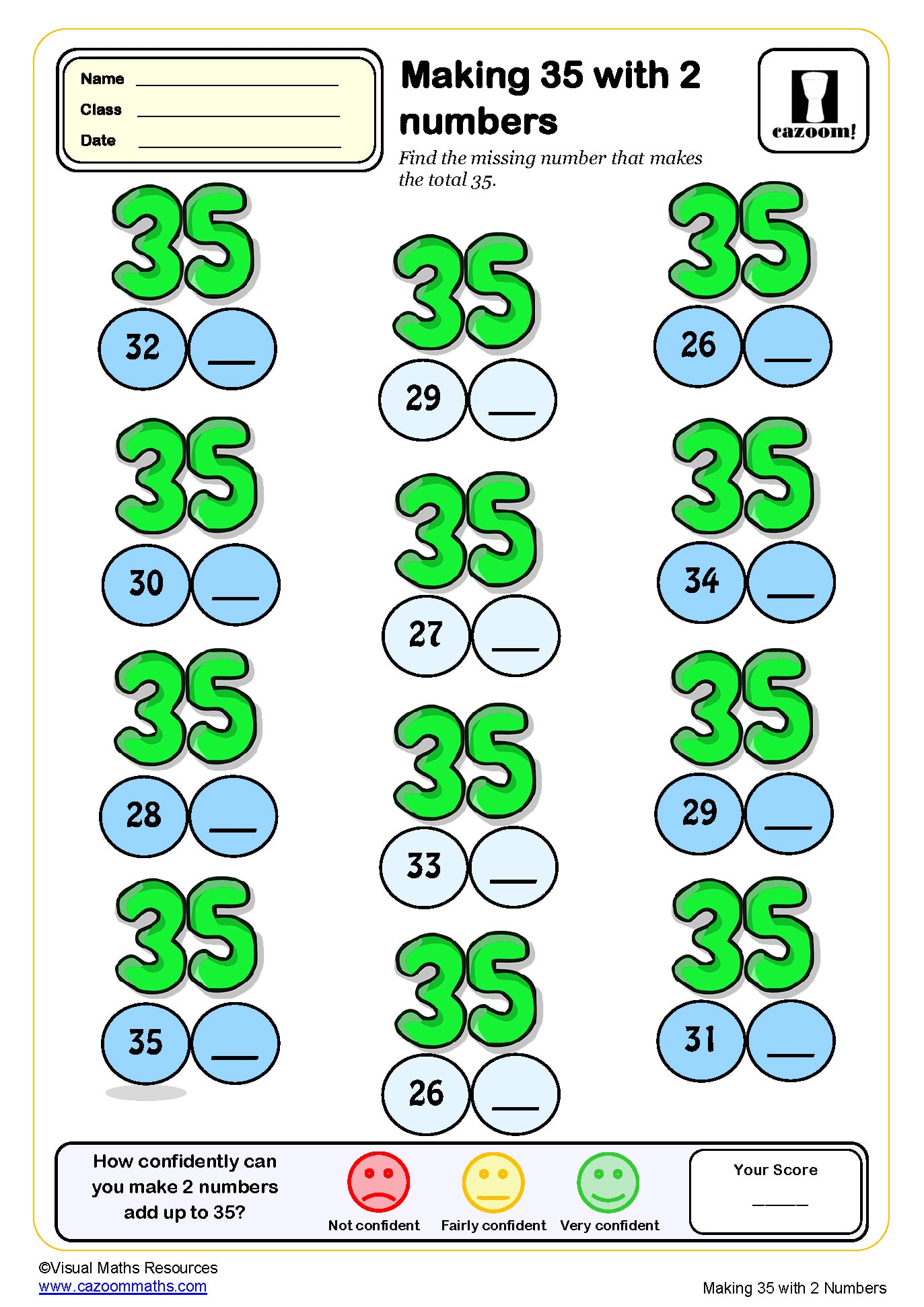
Making 35 with 2 numbers
Making 35 With 2 Numbers (Blanks)
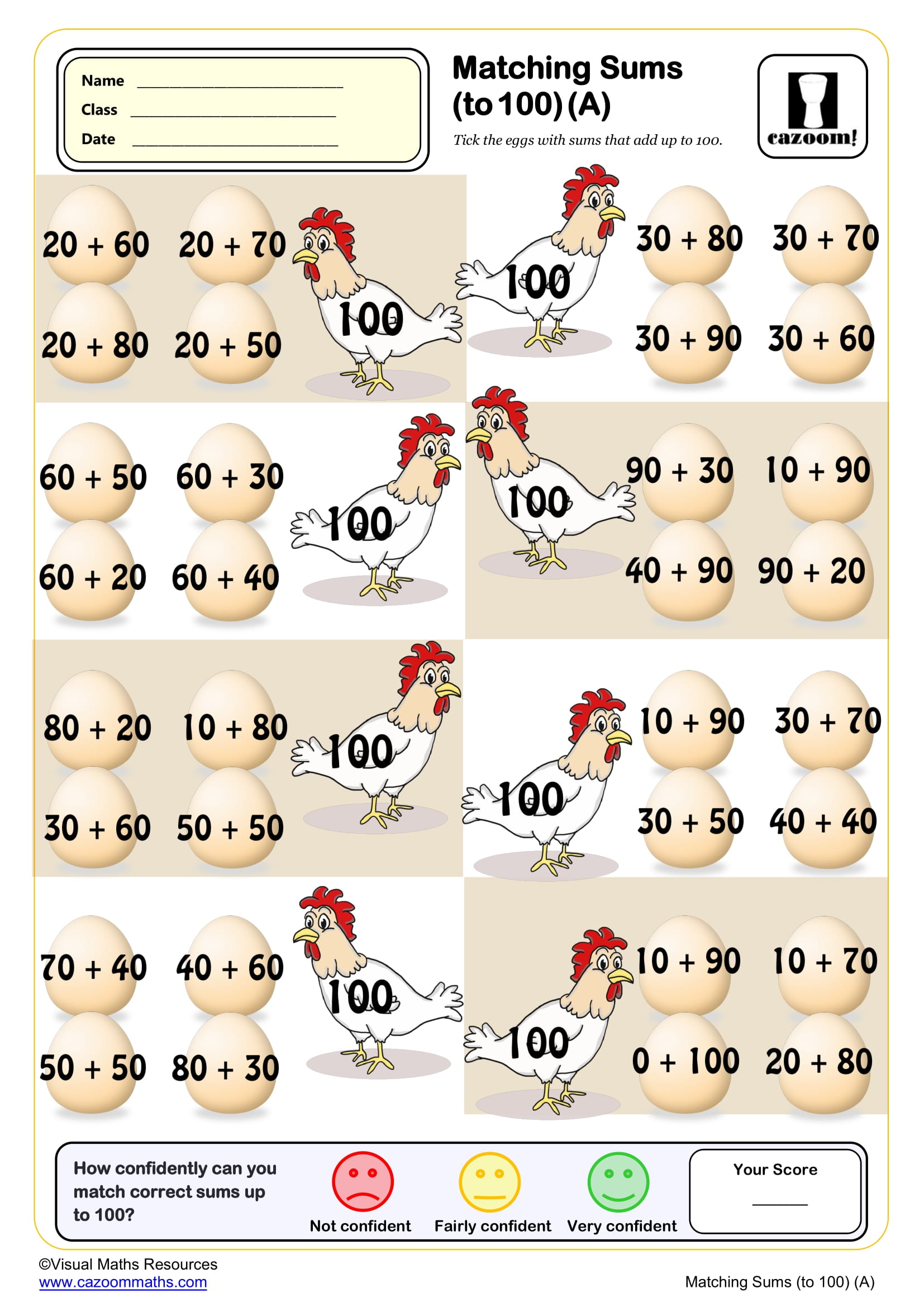
Matching sums to 100 (A)
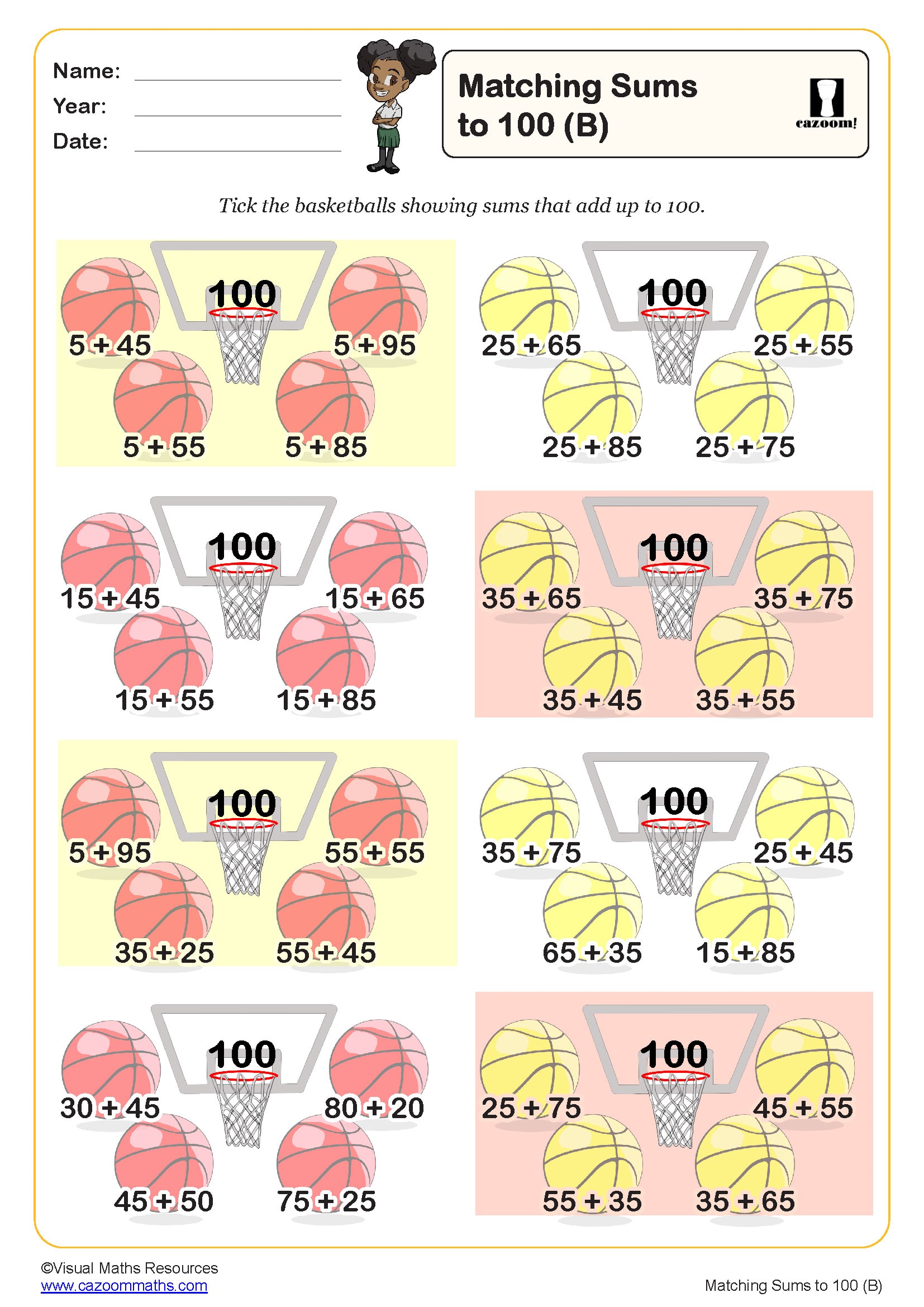
Matching sums to 100 (B)
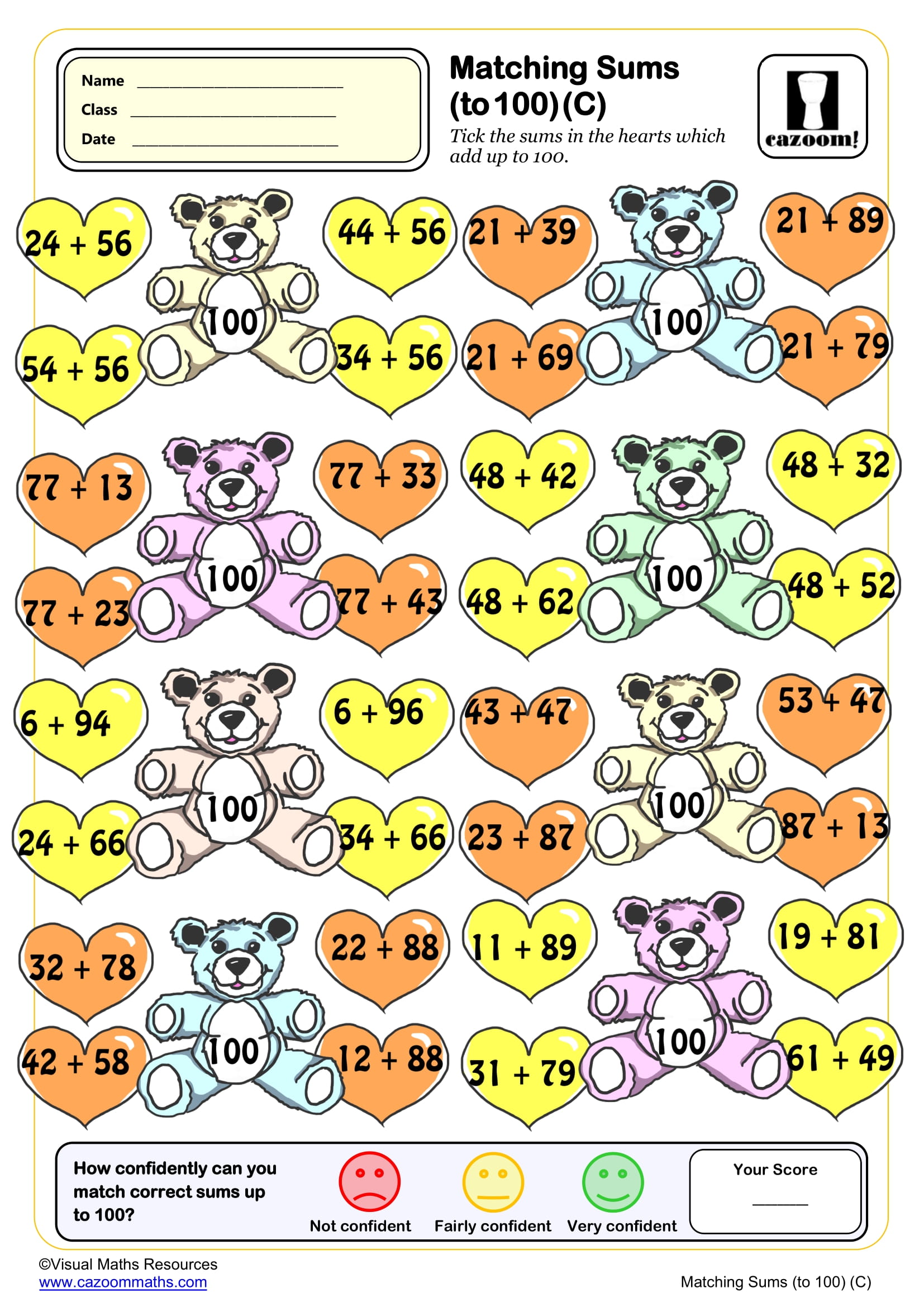
Matching sums to 100 (C)
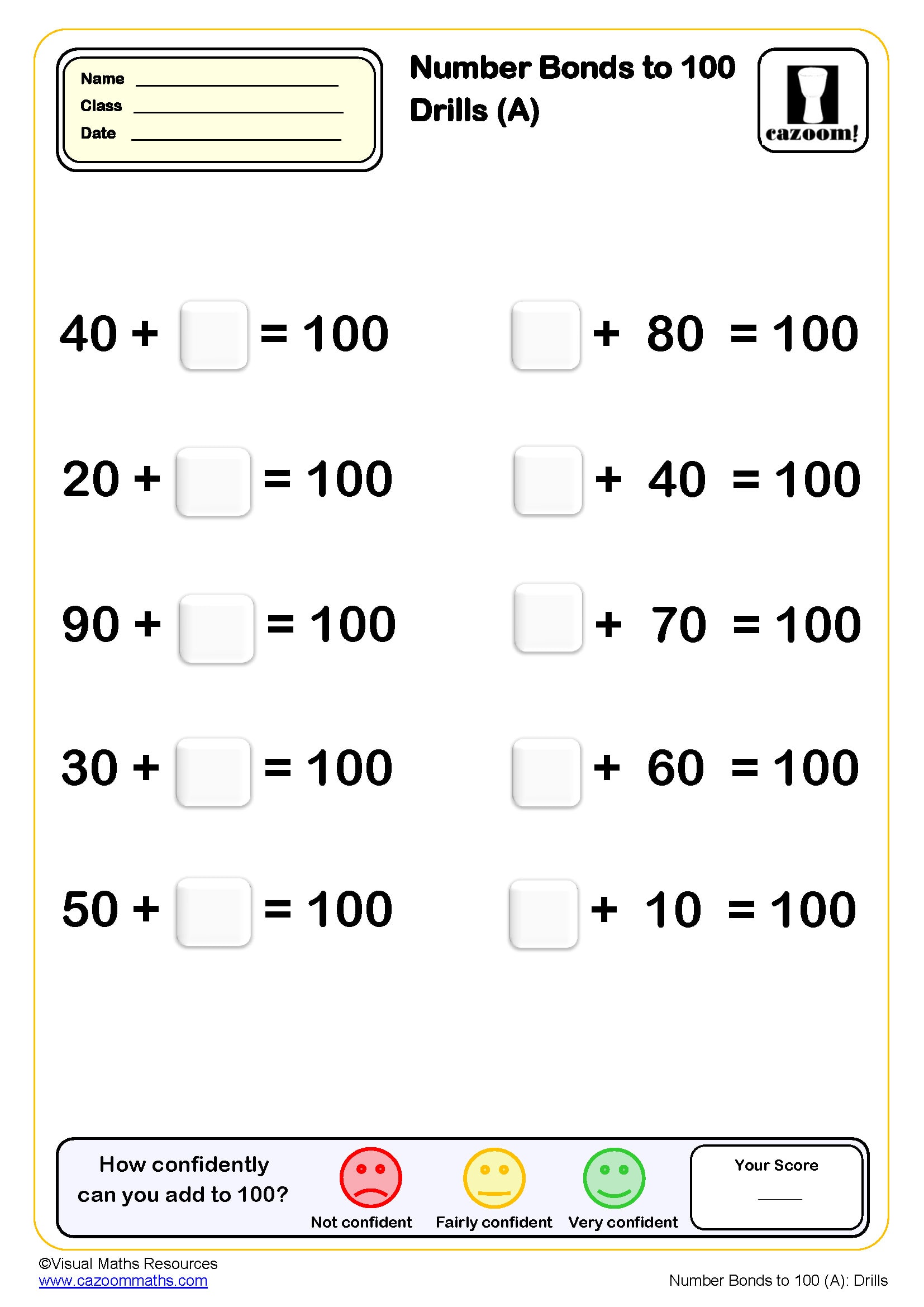
Number bond to 100 Drills (A) (10 questions)
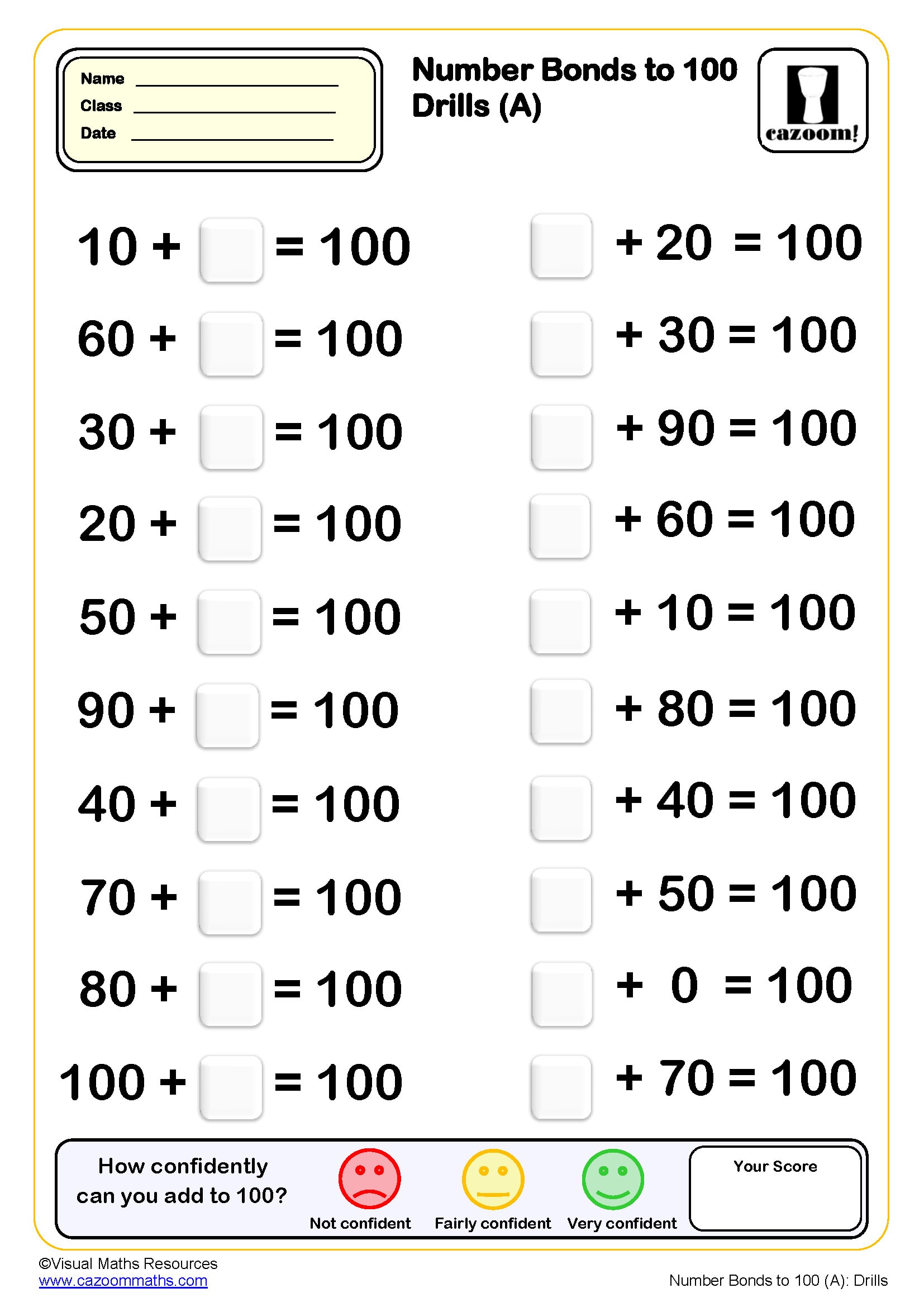
Number bond to 100 Drills (A) (20 questions)
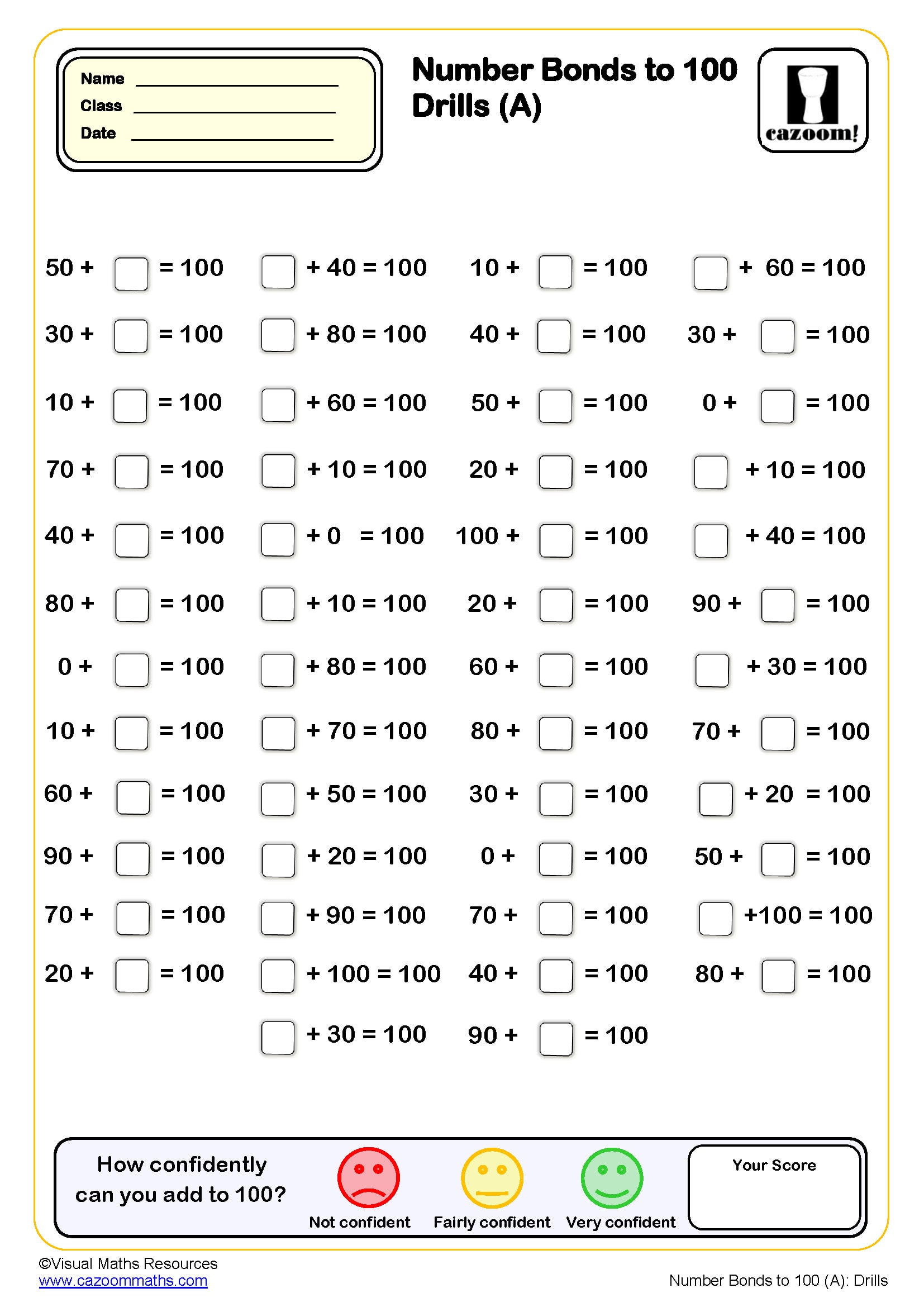
Number bond to 100 Drills (A) (50 questions)
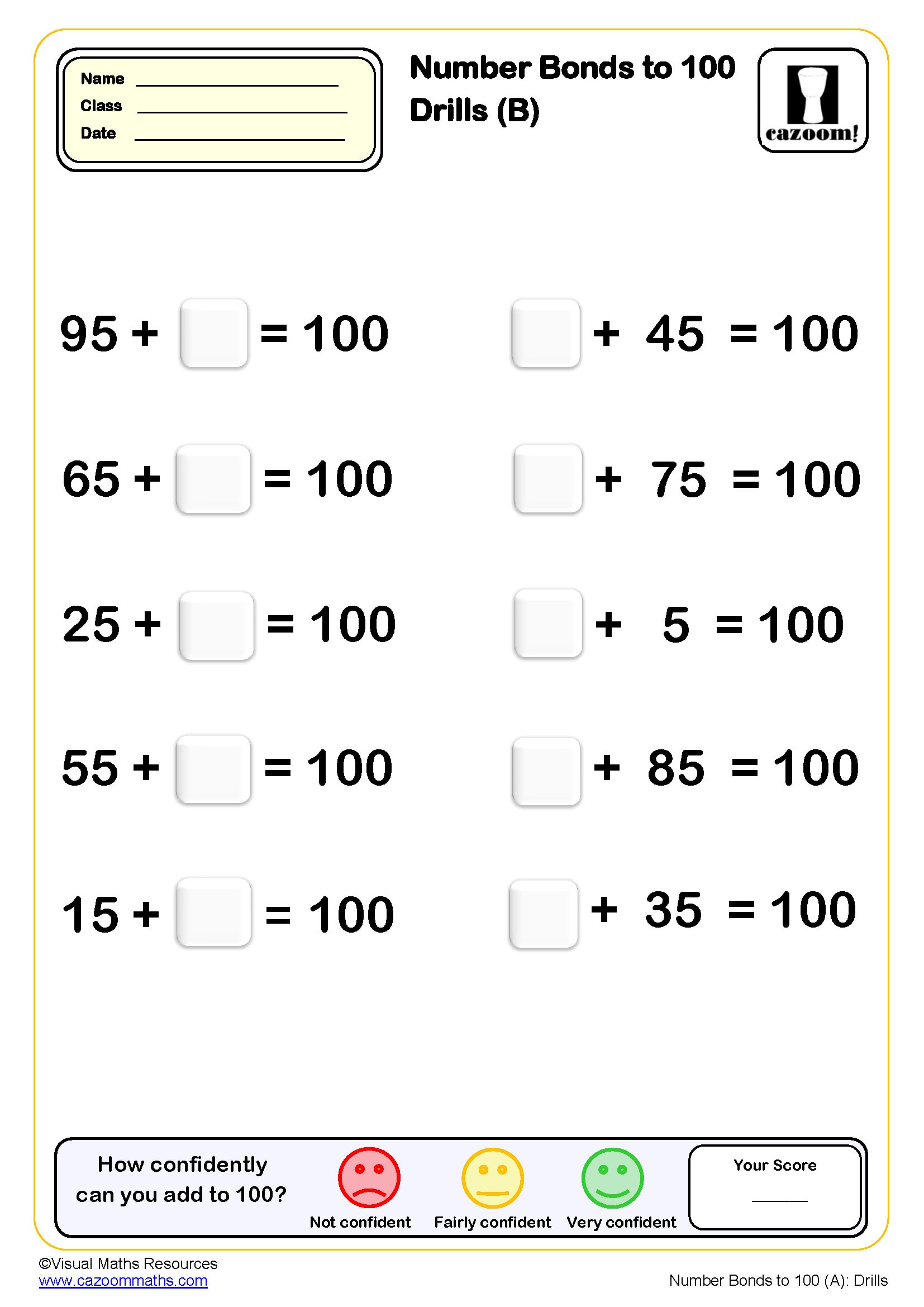
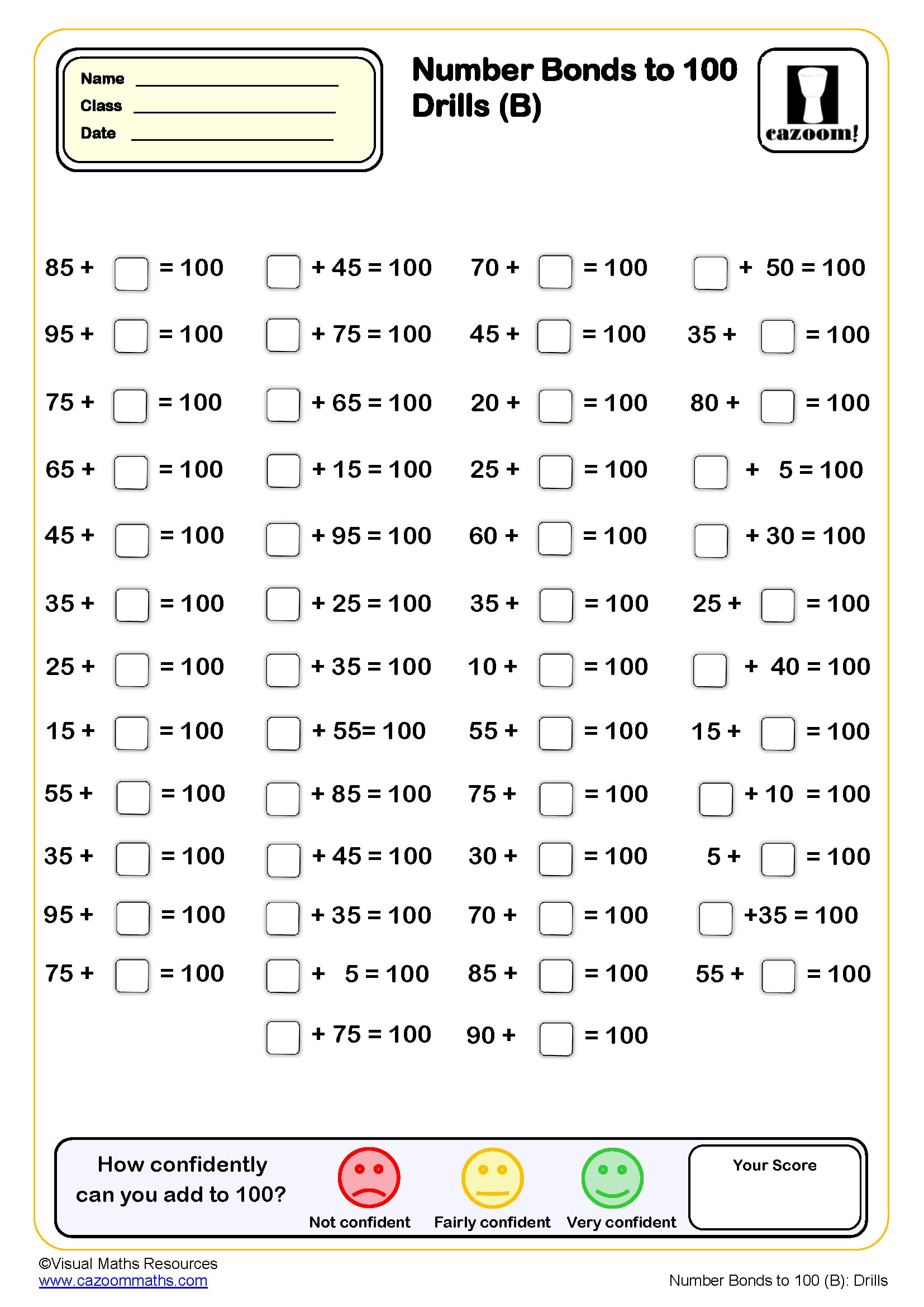
Number bond to 100 Drills (B) (10 questions)
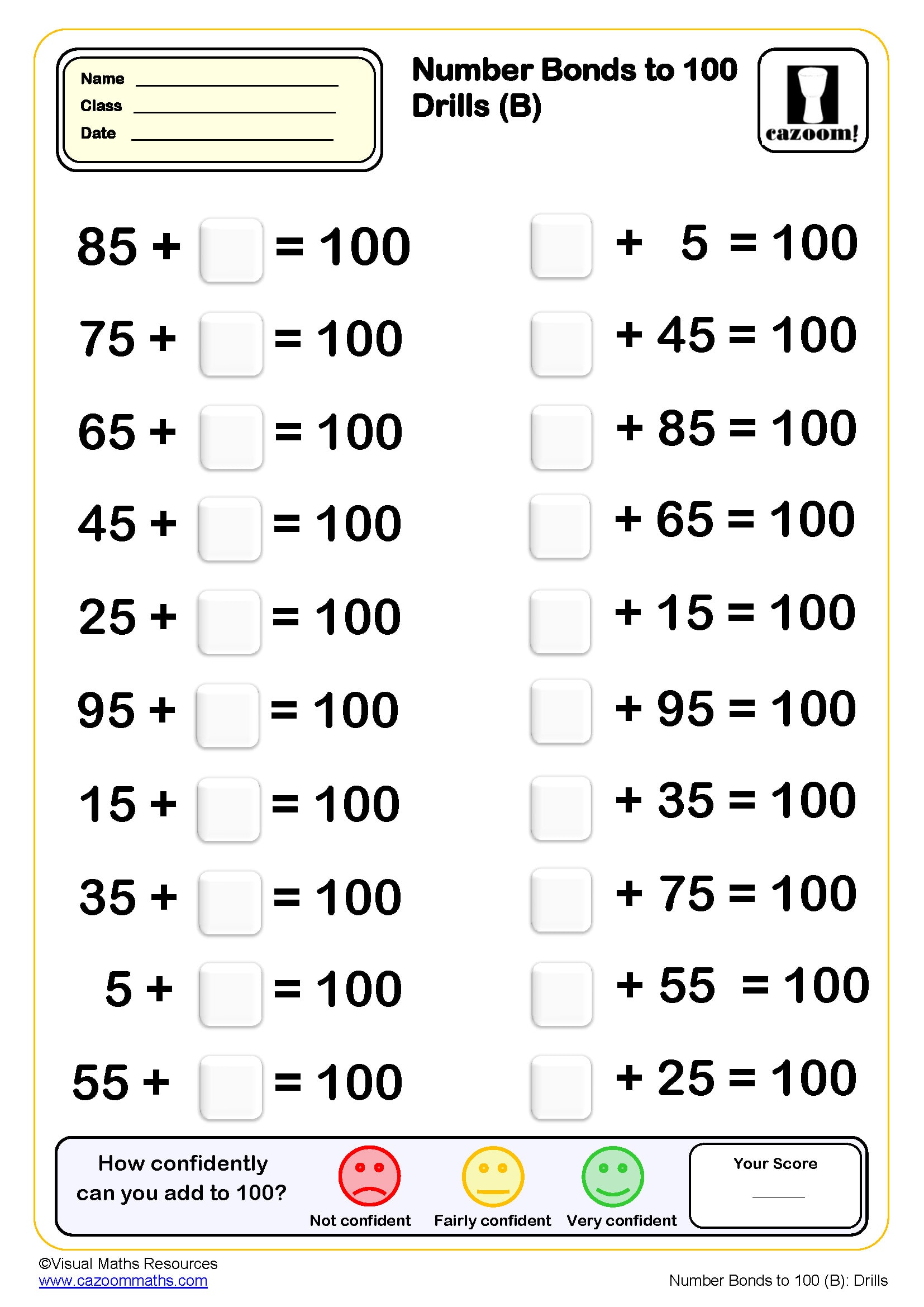
Number bond to 100 Drills (B) (20 questions)
Number bond to 100 Drills (B) (50 questions)
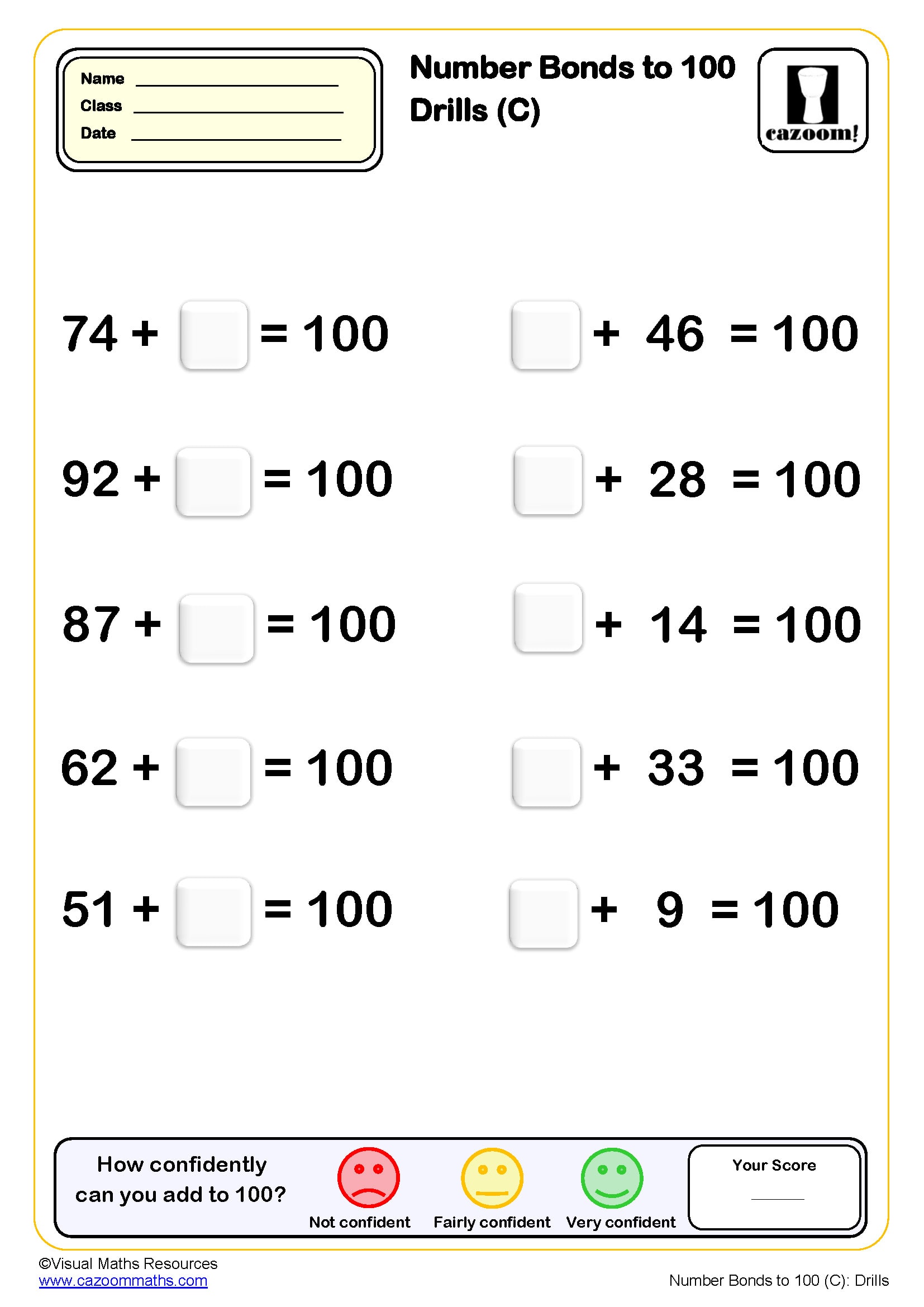
Number bond to 100 Drills (C) (10 questions)
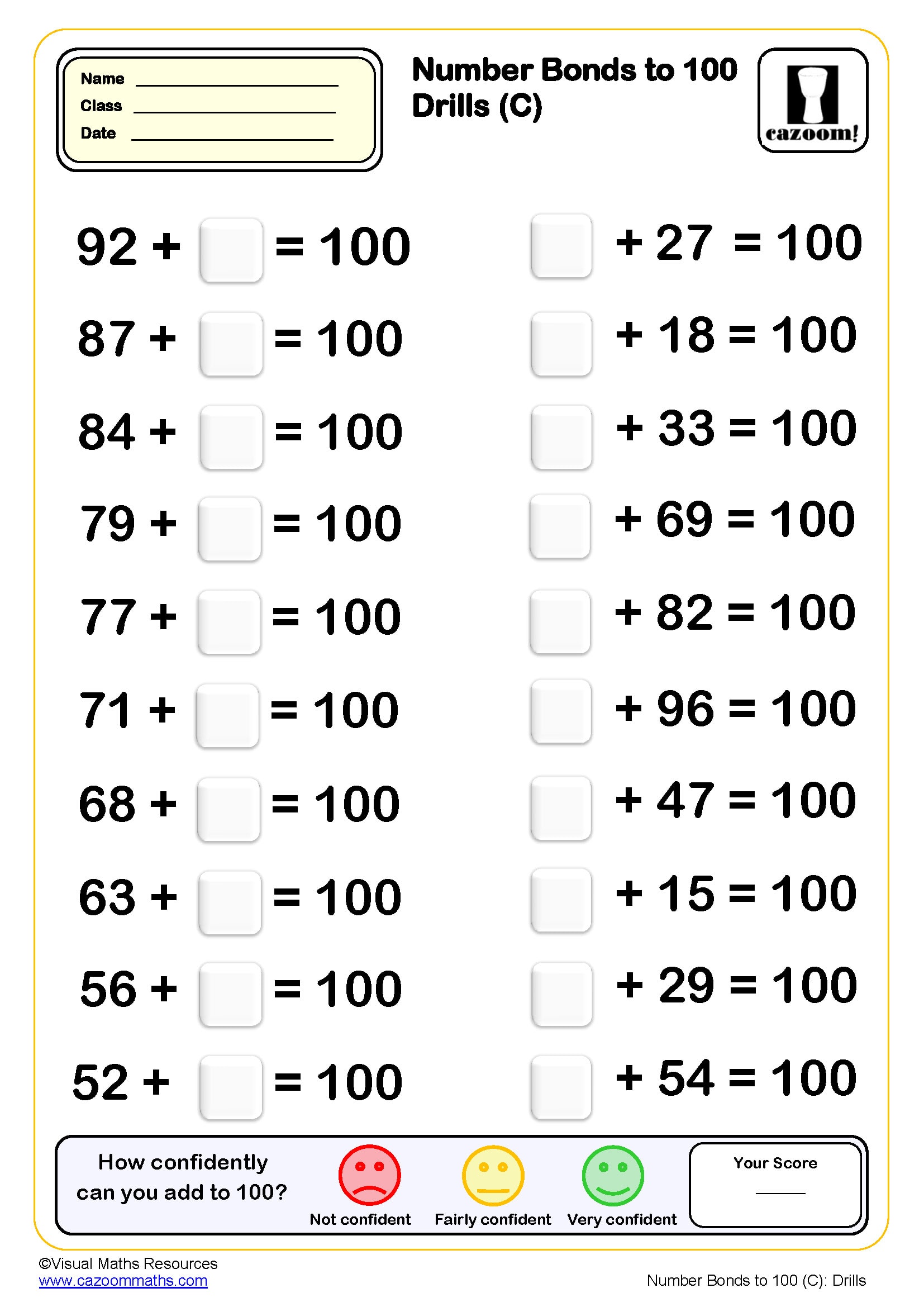
Number bond to 100 Drills (C) (20 questions)
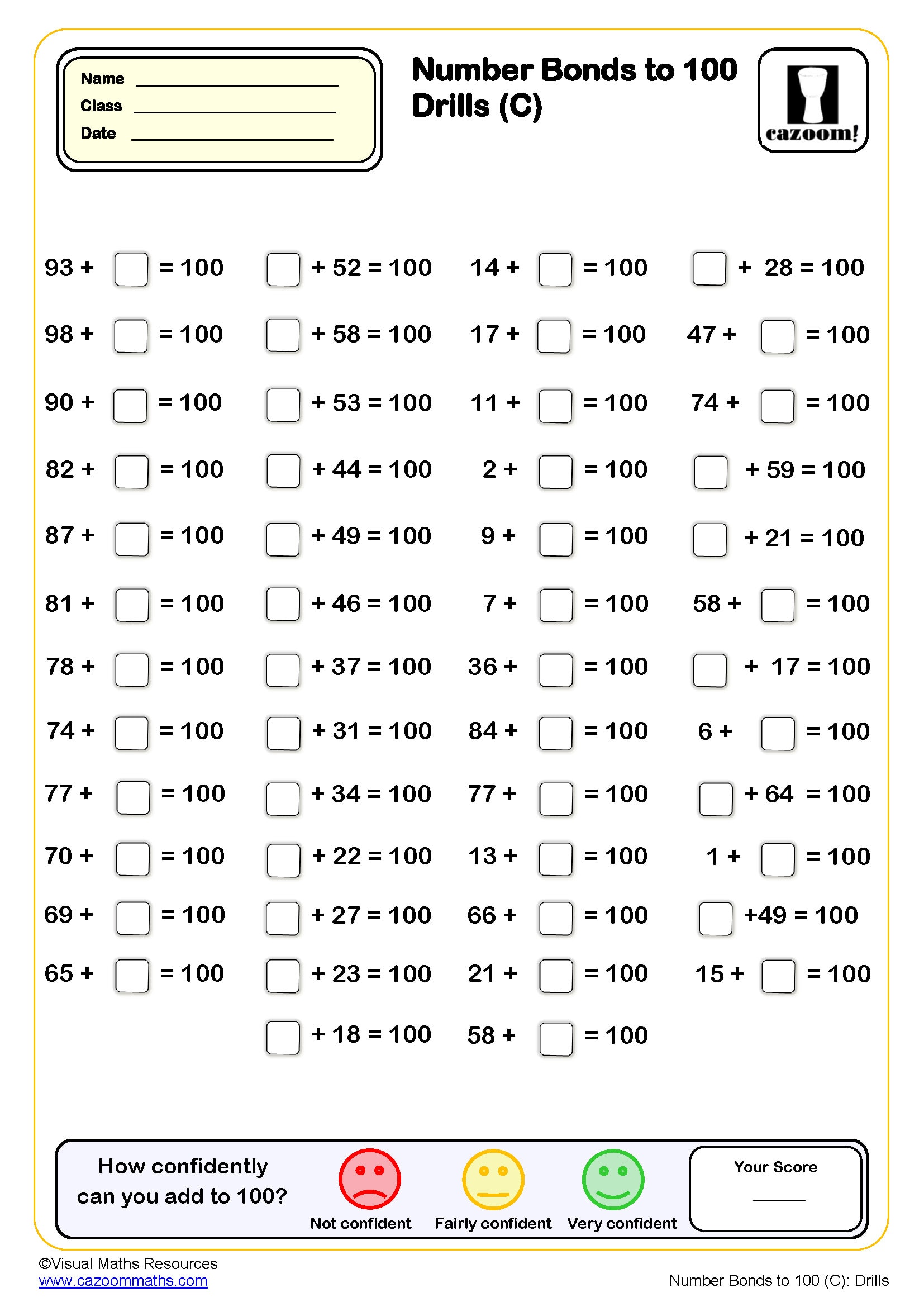
Number bond to 100 Drills (C) (50 questions)
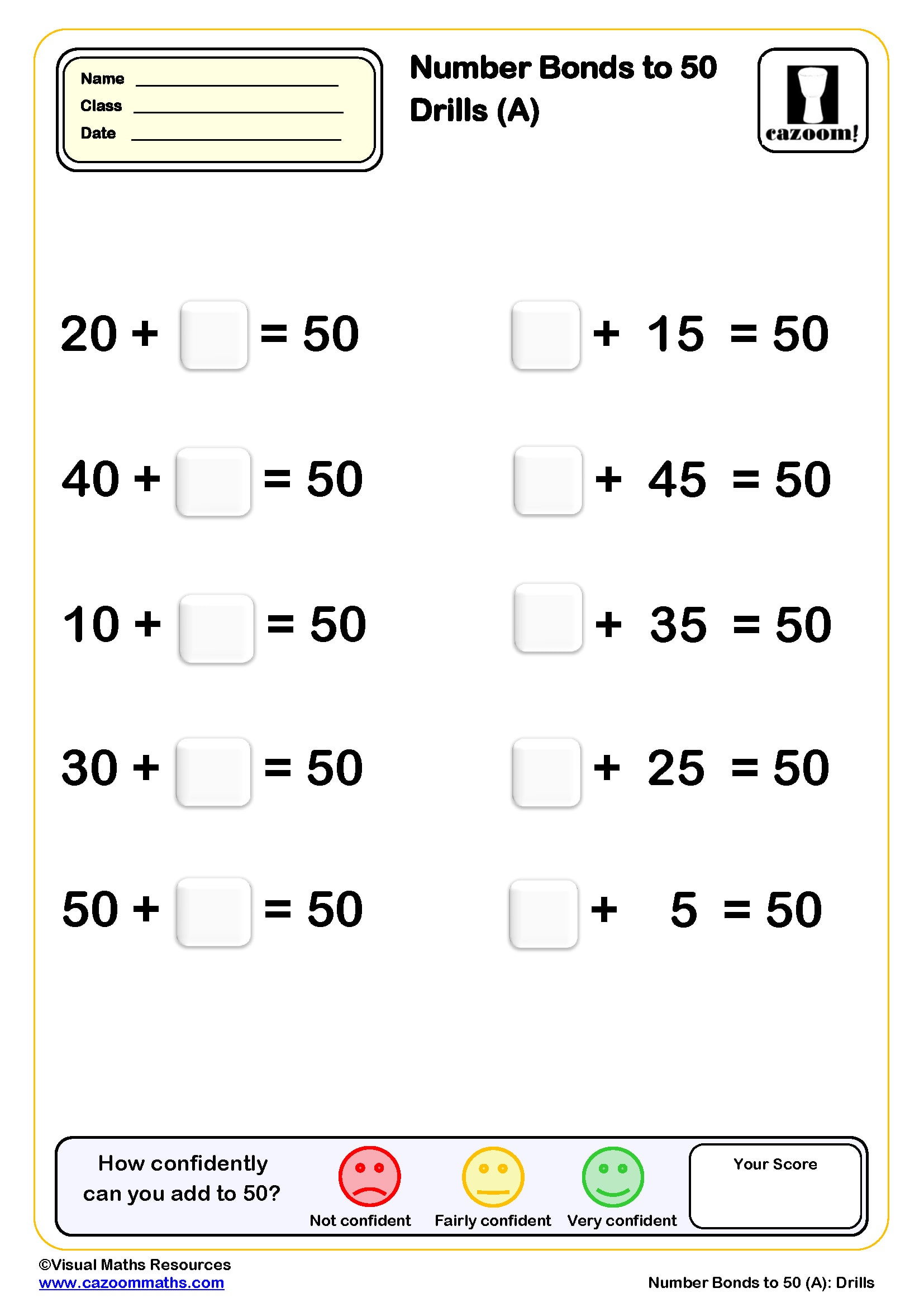
Number bond to 50 Drills (A) (10 questions)
Number bond to 50 Drills (A) (20 questions)
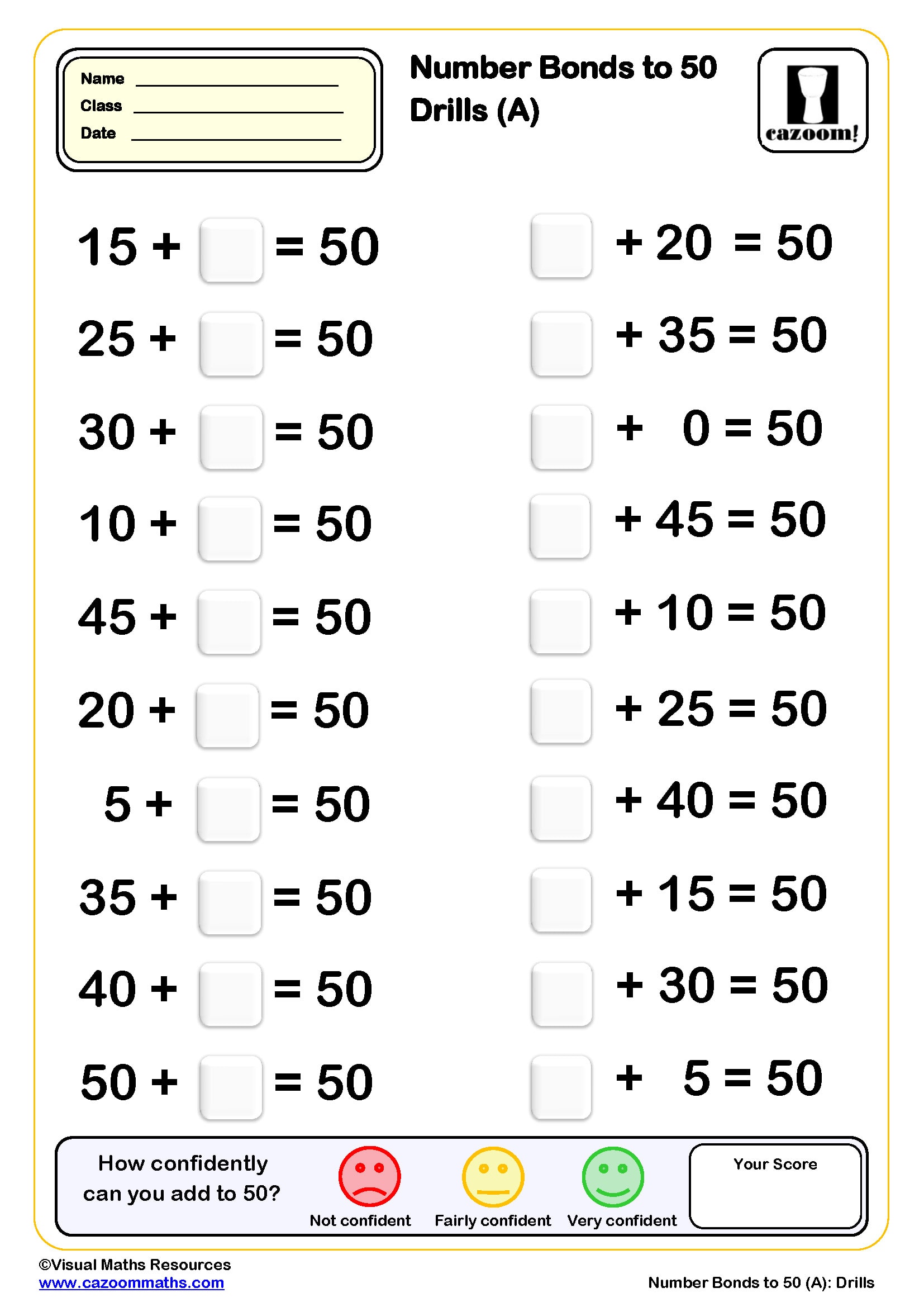
Number bond to 50 Drills (A) (50 questions)
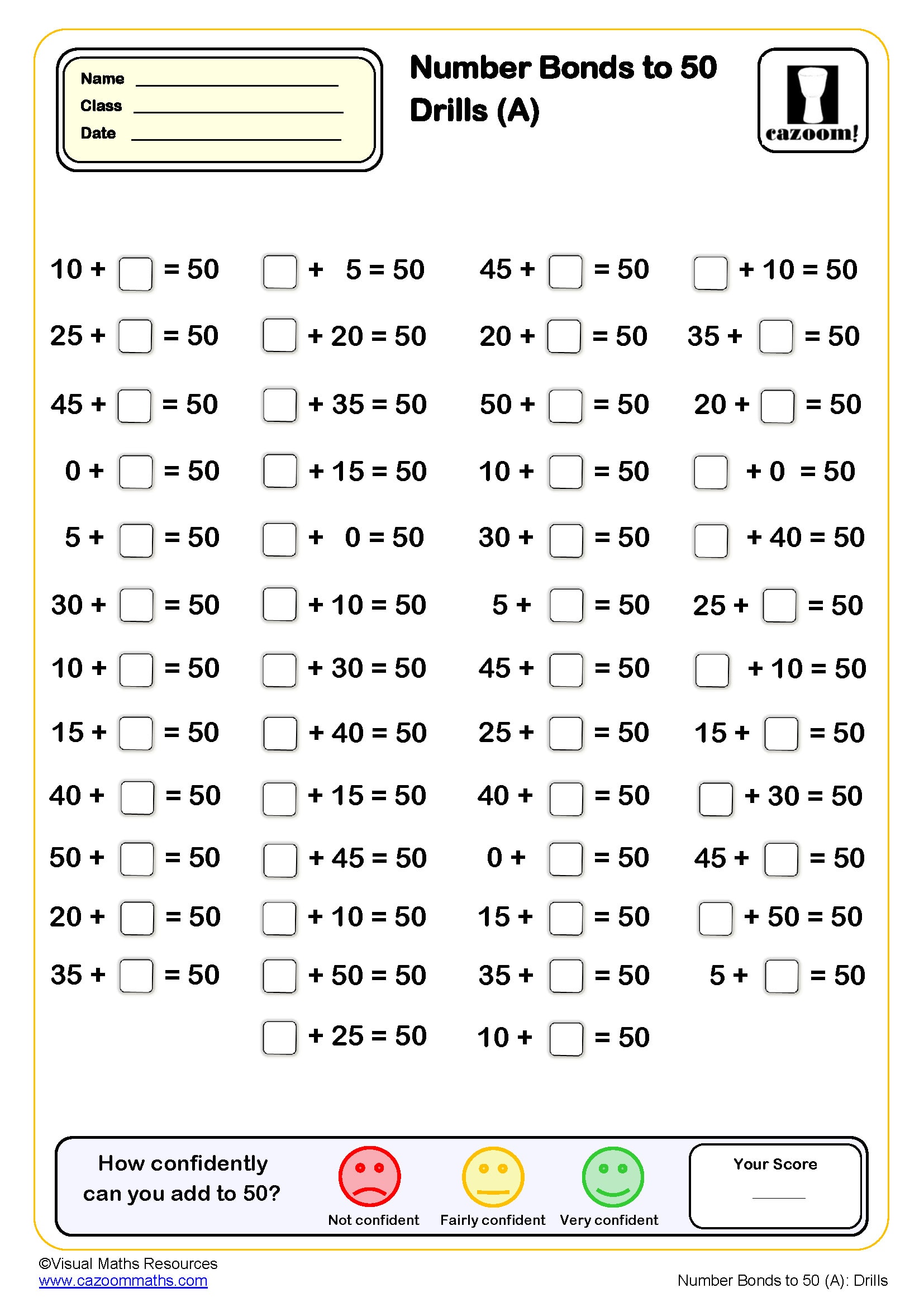
Number bond to 50 Drills (B) (10 questions)
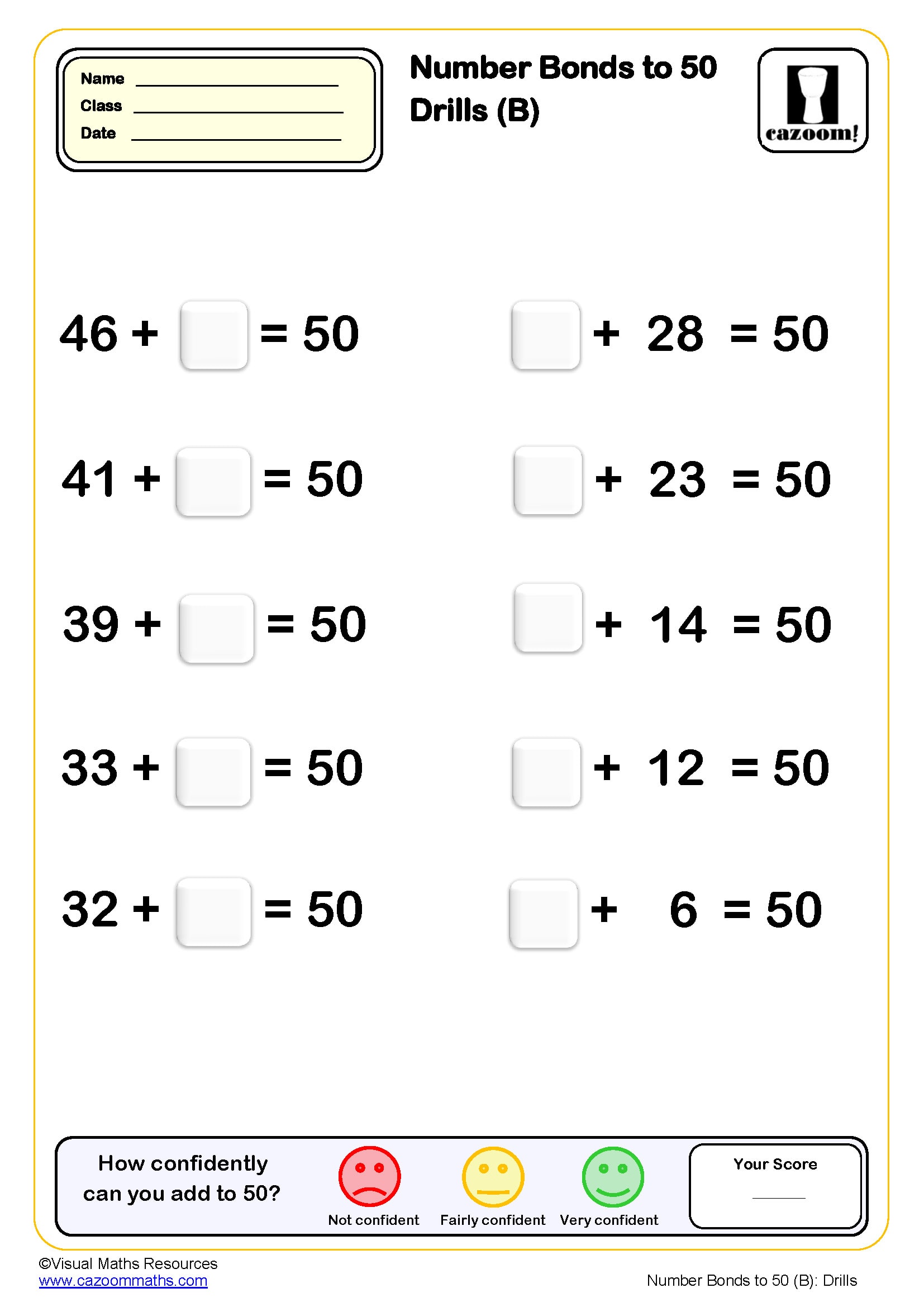
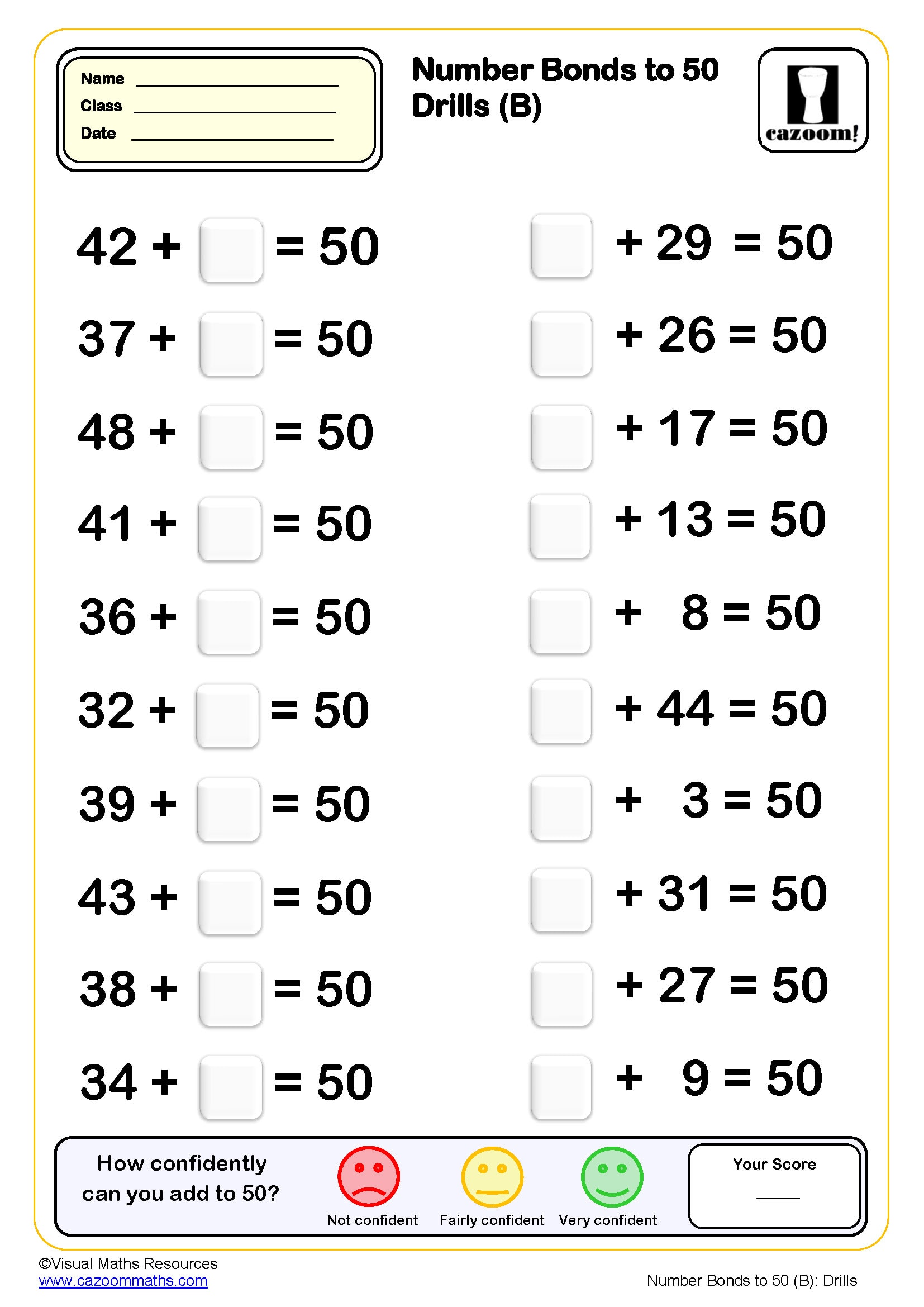
Number bond to 50 Drills (B) (20 questions)
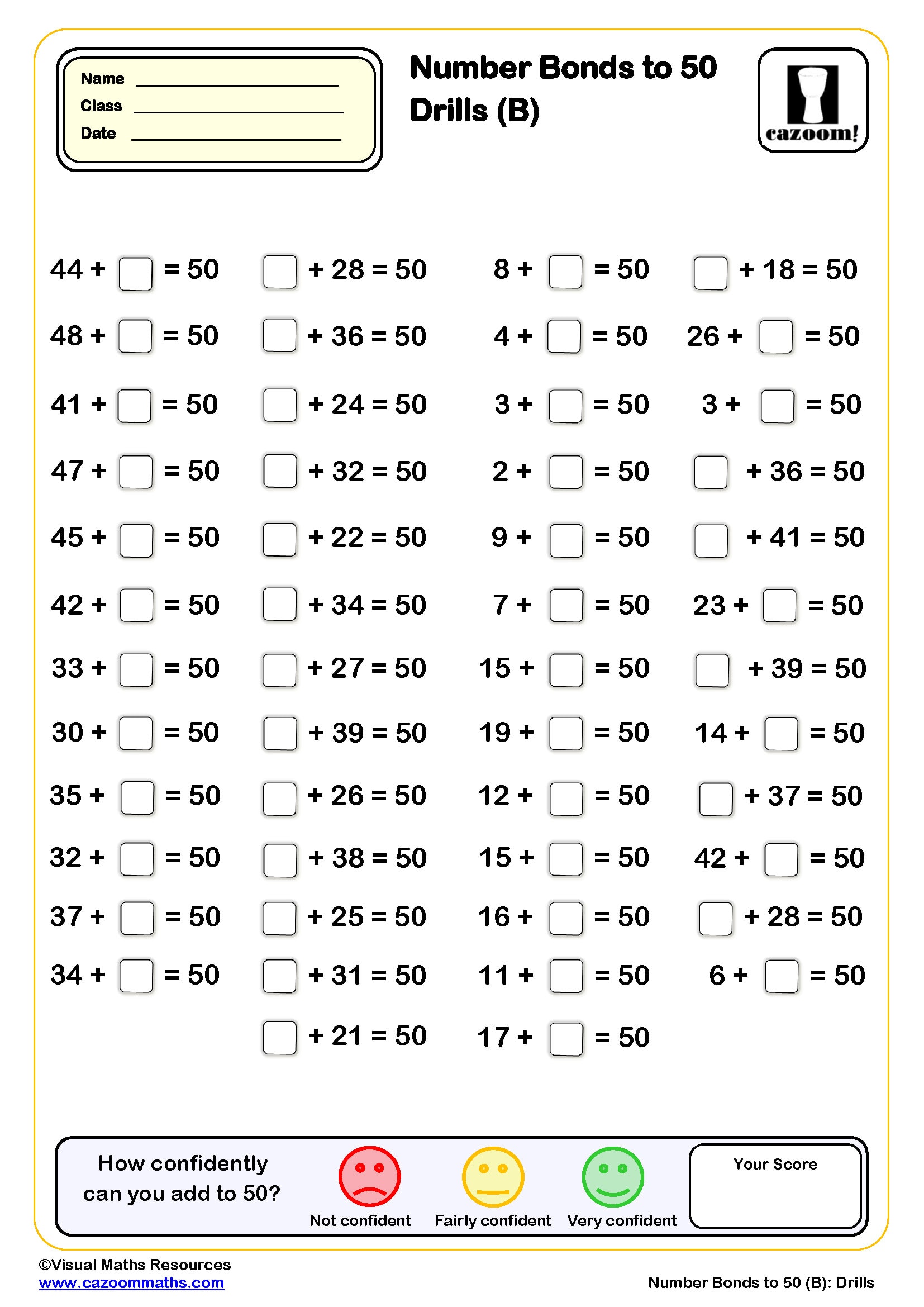
Number bond to 50 Drills (B) (50 questions)
All worksheets are created by the team of experienced teachers at Cazoom Maths.
What are number bonds over 20?
Number bonds over 20 extend the foundational understanding of part-whole relationships to larger numbers, typically focusing on bonds to 50 or 100. These relationships show how numbers can be split into two or more parts that combine to make a whole. For example, 30 and 20 make 50, or 45 and 15 make 60. In Year 2, children build on their secure knowledge of bonds to 10 and 20 to recognise patterns in larger numbers. Understanding that 3 + 7 = 10 helps them see that 30 + 70 = 100. This conceptual understanding is crucial for developing mental calculation strategies and underpins addition and subtraction methods throughout primary school. Number bonds over 20 also support children's understanding of place value and how tens and ones work together.
Which year group learns number bonds over 20?
Number bonds over 20 are primarily taught in Year 2 as part of the Key Stage 1 curriculum. By this stage, children have typically mastered number bonds to 10 and 20 and are ready to apply these patterns to larger numbers. The National Curriculum expects Year 2 pupils to recall and use addition and subtraction facts to 20 fluently, and to derive and use related facts up to 100. Our worksheets specifically support Year 2 teachers in meeting these expectations by providing targeted practice with numbers beyond 20. This builds the foundation for more complex mental arithmetic in Key Stage 2, where children will continue to use these relationships when working with increasingly larger numbers and more sophisticated calculation methods.
How do you teach number bonds to 50 and 100?
Teaching number bonds to 50 and 100 relies heavily on connecting to known facts and recognising patterns. Start by demonstrating how bonds to 10 scale up: if children know that 2 + 8 = 10, they can see that 20 + 80 = 100. Use visual representations like hundred squares or ten frames to show the relationship between parts and the whole. Practical activities with base ten equipment help children physically partition numbers into tens. Regular practice identifying the missing part in equations (such as 35 + ___ = 50) develops fluency. Our worksheets progress from supported examples with visual aids to more abstract number sentences, allowing children to practise in varied contexts. Encourage children to explain their reasoning and spot patterns, as this deepens understanding rather than relying solely on memorisation.
Do the worksheets include answers?
Yes, every worksheet in this collection comes with a complete answer sheet. This feature makes our number bonds over 20 resources particularly useful for busy teachers and parents, saving valuable time that would otherwise be spent checking work. The answer sheets allow pupils to self-mark during independent practice sessions, promoting mathematical independence and immediate feedback. For teachers, they streamline the marking process and enable quick identification of misconceptions that need addressing. Parents supporting home learning can confidently check their child's understanding without needing to work through each calculation themselves. All worksheets are provided as downloadable PDFs, so you can print multiple copies as needed or display them on interactive whiteboards during whole-class teaching. The answer sheets maintain the same layout as the main worksheet for easy reference.