KS1 Part Whole Models Worksheets
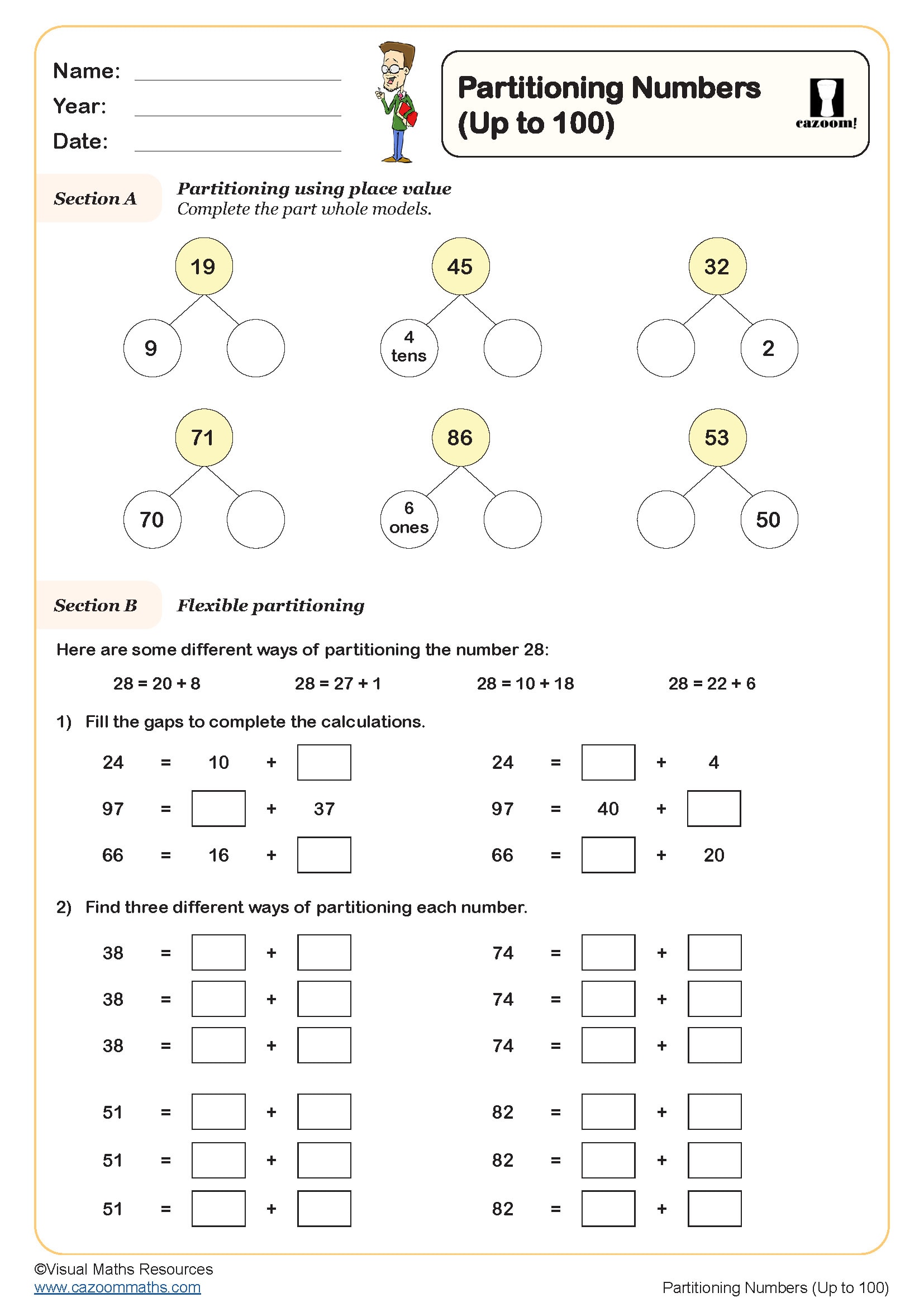
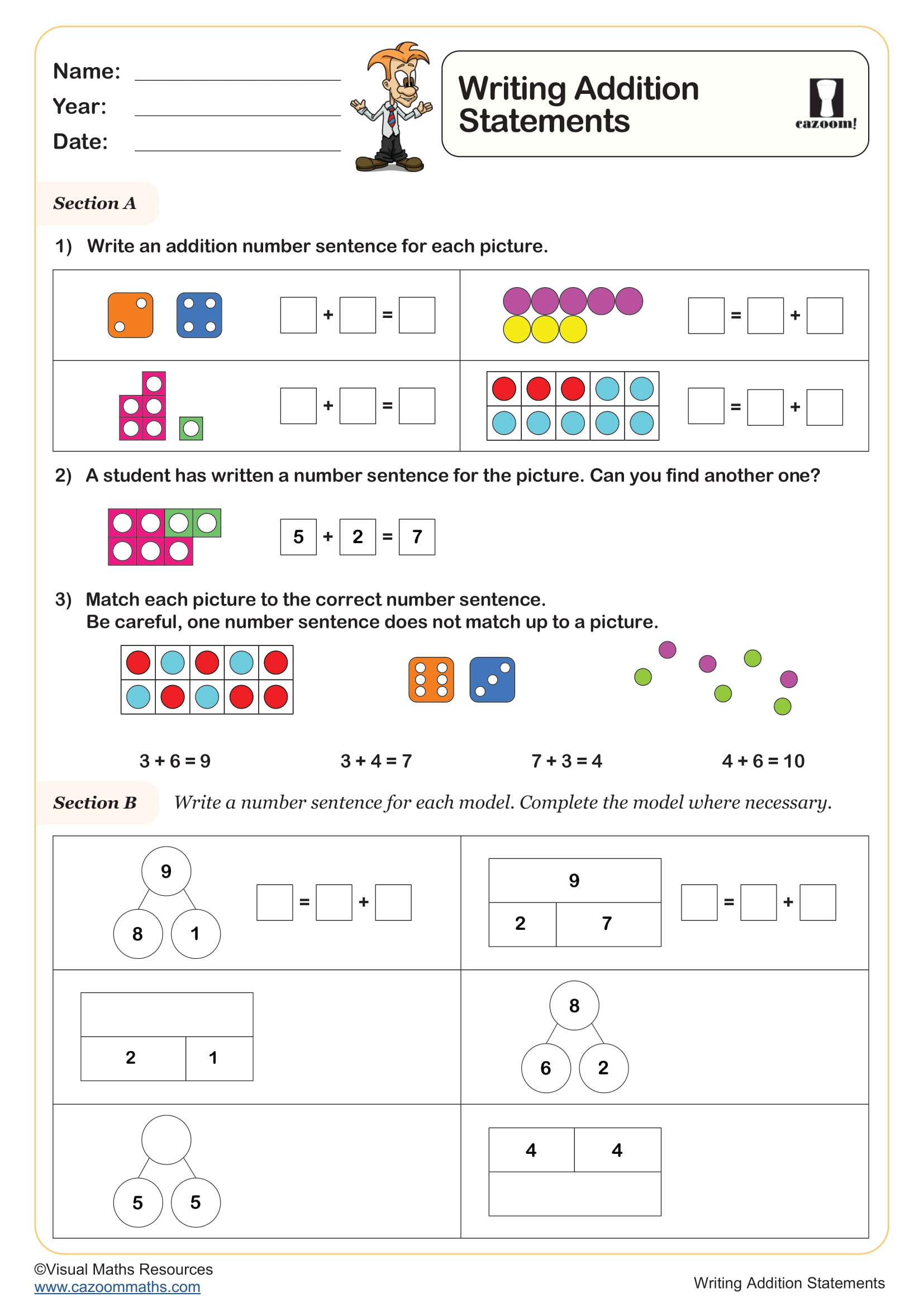
All worksheets are created by the team of experienced teachers at Cazoom Maths.
What Are Part Whole Models in KS1 Maths?
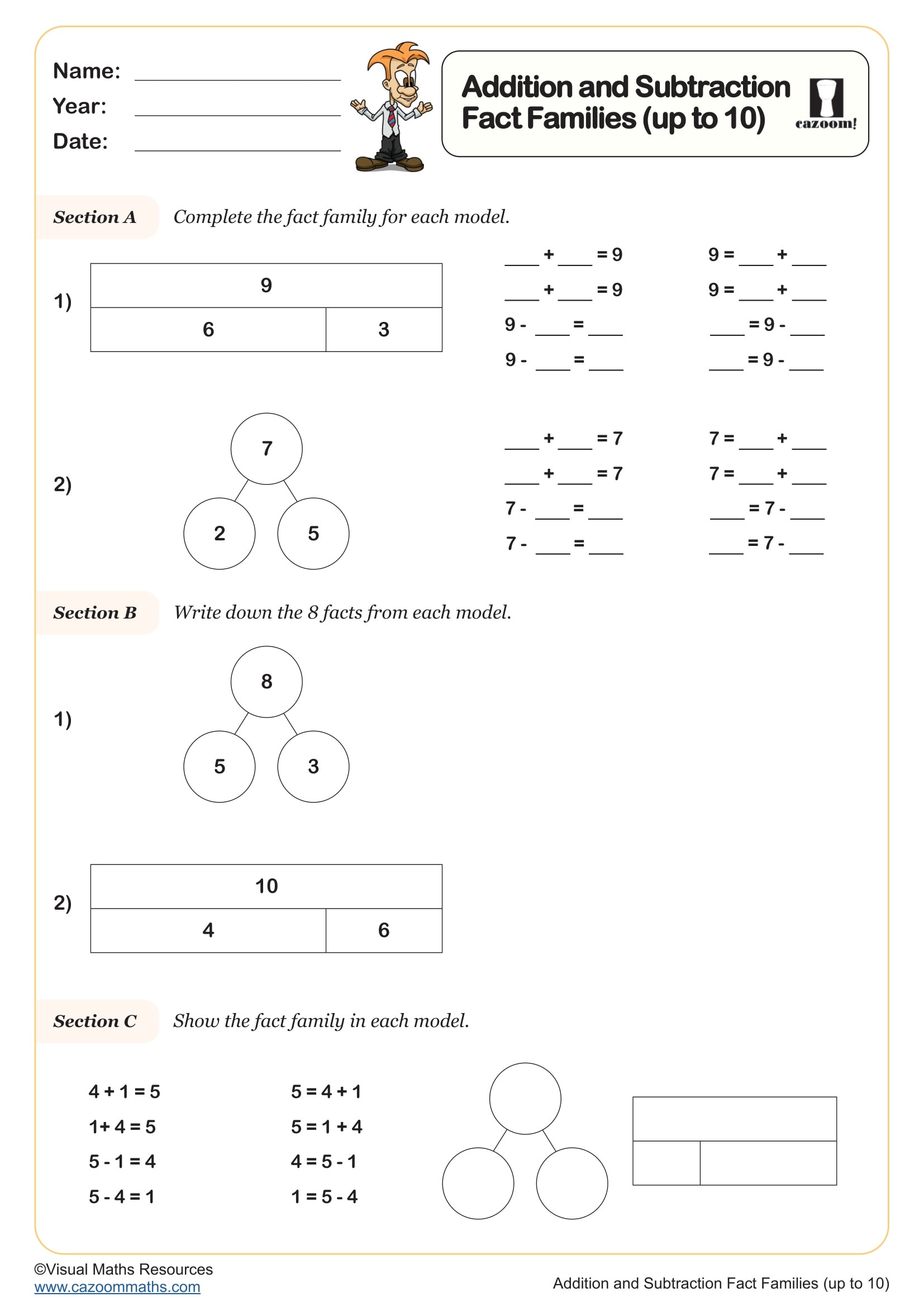
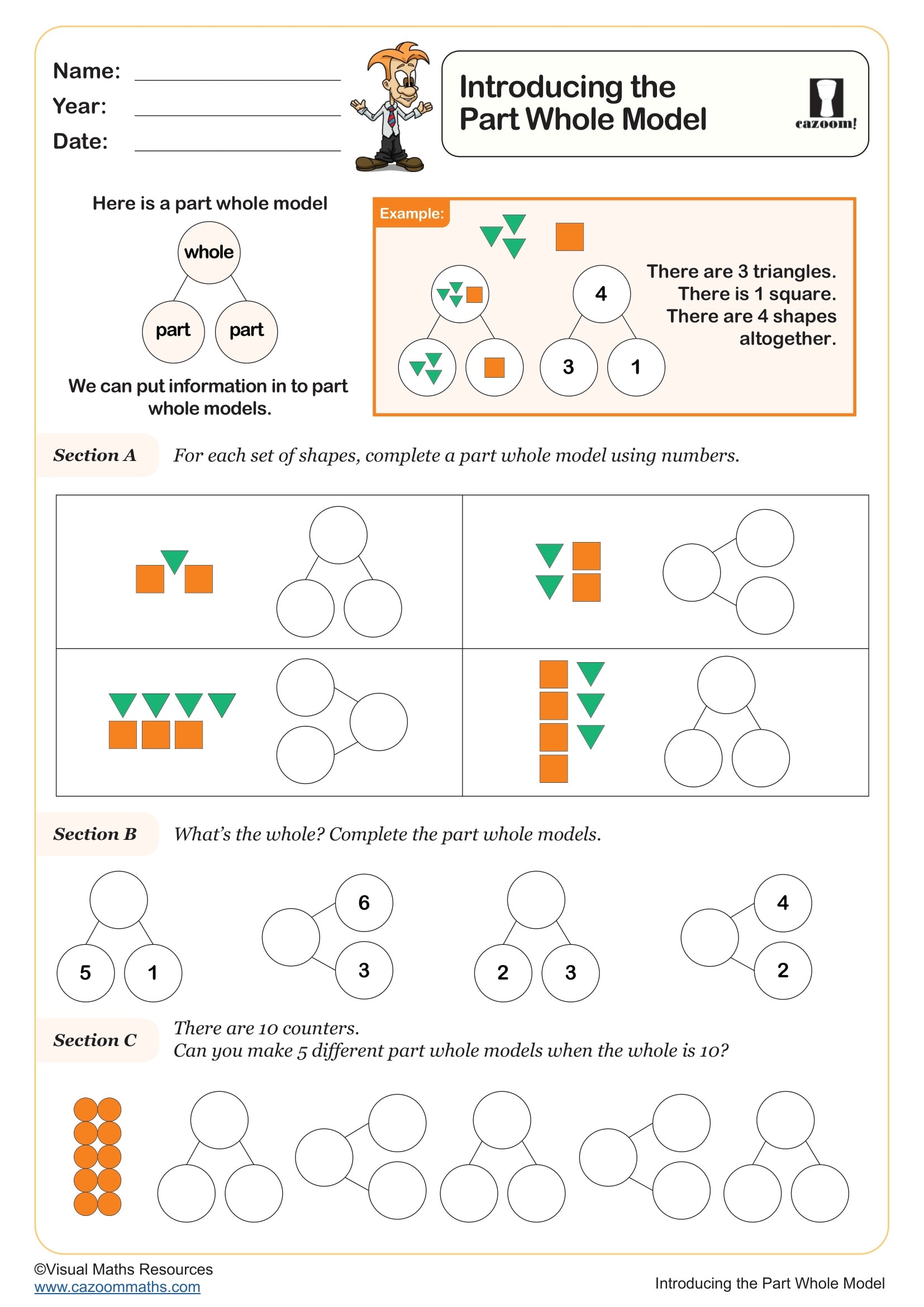
Part whole models are visual tools that show the relationship between numbers and their component parts. Typically drawn as circles or rectangles divided into sections, they display a 'whole' number at the top with two or more 'parts' underneath. For example, the number 8 might be shown as a whole, with parts of 5 and 3 below it, helping children see that 5 + 3 = 8 and that 8 can be partitioned into 5 and 3.
This concrete visual approach supports children in understanding that numbers are flexible and can be broken down in multiple ways. Part whole models bridge the gap between physical manipulatives and abstract number sentences, giving pupils a consistent structure for thinking about addition, subtraction, and the composition of numbers throughout their early mathematical development.
Which Year Groups Use Part Whole Models?
Part whole models are introduced in Year 1 and continue through Year 2 as part of the Key Stage 1 curriculum. In Year 1, children use these models to represent numbers within 20, exploring different ways to partition single and teen numbers. They begin to see how one number can be made from combining two others, building their understanding of addition as combining parts to make a whole.
By Year 2, pupils work with larger numbers and use part whole models more fluently to solve problems involving addition and subtraction within 100. The models help them identify missing parts, understand inverse operations, and develop mental calculation strategies. This visual representation remains a valuable tool throughout KS1, supporting children as they transition from concrete resources to more abstract mathematical thinking.
How Do Children Find Missing Parts Using Part Whole Models?
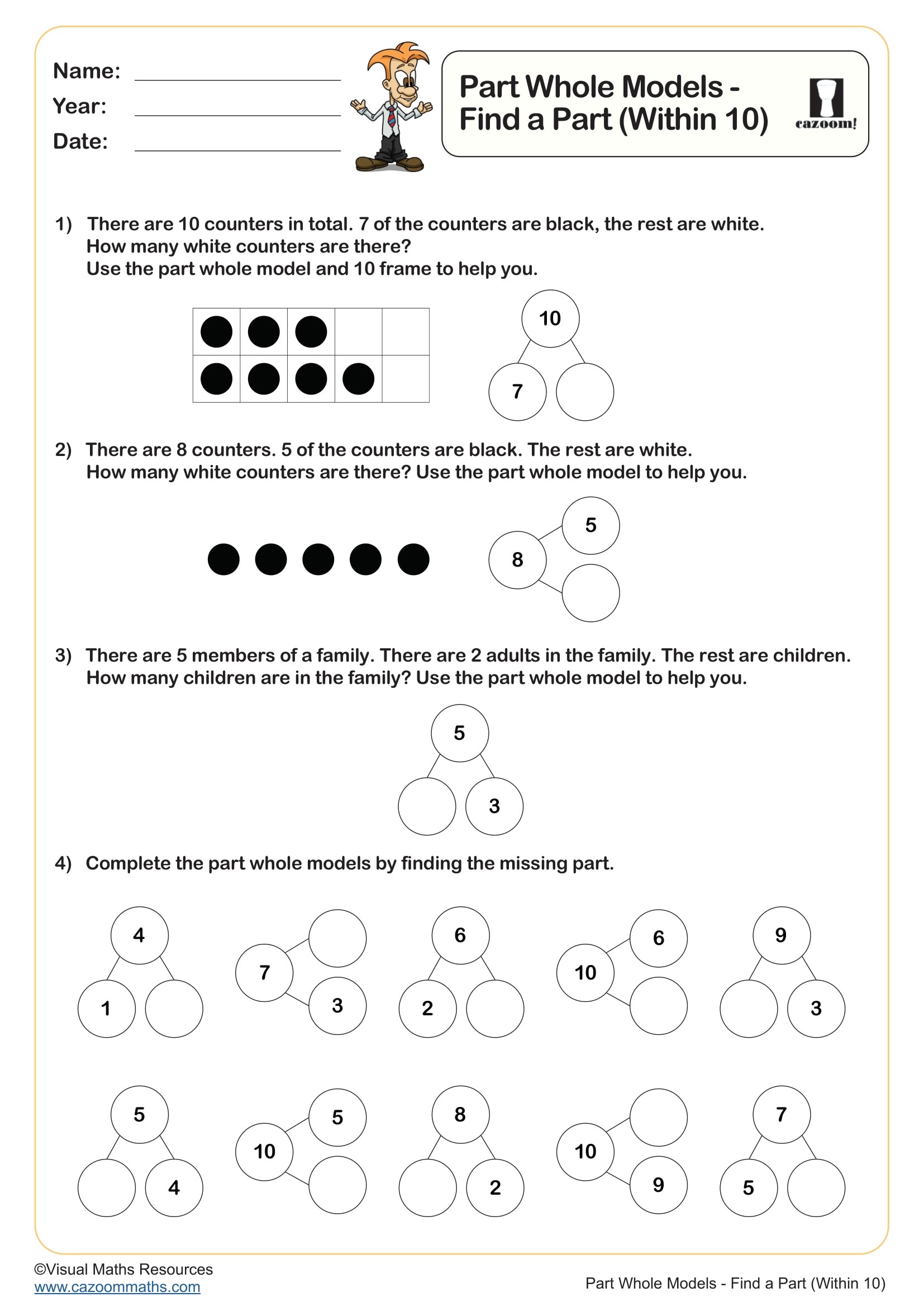
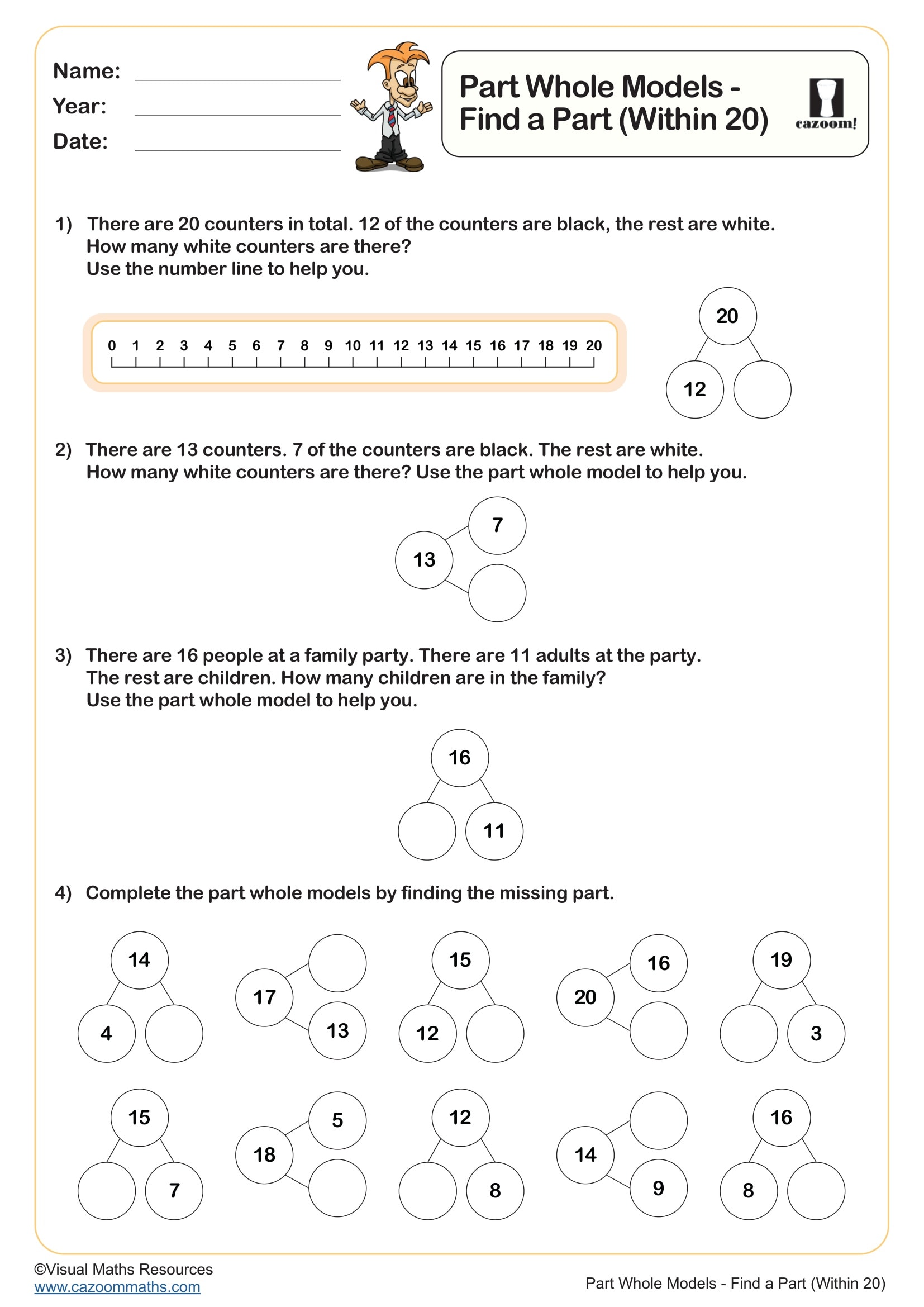
Finding missing parts is a key skill developed through part whole model work. When given the whole and one part, children learn to work out what the missing part must be. For instance, if the whole is 10 and one part is 6, pupils calculate that the other part must be 4. This directly supports their understanding of subtraction as finding the difference or missing part.
These problems build problem-solving skills and logical reasoning. Children learn to ask themselves, 'What do I need to add to this part to make the whole?' This questioning develops their understanding of number bonds and prepares them for more complex missing number problems. The visual structure of the model helps children organise their thinking, making abstract calculations more accessible and reducing cognitive load during early learning.
What's Included in These Part Whole Model Worksheets?
Each worksheet in this collection includes carefully structured questions that progress in difficulty, giving pupils repeated practice with part whole representations. Activities range from completing given models with missing numbers to drawing their own models to represent number sentences. Questions cover finding missing parts, identifying different ways to partition numbers, and connecting models to addition and subtraction calculations.
All worksheets come with complete answer sheets, allowing for quick marking and enabling children to self-check their work during independent practice. Available as downloadable PDFs, these resources fit easily into daily maths lessons, intervention sessions, or homework. The structured format means pupils develop familiarity with the model type, building confidence as they work through increasingly challenging number problems at their own pace.