KS1 Properties of Shapes Worksheets
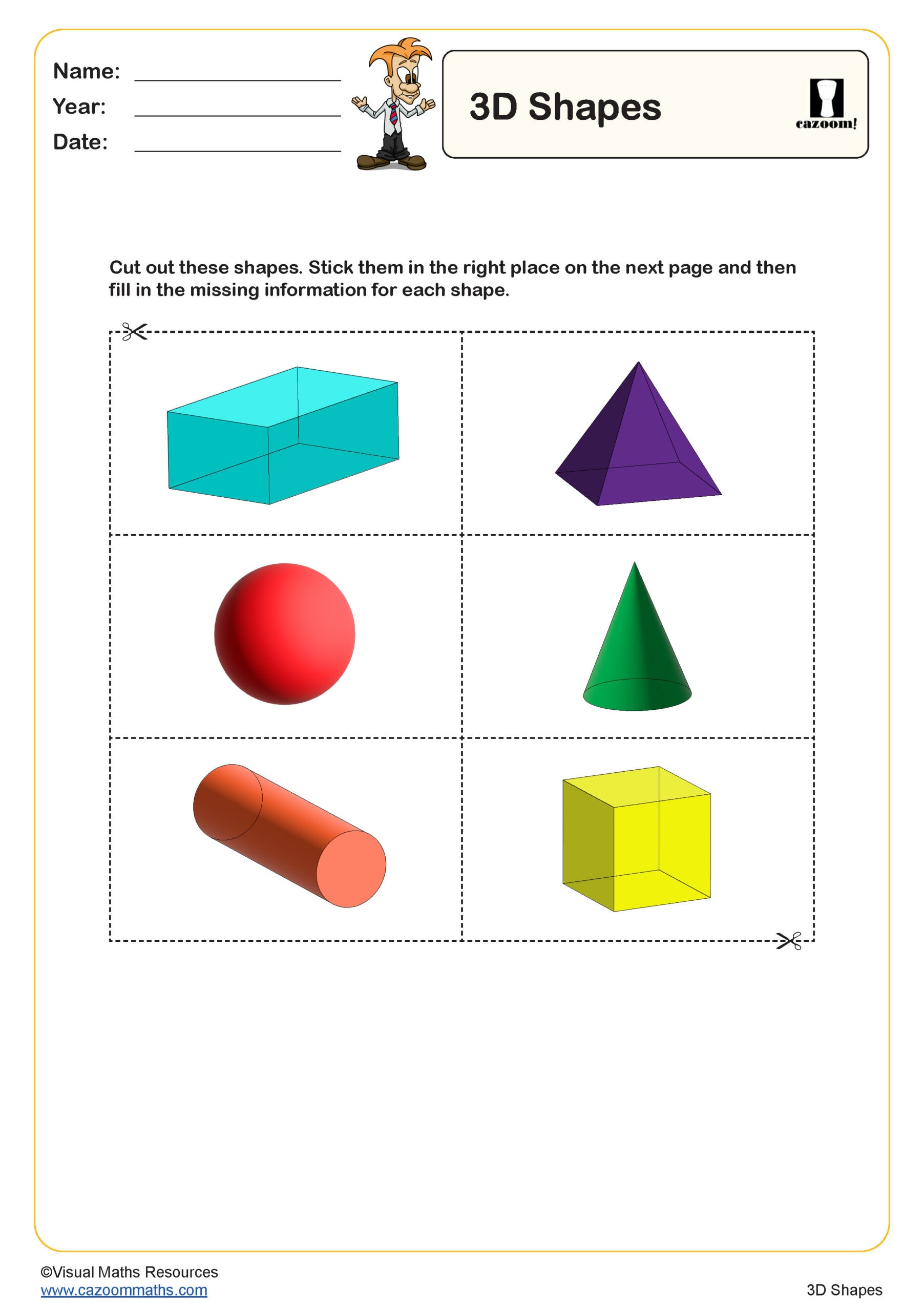
3D Shapes
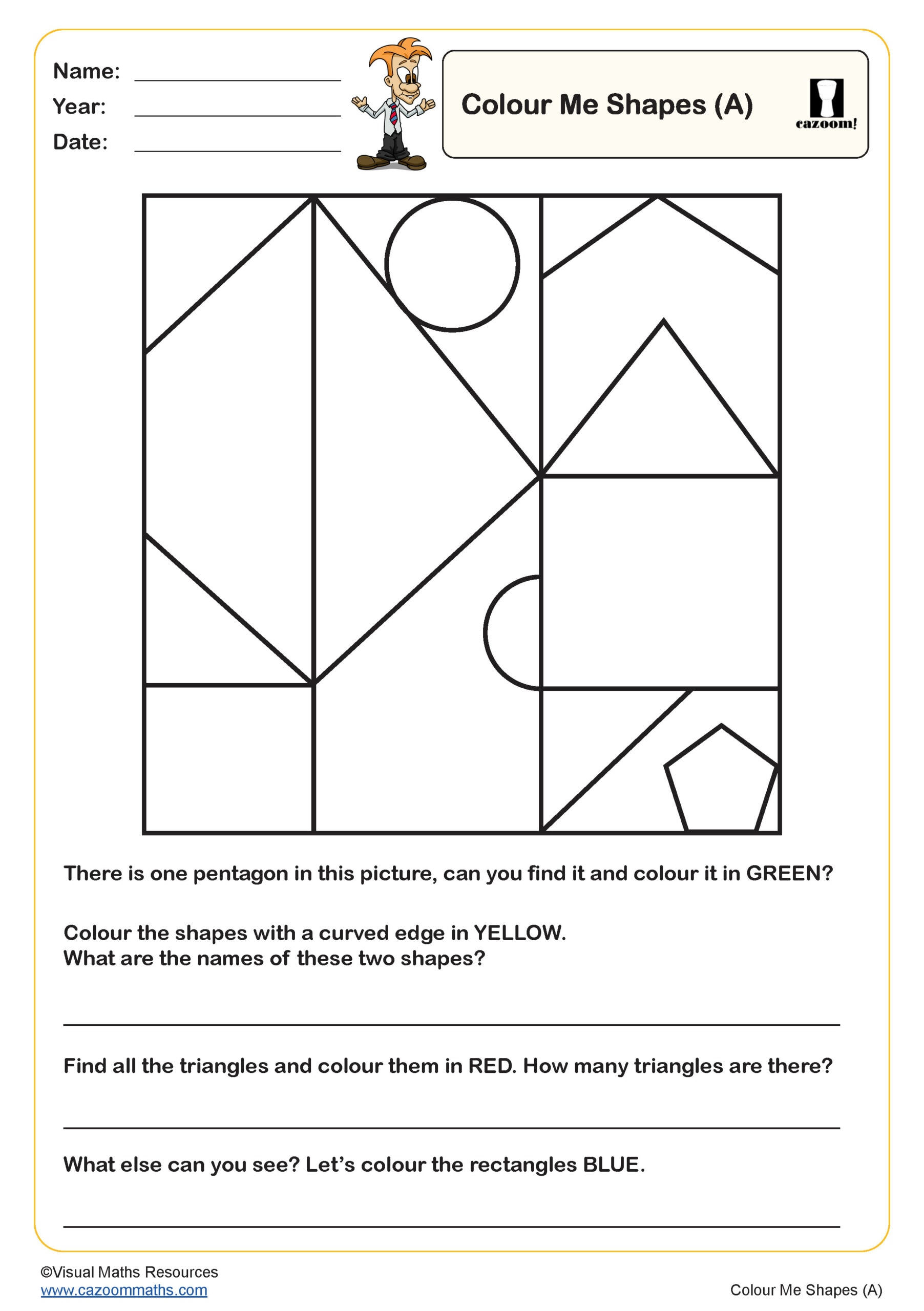
Colour Me Shapes (A)
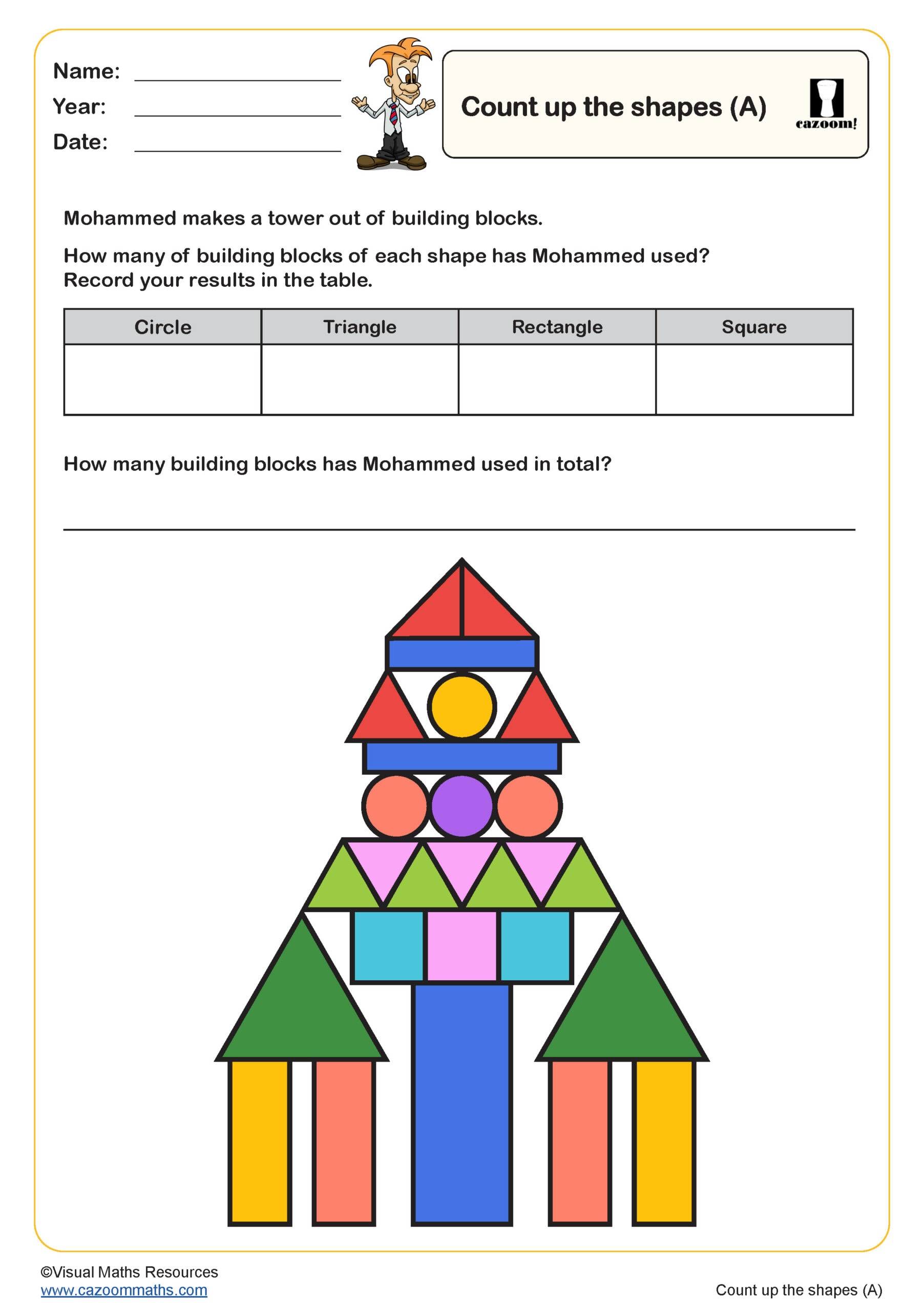
Count up the Shapes (A)
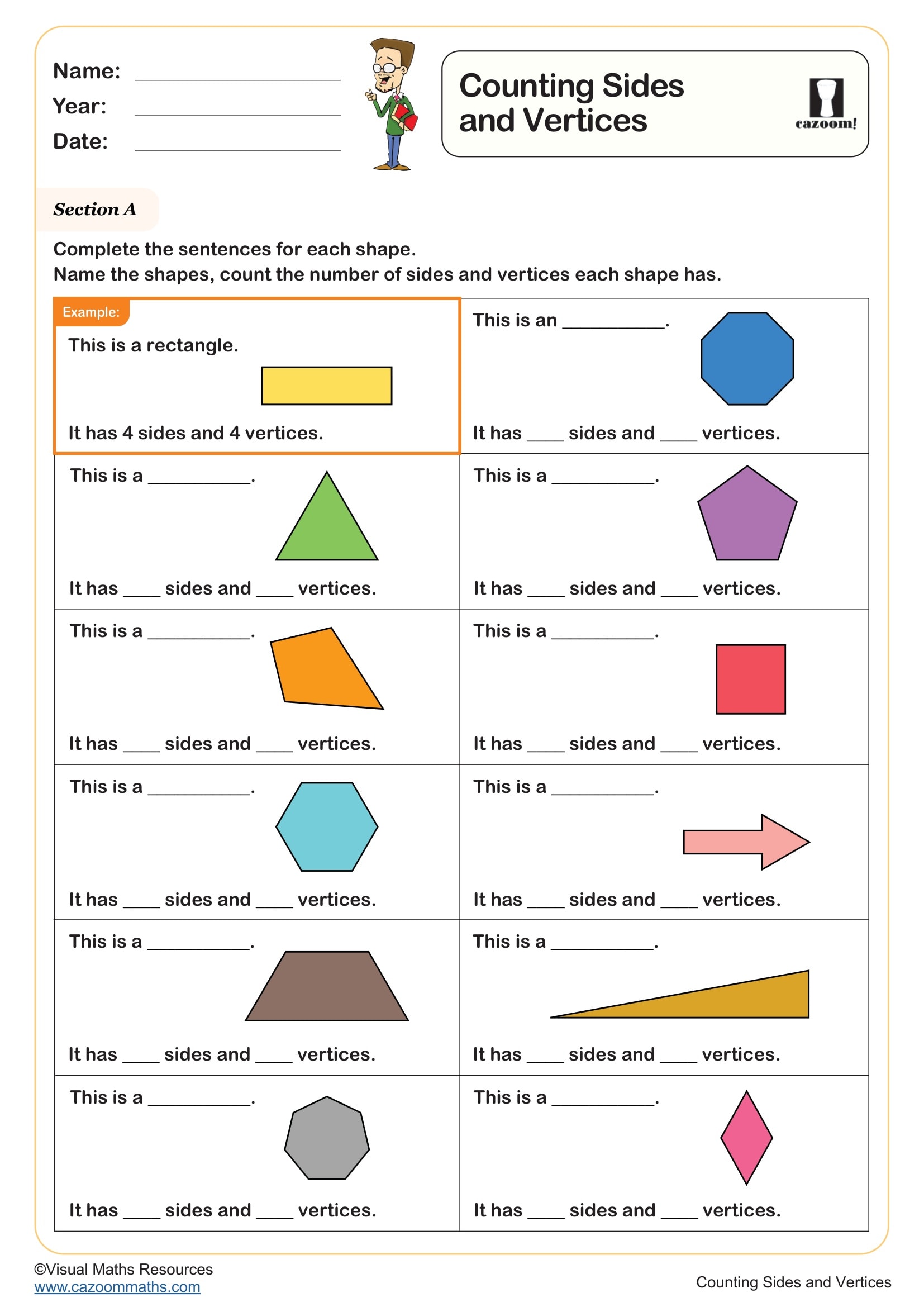
Counting Sides and Vertices
Draw 2D Shapes (A)

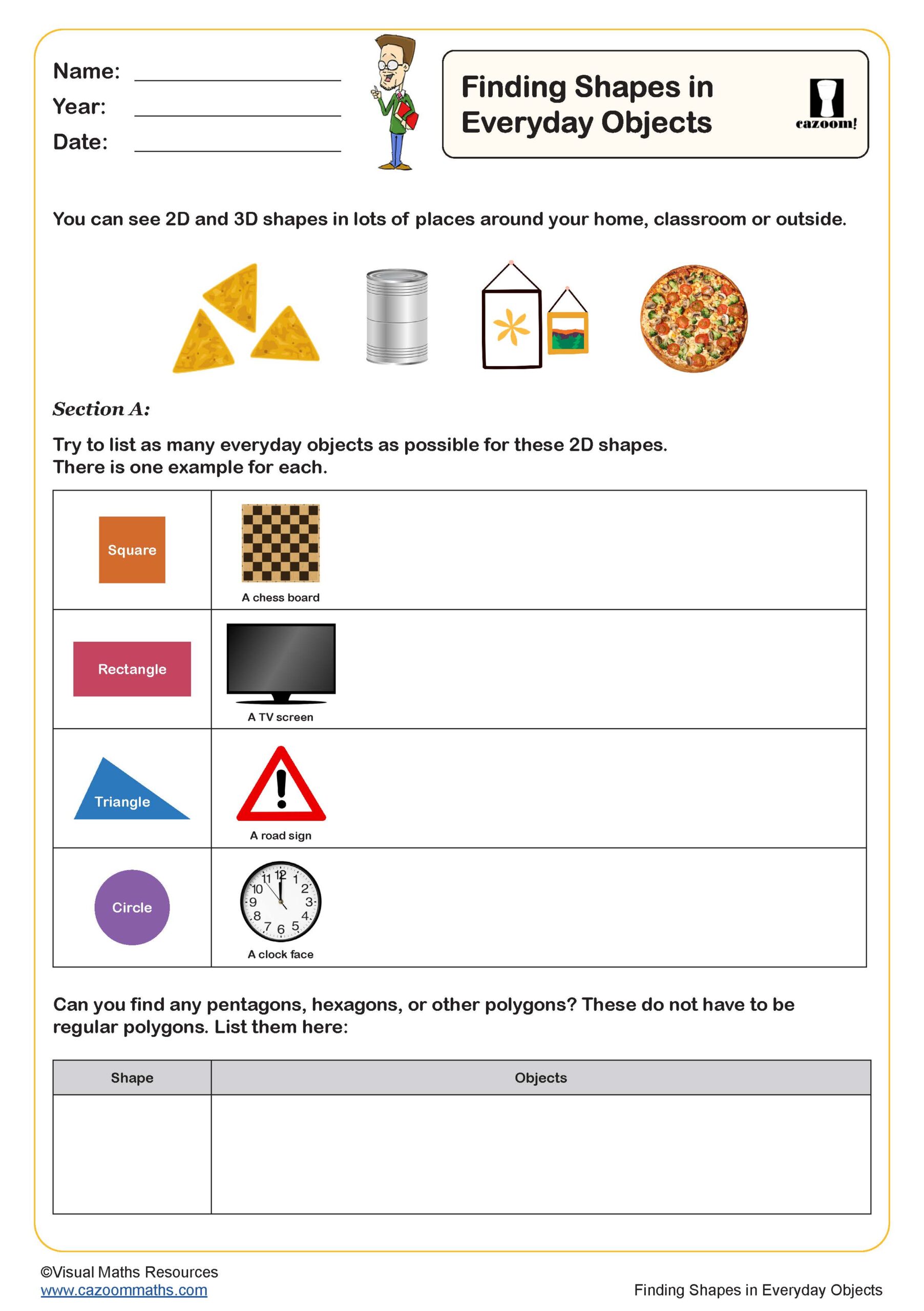
Finding Shapes In Everyday Objects
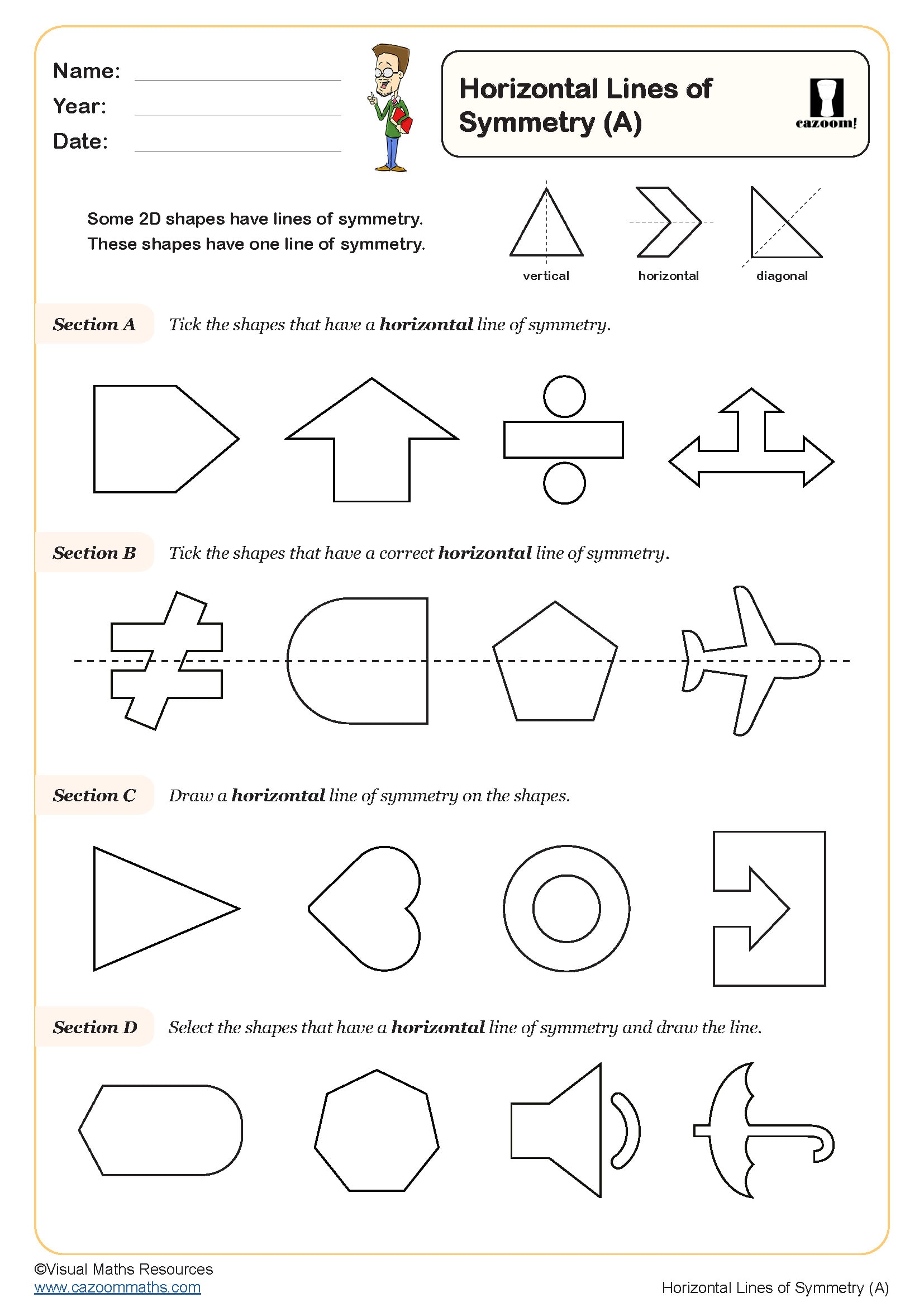
Horizontal Lines of Symmetry (A)
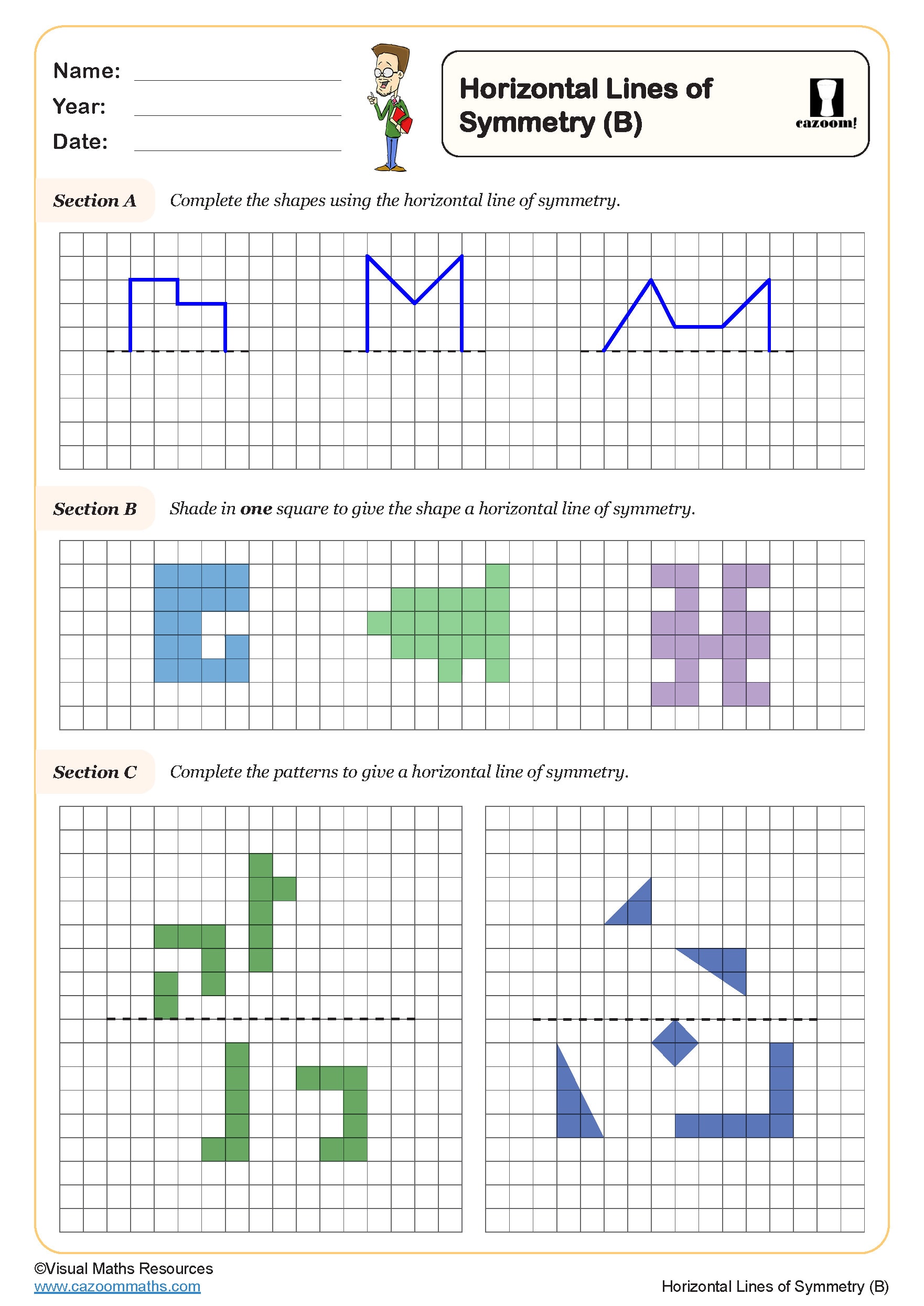
Horizontal Lines of Symmetry (B)
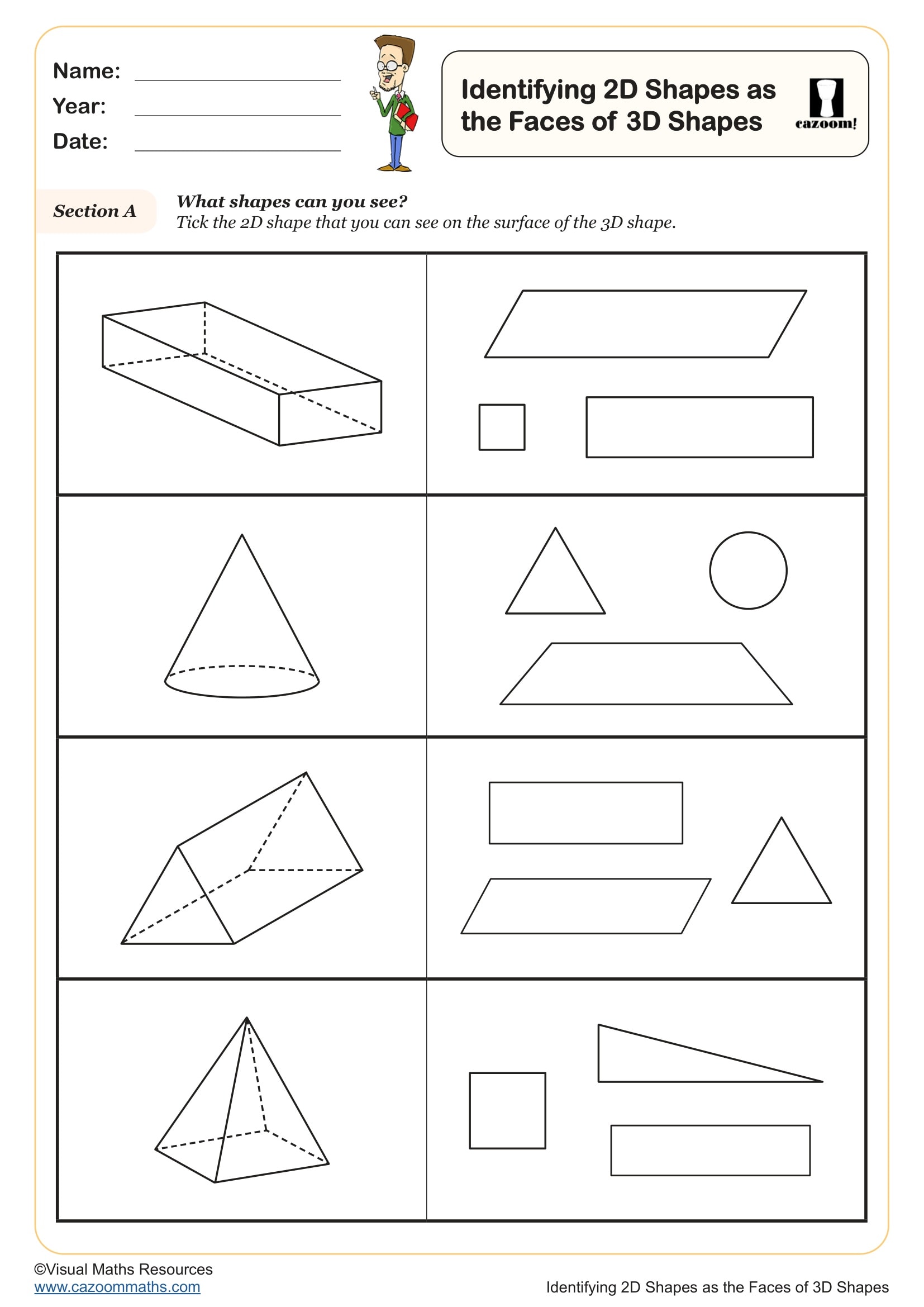
Identifying 2D Shapes as the Faces of 3D Shapes
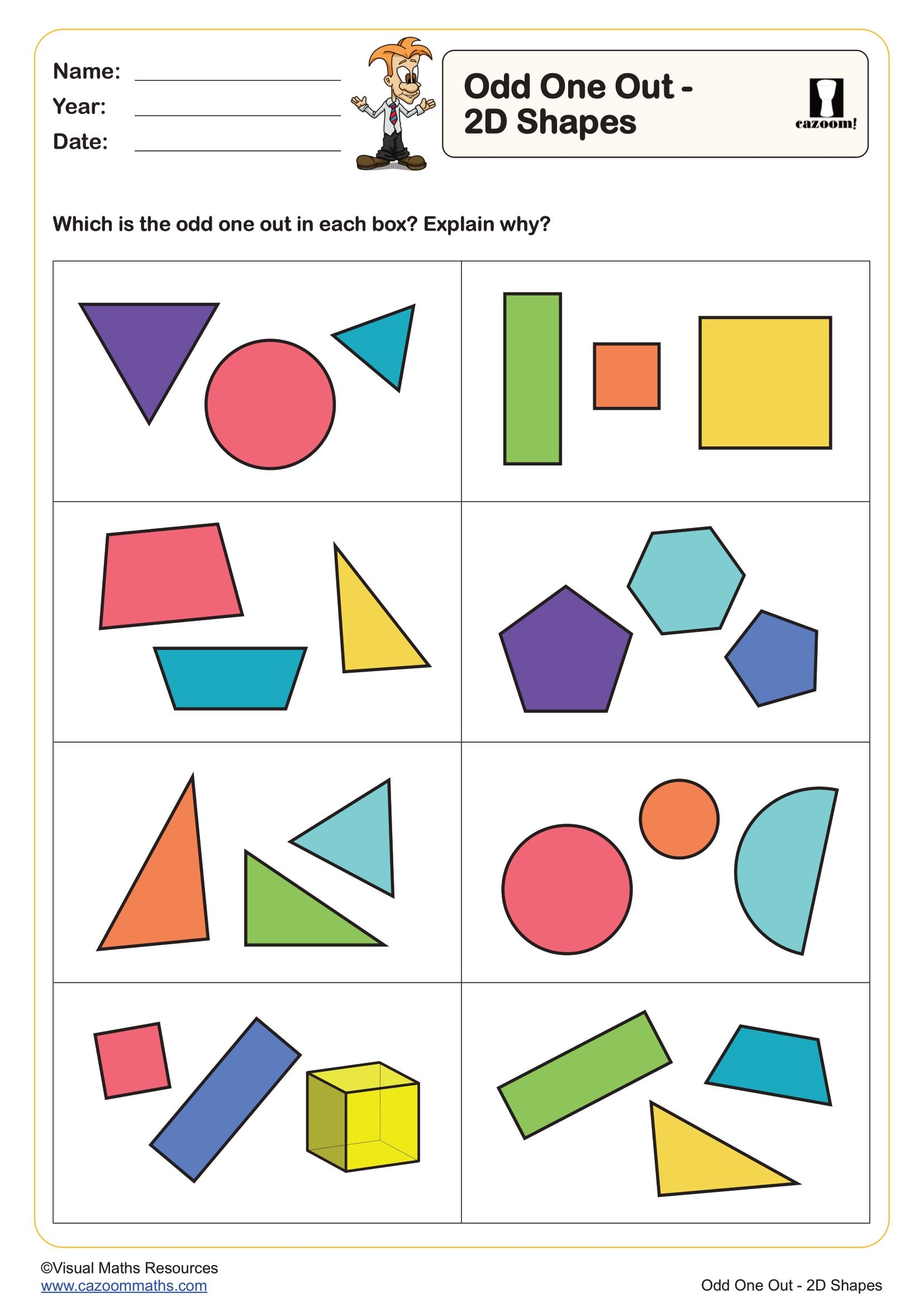
Odd One Out - 2D Shapes
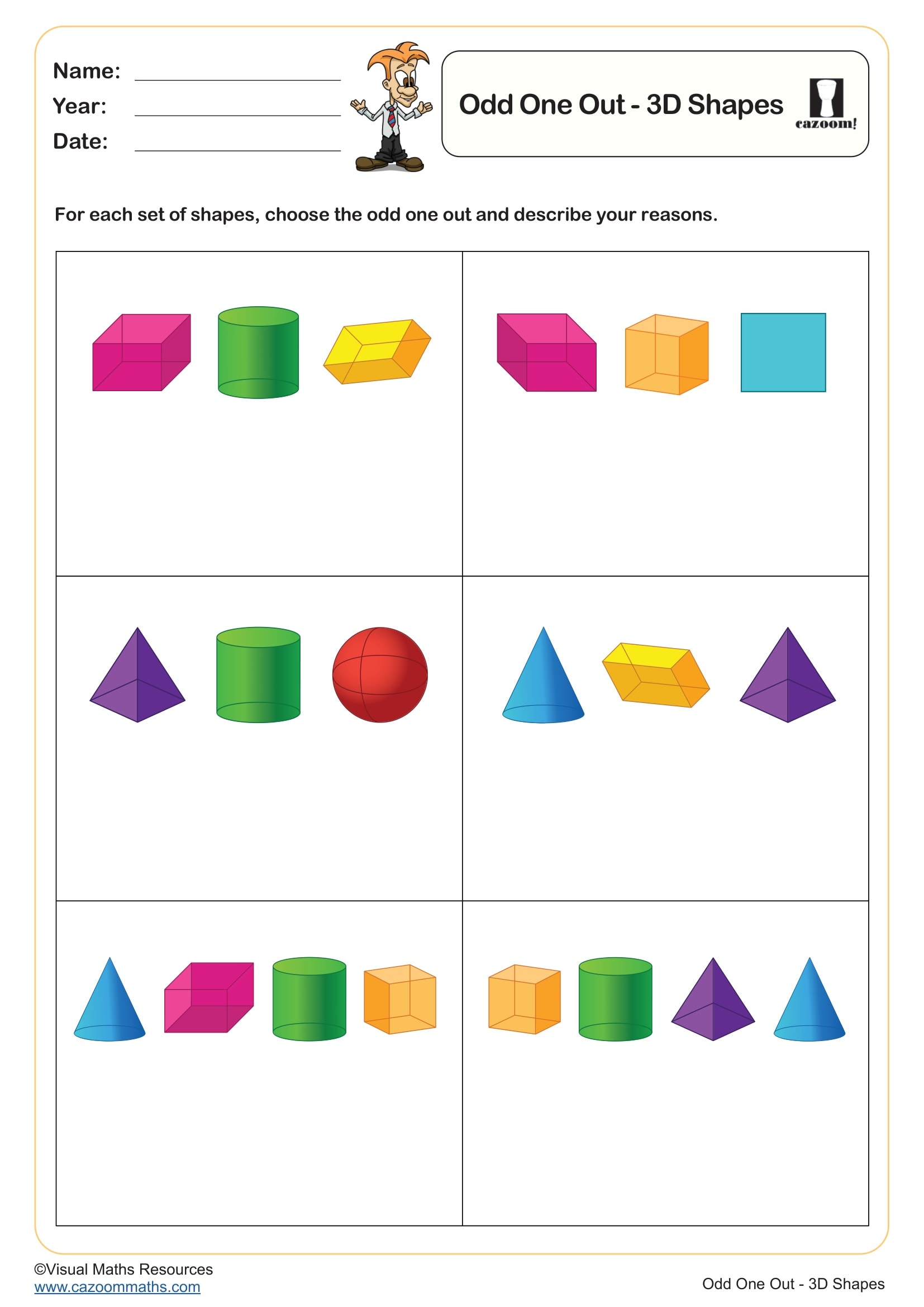
Odd One Out 3D Shapes
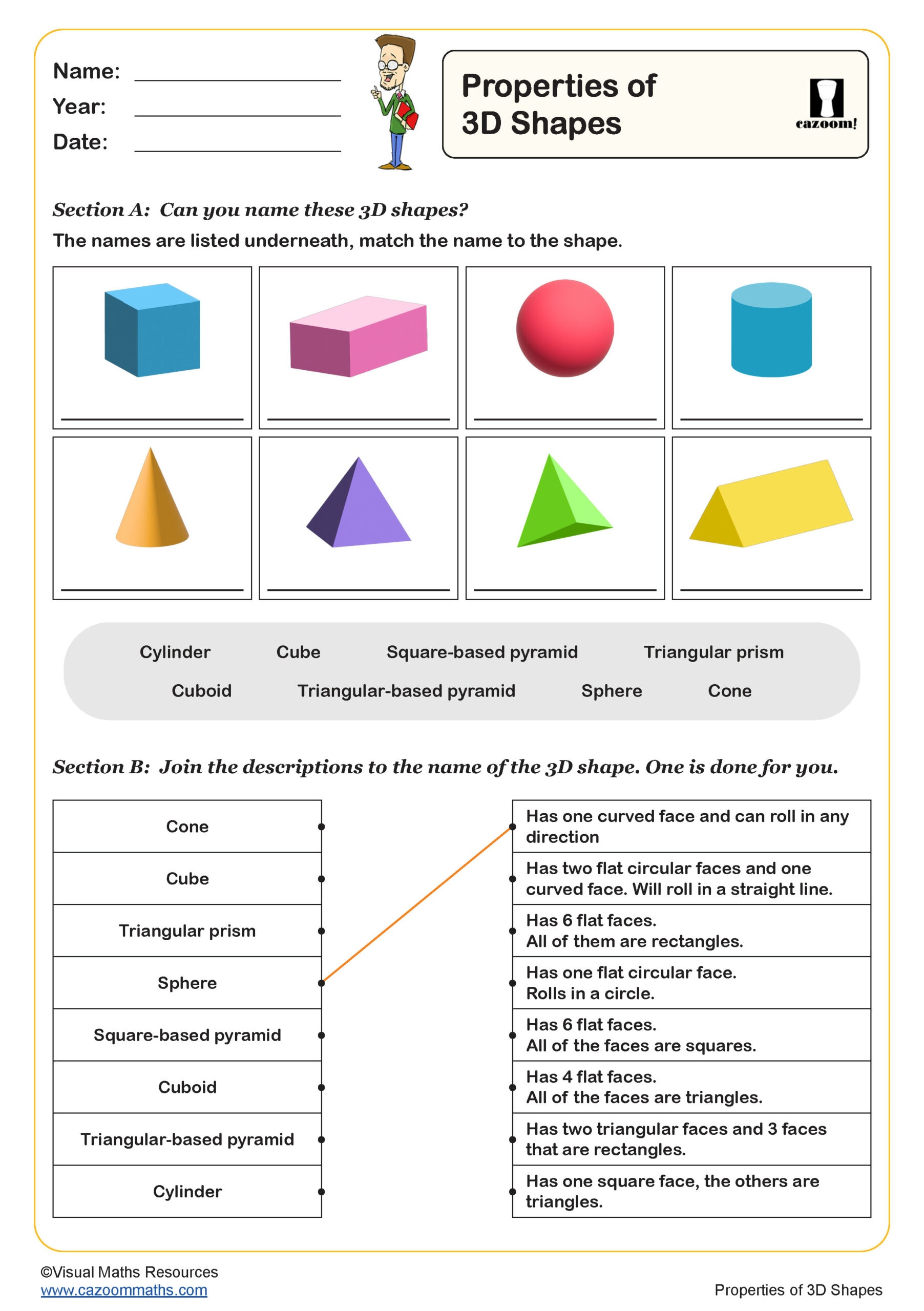
Properties of 3D Shapes (A)
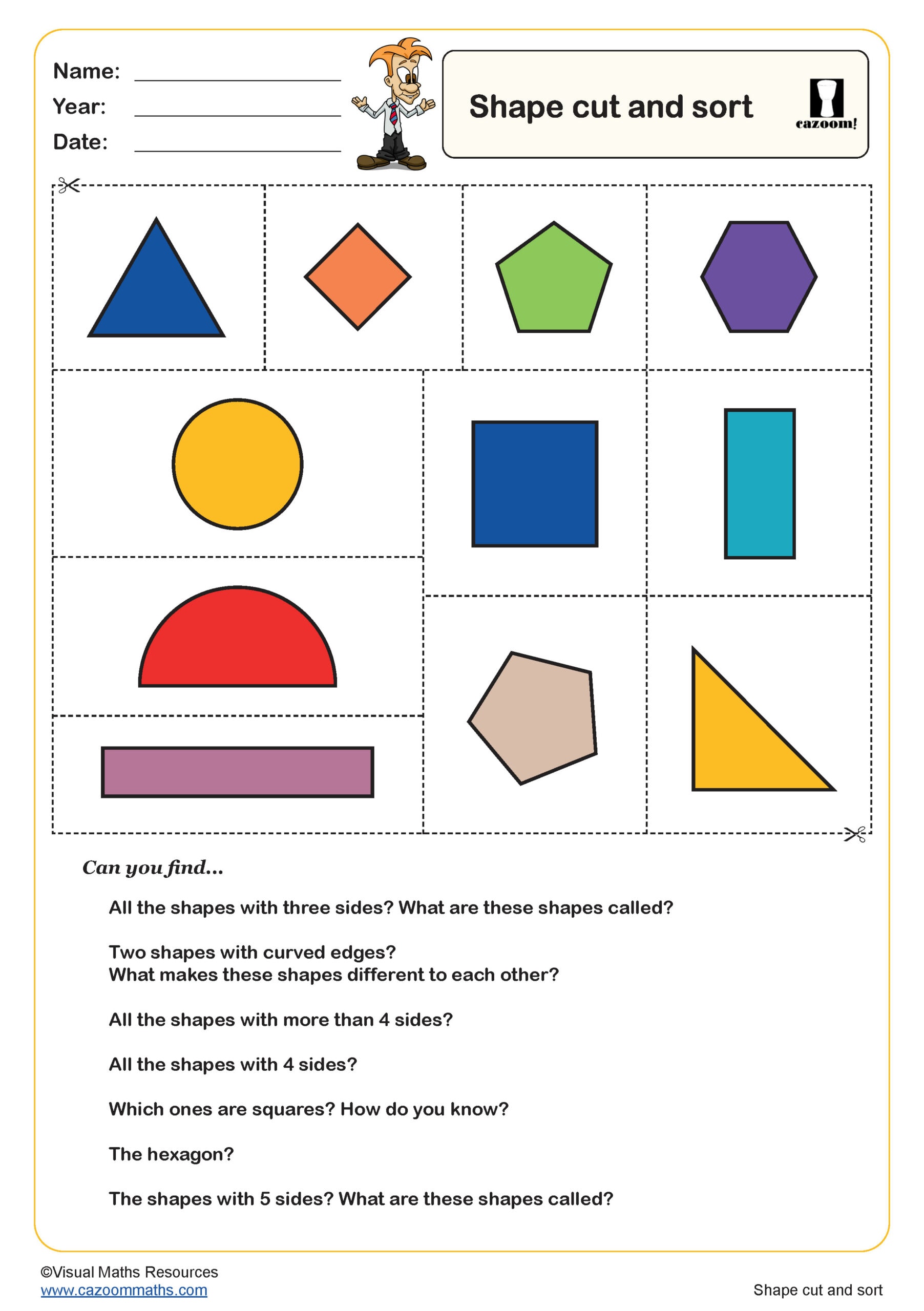
Shape Cut and Sort
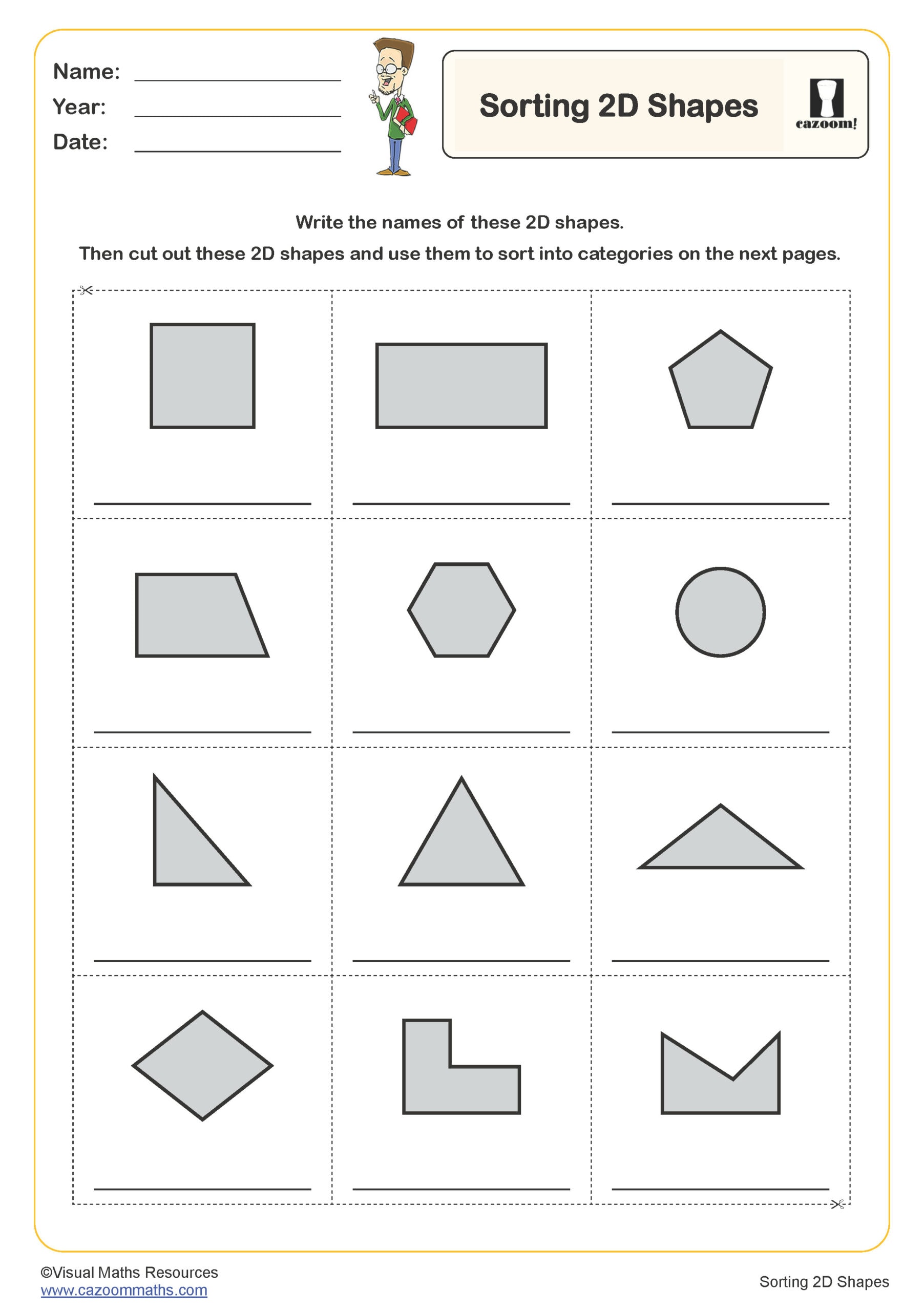
Sorting 2D Shapes
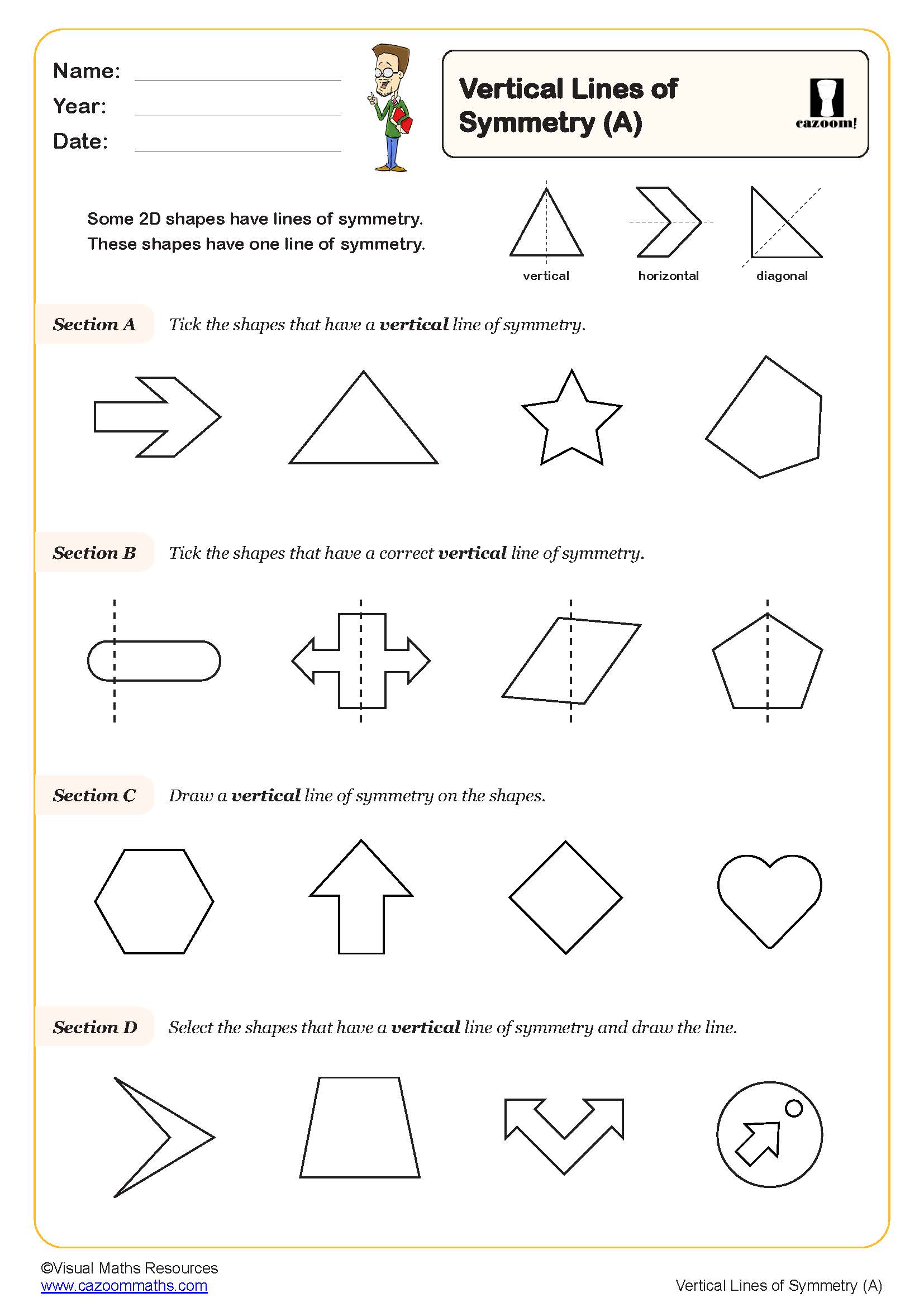
Vertical Lines of Symmetry (A)
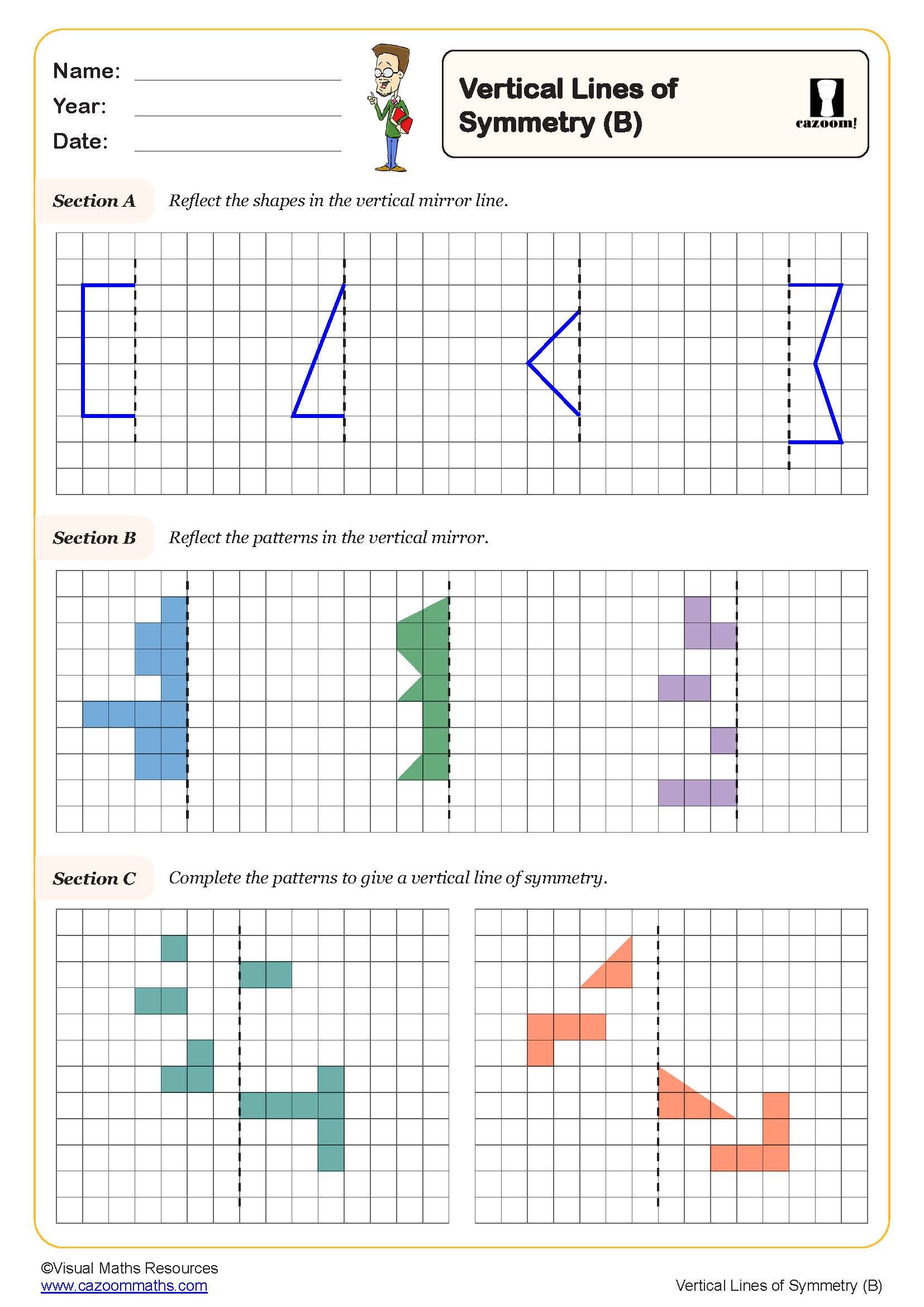
Vertical Lines of Symmetry (B)
All worksheets are created by the team of experienced teachers at Cazoom Maths.
What do pupils learn in KS1 properties of shapes?
In KS1 properties of shapes, pupils learn to recognise and name common 2D shapes including circles, triangles, squares, rectangles and pentagons, as well as 3D shapes such as cubes, cuboids, spheres, cones and cylinders. They identify and describe basic properties, counting sides and corners on 2D shapes and exploring faces, edges and vertices on 3D shapes. Year 1 pupils focus on recognising and naming shapes in different orientations and sizes, whilst Year 2 pupils progress to comparing and sorting shapes based on their properties. Children develop mathematical vocabulary to describe position, direction and patterns involving shapes. The National Curriculum requires pupils to draw simple 2D shapes and make patterns, building spatial awareness that forms the foundation for more complex geometry work in Key Stage 2.
Which year groups are these properties of shapes worksheets suitable for?
These properties of shapes worksheets are designed specifically for KS1, covering Year 1 and Year 2. Year 1 worksheets introduce pupils to recognising and naming common 2D and 3D shapes, identifying basic properties such as sides and corners, and spotting shapes in different orientations. Year 2 worksheets build on this foundation, requiring pupils to compare and sort shapes, identify properties with greater precision, and describe shapes using mathematical vocabulary. The progression between year groups follows National Curriculum expectations, ensuring pupils develop their geometric understanding systematically. Each worksheet is clearly differentiated to match the capabilities of learners at each stage, with activities ranging from simple shape identification through to more complex property comparison tasks that challenge pupils appropriately for their age.
How do pupils identify properties of 2D shapes?
Pupils identify properties of 2D shapes by examining their characteristics systematically. They count straight sides and corners (vertices), noting whether sides are equal in length and whether corners are right angles. At KS1 level, children learn to recognise that triangles have three sides and three corners, squares have four equal sides and four right angles, whilst rectangles have four sides with opposite sides equal. Circles are identified as having no straight sides or corners but a curved edge. Pupils learn to identify shapes regardless of their orientation or size, understanding that a triangle remains a triangle whether it points upwards, downwards or sideways. Regular practice with properties of shapes worksheets helps pupils move beyond simple visual recognition to understanding the defining characteristics that make each shape unique.
Do these worksheets include answer sheets?
Yes, all our properties of shapes worksheets include complete answer sheets. Each downloadable PDF contains both the pupil worksheet and a corresponding answer sheet, allowing teachers to mark work efficiently and parents to support home learning with confidence. The answer sheets show correct solutions clearly, making it straightforward to identify where pupils may have misconceptions about shape properties. This feature is particularly valuable when children are working independently or completing homework, as it enables immediate feedback and self-correction. Teachers can use the answer sheets for quick assessment during lessons or to prepare mark schemes for tests. The inclusion of answers also makes these resources practical for cover lessons, teaching assistants or intervention sessions where immediate checking supports learning progression and ensures pupils understand properties of shapes accurately.