KS1 Time Worksheets
All worksheets are created by the team of experienced teachers at Cazoom Maths.
What time concepts do Year 1 and Year 2 pupils learn?
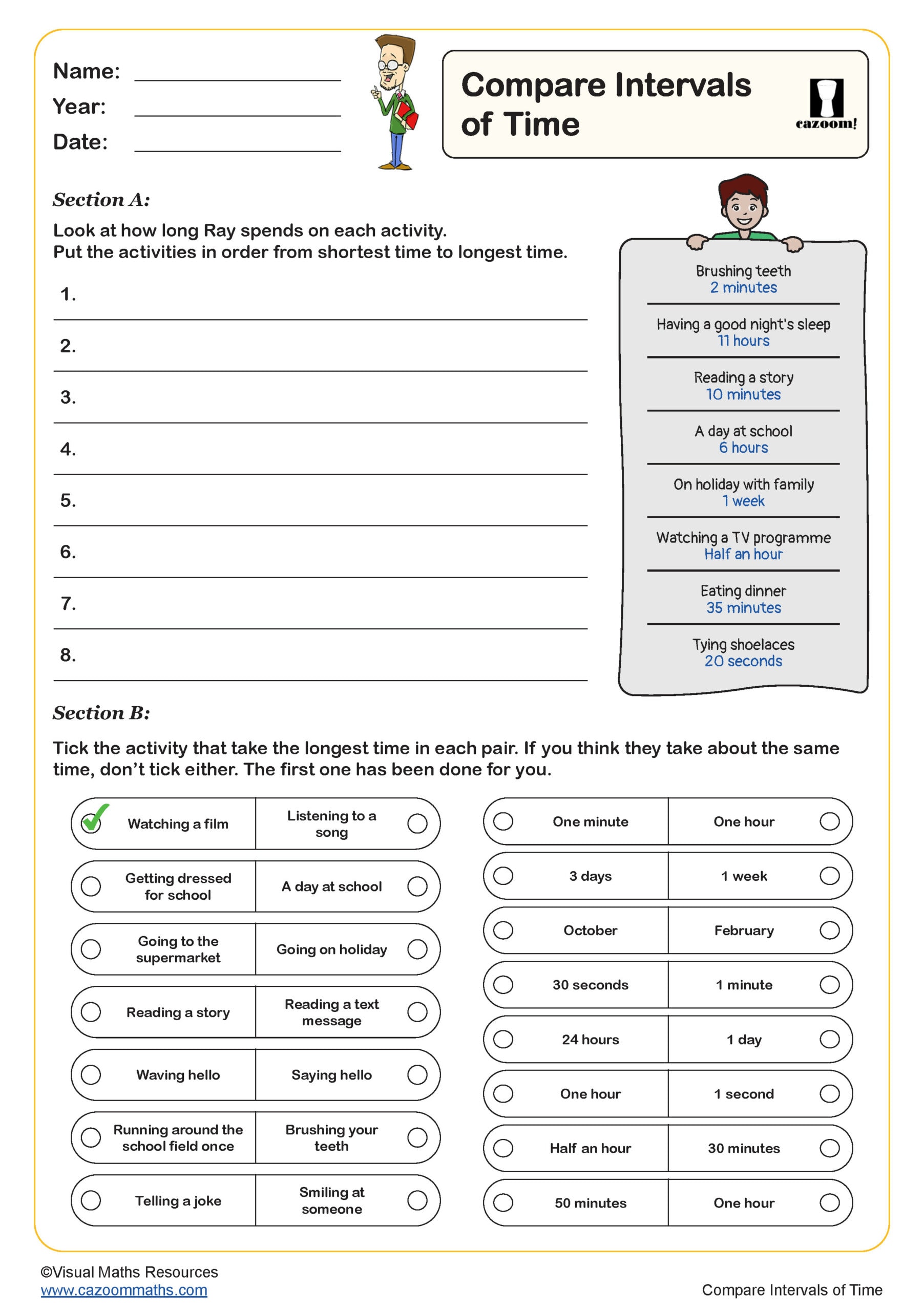
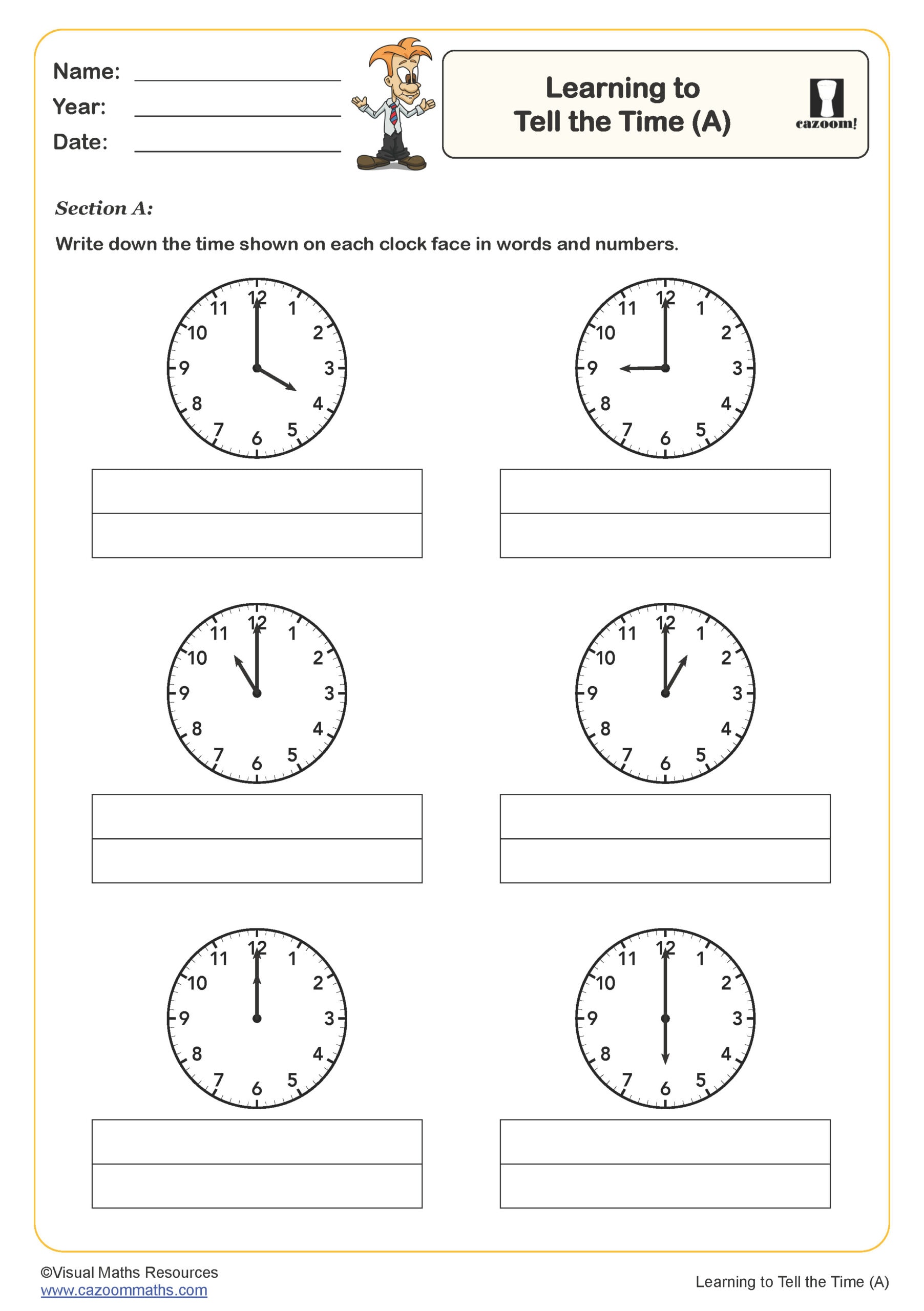
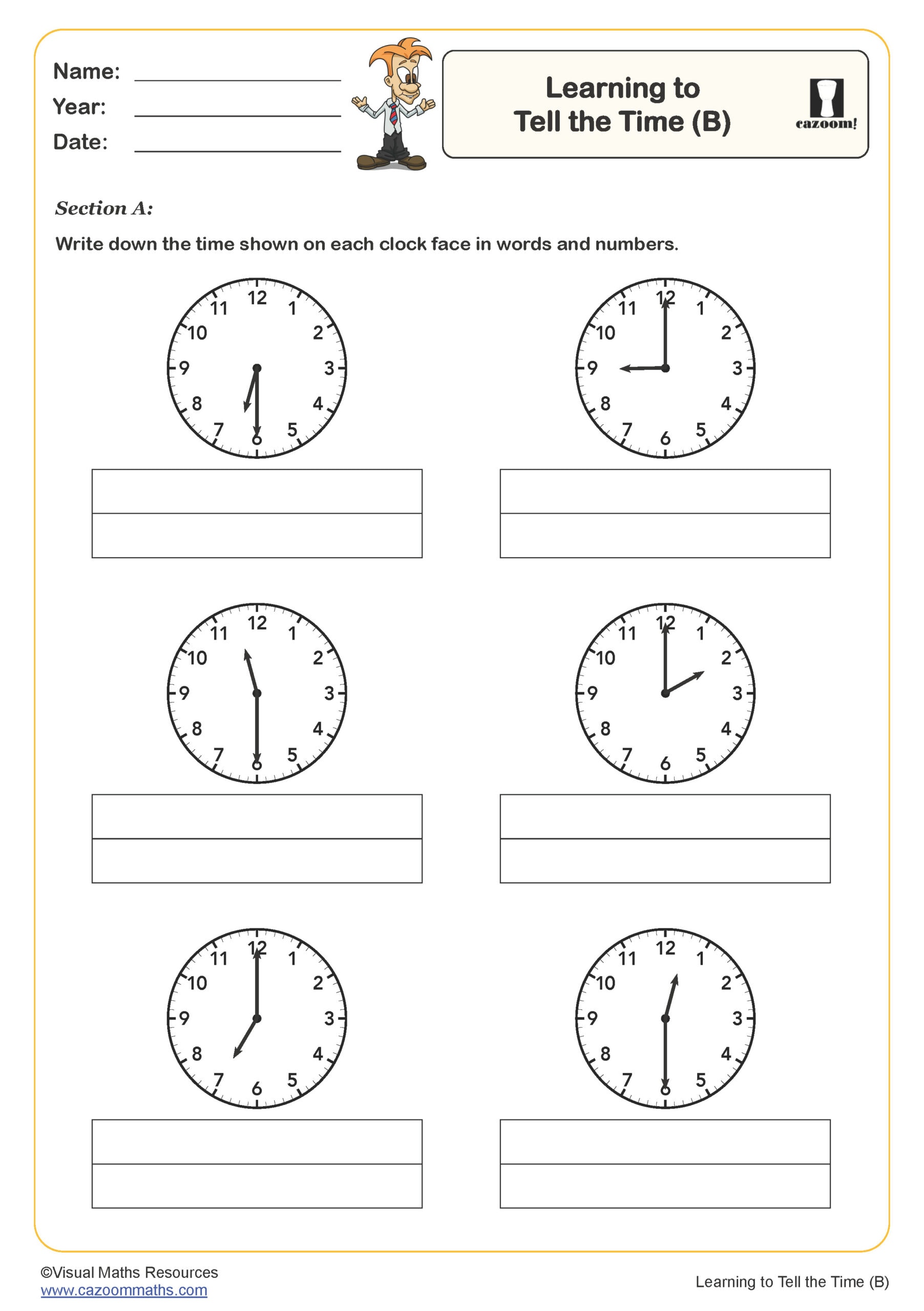
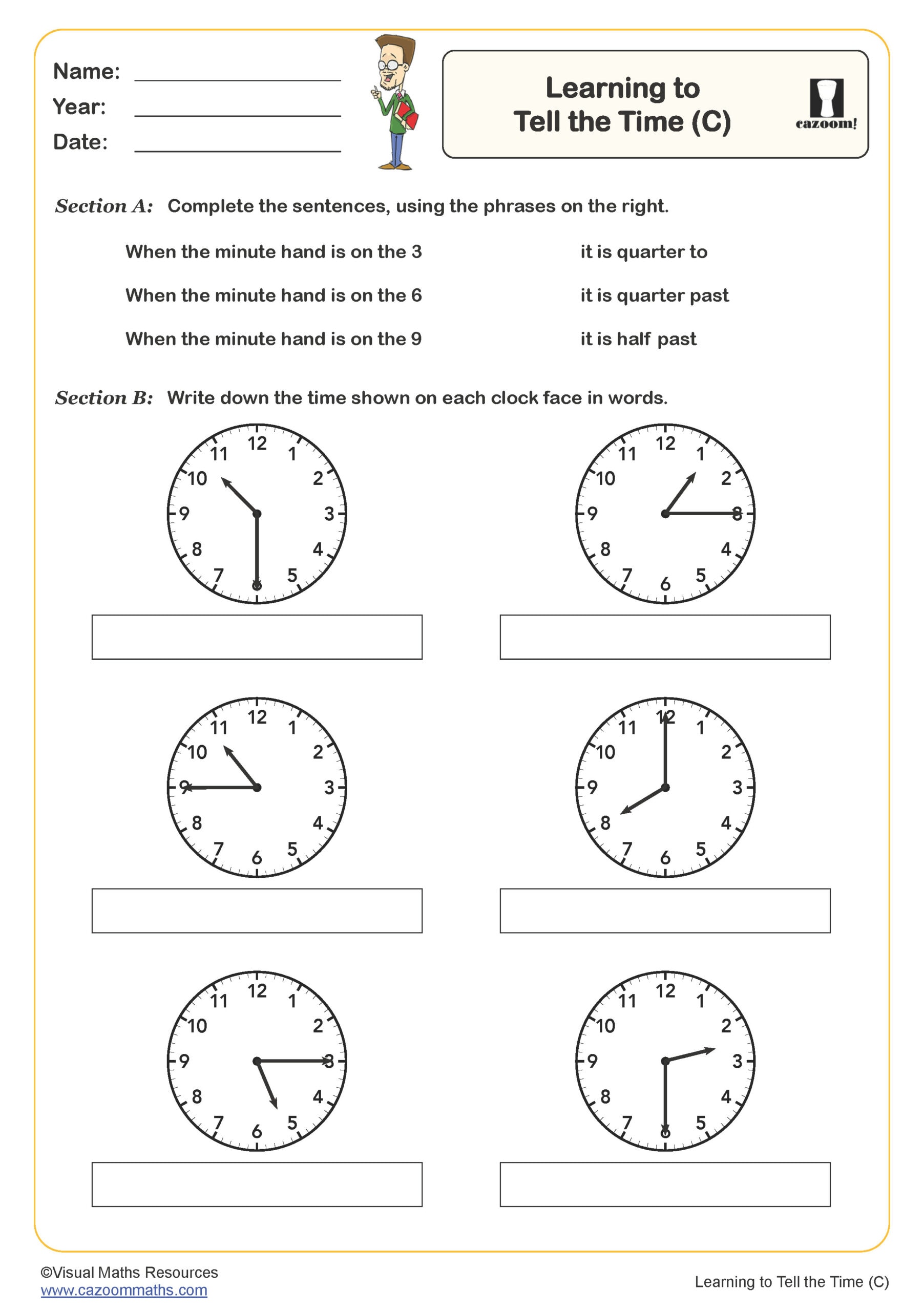
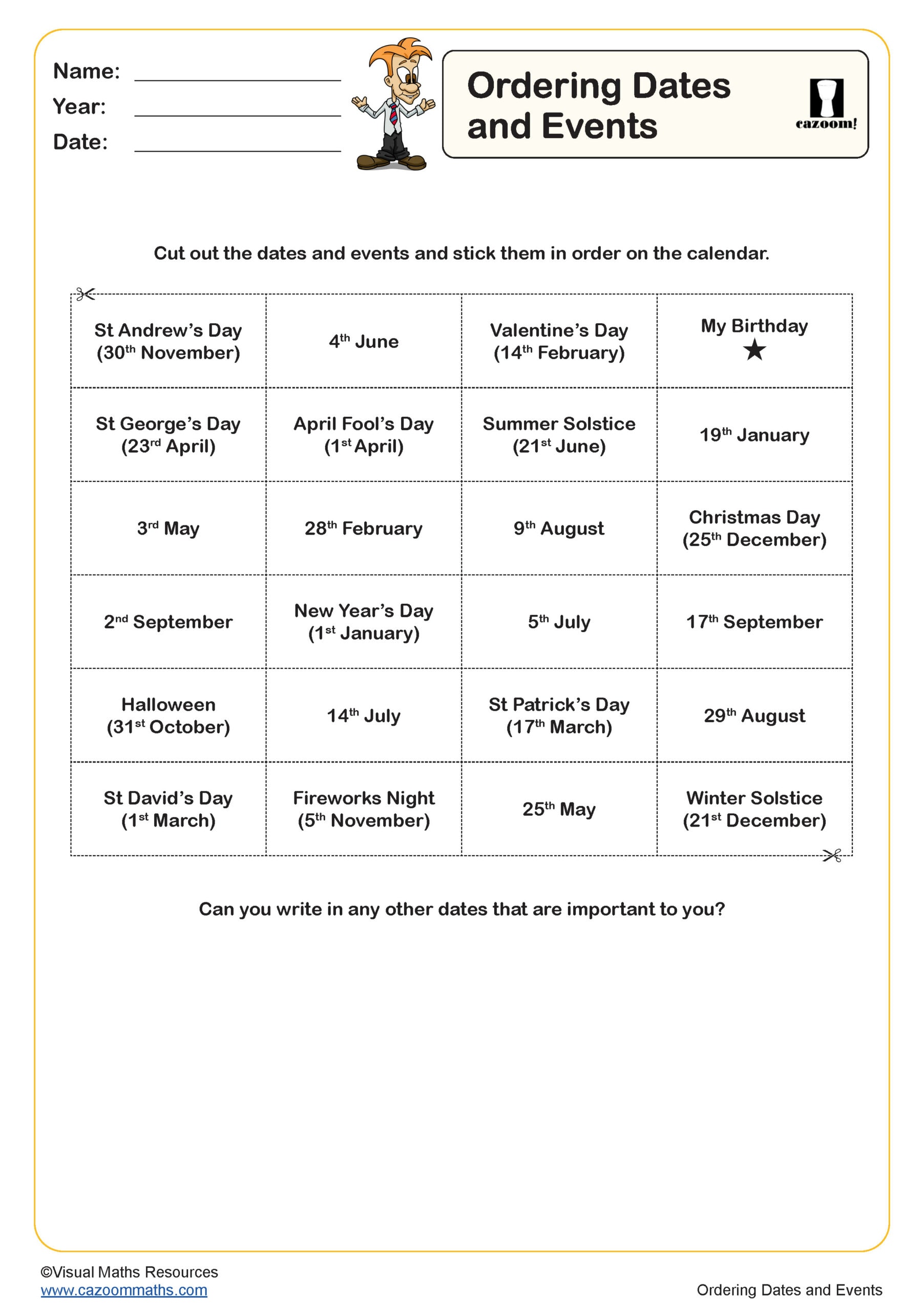
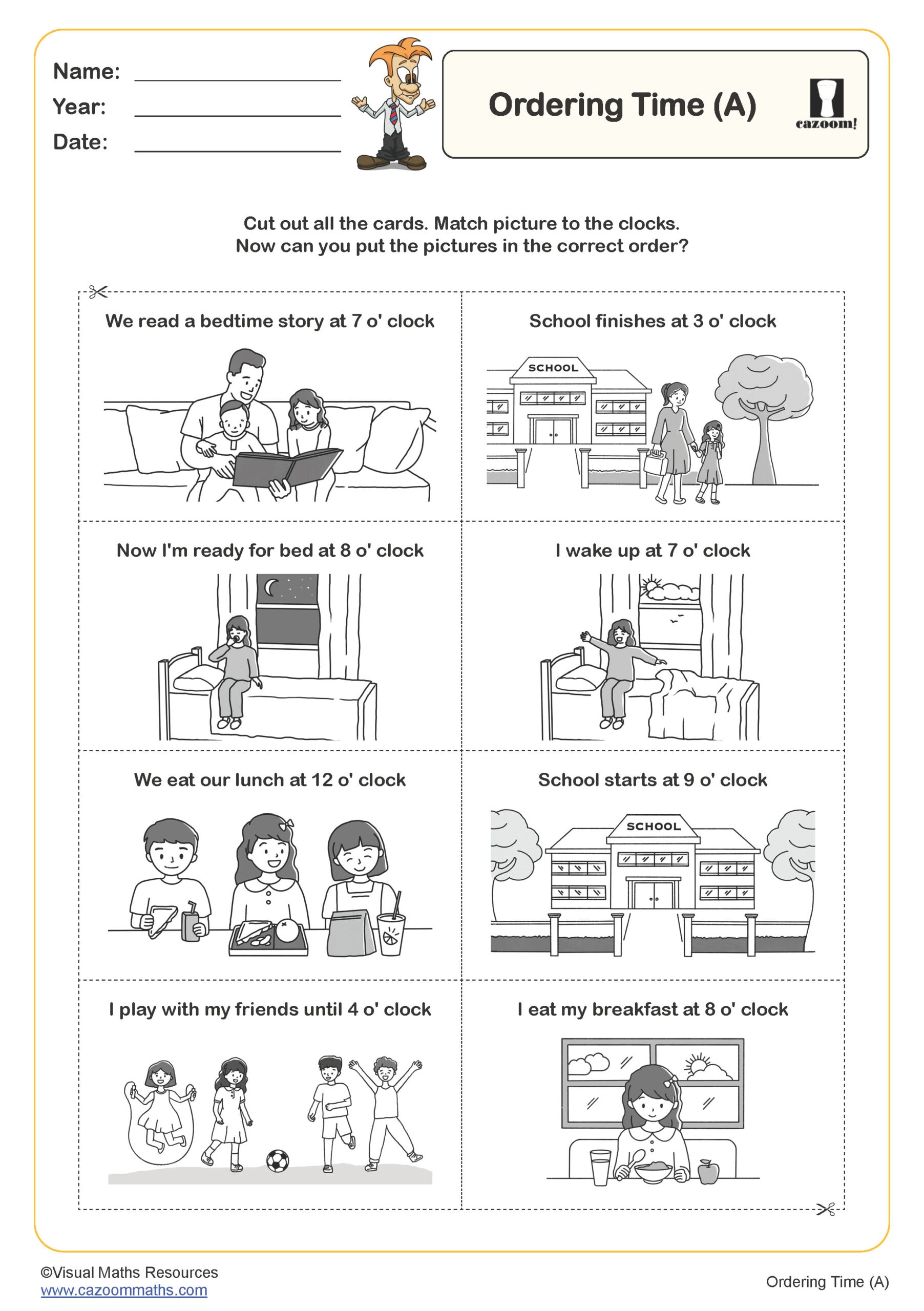
In Year 1, pupils learn to tell the time to the hour and half past the hour using analogue clocks. They sequence events in chronological order and understand basic time vocabulary like 'before', 'after', 'morning' and 'afternoon'. Year 2 builds on this foundation by introducing quarter past and quarter to, alongside reading time to five-minute intervals. Pupils also compare durations of events and learn to record time in different ways, including using digital 12-hour notation. Throughout KS1, the emphasis is on practical understanding—children need regular practice with both reading and drawing clock hands. Our worksheets provide this structured repetition, helping pupils visualise time concepts through varied question formats that reinforce learning without becoming repetitive or overwhelming for young learners still developing their number sense.
Which year groups are these time worksheets suitable for?
These time worksheets are specifically designed for Key Stage 1, covering Year 1 and Year 2 pupils typically aged 5-7 years. The collection addresses the full range of time objectives within the KS1 National Curriculum, with content carefully differentiated to match each year group's expectations. Year 1 resources focus on foundational skills like reading o'clock and half past times, whilst Year 2 materials progress to more complex concepts including quarter past, quarter to, and five-minute intervals. This progression ensures pupils build confidence systematically. The worksheets work effectively for whole-class teaching when pupils are working at expected levels, but they're equally valuable for intervention groups or as extension material. Parents supporting home learning will find them accessible too, as answer sheets are included to guide discussions about methods and check understanding.
How do children learn to tell the time to half past?
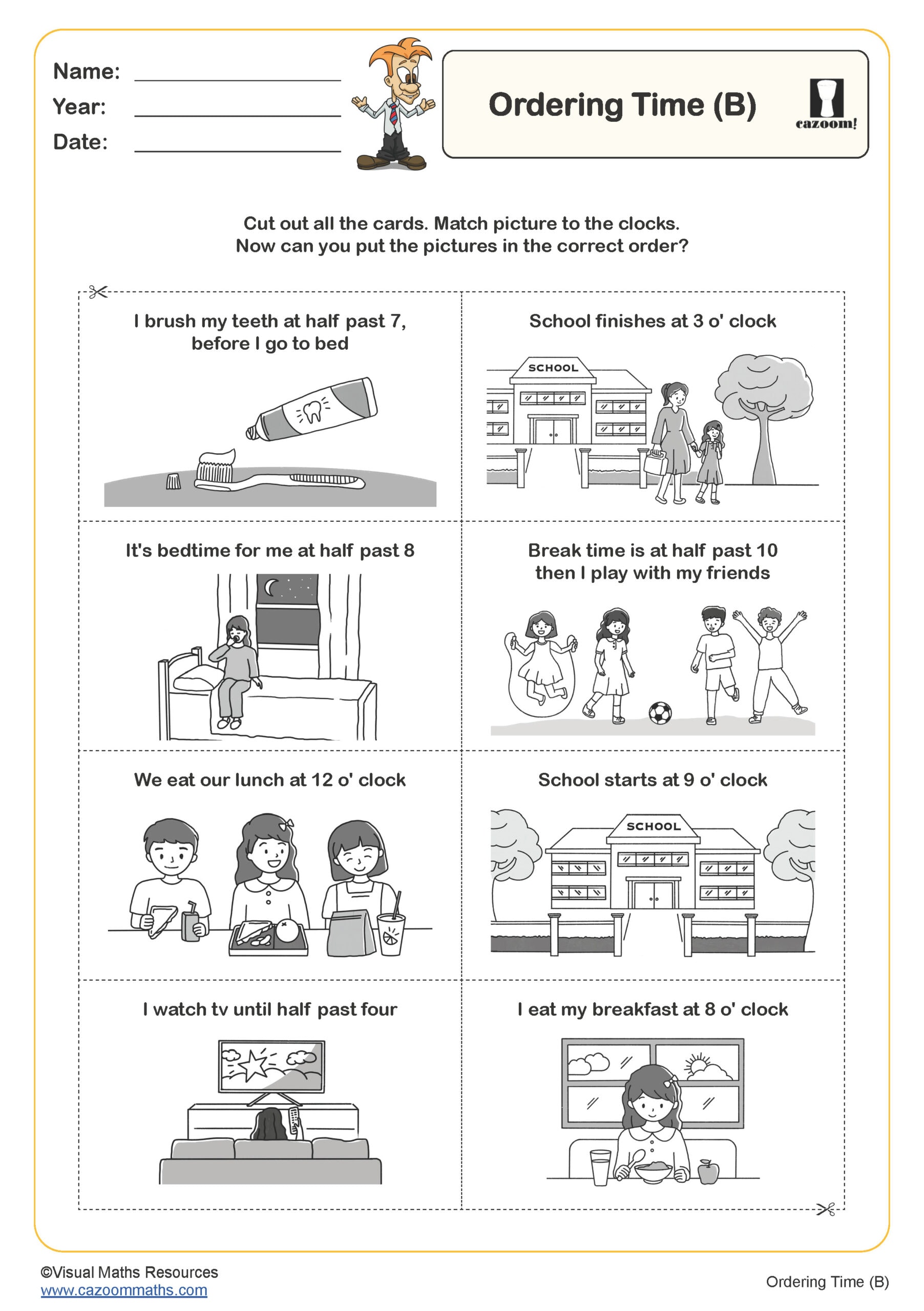
Understanding half past requires children to recognise that the minute hand points to the six and the hour hand sits halfway between two numbers. This is often more challenging than o'clock because the hour hand's position seems counterintuitive to young learners—they see it near the next hour rather than on the current one. Effective teaching links half past to fractions, helping pupils understand that 30 minutes represents half of an hour. Our worksheets provide graduated practice, starting with reading clearly marked half past times, then progressing to drawing hands on blank clock faces. This dual approach—reading and creating—strengthens understanding considerably. Activities include matching analogue to digital times, sequencing daily events that happen on the half hour, and problem-solving questions that apply time-telling to real contexts children recognise from their daily routines.
What's included with each time worksheet?
Every time worksheet in this collection comes as a downloadable PDF with a complete answer sheet included. This means you can print exactly what you need, when you need it, without preparation time spent creating solutions manually. The worksheets feature clear, age-appropriate clock faces sized for young children who are still developing fine motor control. Questions are carefully ordered to build from simpler to more challenging within each sheet, allowing pupils to build confidence before tackling harder problems. Visual supports like numbered clock faces appear where appropriate, whilst later questions remove scaffolding to develop independent application. The answer sheets show worked solutions rather than just final answers where relevant, helping you identify specific misconceptions during marking. This complete package means you can focus on teaching and supporting pupils rather than administrative tasks around resource preparation or solution checking.