KS1 Working with the Difference Worksheets
Find Pairs with a Difference of 1
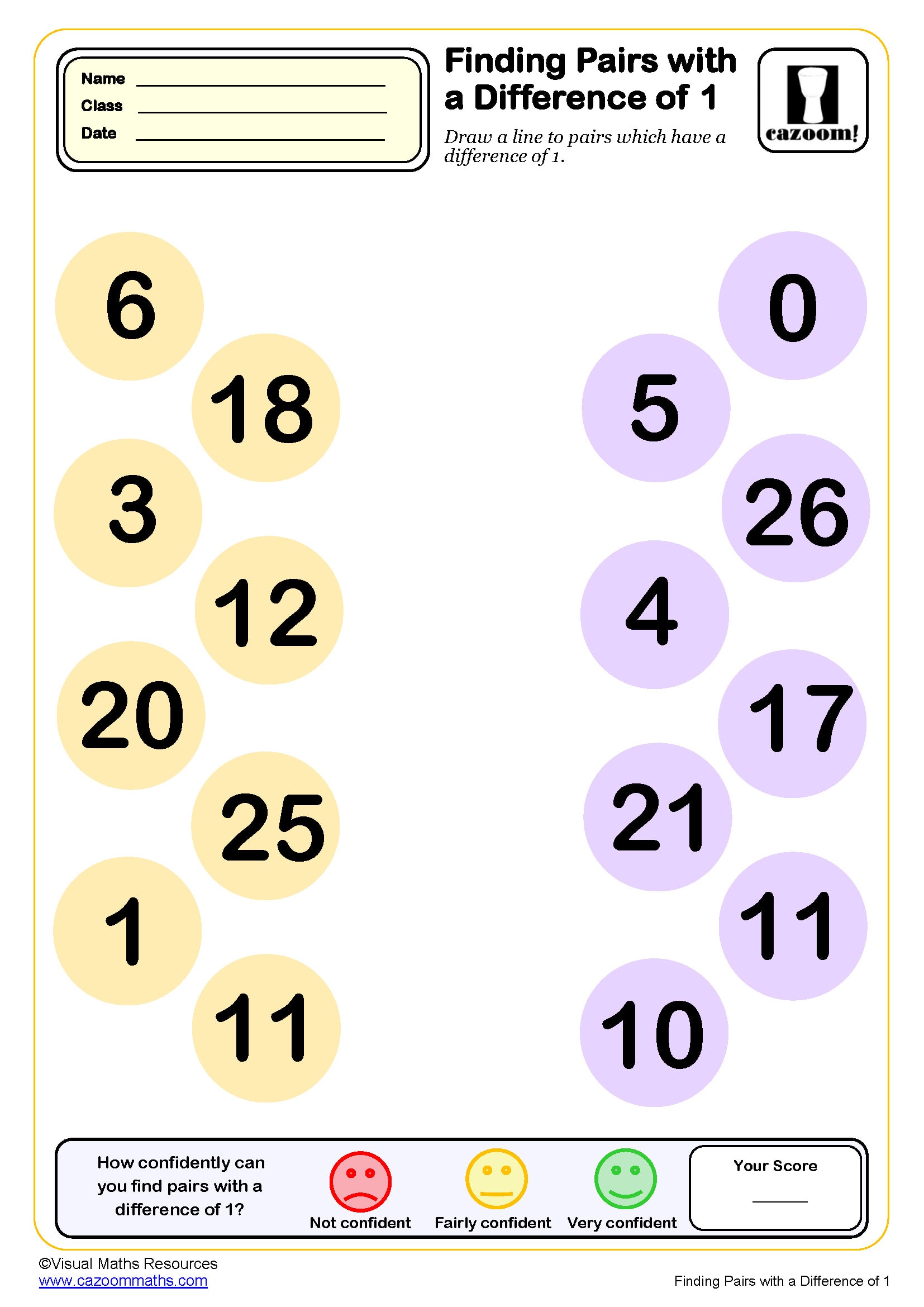
Find Pairs with a Difference of 10
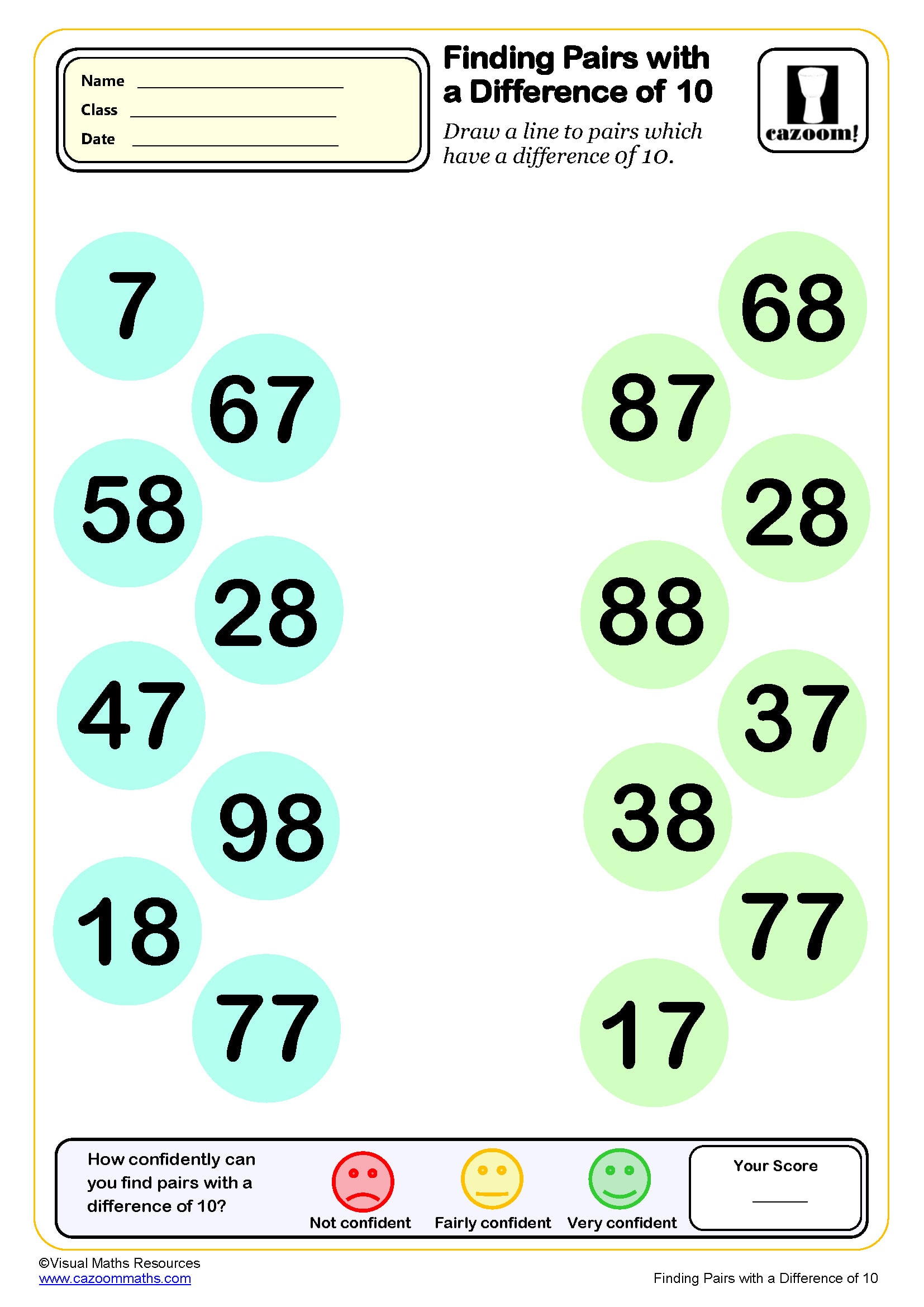
Find Pairs with a Difference of 15
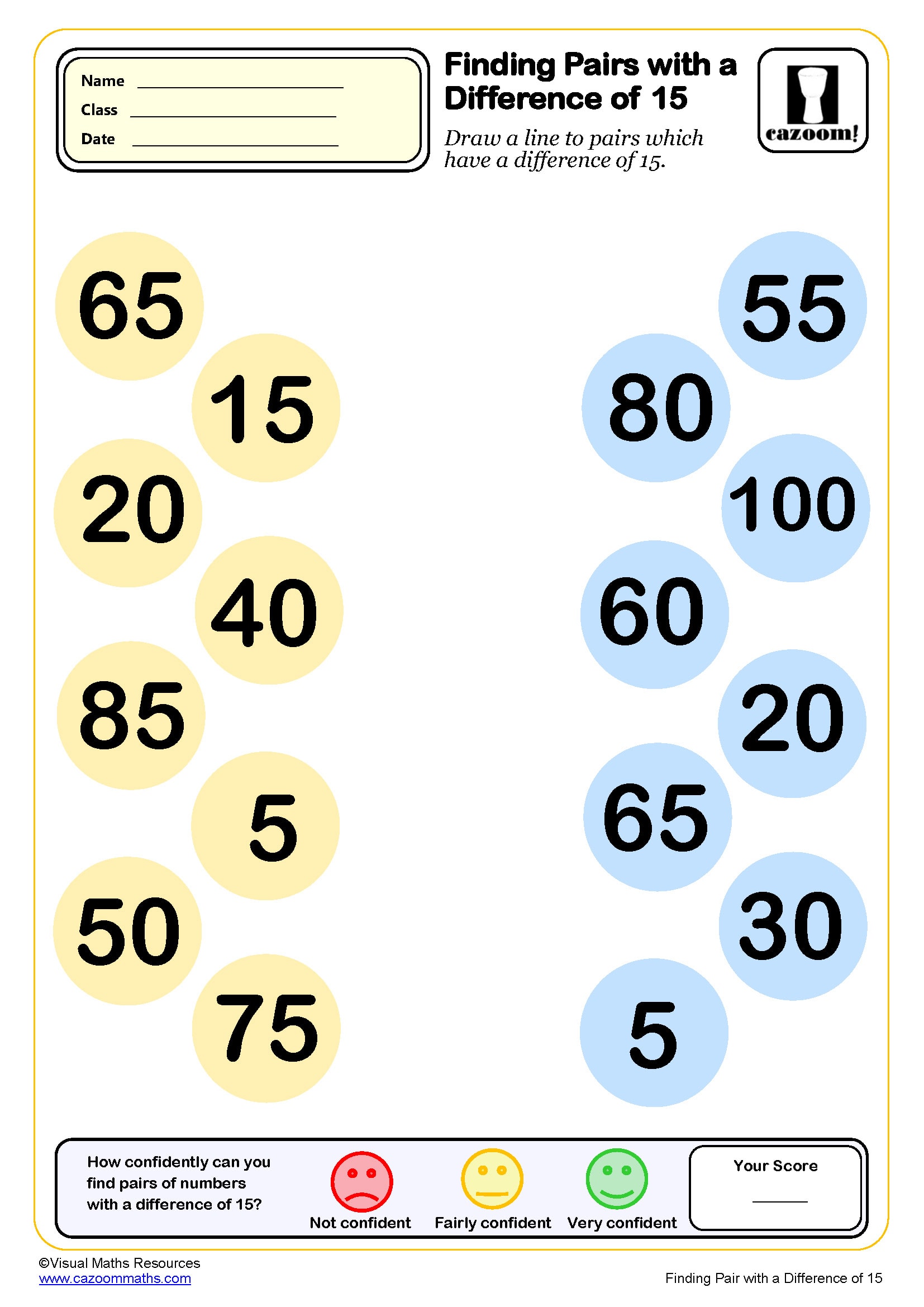
Find Pairs with a Difference of 2
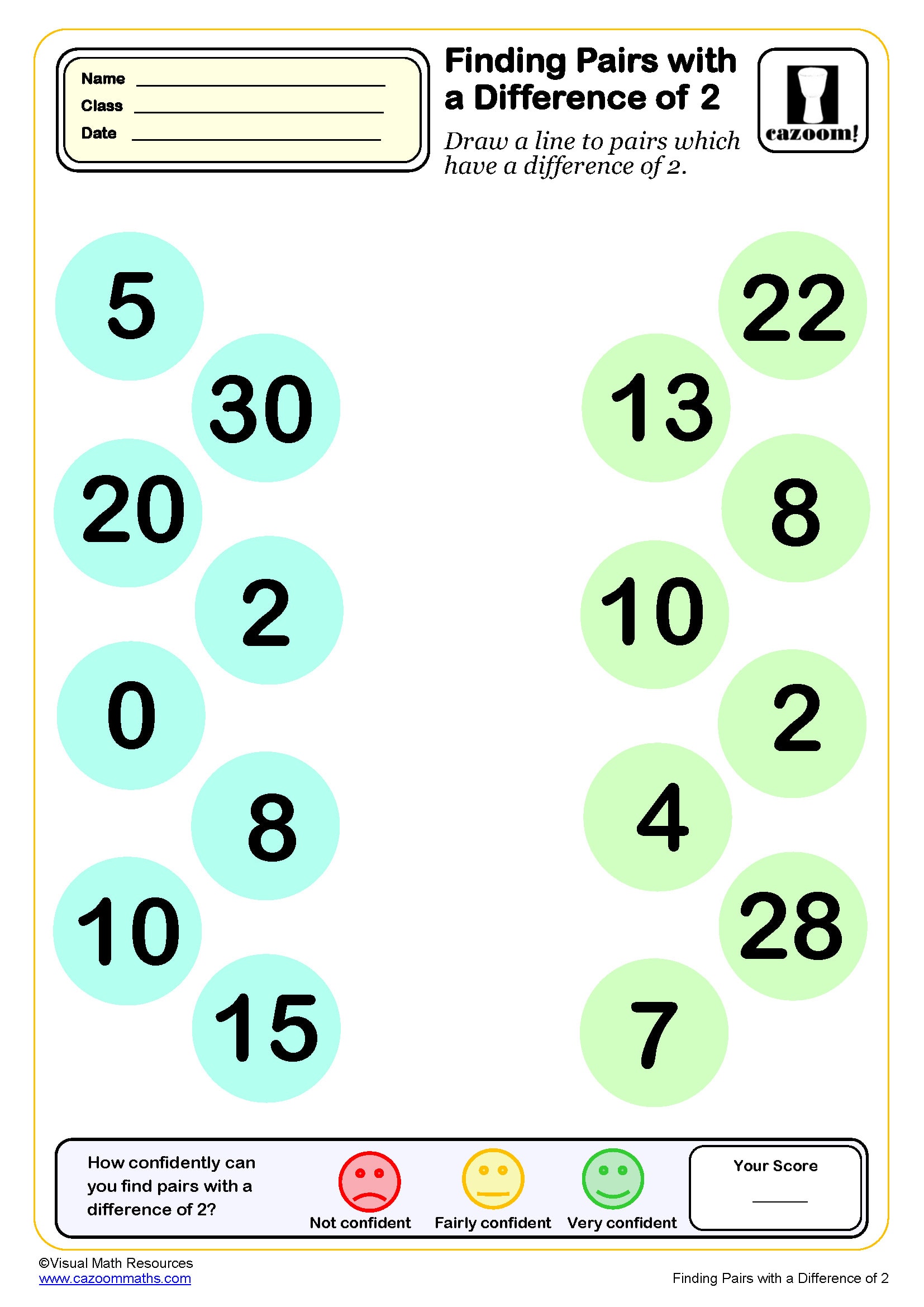
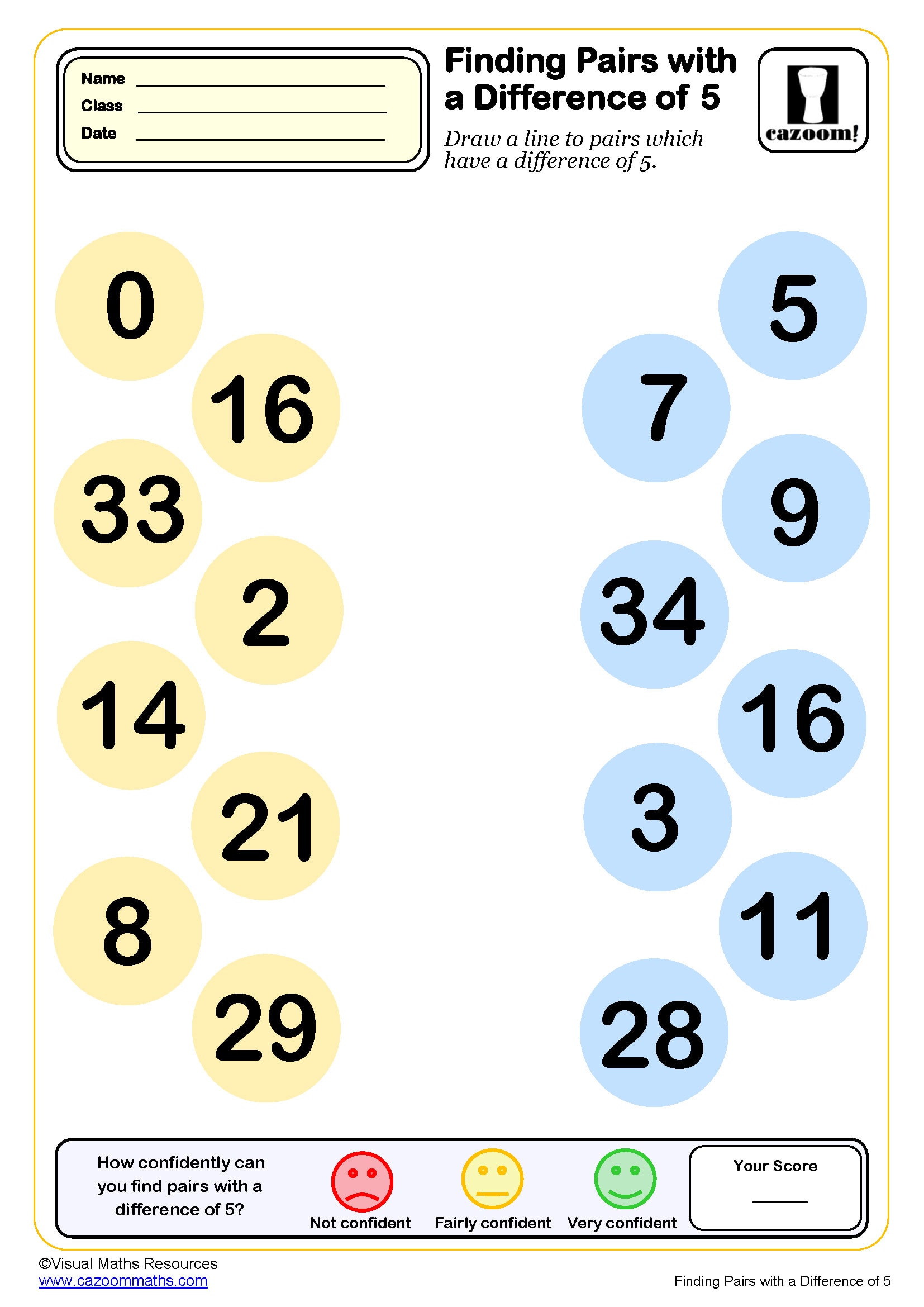
Find Pairs with a Difference of 5
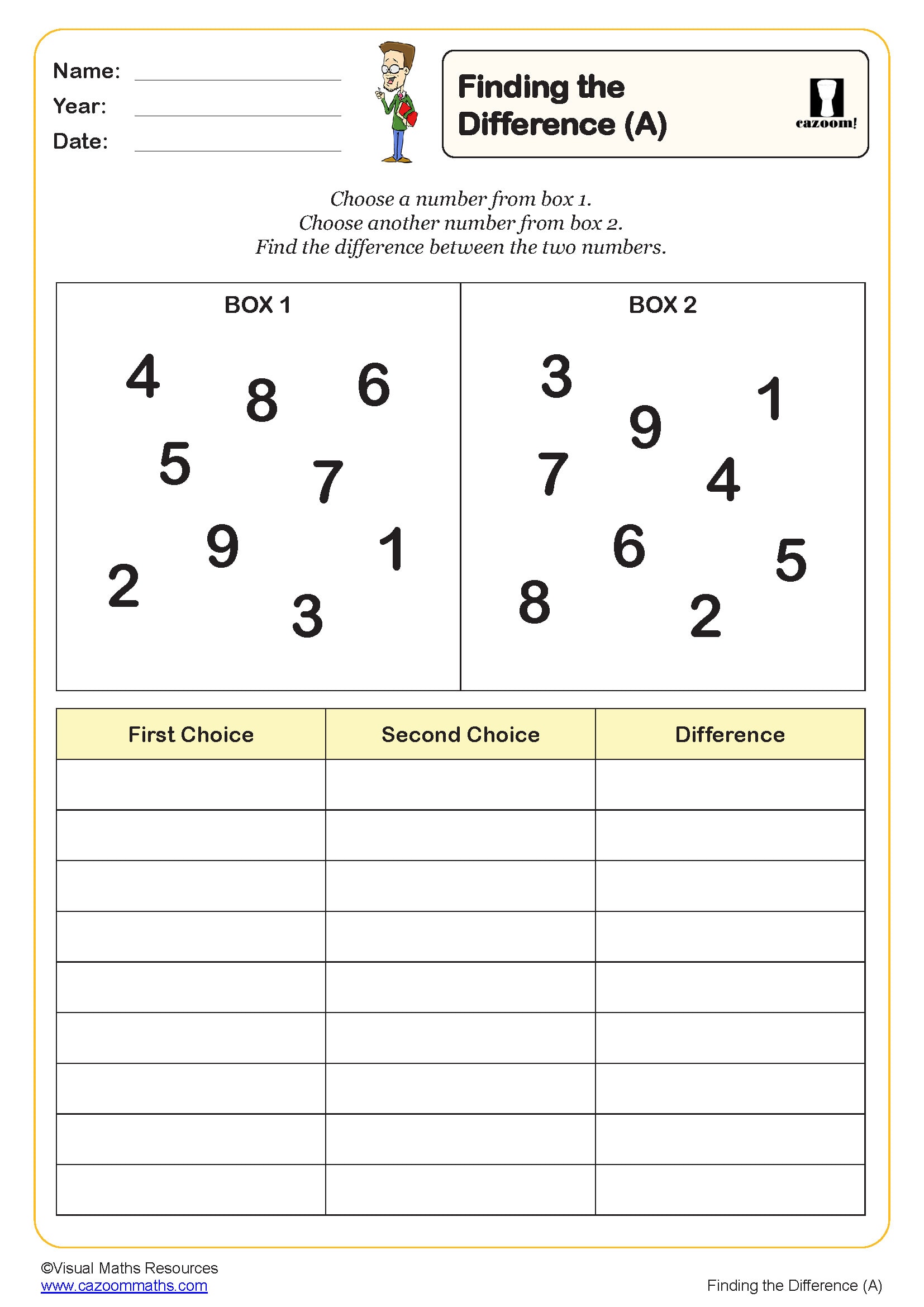
Finding the Difference (A)
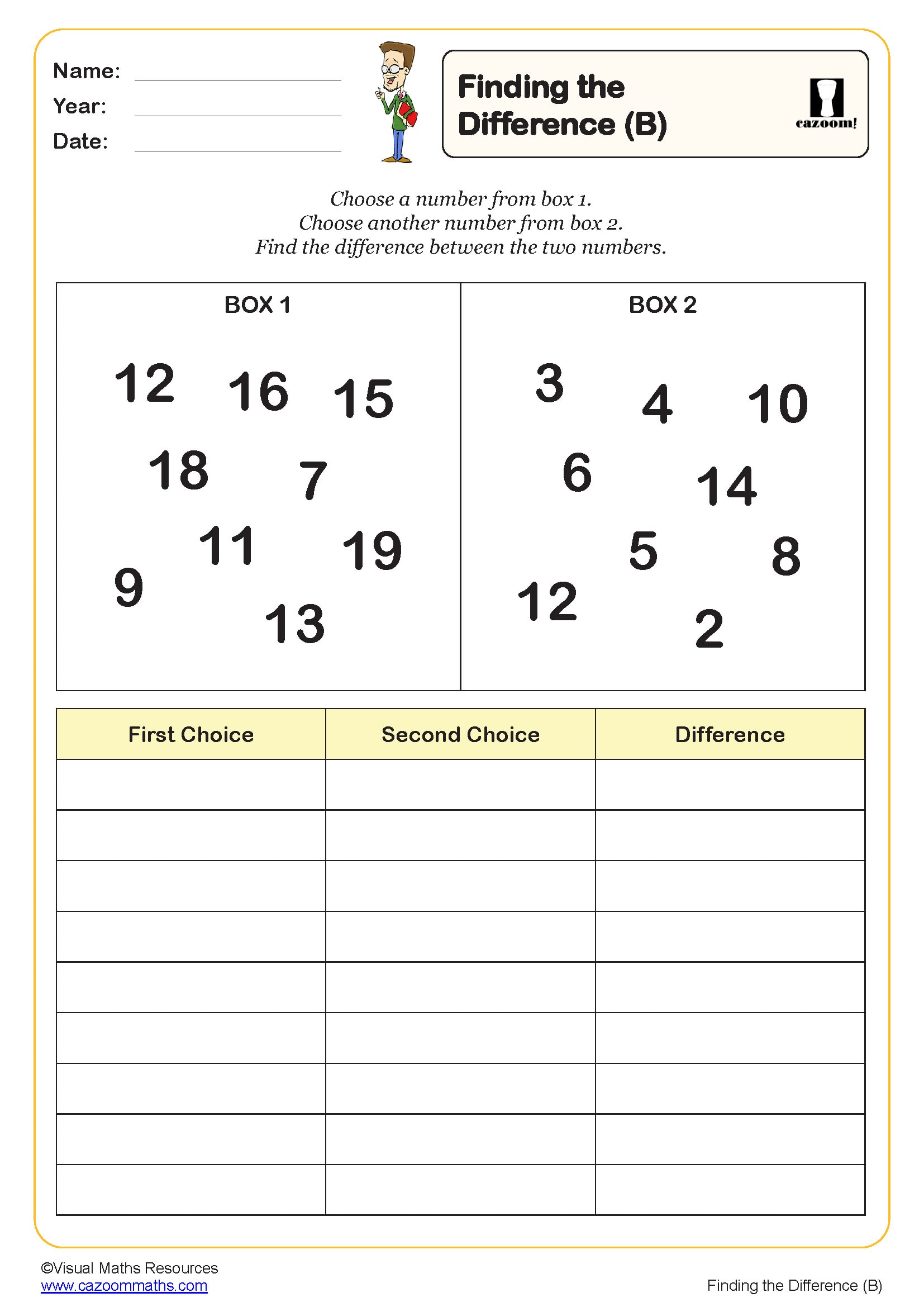
Finding the Difference (B)
Finding the Difference (C)

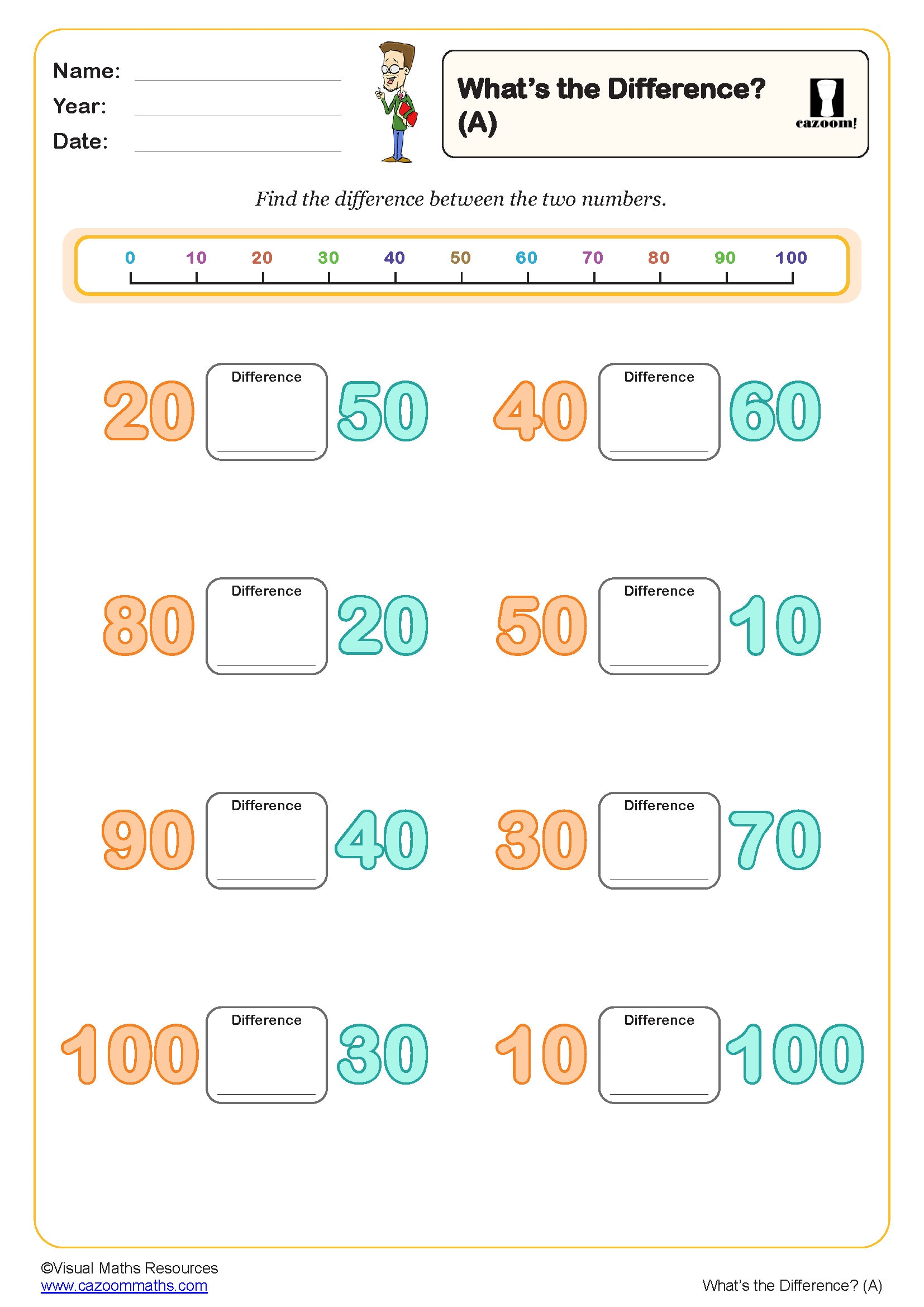
What's the Difference? (A)
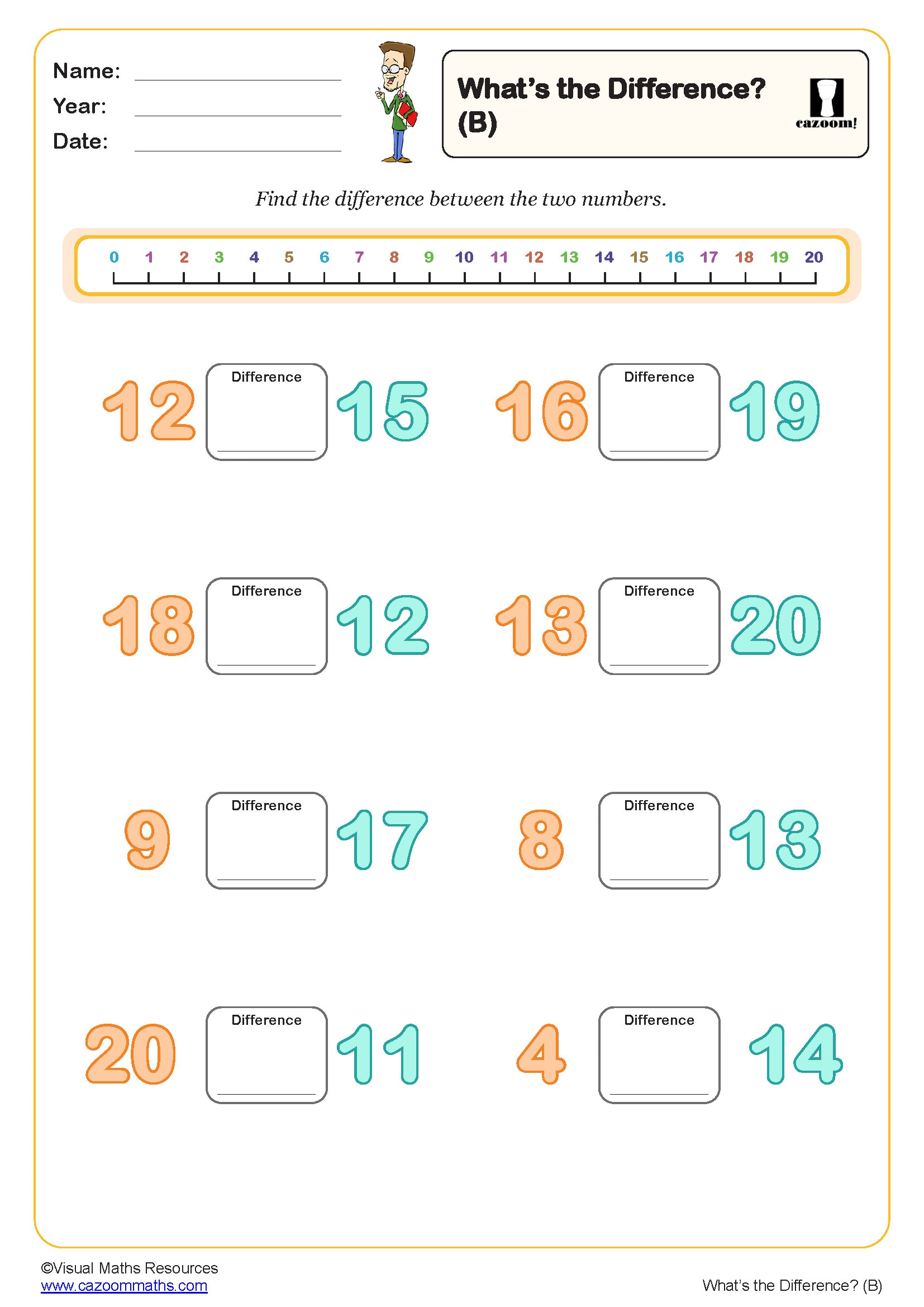
What's the Difference? (B)
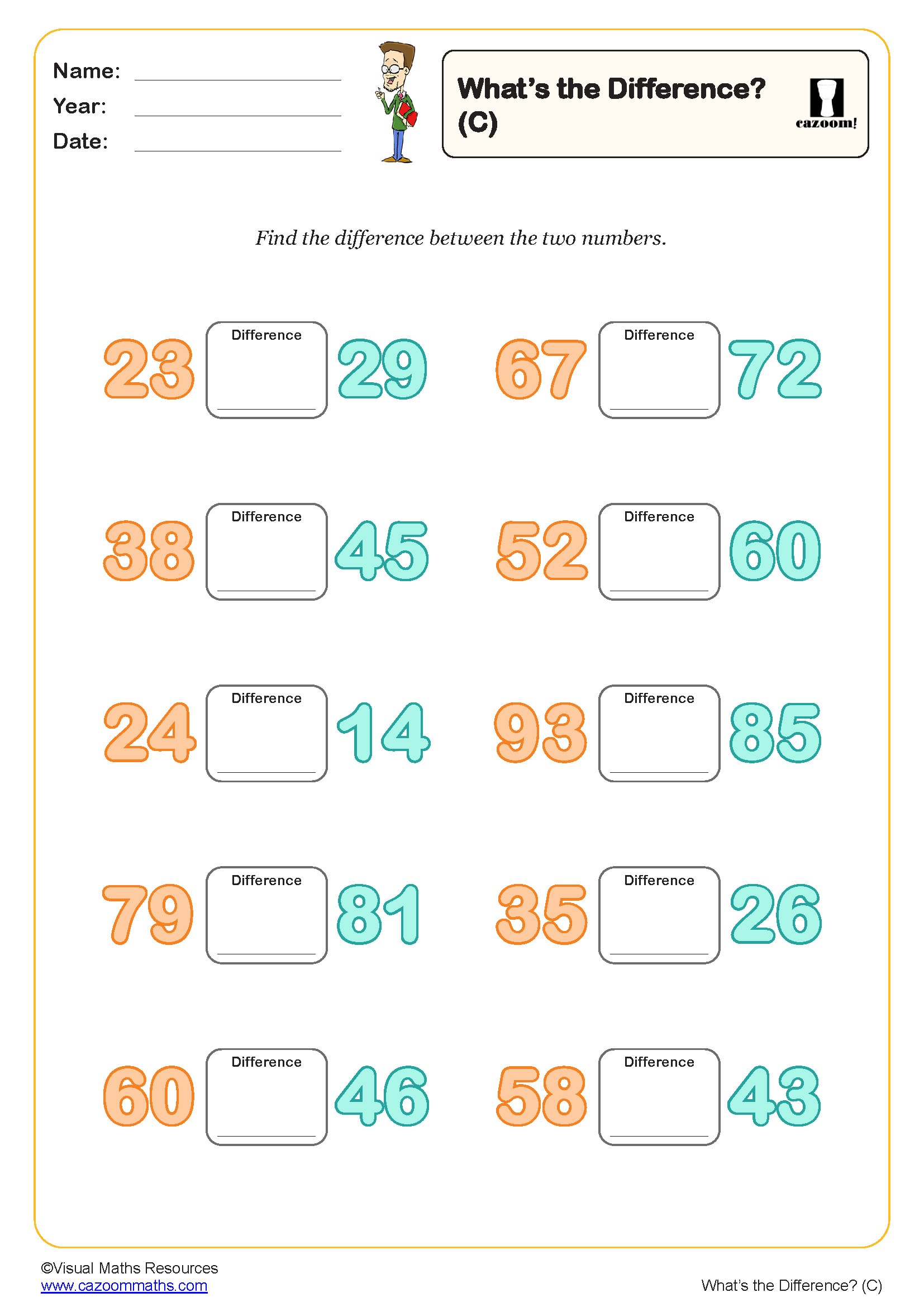
What's the Difference? (C)
All worksheets are created by the team of experienced teachers at Cazoom Maths.
What does working with the difference mean in KS1 maths?
Working with the difference introduces children to subtraction as a comparison between two numbers rather than simply 'taking away'. This approach helps pupils understand that they can find how many more or how many fewer by calculating the difference. For example, if one group has 8 apples and another has 5, the difference is 3 – there are 3 more apples in the first group.
This conceptual understanding is crucial because it develops flexible thinking about subtraction and connects to real-world situations children encounter daily. The National Curriculum expects KS1 pupils to solve problems involving finding the difference, and this foundation supports progression into mental calculation strategies like counting on, which becomes particularly important as numbers increase beyond simple counting back.
Which year groups are these working with the difference worksheets suitable for?
These worksheets are designed specifically for Key Stage 1, covering Year 1 and Year 2 pupils. In Year 1, children begin exploring the concept of difference through practical activities and visual representations, typically working with numbers within 20. The worksheets introduce difference as a way to compare two quantities, supporting pupils who are still developing their understanding of subtraction.
Year 2 worksheets build on this foundation, extending to larger numbers and more abstract representations. Pupils work with numbers beyond 20 and tackle word problems that require them to identify when they need to find the difference. The progression across both year groups ensures children develop confidence and fluency with this essential subtraction strategy before moving into Key Stage 2.
How do visual representations help children understand difference?
Visual representations are essential in KS1 for making the abstract concept of difference concrete and accessible. Bar models, pictorial representations, and number lines help children physically see the gap between two numbers. When pupils can visualise 7 objects compared to 4 objects, they more readily grasp that the difference is 3 – they can count or see the extra items that make one group larger.
These visual methods also support children who aren't yet confident with number facts. Rather than relying purely on recall, they can use the images to count on or match one-to-one to find the answer. This scaffolding builds understanding before moving to purely symbolic calculations, ensuring pupils genuinely comprehend what difference means rather than simply applying procedures without understanding the underlying mathematical concept.
What's included with each working with the difference worksheet?
Every worksheet includes complete answer sheets, allowing teachers to mark work quickly and enabling parents to support home learning with confidence. The answer sheets show all solutions clearly, which is particularly helpful when children are working independently and need to check their understanding. This feature saves preparation time and ensures consistent feedback.
The worksheets are provided as downloadable PDFs, making them straightforward to print for classroom use or to email to parents for homework. Each resource is structured to build skills progressively, starting with visual problems before moving to numerical calculations. The variety of question styles keeps pupils engaged whilst ensuring thorough coverage of the National Curriculum objectives for finding the difference at Key Stage 1.