KS2 Position and Direction Worksheets
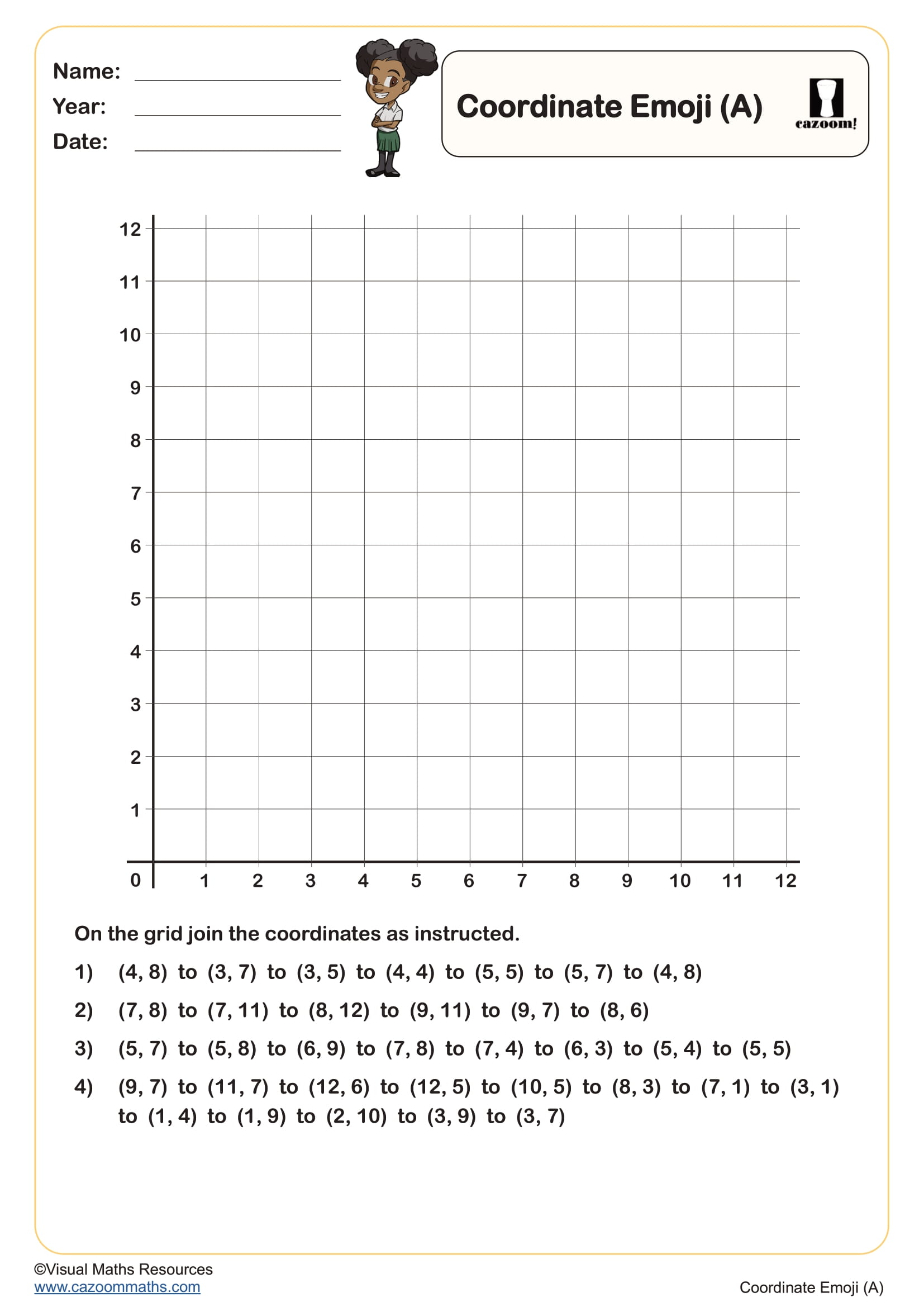
Coordinate Emoji (A)
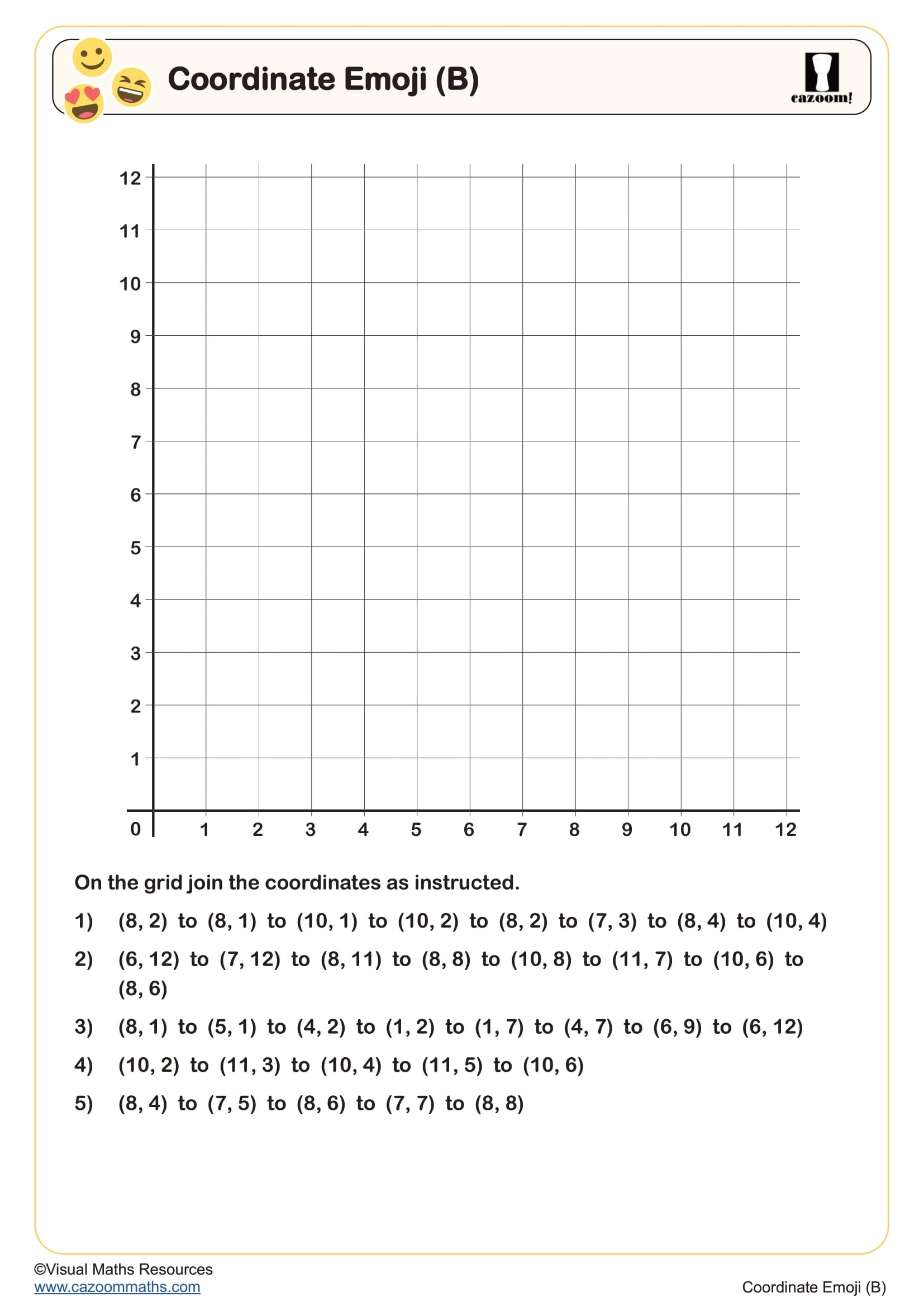
Coordinate Emoji (B)
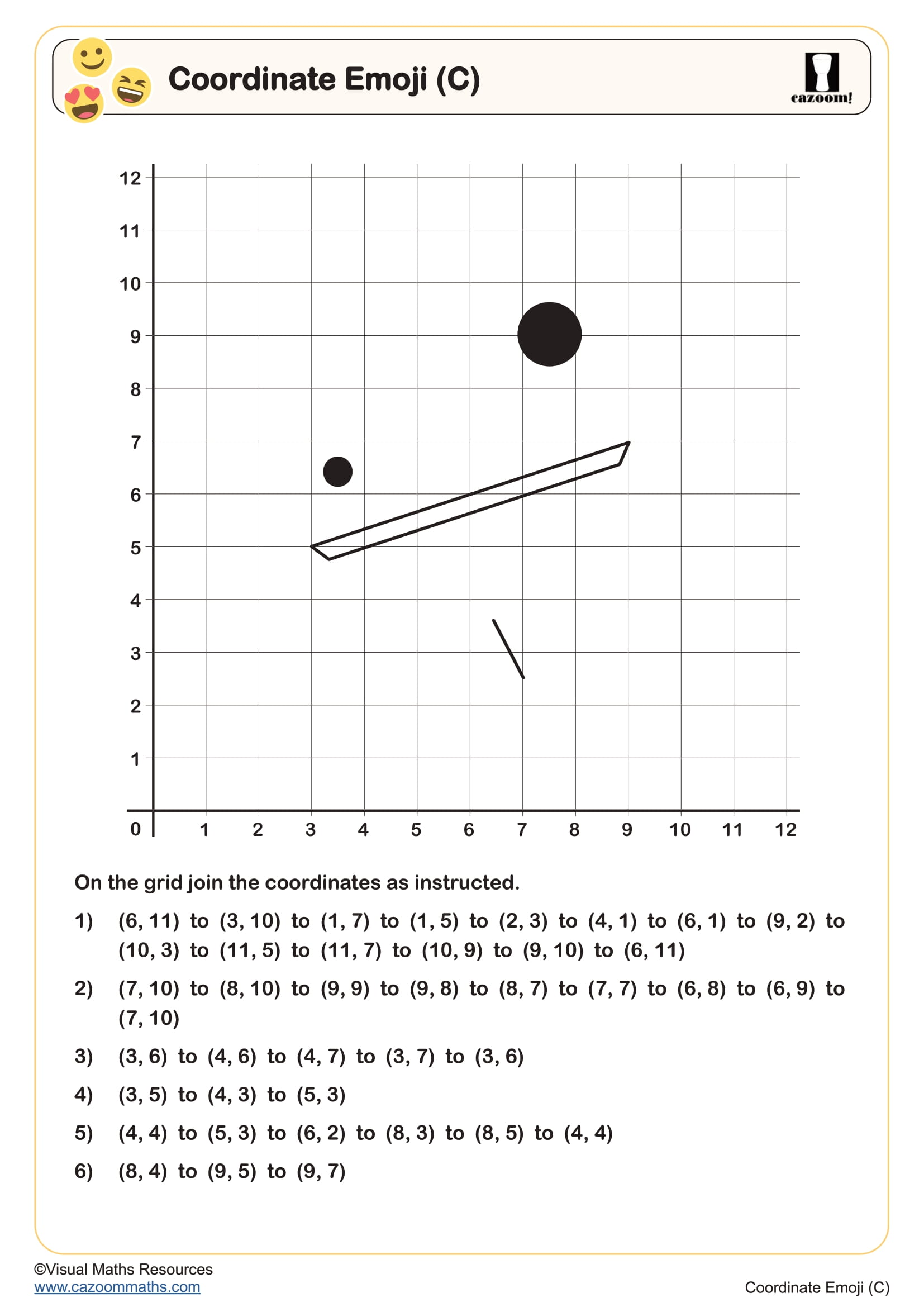
Coordinate Emoji (C)
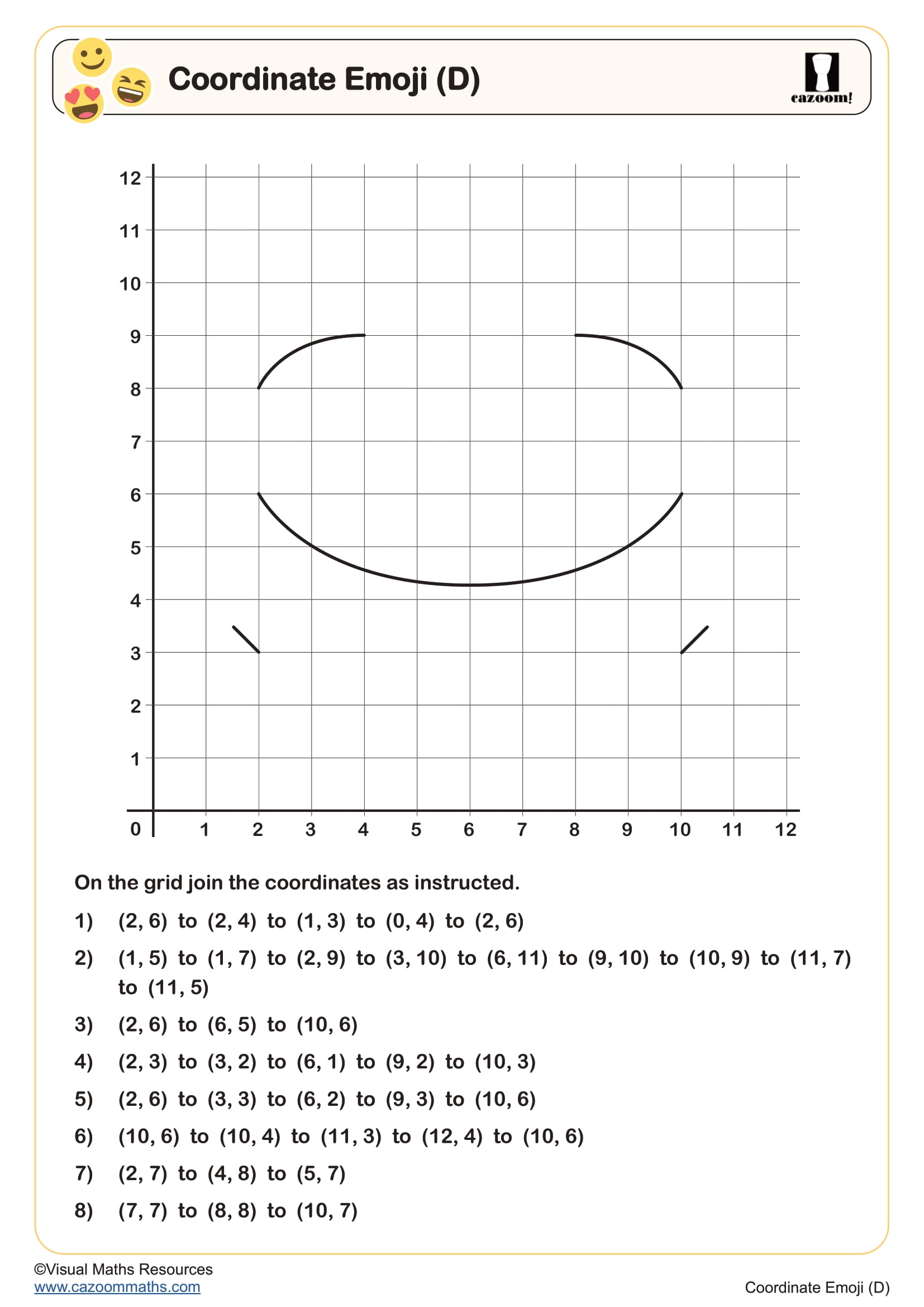
Coordinate Emoji (D)
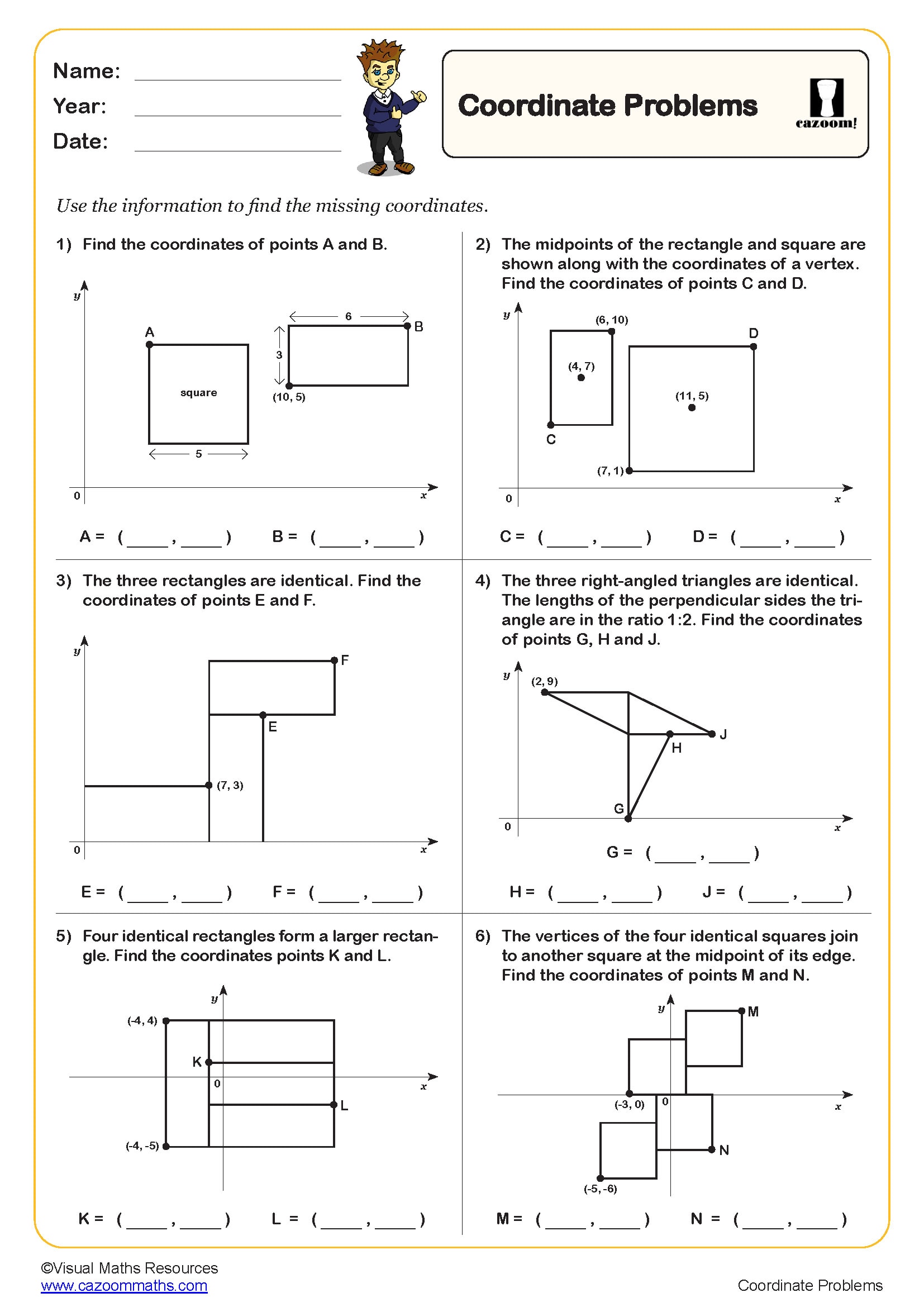
Coordinate Problems
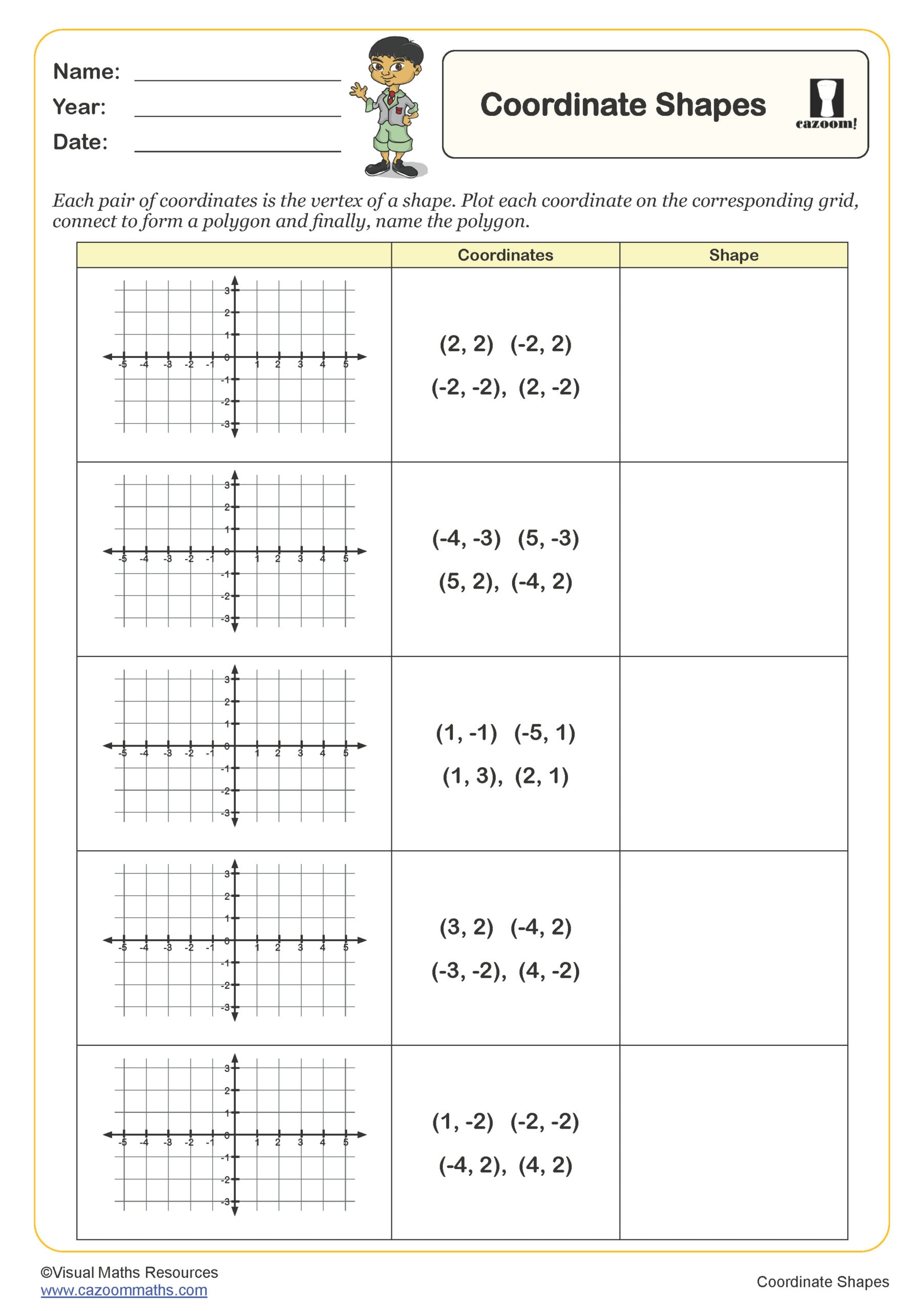
Coordinate Shapes
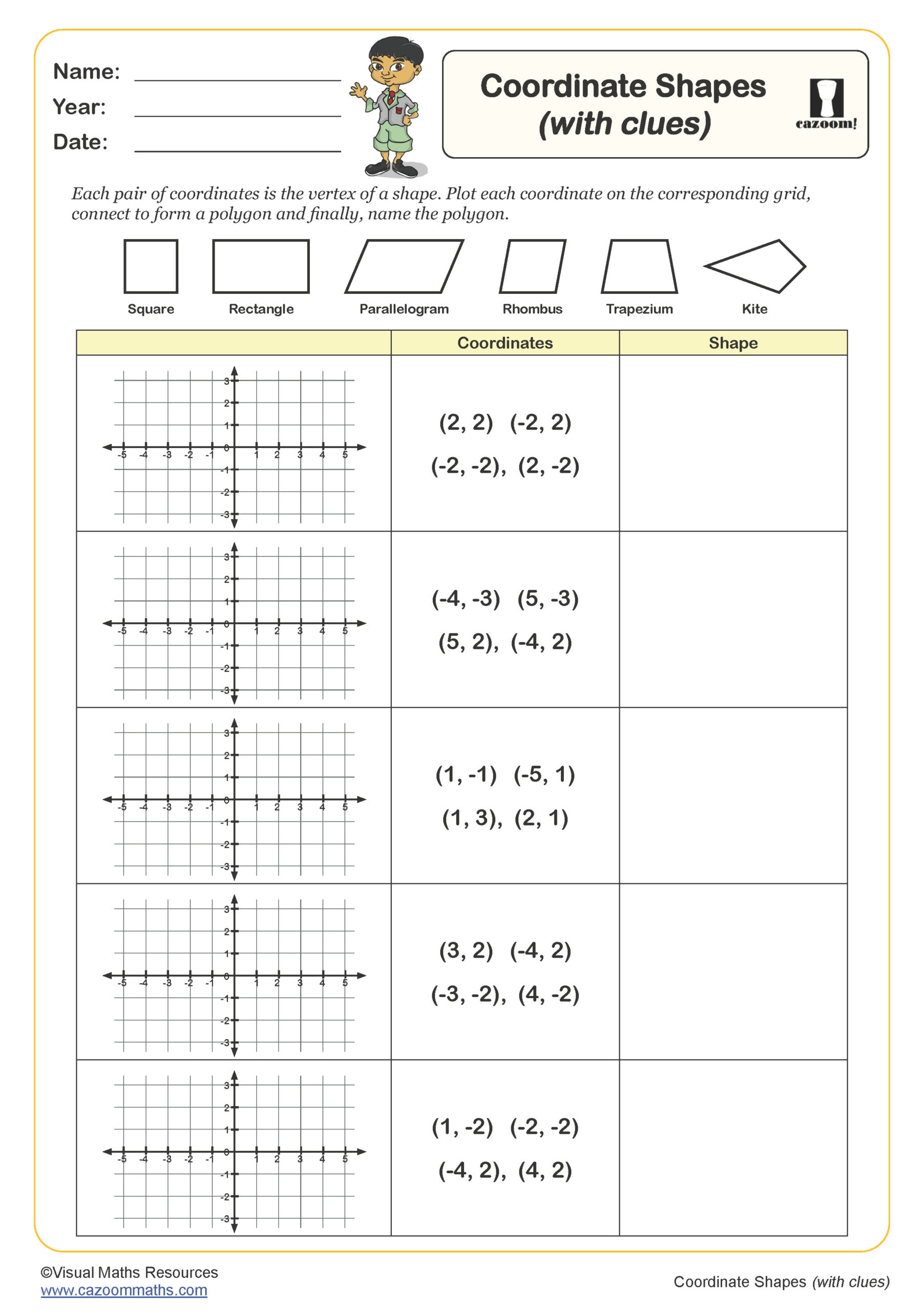
Coordinate Shapes (with clues)
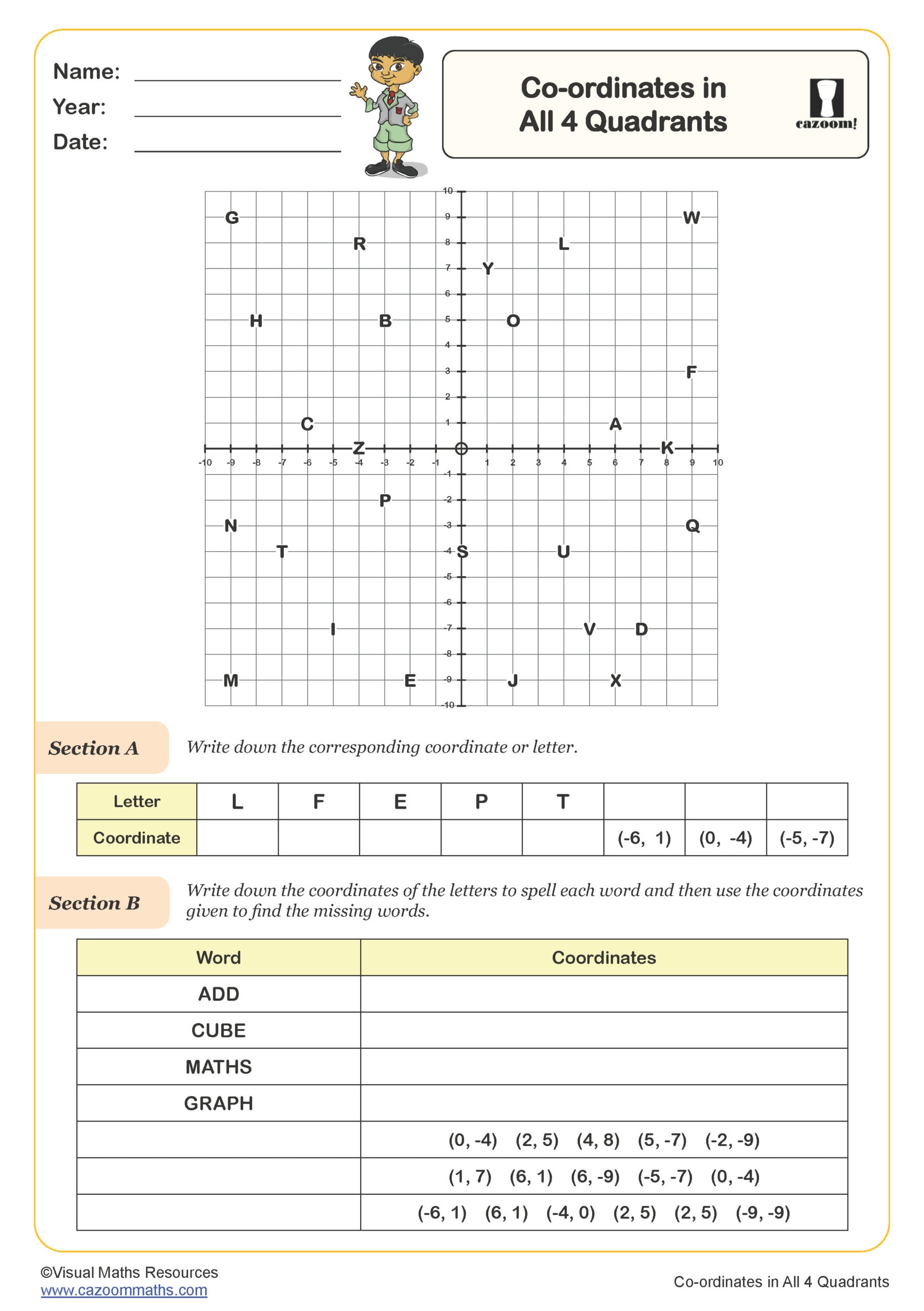
Coordinates in all four quadrants
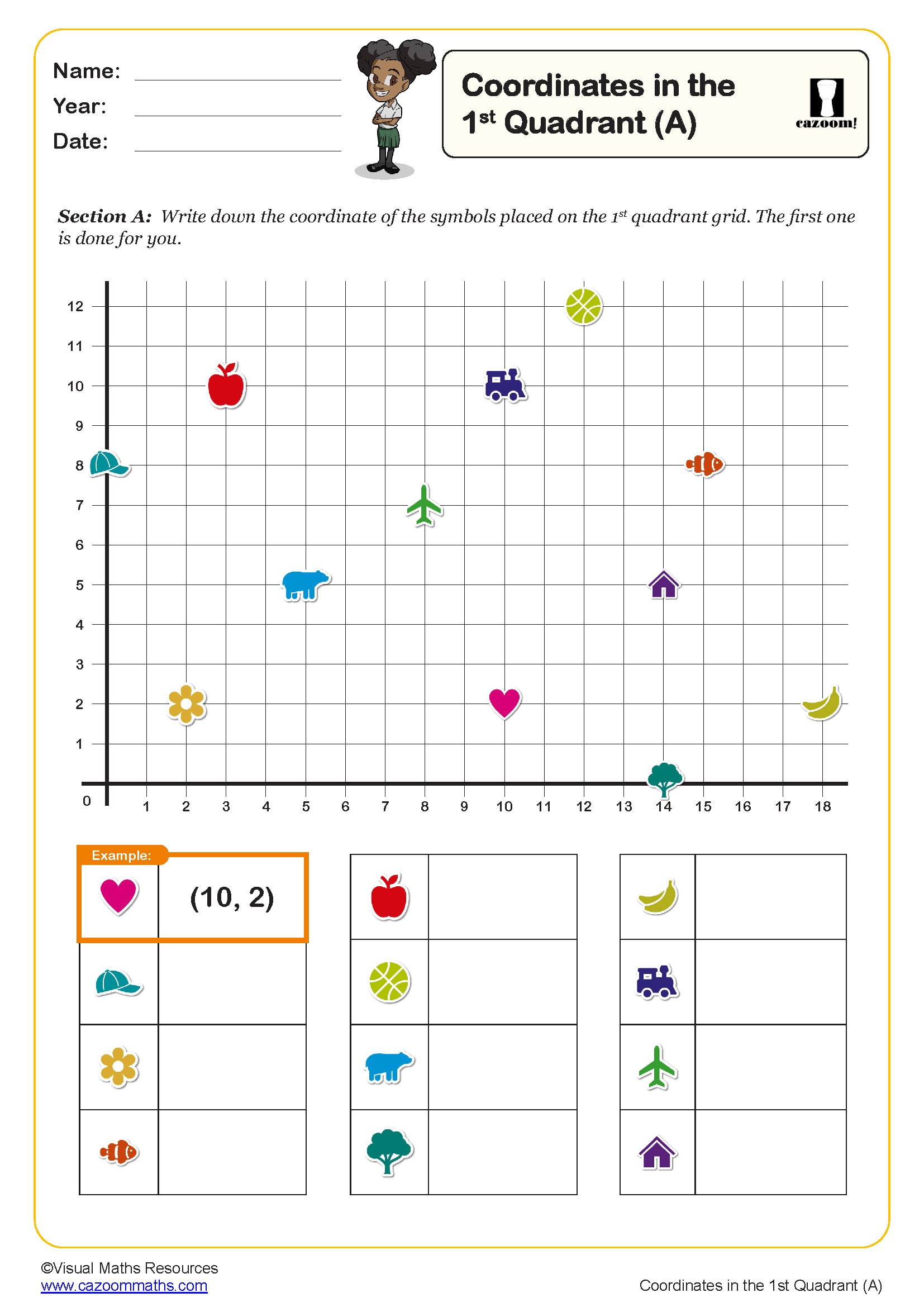
Coordinates in the First Quadrant (A)
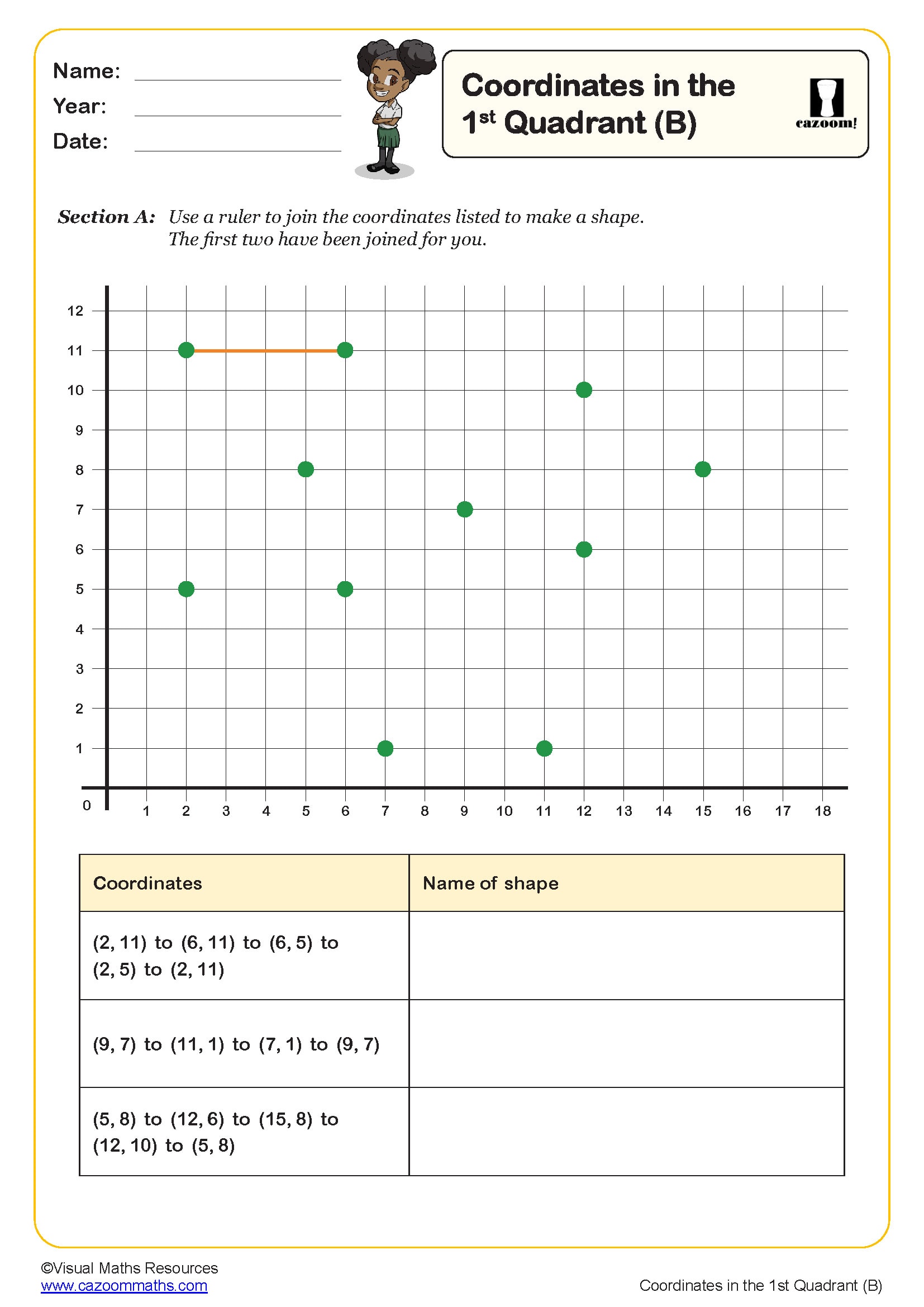
Coordinates in the First Quadrant (B)
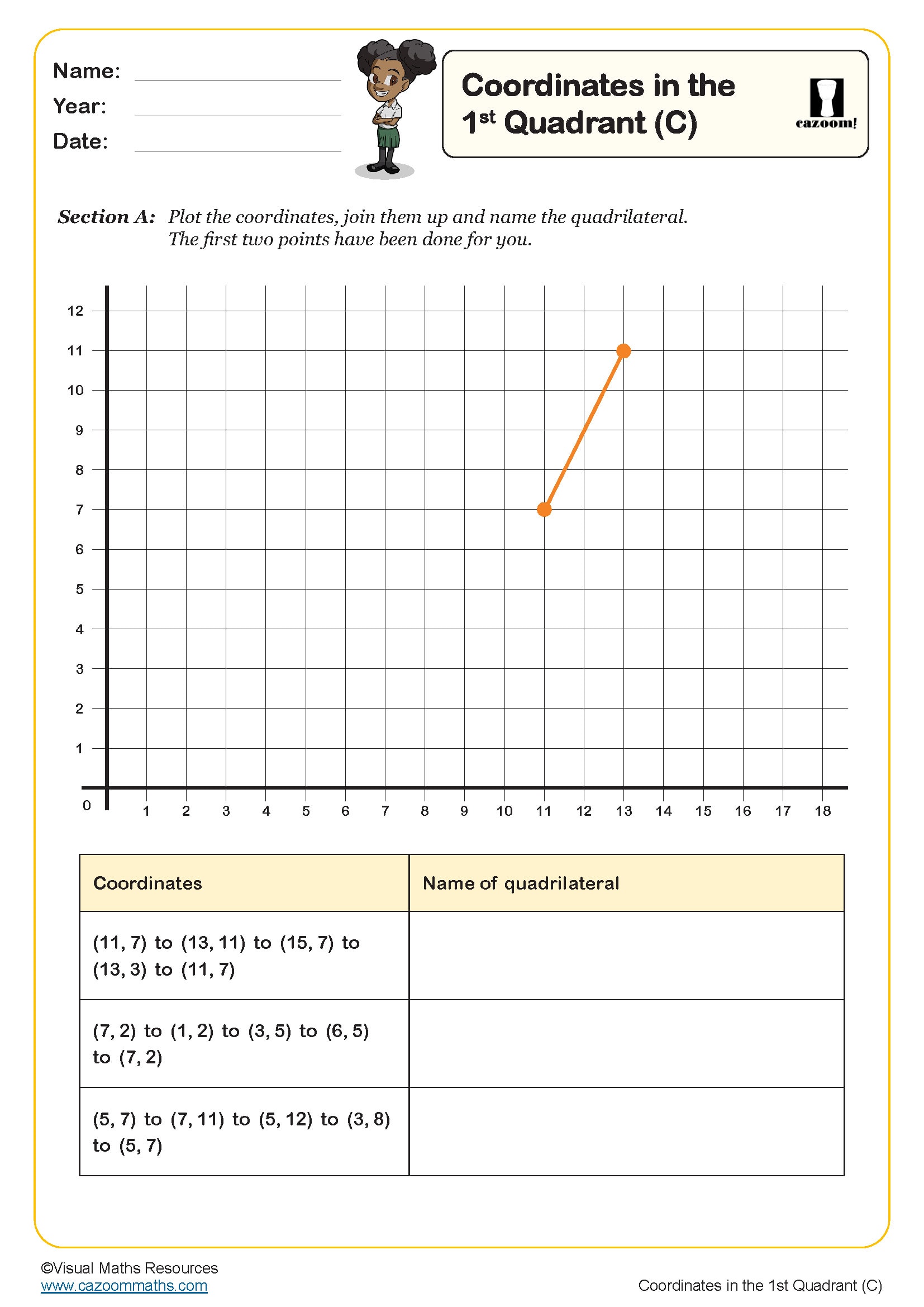
Coordinates in the First Quadrant (C)
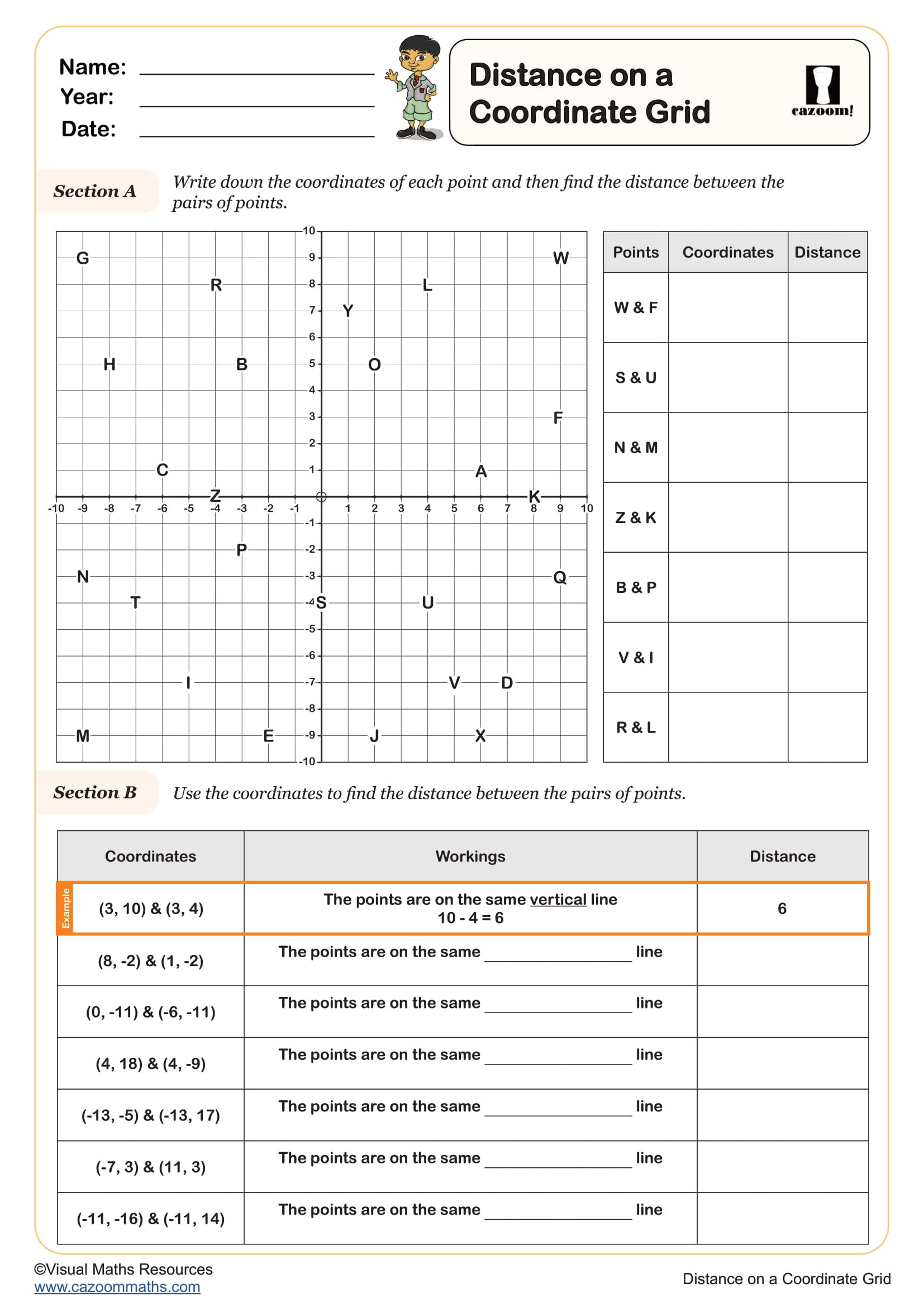
Distance on a Coordinate Grid
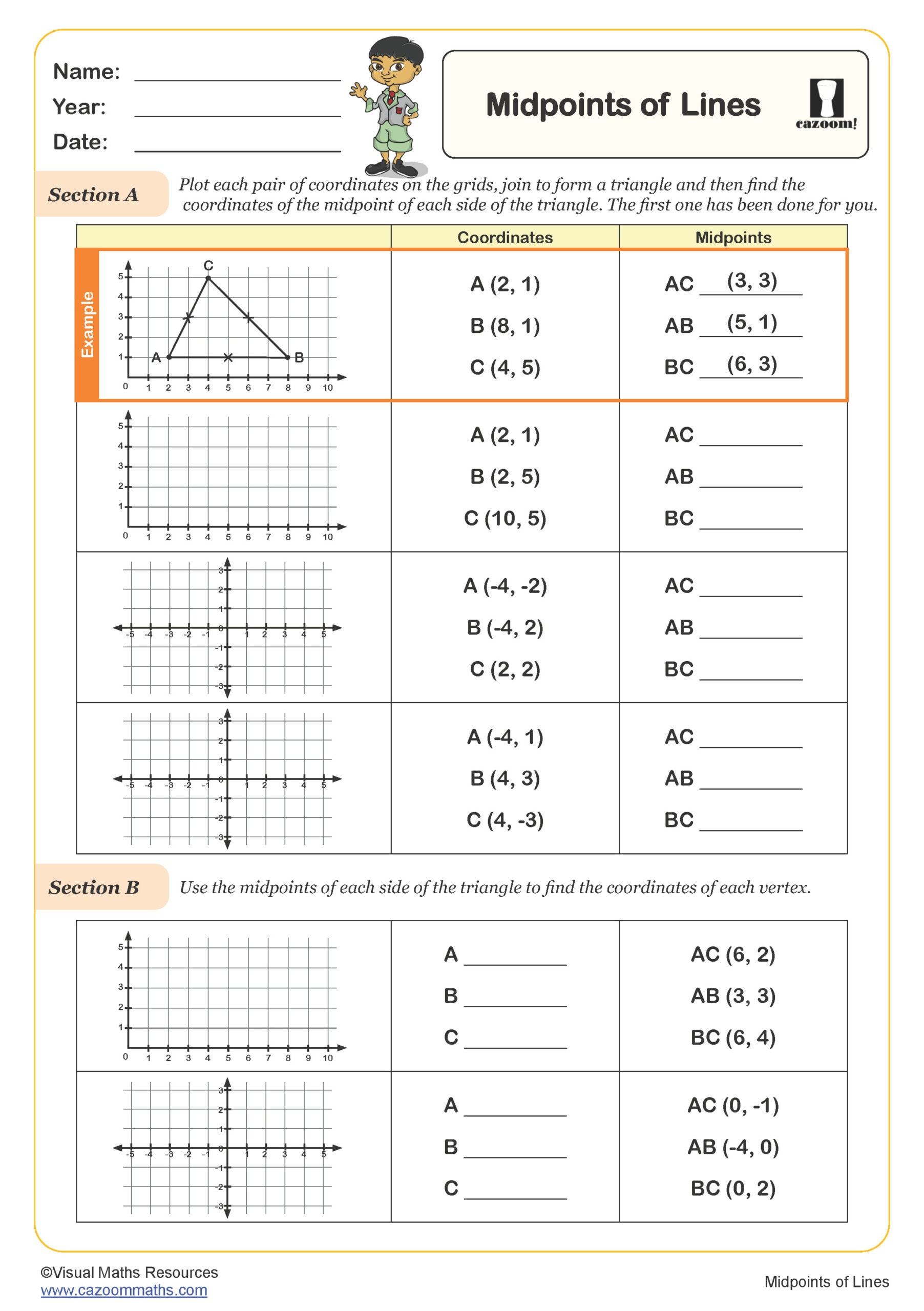
Midpoints of Lines
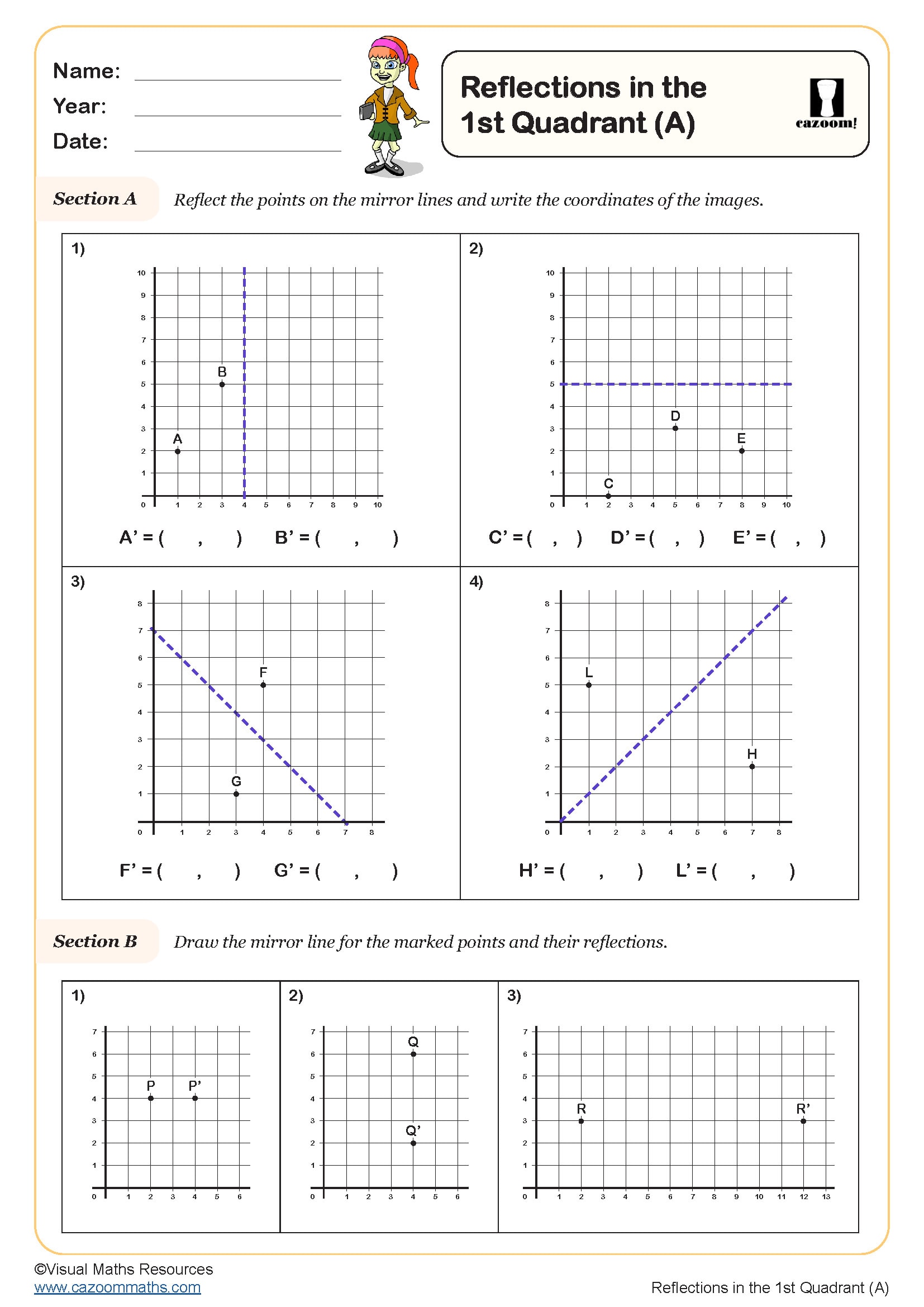
Reflections in the 1st Quadrant (A)
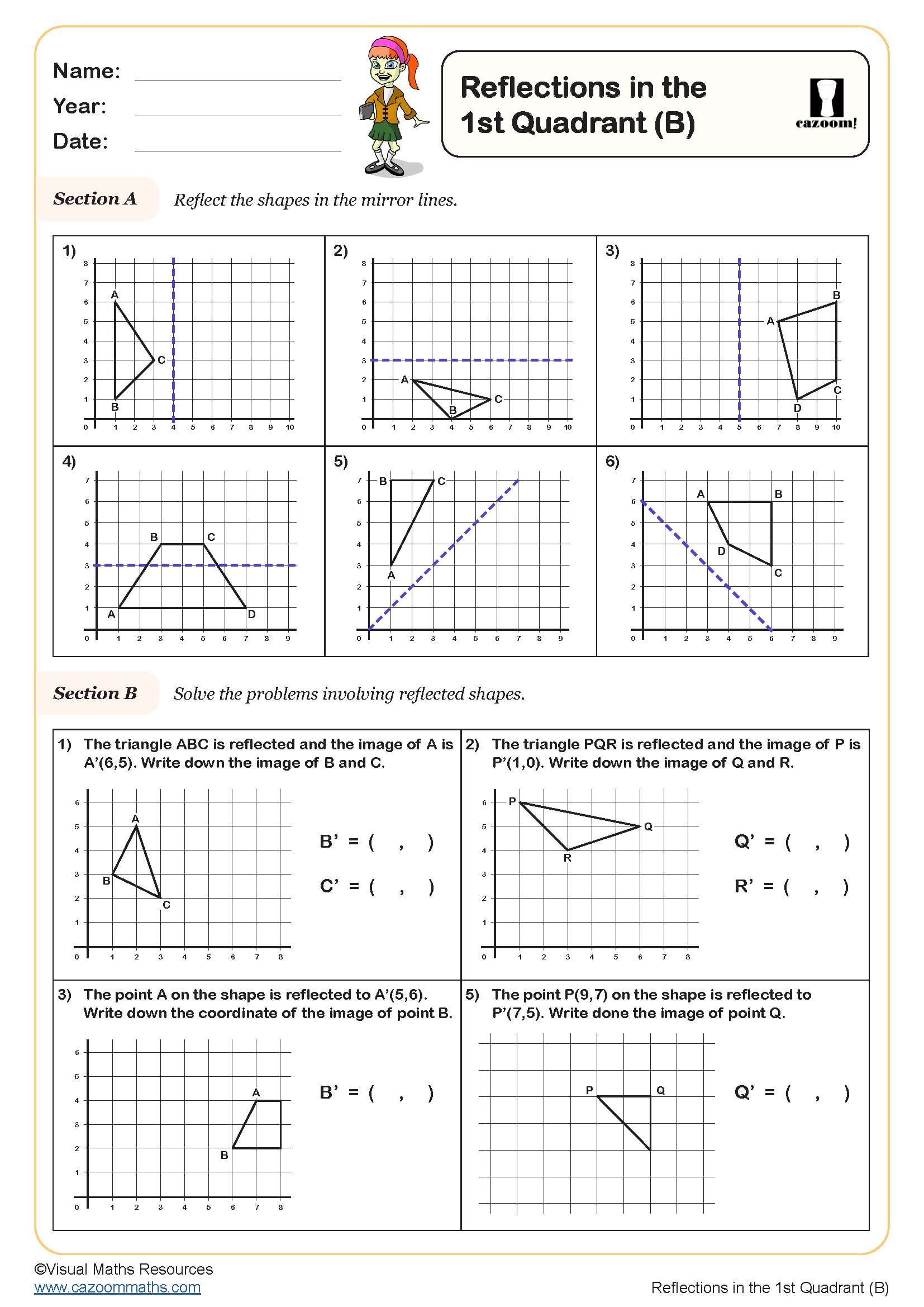
Reflections in the 1st Quadrant (B)
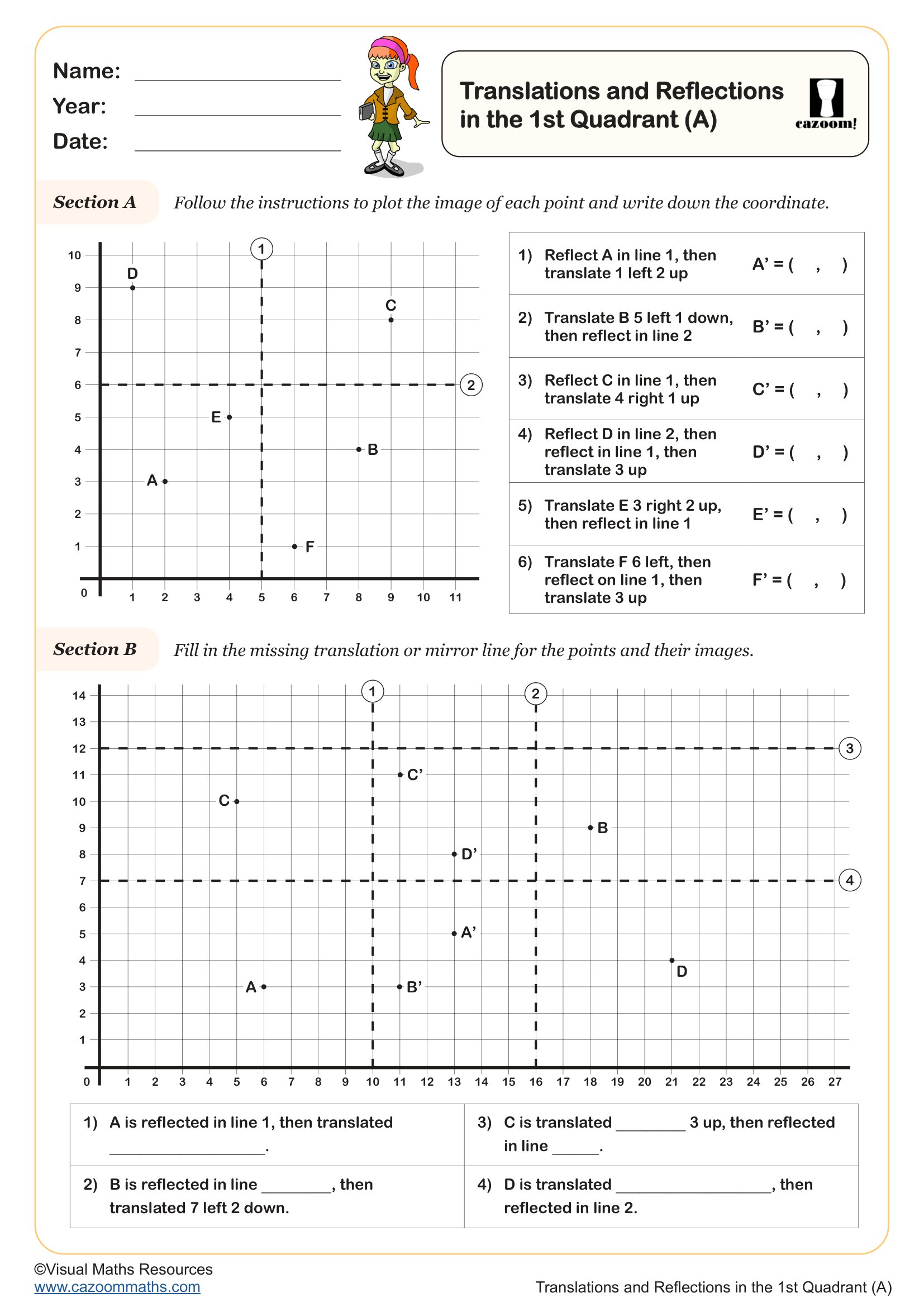
Translations and Reflections in the 1st Quadrant (A)
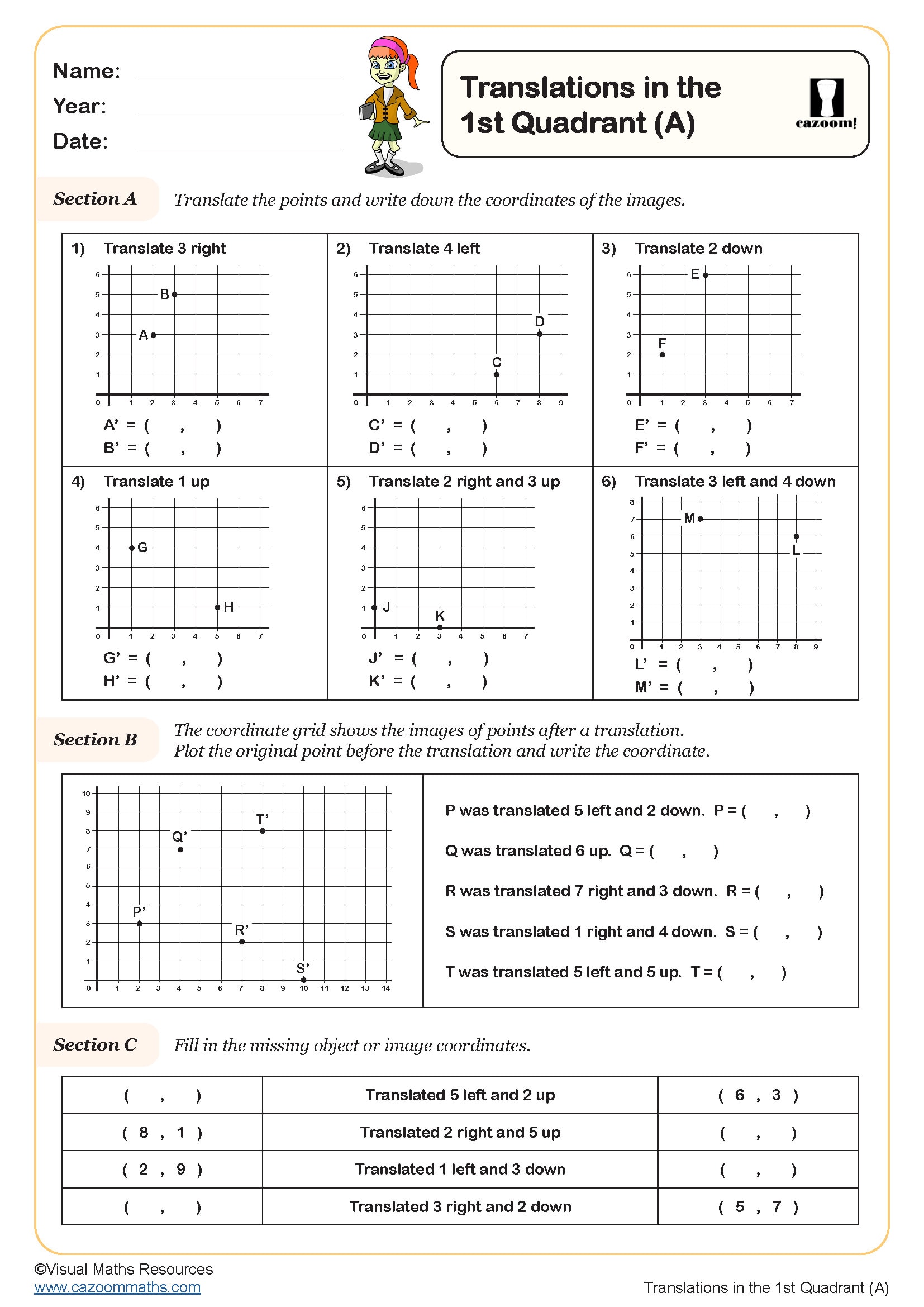
Translations in the 1st Quadrant (A)
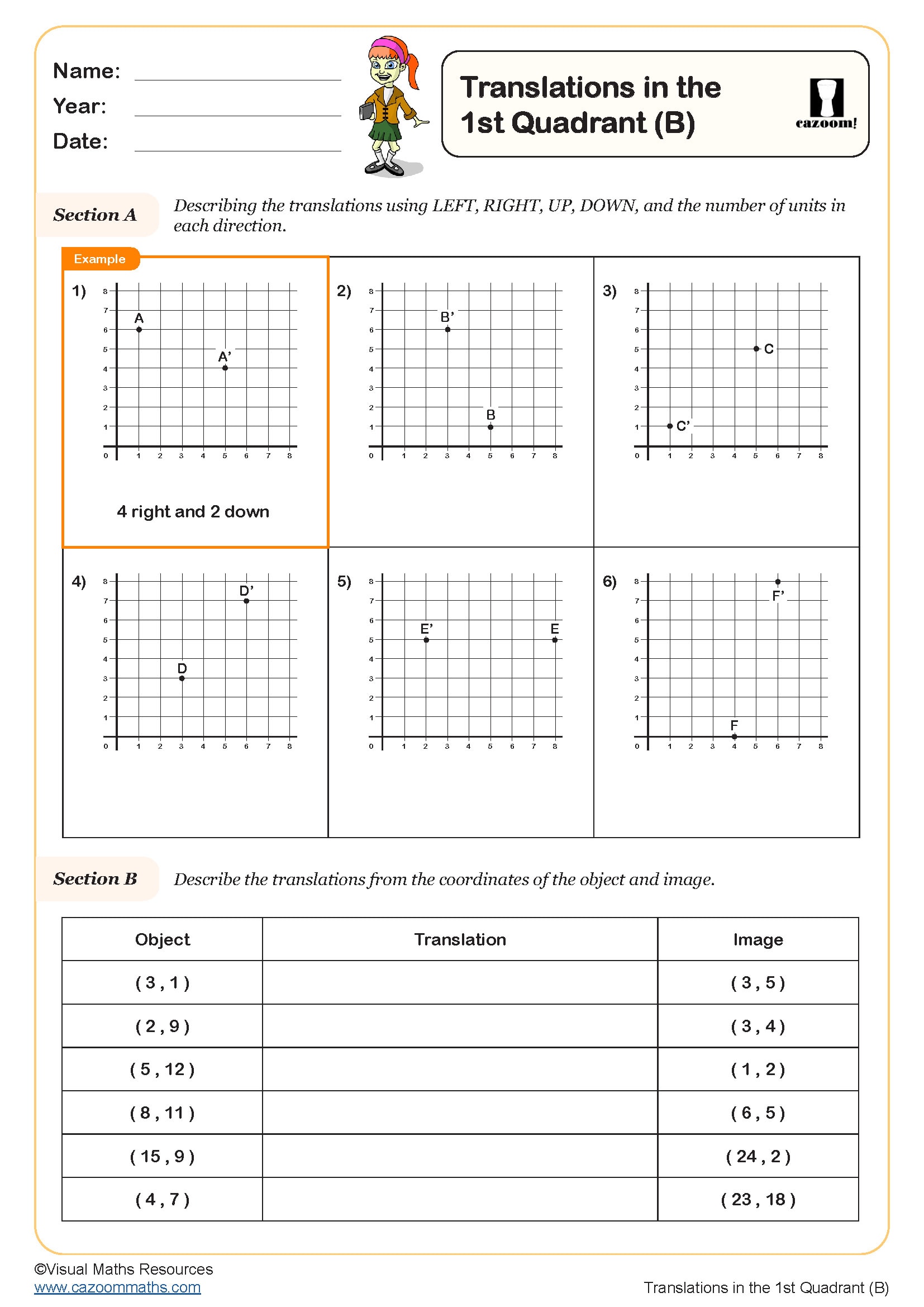
Translations in the 1st Quadrant (B)
All worksheets are created by the team of experienced teachers at Cazoom Maths.
What do pupils learn in position and direction at KS2?
Position and direction KS2 develops spatial awareness through practical coordinate work and transformations. In Year 4, pupils begin by describing positions on 2D grids using coordinates in the first quadrant. They learn to plot specified points and complete simple shapes, building confidence with ordered pairs and understanding that coordinates are read across first, then up.
By Years 5 and 6, the work extends to all four quadrants, including negative numbers. Pupils describe translations as movements left/right and up/down, identify positions after reflections in horizontal and vertical lines, and solve problems involving missing coordinates. This progression prepares them thoroughly for secondary maths.
Which year groups study position and direction?
Position and direction is taught across KS2, with content tailored to Years 4, 5, and 6. Year 4 introduces coordinates in the first quadrant, teaching pupils to read and plot points accurately. They describe positions and movements on grids, establishing the foundation for more complex transformations.
Year 5 extends this to all four quadrants, incorporating negative coordinates and introducing reflection and translation formally. Year 6 consolidates these skills with more challenging problems, including describing complete transformations and working with shapes across multiple quadrants. This structured progression ensures pupils build confidence systematically.
How do pupils learn to plot coordinates accurately?
Coordinate plotting begins with understanding that the x-coordinate (horizontal position) is always written and read first, followed by the y-coordinate (vertical position). Worksheets typically start with clearly marked grids where pupils practise reading existing points before plotting their own, reinforcing the 'along the corridor and up the stairs' method.
As confidence builds, exercises remove some grid support, requiring pupils to count carefully from the origin. Common errors like reversing coordinates are addressed through answer checking and repeated practice. By Year 6, pupils work fluently with both positive and negative coordinates, accurately plotting points and identifying coordinates of vertices in complex shapes.
What's included with these worksheets?
Each position and direction worksheet comes with a complete answer sheet, allowing teachers to mark work efficiently and pupils to self-assess. The worksheets are designed as printable PDFs, making them practical for both classroom sets and individual home learning. Questions progress in difficulty within each sheet, starting with straightforward coordinate reading or plotting before moving to problem-solving.
Worksheets include clearly drawn grids with appropriate scales for each year group. Exercises cover the full range of curriculum requirements: reading and plotting coordinates, describing movements, completing shapes, and applying transformations. Visual clarity is prioritised throughout, ensuring pupils can focus on the mathematics rather than interpreting unclear diagrams.