KS2 Written Methods for Addition Worksheets
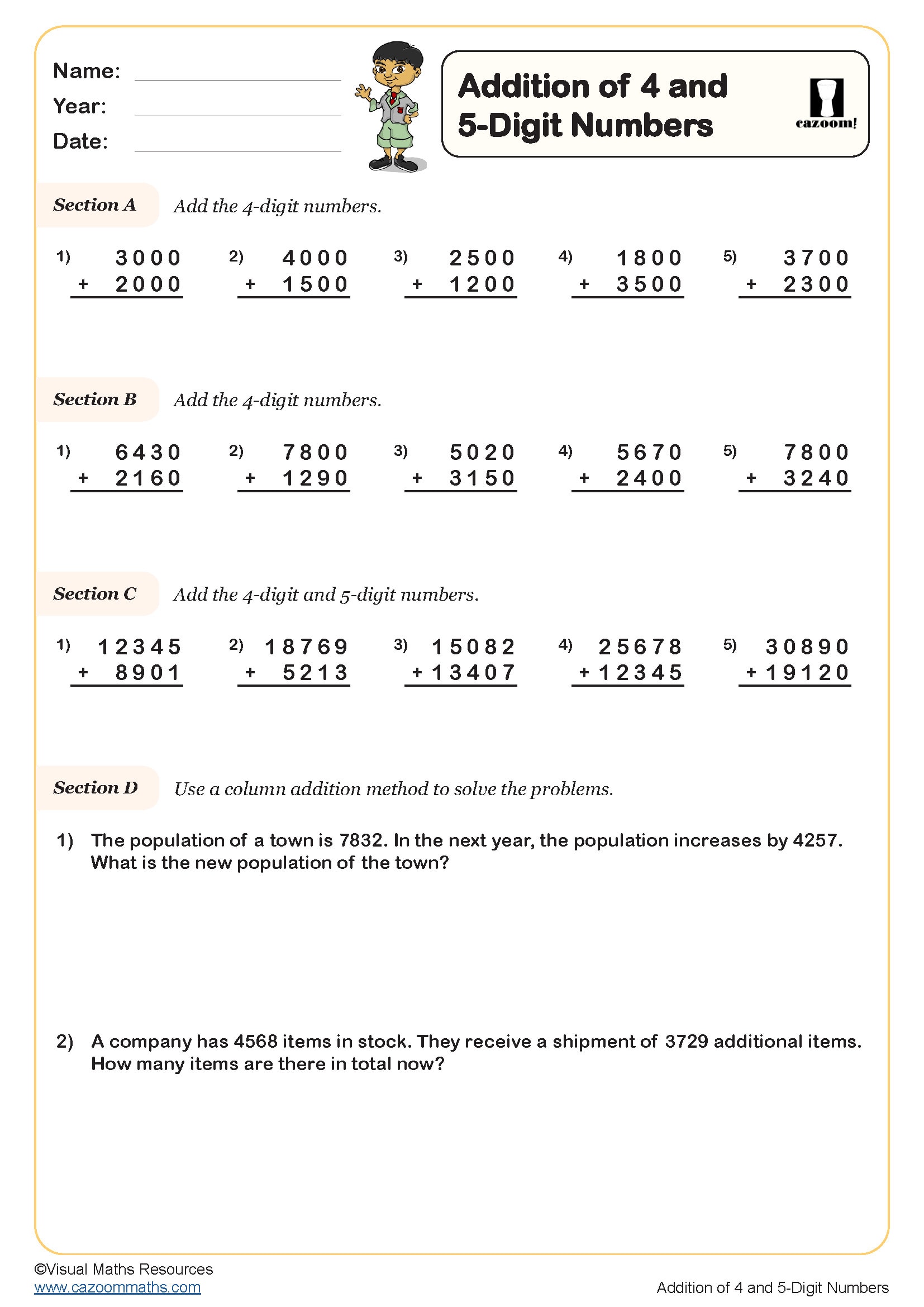
Addition of 4 and 5-digit Numbers
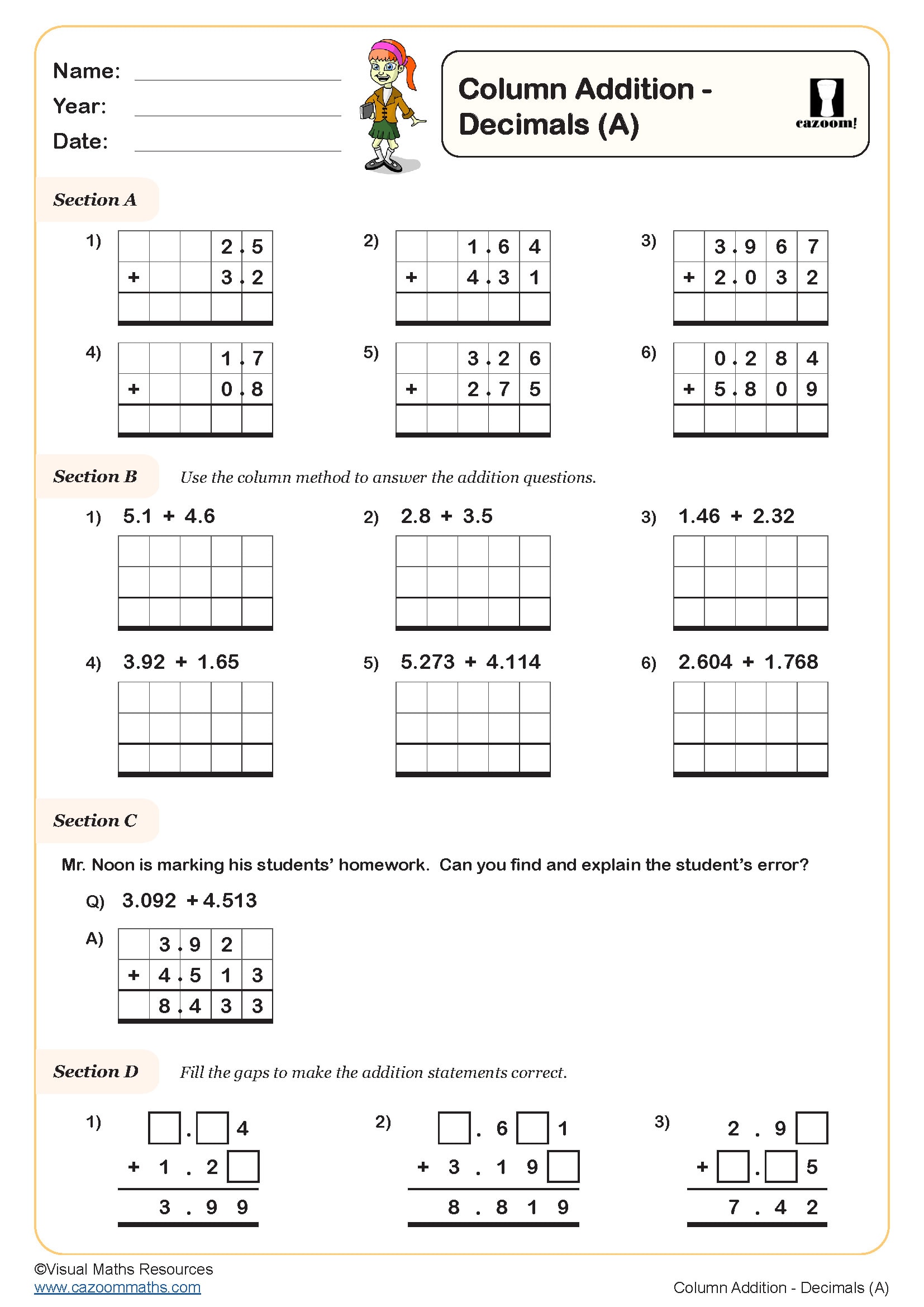
Column Addition - Decimals (A)
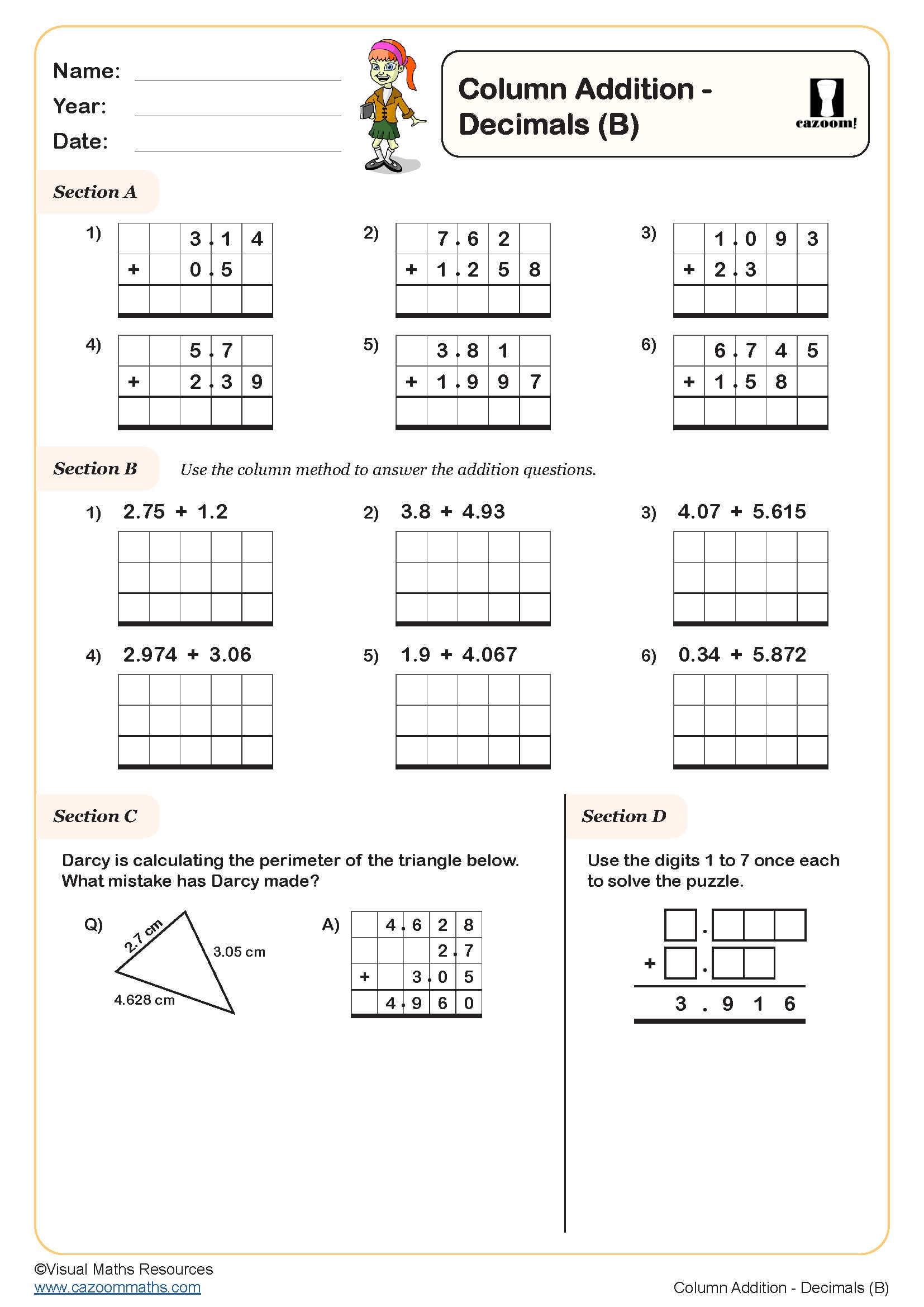
Column Addition - Decimals (B)
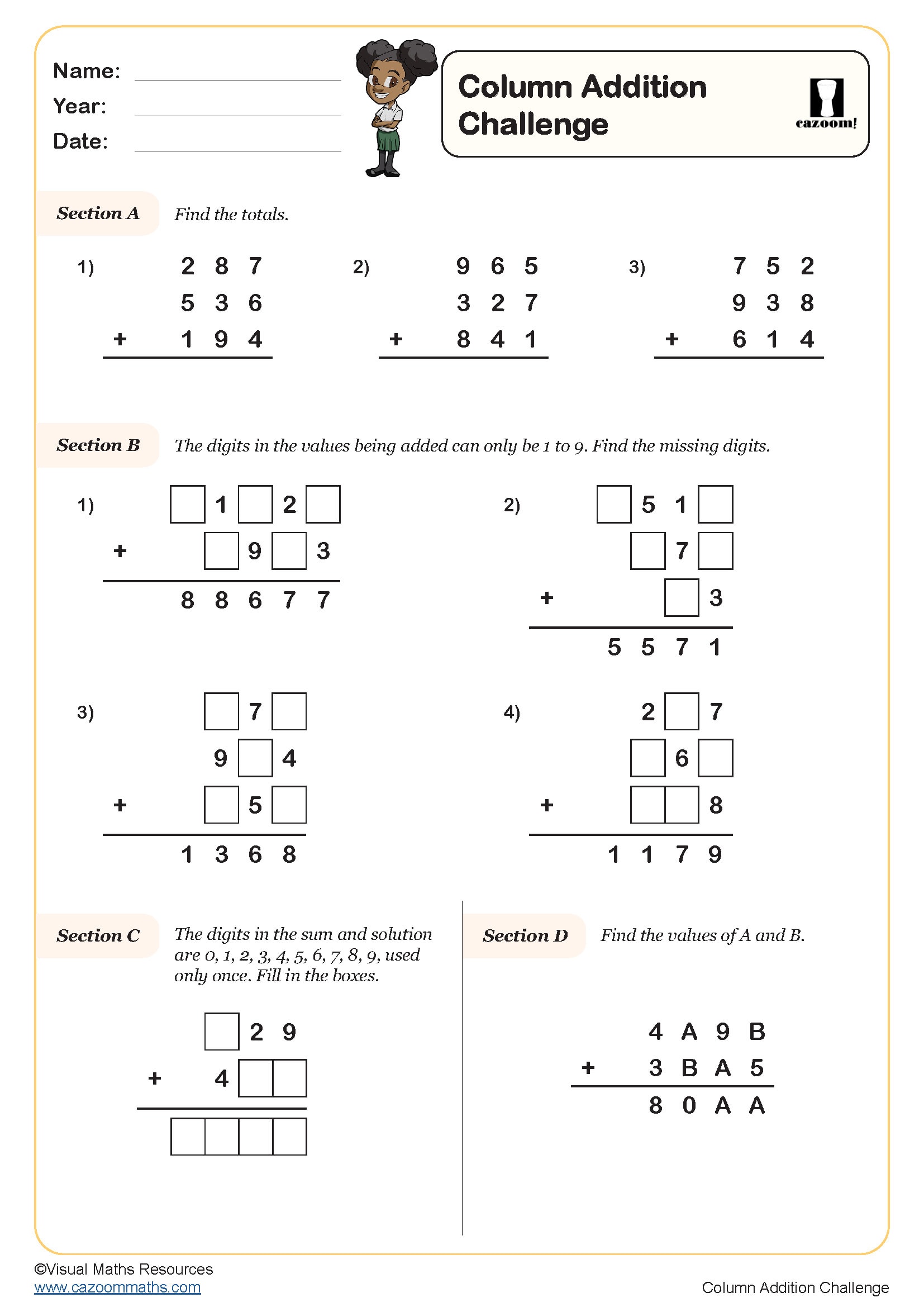
Column Addition Challenge
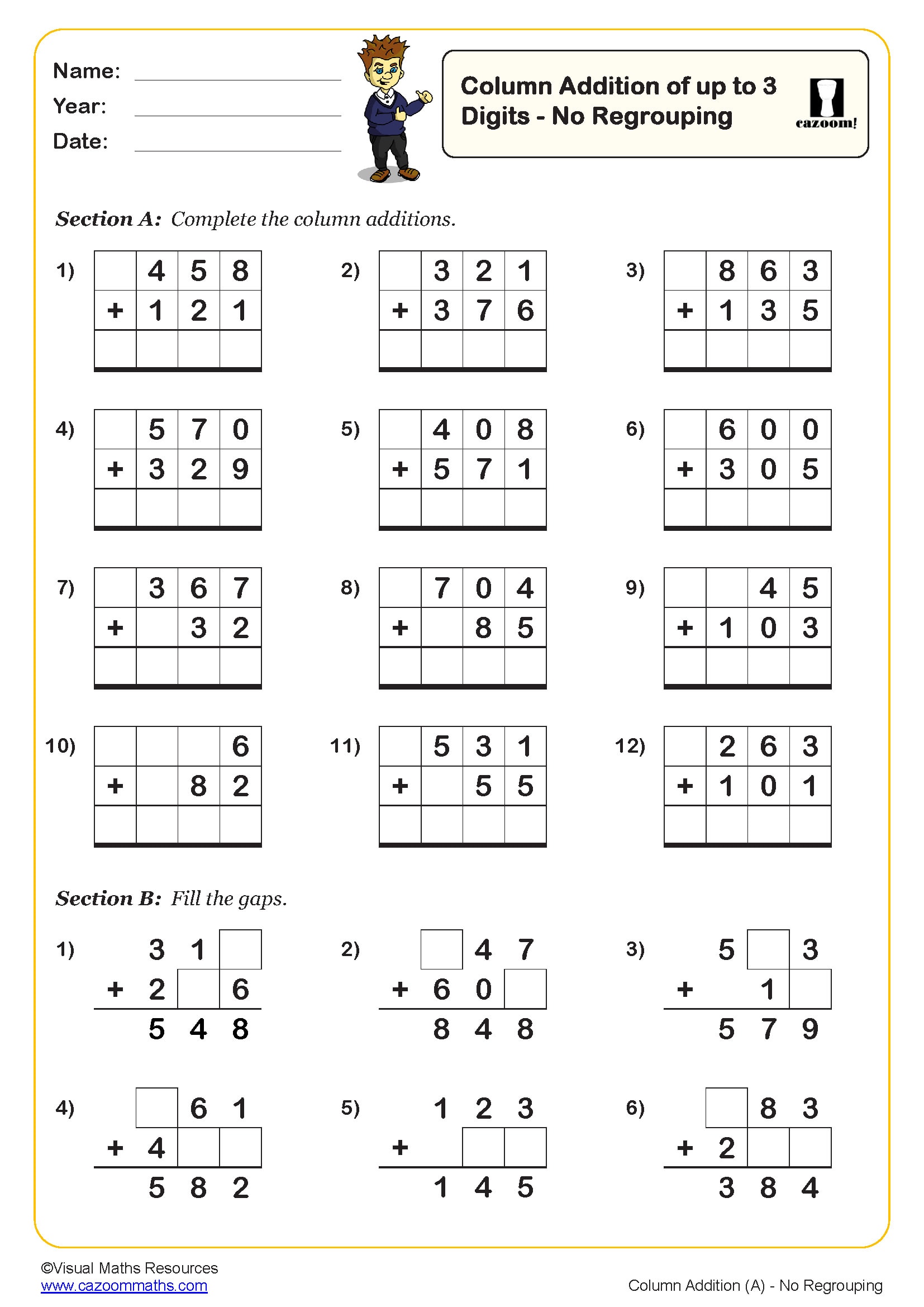
Column Addition of up to 3 Digits - No Regrouping
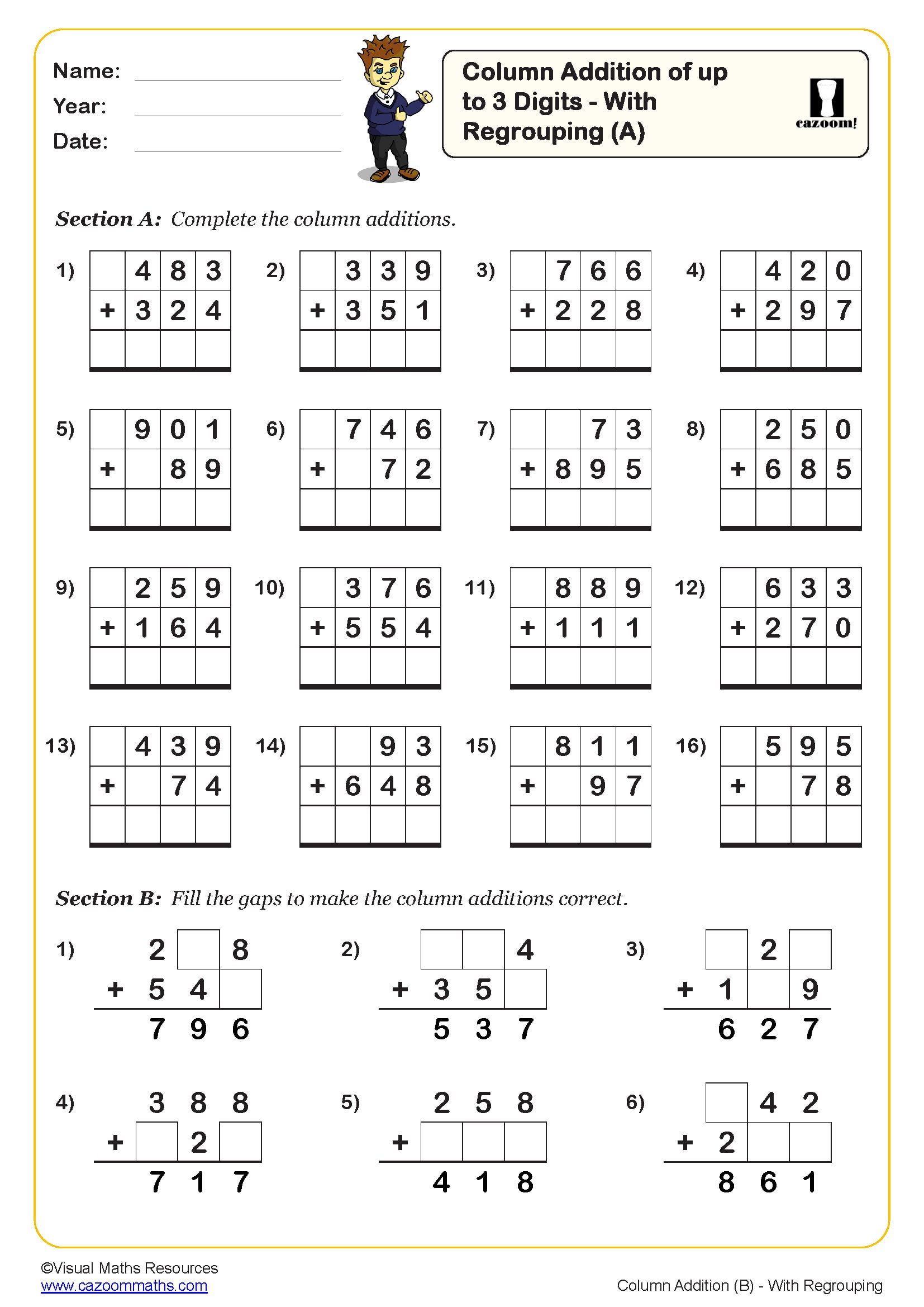
Column Addition of up to 3 Digits - With Regrouping (A)
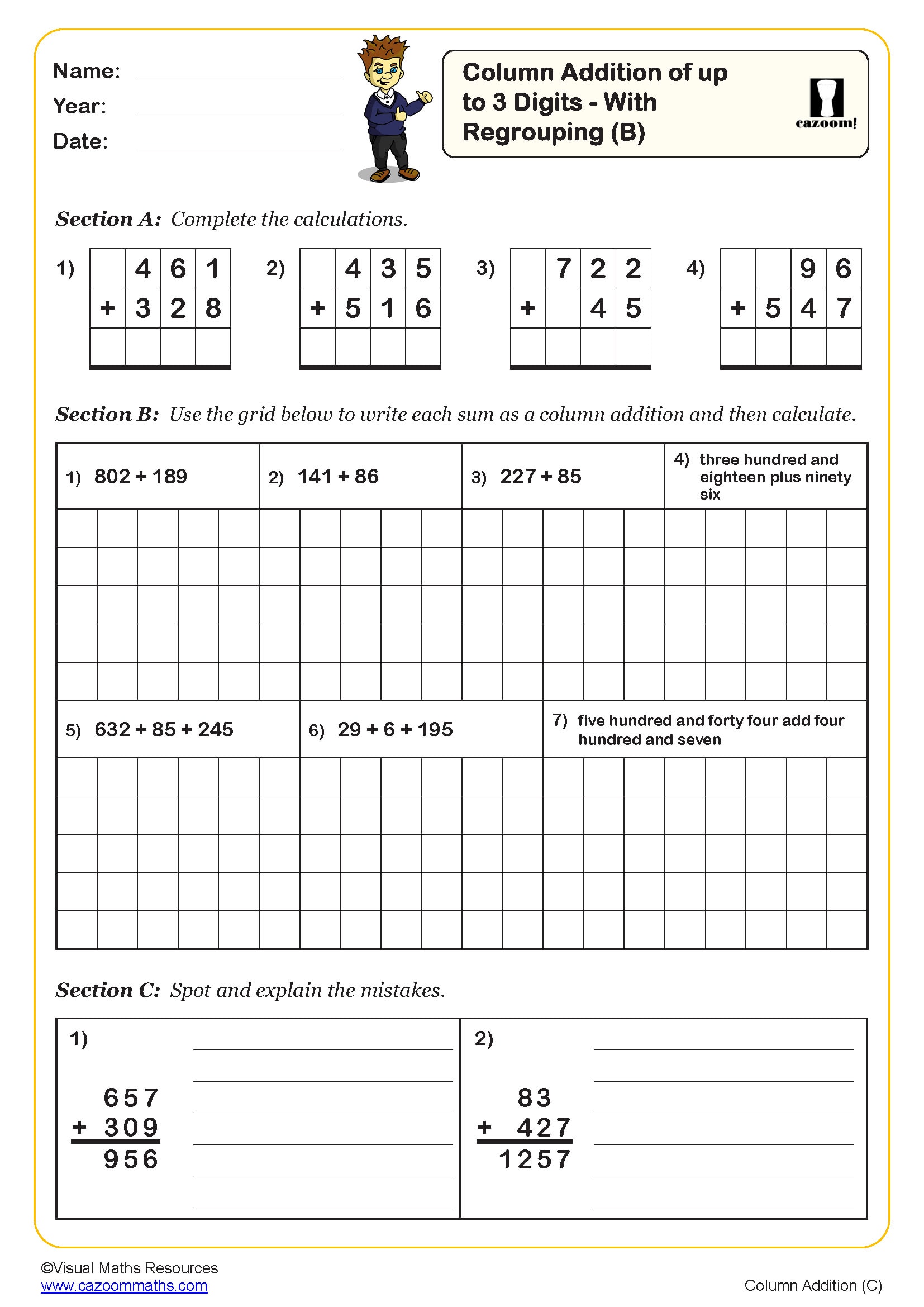
Column Addition of up to 3 Digits - With Regrouping (B)
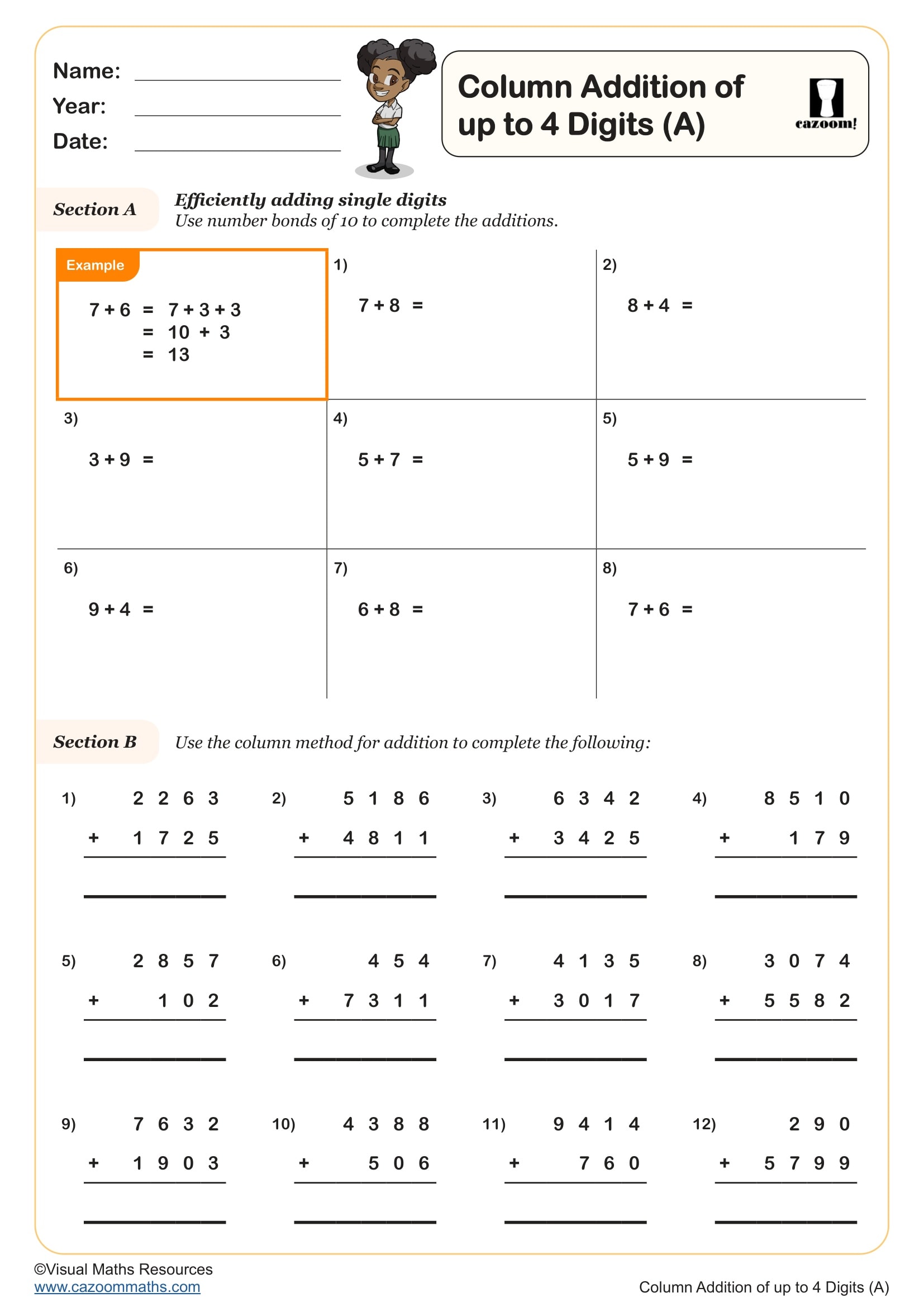
Column Addition of up to 4 Digits (A)
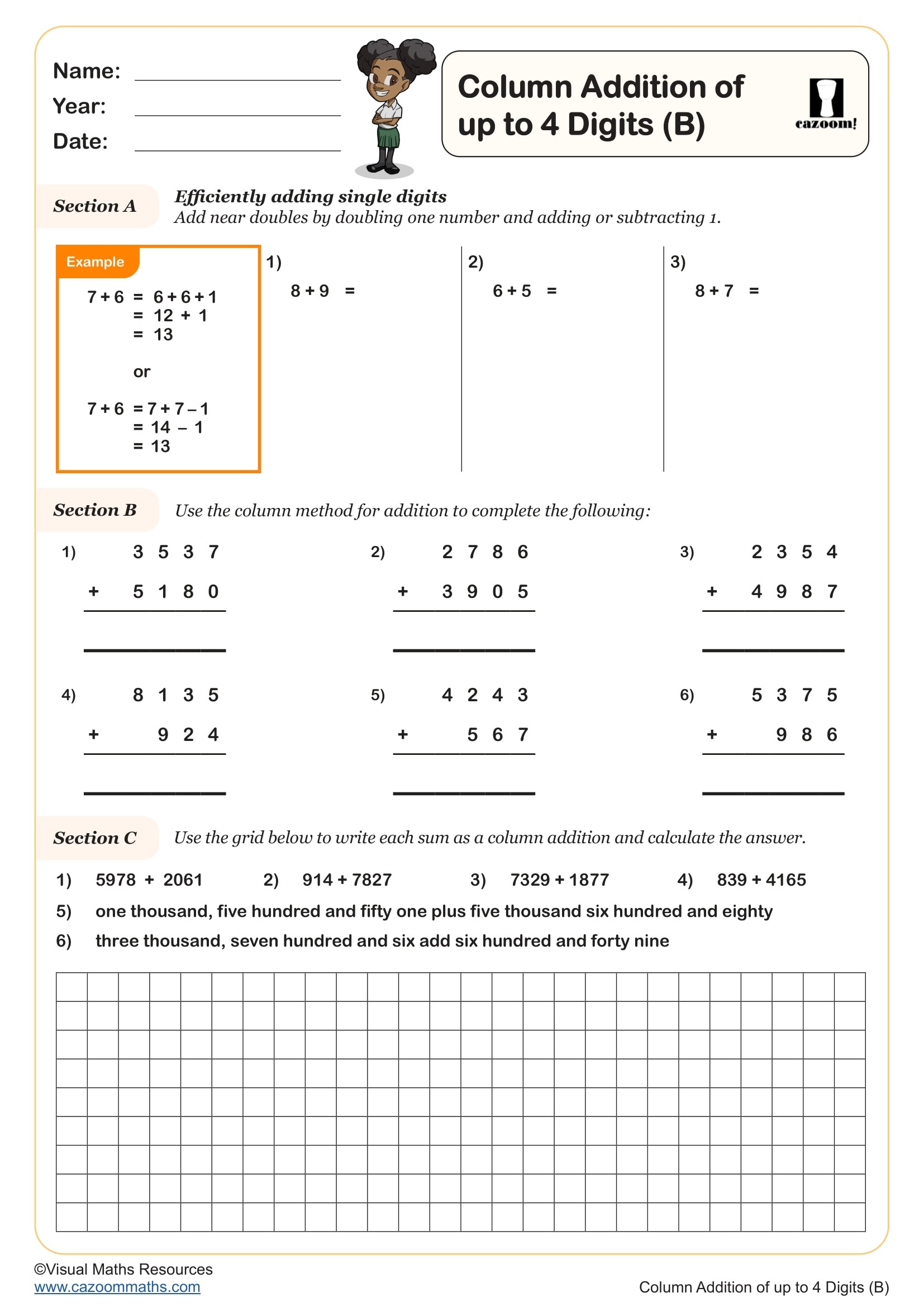
Column Addition of up to 4 Digits (B)
Use Formal Methods for the Addition of Integers

All worksheets are created by the team of experienced teachers at Cazoom Maths.
What is the column method for addition in KS2?
The column method is the formal written approach to addition taught throughout KS2, where numbers are arranged vertically with place value columns aligned. Pupils write the ones under ones, tens under tens, and so forth, then add each column from right to left. When a column total reaches 10 or more, pupils carry the extra value to the next column—this is sometimes called regrouping or exchanging.
This method becomes essential when mental strategies are inefficient, particularly with larger numbers or decimals. The National Curriculum introduces the formal written method in Year 3 and expects increasing fluency through Year 6. Mastering column addition builds the foundation for more complex calculations and helps pupils understand place value practically through the carrying process.
Which year groups use written addition methods?
Written methods for addition are taught throughout Key Stage 2, with our worksheets covering Years 3, 4, 5, and 6. Year 3 pupils begin with the formal written method using three-digit numbers, establishing the fundamental technique. Year 4 extends this to four-digit numbers and introduces calculations requiring multiple exchanges across different place value columns.
In Years 5 and 6, pupils apply written addition to increasingly complex calculations, including numbers with more than four digits and decimal values with up to two decimal places. The progression ensures pupils develop automaticity with the method whilst tackling calculations that genuinely require a written approach rather than relying on mental strategies.
How do you teach carrying in column addition?
Carrying, or regrouping, occurs when adding a column produces a total of 10 or more. Pupils record the ones digit in that column and carry the tens value to the next column on the left. The carried digit is typically written small beneath the next column as a reminder to include it in that column's addition.
Effective teaching uses concrete resources like base-ten blocks or place value counters initially, allowing pupils to physically exchange ten ones for one ten. This hands-on experience clarifies why we carry and strengthens place value understanding. Worksheets then provide the repetitive practice needed to internalise the procedure, with careful progression from single exchanges to problems requiring carrying across multiple columns.
Do the worksheets include answers for marking?
Yes, every written methods for addition worksheet includes a complete answer sheet. This allows pupils to self-mark their work, developing independence and immediate feedback on their accuracy. For teachers and parents, the answer sheets significantly reduce marking time whilst ensuring reliable checking of potentially complex multi-digit calculations.
The answer sheets are particularly valuable when worksheets are used for homework or independent practice sessions. Pupils can identify their own errors and revisit the method, whilst teachers can quickly identify common misconceptions across the class. All resources are provided as downloadable PDFs, so you can print the worksheets and answer sheets separately as needed for your classroom organisation.