KS2 Written Methods for Subtraction Worksheets
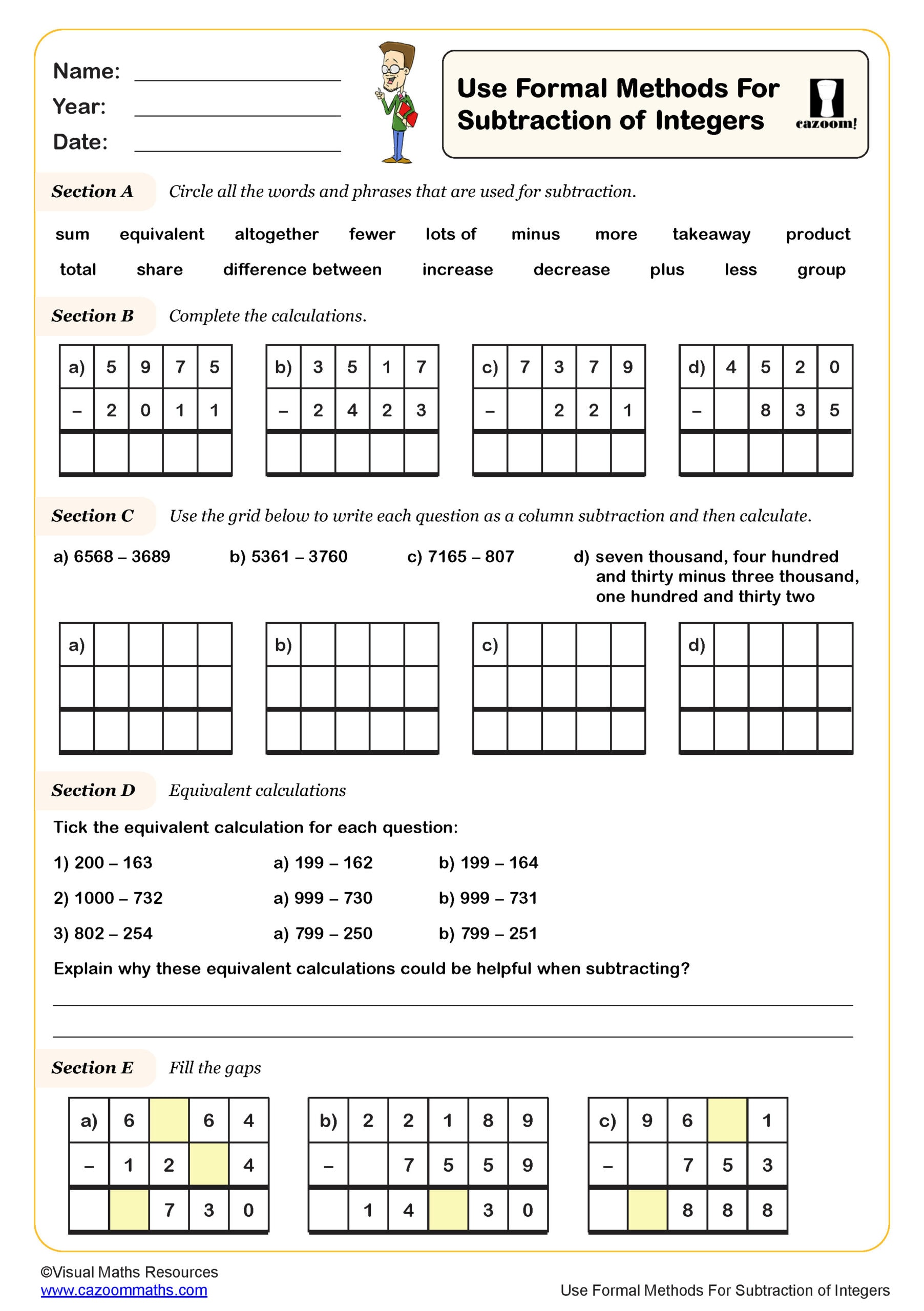
All worksheets are created by the team of experienced teachers at Cazoom Maths.
What written methods for subtraction are taught in KS2?
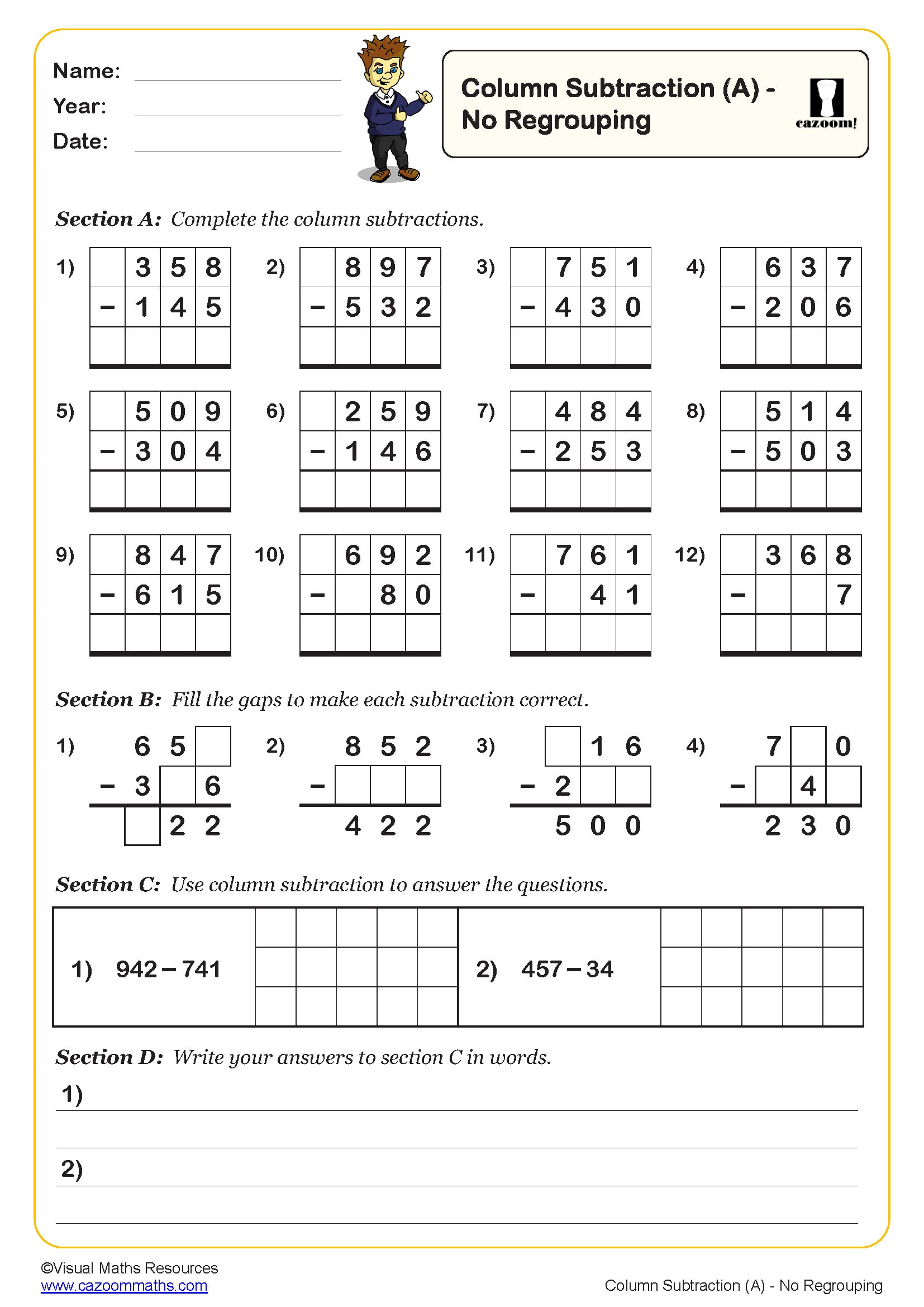
The primary written method for subtraction in KS2 is the column method, also known as the standard algorithm. Students learn to arrange numbers vertically with units, tens, hundreds and thousands aligned in columns. This systematic approach allows them to subtract digit by digit, starting from the rightmost column and moving left.
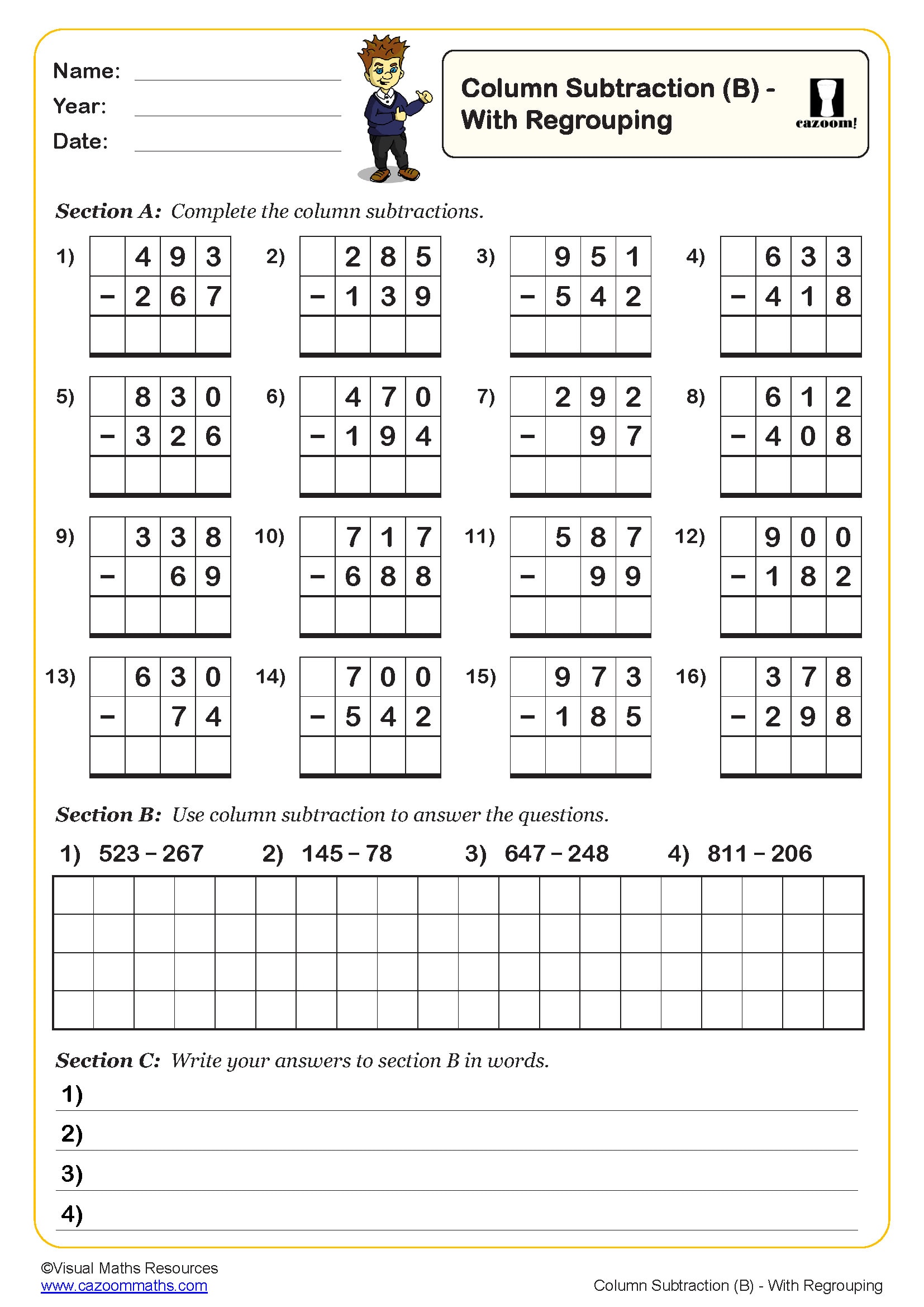
The crucial skill within column subtraction is regrouping (previously called borrowing or exchanging). When a digit in the top number is smaller than the corresponding digit below, students exchange one unit from the next column to the left. Our worksheets provide progressive practice with this technique, from simple calculations without regrouping through to multi-digit problems requiring multiple exchanges.
Which year groups use these subtraction worksheets?
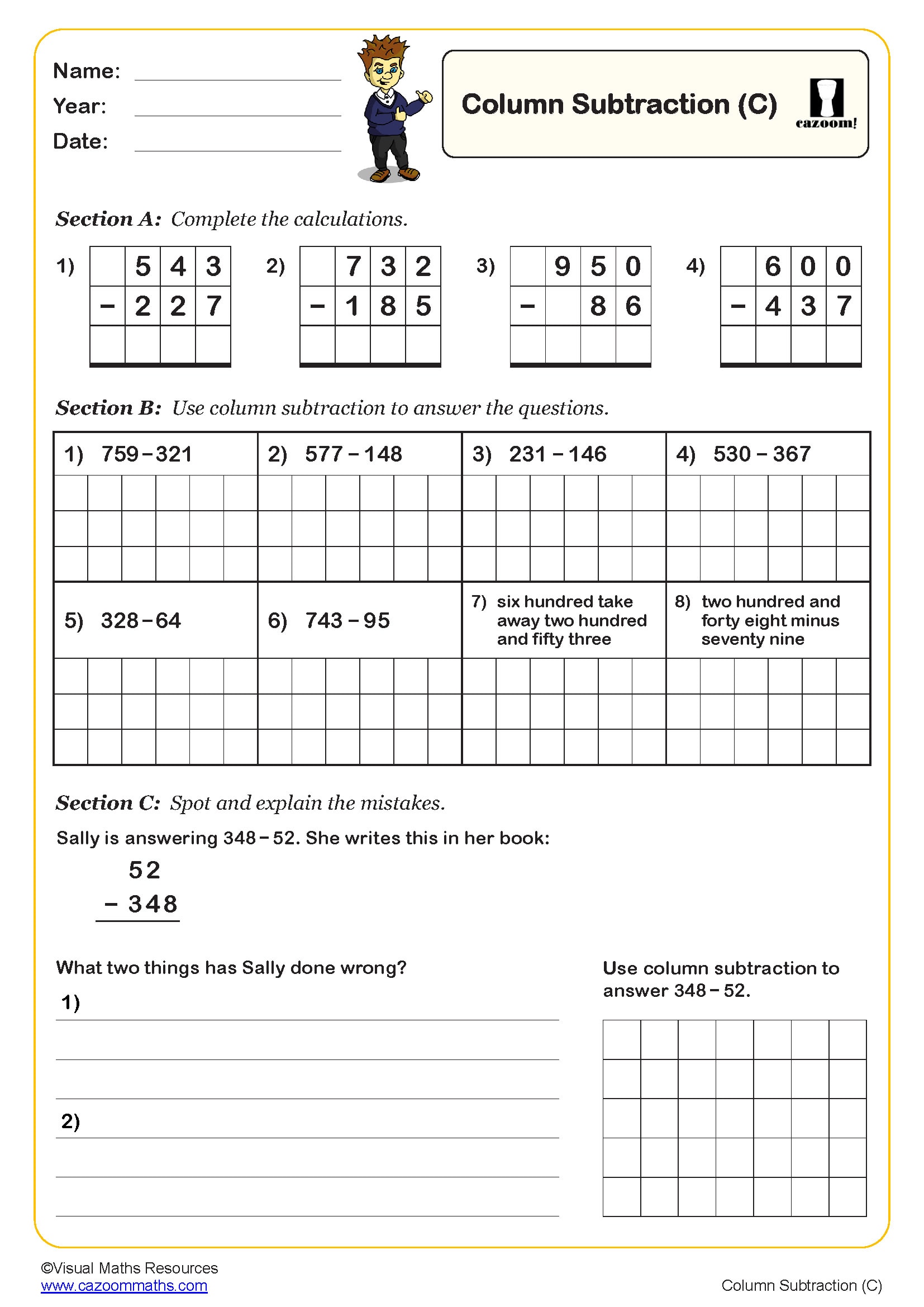
These written methods for subtraction worksheets cover Years 3, 4, 5 and 6, spanning the entire KS2 curriculum. Year 3 students typically begin with three-digit column subtraction and introduce regrouping with smaller numbers. Year 4 extends this to four-digit numbers and more complex exchanges across multiple columns.
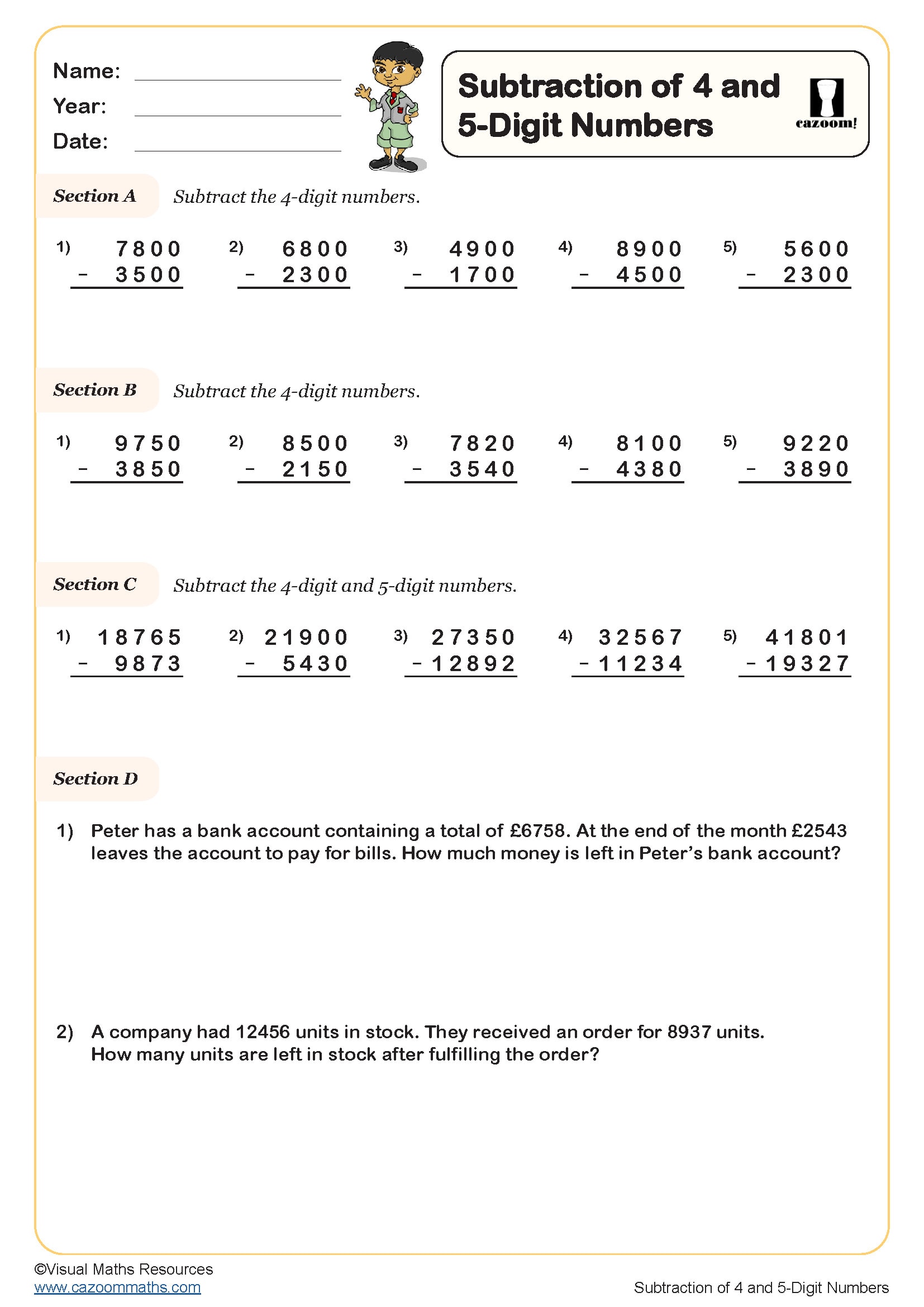
By Years 5 and 6, students tackle subtraction with larger whole numbers, decimals to two places, and multi-step problems. The progression across these year groups ensures students build confidence with the column method before applying it to increasingly challenging calculations, including those involving place value understanding and decimal notation.
How do students learn to subtract numbers with regrouping?
Regrouping is the process of exchanging one unit from a higher place value column when subtraction isn't possible in the current column. For example, when subtracting 8 from 3 in the units column, students exchange one ten (leaving fewer tens) to create 13 units, then subtract 8 from 13 to get 5.
Our worksheets develop this skill methodically, starting with single exchanges before progressing to problems requiring multiple regroupings across several columns. Students also encounter cases with zeros in the top number, which require exchanging from columns further left. Regular practice with varied examples builds the procedural fluency and place value understanding necessary for accurate subtraction with any size of number.
What's included with these subtraction worksheets?
Every worksheet comes with a complete answer sheet showing fully worked solutions. This allows teachers to mark work efficiently and enables students to self-assess and identify where they've made errors. The answer sheets are particularly valuable for understanding regrouping mistakes, as students can compare their working with the correct method.
The worksheets themselves contain carefully graded questions that build from straightforward calculations to more complex problems. Many include word problems requiring students to extract information and choose the appropriate operation. Available as downloadable PDFs, the resources can be printed for classroom use, set as homework, or used for intervention sessions with individuals or small groups.