Angles on Parallel Lines (B) WORKSHEET
Angles on Parallel Lines (B) WORKSHEET DESCRIPTION
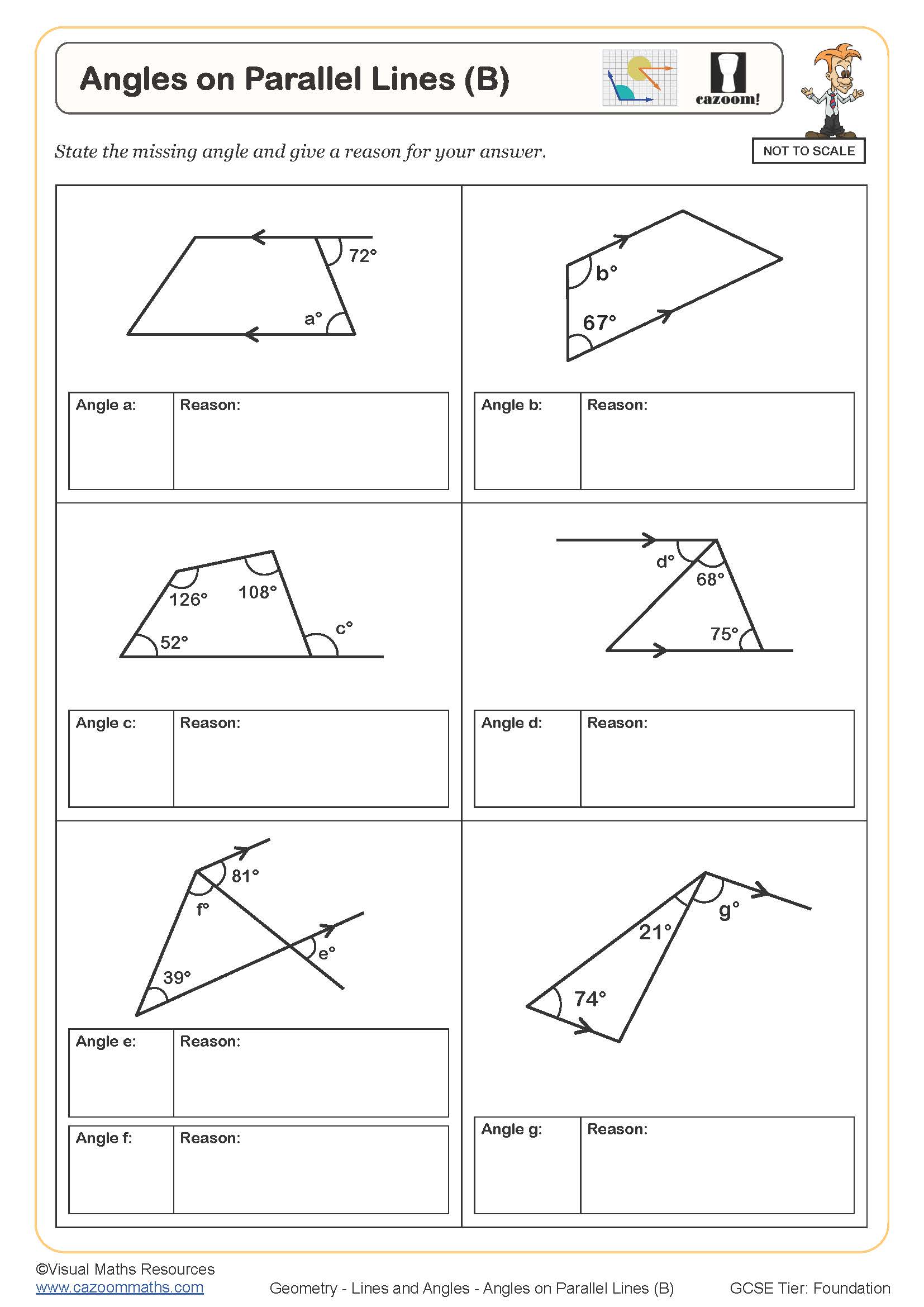
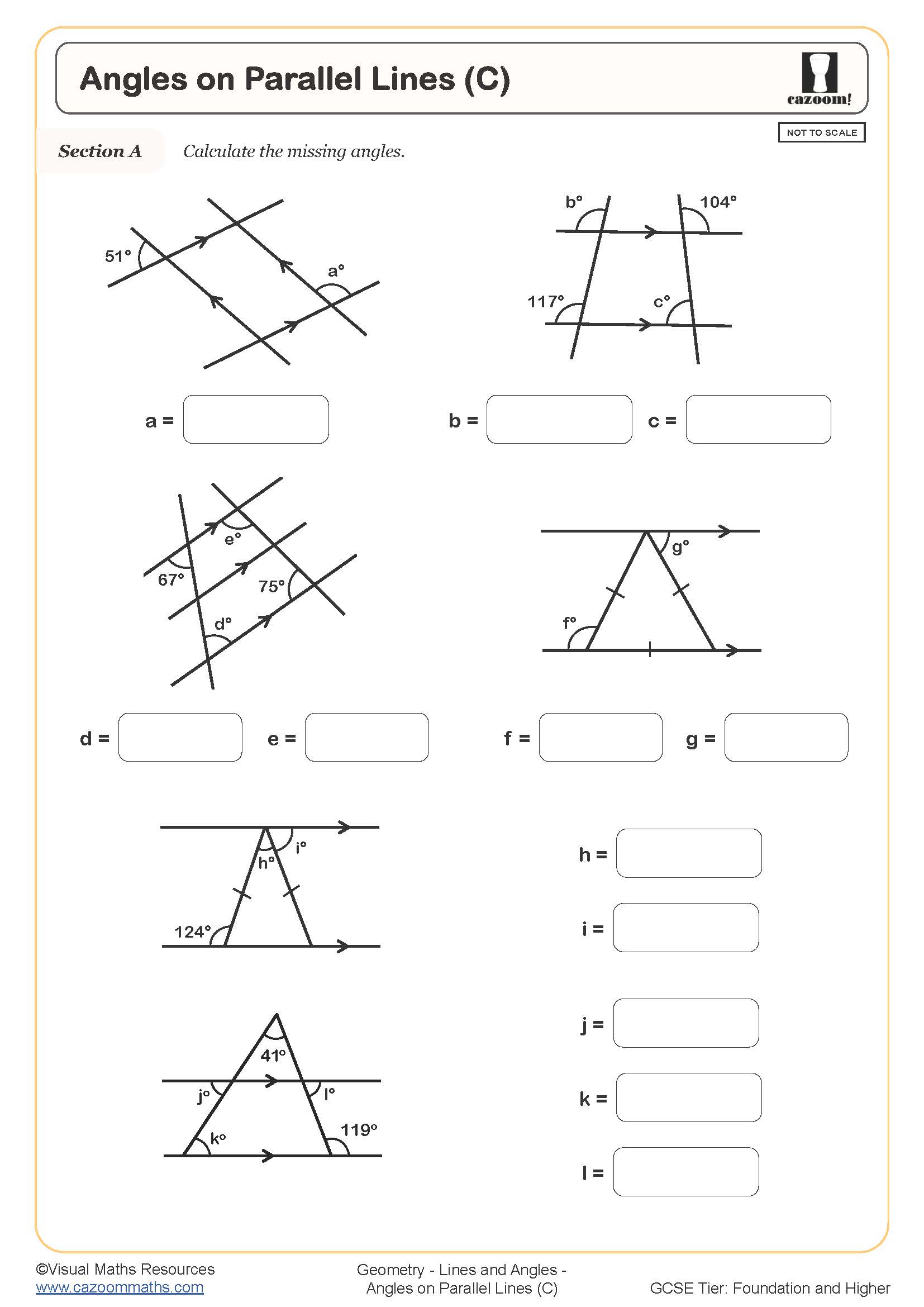
Do more than solely identify corresponding, alternate and co-interior angles with this worksheet as the missing angle calculations increase in difficulty. The worksheet will see learners progress to finding missing angles after up to three steps. Multi-step problems include using vertically opposite angles, angles in triangles and quadrilaterals, angles on a straight line and base angles in isosceles triangles.
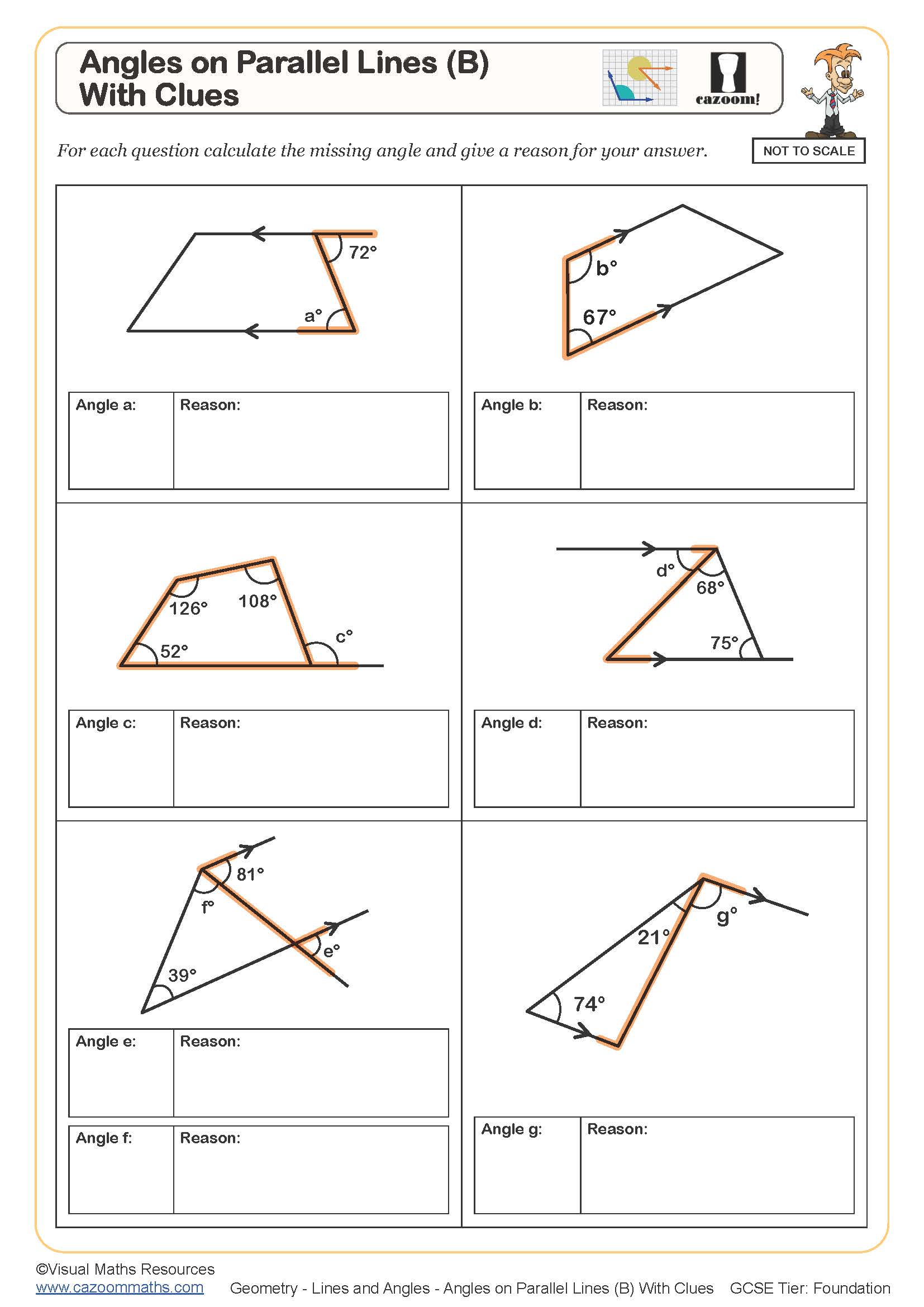
Students are required to state reasons alongside each angle calculation throughout and we have produced two versions: one with handy clues to get your students going, if necessary.
This write-on worksheet has ample space for pupil calculations and answers, including reasons.
All worksheets are created by the team of experienced teachers at Cazoom Maths.
RELATED TO Angles on Parallel Lines (B) WORKSHEET
Frequently Asked Questions
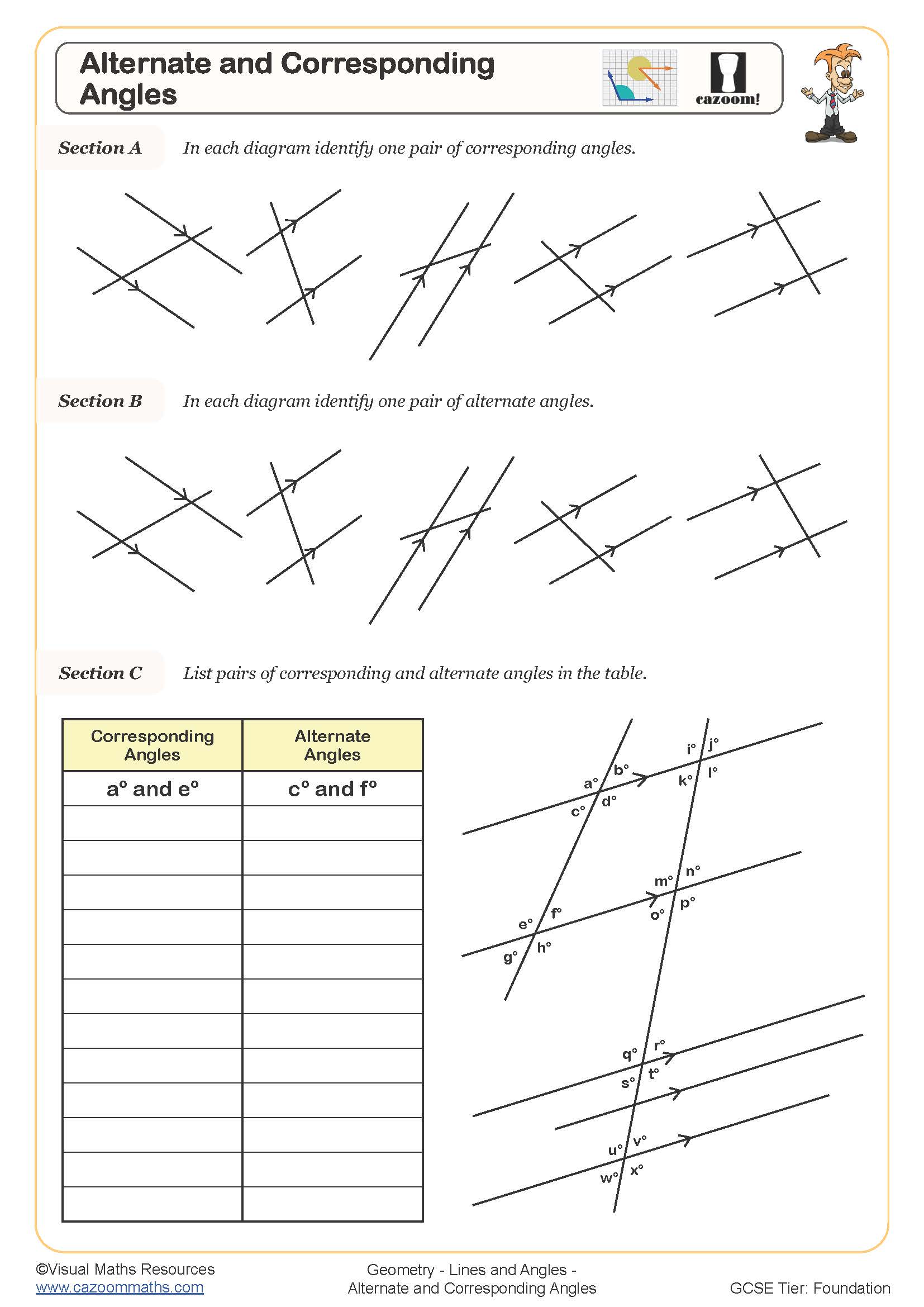
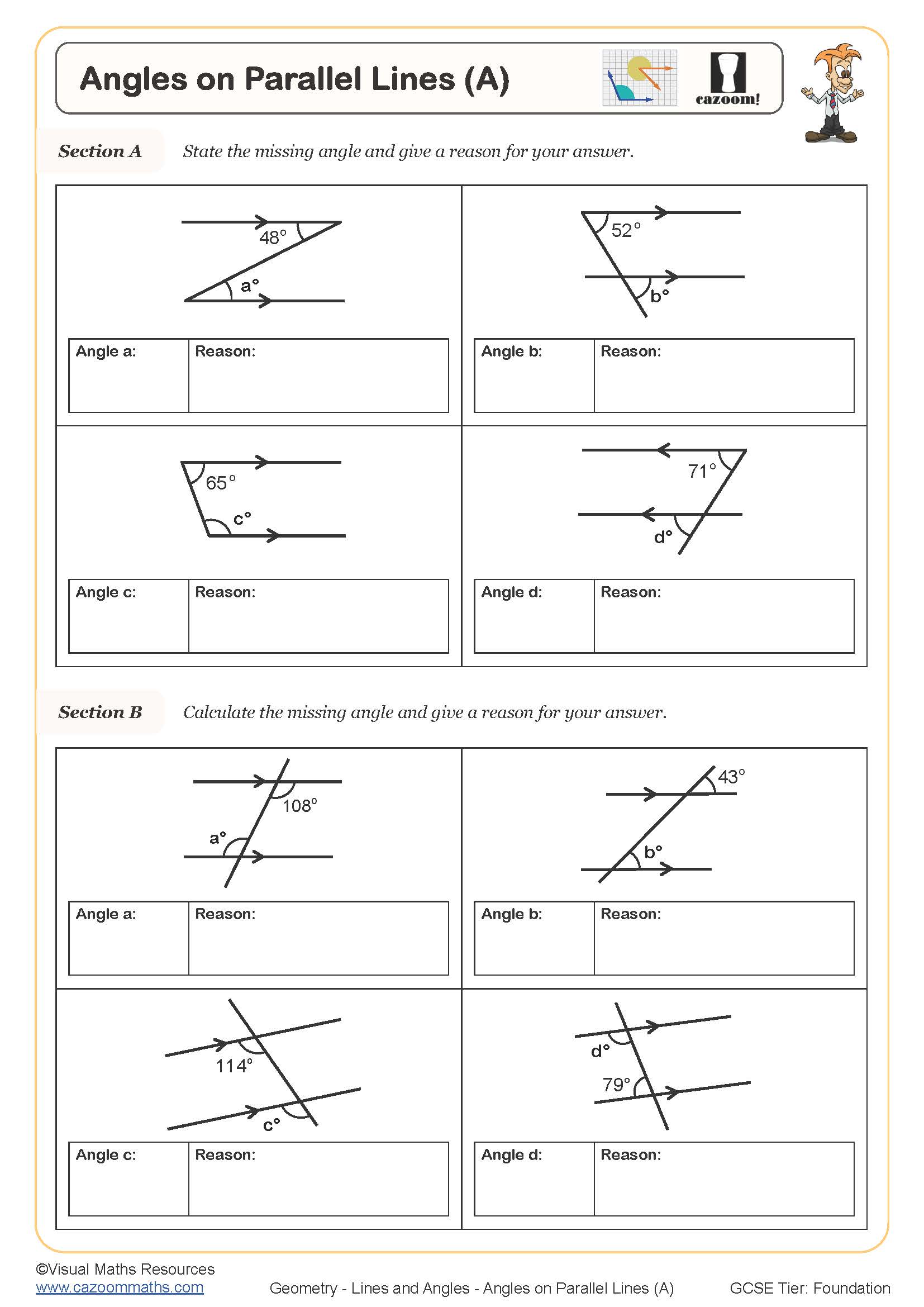
Your pupils should be comfortable with several foundational angle concepts before tackling these parallel lines problems. They'll need to know how to find missing angles in triangles and quadrilaterals, work with angles on straight lines and vertically opposite angles, plus identify alternate, corresponding and co-interior angles. Additionally, familiarity with isosceles triangles and their base angles will be essential for the multi-step calculations.