Festive Christmas Maths Worksheets
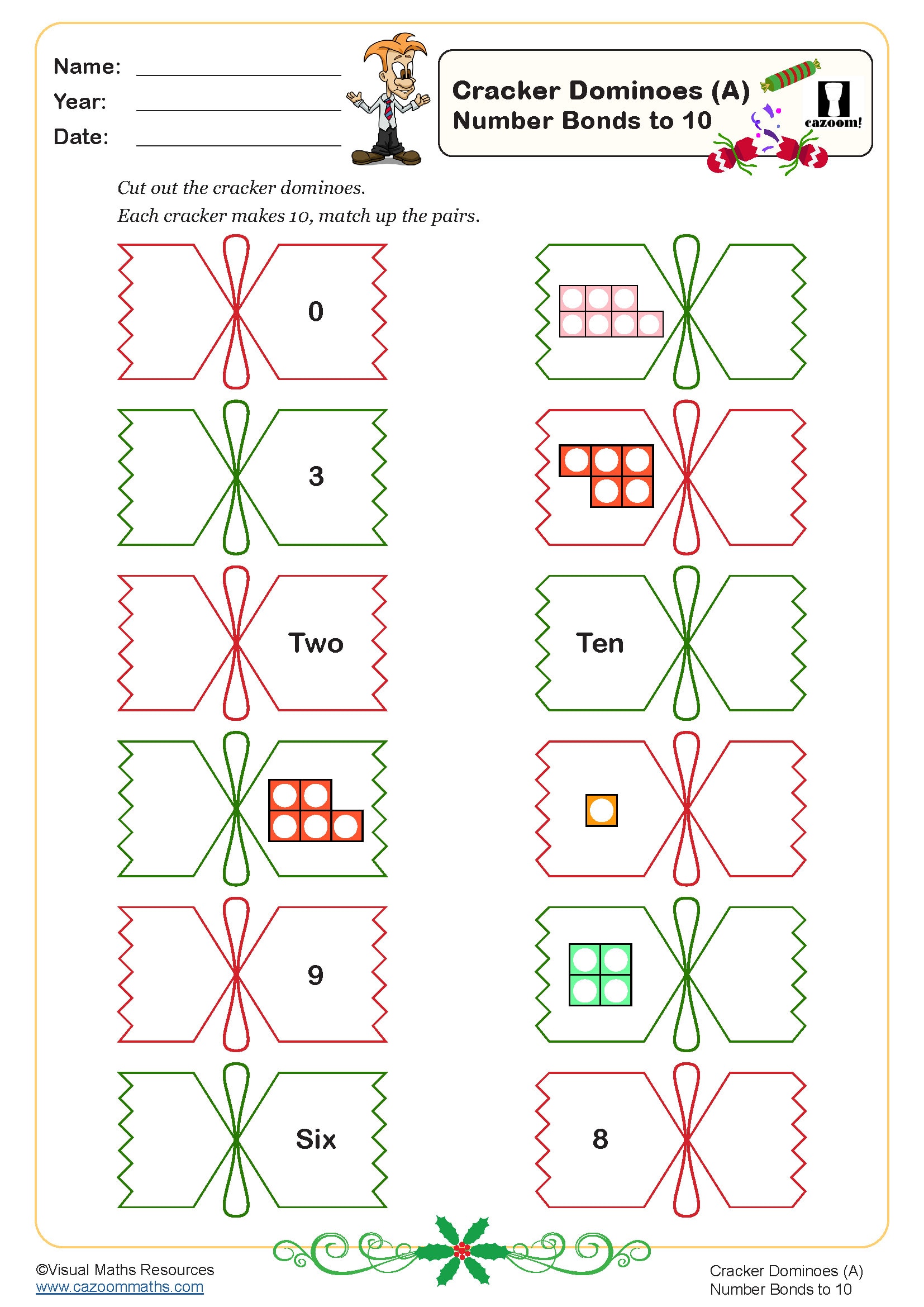
Cracker Dominoes (A)
Year groups: 1
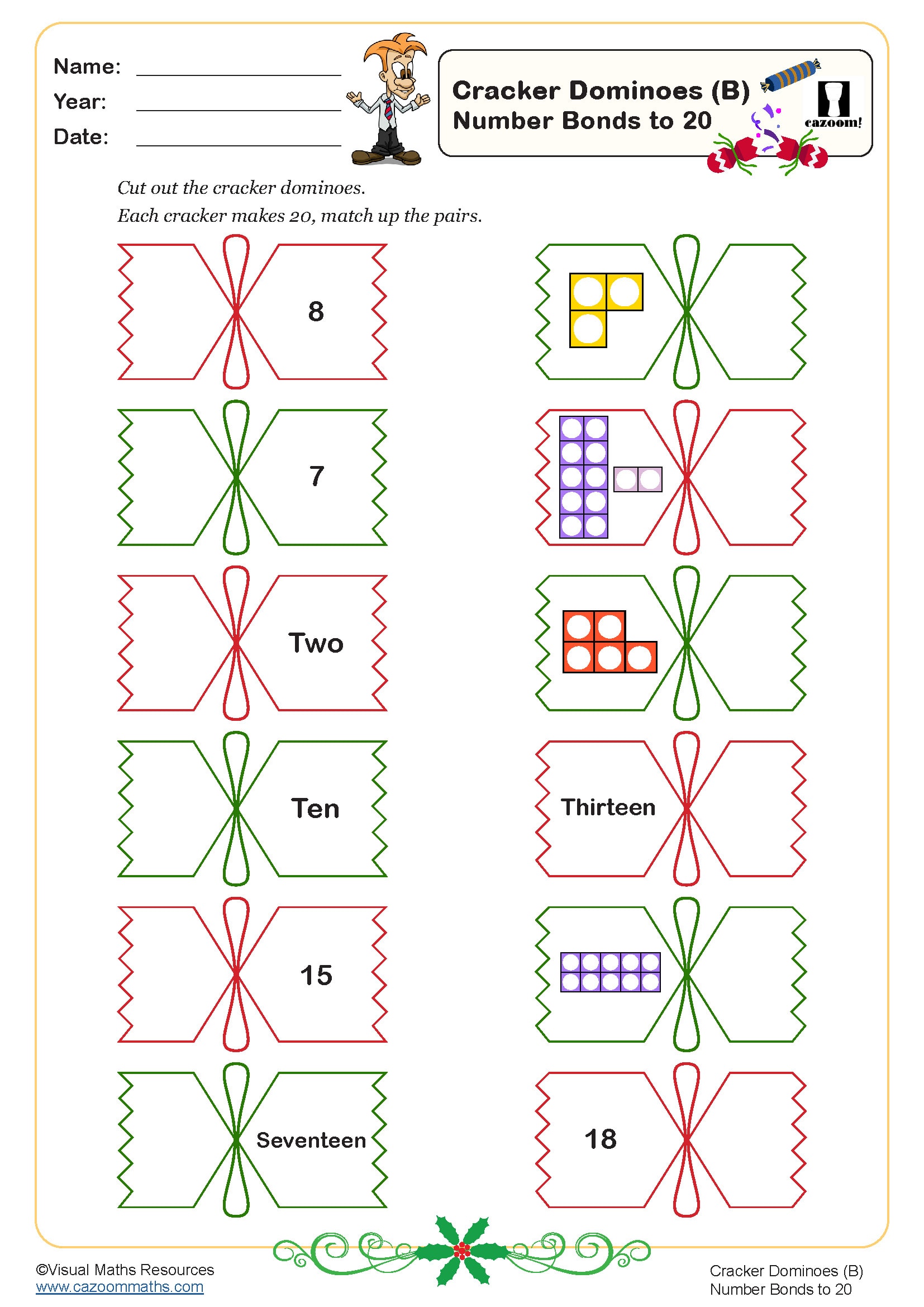
Cracker Dominoes (B)
Year groups: 1
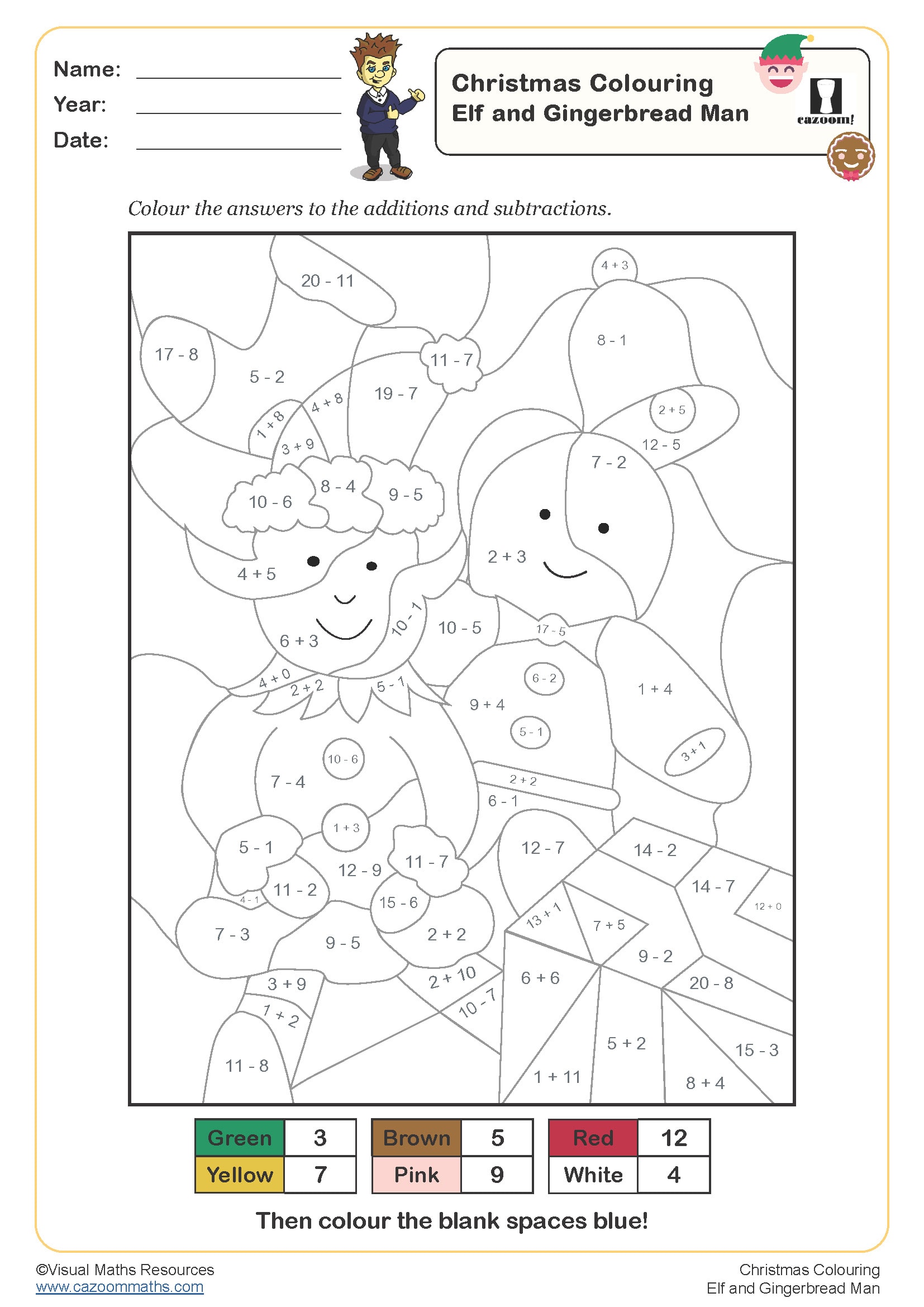
Elf and Gingerbread Man
Year groups: 1, 2
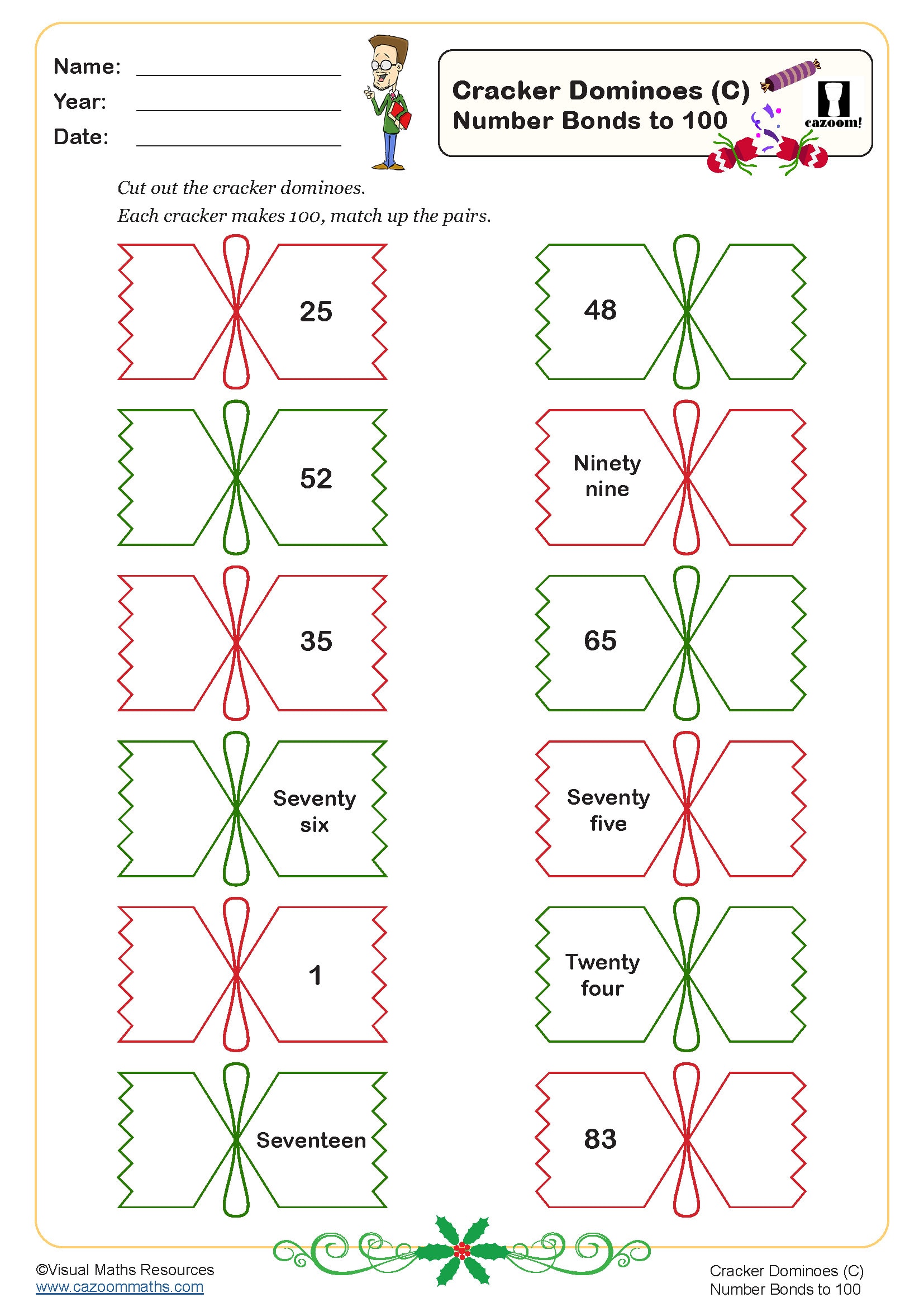
Cracker Dominoes (C)
Year groups: 2
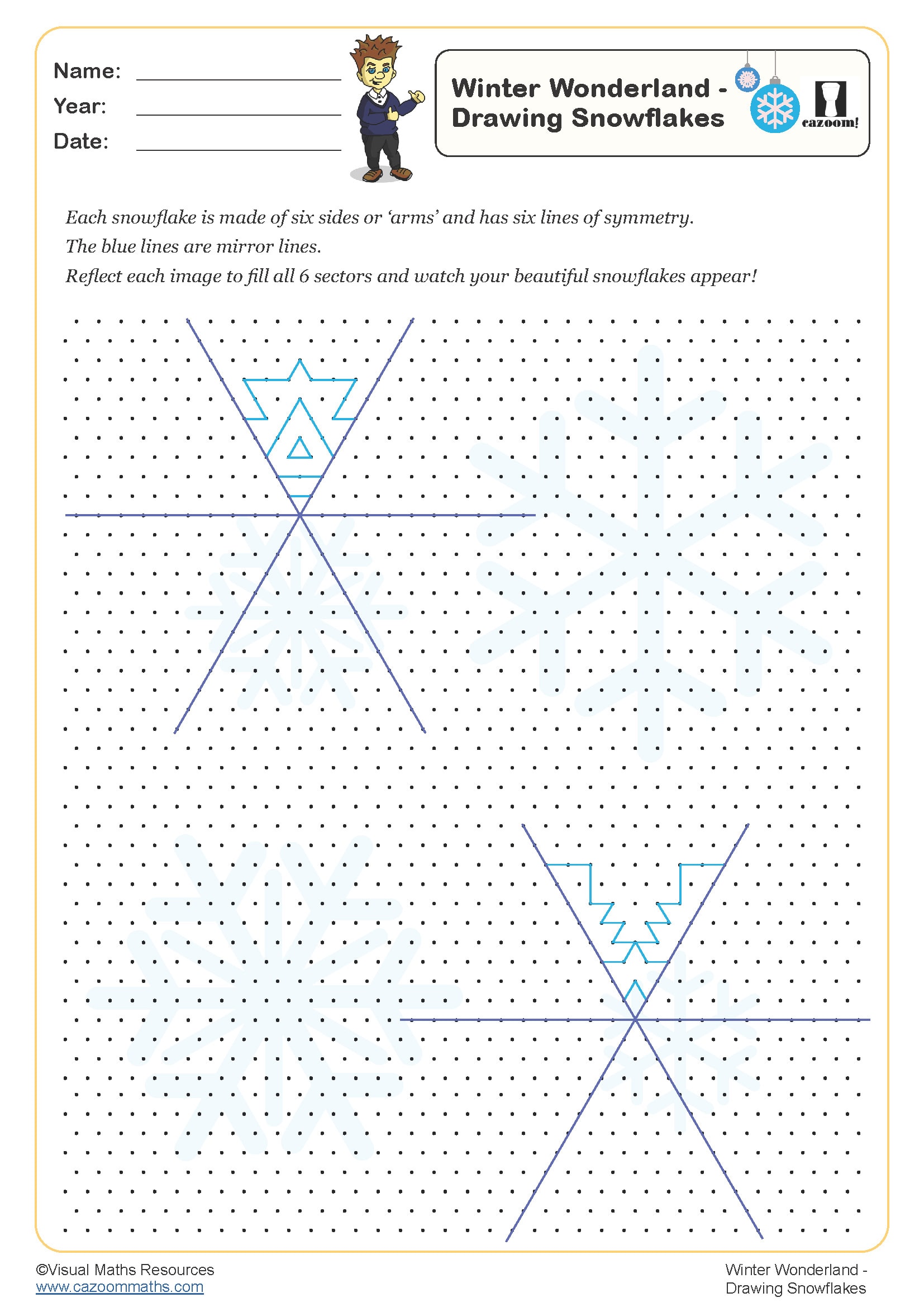
Christmas Code Breaker (A)
Year groups: 3, 4
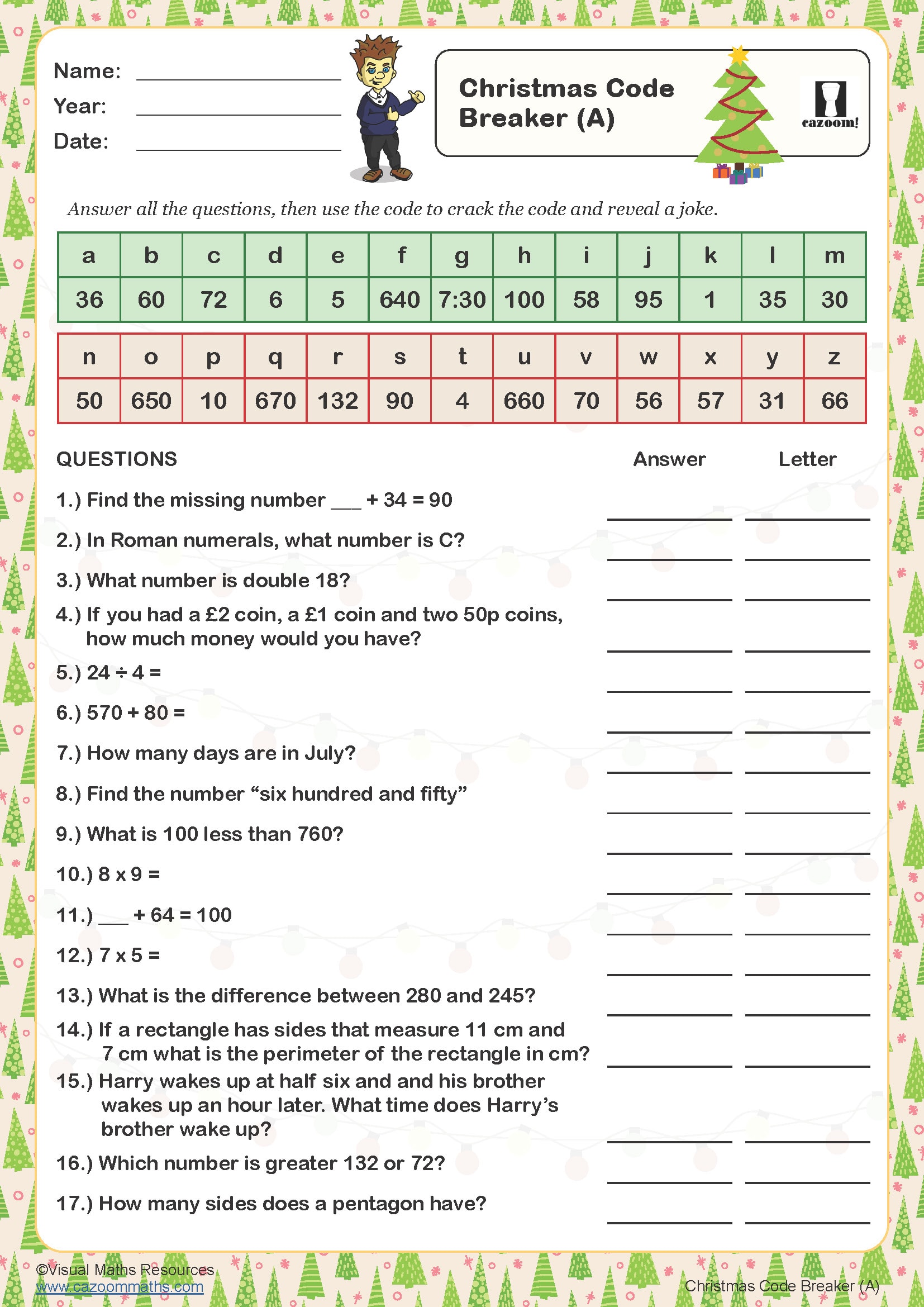
Christmas Colouring - Equivalent Fractions
Year groups: 6, 7, 8
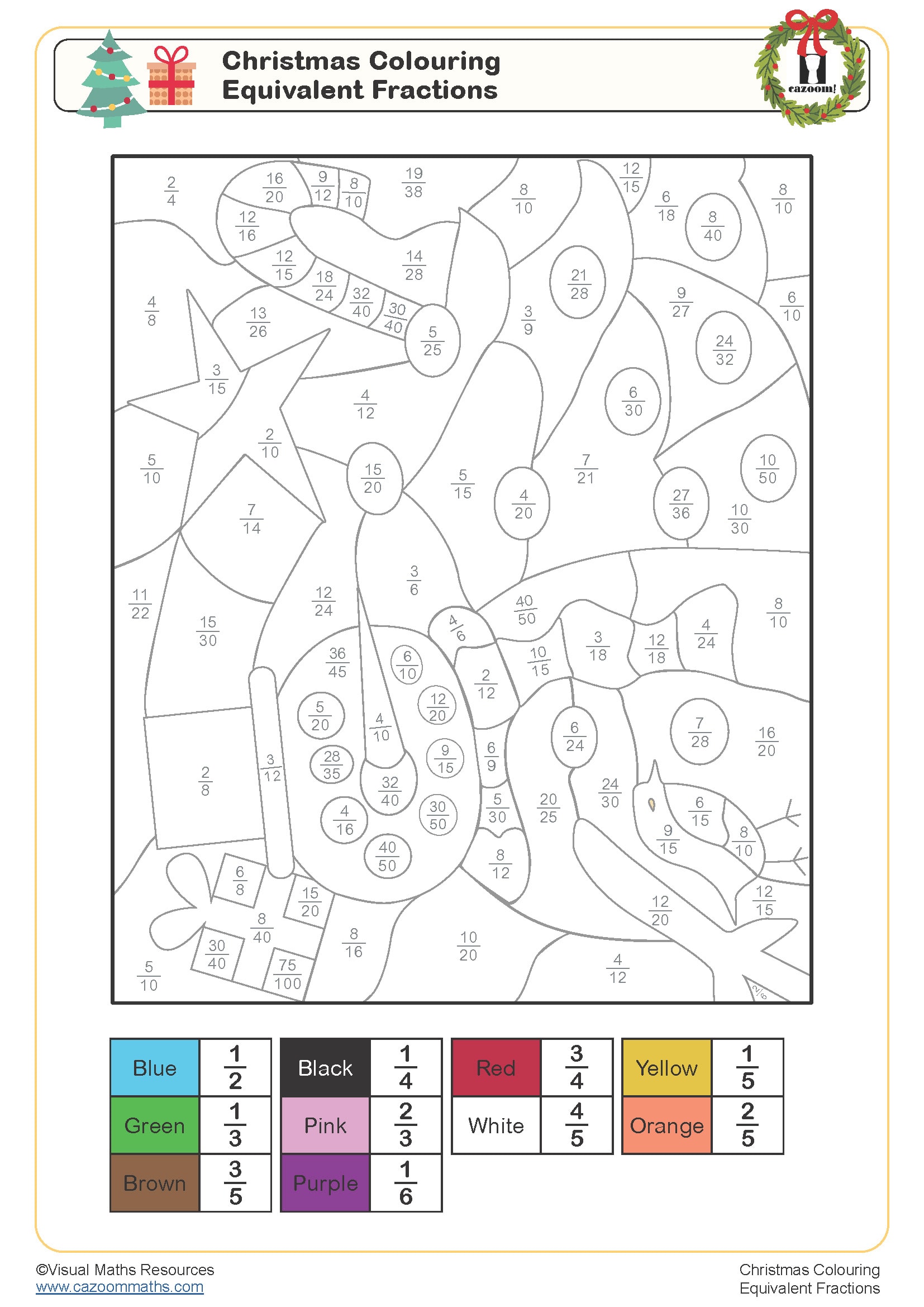
Christmas Reflections
Year groups: 6, 7, 8
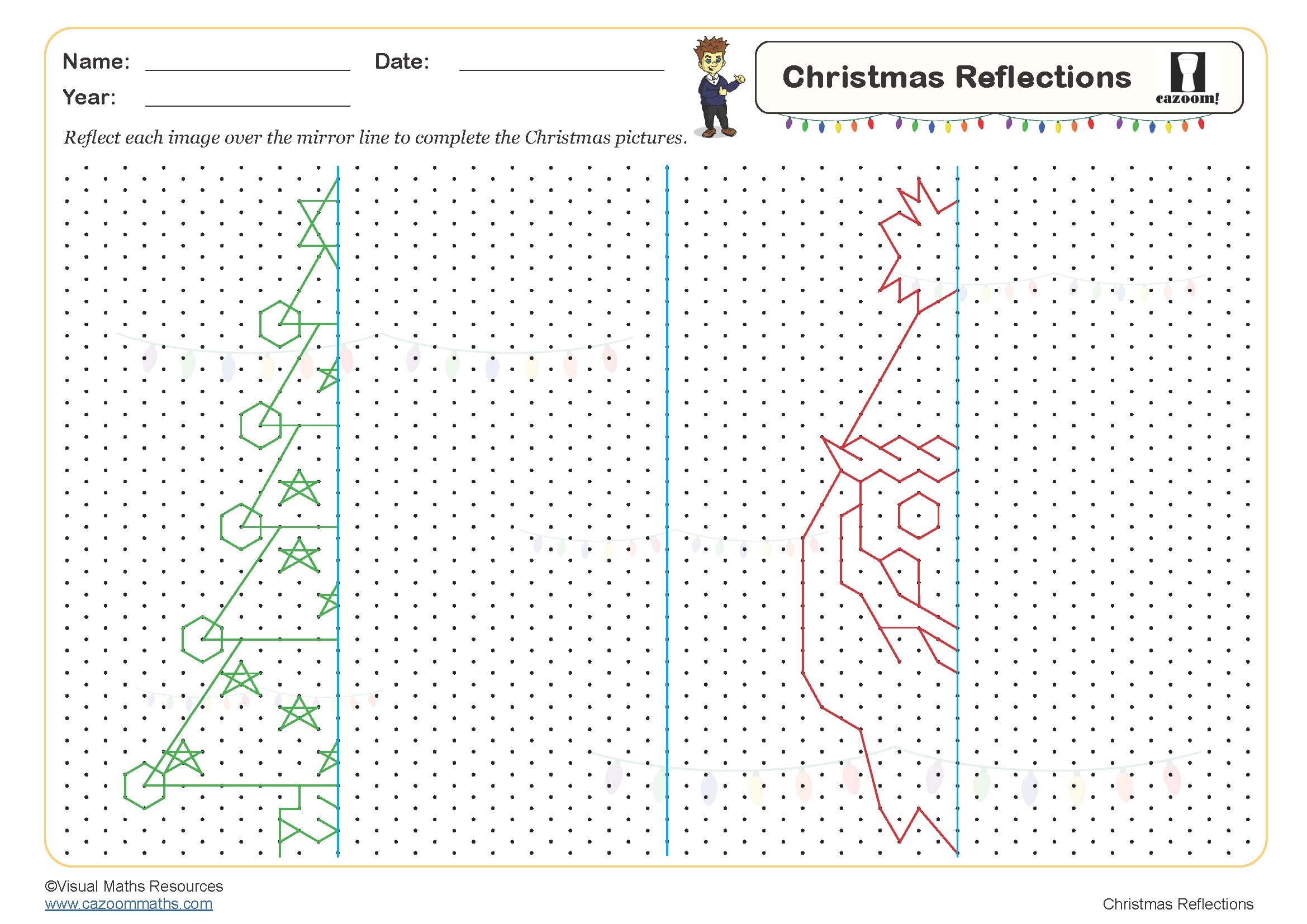
Drawing Snowflakes
Year groups: 6, 7, 8
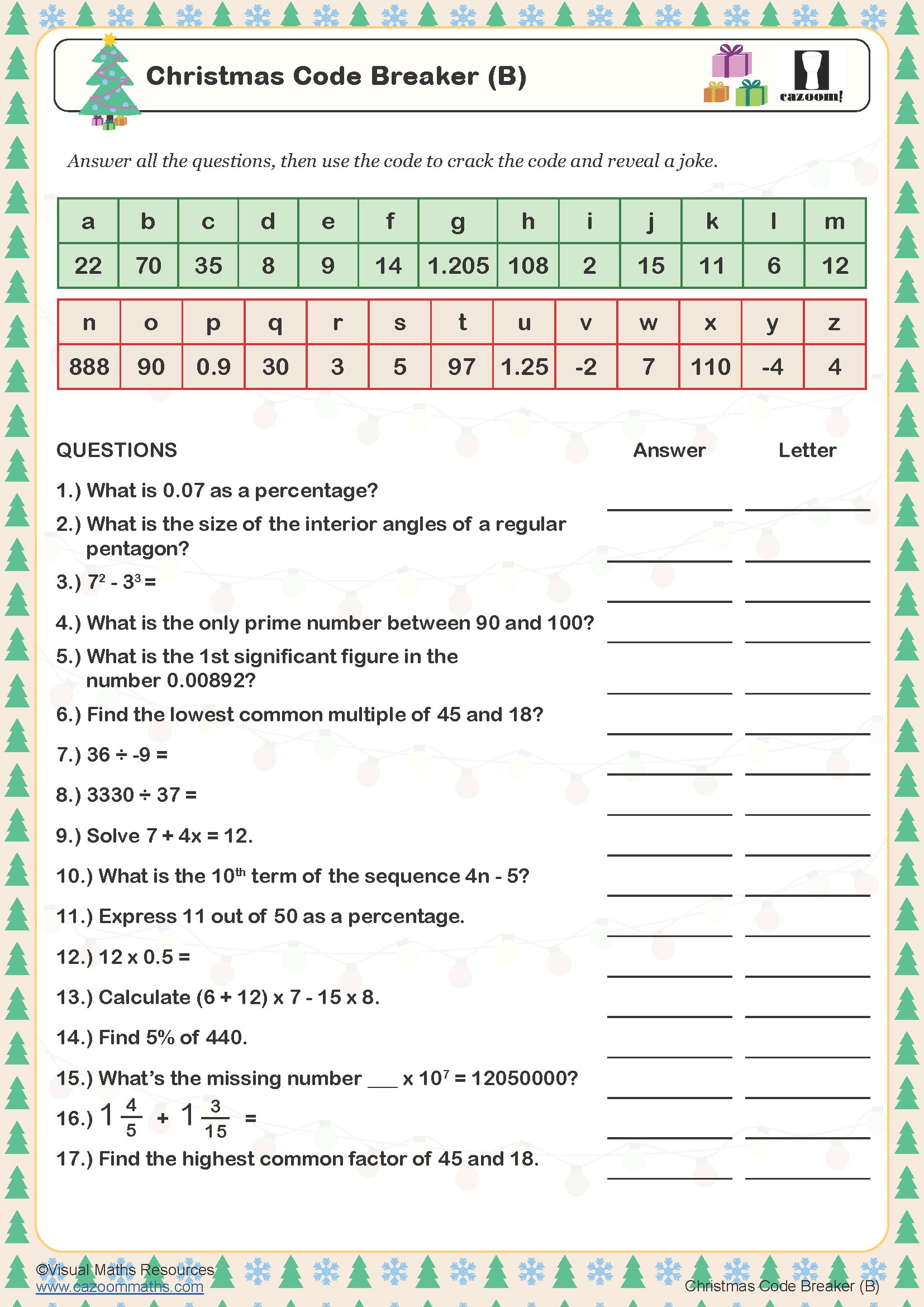
Christmas Code Breaker (B)
Year groups: 7, 8, 9
Christmas Relay
Year groups: 8, 9, 10
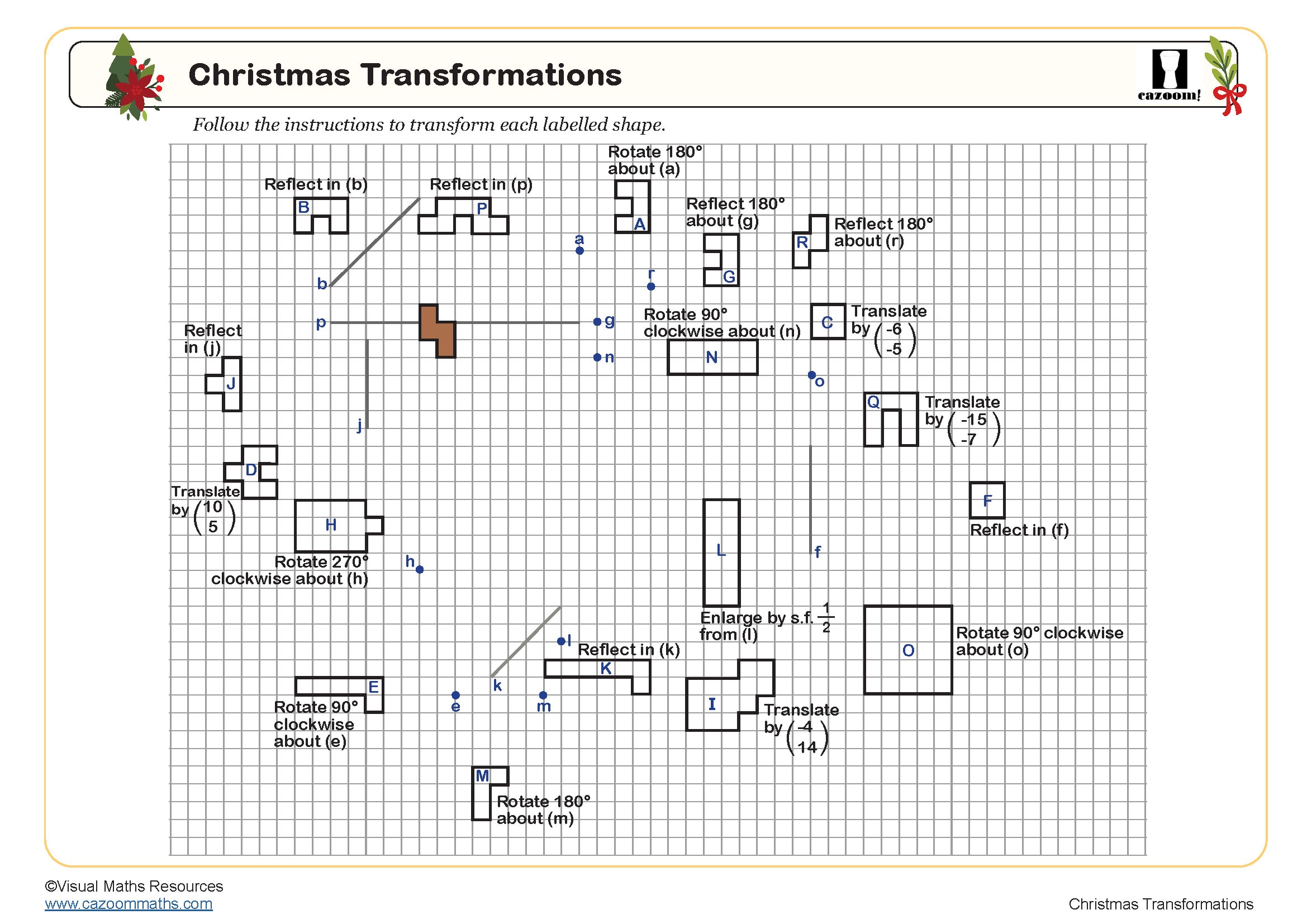
Christmas Transformations
Year groups: 8, 9, 10
All worksheets are created by the team of experienced teachers at Cazoom Maths.
What topics are covered in christmas maths worksheets for different Key Stages?
Christmas maths worksheets span all Key Stages with carefully differentiated content aligned to National Curriculum expectations. KS1 resources focus on number bonds, simple addition and subtraction using Christmas imagery, basic shape recognition with festive objects, and early data handling through Christmas surveys. KS2 extends to multiplication tables, fractions involving Christmas cake sharing, perimeter calculations of Christmas cards, and statistical analysis of Christmas data.
KS3 and KS4 worksheets tackle more sophisticated concepts including algebraic Christmas word problems, trigonometric calculations involving Christmas tree heights and decoration angles, probability scenarios with advent calendars, and geometric problem-solving using Christmas contexts. Teachers notice that the familiar seasonal setting helps students approach complex mathematical reasoning with greater confidence, as the context provides meaningful anchors for abstract mathematical thinking.
How do christmas trigonometry worksheets help KS4 students understand advanced concepts?
Christmas trigonometry worksheets provide practical contexts for applying sine, cosine, and tangent ratios through real-world festive scenarios. Students might calculate the height of Christmas trees using angle of elevation, determine the angles needed for star decorations, or work out distances for Christmas light arrangements. These contextual applications help students understand why trigonometric ratios matter beyond abstract mathematical theory.
Teachers report that KS4 students often struggle to see connections between trigonometry and practical applications, but christmas trigonometry worksheet problems bridge this gap effectively. The seasonal context makes angle calculations more memorable, while the visual nature of Christmas decorations helps students visualise the geometric relationships involved in sine, cosine, and tangent ratios, leading to improved retention and understanding of these fundamental mathematical concepts.
Which year groups benefit most from themed christmas maths activities?
All year groups benefit from christmas maths activities, but the impact varies depending on developmental stage and curriculum demands. Years 1-3 students show particular enthusiasm for counting Christmas objects, solving addition problems with presents, and exploring shapes through Christmas symbols. The concrete visual elements align perfectly with their learning needs and natural curiosity about the festive season.
Years 7-9 students often experience renewed engagement with mathematics when abstract concepts are presented through Christmas contexts, helping them overcome the motivation dips common at this transition stage. Teachers observe that even reluctant mathematicians participate more actively when working through Christmas-themed algebra or geometry problems, as the familiar seasonal setting reduces mathematical anxiety and creates positive associations with learning.
How should teachers integrate maths christmas worksheets into their lesson planning?
maths christmas worksheets work most effectively when integrated strategically into existing curriculum coverage rather than used as standalone activities. Teachers can introduce new mathematical concepts through Christmas contexts, then transfer understanding to non-themed problems, ensuring students don't become dependent on seasonal scaffolding for mathematical reasoning. The worksheets serve as excellent revision tools, allowing students to practise familiar concepts in fresh contexts.
Successful implementation involves using these resources to maintain curriculum pace while acknowledging seasonal excitement. Teachers find that dedicating specific lesson time to Christmas mathematics, rather than rushing through activities, allows proper consolidation of learning objectives. The complete answer sheets enable quick assessment, helping teachers identify which students need additional support with underlying mathematical concepts beyond the festive presentation.