GCSE Foundation 3D Shapes Revision Worksheets
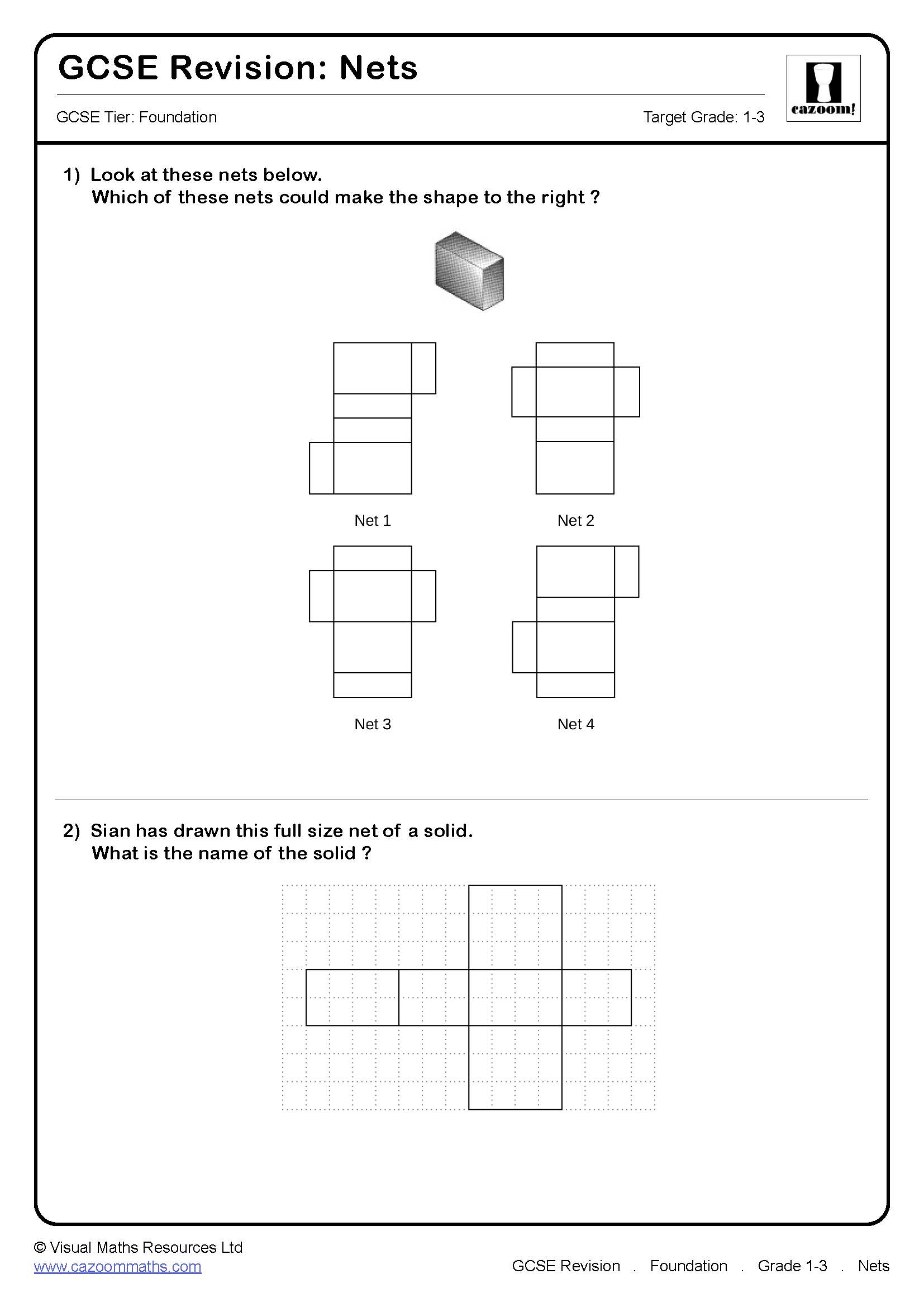
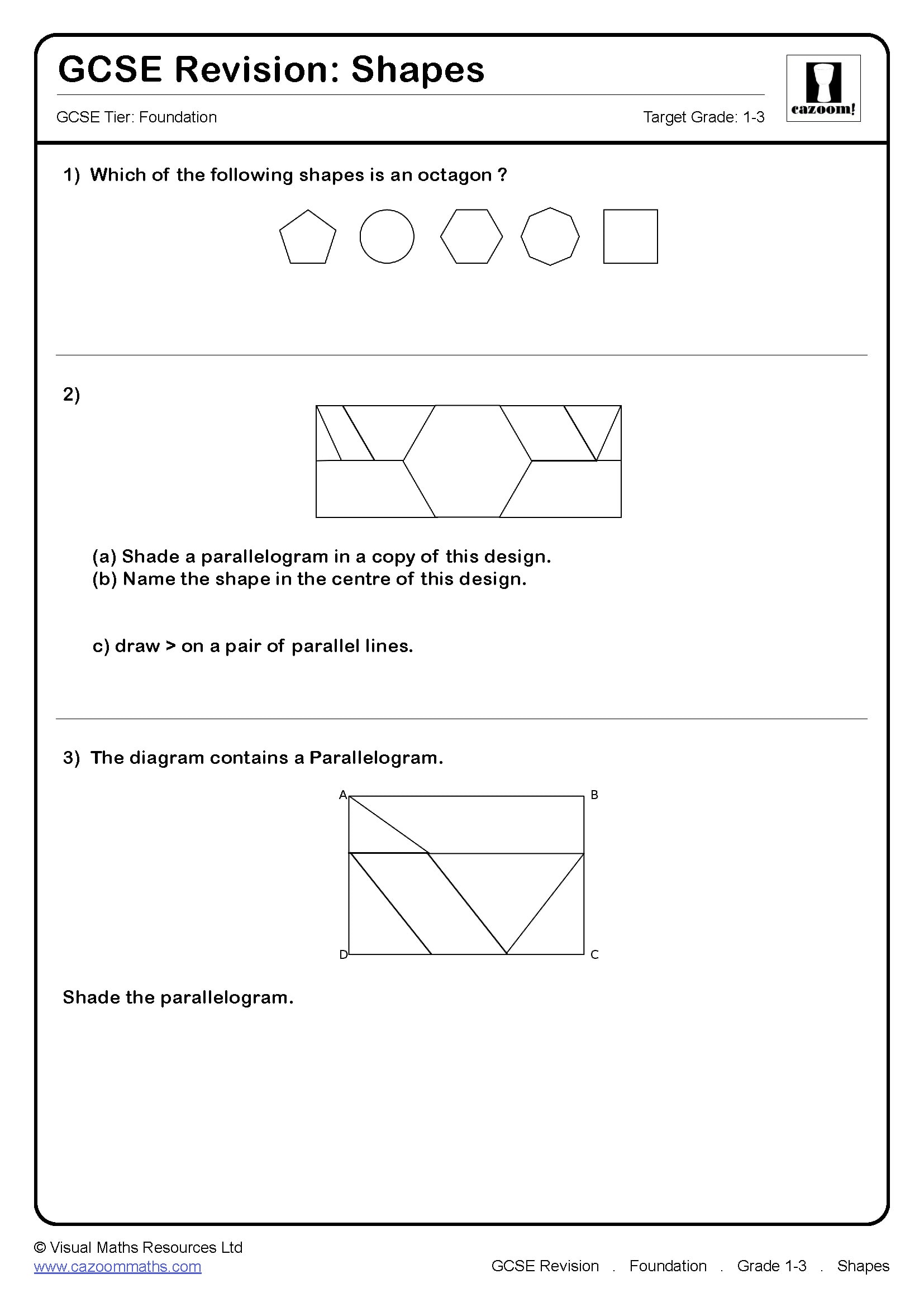
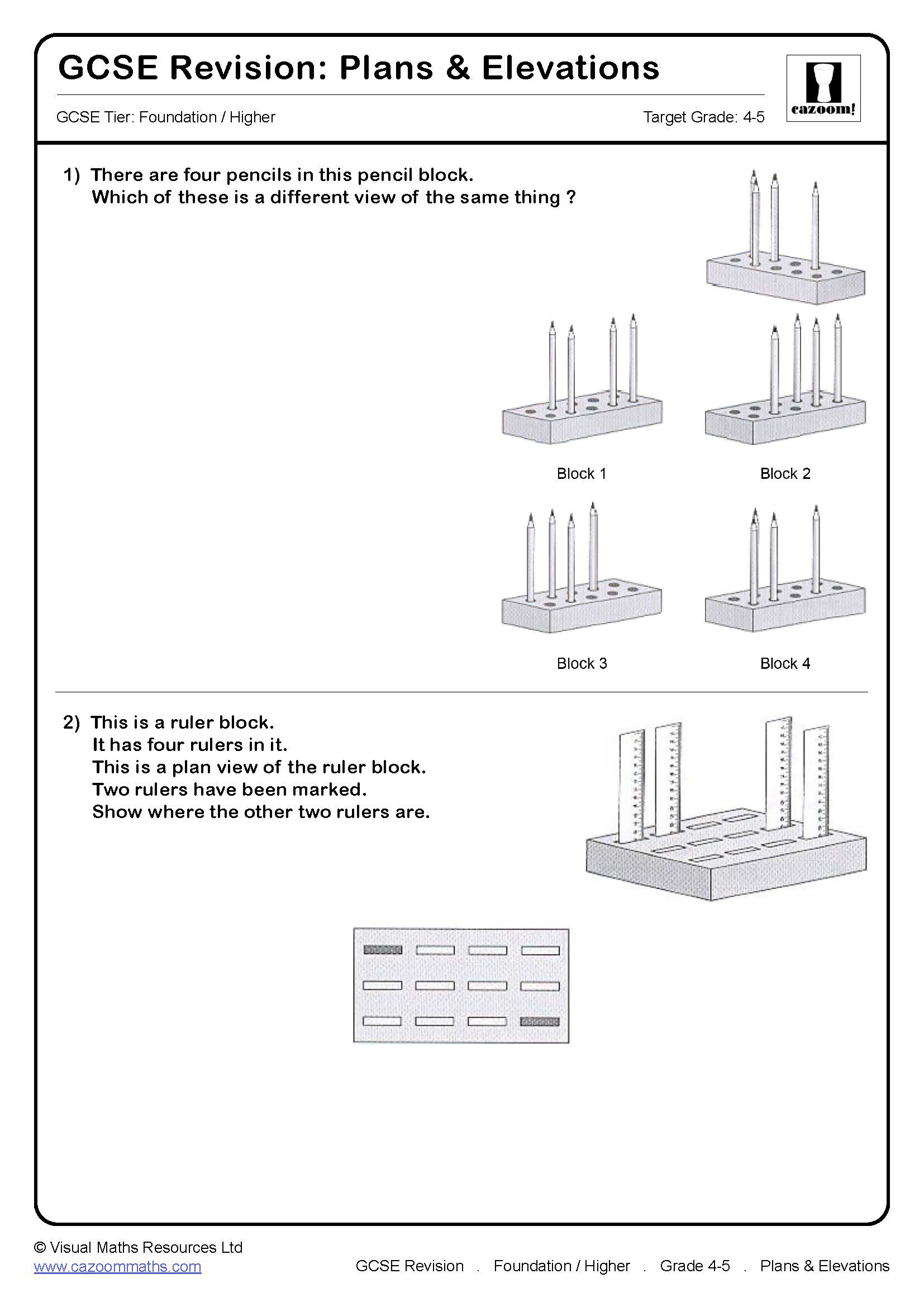
All worksheets are created by the team of experienced teachers at Cazoom Maths.
What 3D shapes questions appear on the GCSE Foundation paper?
Foundation papers typically include 3-4 questions on 3D shapes across both papers. Students face identifying shapes from diagrams or nets (1-2 marks), calculating volume or surface area of cuboids, prisms or cylinders (2-3 marks each), and occasionally drawing or completing nets (2 marks). Questions often embed 3D shapes within real-world contexts like packaging, containers or building materials, requiring students to extract relevant measurements from diagrams.
A common error is forgetting to square or cube units when calculating area or volume. Mark schemes penalise missing or incorrect units even when numerical answers are correct. Students also lose marks by calculating volume when the question asks for surface area, so careful reading matters as much as knowing formulae.
What grade are 3D shapes questions on Foundation GCSE maths?
Grade 1-3 questions focus on naming 3D shapes, counting faces, edges and vertices, and identifying simple nets. Grade 4-5 questions require calculating volume and surface area of cuboids and prisms using given formulae, converting between units (such as cm³ to litres), and applying these skills to multi-step problems involving composite shapes or real-world contexts.
Students should start revision by securing grades 1-3 skills before tackling higher-grade questions. Teachers notice that students attempting grade 5 volume questions without confident recall of cube numbers or multiplication often make arithmetic errors that cost marks. Building fluency with basic calculations creates a foundation for accessing the harder problems that determine grade 5 performance on Foundation papers.
How is 3D shapes tested differently on Foundation compared to Higher?
Foundation papers provide formulae for volume and surface area, whereas Higher tier expects students to recall and apply them without prompts. Foundation questions focus on standard shapes (cubes, cuboids, prisms, cylinders) with measurements clearly labelled, while Higher papers include cones, spheres, pyramids and frustums, often requiring Pythagoras or trigonometry to find missing dimensions before calculating volumes.
Foundation students need confident substitution into given formulae and accurate arithmetic with decimals and fractions. This mastery matters because these skills underpin problem-solving across the entire Foundation specification. Teachers observe that students who practise systematically with formulae sheets develop the numerical fluency needed for grade 4-5 performance across geometry topics, not just 3D shapes.
How should students revise 3D shapes for Foundation GCSE maths?
Students should work through worksheets by grade band, starting at grade 3 to build confidence before attempting grade 4-5 questions. Timed practice helps develop exam pace, as 3D shapes questions should take 2-4 minutes depending on marks available. Using answer sheets immediately after attempting each worksheet allows students to identify specific errors, whether from formula confusion, arithmetic mistakes or unit conversion issues, then retry similar questions until secure.
Teachers can assign specific worksheets targeting known weaknesses revealed through mock papers or classwork. Setting these as homework with answer sheets enables independent revision while freeing lesson time for addressing misconceptions. Many teachers use these worksheets for intervention groups, allowing differentiated practice where some students consolidate grade 3 skills while others stretch towards grade 5 problem-solving.