GCSE Foundation Area and Perimeter Revision Worksheets
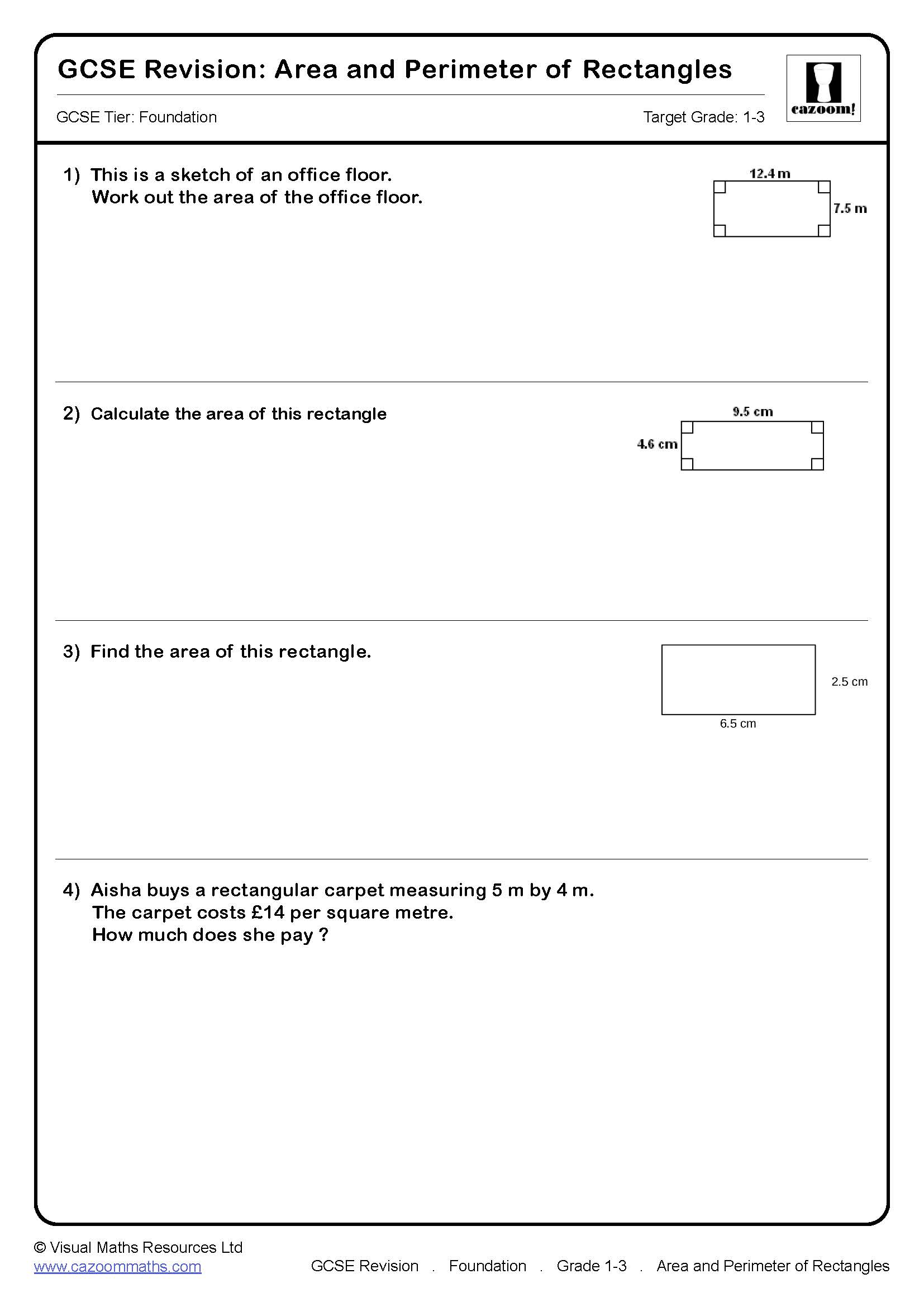
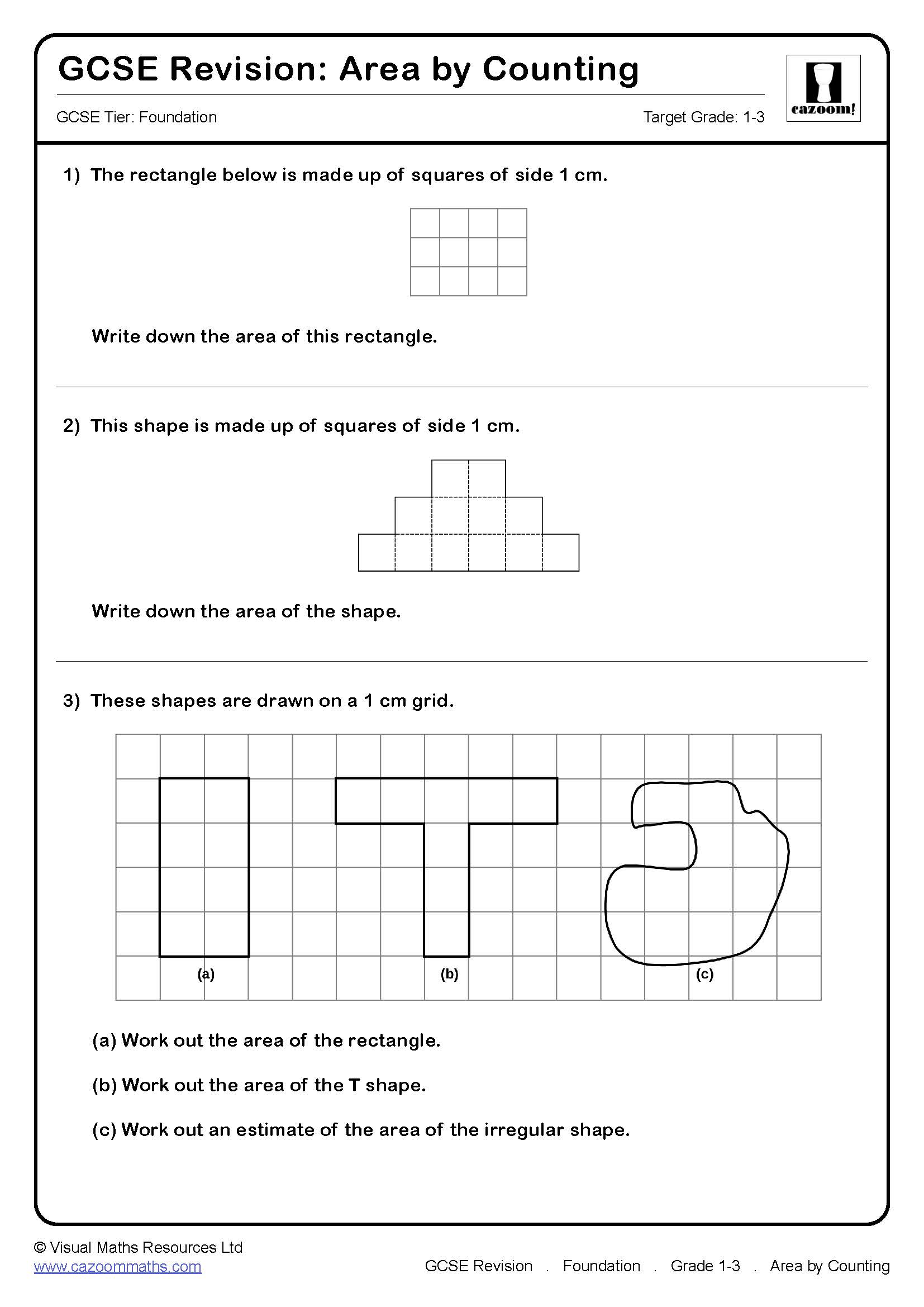
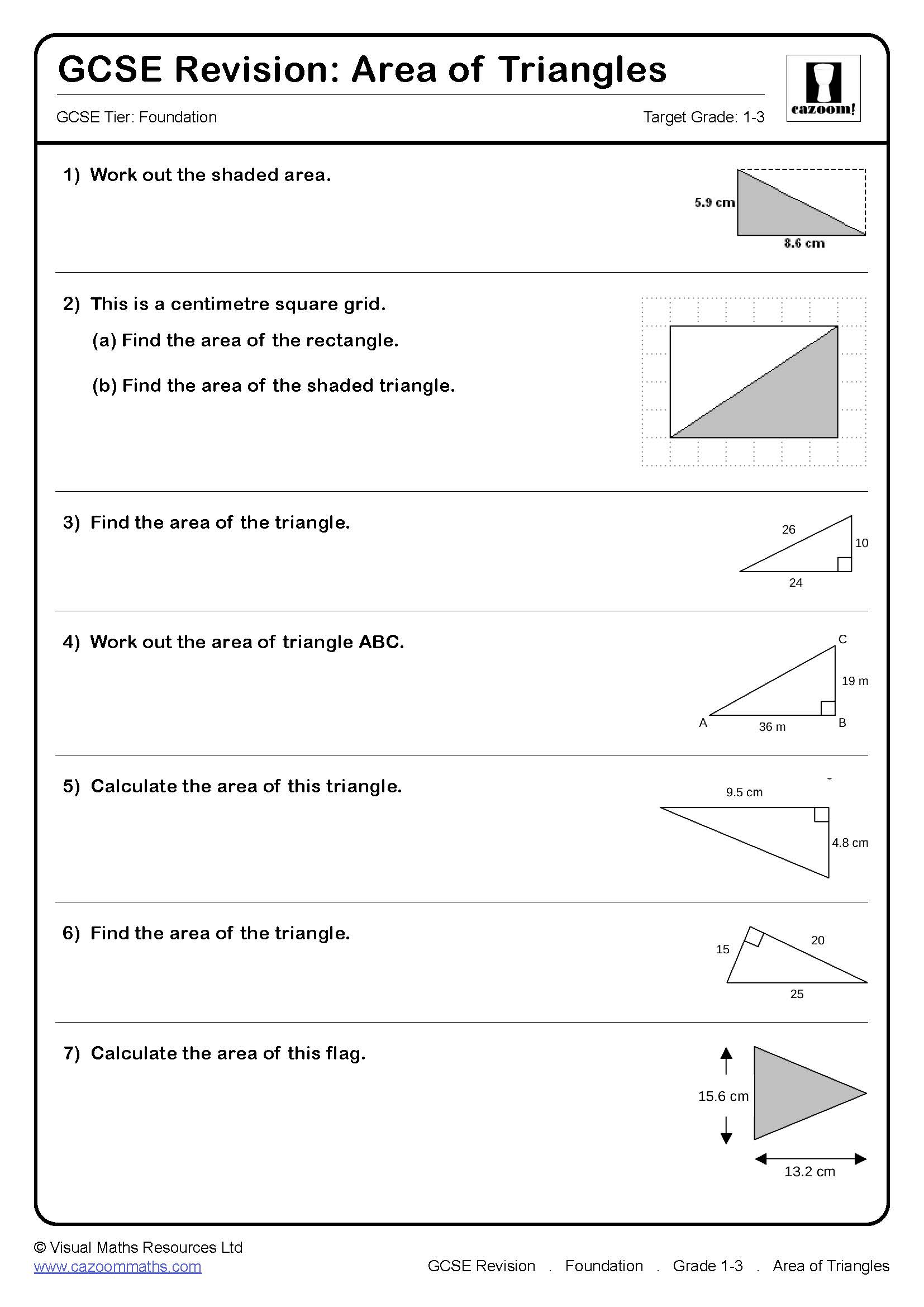
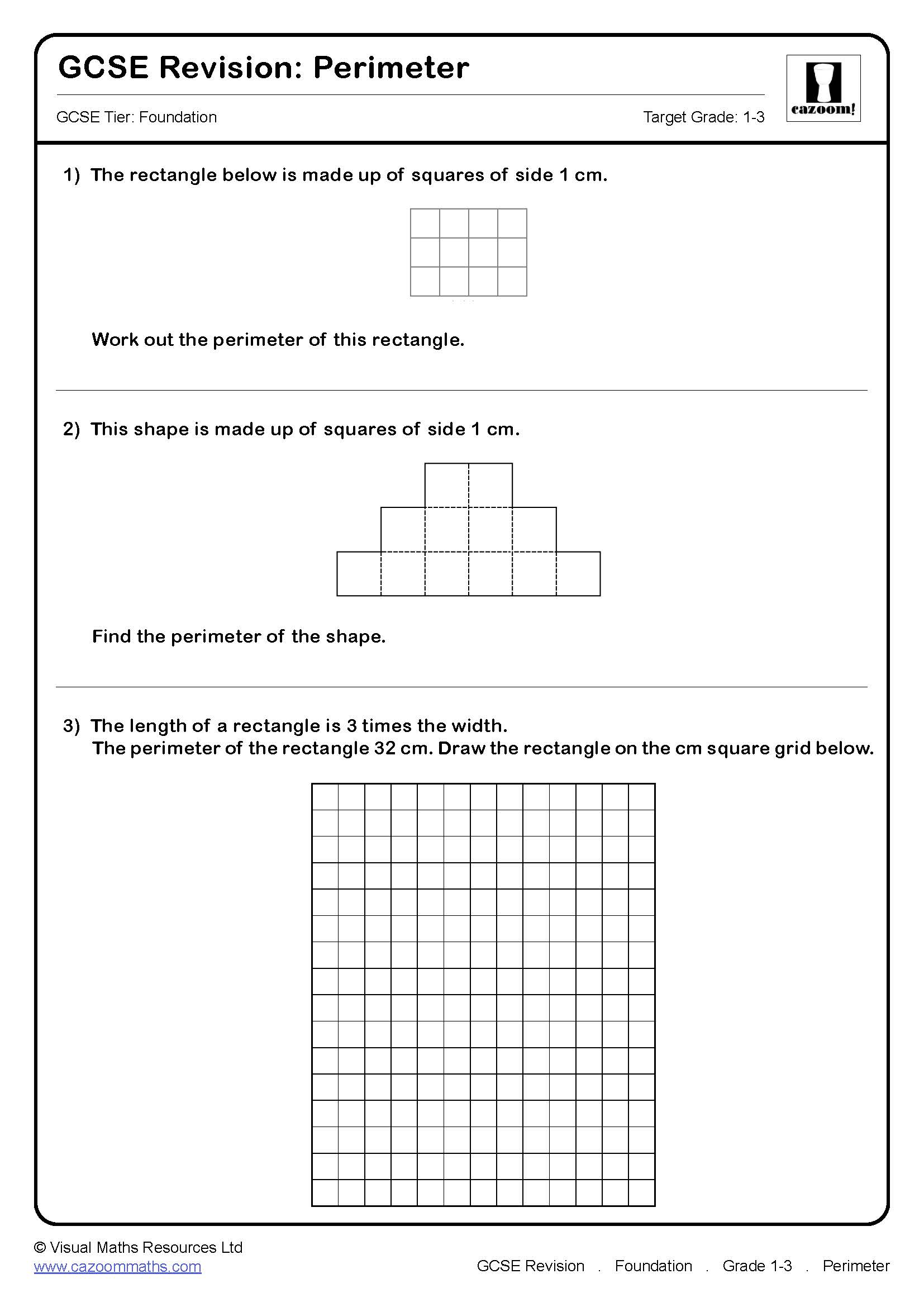
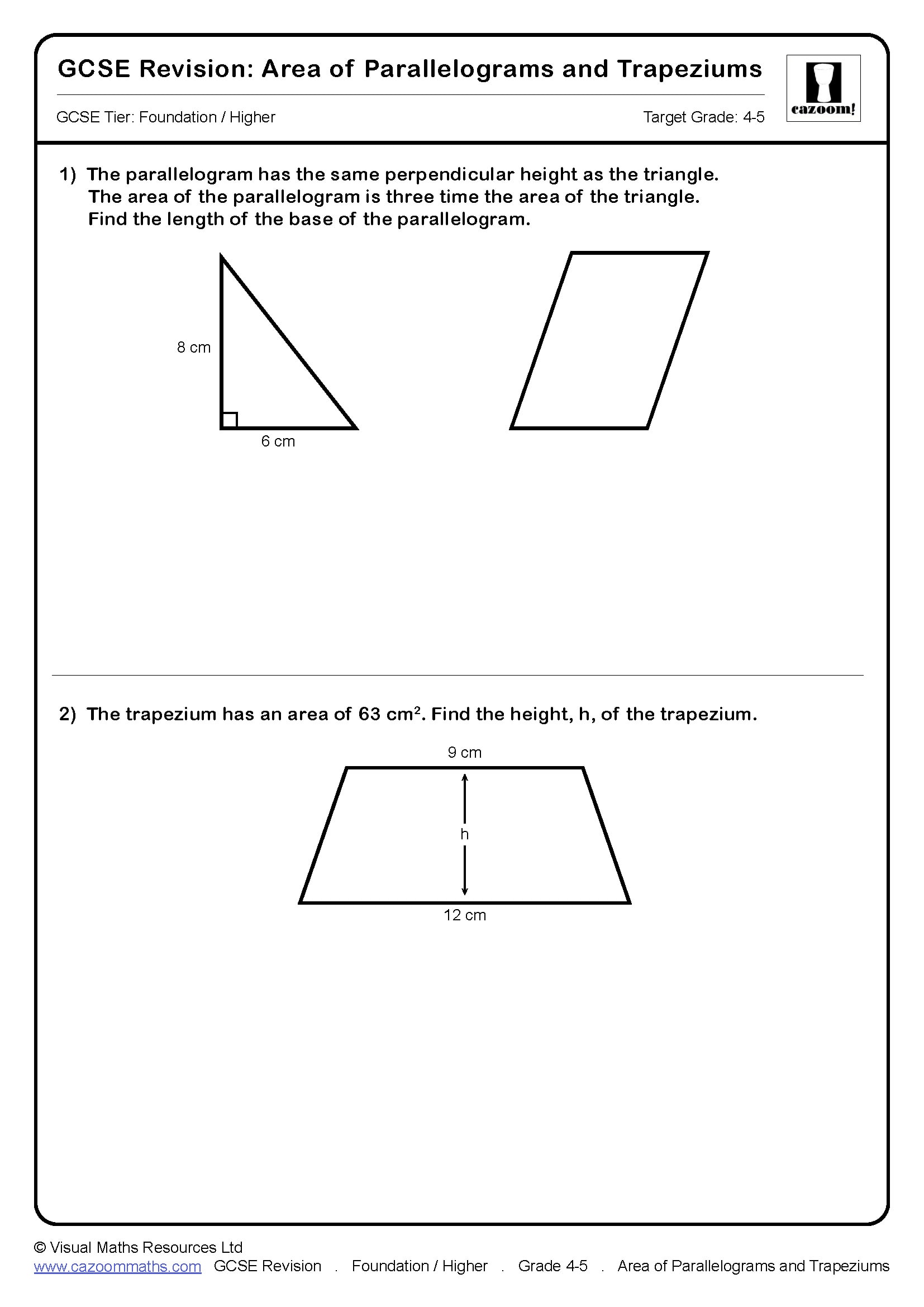
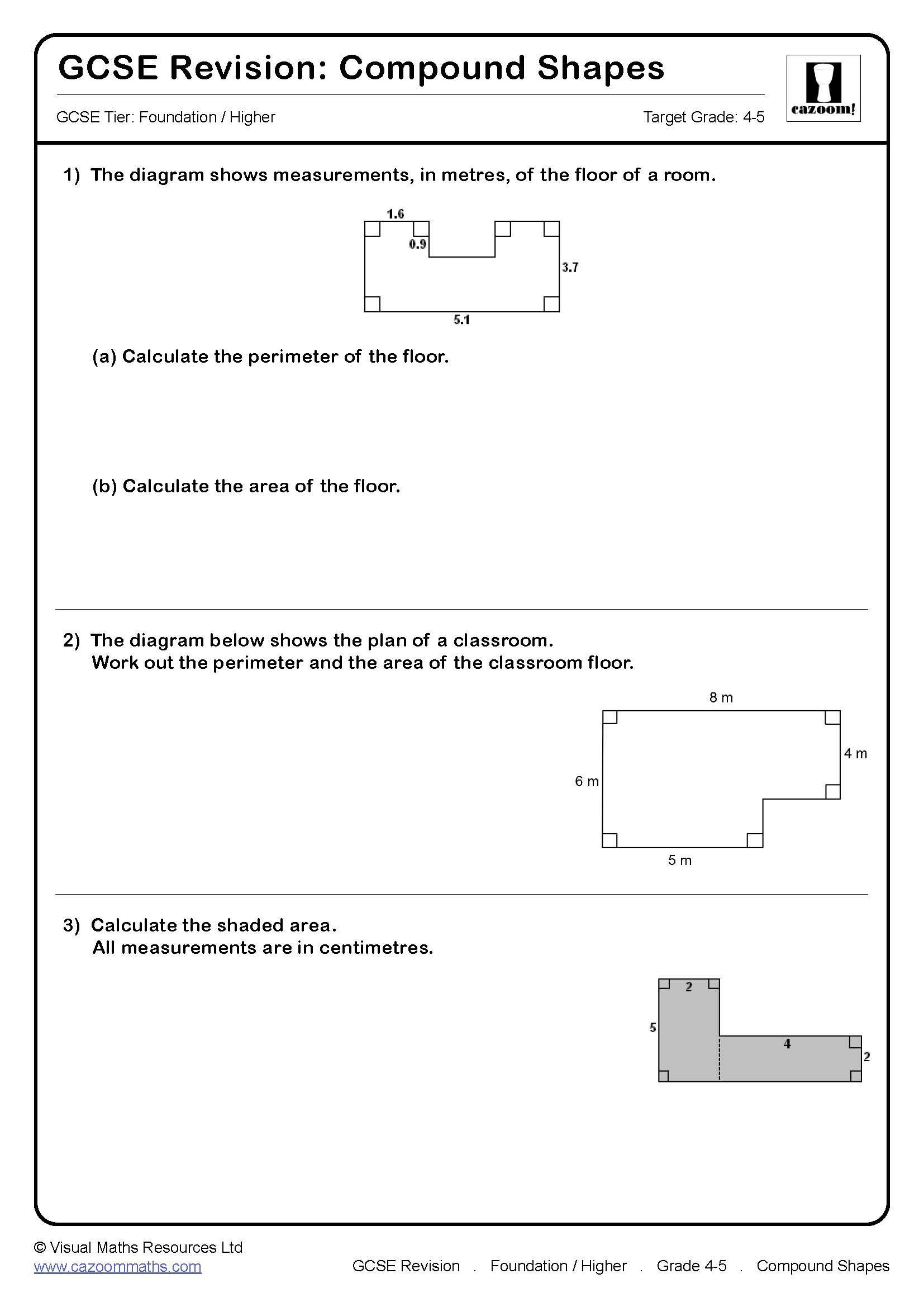
All worksheets are created by the team of experienced teachers at Cazoom Maths.
What Area and Perimeter questions appear on the GCSE Foundation paper?
Foundation papers typically include three to five area and perimeter questions worth between 10-15 marks total. Students calculate the perimeter of rectangles by adding all sides, find areas using length multiplied by width, and work with compound shapes formed from rectangles. Grade 4-5 questions often provide shapes on grids where students must count squares or work backwards from a given area to find missing lengths. Word problems appear regularly, requiring students to interpret written information and select the correct formula.
Exam mark schemes penalise students who write answers without units or forget to include all four sides when calculating perimeter. Teachers notice that students who annotate diagrams with measurements avoid the common error of using the same length twice when opposite sides differ.
What grade are Area and Perimeter questions on Foundation GCSE maths?
Grades 1-3 questions focus on straightforward rectangles with clearly labelled dimensions, testing whether students can apply basic formulae correctly. Students calculate areas by multiplying length and width, and find perimeters by adding all sides. Grades 4-5 questions introduce compound L-shapes or rectilinear figures where students must identify missing lengths before calculating, and reverse problems where they work from area to find dimensions.
Students aiming for grade 5 should prioritise compound shape questions, as these separate secure grade 4 students from those reaching grade 5. Teachers often suggest drilling the basics first with simple rectangles until methods become automatic, then gradually introducing composite shapes. This approach builds confidence before tackling the trickier problems that define the top Foundation grades.
How is Area and Perimeter tested differently on Foundation compared to Higher?
Foundation papers focus exclusively on rectangles and rectilinear compound shapes, with formulae provided on the formula sheet. Questions test whether students can select and apply the correct method, measure accurately from diagrams, and handle straightforward compound shapes by splitting them into rectangles. Higher tier extends to circles, sectors, trapeziums, and problem-solving questions requiring algebraic manipulation or forming equations from geometric conditions.
The Foundation approach ensures students master core rectangular calculations before progressing. This matters because these skills underpin mensuration throughout GCSE and appear in real-world contexts like calculating room dimensions or garden layouts. Teachers notice that students who rush towards Higher-tier circle problems without securing rectangular fluency struggle with compound shapes later, particularly when exam pressure reduces thinking time for multi-step decomposition.
How should students revise Area and Perimeter for Foundation GCSE maths?
Students should work through worksheets in difficulty order, starting with basic rectangles until calculations become automatic. Timed practice helps replicate exam conditions, particularly for grade 4-5 questions where students must work efficiently. Checking answers immediately after completing each worksheet allows students to identify whether errors stem from formula confusion or arithmetic mistakes. Teachers recommend covering one concept fully before mixing question types.
These worksheets work effectively as starter activities to refresh prior learning, or as homework following classroom teaching of compound shapes. Teachers often set specific grade-targeted sheets based on recent assessment performance, allowing students working towards grade 4 to consolidate rectangular calculations while grade 5 candidates tackle composite shapes. The answer sheets enable independent revision during study leave without requiring teacher marking time.