GCSE Foundation Fractions Revision Worksheets
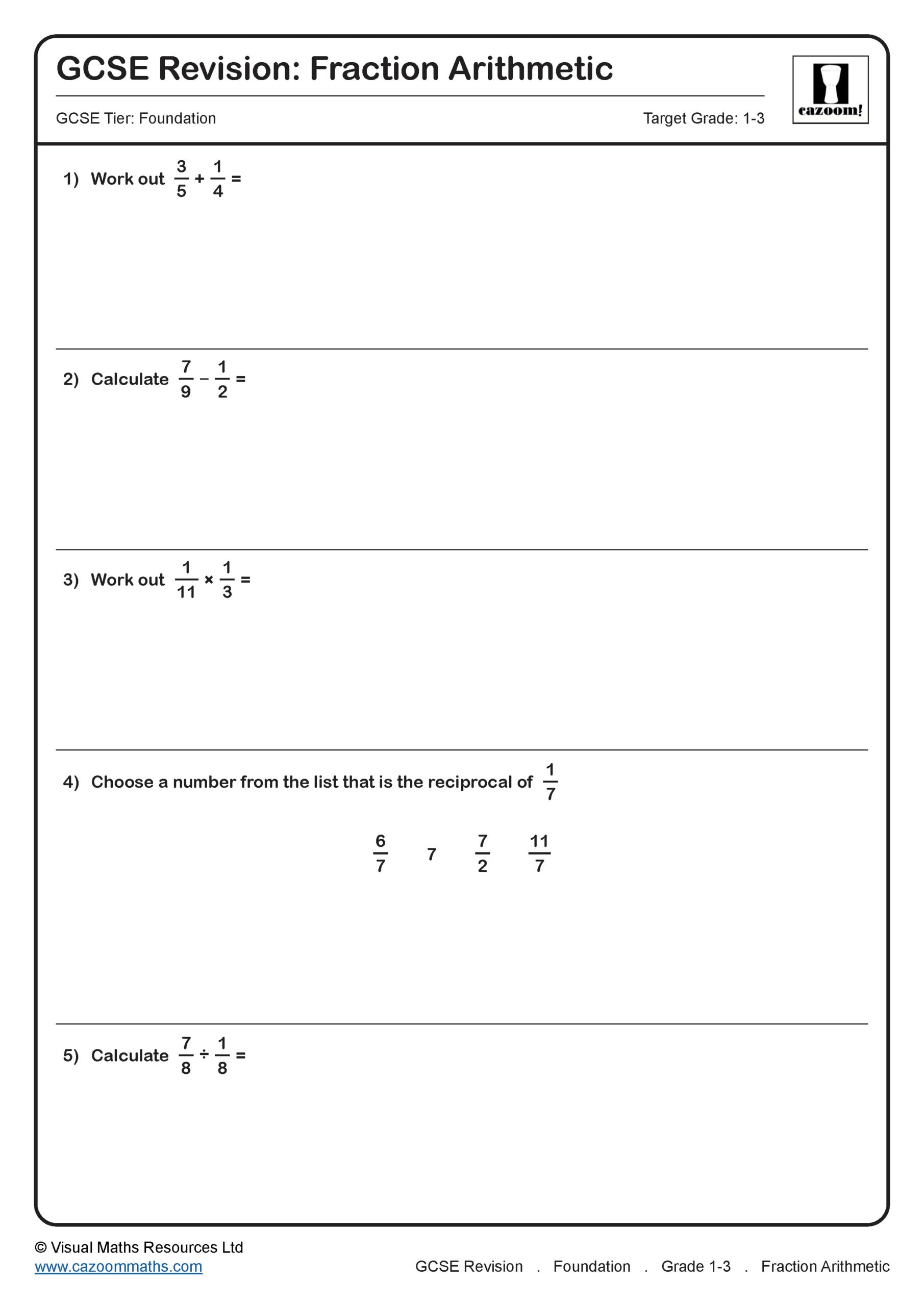
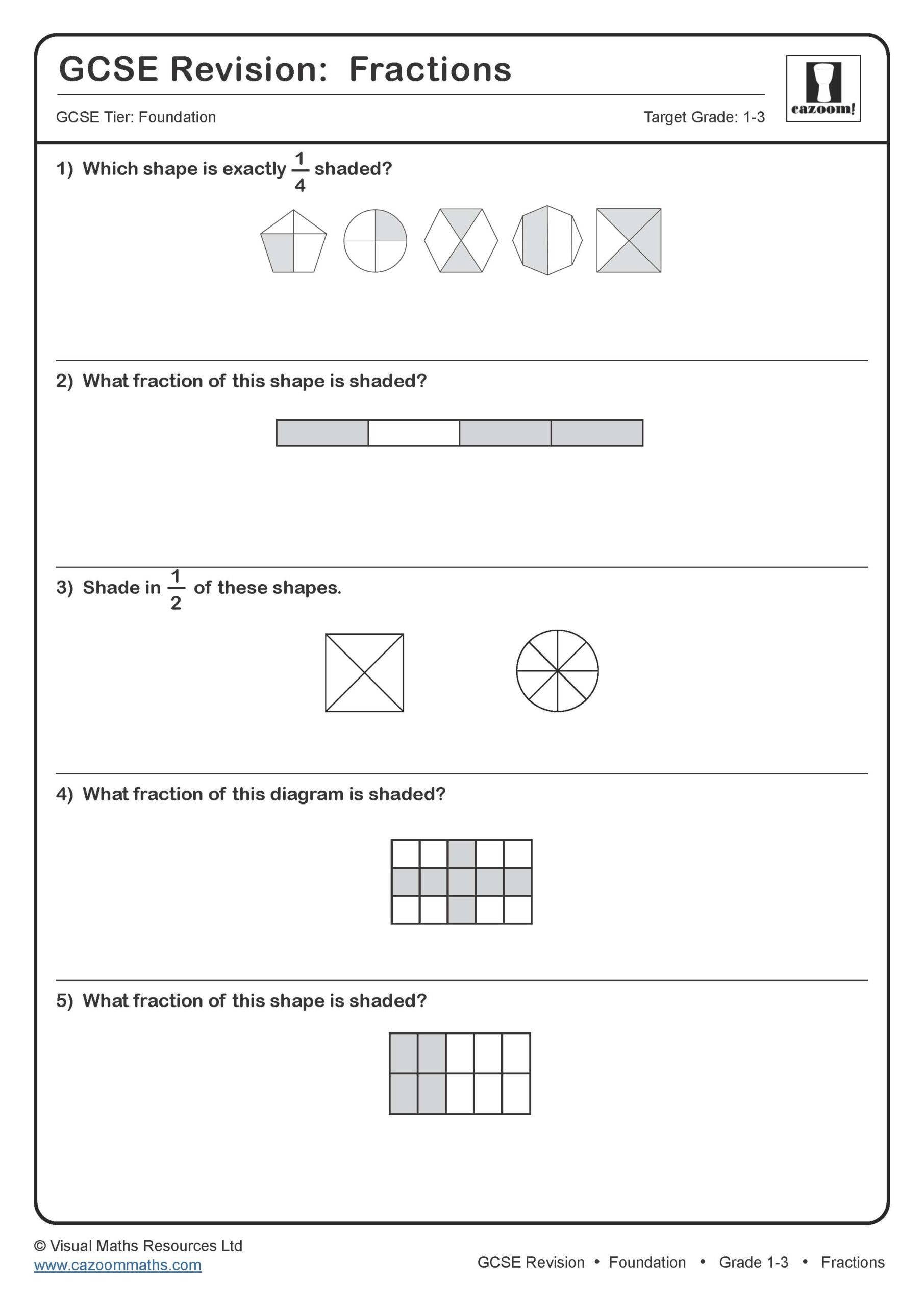
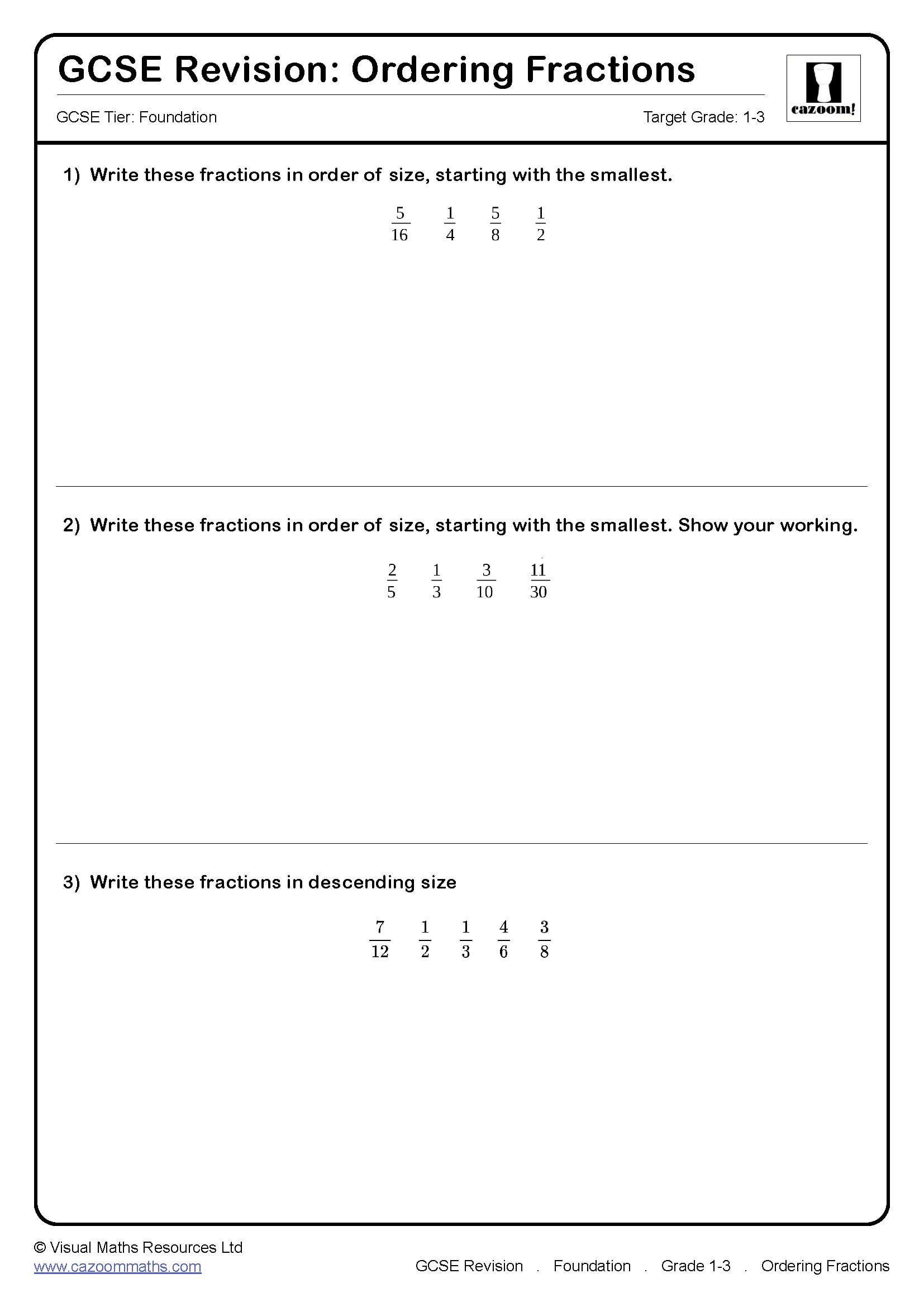
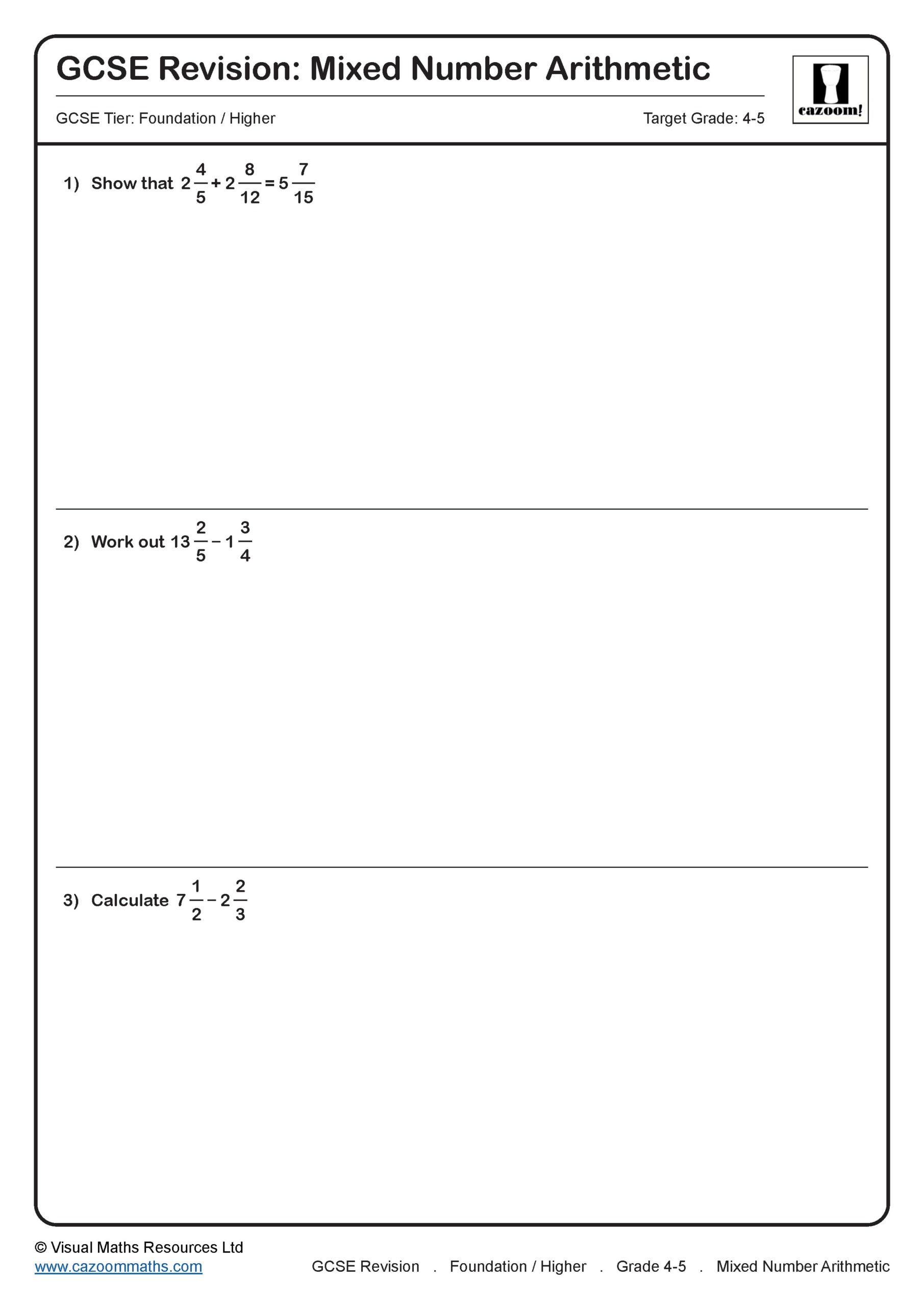
All worksheets are created by the team of experienced teachers at Cazoom Maths.
What Fractions questions appear on the GCSE Foundation paper?
Foundation papers typically include six to eight marks dedicated to fractions across both sittings. Students face questions on simplifying fractions, finding equivalent fractions, ordering fractions with different denominators, and converting between mixed numbers and improper fractions. Calculation questions ask students to add, subtract, multiply, and divide fractions, often presented within worded contexts like sharing amounts or measuring ingredients.
Exam mark schemes penalise students who skip the working, particularly in division questions where the 'keep, change, flip' method needs showing clearly. Teachers notice that Foundation candidates lose marks when they forget to simplify final answers or leave improper fractions instead of converting to mixed numbers where the question demands it.
What grade are Fractions questions on Foundation GCSE maths?
Foundation fractions questions span grades 1 through 5. Basic simplification and equivalent fractions typically sit at grades 1 to 3, testing whether students recognise common factors and can write fractions in simplest form. Ordering fractions with different denominators and straightforward addition or subtraction questions usually target grades 3 to 4. Grades 4 to 5 questions involve multiplying and dividing fractions, working with mixed numbers across operations, and applying fractions within multi-step problems.
Students aiming for grade 5 should prioritise mastering the grade 4 to 5 material once they feel secure with simpler questions. Teachers often find that students who systematically work through grade bands build confidence more effectively than those attempting random mixed practice too early.
How is Fractions tested differently on Foundation compared to Higher?
Foundation papers focus on accurate calculation and understanding core fraction concepts with straightforward numbers. Questions use denominators that simplify neatly, and contexts remain accessible. Higher tier pushes into algebraic fractions, more complex mixed operations, and problem-solving where fractions combine with percentages, ratios, or equations. The overlap grades (4 to 5) appear on both papers but present differently—Foundation might ask students to divide two mixed numbers, while Higher embeds the same skill within a multi-step algebraic problem.
Foundation students need absolute fluency with numerical fractions because these skills underpin so many other GCSE topics. Teachers notice that students secure higher grades when they can complete fraction calculations quickly and accurately, freeing up valuable exam time for trickier problem-solving questions elsewhere on the paper.
How should students revise Fractions for Foundation GCSE maths?
Students benefit from working through worksheets in order of difficulty, starting with ordering fractions before moving to operations. Timed practice helps replicate exam pressure—students should aim to complete straightforward fraction calculations within two minutes. After attempting each worksheet, checking answers immediately allows students to identify patterns in their mistakes, whether that's forgetting to find common denominators or misapplying the division method. Revisiting incorrect questions after a day or two reinforces learning more effectively than repeated attempts in one sitting.
Teachers can set these worksheets as targeted homework following classroom teaching or use them for intervention sessions with students hovering around grade 4. The answer sheets make peer marking efficient during lessons, encouraging students to discuss method differences and spot where working could be clearer for exam success.