GCSE Foundation Lines and Angles Revision Worksheets
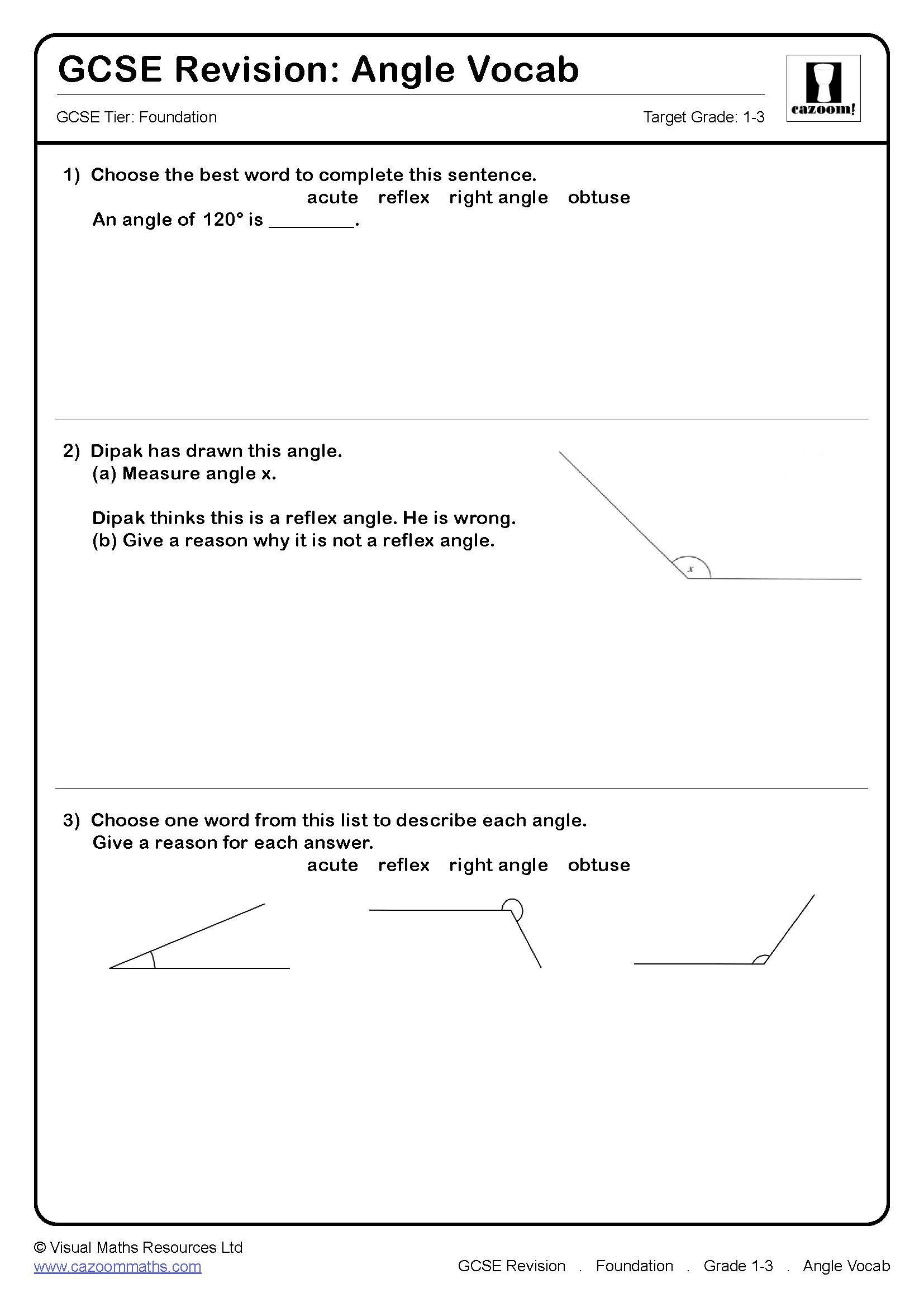
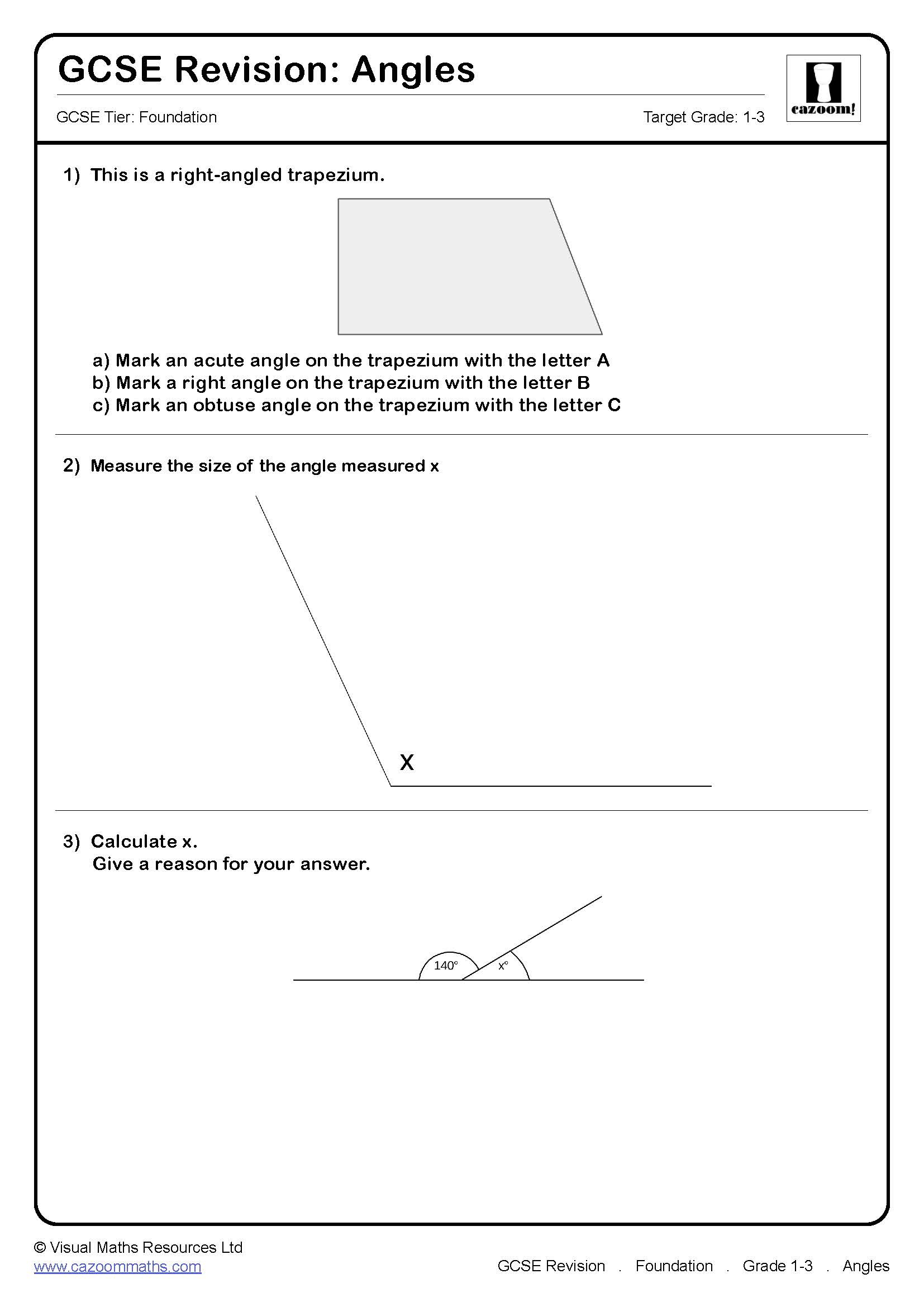
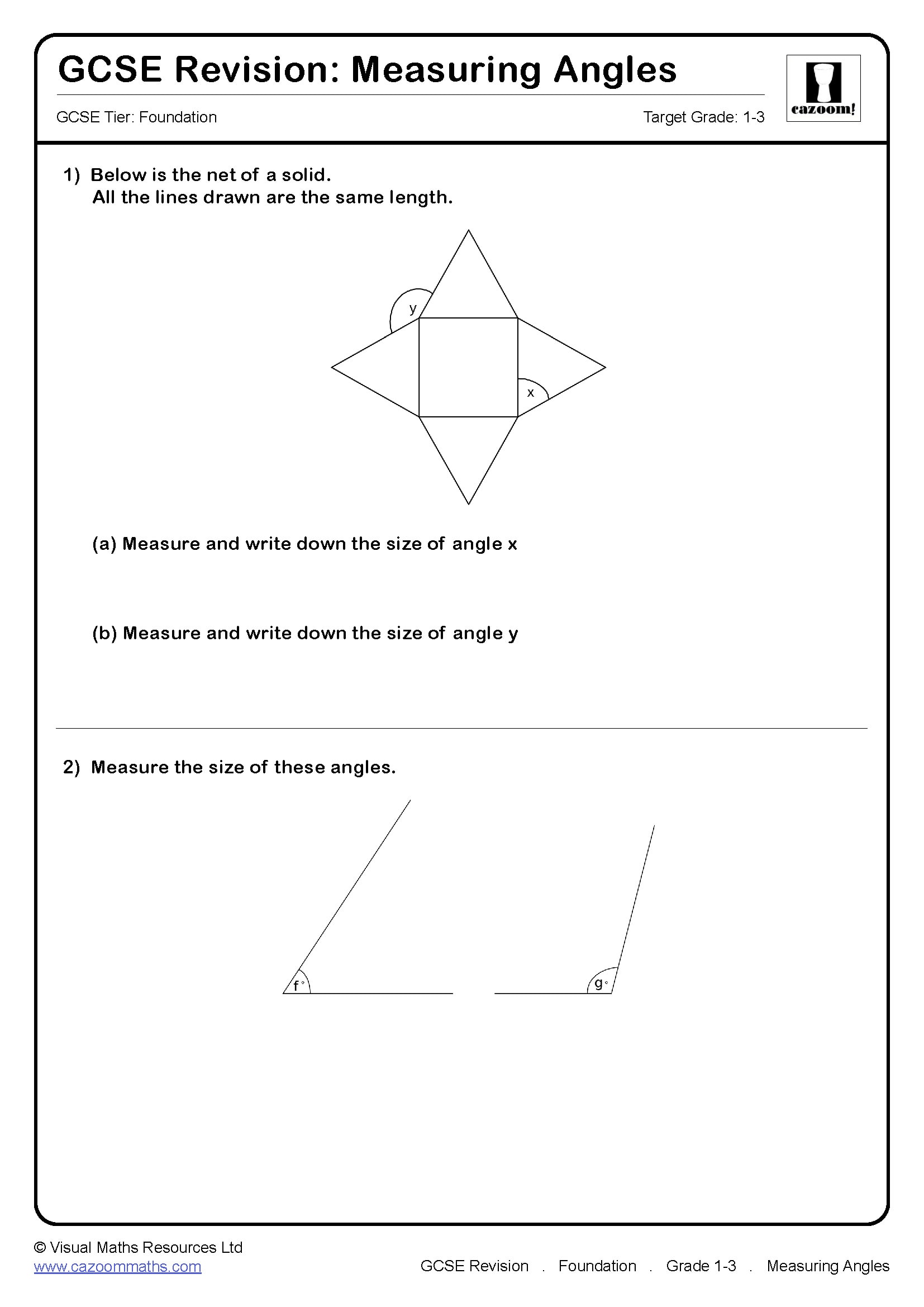
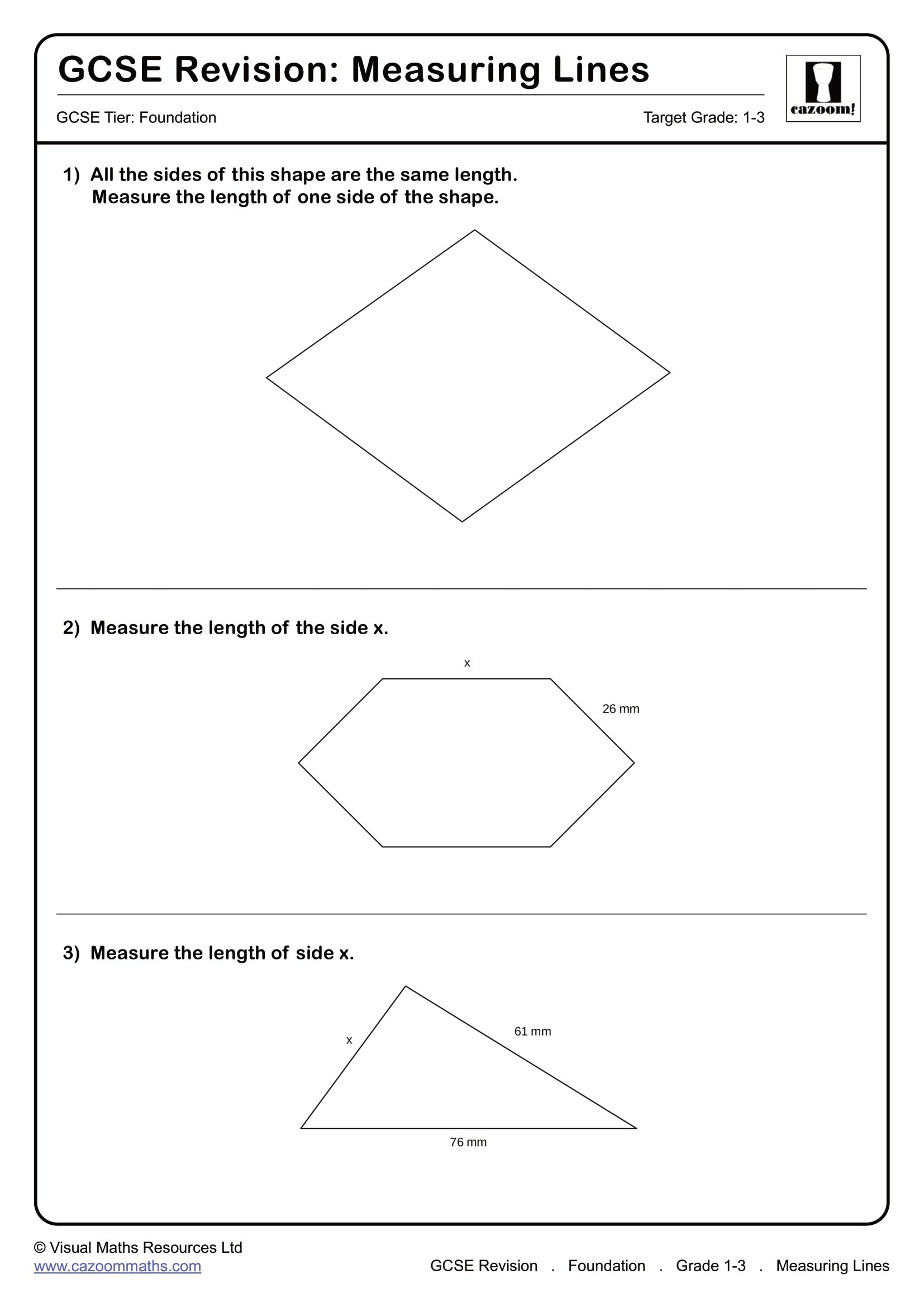
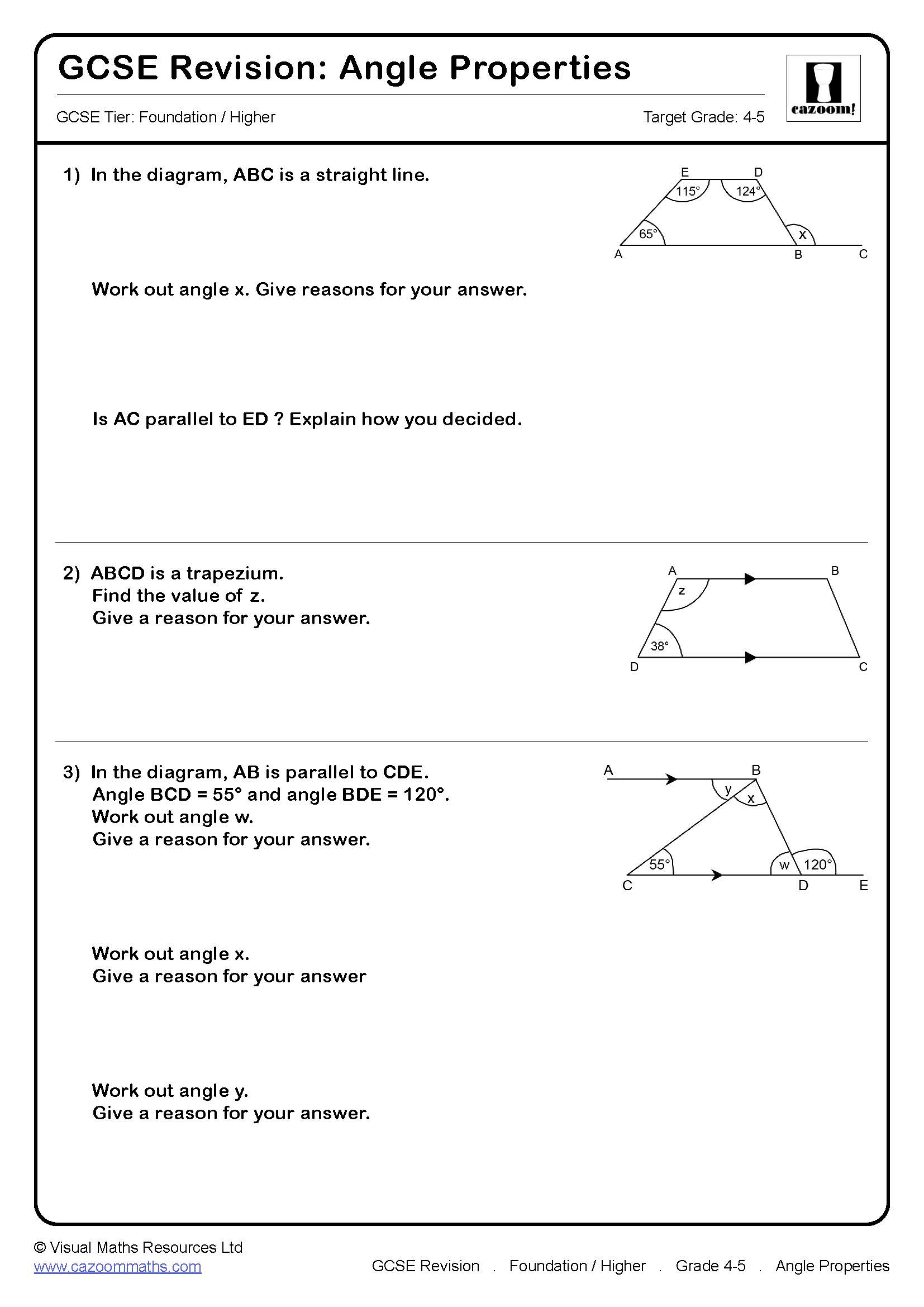
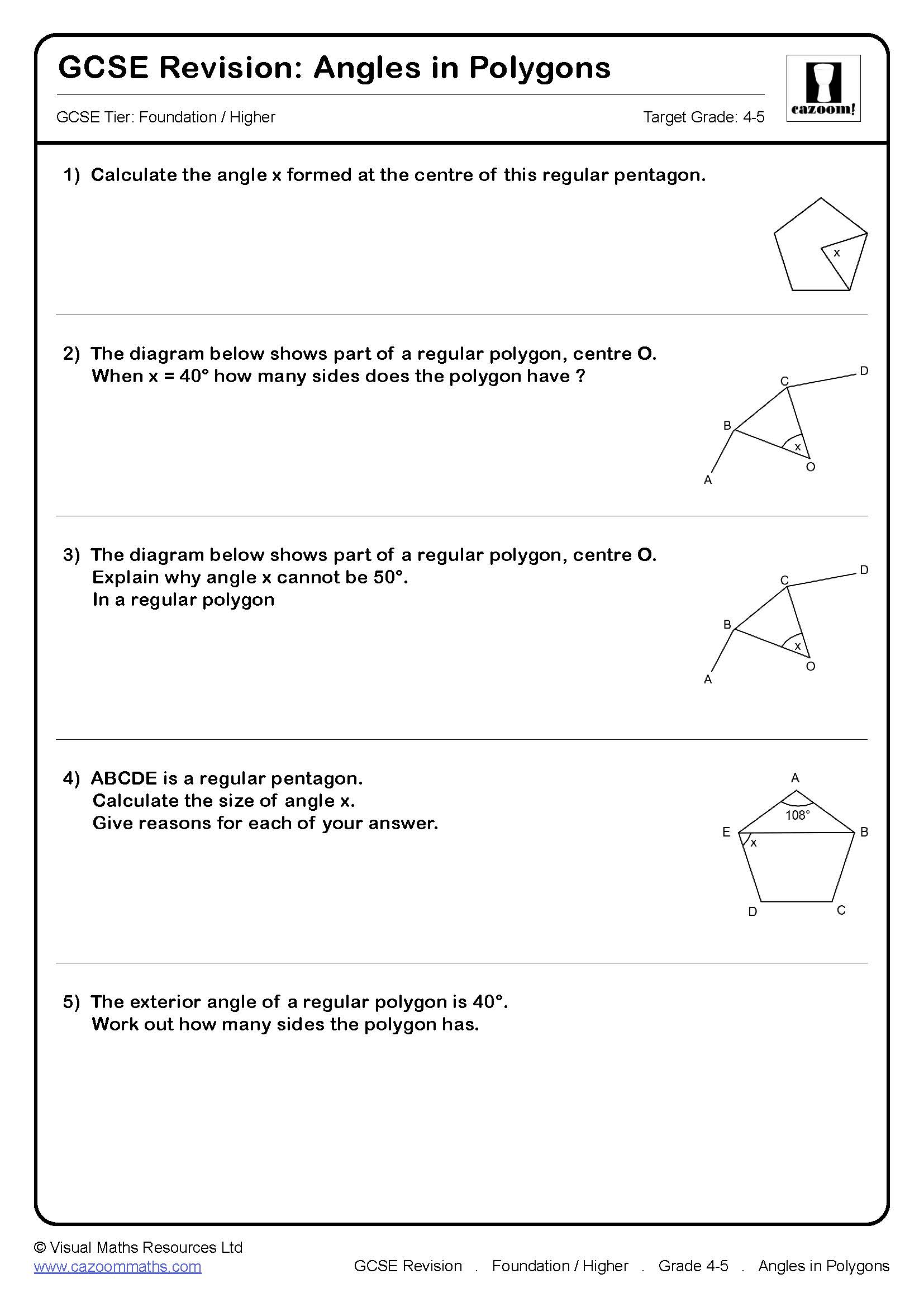
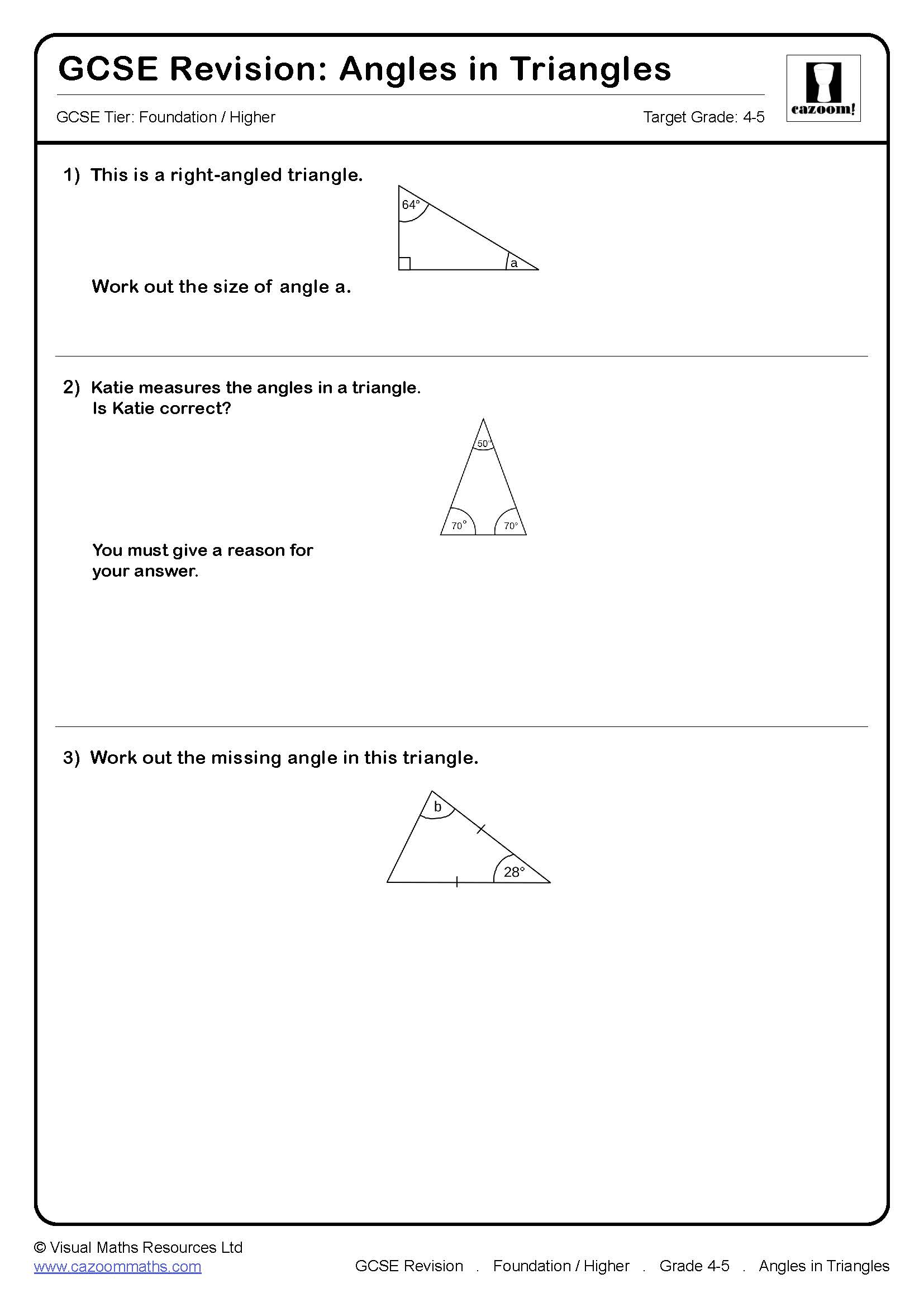
All worksheets are created by the team of experienced teachers at Cazoom Maths.
What Lines and Angles questions appear on the GCSE Foundation paper?
Foundation papers typically include four to six angle questions worth around 12-18 marks total. Early questions ask students to find missing angles using single facts like angles on a straight line (180°), around a point (360°), or in triangles and quadrilaterals. Mid-tier questions combine two angle properties, such as using alternate angles with parallel lines then applying the angle sum in a triangle. Grade 4-5 questions often involve angle reasoning with algebra, like finding x when angles are expressed as 2x or x + 30, or justifying answers by naming angle relationships.
Students lose marks when they calculate correctly but fail to show working or state which angle fact they've used. Exam mark schemes expect clear reasoning, not just numerical answers, particularly for questions worth three marks or more.
What grade are Lines and Angles questions on Foundation GCSE maths?
Lines and angles questions span the full Foundation grade range. Grades 1-3 questions focus on single-step angle facts with clear diagrams: finding one missing angle on a straight line or identifying angle types (acute, obtuse, reflex). Grades 3-4 questions combine two properties, such as calculating angles in parallel line diagrams using corresponding or alternate angles. Grades 4-5 questions require algebraic working, forming and solving equations from angle diagrams, or multi-step reasoning across complex shapes where several angle facts apply sequentially.
Teachers often advise students to identify their weaker grade band through practice, then focus revision there. A student comfortable with basic angle facts but uncertain about parallel lines should concentrate on grades 3-4 material before attempting grade 5 algebraic problems, building confidence systematically through each tier.
How is Lines and Angles tested differently on Foundation compared to Higher?
Foundation papers emphasise applying core angle facts accurately with clear diagrams and structured questions. Students encounter straightforward parallel line configurations and are guided through reasoning steps. Higher papers assume fluency with these basics and move to proofs (proving angles are equal using formal geometric reasoning), circle theorems involving angles, and complex multi-stage problems where students must identify which properties apply without prompting. Higher questions rarely label angle facts explicitly, expecting students to recognise relationships independently.
The Foundation approach matters because it builds systematic confidence with geometry. Students at this tier need to master recognising angle relationships quickly, stating reasons clearly, and combining two or three facts reliably. This fluency with core properties forms the foundation for all geometric reasoning, securing grades 4-5 through accurate, well-explained calculations rather than abstract proofs.
How should students revise Lines and Angles for Foundation GCSE maths?
Students should start with lower grade worksheets to secure basic angle facts, then progress through grade bands systematically. Timed practice helps build exam pace, particularly for multi-step questions where working must be clear and logical. After attempting each worksheet, students should check answers immediately, identifying which angle properties caused errors rather than just noting wrong answers. Teachers notice breakthroughs when students begin labelling angles on diagrams and writing reasons beside calculations, turning geometric intuition into exam-ready explanations.
Teachers can use these worksheets for starters targeting specific angle facts, homework building towards assessments, or intervention with students hovering between grades 3 and 4. Setting worksheets by grade allows differentiation within mixed-ability groups, while answer sheets enable students to self-assess during independent revision, making these resources effective for both classroom teaching and home study.